


Look at what’s sitting in your produce drawer right now. A wrinkly avocado. A knob of ginger going soft. The leafy crown you twisted off a pineapple and dropped in the trash.
Half of it is a houseplant waiting to start.
The fruit, roots, and seeds you bring home from the store aren’t dead inventory. Most of them are alive, dormant, and one glass of water away from waking up. People spend $30 on a trailing vine at the garden center and toss the exact thing that would’ve grown one for free.
Some of these will give you glossy tropical foliage for years. Some give you snippable greens by the sink. A few are pure curiosity — plants you’ll keep just because you grew them from dinner.
Here are 26 grocery store foods that secretly grow into houseplants, and how to coax each one along.
1. Avocado Pit

The gateway project. Everyone knows someone who’s tried it.
The classic move is the three-toothpicks-over-a-jar trick, with the fat end of the pit suspended in water. It works, but it’s slow and the pit often rots. Wrapping the pit in a damp paper towel inside a zip bag is faster and more reliable — Empress of Dirt leans on this method for a reason.
Be patient. It can take four to eight weeks to crack and root.
Here’s the honest part: it won’t give you avocados indoors. Grown from a pit, it might fruit in 8 to 20 years, if ever. But it makes a tall, handsome houseplant for nothing, and that’s the point.
2. Mango Seed

Crack open the flat husk most people throw out. Inside is a big seed that wants to grow.
Wrap it in a damp paper towel and the sprout rate runs 80 to 95 percent — far better odds than an avocado. Empress of Dirt walks the same trick.
The reward is the foliage. New leaves often flush deep red or bronze before settling into glossy green.
Think of it as the next step up from the avocado. Same effort, prettier plant.
3. Lemon & Other Citrus Seeds

You eat the orange and toss the pips. Those pips grow trees.
Lemons, Meyer lemons, oranges, mandarins, limes, grapefruit, kumquats — they all sprout from saved seeds into shiny, fragrant little indoor trees. Crush a leaf and the whole room smells like citrus.
One trick changes everything. Peel the thin papery coat off each seed before planting, and germination jumps.
Plant them fresh, while they’re still damp from the fruit. Dried-out citrus seeds lose their nerve fast.
4. Pineapple Top

The leafy crown you twist off and trash already has root buds hidden at its base.
Slice the crown off, peel away the bottom inch of leaves, and let the cut end heal for a day or two so it doesn’t rot. Then set it in water or soil.
Roots push out from those pre-formed buds within weeks. UF/IFAS Gardening Solutions calls it one of the easiest grocery starts going.
What you get is a dramatic spiky rosette. A new fruit someday is a long shot, but a free architectural houseplant isn’t.
5. Ginger Rhizome
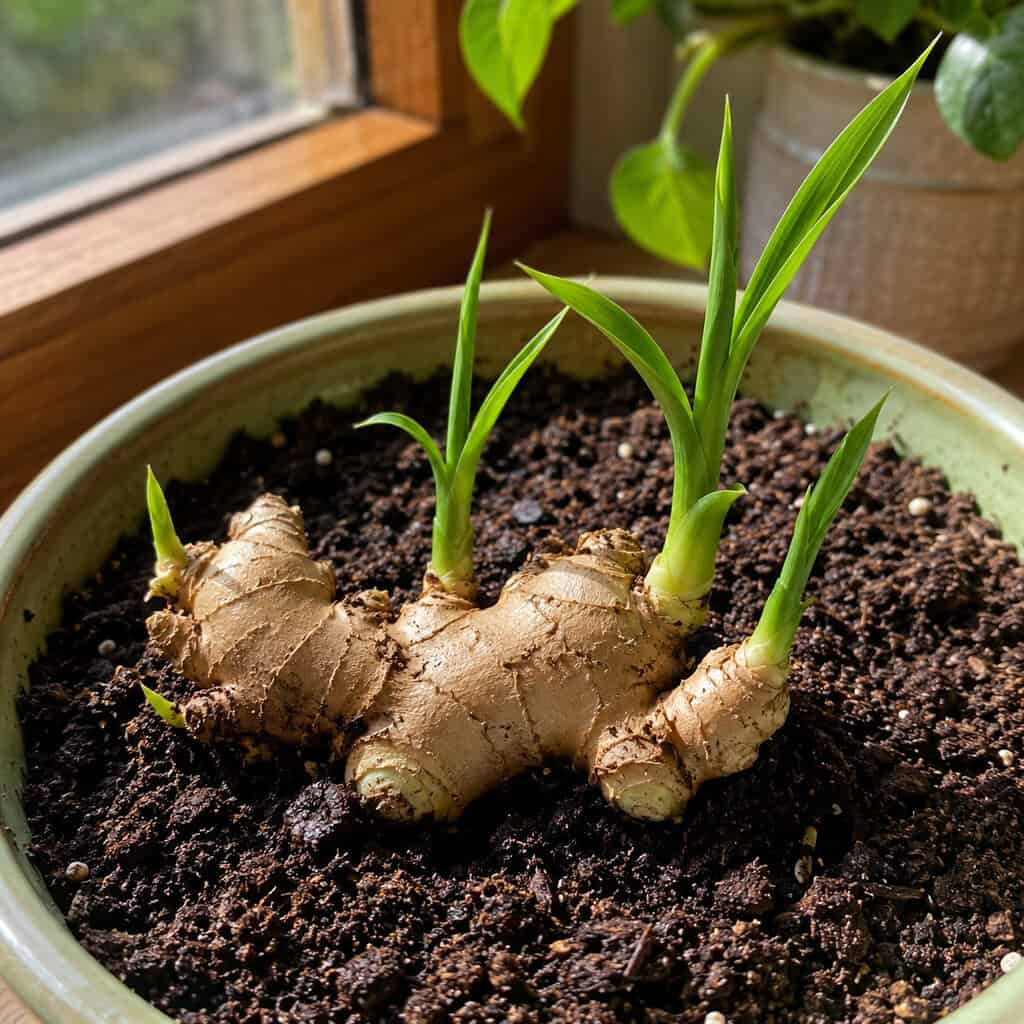
That $2 knob of ginger in the produce bin is a living rhizome.
Leave it on a warm windowsill and it’ll start pushing out little nubs — the “eyes.” Bury it shallow, eyes pointing up, and it grows into a lush tropical plant with strappy leaves.
It can live for years indoors. Given enough warmth and time, it’ll even bloom.
And the whole pot is future ginger. Dig under the leaves when you need some.
6. Turmeric Rhizome

Ginger’s cousin, and it grows the exact same way.
Snap the rhizome into chunks, making sure each piece has an eye. Let the cuts dry for a day, then plant them just under the surface.
Fewer people try this one, so it carries real surprise. The leaves come up broad and bright green, taller and showier than ginger’s.
Same windowsill, same care, different plant.
7. Sweet Potato

Stand a sweet potato halfway in a jar of water and wait.
Roots drop from the bottom, leafy shoots climb from the top, and soon you’ve got a trailing vine of heart-shaped leaves spilling down. Young leaves come bright green; mature ones deepen to a dusky purple.
It’s fast. It’s free. It’s a dead ringer for a vine you’d pay good money for.
As Homes & Gardens notes, the indoor vine is grown for looks more than dinner. Let it cascade off a shelf.
8. Lemongrass Stalks

Buy a bundle of lemongrass for a curry. Save a stalk for the windowsill.
Stand the cut stalk upright in a couple inches of water. Roots appear in a week or two, then grassy blades shoot up from the center.
Pot it and it just keeps going. One gardener turned a few dollars of grocery stalks into a plant that thrived for seven years.
From the produce shelf to a fountain of lemon-scented grass. Hard to beat that math.
9. Pomegranate Seeds

One of the easiest fruit trees you’ll ever start from seed.
Rinse the pulp off a handful of seeds and sow them in warm soil. They sprout in about ten days — no chilling, no scarifying, no fuss.
A single pomegranate holds 200-plus potential plants, so you can afford to be reckless. The seedlings make glossy, small-leaved little trees that bonsai beautifully.
Some even flower and set tiny fruit while young. That’s a lot of payoff from one snack.
10. Lychee Pit

Those big brown pits germinate reliably — but only if you move fast.
A lychee seed dries out and dies within days of leaving the fruit. Plant it fresh and it’ll sprout in one to four weeks, often pushing out coppery-red new growth that turns green.
It rarely fruits indoors. Keep it as a glossy evergreen curiosity instead.
Got longan instead of lychee? Same drill. The two are near-identical to grow.
11. Passionfruit Seeds

Pick the most wrinkly, ugly passionfruit in the bin. Wrinkled means ripe.
Scoop the seeds, rinse off the pulp, and sow them. They germinate in two to four weeks and climb fast on curling tendrils, throwing out distinctive three-lobed leaves.
Give it a small trellis or a string up the window. It’ll weave itself into a living green curtain.
This one wants to climb. Let it.
12. Date Pit

Bite into a Medjool date and there’s a hard pit most people spit out and forget.
That pit is a viable seed. Soak it for a few days, then plant it warm and wait — patience is the whole game here.
Slowly, it sends up a feathery, palm-like frond. Then another.
It’s the ultimate pantry surprise. Who knew a date even had a seed worth planting?
13. Dried Chickpeas

The bag of dried chickpeas in your pantry is a bag of intact seeds.
Soak a few overnight, then keep them damp until they crack and root. Pot the sprouted ones and they grow into bushy little legumes with soft, pretty foliage.
One catch worth knowing. Split chana dal and any beans that have been heat-treated are dead — Country Life Natural Foods spells out why only whole, raw chickpeas will sprout.
Buy whole. Skip the split.
14. Dried Lentils

Whole dried lentils sprout fast and easily — they’re the oldest cultivated pulse on earth.
Soak them, spread them damp, and watch tiny roots appear within a day or two. Pot up the strongest for a quick, cheerful windowsill plant.
Use whole lentils, not split. Split ones won’t grow.
And skip any with brown or grey blotches. That’s blight, and it spreads.
15. Raw Peanuts

The bag matters more than anything here.
Raw, in-shell, unroasted peanuts grow into a charming legume with cloverlike leaves that actually fold up at night. Roasted peanuts are cooked dead — they’ll never do a thing.
Pop a few raw nuts out of the shell and plant them shallow. Keep them warm.
Watching the leaves close at dusk is half the fun. Get the raw bag.
16. Garlic Cloves

Push a single clove into a pot of soil, pointy end up.
Within days it sends up green garlicky shoots you can snip over eggs or pasta. Leave it for months and it’ll swell into a whole new bulb underground.
Even a clove that’s already sprouting in the bag works fine. That little green nub is a head start.
Garlic flavor, growing right next to the sink. Easy win.
17. Green Onions (Scallions)

The easiest of all. The one to try first.
Save the rooted white ends after you chop the green tops for dinner. Stand them in a glass of water on the sill and they regrow within days, ready to snip again.
Then again. And again. The University of Michigan ranks it among the simplest scraps to propagate.
Change the water every couple days and one bunch feeds you for weeks.
18. Celery Base

Don’t toss the bottom inch where the stalks join.
Set that cut-off base in a shallow dish of water and new leaves push up from the dead center within days. It’s quick and oddly satisfying to watch.
Be honest with yourself, though. The old outer stalks won’t regrow, and the new ones come in smaller and thinner.
What you really get is a tidy little leafy rosette. Pretty enough to keep on the counter.
19. Bok Choy Base

One of the most reliable scraps in the whole produce aisle.
Drop the intact base in water or straight into soil and it forms a fresh leafy rosette almost every time. Near-100 percent success, with hardly any effort.
Let it run and it’ll eventually bolt, throwing up cheerful yellow flowers. Save those seeds and you’ve closed the loop entirely.
Different look from celery, even easier to grow.
20. Romaine Lettuce Base

The viral “buy lettuce once” hack. It half works.
Set the chopped base in shallow water and tender new leaves unfurl from the center within a week or two. On the windowsill it looks great — a little green rosette of fresh growth.
Manage your expectations. The regrowth is smaller than the original head, and later leaves can turn bitter.
Grow it for the show as much as the salad.
21. Carrot Tops

You’ll never regrow the carrot. Forget that.
But the leafy top, set cut-side-down in a saucer of water, grows feathery fern-like greens that look genuinely ornamental. They’re edible too — bright and a bit parsley-ish.
Most people compost this part without a second thought. Plant it instead.
The foliage alone earns it a spot on the sill.
22. Coriander Seed from the Spice Jar
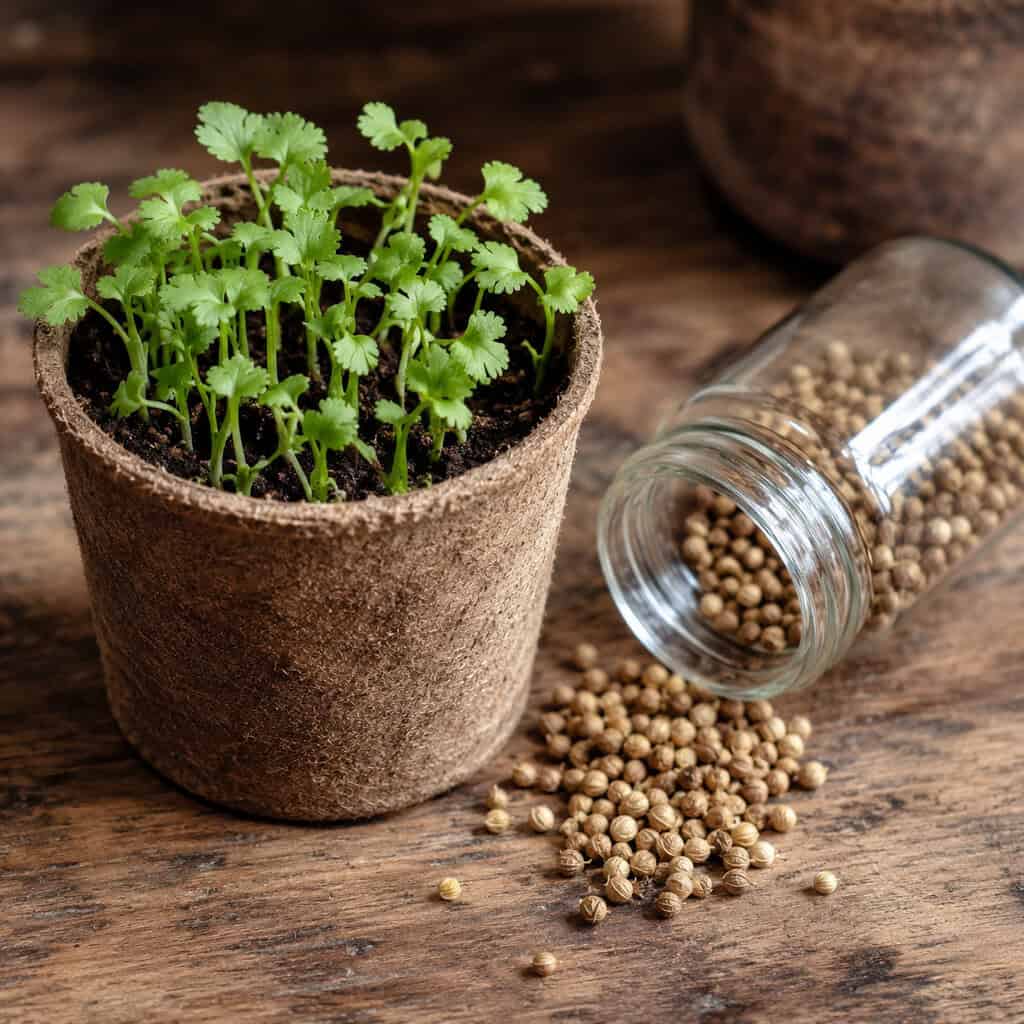
Here’s the sneaky one. That $2 jar of whole coriander seeds in the spice aisle is a packet of viable seeds.
Sow them and they sprout into cilantro plants. The same trick works for whole dill, fennel, and mustard seeds.
Two rules, though. It has to be whole seed, never ground powder. And a dusty old jar that’s been in the cabinet for years may have lost its spark.
Buy fresh, whole, and cheap. Skip the ground stuff.
23. Tomato Seeds
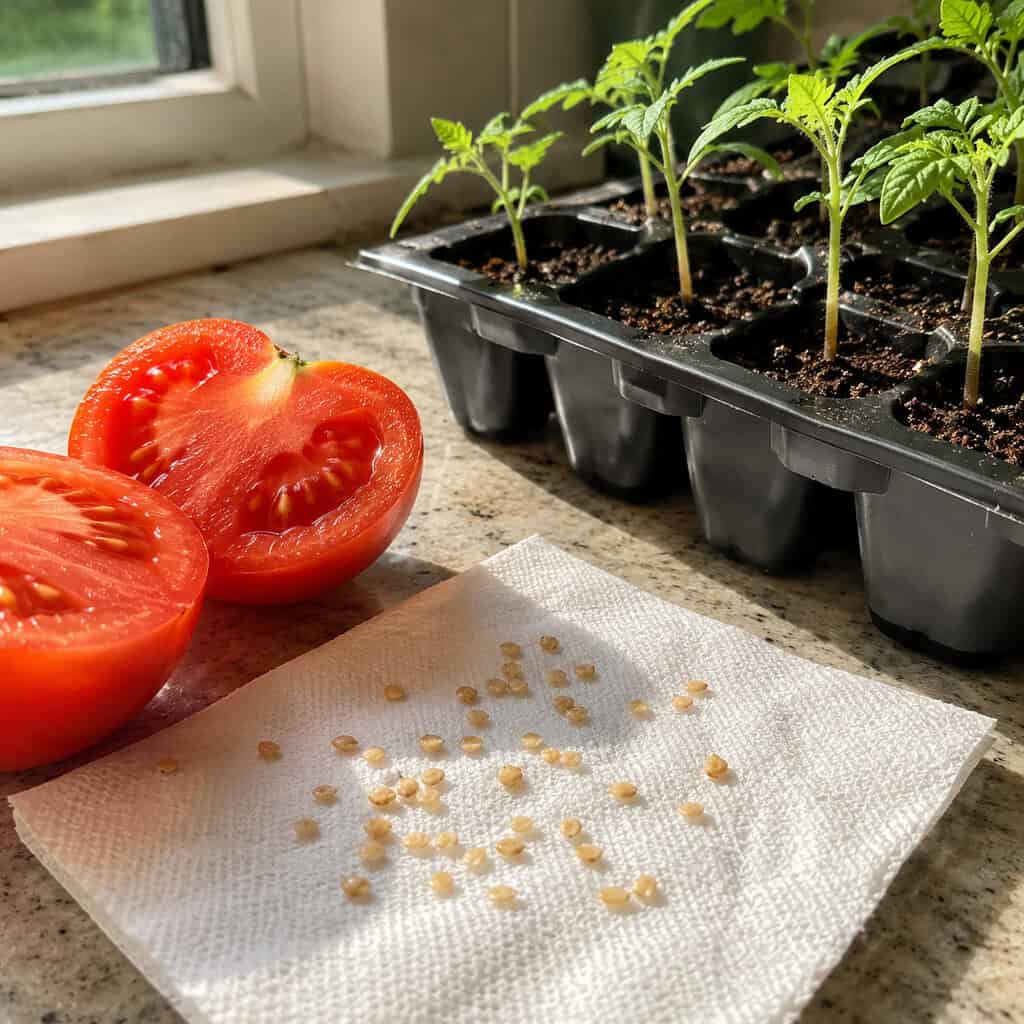
Slice a ripe grocery tomato and you’re holding a packet of seeds.
Rinse the slippery gel off, dry them on a paper towel, and sow. They sprout in just a few days — fast enough to feel like cheating.
One honest note. Most grocery tomatoes are hybrids, so the seedlings won’t grow true to the parent fruit.
You still get a healthy tomato plant from something you nearly ate. Full circle.
24. Beet Tops

Same deal as carrots — the root’s a lost cause, the top isn’t.
Set the cut crown in a shallow dish of water and it sprouts new greens streaked with deep red veins. They’re edible and look striking in the dish.
Treat it as the colorful swap when you want more than carrot ferns. Same method, different palette.
A little splash of red on the windowsill.
25. Whole Onion / Onion Base

A whole onion left too long sends up green shoots all on its own.
Plant a sprouting onion, or just its rooted base, and those shoots keep coming — snippable like chives. Given a full season, it can rebuild a bulb underground.
Don’t fall for the myth, though. A thin sliver of root with no base won’t magically grow a new onion.
Keep enough of the bottom intact and it’ll perform.
26. Raw Sunflower Seeds

Raw eating sunflower seeds — unroasted, unsalted — grow into actual sunflowers.
The bigger snack seeds make tall plants. The smaller birdseed kind give you shorter ones.
This one stretches the “houseplant” label. It really wants to be outside, reaching for the sun.
But start a few on a bright sill and you’ve grown a sunflower from a snack bag. That’s a fine note to end on.
Conclusion
None of this needs a garden, a yard, or a green thumb you don’t have. It needs a glass of water and a sunny windowsill.
Start with green onions or a pineapple top to build a little confidence. Then graduate to a mango seed or a ginger knob when you want something that sticks around for years.
The next time you’re about to toss a pit, a root end, or a leafy crown, stop for a second.
You’re about to throw away a houseplant.
Interesting. Look forward to trying some.
I have a lot of plants already but I’m worried about tiny bugs will these ways keep them safe from critters inside