


By August, most flower borders have gone quiet. The peonies are long gone. The roses look tired.
Then the grasses take over.
This is their season. While everything else fades, ornamental grasses hit their peak — plumes catching the low afternoon light, foliage turning red and gold, seed heads swaying in a breeze you can barely feel. They give you movement, sound, and color right when the garden needs it most.
Some are burgundy fireworks. Some are quiet clumps grown for a single week of scent. A few will glow like cotton candy when the sun drops behind them.
Here are 18 ornamental grasses that carry the yard from late summer into fall — and the honest catch on the handful that come with one.
1. Purple Fountain Grass
Start here. It’s the one everybody recognizes.
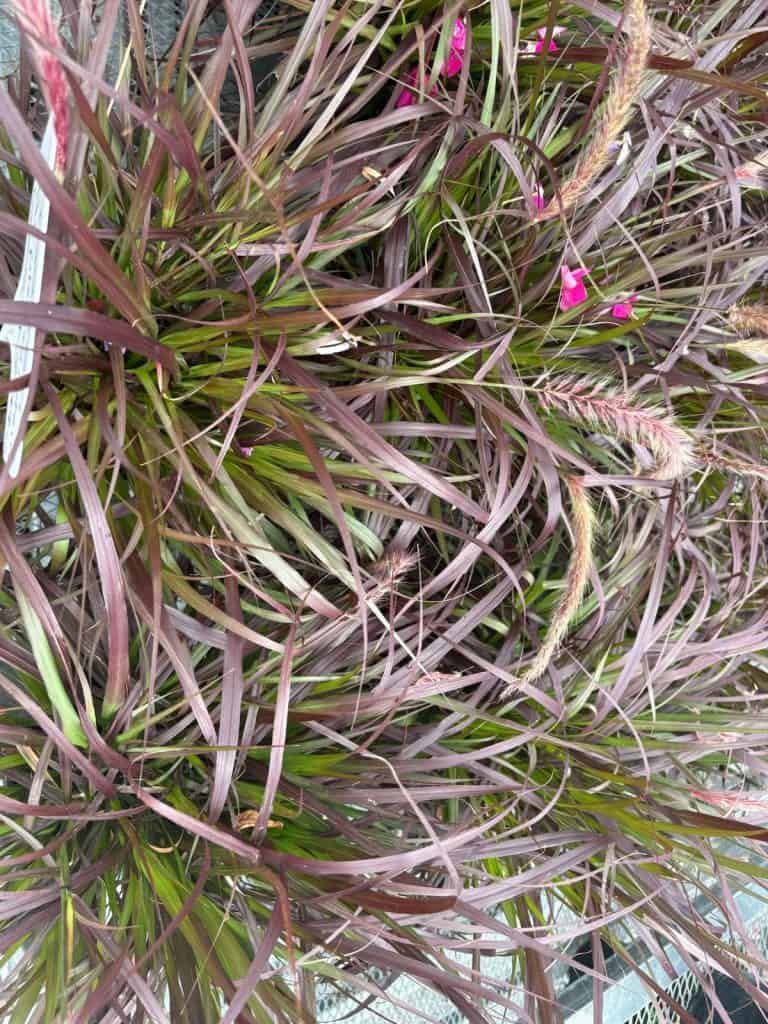
Deep maroon blades arch into a fountain, then send up foxtail plumes in a soft rose-red that keeps coming from midsummer until frost. Nothing else in the bed reads quite this dark.
The catch is hardiness. Purple fountain grass is a tender perennial, reliable only in Zone 9 and warmer, which means most of the country grows it as an annual and replaces it each spring. That stings a little given the price, but it’s worth it for the color.
One nice thing about the ‘Rubrum’ cultivar — it’s sterile, so it won’t reseed and become a problem, according to UF/IFAS Extension. Plant it in full sun. The more light it gets, the darker the blades go.
2. Burgundy Bunny Dwarf Fountain Grass
Want the fountain-grass drama where the tender types freeze out? This is the answer.
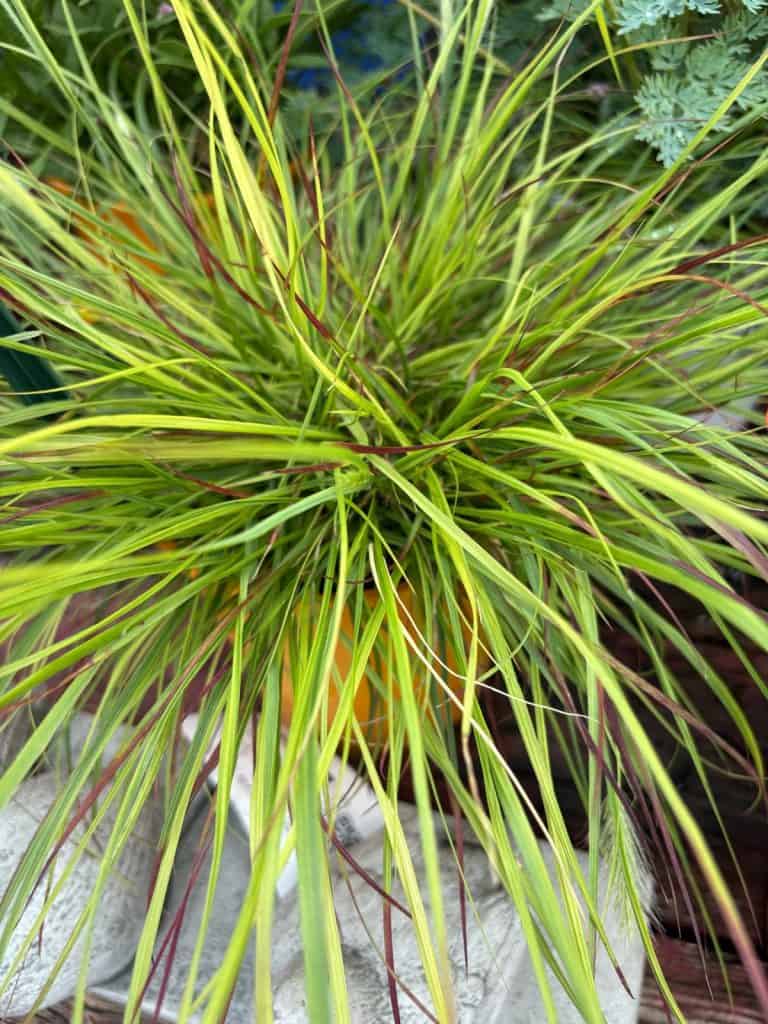
Burgundy Bunny is a red-tinted sport of the popular ‘Little Bunny,’ topping out around a foot tall. It starts green in spring, then deepens to a blazing scarlet-red as fall creeps in, with fuzzy little bunny-tail plumes above the mound.
Best part: it’s hardy to Zone 4. Plant it once and it comes back.
Tuck it along a walkway or the front edge of a bed where you’ll catch that fall color up close.
3. Little Zebra Maiden Grass
Most striped grasses run their bands lengthwise. This one goes crosswise.
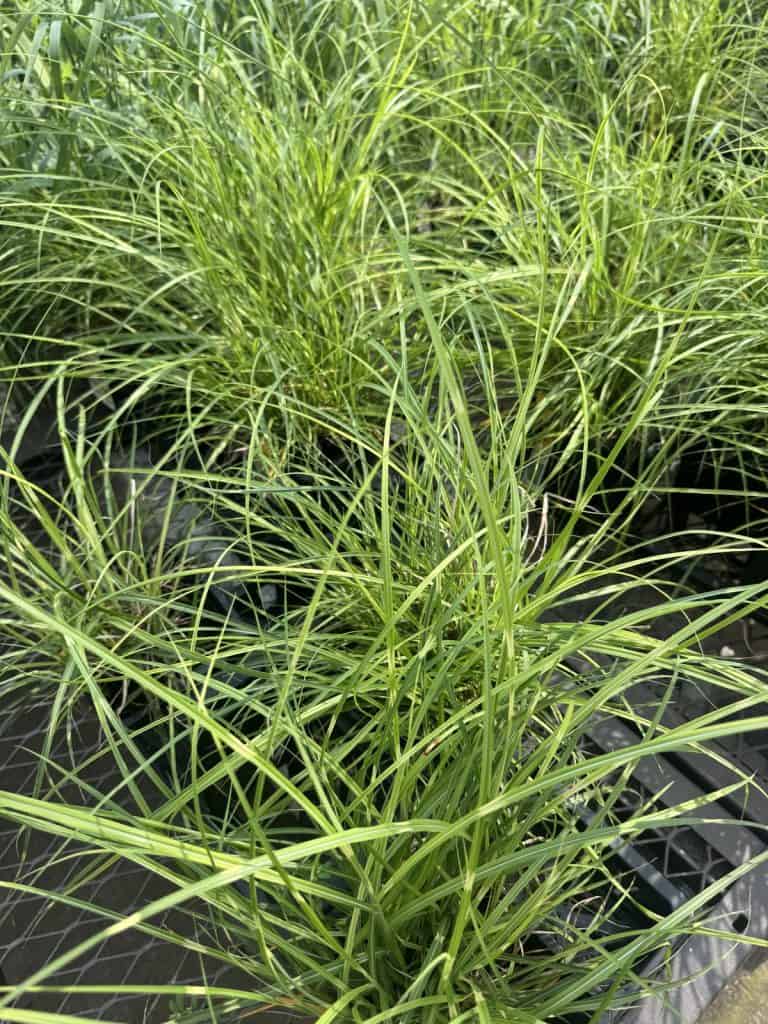
Little Zebra rings each blade with horizontal gold banding, a genuine surprise the first time you notice it. Wine-purple plumes rise above the 3-to-4-foot clump from late August into October.
It’s a compact Miscanthus that blooms reliably every single year, even in cooler northern seasons where some full-size maiden grasses sulk and skip flowering. The Missouri Botanical Garden lists it as a dependable bloomer for exactly that reason.
Give it sun and room to breathe.
4. Maiden Grass ‘Gracillimus’
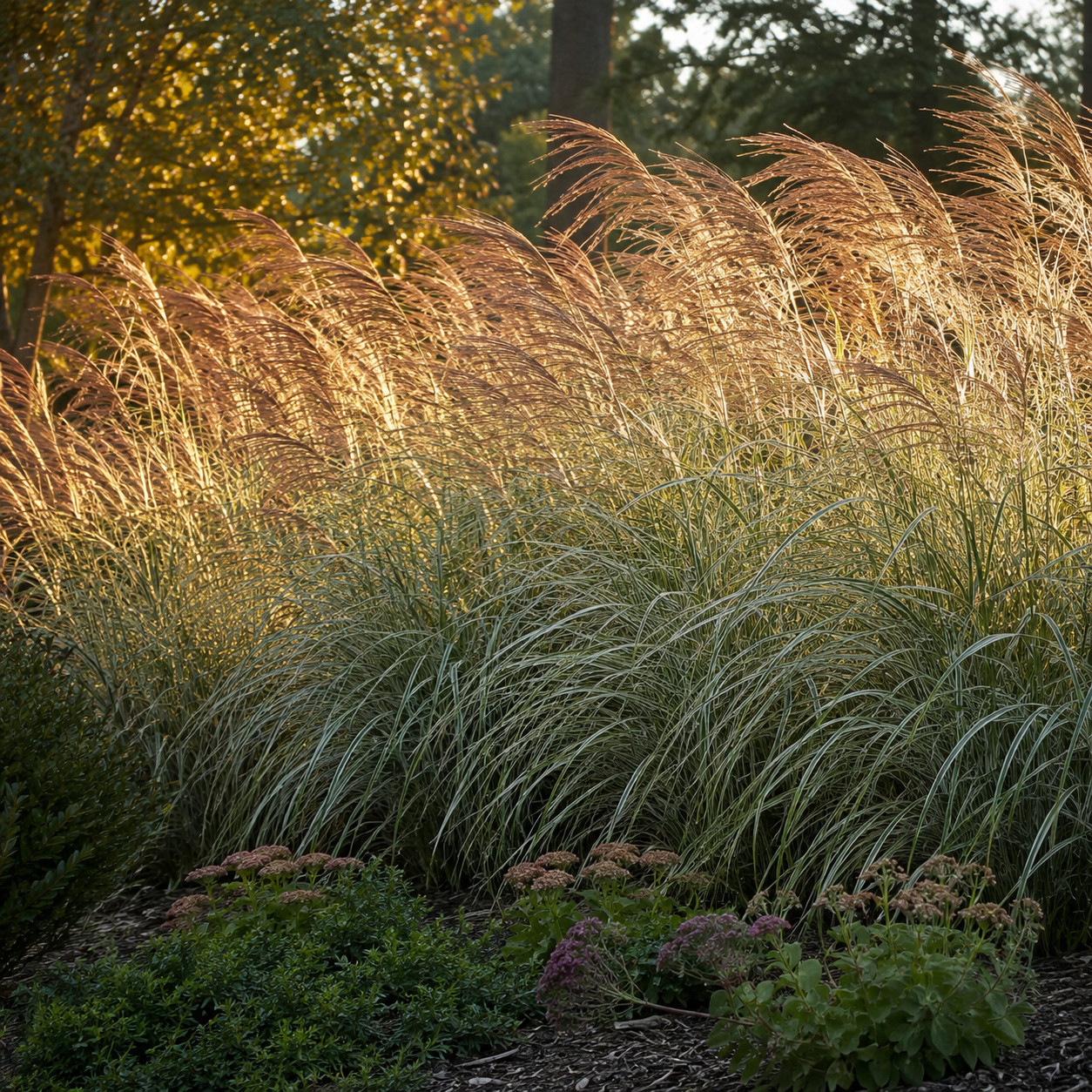
The big statement of the group. Where the dwarfs whisper, this one arches five or six feet and sways.
Fine-textured blades with a silver midrib give it a soft, feathery look that moves in the slightest wind. Late-summer plumes emerge coppery, then fade to a shimmering silver that catches every bit of light.
It holds its form well into winter, so don’t cut it back in fall. Leave it standing.
Use it as a screen, a corner anchor, or a backdrop for shorter plants. It earns the space.
5. Karl Foerster Feather Reed Grass
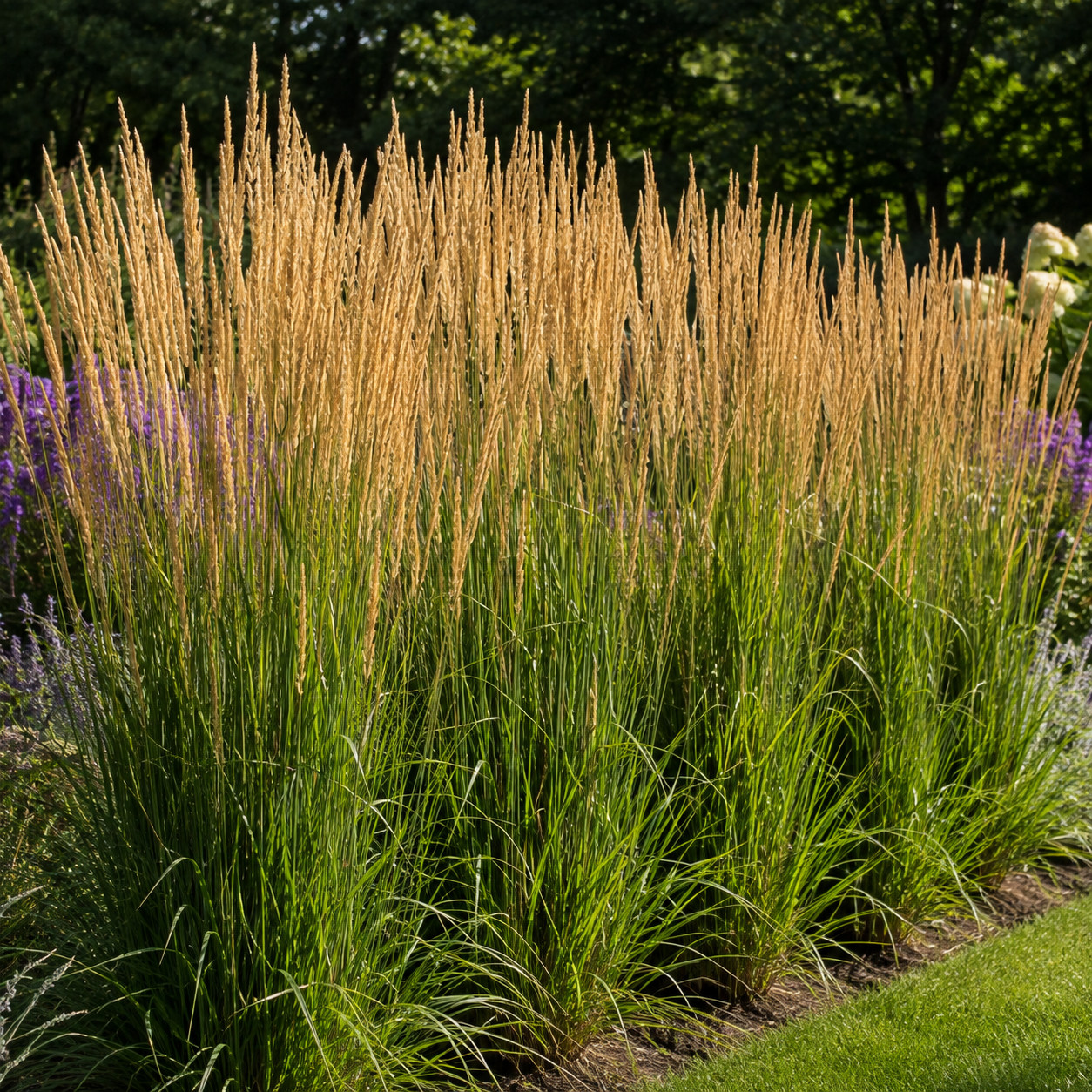
The vertical exclamation point of the border. If you’ve admired a garden with tall, narrow, upright plumes standing at attention, odds are you were looking at this.
Pink-tinged plumes appear early, then ripen to a wheat gold that holds through fall and into winter. The whole plant stays tight and columnar — it doesn’t flop.
It’s a sterile hybrid, so it won’t reseed, and it shrugs off heavy clay soil. It was also the first grass ever named Perennial Plant of the Year, back in 2001, which tells you how long landscapers have leaned on it. The University of Wisconsin-Madison Extension still recommends it as a low-fuss workhorse.
6. Switchgrass ‘Shenandoah’
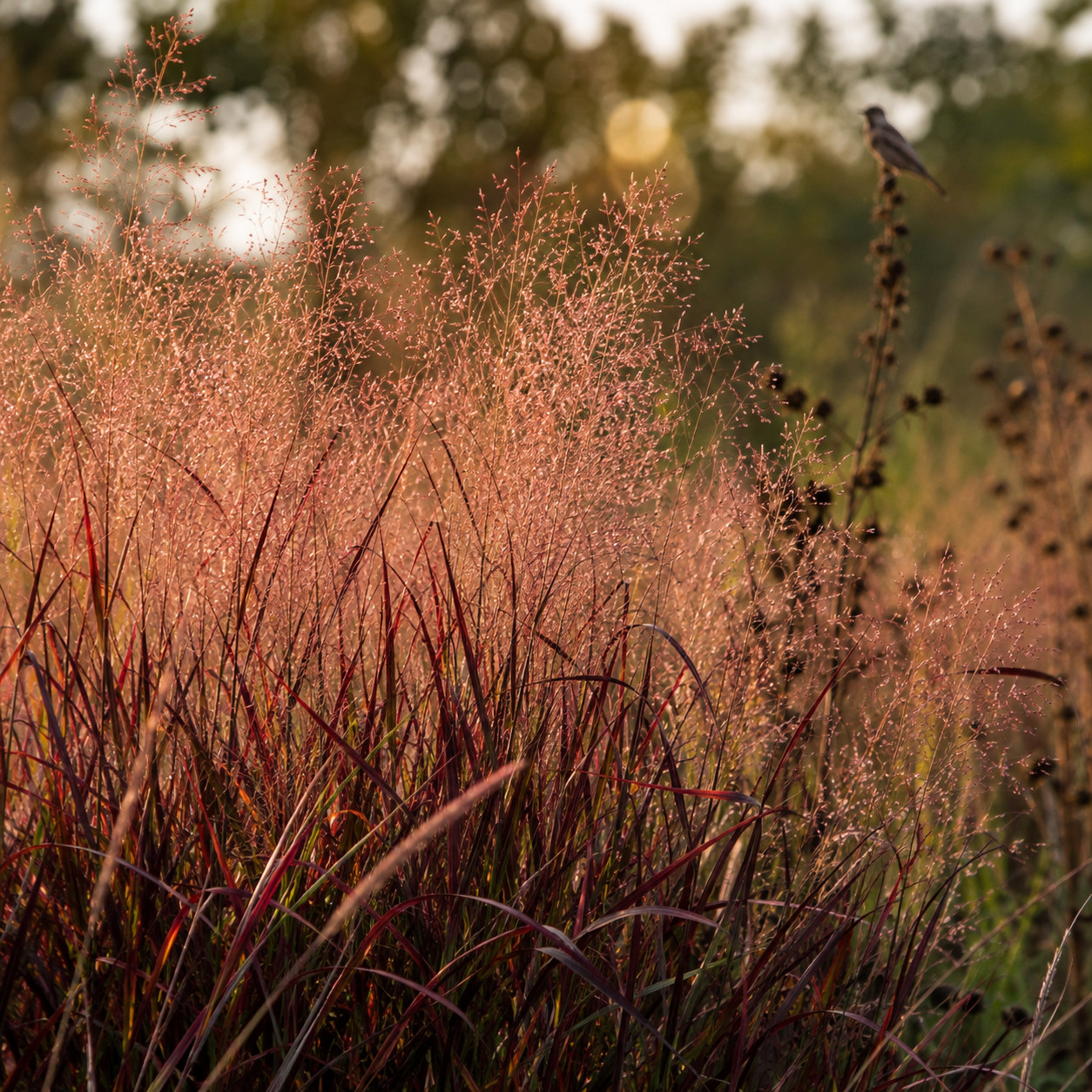
A native prairie grass that actually transforms as the season turns.
‘Shenandoah’ starts the summer green, then its blade tips redden to deep burgundy through late summer. Above the foliage floats an airy pink haze of seed heads.
It grows upright and stays put — no flopping over onto the lawn after a storm. And the seed feeds songbirds well into winter, so leave it standing.
Drought-tolerant once established. Plant it and mostly forget it.
7. Little Bluestem
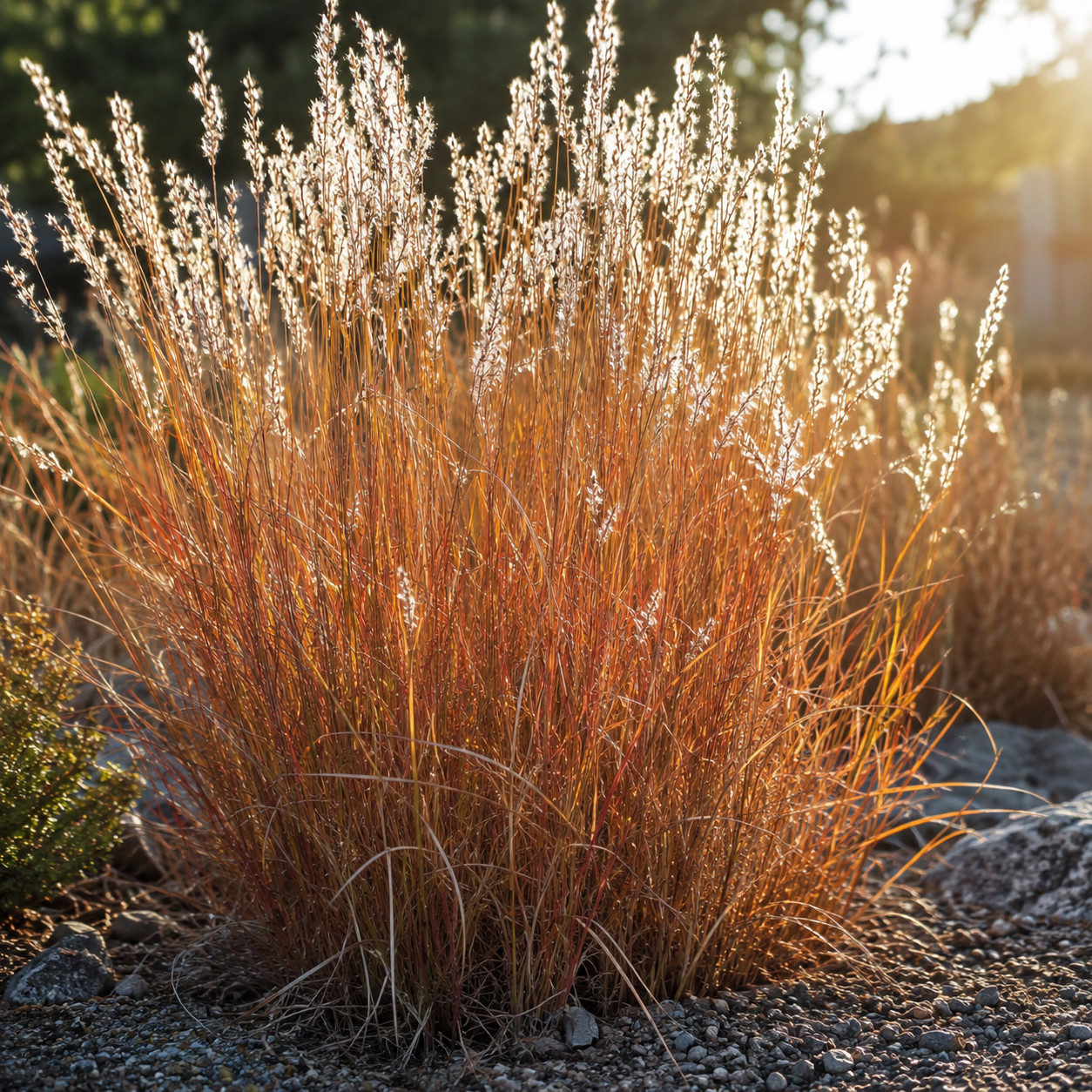
A four-season native workhorse, and a favorite for low-input beds.
Summer brings a cool silvery blue-green. Then late summer flips a switch — the whole plant ignites reddish-orange and copper, with fluffy seed heads that shift from purple to white and practically glow when the sun’s behind them.
It’s tough. Drought-tolerant, and one of the reliable deer-resistant plants for your landscaping, which makes it a homeowner’s friend in rough spots.
The University of Maryland Extension flags it as a top native pick, and it deserves the billing. Give it lean soil and full sun.
8. Big Bluestem

The tallgrass-prairie giant. Once it covered millions of acres of the American Midwest, and garden cultivars are getting easier to find.
Look for the seed heads. They split into three parts that look uncannily like a bird’s foot — the old prairie name is “turkey-foot.” Once you spot the shape, you can’t unsee it.
Late summer brings red accents through the foliage, and the plant can reach six feet or more. This is architecture, not edging.
Plant it where height reads as intentional, not accidental.
9. Prairie Dropseed
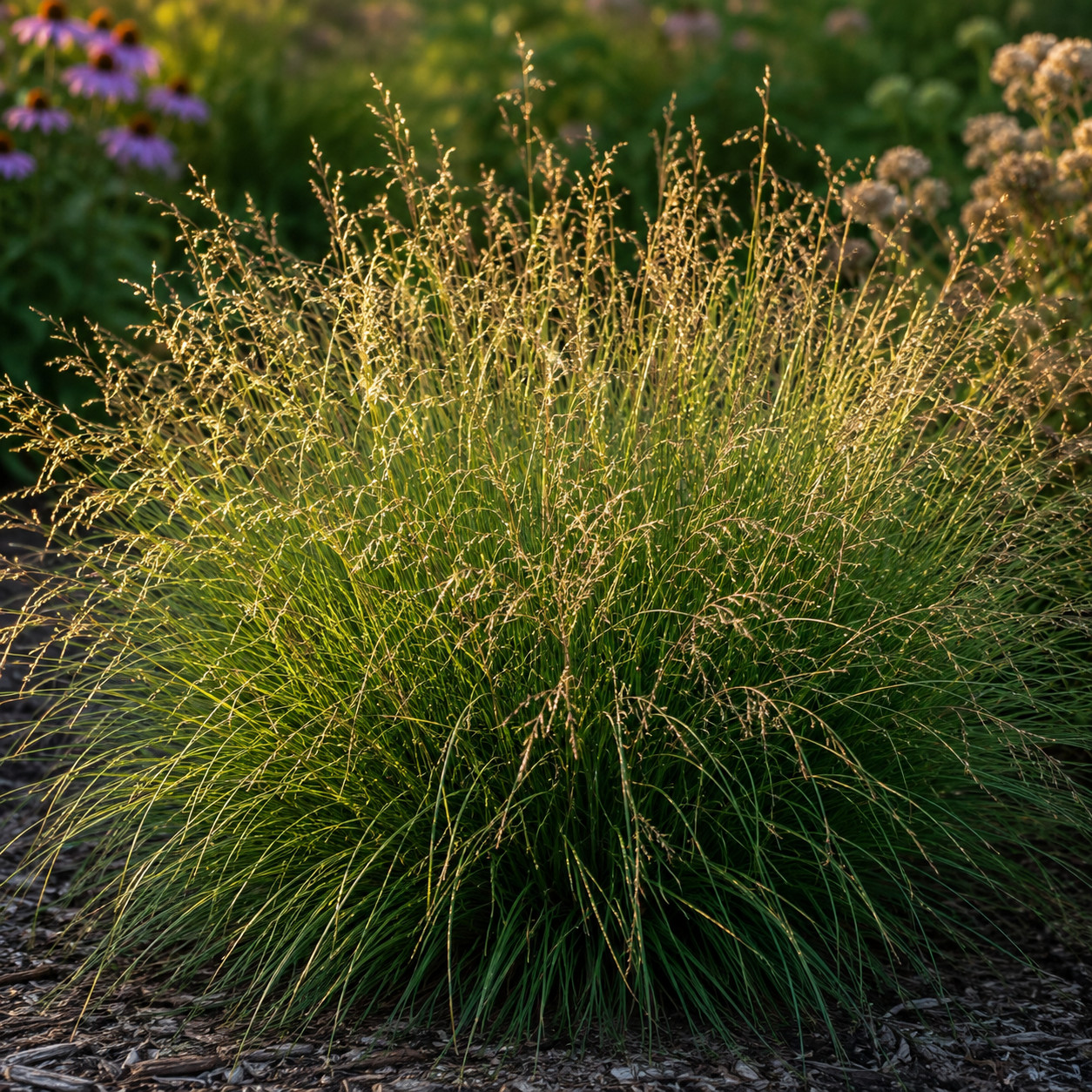
The sleeper hit of the whole list. Fine emerald mopheads, tidy and rounded, well-behaved in every bed.
Then it flowers in late summer, and the scent arrives.
People describe it different ways — coriander, buttered popcorn, warm cilantro. Whatever you call it, few other grasses give you a smell you’ll actually stop and notice.
It clumps neatly and never wanders. A sensory hook hiding inside a humble plant.
10. Purple Lovegrass

Short, tough, and gorgeous in a drift.
At one to two feet, purple lovegrass erupts in late summer into airy clouds of reddish-purple seed heads. Mass a few together and you get a low-drifting fog of color hovering just above the ground.
It thrives in poor, dry soil — exactly the kind of spot where nothing else wants to grow. Think hell strips, neglected borders, that baked stretch by the driveway.
Another native that the University of Maryland Extension notes for landscape use. Cheap thrills for a hard site.
11. Northern Sea Oats

Nothing else in the yard has seed heads like these. Flat, oat-like clusters dangle on thin stems, rattling softly in the breeze and catching light like little green coins.
Backlit at sunset, they’re spectacular.
Even better, this is one of the rare grasses that genuinely thrives in shade and tolerates average-to-wet soil. That makes it a woodland-garden anchor where most ornamental grasses would sulk. If you’ve got a tricky low-light corner, it belongs on your list of shade plants that thrive where grass refuses to grow.
Now the honest part. Northern sea oats self-seeds readily — sometimes aggressively. Those pretty dangling seed heads drop, and next spring you’ll find seedlings scattered well beyond where you planted.
Manage it and it’s a joy. Cut the seed heads before they ripen and drop if you want to keep it in bounds, or plant it somewhere a few volunteers won’t bother you. Skip it entirely if you want zero surprises. But don’t let it loose into a natural area next to a woodland — that’s how it becomes a problem.
12. Japanese Forest Grass
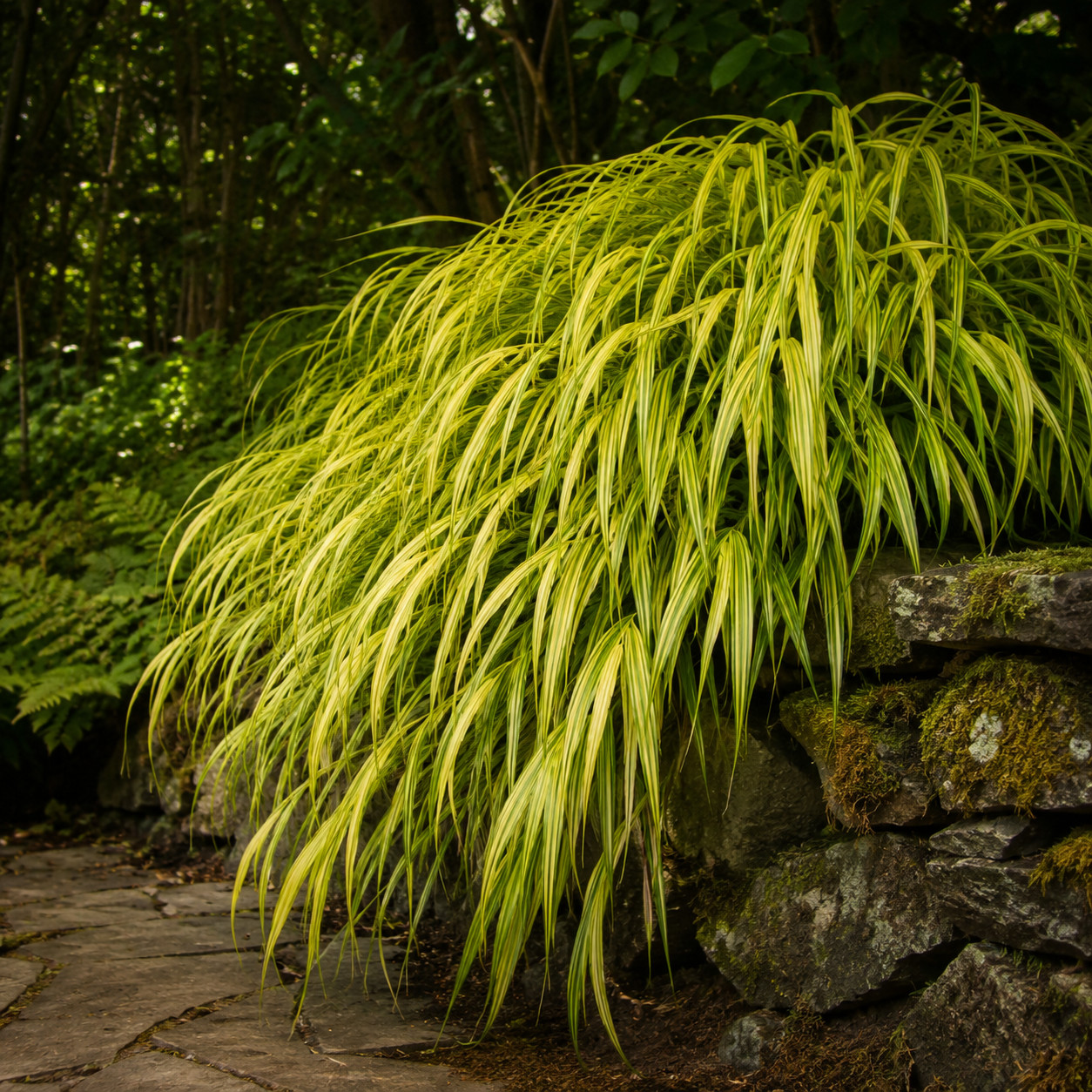
A living waterfall. Its arching golden blades spill over rocks, walls, and container edges in one smooth, flowing motion.
And it does it in the shade. That’s the rare trick — most ornamental grasses want sun, and this one glows in low light instead.
The gold color builds through summer and holds into fall. There are no showy plumes here, and you won’t miss them.
Use it for soft texture against all the upright, plume-topped prairie grasses. It’s the calm in the room.
13. Blue Fescue
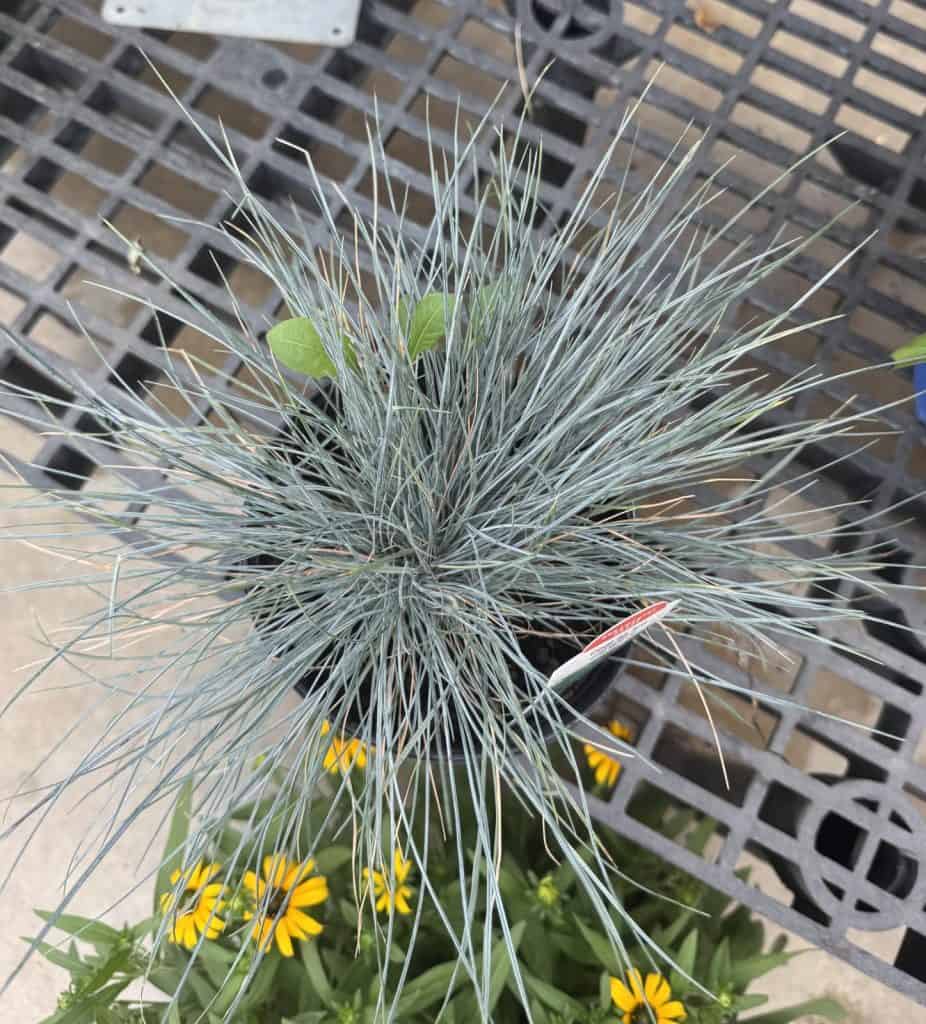
The little silver-blue pincushion. A tidy, compact clump grown almost entirely for that icy color, not for flowers.
It’s a stunner in spring and fall, and it plays beautifully off dark mulch or gravel.
Be honest with yourself about the tradeoffs, though. Blue fescue is a short-lived, cool-season grass that can sulk in hot, humid late summers, and it needs dividing every two or three years to stay looking sharp. The NC State Extension notes it prefers cooler conditions and sharp drainage.
If yours starts fading to brown in the dog days, that’s usually heat and moisture stress — and there are simple fixes for blue fescue turning brown. It earns its spot on color and structure. Just don’t expect a plume show.
14. Blue Oat Grass
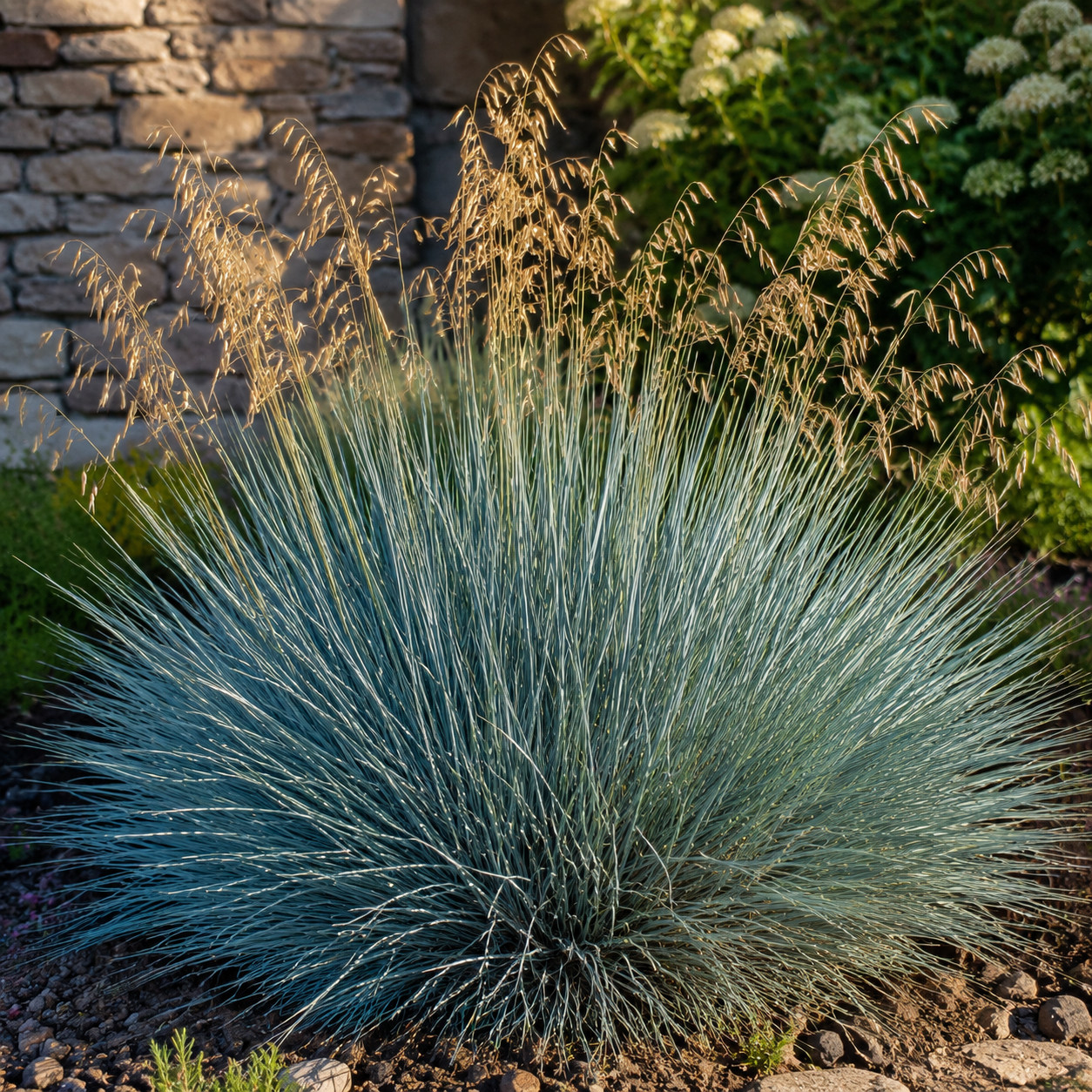
Blue fescue’s bigger, tougher cousin. Same steel-blue color, more backbone.
It forms a rounded fountain of spiky blue blades and sends up arching, oat-like seed sprays that ripen to tan through summer and fall. The result reads as a mid-size architectural accent — striking without being loud.
The real advantage over fescue is heat. Blue oat grass holds up far better when summer turns brutal.
Give it full sun and good drainage. Sitting water is the one thing it won’t forgive.
15. Mexican Feather Grass

If movement is what you’re after, nothing beats it. Impossibly fine, hair-like blades and feathery blond plumes that ripple in the faintest breath of wind. A drought garden favorite, and easy to see why.
But this one comes with a real warning, so read it before you buy.
Mexican feather grass reseeds aggressively, and it’s considered invasive in parts of the western United States, where it escapes gardens and crowds out native plants. In California and neighboring states especially, planting it can do genuine harm beyond your fence line.
Check your region first. If you’re anywhere it’s flagged as invasive, don’t plant it — period.
The good news is you can get nearly the same soft, flowing effect from better-behaved, clumping grasses. Prairie dropseed and blue oat grass both move nicely in wind without seeding themselves across the neighborhood. Mexican feather grass is beautiful. It’s just not worth the risk where it runs wild.
16. Liriope (Green + Variegated)
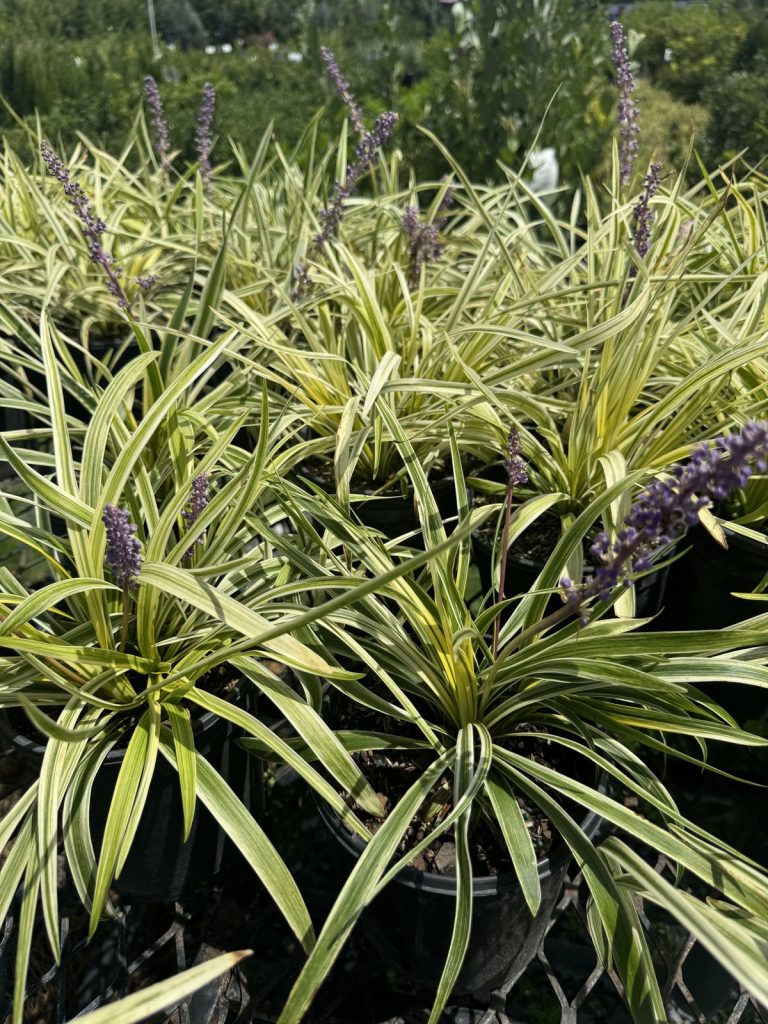
The everyday edging plant that quietly turns into a star each August.
You know the grassy clumps lining a thousand front walks. What people forget is the late-summer bloom — tiered, grape-hyacinth-like spikes of violet-purple that rise above the foliage, followed by clusters of near-black berries. Both the solid-green form and the creamy-edged ‘Variegata’ do it.
The variegated one brightens shade beautifully. The green one is bombproof.
Now the part that matters most, because it trips people up constantly. There are two very different plants sold as “liriope,” and they behave nothing alike.
The clumping type — Liriope muscari — stays put. It grows in a well-mannered mound, expands slowly, and is the one you want for edging. Buy this one.
The spreading type — Liriope spicata — runs by underground stems and takes over. It’s genuinely invasive across much of the Southeast, jumping beds and swallowing whole borders. The Clemson HGIC spells out the difference. Read the label, get the muscari, and skip the spicata unless you truly want a fast-spreading ground cover and understand what you’re signing up for. Before you commit either way, it’s worth reading up on why you should think twice before planting that low-maintenance ground cover.
Here’s the quick way to keep the two straight at the garden center:
| Liriope muscari | Liriope spicata | |
|---|---|---|
| Growth habit | Clumping, stays put | Spreads by runners |
| Best use | Edging, accents | Aggressive ground cover |
| Southeast risk | Well-behaved | Invasive |
| Buy it? | Yes | With caution |
When in doubt, buy the muscari. You’ll thank yourself in three years.
17. Plantainleaf Sedge
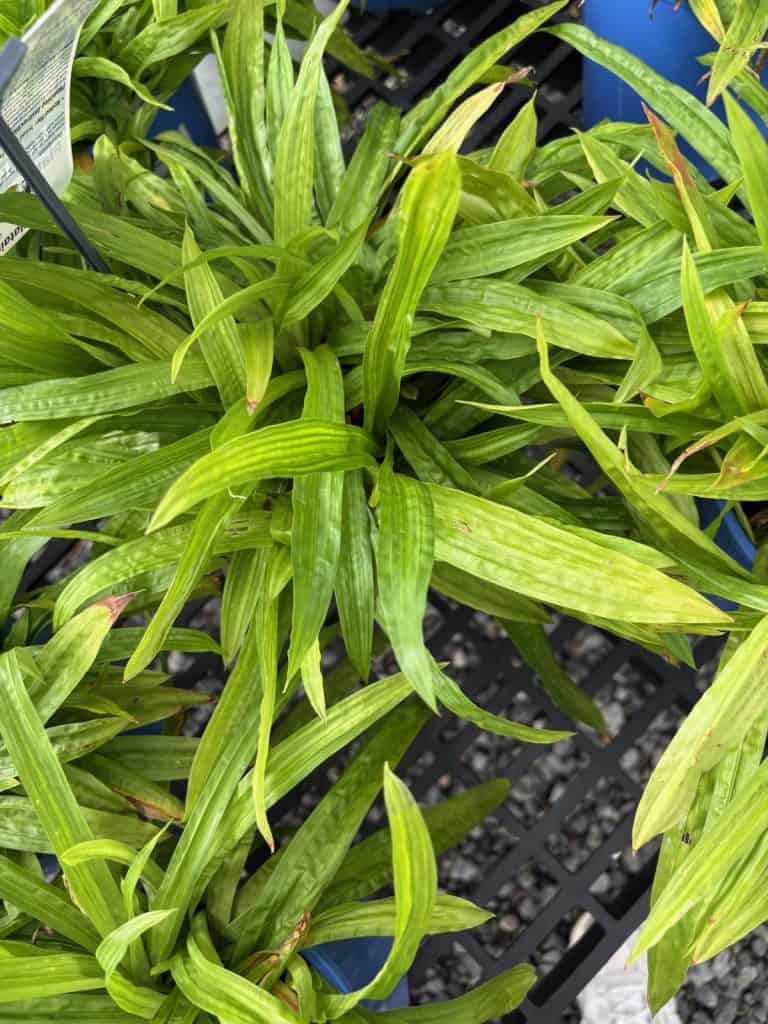
A curveball. Everything around it is fine-bladed and wispy — this one is broad, bold, and puckered.
Plantainleaf sedge is a native woodland plant with wide, seersucker-textured, lime-green leaves and wine-red sheaths at the base. It looks nothing like a grass, which is exactly why it works as a contrast.
It thrives in dry-to-moist shade where turf gives up entirely, making it a native, pollinator-friendly stand-in for hostas. The Mt. Cuba Center recommends it for shaded native plantings.
Fair warning: its flowers are a spring event, not a late-summer one. You plant this for the bold, textured foliage that holds all season long in shade. On that count, it delivers.
18. Pink Muhly Grass

Save the best for last.
For most of the year, pink muhly is an unremarkable clump of dark green blades. Then fall arrives and the whole plant vanishes under a billowing cloud of pink-purple flower panicles — cotton candy come to life.
Mass a few together, put the late sun behind them, and it’s jaw-dropping. Genuinely stops people on the sidewalk.
It also handles salt remarkably well, growing in near-pure sand, which makes it a coastal star where a lot of grasses won’t survive. The NC State Extension notes that toughness.
Full sun, room to spread, and patience through summer. The payoff is the best finale in the garden.
Bringing It All Together
The trick with grasses isn’t picking one. It’s layering them — a tall Miscanthus for the backdrop, a burgundy fountain grass mid-border, a drift of blue fescue or purple lovegrass at your feet.
Mix the heights, the colors, and the textures, and you get a border that peaks exactly when everyone else’s has quit. That’s the whole point of late summer.
Just watch the three troublemakers — Mexican feather grass, spreading liriope, and self-seeding sea oats. Plant the well-behaved ones freely and manage the rest, and your yard will be the one the neighbors slow down to look at come September.
Wonderfully informative and entertaining writing – I have book marked this site