

There’s a week in late October when the whole block quietly splits into two camps.
One half is still out there — final mow, hose coiled, pots emptied. The other half looked at the forecast, said something like “next weekend,” and never came back outside.
You can tell which is which from the sidewalk. It’s not about being fussy. Half of these habits aren’t cosmetic at all — they’re the ones that turn into a plumber’s invoice in December or a bald patch that’s still there next June.
And your neighbors notice. Not because they’re judging you, exactly. Because a yard that stopped getting attention in October looks different from a yard that got put to bed on purpose.
Here are 29 habits that broadcast the exact date you quit.
1. The Last Mow That Never Happened

A shaggy lawn heading into snow is the loudest signal on this list.
Grass left at four or five inches doesn’t stand up under snowpack. It mats flat, stays damp for weeks, and turns into a petri dish for gray and pink snow mold — plus a tidy little tunnel system for voles chewing runways through your turf.
Take that last cut down to about 2 to 2.5 inches, an inch or two shorter than you kept it all summer. Men’s Journal puts the final mow in that late-October-to-early-November stretch, once growth has genuinely stopped.
Don’t scalp it either. Short and tidy, not bare.
2. The Leaf Blanket Left to Mat Down
You were half right on this one.
A light scatter of leaves, chopped up by the mower, breaks down over winter and feeds the soil. That’s free fertilizer and it’s genuinely fine.
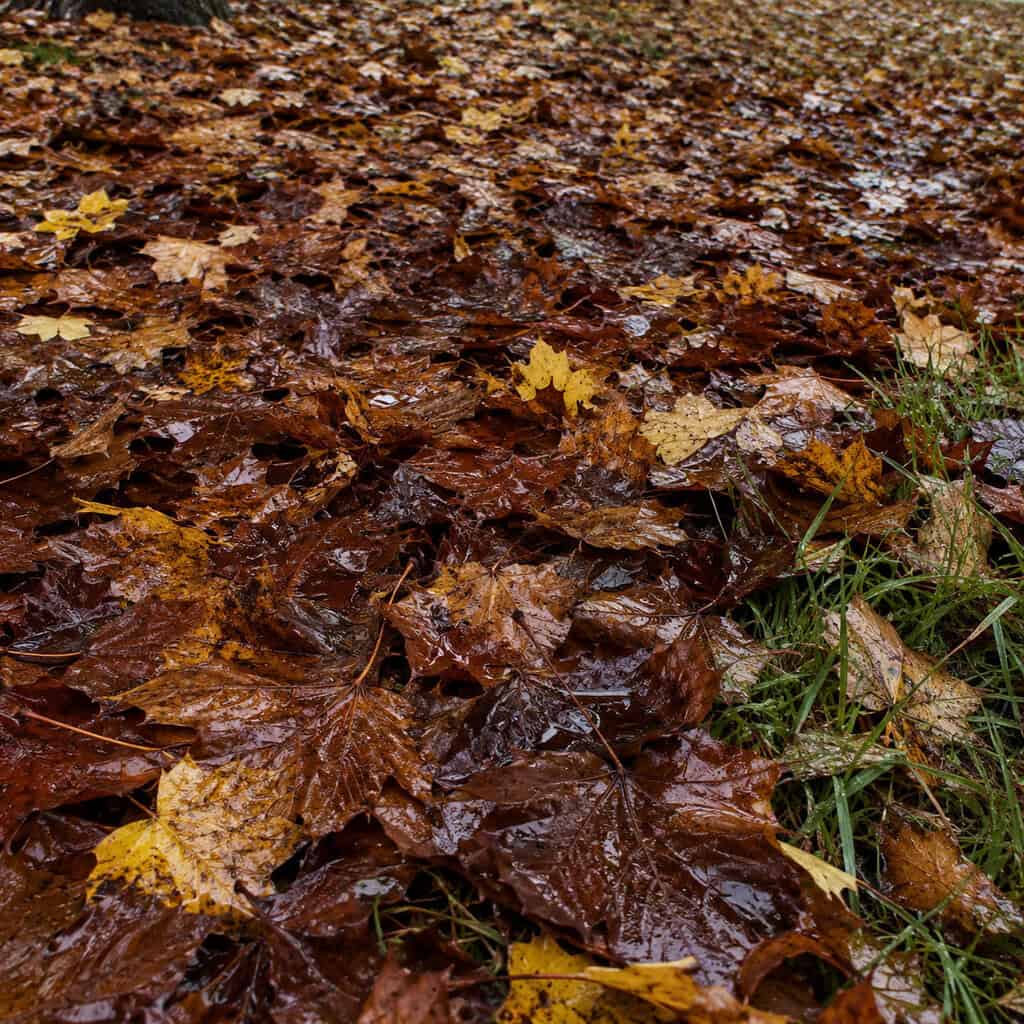
A solid wet mat is a different animal. It blocks light, holds moisture against the crowns, and under extended snow cover it’s the classic setup for snow mold — Iowa State’s extension flags that matted debris as a prime trigger.
The test is simple. If you can’t see grass through it, it’s too thick.
3. The Garden Hose Still Screwed Onto the Spigot

Everybody’s seen this one. The hose still coiled by the foundation in January, frozen into the shape it was left in.
Here’s why it matters more than it looks. Most newer homes have a frost-free sillcock — a long spigot whose actual shutoff valve sits eight or ten inches back inside the warm wall. Water is supposed to drain out of that long barrel every time you shut it off.
A connected hose blocks the drain. Water stays trapped in the barrel, freezes, and the expanding ice pushes back along the pipe until something splits — usually the copper inside the rim joist, in insulation, in the dark.
And nothing happens. The split is frozen shut. It stays frozen all December and January, sealed by the same ice that made it.
Then April comes, the thaw arrives, you turn on the spigot to water the beds, and pressurized water sprays into your rim joist. Restoration Doctors describes exactly this delay — the burst happens in winter and the discovery happens in spring, often as a stain spreading across a first-floor ceiling.
By then it’s not a plumbing repair. It’s drywall, insulation, flooring, and a mold inspection.
Unscrew the hose. Drain it, coil it, put it in the garage. Two minutes.
4. Halloween Decorations Still Up at Thanksgiving

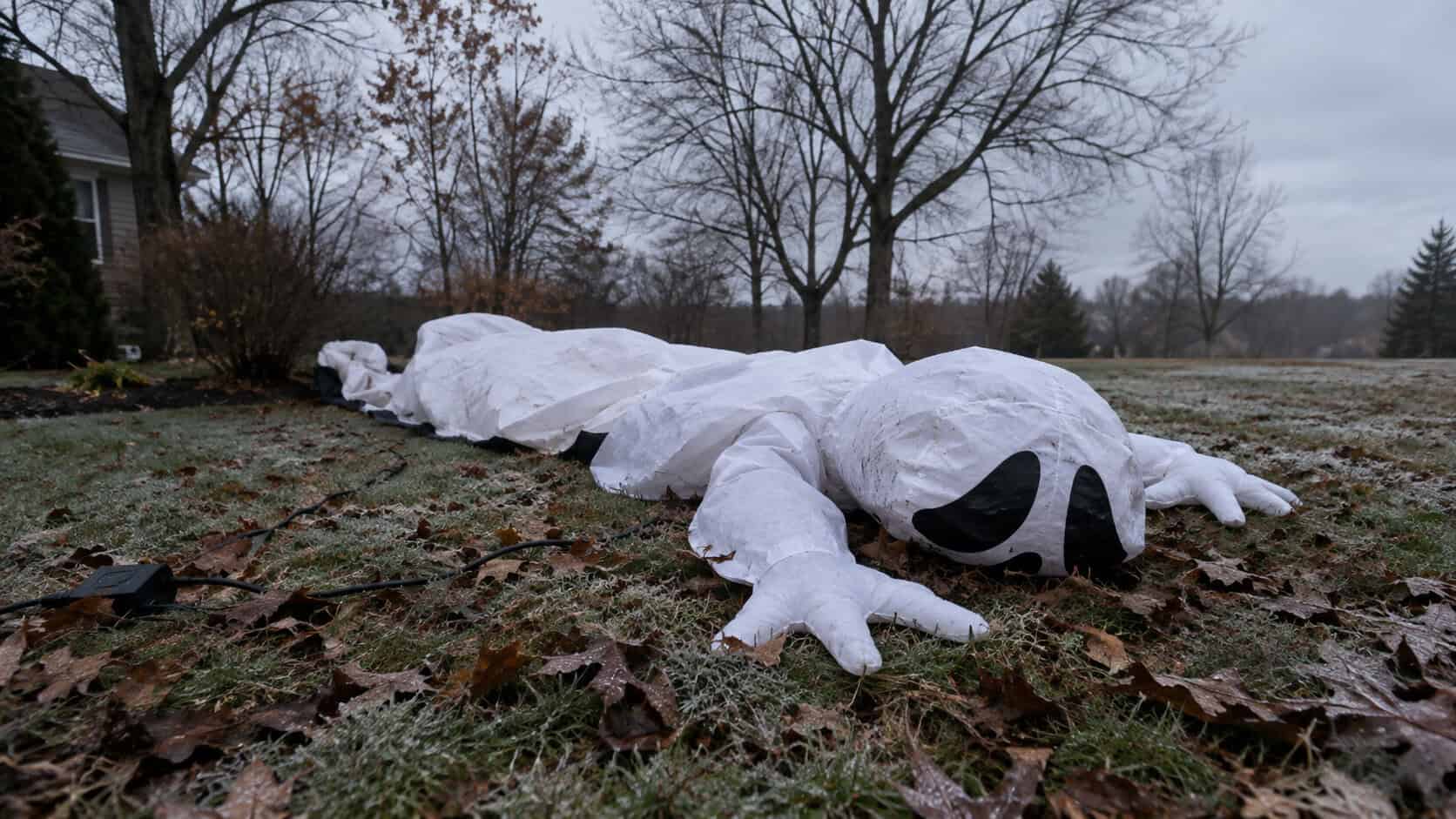
The deflated ghost lying face-down in the grass. The neighborhood punchline, every single year.
You get about a week of grace after November 1. After that the skeleton hanging from the porch column stops being festive and starts looking like nobody’s home.
There’s a practical side too. Inflatables go brittle in UV and cold, yard stakes freeze into the ground where they’ll snap when you finally yank them, and extension cords buried under wet leaves are a genuinely bad combination.
Pull it the first weekend of November.
5. Dead Annuals Still in the Front-Door Pots

Your front door is the most-looked-at square foot of your property. Blackened geraniums and collapsed petunia stems sitting there are hard to miss.
The frost gets them overnight and they never recover. Dump them.
And empty the pots while you’re at it. Wet soil in a terracotta or glazed container freezes, expands, and cracks the pot from the inside — you’ll find the pieces in March.
A few cut evergreen boughs jammed in the same pot costs nothing and reads as “still here.”
6. Gutters Packed With Maple Leaves

You can usually see this from the street. Leaf stems sticking up over the gutter lip, a little seedling already growing in the corner.
Clogged gutters do two expensive things at once.
First: ice dams. Water that can’t flow to the downspout sits in the trough and freezes. That ridge of ice traps the next round of meltwater running down from the warm part of your roof, and the water backs up under the shingles — shingles that are designed to shed water flowing downhill, not to hold it back uphill. It gets into the sheathing, then the attic insulation, then the ceiling below.
Second: the foundation. An overflowing gutter dumps hundreds of gallons in a concentrated stream right at the base of your wall instead of six feet out. That’s the same water you’ll be fighting in the basement come February.
Clean them after the bulk of the drop, not during. And check again in early December — oaks hold on late and will re-clog a gutter you cleaned in October.
7. The Fall Fertilizer You Never Put Down

Nobody can see this one. That’s what makes it sting.
Cool-season grass spends October and November doing root work and storing carbohydrates in the crown. Feed it then and the plant banks everything it needs for an early, deep-green spring. The Iowa State University Extension treats this late-season feeding as the most valuable application of the entire year.
Skip it and nothing happens. Not in November, anyway.
It happens in April, when your neighbor’s lawn greens up three weeks before yours and you’re standing there wondering what they did differently. They did this. There’s a whole set of fall lawn tips that decide how next spring’s grass looks, and feeding is the one people skip most.
8. Patio Furniture Left Out, Cushions and All

Cushions soak up October rain and never dry out. By December they’re mildewed through the foam, and no amount of scrubbing brings them back.
Frames suffer too. Steel and cast aluminum pit at the welds where the powder coating chipped, and rust works outward from there.
Then the mice find the foam and shred it into nesting material.
Cushions go inside. Chairs go under cover or stacked and strapped. Not complicated — just has to actually happen.
9. Blackened Tomato Vines and Leaning Cages
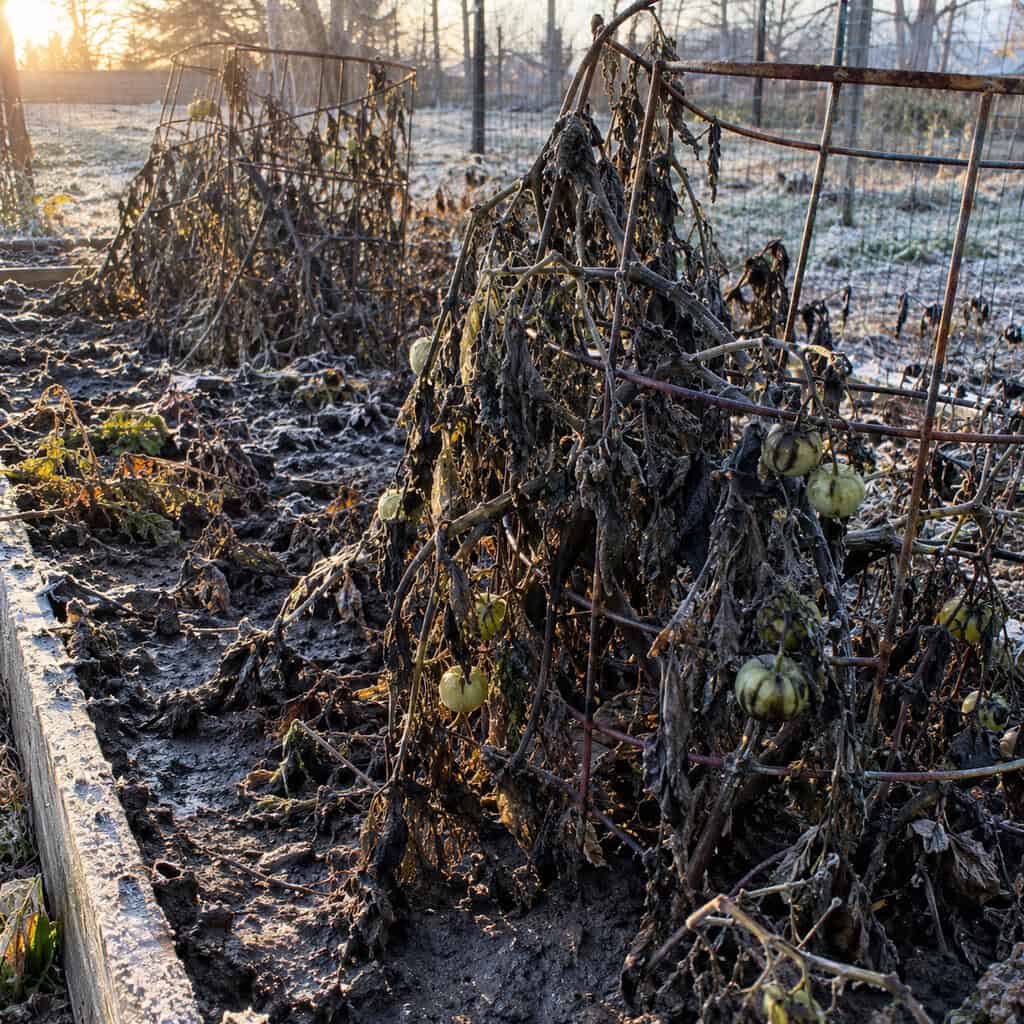
Frost turns the whole tomato patch to black rags overnight. Leaving it standing is worse than lazy.
Early blight and Septoria leaf spot survive winter in infected plant debris sitting right there in the bed. The University of Minnesota Extension is direct about it — removing that debris is the cheapest disease control you’ll ever do.
So those collapsed vines are next July’s problem, pre-loaded and waiting.
Pull them out. Don’t compost diseased foliage. Pull the cages too, before they freeze into the mud.
10. The Collapsed Jack-o’-Lantern on the Front Steps

Give it ten days and a carved pumpkin caves in on itself like a punctured ball.
Then it freezes, thaws, freezes again, and leaves a rust-colored stain on the concrete that outlasts the winter.
Meanwhile it’s a lit billboard advertising free calories. Squirrels first, then rats, then raccoons deciding your porch is worth a nightly visit.
Toss it in the compost the day it starts to sag.
11. The Sprinkler System You Never Had Blown Out
This one costs the most and shows the least.
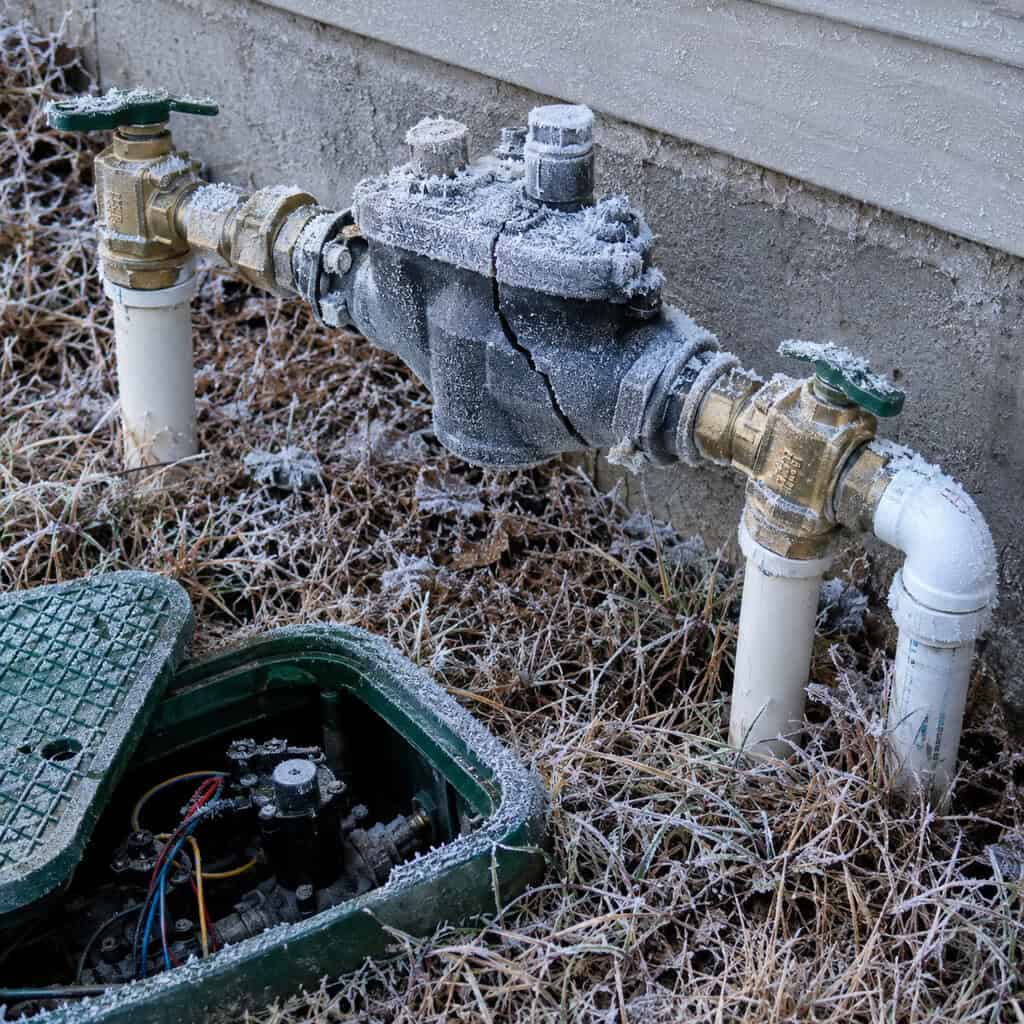
Water left sitting in an irrigation system doesn’t just freeze in the buried pipe. It freezes in the expensive parts — the backflow preventer sitting above grade, the valve bodies in the manifold box, the brass fittings. Ice expands roughly nine percent, and none of that plastic and brass gives.
Backflow preventers crack right across the body. Valve bodies split at the bonnet. Buried PVC lets go at the glued joints, which are the last place you want a leak because you can’t see it.
Nothing tells you. The system just sits there, quietly broken, all winter.
In May you flip the controller on and watch a wet spot appear in the parkway that spreads for an hour. A blowout with a commercial compressor usually runs $75 to $150 depending on zone count. Replacing a cracked backflow assembly plus digging up one bad valve box will clear several hundred, easy, and that’s before anybody repairs the trench.
Get it blown out before the first hard freeze. In northern zones that means early-to-mid October — not “when it starts feeling cold.”
12. Weeds Left to Flower and Go to Seed
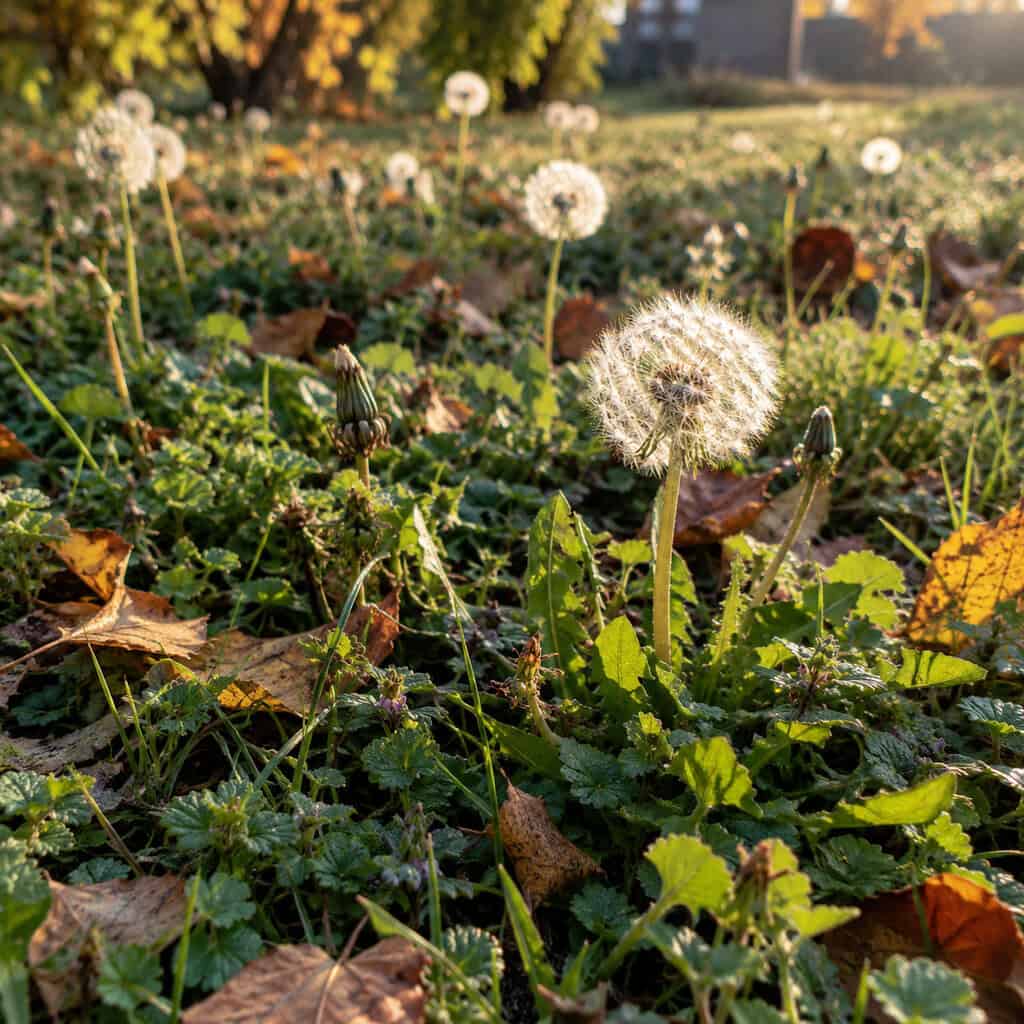
Fall is the best weed-killing window of the entire year, and almost nobody uses it.
Dandelion, clover, and creeping Charlie are all pulling sugars down into their root systems right now, getting ready for winter. Spray in fall and the herbicide rides that current straight down into the roots. Spray in spring and you’re fighting upward growth.
Skip October and you’ve handed every one of those plants two gifts — an intact root system and a fresh deposit in your soil’s seed bank.
One dandelion puts out a couple hundred seeds. Do that math across a lawn you ignored.
13. Firewood Stacked Flat Against the Siding
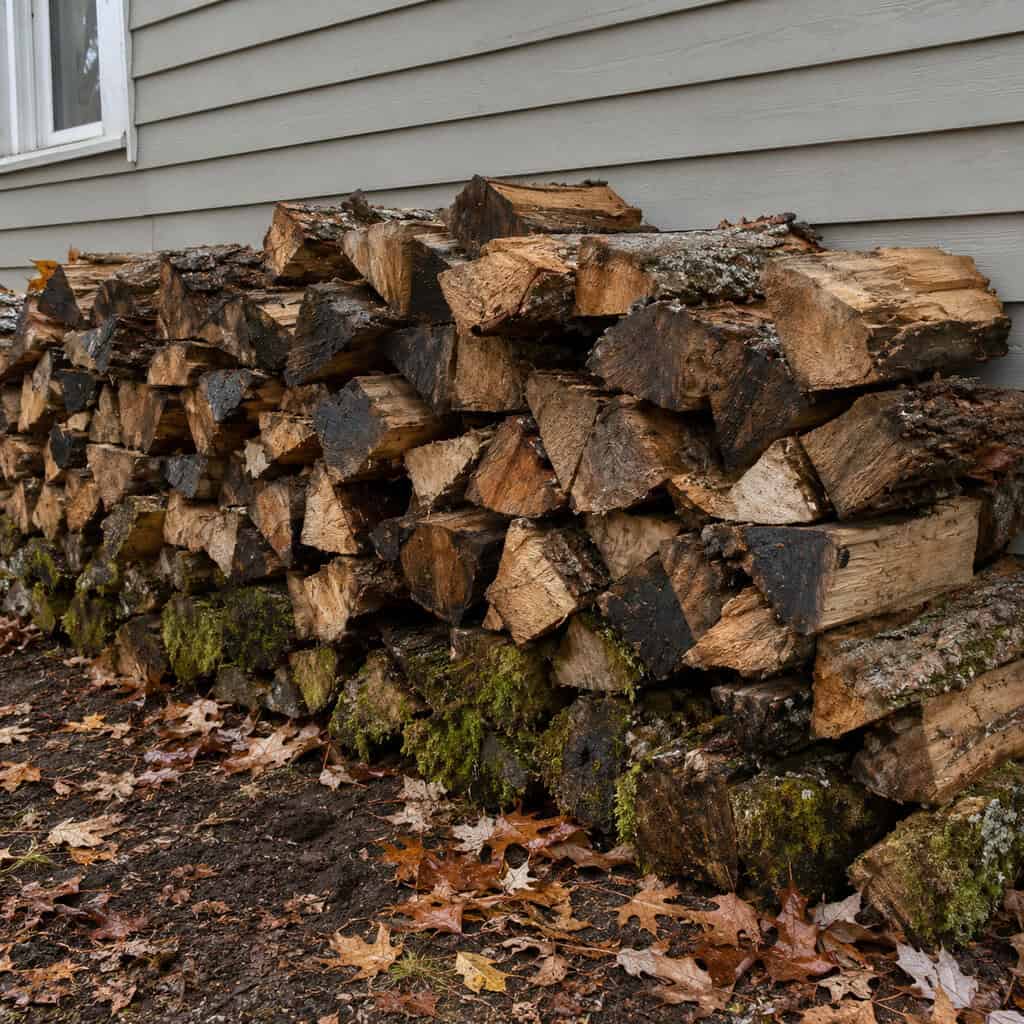
It looks so reasonable. Wood by the door, easy to grab on a cold night.
What you’ve actually built is a ramp into your house.
Subterranean termites live in the soil and travel through moist, protected channels. A woodpile sitting on dirt against your siding gives them exactly that — constant moisture, hidden cover, and direct contact with your structure. They don’t have to find a crack from the open ground; you’ve bridged the gap for them. Ohio State University Extension warns specifically about stacked firewood as a termite pathway.
Carpenter ants use the same highway. So do mice, which love a loose woodpile against a warm wall more than almost anything else you can offer them.
Move the stack. Twenty feet from the house is the standard guidance, up off the ground on a rack or rails, covered on top but open on the sides so it dries.
Bring in a day’s worth at a time. That’s it.
14. The Blue Tarp Over Something in the Yard
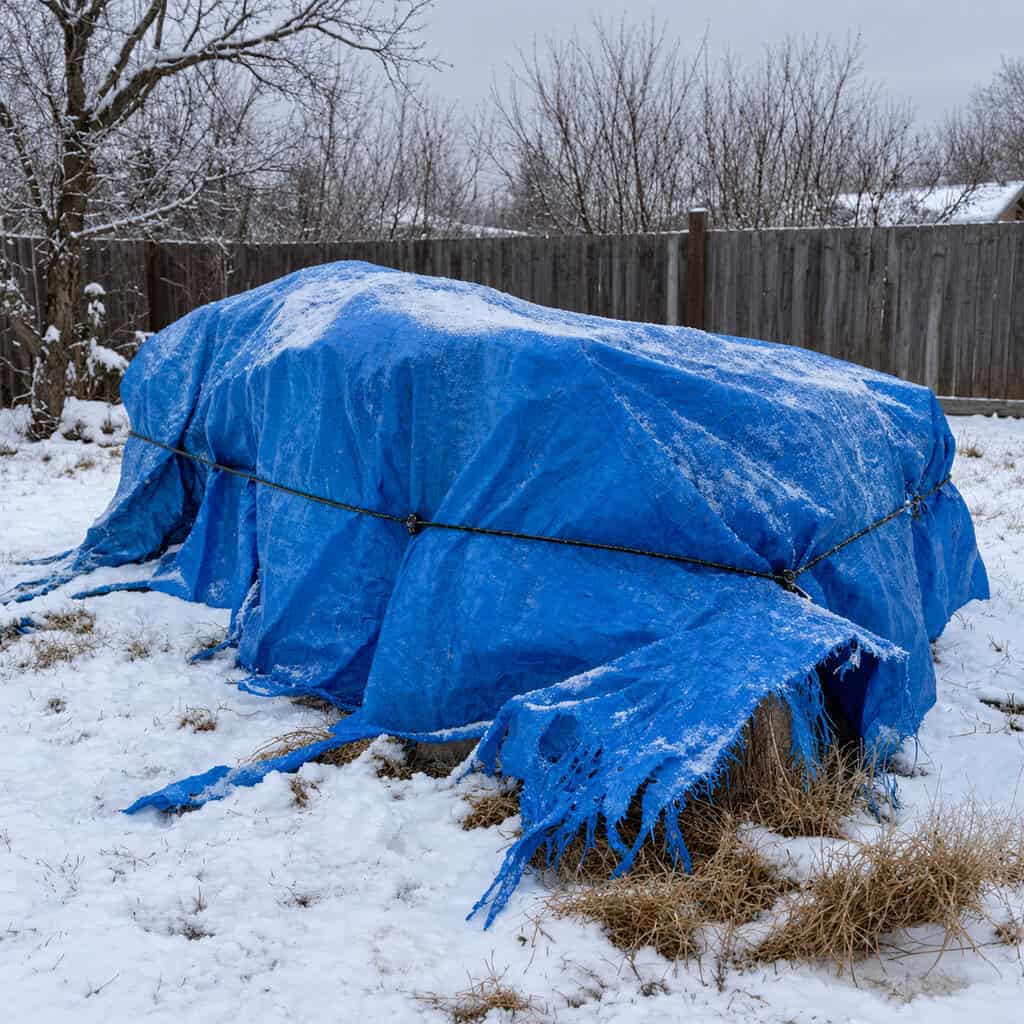
Nothing in landscaping says “I’ll deal with it later” quite like a bungee-corded blue tarp.
It appears in October over a mower, a boat, a stack of pavers. By January it’s a permanent feature of your yard.
It also isn’t helping. The grass underneath dies in about three weeks, condensation collects on the underside and drips onto the metal you were trying to protect, and by March the tarp itself has shredded into blue confetti stuck in your hedge.
Either put the thing away properly or buy a fitted cover.
15. The Aeration and Overseeding Window You Watched Close
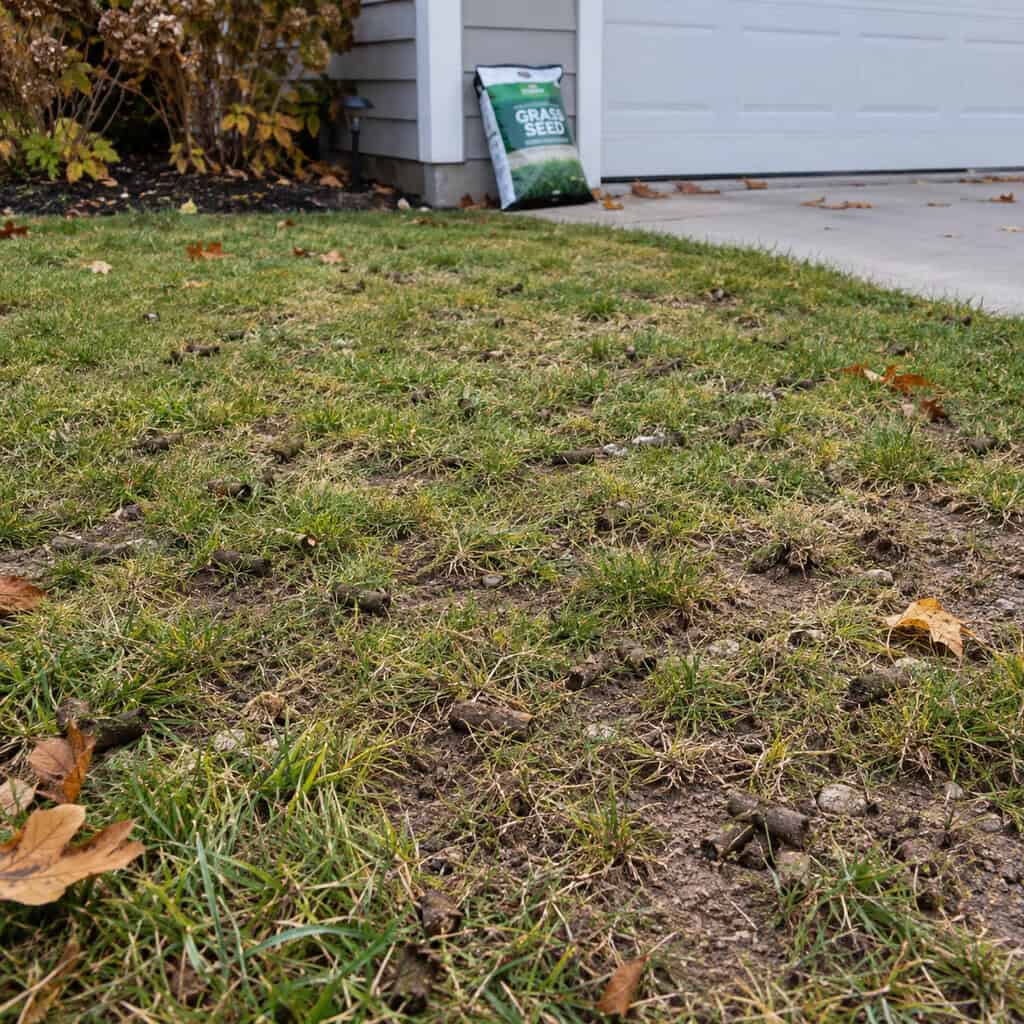
These are the two jobs with a hard calendar deadline, and the calendar does not negotiate.
Aerate September through mid-October. Overseeding a thin lawn works from late August to roughly mid-October, because new seedlings need warm soil plus several weeks of active growth to root before dormancy.
Drop seed on November 1 and most of it sits there. Some germinates just enough to die.
Miss the window and your thin patches are locked in. Not until spring — until next fall.
16. The Mower Parked Wet With a Full Tank of Gas

You finished the last mow, rolled it into the shed, and shut the door. Nothing else happened.
Untreated ethanol fuel absorbs water and starts varnishing the carburetor jets within a few months. Wet clippings caked on the deck hold moisture against bare metal and rust it from the inside. And a warm air filter housing is a five-star mouse condo.
In April it cranks and cranks and won’t catch. You’ll blame the mower.
Run the tank dry or add stabilizer, scrape the deck, pull the plug and fog the cylinder. Twenty minutes in October.
17. The Rain Barrel, Birdbath, and Wheelbarrow Left Full
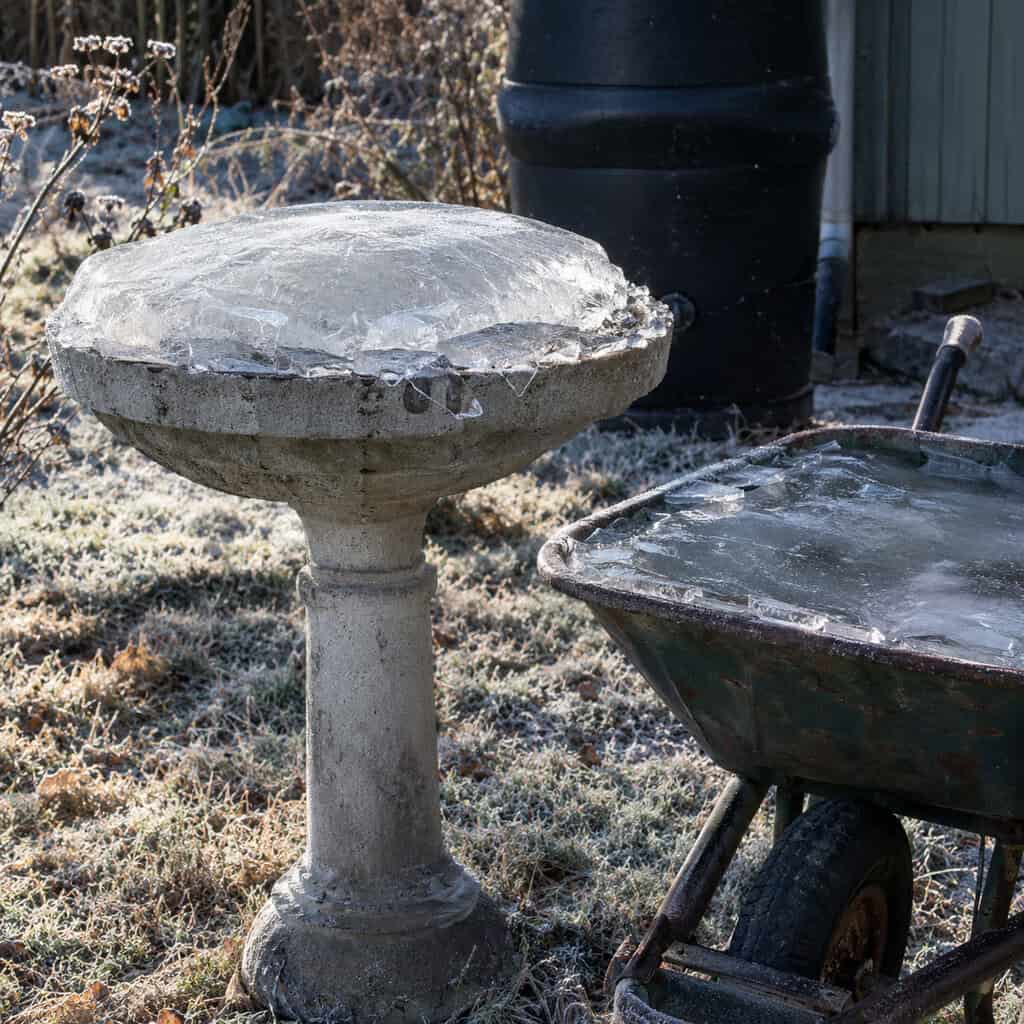
Anything holding water in November is a thing that will split.
Poly rain barrels bulge and crack along the mold seams. Concrete birdbaths flake apart layer by layer as water in the pores freezes and expands. And a wheelbarrow left half full of rain becomes a forty-pound ice puck you can’t tip, can’t move, and can’t use until March.
Dump everything. Flip the barrow upside down.
18. Leaf Drifts Piled Against the Foundation
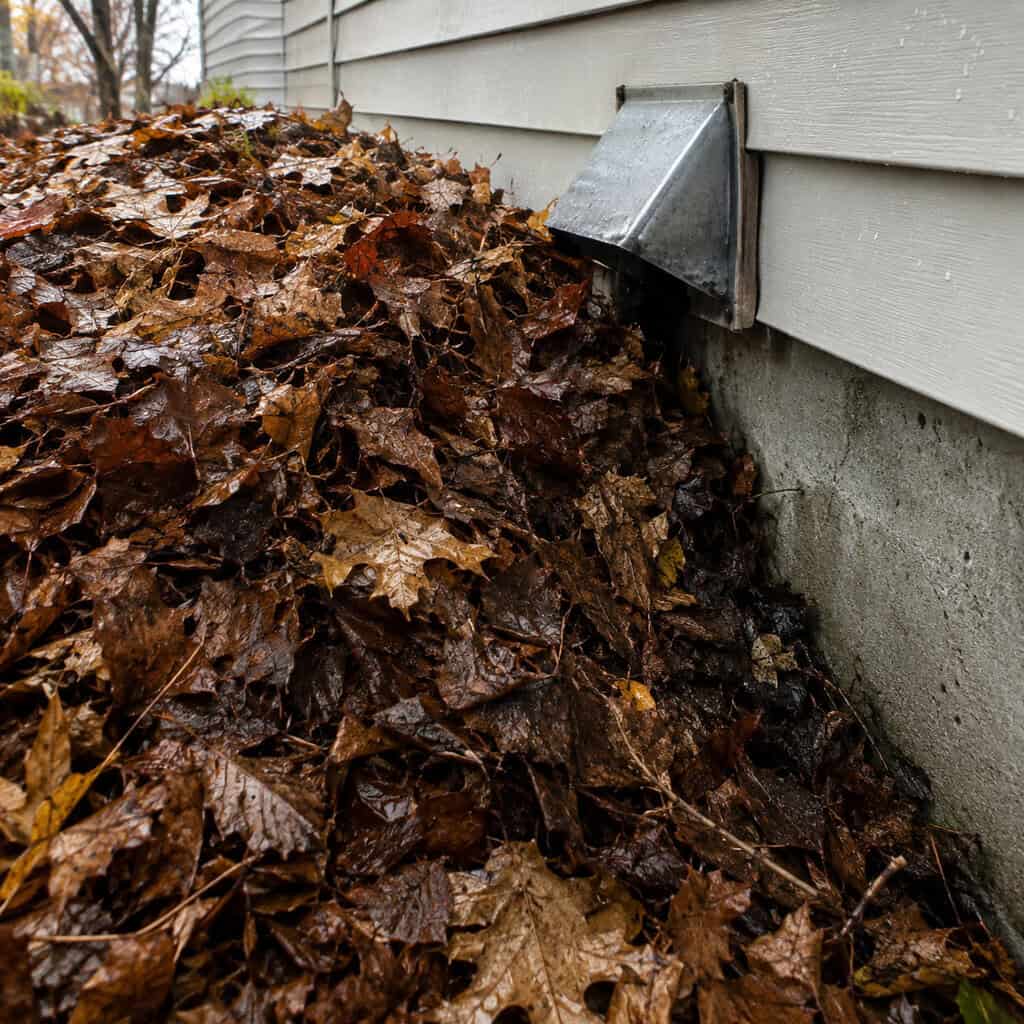
The wind does this for you, which is why it gets ignored. Leaves collect in the corner where the deck meets the siding, two feet deep and damp all the way through.
You’ve built the best rodent hotel on the block without lifting a rake.
A mouse needs a gap about the width of a pencil — roughly a quarter inch. Around your foundation there are plenty: the gap where the dryer vent enters, the sill plate seam, the spot where the AC line set was drilled through and caulked badly in 2011. A deep leaf drift hides all of it and gives a mouse warm, dry cover while it works the perimeter looking for the opening.
The moisture problem runs alongside it. A wet leaf pack against the wall never dries out — no sun, no airflow. It wicks water into the bottom course of siding and holds it against the sill plate and sheathing edge for four straight months.
That’s how you get soft, punky wood at the base of a wall in a house with no obvious leak anywhere.
Rake a clear band twelve to eighteen inches wide all the way around the foundation. Bare soil or mulch. Then check that band again after the next windy week, because the wind will refill it.
19. Kids’ Toys and the Trampoline Still on the Grass
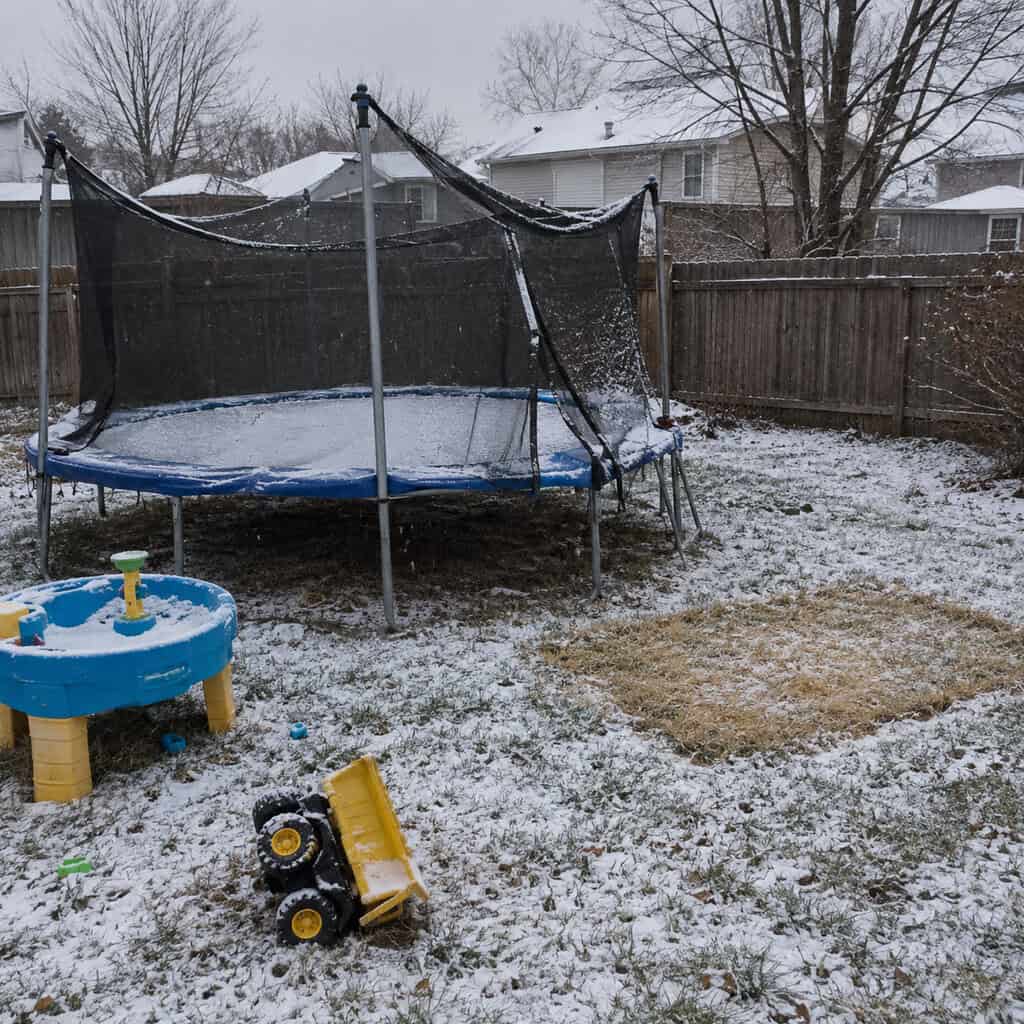
Every flat object left on turf prints a yellow rectangle. Leave the water table there all winter and the outline is still visible in June.
The trampoline is the bigger deal. Un-anchored, it’s a thirteen-foot sail. One good winter gust and it’s in someone else’s fence, and that conversation goes poorly.
Anchor it with ground stakes or take the mat and net off for the season. Move the toys.
20. You Stopped Watering the Day It Got Cold
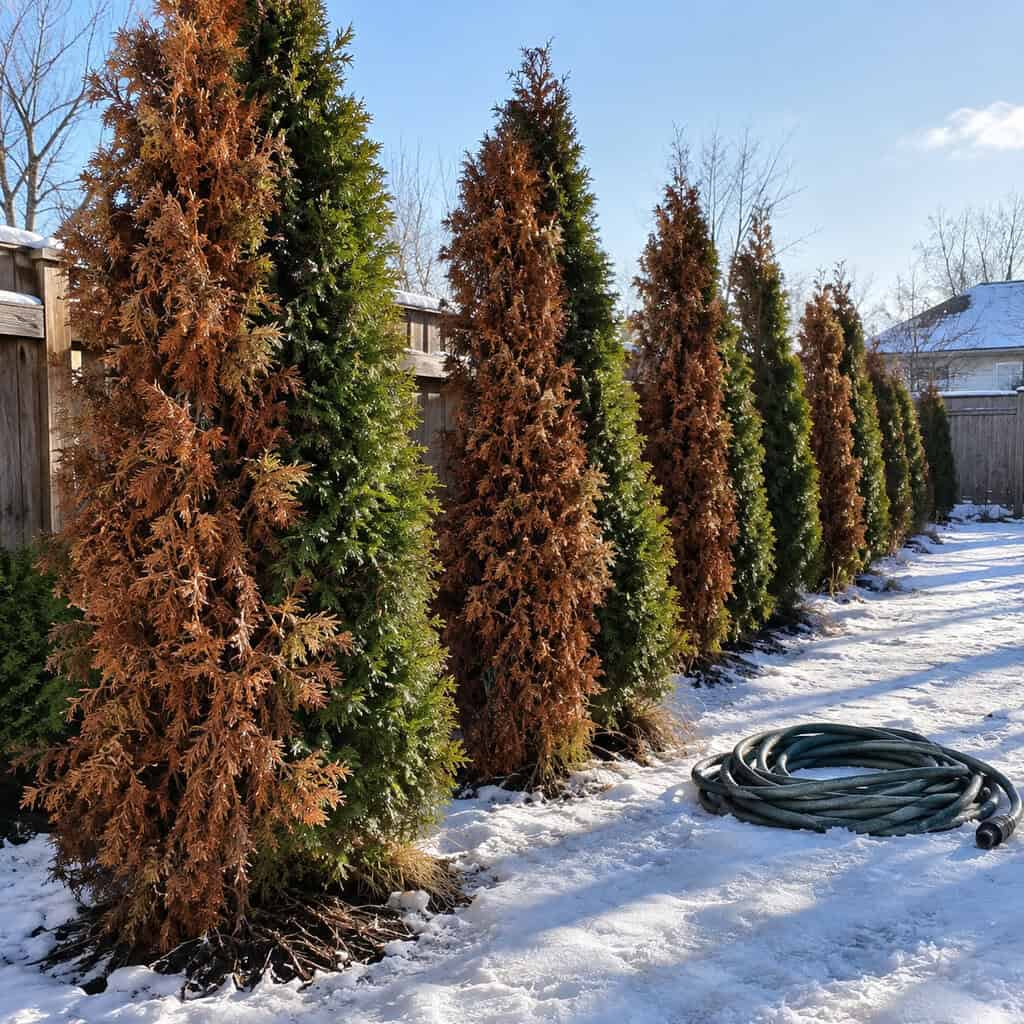
Cold air doesn’t mean plants stopped drinking.
Evergreens keep losing moisture through their needles and leaves all winter long, and frozen soil can’t replace it. Arborvitae, boxwood, and anything you planted in September are the most vulnerable.
Skip the final deep soak and they come out of winter bronzed and crispy on the windward side. Most people blame the cold. It was drought.
Give every evergreen and new planting one long, slow soak right before the ground freezes.
21. Downspouts Dumping Straight Against the Foundation
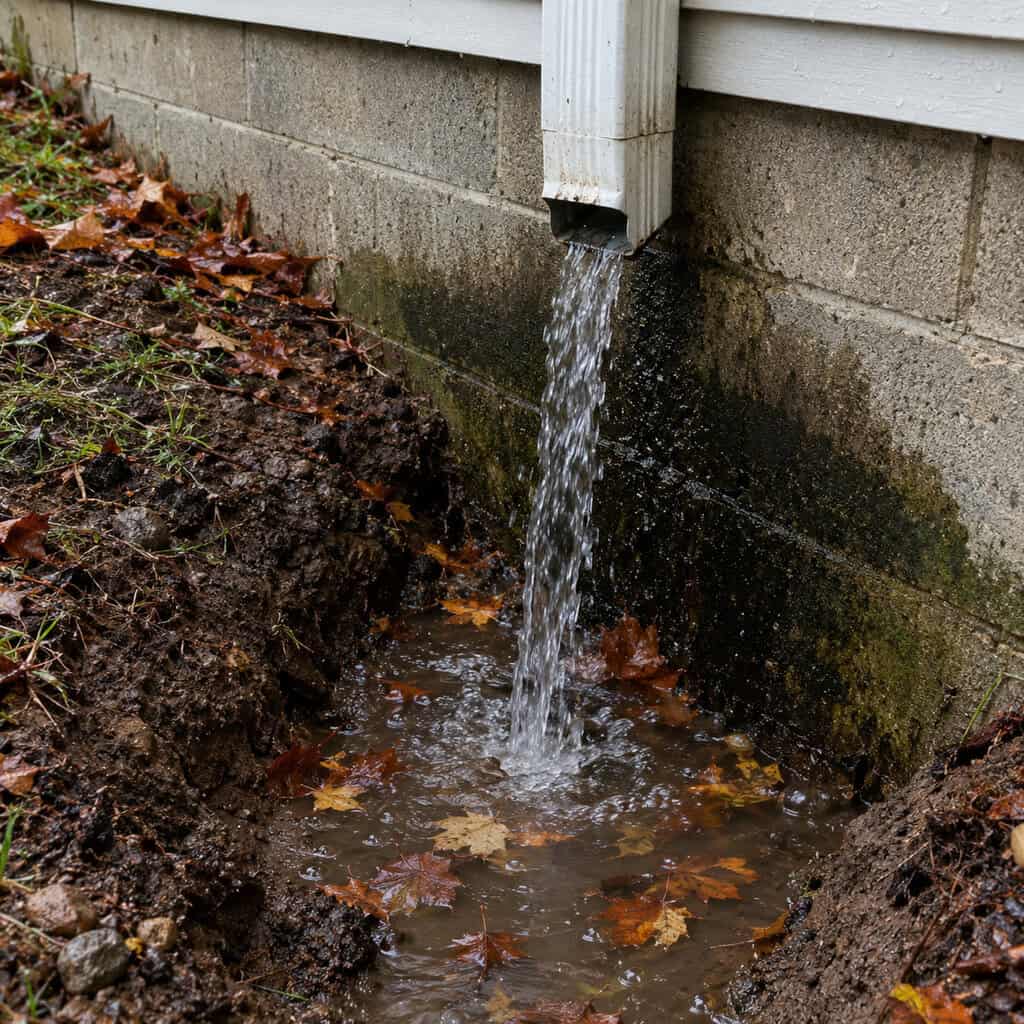
The extensions came off in June so you could mow. They never went back on.
Now every October storm sends the runoff from a few hundred square feet of roof into one spot eighteen inches from your basement wall.
That water goes down, saturates the backfill soil, and creates hydrostatic pressure — the standing weight of wet soil pushing sideways and upward against concrete. It finds the cold joint where the wall meets the footing, or the tie-rod holes, or a hairline crack. Then it’s inside.
The freeze-thaw cycle makes it worse. Saturated soil expands as it freezes, pressing against the wall, then contracts in the thaw, leaving voids the next rain fills. February is peak season for basement seepage for exactly this reason.
Fixing it is cheap compared to what it prevents. Get the discharge at least four to six feet from the wall — ten is better on flat lots. Check the grading while you’re down there: you want the ground dropping about six inches over the first ten feet away from the house, not sloping back toward it. And if you’ve got standing water after storms, there are real ways to stop yard flooding when it rains before it becomes a foundation problem.
Nobody photographs this kind of neglect. It just shows up as a $12,000 estimate.
22. Dead Limbs Left Hanging Over the Driveway
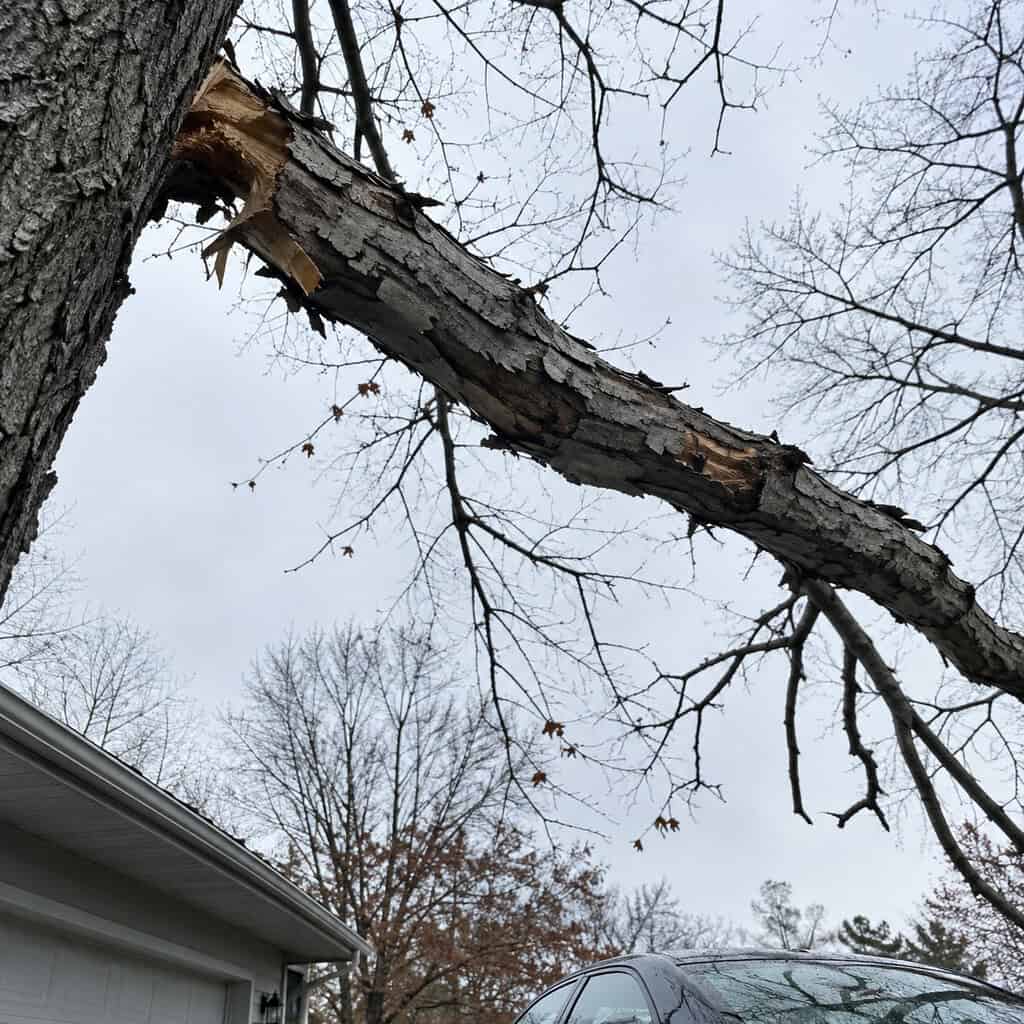
Once the leaves drop, every dead limb in your trees is plainly visible. Gray bark, no buds, often hung up in the branches below it. Arborists call them widowmakers for a reason.
Ice changes the math fast. A quarter-inch glaze adds real weight to every twig and branch surface on a limb; a half-inch coating can multiply the load enough to snap wood that held fine all summer. Wet snow does the same thing at a different speed.
What’s under it decides how bad the day gets. A car. The garage roof. The service drop carrying power into your house.
And the liability question is uncomfortable. If a limb you could plainly see was dead comes down on your neighbor’s car or shed, you’re in a much weaker position than if a healthy tree failed in a storm. Insurers and courts both care about whether the hazard was known and ignored. Photos of a bare, obviously dead limb in November don’t help you.
October is the last easy window. The leaves are off so you can actually see the problem, the ground is still firm enough for a bucket truck, and crews aren’t yet booked solid doing emergency storm work at emergency prices.
Walk your property line and look up.
23. Perennials Melted Into a Slimy Heap

This one has a real verdict, and it’s not “cut everything.”
Cut back the mush-formers. Hosta, peony, bearded iris, daylily — they collapse into slime that harbors disease and slugs. Clean them out.
Leave standing coneflower, rudbeckia, sedum, and ornamental grasses. Seedheads feed finches all winter, hollow stems shelter native bees, and the structure looks intentional against snow. NC State Extension makes the case for leaving stems up through the first winter.
The difference between deliberate habitat and plain neglect is visible from the sidewalk. One has upright stems and seedheads. The other is a brown puddle.
24. Landscape Lights Dead and Solar Stakes Buried in Leaves

Sunset hits 4:45 after the clocks change. A yard with no working lights turns into a black hole for the next four months.
Burned-out path lights nobody replaced. A porch fixture with two dead bulbs. Solar stakes smothered under leaf litter, panels facing nothing, charging never.
A dark house reads as an empty house, which is exactly the wrong signal in December.
Replace the bulbs. Wipe off the solar panels. Ten minutes buys you a yard that looks occupied.
25. Leaves Raked Into the Street and Over the Storm Drain
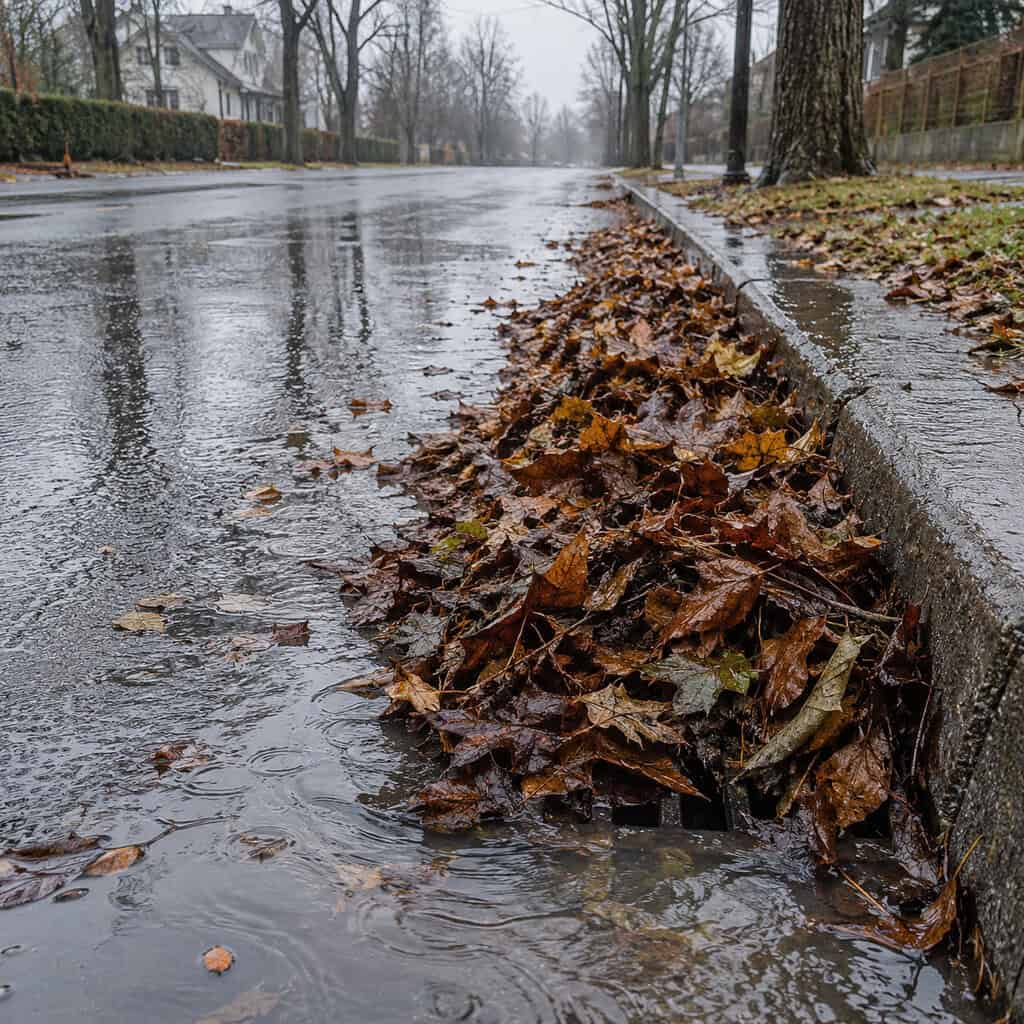
Municipal pickup makes this feel legitimate. Sometimes it is — if your town actually vacuums piles on a schedule.
What’s not legitimate is the pile sitting over the storm drain grate. First hard rain, the intersection ponds, and somebody’s tires are in six inches of water.
Those leaves also leach phosphorus straight into local waterways as they break down in the gutter, which feeds algae blooms downstream.
And in plenty of towns it’s a code violation with a real fine attached. Check your city’s rules before you build a berm in the street.
26. Fallen Crabapples Rotting Under the Tree
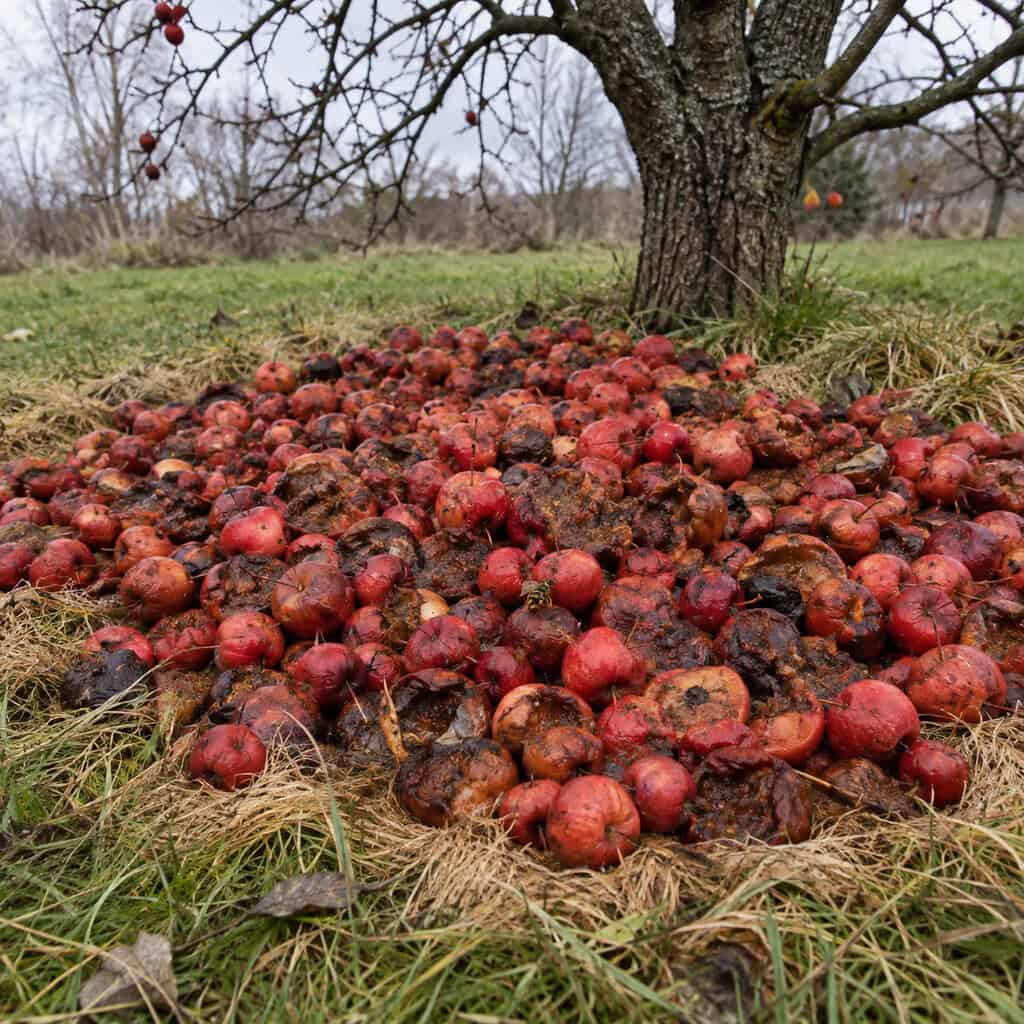
A mature crabapple drops thousands of fruits. Left there, they ferment.
Yellowjackets come first, drunk and aggressive right when kids are out. Then rodents. Then deer, which will now consider your yard a regular stop.
Underneath it all, a brown fermenting mat smothering the grass into a dead circle.
And the spores. Apple scab overwinters in that fruit and leaf litter, then splashes right back up into next spring’s new leaves. Rake it up and the tree looks better in May.
27. The Bird Feeder Hanging Empty Since Labor Day

October is when birds start mapping out their winter. They’re scouting which yards have reliable food and building routes around them.
An empty feeder, swinging in the wind, seed port green with mildew, is the quietest item on this list. No consequence, no repair bill.
It just says somebody stopped paying attention.
Scrub it with a weak bleach solution, dry it, fill it with black oil sunflower. You’ll have chickadees inside a week.
28. Dog Waste Left to Accumulate Under the Snow

Nobody wants to walk the yard in 28-degree drizzle. Understood.
But it doesn’t break down in cold weather. It accumulates, gets buried, and reappears all at once during the thaw — along with the nitrogen burn spots that killed the grass beneath each pile.
The spring melt also carries all of it toward the storm drain in one concentrated rush.
Pick up weekly right through the winter. Future you, in March, will be grateful.
29. The Dead Shrub Nobody Pulled Out
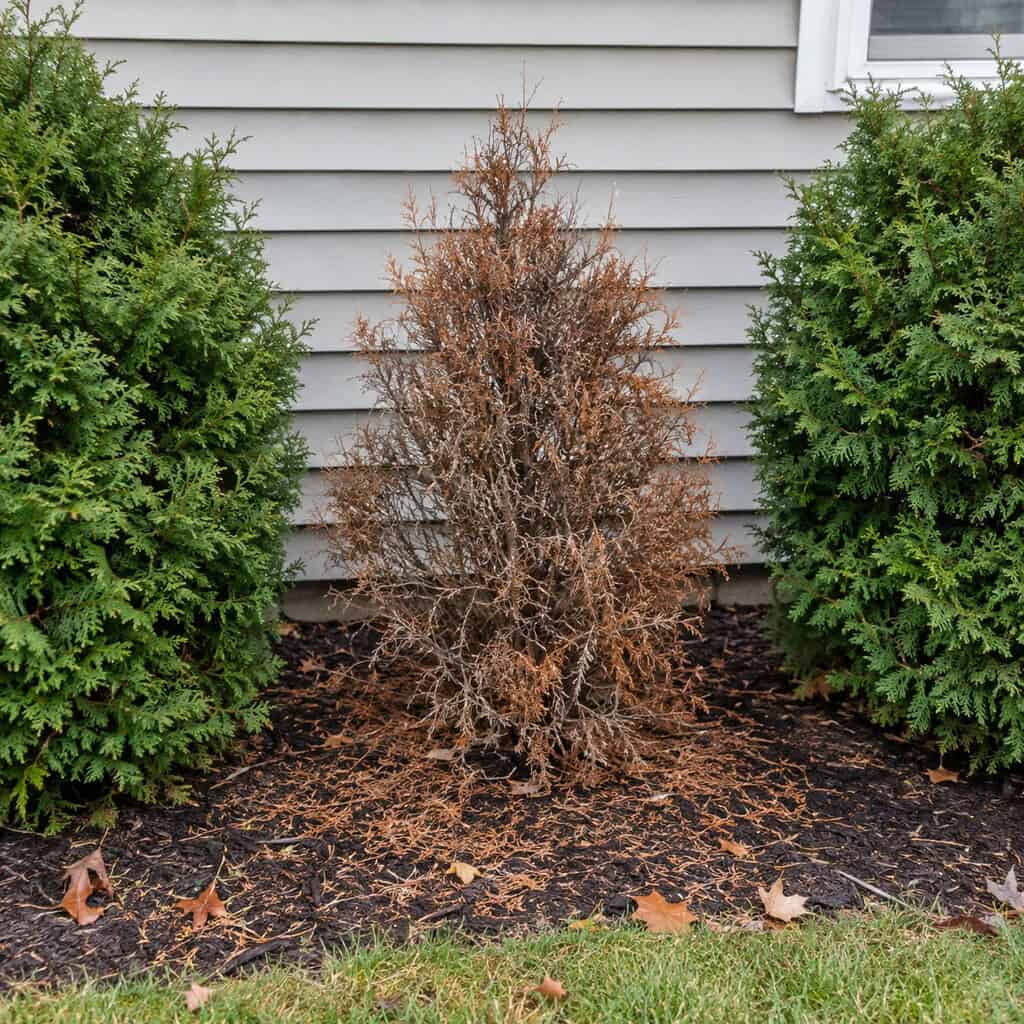
A skeleton juniper in the foundation bed. A boxwood that went brown in August and never came back.
Once the leaves are off the neighbors’ shrubs, yours is obvious — the one that’s still bare when everything else leafs out.
Here’s the comparison that matters, since both of these are on the list and people treat them the same:
| Dead Shrub | Dead Limb | |
|---|---|---|
| Main risk | Curb appeal, pests in dry wood | Falling on a car or roof |
| Urgency | Before spring | Before the first ice |
| DIY? | Usually yes, with a shovel | Call a pro if it’s overhead |
| Cost if ignored | Property value | Insurance claim |
One is cosmetic and can wait for a nice Saturday. The other can’t.
Pull the shrub while the soil is still workable. A dead root ball in frozen February ground is a two-hour fight.
None of this takes a whole weekend. Most items on this list are five to twenty minutes, and the expensive ones — the hose, the sprinklers, the downspouts — are the fastest of all.
What they have in common is a deadline. October gives you a window that closes hard, and the yard keeps a record of whether you used it.
Pick the three things you’d hate to pay for in April. Do those first.
Your neighbors will notice either way. Might as well give them something good to see.