


The neighbor’s new deck looks straight into your patio. You noticed it in July, stewed about it in August, and now it’s October and you figure you’ve missed your shot until spring.
You haven’t. You’re actually standing in the best planting window of the year.
Cool air slows the top growth while warm soil keeps roots pushing until the ground drops below about 45°F. That’s free root development you don’t get in May, when a new shrub has to build a root system and survive a heat wave at the same time. UNH Extension puts the sweet spot at roughly six weeks before the ground freezes hard.
Water deeply until the hose freezes. Mulch two to three inches, never against the trunk. Skip the fertilizer — you want roots, not tender new shoots heading into a freeze.
Here are 22 privacy hedges worth putting in the ground this fall, plus the honest warnings nobody at the garden center bothers to mention.
1. Green Giant Arborvitae
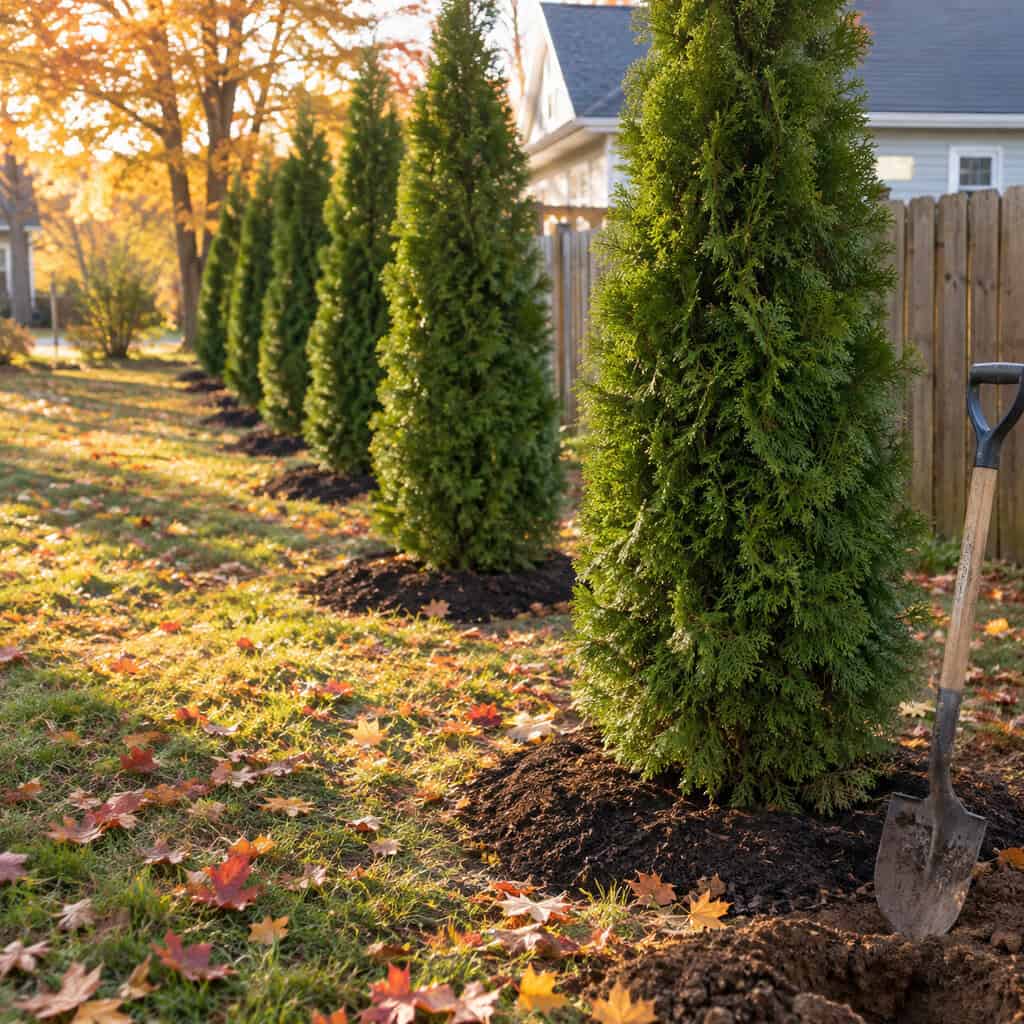
Three to five feet a year. That’s not marketing — that’s what this hybrid actually does in decent soil with full sun, on its way to 40 or 60 feet.
Fall is its ideal window. The top goes quiet while the roots keep working in cool soil, so by the time next June’s heat arrives the plant is already anchored.
The mistake everyone makes is spacing. People crowd them at three feet because they want cover this year, and in eight years they’ve got a row of half-dead trunks shading each other out. Give them five to eight feet and let them fill in.
2. Nellie R. Stevens Holly
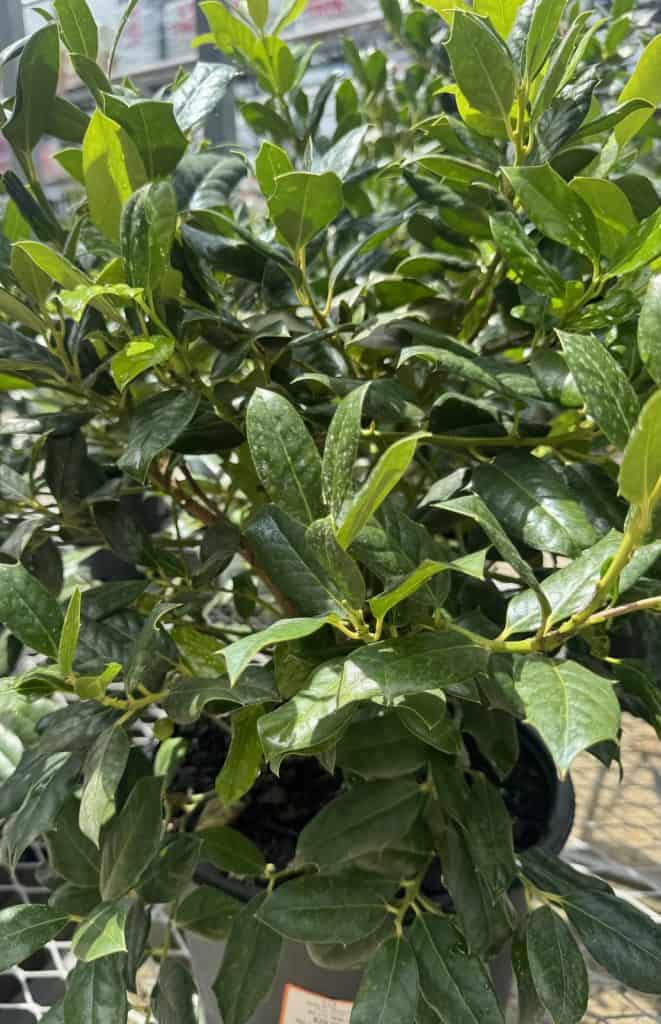
If you want a wall instead of a row of cones, this is the broadleaf answer. Dense glossy foliage right to the ground, two to three feet of growth a year, and red berries without a male pollinator anywhere nearby.
Set them five to six feet apart and they knit into a solid year-round barrier that actually deadens road noise — needles let sound through, thick leaves don’t.
Hollies move beautifully in cool weather. Southern growers have planted them in November for generations for exactly that reason.
3. Leyland Cypress

The most-planted privacy screen in America, and the most-regretted. Both things are true.
It grows three to four feet a year and looks magnificent for about a decade. Then the problems start arriving on schedule.
Seiridium canker is the big one. It shows up as sunken, resin-oozing lesions on branches and trunks, and the branch above the lesion goes rust-brown and dies. There’s no spray that fixes it. You prune out infected wood with sterilized tools and hope, and drought-stressed crowded trees are the ones that get hit hardest.
Then bagworms. The little spindle-shaped cocoons hanging off the foliage aren’t cones — they’re caterpillars wearing your tree, and a heavy population can strip a Leyland to bare sticks in one season. Unlike a hardwood, a defoliated conifer usually doesn’t leaf back out. Pick the bags off by hand in winter or treat with Bt in late spring when larvae are tiny.
- Sunken cankers weeping sticky resin
- Individual branches turning rust-brown while the rest stays green
- Small brown bags dangling from the tips
- Thinning from the bottom up in a tightly spaced row
The other issue is size. A mature Leyland hits 50 feet with a shallow root plate, which is why they’re the trees that flatten fences in every windstorm.
If you plant it anyway: eight to ten feet apart, minimum eight feet off the property line, full sun only, and mid-fall while it’s dormant. Never mid-summer.
Expect 10 to 25 years out of a crowded row, not a lifetime. Davey Tree is blunt about the tradeoff, and there’s a good reason people write entire lists about privacy shrubs that grow fast but cause big problems later.
4. Skip Laurel
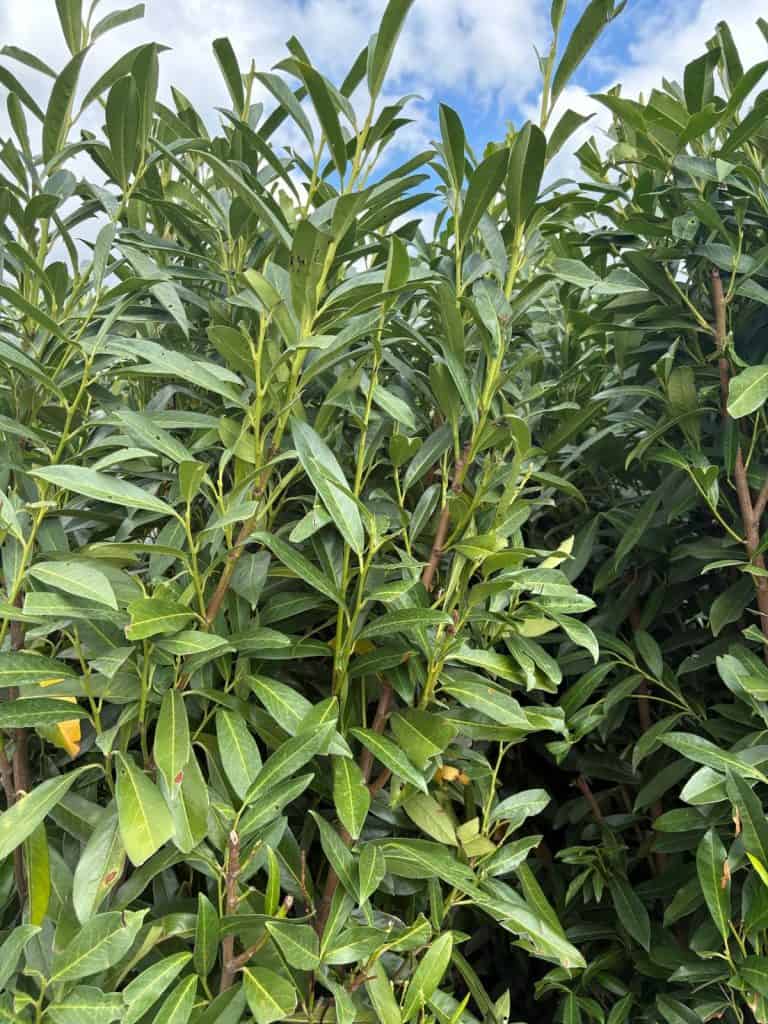
Shade is where most privacy plans fall apart. Arborvitae sulks, holly thins out, and you end up with a see-through hedge on the one side you needed covered.
Skip laurel handles it. Glossy leaves two to six inches long, about two feet of growth a year, and a narrow enough habit to work in a four-foot side yard between houses.
Now the part that matters more than any of that. Cherry laurel foliage contains cyanogenic glycosides — compounds that release hydrogen cyanide when leaves are chewed or wilted. The NC State Extension Plant Toolbox lists the leaves, stems, and seeds as poisonous if eaten.
Wilted clippings are the real hazard. Cyanide levels spike as the foliage dries, which is why the pile of hedge trimmings sitting by the driveway is more dangerous than the hedge itself.
Signs of trouble come on fast — drooling, dilated pupils, bright red gums, staggering, labored breathing. This is an emergency vet call, not a wait-and-see.
Skip it if you have a chewing dog, goats, or horses on the other side of that fence. Bag the clippings the same day you cut. If you’re rethinking the whole planting, it’s worth reviewing which landscaping plants are toxic to dogs before you buy anything else.
5. Emerald Green Arborvitae
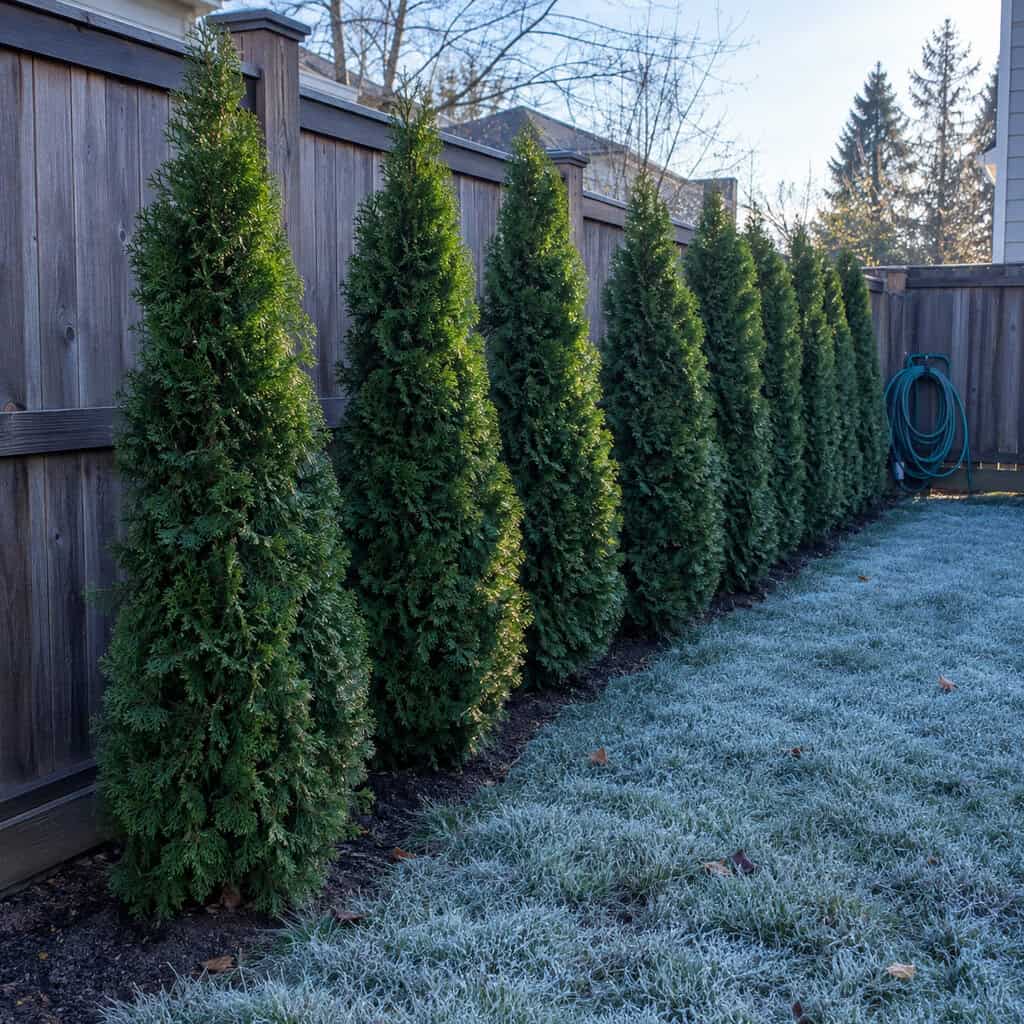
Green Giant is a bulldozer. This is the scalpel.
Ten to fifteen feet tall, three to four feet wide, gaining maybe 10 to 12 inches of height a year. That narrow footprint is the entire point when you’re planting along a fence line with three feet to work with.
It’s hardy into zone 3, which makes it the default for northern yards where half this list won’t survive.
Deer are the honest caveat. They browse arborvitae to a clean line at chest height, and a hedge with bare ankles isn’t privacy. Fence it, spray it, or look at deer-resistant landscaping instead.
6. Green Gem + Green Velvet Boxwood
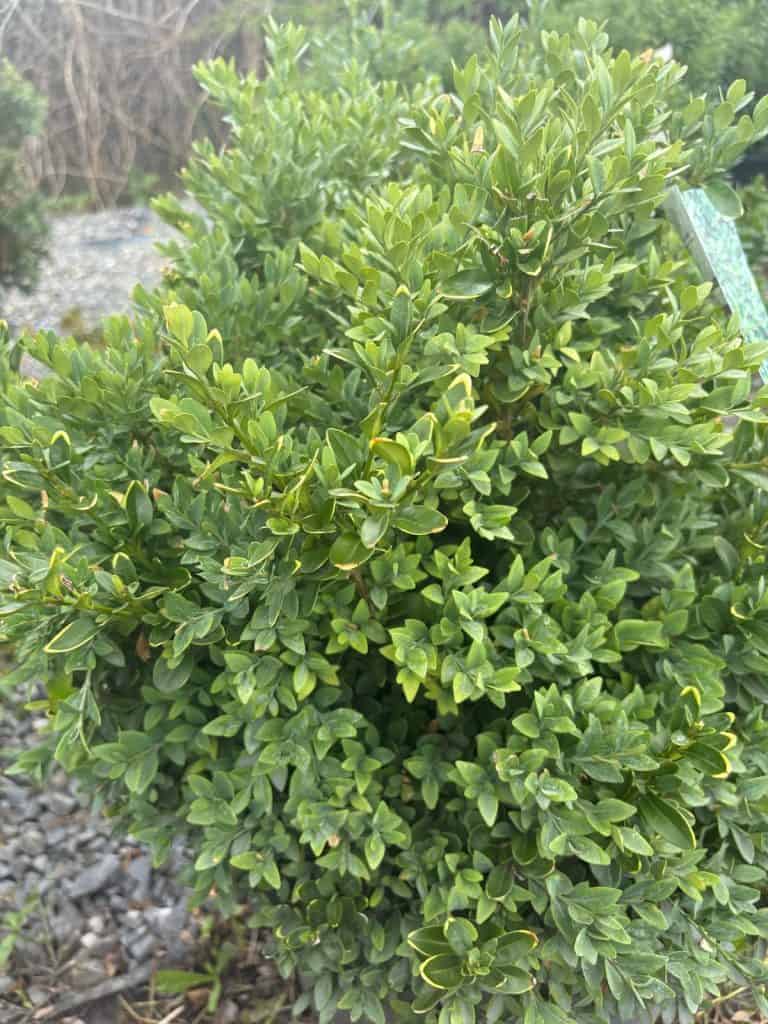
Not every privacy problem is 20 feet tall. Sometimes you just need the sidewalk to stop looking into your patio chairs.
These two Sheridan Nurseries hybrids cross Korean boxwood with common boxwood — Korean hardiness, common boxwood’s better winter color. Old English box bronzes out to a sad orange every February. These stay green. Green Gem holds a tight globe around three feet; Green Velvet is slightly larger and looser.
They’re zone 4 hardy, which is remarkable for boxwood, and the University of Arkansas Cooperative Extension has recommended Green Velvet for years as a low hedge that behaves.
Two pests decide whether this is a good idea in your area. Boxwood blight is a fungal disease that produces dark leaf spots, black streaking on stems, and rapid defoliation from the bottom up — it spreads on contaminated tools, boots, and nursery stock, and it can strip a mature hedge in a single wet season. Buy from a clean source, space for airflow, never shear when the foliage is wet, and don’t reuse the mulch from an infected planting.
Box tree moth is the newer threat. The caterpillars are green with black stripes, they web the foliage together, and they’ll skeletonize a hedge fast enough that homeowners assume it’s drought.
Boxwood leaves also contain alkaloids that cause vomiting and diarrhea in dogs. Bitter enough that most dogs quit after a bite — most isn’t all.
Plant early fall so the roots settle before the ground closes up.
7. Japanese Holly

Looks like boxwood. Isn’t boxwood.
That single fact is why nurseries keep pushing it. No boxwood blight, no box tree moth, same small dark leaves and the same willingness to be sheared into a crisp low hedge.
Newer columnar selections like Hedge Box were bred specifically as narrow hedging plants, with flatter leaves that spider mites find less inviting.
Give it acidic, well-drained soil. It hates wet feet in winter more than it hates cold.
8. ‘Yoshino’ Cryptomeria
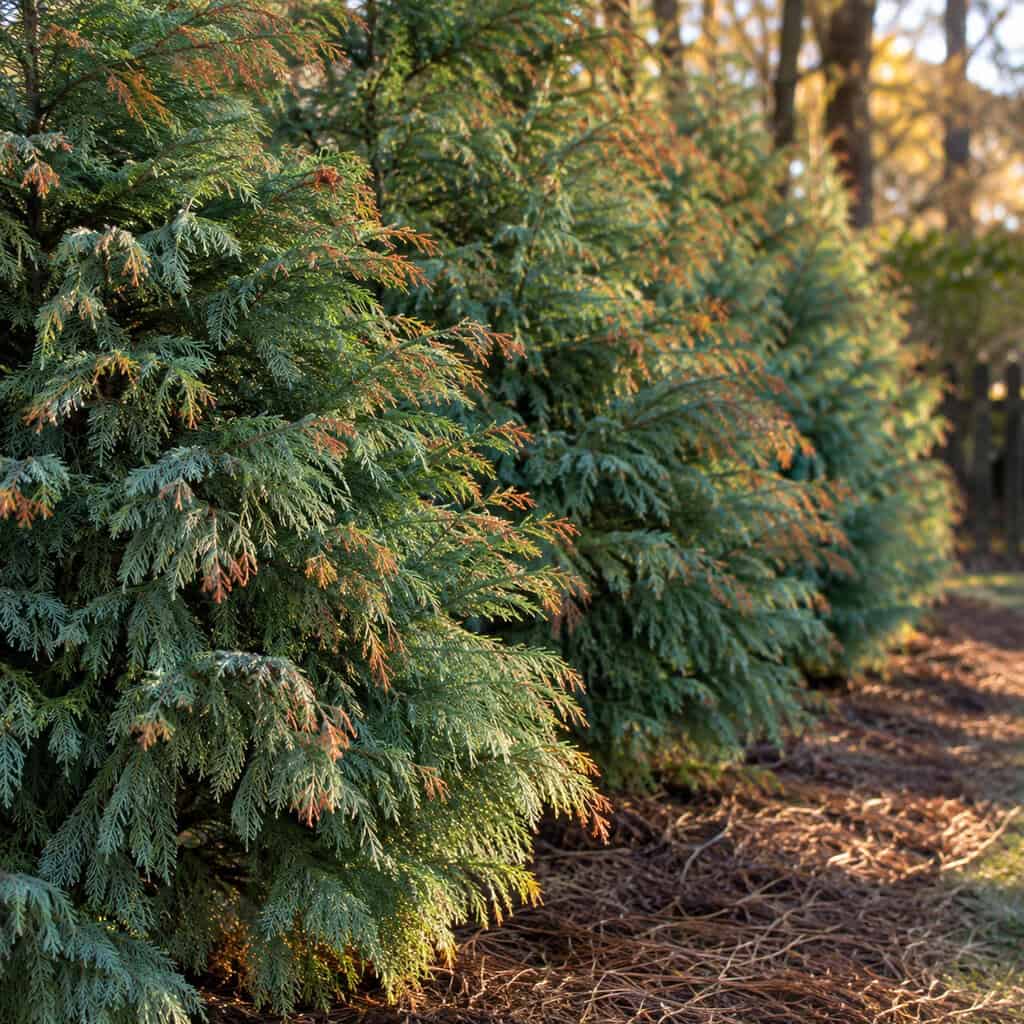
Ask a Southern extension agent what to plant instead of Leyland cypress and you’ll hear this name.
Similar speed, similar green wall, dramatically fewer canker and bagworm phone calls. The foliage is soft blue-green and feathery, and it bronzes slightly in a hard winter before greening back up in spring.
Full sun, eight to ten feet apart. It gets big — 30 to 40 feet — so measure before you fall in love.
9. Hicks Yew

The one upright evergreen that genuinely thrives in part to full shade. Not tolerates. Thrives.
It forms a 10 to 12 foot column about three to four feet wide, takes shearing to any shape you want, and unlike most conifers it will resprout from old wood if you cut it back hard.
Now the verdict this audience needs. Toxic — seriously, dangerously so. Nearly every part of a yew contains taxine alkaloids: needles, bark, and the seed inside the red aril. Only the fleshy red coating is harmless, and that’s cold comfort.
Yew is one of the classic livestock killers. Horses and cattle have died from eating hedge clippings tossed over a pasture fence, sometimes within hours, sometimes with no warning signs at all beyond being found down. There’s no reliable antidote. Dogs that chew branches can develop tremors, vomiting, and cardiac arrhythmia.
Dried clippings stay toxic. That’s the detail that gets people — the pile of trimmings raked to the fence line in November is just as lethal in January.
Keep yew out of pasture-adjacent plantings and out of yards with puppies. If you plant it, bag every clipping and burn or haul them.
10. Inkberry Holly
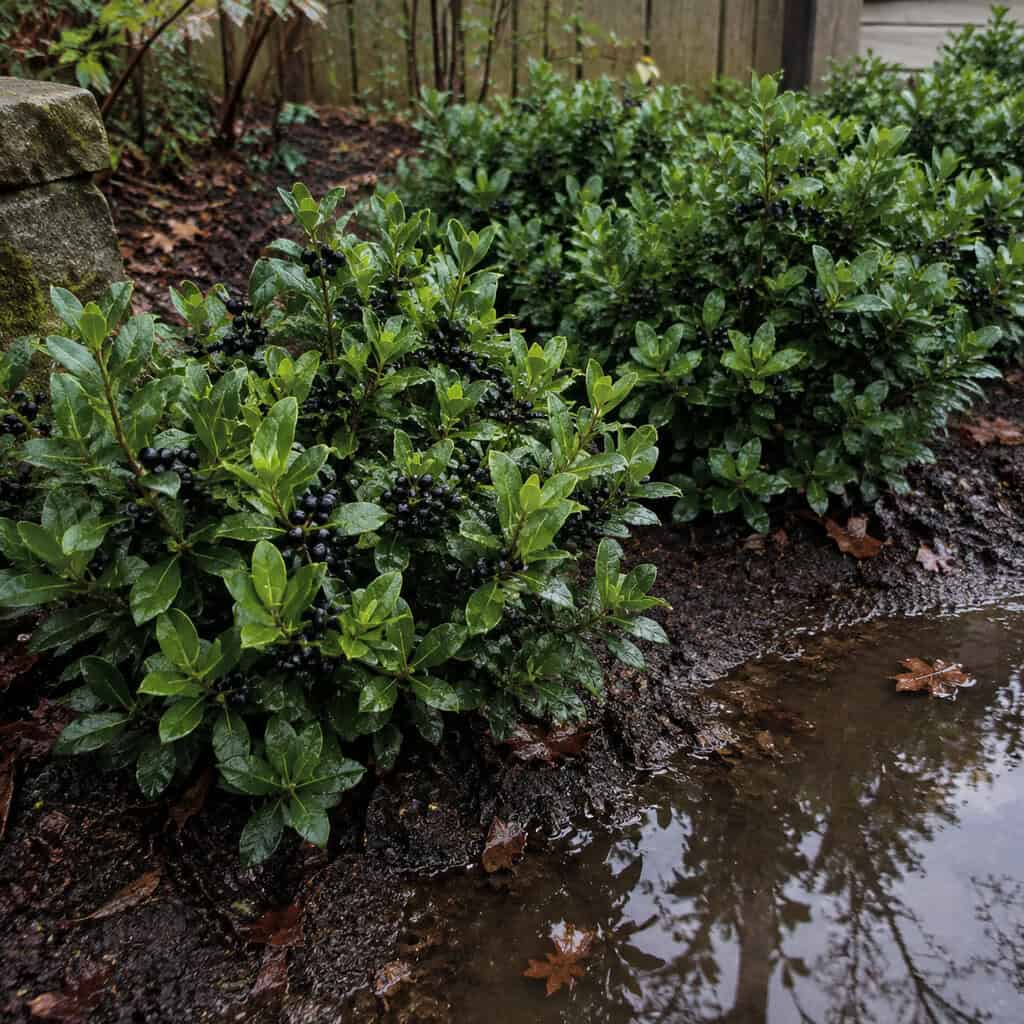
A North American native evergreen that grows in the wet, heavy, badly drained ground where boxwood rots and arborvitae drowns.
Old inkberry had a habit of going bare at the ankles, leaving a hedge on stilts. Newer compact selections — Gem Box, Strongbox, Shamrock — hold their branching down to the soil.
It demands acidic soil. In alkaline ground it yellows, sulks, and dies, and no amount of fertilizer talks it out of that.
Cool moist fall soil is exactly what it wants at planting. Piedmont Master Gardeners make a good case for it as a native boxwood stand-in.
11. Southern Wax Myrtle
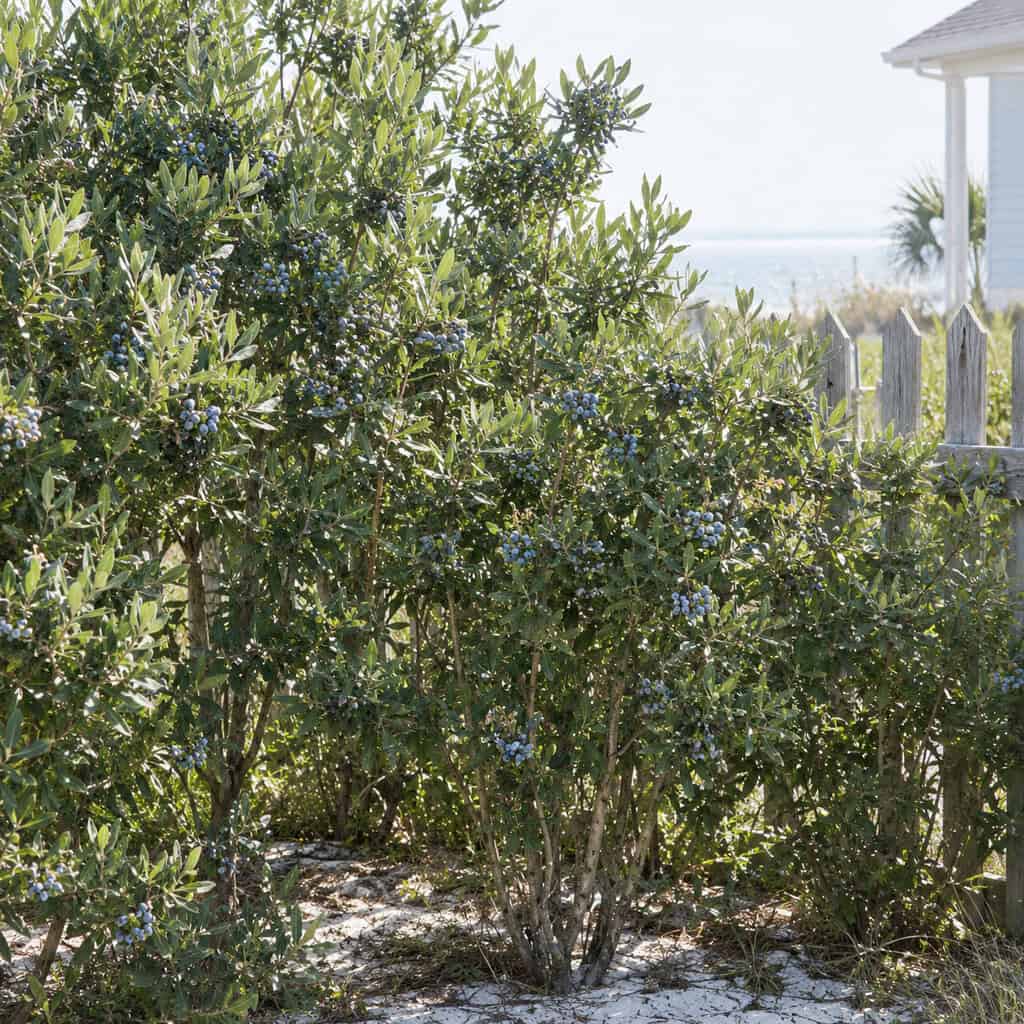
Salt spray, sandy soil, standing water, drought — this native shrugs at all of it, which is why it lines so much of the Gulf and Atlantic coast.
Crush a leaf and it smells like bay. The waxy blue berries feed yellow-rumped warblers all winter, and colonists once boiled them for candle wax.
Left alone it wants to be a multi-stem thicket. Limb it up for a small tree or shear it twice a year for a screen — it takes either.
Fall planting beats trying to establish anything through a Gulf Coast summer.
12. Spartan Juniper
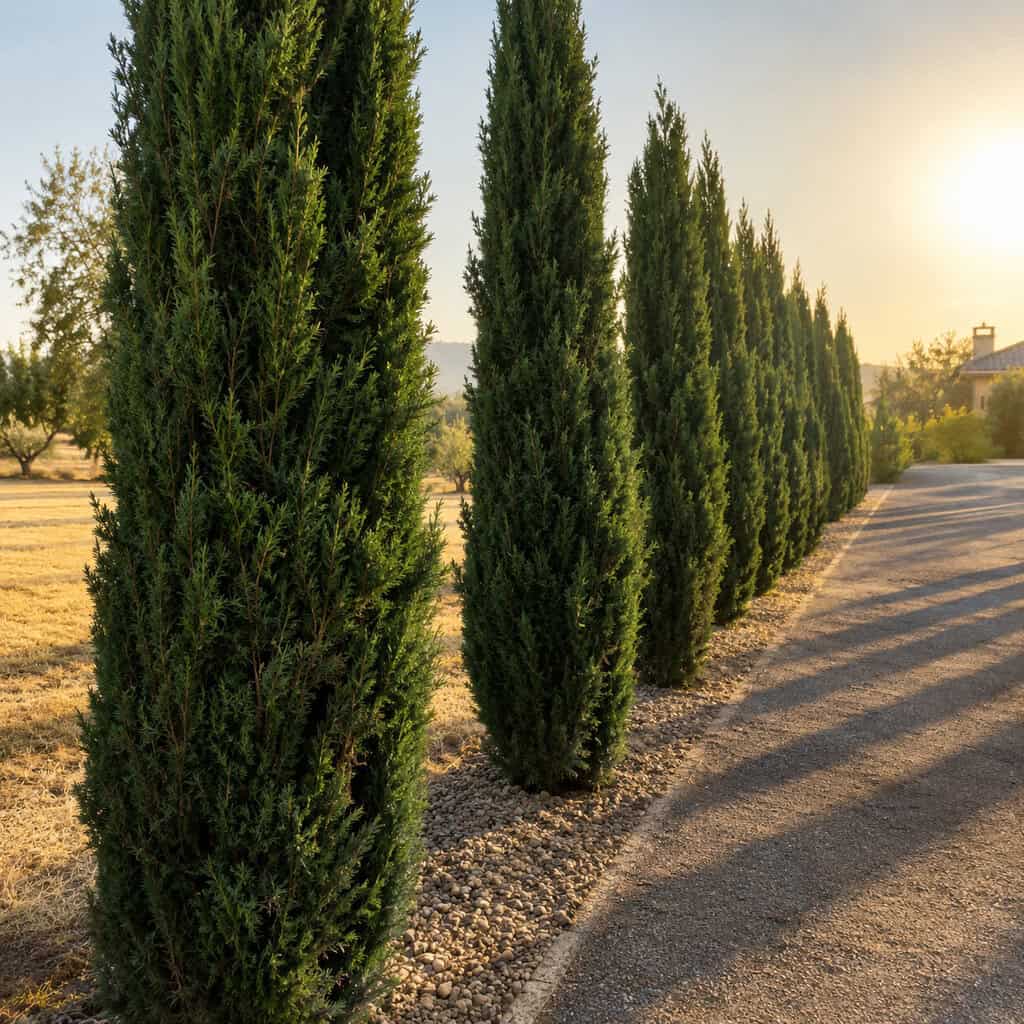
Where arborvitae browns out from heat and drought, this one doesn’t blink.
A tight dark-green column around 15 feet tall and four to five feet wide, perfectly happy on a baking west-facing exposure with reflected heat off the driveway.
Deer generally walk past junipers. For anyone who’s replaced the same arborvitae three winters running, that’s the whole pitch.
Plant while the soil is still workable. It resents wet feet, so skip the low spot in the yard.
13. Portuguese Laurel
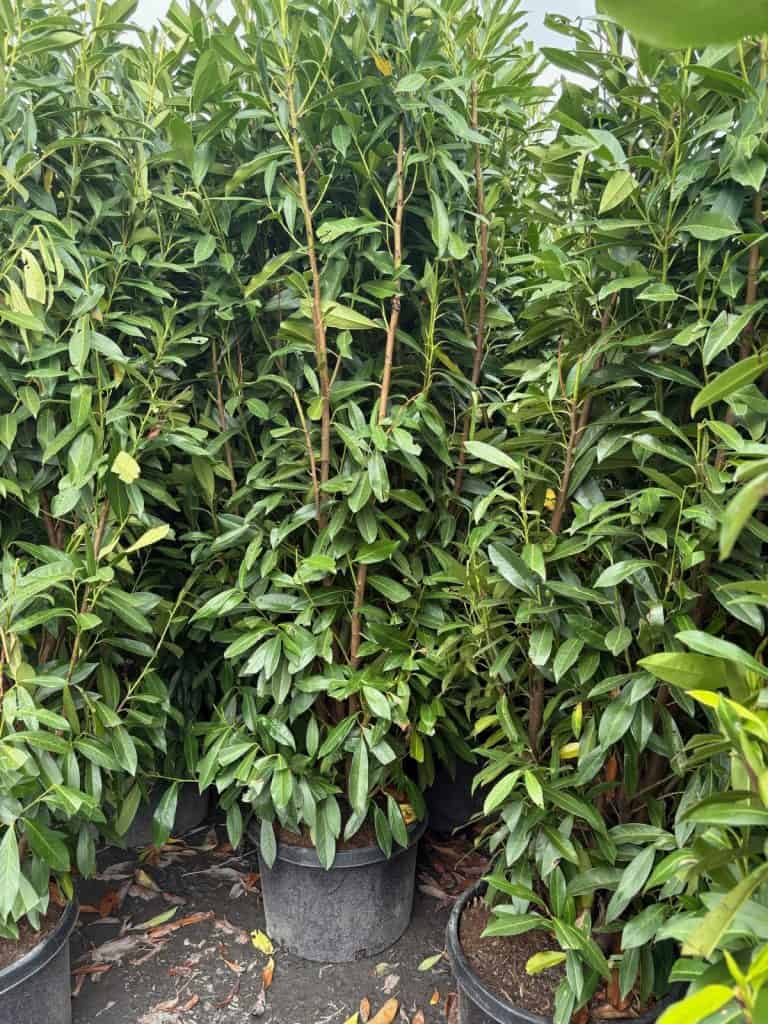
The upgrade over English laurel, and it costs a few dollars more for a reason.
Smaller, darker leaves on striking red stems. Better heat tolerance, better cold tolerance, and far less of the shot-hole fungus and leaf spot that leave cheap laurel hedges looking like someone shot them with birdshot by August.
It shears into a formal wall or grows loose as a small tree.
Same caution as any Prunus: cyanogenic compounds in the foliage. Same pets, same rule about clippings.
14. Prague Viburnum
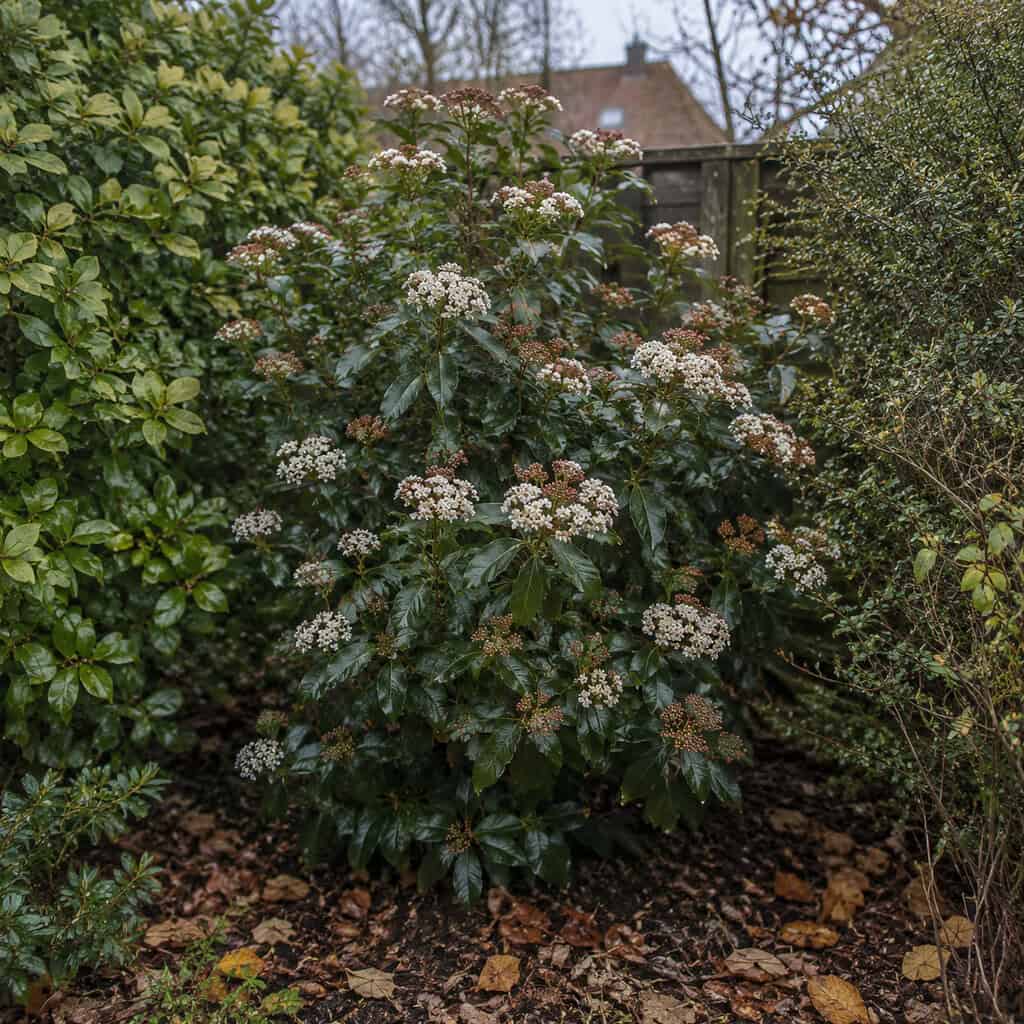
Two to three feet a year to a mature 10 or 12 feet, which closes a gap in three seasons instead of a decade.
Semi-evergreen — it holds most of its leathery leaves through a mild winter and thins in a brutal one. Creamy flower clusters in spring keep it reading as a garden shrub rather than a green fence.
It accepts part shade, which widens where you can use it.
Underused. Most garden centers don’t stock it, so ask.
15. American Holly
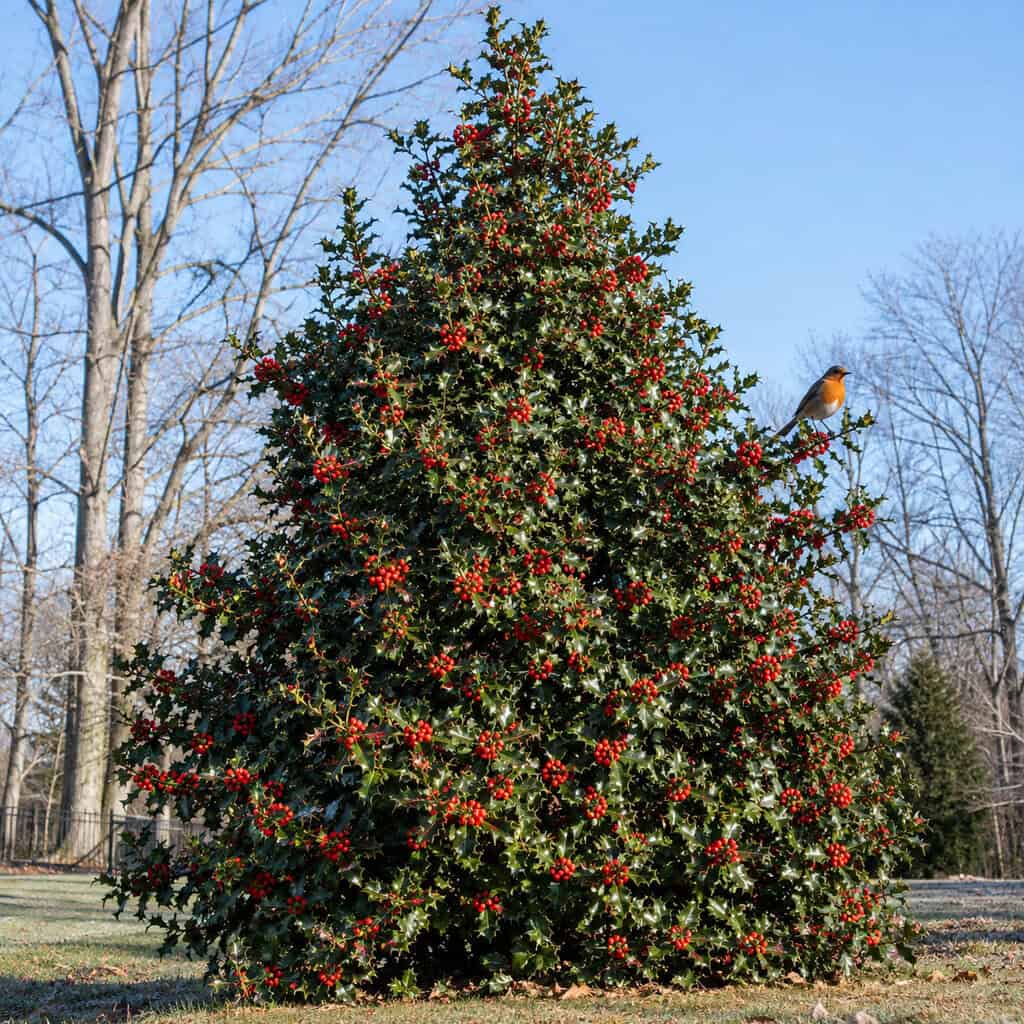
The slow one. The permanent one.
A native evergreen tree that matures into a 30-foot pyramid of spiny dark leaves and becomes a winter cafeteria for robins, bluebirds, and cedar waxwings.
You need a male within roughly 40 feet for berries. Female plants alone stay green and fruitless forever, and the garden center rarely mentions it.
Nobody plants American holly for privacy next summer. You plant it because in 30 years somebody will be grateful.
16. Sasanqua Camellia
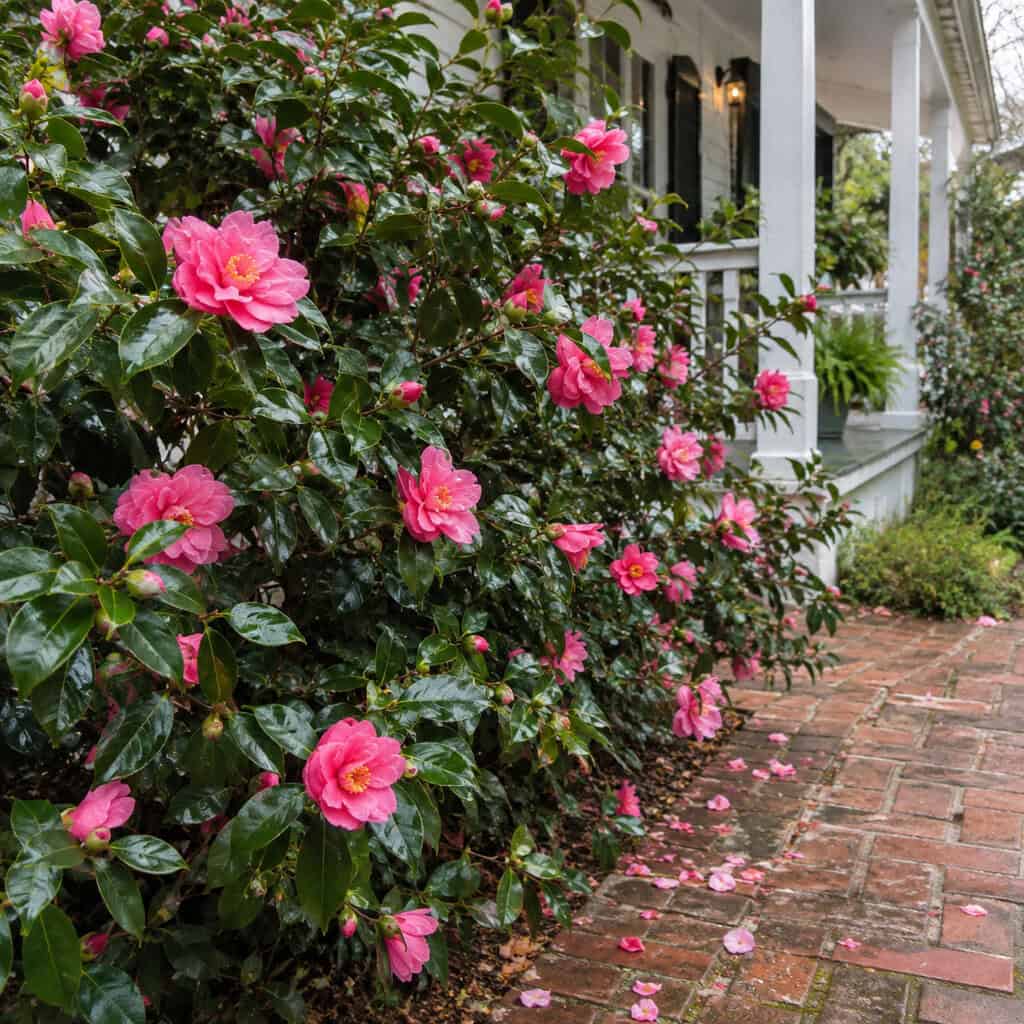
Everything else here pays off in three years. This one pays off in three weeks.
Sasanquas bloom in fall and early winter, so you can plant one in October that’s already flowering — pink, white, or rose against glossy dark leaves while the rest of the yard turns brown.
Grown loose as an eight to ten foot screen, it gives real evergreen privacy without looking like a fence.
Buy it in bloom. Camellia color descriptions on tags are optimistic fiction, and this is the one month of the year you can see exactly what you’re getting.
17. Norway Spruce

This is the big-property play. If your lot is a quarter acre, skip ahead.
It’s fast for a spruce and grows into a 60-foot tree with long drooping branchlets that catch snow beautifully. As a windbreak along a road, a barn, or an open field edge, nothing on this list beats it.
Fifteen to twenty feet of spacing. It has zero interest in being sheared into anything, and it’ll swallow a suburban side yard whole.
18. Blue Princess Holly
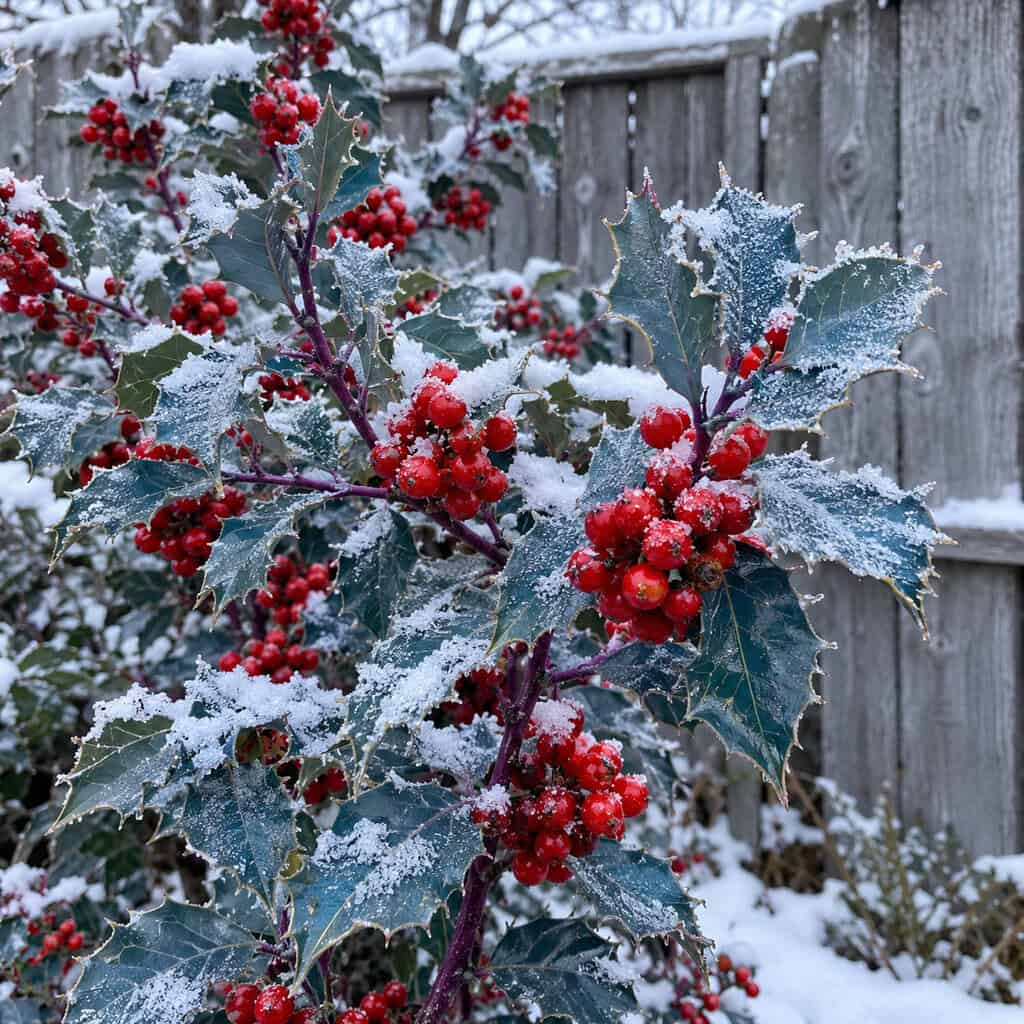
Nellie Stevens quits somewhere around zone 6. This Meserve hybrid keeps going north.
Blue-green foliage with purple stems, heavy red berry set, and cold hardiness that makes broadleaf evergreen privacy realistic in Michigan and upstate New York.
It needs a ‘Blue Prince’ male planted within range to fruit. One male covers several females. Nobody tells you this at checkout, and people spend years wondering why the berry photo on the tag never happened in their yard.
19. Tea Olive (Fragrant Osmanthus)

You’ll smell it before you see it.
Tiny cream flowers, almost hidden in the foliage, throw an apricot-sweet perfume across an entire yard in fall. Old Southern gardens planted them by the front walk on purpose.
Dense enough to read as a holly hedge, easily kept at 10 to 15 feet, deer-resistant, and drought-tough once it’s rooted in.
Plant it this month and it may well be blooming while you’re backfilling the hole.
20. Clumping Bamboo (Fargesia)
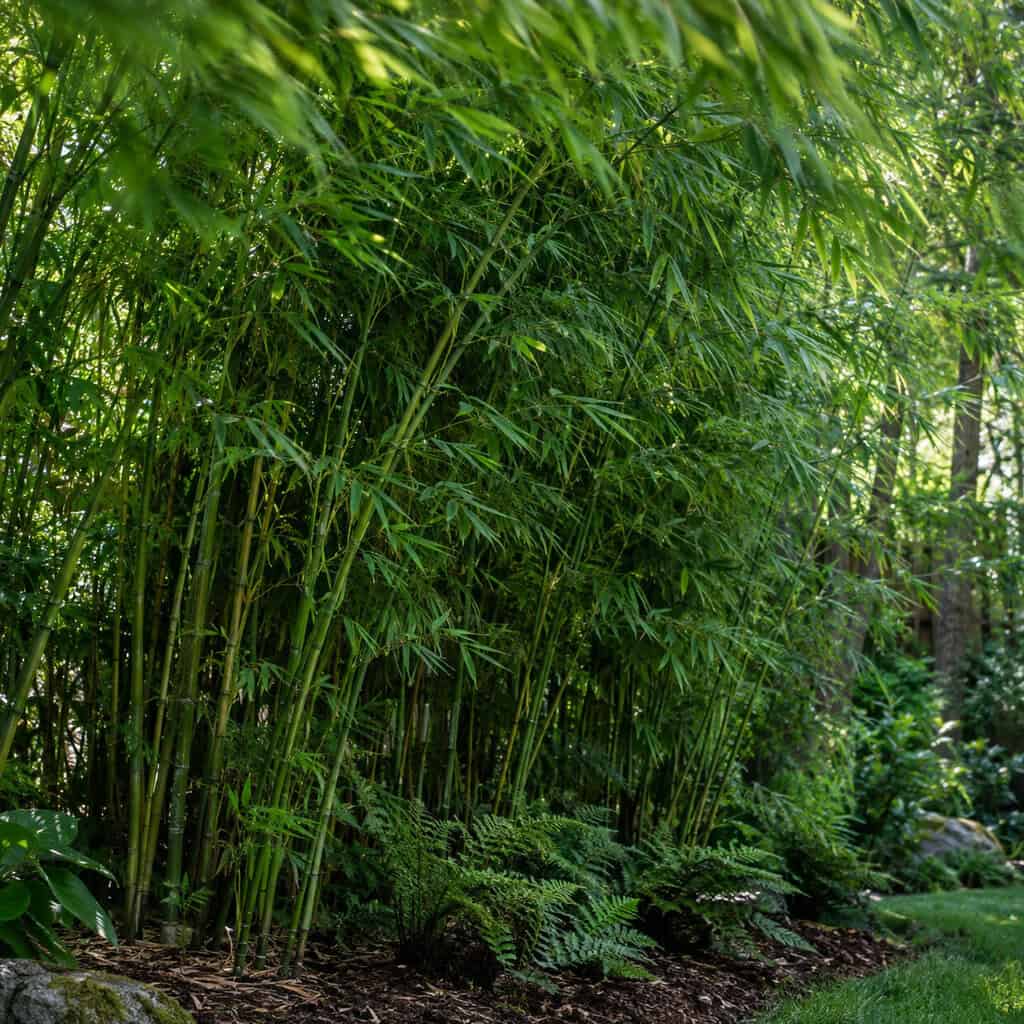
Bamboo has a reputation, and it’s earned. Running types like Phyllostachys send rhizomes under fences, through gravel, and into a neighbor’s foundation bed, and removing an established stand is a five-figure excavation.
Fargesia is clumping. It expands a few inches of diameter per year, the way an ornamental grass does. That’s the difference between a hedge and a lawsuit.
It prefers part shade and hates hot dry wind, so it’s a woodland-edge plant, not a west-facing driveway plant.
Buy container-grown, plant this fall, and read the tag twice. If it doesn’t say clumping, walk away.
21. Arrowwood Viburnum
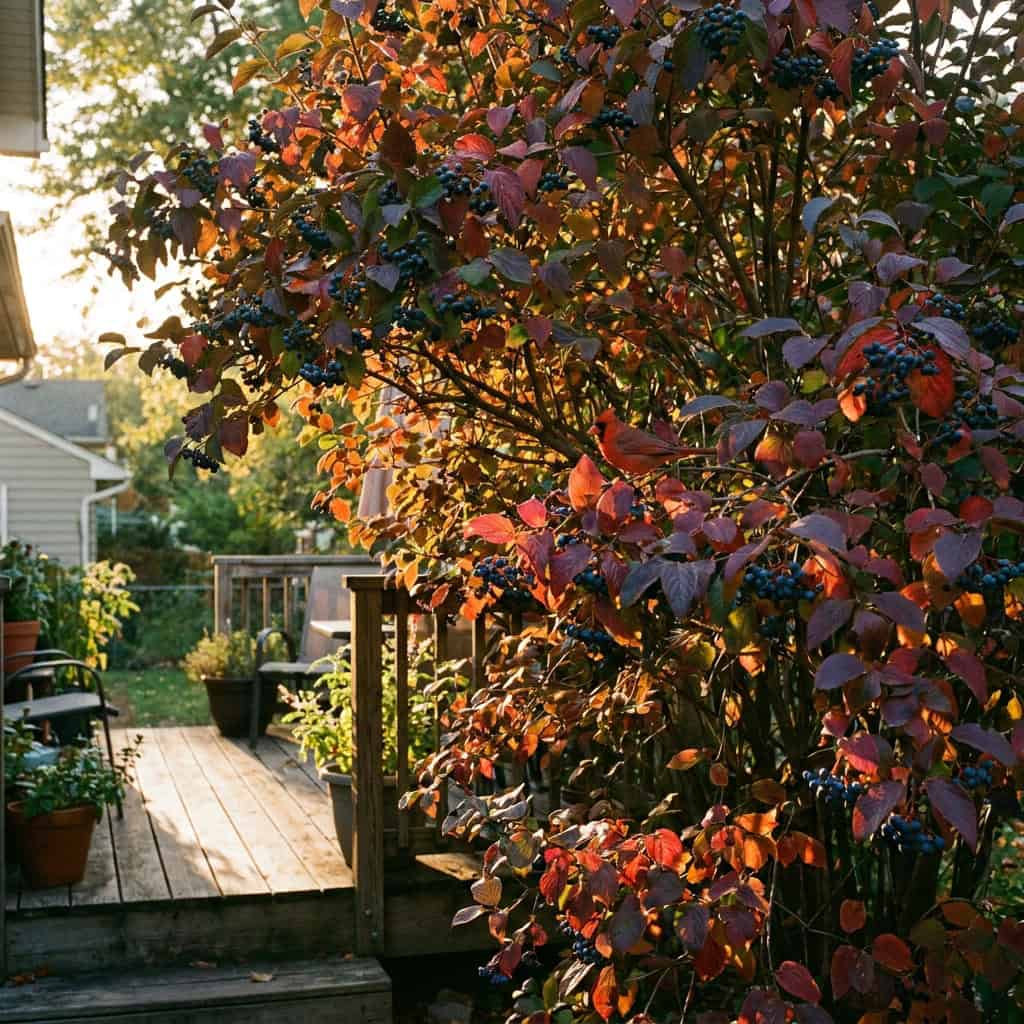
Some privacy problems are seasonal. If you only care about screening the deck from May to October, an evergreen wall is overkill.
This native deciduous shrub grows dense and twiggy to eight or ten feet, screens completely from leaf-out to frost, then drops its leaves and lets winter sun into the yard.
Blue-black fruit in fall gets stripped by migrating thrushes and cardinals within days.
Cheaper than arborvitae, faster to fill in, and worth infinitely more to pollinators. Bare-root stock planted in fall establishes fast.
22. Eastern Red Cedar
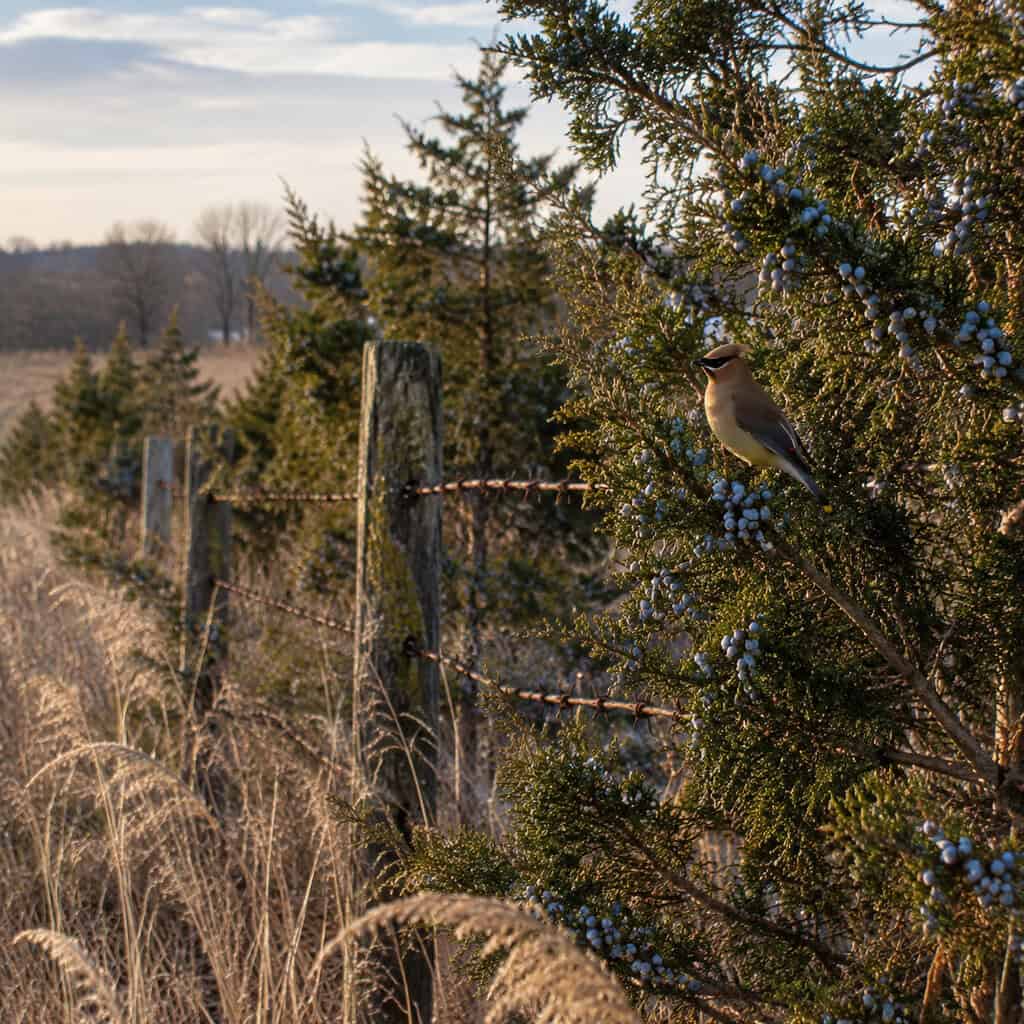
Drive any back road in America and you’ll see it — the scruffy dark-green juniper holding the fencerow together where nobody planted anything.
It’s hardy from Canada to the Gulf, indifferent to drought, fine in poor rocky soil, and salt-tolerant along roads. The blue berry-like cones feed cedar waxwings, and the dense interior gives songbirds a winter roost when everything else is bare sticks.
One caveat: it’s an alternate host for cedar-apple rust, so keep it well away from apple and crabapple trees.
Otherwise it’s the most bulletproof hedge on this list, and the one most likely to outlive the house.
The right time to plant a privacy hedge was five years ago. The second-best time is the six-week window you’re standing in right now, while the soil is still warm and the air has finally stopped trying to kill new transplants.
Dig the hole twice as wide as the root ball and no deeper — University of Maryland Extension is emphatic about not burying the root flare. Water deeply once a week until the ground freezes.
Then leave it alone. Next October you’ll notice the neighbor’s deck a little less.