

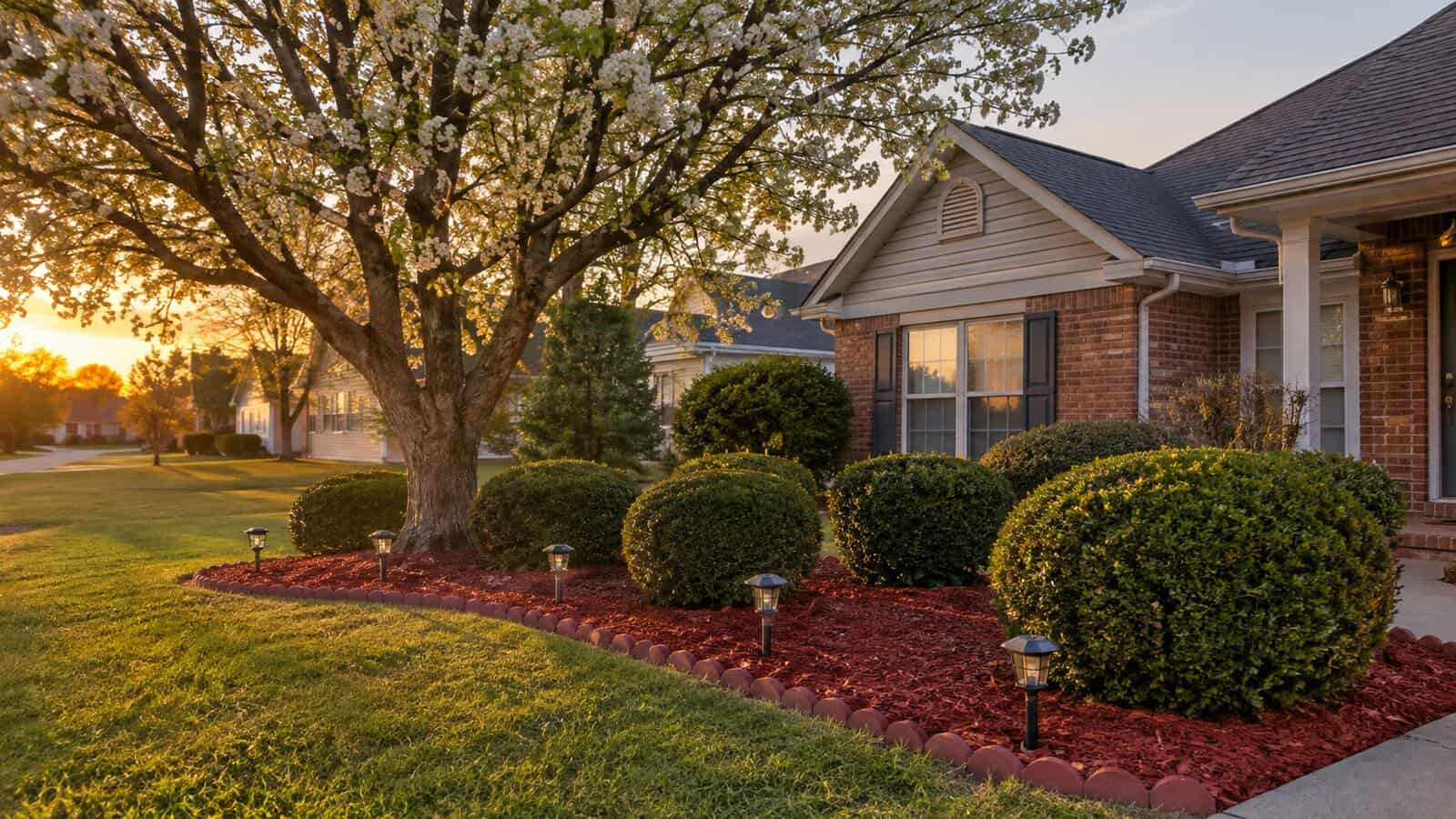
Real estate agents often point out that buyers decide how they feel about a house before they reach the front door. Much of that first impression comes from the yard, and a yard can look decades older than the house it surrounds.
The usual cause is not neglect. It is a set of choices that were popular, practical, and sometimes expensive when they went in. Then they stayed put while styles, plant knowledge, and safety guidance moved on.
Below are 29 common features, plants, and habits that tend to date a property, along with what to do about each one.
Most fixes take a weekend or less. Several cost nothing beyond a shovel and some effort.
1. Bright Red Dyed Mulch
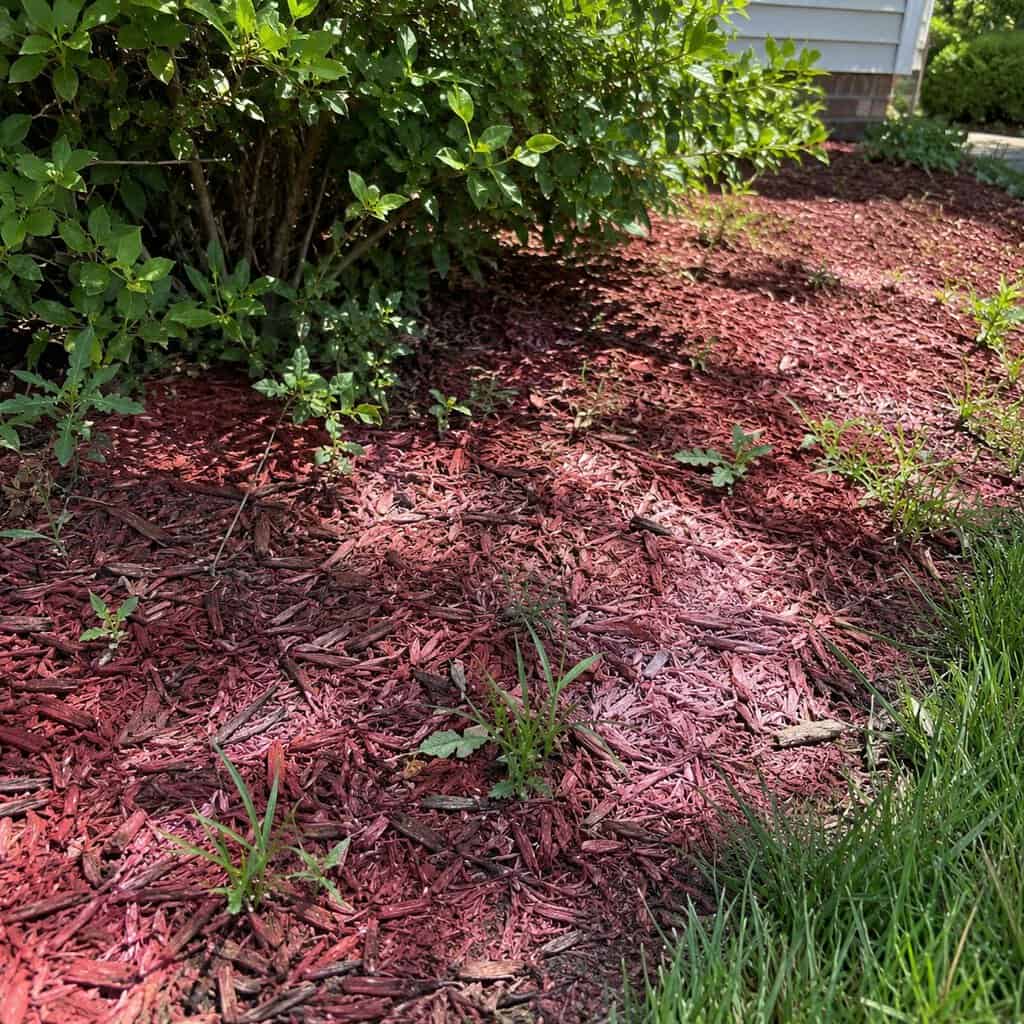
Red mulch was the default at big-box garden centers through the 1990s and 2000s. A bed covered in it still points straight to that period.
Much of the dyed product is made from ground-up pallets and scrap lumber rather than bark. The colorant sits on the surface, so by late summer it fades unevenly to a blotchy salmon pink. The wood underneath breaks down slowly and adds little to the soil.
Double-shredded hardwood, pine bark fines, or pine straw in the South all settle into a quiet brown that lets the plants carry the color. Two to three inches is plenty for weed control and moisture.
2. Shearing Every Shrub Into a Tight Ball
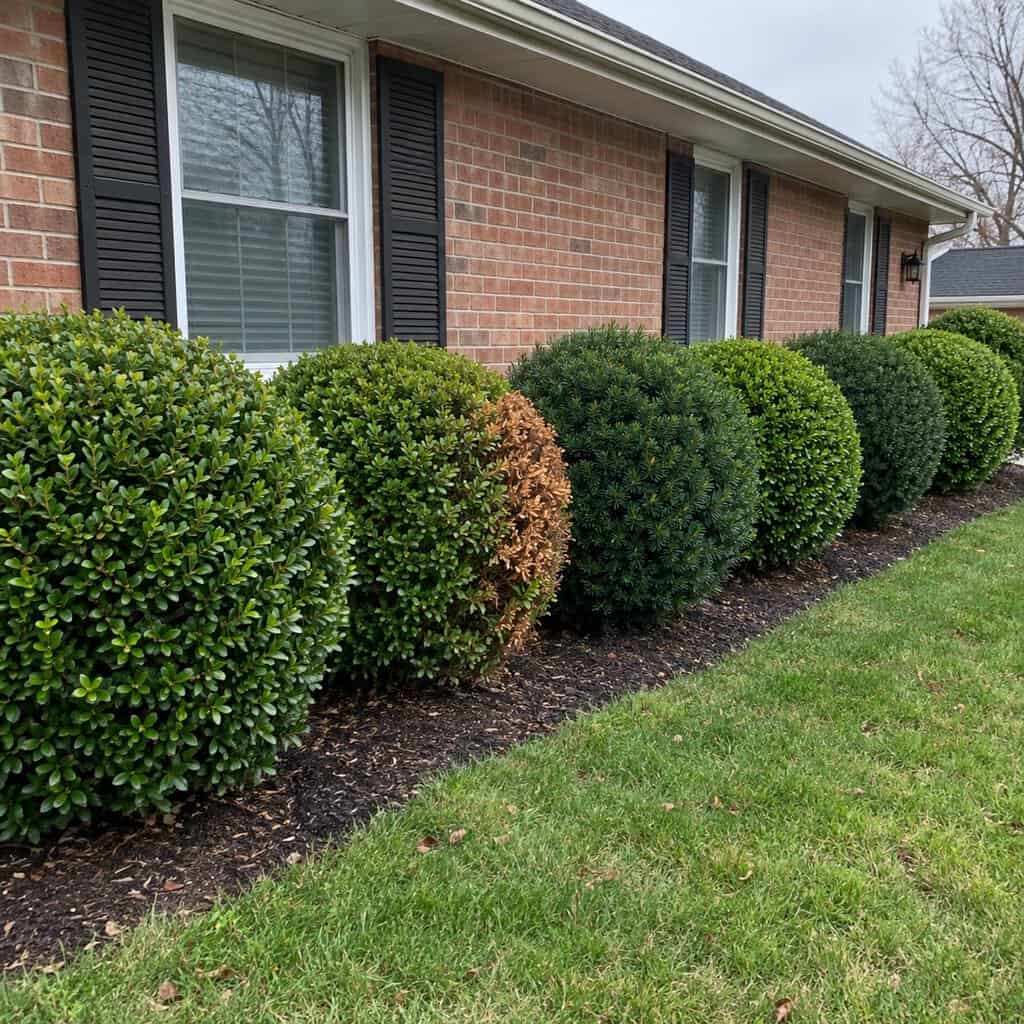
A front yard full of identical green globes tells a passerby that the shrubs are maintained on a schedule rather than looked at. Boxwood, yew, holly, and spirea all get the same treatment twice a year.
Constant shearing clips off flower buds on flowering shrubs and builds a thin skin of leaves over a bare center. Once that shell gets damaged by heavy snow or a dog, the hole stays.
Switch to hand pruners in late winter. Remove a few of the oldest stems at the base each year, never more than a third of the plant, and let the shrub grow back into its natural shape over two or three seasons.
3. Small Round Stepping Stones Across the Lawn
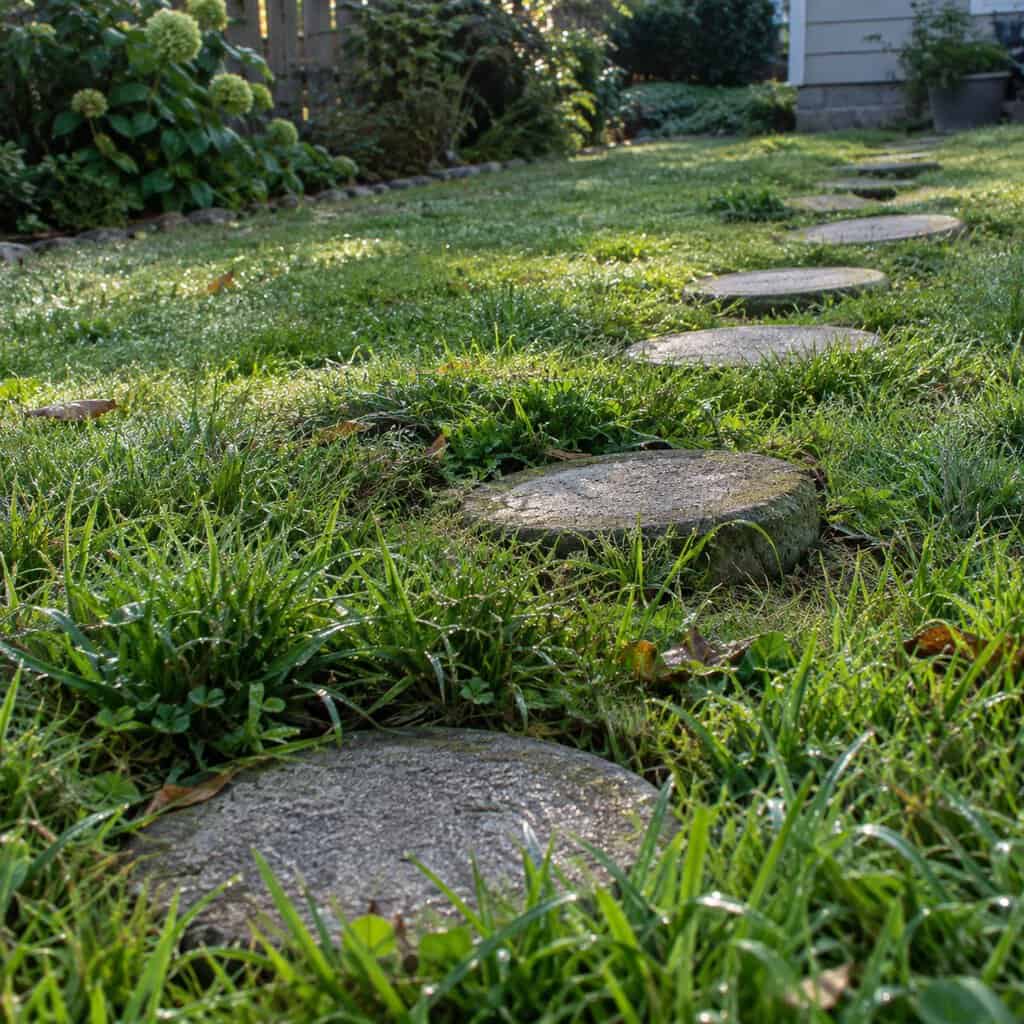
The precast 12-inch rounds sold by the pallet at home centers usually end up in a wandering line across the grass, spaced for nobody’s actual stride.
Small stones settle unevenly within a few years. The ones that ride high catch mower blades, the ones that sink fill in with turf, and the whole path starts to look like a trail of dropped coasters.
If a path is needed, use larger flagstones at least 18 to 24 inches across. Set them flush with the soil about 24 inches on center to match a normal walking step. Fewer, bigger stones look deliberate and mow over cleanly.
4. A Bright White Vinyl Privacy Fence

Six feet of glossy white vinyl around a backyard was the suburban upgrade of the late 1990s. Today it reads as builder grade, and it shows its age in specific ways.
White shows everything: mower-splashed mud along the bottom rail, green mildew on the north face, gray streaks under every post cap. It also stops the eye hard, which makes a small lot feel smaller.
When replacement time comes, dark colors and natural wood stains blend into the planting in front of them. For an existing fence, a yearly wash with a soft brush and mild cleaner, plus shrubs or vines along the base, softens the glare.
5. A Bradford Pear in the Front Yard
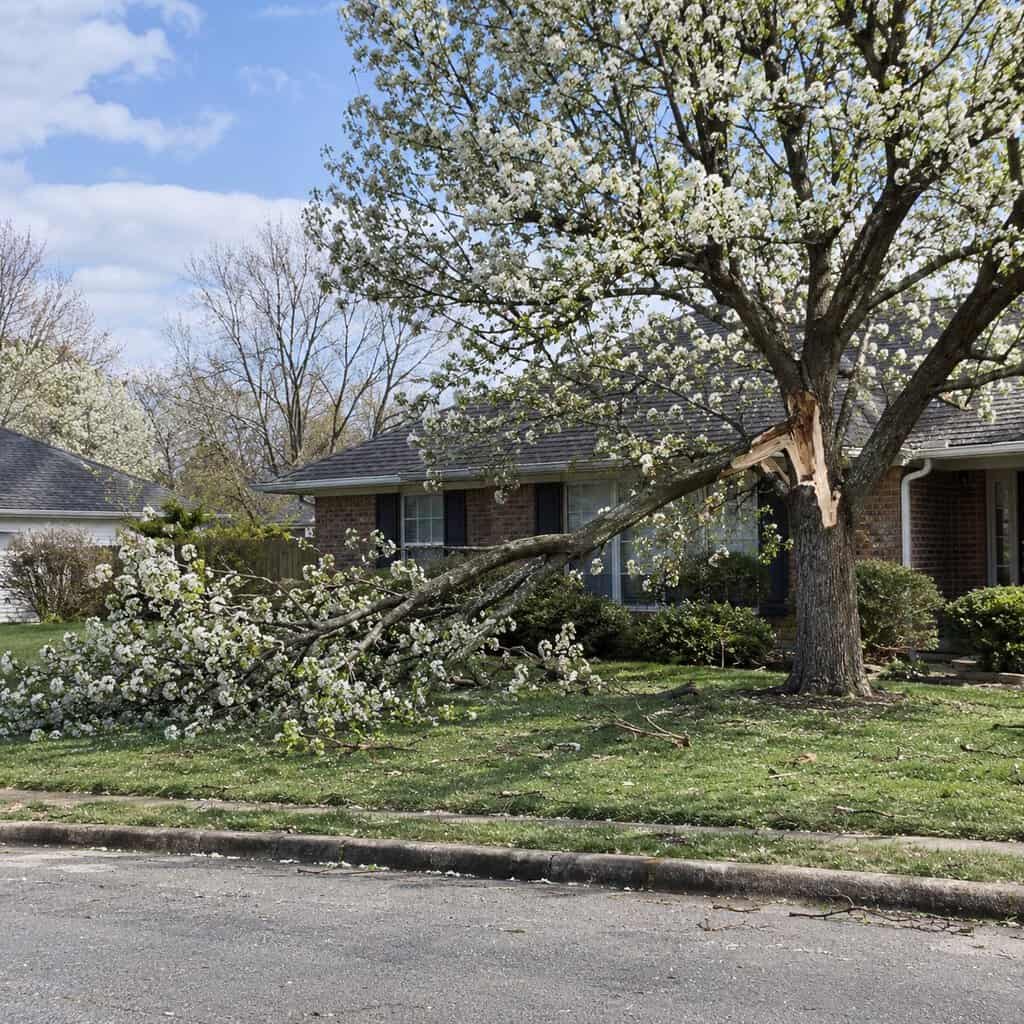
The Bradford pear spread through 1980s and 1990s subdivisions on the promise of a neat oval canopy and early spring bloom. Those trees are now old enough to break.
Crowded, weak branch unions tend to split in wind or ice once the tree reaches about 20 years. Its seedlings have also escaped into fields and roadsides as thorny Callery pear thickets, and Ohio and South Carolina now ban its sale.
Several states run trade-in programs that give away a free native tree when an owner removes a Callery pear. Serviceberry, eastern redbud, and fringe tree all bring spring flowers without the splitting.
6. A Decorative Wishing Well Over Nothing
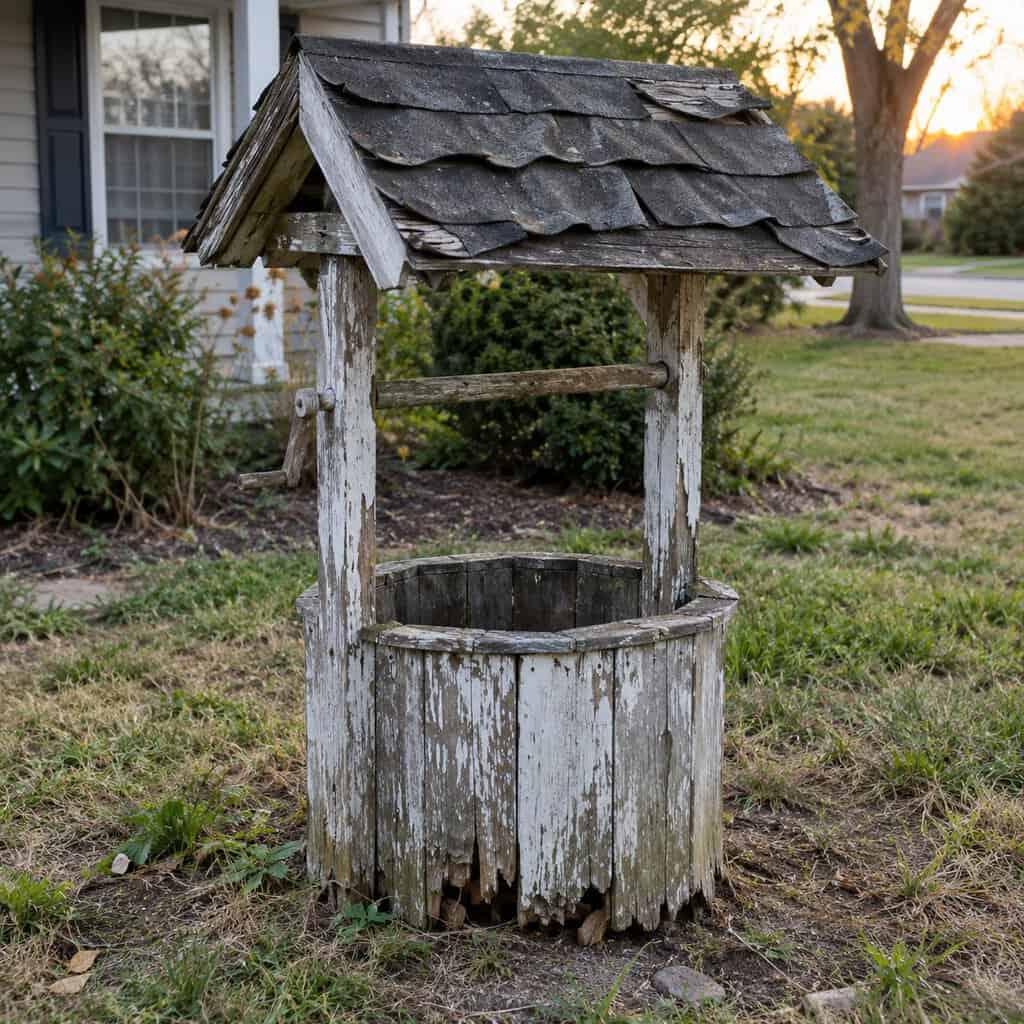
The wooden wishing well with a shingled roof and a crank that turns nothing was a staple of 1970s and 1980s front yards. Often it was placed there to hide a well cap or septic access lid.
Most are now on their second or third coat of paint. The shingles curl, the base sits in wet soil and rots first, and the bucket has usually gone missing.
If it covers a utility, a low evergreen shrub planted on two sides, or one large container that can be slid aside, conceals the cap more convincingly. Leave enough room for a technician to reach it.
7. One Thin Row of Shrubs Against the Foundation
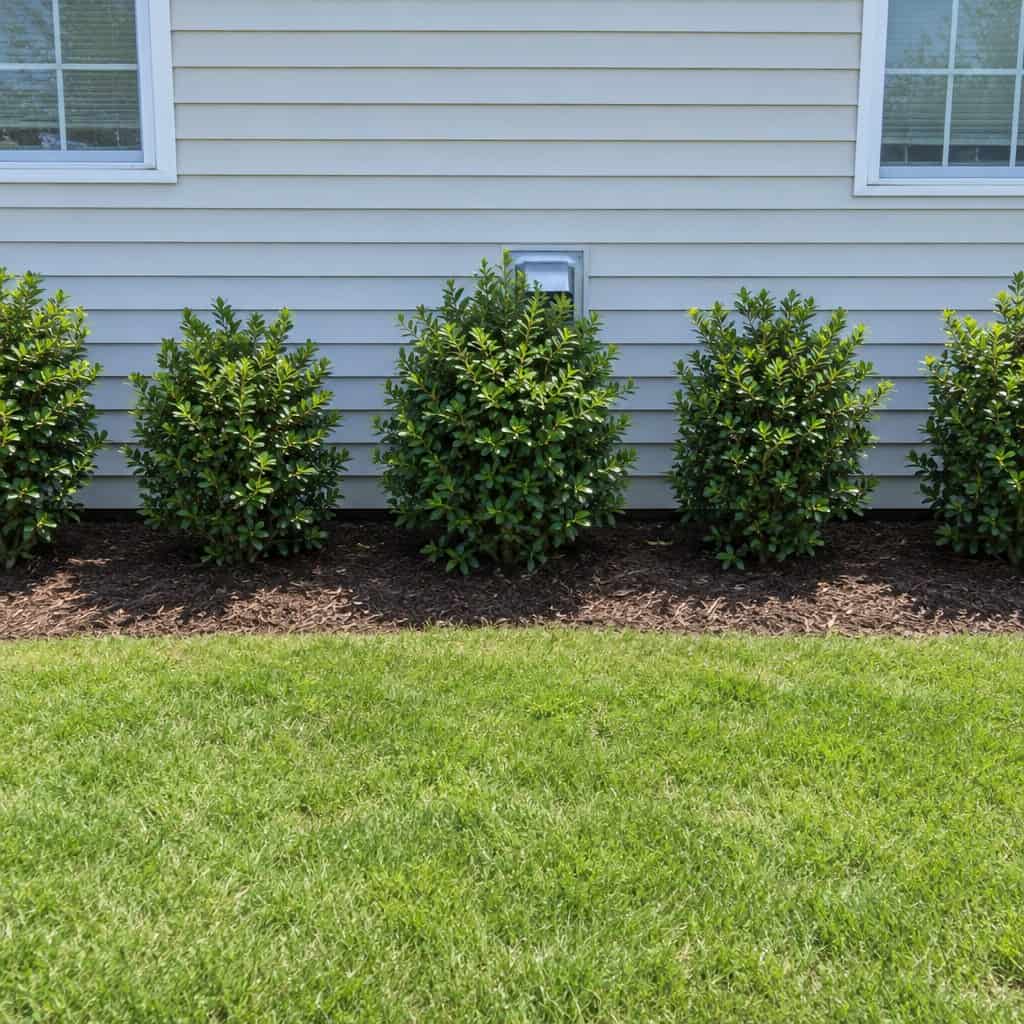
Most builder landscapes give the house a 2- or 3-foot strip of mulch holding a line of evenly spaced shrubs. From the curb, it looks like a fringe glued to the siding.
Shrubs planted that close also run out of room. A boxwood that matures 4 feet wide needs its center at least 3 feet off the wall, or it will rub the siding, crowd the dryer vent, and hold moisture against the house.
Widen the bed to 6 or 8 feet with a curved front edge. Put taller shrubs toward the corners, mid-height plants in the middle, and low perennials along the front so the planting steps down to the lawn.
8. Solar Stake Lights Lining Both Sides of the Walk

Two parallel rows of solar stakes leading to the front door became a popular weekend project once inexpensive LED kits hit the shelves. At night, the double line of pinpoints draws more attention than the house.
Cheap stakes put out only a few lumens of cold, blue-white light, and their small batteries tend to fade after one or two winters. Uneven brightness along the path makes the setup look neglected.
A basic 12-volt low-voltage kit with a plug-in transformer is a manageable DIY job. Choose warm 2700K fixtures and stagger them 8 to 10 feet apart along one side of the walk.
9. Beds of Red Lava Rock or White Marble Chips
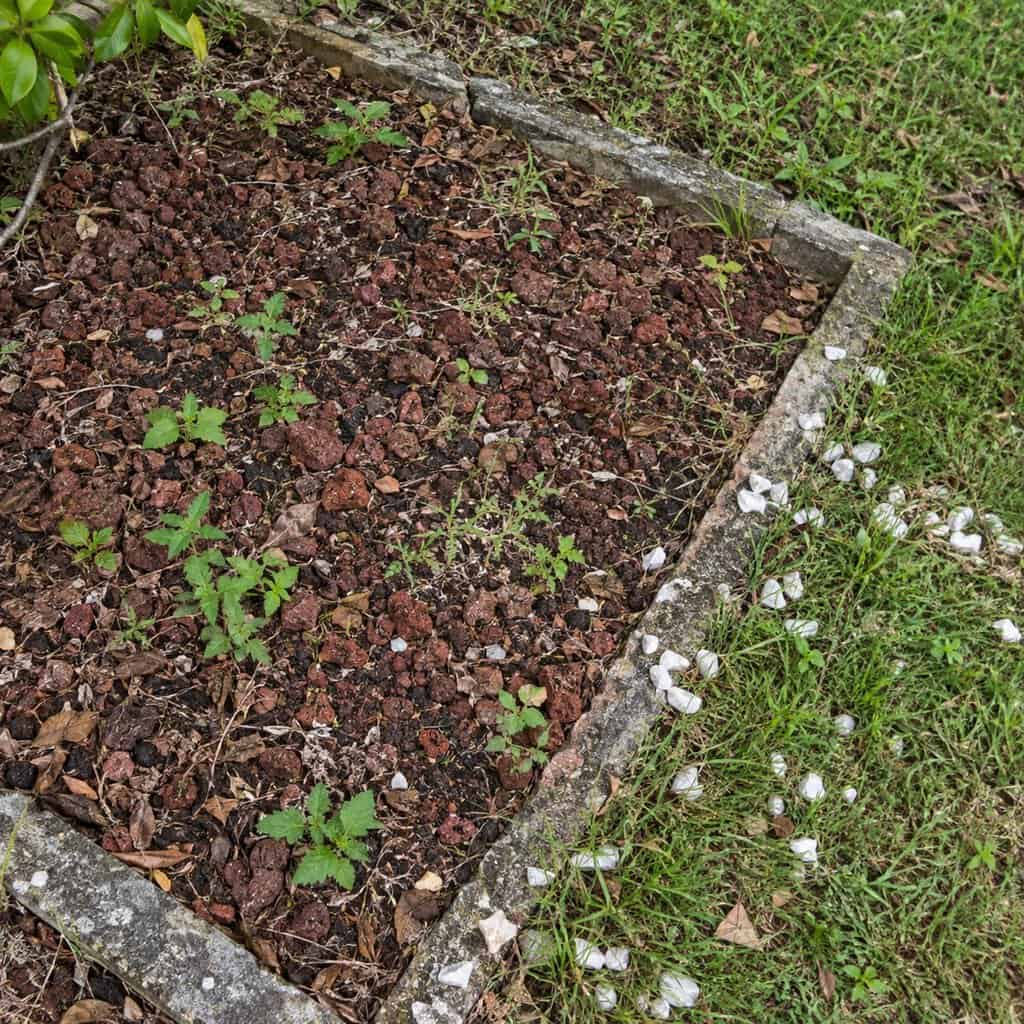
Crushed lava rock and bright white marble chips were sold as permanent, weed-free bed covers from the 1960s through the 1980s. Decades later they are still there, half buried and full of seedlings.
Marble is calcium carbonate, so it slowly raises soil pH, which works against azaleas, rhododendrons, and other acid lovers nearby. Lava rock is light enough to get kicked into the lawn, where the mower throws it.
Removal is tedious but worth it. Rake off the top layer, then screen the soil through hardware cloth. Shredded bark, or muted local river rock used only in a dry streambed, looks far more current.
10. Burning Bush Planted as a Hedge
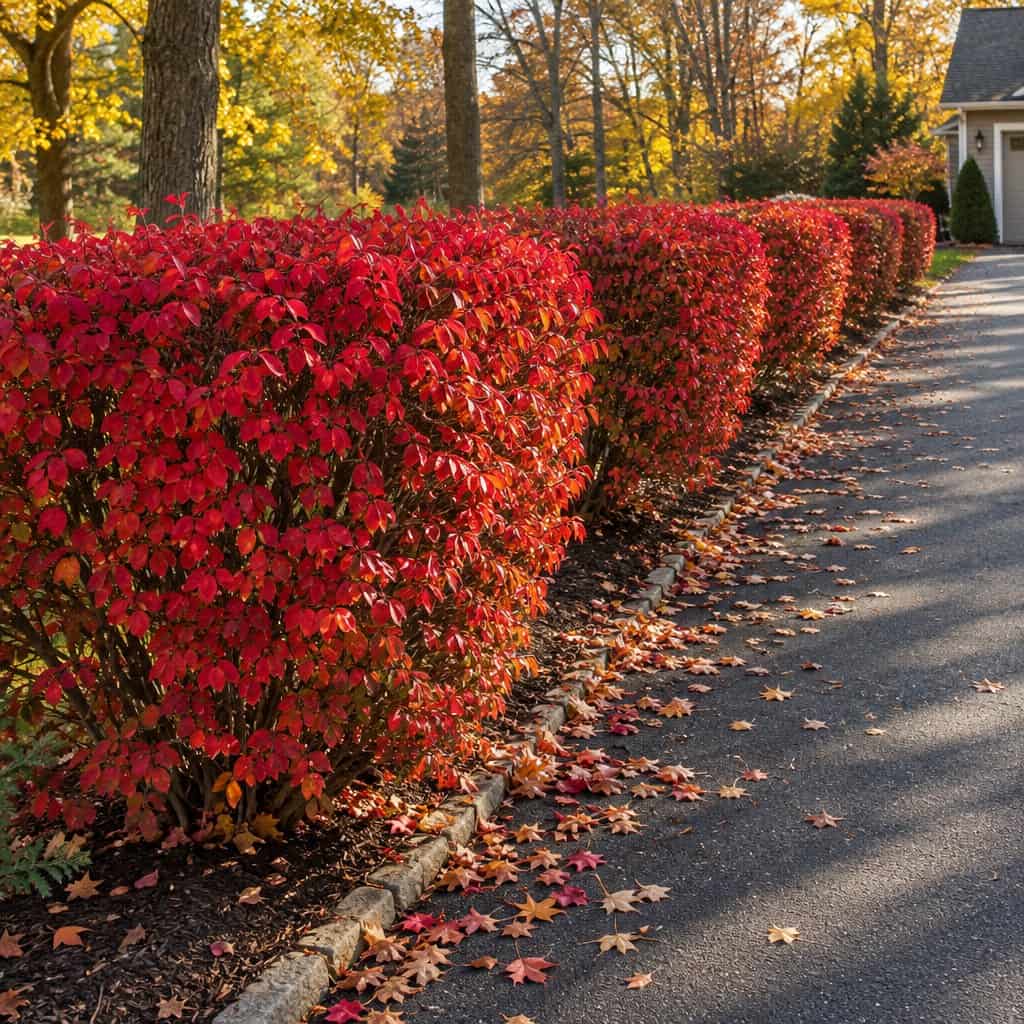
Burning bush (Euonymus alatus) was the go-to shrub for fall color for decades. Many older yards still have a row of them clipped into a boxy hedge along the drive.
The red leaves last two or three weeks, and the rest of the year the shrub is plain green. Birds carry its berries into nearby woods, where seedlings crowd out native plants. Massachusetts and New Hampshire already prohibit its sale.
Native shrubs with comparable fall color include fothergilla, Virginia sweetspire, and highbush blueberry, all hardy to at least zone 5. Each also offers spring flowers, which burning bush lacks.
11. A Tiered Concrete Fountain in the Front Yard

The stacked, three-bowl concrete fountain arrived with the Mediterranean-style homes of the late 1990s and early 2000s. Twenty-plus years later, many have a failing pump or no water at all.
In zone 6 and colder, water left in the bowls freezes and cracks the tiers. Still water that sits for about a week becomes mosquito habitat, and concrete wicks up mineral stains that never fully scrub out.
A self-contained bubbler, such as a drilled basalt column or glazed urn over a buried reservoir, gives the sound of moving water with almost no exposed surface. It is also simple to drain in late fall.
12. A Narrow Concrete Walk to the Front Door

Many houses built from the 1950s onward have a 36-inch concrete strip running from driveway to stoop, often with a hard 90-degree turn. It makes the entry feel cramped no matter how nice the door is.
Designers generally recommend 48 to 60 inches for a main entry walk. That is wide enough for two adults side by side, or one person carrying groceries with room to spare.
The old slab can stay. A border of brick or concrete pavers, 8 to 12 inches wide on each side and set on compacted gravel, widens the walk and adds a finished edge. Softening that sharp corner into a curve helps even more.
13. Landscape Fabric Under a Rock Bed
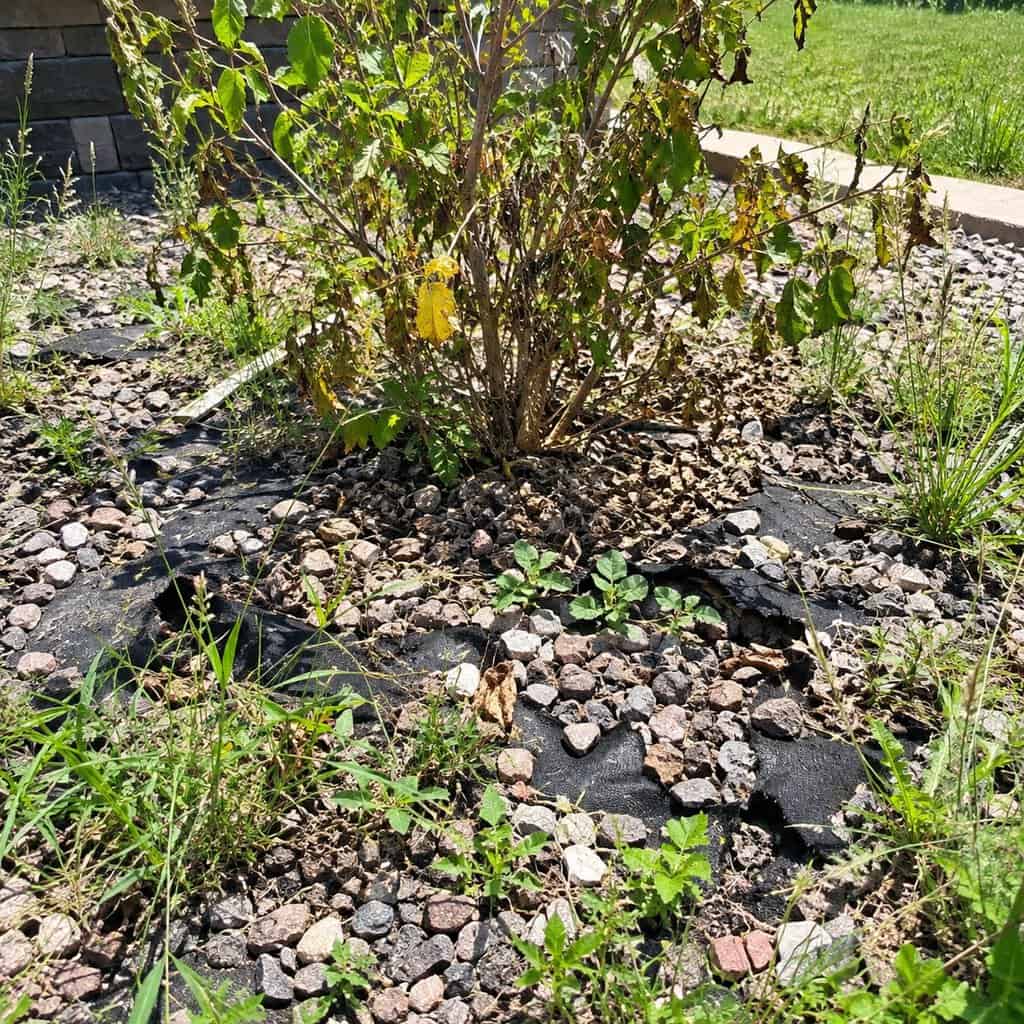
Black woven fabric topped with gravel was supposed to end weeding for good. In practice, dust and leaf litter collect between the stones, and within a few years weeds sprout right on top of the fabric.
Shrubs planted through it suffer too. Their roots tend to spread just under the fabric where moisture collects, and the bed slowly loses the organic matter healthy soil needs.
The long-term fix is to strip both rock and fabric, then cover the soil with 3 inches of wood chips or shredded bark. For a stubborn area, a layer of plain cardboard under the mulch smothers weeds for a season and then breaks down.
14. Pampas Grass Clumps by the Driveway

Pampas grass (Cortaderia selloana), with plumes reaching 8 to 10 feet, was a must-have accent in the 1970s and 1980s, especially at the end of a driveway or beside a pool.
It is hardy roughly in zones 7 through 10 and is invasive in coastal California. The saw-edged leaves cut skin, the old clump turns into a dense mound of dead blades, and removal usually takes a mattock or a rented stump grinder.
For a similar feathery look at a manageable size, pink muhly grass reaches about 3 feet with rosy fall plumes in zones 6 to 10. Switchgrass fills the same role farther north.
15. Mulch Piled Up Against Tree Trunks
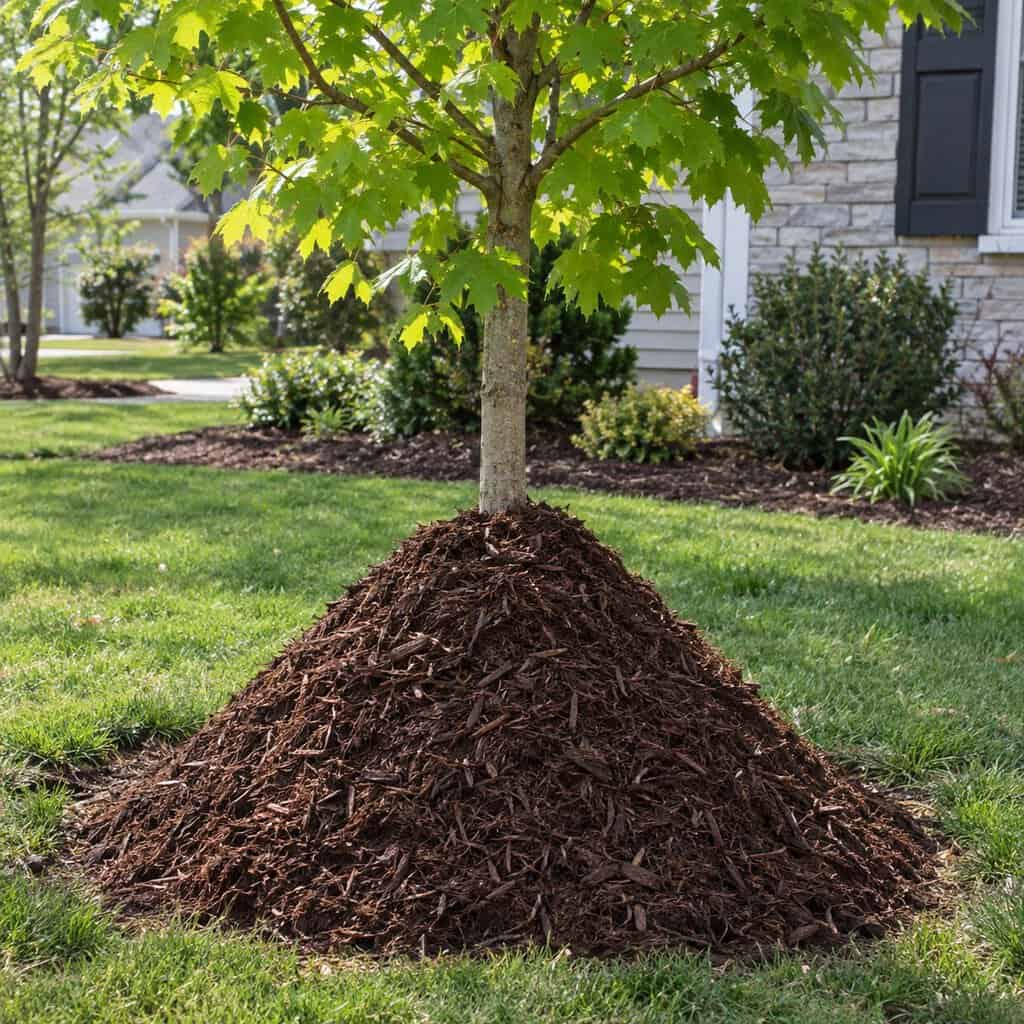
Tall cones of mulch around tree trunks became common once landscape crews began refreshing beds every spring, piling new layers on top of old ones.
Bark is not meant to stay damp. A buried trunk can rot at the base, and the tree may grow roots up into the mulch that later wrap around the trunk and choke it. The visible flare where the trunk widens into roots is the clue. If it is hidden, the mulch is too deep.
Rake the pile out into a wide, flat ring 2 to 4 inches deep, and keep it 3 to 6 inches away from the bark all the way around.
16. Chain-Link Fencing Around the Front Yard
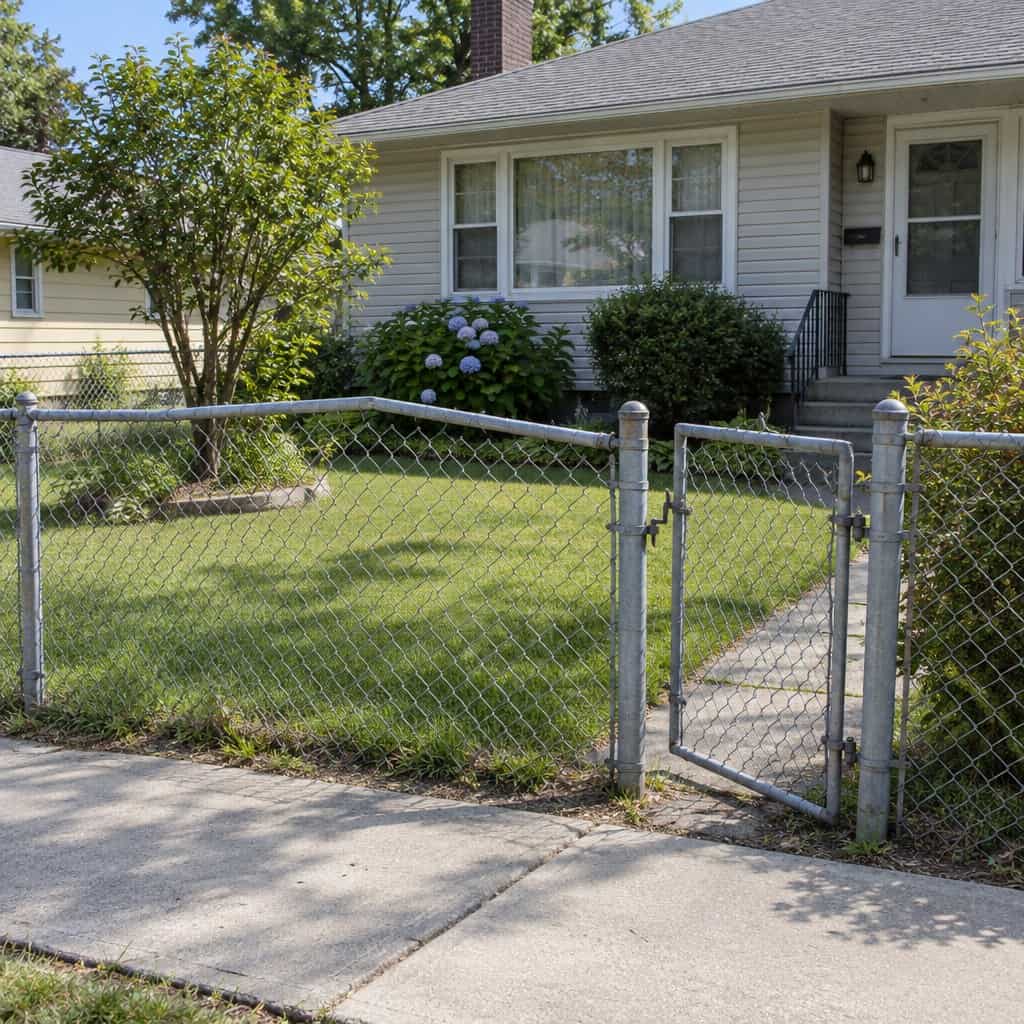
A waist-high galvanized chain-link fence around the front lawn is one of the clearest signs of a postwar house that has seen little exterior updating.
It offers no privacy and little visual appeal, and the top rail is often bent where kids climbed it decades ago. Many towns also cap front fences at 3 or 4 feet, which limits what can replace it.
Start by asking whether the fence still has a job. If not, removing it is the biggest instant improvement. If it contains a dog, black vinyl-coated mesh or a short steel picket fence at the same height works and nearly disappears against plantings.
17. A Crowd of Resin Statues and a Dressed-Up Goose

The concrete goose wearing a seasonal outfit on the front step had its heyday in the Midwest in the 1990s, and it rarely traveled alone. Gnomes, frogs, deer, and cherubs tend to gather around it.
Resin and painted concrete fade fast in full sun, so after a few summers the figures look chalky and gray. A dozen small objects scattered through a bed also make it read as cluttered rather than collected.
Keep the one piece with real meaning and give it a deliberate spot, such as the end of a path or the center of a shade bed. The rest can go to a garage sale.
18. Railroad Tie or Timber Retaining Walls

Used railroad ties were cheap and plentiful through the 1970s, and they held up countless sloped yards and raised beds. Many of those walls are now leaning, splitting, and seeping dark residue.
Ties are typically treated with creosote, which the EPA has not approved for residential use. Treated wood is not recommended near vegetable gardens or play areas. Old ties also lose strength as they rot, so walls taller than about 2 feet start to bulge.
Interlocking concrete wall block, natural fieldstone, or a gentle slope planted with groundcover can replace the wall. Anything taller than 4 feet should be designed by a professional.
19. A Long Row of Matching Arborvitae

A straight line of ‘Emerald Green’ or ‘Green Giant’ arborvitae along the back fence was the fastest privacy screen money could buy in the 2000s. Many of those rows now have gaps.
Deer browse arborvitae heavily in winter, often stripping everything below about 5 feet. Heavy snow splays the multi-stemmed tops of ‘Emerald Green’, and the bent branches rarely pull back together. One dead plant leaves a missing-tooth look.
A layered screen holds up better. Mix a few evergreens, such as ‘Green Giant’ or spruce, with deciduous shrubs like viburnum or ninebark, and set them in a staggered double row.
20. Plastic Lattice Around the Deck
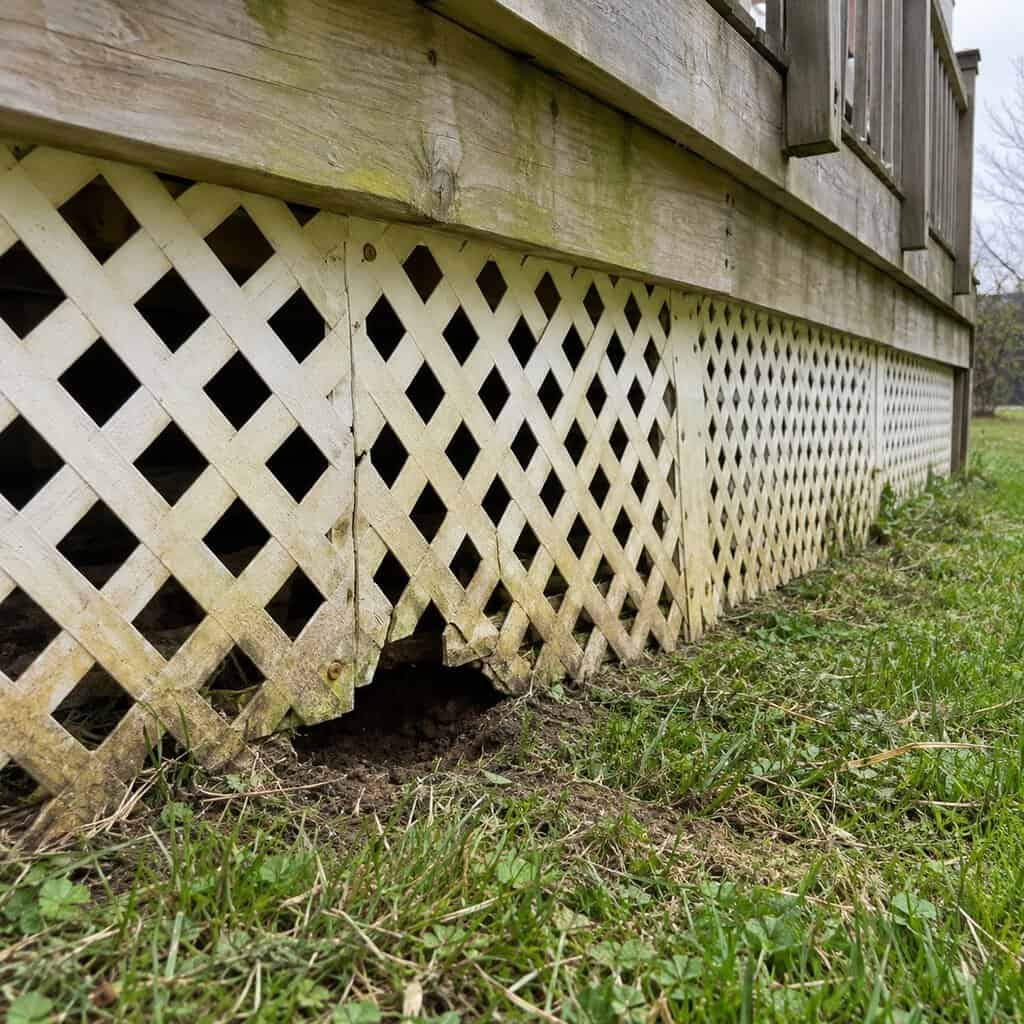
White lattice panels tacked under the edge of a deck hid the posts and joists cheaply, and they became standard in the 1980s and 1990s.
Over time the panels chalk and turn yellow-gray, then crack where the mower or string trimmer hits them. The openings are large enough for animals to push through, so the space underneath often becomes a den.
Vertical board skirting stained to match the deck looks cleaner. Leave narrow gaps for airflow. To stop burrowing animals, bury galvanized hardware cloth about 12 inches deep along the perimeter, bent outward in an L shape.
21. Glaring Motion-Sensor Floodlights

A pair of floodlights aimed from the garage corner across the yard was the standard security setup for decades. When they trip, the whole yard flashes into harsh, flat light.
Older fixtures and many replacement bulbs run at a cool 5000K or higher, which reads blue and clinical. Unshielded lamps throw glare into neighbors’ windows and actually make it harder to see into shadows.
Swap them for shielded, downward-facing fixtures rated around 3000K. Lights tucked under eaves or mounted lower on the wall cover the same area without the glare.
22. An Island Bed Floating in the Lawn

A round bed in the middle of the front yard, usually with a small ornamental tree and a ring of annuals, shows up in yards from nearly every decade since the 1970s.
Isolated beds chop the lawn into awkward strips, and from the street they look like a placemat set out for one plant. They also add another full edge to trim.
Stretch the bed until it joins the planting along the house, the drive, or a property line. Curves with a radius of at least 6 feet are easy for a mower to follow. One large connected bed reads as a plan instead of a leftover.
23. Spreading Juniper Across the Front Beds
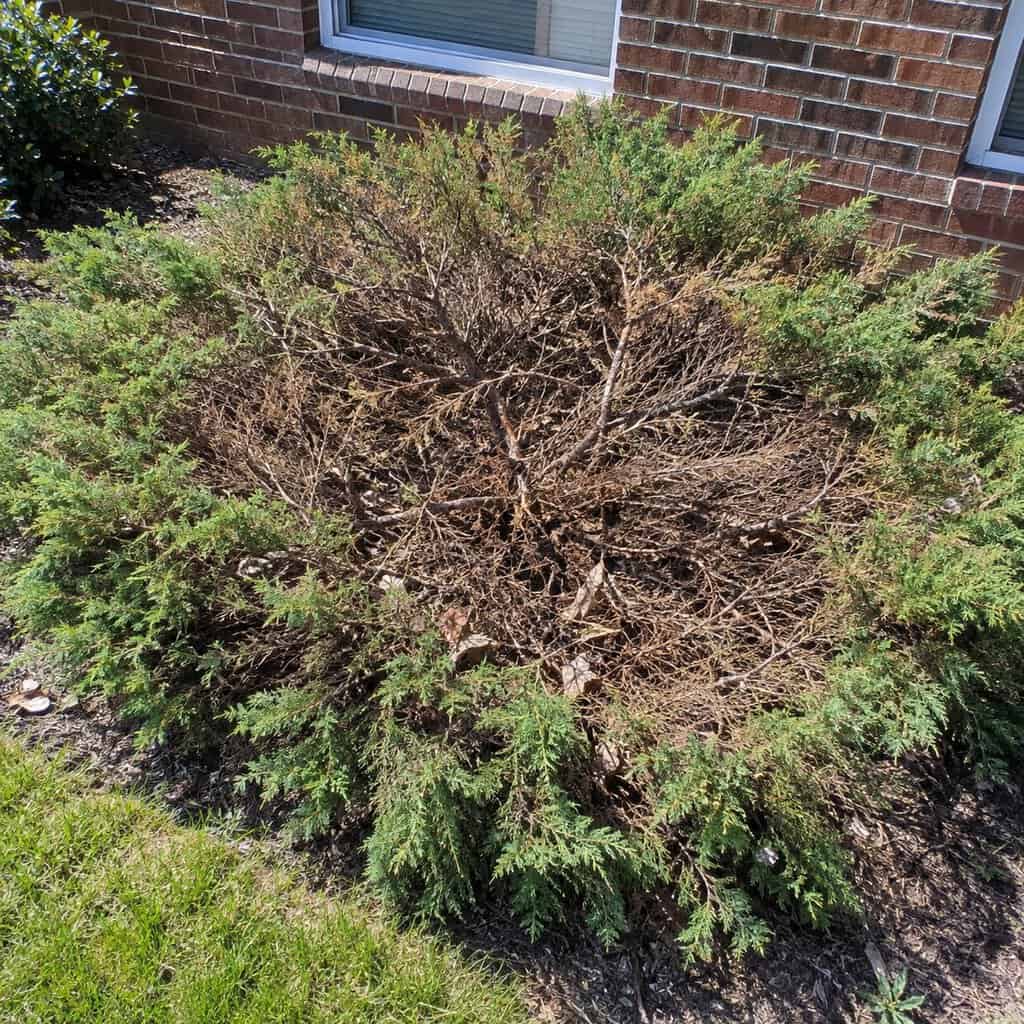
Low junipers like ‘Blue Rug’ and ‘Andorra’ covered front slopes and foundation beds in the 1970s and 1980s because nothing seemed to bother them. Old plantings are often brown in the middle and green only at the tips.
Junipers do not regrow from old, bare wood, so cutting them back does not help. Their resinous foliage also burns readily, and fire-safety guidance in wildfire regions recommends keeping junipers out of the first 5 feet around a house.
Replace the patch with a lower, softer groundcover suited to the site: creeping phlox, bearberry, or ‘Gro-Low’ fragrant sumac in sun, or wild ginger in shade.
24. A Play Set the Kids Outgrew Years Ago
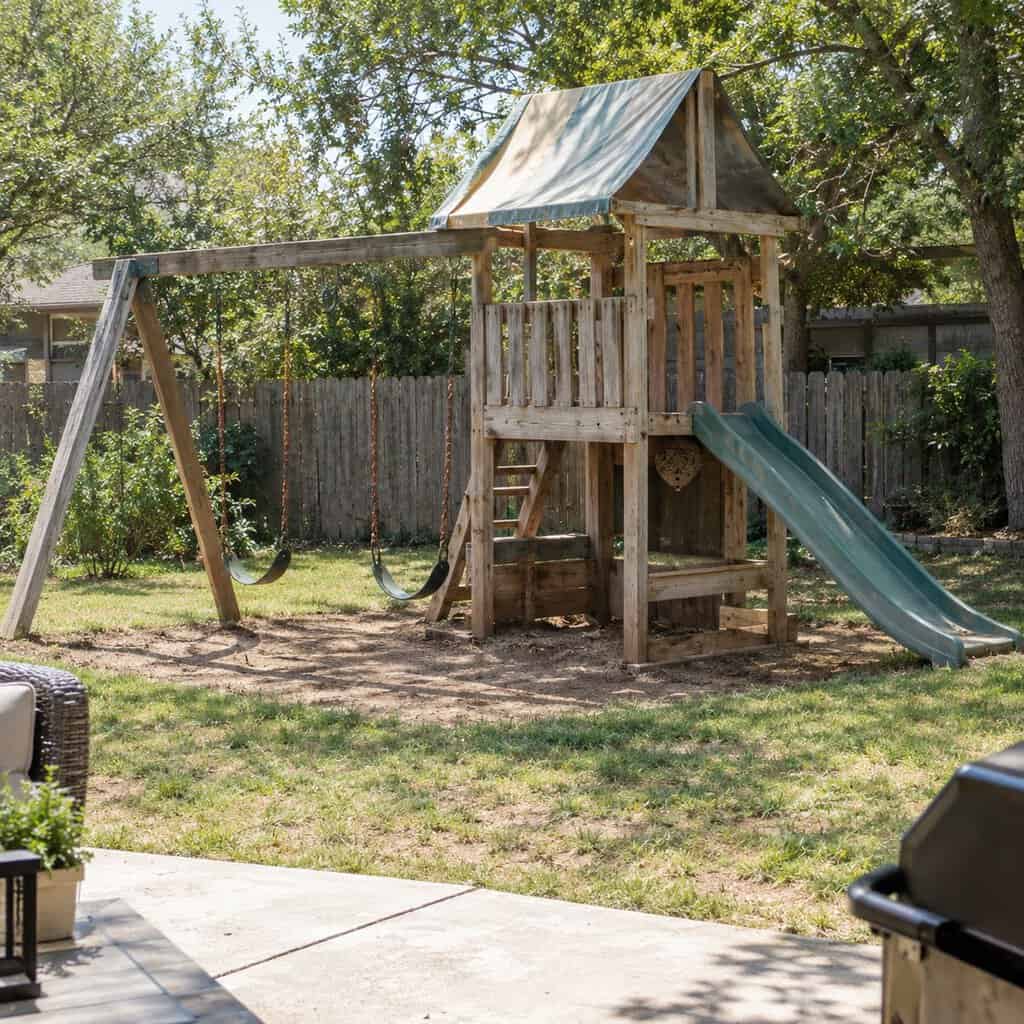
A bleached wooden fort, a rusting metal swing frame, or a basketball goal with a bent rim says a lot about how long it has been since anyone reworked the backyard.
Old equipment also becomes a hazard. Bolts loosen, wood splinters and splits, and carpenter bees and wasps move into the beams. The grass underneath is usually worn to bare dirt.
Wooden sets in fair condition often sell or get claimed quickly on local listings, sometimes by a buyer who handles the disassembly. Once it is gone, loosen the compacted soil, work in compost, and seed in early fall, when cool-season grass establishes best.
25. Plastic Flowers in Window Boxes and Urns

Artificial geraniums and ivy in window boxes promised color without watering. Outdoors, though, UV light bleaches most plastic and fabric flowers within one season.
By the second summer the reds turn pink, the greens go powdery, and the stems droop. Faded faux flowers are easy to spot from the street, and they can make a house look unoccupied.
Plant hardy, low-water options instead: sedums, trailing rosemary in warm zones, or dwarf conifers that hold their shape year-round. In winter, a box filled with cut evergreen boughs, red twig dogwood stems, and pine cones lasts until spring with no care at all.
26. Scalloped Edging Around Every Bed
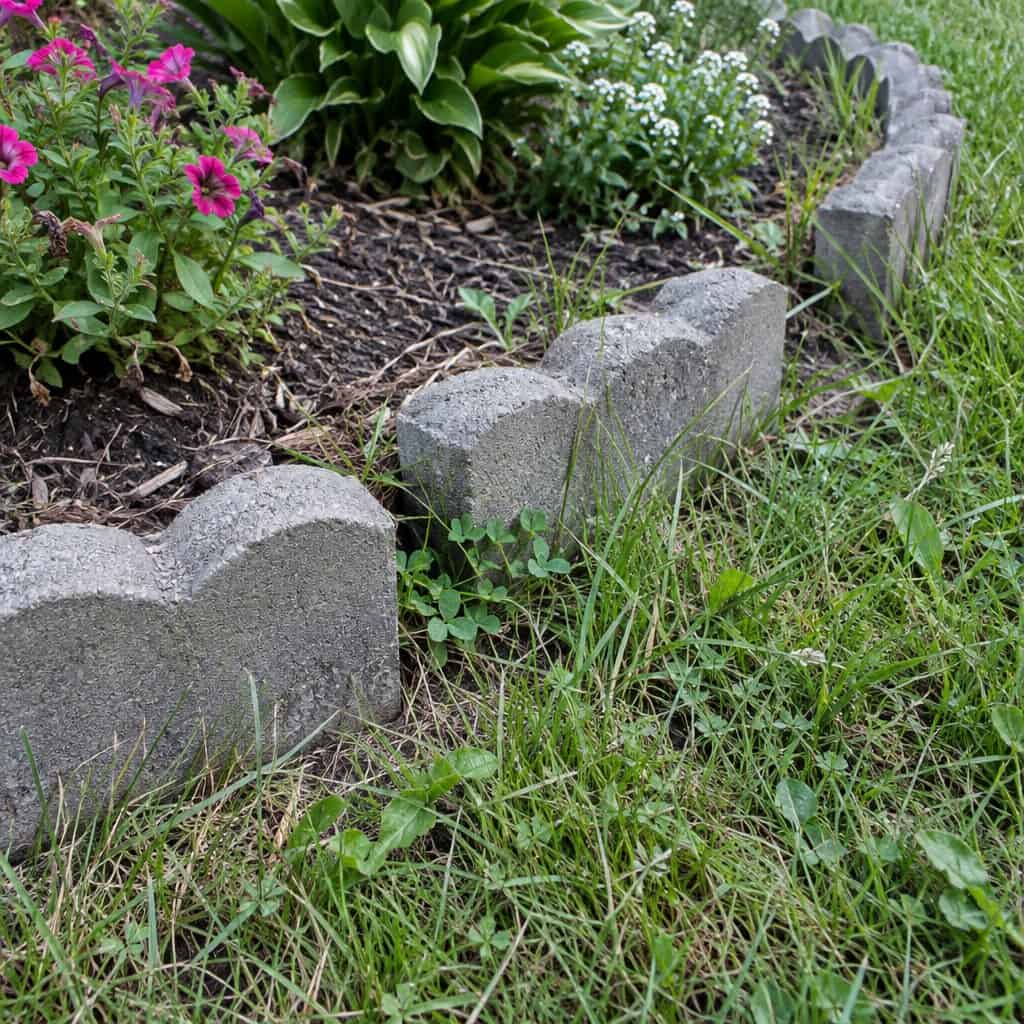
Wavy concrete edging blocks and their black plastic look-alikes outlined beds all over the country in the 1980s and 1990s. Today they frame a garden like a paper doily.
Individual blocks shift with frost and drift apart, and grass and weeds root in the gaps. The wavy tops also make it impossible to mow cleanly along the border, so every bed needs extra trimming.
A crisp hand-cut edge, renewed with a half-moon edger in spring and again in midsummer, costs nothing. For a permanent border, a row of bricks set flush with the lawn lets a mower wheel ride right along the top.
27. Paving Over Most of the Backyard
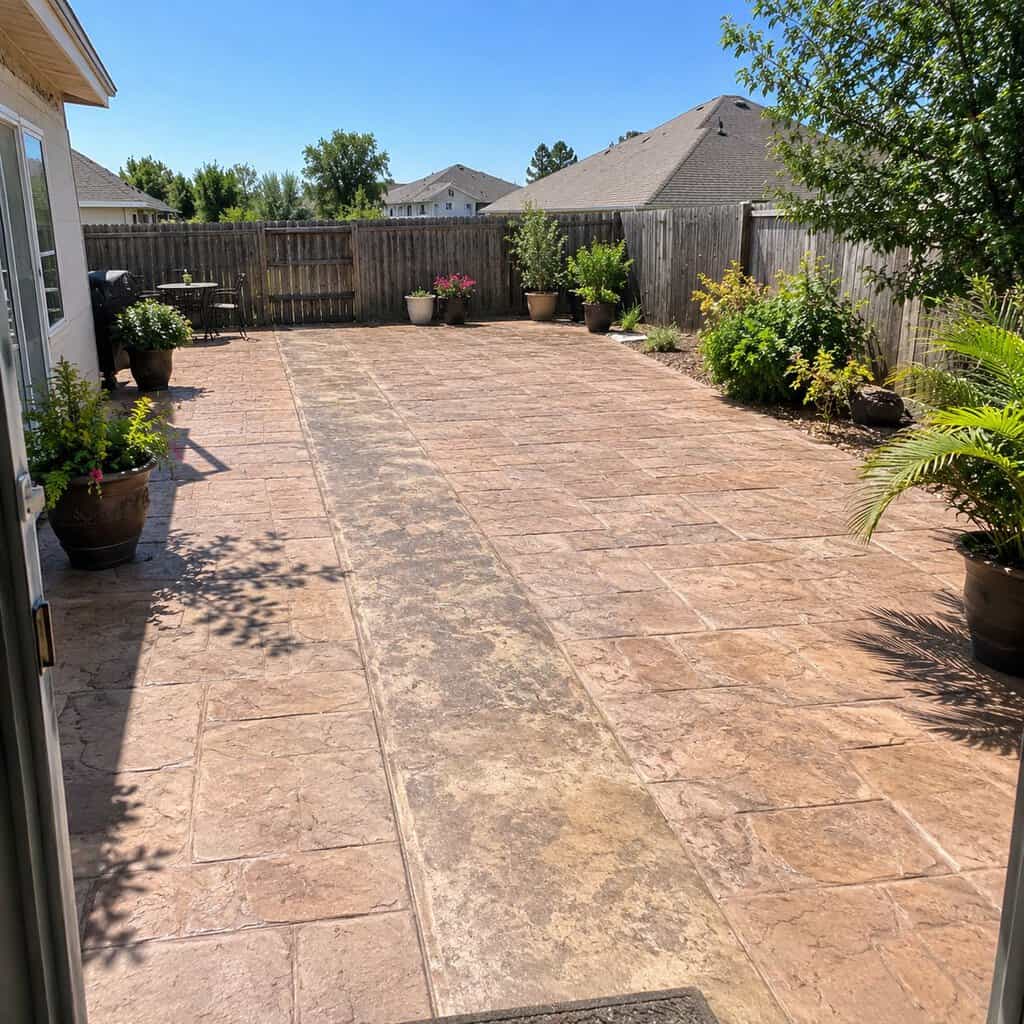
Large patios of stamped or brushed concrete were sold as low-maintenance outdoor rooms. With little planting around them, the backyard ends up feeling more like a parking area.
Concrete and dark pavers soak up summer heat, often topping 130 degrees in full sun, and radiate it back well into the evening. Rain runs off instead of soaking in, which can push water toward the foundation.
A rented concrete saw can cut planting pockets into an existing slab. Fill them with small trees, shrubs, or ornamental grasses, or replace a section with permeable pavers or gravel to soften the space and slow runoff.
28. Annuals Ringed Around the Mailbox

A circle of petunias or begonias around the mailbox post, planted fresh every Memorial Day, was a curb-appeal ritual for a generation of homeowners.
The spot is one of the harshest in the yard. Reflected heat from the street, road salt in winter, and snow piled up by the plow leave annuals struggling and needing daily water by July.
Tough, drought-tolerant perennials hold up far better. Prairie dropseed, little bluestem, creeping thyme, and ‘May Night’ salvia all handle full sun and lean soil, return each year, and need little more than a spring trim.
29. Green Outdoor Carpet on the Front Steps

Bright green artificial grass carpet stapled to concrete steps was a common way to add grip and hide stains from the 1960s on. It is still recognizable from across the street.
The carpet holds water against the concrete, which encourages mildew and freeze damage. Rusted staples and lifting edges become trip hazards, especially at the front lip of each step.
Pull it up, scrape off the adhesive, and pressure wash the steps. A penetrating concrete stain in gray or tan, finished with a sealer mixed with anti-slip grit, provides traction and a clean look for less than the cost of new carpet.
Start With What Shows From the Street
Nothing on this list needs fixing all at once. The items visible from the curb, such as the mailbox bed, the front walk, the foundation shrubs, and the mulch color, shape a first impression fastest and are usually the cheapest to change.
A useful habit is to stand at the end of the driveway each spring and fall and look at the yard the way a stranger would. Anything that has not changed in 15 years deserves a second look. Its age is not the problem. The question is whether it still suits the house and the people living in it.
The article was helpful, but It would have been more helpful to show the “after” pictures!