

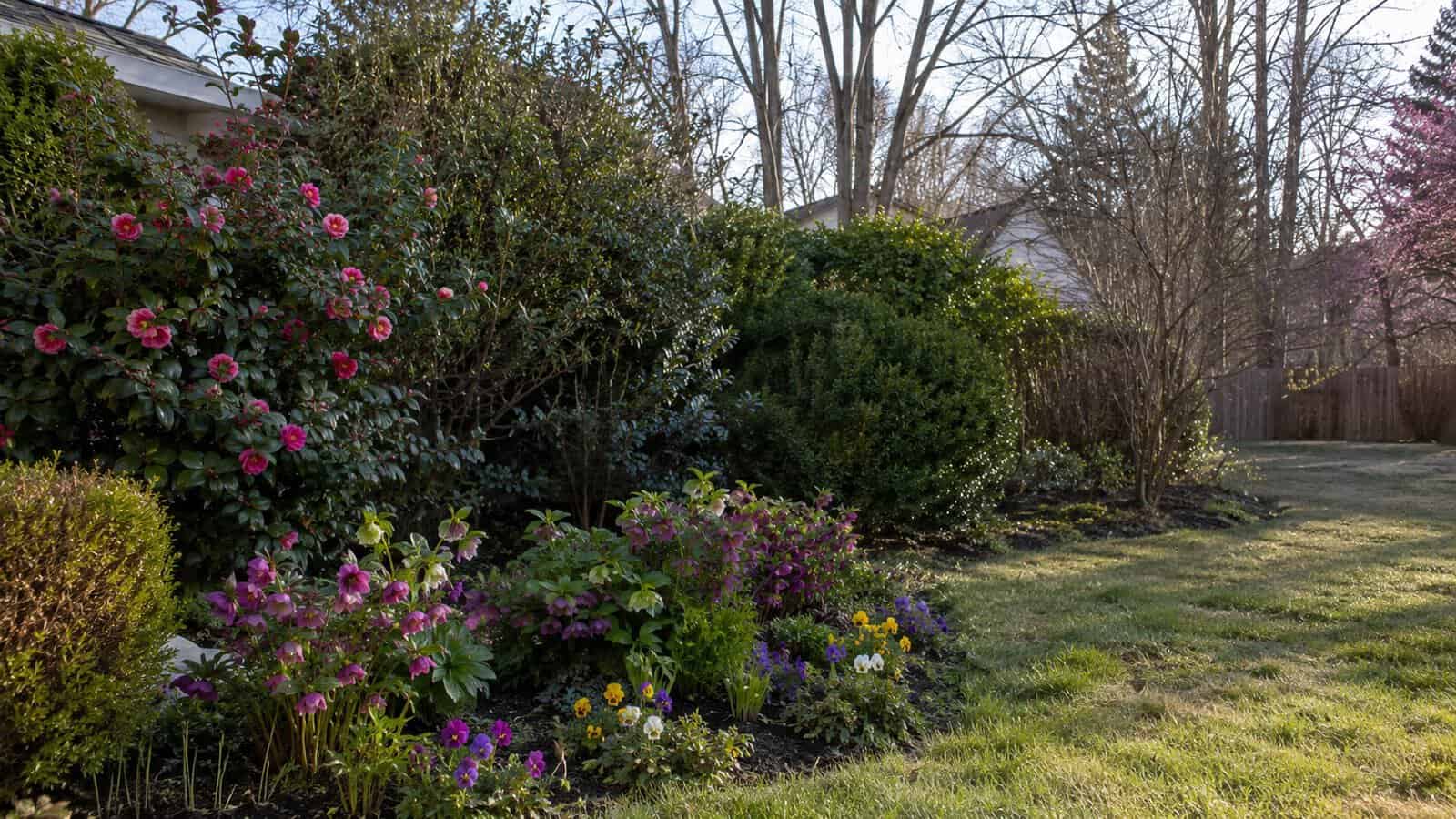
Walk through most American neighborhoods in late February or late August and the beds look about the same: green, brown, and not much else. Those two stretches are where flower gardens usually fall apart.
The fix is not more plants. It is the right plants, chosen for how long they flower and when. A shrub that reblooms all summer does more work than three flats of bedding annuals. A shrub that opens in January covers a month most homeowners give up on.
The list below mixes warm-season workhorses, plants that rebloom after a trim, and a handful of cold-weather bloomers. Zones, sun needs, and bloom windows are included so each one can be matched to the right spot.
Here are 19 plants that help a yard stay in flower across the calendar.
1. Lantana

Lantana hits its stride when summer turns brutal. Once nights stay above 60°F, it flowers without a break until cold weather arrives, and in zones 9 through 11 it can carry on through winter.
Mounding types reach 2 to 3 feet, while older shrub forms can top 5 feet in the Deep South. In Florida and other warm states, wild seedlings have become a problem, so look for cultivars labeled sterile or low-seed.
The green berries are toxic to pets and children. Plant in full sun, water deeply only during long dry spells, and hold off on fertilizer, which mostly produces extra foliage.
2. Hellebore (Lenten Rose)
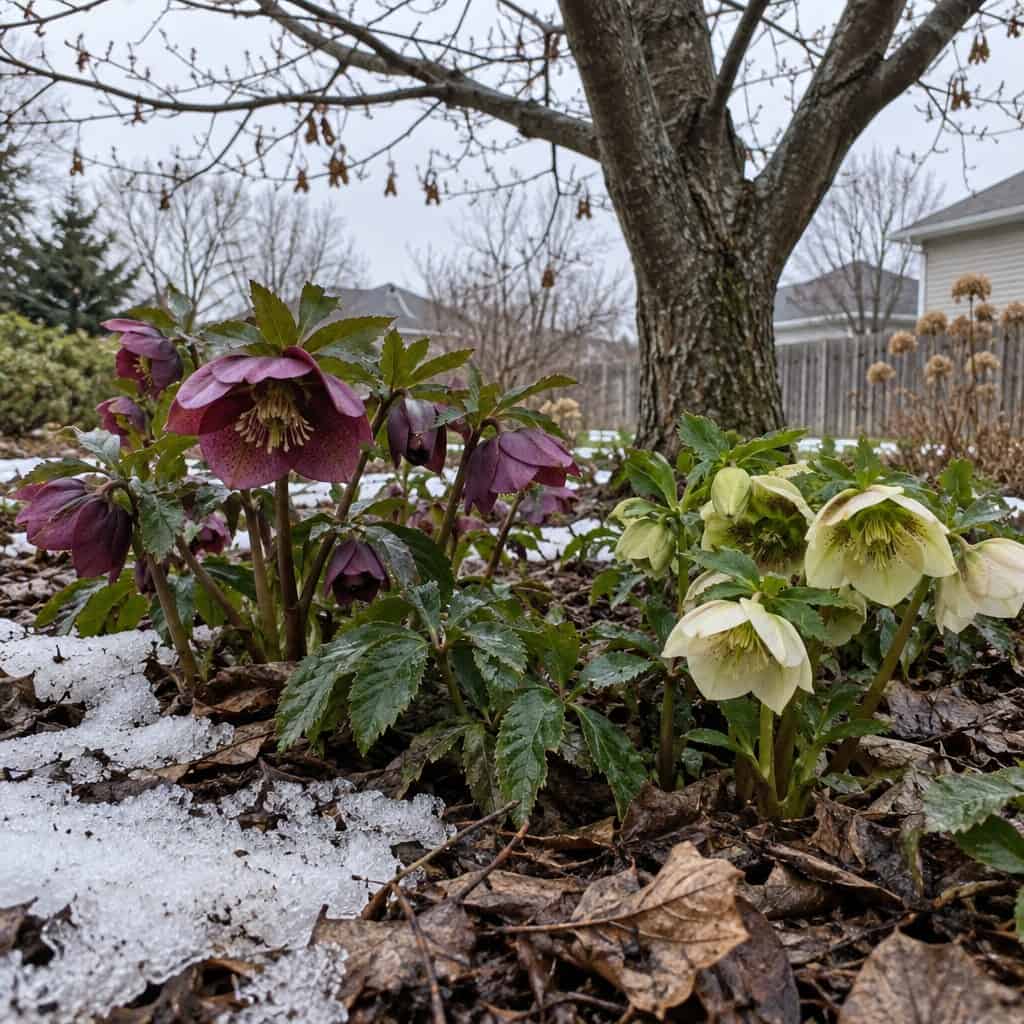
Hellebores open while snow is still a possibility. In zone 7 and south, the first nodding cups often appear in January. Farther north, they arrive in February or March and hold for two months or longer.
What look like petals are actually sepals, which is why the color lasts so long. Shades run from white and green to plum and near-black. Plants stay 12 to 18 inches tall with leathery evergreen foliage and are hardy in zones 4 through 9.
Clip off last year’s tattered leaves in late winter so the blooms show. Deer and rabbits avoid them. Part to full shade under deciduous trees suits them best.
3. Salvia
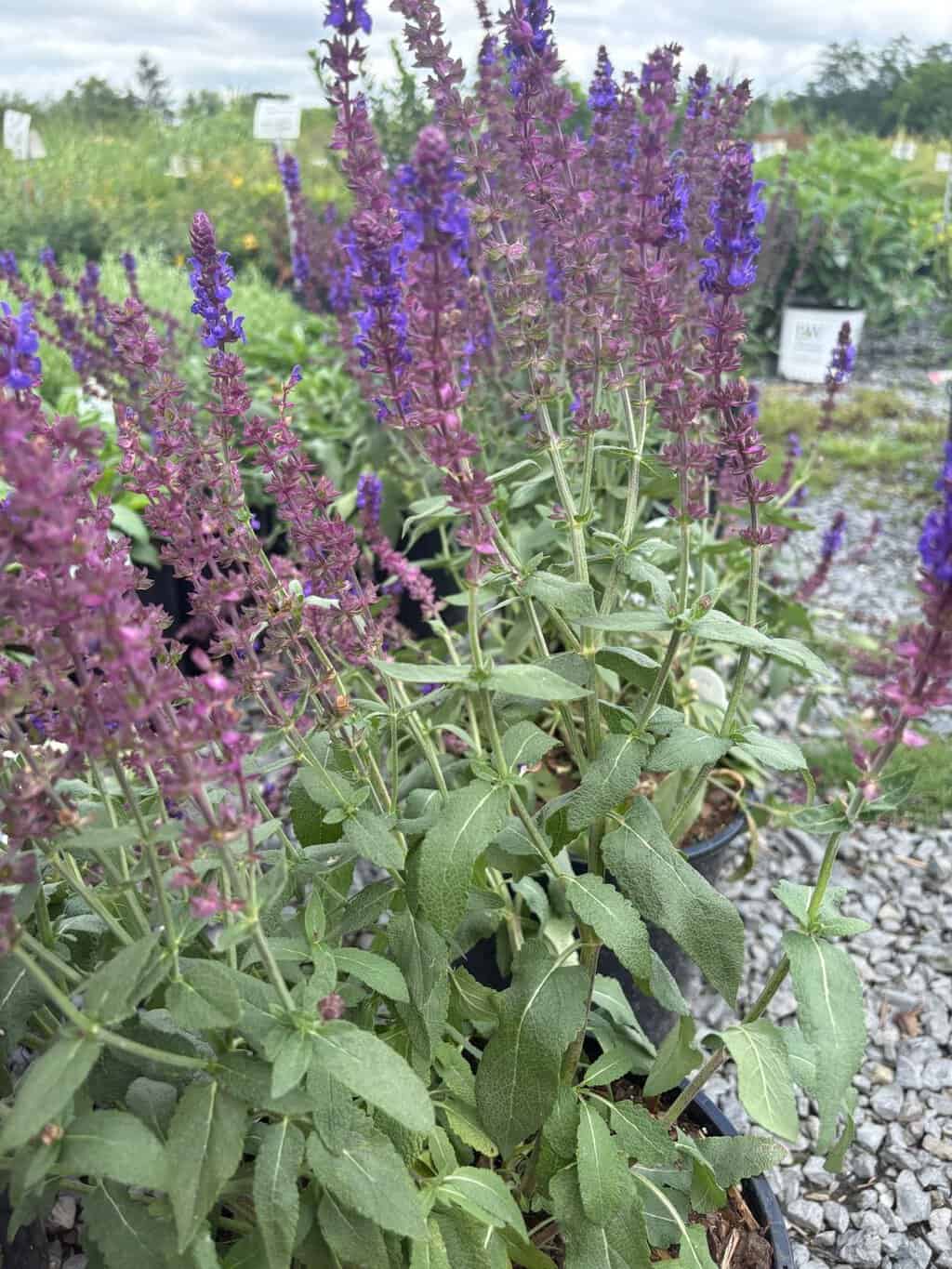
Perennial salvia is one of the easiest plants to coax into a second round. Varieties of Salvia nemorosa such as ‘May Night’ and ‘Caradonna’ bloom in late spring, and cutting the faded spikes down to the leafy base brings new stems within a few weeks.
In the South and Southwest, autumn sage (Salvia greggii) goes further, flowering in red, pink, or coral from spring through fall in zones 7 through 10.
Both stay roughly 18 to 30 inches tall. Plant them where water drains quickly, give them at least six hours of sun, and expect hummingbirds by midsummer.
4. Encore Azalea
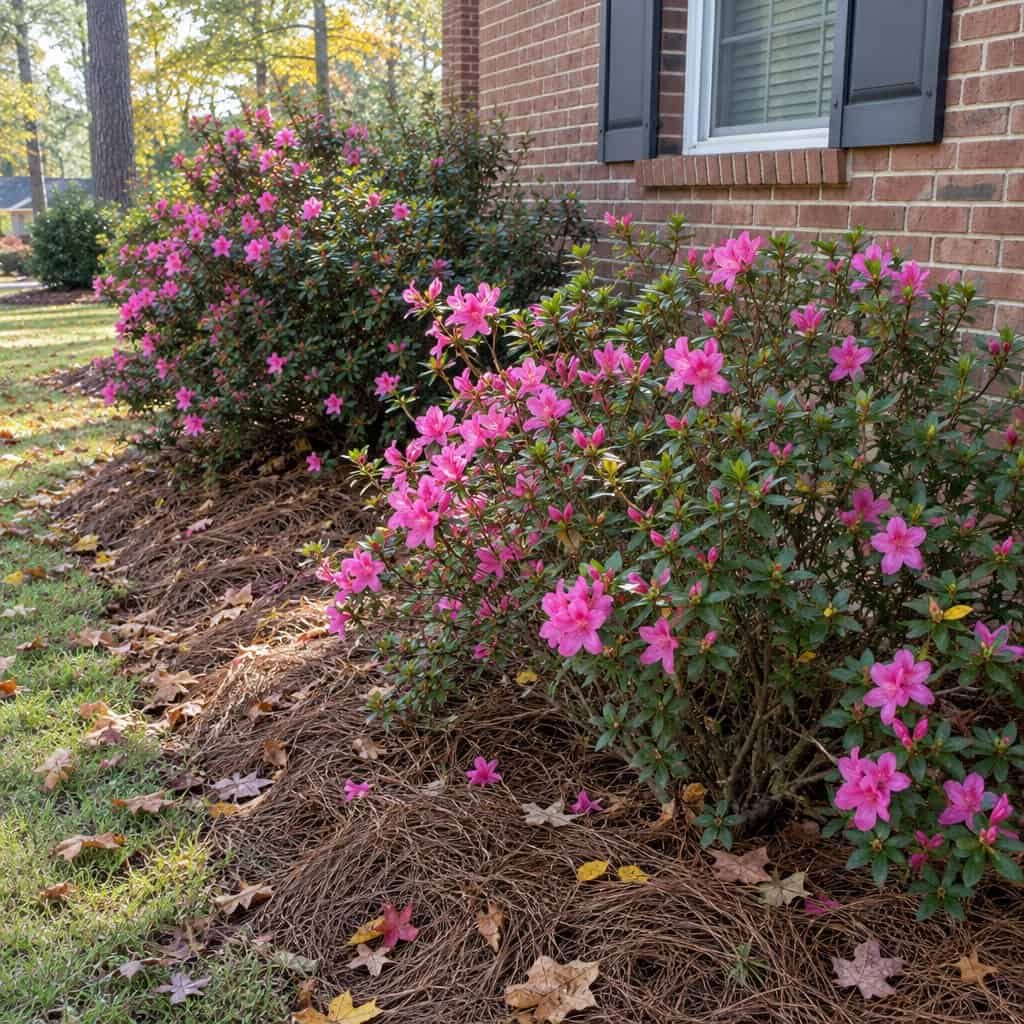
Standard azaleas put on one big show in spring and spend the rest of the year as plain green shrubs. Encore azaleas flower in spring, rest briefly, then bloom again from midsummer into fall.
The series includes more than 30 varieties, from 2-foot dwarfs to 5-foot shrubs, hardy in zones 6 through 10 depending on the cultivar. They handle more sun than older azaleas, and four to six hours suits most of them.
Acidic soil with a pH between 5.0 and 6.0 keeps the leaves dark green. Any pruning should happen right after the spring flush, since cutting later removes the buds for the fall round.
5. Geranium (Pelargonium)

Zonal geraniums earn their spot by staying in bloom from planting day until the first freeze. Along the California coast and in South Florida, where they are perennial, they flower in every month.
Plants reach 12 to 24 inches and do well in pots, window boxes, and sunny beds. Snap faded flower stalks off at the base, feed every two weeks with a balanced liquid fertilizer, and water only when the top inch of soil is dry.
In colder zones, take 4-inch cuttings in late summer and root them on a sunny windowsill. Next spring’s plants will cost nothing.
6. Catmint (Nepeta)
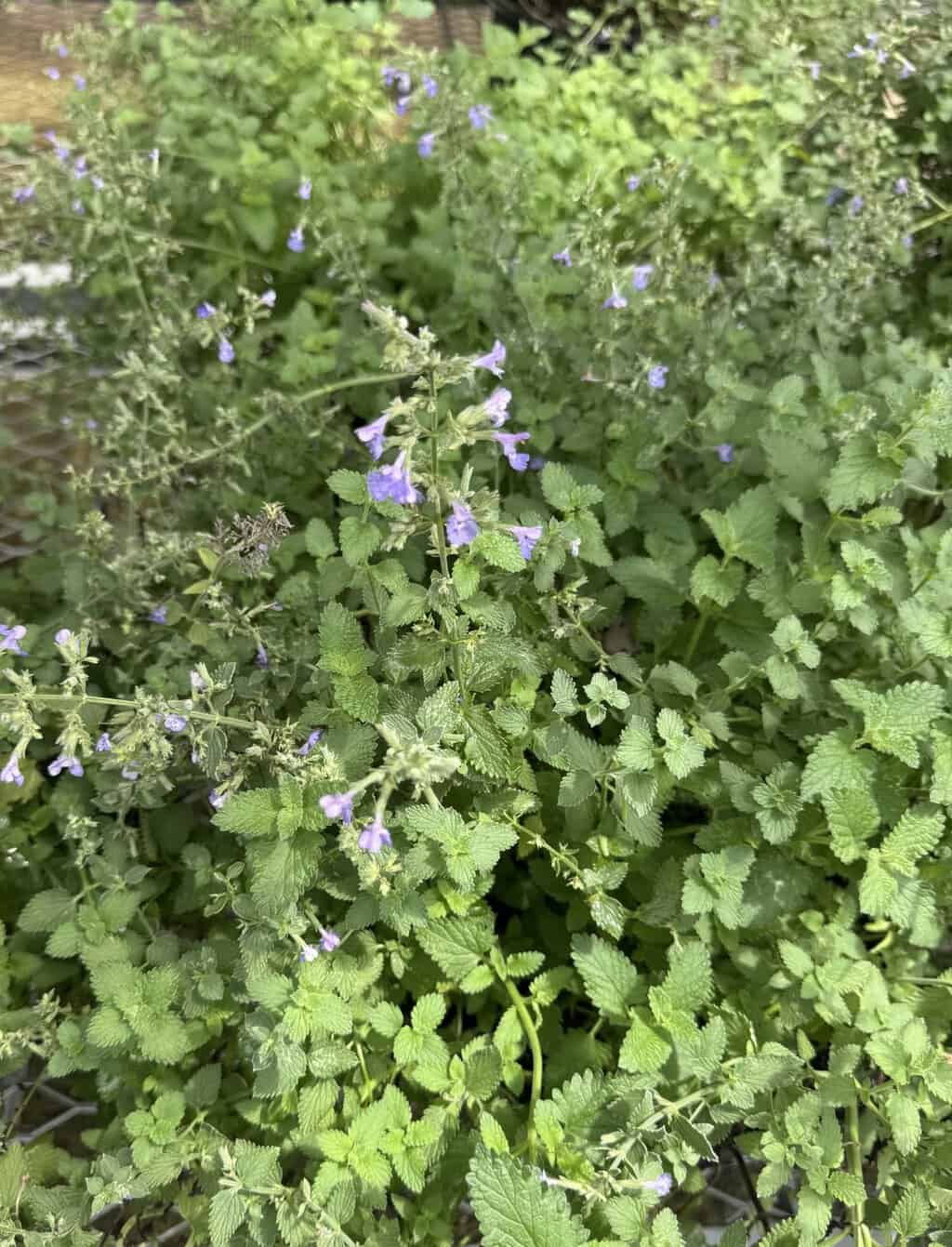
Catmint covers itself in lavender-blue spikes starting in May, and a single haircut keeps it going. Once the first wave fades in early summer, shear the whole plant back by about half. Fresh growth and new flowers follow in two to three weeks and carry on into September.
‘Walker’s Low’, named Perennial Plant of the Year in 2007, grows about 2 to 3 feet tall and wide. Catmint is hardy in zones 3 through 8, depending on the variety.
Deer pass it by, and once established it rarely needs watering. Lean, well-drained soil keeps the stems from flopping.
7. Camellia
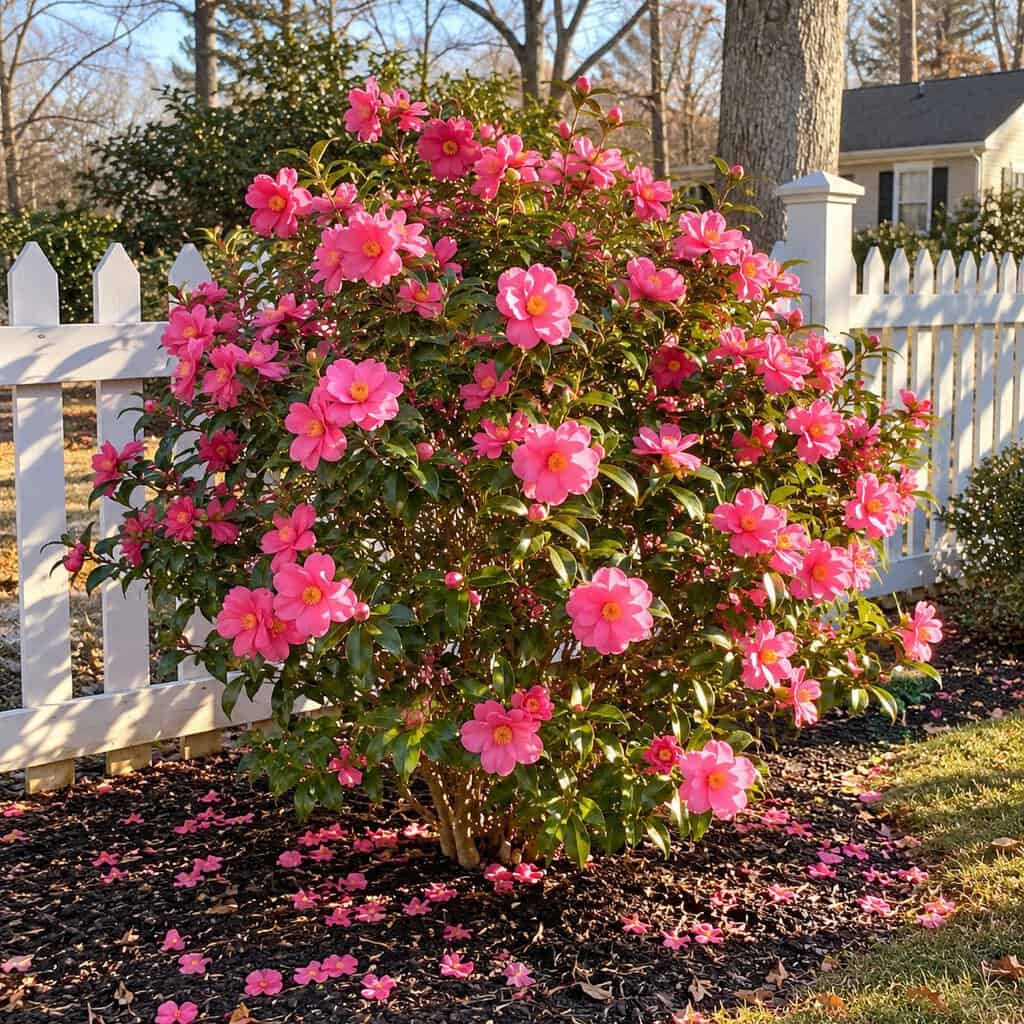
Camellias fill the stretch from late fall to early spring that most shrubs ignore. Sasanqua camellias open first, usually October through December, with smaller flowers and a looser habit. Japonica camellias follow with larger, fuller blooms from January into March.
Most are hardy in zones 7 through 9, and a few cold-tolerant hybrids, including the April and Winter series, survive in zone 6. Expect 6 to 12 feet of height over time.
Plant in acidic, well-drained soil with shelter from hot afternoon sun. The roots sit shallow, so a 2- to 3-inch layer of pine bark mulch helps.
8. Begonia (Wax and Dragon Wing)
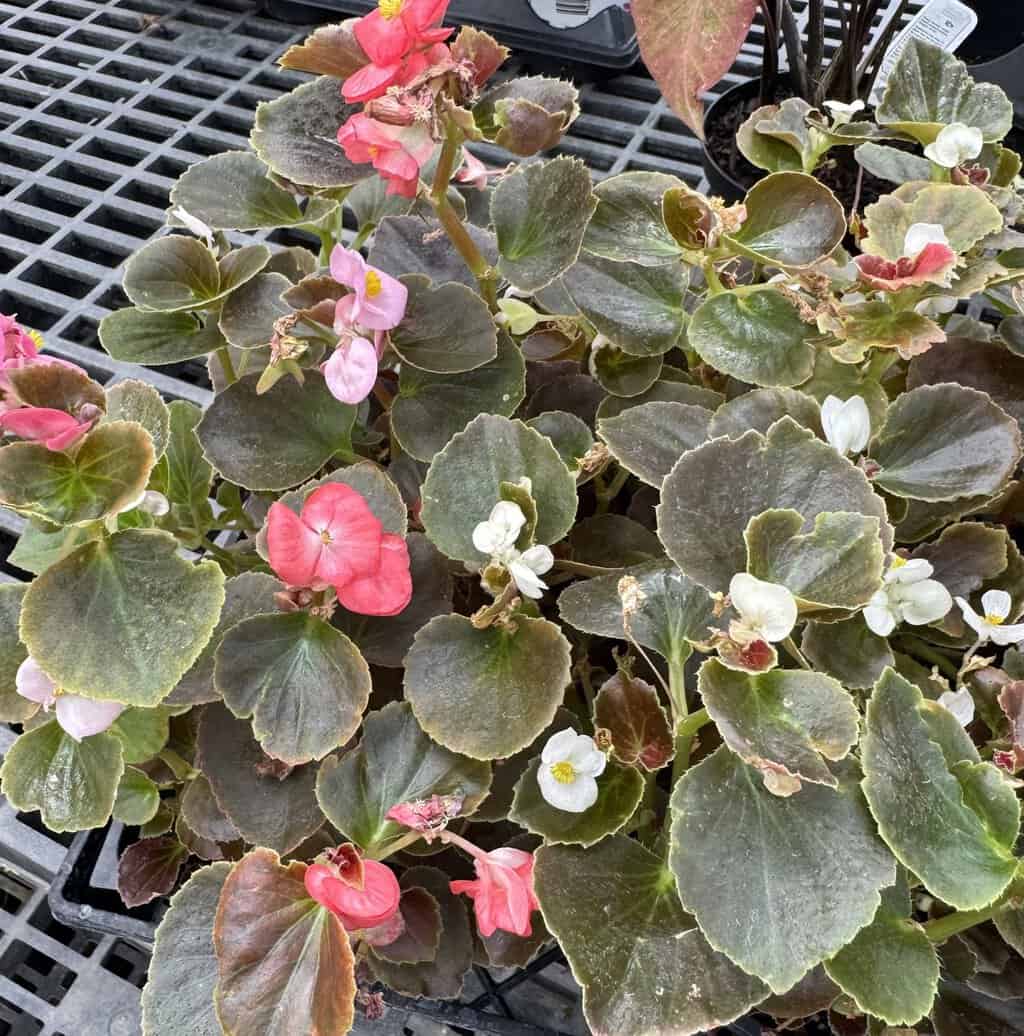
Begonias are among the few flowering plants that stay colorful in shade. Wax begonias form tidy 6- to 12-inch mounds and flower from late spring until frost without deadheading.
For more size, Dragon Wing begonias grow 12 to 18 inches tall with arching stems and hanging clusters of red or pink. One plant can fill a 14-inch container by midsummer.
Water when the surface feels dry and avoid wetting the leaves late in the day. Before the first freeze, pot up a few and set them by a sunny window. They often keep blooming indoors until spring.
9. Reblooming Daylily
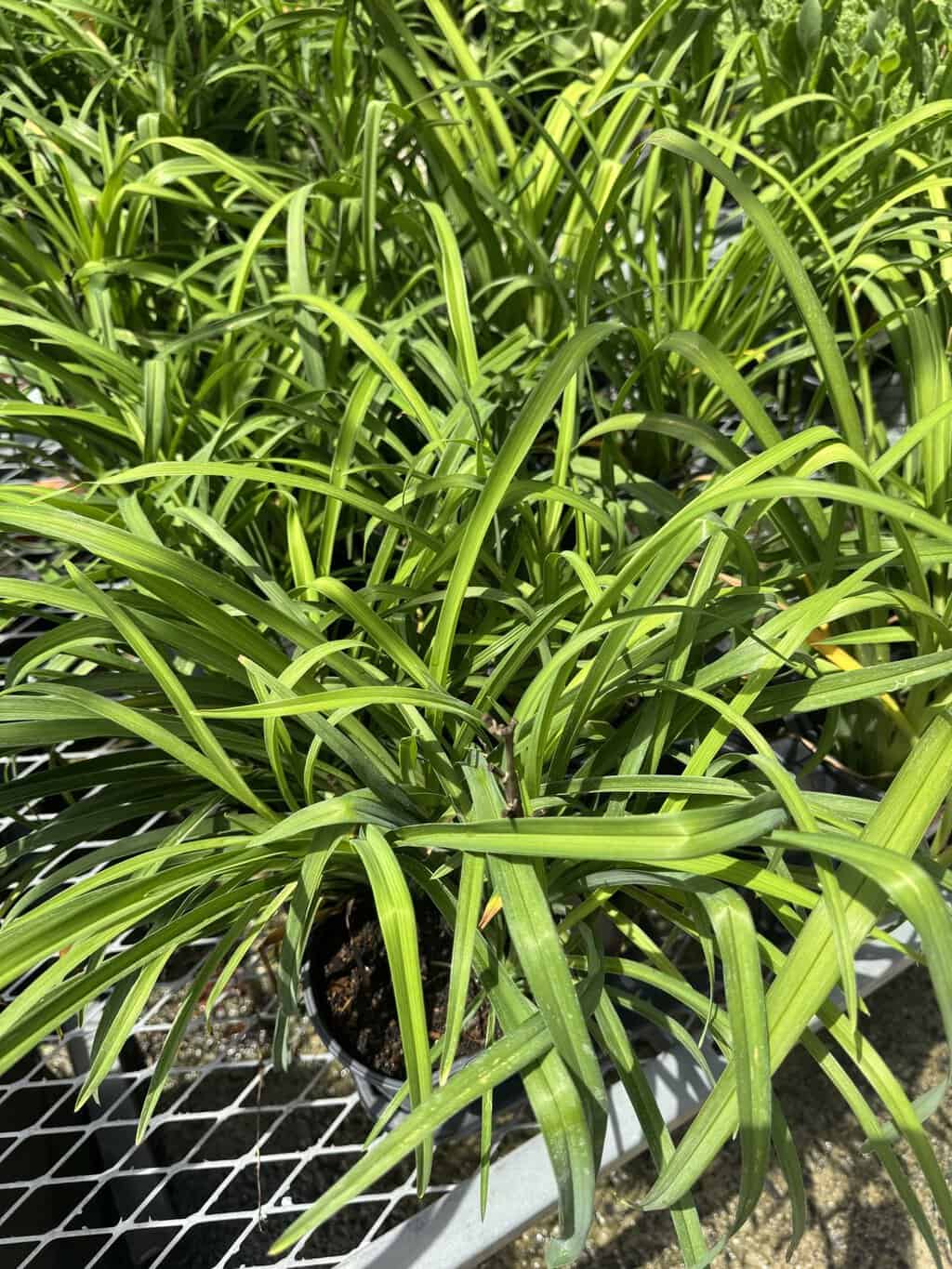
Most daylilies flower for a few weeks in early summer and then stop. Reblooming types such as ‘Stella de Oro’, ‘Happy Returns’, and ‘Rosy Returns’ send up new flower stalks from June into fall.
Each bloom lasts a single day, but buds keep coming. These compact varieties stay 12 to 24 inches tall, survive winters in zones 3 through 9, and tolerate road salt, heat, and clay.
Snap off spent flowers before they form seed pods, which pull energy away from rebloom. Divide crowded clumps every three to four years in early spring or late summer.
10. Verbena
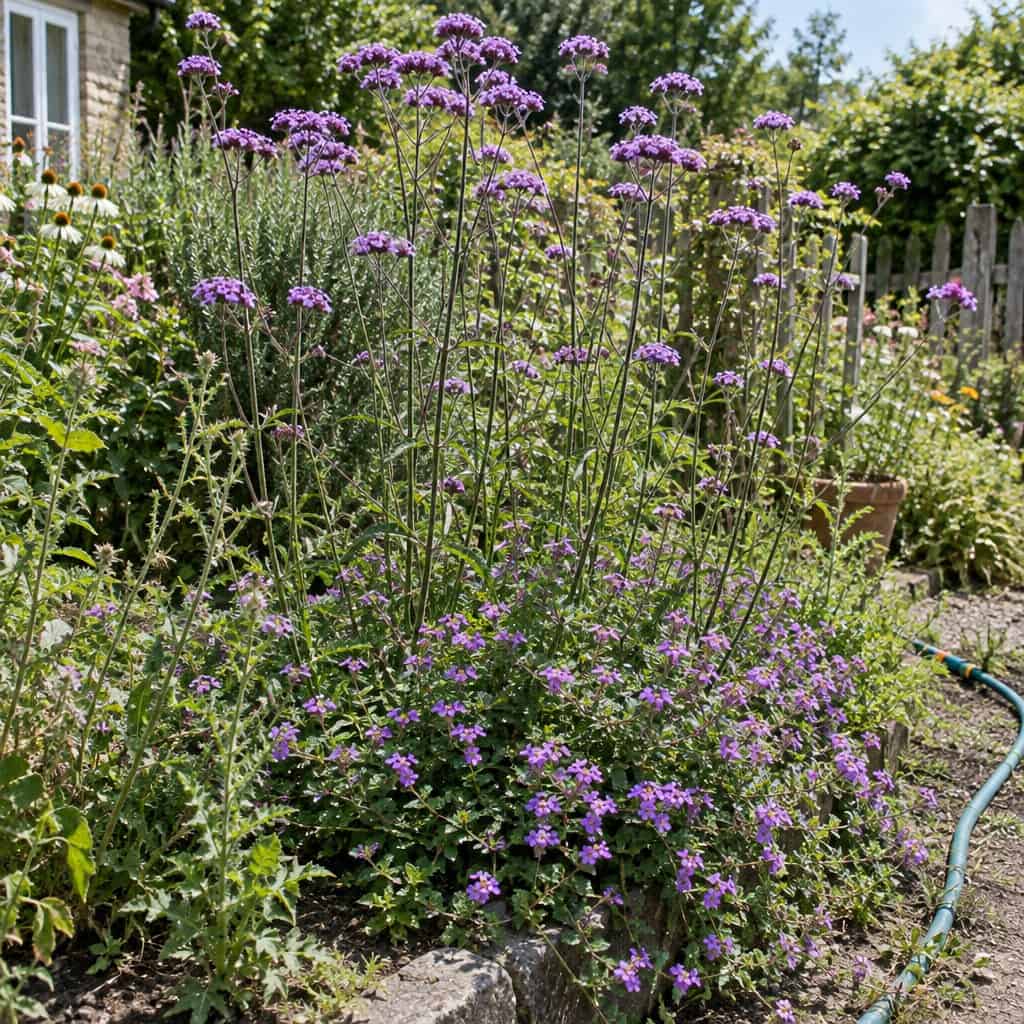
Verbena comes in two useful forms. Low trailing types like ‘Homestead Purple’ spread into a mat about 8 inches high and flower from spring until cold weather, returning each year in zones 7 through 10.
Tall verbena (Verbena bonariensis) works the other way, with wiry stems 3 to 5 feet tall topped by small purple clusters that float above shorter plants from June to frost. It self-sows, so new seedlings appear each spring.
Both need full sun and space between plants for air to move. If blooms slow in late summer, trim the trailing type back by a quarter.
11. Witch Hazel
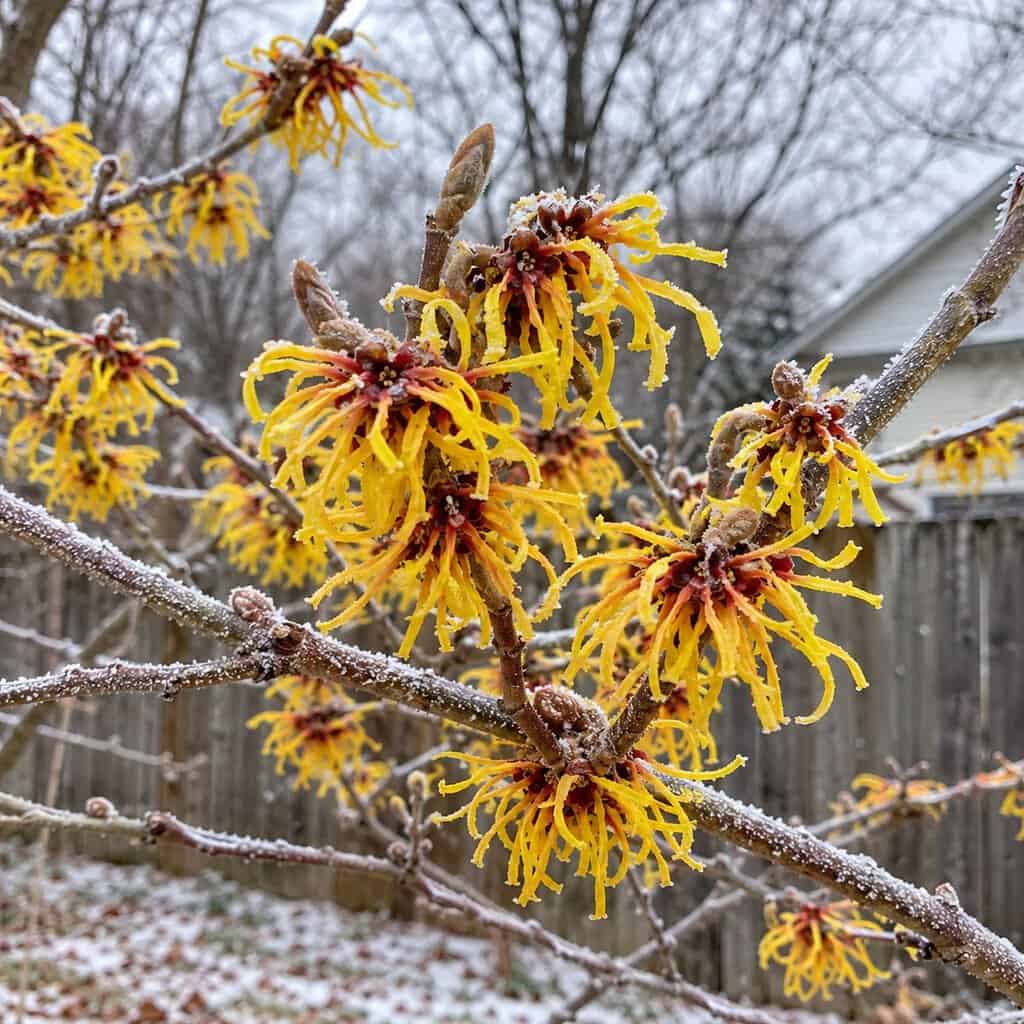
Witch hazel flowers on bare branches in the coldest part of the year. Hybrid types bloom from late January into March, with thin, ribbon-like petals that curl up on frigid nights and open again when the sun returns.
‘Arnold Promise’ is bright yellow, ‘Jelena’ runs coppery orange, and ‘Diane’ leans red. Hybrids reach 12 to 15 feet in zones 5 through 8. The native common witch hazel blooms earlier, October to December, and survives in zone 3.
Site it near a path or window, where the spicy scent is easy to catch. Full sun to part shade works.
12. Coreopsis (Tickseed)
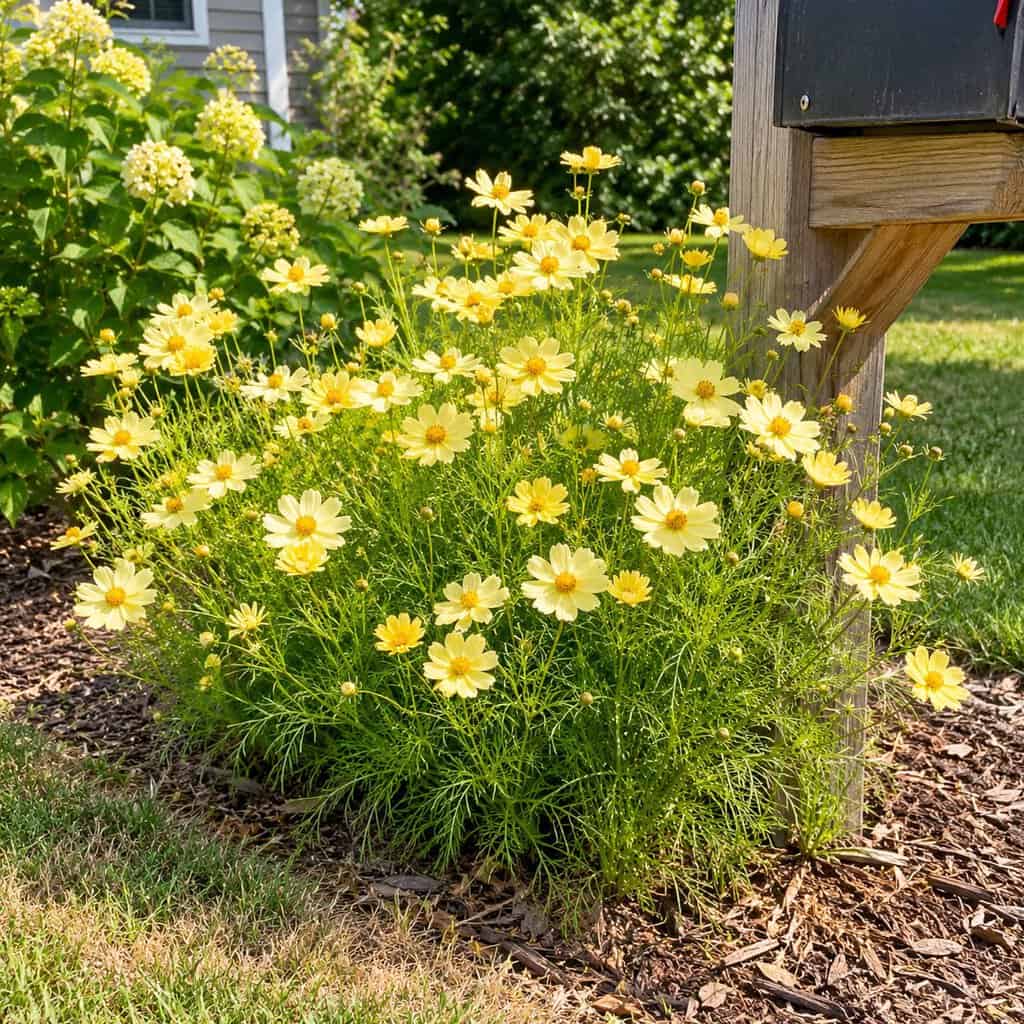
Threadleaf coreopsis looks delicate but holds up to heat, drought, and neglect. ‘Moonbeam’, with soft butter-yellow flowers, and ‘Zagreb’, a deeper gold, bloom from early summer into September on feathery 12- to 24-inch mounds.
The flowers are too small to pick off one by one. Once they thin out in midsummer, take hedge shears to the top few inches of the plant and a fresh round follows.
Both are hardy in zones 3 through 9. Plant in full sun and lean soil. Rich ground and extra fertilizer cause the stems to sprawl.
13. Tropical Hibiscus
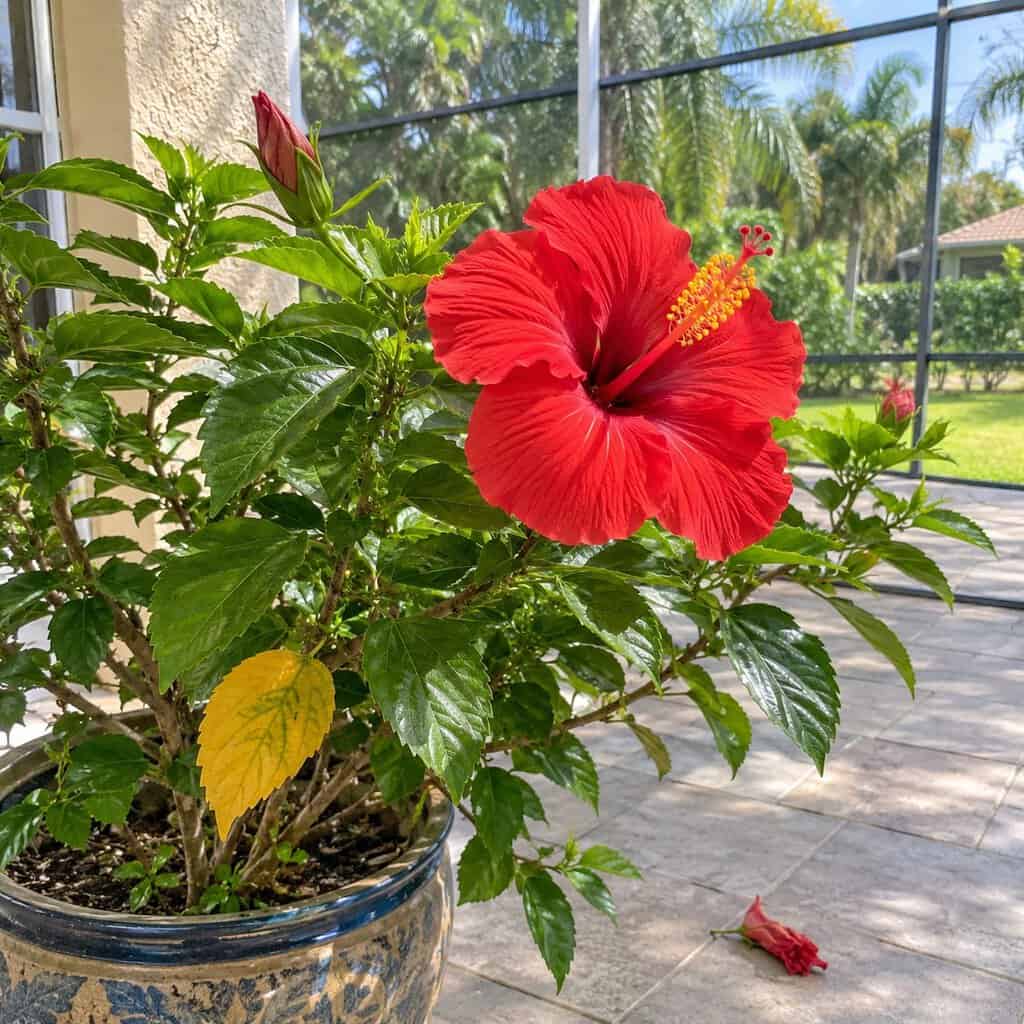
Tropical hibiscus produces a steady stream of flowers 4 to 6 inches across, each lasting a day or two before the next bud opens. In frost-free parts of Florida, Texas, and California it blooms in nearly every month and can grow into an 8-foot shrub.
Everywhere else, keep it in a pot and move it inside once nights fall below 50°F. Yellow leaves and dropped buds are normal for a week or two after the move.
Use a fertilizer labeled for hibiscus, which is lower in phosphorus and higher in potassium, and water whenever the top inch dries out.
14. Pansy and Viola
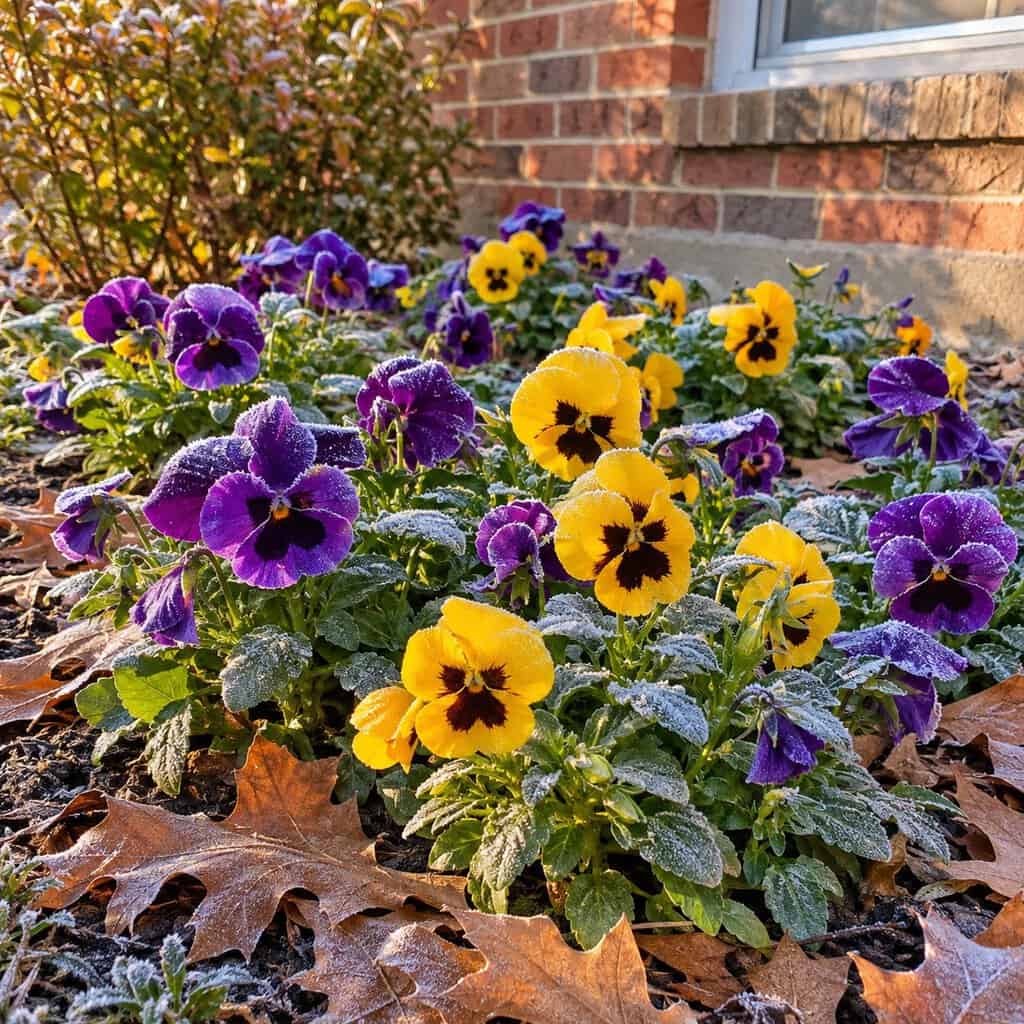
Pansies and violas fill the cool months that wipe out most bedding plants. In zones 7 through 9, a fall planting flowers on and off all winter. Farther north, plants usually pause under snow and come back into bloom in March.
Violas carry smaller flowers but more of them, and they handle hard cold a little better than large-faced pansies. Set plants out in early fall, about six weeks before the ground freezes, so roots can settle in.
Both flowers are edible and make an easy garnish. Expect them to fade once daytime highs reach the 80s.
15. Gaillardia (Blanket Flower)
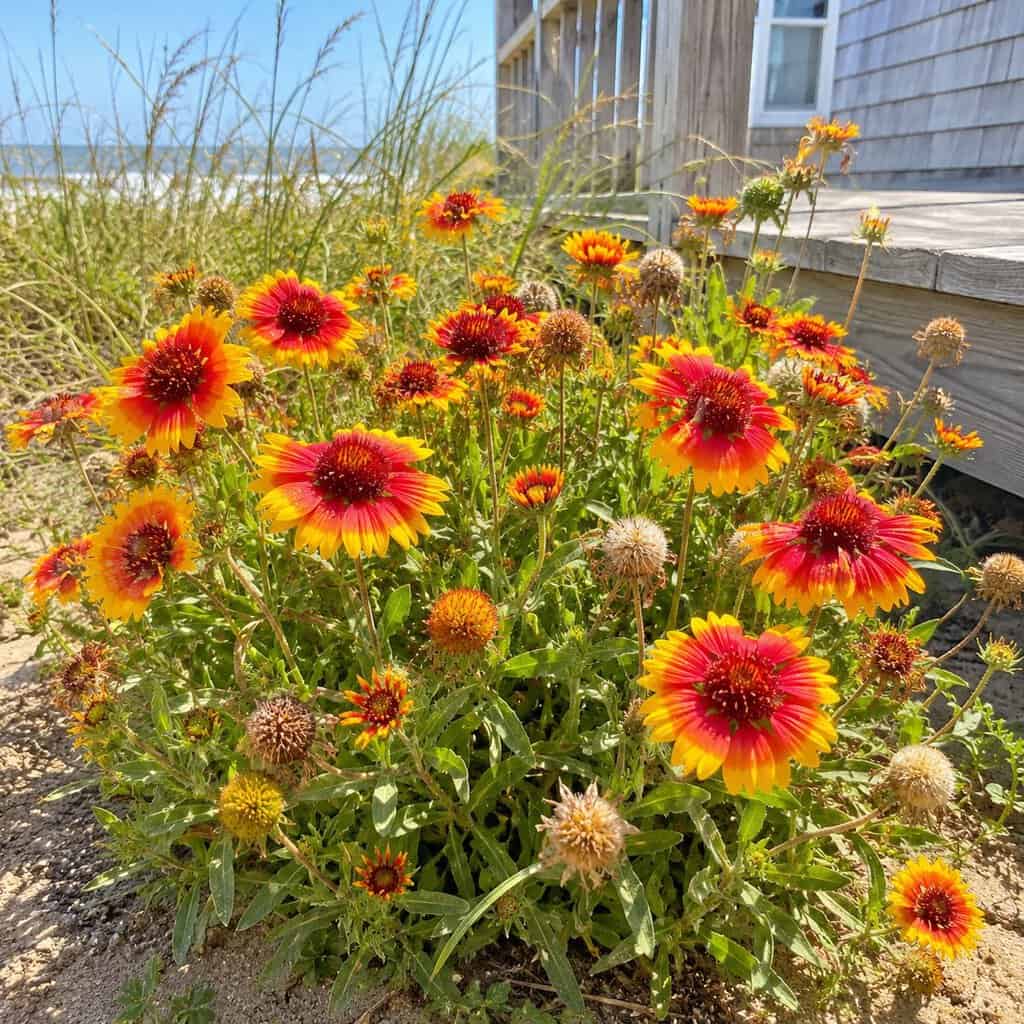
Blanket flower thrives in the dry, sunny spots where other perennials struggle, including sandy beach gardens and hot curbside strips. Daisy-shaped blooms in red, orange, and yellow open in June and keep coming until hard frost.
Compact selections like ‘Arizona Sun’ and ‘Mesa Yellow’ stay 12 to 18 inches tall. Plants are hardy in zones 3 through 10 but are short-lived, often lasting two or three years, so allow a few seed heads to ripen for replacements.
Skip heavy mulch and rich compost. Wet winter soil is the most common reason gaillardia fails to return.
16. Knock Out Rose
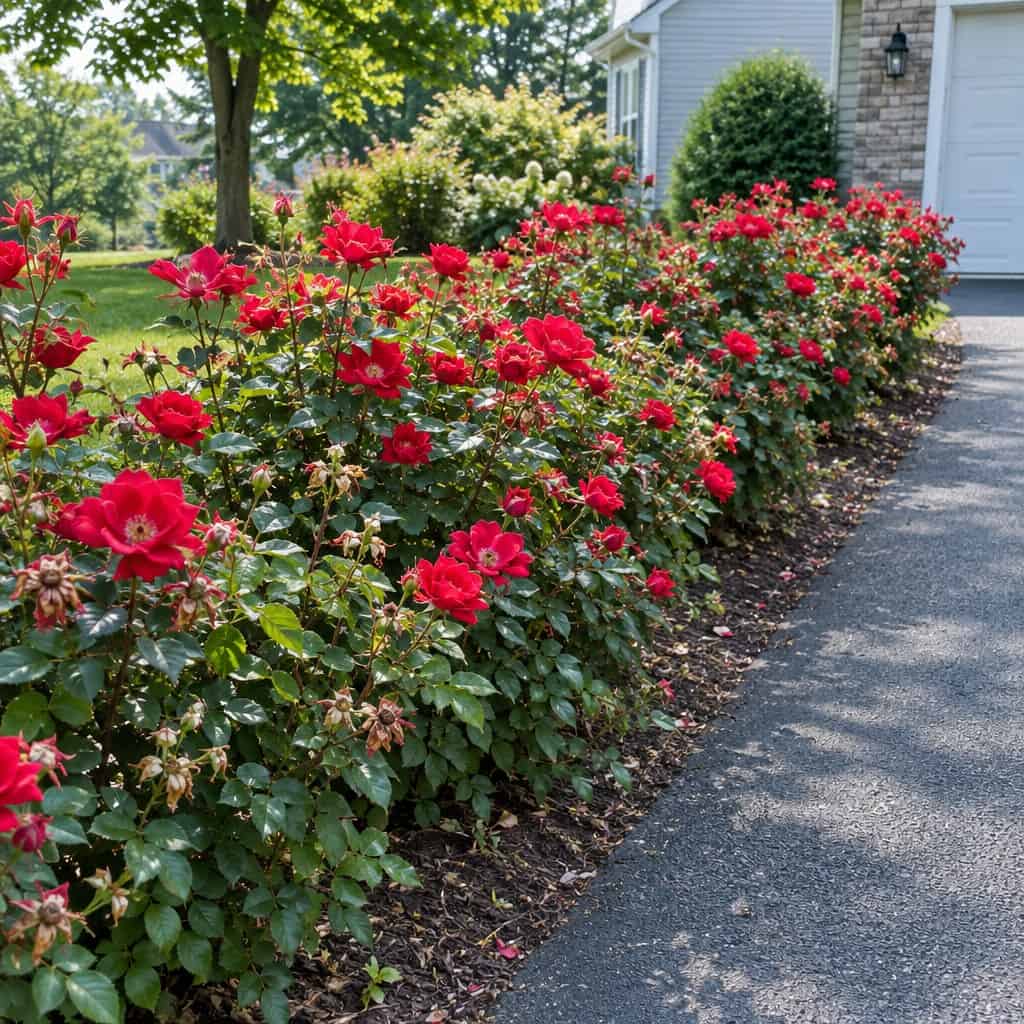
Knock Out roses turned shrub roses into a low-effort plant. They flower in waves from late spring until frost, spent petals drop on their own, and the foliage resists the leaf diseases that plague hybrid teas.
The series now includes red, pink, coral, yellow, and double-flowered forms. Shrubs grow about 3 to 4 feet tall and wide and are hardy in zones 5 through 11. Space them 3 feet apart for a low flowering hedge.
Watch for rose rosette disease, which shows up as red, bristly, distorted new shoots. Infected plants should be dug out and bagged, roots included.
17. Angelonia (Summer Snapdragon)
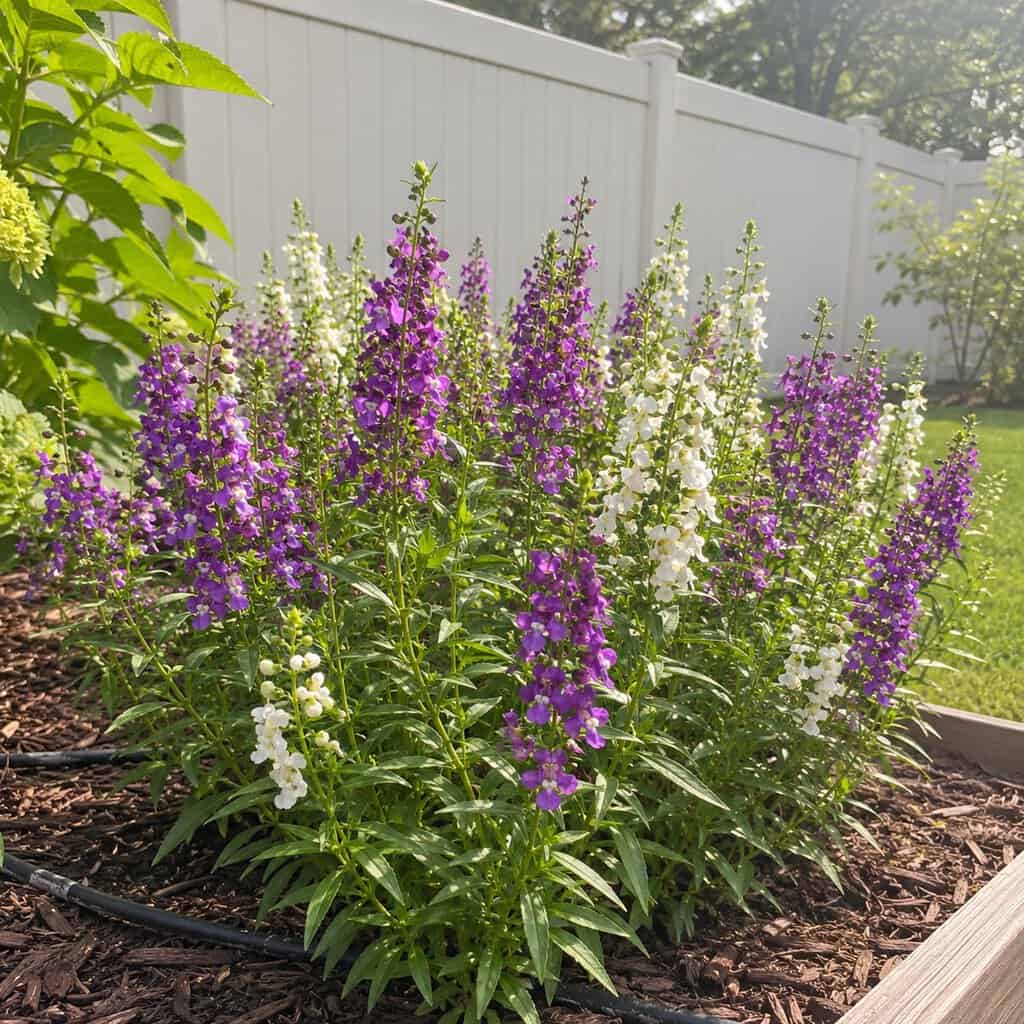
Angelonia looks like a snapdragon but stands up to July and August far better. Its upright spikes of purple, pink, white, or bicolor flowers keep coming from planting time until cold weather, with no trimming required.
The Serena series stays about 12 inches tall, while Angelface types reach 18 to 24 inches. Some varieties carry a faint grape scent, and the spikes last a week or more in a vase.
Plant after nights stay above 55°F, in full sun, and water through the first few weeks. Deer and rabbits rarely touch it. It is perennial only in zones 10 and 11.
18. Bougainvillea
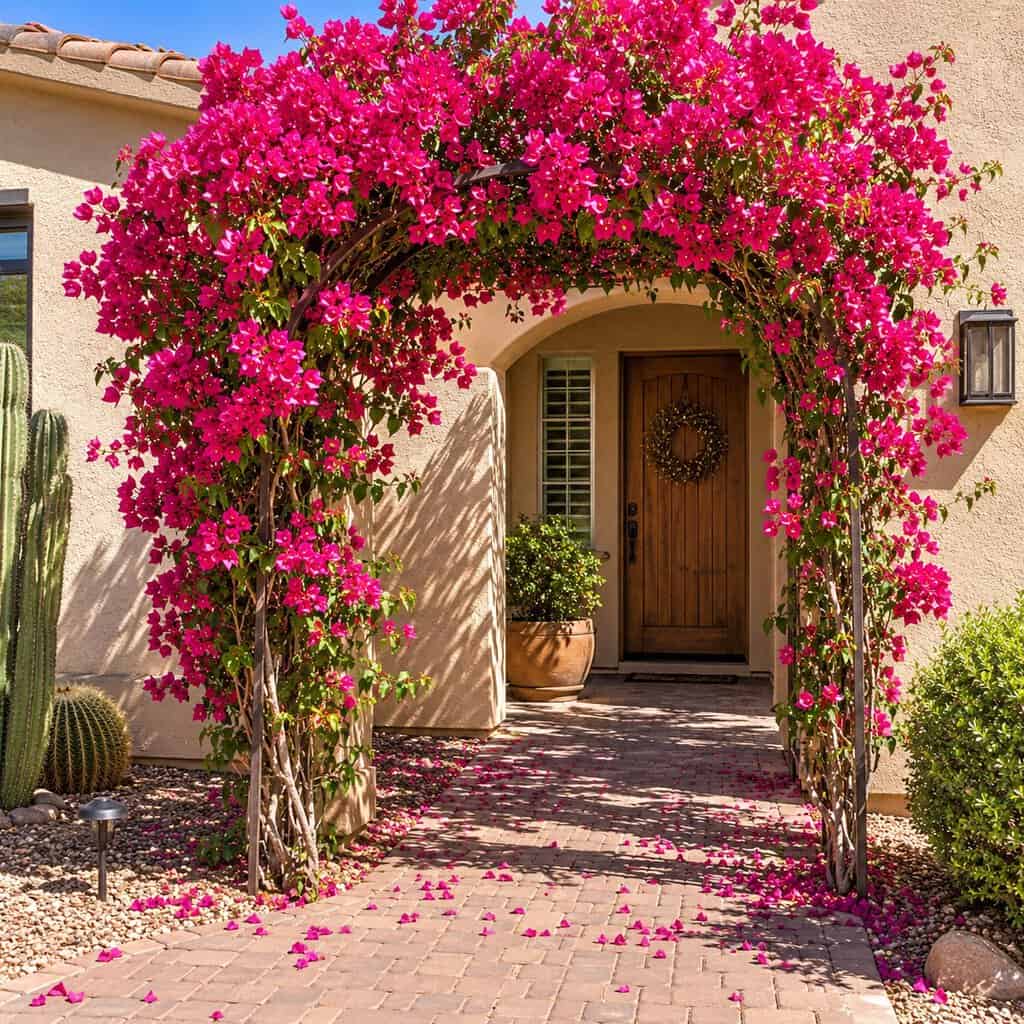
Bougainvillea flowers in cycles, with the heaviest color often arriving in the cool, dry months of late winter and spring in zones 9b through 11. The bright parts are bracts surrounding tiny white true flowers.
Stems carry sharp thorns and do not twine, so tie them to a sturdy trellis or fence and keep plants away from walkways. Dwarf types such as ‘Helen Johnson’ stay under 4 feet and suit large pots.
In containers, a slightly crowded root system encourages bloom. North of zone 9, move pots into a bright, cool room before frost.
19. Sweet Alyssum
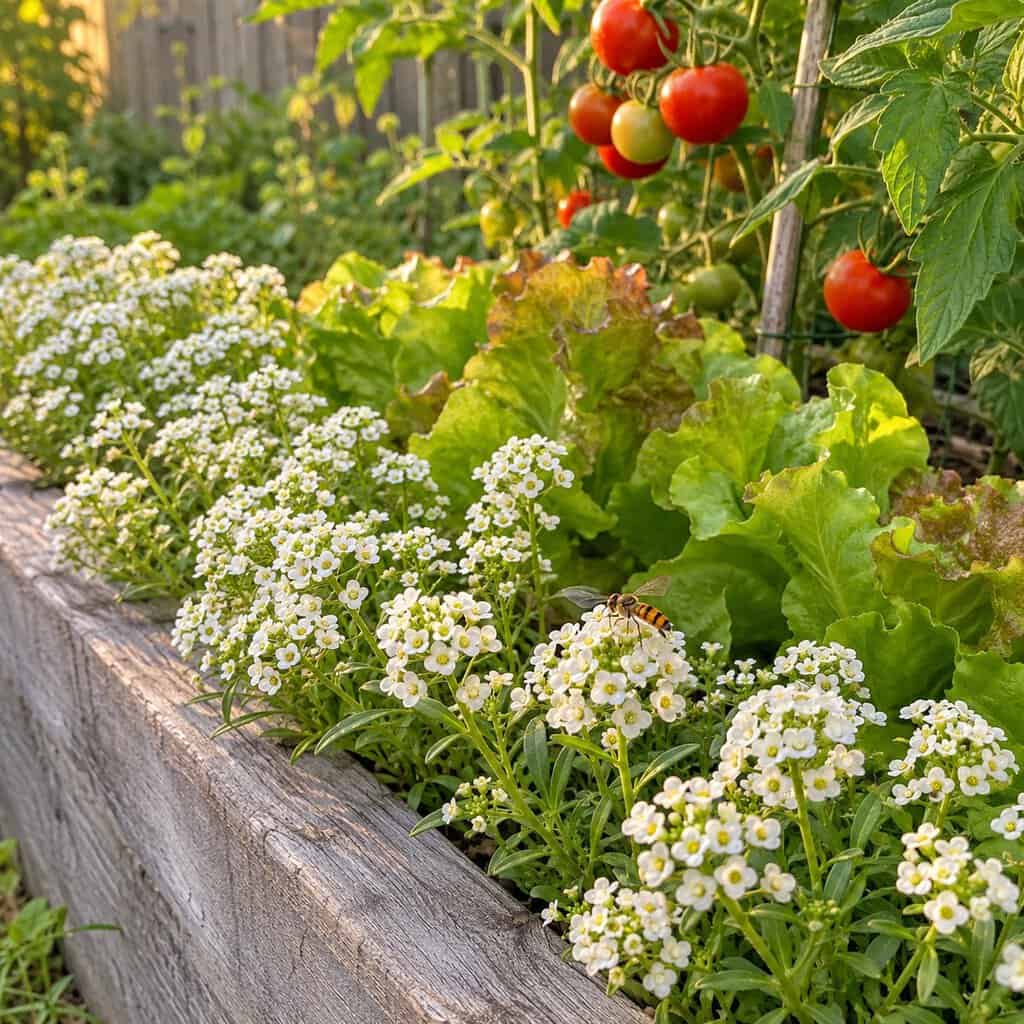
Sweet alyssum forms 4- to 6-inch mats of tiny flowers in white, rose, or purple, with a scent that carries on warm evenings. Seed-grown types slow down in hot weather but recover as nights cool in September.
For steady bloom through summer heat, look for ‘Snow Princess’, a vigorous, sterile variety that spreads up to 3 feet and keeps flowering from spring to frost without trimming.
Vegetable growers plant alyssum along bed edges because it draws hoverflies and tiny parasitic wasps that feed on aphids. In zones 9 through 11, it can flower through winter.
Building a Bloom Calendar
Start by noting the months when the yard looks flat. For most homeowners that means late winter and the dog days of August. Fill those gaps first, with hellebores, witch hazel, and camellias for the cold end and lantana, angelonia, and blanket flower for the hot end.
Then anchor each bed with one or two rebloomers, such as Knock Out roses, Encore azaleas, or catmint, so the middle of the season stays covered without constant replanting. Group plants with matching sun and water needs to keep upkeep simple.
In zones 9 and warmer, hibiscus, bougainvillea, and geraniums can carry color almost by themselves. Colder yards depend more on a relay between plants, and a little planning each fall pays off in every month that follows.