

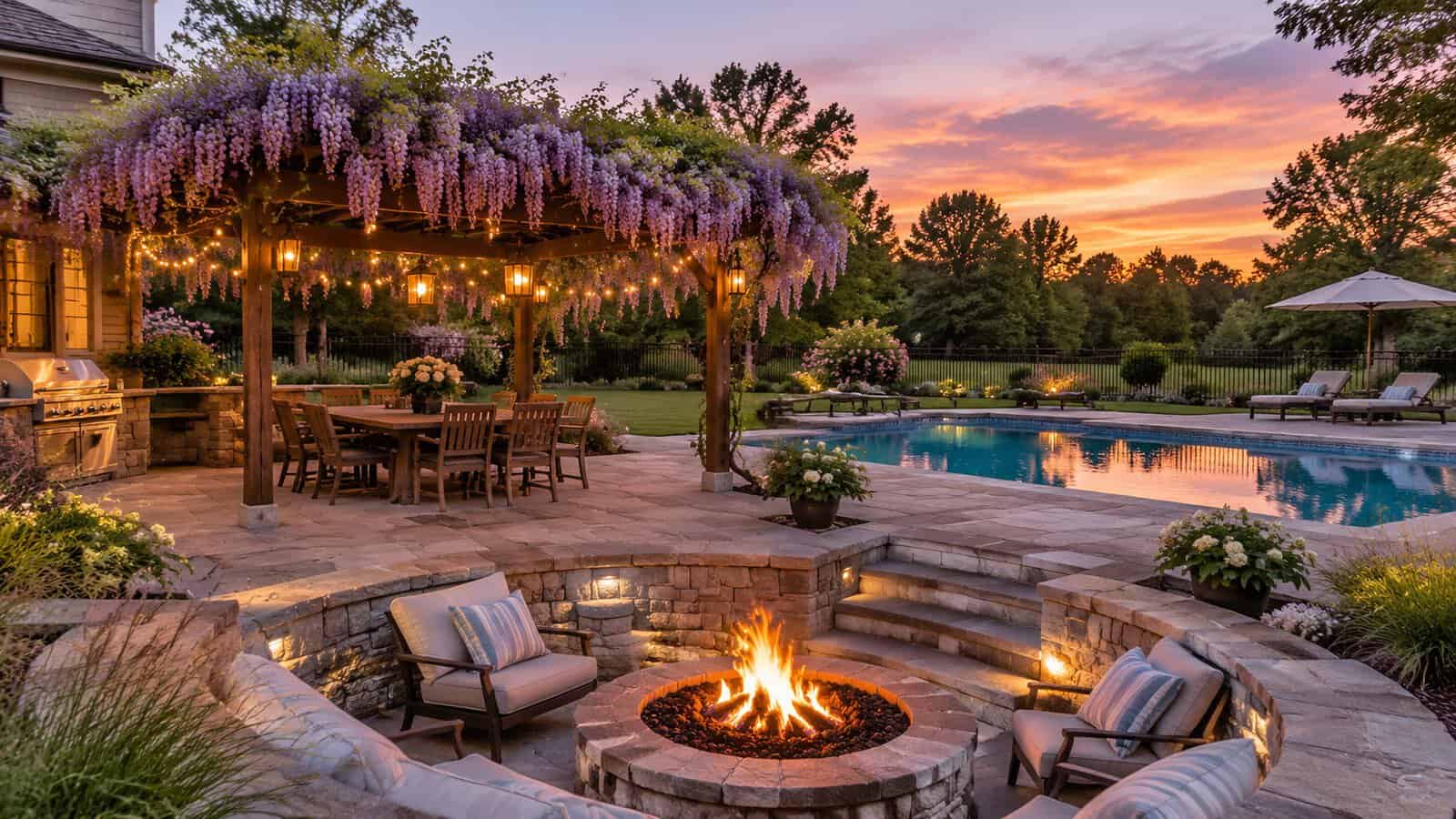
Every neighborhood has one backyard that people slow down to look at. Usually it has one big idea done well, whether that is a fire pit set into the ground or a pool that seems to spill into the trees.
The photos rarely show what made it possible. They skip how deep the pond had to be, which wisteria actually blooms, and how much a hot tub weighs once it is full.
This list covers 25 showpiece backyard designs, from a weekend stock tank pool to a lagoon with a grotto. Each entry includes the sizes, plants, zones, and upkeep that go with it.
Some will fit a budget this year. Others are long-range plans. Either way, knowing the specs makes it easier to borrow the right parts.
1. Outdoor Kitchen with a Wood-Fired Oven and Bar
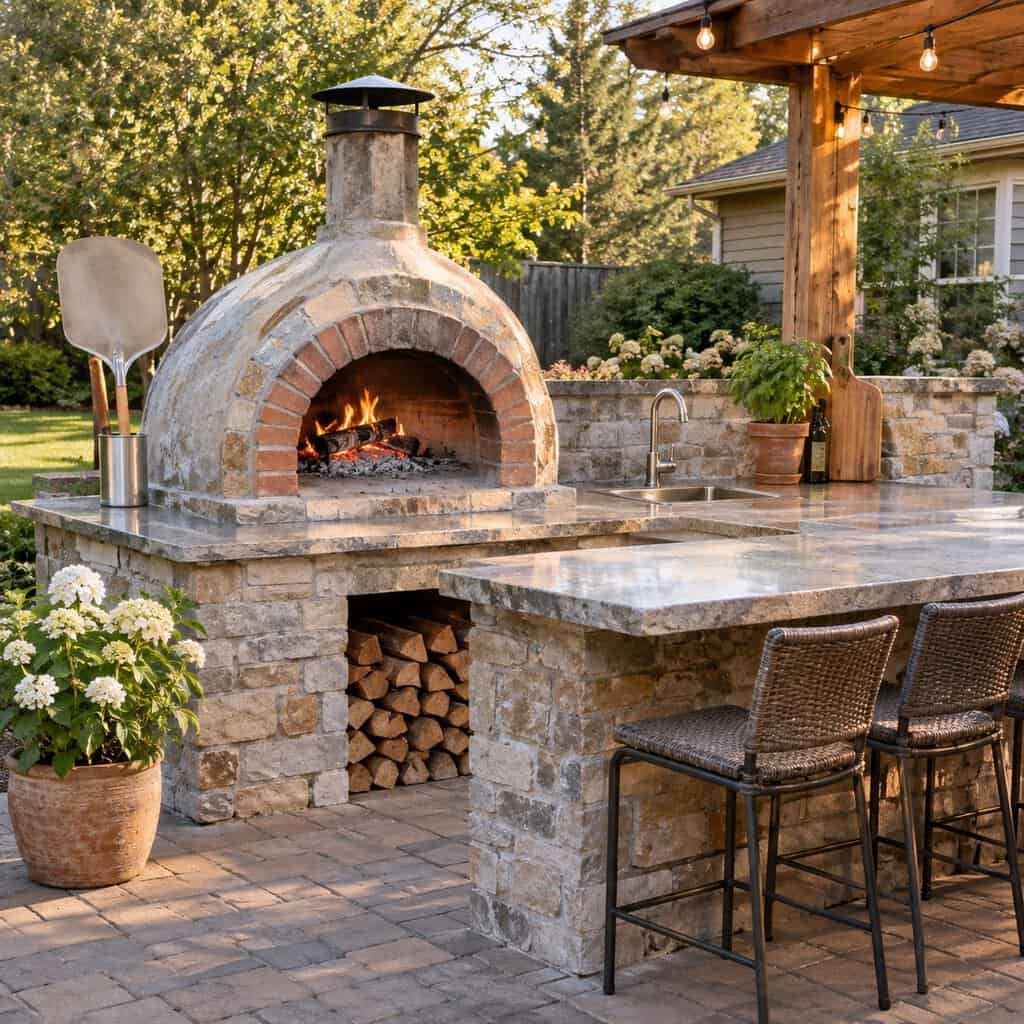
A wood-fired oven reaches 700 to 900 degrees, hot enough to bake a Neapolitan-style pizza in about 90 seconds. That speed is why it works for a crowd. One cook can turn out a dozen pies in under half an hour.
Plan the island in an L or U shape with at least 36 inches of counter on each side of the grill and oven. Add a bar ledge at 42 inches so guests sit facing the cook instead of hovering.
Run a gas line, a GFCI outlet, and a small sink with cold water. Those three utilities save more trips indoors than any gadget.
2. Native Meadow with a Mown Path
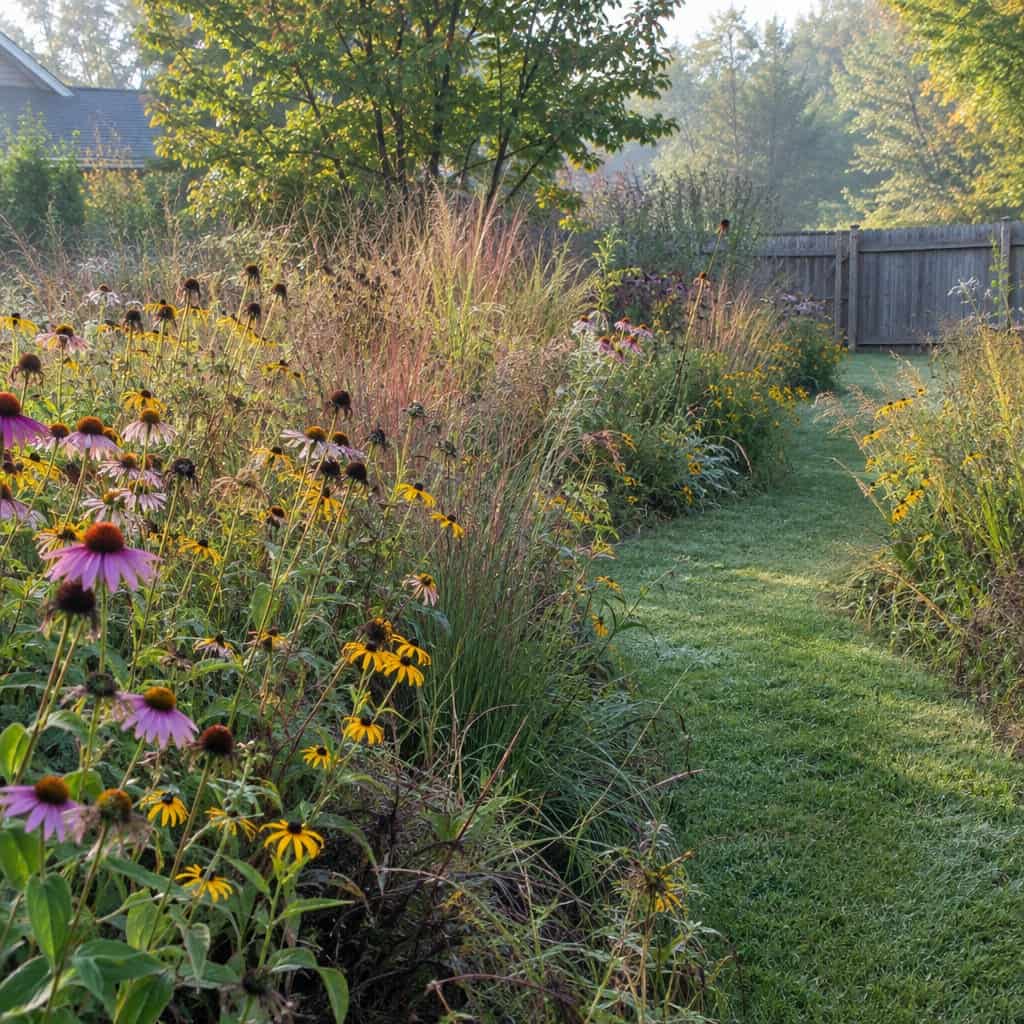
Swapping part of the lawn for a native meadow gives a yard movement, color, and birds from June through frost. A single mown path, about 4 feet wide, keeps it looking planned instead of neglected.
Mix grasses like little bluestem and prairie dropseed with flowers such as purple coneflower, black-eyed Susan, and wild bergamot. Most suit Zones 3 to 9 and need full sun, at least 6 hours.
Seed in fall or set plugs 12 to 18 inches apart in spring. Expect a sparse first year, a fuller second, and a real meadow by year three. Mow the whole patch once in late winter.
3. Wisteria Pergola with an Iron Chandelier
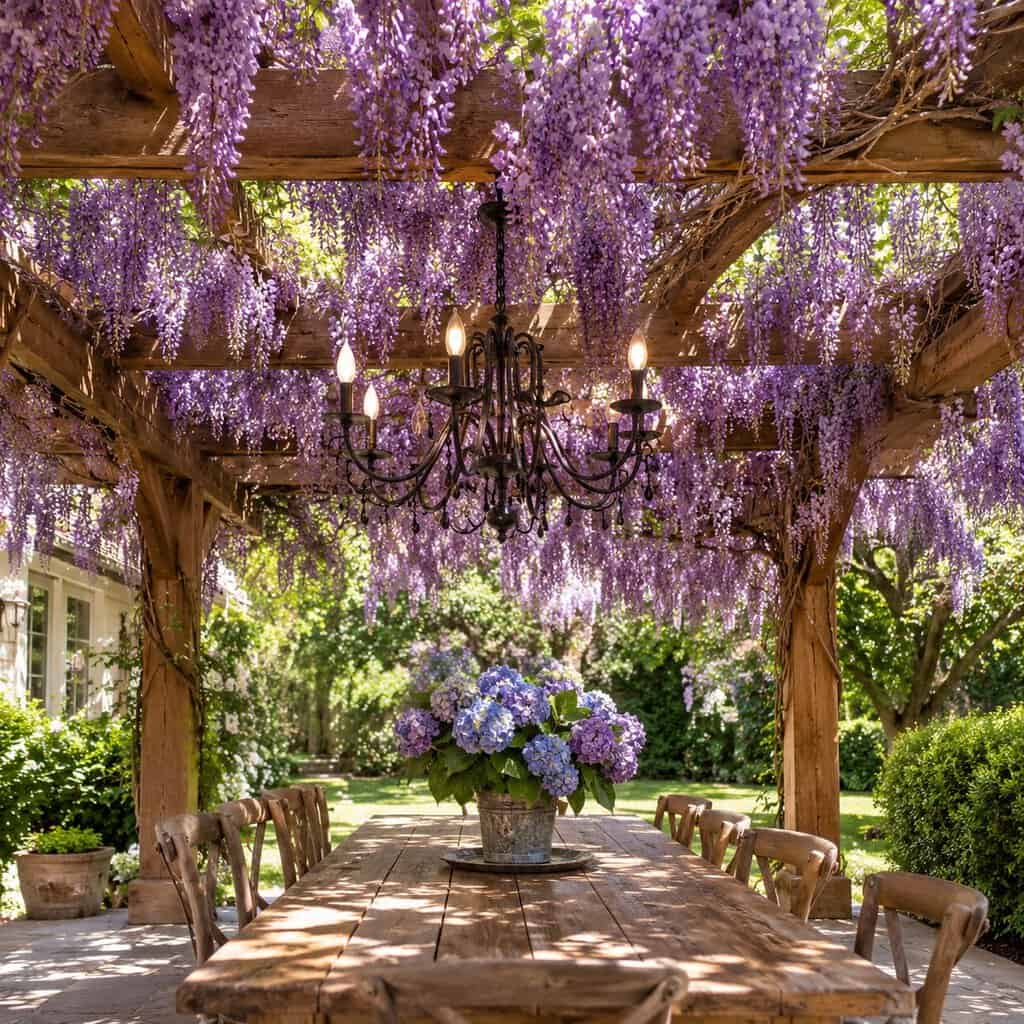
Wisteria needs a strong frame. Mature vines get heavy enough to crush light lumber, so build with 6×6 posts set in concrete and beams of at least 2×8.
Choose American wisteria or Kentucky wisteria for Zones 5 to 9. Both are less aggressive than the Asian types and can bloom within 2 to 3 years. Prune twice a year, in summer and late winter, to keep flowers coming.
Hang a wrought-iron chandelier wired for outdoor use, or a candle model on a chain hoist. Center it over a table that seats 8 to 10, and the dinner setting is complete.
4. Sunken Fire Pit Lounge

Dropping a fire pit 18 to 24 inches below grade creates shelter from wind and a sense of enclosure without building any walls. The retaining wall can double as a backrest.
Size it for comfort. A round lounge about 16 feet across holds a 4-foot fire ring with roughly 3 feet of legroom, plus built-in benches for 8 to 10 people.
Drainage is the step people skip. A sunken space collects rainwater, so it needs a gravel base, a floor drain, or a perforated pipe run to daylight. Check local codes for fire setbacks, usually 10 to 25 feet from structures.
5. Mediterranean Courtyard with a Tiled Fountain
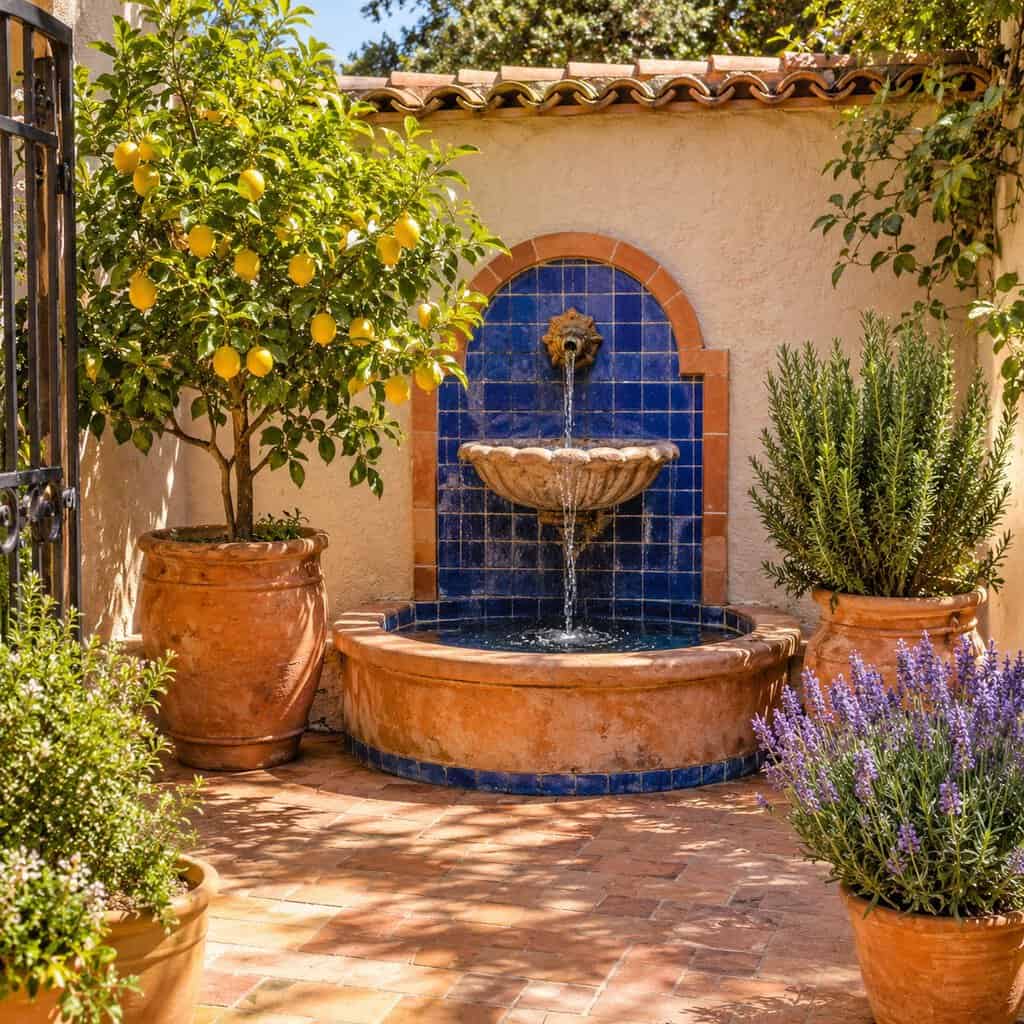
This design shines in small, walled spaces, even a side yard 15 feet wide. The fountain sits at the center, and everything else radiates from it.
Talavera or Moroccan-style tile suits the basin, but use frost-rated tile in Zones 7 and colder, or drain the fountain each winter. A recirculating pump of 300 to 600 gallons per hour gives a steady, quiet sound without splashing.
Plant the edges with rosemary, lavender, and a potted Meyer lemon. In Zones 9 to 11, bougainvillea can climb the walls. Colder yards can get the same look from a climbing rose or trumpet vine.
6. Stock Tank Pool with a Gravel Patio
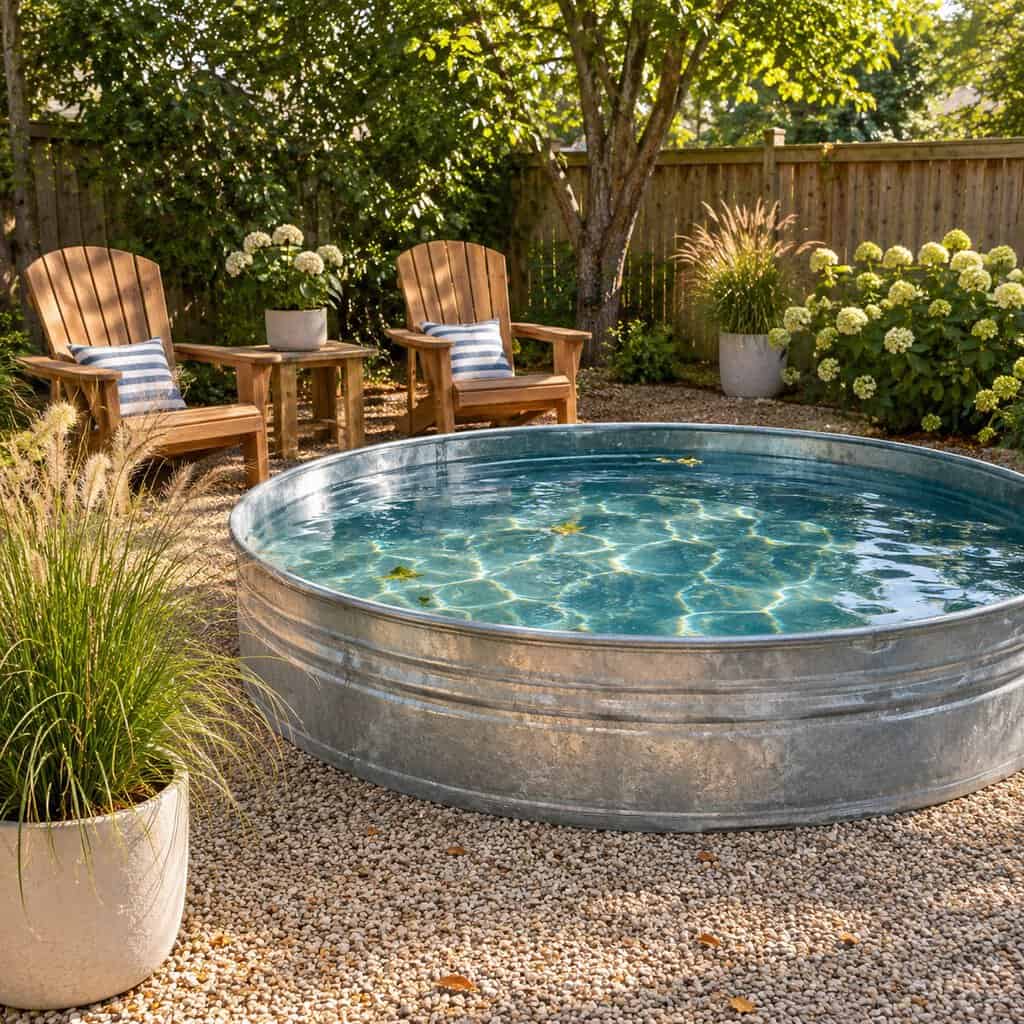
A galvanized stock tank, usually 8 feet across and 2 feet deep, holds roughly 700 gallons and makes a solid cool-down pool. It costs a fraction of an inground pool and sets up over a weekend.
Place it on a level bed of compacted gravel or pavers, since uneven ground stresses the seams. Add an above-ground filter pump and a floating chlorinator, and test the water twice a week.
Surround it with pea gravel, two Adirondack chairs, and a few big pots of grass. Check whether your town counts it as a pool, since some require fencing.
7. Multi-Level Deck with Built-In Planters
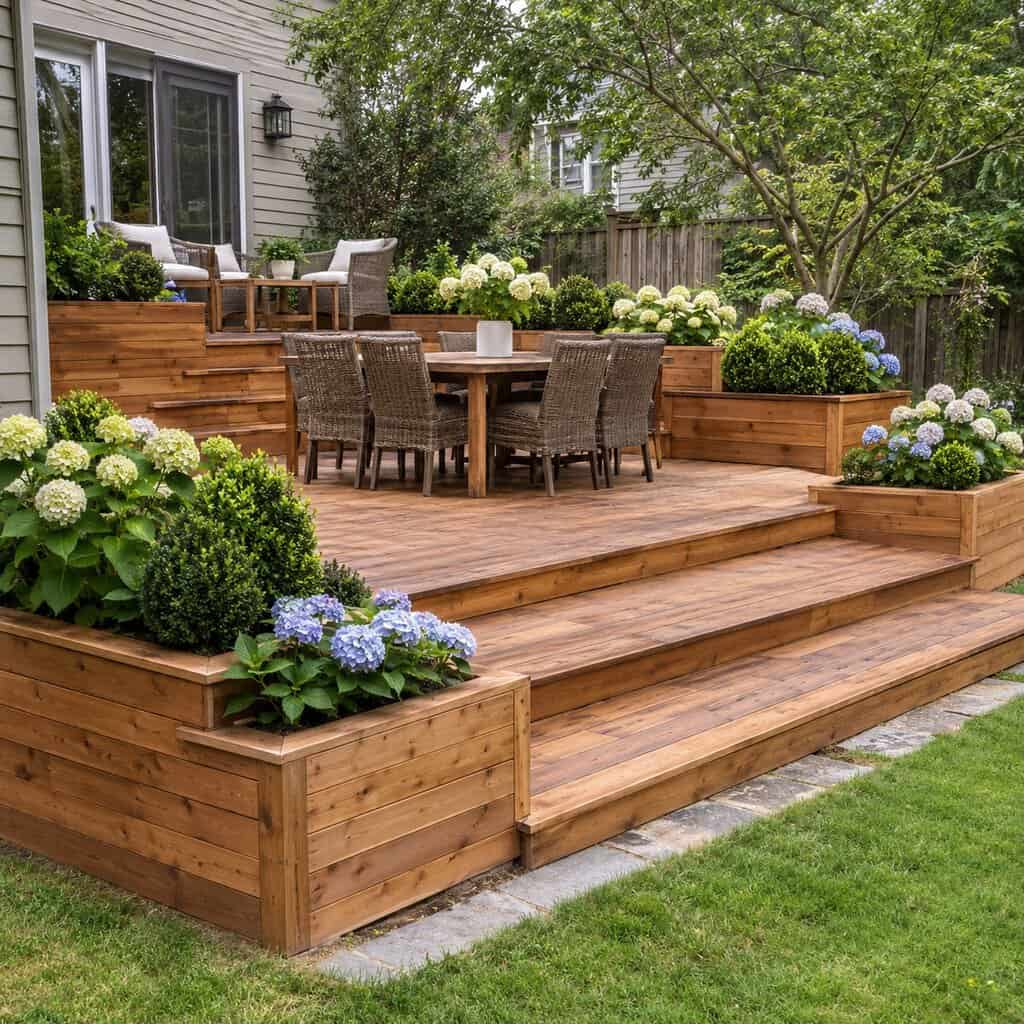
On a sloped lot, splitting a deck into two or three tiers often costs less than one huge platform on tall posts. Set each tier 2 or 3 steps apart, about 14 to 21 inches.
Give each level a job. Grilling goes up top near the kitchen door, dining in the middle, and lounging at the bottom closest to the yard.
Build planters at least 18 inches deep with a liner and drainage holes so the deck framing stays dry. Fill them with dwarf shrubs like boxwood or ‘Little Lime’ hydrangea, or herbs near the grill. Taller planters also work as soft dividers between zones.
8. Hidden Garden Room Behind a Hedge
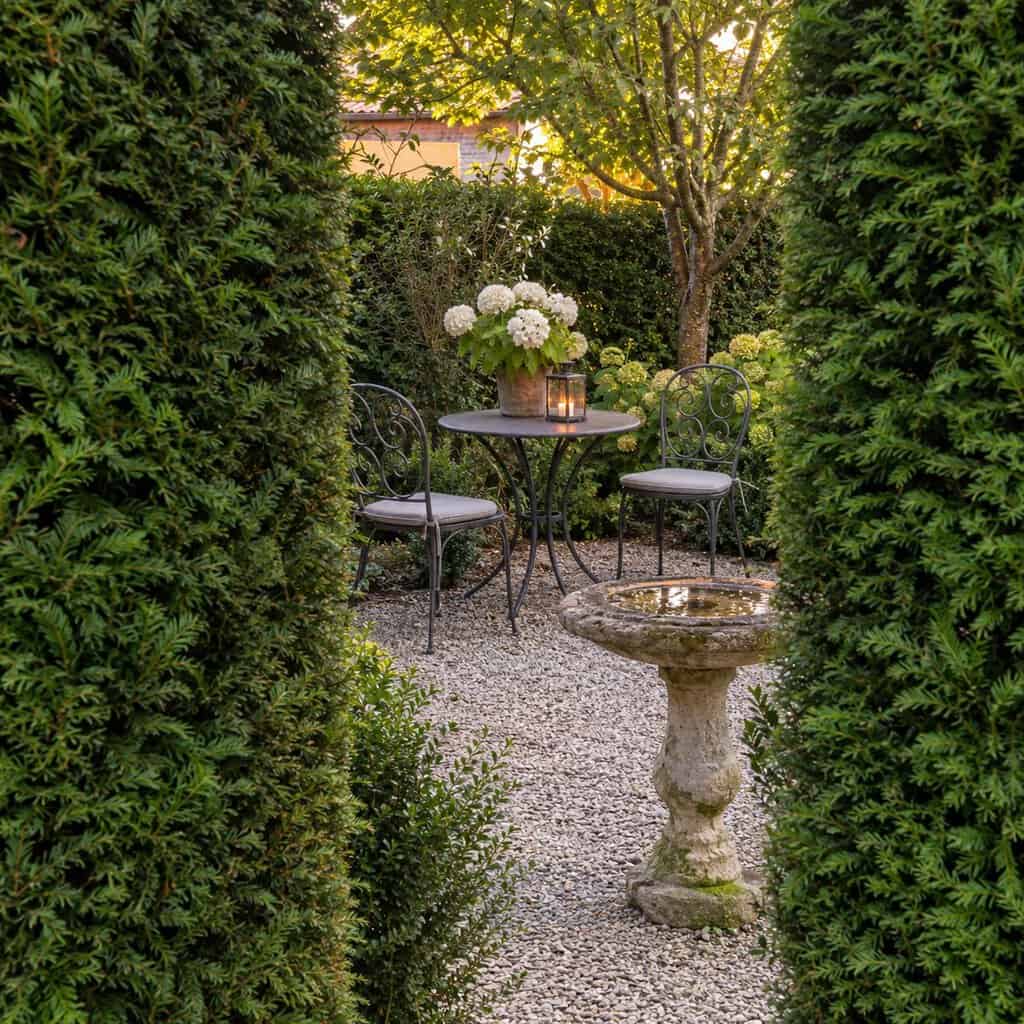
An enclosed garden room only needs about 12 by 12 feet. A hedge on all sides, with one narrow opening, turns that small square into the most private spot on the property.
Arborvitae ‘Green Giant’ grows up to 3 feet a year and screens fastest in Zones 5 to 8. For a more formal edge, hornbeam or yew take longer but shear crisply. Plant 3 to 4 feet apart for a solid wall.
Keep the inside spare: a bistro set, a birdbath or small bubbler, and gravel underfoot. The enclosure is the feature, so let it carry the space.
9. Cedar Outdoor Shower

An outdoor shower rinses off pool chlorine, garden dirt, and sandy feet before anyone tracks it inside. Western red cedar holds up to constant water and smells good doing it.
Build the enclosure about 4 by 4 feet, with slatted walls 6 feet tall and a gap at the bottom for airflow. A mixing valve with hot and cold supply makes it usable in spring and fall, not just July.
Drain into a gravel dry well if local rules allow, and use biodegradable soap. In Zones 7 and colder, add shutoff valves inside the house and drain the lines before the first freeze.
10. Japanese-Style Garden with Koi Pond and Bridge
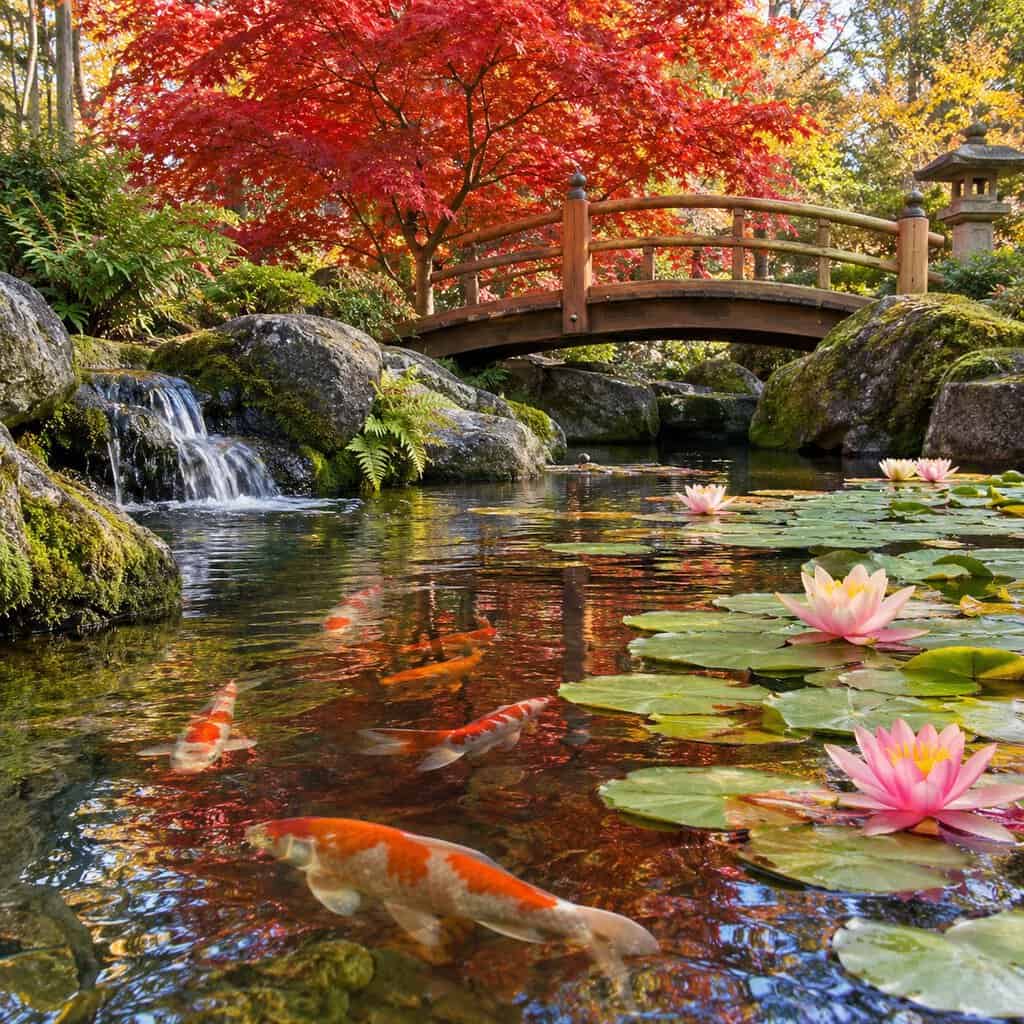
Koi need depth. Plan for at least 3 feet in the deepest section, more in cold climates, so fish can overwinter below the ice. A 1,000-gallon pond comfortably holds 4 or 5 adult koi.
A biological filter and a small waterfall keep the water oxygenated and clear. Water lilies shading about half the surface help control algae.
Keep the planting restrained: one Japanese maple, a few clumps of Japanese forest grass, moss between stones. An arched bridge spanning 6 to 8 feet anchors the scene. Herons and raccoons will visit, so add a fish cave for cover.
11. Bocce Court Beside a String-Lit Dining Table
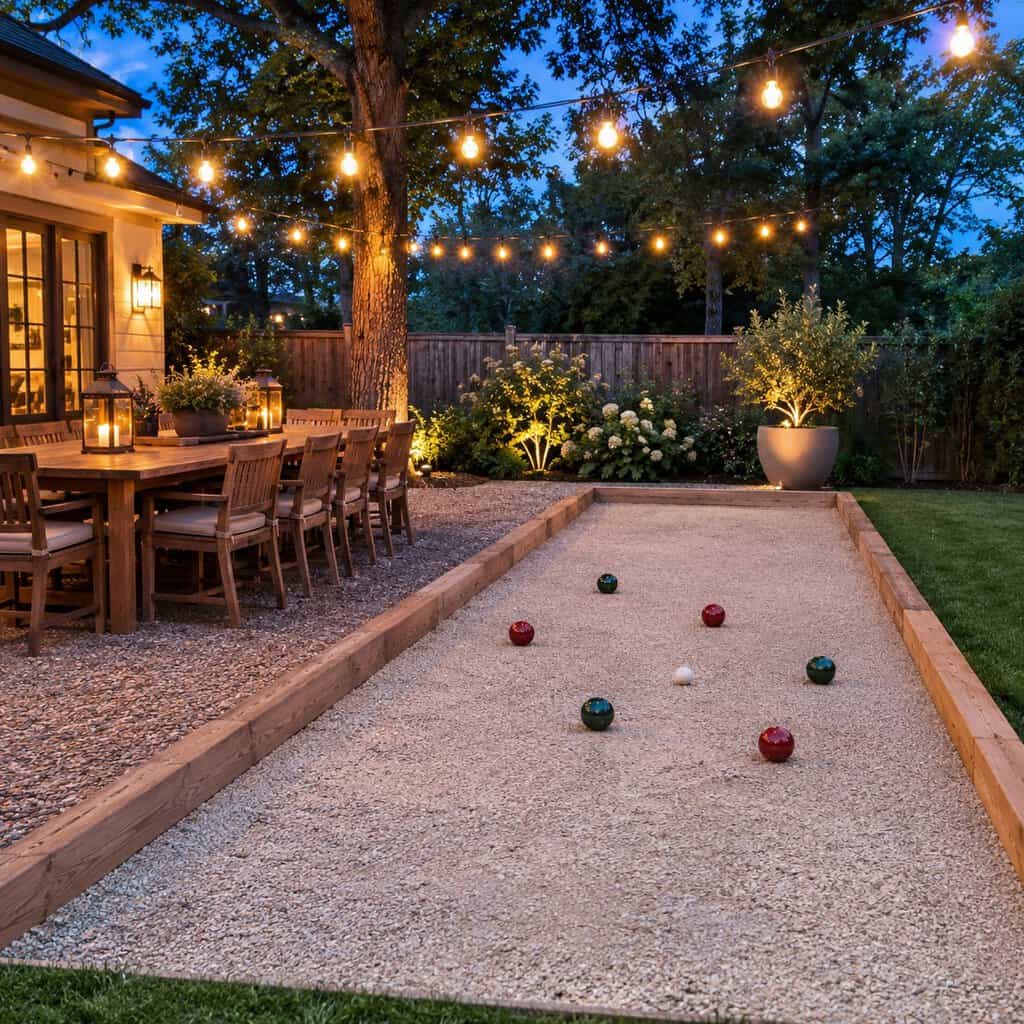
A regulation bocce court runs 76 by 13 feet, but a backyard version of 60 by 10 plays just fine. Edge it with pressure-treated 2×10 boards or stone.
The surface makes or breaks the game. Layer 4 inches of compacted gravel, then an inch of crushed oyster shell or stone dust, and roll it smooth. Rake and lightly water before play.
Set the dining table right alongside so players and diners stay in one conversation. Run commercial-grade string lights on a steel cable between posts, 9 to 10 feet up.
12. Screened Porch with Ceiling Fans and a Daybed
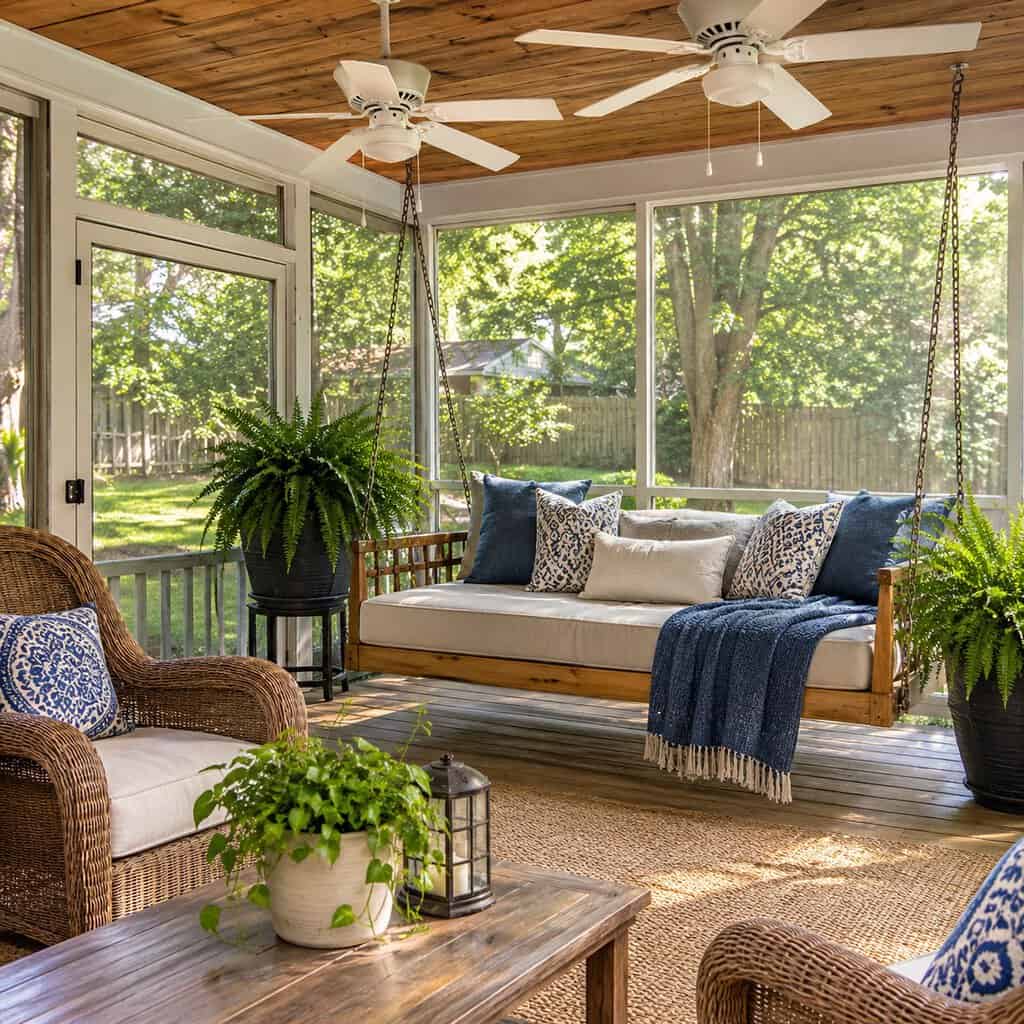
In humid parts of the country, a screened porch gets more use than any open patio. It blocks mosquitoes from May through September and keeps furniture dry in summer storms.
Aim for at least 12 by 14 feet to fit both a dining table and a seating area. Fiberglass screen is standard, but pet-resistant or solar screen is worth the upgrade where dogs or western sun are a factor.
Install two damp-rated ceiling fans, 52 inches or larger, since moving air deters bugs too. A hanging daybed on chains becomes the favorite nap spot within a week.
13. Infinity-Edge Pool with a Sun Shelf

An infinity edge needs a drop-off to look right. It works best on a lot that falls away at least 2 to 3 feet, so the vanishing edge lines up with a view rather than a fence.
Water spills into a catch basin behind the wall and gets pumped back, which adds plumbing, equipment, and cost. Expect a vanishing edge to add tens of thousands to the build.
The sun shelf is the cheaper luxury. At 9 to 12 inches deep and roughly 8 by 10 feet, it holds two in-water loungers and an umbrella sleeve. Toddlers can splash there while adults stay within reach.
14. English Cottage Garden with Stone Paths and Arbors
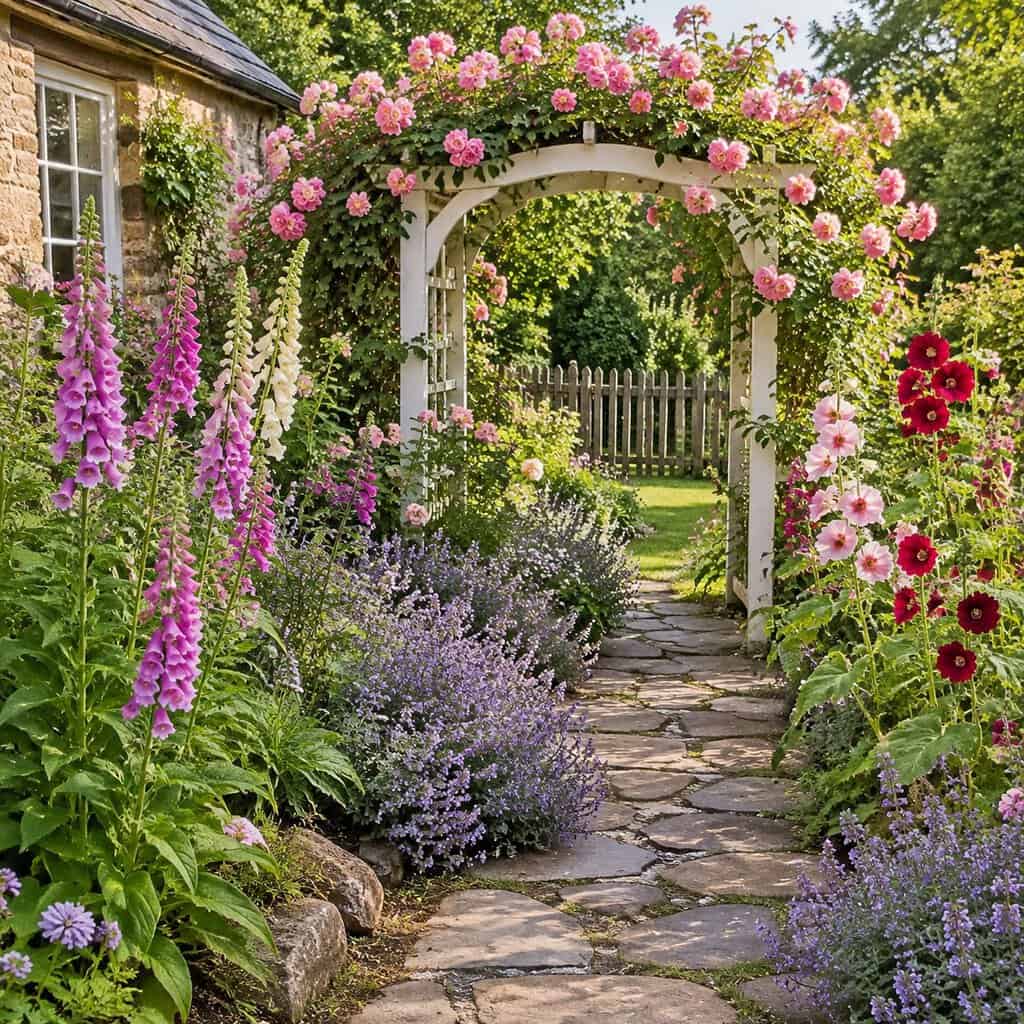
Cottage gardens look effortless, but they rely on layering by height. Hollyhocks and foxgloves go in back, catmint and hardy geraniums in the middle, and creeping thyme spills into the path.
Lay flagstone or reclaimed brick paths at least 3 feet wide so plants can flop over the edges without blocking the way. Space arbors 15 to 20 feet apart along the route.
For arbors, climbing roses like ‘New Dawn’ and ‘Zephirine Drouhin’ tolerate some shade and handle Zones 5 to 9. Most cottage plants want 6 or more hours of sun. Deadhead weekly and blooms continue into fall.
15. Hot Tub Set Into a Wooden Deck

Recessing a hot tub so its rim sits 16 to 20 inches above the deck makes it easy to sit on the edge and swing in. That height also hides the cabinet and plumbing.
A filled tub with people in it can weigh 4,000 to 6,000 pounds. It needs its own concrete pad below the deck, not just extra joists, so plan it with the deck builder from the start.
Leave an access hatch on the equipment side for repairs. A slatted privacy screen about 6 feet tall on the most exposed side, plus a cover lifter, finishes the setup.
16. Raised-Bed Potager Kitchen Garden
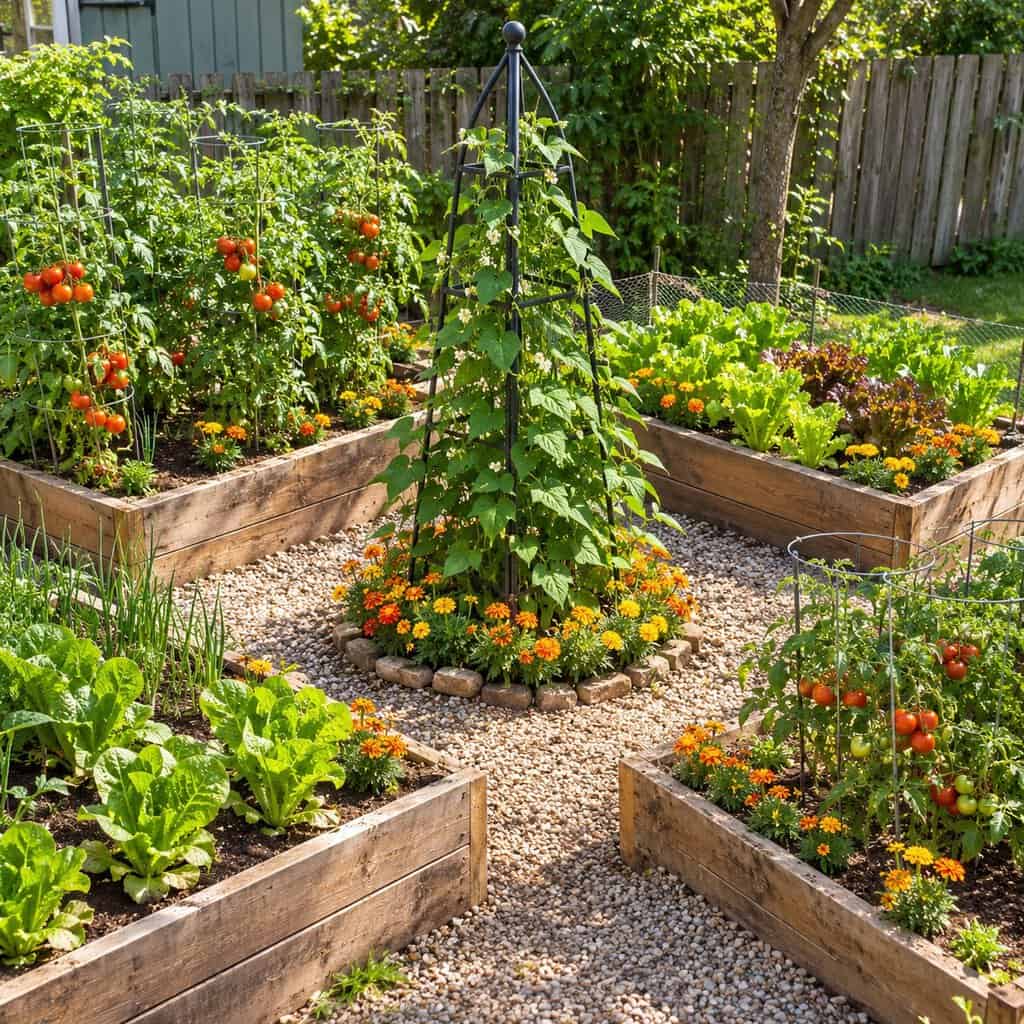
A potager mixes vegetables, herbs, and flowers in a formal layout, so the kitchen garden looks good enough to sit beside the patio. Four raised beds around a center point is the classic plan.
Make beds 4 feet wide so you can reach the middle from either side, and 12 to 18 inches tall. Untreated cedar lasts 10 years or more. Leave paths 3 feet wide in gravel or brick.
Edge beds with marigolds, nasturtiums, or dwarf lavender, and put an obelisk for pole beans or a large urn in the center. Give it 8 hours of sun to keep tomatoes and peppers productive.
17. Cabana with Curtains and Daybeds

A freestanding cabana about 10 by 12 feet fits one large daybed or two smaller loungers plus a side table. Place it within sight of the pool or lawn but out of the main traffic path.
Choose solution-dyed acrylic curtains, the same fabric used on boat covers. They resist fading and mildew better than cotton or polyester. Tiebacks on each post keep them from tangling in wind.
A solid roof, rather than fabric, gives real shade and rain protection. Add a ceiling fan on its own circuit and a waterproof storage bench so cushions stop getting hauled inside every evening.
18. Backyard Greenhouse Conservatory
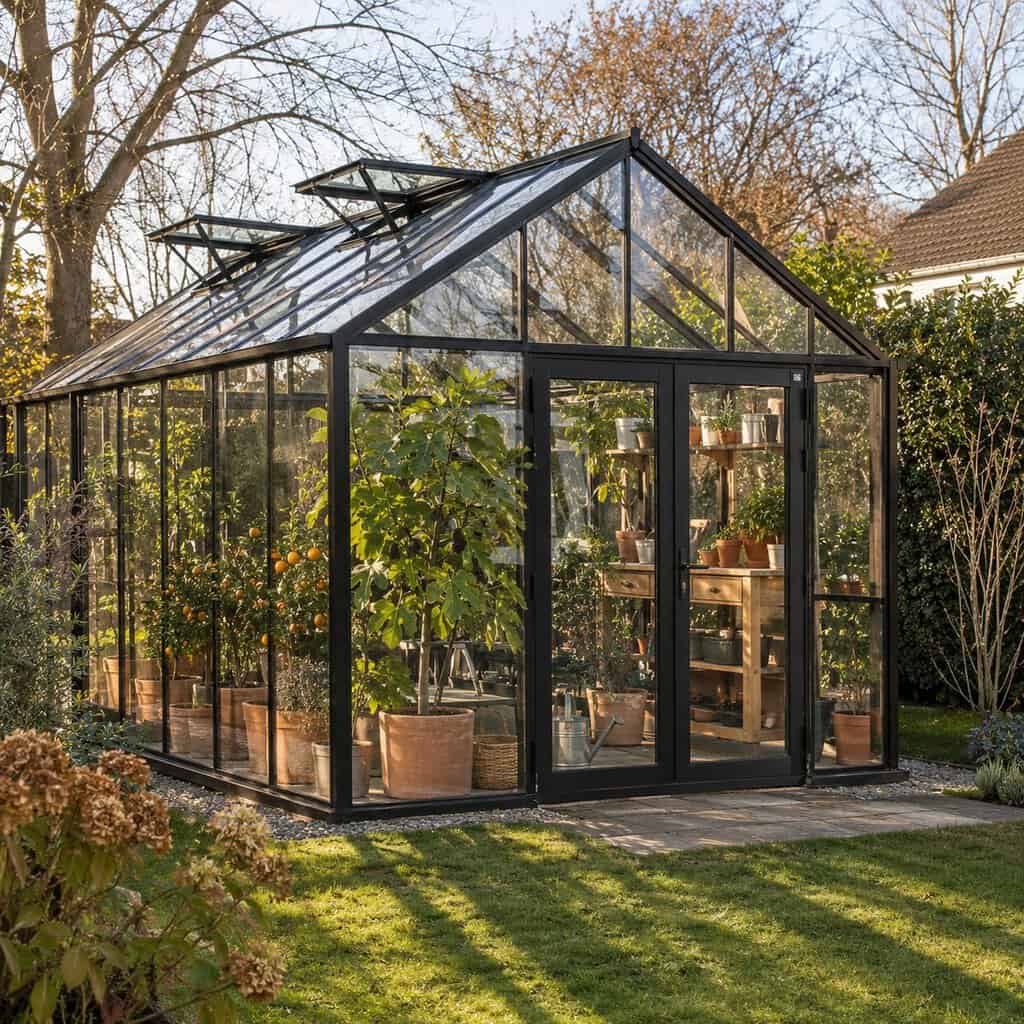
A glass conservatory around 10 by 12 feet can hold a potting bench, citrus trees, and a pair of chairs. It stretches the growing season by roughly two months on each end in most of the country.
Ventilation matters more than heat. On a sunny day, a closed greenhouse can top 100 degrees even in March, so include roof vents with automatic openers and a door that stays open in summer.
Set it on a concrete or paver base with a floor drain. Overwinter figs, bay laurel, and hibiscus inside, and start tomato seedlings 6 to 8 weeks before the last frost.
19. Backyard Movie Night Setup

For a crisp picture outdoors, a projector needs about 3,000 lumens or more, especially if neighbors keep porch lights on. A 120-inch screen suits a group of 10 to 12 seated 15 to 20 feet back.
Inflatable screens set up fast, but a fixed frame with tensioned fabric stays wrinkle-free and does not flap in the breeze. Mount it so the back faces the street, not the house.
Tier the seating with floor cushions up front and low loveseats behind. Use outdoor-rated extension cords and keep a soundbar near the screen. Check local noise rules after 10 p.m.
20. Treehouse Deck for Grown-Ups
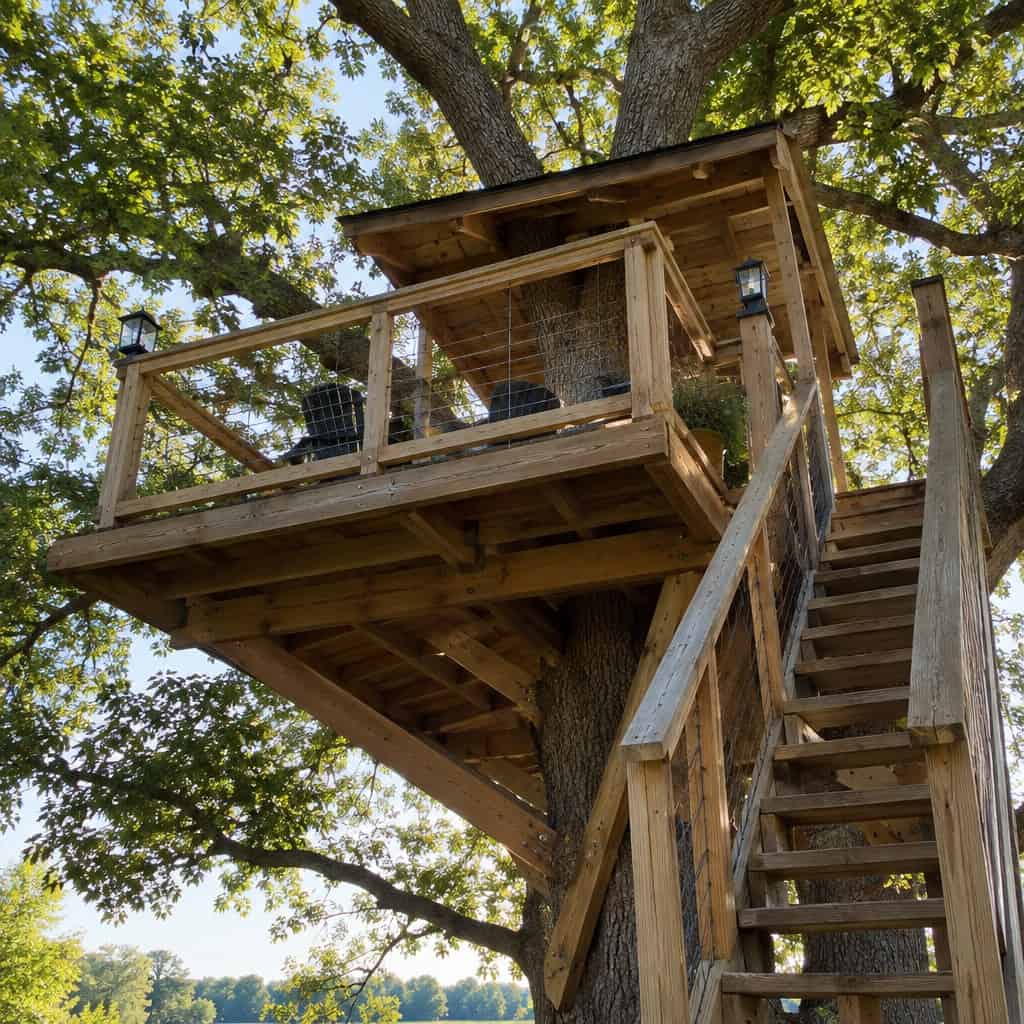
A platform built 6 to 8 feet up in a mature oak, maple, or beech turns a big tree into a reading nook with a view of the whole yard. Choose a healthy trunk at least 12 inches in diameter.
Use specialized treehouse attachment bolts that let the tree grow and sway, rather than dozens of nails. Supporting one side on posts reduces the load on the tree.
Add a staircase instead of a ladder, a 36-inch railing, and a small roof. An arborist visit beforehand costs little and confirms the tree can carry the weight.
21. Grape Arbor Over a Dining Patio
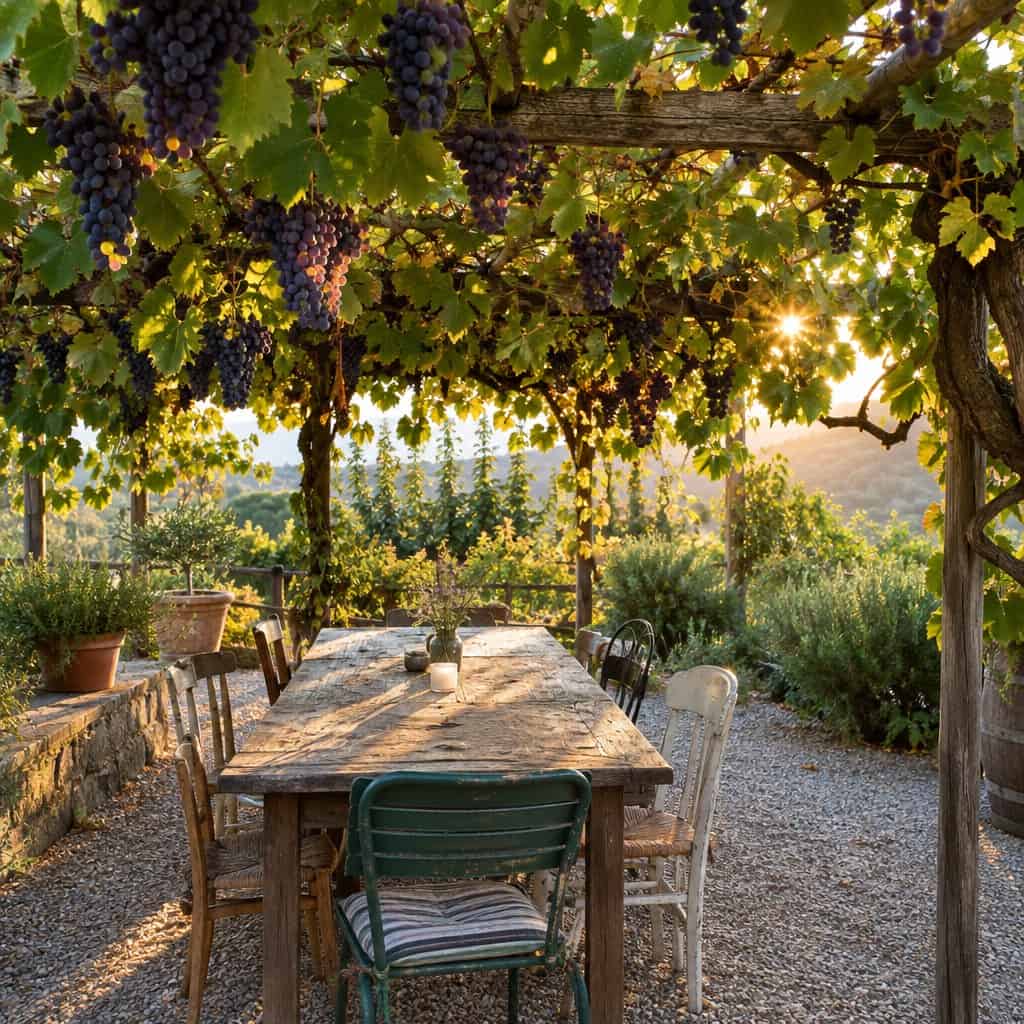
A grape arbor gives filtered shade by July and fruit by September. Build it 8 feet tall and at least 10 by 16 feet to cover a table for eight, with crossbeams about 18 inches apart.
Pick grapes for your zone. Concord and ‘Reliance’ handle Zones 4 to 8, while muscadines thrive in the humid South in Zones 7 to 10. Plant one vine per post, 6 to 8 feet apart.
Prune hard every late winter, removing most of last year’s growth. Grapes fruit on new canes, so heavy pruning means more fruit, not less. Pick promptly, since fallen grapes draw wasps.
22. Outdoor Living Room with a Stone Fireplace
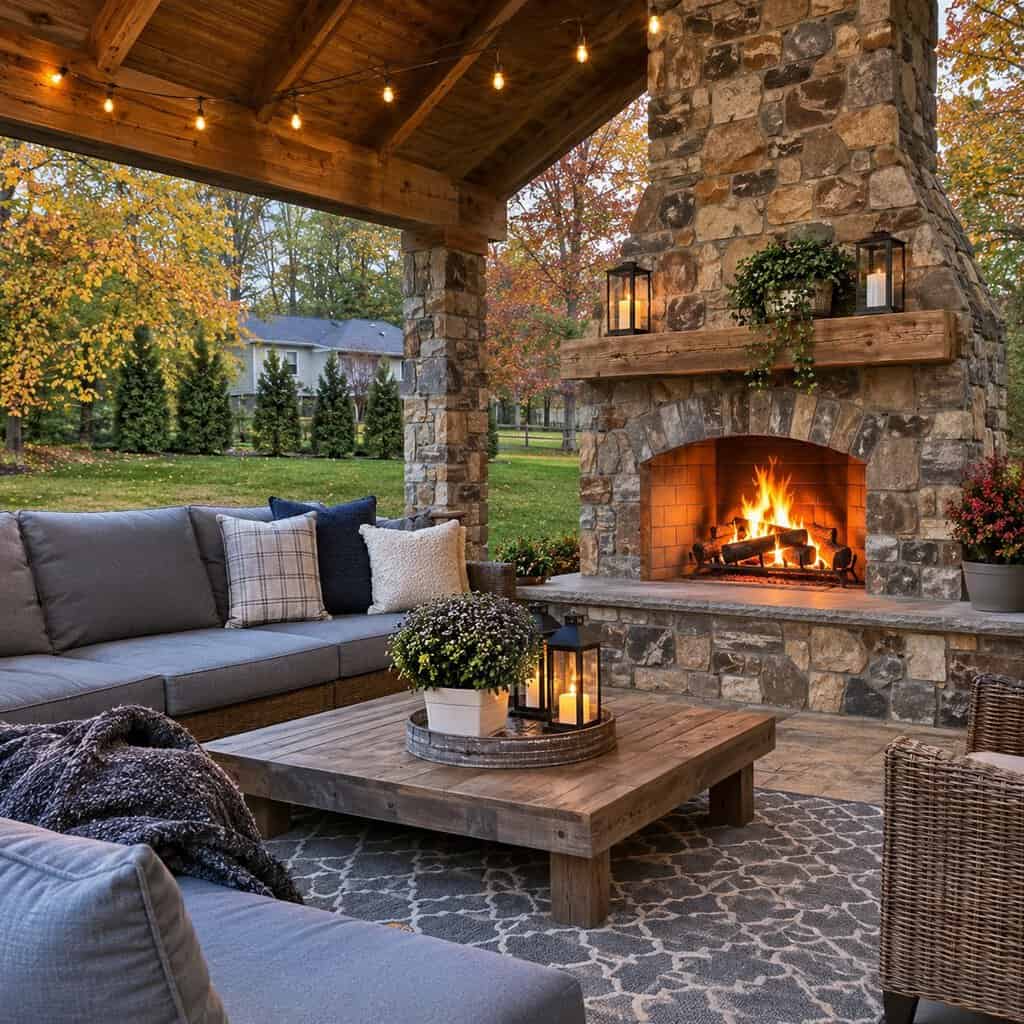
A covered patio becomes a true room once it has a fireplace on one wall. A masonry chimney must rise at least 2 feet above anything within 10 feet, so plan the roof and fireplace together.
Gas inserts light with a switch and leave no ash. Wood gives more heat and crackle but more cleanup. Either way, a firebox around 36 inches wide balances well with a sectional for six.
Set furniture about 8 feet back from the hearth. Choose a polypropylene rug and cushions with quick-dry foam. A ceiling fan and recessed lights make the space useful after dark.
23. Floating Deck Over a Reflecting Pond

A reflecting pond only needs to be 18 to 24 inches deep. Line it with black EPDM rubber, since a dark bottom makes the surface act like a mirror.
The deck sits on concealed piers set well back from its edges, so it seems to hover a few inches above the water. Ipe or composite boards handle constant moisture better than pine.
Keep the water clear with a small pump, a UV clarifier, and a few submerged oxygenating plants. Plant the rim sparingly with Japanese forest grass, one river birch, and smooth boulders. Fewer elements mean a cleaner reflection.
24. Spa Garden with Sauna and Cold Plunge

Contrast therapy at home needs three pieces: a sauna, a cold plunge, and a rinse. A barrel sauna about 6 feet long seats four and runs on a 240-volt electric heater or a wood stove.
Cold plunge tubs hold 100 to 150 gallons and use a chiller to keep water between 39 and 55 degrees. Place the tub a few steps from the sauna door on a level, nonslip surface.
Link the pieces with stone pavers and soften the spot with feather reed grass and blue fescue. A teak bench and a hook rail for towels complete it without crowding.
25. Lagoon Pool with a Waterfall and Grotto
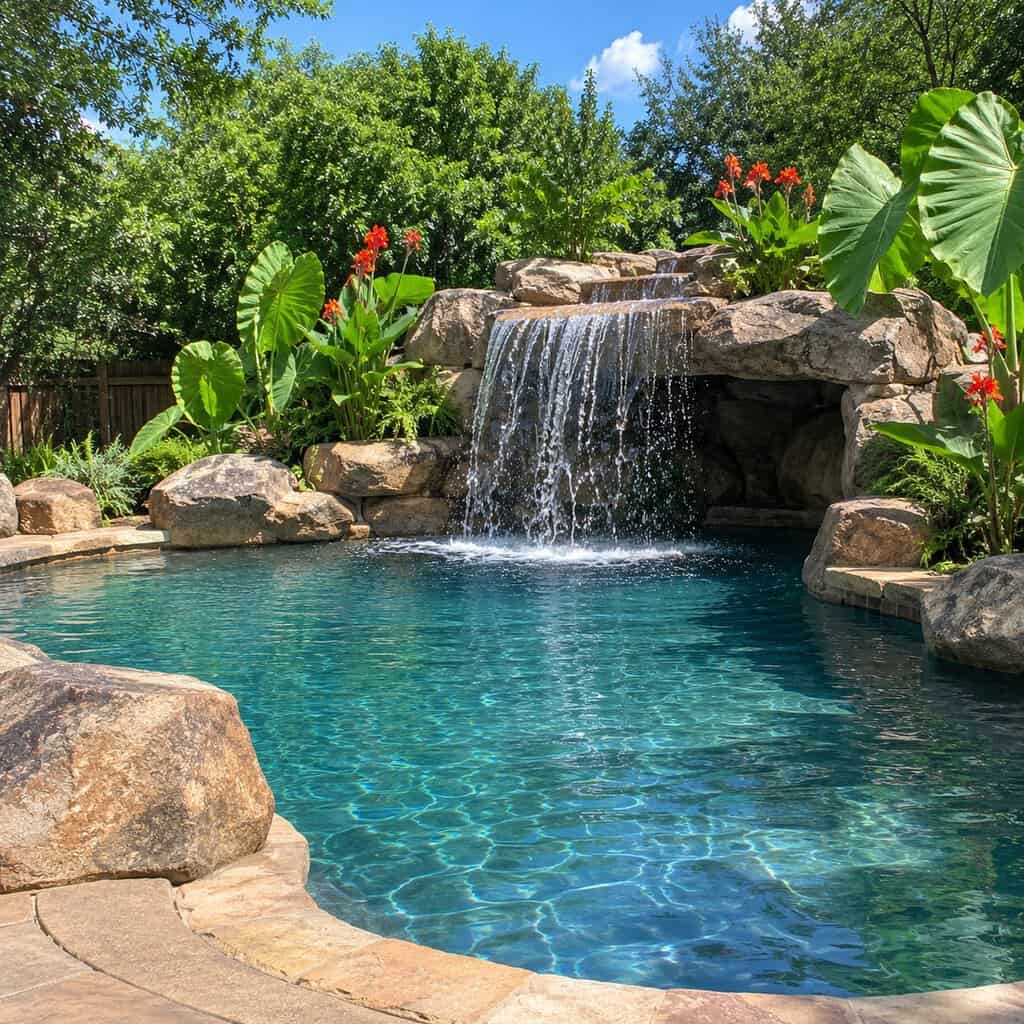
A lagoon pool trades straight lines for curved edges, boulder coping, and a darker plaster in gray or midnight blue that reads as natural water.
The grotto is a small cave behind the waterfall, built from sculpted shotcrete or stacked natural boulders. Inside, a submerged bench sits about 18 inches below the surface. Leave at least 6 feet of headroom for adults.
The waterfall runs on its own pump, which can be set on a timer. Plant the rockwork with elephant ears, cannas, and needle palm, which survives Zone 6 winters. This build takes months and a specialist, so treat it as a long-term plan.
Start With the Detail That Matters Most
Most of these designs can be built in stages. A pergola can go up this year while the wisteria fills it over the next three. A fire pit can be sunk now, with built-in seating added later.
Before committing, walk the yard at different times of day. Note where the sun lands at 6 p.m., where water pools after rain, and which views you would rather block. Those three facts narrow the list faster than any budget.
Then pick one design and get its foundation right, whether that means drainage, a concrete pad, or the right plant for your zone.