


Step out the back door of most houses and you hit a lawn. Maybe a slab of concrete. A grill shoved against the siding, a couple of plastic chairs nobody loves.
It’s space. It isn’t a room.
The difference between a yard and an outdoor room isn’t money — it’s intention. The best backyards borrow the same logic an architect uses indoors: a floor, walls, a ceiling, light, a place to sit and a place to set your glass down.
Get a few of those right and something clicks. People stop drifting back inside. They settle in.
Here are 23 things that turn a patch of grass into a place you actually live.
1. A Floor You Actually Define
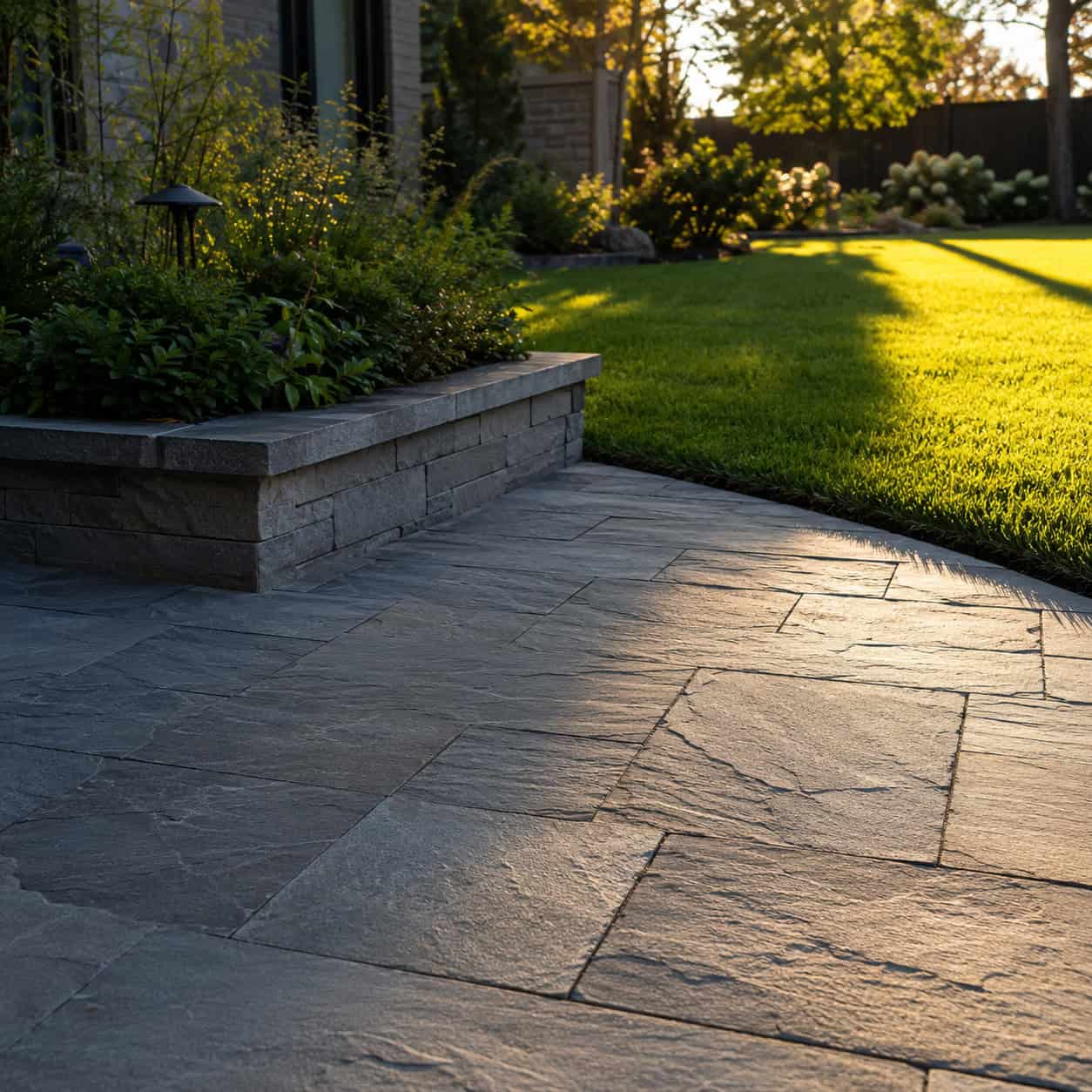
Every room starts at your feet.
The single biggest jump from “yard” to “room” is a hard, deliberate floor — pavers, a stamped patio, flagstone, or decking under the seating. Grass doesn’t read as a room. A defined surface does.
Designers lean on this trick constantly. A change in flooring material tells the eye where one zone ends and the next begins, no wall required.
You can even stop the pavers short and let the lawn pick up again. That edge alone says: this part is the living room, that part is the garden.
2. An Outdoor Rug to Anchor the Seating
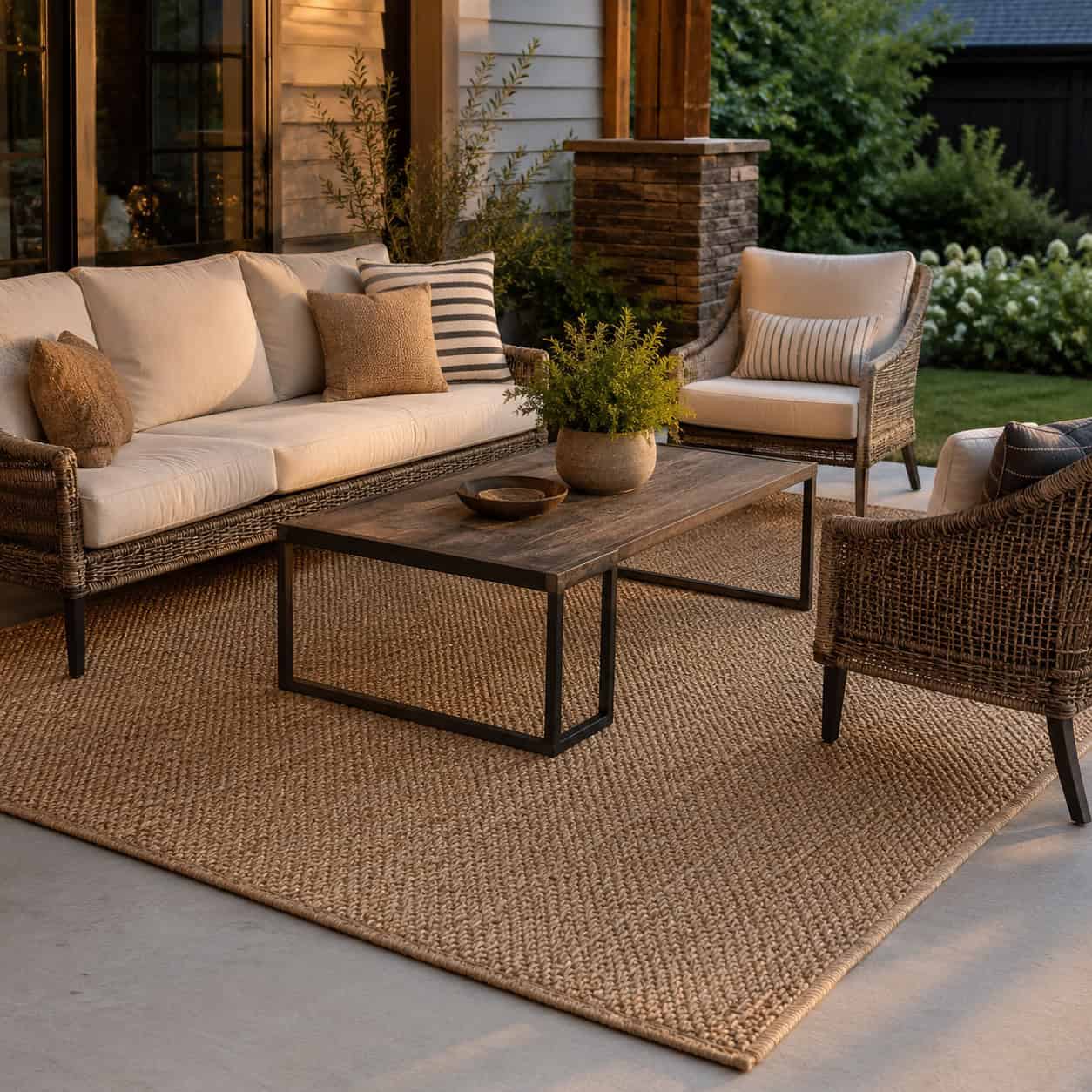
Bare concrete feels like a driveway. A rug fixes that in an afternoon.
A jute or weatherproof rug pulls the chairs and sofa into a tight cluster and instantly reads as a room. It’s the cheapest, fastest move on this whole list.
Plenty of homeowners swear a $40 Marketplace rug did more than any furniture upgrade. It warmed up gray slab and carried the space across spring, summer, and fall.
Buy one a size bigger than you think. The front legs of every seat should land on it.
3. An Overhead Structure for a “Ceiling”
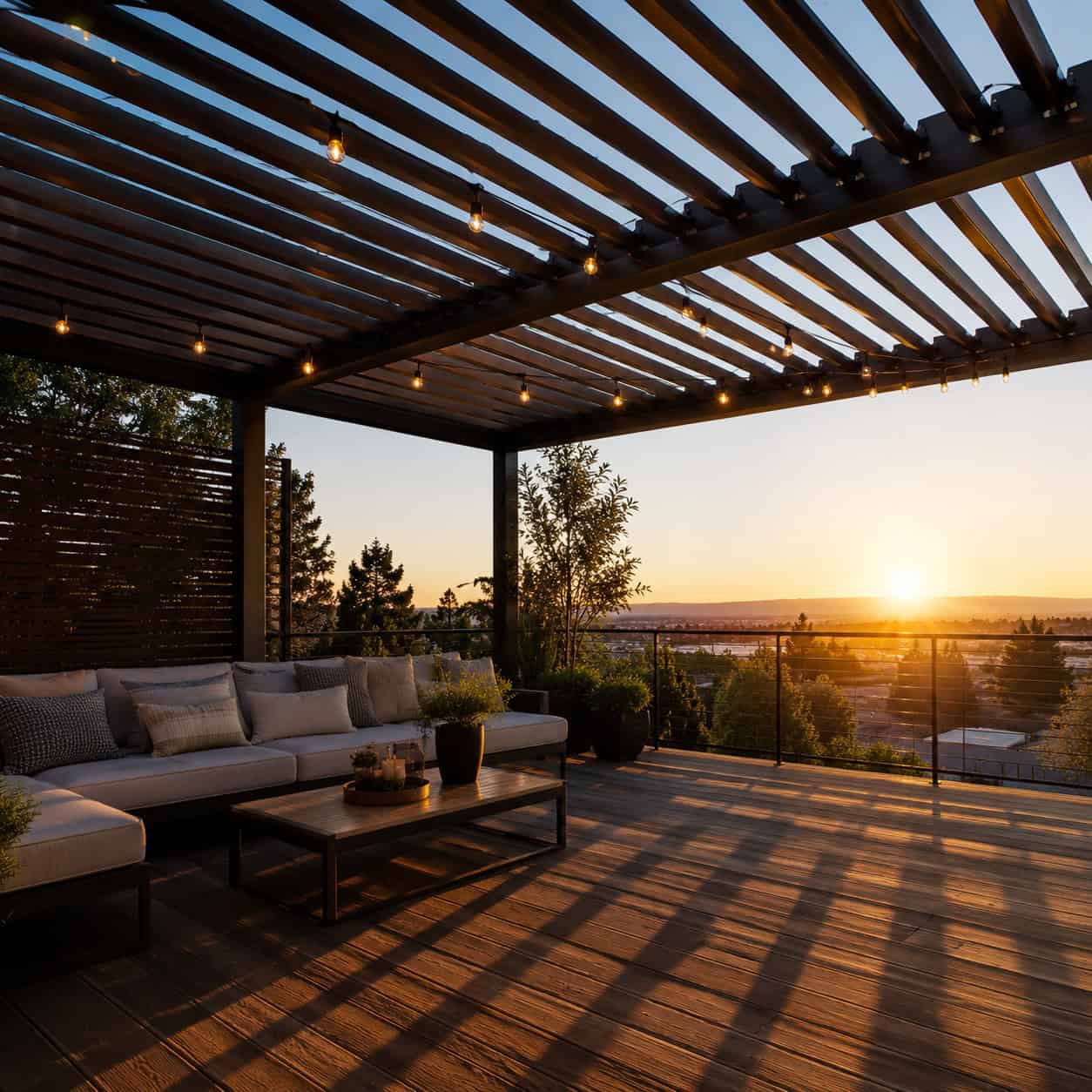
Look up. Your brain wants a fourth surface, and open sky doesn’t give it one.
A pergola, an arbor, or even a low canopy of tree branches supplies the sense of overhead enclosure that makes a space feel held. The ceiling doesn’t have to be solid. String lights strung post to post imply it. An umbrella implies it. A sheet of slatted shade implies it.
This is where the choices get interesting, and where the money goes if you let it.
An arbor is the smallest gesture — a simple arched or flat-top frame, often over an entry or a bench, more accent than shelter. A pergola is the workhorse: posts and crossbeams that frame a whole seating or dining zone. Fixed pergolas give you dappled shade and a structure to hang lights and curtains from.
Then there’s the louvered pergola, the category quietly taking over. The roof slats pivot. Open them flat for full sun, angle them for dappled light, close them tight when the rain starts. Aluminum versions shrug off weather and never need staining.
At the top sits the bioclimatic pergola — motorized louvers, integrated LED strips, rain sensors, sometimes retractable screens built into the posts. It’s the most expensive answer to “I want a ceiling I can control,” and it’s where high-end outdoor design is heading.
Start with what your zone actually needs. A dining table wants a defined frame overhead. A lounge wants shade you can adjust. Match the structure to the use, not the catalog.
4. A Real Sense of Enclosure (the “Walls”)
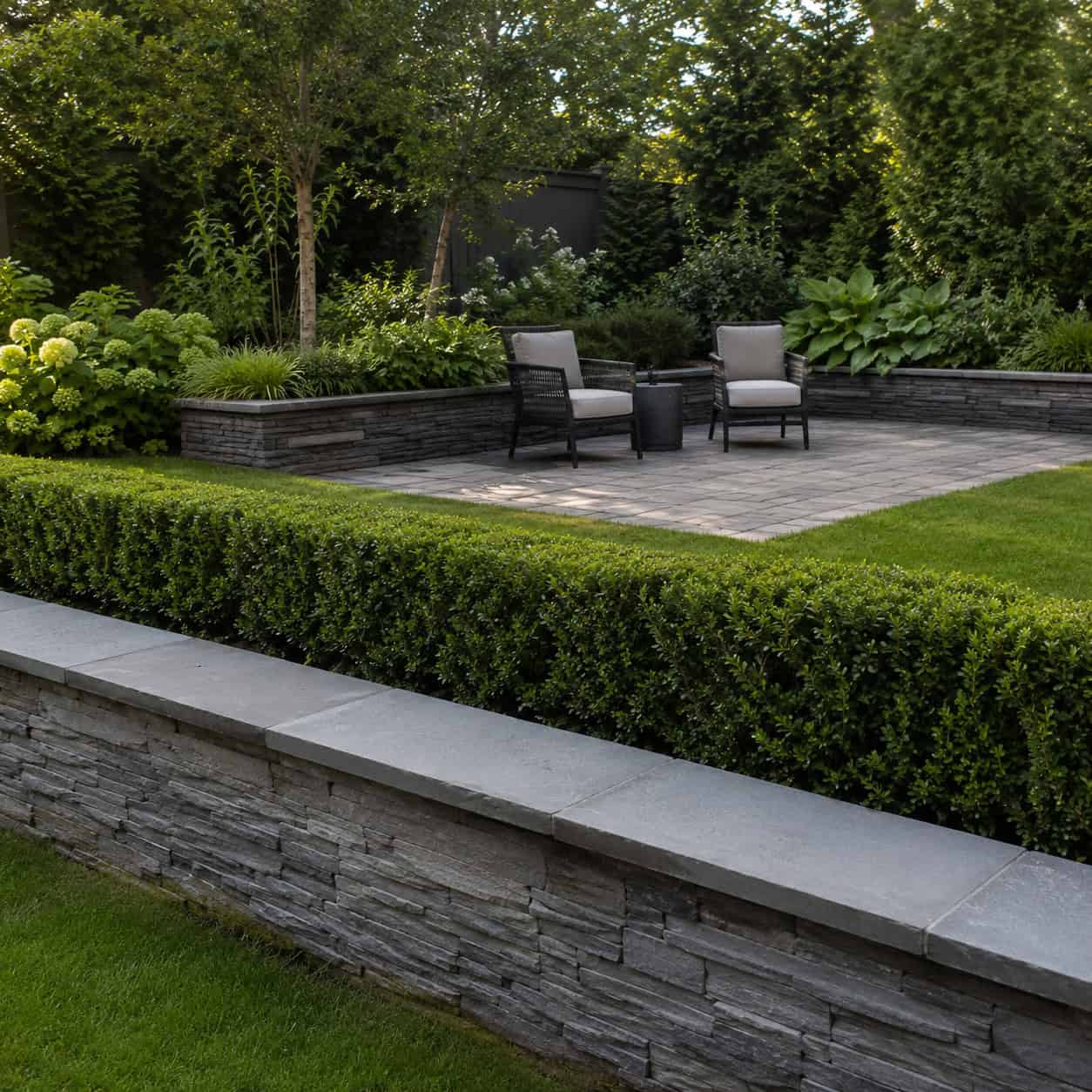
A room needs edges. You don’t need to build actual walls to get them.
Low slate walls, trellises, an evergreen hedge, a run of raised planting beds — any of these draws a line around the space. You feel tucked in even when the lawn rolls wide open beside you.
The phrase designers use is distinction without disconnection. Enclosure that still breathes.
Knee-high is often enough. A planter wall at seat height frames the room without boxing you in or blocking the view of the garden you worked on.
5. Outdoor Curtains and Drapery
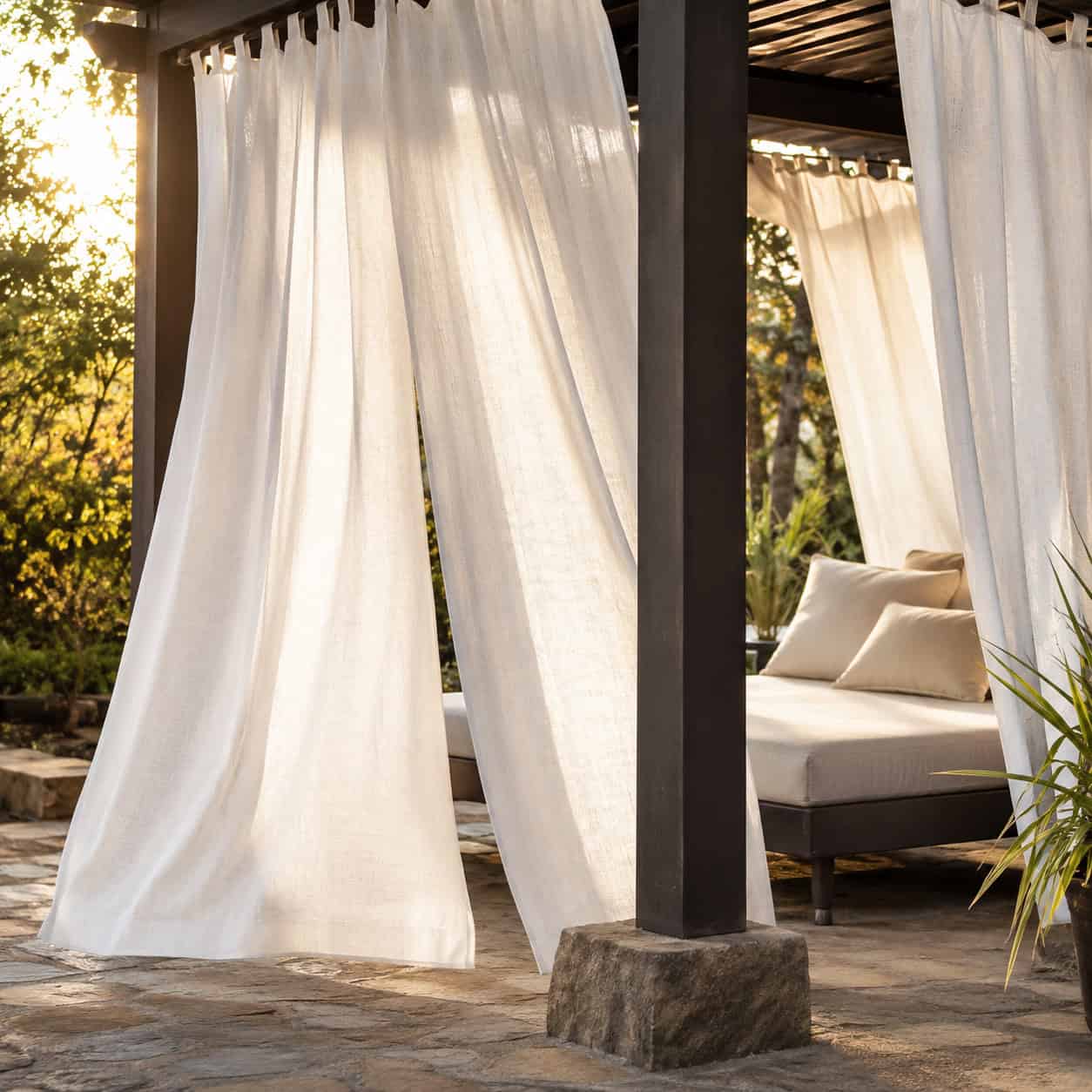
Curtains outside sound fussy until you’ve sat behind a set on a windy evening.
Weather-resistant drapery frames the “windows” of a pergola or loggia. Draw them closed for a private, low-lit dinner. Leave them open and the space connects right back to the yard.
They do three jobs in one move: softness, shade, and privacy.
Hang them on a simple cable or rod between posts. Tie them back in the day, let them float at night.
6. Real, Cushioned Furniture
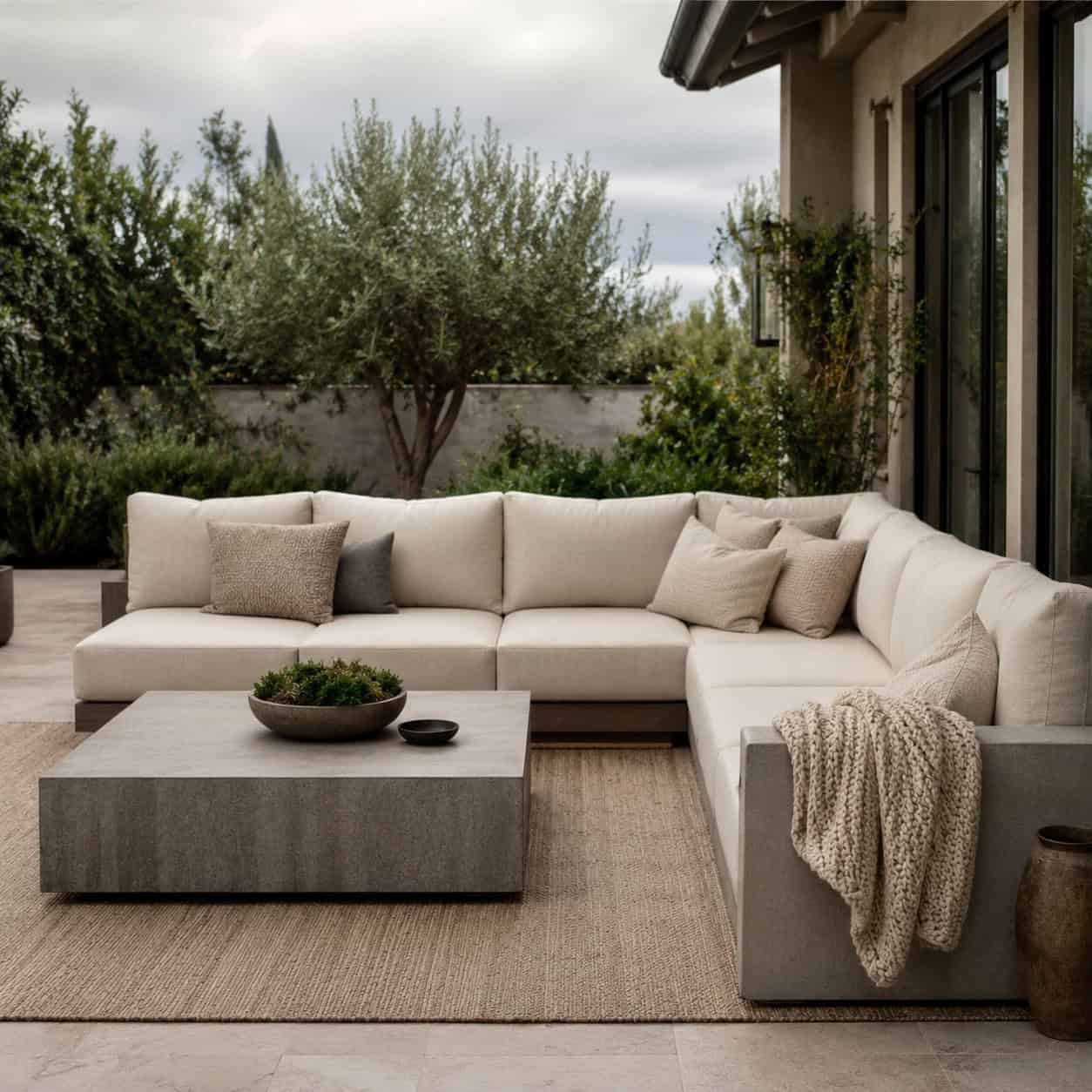
Folding chairs say temporary. A deep cushioned sofa says stay.
Cushioned lounge chairs and deep-seat sectionals are what get people to sit down and not get up. Comfort is the whole point — furniture chosen because it feels good, not just because it survives a rainstorm.
The current move is modular. A sectional you can break apart and recombine shifts from a quiet conversation for two to a full crowd on game day.
Spend on the cushions. Quick-dry foam and solution-dyed fabric are the difference between a sofa you use and a soggy one you avoid.
7. Side Tables and Surfaces for Drinks
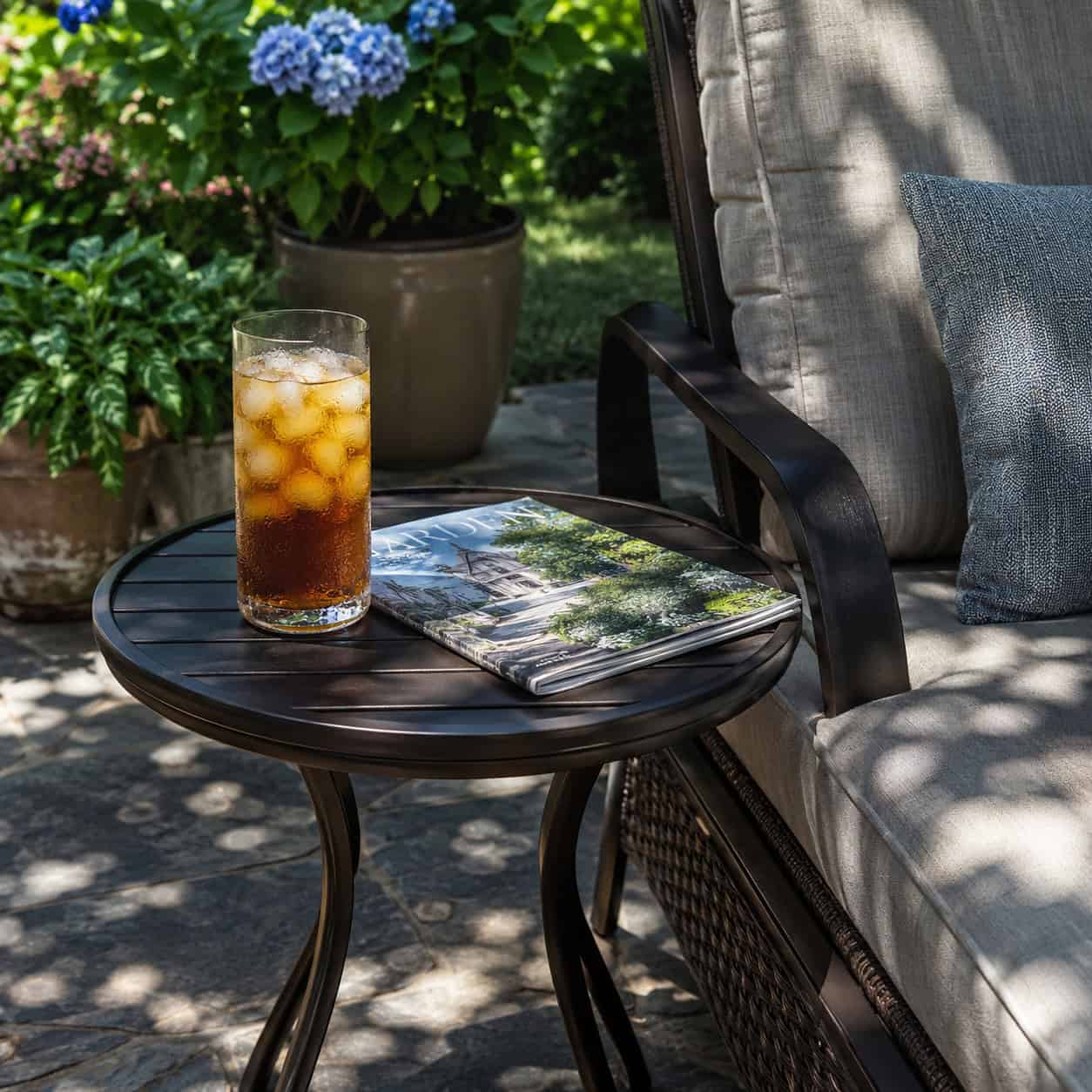
A room isn’t a room if there’s nowhere to put your glass.
Designers treat this as a flat non-negotiable. A side table by every seat and a coffee table in the middle make a seating group look deliberate instead of dragged together five minutes before guests arrived.
Skip this and people balance drinks on the ground or on their knees. Add it and the whole arrangement clicks into place.
Even a tree stump works. The point is a surface within arm’s reach.
8. A Proper Dining Table
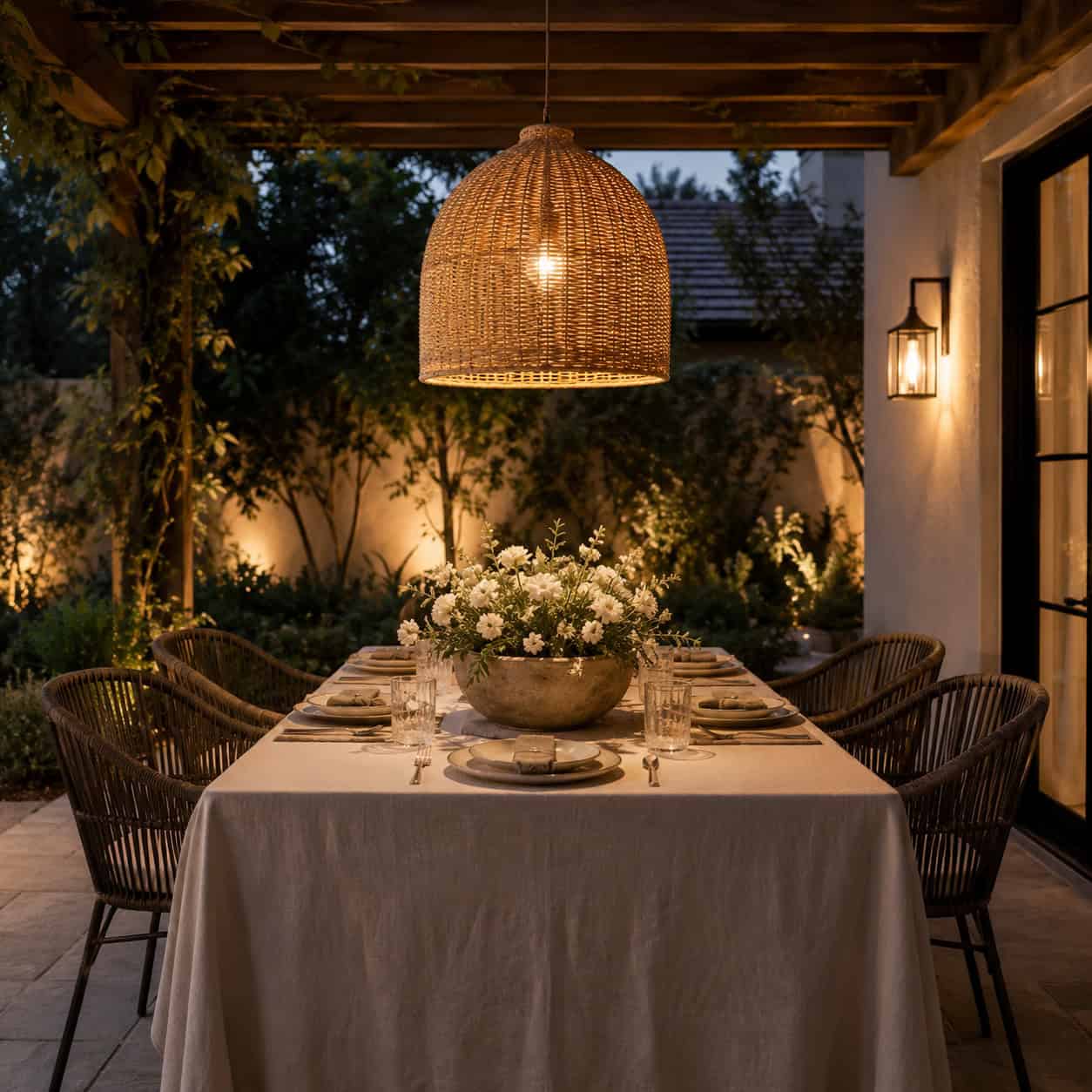
Eating outside and dining outside are two different things.
A real al fresco table — a cloth on it, a planter of flowers down the center, maybe a pendant hung overhead — turns dinner into an event you planned. Suddenly it’s the outdoor dining room, not a picnic.
The 2026 version flexes. An extendable table seats four on a Tuesday and ten on Saturday without owning two pieces of furniture.
Anchor it under the pergola or a fixed umbrella so it has its own ceiling. That’s what makes the zone feel like a separate room.
9. Layered Lighting After Dark
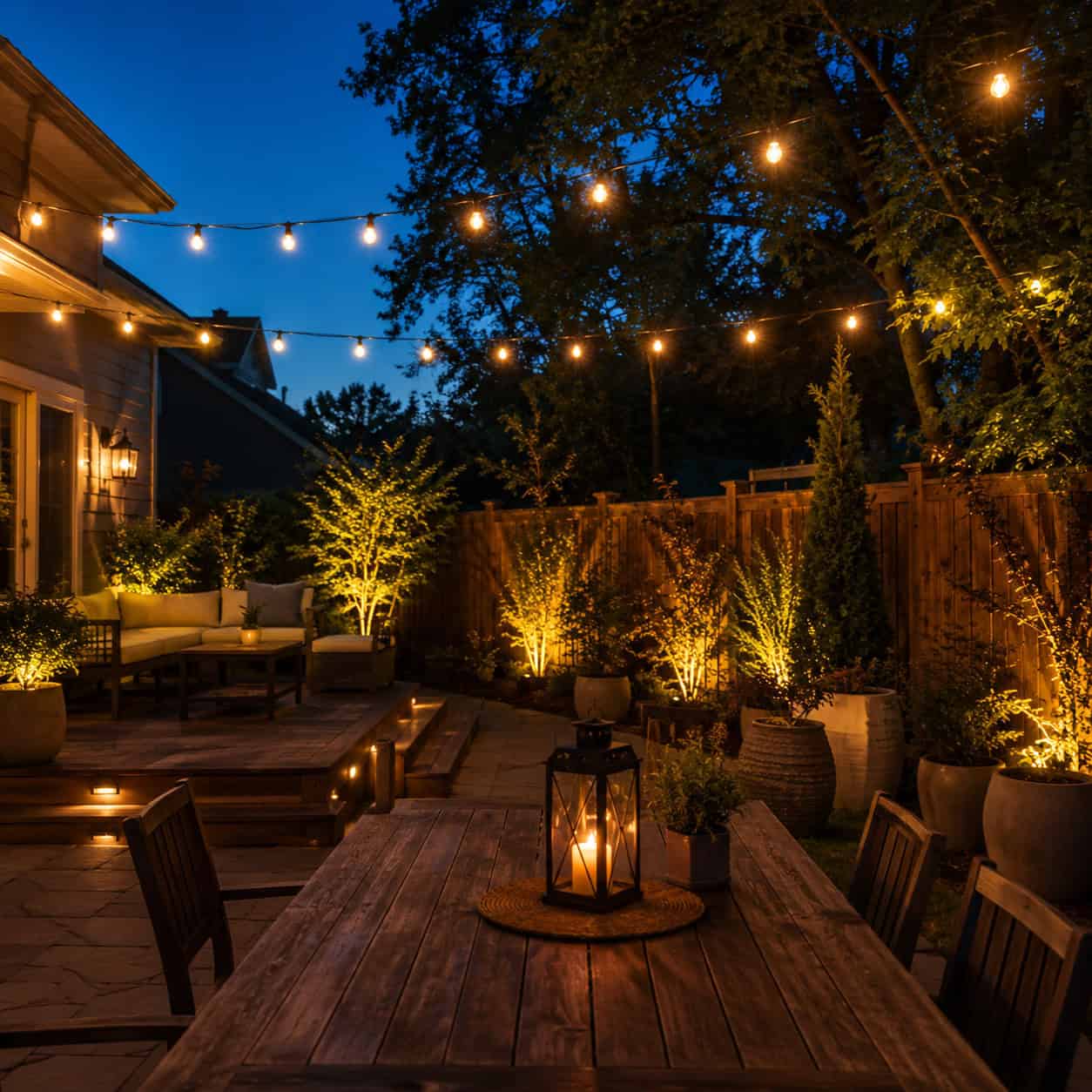
One floodlight kills the mood. Layers build it.
String lights overhead, uplights tucked behind planters, a lantern on the table, a bold pendant over the dining zone — outdoor lighting works exactly like indoor lighting. You layer it.
Ask homeowners what added the most warmth and they name lighting almost every time. It’s the line between a patio and a place you want to be at 9 p.m.
Put it on a dimmer or smart plug. Bright for cleanup, low and gold for lingering.
10. A Fire Feature to Anchor the Room
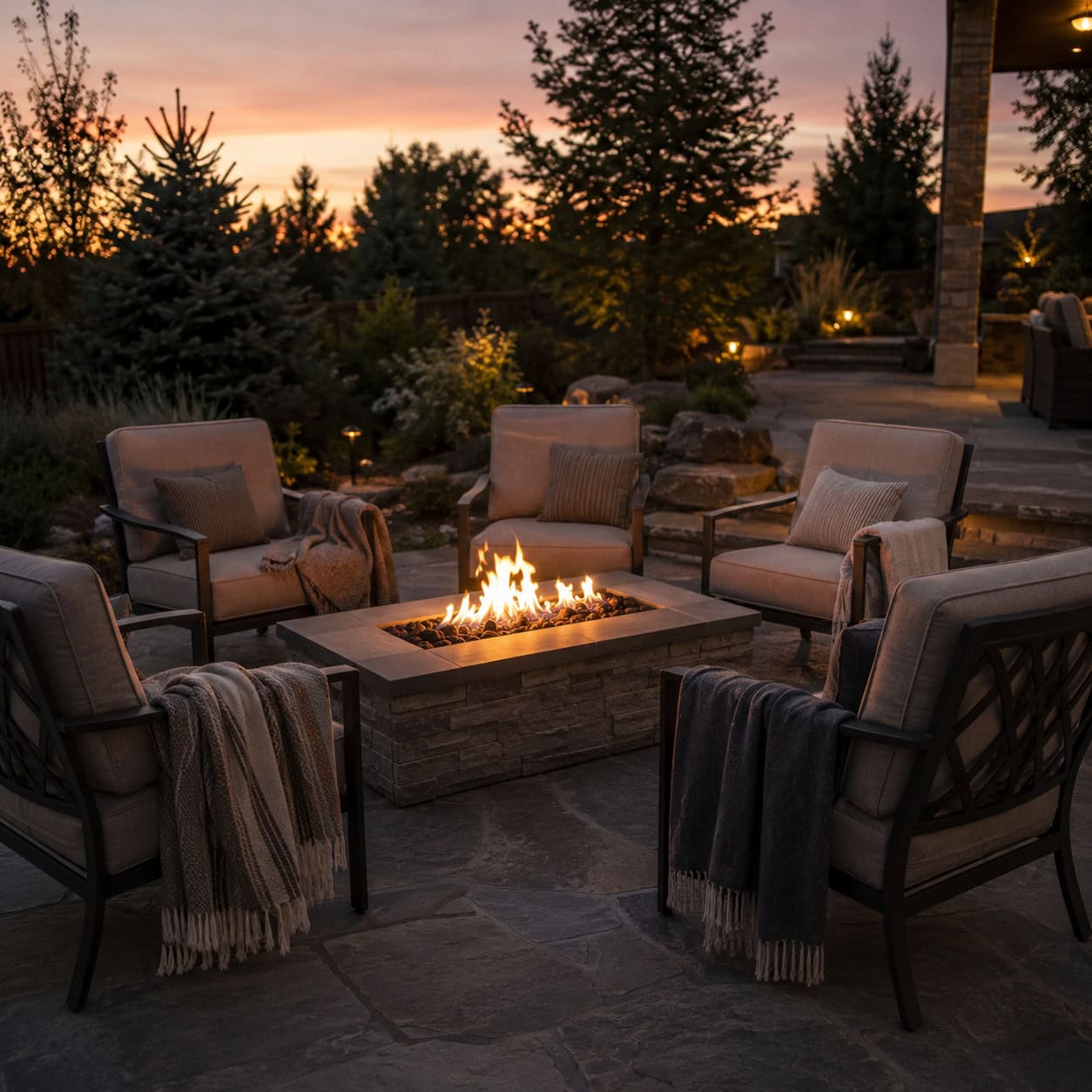
Fire is the outdoor hearth. Everything circles it.
A fire pit, a built-in fireplace, or a sleek fire table does for a backyard what a fireplace does for a living room — it gives the seating a center and gives people a reason to stay past dark and well into October. Current design leans on fire as the element that anchors a gathering.
The choices break down by fuel and by build. A wood-burning pit is the cheapest and most primal — real flame, real crackle, real smoke and ash to deal with. A masonry fireplace is the showpiece: a true focal wall you can build a whole patio around, and the priciest option by far.
Gas fire tables split the difference. Push a button, flame on, no smoke, no hauling logs. They double as a low coffee table when the burner’s off, which makes them the practical pick for a tight lounge zone.
Mind the clearances. Keep open flame at least ten feet from the house, the pergola, and any low branches, and never run a wood fire under a solid roof. Set a fire table on stone or pavers, not directly on a wood deck, and keep an extinguisher within reach.
Whatever you pick, point the seating at it. A ring of chairs around fire is the oldest room layout there is.
11. A Water Feature for Sound
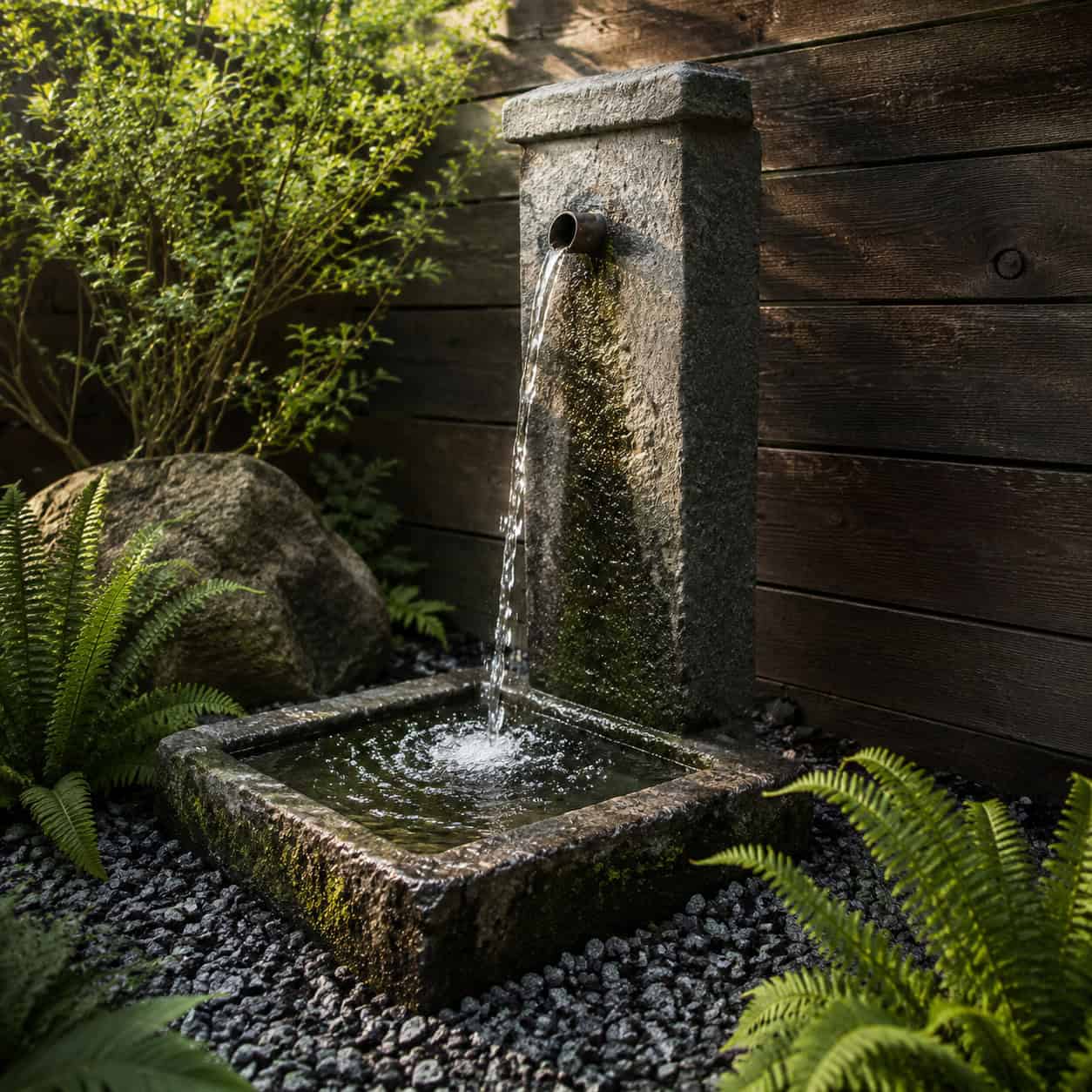
Most backyards miss one whole sense: sound.
A bubbling rock, a small fountain, or a tucked-away pond adds the layer nearly every yard forgets. The gentle trickle masks traffic and neighbors and gives the space a second thing to look at.
This is why the new design language pairs water with fire and light. Three senses working at once.
It doesn’t need to be big. A single column fountain in a corner does more for the mood than its size suggests.
12. An Outdoor Kitchen or Grill Station
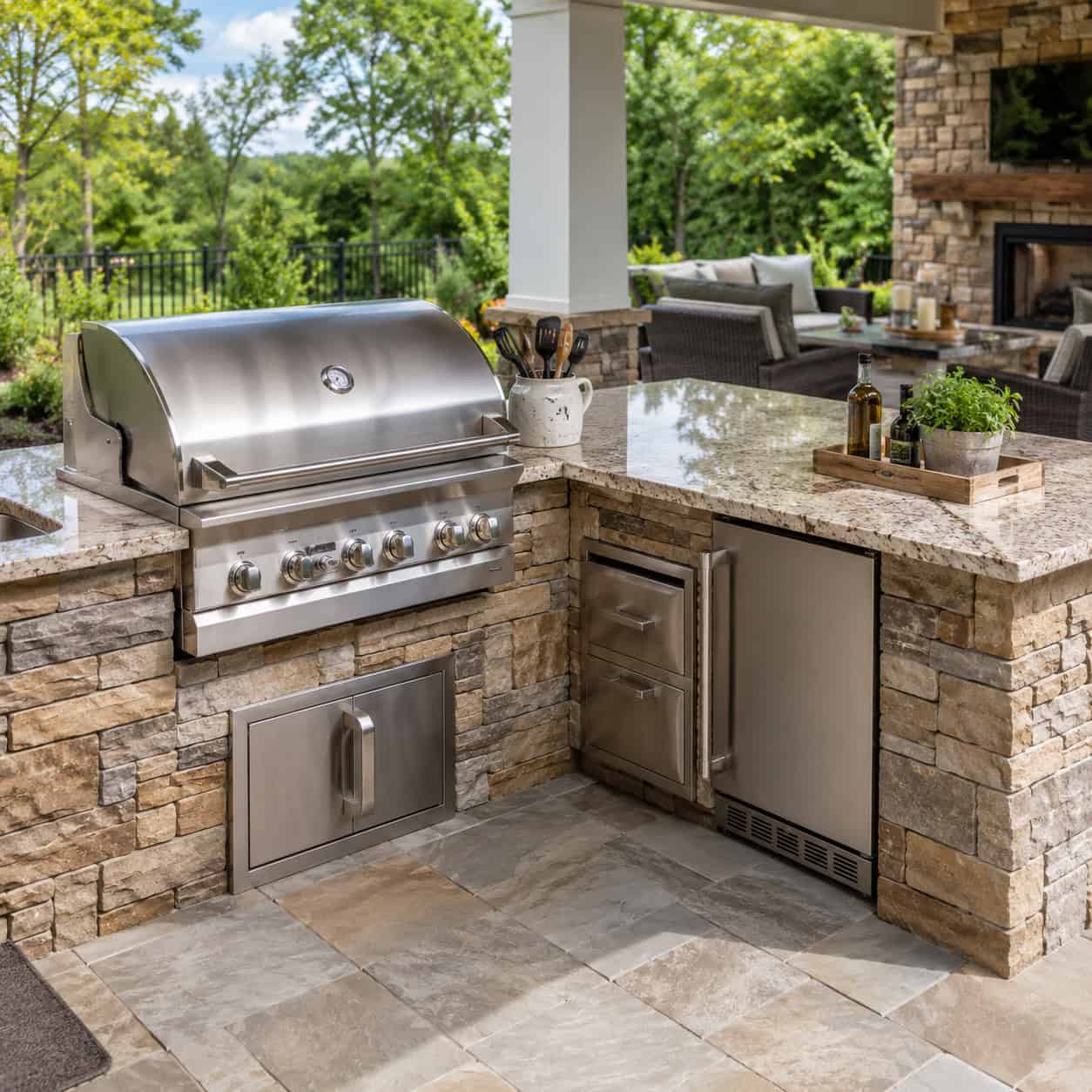
The grill against the siding is the loneliest spot at any party. Move it into the room.
Even a basic setup — a grill plus a stretch of prep counter — turns a patio into a kitchen you never have to leave. The whole 2026 standard is keeping the cook in the conversation instead of exiled to a corner facing the fence.
This is also one of the smartest dollars you can spend out there. A well-built outdoor kitchen can return anywhere from 60% to 120% of its cost at resale, which puts it in rare company among backyard projects.
Build it in tiers. The entry version is a grill, a counter, and a small fridge for a few thousand dollars. The mid version adds stone or stucco cladding, a sink, and weatherproof cabinetry, running $10,000 to $20,000. The high end — a built-in pizza oven, a side burner, a Big Green Egg, a beverage center under granite — climbs past $40,000 fast.
Put the prep counter facing the seating, not the wall. The point is to cook and talk at the same time.
And plan the run for gas, water, and power before you pour a single footing. Retrofitting those after the stone is set is where budgets blow up.
13. A Bar or Beverage Station
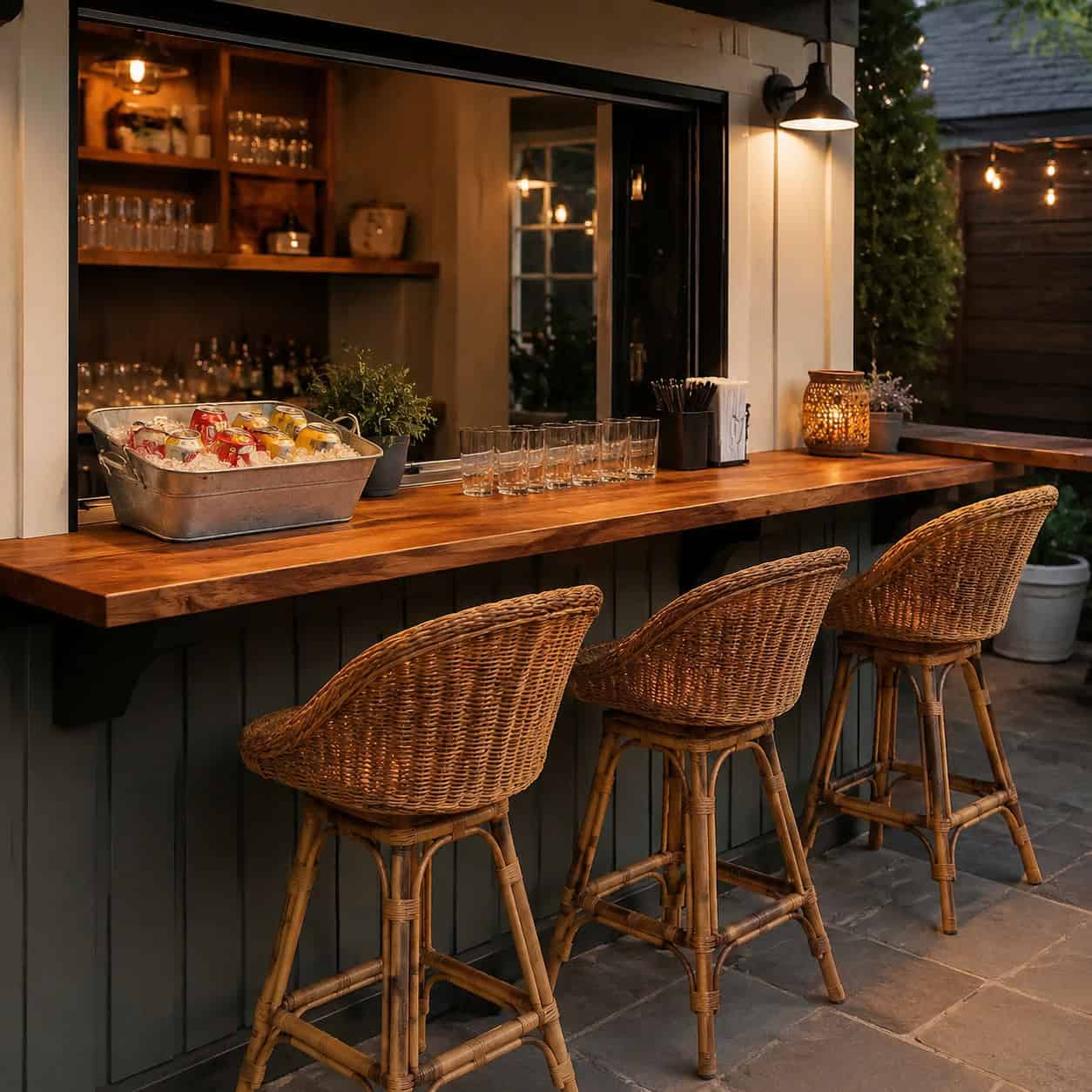
Every ten-minute trip indoors pulls a host out of the party.
A bar cart, a built-in beverage center, or a pass-through counter keeps the drinks where the people are. Wrap-around bar seating has gone from afterthought to core layout in current outdoor plans.
Stock it once before guests arrive and you’re done running back and forth. Ice, glasses, a couple of bottles, a bin of cold cans.
A pass-through window from an indoor kitchen does the same job for less. Hand the drinks straight out the wall.
14. Layered Greenery and Container Plantings
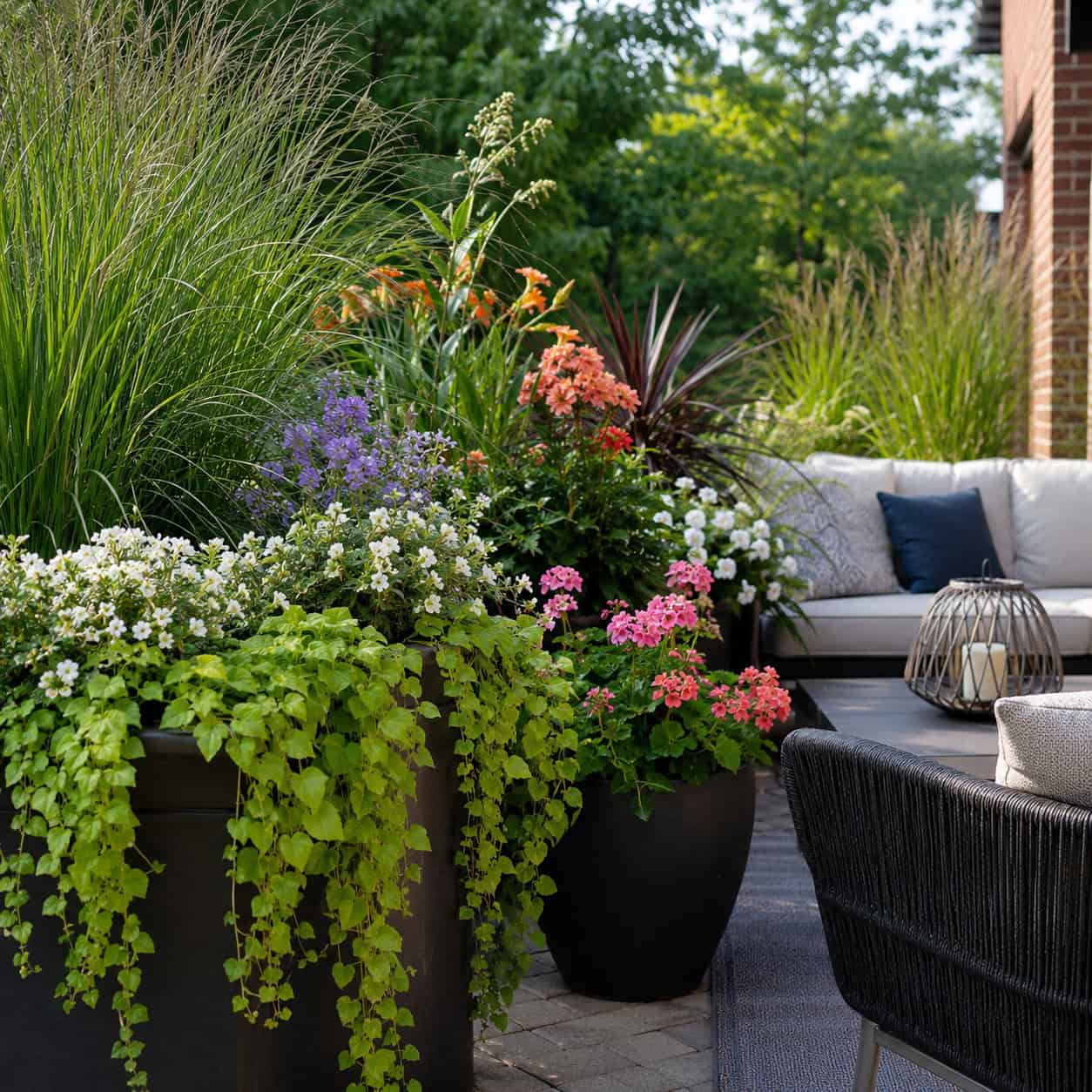
Plants are what tie the room back to the reason you went outside in the first place.
Flowers, shrubs, and container plantings layered around the seating soften every hard edge — the paver line, the pergola post, the blunt corner of a counter. Greenery rounds it all off.
Trees and evergreens pull double duty. They screen the neighbors and act as the living walls of the room.
Layer the heights. Tall in back, mid in pots, trailing over the edge of a planter. Flat single-height plantings read as landscaping, not a room.
15. Shade You Can Actually Control
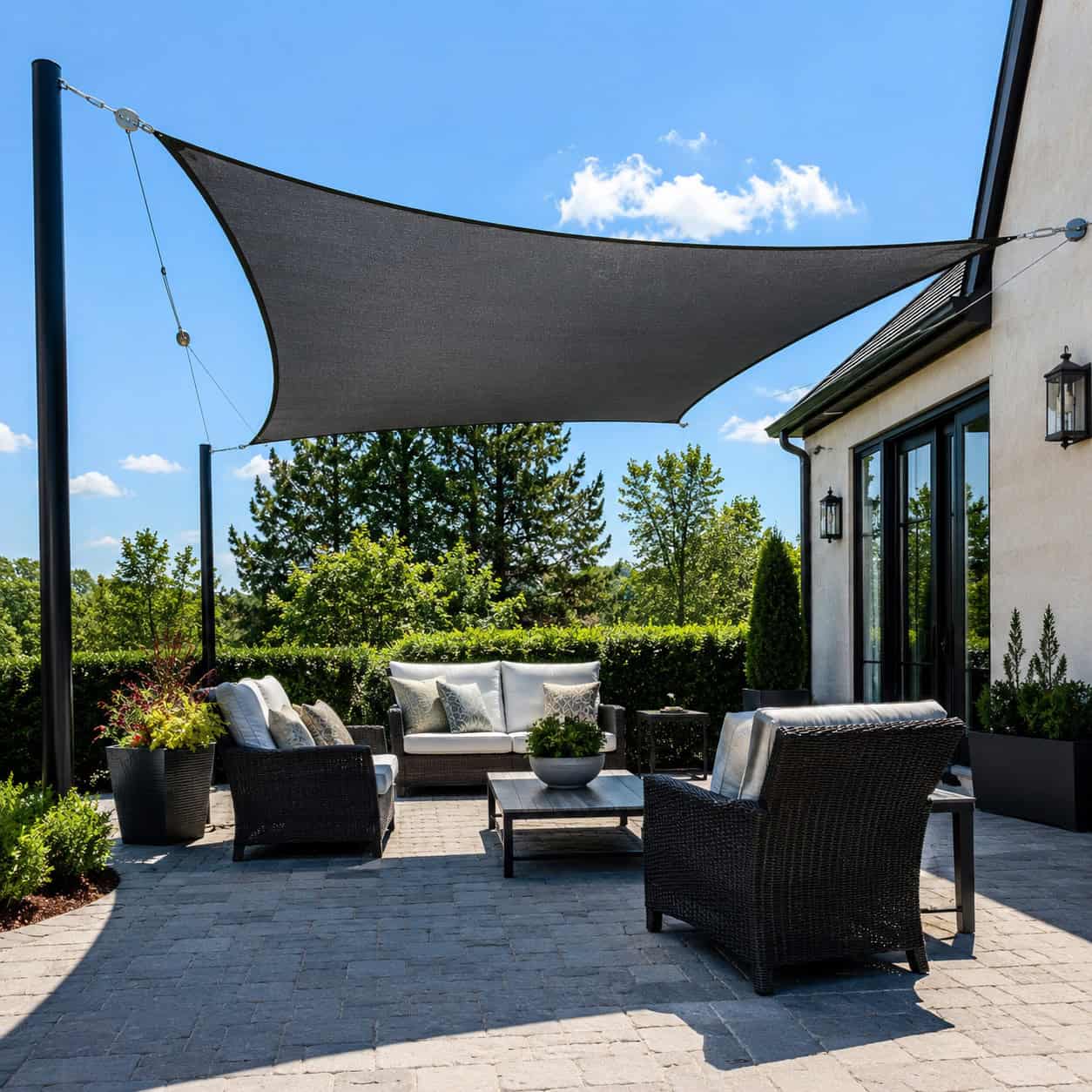
A spot that’s an oven at 2 p.m. never becomes a room. Nobody sits there.
Cantilever umbrellas, retractable awnings, shade sails, and louvered pergolas let you dial the sun up and down through the day. That control is the whole game — sun in the morning, shade by lunch.
One homeowner rigged an adjustable sail on a simple pulley system and finally used a yard that had baked empty for years.
Match the shade to where the sun actually lands at the hours you use the space. Track it for a day before you mount anything.
16. Distinct Zones, Not One Big Slab
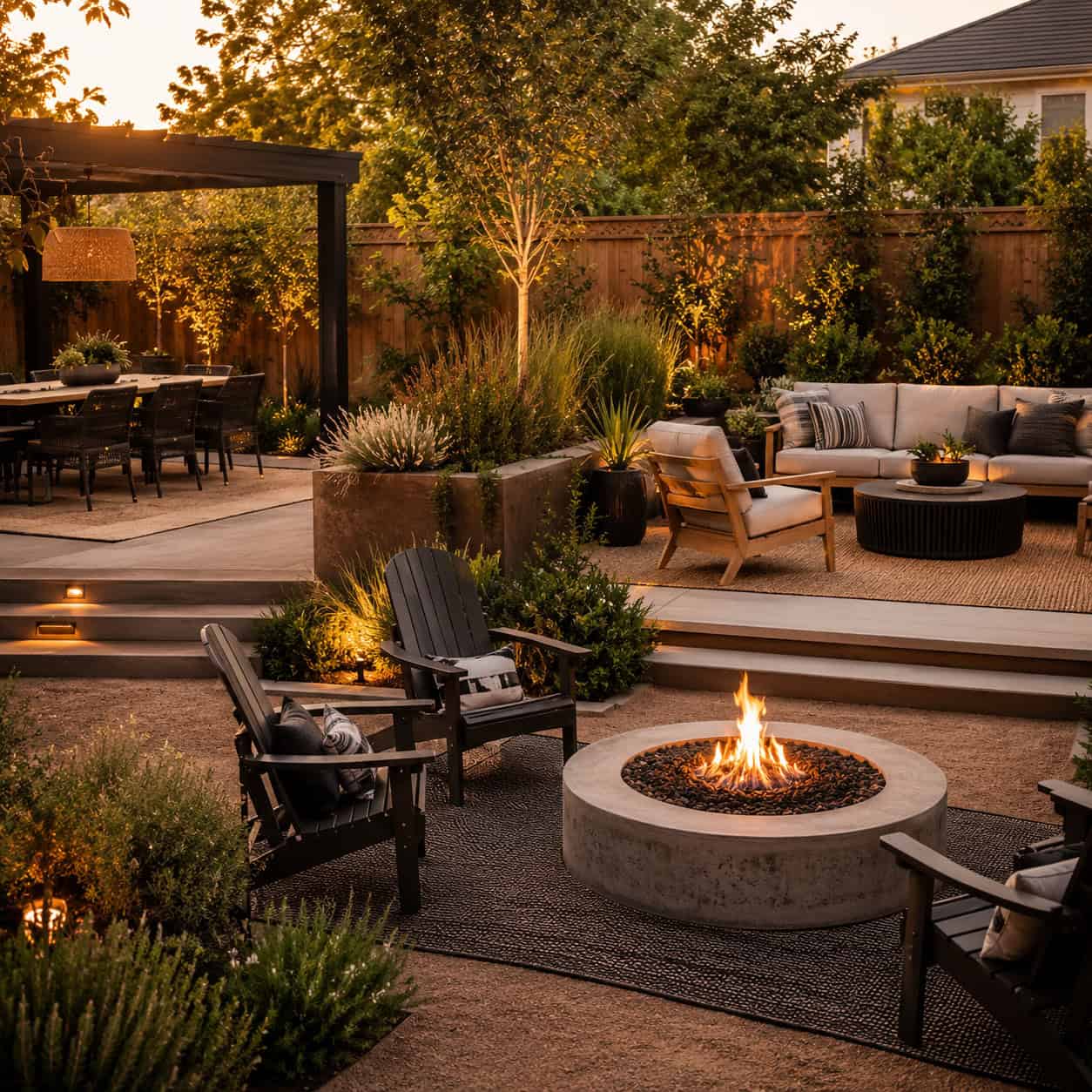
Design the yard like a house. A dining room, a den, a spot by the fire.
Carving the space into a dining zone, a lounge zone, and a fire zone is the core idea that makes the whole thing read as planned rather than poured. Each zone gets its own floor cue, its own light, its own ceiling.
Here’s the part that surprises people: small yards gain the most. Dividing a tight space actually makes it feel bigger, because the eye discovers it in pieces instead of taking it all in at once.
One slab does one thing. Three zones do three.
17. A Change in Level
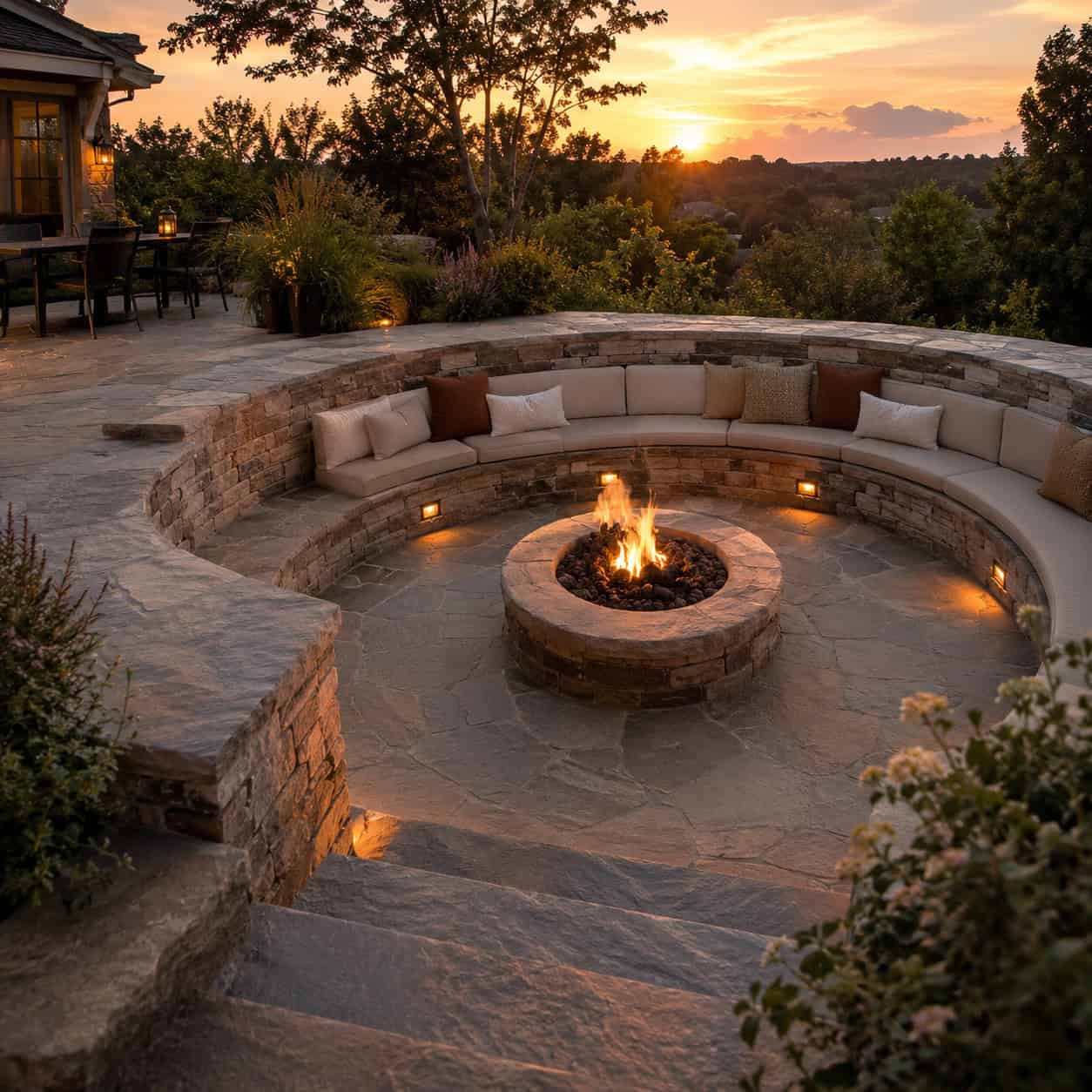
A step does the work of a doorway.
Raise a seating area six to twelve inches, or sink a patio below grade, and you’ve made a spot that feels separate and a little special. The grade change tells anyone walking up that they’re crossing into a new zone.
It’s architecture standing in for a wall. No wall needed.
A sunken fire pit is the classic version — drop the seating a foot and it instantly feels like its own snug room.
18. Soft Textiles — Pillows and Throws

Pillows and blankets do outside exactly what they do inside. They say sit down.
Throw cushions, a basket of throws by the sofa — these are what tip a stiff seating set into something inviting. They also carry color out into a space that’s mostly green and gray.
Go bold with stripes and pattern here. Busy prints have a hidden upside outdoors: they hide the inevitable spill.
Keep a deck box nearby to stash them when the clouds roll in.
19. Outdoor Artwork and Decor Accents
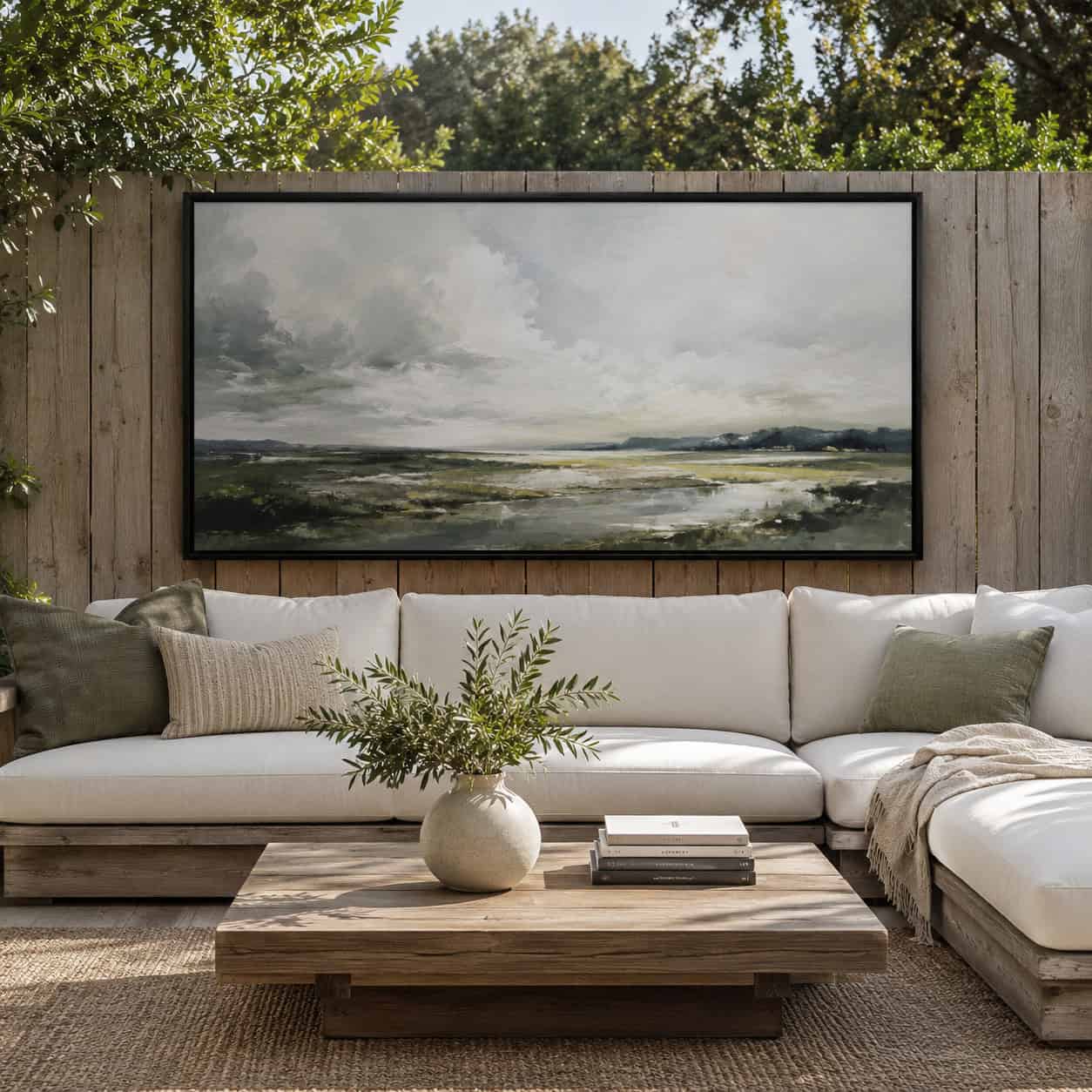
This is the move that makes a setup look finished instead of assembled.
Hang a piece of weatherproof art on a fence or trellis. Add a vase, a stack of outdoor books, a couple of small objects on the coffee table. Suddenly the space reads as permanent and lived-in.
It’s the clearest signal you treated the outside like a room you decorate — not a patch of yard you tidy before company.
A single large piece on a blank fence does more than a dozen small ones. Scale up.
20. One Clear Focal Point
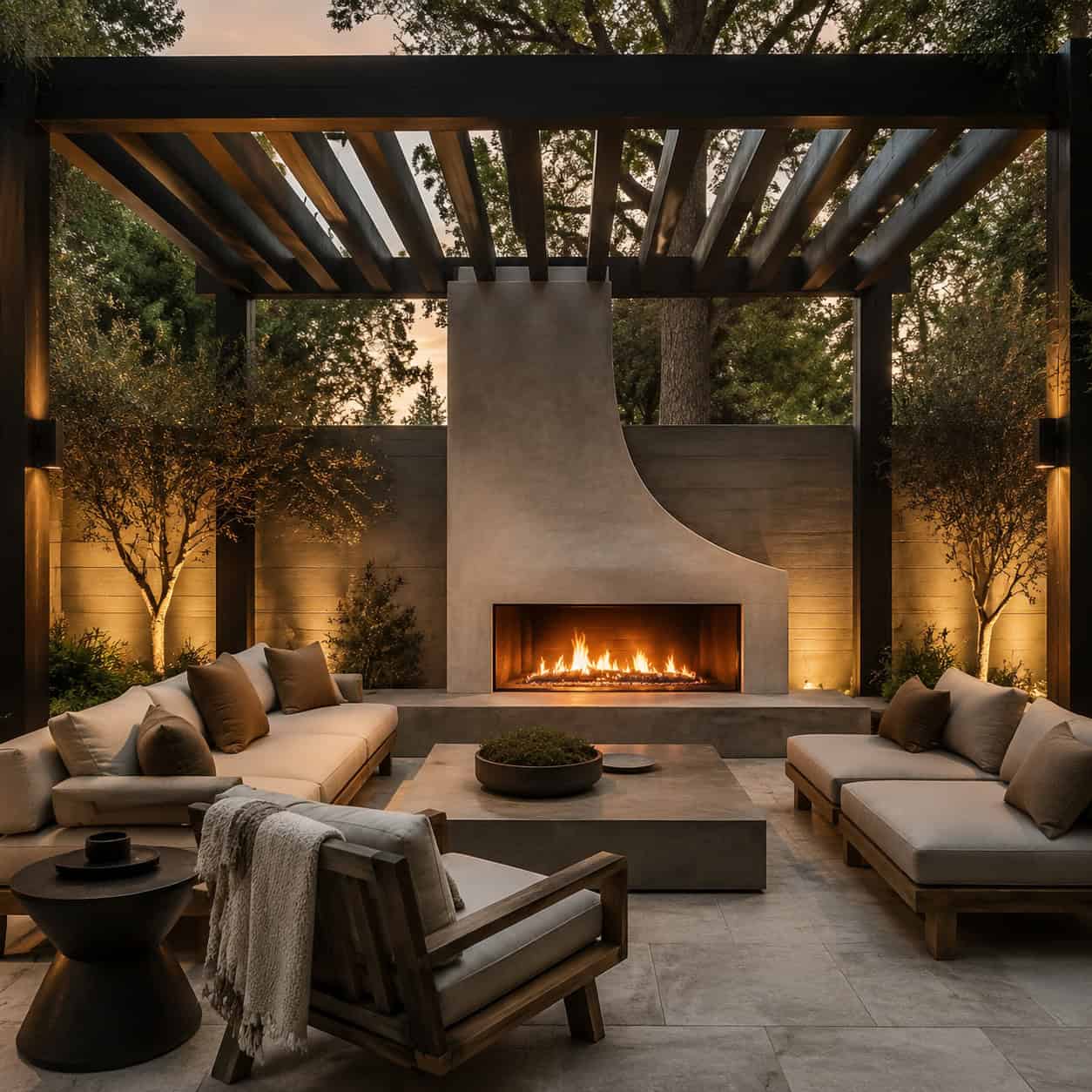
Every real room has something the eye lands on first.
Indoors it’s the fireplace or the window. Outside it might be the fire feature, a pool, a striking pergola, or one oversized piece of art. Pick one and arrange everything else to face it.
That single decision separates a designed space from a pile of nice things bought separately.
If you can’t name your focal point, your guests can’t find it either. Choose one on purpose.
21. Season-Extending Comfort
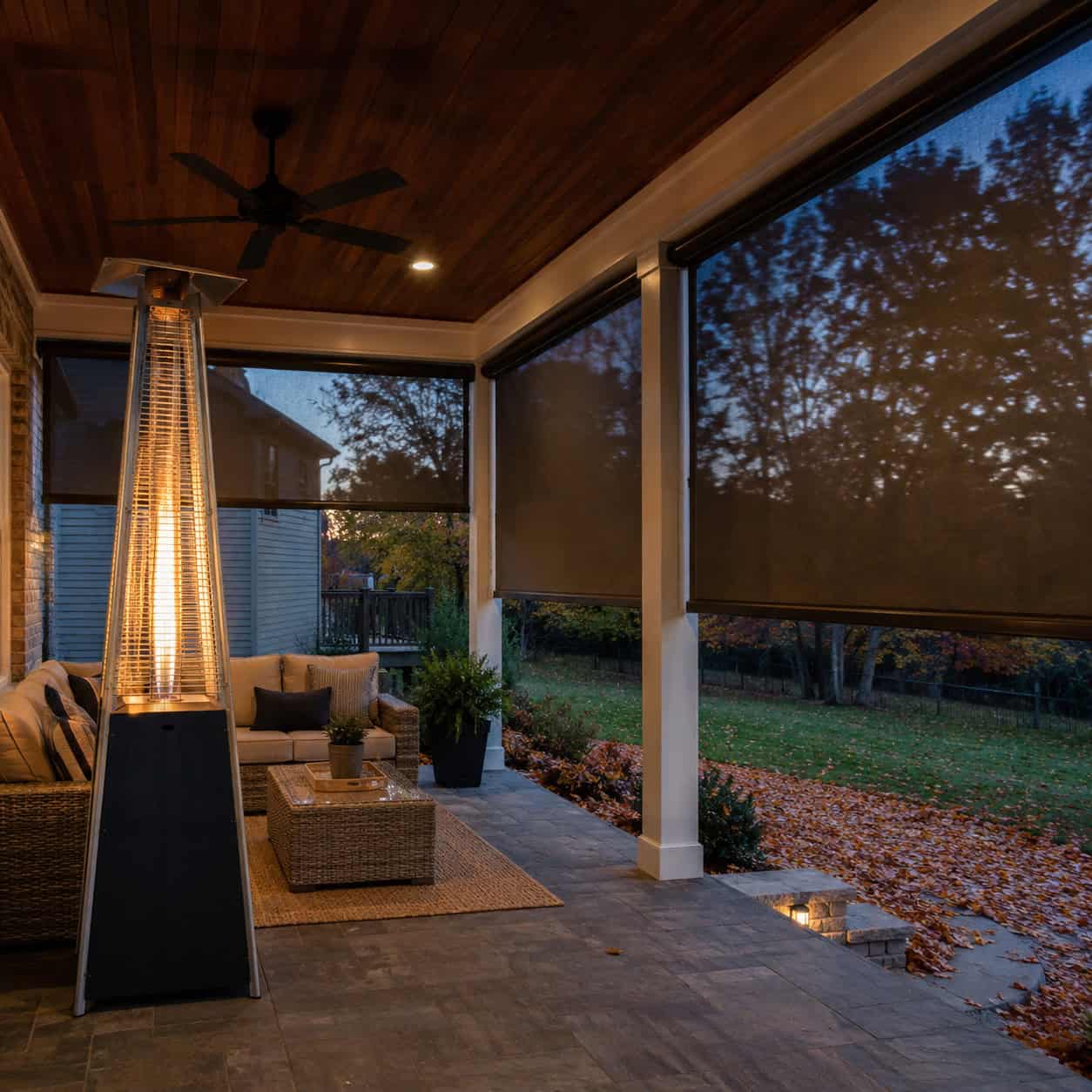
The final test of a real room is whether you use it in October.
Patio heaters, a ceiling fan under the pergola, and retractable screens stretch a three-month patio into a ten-month room. Add integrated heat and screens to a covered structure and the space works as well on a cold clear night as it does in May.
Screens earn their keep twice — bugs out in summer, wind out in fall.
A single freestanding heater changes the math on a chilly evening. People stay an hour longer.
22. An Outdoor TV or Entertainment Setup
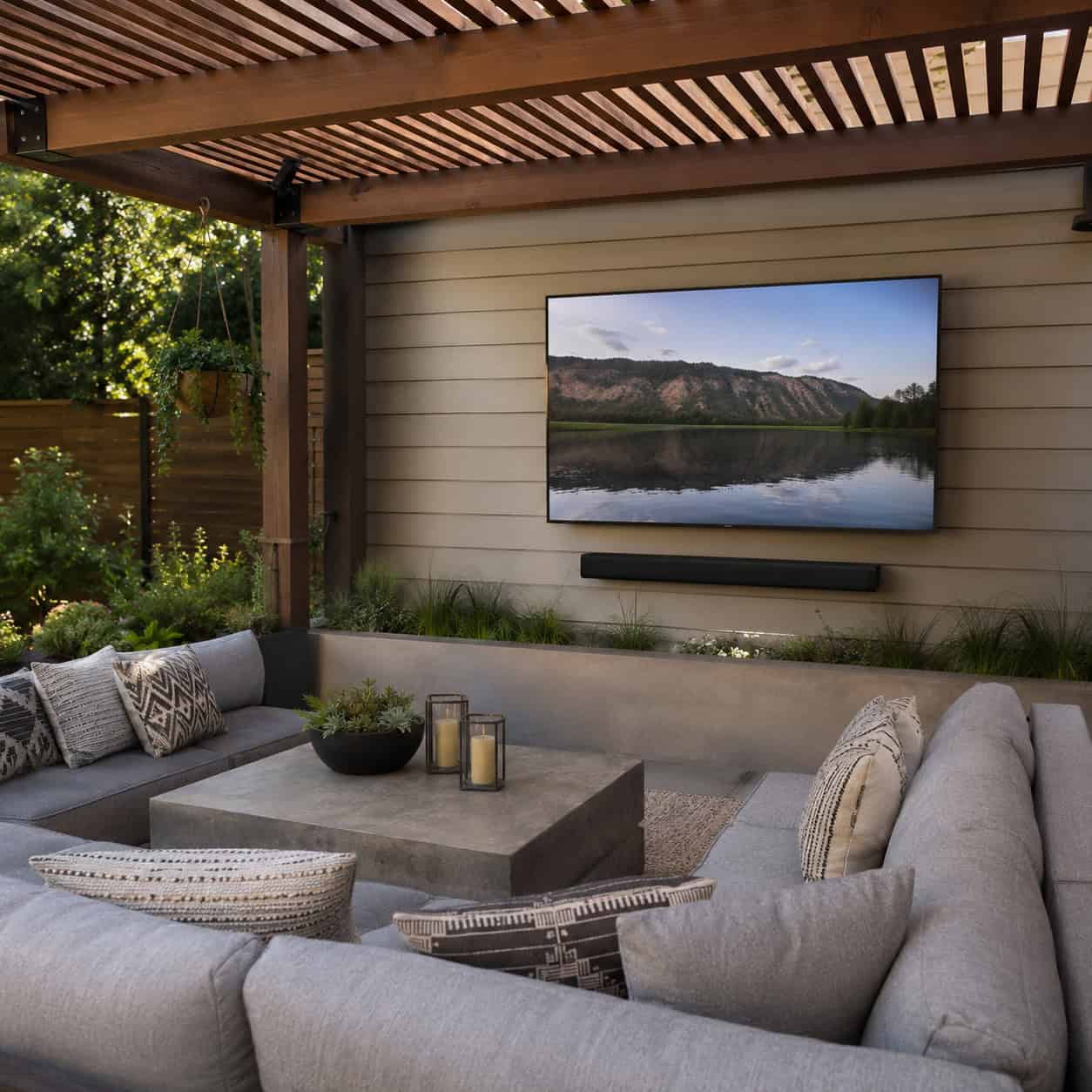
Some people want a den out there, not just a lounge.
Weatherproof TVs and outdoor soundbars — Samsung’s outdoor line is the obvious example — make game day and movie night happen in the yard instead of pulling everyone back inside. The whole crowd stays put.
This one skews toward bigger budgets. A true outdoor-rated screen costs well more than the indoor version, and it needs shade or a covered spot to read in daylight.
Mount it where the afternoon sun won’t wash it out. Under the pergola, facing away from the west.
23. Indoor-Outdoor Doors That Open Wide
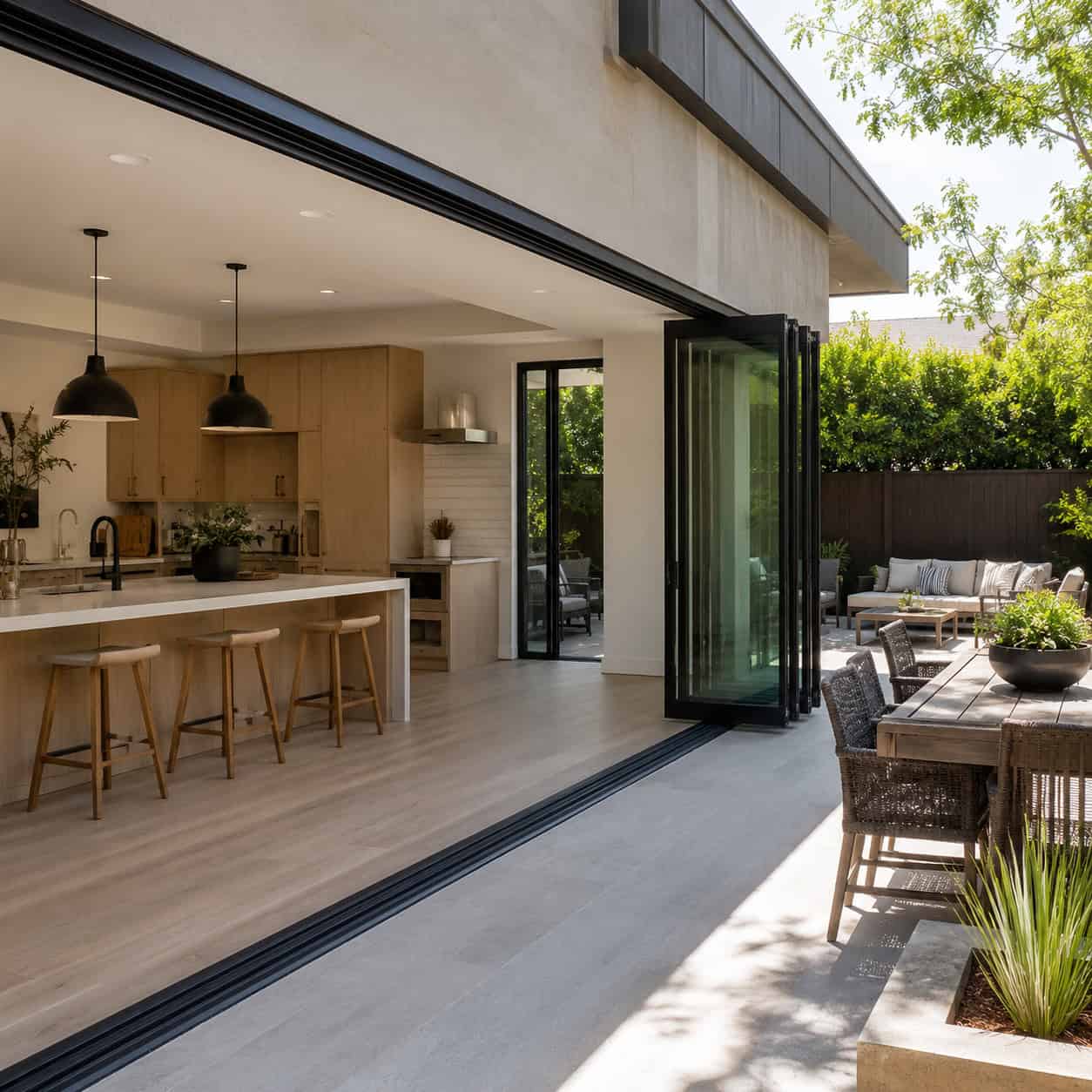
The last wall to erase is the one with the door in it.
Sliding or folding glass walls turn the deck into a genuine extension of the inside. Throw them open and a party flows both directions — kitchen to patio and back — with no bottleneck at a standard door.
This one rides on a renovation budget most people don’t have on hand. But if a remodel is already coming, a wide glass opening is the move that fuses the two spaces for good.
Even a single oversized slider does most of the work. The wall stops being a wall.
Conclusion
None of this requires all 23 at once. Start with a floor, a rug, and something overhead, and the yard already starts behaving like a room.
Add a fire to anchor it. Add light to keep it going after dark. Add a place to set your drink and you’ve crossed the line for good.
The backyard was never short on space. It was short on intention.
Give it edges, a ceiling, and a reason to linger — and you stop going outside to sit. You just go to the next room.