


You’ve got a fence problem. Maybe it’s the neighbor’s chain-link. Maybe it’s a weathered wood panel that’s gone gray and splintery. Maybe it’s just plain ugly and you’re tired of looking at it.
Good news. A fence is the easiest thing in the yard to fix.
Plant the right vine and that eyesore disappears under a wall of green and color, sometimes in a single summer. Some of these climbers scale 20 feet in one season. Others take their time but reward you for years.
A few come with warnings, though. Some are toxic to pets. Some are aggressive enough to swallow your whole yard if you turn your back on them. Those get flagged clearly below, because a beautiful fence isn’t worth a sick dog or a decade-long war with runners.
Here are 26 flowering vines that turn a bad fence into the best-looking wall on the block.
1. Star Jasmine (Confederate Jasmine)

Start here if you want the whole package. Glossy evergreen leaves, dense growth, and a fragrance that stops people mid-sidewalk.
The little white pinwheel flowers show up in late spring and the scent carries for yards. It’s sweet without being cloying.
Give it two growing seasons and it’ll blanket a fence panel top to bottom. After that it mostly takes care of itself. Zones 8 through 10, and it wants a spot with decent sun.
According to Botanical Interests, it’s one of the more forgiving fast climbers for beginners. Hard to argue with that.
2. Carolina Jessamine
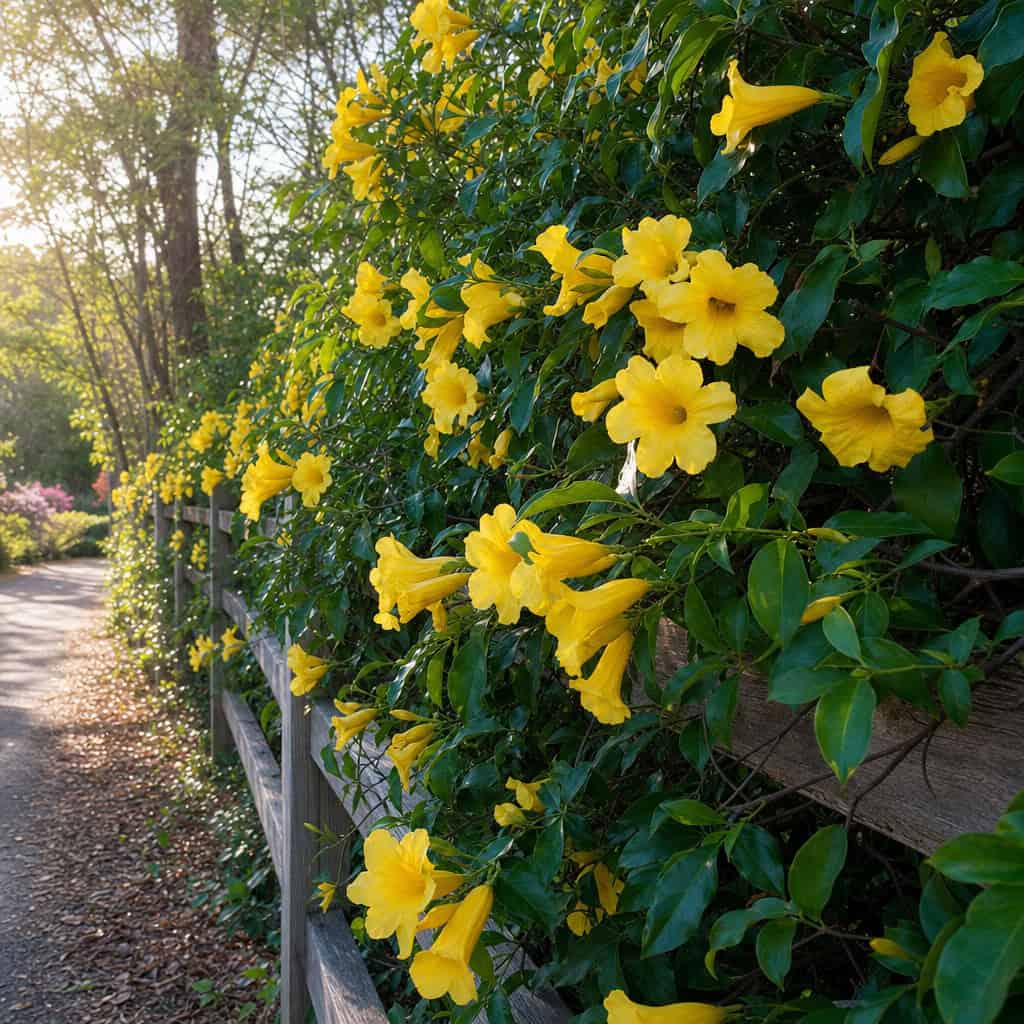
Those butter-yellow trumpets show up in late winter when nothing else is blooming, and the foliage stays glossy all year. It’s gorgeous. It’s also poisonous from root to nectar.
Every part of Carolina jessamine is toxic. The leaves, the flowers, even the sweet-smelling nectar that draws in bees. Dogs, cats, kids, curious anybody — this one doesn’t play favorites.
People have been poisoned mistaking the nectar for honeysuckle. That’s how convincing it looks.
None of that means you can’t grow it. It means you site it carefully. Put it on a back fence, well away from where the dog patrols and the kids play. Never plant it around a chicken run or a rabbit hutch.
If you’ve got a persistent chewer — the kind of dog that gnaws on everything — skip it entirely and pick something safer from this list. There are plenty. The The Plant Ecologist points to native alternatives like coral honeysuckle that give you similar coverage without the risk.
Beautiful, but toxic in every part — site it away from pets and kids.
3. Bougainvillea

Maximum drama for the hottest, driest, most miserable corner of your yard. This one thrives on neglect.
The color isn’t from flowers, technically. Those blazing magenta, orange, and red sheets are papery bracts surrounding tiny white blooms in the center.
Watch the thorns. They’re long, they’re sharp, and they’ll snag your arm every time you walk past.
Keep it off walkways and away from doorways. Zones 9 to 11, full blazing sun. The The Old Farmer’s Almanac notes it actually blooms harder when you stress it a little with less water.
4. Mandevilla

Tropical color anywhere, even where winters would kill it. Just grow it as an annual and start fresh each spring.
Big trumpet flowers in pink, red, or white against dark glossy leaves. It’ll shoot up 6 to 10 feet in one warm season.
The tendrils twine gently instead of clawing in, so they won’t wreck your fence. Nice bonus if it’s a rental or a shared property line.
One thing to know. The milky sap is mildly toxic and can irritate skin, so wear gloves when you prune and keep pets from chewing the stems.
5. Clematis
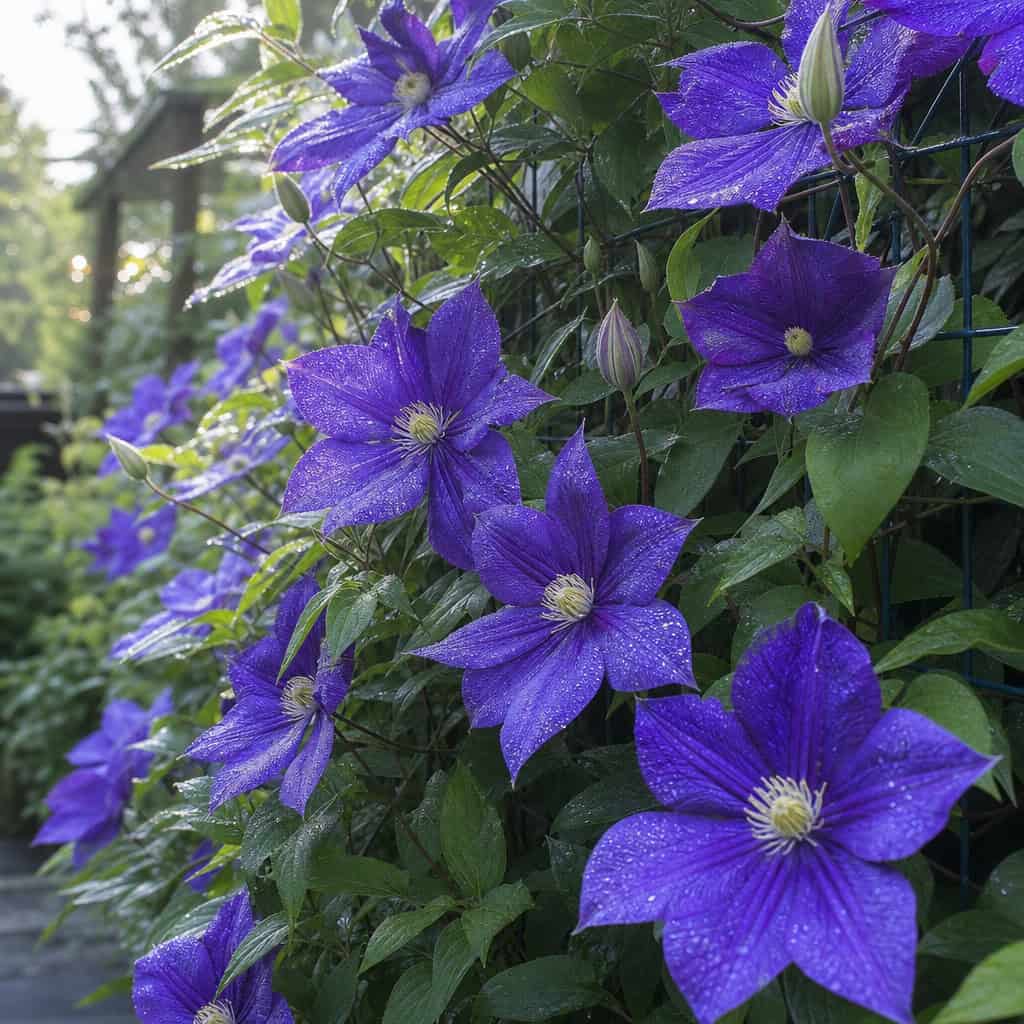
They call it the Queen of Climbers, and it earns the title. Some varieties rocket to 30 feet in a few months.
Color? Every one you can name. Deep purple, snowy white, candy pink, bicolor stripes. Big saucer blooms or dainty bells, your pick.
The old rule holds: cool feet, warm head. Mulch the roots and let the vine climb into sun.
For pet owners, a heads-up. Clematis contains an irritating compound that causes drooling, vomiting, and diarrhea if a pet eats it, per the ASPCA. The bitter taste usually stops them after a nibble, but keep an eye on the chewers.
6. Coral Honeysuckle

The honeysuckle you actually want. Not the Japanese kind that eats highways.
This native scrambles up a fence fast, holds semi-evergreen leaves through winter in mild zones, and pumps out clusters of coral-red tubular flowers that hummingbirds can’t resist.
It behaves itself. That’s the whole point. Japanese honeysuckle is a nightmare invasive in much of the country, and this one gives you the same look without smothering your neighborhood.
Zones 4 through 9. Fine Gardening lists it as a top native swap for exactly that reason.
7. Crossvine
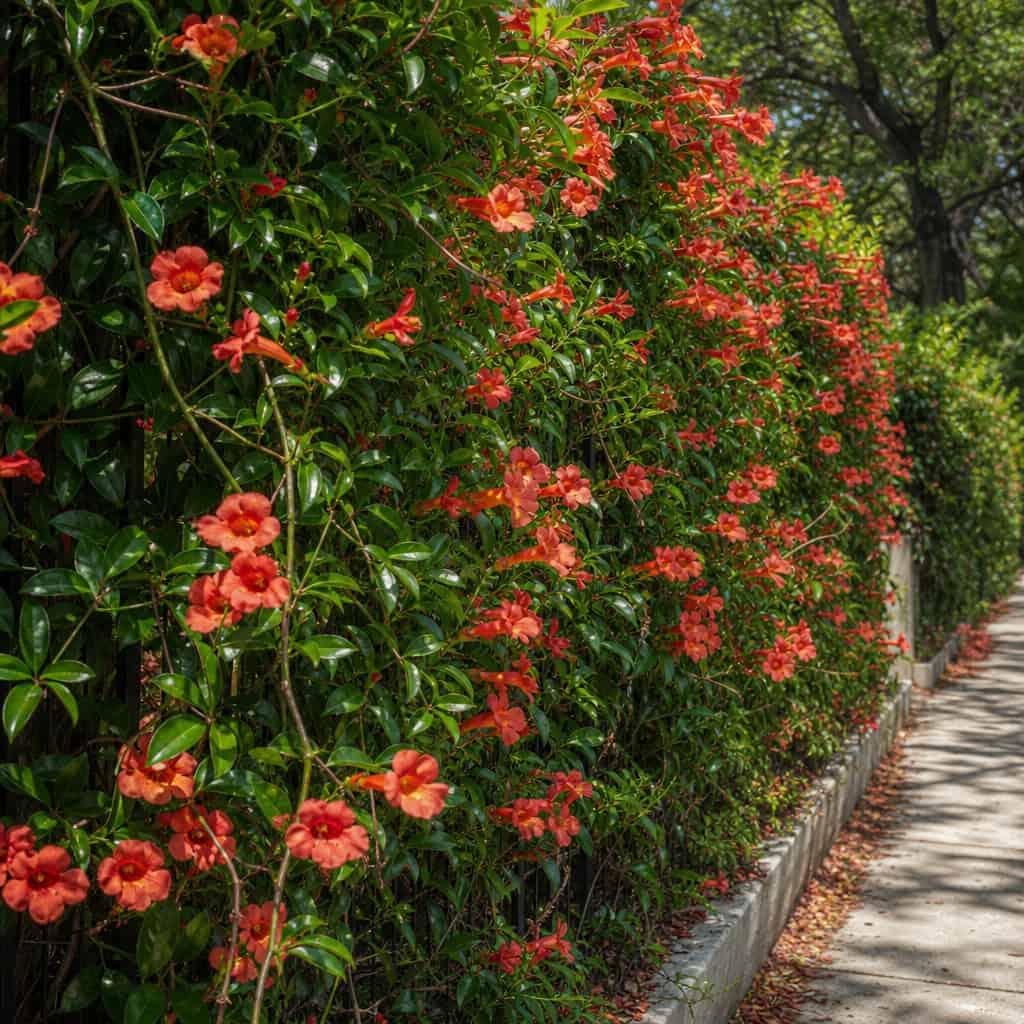
A native workhorse that clings by little tendrils tipped with sticky pads. It grips a fence and doesn’t let go.
Orange-red trumpets cover it in spring, and the foliage stays green or nearly so through winter down South.
It’ll cover a fence in a season or two. Think of it as the flowering answer to English ivy — same dense coverage, way better manners, and it won’t wreck your mortar or siding.
Zones 5 to 9. Full sun gives you the most flowers.
8. Trumpet Vine (Trumpet Creeper)
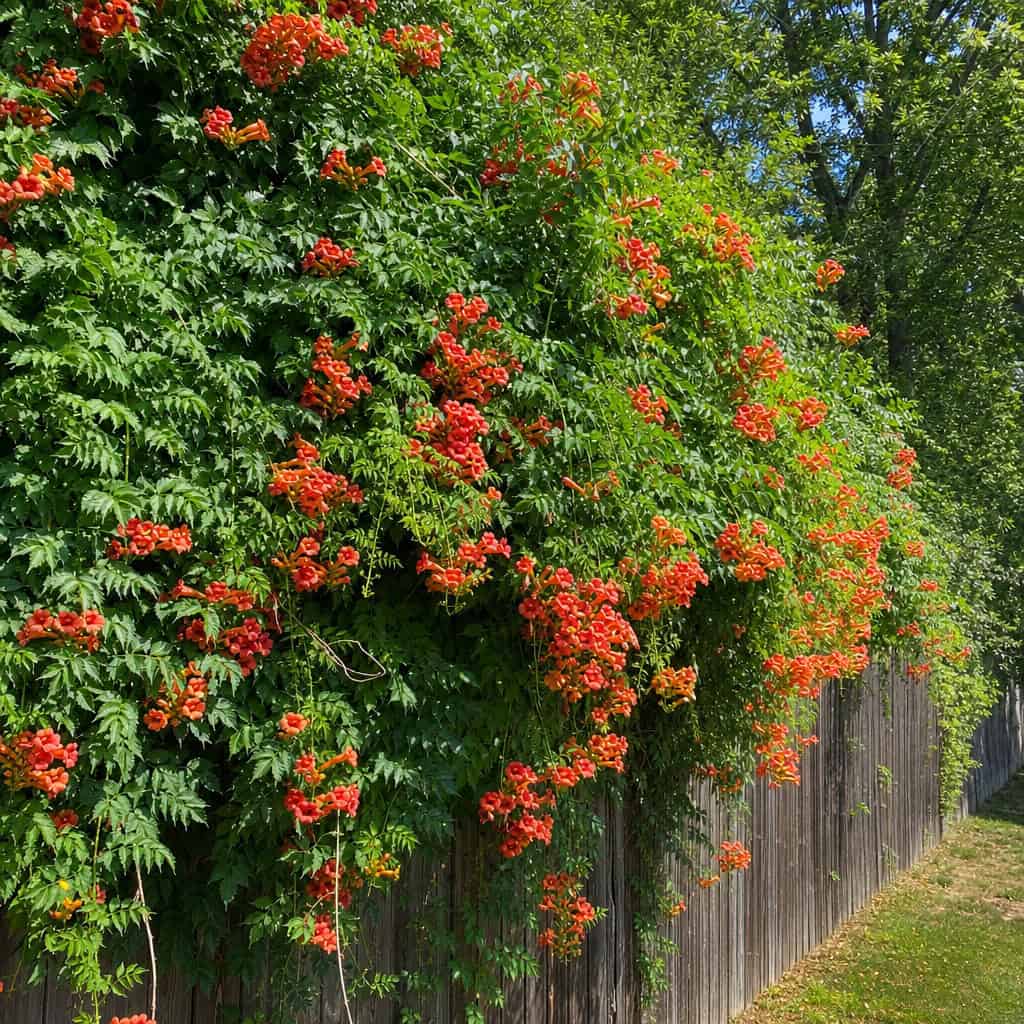
The speed champion. Nothing else on this list touches 30 to 40 feet in a single season.
The orange-red trumpets are spectacular and the hummingbirds go wild for them.
But be honest with yourself before you plant it. This thing spreads by root suckers, popping up feet away from where you put it, and it’s considered invasive in some areas.
Plant it against a strong fence with a mowed strip on both sides to catch the runners. And check with your local extension office first — some regions want you to avoid it entirely. Zones 4 through 9.
9. American Wisteria
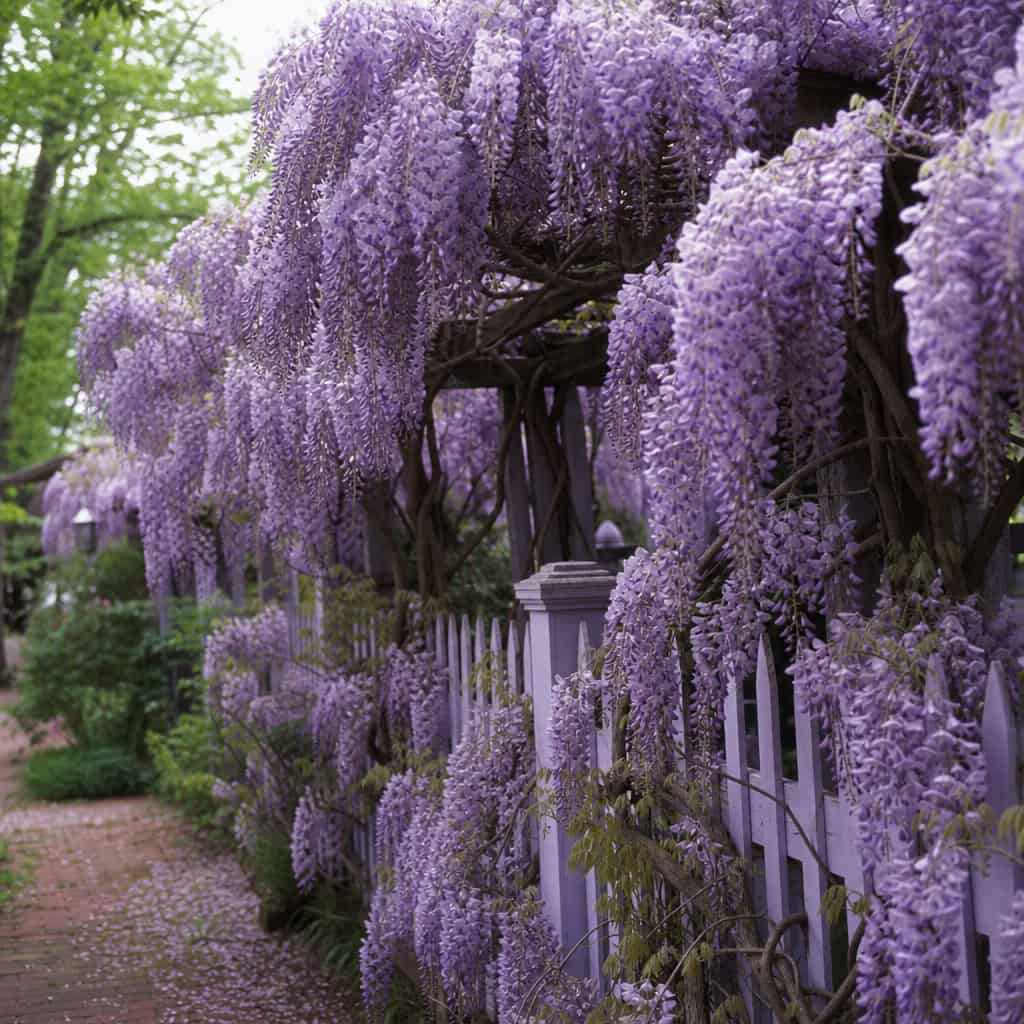
You’ve seen those dreamy lilac cascades draped over pergolas. You’ve also probably heard horror stories about wisteria ripping gutters off houses and crushing arbors.
Here’s the fix: plant the native. American wisteria gives you the same romantic drooping clusters, just on a smaller, far better-behaved plant.
The imported Asian species — Chinese and Japanese wisteria — are the monsters. They twine with brute force, grow 30 to 60 feet, and have gone invasive across the Southeast. American wisteria stays more like 15 to 30 feet and doesn’t try to eat your house.
Check the label carefully at the nursery, because they’re often mixed up. Native varieties like ‘Amethyst Falls’ bloom young and rebloom through summer.
One serious caution for pet families. Every wisteria — native or not — has toxic seeds and pods. According to the ASPCA, eating them causes vomiting and diarrhea, sometimes severe.
Those seed pods dangle at nose height and dogs love to grab things off the ground. Rake up the pods as they drop. Zones 5 to 9.
Choose the native — and keep the pods away from pets.
10. Passionflower (Passionvine)

Nothing else looks like it. The flowers are these intricate, alien-looking wheels of purple and white fringe, like something built by hand.
And it’s easy. Fast, undemanding, hitting 20 feet on a fence without much fuss.
Butterflies love it too — several species lay eggs on the leaves, so expect caterpillars, which is a good thing. Some varieties even give you edible fruit.
Zones 6 to 10. The exotic look, none of the exotic difficulty.
11. Climbing Hydrangea
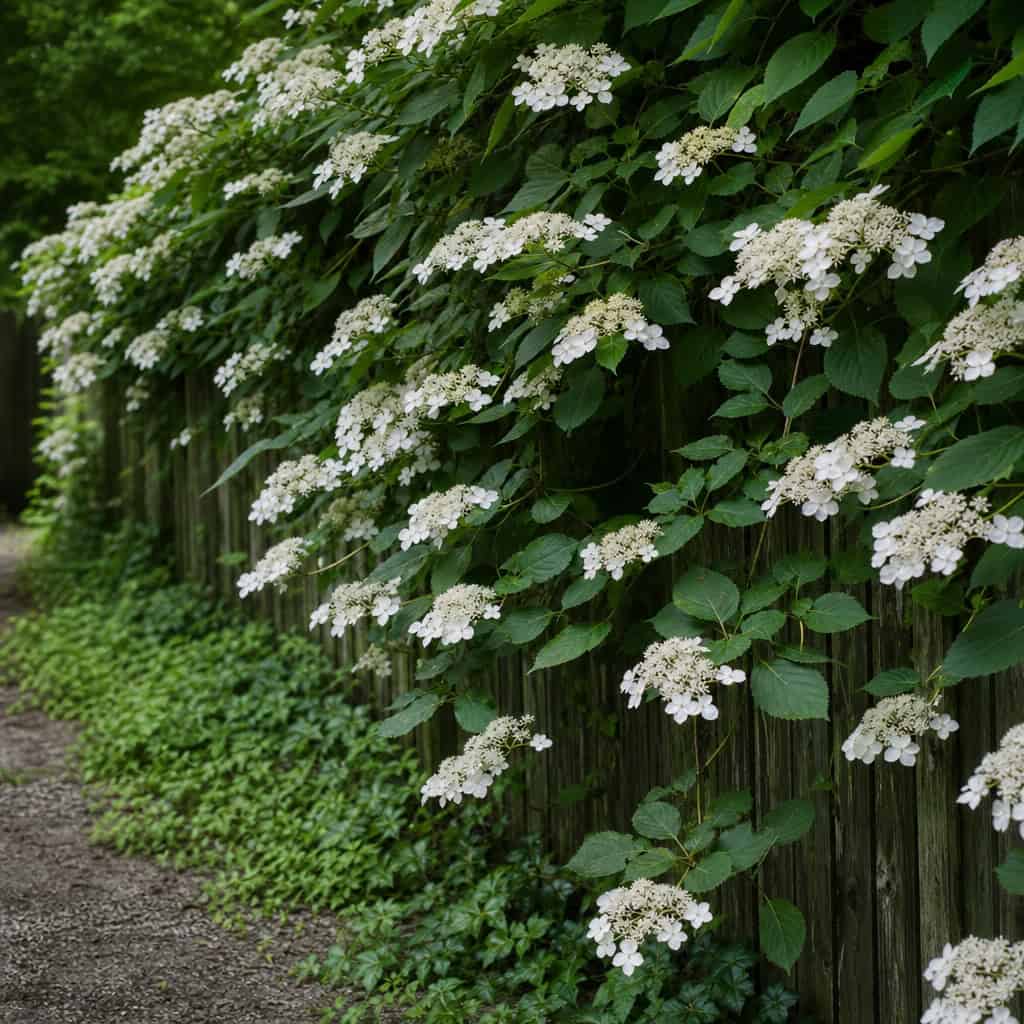
This is the patience play. It sits there doing almost nothing for the first year or two, and then it takes off.
Once established, it climbs up to 50 feet and blankets huge areas with lacy white flower clusters.
Best of all, it’s your shade solution. Where sun-lovers sulk and refuse to bloom, climbing hydrangea thrives against a north-facing fence.
Zones 4 to 8. Plant it, ignore it, and wait. The payoff comes.
12. Climbing Roses
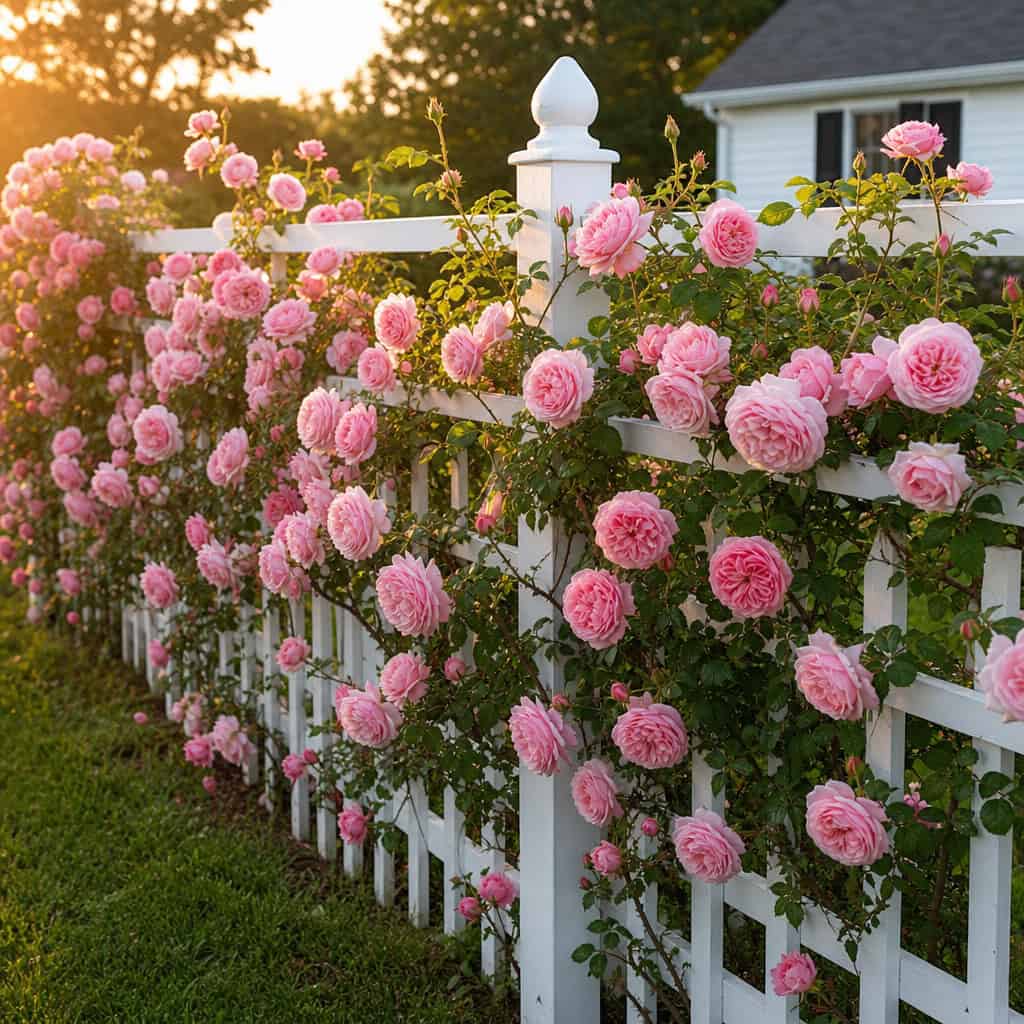
The classic. Nothing says cottage garden like roses spilling over a fence.
Here’s a trick most people miss. Train the main canes sideways, horizontally along the fence, instead of letting them shoot straight up.
Horizontal canes force out way more flowering side shoots, so you get blooms along the whole length instead of just at the top. It’s the single biggest thing you can do for coverage.
Tie them loosely with soft ties as they grow. Zones 5 to 9, full sun, and give them good airflow to fend off disease.
13. Sweet Autumn Clematis
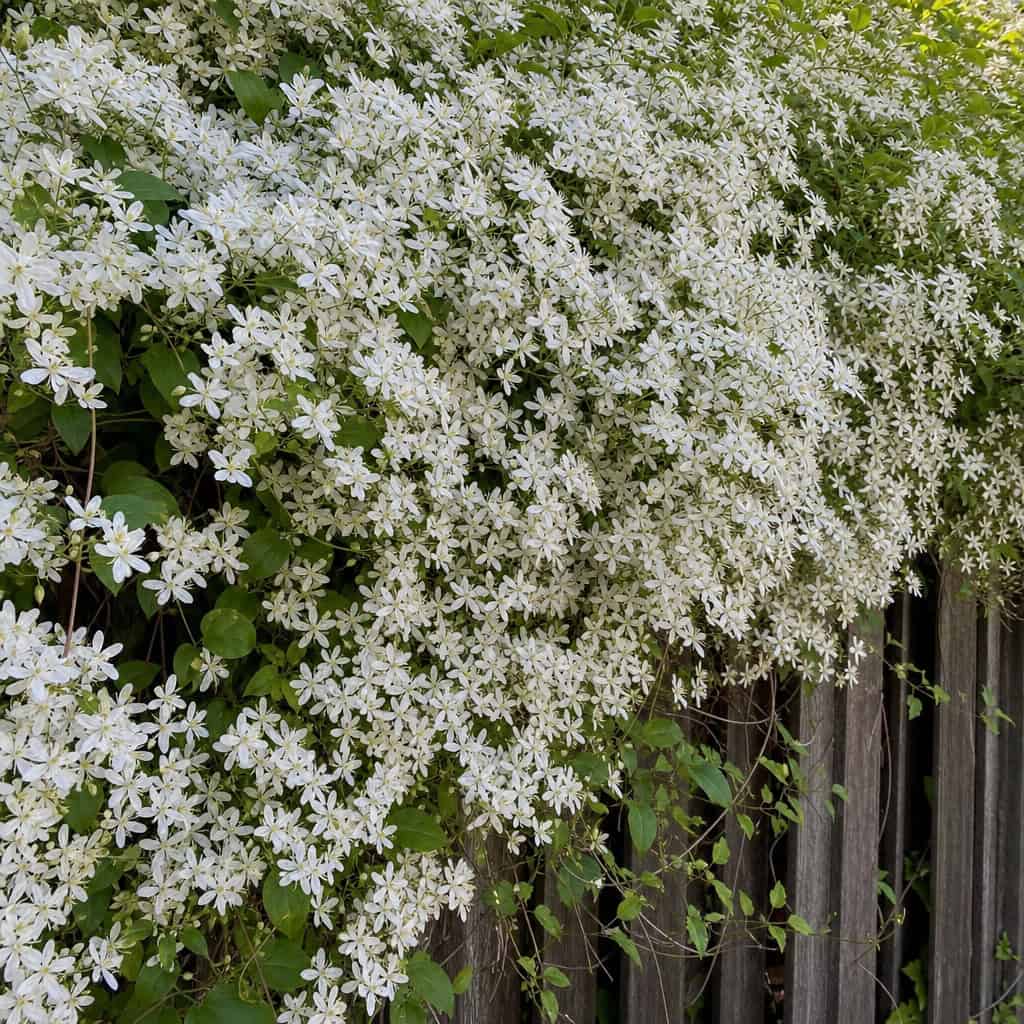
Late summer, when everything else is winding down, this one explodes into a froth of tiny fragrant white stars. The scent is honey-sweet and it covers a fence in weeks.
That vigor comes at a price. It self-seeds enthusiastically and is considered invasive in a good number of states.
If you plant it, cut it back hard each year and deadhead before it sets seed. Or better yet, check whether it’s a problem where you live before you commit.
Zones 4 to 9. Gorgeous, but keep it on a short leash.
14. Winter Jasmine
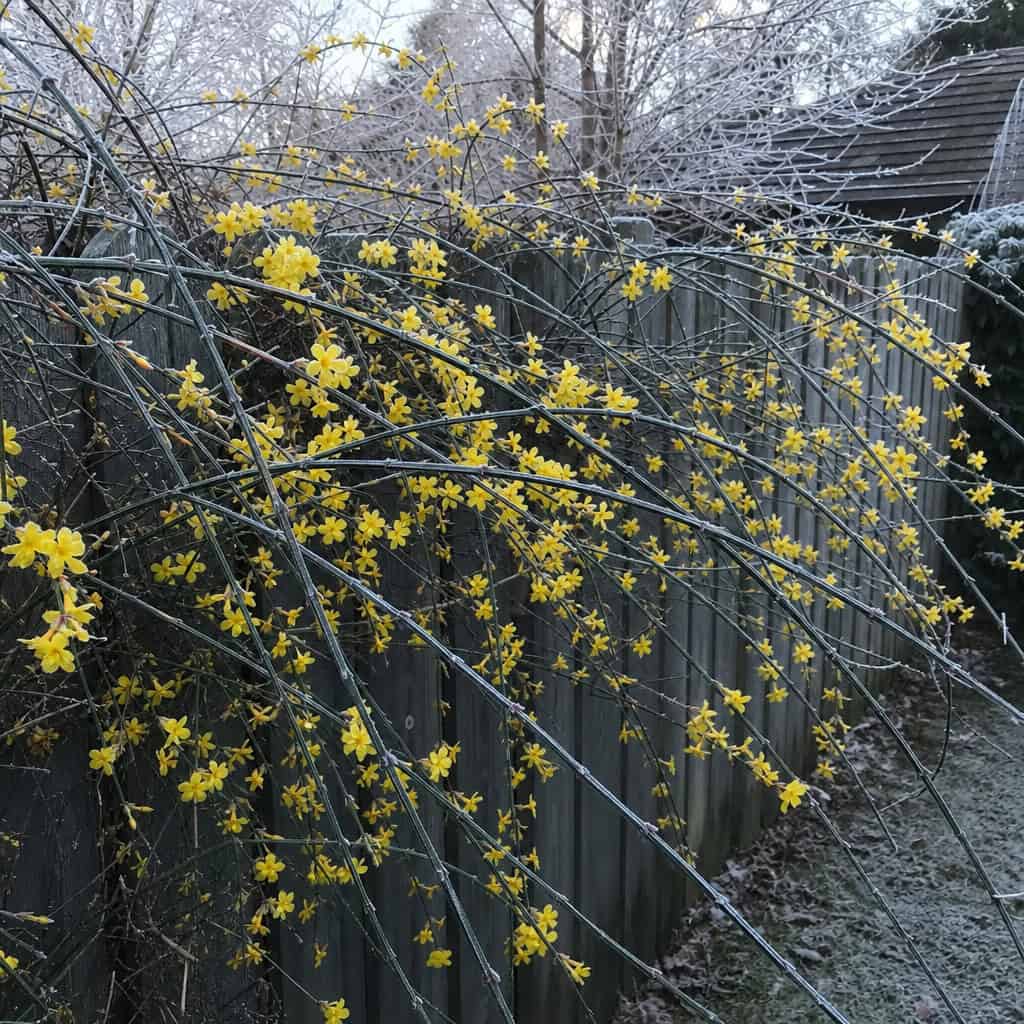
The off-season surprise. Cheerful yellow flowers open in late winter and early spring, on bare stems, while the rest of the garden is still asleep.
It’s more of a shrubby, arching viner than a true clinger, so you’ll want to tie it to the fence.
No fragrance to speak of, unlike its cousins. But that burst of yellow in February is worth the trade. Zones 6 to 10.
15. Dutchman’s Pipe

Want a solid green wall you can’t see through? This is your densest privacy screen.
The leaves are enormous, heart-shaped, and overlap like shingles. A mature vine turns a fence into a living hedge.
Then there are the flowers. Small, curved, and shaped exactly like an old smoking pipe — a genuine conversation piece tucked among the leaves.
It’s vigorous and wants room. Zones 8 to 10 for most species.
16. Cape Honeysuckle
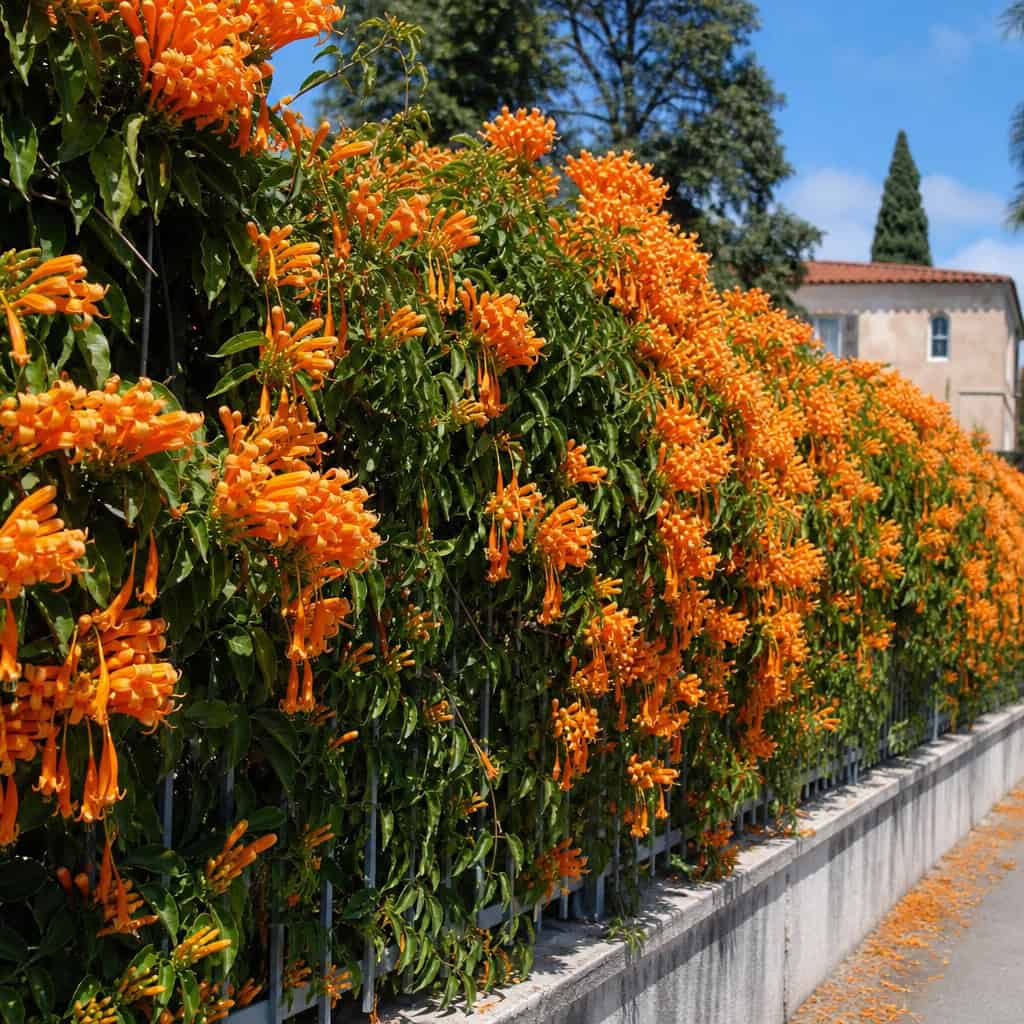
Warm-climate gardeners, this one’s for you. Zone 8 and up guides recommend it for rapid, reliable fence coverage.
Blazing orange tubular blooms cover it for months, and the hummingbird traffic is nonstop.
It’s semi-evergreen and grows more like a sprawling shrub, so guide it onto the fence and keep it trimmed. Left alone it wants to be a big loose mound.
Zones 9 to 11. Heat and drought don’t faze it.
17. Morning Glory
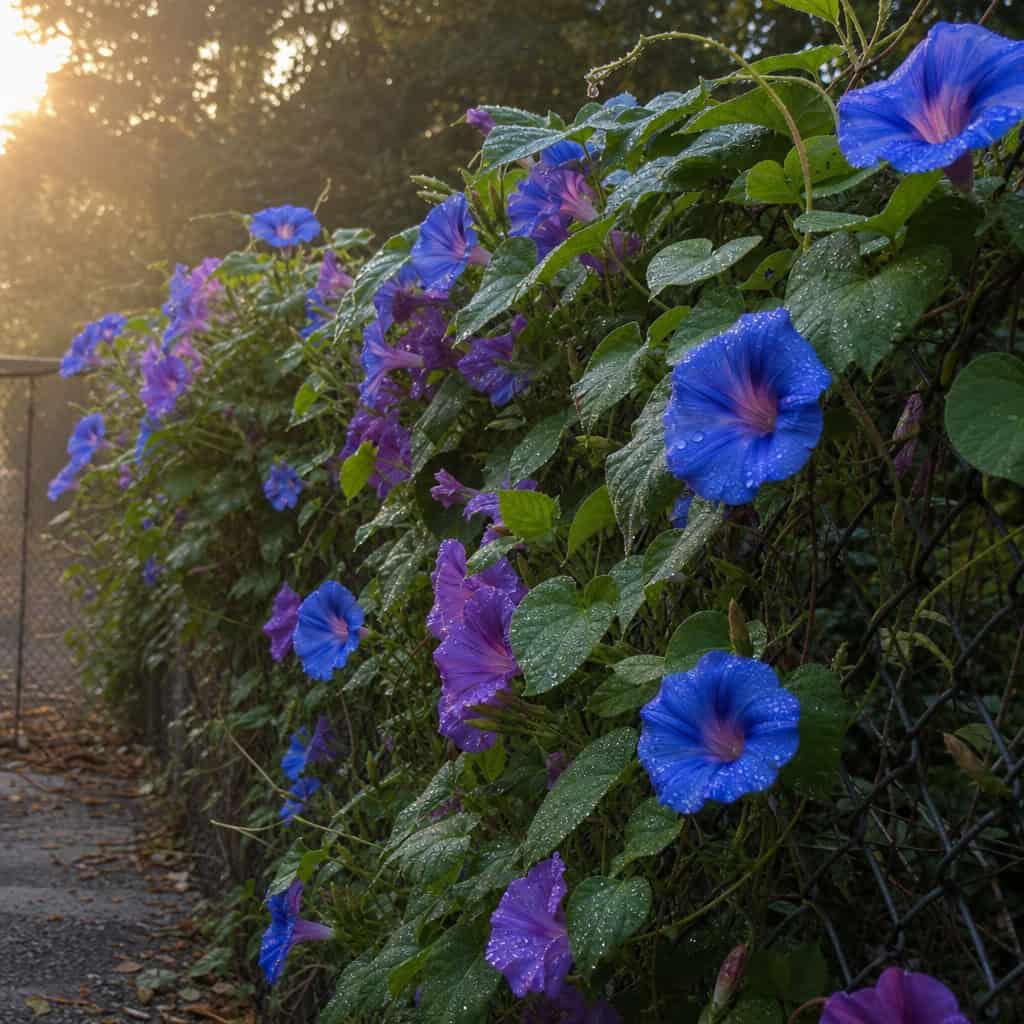
Few vines cover ground this fast from a packet of cheap seed. Sow it in spring and by midsummer you’ve got a fence draped in blue, purple, and pink funnels that open with the sunrise.
That speed is the whole appeal — and the whole problem.
Morning glory reseeds itself so freely that it’s classified as invasive in parts of the country, showing up in cracks and beds for years after you planted it. In some agricultural areas it’s an outright weed. Check with your local extension office before you scatter seed.
Pet owners, take note too. The seeds are toxic to dogs and cats, and eating a bunch can cause vomiting, diarrhea, and even hallucinations. Those seeds form after every flower fades, and they drop right where a curious dog can find them.
If you grow it, deadhead the spent flowers before pods form. That cuts down on both the reseeding and the risk. Grown as an annual, it works in all zones.
Fast and cheap, but reseeds aggressively and the seeds are toxic — deadhead and check locally.
18. Moonflower

Morning glory’s night-shift cousin. As the sun goes down, huge white saucer-shaped flowers unfurl and release a heavy sweet perfume that fills the whole yard after dark.
Watching one open in real time is oddly mesmerizing — it happens fast enough to see. Plant it near a patio or evening sitting spot. It’ll reach 20 feet in a season.
But this is a serious one for pet families. Every part of the moonflower is toxic — leaves, stems, flowers, and especially the large seeds.
Ingestion can cause dilated pupils, rapid heartbeat, disorientation, and worse in dogs and cats. The seeds are the biggest danger because they’re big enough to tempt a chewing dog and potent enough to do real harm.
If you’ve got pets who graze, either skip this one or plant it high and well out of reach, and collect the seed pods before they fall. Annual in most areas, tender perennial in zones 9 to 11.
Stunning night bloomer, but all parts are toxic — the seeds most of all. Site with care.
19. Cup and Saucer Vine

The single fastest flowering climber from seed for that all-important first-year coverage. Up to 20 feet in one warm summer.
The blooms are the fun part. Bell-shaped “cups” sitting in a leafy green “saucer,” and they shift color as they age, opening pale green and deepening to rich purple.
It climbs by grabbing tendrils, so it needs something to grip. A little netting or wire on a solid fence does the trick.
Annual in cold climates, tender perennial in zones 9 to 10.
20. Hyacinth Bean Vine
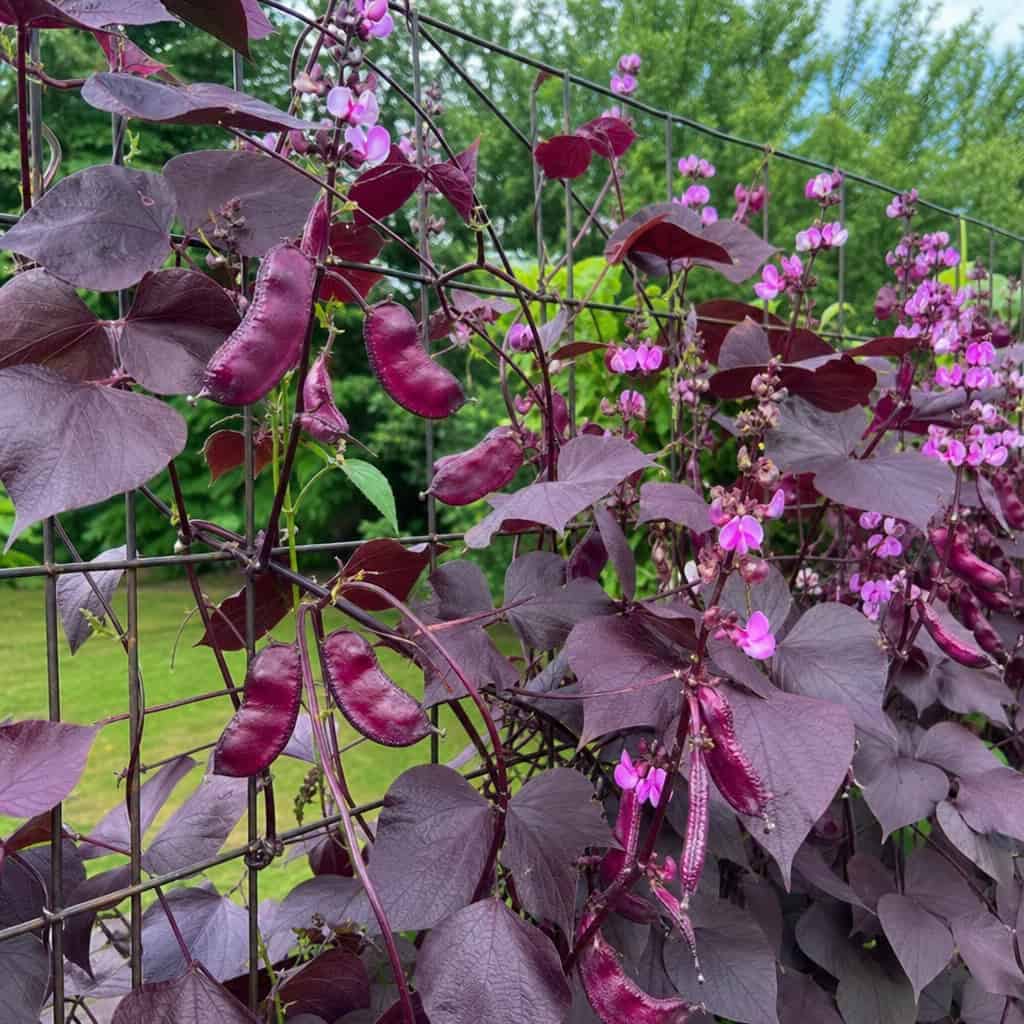
Four seasons of interest packed into one annual. Purple-tinged stems, wine-colored leaves, rosy-purple pea flowers, then glossy magenta seed pods that look almost fake.
It’ll cover a 20-foot trellis in a single season, no problem.
One caution before anyone gets ideas. The raw pods and seeds are toxic and must be cooked before eating — never nibble them off the vine, and keep them away from pets and kids.
Grown as an annual, it works everywhere. Just plant it for the show, not the snack.
21. Black-Eyed Susan Vine
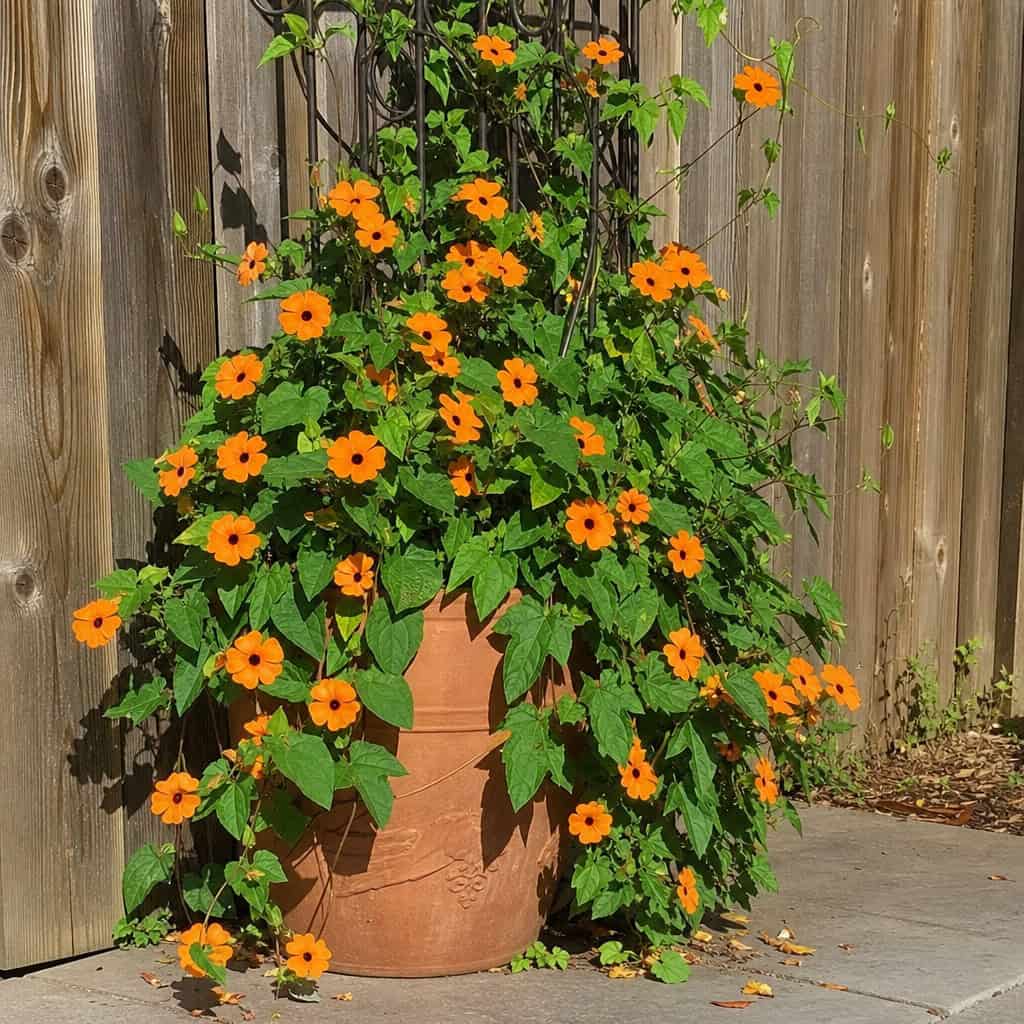
Nonstop cheer. This one just keeps cranking out bright orange flowers with dark chocolate centers from spring straight through to frost.
It’s smaller than most on the list, topping out around 5 to 8 feet, which makes it perfect for a container parked at the base of a fence.
Fill a pot, set a bit of trellis behind it, and let it scramble up. Instant color where you need it.
Annual in most spots, tender perennial in zones 10 and 11.
22. Scarlet Runner Bean

Double duty for the edible-landscaping crowd. It’s an heirloom that dresses your fence in vivid scarlet flowers, then hands you a crop of edible beans.
Fast, too — 6 to 15 feet of coverage in a season, straight from seed.
The flowers pull in hummingbirds and pollinators, and the young beans are good in the kitchen. Pretty and productive at the same time.
Grown as an annual, best in zones 7 to 11. Give it a string or trellis to twine up.
23. Cypress Vine
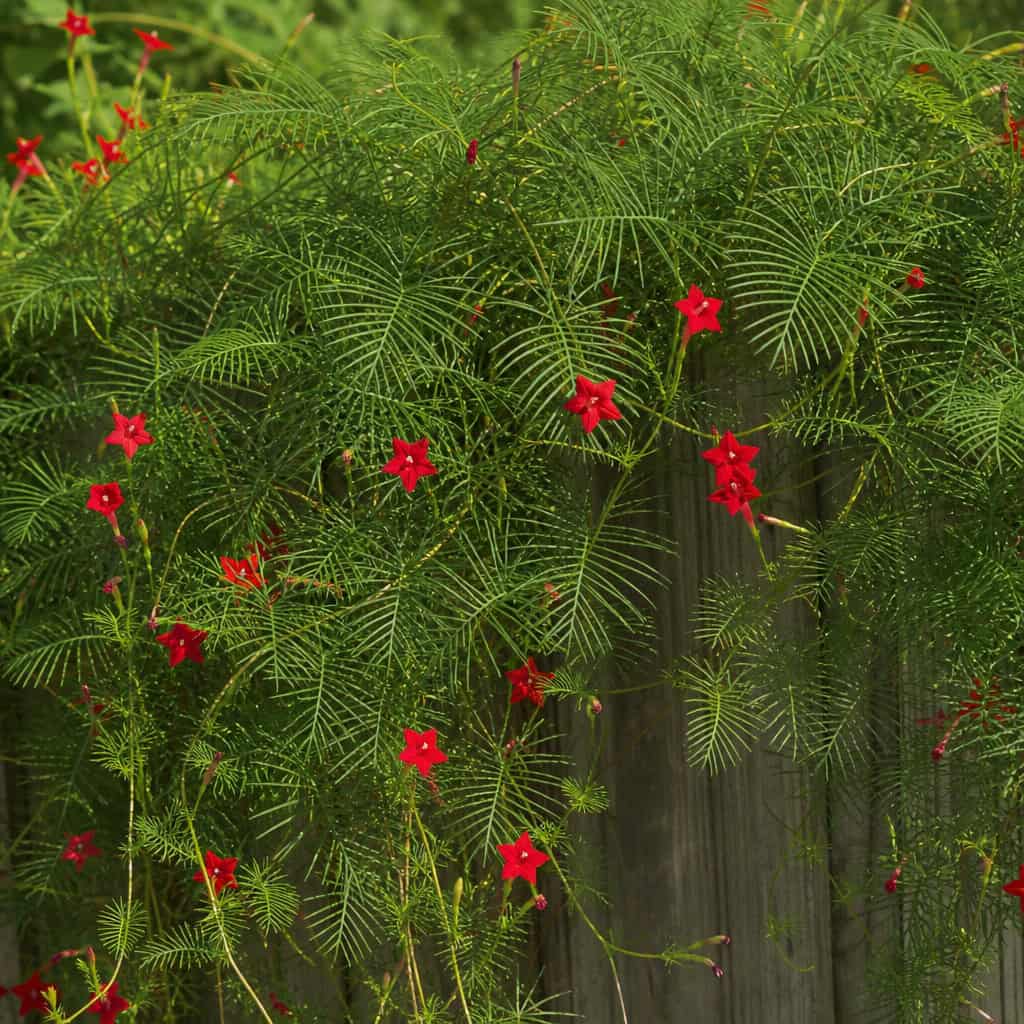
The most delicate texture on the list. Feathery, fern-like foliage so fine it looks like green lace against the fence.
Then come the tiny scarlet stars, and the hummingbirds arrive like clockwork.
It grows fast and covers well through summer. One note for pet owners — it’s labeled poisonous, so keep grazing dogs and cats away from it.
Annual, easy from seed once the soil warms up.
24. Purple Bell Vine (Rhodochiton)

The oddball, in the best way. Slender stems dangle little dusky-purple bells, each one hanging on a long stalk like a lantern.
Up close they look almost artificial, they’re so precise. It’s a great pick when you want something nobody else on the block has.
It grows quickly through summer and looks fantastic spilling down over a fence top. Annual in most zones, tender perennial in 9 to 11.
25. Sweet Peas

Plant these for the smell alone. Old-fashioned sweet peas throw out ruffled pastel blooms with a perfume that’s pure nostalgia.
They climb to about 8 feet and look right at home on a cottage-style fence. Cut armfuls for the kitchen table and they’ll keep making more.
The catch is timing. Sweet peas want cool weather and full sun, so sow them early — they fade fast once summer heat sets in.
Cool-season annual. Worth planning around.
26. Snail Vine (Corkscrew Vine)

Last one, and it’s a curiosity. The flowers coil into tight little spirals, like snail shells, in shifting shades of lavender, cream, and purple.
They’re fragrant too, and vigorous growers in heat and humidity where a lot of vines struggle.
Perennial in warm zones, grown as an annual anywhere colder. A fun alternate if you’ve got a hot, sticky yard and want something people will stop to look at.
Picking the Right One
Fast doesn’t have to mean reckless. The annuals — morning glory, cup and saucer vine, hyacinth bean — give you a covered fence in one summer while the perennials get established underneath.
For coverage that lasts years, lean on the natives: coral honeysuckle, crossvine, American wisteria. They behave, they feed the pollinators, and they won’t turn on you.
Just read the flags before you plant. If you’ve got a dog that chews or kids who wander, steer clear of Carolina jessamine, moonflower, and wisteria pods, and think twice about morning glory seeds.
Get it right and that ugly fence becomes the thing people compliment instead of the thing you apologize for.