


Most flowering shrubs give you a week. Maybe two. You wait all spring, they explode for a long weekend, and then they’re green lumps until next year.
That’s a bad trade.
The shrubs on this list work differently. They flower for months — some from late spring straight through the first hard frost — and most of them ask for almost nothing in return. No deadheading. No fussing. A quick cutback in early spring at most.
A few of them are toxic to dogs and cats, and those get a clear warning so you can plant with your eyes open. The rest are safe.
Here are 22 flowering shrubs that bloom for months and forgive you the rest of the year.
1. Rose of Sharon (Hibiscus syriacus)
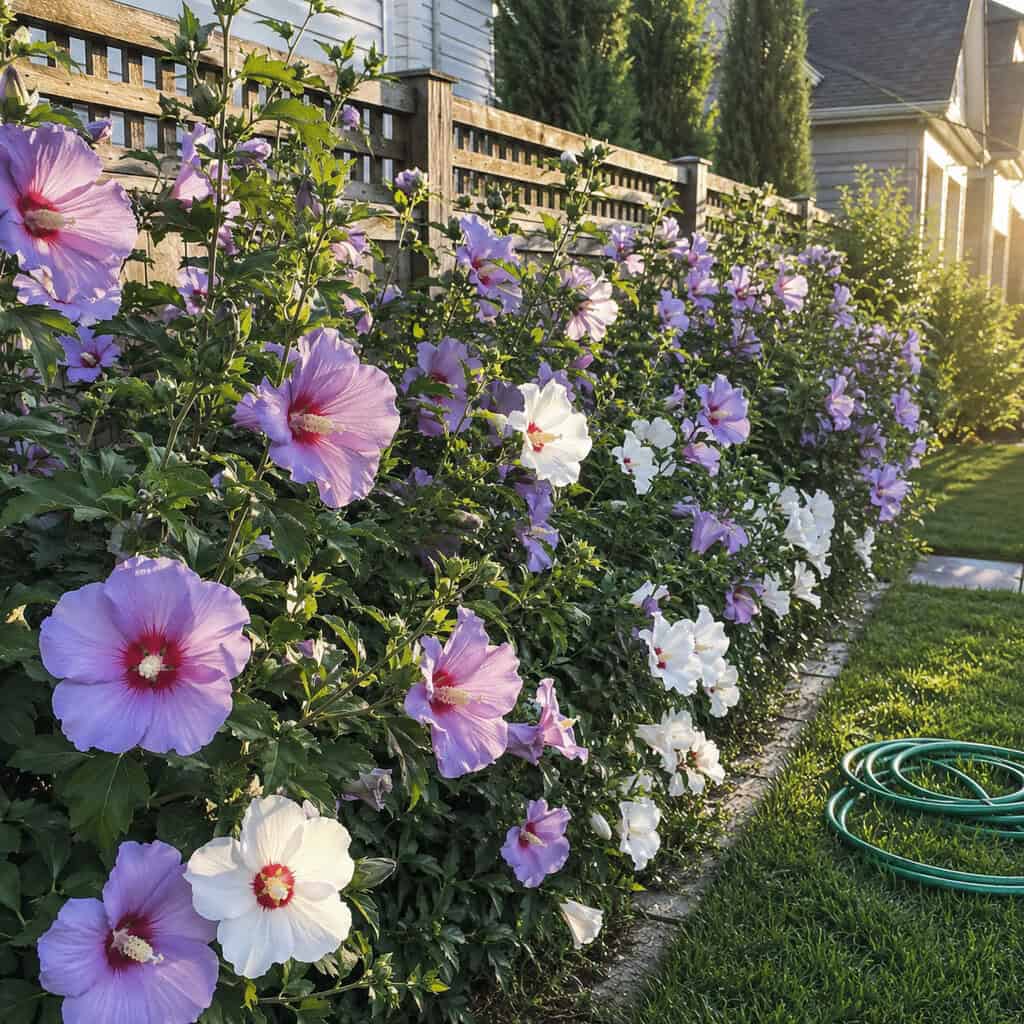
If plant-and-forget had a mascot, this would be it.
Rose of Sharon flowers from July into September, sometimes clearing two full months in zones 5 through 9. No deadheading. No feeding schedule. It blooms whether you pay attention or not.
The flowers come in white, pink, lavender, and a deep blue-purple, opening in waves so the shrub always has something showing. It’ll take poor soil and summer drought without complaint.
Good news for pet owners. The ASPCA classifies it as non-toxic to cats and dogs, though a dog that eats a large mouthful might get mild stomach upset. Nothing dangerous.
2. Knock Out & Landscape Roses
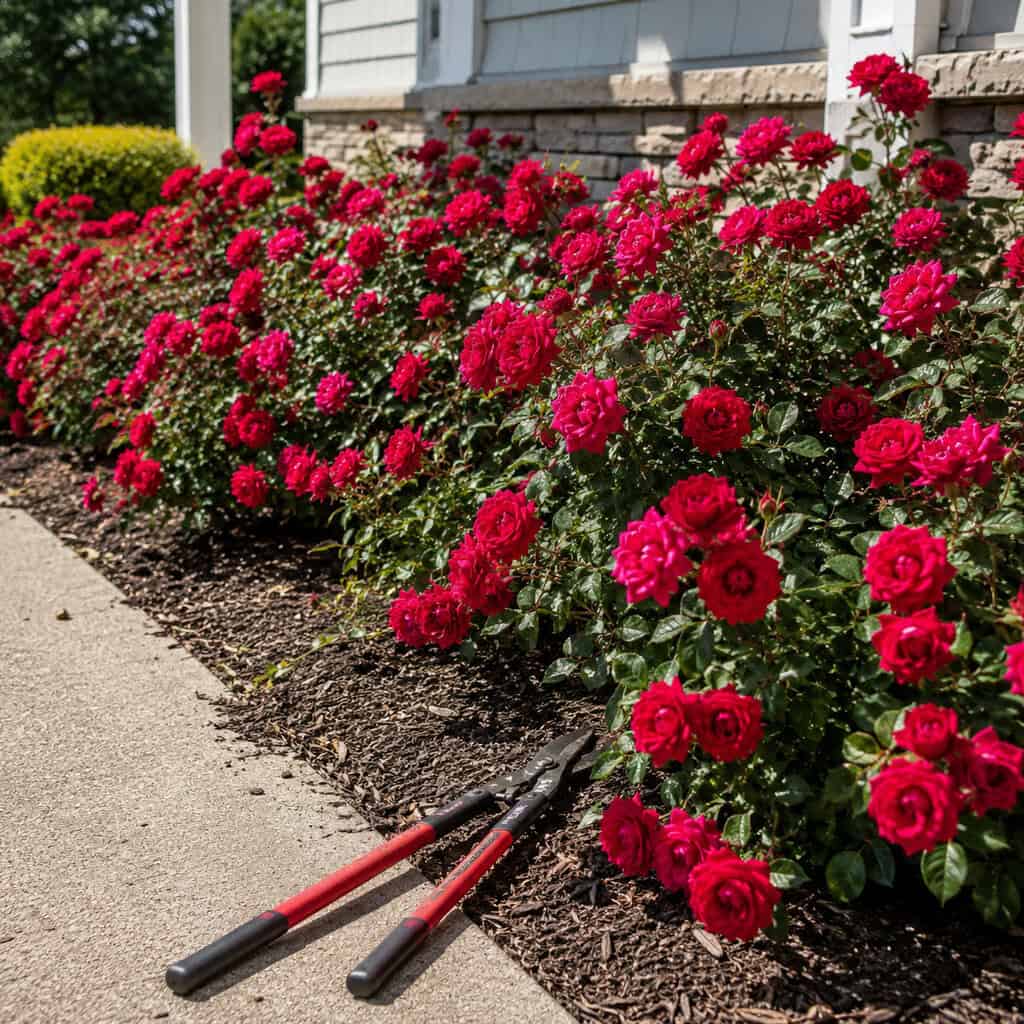
These are the roses that killed the myth that roses are hard.
Knock Out and the landscape roses that followed bloom from late spring until frost — no deadheading, no spraying, no drama. They’re disease-resistant by design, which is the whole reason they took over garden centers in the 2000s.
The one chore is a hard cutback in early spring. Take the loppers and cut them by about a third. That’s the entire maintenance calendar.
Roses are non-toxic to pets, so this is a rose you can plant near a dog run without a second thought.
3. Panicle Hydrangea (Hydrangea paniculata)

Three months of bloom, minimum. Sometimes four.
The cone-shaped flower heads open white or lime-green in midsummer, then slowly blush to pink and rose as the nights cool. They hold that color through frost and dry beautifully on the shrub. One flower head walks you through three seasons of color.
This is the toughest, most forgiving hydrangea you can plant. It’s hardy to zone 3, blooms on new wood so a brutal winter won’t cost you flowers, and it tolerates more sun than any other hydrangea. ‘Limelight’ and ‘Little Lime’ are the workhorses.
But there’s a real warning here for pet owners, and it applies to every hydrangea on this list.
All hydrangeas are toxic to dogs, cats, and horses. The leaves, flowers, and buds contain cyanogenic glycosides — compounds that release cyanide when chewed. According to the ASPCA, a pet that eats enough can suffer vomiting, diarrhea, and lethargy.
The catch is dose. An animal has to eat a fair amount of plant material to hit a dangerous level, and most dogs stop well before that. Still, if you have a chewer, plant it out of reach or skip it. A curious puppy and a low hydrangea are not a great combination.
Toxic to pets — plant with that in mind, but a champion bloomer for households without chewers.
4. Smooth Hydrangea ‘Annabelle’ (Hydrangea arborescens)

‘Annabelle’ is the hydrangea for people who get real winters.
It blooms on new wood, which means it flowers reliably even after a season that drops to -30°F. Northern gardeners who watch their bigleaf hydrangeas sulk and refuse to bloom should plant this instead. Hardy to zone 3.
The flowers are enormous white globes — some the size of a basketball — that hold from summer into fall. Cut them back nearly to the ground each spring and they come roaring back.
Same caution as its cousins: all hydrangeas are toxic to dogs, cats, and horses. Keep it away from pets that chew.
5. Butterfly Bush (Buddleia)
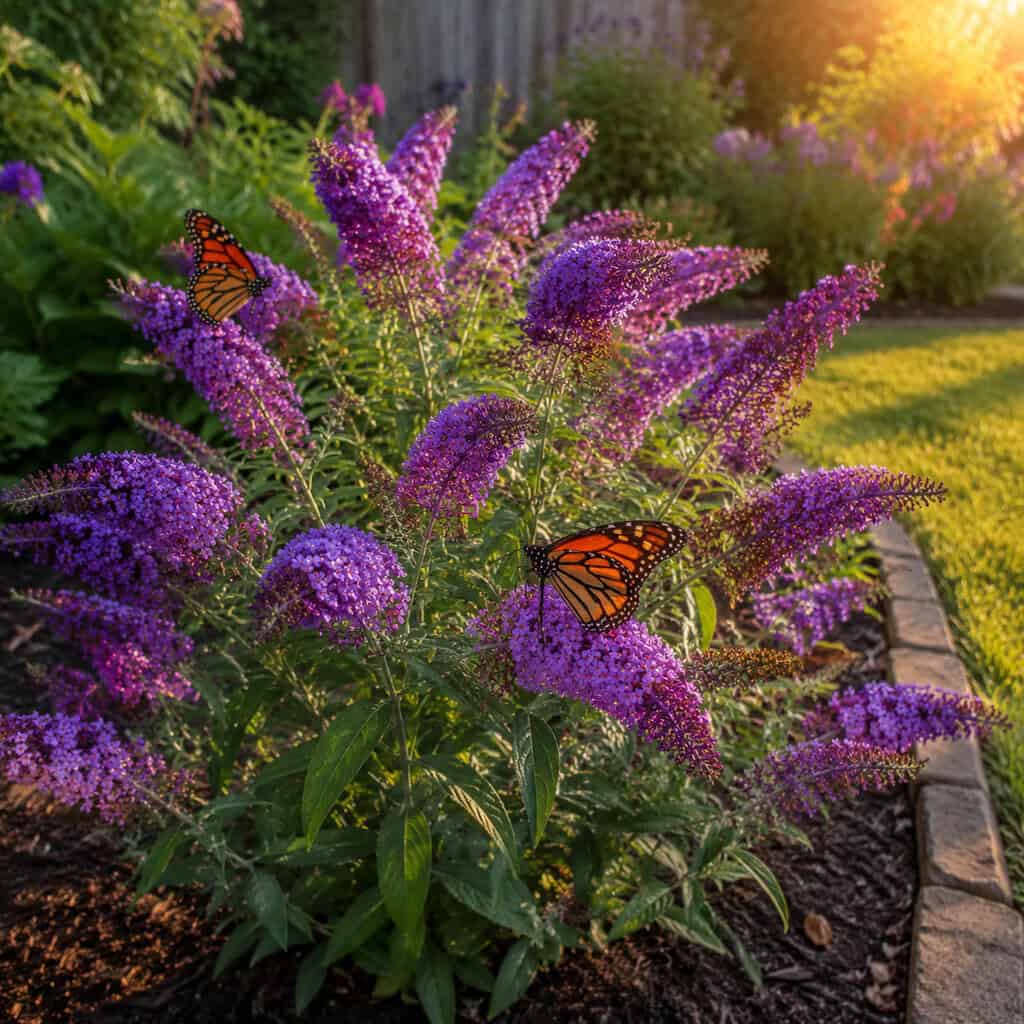
Long cones of flowers from midsummer to frost, and a landing strip for every butterfly and hummingbird in the neighborhood.
No deadheading required to keep it going in zones 5 through 9. It just keeps pushing new spikes.
One important note. Older butterfly bush varieties self-seed aggressively and are considered invasive in parts of the country. Skip those.
Buy a newer compact, seedless cultivar instead — the ‘Lo & Behold’ and ‘Pugster’ series are bred to be sterile or nearly so. You get all the flowers and none of the guilt.
6. Reblooming Spirea (Double Play Doozie)
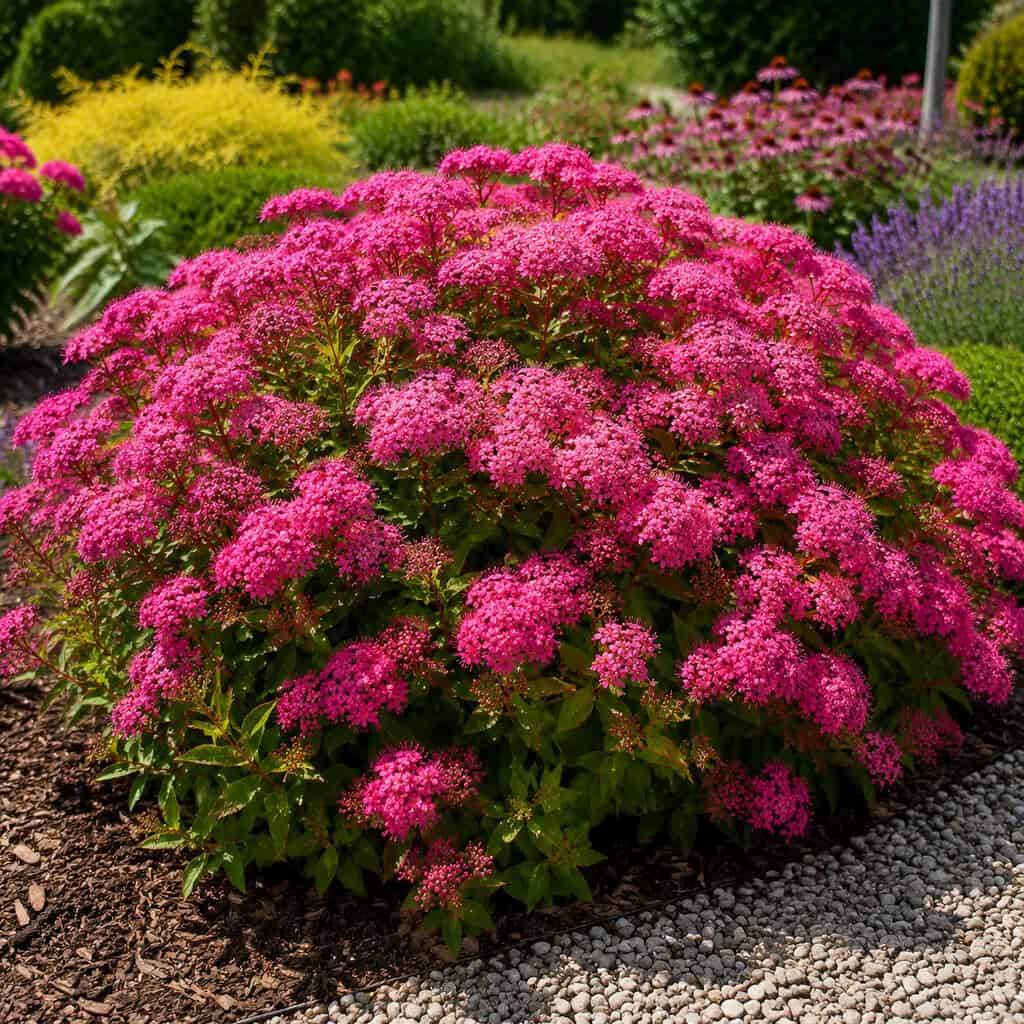
Old spireas bloomed once and quit. This one doesn’t.
Double Play Doozie starts flowering in early summer and keeps producing hot-pink flower clusters through autumn. It’s seedless, so it won’t spread where you don’t want it — a real upgrade over older types.
Drought-tolerant, deer-resistant, and tidy enough that it never looks like it needs your help. Hardy in zones 3 through 8.
Carefree in the truest sense.
7. Potentilla / Cinquefoil (Happy Face series)
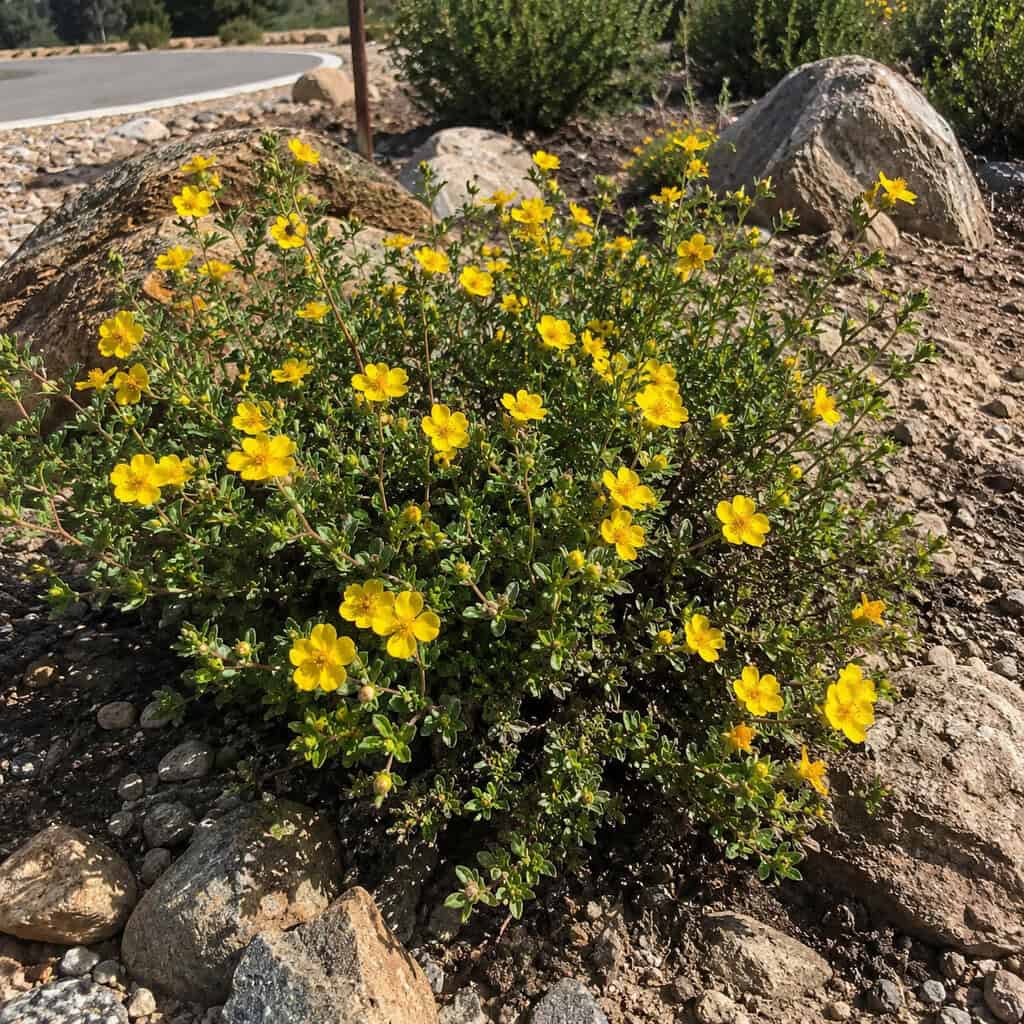
Few shrubs are this tough.
Potentilla shrugs off heat, drought, poor soil, and hungry animals, then flowers nonstop from early summer to frost in yellow, white, pink, or orange. The Happy Face series holds up especially well in blistering sun.
Best of all, it’s hardy to zone 2. If you garden somewhere the winter tries to kill everything, this is your long-bloomer.
Plant it in the worst spot you’ve got and watch it thrive.
8. Abelia

A honeysuckle relative that earns its keep in every season.
Abelia pumps out small, fragrant tubular flowers from spring or early summer all the way to frost. Bees and butterflies work it constantly. Hardy across a wide range, roughly zones 4 through 11 depending on variety.
The show doesn’t stop at the flowers. Glossy foliage shifts to bronze and burgundy in fall, and mature stems develop exfoliating bark for winter interest.
Heat- and drought-tough once its roots are established. Give it a season to settle and then leave it alone.
9. Bluebeard (Caryopteris)
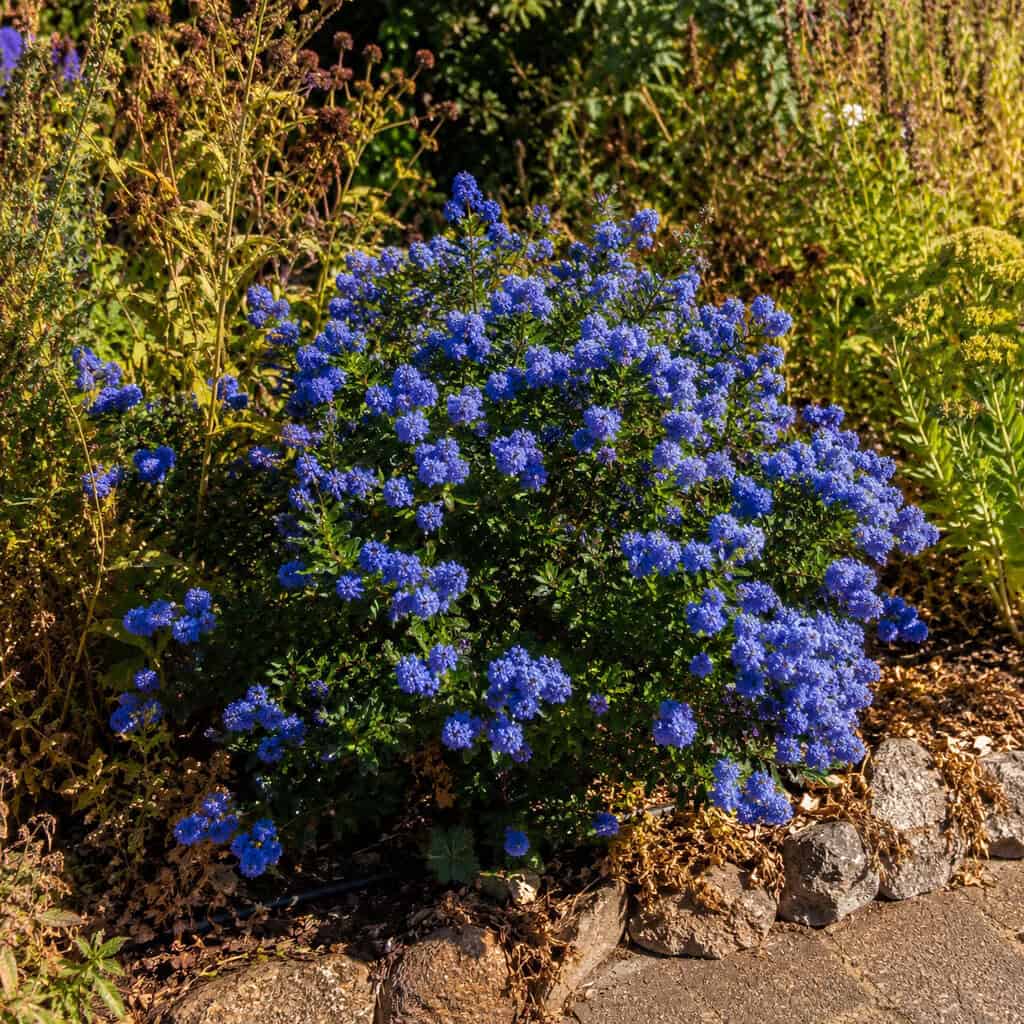
Late summer is when most shrubs run out of steam. Bluebeard is just getting started.
From August to frost it covers itself in true-blue flowers — a color that’s genuinely rare in the shrub world — right when the rest of the garden looks tired.
It’s drought-tolerant and wants full sun. Give it both and it asks for nothing else. Hardy in zones 5 through 9.
Use it as a gap-filler. Pair it with a spring bloomer and a midsummer one, and you’ve built a garden bed that never goes fully quiet.
10. Bloomerang Reblooming Lilac (Syringa)
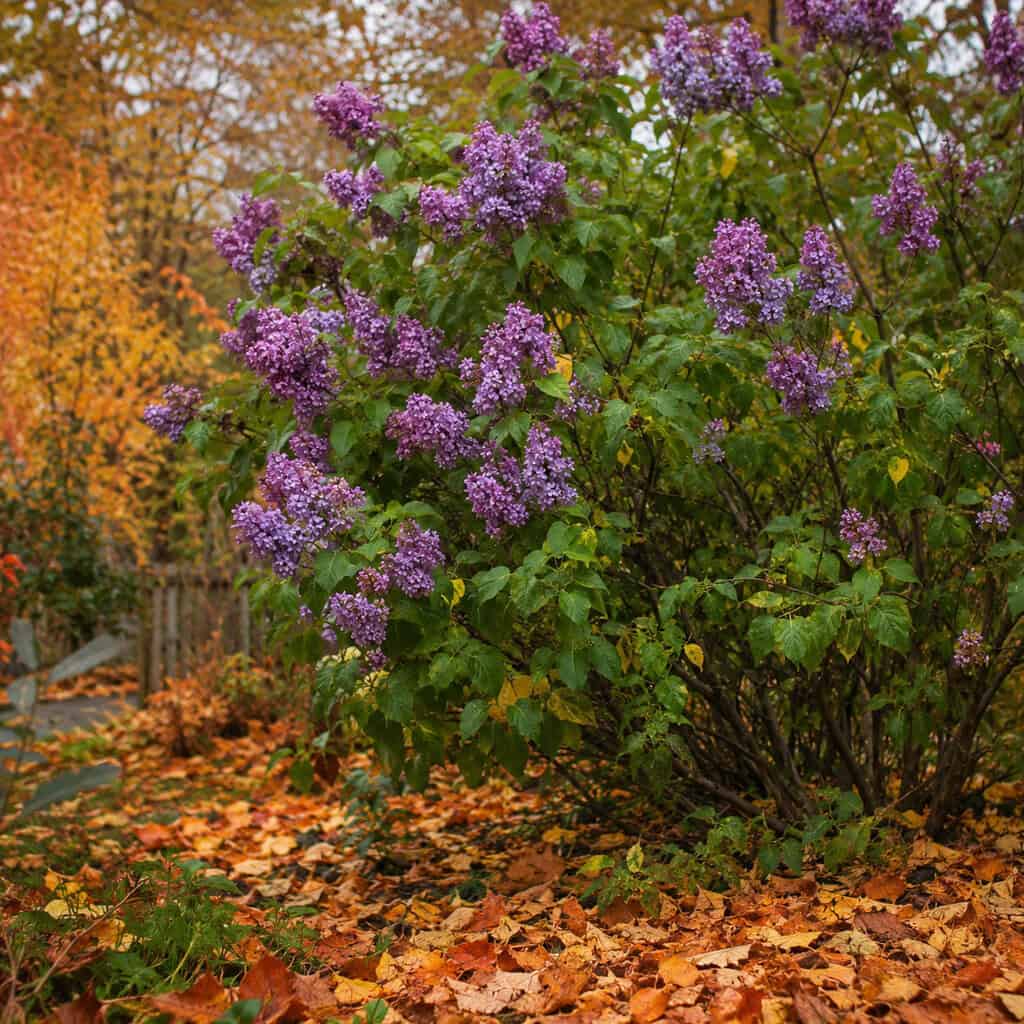
Everyone knows the problem with lilacs. Two glorious weeks in May, then eleven months of nothing.
Bloomerang fixes that. It flushes in spring with all the classic lilac fragrance, rests through early summer, then reblooms late summer into fall.
Most people don’t know lilacs can do this at all. Plant one and your neighbors will ask why yours is blooming in September. Hardy in zones 3 through 7.
Common lilac is safe for pets — worth noting, since the unrelated Persian lilac is toxic. This is not that plant.
11. Shrubby St. John’s Wort (Hypericum)
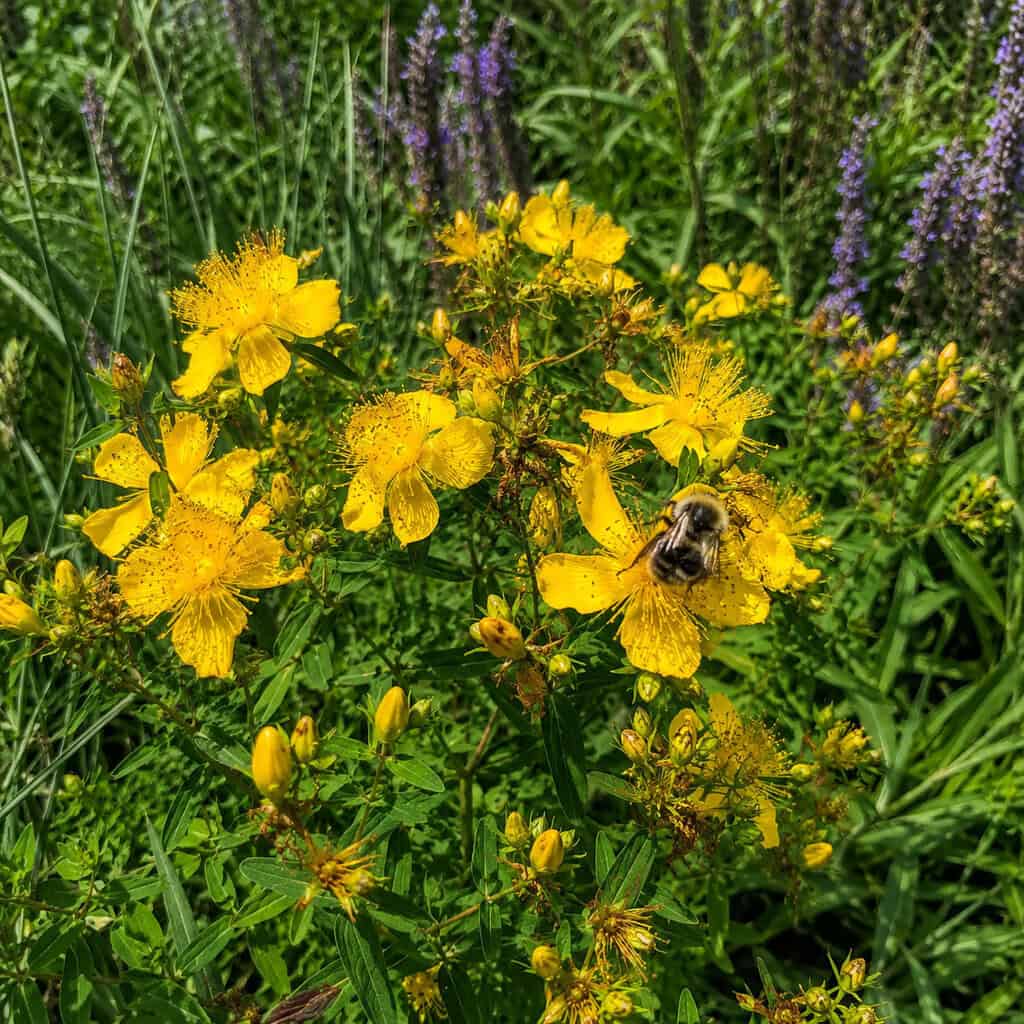
Bright yellow flowers stuffed with a burst of stamens, blooming June through October.
This native is a bee magnet, and it thrives in almost any soil — clay, sand, wet, dry. Deer and rabbits leave it alone, per NC State Extension. Hardy in zones 4 through 8.
One caution for pet owners. Hypericum contains hypericin, which can cause stomach upset and sun sensitivity if a pet eats a lot of it. Not among the deadly plants, but worth knowing if you’ve got a grazer.
12. Crape Myrtle (Lagerstroemia)
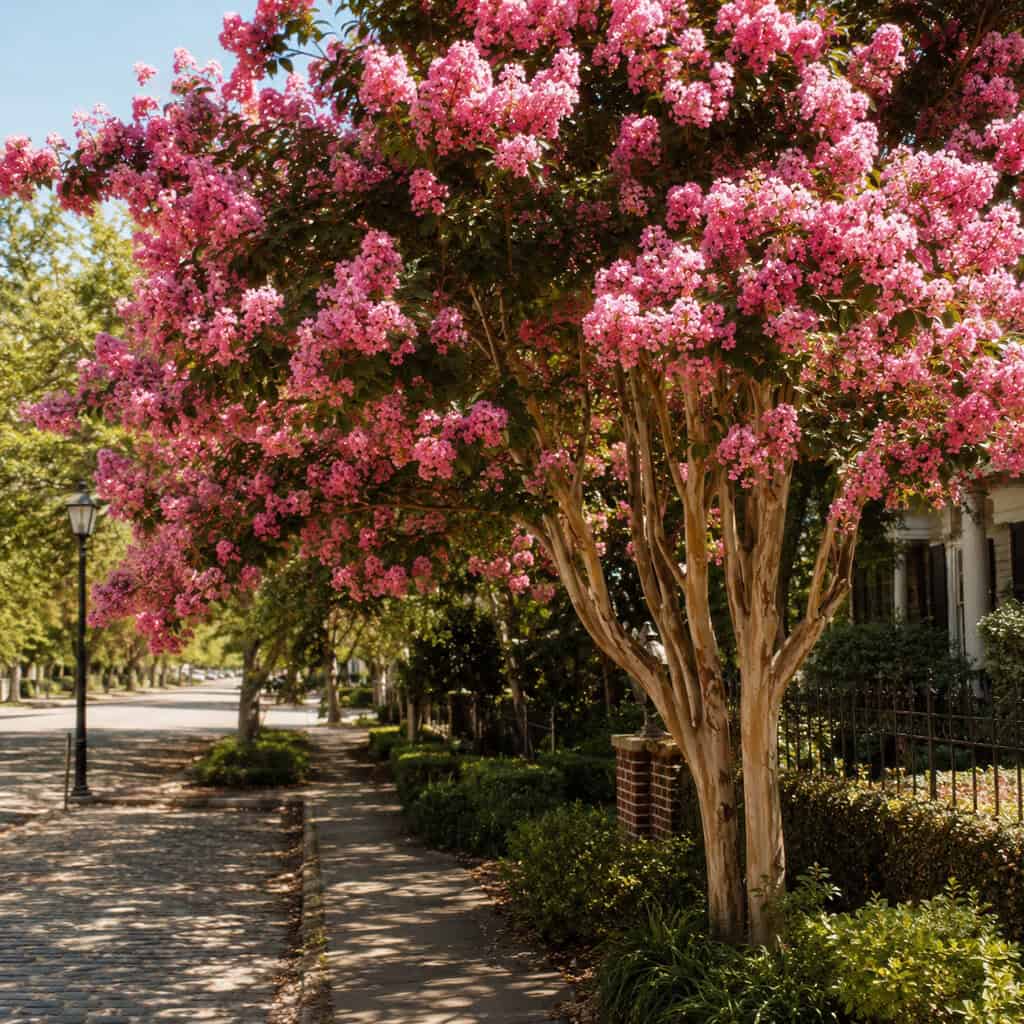
The South’s summer signature, and for good reason.
Crape myrtle blooms for 90 to 120 days — crinkled, crepe-paper flowers in white, pink, red, and purple that don’t quit until early fall. Then the leaves turn, and the mottled bark carries the show through winter.
Extremely heat- and drought-tolerant once established. It practically prefers to be ignored.
It used to be a strictly warm-climate plant, but newer cultivars push hardiness down to zone 6. Northern gardeners finally get to play, too.
One plea: don’t top it into an ugly stub every spring. The “crape murder” haircut you see all over parking lots isn’t necessary and ruins the natural shape.
13. Drift Roses
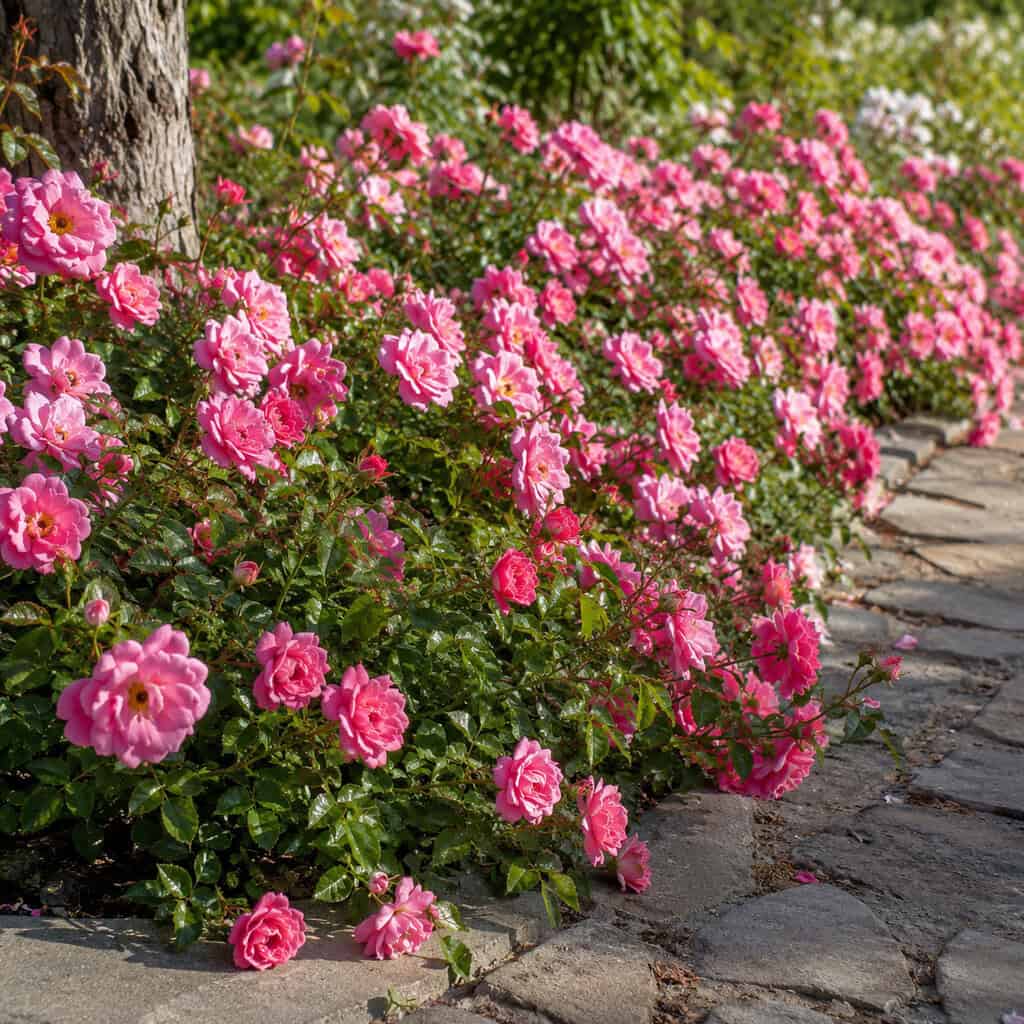
A cross between miniature roses and groundcover roses, and the result is a low, spreading carpet of bloom.
Drift roses flower from May through fall, disease-resistant and self-cleaning like their Knock Out cousins. They top out around a foot and a half tall, which makes them a perfect filler along walkways and bed edges.
No deadheading. A light spring trim and you’re done for the year.
Non-toxic to pets, so plant them anywhere a dog roams.
14. Reblooming Azalea (Encore, Perfecto Mundo)
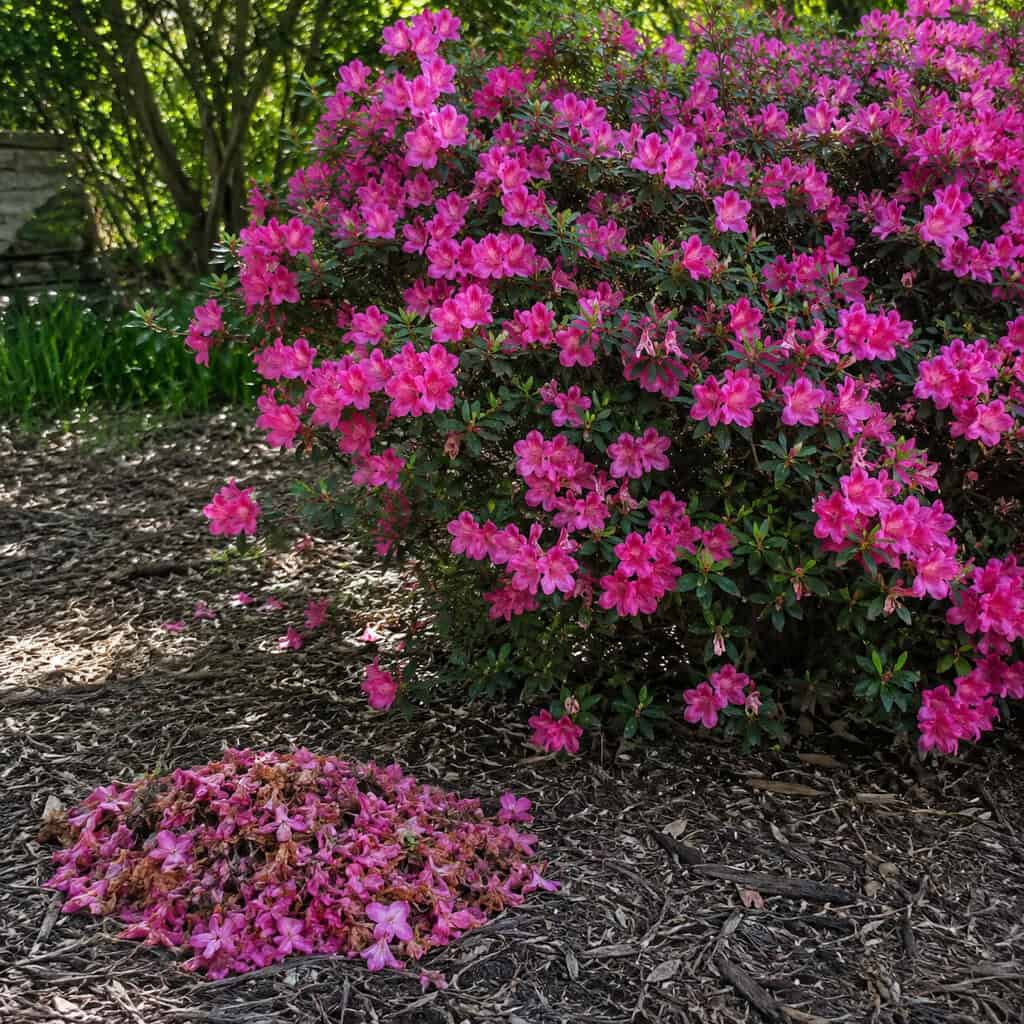
Old azaleas gave you one spring show and called it a year. The reblooming series changed that.
Encore and Perfecto Mundo azaleas flower in spring, rest, then bloom again from summer through frost — months of color instead of a two-week burst. They’re a fantastic plant in zones 6 through 9.
But read this next part carefully if you have pets.
Azaleas are among the most dangerous plants on this entire list. Every part of the plant contains grayanotoxin, and the ASPCA rates them highly toxic to dogs, cats, and horses.
It doesn’t take much. Ingesting just a few leaves can cause vomiting, drooling, diarrhea, weakness, and a drop in heart rate and blood pressure. In severe cases azalea poisoning leads to collapse, coma, and death. Horses are especially at risk.
If your dog or cat chews on an azalea, treat it as an emergency and call your vet or the ASPCA Animal Poison Control Center at once. Don’t wait to see if symptoms show up.
None of this means you can’t own one. It means placement matters. Keep azaleas out of areas where pets roam unsupervised, and rake up fallen leaves and spent flowers so nothing gets nibbled off the ground.
Highly toxic to pets — beautiful, long-blooming, and a plant to keep well away from animals that chew.
15. Reblooming Weigela (Sonic Bloom)

Trumpet-shaped flowers that hummingbirds line up for.
Older weigelas finished blooming by June. The Sonic Bloom series keeps flushing from late spring all the way to frost, in reds, pinks, and corals. Hardy in zones 4 through 8.
Easy and carefree — it wants sun and otherwise fends for itself.
Safe for pets, and a genuine crowd-pleaser. Hard to go wrong here.
16. Camellia

Everything on this list blooms in the warm months. Camellia does the opposite.
This glossy evergreen flowers when the rest of the garden is bare — fall through winter and into early spring, depending on variety. Rose-like blooms in white, pink, and red, appearing in the cold when you least expect them.
It’s a shade-lover for mild climates, hardy in zones 7 through 10. Give it acidic soil and dappled light and it’ll bloom for months in the off-season.
If you want color in December, this is how you get it.
17. Bougainvillea
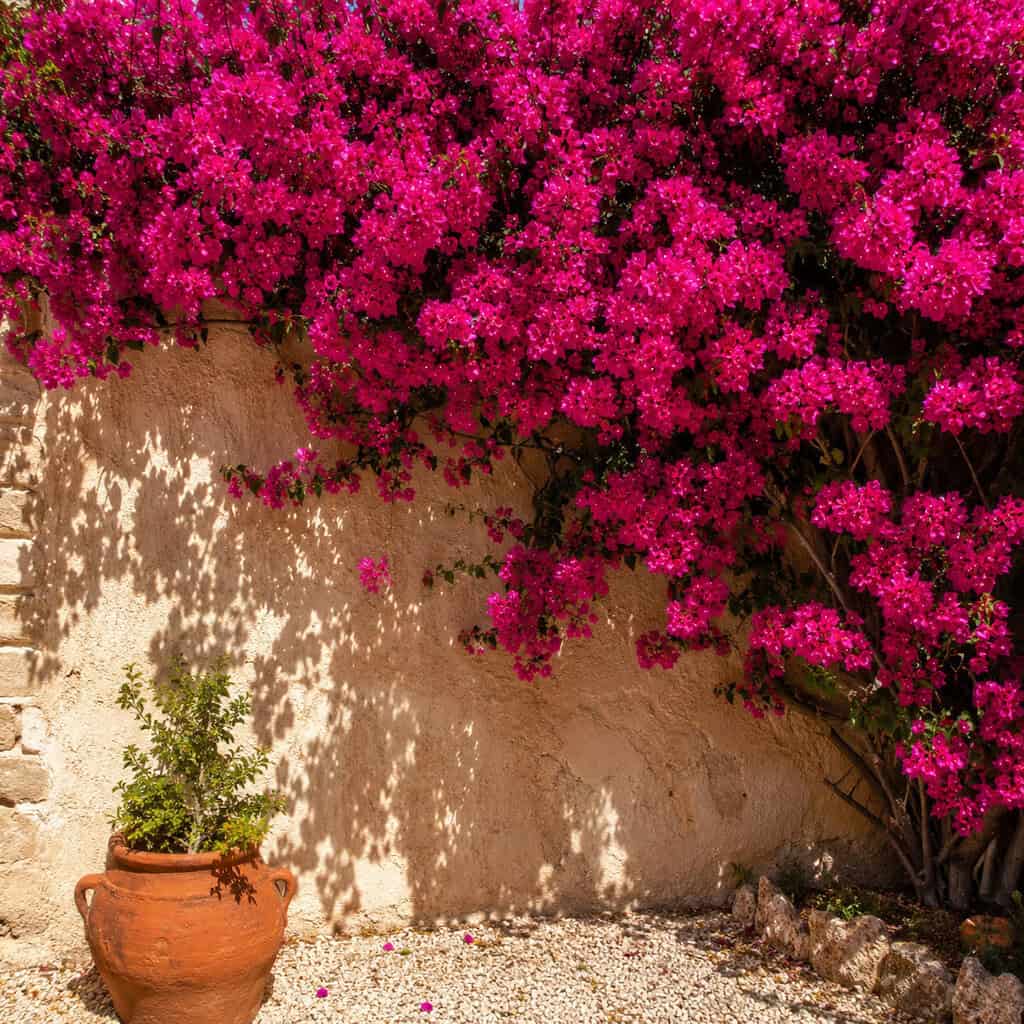
Nothing else on this list burns this bright.
Bougainvillea throws out brilliant magenta, orange, and coral bracts for months on end — the actual flowers are tiny, but the papery bracts around them steal the whole show. It craves full sun and dry roots. Overwater it and it sulks.
This one thrives on neglect, which is the dream. But it’s strictly a warm-climate plant, hardy only in zones 9 through 11.
Everywhere colder, grow it as an annual or in a container you drag inside for winter. Worth the effort for that color.
18. Firecracker Bush (Hamelia / Estrellita)
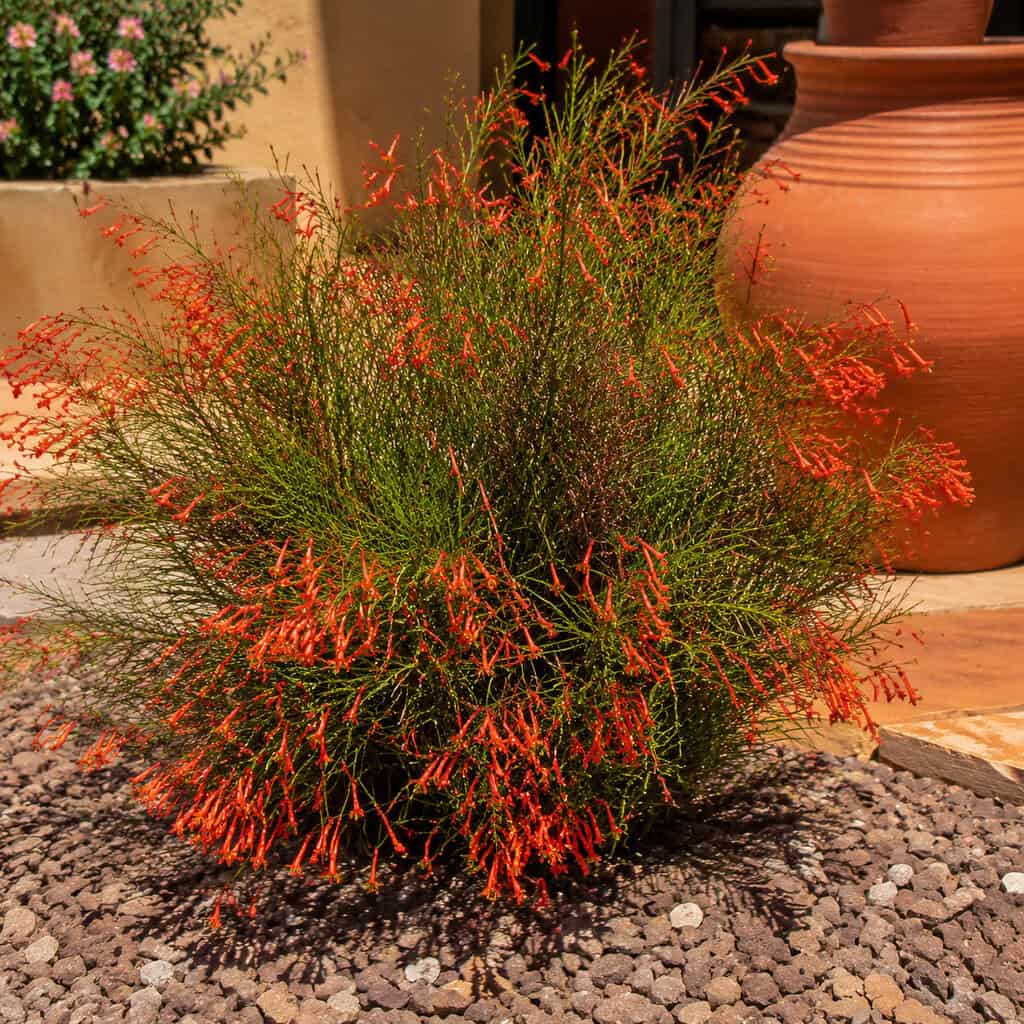
A heat-lover built for the Southwest.
Firecracker bush pushes tubular red-orange blooms all season long in punishing heat and arid, poor soil — one of the longest bloomers you can grow in a hot region. Hummingbirds treat it like a fuel station.
Hardy in zones 8 through 10. The compact Estrellita series stays small enough for patios and pots, so you don’t need a big yard to grow it.
Give it sun and heat and forget about it.
19. California Lilac (Ceanothus)
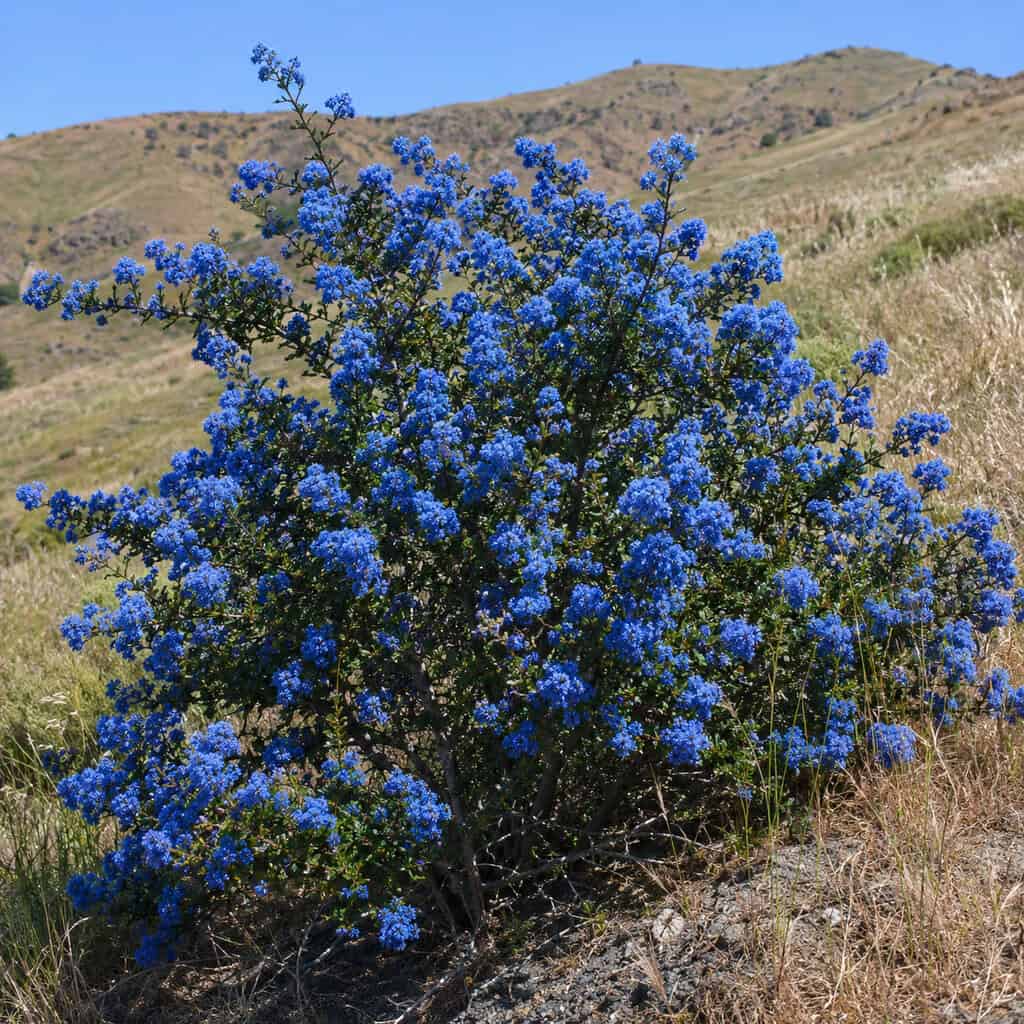
Massive clusters of electric-blue flowers on a fast-growing native shrub.
Ceanothus loves dry, sunny, western sites and feeds native pollinators heavily. In zones 8 through 10 it blooms spring into summer in a blue so saturated it barely looks real.
There’s one cardinal rule, and breaking it kills the plant: do not overwater. Ceanothus rots in soggy soil. Plant it lean, water it rarely, and let it be.
For western gardeners chasing a drought-smart show, few shrubs do it better.
20. Oakleaf Hydrangea (Hydrangea quercifolia)
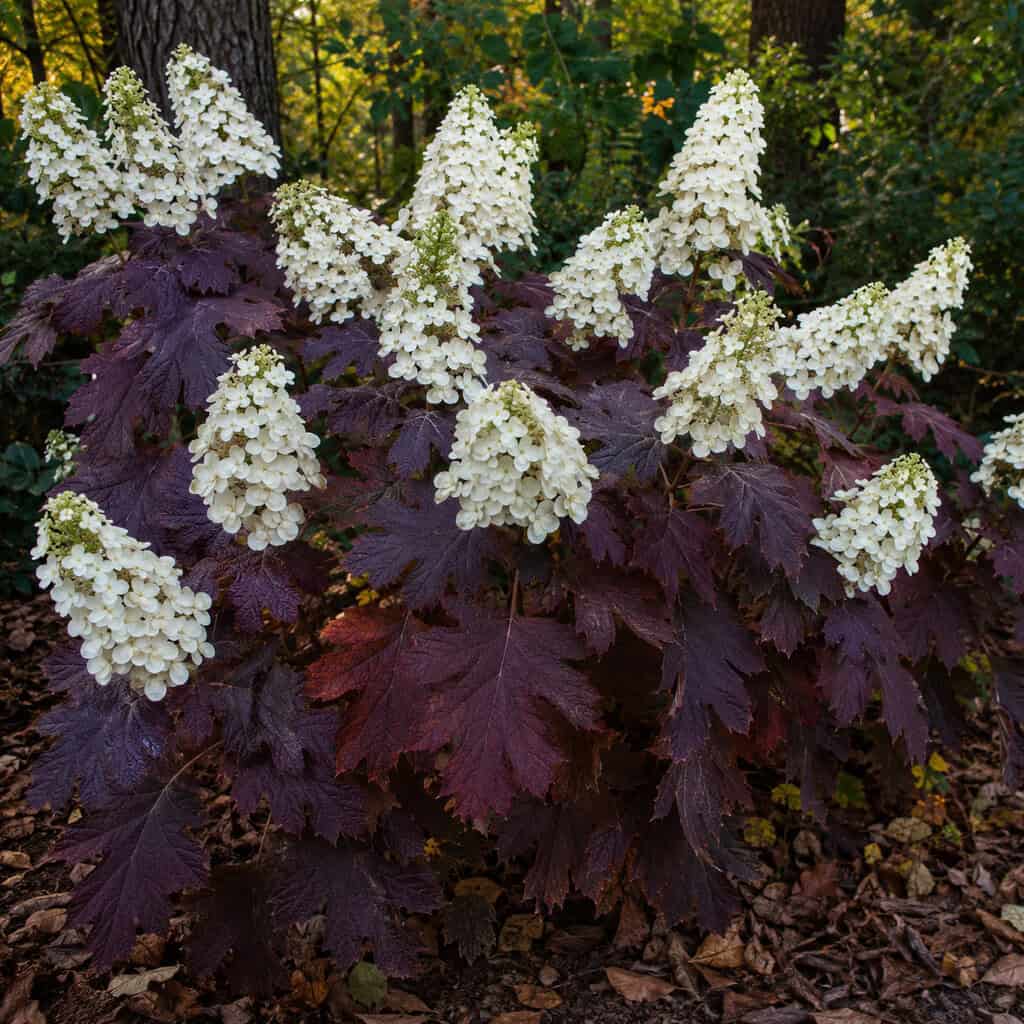
The hydrangea that gives you two seasons in one.
White cone-shaped flowers open in summer and blush to pink as they age. Then the big oak-shaped leaves turn brilliant burgundy and scarlet in fall — a color show most hydrangeas can’t match. This one’s native, and it handles shade well. Hardy in zones 5 through 9.
Same warning as every hydrangea: toxic to dogs, cats, and horses. Keep it clear of chewers.
A strong swap if you want hydrangea flowers plus real fall foliage.
21. Chinese Fringe Flower (Loropetalum)
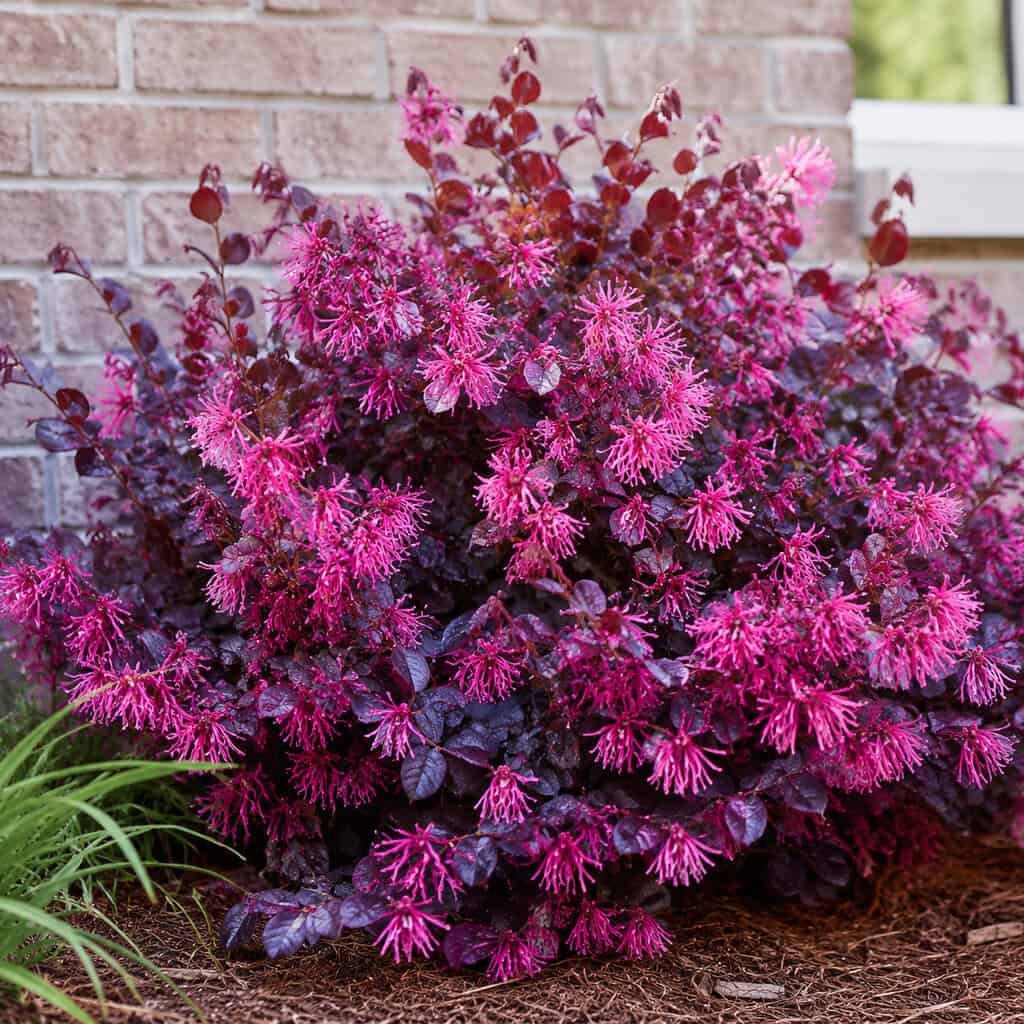
Tassel-like pink blooms that look like tiny fireworks, set against burgundy-to-chartreuse evergreen leaves.
The foliage alone earns Loropetalum a spot — it holds color year-round in zones 7 through 10, and it’s deer-resistant and low-maintenance.
Honest caveat: its main flush is spring, with only sporadic rebloom after. It won’t flower for months straight like the top of this list.
But between the spring show and that constant colored foliage, it’s still working hard all year.
22. Sweetspire (Itea virginica)
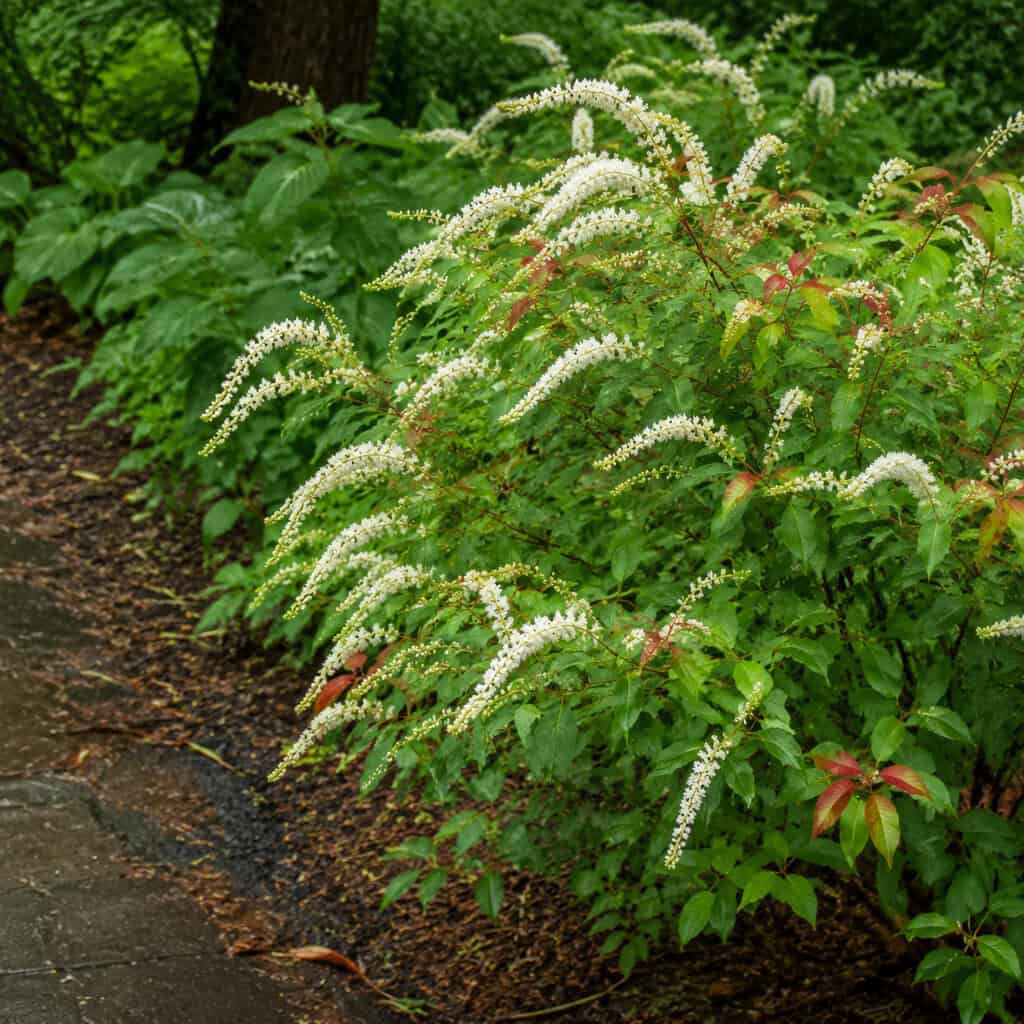
A tough native that grows almost anywhere.
Sweetspire handles wet soil or dry, sun or shade — few shrubs are this adaptable. In late spring it sends up fragrant white spikes that drape and arch. Hardy in zones 5 through 9.
The bloom window is shorter than the marathon bloomers up top, which is why it lands here.
But the fall color is worth the whole planting. The leaves turn deep red and orange and hold long into the season. A quiet, dependable pick.
The Takeaway
The trick to a yard that never goes dull isn’t more work. It’s the right plants.
Layer a spring rebloomer with a midsummer workhorse and a late-season bluebeard, and you’ll have color from the first warm day to the first frost — without a deadheading routine to keep up.
Just remember the pet warnings. Hydrangeas and azaleas are toxic, and azaleas are genuinely dangerous. If you’ve got a dog that eats the garden, keep those two out of reach and lean on the roses, spirea, and potentilla instead.
Plant the right shrub once. Let it do the rest for years.
I thoroughly enjoyed this article. I can’t wait to plant some of these beauties.
Thank you for this list…I am about to become a first time home owner and I have a very large yard. It has a hill I wasn’t sure what to do with but many of these would look stunning on it 🙂