


The lawn looked fine in November. Green enough, mowed, leaves mostly gone.
Then April shows up and there are gray matted circles, a bald ribbon along the driveway, a brown trail to the trash cans, and a patch by the back door that looks like someone poured acid on it.
None of that happened in January. It happened in October, when you made a handful of small decisions about mower height, fertilizer bags, hoses, and leaves — and winter just held onto the evidence until the snow came off.
Turf damage is almost always a setup, not an accident. The freeze is the weapon. Your fall routine loads it.
Here are 26 winterizing mistakes that decide what your lawn looks like the day the snow melts.
1. The Final Mow Left Too Tall
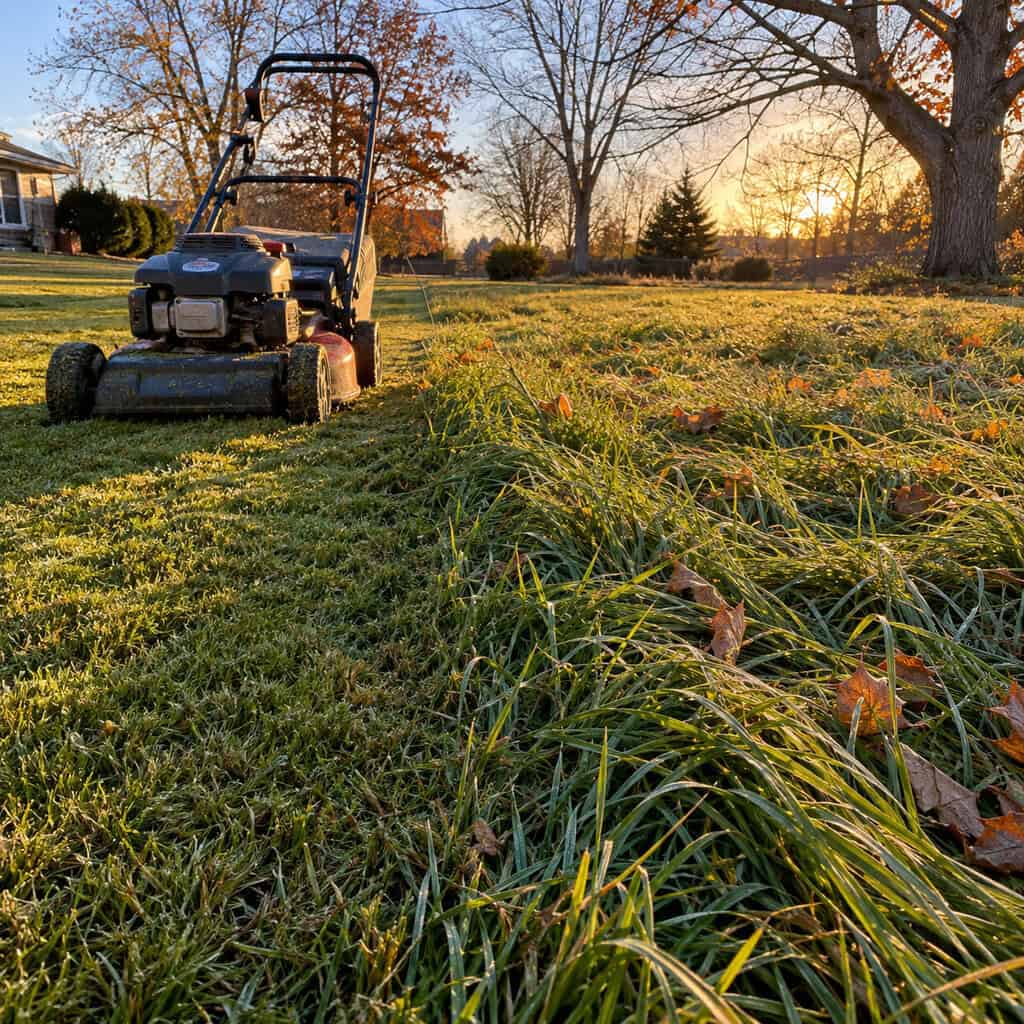
Grass left at summer height going into snow doesn’t stand up. It mats.
That matted layer stays damp and dark for months, which is exactly what Typhula and Microdochium snow molds need to colonize. It also gives voles a covered tunnel system to chew runways through your turf all winter. NDSU Extension ties spring snow mold outbreaks directly to turf that went under snow too long.
Step the last two or three mows down gradually and finish cool-season grass around 2 to 2.5 inches.
Not one sudden buzz cut. A taper.
2. A Leaf Blanket Left to Overwinter
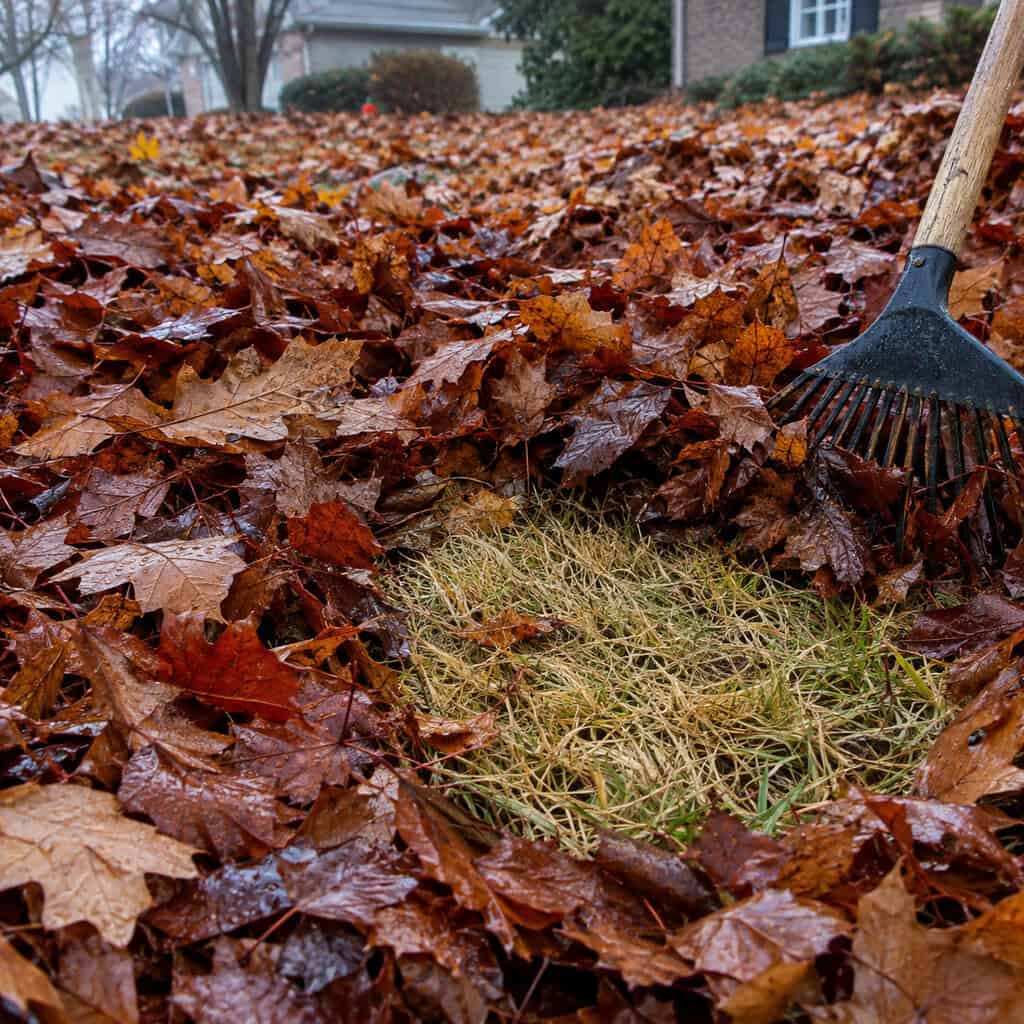
Leaves aren’t mulch when they’re packed three inches deep and wet.
They block light, trap moisture against the crowns, and go slimy under snow. Maple and sycamore leaves are the worst offenders because the big flat blades seal like roof shingles.
Use this rule: if you can’t see grass blades through the leaves, it’s too thick. Mulch-mow what’s thin, haul off what isn’t. Plenty of homeowners find out the hard way that fall leaves can kill grass outright, not just yellow it.
3. Late Nitrogen on a Warm-Season Lawn

That bag says “winterizer.” On Bermuda, zoysia, centipede, or St. Augustine, it’s a trap.
Nitrogen after summer pushes soft new growth at the exact moment the plant should be hardening off and moving carbohydrates into rhizomes and stolons. Tender tissue plus a hard freeze equals dead patches you’ll be plugging in June.
K-State Research and Extension puts the cutoff for warm-season nitrogen around August 15. Past that, stop.
Winterizer products are written for cool-season lawns. Read the grass type on the back, not the season on the front.
4. Rock Salt Thrown Along the Driveway Edge
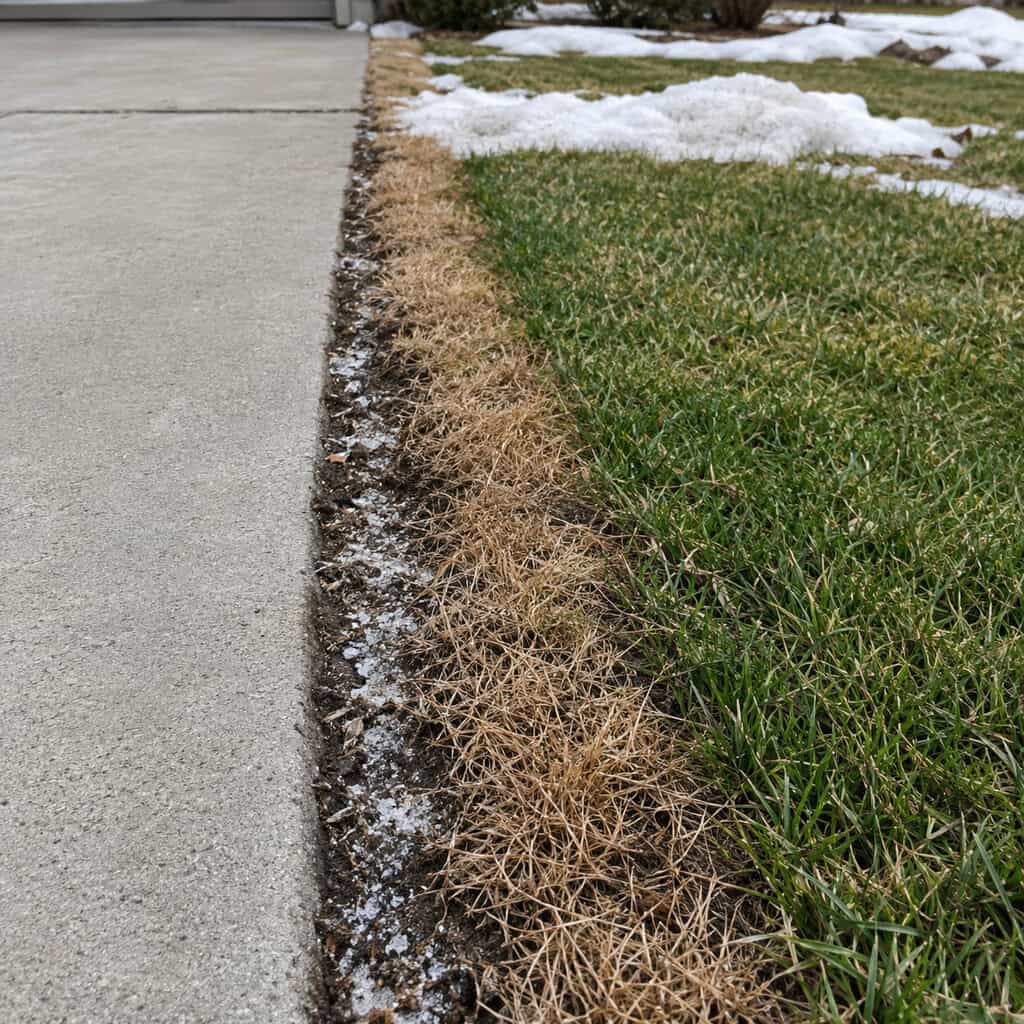
Sodium chloride is cheap, works down to about 15°F, and leaves a scorched 12- to 18-inch dead ribbon along every walk and drive it touches.
The damage isn’t a burn in the ordinary sense. Sodium pulls water out of grass blades and roots through osmosis, then the sodium ions displace calcium and magnesium in the soil, collapsing soil structure into something dense and airless. So the strip doesn’t just die — it stays hard to regrow for a season or two after.
Better chemistry exists. Calcium chloride works to roughly -25°F and needs far less product per square foot. Magnesium chloride runs gentler on turf and is easier on pet paws. Calcium magnesium acetate is the kindest to plants and concrete, though it fades below about 20°F and costs more per bag.
Cut whatever you use with sand or non-clumping cat litter for traction so you’re spreading less actual salt. Sweep up the leftover granules once the ice is gone instead of letting them wash into the turf edge.
If the damage already happened, gypsum is the repair. Calcium sulfate swaps calcium back in for the sodium on the soil particles, and then deep watering in early spring flushes the sodium down past the root zone. Apply it at the labeled rate over the affected strip, water heavily, and reseed after the flush.
Signs you salted too hard last winter:
- A dead strip that stops in a straight line 12–18 inches from pavement
- White crust on the soil surface after it dries
- Grass that greens up everywhere except along walkways
- Water that beads and sits on that strip instead of soaking in
5. Scalping the Last Cut to the Dirt

“One more short one so I don’t have to do it again.”
Cutting cool-season turf to an inch strips the leaf tissue the plant uses to bank carbohydrates, then leaves the crowns exposed to cold and drying wind. Bare soil between plants is also an open invitation for crabgrass and chickweed the second spring hits.
There’s a real difference between a controlled final height and scalping your lawn in the fall. One protects. The other exposes.
6. Overseeding Too Close to the Freeze

Seed needs roughly six weeks of growing conditions before the ground locks up.
Germinate later than that and you get seedlings with two inches of root and no anchorage. Freeze-thaw cycles lift them straight out of the soil — frost heave pushes the plugs up and the wind finishes them.
Miss the window and hold the bag. Dormant seeding in late winter beats wasting $60 of seed in November.
7. Shutting the Water Off Too Early in a Dry Fall
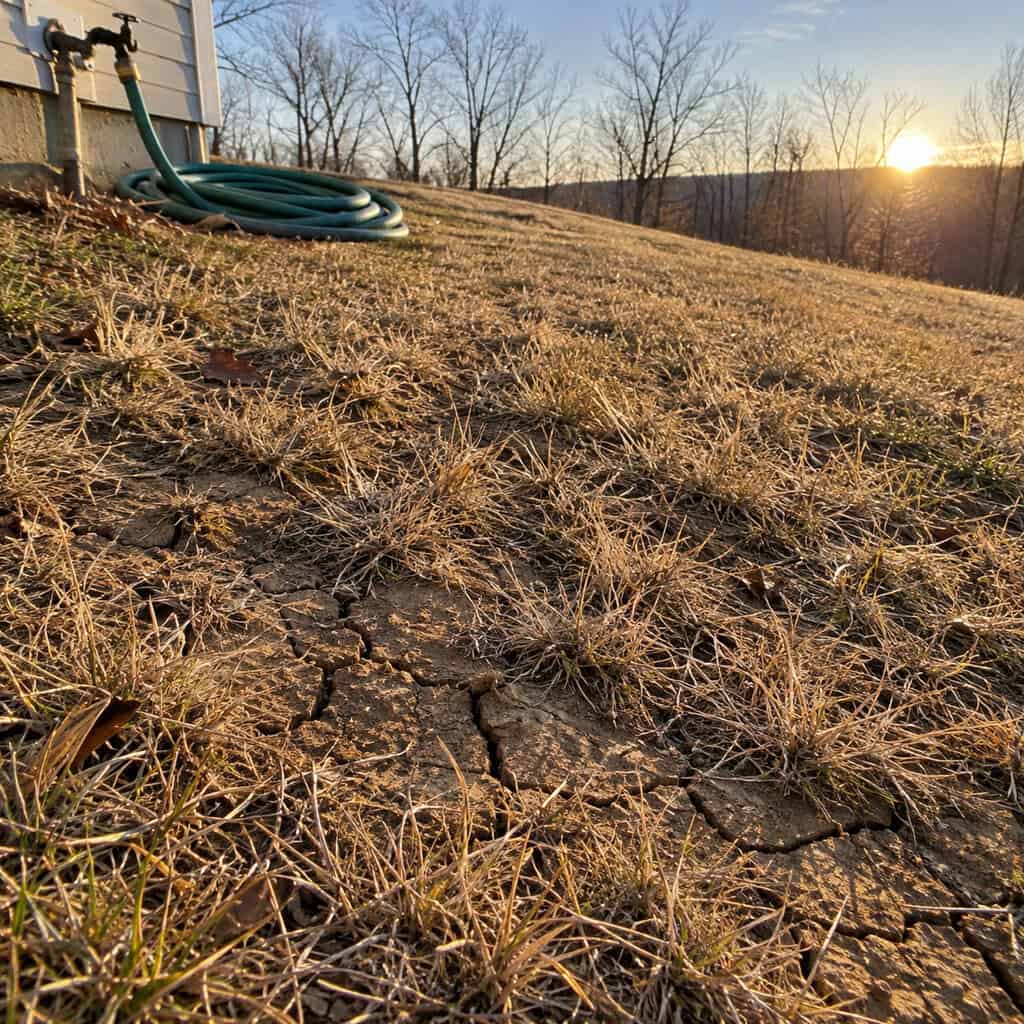
Dormant doesn’t mean dead. The crowns are still alive and still losing moisture.
Going into a hard freeze with bone-dry soil causes winter desiccation, and it’s brutal in snowless winters with steady wind. South-facing slopes and anything seeded that fall take the worst of it.
Keep watering until the ground actually freezes. One deep soak in late fall does more than four light ones.
8. The Hose, the Tarp, and the Kiddie Pool
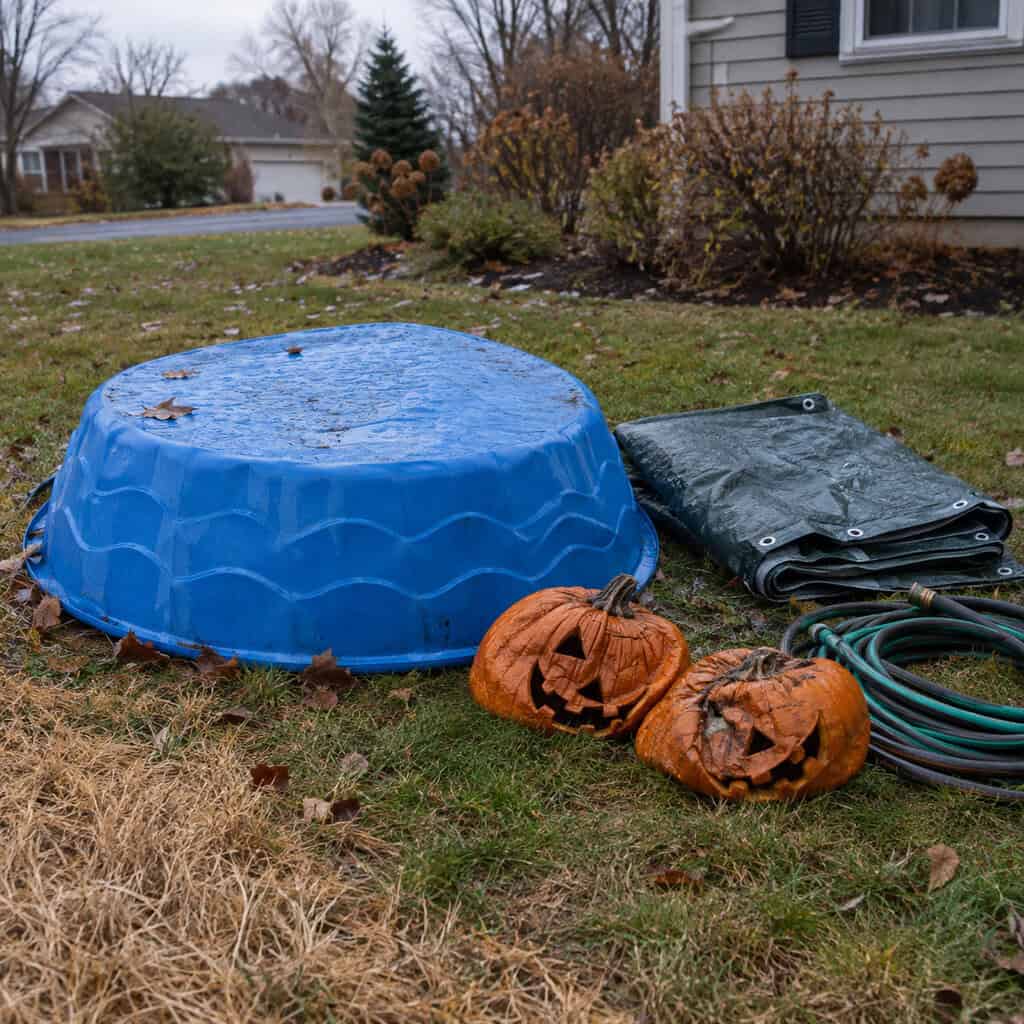
Anything flat on the grass yellows it in two weeks and kills it by March.
The coiled hose, the folded tarp, the flipped kiddie pool, the two jack-o’-lanterns nobody threw out. Each one leaves a perfect outline you’ll be staring at in April.
Worse, the sheltered gap underneath is exactly the cover voles want. UMass Extension lists debris and ground cover near turf as a primary driver of vole runway damage.
Walk the yard once in November and pick it all up.
9. Skipping the Last Feeding Entirely
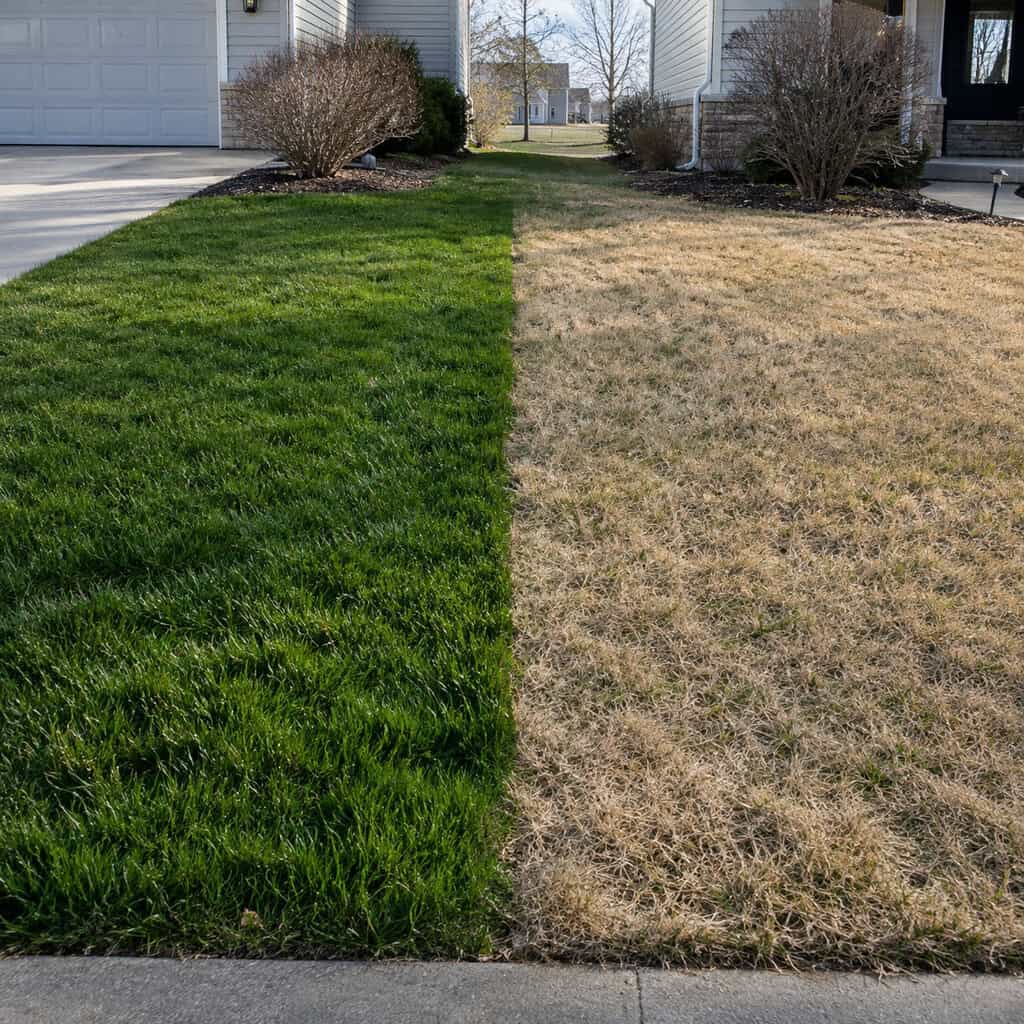
This is the quietest mistake here, because nothing looks wrong until spring.
Kentucky bluegrass, fescue, and ryegrass are still growing roots long after the blades stop. A late-fall nitrogen application between mid-October and mid-November goes into root reserves instead of top growth, which is why those lawns green up weeks earlier without a spring feeding. Virginia Cooperative Extension treats it as the single most valuable application of the year for cool-season turf.
Skip it and you’ll spend March wondering why the neighbor’s lawn woke up first.
10. Dumping Every Shovelful of Snow on the Same Strip
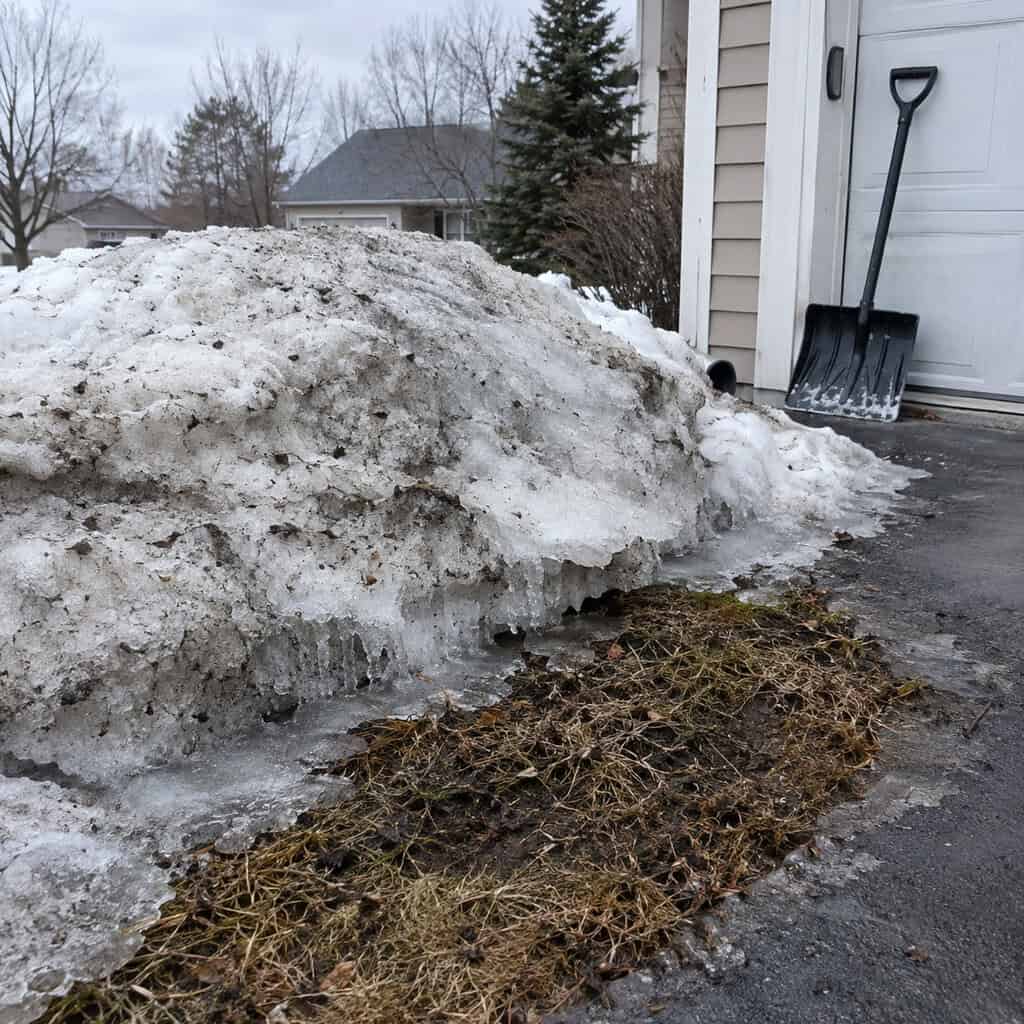
Snow piled by the shovel or the plow compacts into something closer to ice than powder.
That mound stays frozen weeks past the rest of the yard, suffocating the crowns underneath. It also concentrates every grain of de-icer from the driveway into one small area, which is how you get a permanent bald patch that never quite comes back.
Rotate where you throw it. And keep the plow blade off the sod edge — it shears turf right off the crown.
11. Aerating or Dethatching After Growth Stops
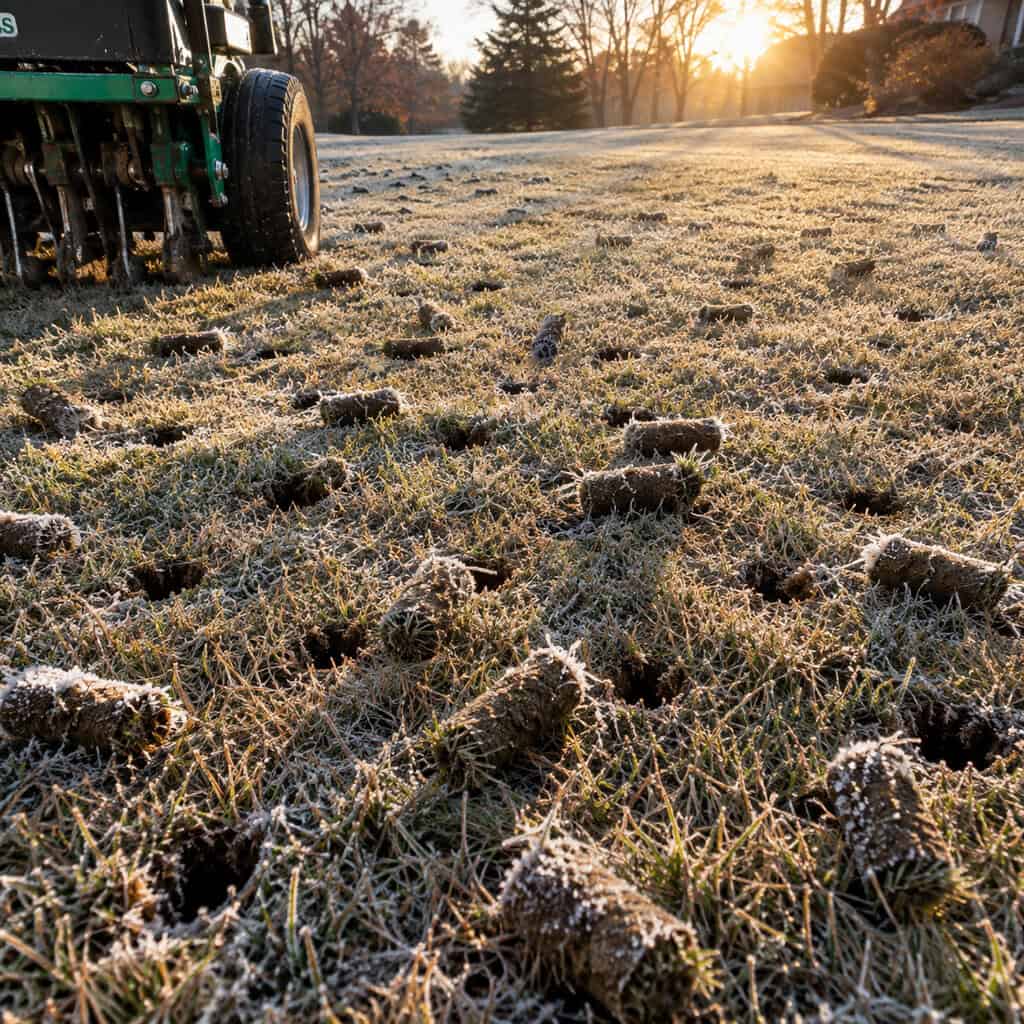
Both are injuries. They only work when the lawn can heal.
Core aerate a dormant November lawn and you’ve opened thousands of holes that won’t close, exposed roots to drying air, and given frost heave a head start. Dethatching that late tears turf that has no capacity to knit back together.
Aerate cool-season grass in early fall. Warm-season gets it in late spring. Know how short to cut before aerating and get it done while the grass is still pushing.
12. Letting the Dog Pick One Winter Potty Spot

Nobody wants to walk a dog to the back fence at 6 a.m. in 20-degree weather. So the dog uses the patch by the door all winter.
Summer grass dilutes and outgrows urine salts. Dormant grass can’t do either. Concentrated nitrogen and salts just sit on the crowns until they kill them.
By March you’ve got a crater that needs reseeding, not a spot that recovers.
Rotate spots, or hose the area during any thaw above freezing.
13. Downspouts and Low Spots Turning Into Ice Sheets
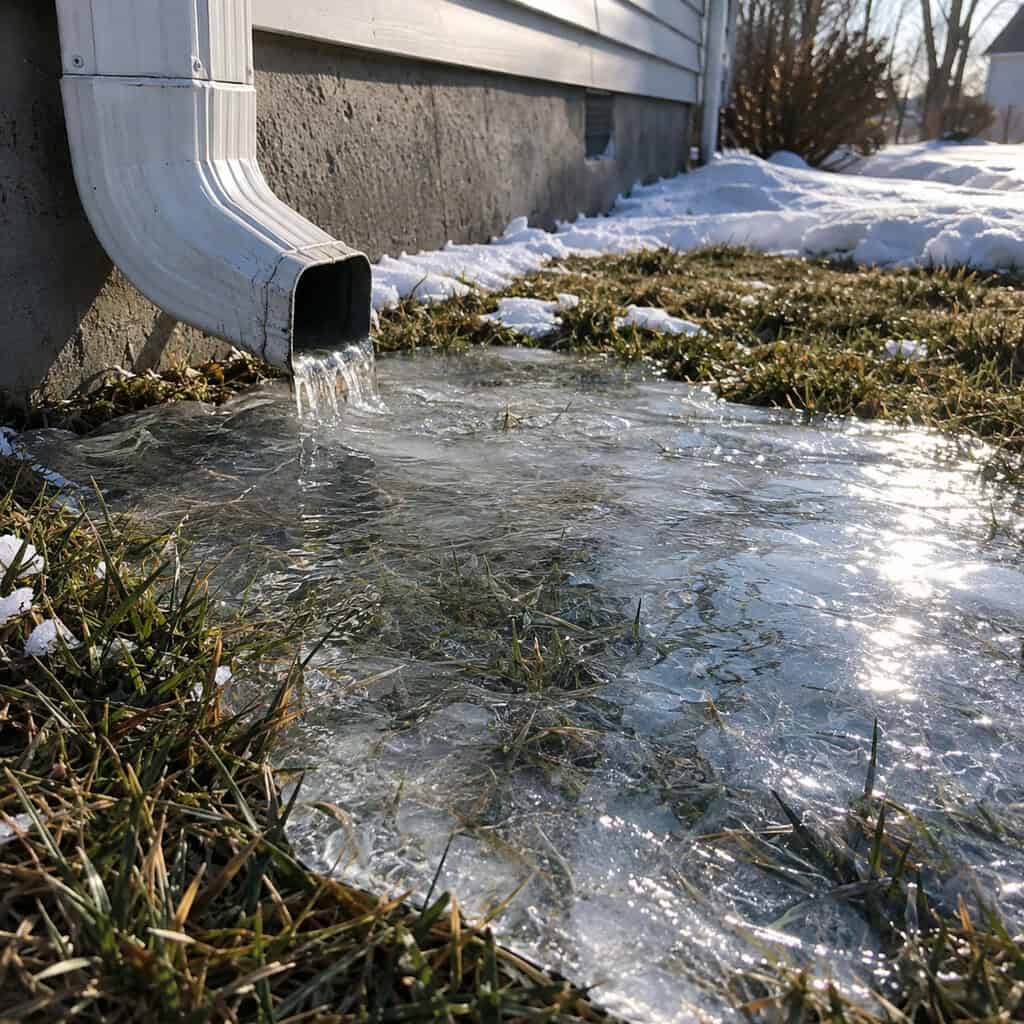
Thaw-refreeze is where lawns die outright instead of just browning.
Water runs off a roof, exits a downspout onto the grass, spreads into whatever low spot is closest, then refreezes overnight into a solid cap. Under that ice, gas exchange stops. Carbon dioxide builds, oxygen runs out, and the crowns suffocate. Research on ice encasement shows turf can die under a solid sheet in as little as 30 to 60 days depending on species — Kentucky bluegrass and annual bluegrass are especially vulnerable.
The other killer is crown hydration. A warm stretch in February coaxes the plant to take up water, then the temperature drops overnight and ice crystals form inside the crown tissue. That’s cellular destruction, not dormancy. Low, wet areas do it repeatedly all winter.
Fixes, cheapest first. Add downspout extensions that carry roof water at least 6 to 10 feet past the foundation and off the turf — a 4-foot extension is around $12. Better: run flexible drain pipe to a pop-up emitter at a lower point in the yard. Best for a chronic soggy area: a French drain, roughly $10 to $30 per linear foot installed.
Topdress shallow depressions with sand-compost mix in fall so they don’t collect water in the first place. Half an inch at a time, repeated across seasons, beats dumping soil in all at once.
And when ice forms anyway, break it up with a garden fork rather than letting it sit. You’re not saving the surface, you’re restoring airflow to the crowns. Chronic pooling deserves a look at how to stop yard flooding when it rains before next winter arrives.
14. Mowing Over Frost-Covered Grass
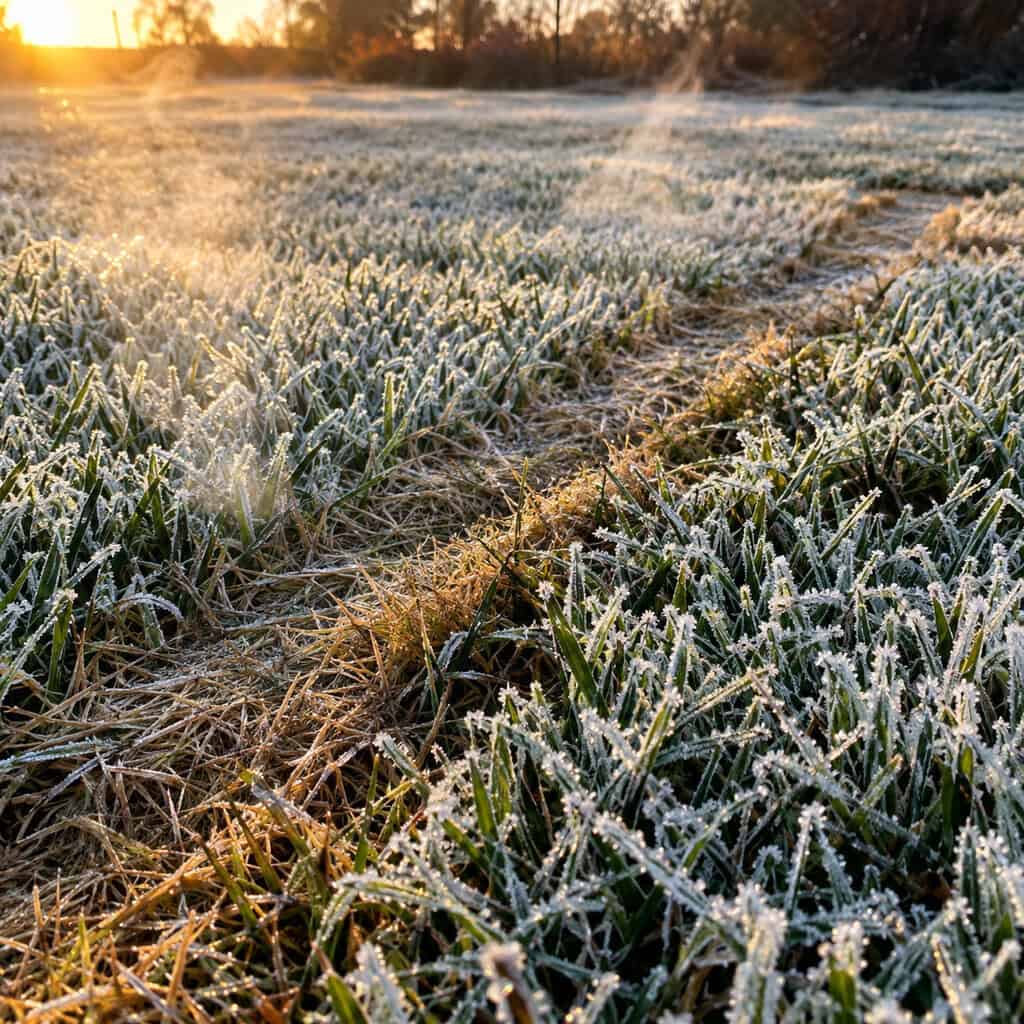
Frozen blades are glass. The cells are full of ice, and they shatter under the deck and the tires.
What you get is bruised, straw-colored tracks in the exact pattern you mowed, and they don’t heal until the grass actively grows again in spring.
Wait for the midmorning thaw. Three hours of patience saves five months of looking at tire lines.
15. Spreading Winterizer on Frozen or Snow-Covered Ground
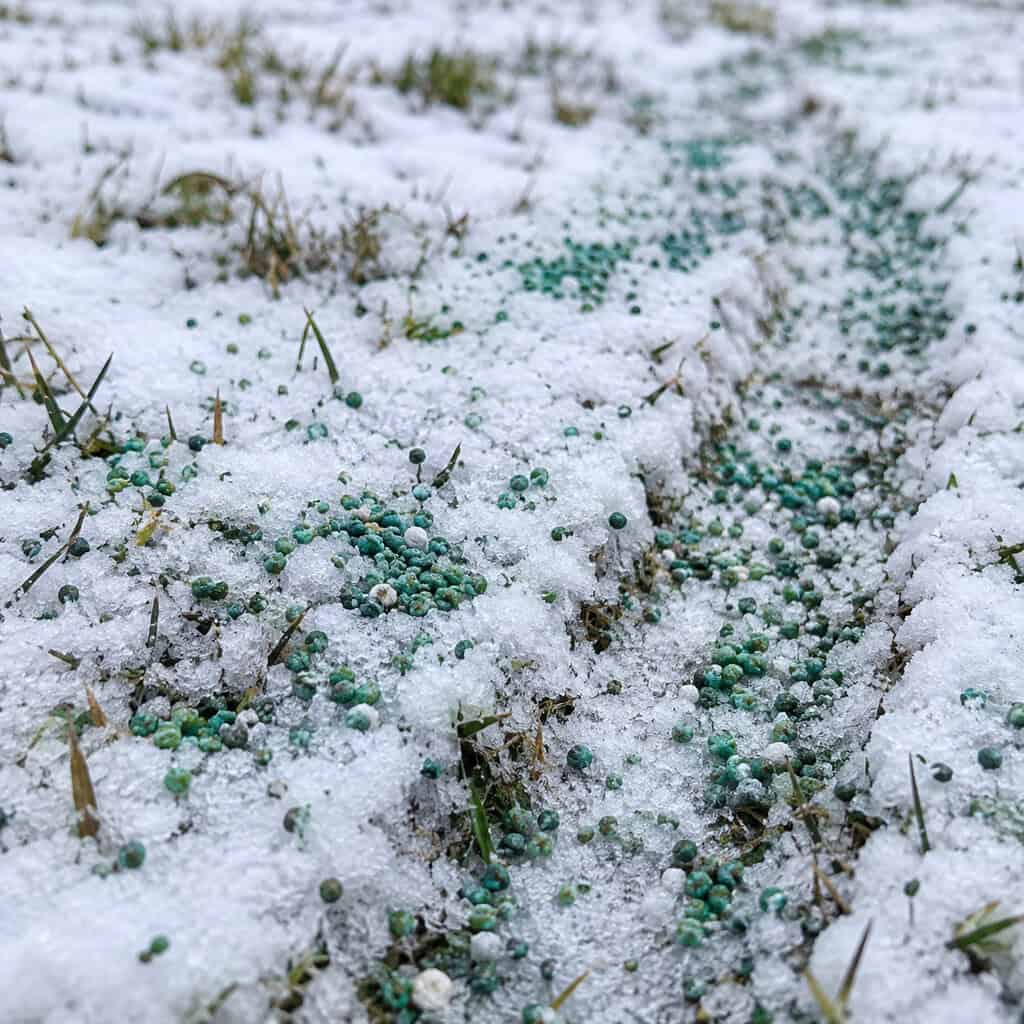
Frozen soil absorbs nothing. The granules sit on the surface like gravel.
First melt, they wash off with the runoff — into the street, the storm drain, and eventually somebody’s lake. That’s why states including Minnesota, Wisconsin, Michigan, and Maryland restrict or ban fertilizer applications on frozen or snow-covered ground.
If the ground is hard, you’re late. Put the bag in the garage and hit it in October next year.
16. A Thick Thatch Layer Going Under the Snow
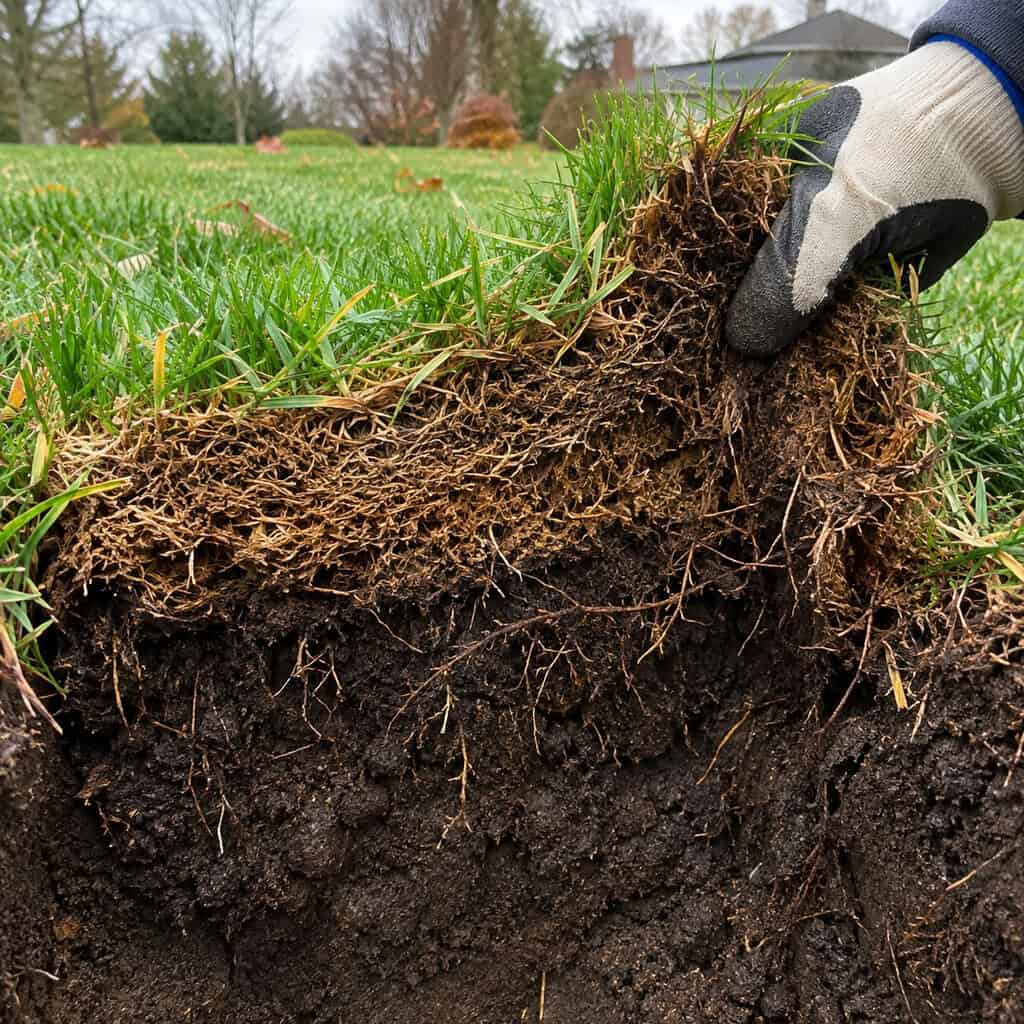
Half an inch of thatch is normal. An inch is a sponge.
That spongy layer holds water against the crowns for months and provides the organic substrate snow mold fungi feed on. Combine heavy thatch with late nitrogen and lush tall growth and you’ve built the ideal disease environment. Iowa State University Extension ties snow mold prevention to exactly those three factors.
Push a screwdriver in and look at the spongy layer above the soil. Over half an inch, put dethatching on next fall’s early calendar.
17. Waiting Until Spring to Kill Broadleaf Weeds
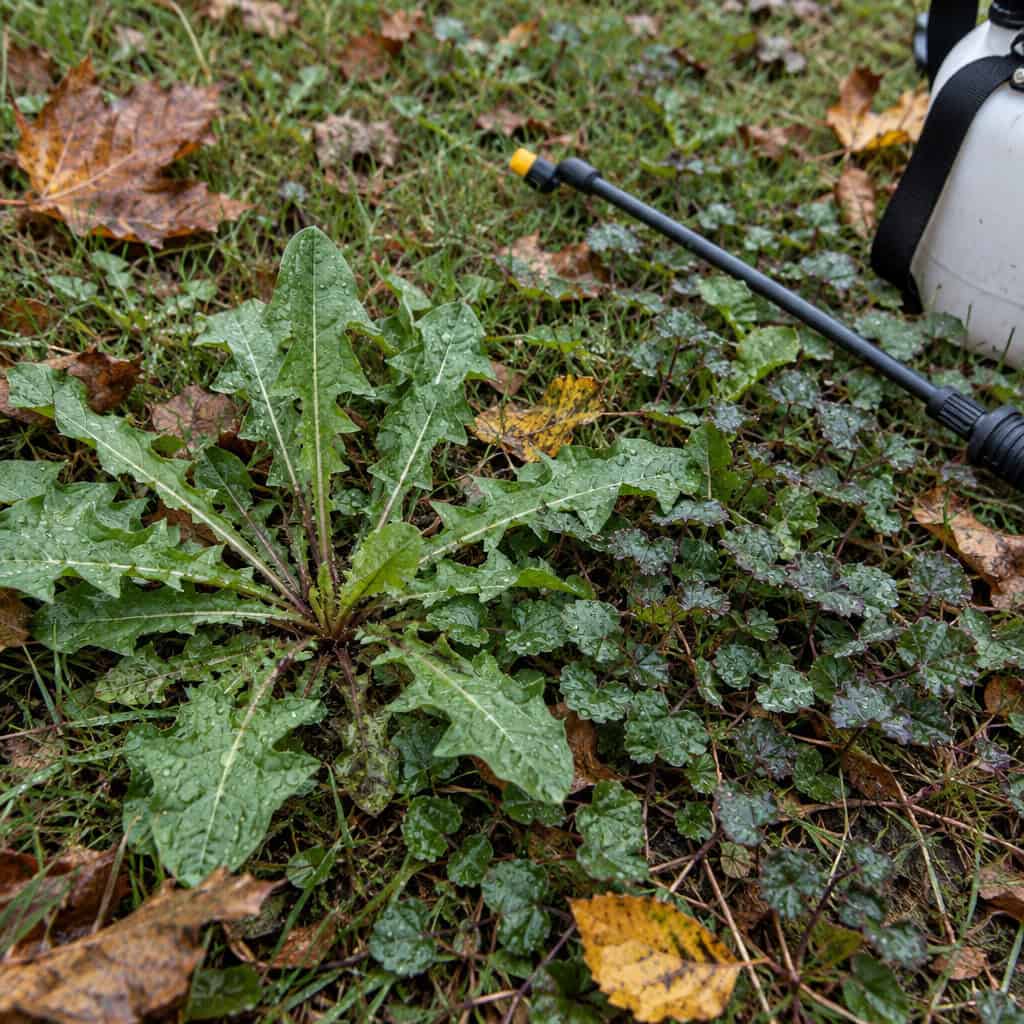
Fall is when dandelion, clover, plantain, and ground ivy pull sugars down into their root systems for winter storage.
Spray a broadleaf herbicide in that window — mid-September through early November, while daytime temps still reach the mid-50s — and the plant carries it straight to the roots. Kill rates are dramatically better than spring applications on the same weeds.
Miss it and you spend April fighting established perennial weeds with deep reserves.
18. Skipping the Irrigation Blowout
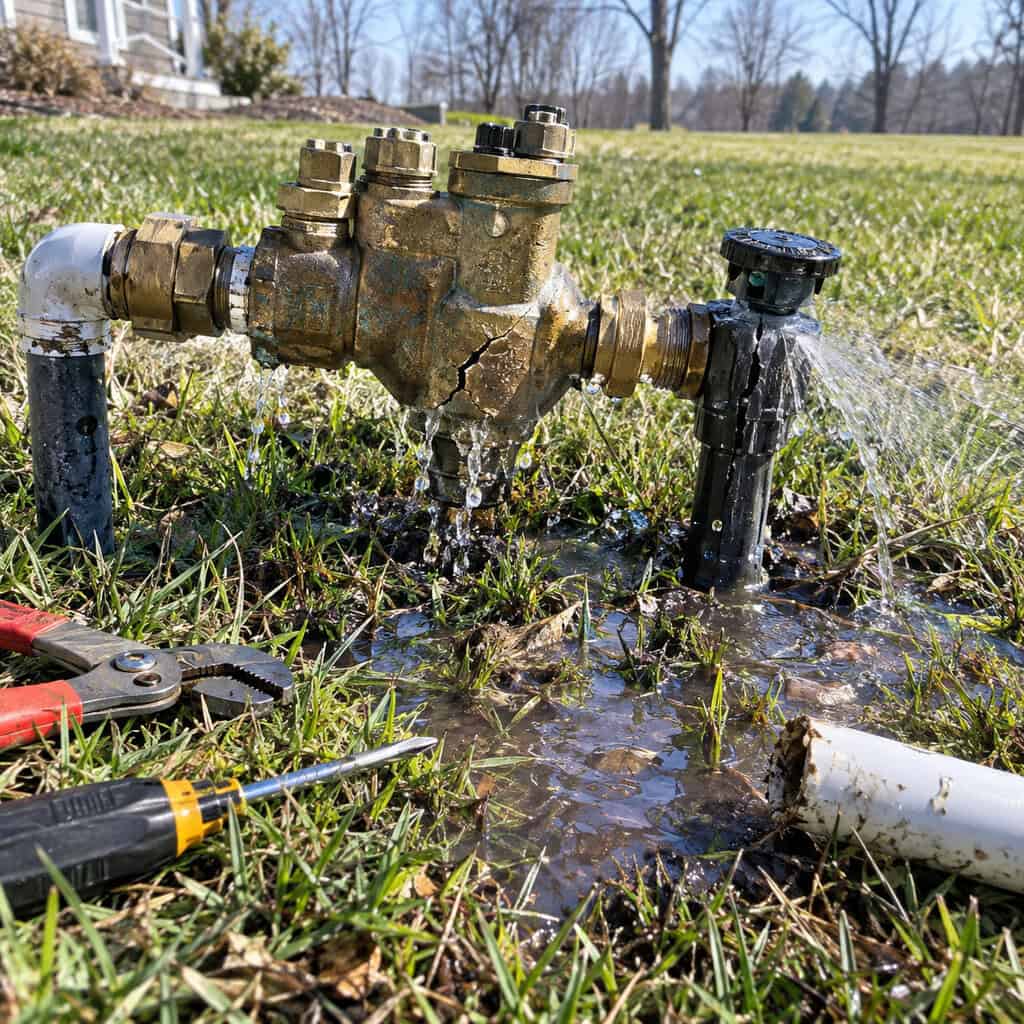
Water expands about 9% when it freezes. That’s enough force to split brass.
Soil freezes from the top down, so the shallow stuff goes first: heads sitting 4 to 6 inches deep, then lateral lines at 8 to 12 inches. The backflow preventer above ground is the most vulnerable part on the whole system because it’s exposed on all sides with water trapped in the body.
A professional blowout runs roughly $75 to $150 for a typical residential system. They push 40 to 80 psi of compressed air through zone by zone until the mist clears. A cracked backflow assembly alone is $300 to $600 to replace. A split manifold with excavation runs into four figures.
Do it before the first hard freeze, not the first frost. A light frost on the grass isn’t the concern — sustained air temperatures in the low 20s driving frost into the soil is.
If you’re doing it yourself, use a compressor rated for enough CFM (20+ for most residential systems) rather than high pressure. Never exceed 80 psi on PVC or 50 psi on polyethylene, and never run a zone dry for more than about two minutes.
Then close the main shutoff, open the backflow test cocks partway, drain the manual valves, and disconnect every hose from every spigot. A hose left attached traps water in the sillcock and splits the pipe inside the wall.
19. Laying Sod Too Late in the Season

Sod needs weeks of root-to-soil contact and active growth to knit in. Install it three weeks before freeze-up and it behaves like carpet.
Seams shrink, edges dry and curl, and the whole install lifts off the ground when the soil heaves. You paid $400 a pallet for something you’ll be re-laying in April.
If you’re past the window, wait. Fall sod works when there’s still growing time left in the season, and fails cold when there isn’t.
20. Never Checking for Grubs Before Winter
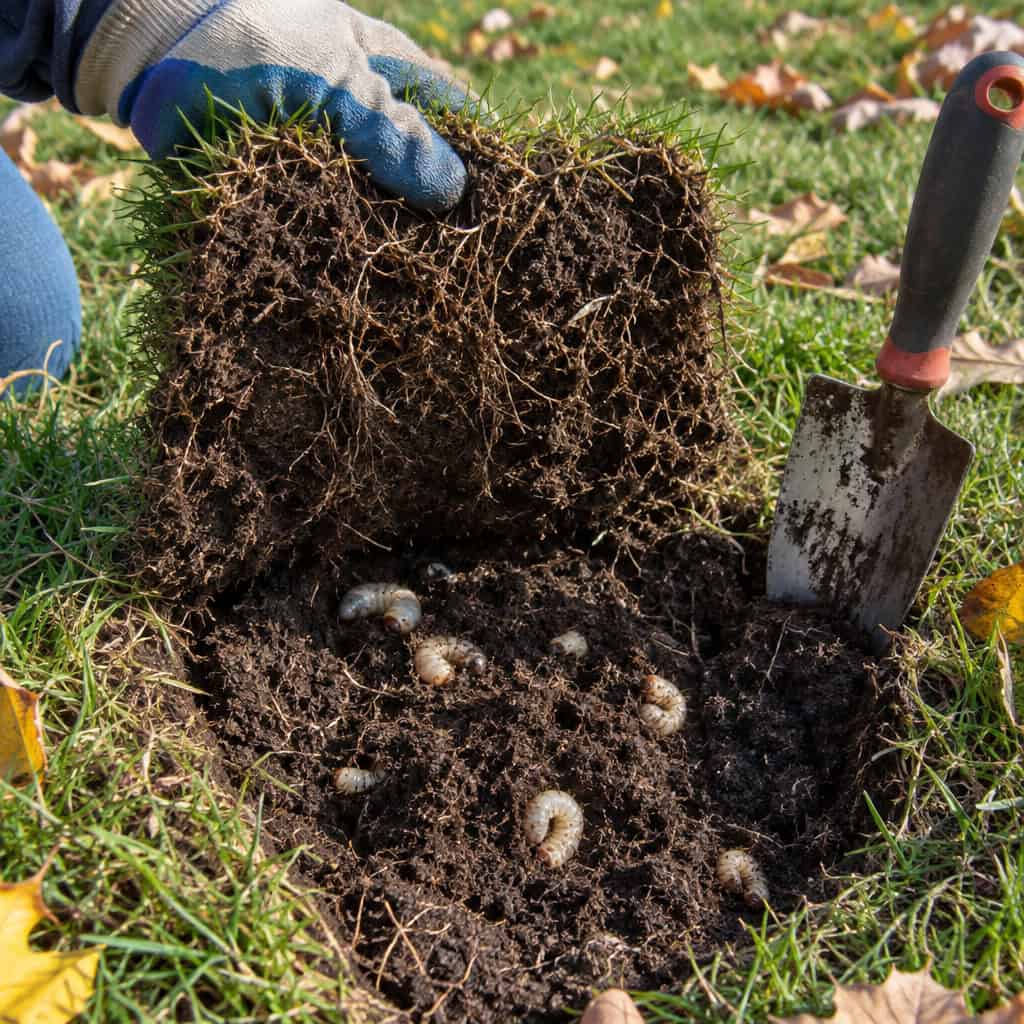
Grubs are the damage nobody diagnoses until spring, because the symptom looks like drought.
Japanese beetle, masked chafer, and European chafer larvae feed heavily on roots through September and October, then burrow 4 to 8 inches down to overwinter. The turf they hollowed out looks passable in November and comes back thin, patchy, and dead in April.
Run the tug test. Grab a handful of suspect turf and pull. If it peels back like a rug with no roots holding it, you have grubs.
Then cut a one-square-foot flap of sod three inches deep and count. C-shaped, cream-colored, orange-headed larvae. Fewer than 5 per square foot is tolerable in a healthy lawn. Ten or more warrants treatment.
Timing matters more than product. Preventives containing chlorantraniliprole or imidacloprid go down in late spring to early summer, before eggs hatch. Curatives with trichlorfon or carbaryl work on actively feeding larvae in late summer and early fall. Applying either one in November accomplishes nothing — the grubs are too deep and too far into dormancy.
Watch for the second clue too. Skunks, raccoons, and crows tearing the lawn into strips overnight aren’t after your grass. They’re after what’s under it.
21. A Dull Blade on the Final Cut

A sharp blade slices. A dull one tears.
Look closely at the cut tips a day later — frayed, whitish, shredded. Those are open wounds, and you just created several million of them heading into the wettest, most fungus-friendly months of the year.
Sharpen before the last mow, not after. Then drain the fuel and hang it up.
22. Trying to Seed a Warm-Season Lawn in Fall
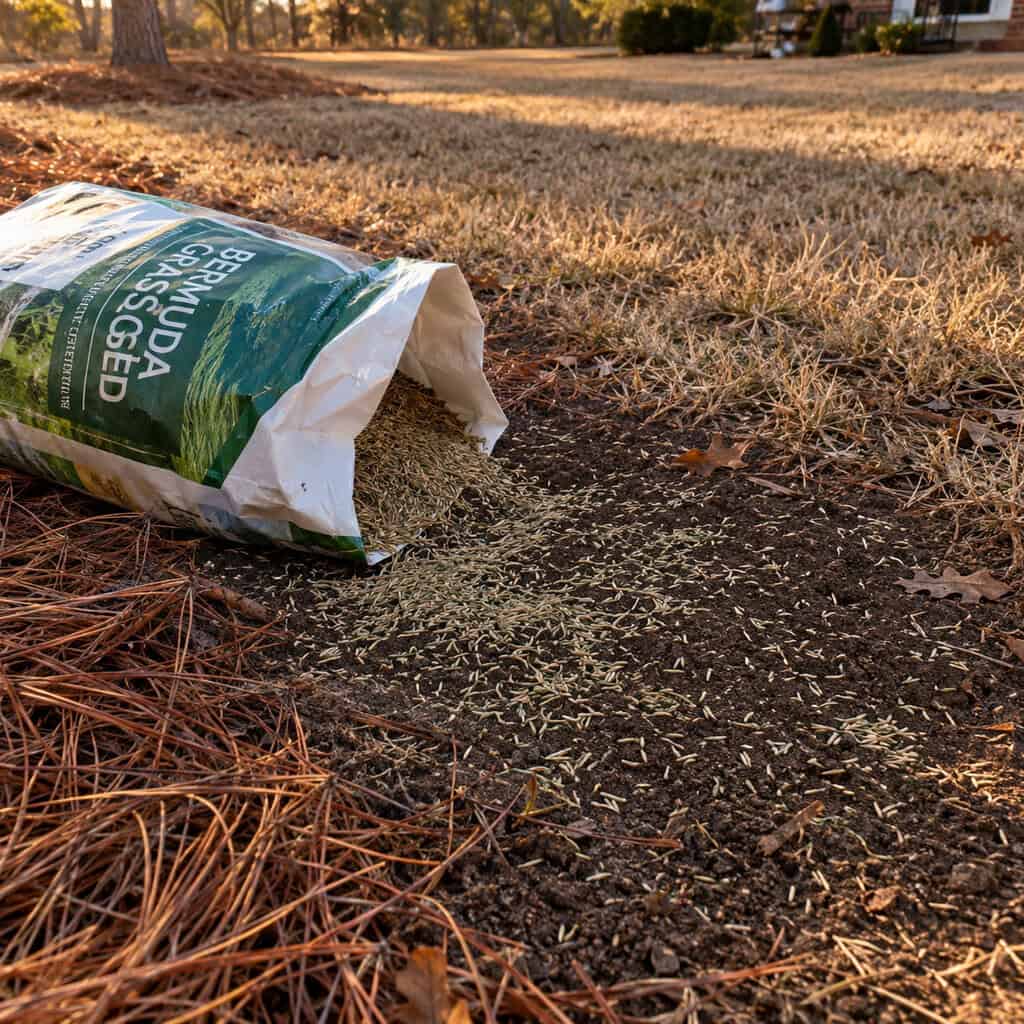
Bermuda and zoysia seed need soil temperatures around 65 to 70°F to germinate reliably. In September the soil is already heading the other direction.
Best case, nothing comes up and you wasted the bag. Worst case, it germinates in a warm stretch and the first hard frost kills every seedling.
Warm-season seeding belongs in late spring through early summer. This is the most expensive fall mistake made across the South every single year.
23. Guessing Instead of Soil Testing
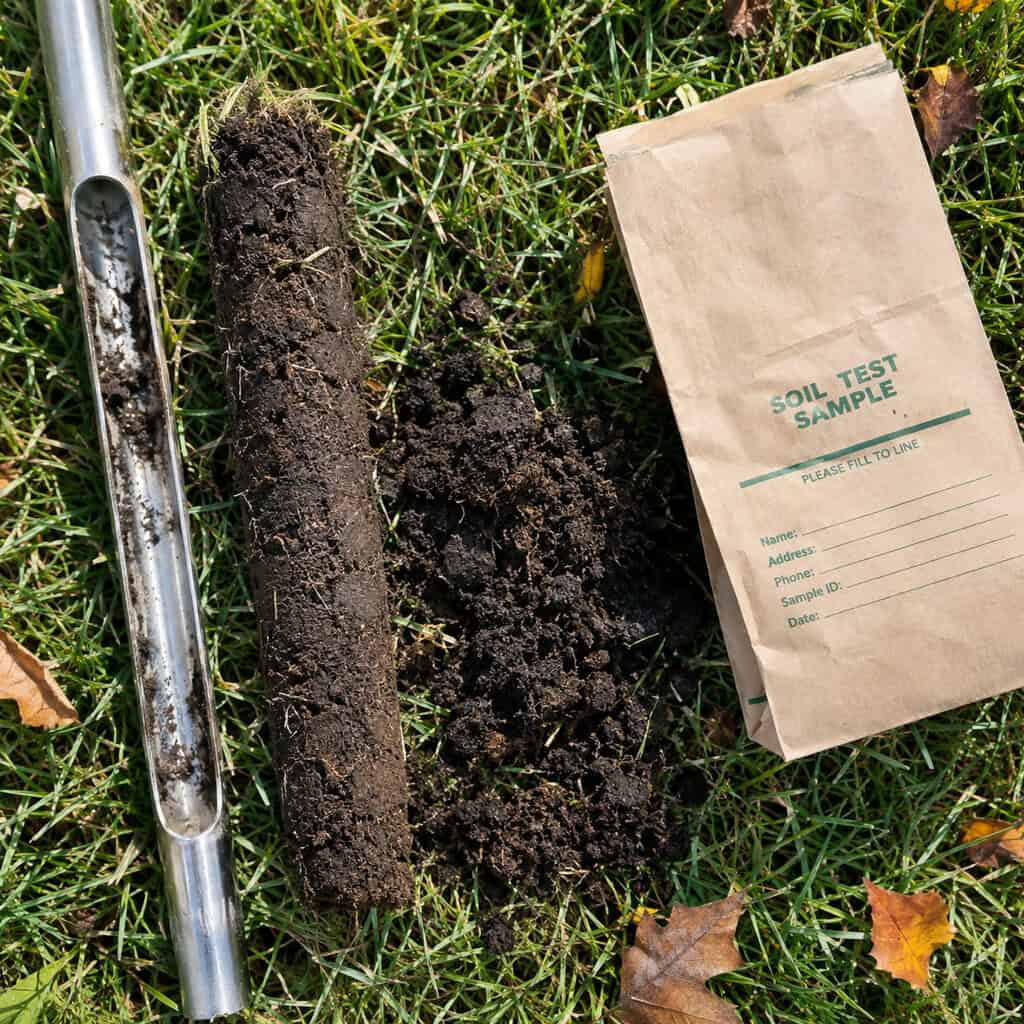
Potassium is the nutrient most directly tied to cold hardiness, cell wall strength, and disease resistance. Most people never check whether they have any.
Meanwhile pH drifts. Below about 6.0, the nitrogen and phosphorus already in your soil become progressively less available, so you fertilize more and see less.
A county extension soil test runs $10 to $25 and takes a couple of weeks. Pull it in fall and you’ll have real numbers before you buy a single bag next season.
Stop reading the marketing on the front of the bag. Read your own dirt.
24. Leaving Bare Spots Open All Winter
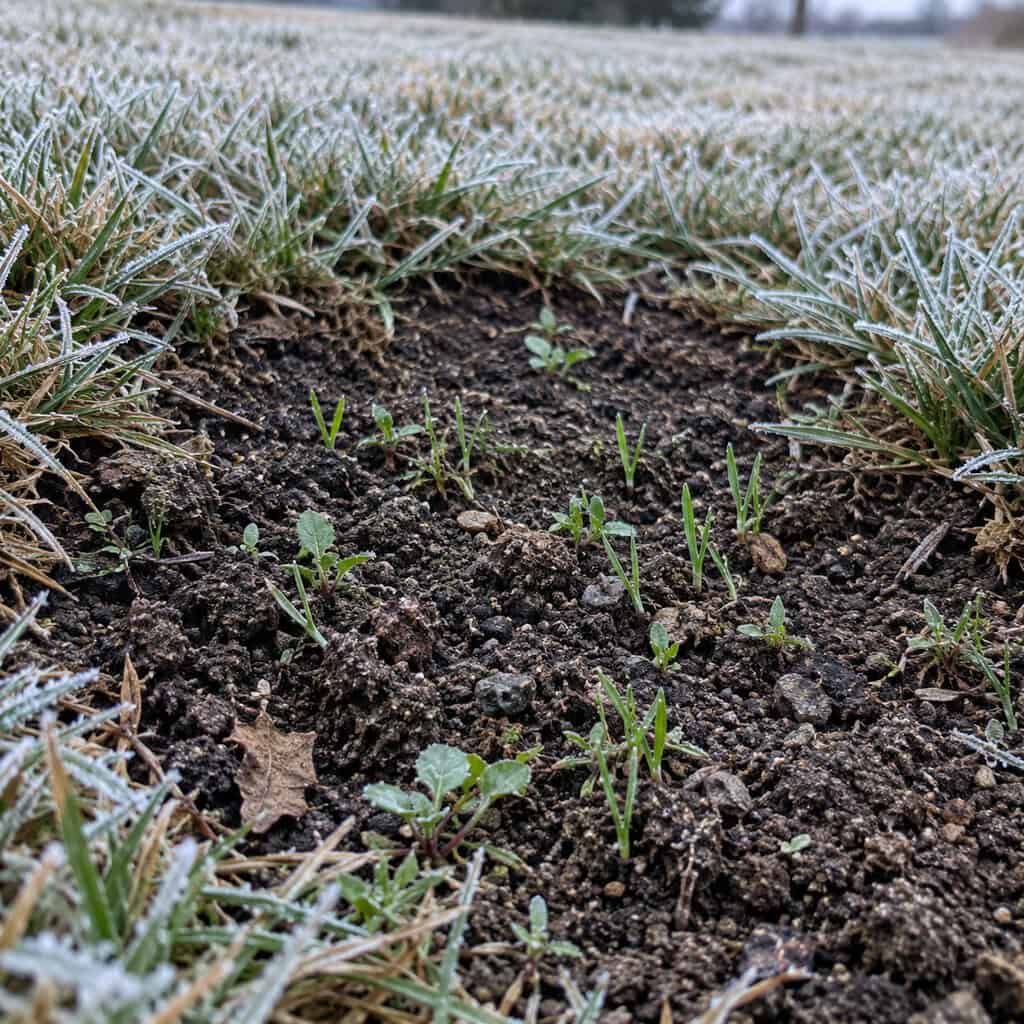
Bare soil doesn’t stay bare. It erodes, crusts over, and then gets claimed.
Poa annua, chickweed, henbit, and hairy bittercress germinate in cool fall soil and sit there quietly all winter. Spring arrives and those spots are already occupied by something you didn’t plant.
Dormant-seed the patch in late fall so the seed sits until soil temps hit the 50s, or throw a light straw cover over it. Anything beats leaving the door open.
25. Wearing the Same Shortcut Across Frozen Turf

Frozen crowns snap. Not bend — snap.
The path everyone takes to the trash cans in January shows up in April as a brown trail that nobody can explain, because there’s nothing visibly wrong with it in winter.
Change the route, or put down a couple of stepping stones and accept that the traffic isn’t going anywhere.
26. Attacking the Soggy Lawn on the First Warm Saturday

Fifty-five degrees in March and the rake comes out. Don’t.
Saturated, half-frozen soil compacts under every footstep, and hard raking rips out crowns that were three weeks from recovering on their own. Matted snow-mold patches usually fill back in as the turf dries and warms — University of Illinois Extension notes most winter injury resolves without intervention once conditions improve.
Wait until the soil is firm enough that your shoe doesn’t leave a print. Then lightly fluff matted areas with a leaf rake to get air moving.
The hardest lawn task in March is leaving it alone.
Almost every problem on this list was set in motion months before the snow arrived, and almost none of them cost anything to avoid — a lower final mow, a hose coiled on a hook, a bag of fertilizer applied in the right month.
Winter doesn’t kill lawns. It just publishes the results.