

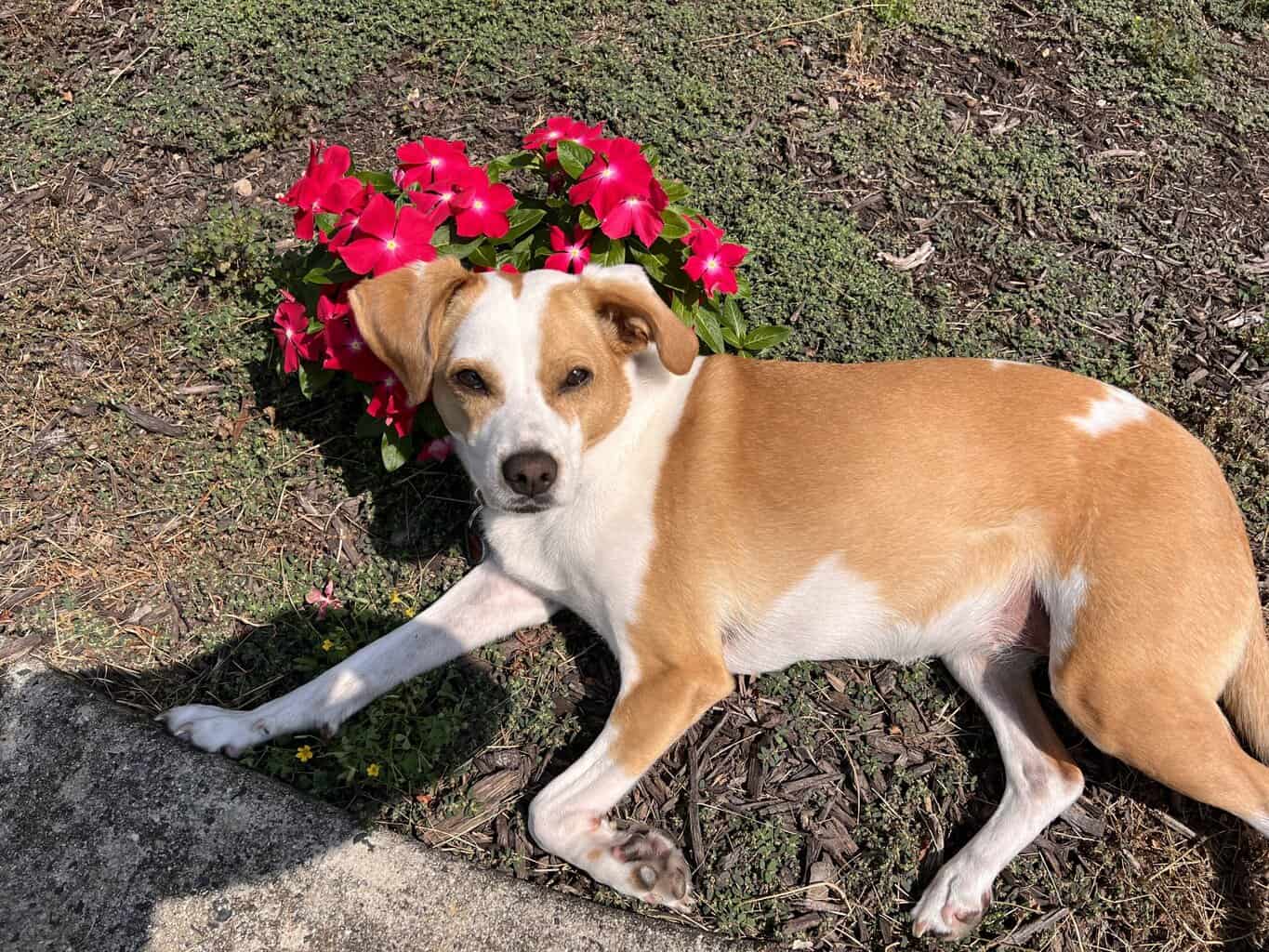
I love a yard that looks like it belongs on the cover of a garden magazine.
Lush shrubs, blooming flowers, perfectly placed borders — it’s what makes a house feel like a home.
But as a dog owner, your beautiful landscaping could be hiding a serious danger.
Many of the most popular yard plants sold at every garden center in the country are secretly poisonous to dogs.
And unlike houseplants sitting on a high shelf, your dog is outside with these plants every single day — unsupervised, sniffing, digging, and chewing.
Here are 21 common yard and landscaping plants that are toxic to dogs, and the safe alternatives you should plant instead.
1. Azalea (Rhododendron)

The azalea is one of the most popular flowering shrubs in American landscaping.
Entire neighborhoods are lined with them, and they put on a stunning show every spring.
But the entire plant — leaves, flowers, stems — contains grayanotoxins.
Your dog doesn’t even need to eat much. Just a few leaves can cause vomiting, diarrhea, drooling, paralysis, and potentially death.
The Pet-Safe Swap: Plant a Camellia instead. You get the same gorgeous flowering shrub without any of the toxins.
2. Oleander

This is one of the most beautiful — and most deadly — plants you can have in your yard.
It thrives in warm climates and is used as hedging, privacy screening, and highway medians across the South and Southwest.
Every single part of the oleander is extremely toxic. The leaves, flowers, bark, and even the smoke from burning it can be lethal.
Oleander contains cardiac glycosides that attack the heart directly.
The Pet-Safe Swap: Use a Crape Myrtle for your privacy hedge. It flowers beautifully all summer and is completely non-toxic.
3. Yew (Taxus)

These dense, dark-green evergreen shrubs are a staple of traditional landscaping.
You see them trimmed into hedges against house foundations everywhere.
But the yew is incredibly dangerous. Nearly every part of the plant contains taxine alkaloids — a toxin so potent that there is no antidote.
Ingestion causes sudden cardiac arrest. Dogs have died within hours of eating the needles.
The Pet-Safe Swap: Plant a Boxwood alternative like Japanese Holly (Ilex crenata). It gives you the same dense, trimmed evergreen look and is safe for dogs.
4. Foxglove

Foxglove is that tall, dramatic flower with bell-shaped blooms that looks amazing in a cottage garden.
It is also one of the most toxic plants in existence.
Every part of it contains cardiac glycosides — the same class of compounds used to make the heart drug digitalis.
If your dog eats any part of this plant, it can cause fatal cardiac arrhythmias.
The Pet-Safe Swap: Plant Snapdragons. They give you a similar tall, colorful flower spike and are completely safe.
5. Lily of the Valley

These dainty little white bell-shaped flowers are a classic shade-garden plant.
They smell incredible and look completely harmless.
They are anything but harmless. Lily of the Valley contains over 30 different cardiac glycosides.
Eating even a small amount can cause severe vomiting, heart arrhythmias, seizures, and death.
The Pet-Safe Swap: Plant Astilbe instead. It thrives in shade, produces beautiful feathery plumes, and is 100% non-toxic.
6. Hydrangea

These big, puffy blooms in blue, pink, and white are in practically every suburban front yard.
They are one of the most popular landscaping shrubs in the country.
But hydrangea leaves and buds contain cyanogenic glycosides — compounds that release cyanide when chewed.
While a dog would need to eat a fairly large amount for it to be fatal, even a small nibble causes vomiting, diarrhea, and lethargy.
The Pet-Safe Swap: Plant a Rose of Sharon (Hibiscus syriacus). It gives you similar large, showy blooms and is pet-safe.
7. Autumn Crocus

This one is particularly sneaky because it blooms in the fall when most other flowers are done.
It looks like a pretty little purple flower, and most people have no idea how dangerous it is.
Autumn Crocus contains colchicine, which is extremely toxic and can take days to show symptoms.
By the time you realize something is wrong, your dog may already have severe organ damage — including kidney failure, liver damage, and respiratory failure.
The Pet-Safe Swap: Plant fall-blooming Asters. They give you the same purple autumn color and are totally safe.
8. Tulips

They are the quintessential spring flower, and millions are planted in yards every year.
The blooms themselves are mildly irritating, but the real danger is underground.
The bulb of a tulip is essentially a concentrated ball of toxins called tulipalin.
If your dog is a digger — and let’s be honest, most dogs are — they can unearth and chew a bulb, causing extreme drooling, vomiting, and cardiac problems.
The Pet-Safe Swap: Plant Zinnias for bright spring and summer color. They’re completely non-toxic and come in every color you can imagine.
9. Daffodils

Like tulips, daffodils are planted everywhere and the bulbs are the most dangerous part.
They contain lycorine, a toxic alkaloid that causes severe vomiting.
But daffodils also contain calcium oxalate crystals in the outer layers of the bulb.
If your dog digs one up and chews it, expect violent vomiting, diarrhea, abdominal pain, and in severe cases, cardiac arrhythmias and tremors.
The Pet-Safe Swap: Plant Marigolds instead. They’re bright, cheerful, and will never send your dog to the emergency vet.
10. Sago Palm

These look like cool little tropical trees and are sold at every big box store with a garden section.
In warmer climates, they are a common landscape plant used around pools and patios.
Do not let your dog near this plant. Every single part of the Sago Palm is toxic, but the seeds are the deadliest.
They contain cycasin, which causes severe liver failure. The fatality rate in dogs that ingest Sago Palm is estimated to be over 50%.
The Pet-Safe Swap: Plant a Ponytail Palm or Areca Palm instead. Both give you that tropical look and are completely pet-safe.
11. Chrysanthemums (Mums)

Mums are the fall decorating staple. They show up on every porch and garden bed the second September hits.
They look harmless, but they contain pyrethrins — the same compound used in flea and tick insecticides.
While the concentrations in the plant are low, eating mums will still cause vomiting, diarrhea, drooling, and skin rashes in dogs.
The Pet-Safe Swap: Use Sunflowers for your fall displays. They’re big, bold, seasonal, and completely non-toxic.
12. Holly

Holly bushes are everywhere — as foundation plantings, hedges, and holiday decorations.
The spiky leaves are a mild deterrent, but those shiny red berries are attractive to curious dogs.
Holly berries contain saponins and methylxanthines, which cause severe vomiting, diarrhea, and lethargy.
If your dog eats a large number of berries, it can cause dangerous drops in blood pressure.
The Pet-Safe Swap: Use Winterberry (Ilex verticillata) alternatives or plant a Viburnum for a similar dense, berry-producing shrub that is safer for pets.
13. Wisteria

Few things are more beautiful than a wisteria vine in full bloom, dripping with purple flower clusters.
It is an absolute showstopper on a pergola or fence.
But the seeds and pods are toxic. They contain a compound called wisterin, along with lectins, that wreaks havoc on the digestive system.
If your dog chews on the seed pods, expect severe vomiting (sometimes with blood), diarrhea, and dehydration.
The Pet-Safe Swap: Grow a Climbing Hydrangea (Hydrangea petiolaris) or Jasmine (Jasminum) for a similar cascading vine look. Star Jasmine is non-toxic to dogs.
14. Lantana

Lantana is incredibly popular in warm-climate landscaping because it is colorful, drought-tolerant, and blooms nonstop.
You see it in flower beds, containers, and hanging baskets everywhere.
But it contains pentacyclic triterpenoids that are toxic to dogs, especially in the unripe berries.
These compounds attack the liver directly. Symptoms start with vomiting and weakness, and in severe cases progress to liver failure and jaundice.
The Pet-Safe Swap: Plant Pentas instead. They are equally heat-loving, attract butterflies, and are safe for dogs.
15. Larkspur (Delphinium)

Larkspur produces those tall, gorgeous spikes of blue and purple flowers that look incredible in a garden border.
They are also one of the most toxic plants you can grow.
All parts of the plant contain alkaloids that cause neuromuscular paralysis.
Eating larkspur can cause excessive salivation, muscle tremors, seizures, respiratory failure, and death.
The Pet-Safe Swap: Plant Salvia or Russian Sage. You get a similar tall, purple-blue flower spike without any of the danger.
16. Morning Glory

Morning Glories are a popular fast-growing vine used to cover fences, trellises, and mailboxes.
They produce beautiful trumpet-shaped flowers in shades of blue, purple, pink, and white.
But the seeds are the toxic part. They contain lysergic alkaloids — yes, compounds chemically related to LSD.
If your dog eats the seeds, it can cause disorientation, diarrhea, agitation, tremors, and loss of coordination.
The Pet-Safe Swap: Grow a Mandevilla vine instead. It produces stunning trumpet-shaped flowers and is non-toxic to dogs.
17. Milkweed

Milkweed has surged in popularity because it is the primary food source for monarch butterflies.
Lots of homeowners are planting it specifically to help pollinators.
The problem is that milkweed contains cardiac glycosides called cardenolides — the same type of toxins found in oleander and foxglove.
Ingestion causes severe vomiting, diarrhea, difficulty breathing, a weak and rapid pulse, and potentially death.
The Pet-Safe Swap: Plant Bee Balm (Monarda) or Coneflowers (Echinacea) to attract pollinators instead. Both are non-toxic to dogs.
18. Boxwood

Boxwood hedges are the backbone of formal landscaping. They’ve been used for centuries in estate gardens and are in millions of yards today.
Those neatly trimmed green walls contain steroidal alkaloids.
If your dog decides to chew on the clippings after you trim the hedge, it can cause vomiting, diarrhea, dizziness, and in severe cases, seizures and respiratory failure.
The Pet-Safe Swap: Use Dwarf Yaupon Holly (Ilex vomitoria ‘Nana’) or Privet alternatives for a similar tight, formal hedge. Despite its unfortunate Latin name, Dwarf Yaupon is considered non-toxic to dogs.
19. Iris

Irises are a beloved perennial that come back year after year with minimal care.
They produce those stunning, ruffled flowers in almost every color of the rainbow.
But the rhizome — the thick, fleshy root that sits just below the soil surface — is the most toxic part.
If your dog digs one up, it can cause severe vomiting, drooling, diarrhea, and lethargy.
The Pet-Safe Swap: Plant Daylilies (Hemerocallis) — but only if you don’t have cats. Daylilies are safe for dogs but highly toxic to cats. If you have both, go with Coral Bells (Heuchera) instead.
20. Periwinkle (Vinca)

Periwinkle is a low-growing groundcover used to fill in bare spots, borders, and shady areas.
It spreads quickly, produces little purple flowers, and requires almost no maintenance.
But it contains vinca alkaloids — the same class of compounds used in chemotherapy drugs.
If your dog eats a significant amount, it can cause vomiting, diarrhea, low blood pressure, tremors, seizures, and in rare cases, death.
The Pet-Safe Swap: Use Creeping Thyme as your groundcover instead. It’s tough, low-growing, smells amazing, and is completely safe.
21. Geraniums

Geraniums are one of the most common container and garden bed plants in America.
They are on virtually every front porch from spring through fall.
They contain two toxic compounds — geraniol and linalool — that irritate a dog’s skin and digestive system.
Eating geranium leaves or flowers causes lethargy, loss of appetite, vomiting, and skin rashes.
The Pet-Safe Swap: Plant Petunias instead. They come in just as many colors, look great in containers, and are perfectly pet-safe.
Conclusion
Your yard doesn’t have to be a danger zone for your dog.
For almost every toxic landscaping plant on the market, there’s a gorgeous, non-toxic alternative that will look just as good — or better — in your yard.
Before you buy anything from the garden center this spring, take 30 seconds and run the name through the ASPCA Toxic Plant Database.
Your dog is out in that yard every single day. Knowing what’s growing in it could save their life.