

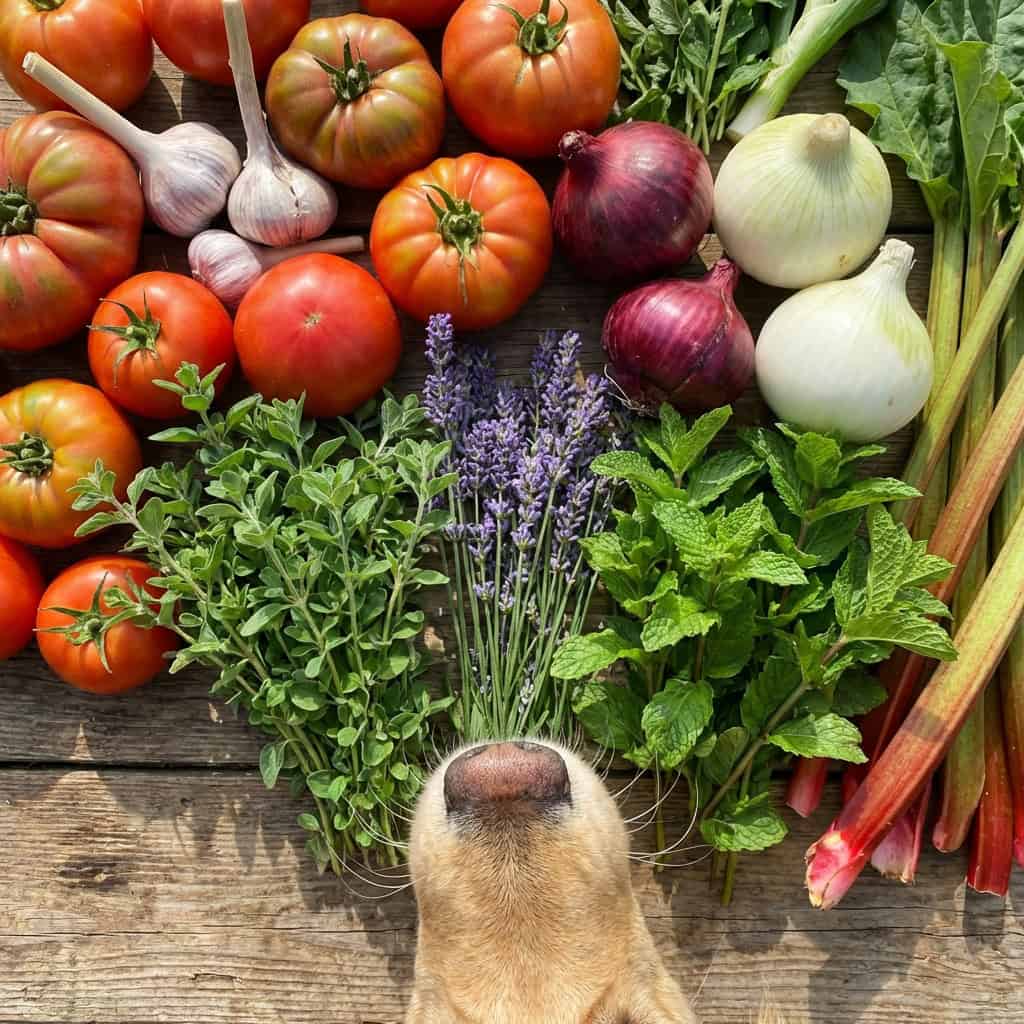
I love growing my own food.
There is something deeply satisfying about walking out to the backyard, picking a ripe tomato off the vine, and eating it ten minutes later.
But as a pet owner, I learned something alarming that most gardeners never think about.
Many of the most common vegetables and herbs growing in your backyard garden are secretly toxic to cats and dogs.
And the tricky part? In most cases, the food itself is perfectly fine for humans. It is the plant — the leaves, stems, roots, or unripe fruit — that is poisonous to your pets.
Your dog doesn’t know the difference between a ripe tomato and a green one. Your cat doesn’t know that the pretty herb she just nibbled on could send her to the emergency vet.
Here are 17 common garden plants that are toxic to pets and what you need to know to keep your animals safe.
1. Tomato Plants

Everybody grows tomatoes. They are the backbone of the backyard garden.
The ripe red fruit is perfectly safe for dogs and cats in small amounts.
But the green parts of the plant — the leaves, stems, and unripe green tomatoes — contain a toxic compound called solanine and a related compound called tomatine.
If your dog chews on the vines or eats green tomatoes off the plant, it can cause severe drooling, vomiting, diarrhea, confusion, weakness, and a dangerously slow heart rate.
Toxic to: Dogs and Cats
2. Potato Plants

Like tomatoes, potatoes are part of the nightshade family.
The potato you cook and eat is generally safe. But the leaves, stems, and any green or sprouted parts of the potato contain solanine — the same toxin found in tomato plants.
Dogs are notorious for digging, and if your dog unearths a raw green potato or chews on the plant itself, it can cause severe gastrointestinal distress, confusion, and weakness.
Even raw potatoes that have turned green on the counter are dangerous.
Toxic to: Dogs and Cats
3. Rhubarb

Rhubarb pie is a classic, and the red stalks are perfectly safe for humans to eat.
But the leaves are a completely different story.
Rhubarb leaves contain dangerously high concentrations of oxalic acid and soluble oxalate salts. If your pet eats the leaves, these compounds bind to calcium in the body and can cause kidney failure.
Symptoms include drooling, vomiting, diarrhea, tremors, and in severe cases, complete renal shutdown.
Toxic to: Dogs and Cats
4. Onions

Onions are in almost every garden and almost every meal we cook.
They are also one of the most dangerous foods for pets — especially cats.
Onions contain compounds called organosulfoxides that break down into highly reactive oxidants in your pet’s body. These oxidants destroy red blood cells, causing a condition called hemolytic anemia.
The scary part is that the damage is cumulative. Even small amounts eaten over several days can build up and cause life-threatening anemia.
Toxic to: Dogs and Cats (cats are significantly more sensitive)
5. Garlic

Garlic is in the same family as onions, and it is actually more toxic on a per-weight basis.
Many people grow garlic in their gardens because it stores well and is used in practically everything.
Garlic contains the same red-blood-cell-destroying compounds as onions, but they are more concentrated. Veterinary toxicologists estimate garlic is three to five times more toxic than onions.
Even a small amount can cause lethargy, vomiting, an elevated heart rate, and pale gums from anemia.
Toxic to: Dogs and Cats (cats are significantly more sensitive)
6. Chives

People grow chives as an easy, low-maintenance herb that comes back every year.
Most pet owners have no idea that chives are part of the allium family — the same family as onions and garlic.
They contain the same organosulfur compounds that destroy red blood cells.
Because chive plants are small and grow close to the ground, they are easy for a curious pet to nibble on while exploring the garden.
Toxic to: Dogs and Cats
7. Leeks

Leeks are a popular garden vegetable for soups, stews, and quiches.
Like onions, garlic, and chives, leeks are an allium — and they carry the same toxic risk.
Many gardeners don’t make the connection because leeks look nothing like an onion. But the same compounds that destroy red blood cells are present throughout the entire plant.
If your pet gets into a row of leeks and starts chewing, the damage to their blood cells can be severe.
Toxic to: Dogs and Cats
8. Grapes (and Grapevines)

A lot of homeowners grow grapevines on backyard arbors, fences, and trellises.
Grapes are one of the most well-known toxic foods for dogs, but the danger extends to the entire vine.
The exact toxic substance in grapes has only recently been identified as tartaric acid, and the toxicity varies widely — some dogs can eat a few grapes with no effect, while others suffer complete kidney failure from a small handful.
There is no way to predict how your dog will react, which makes grapes one of the most dangerous items in your garden.
Toxic to: Dogs (extremely dangerous — potentially fatal kidney failure)
9. Eggplant

Eggplant is another member of the nightshade family, right alongside tomatoes and potatoes.
The fruit itself is generally safe for dogs in small cooked amounts, but it is toxic to cats.
The leaves and stems contain solanine, just like tomato and potato plants. And the fruit contains compounds that can trigger allergic reactions and gastrointestinal distress in cats.
If you have a cat that roams near your garden, keep them away from your eggplant patch.
Toxic to: Cats (the fruit); Dogs and Cats (the plant itself)
10. Chamomile

Chamomile is a popular garden herb grown for teas and skincare.
Those cute, daisy-like flowers look completely harmless.
But chamomile — particularly English, Roman, and True chamomile varieties — contains toxic compounds that affect both dogs and cats. It causes vomiting, diarrhea, loss of appetite, and allergic skin reactions.
With long-term exposure, chamomile can even increase the risk of bleeding disorders in pets, causing symptoms like nosebleeds and bloody stool.
Toxic to: Dogs and Cats
11. Oregano

This one shocks almost everyone.
Oregano is in every herb garden in America. You use it on pizza, in pasta sauce, and in marinades.
But the essential oils in oregano — particularly phenols and terpenoids — are toxic to pets, and especially dangerous for cats.
Cats lack a specific liver enzyme called glucuronyl transferase that is needed to break down these oils. This means even a relatively small amount of oregano can cause vomiting, diarrhea, and in severe cases, liver damage.
Toxic to: Dogs and Cats (cats are at much higher risk for liver damage)
12. Lavender

Lavender is one of the most popular plants in any garden. People grow it for its scent, its beauty, and to attract pollinators.
It seems like the most harmless plant imaginable.
But in larger amounts, lavender is toxic to both cats and dogs. Eating the leaves or flowers causes nausea and vomiting.
The bigger danger is lavender essential oil, which is far more concentrated. But even the fresh plant can cause problems if your cat or dog decides to munch on it.
Toxic to: Dogs and Cats
13. Mint

Mint grows like a weed. Once you plant it, good luck containing it.
Most gardeners grow it for mojitos, teas, or just because it smells amazing.
But mint contains essential oils that are toxic to both cats and dogs. In small amounts, a nibble probably will not cause a crisis. But if your pet eats a significant quantity — which is easy to do when mint has taken over half your garden bed — it can cause vomiting, diarrhea, and gastrointestinal irritation.
Toxic to: Dogs and Cats
14. Lemongrass

Lemongrass has become increasingly popular in home gardens, especially for people who cook Asian cuisine.
It looks like a harmless ornamental grass.
But lemongrass contains essential oils and cyanogenic glycosides that are toxic to both dogs and cats. When chewed, those glycosides can interact with your pet’s saliva and create cyanide compounds.
Symptoms include vomiting, diarrhea, and gastrointestinal distress. While it takes a larger amount to cause serious harm, cats are more sensitive and can react to smaller quantities.
Toxic to: Dogs and Cats
15. Bay Laurel

A lot of herb gardeners grow bay laurel for cooking — those are the bay leaves you drop into soups, stews, and sauces.
The leaves contain eugenol and other essential oils that are toxic to pets.
If your dog or cat chews on a bay laurel leaf — fresh off the plant or dried — it can cause vomiting, diarrhea, and gastrointestinal obstruction because the stiff leaves do not break down easily in the digestive tract.
Toxic to: Dogs and Cats
16. Tarragon

Tarragon is a staple in French cooking and is becoming more common in backyard herb gardens.
It looks delicate and unassuming, with thin, soft leaves on slender stems.
But tarragon contains volatile essential oils that are toxic to pets, particularly cats. Ingesting the leaves can cause gastrointestinal upset including vomiting and diarrhea, and in larger amounts, it can cause more serious digestive issues.
Toxic to: Dogs and Cats (cats are more sensitive)
17. Hops

If you brew your own beer at home — or know someone who does — you may have hops growing in your garden.
Hops vines are becoming increasingly common as homebrewing has exploded in popularity.
Hops are extremely dangerous to dogs. They cause a condition called malignant hyperthermia — an uncontrollable spike in body temperature that can reach fatal levels within hours.
Symptoms include heavy panting, a rapidly rising temperature, anxiety, vomiting, and seizures. Without immediate veterinary intervention, hops ingestion can be fatal.
Toxic to: Dogs (potentially fatal)
Conclusion
Growing your own food is one of the best things you can do for your family.
But if you have pets, you need to know what is growing in your garden — and which parts of those plants could send your cat or dog to the emergency vet.
The good news is that you do not have to rip out your tomatoes or stop growing garlic.
A few simple precautions go a long way. Fence off your garden beds or use raised planters that are harder for pets to access. Keep herb gardens in elevated containers or hanging planters. Clean up fallen fruit, dropped leaves, and plant trimmings before your pet gets to them. And always know the signs of poisoning — sudden vomiting, lethargy, drooling, pale gums, or loss of coordination — so you can act fast.
Before you plant anything new this season, run it through the ASPCA Toxic Plant Database.
Five seconds of research could save you thousands of dollars — and your pet’s life.