


You threw away food today that would have grown into more food.
Not metaphorically. Not in some abstract, composting-is-good-for-the-earth kind of way. Literally. The root end of the onion you chopped, the base of the celery you snapped, the seeds you scooped out of that pepper — every single one of those would have produced a new plant if you had stuck it in water or soil instead of the trash.
Most people have no idea how many of the scraps they toss every week are quietly capable of becoming free food. Not in two years. Not with a greenhouse. Right now, on a windowsill, in a glass of water.
Here are 23 kitchen scraps you are throwing away that will actually grow if you give them half a chance.
1. Green Onion Roots

This is the gateway drug of kitchen scrap gardening.
Next time you use green onions, do not throw away the white root ends. Put them in a small glass of water — root side down, about an inch of water — and set them on a sunny windowsill.
Within three days, you will see new green shoots growing from the top. Within a week, they will be long enough to cut and use. Within two weeks, they will look like the green onions you bought at the store.
You can keep this going indefinitely. Cut what you need, leave the roots in the water, and they keep growing back. Change the water every couple of days so it does not get slimy.
One bunch of green onions from the grocery store can produce months of free green onions if you just stop throwing the ends away.
2. Ginger Root

That knobby piece of ginger in your refrigerator — the one you bought for a recipe three weeks ago and forgot about — is a plant waiting to happen.
Look for a piece with small bumps or nubs on the surface. Those are growth buds. Plant the piece in a pot of soil with the buds facing up, cover it with about an inch of soil, water it, and put it in a warm spot with indirect light.
Within a few weeks, green shoots will push through the surface. The plant will grow tall, glossy leaves that look tropical and smell like ginger when you crush them. After 8 to 10 months, you can dig up the whole plant and harvest fresh ginger root that is more flavorful than anything you have ever bought at a store.
One piece of ginger from the produce section can turn into a full harvest. And it grows well in a pot indoors, so you do not need a yard.
3. Romaine Lettuce Base

Stop throwing away the bottom of the lettuce head.
Cut your romaine about two inches from the base and put that base in a shallow dish of water — just enough to cover the bottom half. Set it on a windowsill with decent light.
Within two or three days, tiny new leaves will start emerging from the center. Within a week, you will have a small but usable cluster of fresh lettuce leaves growing out of something you were about to throw in the trash.
The regrown lettuce will not get as big as the original head. But it is fresh, it is free, and it is genuinely satisfying to eat a salad that grew out of your kitchen garbage.
For best results, transfer it to soil once the new leaves are a couple of inches tall. It will grow bigger and last longer with actual roots in dirt.
4. Potato Eyes

Every potato in your pantry is a plant in disguise.
Those little dimples and sprouts on the surface — the “eyes” — are dormant buds. Each one is capable of growing into a full potato plant that produces multiple new potatoes underground.
Cut the potato into chunks, making sure each chunk has at least one or two eyes. Let the pieces dry for a day so the cut surfaces callus over. Then plant them in soil — about four inches deep, eyes facing up — and water them.
Within a couple of weeks, green shoots will push through the surface. By midsummer, each plant will have produced a cluster of new potatoes underground. One potato from your pantry can yield five to ten new potatoes in a single season.
The ones that have already started sprouting in the back of your cabinet are not rotting. They are volunteering.
5. Basil Stems

If you buy fresh basil at the grocery store, you are buying a plant that is begging to be propagated.
Take a stem cutting about four inches long. Strip the lower leaves, leaving just the top cluster. Put the stem in a glass of water and set it in a sunny spot.
Within a week, white roots will appear at the bottom of the stem. Within two weeks, the roots will be long enough to plant in soil. Within a month, you will have a full basil plant producing more leaves than you can use.
One bunch of grocery store basil — the kind that costs $3 in that little plastic clamshell — can produce a dozen new plants if you root the stems instead of letting them wilt in the fridge.
This works with almost any variety of basil. And once you have a plant growing in a pot, you can keep taking cuttings from it to start even more plants. It is basil all the way down.
6. Celery Base

Celery regrows from its own base with almost no effort.
Cut the stalks off about two inches from the bottom. Put the base in a shallow dish of water — cut side up, root side down — and set it in a sunny window.
Within three or four days, tiny yellow-green leaves will start sprouting from the center of the base. Within a week, they will be visibly growing taller. The outer edges of the base will dry out and brown, but the center will be alive and pushing new growth.
Once the new stalks are a few inches tall and you can see small roots forming at the bottom, transfer the whole thing to a pot of soil. The celery will continue to grow, and while the stalks may be thinner than store-bought, the flavor is the same — crisp, fresh, and free.
7. Sweet Potato Slips

Sweet potatoes do not grow from seeds. They grow from “slips” — small green shoots that sprout from the tuber itself.
Cut a sweet potato in half and suspend it over a glass of water using toothpicks, with the bottom half submerged. Set it in a warm, sunny spot.
Within a week or two, roots will sprout from the bottom and green leafy shoots will emerge from the top. Those shoots are slips. When they are about four to six inches long, gently twist them off and put them in their own glass of water until they develop roots.
Once the slips have roots about an inch long, plant them in soil. Each slip becomes a new sweet potato plant, and each plant can produce several sweet potatoes by fall.
One sweet potato from the grocery store can produce a dozen slips. One sweet potato can become a whole harvest.
8. Garlic Cloves

Every clove in a head of garlic is a self-contained planting unit.
Take a single clove — do not peel it — and push it into the soil about two inches deep, pointed end up. Water it and wait.
A green shoot will emerge within a week or two. That shoot will grow into a tall, grass-like stalk over the following months. Underground, the single clove will slowly divide and develop into an entire new head of garlic.
The best time to plant garlic is in the fall — the cloves need a period of cold to develop properly. Plant them before the ground freezes and you will harvest full heads the following summer.
One head of garlic contains 8 to 12 cloves. Each clove becomes a new head. That is an 800 to 1,200 percent return on your investment — from something you were going to throw in the compost.
9. Lemongrass Stalks

If you buy fresh lemongrass for a recipe, save an inch from the base of each stalk.
Put those base pieces in a glass of water with the cut end up and the root end down. Set them in a sunny window.
Within a few days — sometimes as fast as three — you will see roots pushing out from the bottom. A few days after that, new green blades will start growing from the top.
Lemongrass grows fast. Aggressively fast. Transfer it to a pot of soil once the roots are established and it will grow into a tall, fragrant clump that you can harvest from all season. It smells incredible, it looks like an ornamental grass, and it produces more lemongrass than any recipe will ever call for.
One or two stalks from the grocery store can turn into a permanent supply. Just keep it in a sunny spot and cut what you need.
10. Carrot Tops

You cannot regrow a full carrot from the top. That needs to be said upfront so nobody is disappointed.
But the green tops that sprout from the cut end are edible, nutritious, and genuinely delicious. They taste like a cross between parsley and carrot — mild, herby, and fresh.
Cut about an inch from the top of a carrot — the end where the green stems were attached. Put it in a shallow dish of water, cut side down. Set it in a sunny spot.
Within a few days, feathery green fronds will start growing from the top. Within a week, they will be lush enough to snip and add to salads, soups, or pesto.
It is not a full carrot. But it is free herbs from something you were about to throw in the trash — and that counts.
11. Beet Tops

Same concept as carrot tops, but beet greens are arguably even more useful.
Cut about an inch from the top of a beet and place it in a shallow dish of water. Within days, dark reddish-green leaves will start sprouting. These are beet greens — and they are loaded with vitamins A, C, and K.
You can eat them raw in salads, sauteed with garlic and olive oil, or tossed into smoothies. They taste earthy and slightly sweet, with a flavor that is distinctly “beet” without the root.
Beet greens from a regrown top will not produce a new beetroot underground. But as a source of free, nutritious greens from something you were going to discard, they are hard to beat.
That pun was unavoidable. Moving on.
12. Pepper Seeds

Every pepper you have ever cut open contained dozens of seeds — and you scooped them all into the trash.
Those seeds grow. All of them. Bell peppers, jalapenos, habaneros, poblanos — the seeds inside are viable and ready to be planted.
Scoop the seeds out, spread them on a paper towel, and let them dry for a day or two. Then plant them in small pots of soil about a quarter inch deep. Keep the soil moist and warm. Pepper seeds germinate best in warm conditions — 70 to 80 degrees is ideal.
Within a week or two, small seedlings will emerge. By midsummer, you will have full pepper plants producing more peppers than you know what to do with.
The variety you get depends on the pepper you started with. Plant the seeds from a grocery store bell pepper and you will get bell peppers. Plant the seeds from a habanero and you will get habaneros. The peppers do not care where the seeds came from.
13. Turmeric Root

If you have ever bought fresh turmeric at the grocery store, you already know it looks like ginger’s smaller, more intensely orange cousin.
It grows the same way, too. Find a piece with visible bumps or buds, plant it in a pot with the buds facing up, cover with about an inch of soil, and water it.
Turmeric grows slower than ginger but follows the same pattern — green shoots emerge within a few weeks, and the plant develops over the course of a growing season. After 8 to 10 months, you can dig up the whole thing and harvest fresh turmeric root that is wildly more flavorful than the dried powder in your spice cabinet.
Fresh turmeric stains everything it touches a bright, stubborn yellow. Consider this your warning. The plant does not care about your countertops.
14. Mint Stems
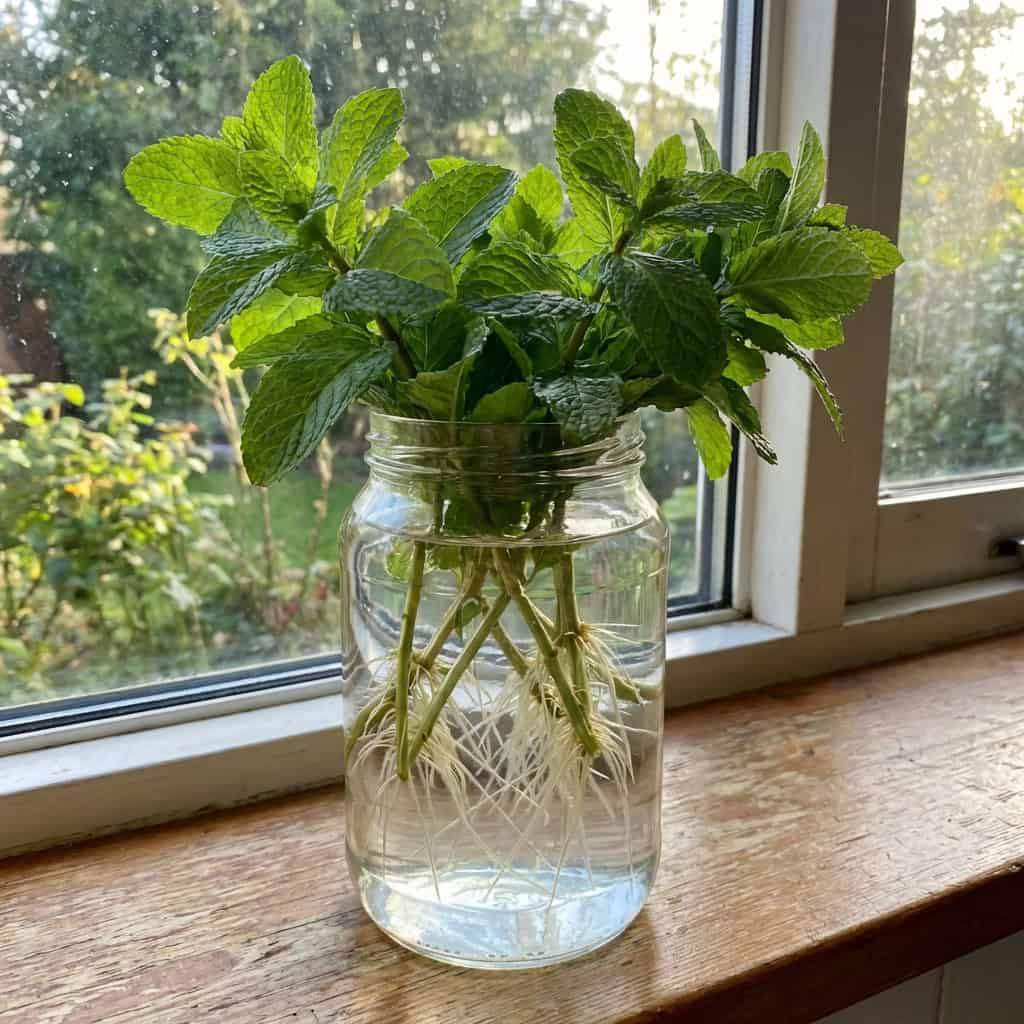
Mint is the most aggressively cooperative plant on this entire list.
Take a stem cutting about four to six inches long. Strip the lower leaves. Put it in a glass of water. Roots will appear in three to five days. Not weeks. Days.
Plant it in a pot of soil and it will grow so fast and so enthusiastically that you will begin to wonder if you made a mistake. Mint does not understand boundaries. It does not respect property lines. It spreads by runners and will take over an entire garden bed if planted directly in the ground.
Keep it in a pot. Seriously. Grow it on a windowsill, on a patio, or in a container on the porch. You will have more fresh mint than you can possibly use — for tea, for cocktails, for cooking, for the sheer satisfaction of knowing you grew it from a stem you almost threw away.
15. Bok Choy Base

Bok choy regrows from its base using the same method as romaine lettuce and celery — and it works even faster.
Cut the leaves off about two inches from the base. Put the base in a shallow dish of water, cut side up. Set it in a sunny window.
New leaves will start pushing out from the center within one to two days. Bok choy is one of the fastest regrowers on this list — you can see visible progress almost overnight.
Once the new growth is a few inches tall and roots are forming at the bottom, transfer it to soil for a bigger harvest. The regrown bok choy will be smaller and more tender than what you bought, but the flavor is the same — mild, crisp, and clean.
16. Rosemary Cuttings

Rosemary is not cheap at the grocery store. A tiny package of sprigs costs $3 to $5. A full rosemary plant costs about the same.
Here is how to turn the first into the second.
Take a rosemary sprig about four to six inches long. Strip the needles off the bottom two inches. Put the bare stem in a glass of water.
Rosemary is slower to root than basil or mint — expect two to three weeks before you see roots. But once they appear, plant the cutting in a pot of well-draining soil and you will have a rosemary plant that lasts for years.
One plant produces more rosemary than any kitchen will ever use. It is drought-tolerant, it smells incredible, and it will live on your windowsill or patio producing free rosemary indefinitely. All from a cutting you were about to compost.
17. Onion Bottoms

Every time you cut an onion, you slice off the root end and throw it away. That root end is a plant.
Take the bottom half inch of any onion — the part with the hairy roots still attached — and plant it in soil, root side down. Water it and put it in a sunny spot.
Within a few days, green shoots will emerge from the top. Those shoots will continue to grow and can be used like green onions — snipped and added to anything that needs a fresh onion bite.
If you leave it in the soil long enough and give it room, the root end can eventually produce a new onion bulb. It will not be as large or round as the original, but it will be an onion — grown from the part you were going to throw in the garbage.
18. Pumpkin and Squash Seeds

Every time you carve a pumpkin, make butternut squash soup, or scoop seeds out of a zucchini, you are holding next year’s garden in your hands.
The seeds inside pumpkins, butternut squash, acorn squash, spaghetti squash, and zucchini are all viable. Scoop them out, rinse off the pulp, and spread them on a paper towel to dry for a few days.
Store them in a cool, dry place over the winter. Plant them in the spring after the last frost — about an inch deep in a sunny spot with room to spread. Squash vines are not small. They need space.
By midsummer, you will have sprawling vines producing squash from seeds that came out of your dinner six months ago.
19. Tomato Seeds

This one surprises people more than it should.
The seeds inside every tomato you eat are viable. Every one. Cherry tomatoes, beefsteaks, romas, heirlooms — the seeds work.
Scoop some seeds out of a tomato, spread them on a paper towel, and let them dry for a few days. Plant them about a quarter inch deep in small pots of soil, keep them warm and moist, and wait.
Within a week or two, seedlings will emerge. By early summer, you will have full tomato plants that produce fruit — often a lot of fruit — from seeds you scooped out of a salad tomato and almost threw away.
One note — if the original tomato was a hybrid variety (which most grocery store tomatoes are), the plants you grow may not produce fruit identical to the parent. But they will still produce tomatoes. And free tomatoes that are slightly different from what you expected are still free tomatoes.
20. Cilantro Stems

This one requires a specific condition — you need cilantro with the roots or base still attached. The kind sold in bunches at the grocery store, not the pre-cut stuff in plastic clamshells.
If you have it, cut the leaves for your recipe and keep the bottom two to three inches of stem with the roots. Put the stems in a glass of water.
Within a week, new green growth will start appearing from the top of the stems. Once the roots are established, transfer to a pot of soil. The plant will produce fresh cilantro leaves for weeks — and eventually it will bolt and produce coriander seeds, which are also edible and useful.
Two herbs from one scrap. Not bad for something headed for the compost bin.
21. Fennel Base

Fennel regrows from its base with the same ease as celery and bok choy — but most people do not think to try it because fennel feels like a “fancy” vegetable.
Cut the stalks and fronds off about two inches from the base. Put the base in a shallow dish of water. Set it in a sunny window.
New green fronds will start sprouting from the center within a few days. They are aromatic, feathery, and taste like mild licorice. Use them as a garnish, toss them into salads, or chop them into pasta.
The regrown base will not produce a full new fennel bulb, but the fronds are the part most cooks want anyway — and they keep coming back as long as you keep the base in water or soil.
22. Leek Roots

Leeks work exactly like green onions — and the results are just as fast.
Cut the leeks where you normally would, leaving about two inches of the white root end intact. Put the root ends in a glass of water, root side down, in a sunny window.
New green growth will appear within a few days. Keep the water fresh, and the leeks will continue to produce new green tops that you can snip and use in soups, stir-fries, and anywhere you would use the green part of a leek.
If you transfer them to soil, they will grow even bigger and produce for longer. But even in a glass of water on the kitchen counter, leek roots will keep growing for weeks.
23. Cabbage Base

Cabbage is the last entry on this list, and it works the same way as lettuce, celery, bok choy, and fennel — because this method is basically a cheat code for regrowing anything with a solid base.
Cut the head of cabbage off and leave the bottom inch or two of the core. Put it in a shallow dish of water. Wait.
New leaves will sprout from the center within a few days. They will be small and tender — more like baby greens than a full cabbage head — but they are edible, fresh, and free.
Transfer to soil if you want a bigger harvest. Or just keep it in water on the counter and snip the new leaves as they appear. Either way, you are eating food that grew out of something you used to throw away.
That is the point of this entire list.
Every week, the average household throws away scraps that would have grown into food if someone had given them a glass of water, a pot of soil, or just a sunny windowsill.
You do not need a garden. You do not need experience. You do not need to spend a dollar.
You just need to stop throwing things away that are not done being useful yet.
Start with the green onions. It takes five minutes and a glass of water. When those green shoots emerge from the roots three days later, you will understand why this list exists.
Then try the next one. And the next one. And eventually you will look at every piece of kitchen scrap differently — not as garbage, but as a plant that just needs a chance.