

Somewhere on your street there’s probably a peony that predates the Second World War, still doing its thing in someone’s front yard.
Nobody’s fertilized it in decades. Nobody drags a hose out for it. The house has been sold and resold, remodeled, repainted — and every May that peony still throws a dozen fat pink blooms without being asked.
That’s the whole premise here. Some plants demand constant attention. Others are a single afternoon of digging, followed by two decades of just watching them show up.
A handful on this list are also dangerous to pets, something plant tags almost never mention. We’ve flagged those clearly.
What follows are 30 plants that return on their own, season after season, asking for almost nothing in exchange.
1. Peony: The Plant You Only Dig Once

Dig the hole once, and this is a plant your grandchildren will inherit.
According to the American Peony Society, a well-established clump can outlive a century, so peonies set in the ground during the Depression era are still flowering in gardens where the original owner is long forgotten.
There’s really only one rule you can’t skip: the pink “eyes” on the root need to sit just 1 to 2 inches under the soil surface. Plant them too deep and you’ll get years of foliage and zero flowers.
The second rule is just as simple — leave it be. Peonies resent being dug up and moved, sulking for two or three seasons afterward, so there was never much point in relocating them anyway.
2. Daylily: Ditch-Tough, But Dangerous for Cats
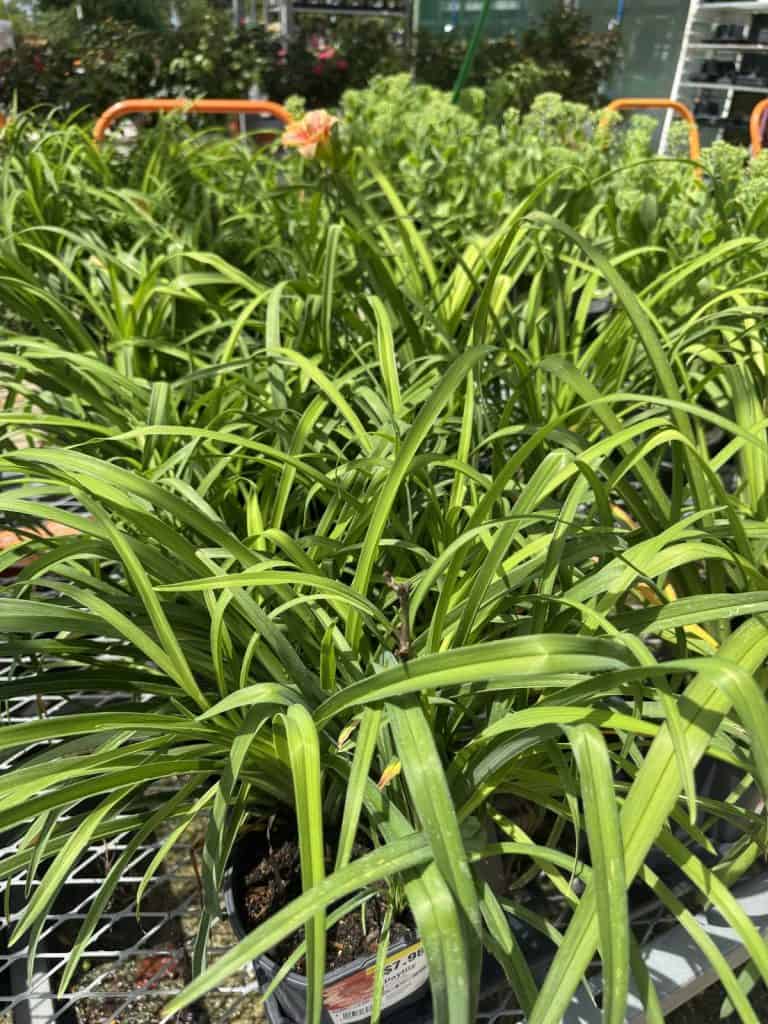
Picture the orange clumps growing straight out of a highway shoulder in August, road salt still caked on from winter. Nothing seems to faze this plant.
Drought, heavy clay, blazing sun, dappled shade, total neglect — daylilies shrug all of it off. A clump will double in size every couple of years, and once it’s crowded, you can split it in half with a shovel and it won’t even flinch.
Toxic to cats — seriously toxic. According to the ASPCA, daylilies are listed as toxic to cats, with kidney failure and death among the possible outcomes. This is far beyond a stomachache. A cat that nibbles a leaf, grooms pollen off its coat, or sips from a vase holding cut stems can be in acute renal failure within 72 hours.
The early signs — vomiting, drooling, retreating to hide — are easy to miss. Once a cat stops urinating, the kidneys are already failing. Treatment means aggressive IV fluids at an emergency vet, and there’s very little time to act — same day, not “wait and see.”
Dogs generally fare much better. They might vomit, but they don’t suffer the same kidney damage cats do.
Safe swap for cat households: try coreopsis or hardy geranium in that spot. They’re just as tough, come back reliably, and won’t land your cat in an emergency clinic.
3. False Indigo: A Perennial That Never Asks to Be Divided
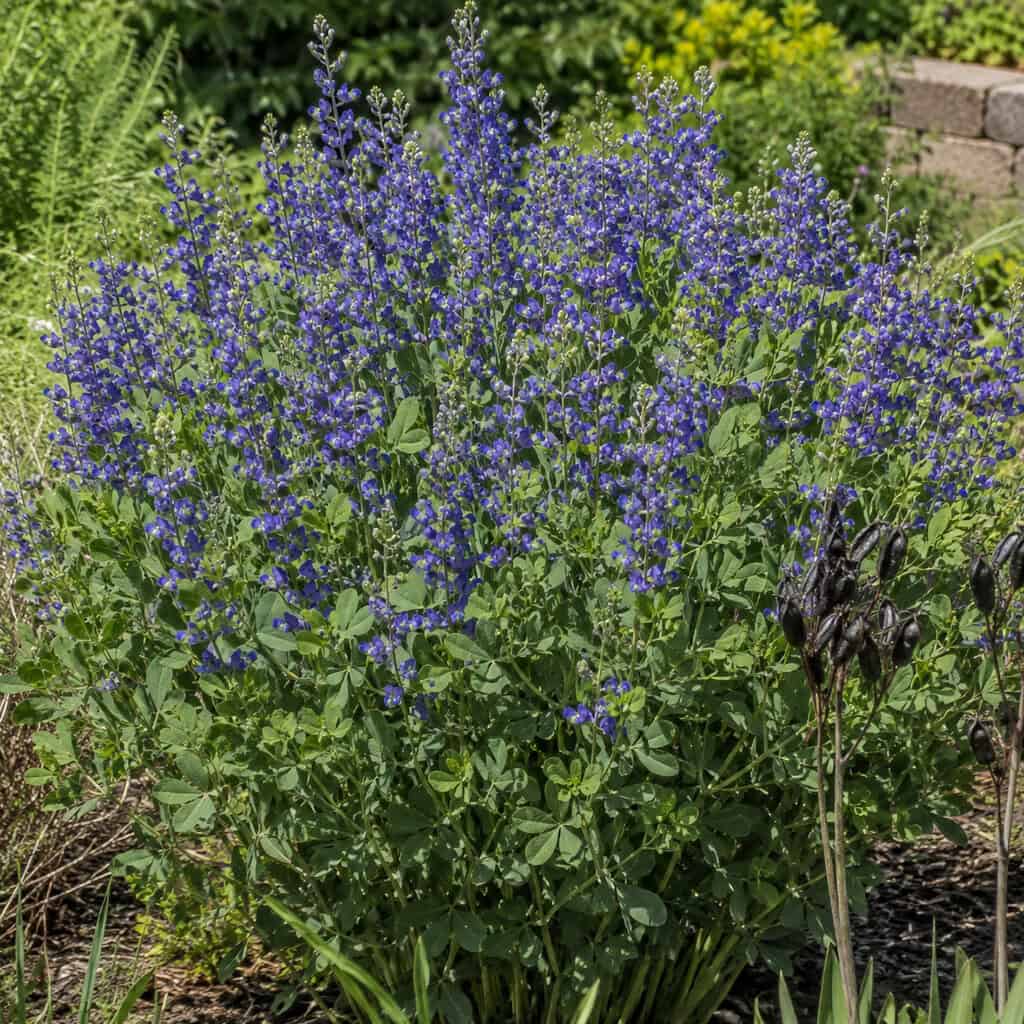
It has the presence of a shrub, but it’s really a perennial, and it never needs splitting up.
Baptisia sinks a taproot down several feet, which explains why the NC State Extension Gardener Plant Toolbox describes it as both drought-tolerant and hard to transplant — those two traits come from the exact same root system.
Deep indigo-blue spikes appear in May, followed by blue-black seedpods that dry out and rattle in autumn and winter winds through December.
Give it a four-foot circle of space right from planting day. It needs about three years to fill in, and then it’ll hold that same footprint for the next twenty.
4. Hens and Chicks: Colonizing Cracks in Stone
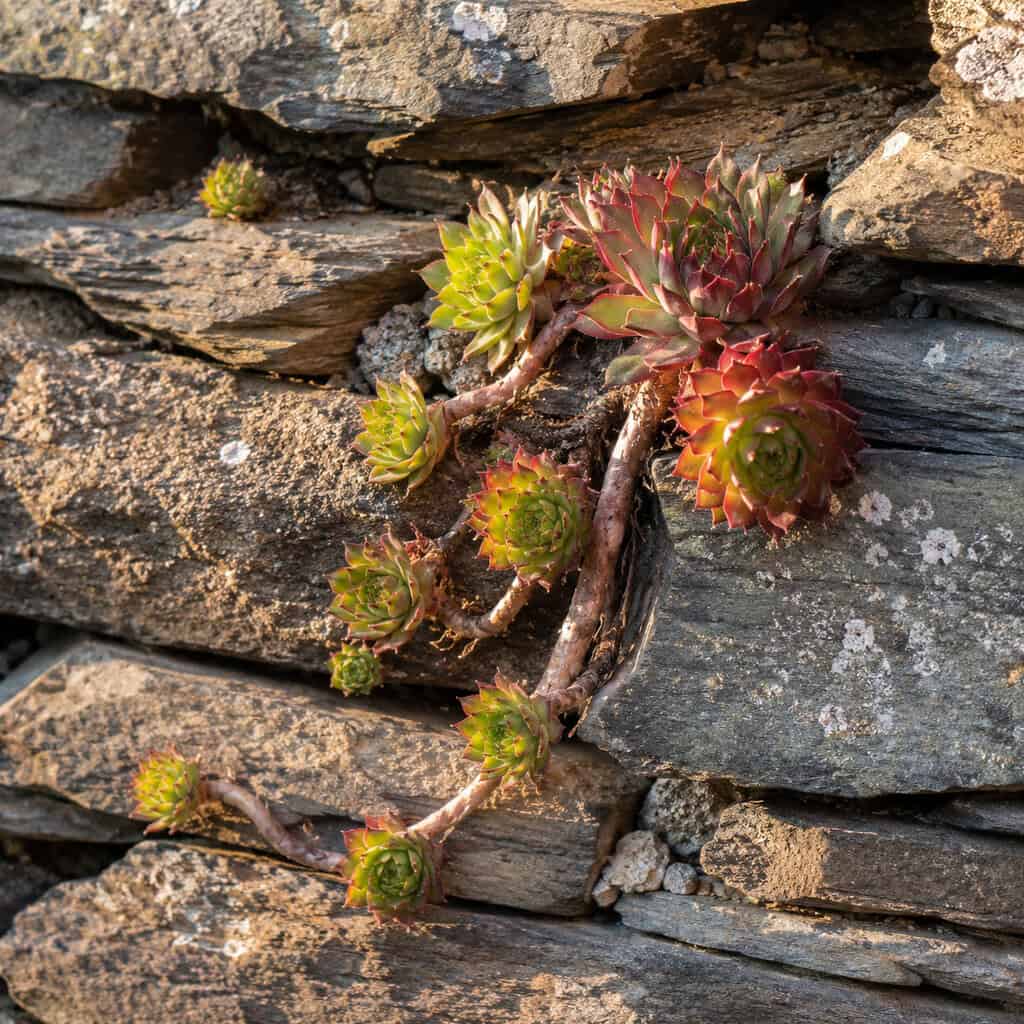
A couple inches of gravel wedged in a crack of a stone wall is honestly all sempervivum needs to thrive.
The parent rosette sends out little offsets on short stems — the “chicks” — which root themselves wherever they touch down. One plant can turn into a colony of thirty with zero intervention from you.
They shrug off hard freezes and go months without rain. And unlike most entries here, they’re completely non-toxic, making them one of the rare genuinely kid- and pet-safe options for a rock wall or porch pot.
5. Siberian Iris: The Easier Sibling of Bearded Iris

Compared to its bearded cousin, Siberian iris does more with less: it thrives in sun or part shade, shrugs off soggy ground that would rot a bearded rhizome, skips the fussy surface-planting requirement, and keeps tidy, upright grassy foliage looking sharp for the entire season.
Clumps grow so slowly that you can leave them undisturbed for ten years; either cut the foliage back after a hard frost or let the seedpods remain standing, since they’re still attractive well into November.
6. Rhubarb: One Crown, Decades of Harvests
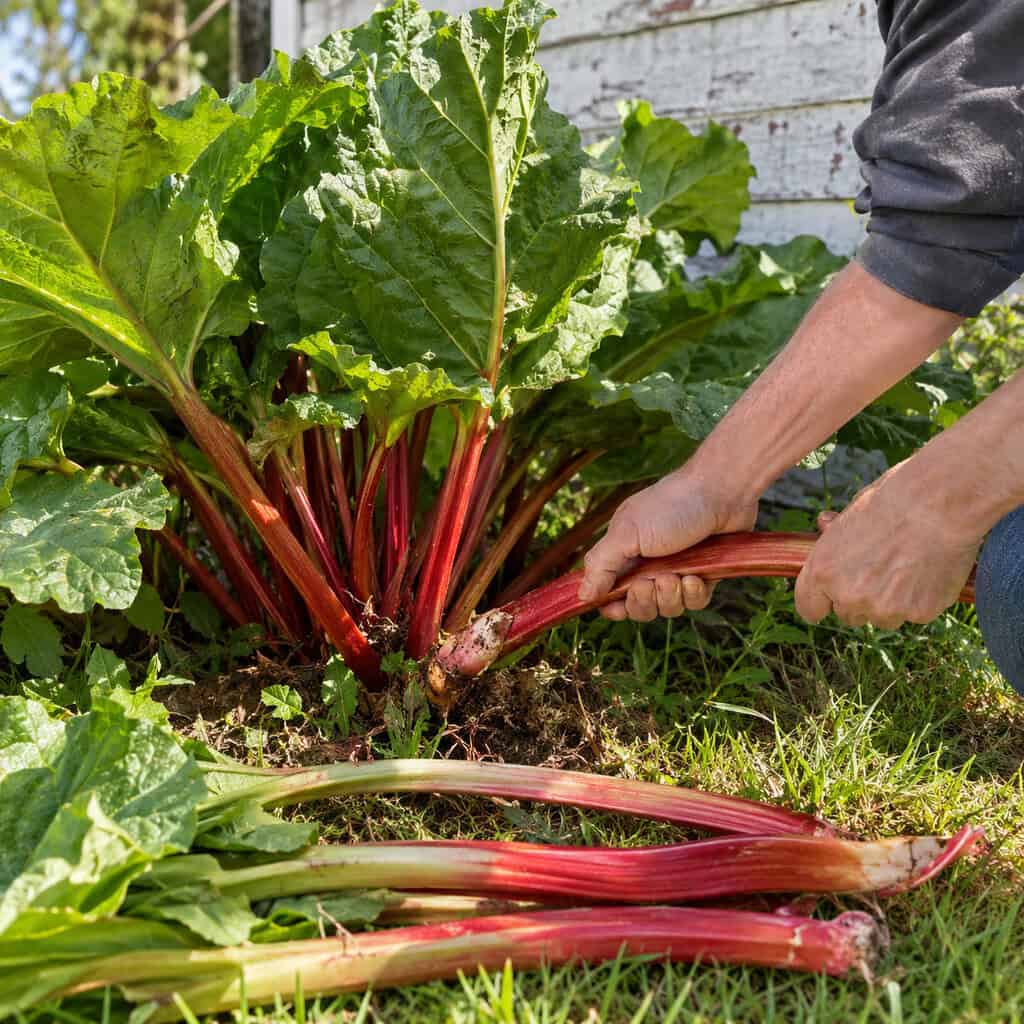
A rhubarb crown planted behind a garage in the late ’90s can still be going strong today — it’s normal for a single planting to keep producing for 20-plus years, and split-off crowns from mature plants often get passed down through a family like heirloom furniture.
All it asks for is full sun, drainage that doesn’t stay soggy, and a shovelful of compost every couple of springs. That’s the complete care routine. Harvest by grabbing stalks low and twisting rather than slicing, and never remove more than a third of the plant in one go.
The stalks are food. The leaves are not. Rhubarb leaves are loaded with oxalic acid, and eating enough of them can cause burning in the mouth and throat, vomiting, breathing trouble, and, in severe cases, kidney damage.
An adult would need to eat several pounds of leaf material before facing real danger, so an accidental nibble isn’t cause for panic. But small kids and small dogs have much less margin for error, and those big, soft leaves sit right at ground level, tempting them.
Snip the leaves off in the garden and compost them right there. Don’t pile them on the back step where a dog likes to nap.
One more thing worth knowing: the stalks are safe to eat whether they’re red or green — color is purely a varietal trait, not an indicator of ripeness.
7. Yarrow: Thrives on Neglect, Flops With Pampering
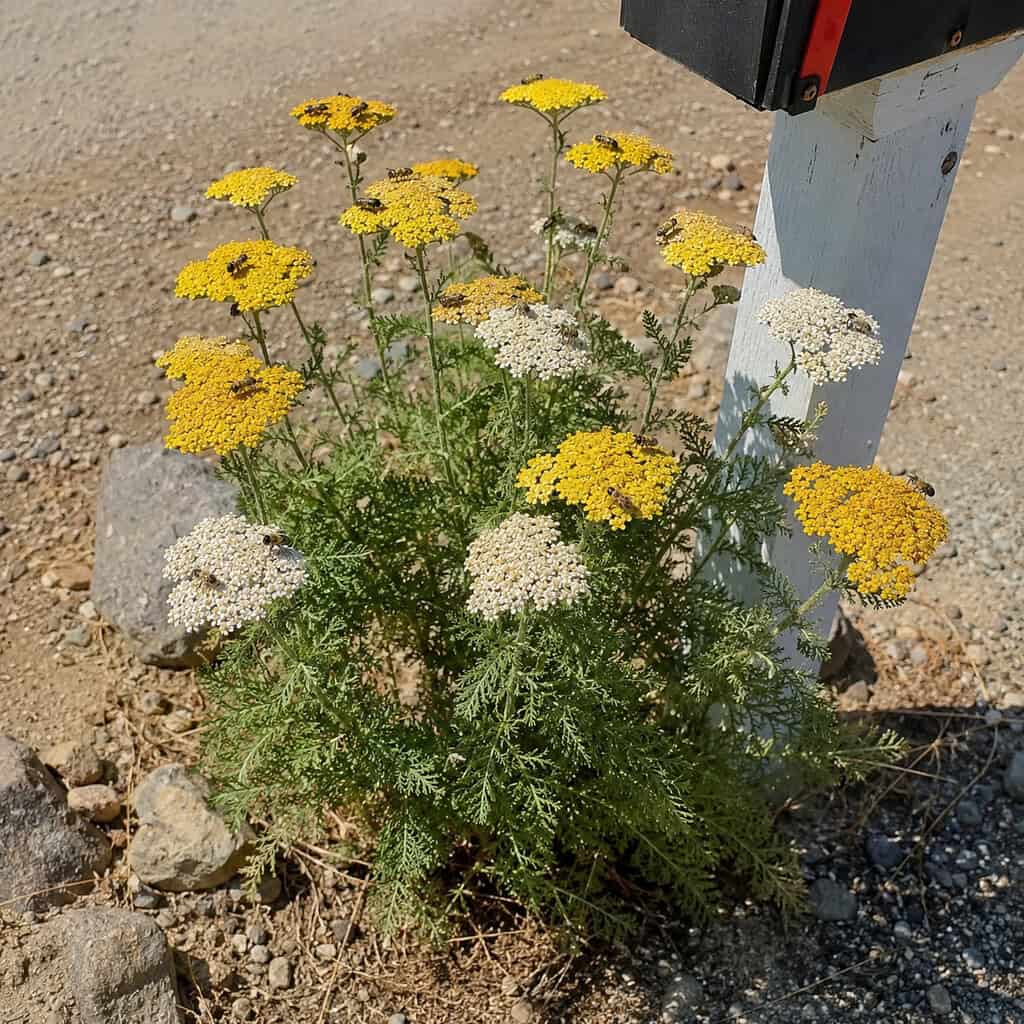
Oddly enough, yarrow performs worse the more you pamper it.
Give it fertilizer, regular watering, and rich dark soil, and it grows tall, soft-stemmed, and topples in the first storm. Stick it in dry gravel by the mailbox instead, and it stays upright all summer long.
Those flat-topped flower clusters double as landing pads for hoverflies, parasitic wasps, and lacewings, all of which happily eat aphids elsewhere in your garden at no charge.
8. Mint: Reliable, Relentless, and Best Kept Contained
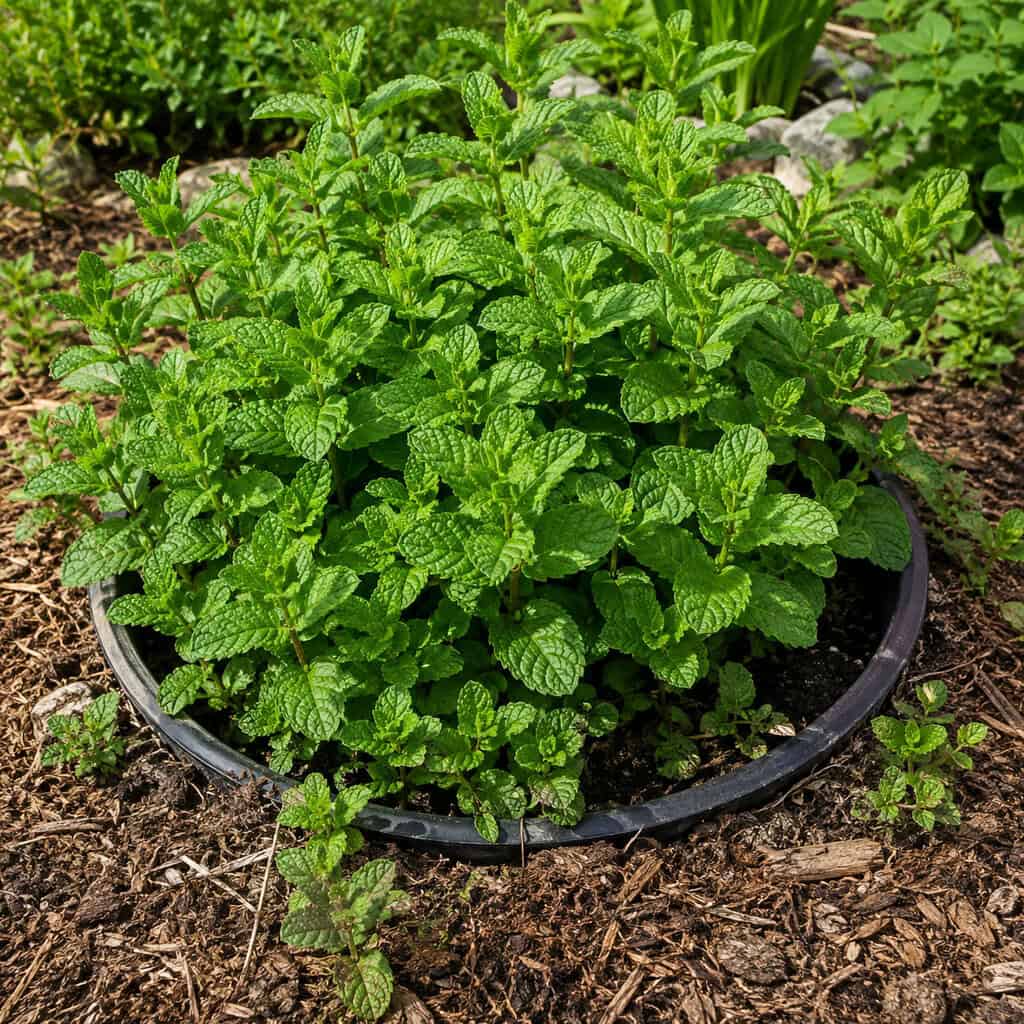
Mint doesn’t just come back — it comes back stronger each year, and eventually somewhere you never intended.
Its runners creep under mulch, slip past edging, and even work their way beneath a sidewalk if there’s a big enough gap. Two growing seasons is all it takes to claim an entire bed.
Grow it — but grow it contained. Sink a five-gallon pot so its rim sits two inches above the soil line, or keep it isolated in a standalone patio container. Letting mint loose in a mixed bed is a mistake you’ll be correcting with a shovel for years afterward.
9. Catmint: Season-Long Bloom That Deer Ignore
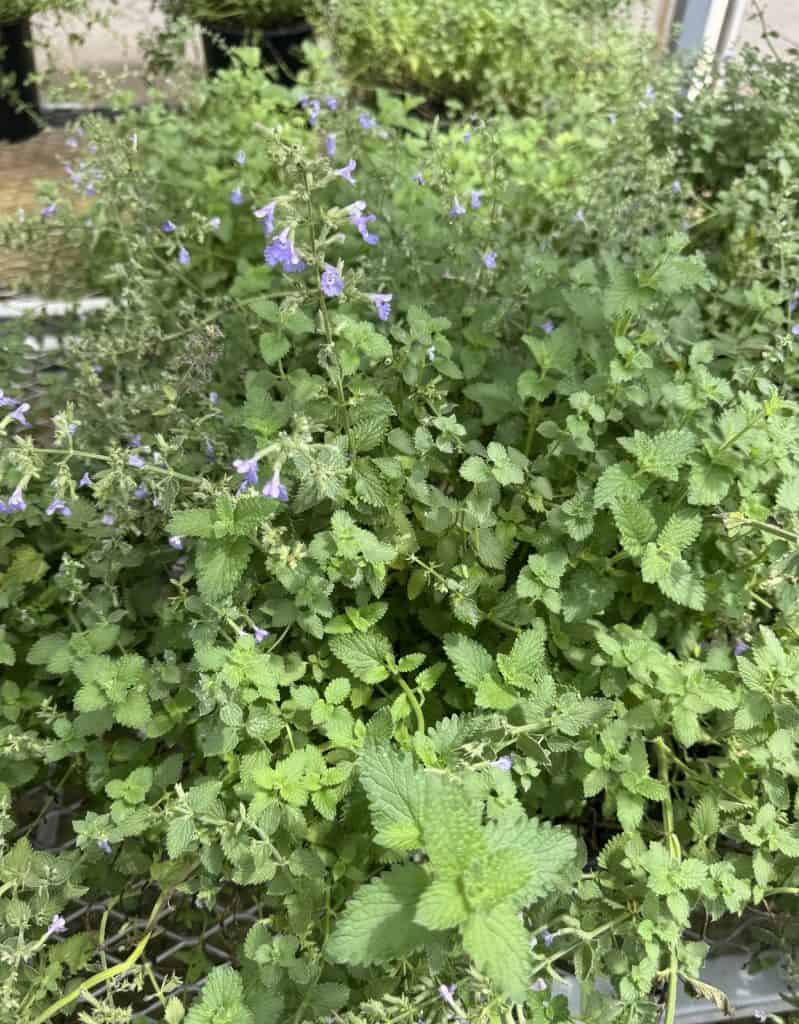
‘Walker’s Low’ catmint opens its first flowers in May and keeps going nearly all the way to fall.
It prefers hot, dry, lean soil — exactly the kind of spot where you’ve already given up trying to grow grass. Fertilizing it just makes the center flop open.
Once that first big flush fades in July, shear the whole clump back by half. It bounces back in roughly three weeks with a fresh round of blooms.
Deer and rabbits pass right by it, thanks to its strongly aromatic foliage.
10. Hosta: The Shade Standby With a Dog-Proof Alternative
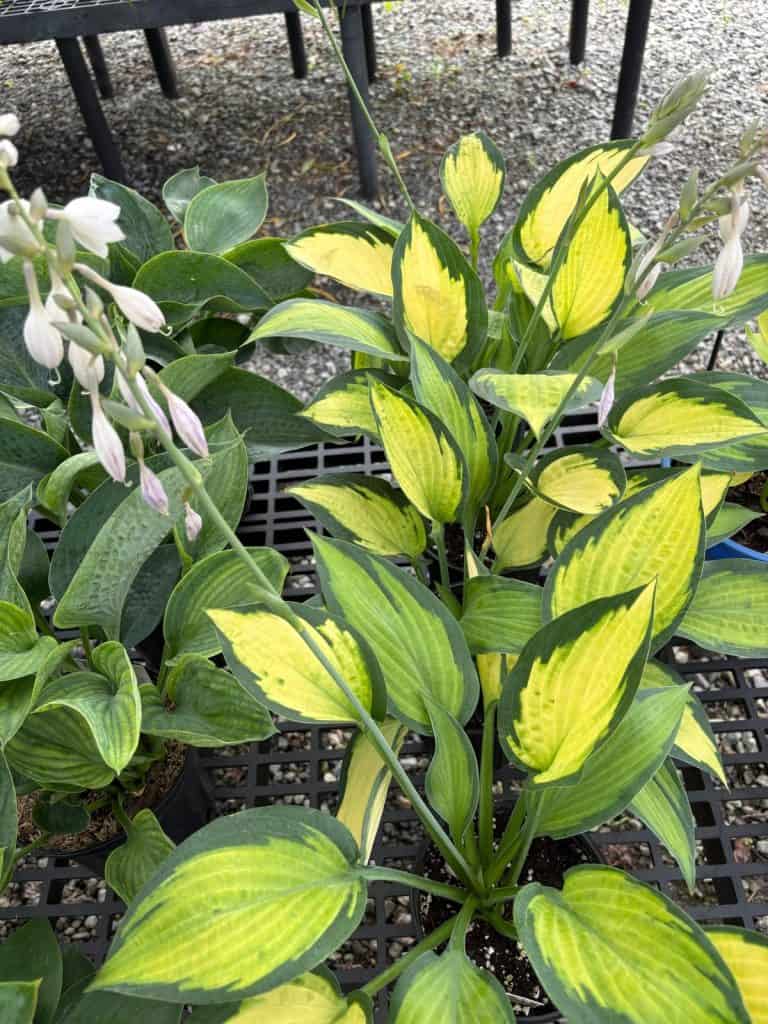
Nearly every foundation planting in Ohio has a hosta tucked somewhere, and that’s not by accident.
Hostas fill in the barren patch under a maple where grass has completely given up, and once they’re settled they need nothing beyond a drink during severe drought. A single planting can stay put for 30 years. If you’re tackling a whole shaded yard, hostas are just one piece of the puzzle — check out these shade plants that thrive where grass refuses to grow.
Slugs are the one pest to watch for. Ragged holes appearing across the leaves by July are the telltale sign, and a shallow dish of beer sunk to soil level solves the problem more cheaply than any store product.
Toxic to dogs and cats. Hostas contain saponins, and dogs especially love digging up and chewing the crowns, where those compounds are most concentrated. Expect vomiting, diarrhea, and lethargy as the typical result. Death is rare, but a determined lab can eat enough to rack up a vet bill.
Puppies pose the biggest risk since they chew indiscriminately, and a hosta border along the back fence is essentially a salad bar at nose height for them.
Safe swap: lady fern or Japanese painted fern. They match the shade tolerance and mounded texture of hostas and both sit safely on the non-toxic list — a free trade if you’ve got a curious dog. It’s also worth reviewing which other common garden plants are toxic to pets before filling out a whole bed.
11. Shasta Daisy: Nearly Effortless, With One Recurring Job
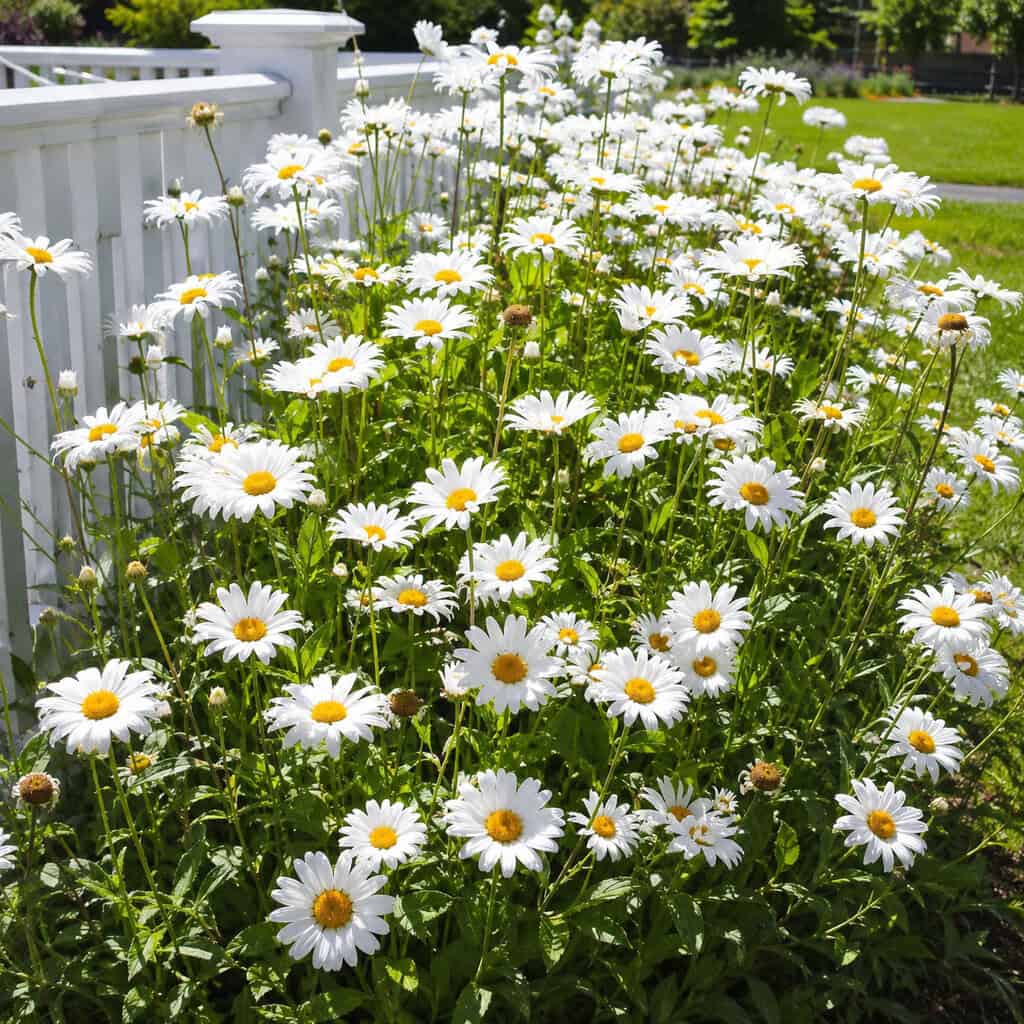
It’s the flower every child sketches first — white petals ringing a yellow center — and Shasta daisies bloom for weeks in full sun while asking for almost nothing; deadhead the spent flowers and they’ll keep going into September.
There is one honest catch: after three or four years the clump’s center thins out and dies back, which means you’ll eventually need to dig up the whole thing, split off the healthy outer sections, discard the woody middle, and replant — the single real chore anywhere on this list, and it takes about fifteen minutes every few springs.
12. Russian Sage: Built for the Worst Strip of Ground You Own
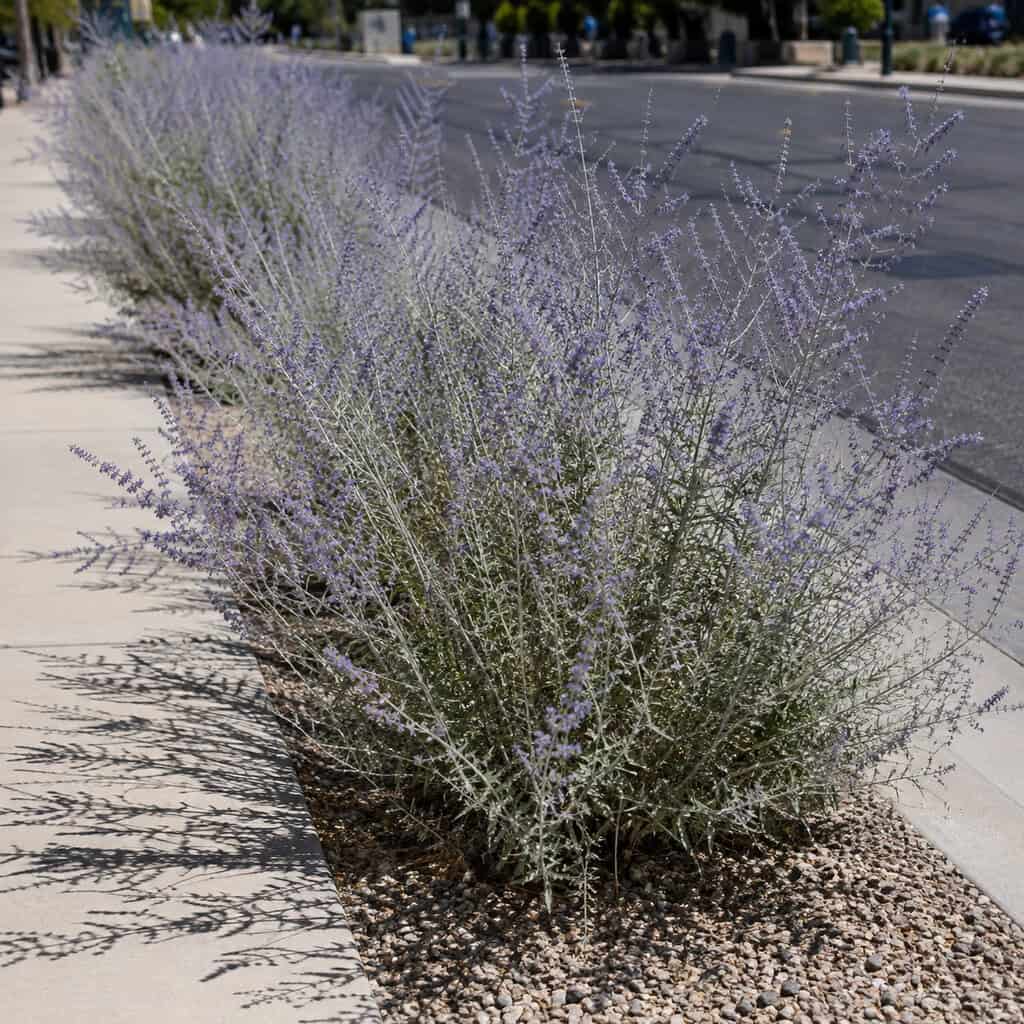
That strip of ground between sidewalk and street is probably the harshest spot on your property — reflected heat, compacted gravel, zero irrigation, and a snowplow scraping it every winter.
Russian sage is built for precisely that. Colorado State University Extension includes it on their drought-tolerant perennials list for a reason — it turns a hazy lavender-blue from July into September without a drop of supplemental water.
Cut it down to about six inches every spring. Skip that step and within three years you’re left with a woody, hollow mess.
13. Lenten Rose: Blooming Straight Through the Snow

Snow’s still on the ground in February, and yet those nodding cream-and-plum flowers open right on schedule.
Hellebores stay evergreen year-round, flower for a solid two months while everything else is dormant and brown, and deer and rabbits leave them entirely alone because the whole plant is toxic.
They self-seed at a modest, well-mannered pace — a handful of new seedlings a year, never an invasion. Just trim off last year’s tattered foliage in late winter so the flowers can be seen. That’s the whole job.
14. Creeping Phlox: A Groundcover That Doubles as Erosion Control
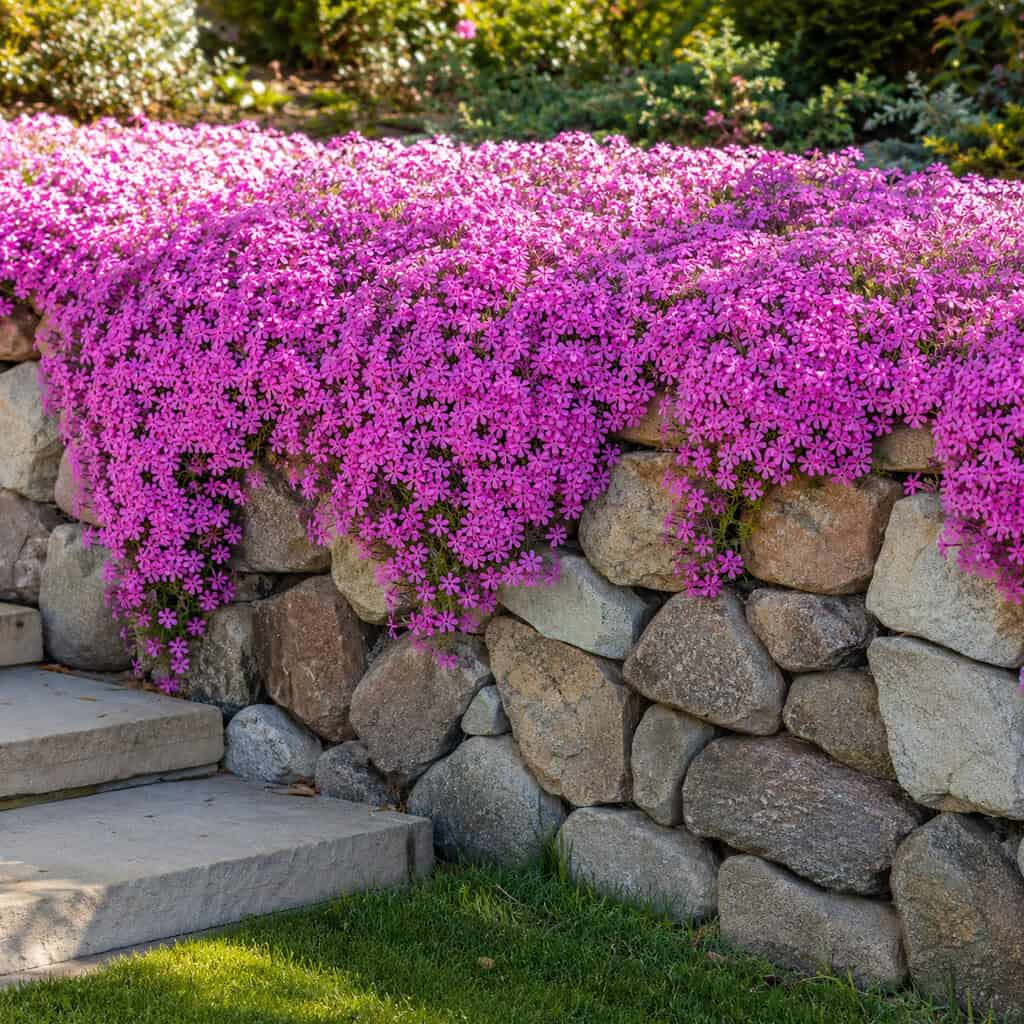
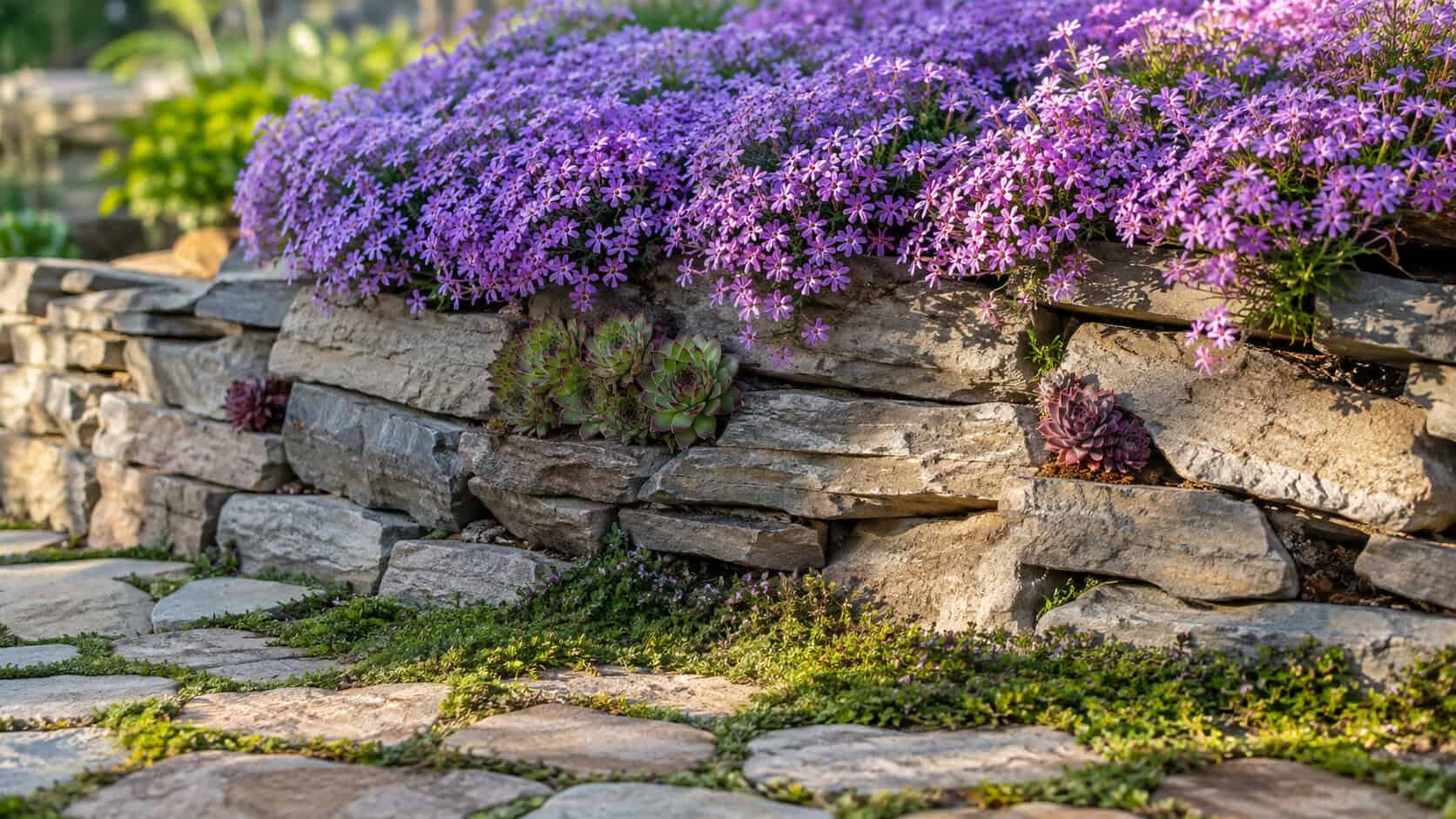
That pink cascade spilling over the neighbor’s retaining wall each April is Phlox subulata, and it’s quietly doing more work than it looks.
Spreading by stolons, it forms a dense evergreen mat that crowds out weeds and anchors soil on slopes where mulch would otherwise wash away with every rain.
Two weeks of vivid color, followed by a tidy green carpet for the remaining fifty weeks. Shear it back lightly after flowering if you want a denser mat.
15. Lily of the Valley: Beautiful, Aggressive, and Highly Toxic

Whether you invite it back or not, this plant is coming back.
Lily of the valley spreads underground via pips, so a dozen plants tucked beneath a shrub can turn into a solid colony filling the whole bed within four or five years. It out-competes nearly everything in dry shade, and removing it is nearly impossible, since any leftover root fragment restarts the whole colony.
Highly toxic. All of it. Leaves, flowers, berries, roots, even the water sitting in a vase after you cut some for a bouquet. The plant is loaded with cardiac glycosides — compounds that act directly on heart muscle, similar to digitalis.
In dogs and cats, ingestion can trigger vomiting, diarrhea, dropping blood pressure, disorientation, seizures, and irregular heartbeats. That last symptom is what separates this plant from something like hosta — an arrhythmia can be fatal to a small animal, and it doesn’t take a large amount of plant material to get there.
The orange-red berries that appear in fall are the biggest danger for toddlers, since they resemble candy and sit right at knee height.
If a child or pet has chewed on any part of this plant, don’t wait to see if symptoms appear — call a vet or poison control right away and bring a sample of the plant along.
Safe swap: for a fragrant spreading groundcover in shade, choose sweet woodruff or wild ginger instead. Both spread nicely, both are far safer, and neither will spend decades trying to escape its bed. Pet owners should also review the full list of landscaping plants that are toxic to dogs before planting anything near where pets roam.
16. Purple Coneflower: Better Off Ignored
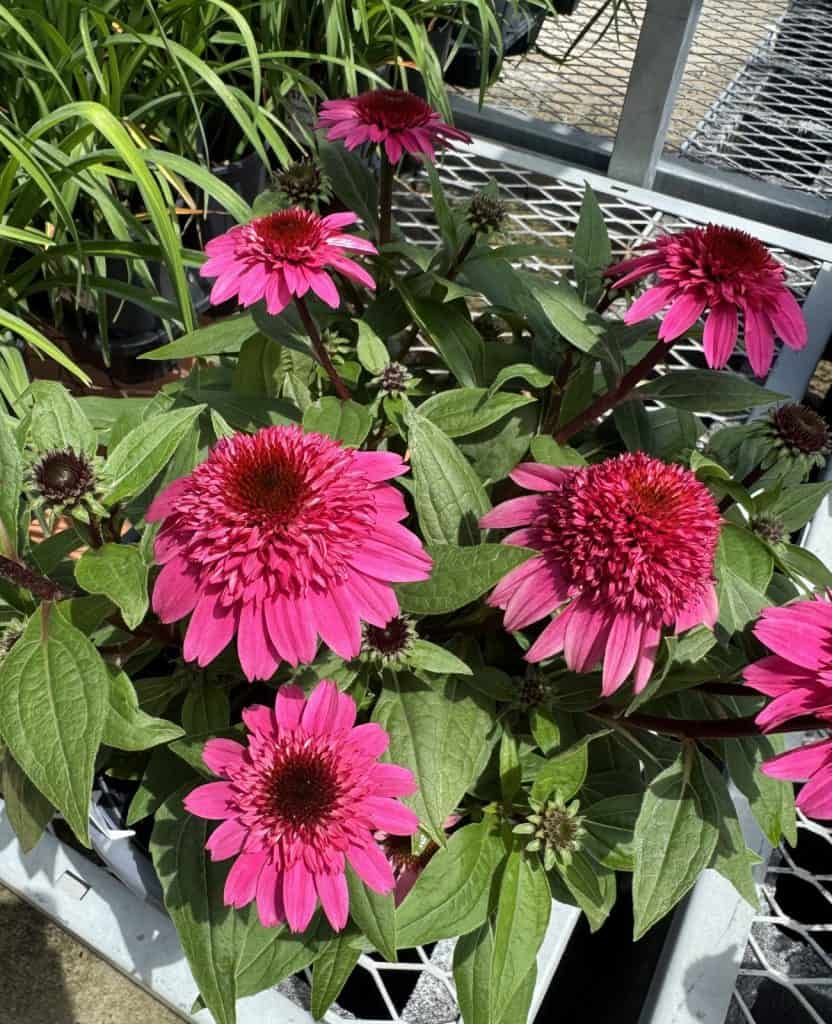
Echinacea originated on the open prairie, where irrigation doesn’t exist and topsoil runs thin.
Its deep roots reach far below where turfgrass can access moisture, letting it stand tall through August heat without a drop from a hose. Leave the spiky seed cones standing and finches will feed on them all winter long.
What actually kills coneflower is over-attention — rich, compost-laden soil that stays wet will rot the crown. Plant it in lean, well-drained ground instead, and it’ll outlast the fence around it.
17. Lavender: The Enemy Is Wet Soil, Not Cold
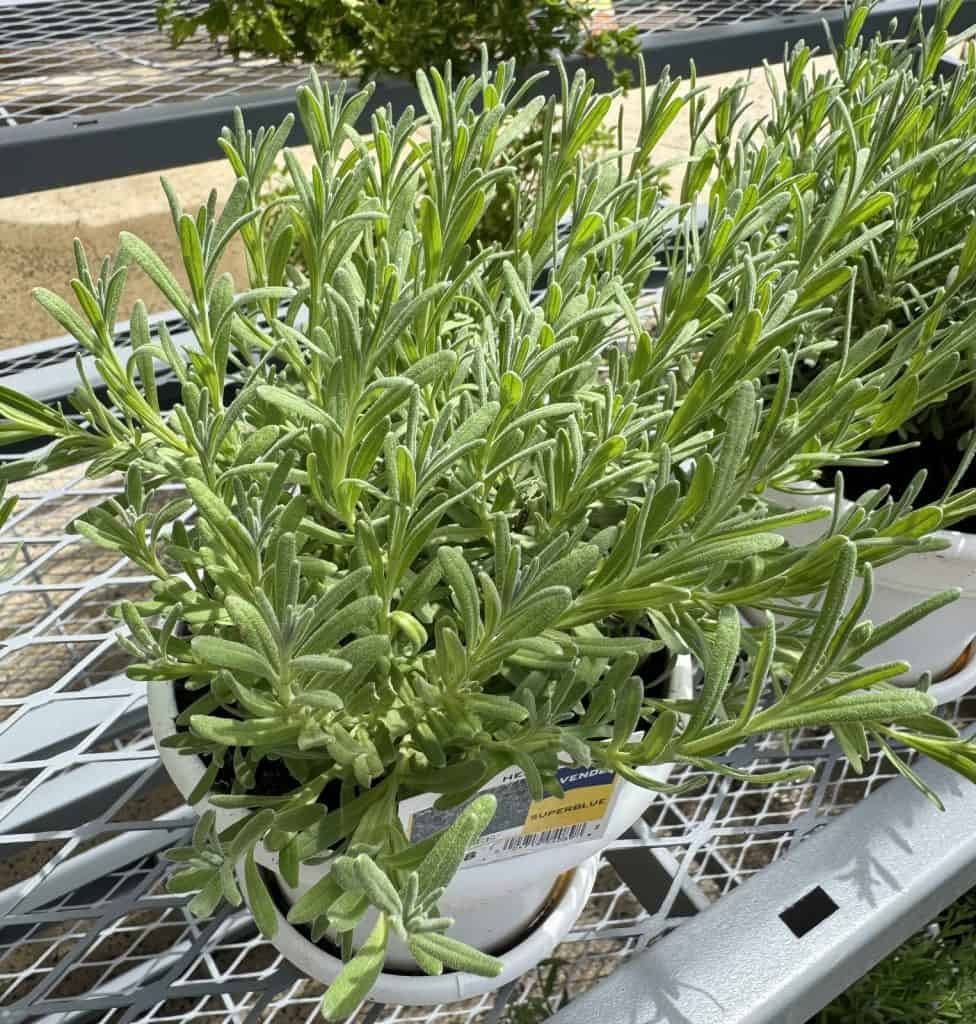
In most yards, it isn’t winter cold that kills lavender — it’s soggy roots.
This Mediterranean native evolved on rocky, lean hillsides. Put it in heavy clay that stays wet through March and the roots rot regardless of how mild the winter was. Work in some gravel, set the plant slightly high, and give it your sunniest available spot.
The other essential task is the spring haircut. Trim back about a third of the growth, staying above the woody base — cutting into old bare wood won’t produce new growth. Keep up with that annually and a lavender plant can easily last a decade.
18. Black-Eyed Susan: Free Plants Every Spring
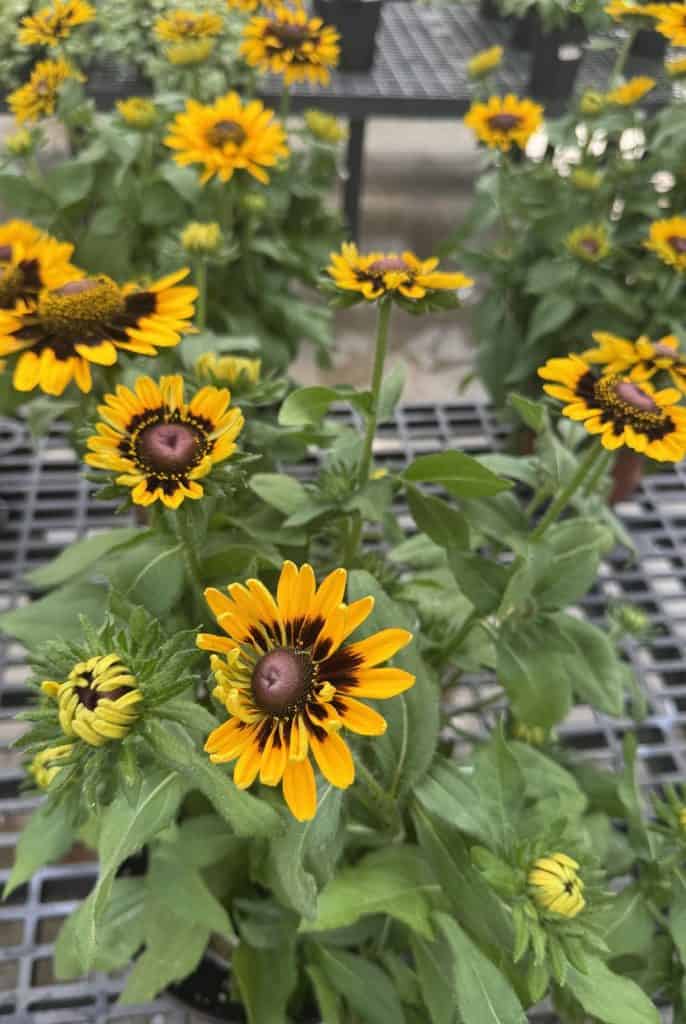
Think of it as a plant that pays you back in more plants.
Rudbeckia flowers from mid-July straight through the first hard frost, scattering seed into every open patch of soil nearby. Come spring, you’ll find volunteer seedlings you never planted or paid for.
Leave the blackened seedheads up through winter. Goldfinches will strip them bare come January, and the bare stems look striking against snow.
19. Ostrich Fern: The Answer for Wet, Shady Ground
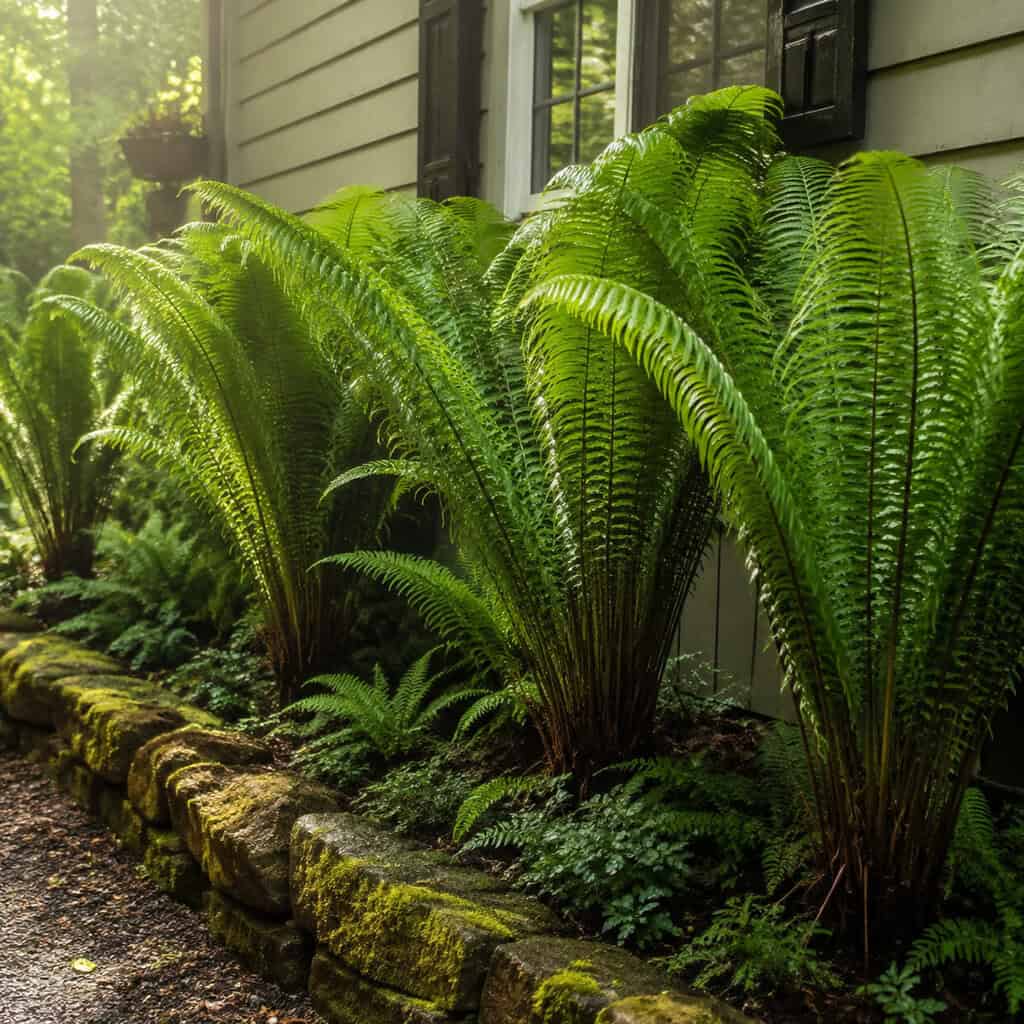
For damp shade where nothing else seems to survive, this fern is practically the only candidate.
Ostrich fern spreads via underground runners, gradually filling a soggy north-facing bed with four-foot, vase-shaped fronds. Come fall, it collapses down to nothing and rots away entirely on its own — no cleanup required.
Spring brings fiddleheads, which are edible as long as they’re cooked thoroughly.
Just be warned: those runners travel far. Give it a bed bounded by an edge, a path, or a foundation wall, or it’ll be twenty feet from its original spot within five years.
20. Butterfly Weed: Slow to Wake, Worth the Wait
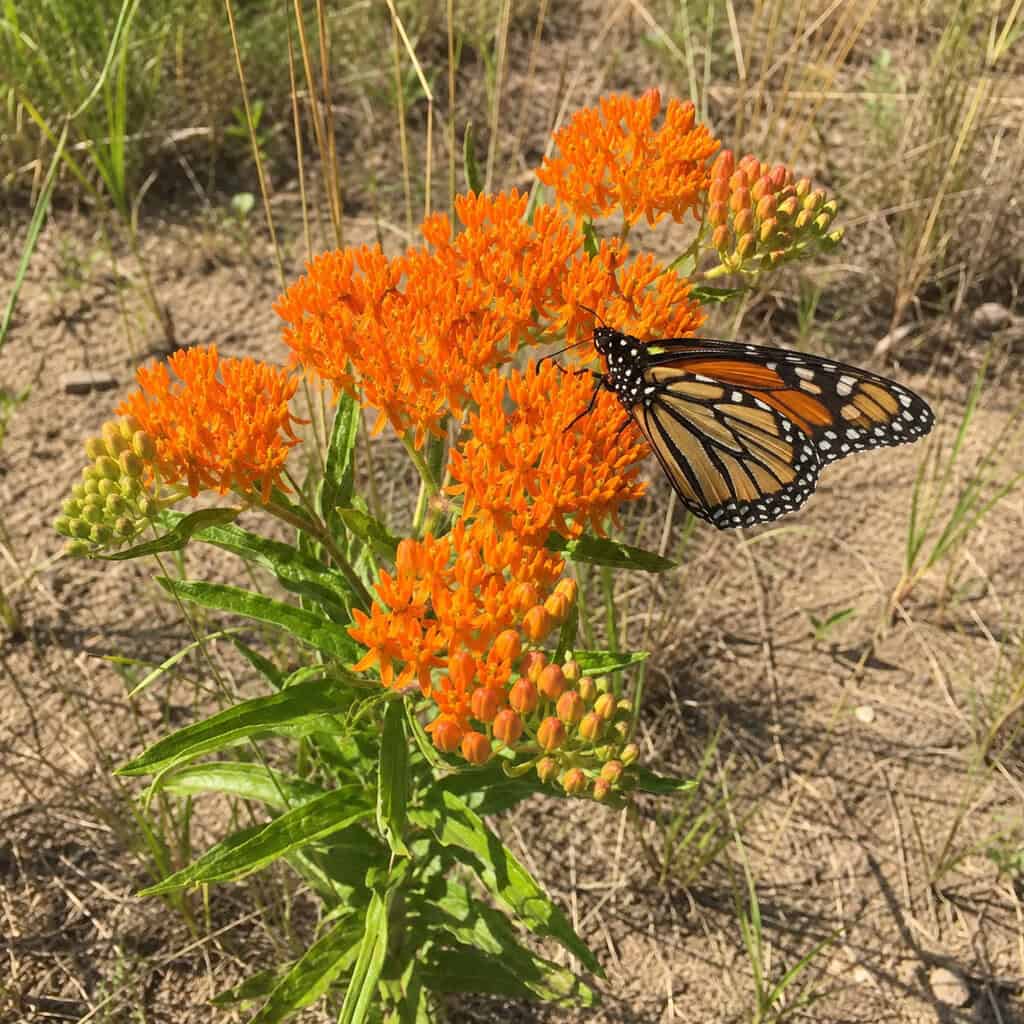
Flat-topped orange clusters, and monarch caterpillars feeding on the foliage by July.
Asclepias tuberosa sends a taproot straight down, the same feature that lets it survive droughts that wipe out everything nearby. That taproot also means it despises being transplanted — put it where you want it permanently and leave it there.
Here’s the warning that saves this plant every spring: it emerges very late, often mid-to-late May in much of the country, well after neighboring beds have already filled in.
Resist the urge to dig it up, assuming winter killed it. Mark its location in the fall so you remember.
21. Coral Bells: Grown for Foliage, Not Flowers
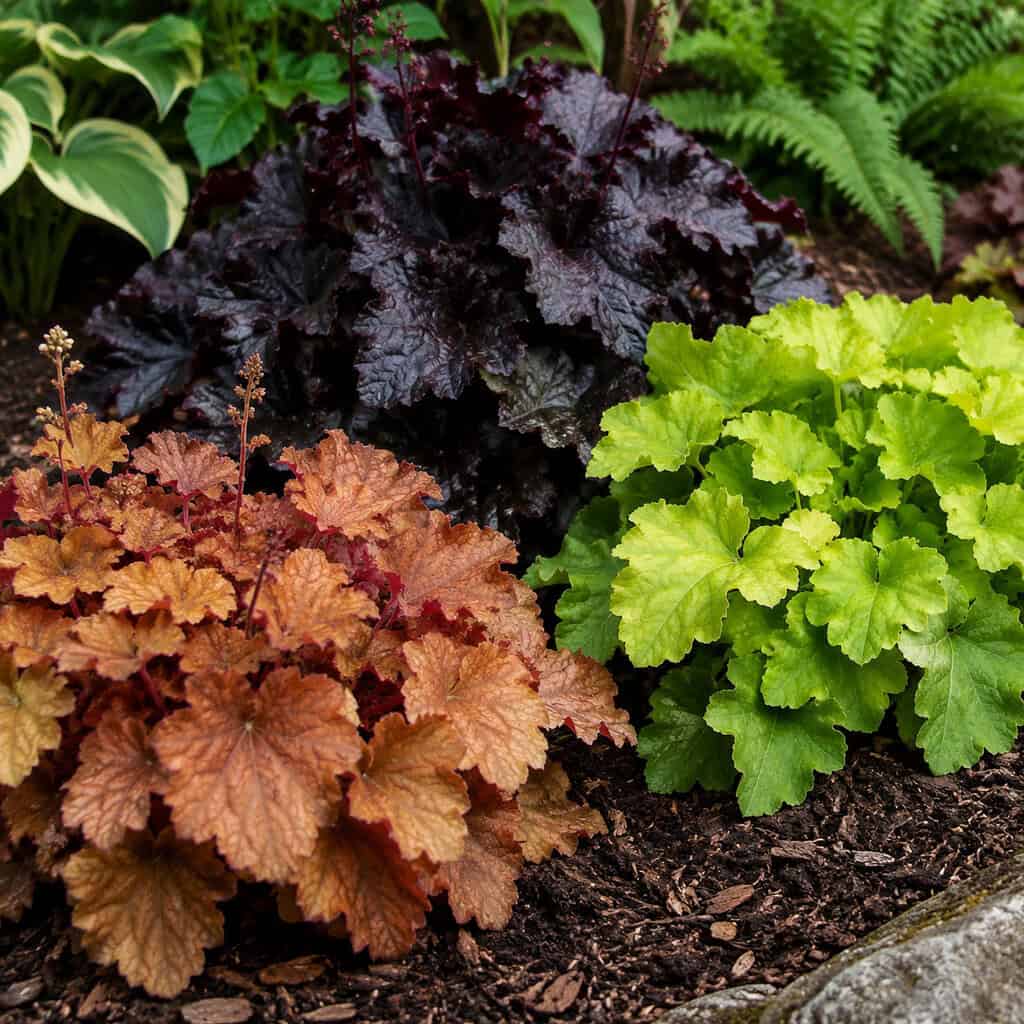
Nobody plants heuchera hoping for flowers.
The foliage is the whole draw — lime, amber, caramel, silver-veined purple, near-black. In part shade, that color holds from April through hard frost, so the bed looks intentional even during the dull stretches when nothing else is blooming.
One thing to watch for: after a few years, the crown gradually pushes itself above the soil surface, especially following freeze-thaw cycles. Once it’s sitting high with exposed woody stems, dig up the whole plant and reset it deeper. It’s a ten-minute fix that buys another five years of good growth.
22. Daffodils: The Flower That Outlives the House
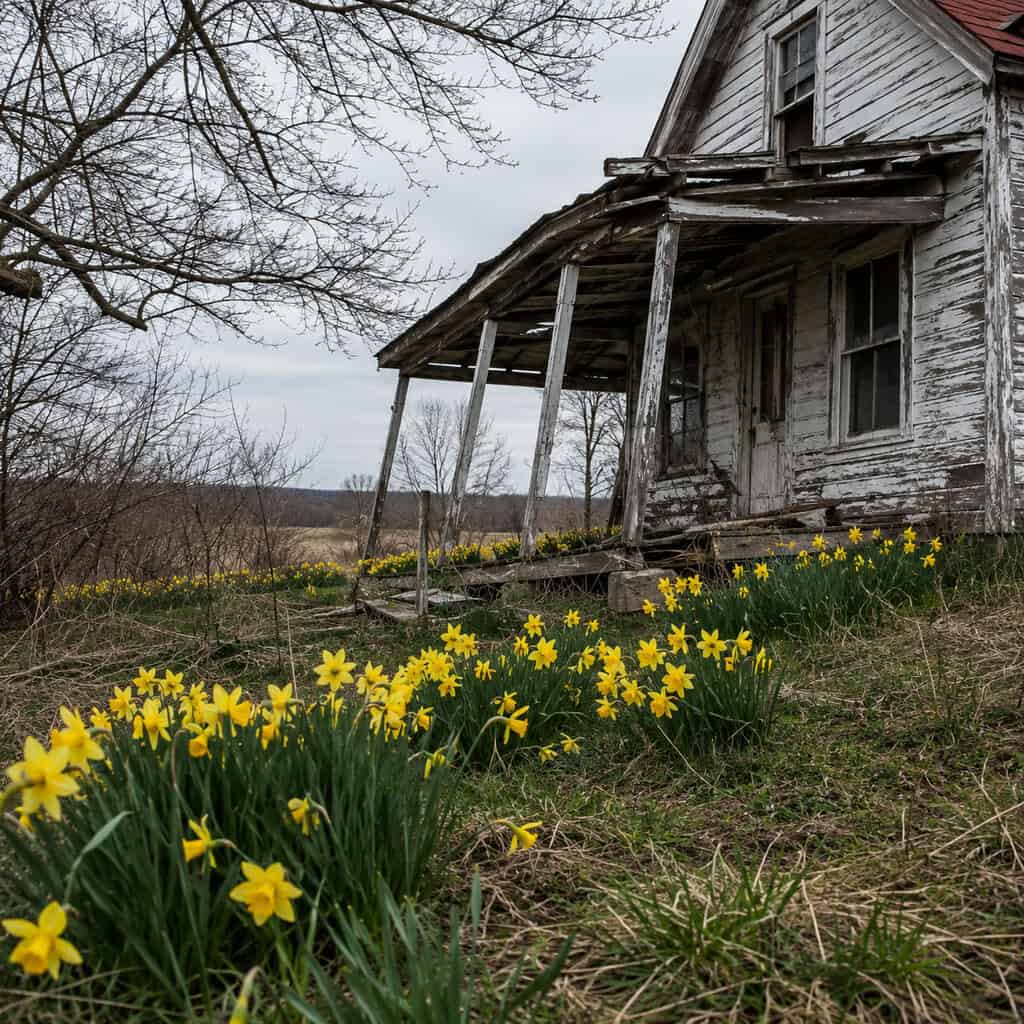
Pass an abandoned farmstead in April and you’ll likely spot them — a yellow ribbon tracing where the front walk once stood, long after the porch itself has collapsed.
Daffodils contain lycorine, which is exactly why deer, voles, squirrels, and rabbits leave them completely undisturbed. Nothing eats them, and nothing bothers to dig them up.
They also multiply without help. A single bulb turns into a clump of six within about five years, and dividing is only necessary if you want to spread them elsewhere.
Plant them in October at six inches deep, then forget about them entirely until spring delivers the surprise.
23. Asparagus: A Single Planting, Two Decades of Harvest
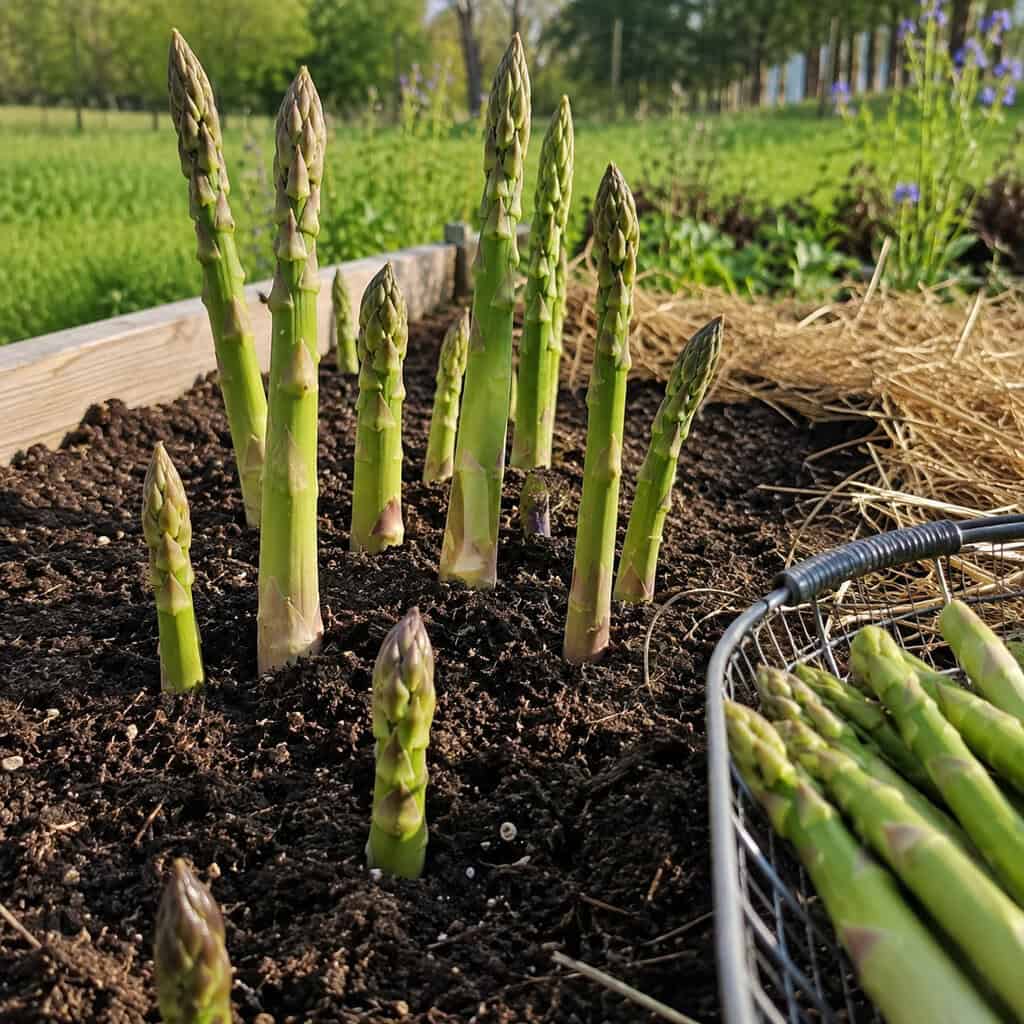
This is the strongest plant-once, harvest-forever case in any vegetable garden.
Crowns planted into a trench in spring will keep producing spears for 15 to 20 years, and long-established beds in old farm gardens have pushed past 30. Dig the trench once, and you’ll be eating from it for two decades.
The catch is patience: skip harvesting entirely the first year, take just a light cut the second, and wait until year three for a full harvest. Cutting too soon starves the crown and shortens its lifespan.
Once you stop harvesting in June, let the ferny growth mature — that foliage is what feeds next year’s spears. For more permanent food-bed ideas, browse this list of vegetables you only plant once.
24. Bearded Iris: Passed Down More Than It’s Purchased
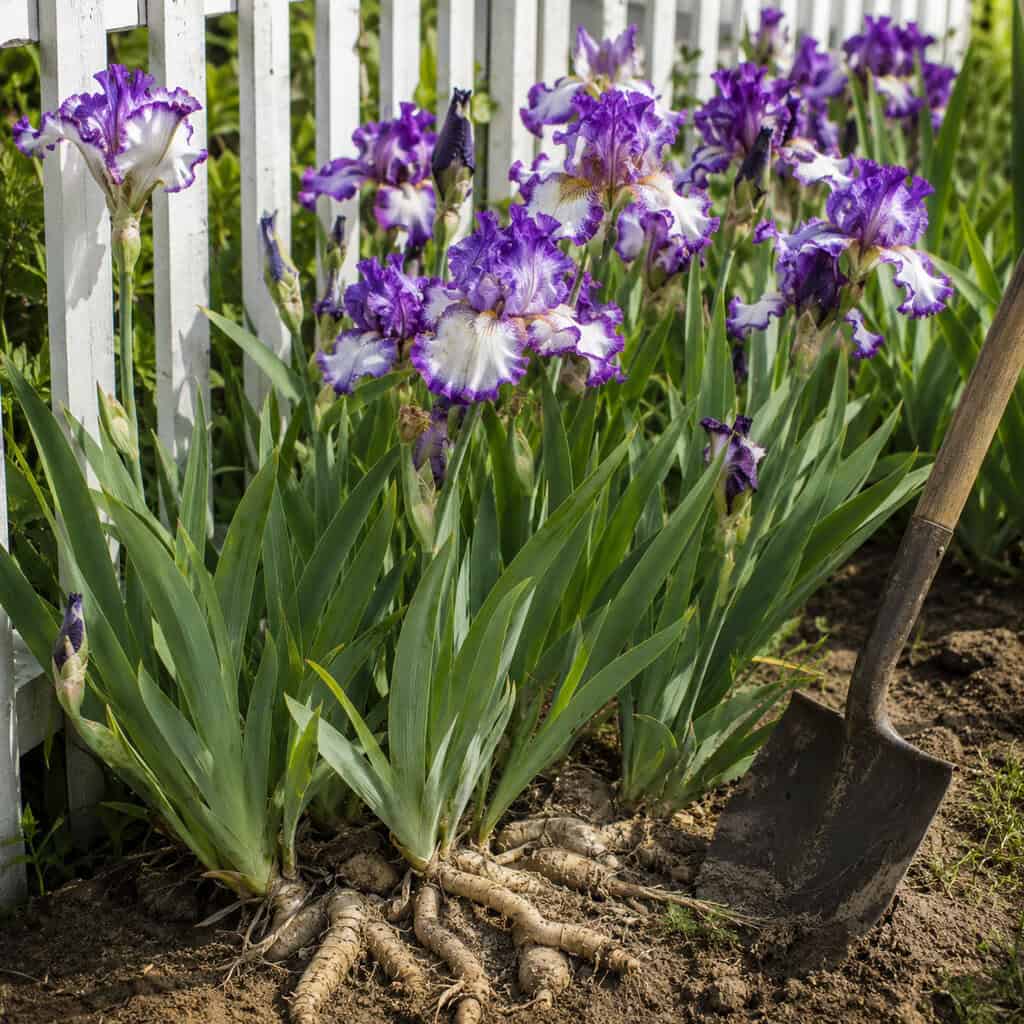
Ask a longtime gardener where their iris came from, and the answer is usually a person’s name, not a nursery.
Bearded iris multiplies quickly from rhizomes that sit partly exposed on the soil surface, making them ridiculously simple to dig up, divide, and hand off in a grocery bag over the fence. Entire neighborhoods often share the same iris lineage without even realizing it.
Never bury the rhizome completely. Sunlight hitting its top surface is what triggers blooming, and burying it under mulch — usually with good intentions — is the most common way people accidentally kill their iris.
Divide the clump every three to five years once it becomes congested and flowering starts to decline.
25. Little Bluestem: Color That Lasts Into February
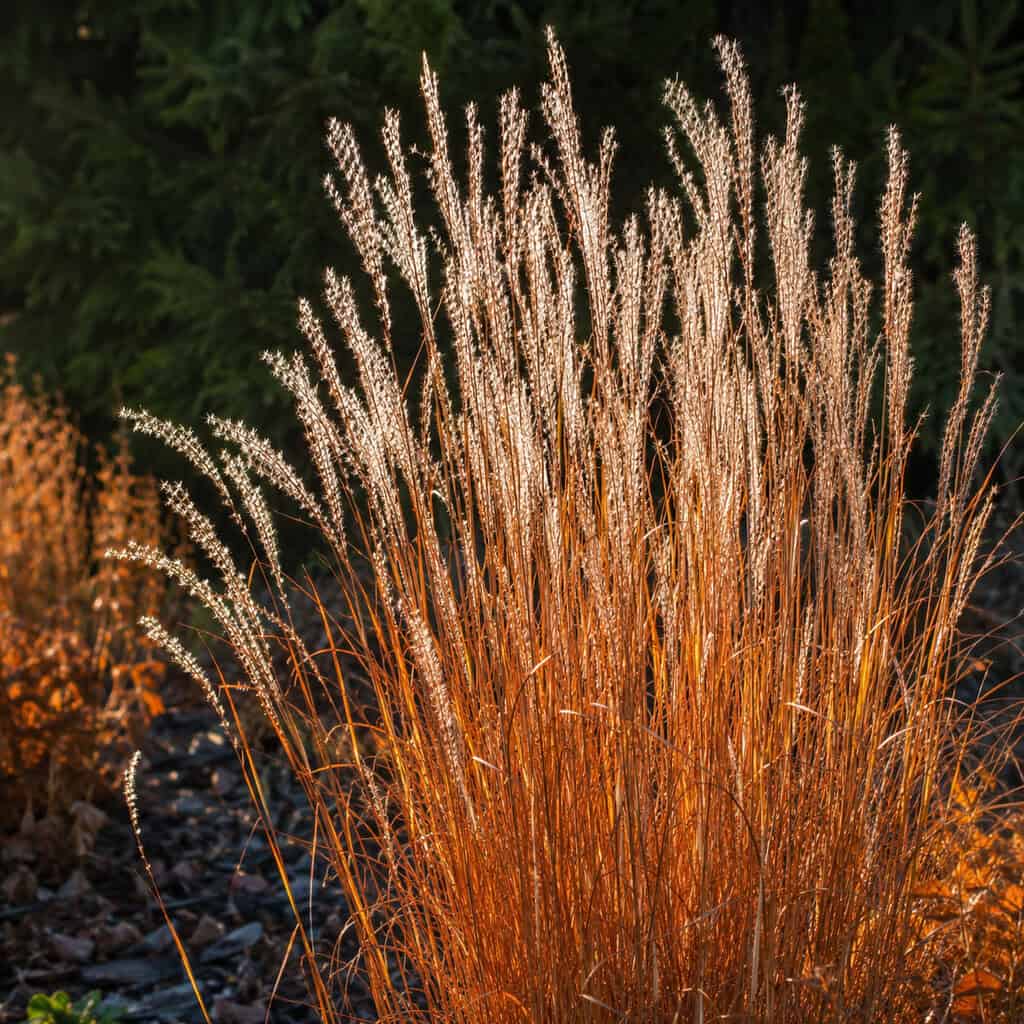
Blue-green through July, then bronze-red by October, holding that color well into February as seedheads catch the low winter light.
Little bluestem is a genuine prairie native, with roots reaching several feet underground. It needs no irrigation and no fertilizer — feeding it just causes it to flop over.
The entire yearly task is trimming it down to about six inches in late winter. Leave it standing until then, since overwintering insects rely on the hollow stems for shelter. Plenty of other ornamental grasses steal the show in late summer, but few hold onto their color as deep into winter as this one.
26. Creeping Thyme: A Fragrant Substitute for Grass
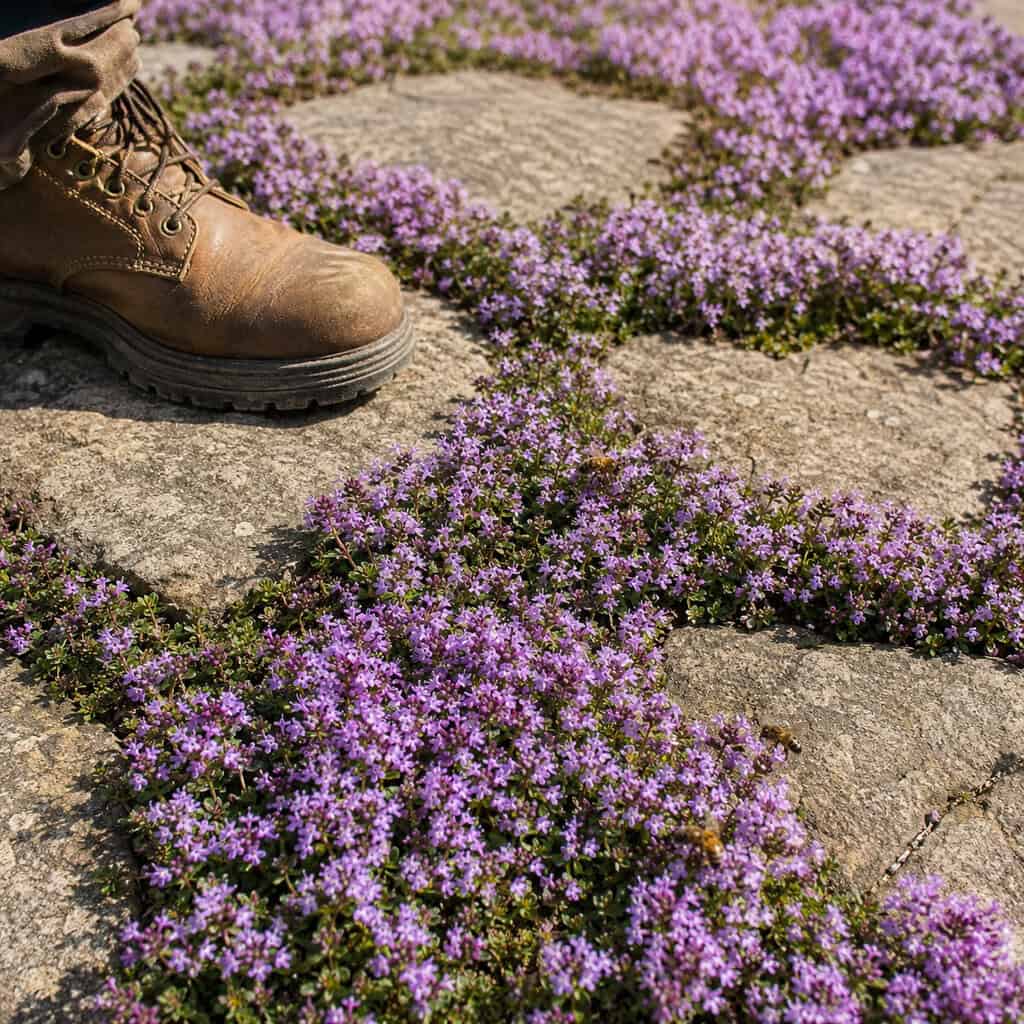
Step on it, and suddenly the whole path smells like a kitchen.
Creeping thyme fills the gaps between flagstones, handles regular foot traffic, needs almost no watering once established, and produces a purple haze of blooms that bees work all through June.
Along a narrow driveway strip — exactly the kind of place where grass browns out by midsummer anyway — it’s a far better choice than turf. And if you’re considering ditching grass on a larger scale, there are ground covers that can replace your lawn entirely.
27. New England Aster: The Last Meal Before Winter
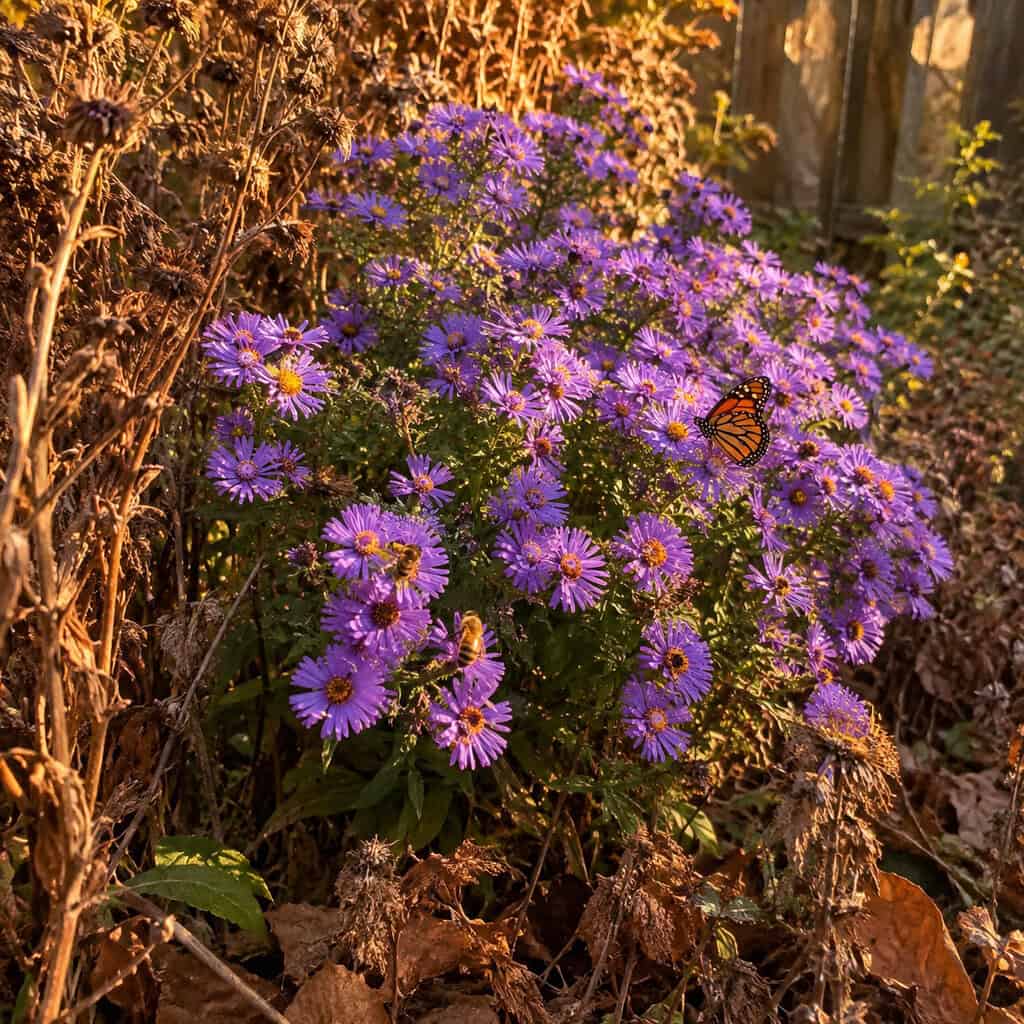
By October, when everything else in the yard has finished, there’s a five-foot cloud of violet-purple in the back corner, humming with bees.
Migrating monarchs refuel on asters during their journey south, and native bees keep working the blooms right up until the first hard freeze hits. It’s essentially the last real meal available in the garden.
Pinch the stems back by a third in early June if you’d prefer a shorter, sturdier plant. Otherwise, just let it grow and stake it if it starts to lean.
Then it dies back to the ground, vanishes entirely, and repeats the whole performance next year without any coaxing. To bridge the gap before it blooms, consider perennials that keep blooming into fall.
28. Epimedium: A Rare Success Story in Root-Choked Shade
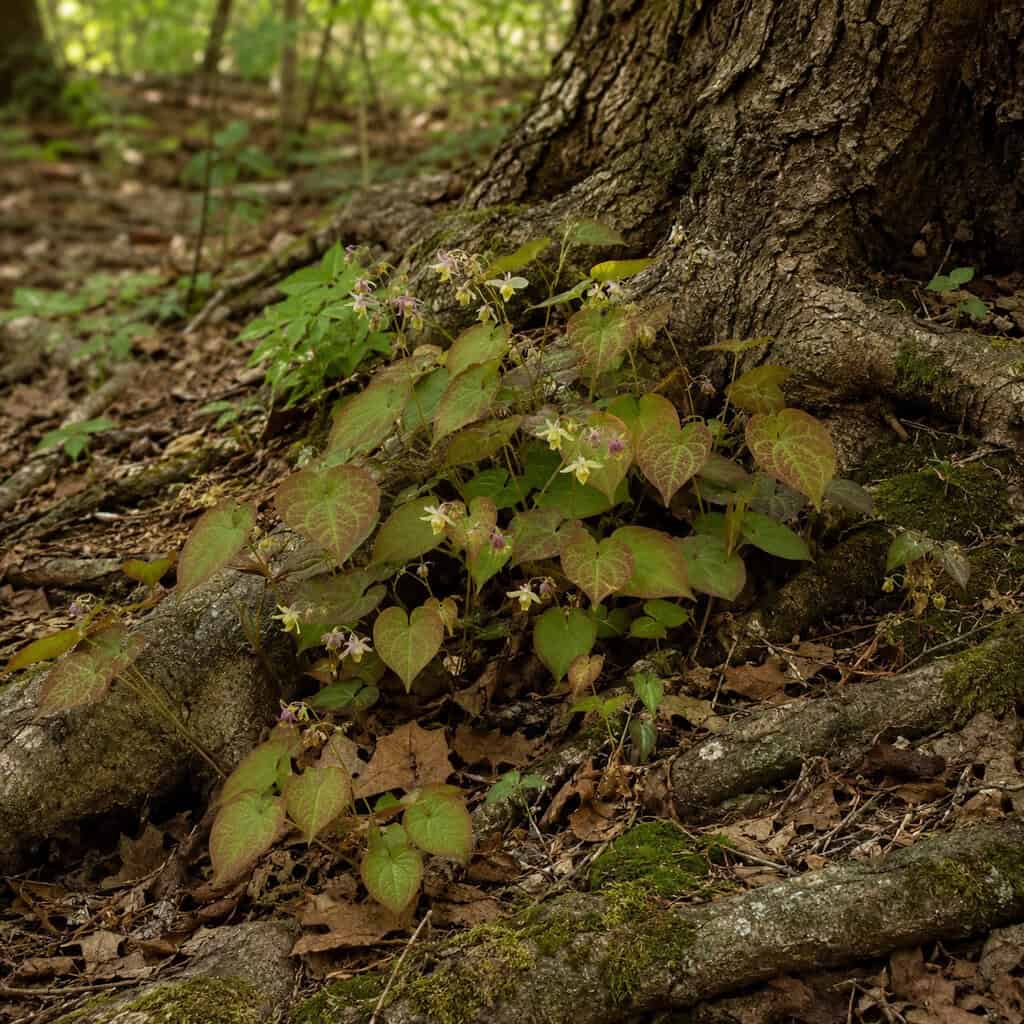
Dry shade beneath a mature tree is one of the toughest challenges any yard presents — tree roots grab all the available water, leaving nothing behind.
Oregon State University horticulturists highlight bishop’s hat as one of the few plants that genuinely thrives there, competing successfully with tree roots in spots where hostas typically struggle and sulk. It appears on the Oregon State University list among the toughest low-water perennials available.
Small spurred flowers hover above heart-shaped foliage each April. Those leaves develop bronze edges by fall and frequently persist through winter.
Shear the old foliage back in late February, just before new flower stems emerge. That’s the entire job, once a year.
29. ‘Autumn Joy’ Sedum: Drought-Proof by Design
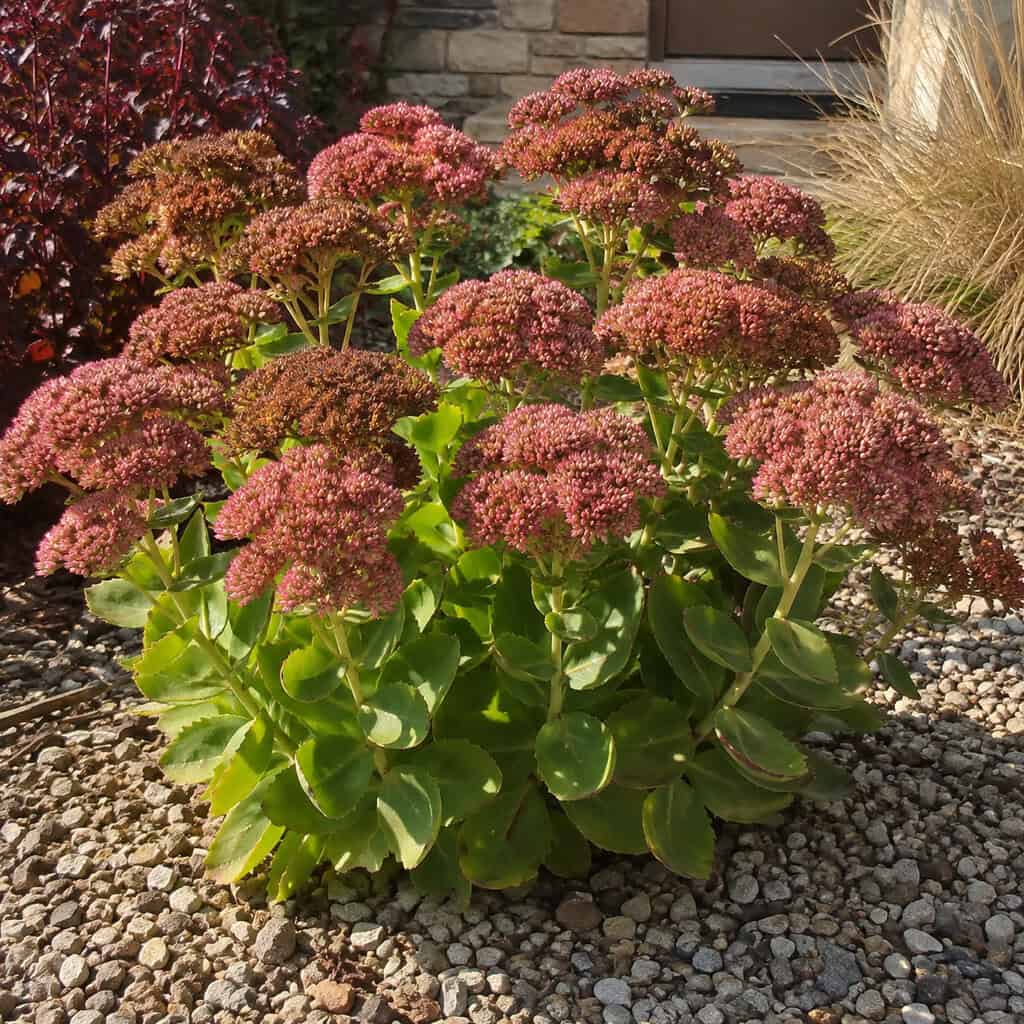
The secret is in the leaves — thick, waxy, and built to store water like a camel, which is exactly why sedum coasts through a three-week dry spell looking completely unbothered.
Buds form like tight little broccoli heads in July, open to dusty pink by September, then age into copper and remain standing through snow all winter.
Trim it back in spring if the old stems annoy you. Or simply leave them be.
30. Chives: Early Spring Growth, But Handle With Care Around Pets

Chives are the first green thing you’ll spot in the herb bed, pushing up in late March while everything else is still hesitating.
They brush off frost, self-seed into nearby cracks, and return thicker every year from a single original planting. Snip what you need at any time, and if the clump gets tough in midsummer, cut it all the way to the ground — fresh growth returns within two weeks.
Toxic to dogs and cats. Chives belong to the allium family, alongside onions and garlic, and alliums damage red blood cells in pets. This results in hemolytic anemia, which tends to show up days after ingestion rather than hours.
Watch for lethargy, pale gums, weakness, and orange or dark-red urine. Cats are more sensitive than dogs pound for pound, and dried or concentrated allium — think table scraps or leftover dip — is more dangerous than a fresh leaf.
A 70-pound dog nibbling a single blade of chive isn’t in real danger. But repeated snacking on a large clump, or a small dog getting into it, is a different situation entirely.
Safe swap: for an early perennial herb in a pet-friendly yard, plant thyme or rosemary instead. Both return reliably year after year, both are non-toxic, and neither one will send you rushing to the vet for bloodwork.