

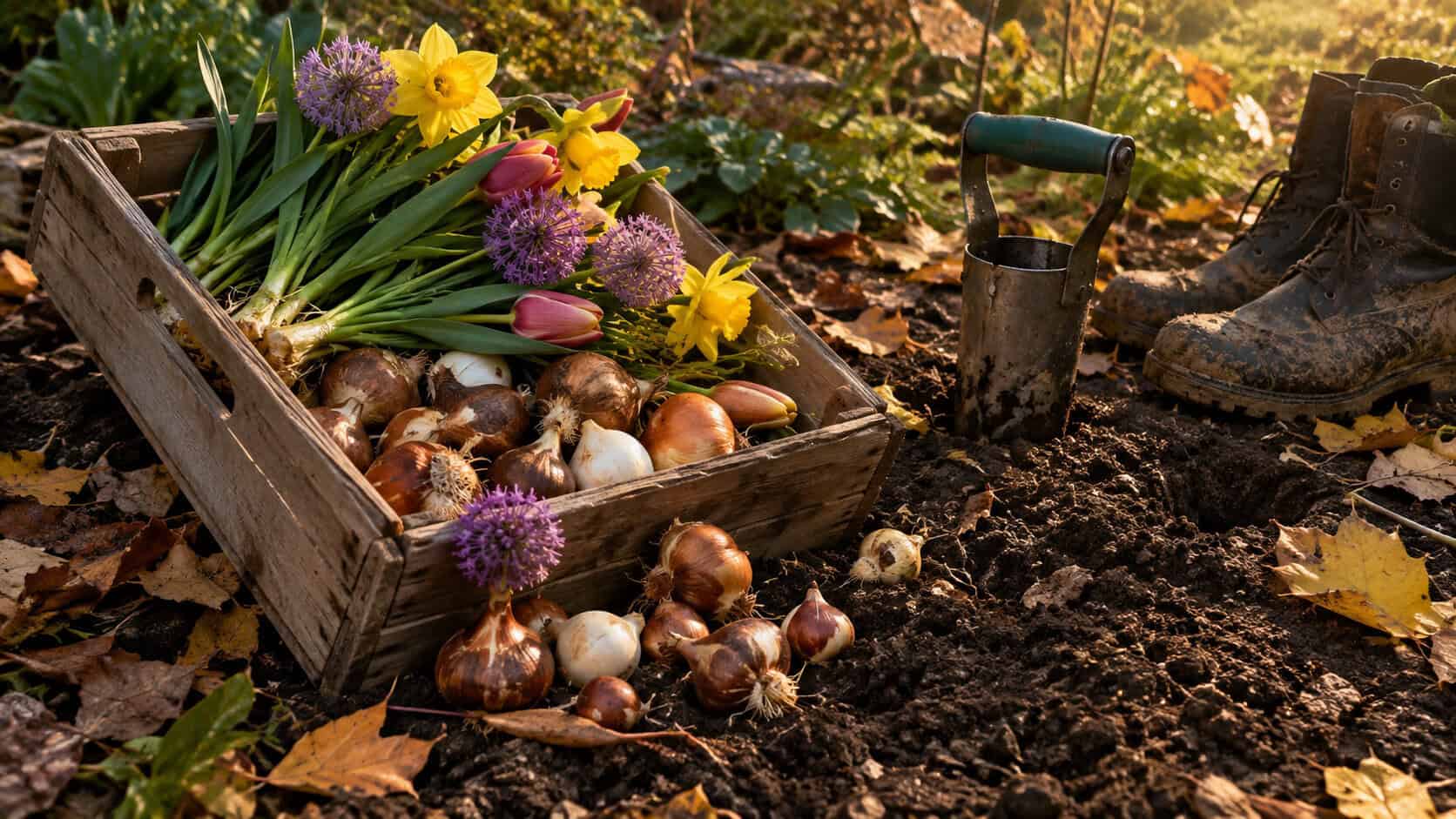
Walk past a yard in mid-April that’s already going off — daffodils by the hundred, a peony fat with buds, grass so green it looks fake — and you’re not looking at spring work.
You’re looking at last October.
Fall is when soil stays warm while air turns cool, which is the exact combination roots want. Nothing is competing. Nothing is baking. Weeds have quit for the year.
Spring planting is the panic version. Fall planting is the version that works.
Here are 33 things to put in the ground this fall that pay you back before most of your neighbors have started thinking about it.
1. Daffodils
A dollar a bulb buys six weeks of April color, and daffodils are the one bulb the wildlife leaves completely alone.
That’s not luck. Every part of the plant — bulb, leaf, flower — contains lycorine and calcium oxalate crystals, which taste terrible and make animals sick. Deer browse right past them. Voles tunnel around them. Squirrels dig up a tulip bed in one night and won’t touch daffodils three inches away.
Use that. Ring a tulip planting with daffodils and you’ve built a chemical fence. Plant them along the edge of a hosta bed and deer hit the driveway instead of the border.
The same toxicity that protects the bulb is a real hazard indoors. Daffodil bulbs look enough like onions that dogs will chew them, and ingestion brings vomiting, drooling, abdominal pain, and in larger amounts cardiac arrhythmia. Cats are at risk too, usually from chewing foliage or drinking cut-flower water. Never leave a mesh bag of bulbs sitting on the garage floor while you take a break — that’s how most cases start. Store them on a shelf, in a closed bin, out of nose range. If you’re auditing the rest of your beds, this overlaps hard with the other common garden plants that are toxic to pets.
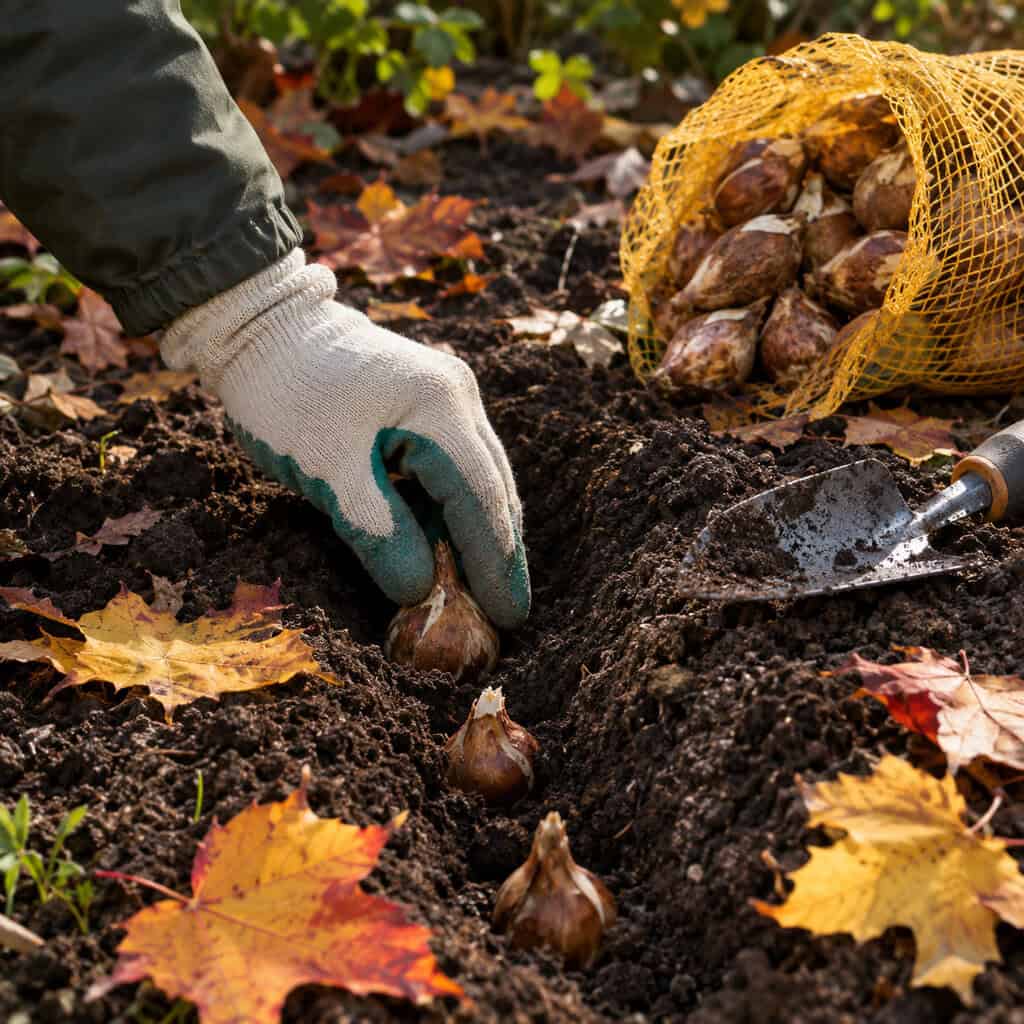
Plant them six inches deep, pointed end up, once soil temps drop under 60°F — late September through November for most of the country. Penn State Extension recommends getting them in with enough time to root before the ground locks up. A hundred bulbs takes an afternoon with an auger bit on a cordless drill.
Then they come back for thirty years.
2. Hardneck Garlic
Highest return per square foot of anything a homeowner can plant in October.
Cloves push roots through fall and winter, so the moment daylight lengthens in March the plant already has a system in place to feed a big bulb. Spring-planted garlic skips that and makes heads half the size.
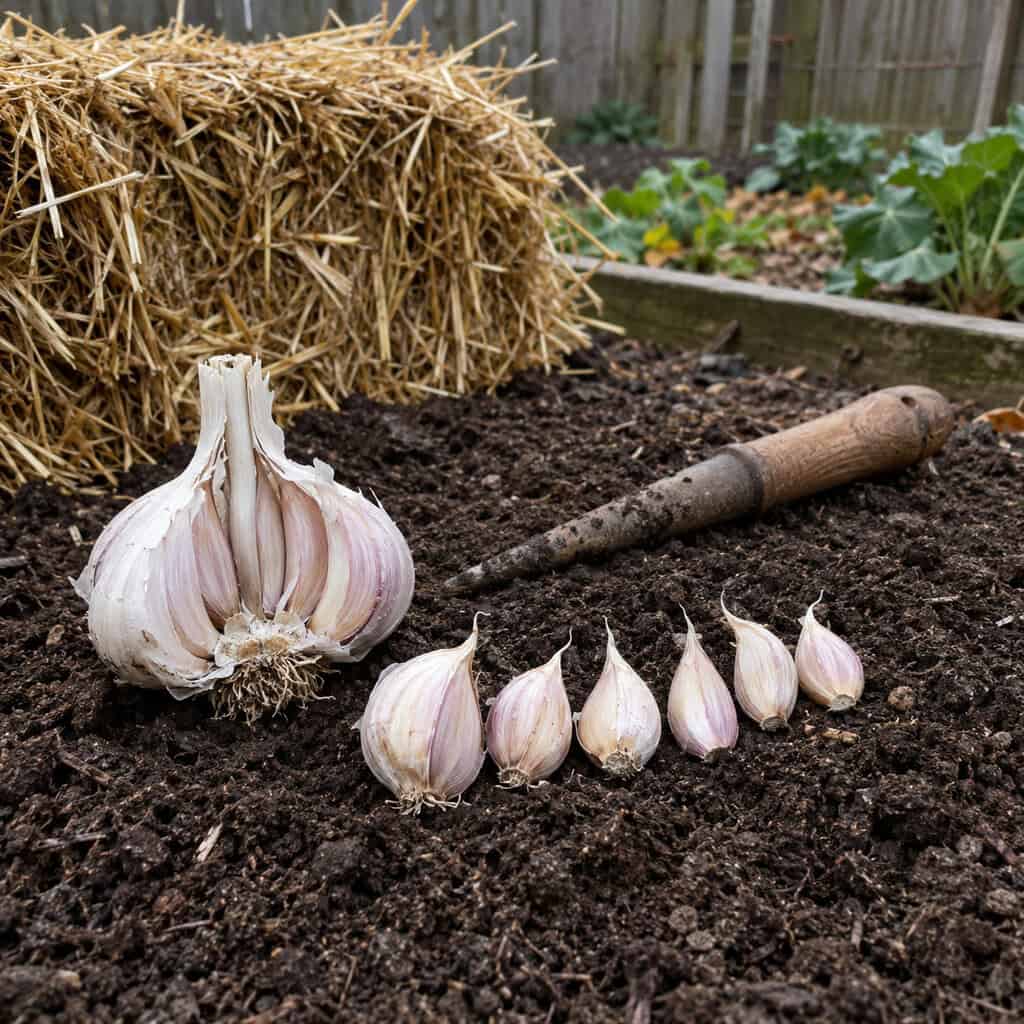
Skip grocery-store garlic. It’s usually softneck, often treated to suppress sprouting, and frequently carries virus. Order named hardneck varieties instead — Music, German Red, Chesnok Red. Break the head into cloves the day you plant, not a week before.
Two inches deep, six inches apart, papery skin left on, then four inches of straw over the top. University of Illinois Extension has even paired fall garlic with an oats cover crop that winter-kills into free mulch.
3. Bare-Root Peonies
Plant a peony root in October and it blooms respectably in year two. Plant the same root in April and you’re roughly a year behind.
This is the clearest do-it-now item on the list.
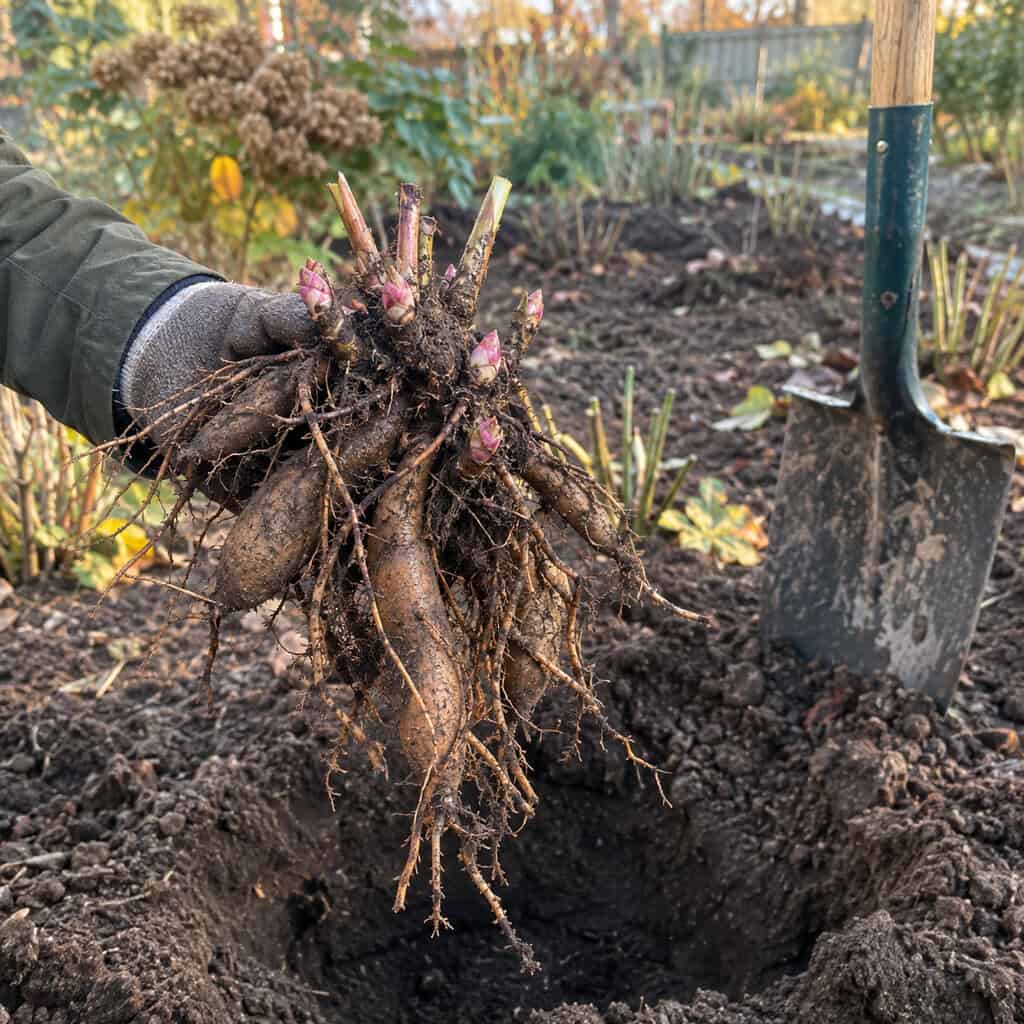
Depth decides everything. Those pink growth buds — the eyes — must sit no more than an inch and a half to two inches below the soil surface. Bury them deeper and you get gorgeous foliage and zero flowers, forever. That’s why so many inherited peonies at old houses never bloom: somebody mulched them, then mulched them again.
Dig a wide hole, not a deep one. Set the root so the eyes are just barely covered, and resist the urge to be generous with the mulch.
4. Tulips
You cannot fake a tulip in spring. They need a long, sustained cold period to set a flower, and there’s no shortcut sold at any garden center.
Plant late on purpose — October into November, after soil temps sit below 60°F. Going in during a warm September invites bulb rot and premature leaf tips that get shredded by the first hard freeze.
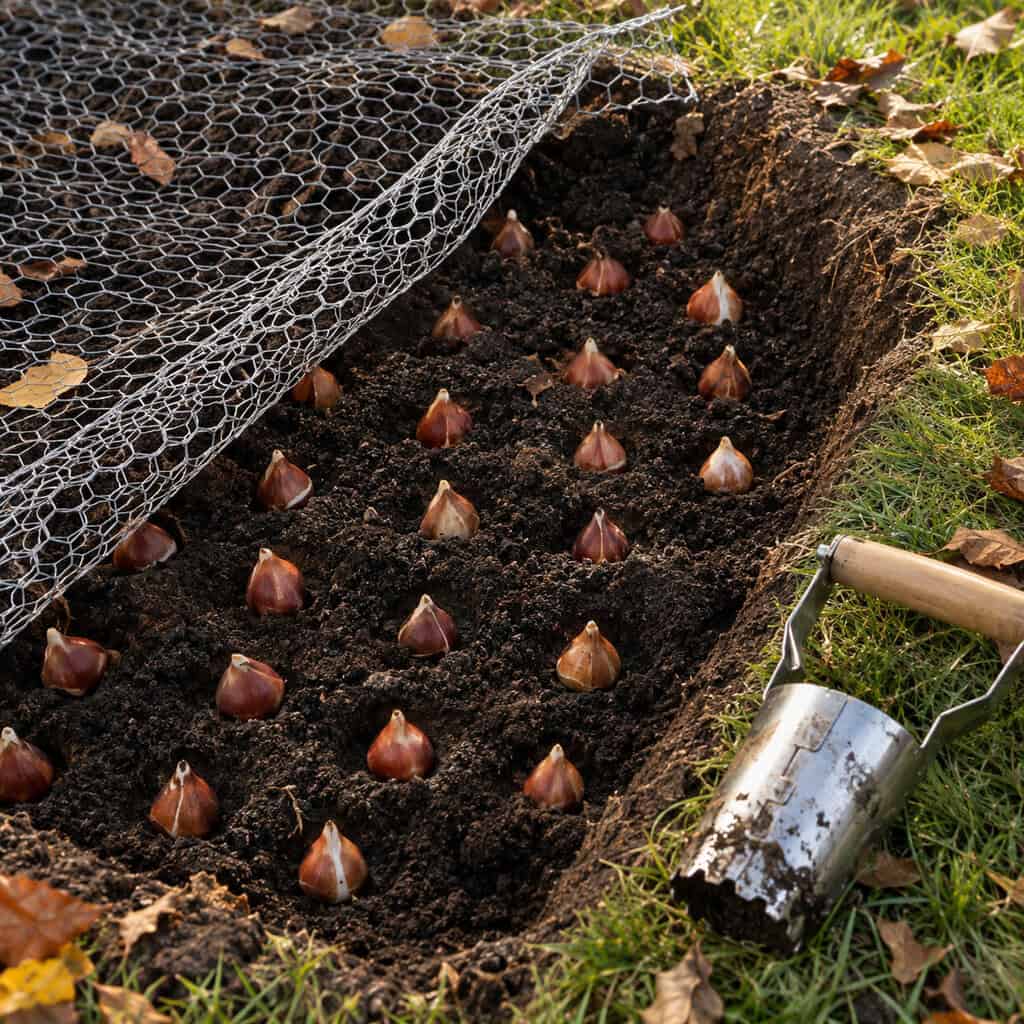
Squirrels treat fresh tulip beds like a buffet. Lay chicken wire flat over the planting area, cover with soil, and pull it in spring. Voles are worse and work from below; a handful of sharp gravel in each hole helps.
Be honest about lifespan. Most modern hybrids give you two or three strong years, then dwindle. Species tulips and Darwin hybrids hang on longer.
5. Cool-Season Grass Seed
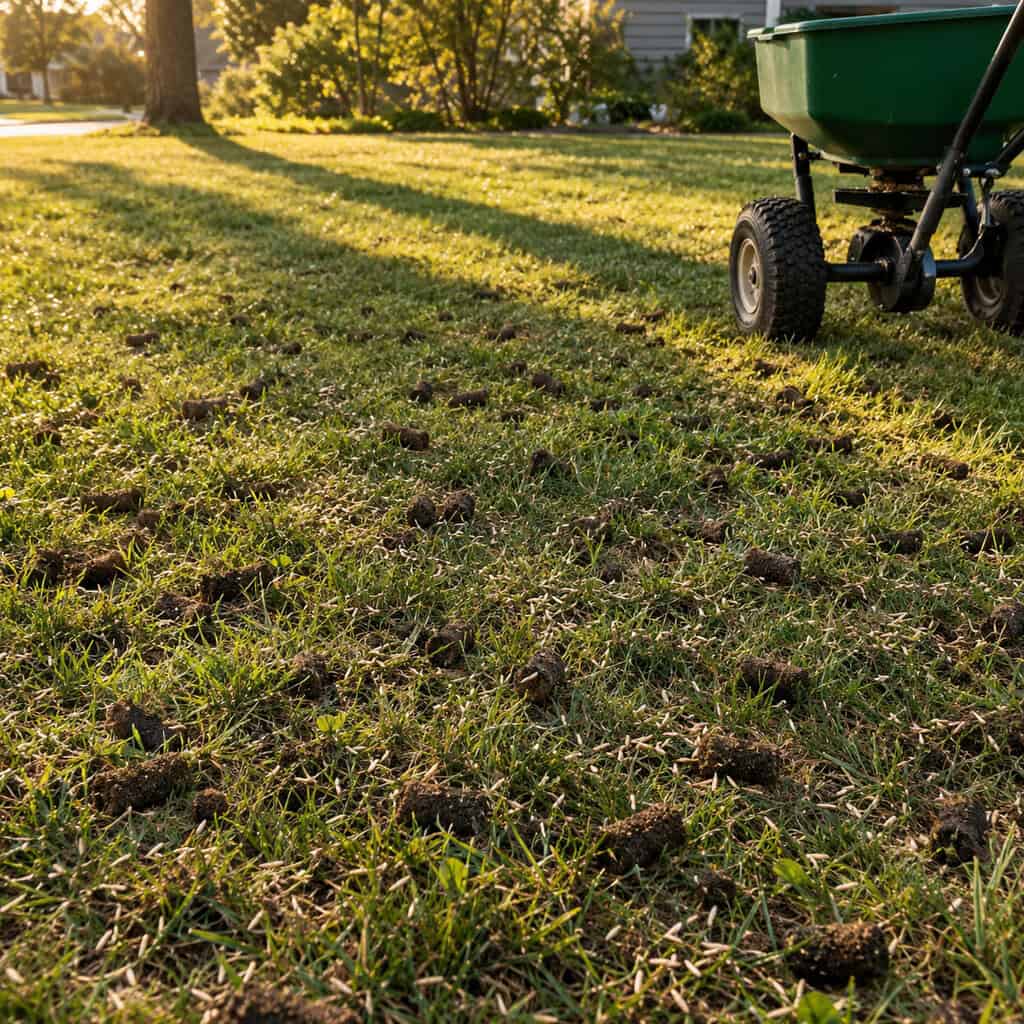
The biggest spring payoff on this entire list is also the one most homeowners skip. Grass seed. In September.
Fescue, Kentucky bluegrass, and perennial rye all germinate into soil that’s still holding summer heat while the air cools off — ideal. Crabgrass has already finished its life cycle and isn’t competing. Weed pressure is near zero. Rain usually shows up on its own.
Spring seeding fights the opposite of all that: cold soil, a crabgrass explosion, rising heat, and the pre-emergent problem. You can’t put down crabgrass preventer and grass seed at the same time — one blocks the other — so spring seeders either skip weed control or skip the seed.
Rates matter. Overseeding a thin lawn runs about 3 to 4 pounds of tall fescue per 1,000 square feet; a bare renovation needs 8 to 10. Kentucky bluegrass goes down much lighter, around 2 to 3 pounds. Doubling the rate doesn’t give you a thicker lawn, it gives you seedlings strangling each other.
Timing by region: Upper Midwest and New England, mid-August to mid-September. Mid-Atlantic and Ohio Valley, September through very early October. Transition zone, aim for Labor Day. The rule is 45 days of growing weather before your average first hard frost.
Water light and often — 10 minutes twice a day for the first two weeks, then taper to deeper, less frequent soakings as roots go down. Watering new fall grass seed is where most seedings fail; the top quarter inch can’t dry out during germination.
Core-aerate first if the soil is compacted, and mow the existing lawn short so the seed reaches dirt. A September lawn greens up weeks before an April one, and it does it without you fighting for it.
6. Crocus

First thing blooming, period. Late February in a lot of places, sometimes straight up through snow.
They’re also the first pollen a groundbound bumblebee queen finds after winter, which matters more than it sounds.
Cheap enough to buy by the hundred and small enough to plant right into turf — three to four inches deep, scattered in drifts, no pattern. Cut a slice of sod with a spade, tuck bulbs underneath, press it back down.
Just don’t mow until the crocus foliage yellows. Give it three weeks after bloom.
7. Hellebores (Lenten Rose)

February through April, while everything else is still asleep. Nodding cream, plum, and green flowers on a plant that keeps leathery evergreen leaves all winter.
Deer ignore them. So do rabbits.
Plant them in early to mid-fall in dappled shade under deciduous trees — the roots need those weeks to settle so the first spring actually produces flowers instead of just leaves. They’re excellent among shade plants that thrive where grass refuses to grow.
Note for pet owners: the foliage and sap are toxic if chewed, causing mouth irritation and vomiting. Most dogs won’t bother, but a puppy in a chewing phase might.
8. Larkspur and Bachelor’s Buttons

Scatter the seed after the first few frosts, then walk away for five months.
These are hardy annuals, and they germinate best after sitting through cold, wet soil. Fall-sown larkspur blooms weeks earlier than spring-sown and stands a foot taller because it built a root system all winter.
Rake a patch of bare soil, broadcast the seed, press it in with your boot. No watering, no cover, no fuss.
They’ll reseed themselves after that and you’ll never buy the packet again.
9. Ornamental Alliums
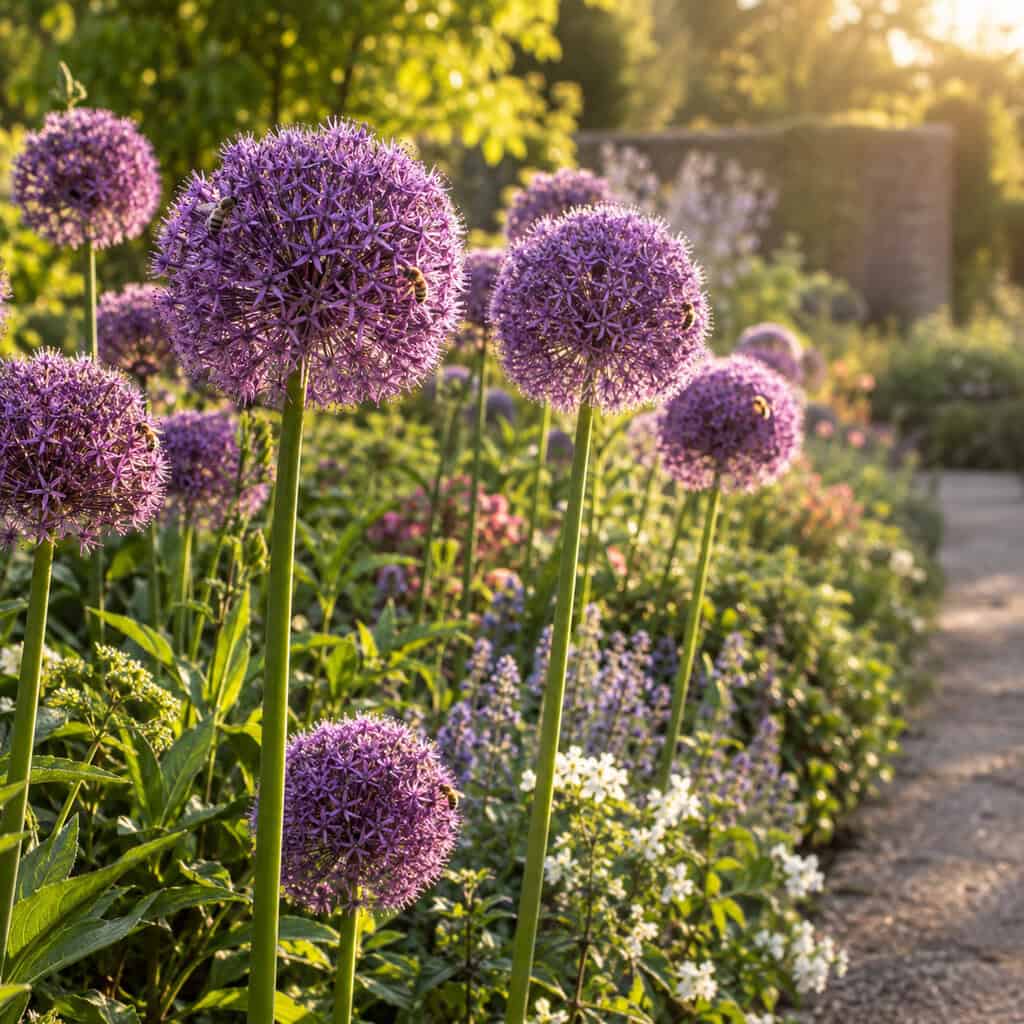
Softball-sized purple globes on three-foot stems in late spring, floating over the peonies. Then seedheads that stay architectural into August.
Nothing eats them. Onion chemistry makes the entire plant unappealing to deer, voles, squirrels, and rabbits, which is why alliums are the low-stress bulb for anyone who’s lost a tulip bed.
That same chemistry is the problem indoors. Toxic to dogs and cats. Every allium — ornamental varieties, garlic, onion, chives, leeks — contains N-propyl disulfide, which damages red blood cells and can cause hemolytic anemia. Symptoms show up slowly: lethargy, pale gums, dark urine, weakness a day or two after eating. Cats are substantially more sensitive than dogs, and a surprisingly small amount matters relative to body weight.
The bulbs are the concentrated part, and they smell like food. Keep bags sealed and elevated during planting season, sweep up any loose papery skins, and don’t let a dog supervise you filling holes. If your dog is a committed digger, plant alliums in a fenced bed or somewhere they don’t patrol.
In the ground and growing, the risk drops way off — dogs rarely chew the tough stems. It’s the pre-planting bag on the garage floor that sends animals to the vet. Same story as the landscaping plants that are toxic to dogs.
Plant them September through November, three times as deep as the bulb is tall, in full sun and soil that drains.
10. Lilac
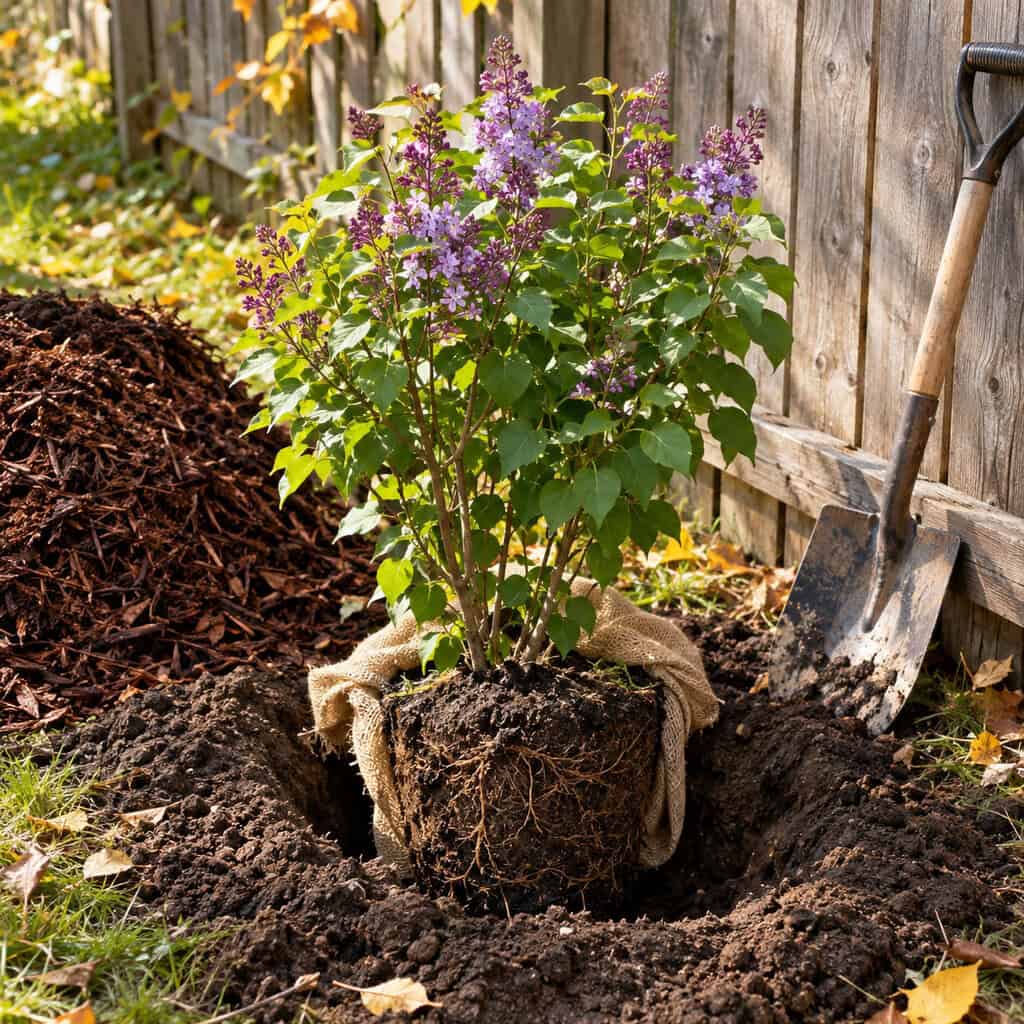
Cool, moist fall soil with no heat stress is the best root-establishment window a shrub ever gets. Plant a container or balled lilac six weeks before your first hard freeze and it wakes up in April already anchored.
Full sun. Neutral to slightly alkaline soil. Good drainage, always.
Common lilac wants space — eight to twelve feet wide eventually. Dwarf types like Miss Kim stay under five and still smell like 1948.
Which is the actual point. Nothing in an American yard triggers memory faster than a dooryard lilac in bloom.
11. Overwintering Spinach
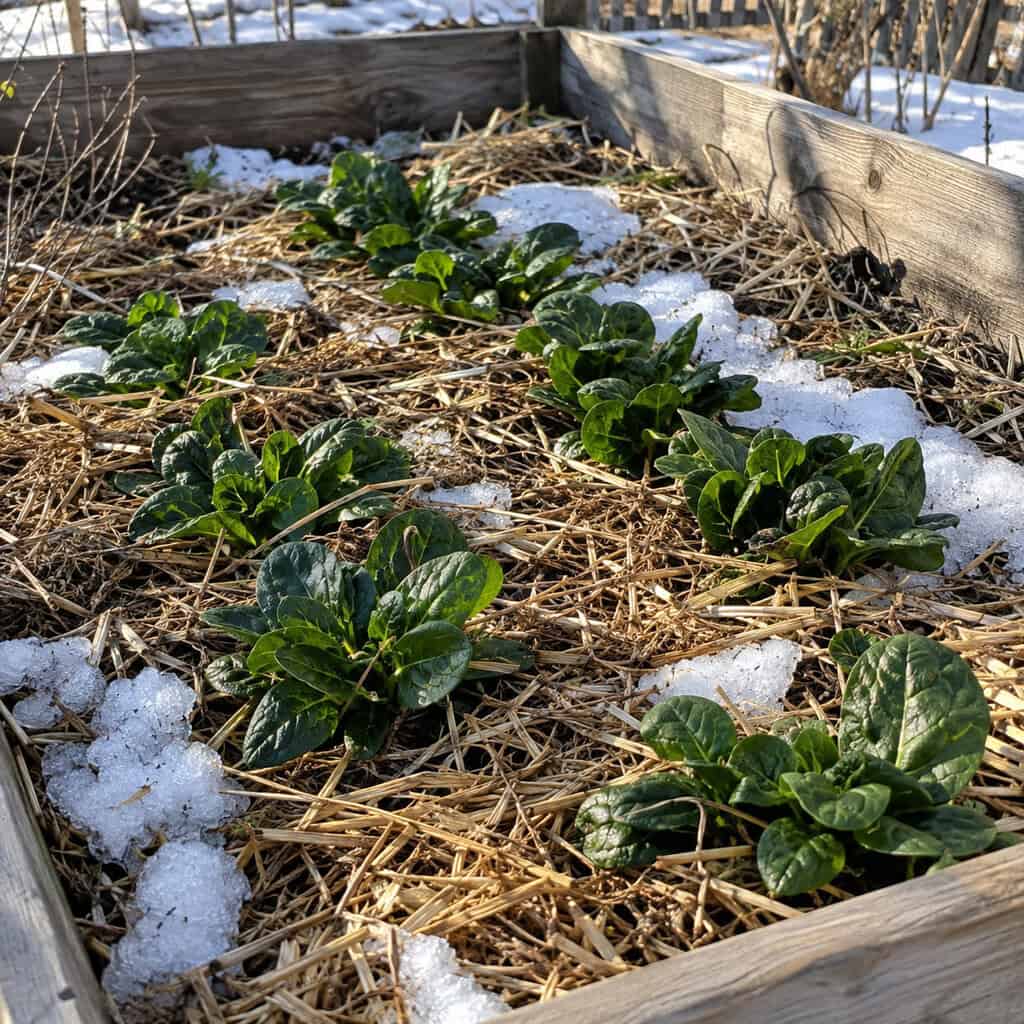
Sow in late August or September and let the plants get to about three inches tall before hard cold arrives.
Then they stop. All winter they sit there under snow or a foot of straw looking like nothing is happening.
March hits and they take off, giving you the first harvest of the year — weeks before anything spring-sown has germinated. Varieties bred for it, like Winter Bloomsdale and Giant Winter, handle the cold best. University of Maryland Extension covers the fall sowing windows by crop.
Plant it now, forget it, eat it in March.
12. Creeping Phlox
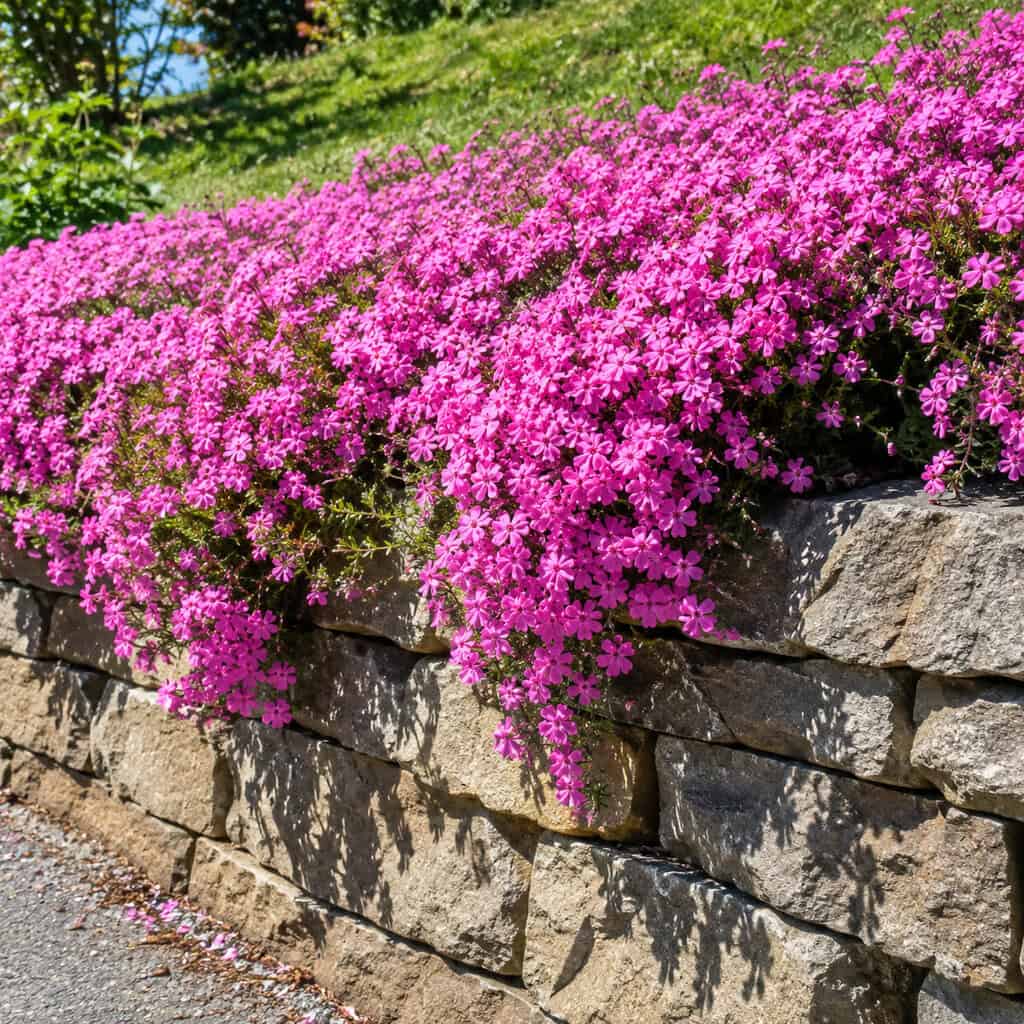
One flat of plugs planted in early fall becomes a solid sheet of pink or lavender spilling over a retaining wall by mid-April.
Roots knit in during fall, which is why the fall-planted version looks established the first spring and the spring-planted version looks like sad little dots.
Best use: the slope nobody wants to mow. It holds soil, smothers weeds, and turns an eyesore bank into the best thing on the street for three weeks. Put it on the list with other ground covers that replace a lawn.
Space plugs a foot apart. They’ll close the gaps.
13. Grape Hyacinth (Muscari)
The only bulb that helpfully tells you where it is. Muscari sends up grassy foliage in fall, right after planting, so you’re not spearing your own bulbs with a trowel in November.
Spring brings short spikes of that particular dusty cobalt blue, and they read as a river when you plant a few hundred of them along a path edge.
Now the warning. They naturalize aggressively — seed and offset until they’re in the lawn, the vegetable bed, and the cracks in the patio.
Plenty of people call that a feature. Decide which camp you’re in first.
14. Shallots and Multiplier Onions
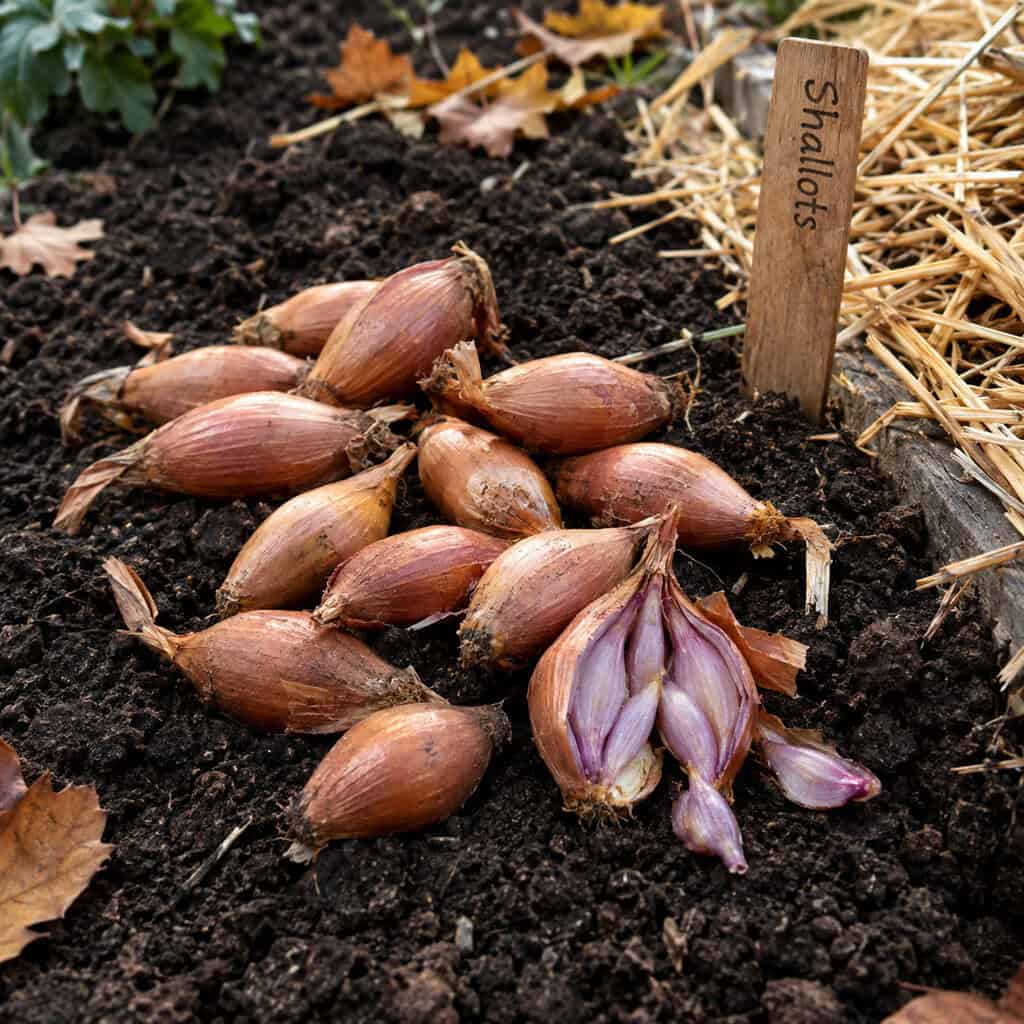
Same fall logic as garlic, and almost nobody does it.
Push a single shallot bulb into the ground in October and by early summer it’s divided into a cluster of six to ten. Multiplier onions — potato onions, Egyptian walking onions — do the same trick.
Save the biggest few from the harvest, replant them in the fall, and you’ve got a crop you never buy again. Shallots run $6 a pound at the grocery store.
Plant them two inches deep with the tips just below the surface, then mulch like you did the garlic.
15. Bearded Iris
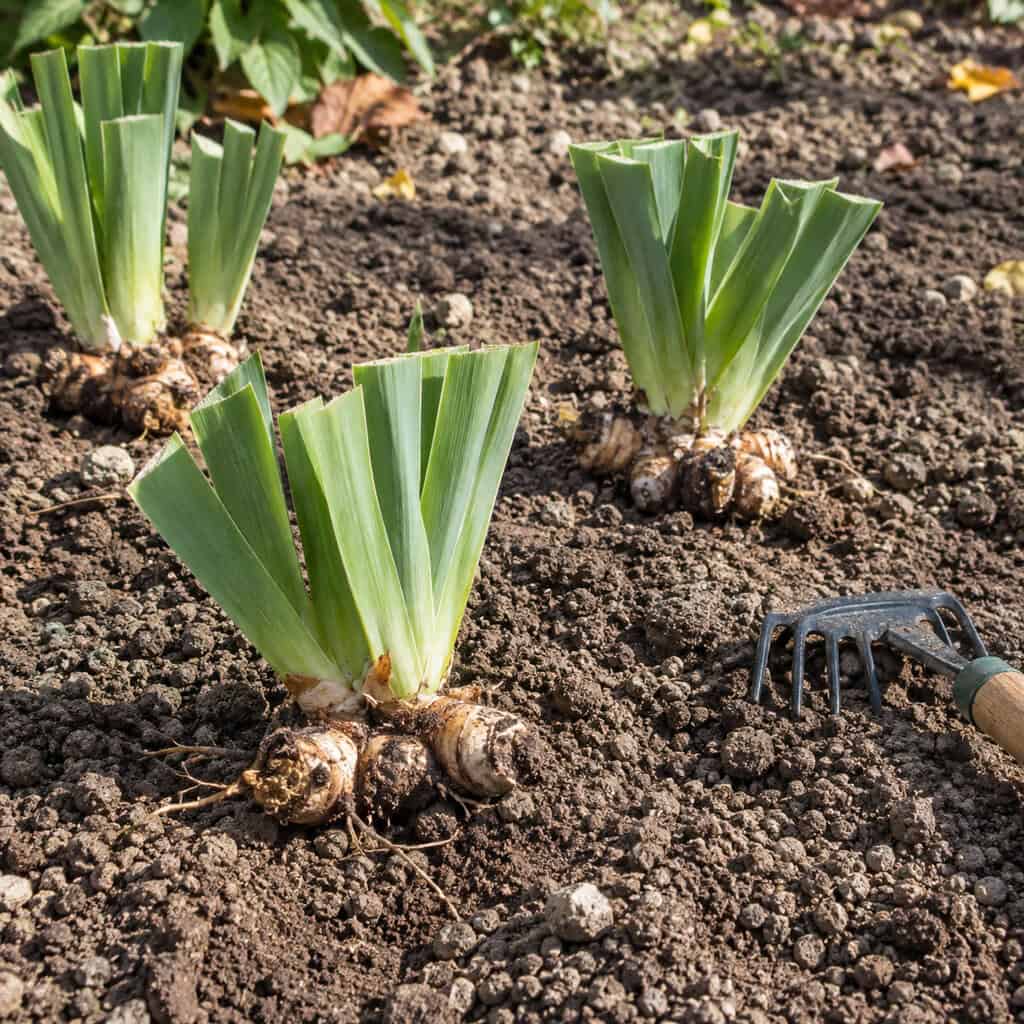
Late summer into early fall is the window for setting or dividing rhizomes — they root before dormancy, then bloom on schedule the following May.
Depth is the whole game, and it’s backwards from every other thing on this list. Iris rhizomes must sit at the surface with their tops exposed to sun, like a potato half-buried on a beach. Plant them deep and they rot. Mulch over them and they rot.
That’s the classic homeowner mistake: tidy gardener spreads three inches of bark over the bed in November and wonders why the iris disappeared.
Divide an overgrown clump every three or four years. Discard the spent center, keep the firm outer fans, and trim the leaves to a six-inch fan.
16. Virginia Bluebells
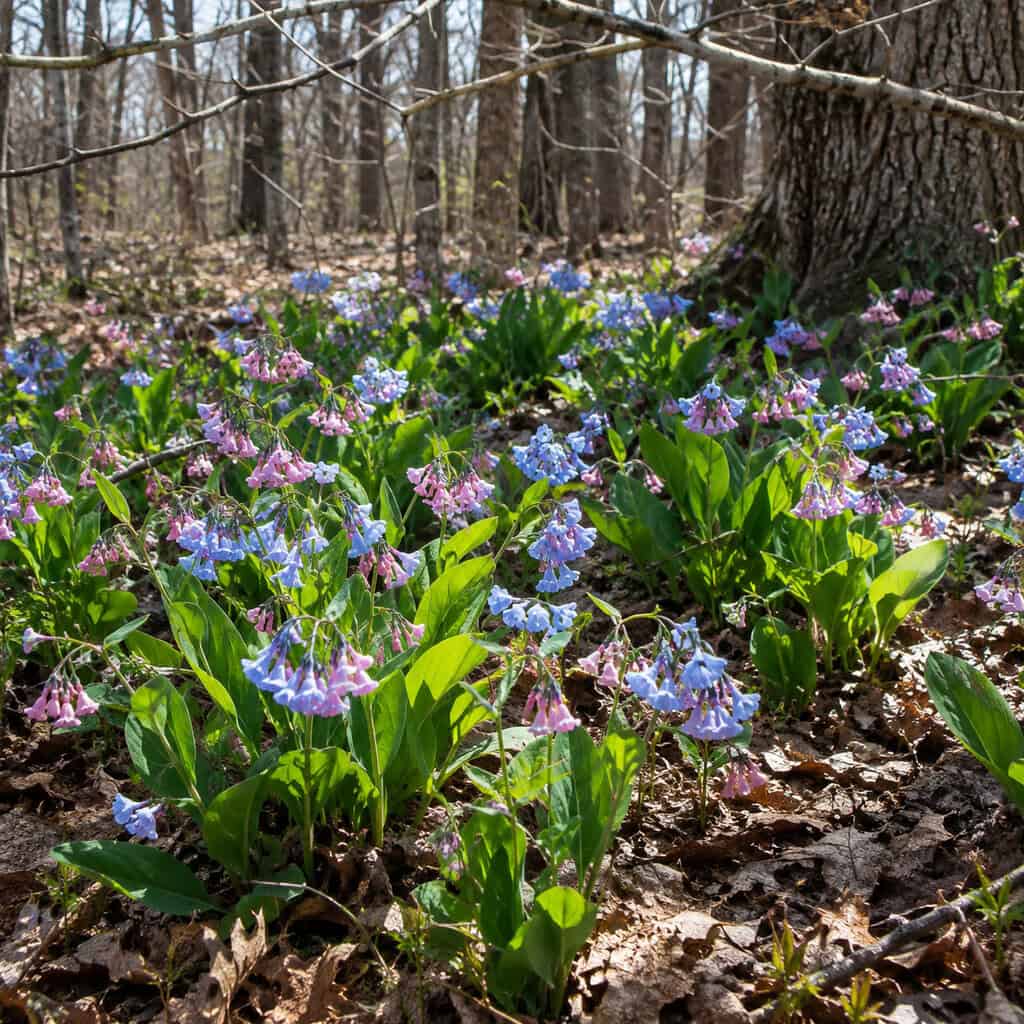
A knobby brown dormant root, planted in October or November, looking like something you’d throw away.
April, it’s a colony of nodding bells that open pink and turn sky blue, blooming under bare maple branches before the canopy closes.
Native woodland ephemeral. By late June the foliage yellows and vanishes completely, so pair it with ferns or hostas that fill the gap.
This is the right answer for the dry shade under the big tree where grass has failed for a decade.
17. Crimson Clover Cover Crop
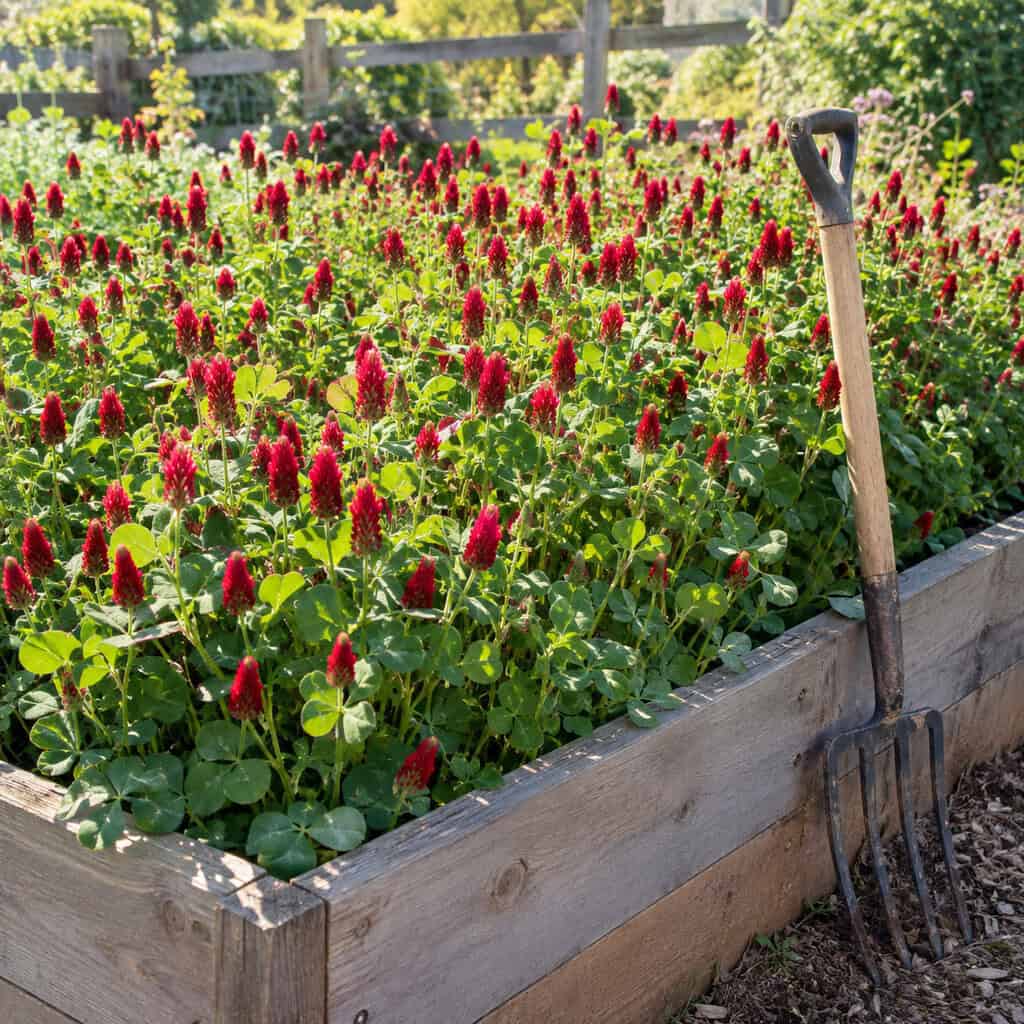
Not a flower. A deposit.
Green manure is a plain idea with a fancy name: you grow a crop specifically to kill it and let it rot into the soil. Crimson clover is a legume, which means bacteria in nodules on its roots pull nitrogen out of the air and fix it into a form plants can use. Sow it over an empty vegetable bed in late summer, six to eight weeks before frost, and it spends the winter manufacturing fertilizer for free.
It does three more jobs while it’s at it. Roots break up compaction. Living cover blocks the winter annual weeds — chickweed, henbit, bittercress — that otherwise own your beds by March. And the top growth stops rain from beating bare soil into a crust and washing topsoil into the street.
In spring, you mow or crimp it down at flowering — that’s when nitrogen content peaks — then turn it under or let it sit as a mulch and plant through it. Wait two to three weeks before seeding, because decomposing residue temporarily ties up nitrogen.
A bed prepped this way outperforms one that got a scoop of synthetic fertilizer, because you added organic matter and structure along with the nutrients. That’s the part a bag can’t do. If you’re already making compost, this is the same logic applied in place.
Too late for clover? Cereal rye germinates in soil as cold as 34°F and will still establish in late October. It won’t fix nitrogen, but it’ll build biomass and hold your dirt.
18. Blueberry Bushes
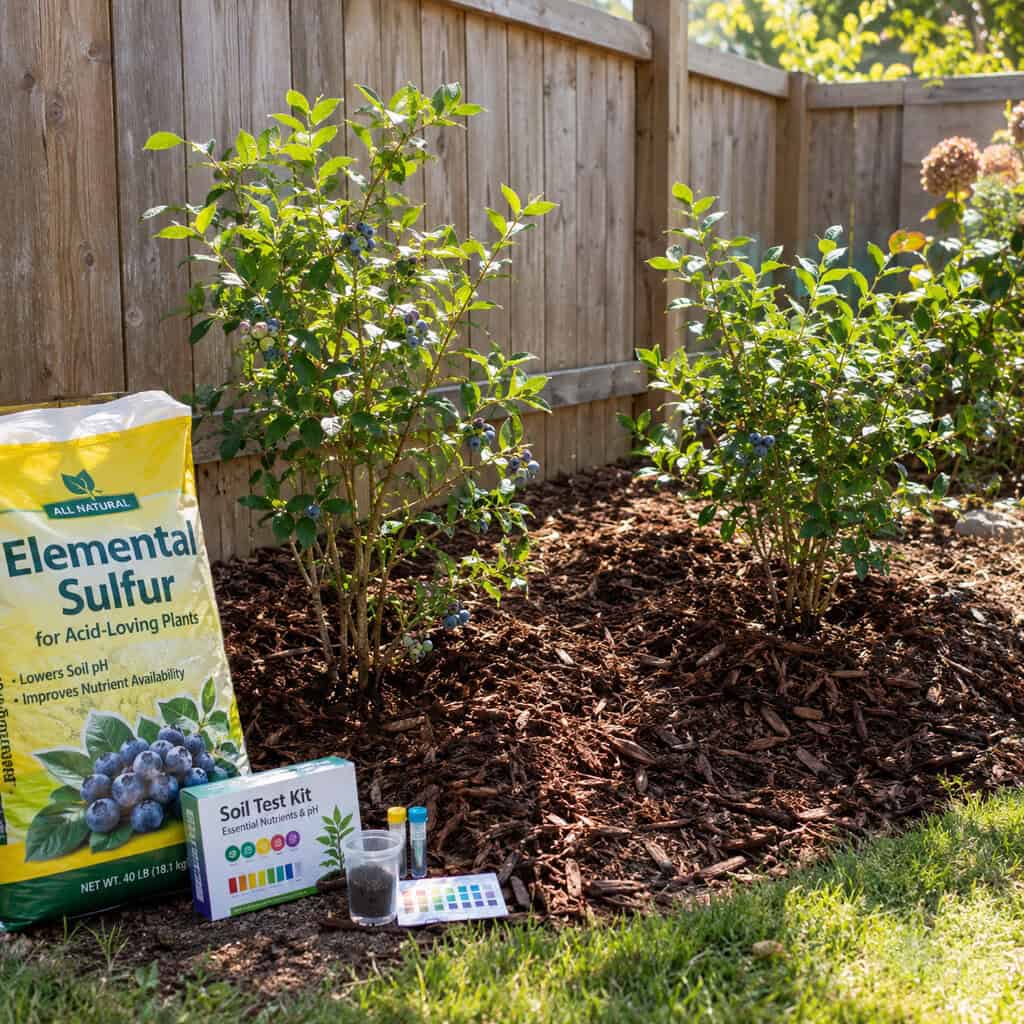
Fall planting hands a blueberry an entire season of root growth before it has to produce a single flower.
It’s also the right moment to fix your soil. Blueberries demand a pH between 4.5 and 5.5, and most yard soil sits near 6.5 — which looks fine and starves them anyway. Get a soil test, then work in elemental sulfur and peat moss now so it has months to react before spring.
Buy two different varieties. Blueberries are partially self-fertile, but cross-pollination between two cultivars that bloom at the same time roughly doubles your fruit set and makes the berries bigger. One lonely bush is the most common reason a homeowner gets a handful of fruit instead of quarts.
Mulch four inches deep with pine bark or sawdust and keep it topped off.
19. Dwarf Iris (Iris reticulata)
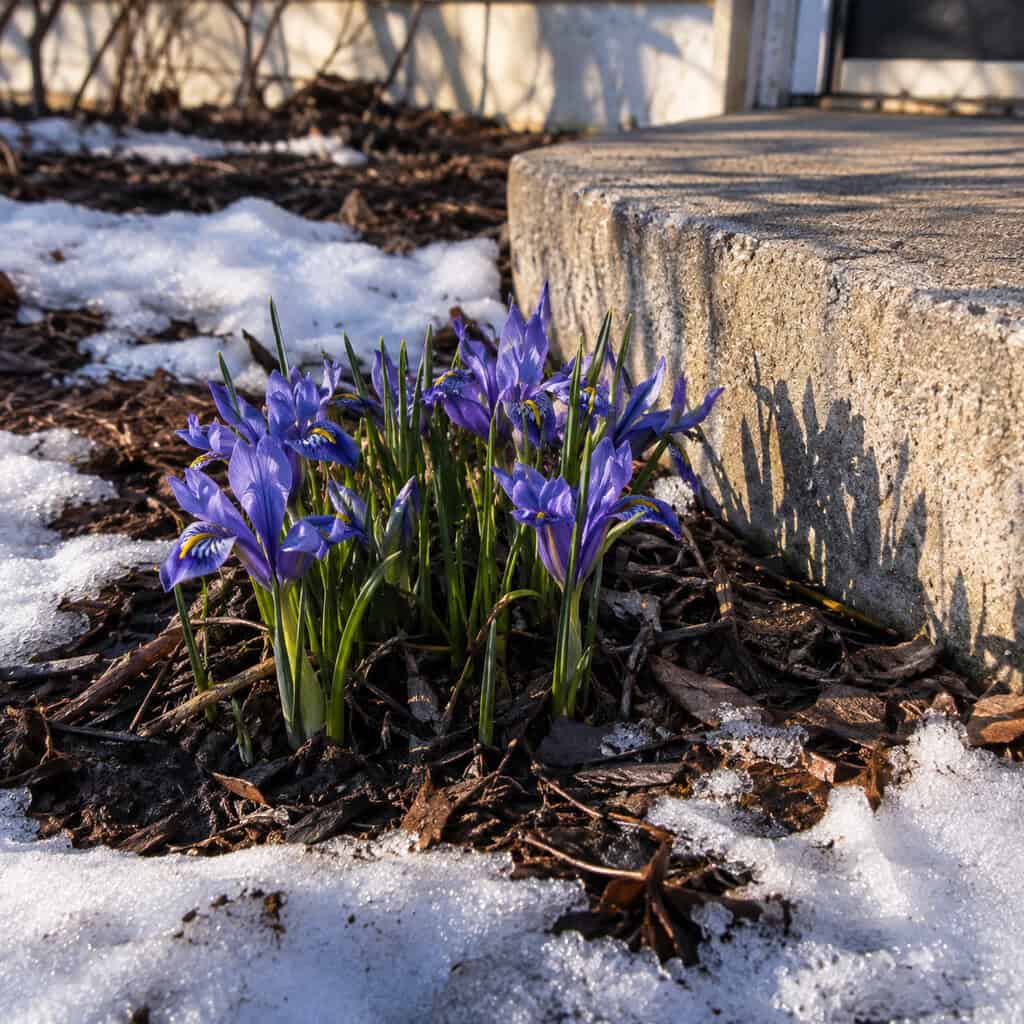
Tiny. Four inches tall. Blooming in late winter next to the snowdrops in a violet-blue with a gold streak that no other early flower gets close to.
Bulbs cost pennies, rodents mostly leave them alone, and they multiply.
The mistake is scattering them. At that size, five bulbs in a big bed disappear. Plant fifty in a tight clump three or four inches deep, right beside the front door or along the path where you actually walk in February.
Otherwise you’ll never see them bloom.
20. Pansies and Violas
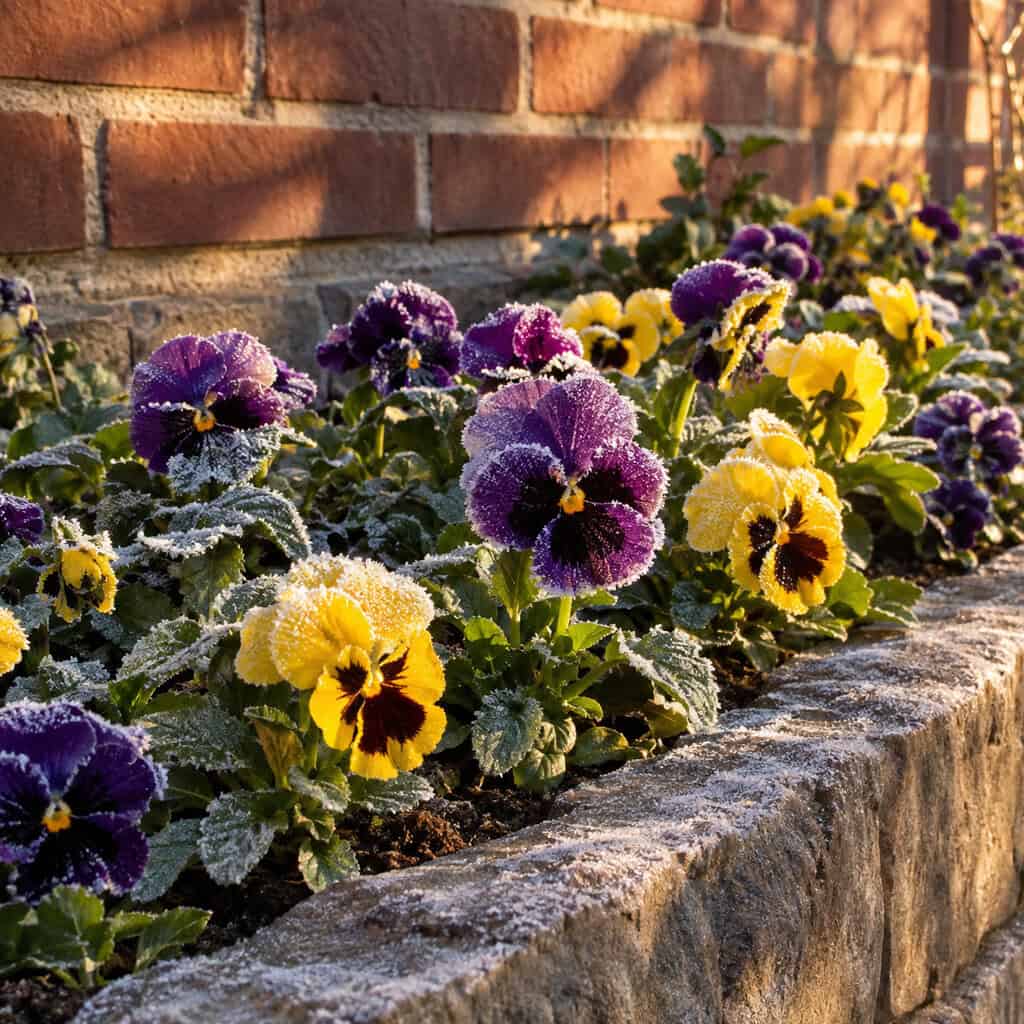
Two seasons from one flat. Set them out in October in Zone 6 or warmer and they bloom through Thanksgiving, look dead and flattened under snow in January, then rebound in March and run until the heat gets them in June.
No replanting. No spring garden-center trip.
Violas are tougher than pansies and handle cold better, though the flowers are smaller. Mulch the crowns lightly after the ground freezes.
Colder than Zone 6? Same trick works in a cold frame or a protected bed against a south-facing foundation wall.
21. Shirley and Breadseed Poppies
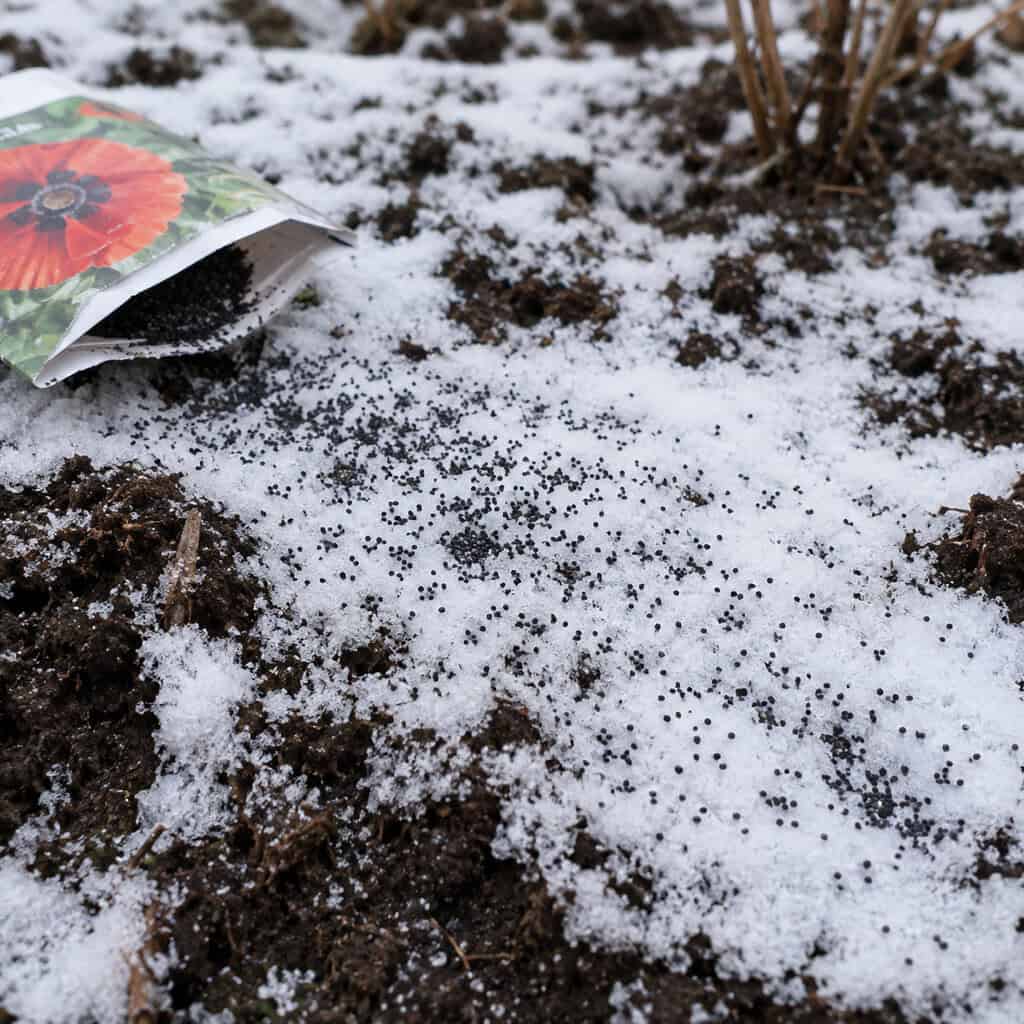
Poppies hate having their roots disturbed, which rules out transplants, and their seed wants winter chill. That leaves one method.
Throw the seed on the ground in late fall and do nothing else.
Bare, frozen soil works. A light dusting of snow works even better — the seed sits on white, you can see your coverage, and meltwater pulls it into contact with soil. Don’t cover it; poppy seed needs light to germinate.
Ten minutes in November buys you tissue-paper blooms in June.
22. Rhubarb Crowns
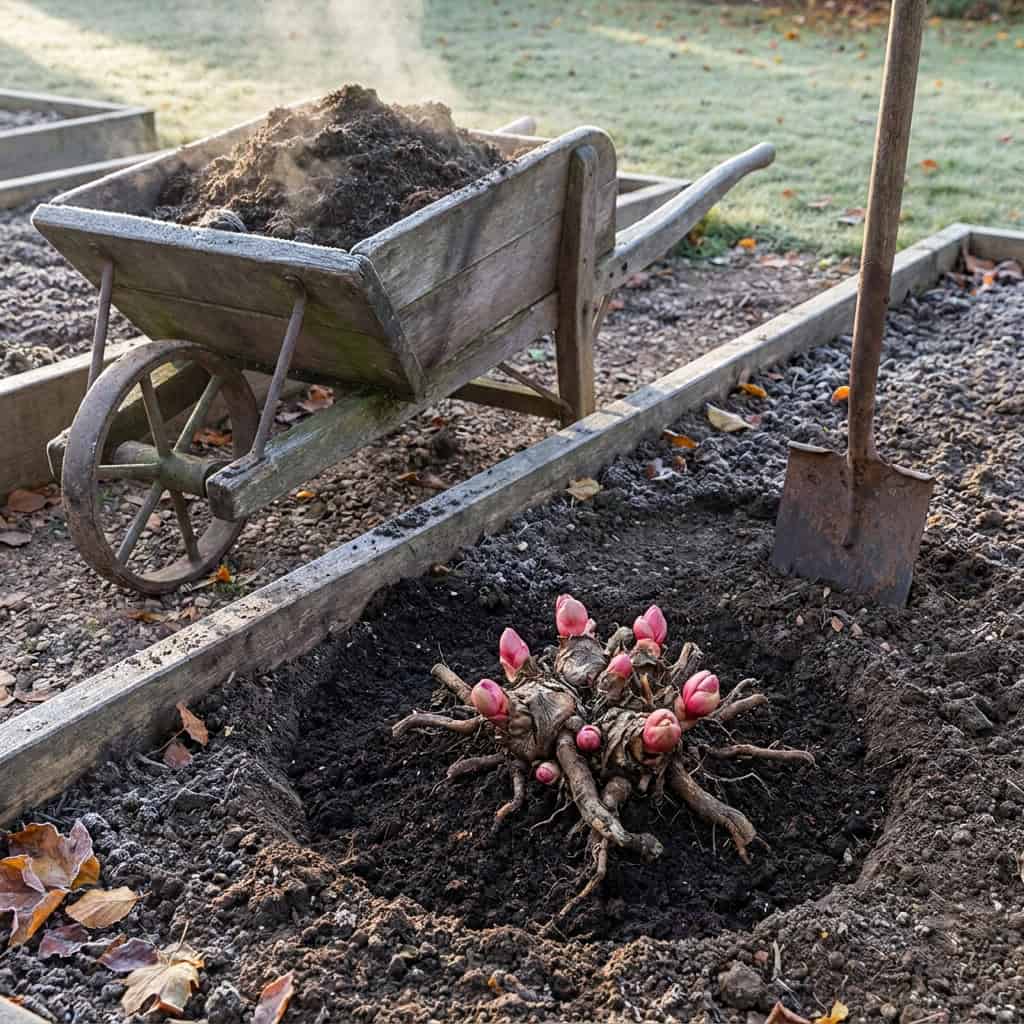
Plant a dormant crown in October and it shoves up those crinkled red-green leaves the week frost breaks, before you’ve even thought about the garden.
One plant produces for 15 to 20 years. Give it a permanent spot with rich soil and full sun, set the crown with the buds two inches below the surface, and don’t harvest at all the first year.
Stalks are food. Leaves are not. Rhubarb leaves carry high levels of oxalic acid and are toxic to people, dogs, cats, and livestock. Cut them off at harvest and compost them — don’t leave a pile of wilted leaves where a dog grazes.
23. Forsythia
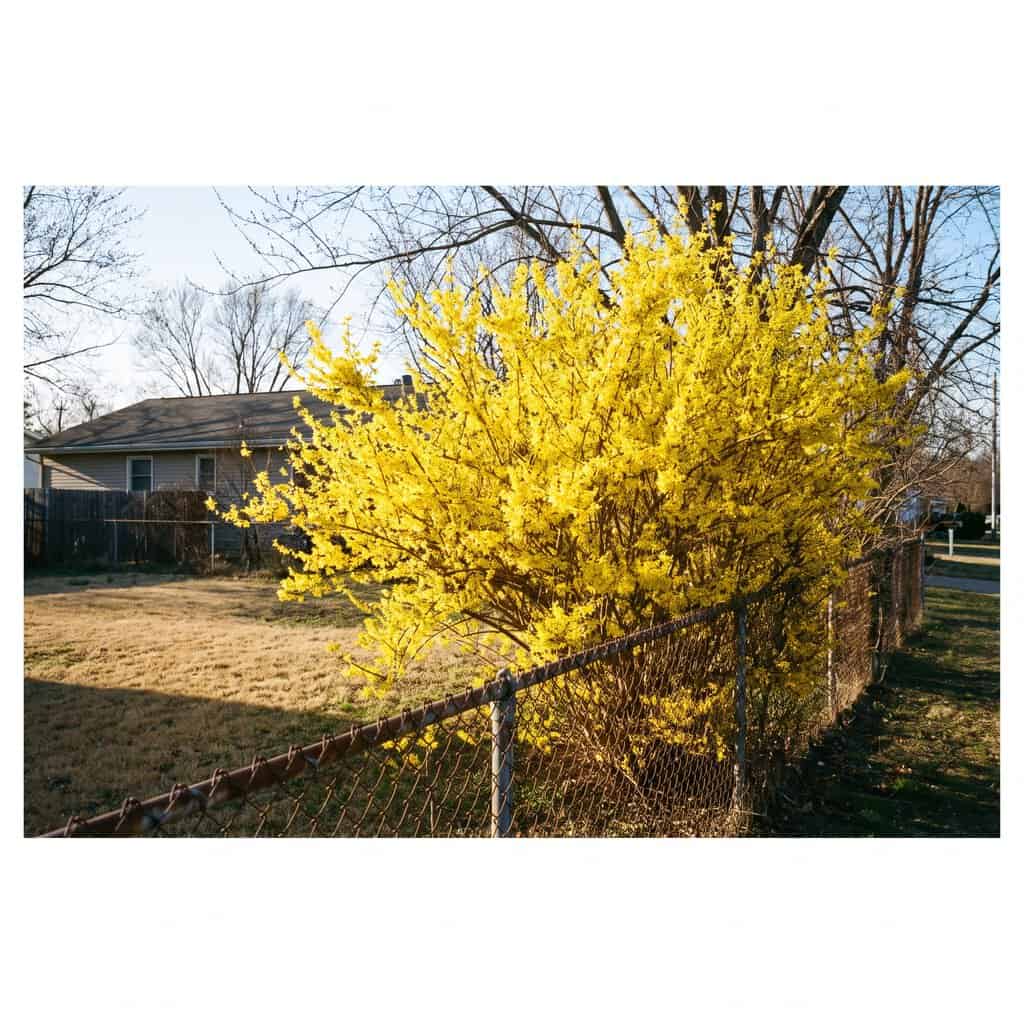
Half the neighborhoods in America mark the start of spring with the same blast of yellow, and it’s this shrub.
Plant a container forsythia in early fall and it establishes fast in almost any soil. Cheap, tough, and fully deer-tolerant.
Here’s what ruins them: hedge shears. Forsythia blooms on wood grown the previous summer, so shearing it into a green meatball in fall or early spring cuts off every flower bud you were waiting for.
Prune right after it blooms, and prune by removing whole old canes at the base. Never shape the outside.
24. Camassia

The bulb nobody’s heard of, and the answer to a problem plenty of people have.
Camassia is a North American native that grows in wet meadows — which means it thrives in the heavy, damp, slow-draining spots where tulips and daffodils rot out. Low corner of the yard. Bottom of the downspout run. Edge of a rain garden.
Late spring, it sends up two- to three-foot spires of star-shaped blue right as the tulips quit, bridging the gap before summer perennials start.
Deer-resistant, heavily worked by bees, and it naturalizes without becoming a problem. Plant four inches deep in September or October.
25. Milkweed and Native Wildflower Seed
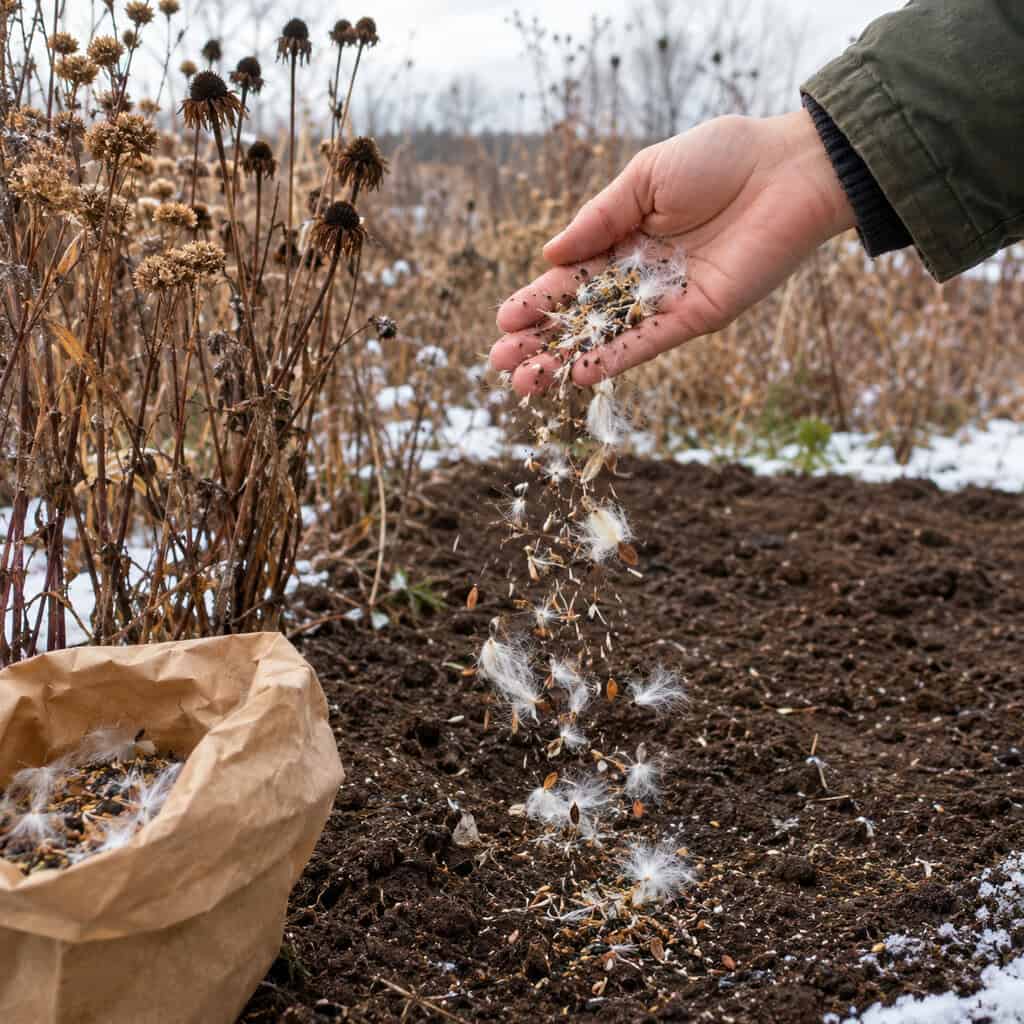
Most native perennial seed won’t germinate until it’s been through a cold, moist winter. That’s a survival mechanism — it keeps seed from sprouting in September and dying in December.
Gardeners fake this with damp sand in the refrigerator for 30 to 90 days. Or you can let November do it for free.
Sow milkweed, coneflower, black-eyed Susan, and bee balm onto prepared bare soil in November or December. Press the seed down for contact and skip the mulch. Snow, thaw, freeze, thaw — the cycling is what cracks dormancy.
Common milkweed and swamp milkweed both work. Monarchs will find them. A patch sown this December feeds caterpillars by the following July.
26. Daylilies
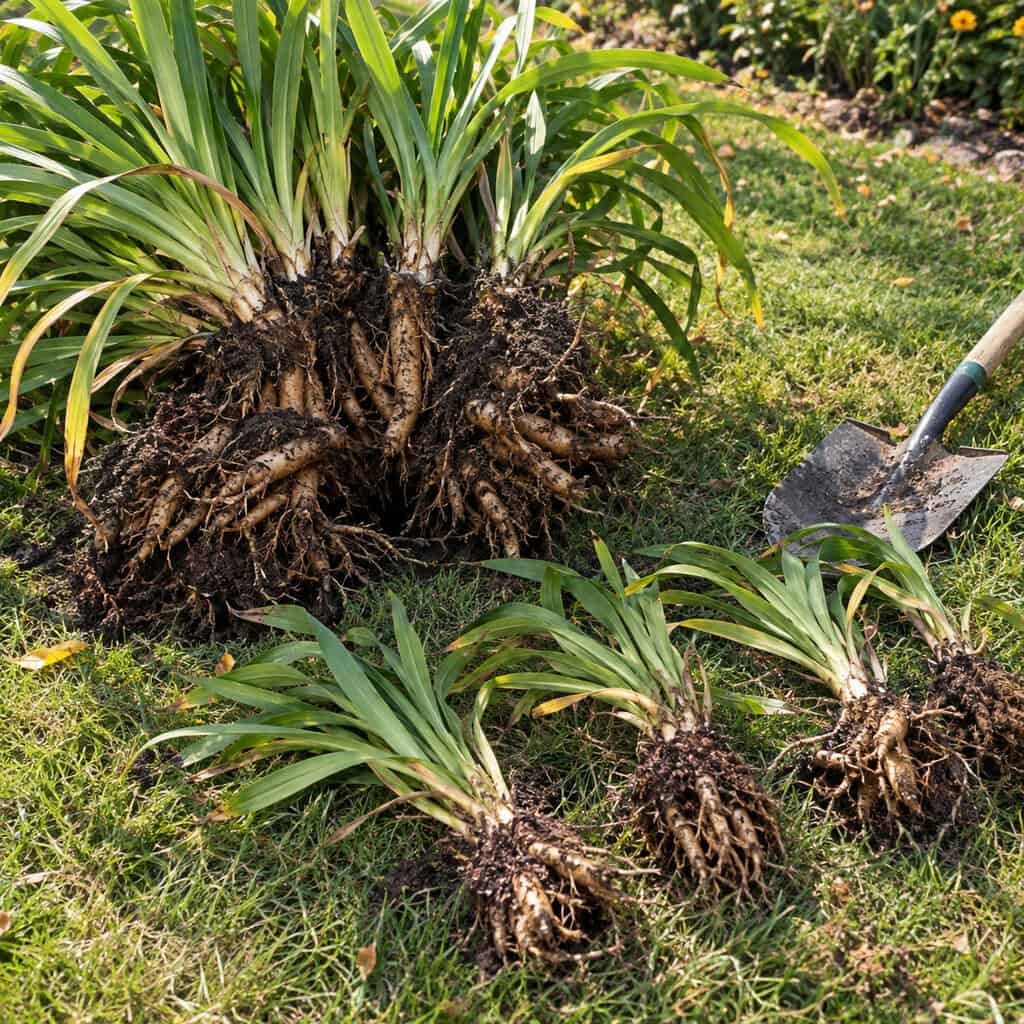
Fall is free-plants season. Dig an overgrown clump six weeks before hard freeze, pry it apart into fans with two or three shoots each, and replant them around the yard.
Divisions set now root through fall and bloom on their normal schedule next season — you lose nothing.
A garden spade through the middle of the clump is fine. Daylilies are nearly impossible to kill this way.
Cat owners, take note: daylilies and true lilies are both seriously toxic to cats, and lily poisoning causes acute kidney failure. Even a small amount of leaf or pollen is an emergency vet visit. Plant them where an outdoor cat doesn’t lounge.
27. Hyacinths

Nothing else on earth produces that much fragrance from an object the size of a small onion.
Which is exactly why hyacinths get wasted. Planted out in the middle of a border, all that scent blows away and you never smell it. Put them within three feet of a door, along a walkway, or under a window you crack open in April.
Plant six inches deep in October or November in groups of five or seven. Expect two or three years of full, dense spikes, then looser and more natural ones after.
Wear gloves. The papery skins carry calcium oxalate crystals that leave a lot of people itching for an hour.
28. Eastern Redbud or Serviceberry
One tree, planted in one October afternoon, becomes the single biggest spring event in your yard.
Eastern redbud flowers directly off its bare branches and trunk in magenta before a leaf shows up — nothing else in a suburban yard does that. Serviceberry gives you a white cloud in April, then edible June berries that bring in cedar waxwings and robins, then orange fall color.
Both are natives, both stay under 25 feet, both fit a normal lot.
Plant at least six weeks before the ground freezes, and get the depth right: find the root flare where the trunk widens into roots, and keep it at or slightly above grade. Planting too deep kills more young trees than drought does. Mulch in a wide ring, never against the trunk. And think about the size that tree becomes in five years before you pick the spot.
29. Snowdrops
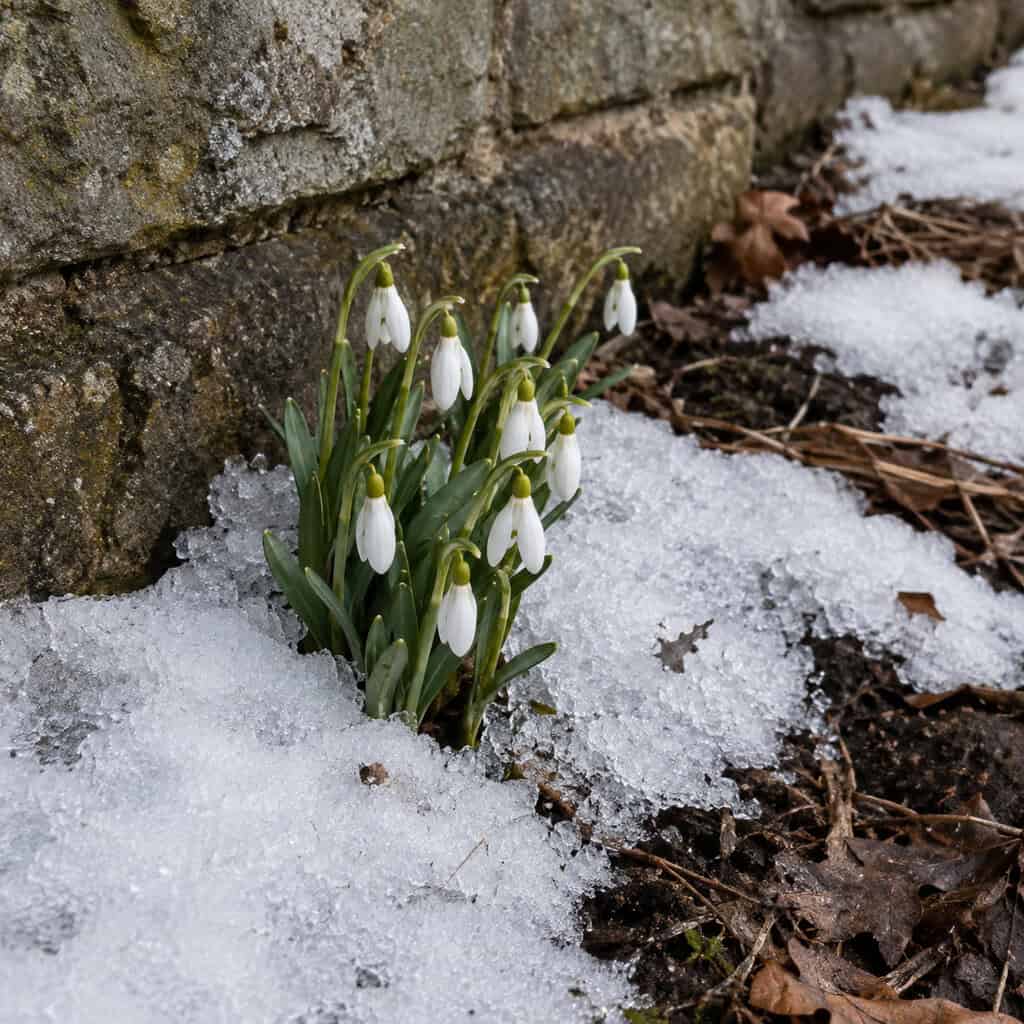
January. Sometimes February. Frozen ground, gray sky, nothing alive anywhere — and then a cluster of white bells on four-inch stems, pushing straight up through crusted snow.
Get these in the ground as early in fall as you can manage. September is right. Snowdrop bulbs are small and dry out fast in the bag, and late planting is the usual reason a first-year clump sulks.
Three inches deep, right where you’ll see them from a window.
Then they multiply quietly for decades, spreading a little wider every year, and they show up at the exact moment you need proof that winter ends.
30. Crown Imperial Fritillaria

Three feet tall, a ring of orange or yellow bells under a topknot of green leaves. It looks like something from a Dutch still life, because that’s exactly where it’s been for 400 years.
It also smells faintly of skunk, and that’s the selling point — voles and moles reportedly clear out of beds where it’s planted.
Fair warning on both counts. The smell is real up close, and bulbs run $8 to $12 each rather than under a dollar.
Plant eight inches deep in September or October, tilted slightly so water doesn’t pool in the hollow crown. Worth it for one dramatic clump, not for a mass planting.
31. Sweet Peas
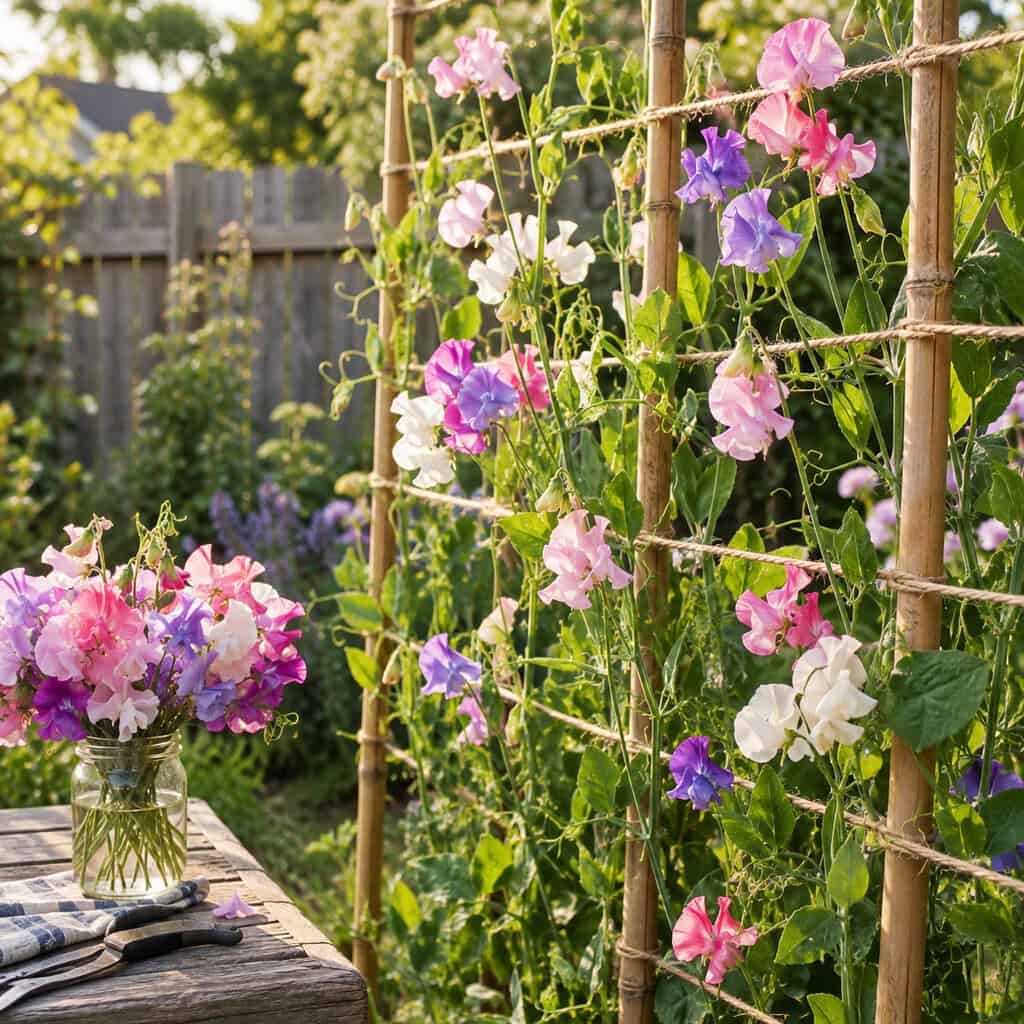
Fall-sown sweet peas in Zone 7 and warmer produce a scent that makes the whole trellis worth it, and they bloom a month earlier than spring-sown vines.
The catch is honest: in Zone 6 and colder, fall sowing usually just kills them. Wait and sow in late winter under cover, or start them indoors in February in deep pots.
Soak seed overnight, sow an inch deep at the base of a trellis, and pinch the tips at four inches to force branching.
Pick the flowers constantly. The moment they set seed, the plant quits.
32. Foxglove and Other Biennials

Biennials work on a two-year clock: leaves the first year, flowers the second, then they die and reseed. Plant foxglove, sweet William, or Canterbury bells this fall and you skip a full season of waiting.
Fall is the right time to put them in. Being straight with you, the bloom lands in early summer rather than April — this one stretches the spring promise a little.
The flowers are worth it. Four-foot spires of speckled bells that hummingbirds work all day.
All parts of foxglove contain cardiac glycosides and are toxic to people and pets. Keep it out of reach of anything that grazes.
33. Overwintered Parsnips
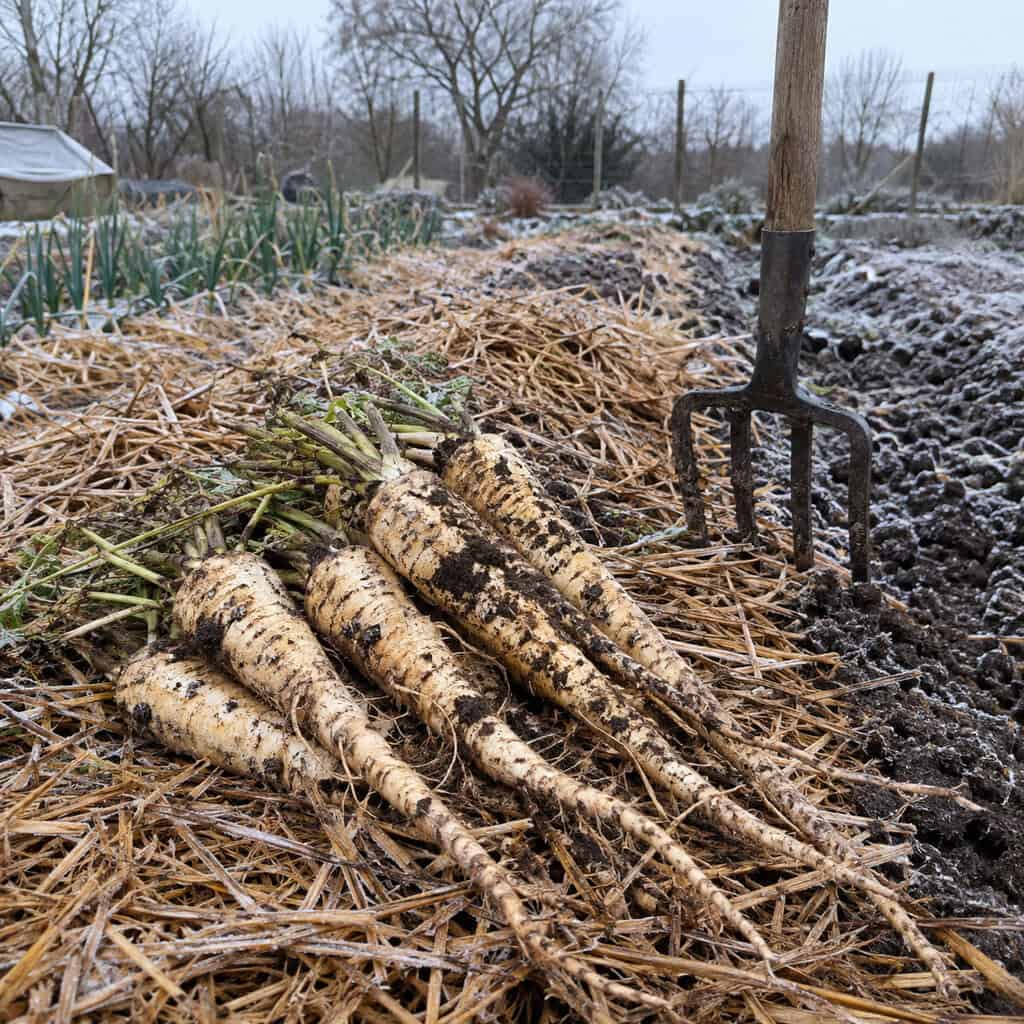
Technically a cheat — you’re not planting anything in fall, you’re deciding not to harvest.
Leave parsnips in the ground through winter. Freezing temperatures trigger the roots to convert stored starch into sugar, an antifreeze response, and by March they’re the sweetest root crop you’ll ever eat. Nothing from a store compares.
Mulch the row a foot deep with straw so you can still get a fork in the frozen soil.
Dig them in early spring before new top growth starts. Once the plant bolts, the root turns woody and bitter.
Which Season Actually Wins
The case for fall over spring, side by side:
| Fall Planting | Spring Planting | |
|---|---|---|
| Soil temperature | Warm, root-friendly | Cold, slow to wake |
| Weed competition | Nearly none | Peak crabgrass season |
| Watering demand | Rain does most of it | Daily, then heat stress |
| First bloom or harvest | Same spring | Often a year later |
| Plant prices | End-of-season markdowns | Full retail |
The one thing spring has going for it is that you feel like gardening. Fall wins on every measure that affects the plant.
Do It Before the Ground Locks Up
Every item here trades an hour of cold, unglamorous work for something that shows up when you’ve forgotten you did it.
The window closes fast. Once soil temps drop and the ground stiffens, bulbs sit in the garage and grass seed waits until next year.
Spring isn’t something that happens to your yard. It’s something you scheduled six months earlier, on a gray Saturday, with dirt under your fingernails and a bag of daffodils at your feet.