

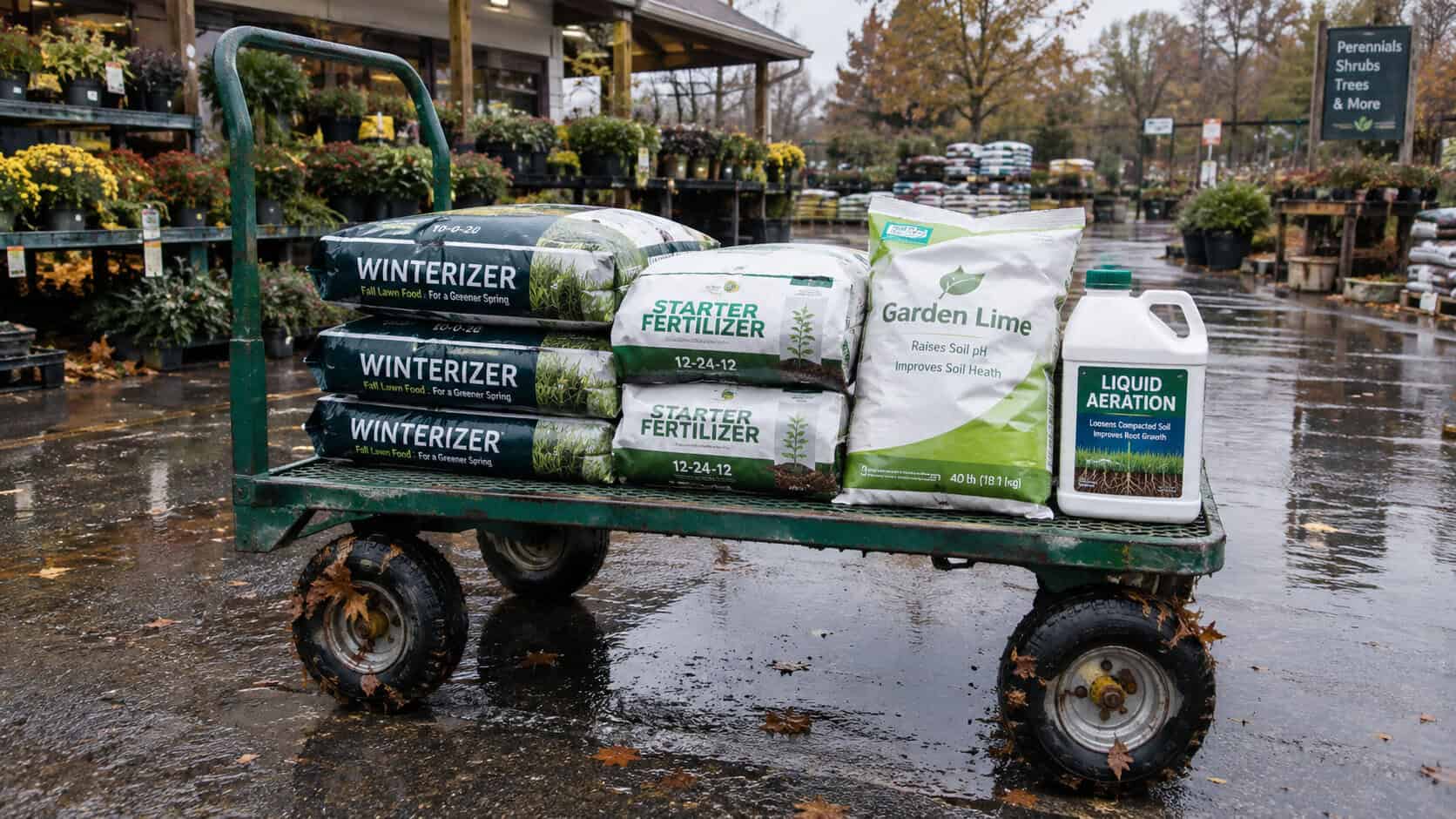
Walk into any garden center after Labor Day and the front twenty feet are engineered to separate you from about $180.
Winterizer stacked to the ceiling. Bone meal by the bulb bins. A wall of hose-end jugs promising to aerate your soil without a machine.
Most of it moves. Fast. Fall is the second-biggest retail window in the industry, and the products stacked closest to the door are the ones with the best margins, not the best results.
Ask the person who owns the place what’s in their own garage, though, and the list gets very short. Plain slow-release nitrogen. Compost. A soil test receipt from the county lab.
Here are 33 fall lawn and garden products the people selling them quietly skip at home — and what they reach for instead.
1. Bagged “Winterizer” Fertilizer
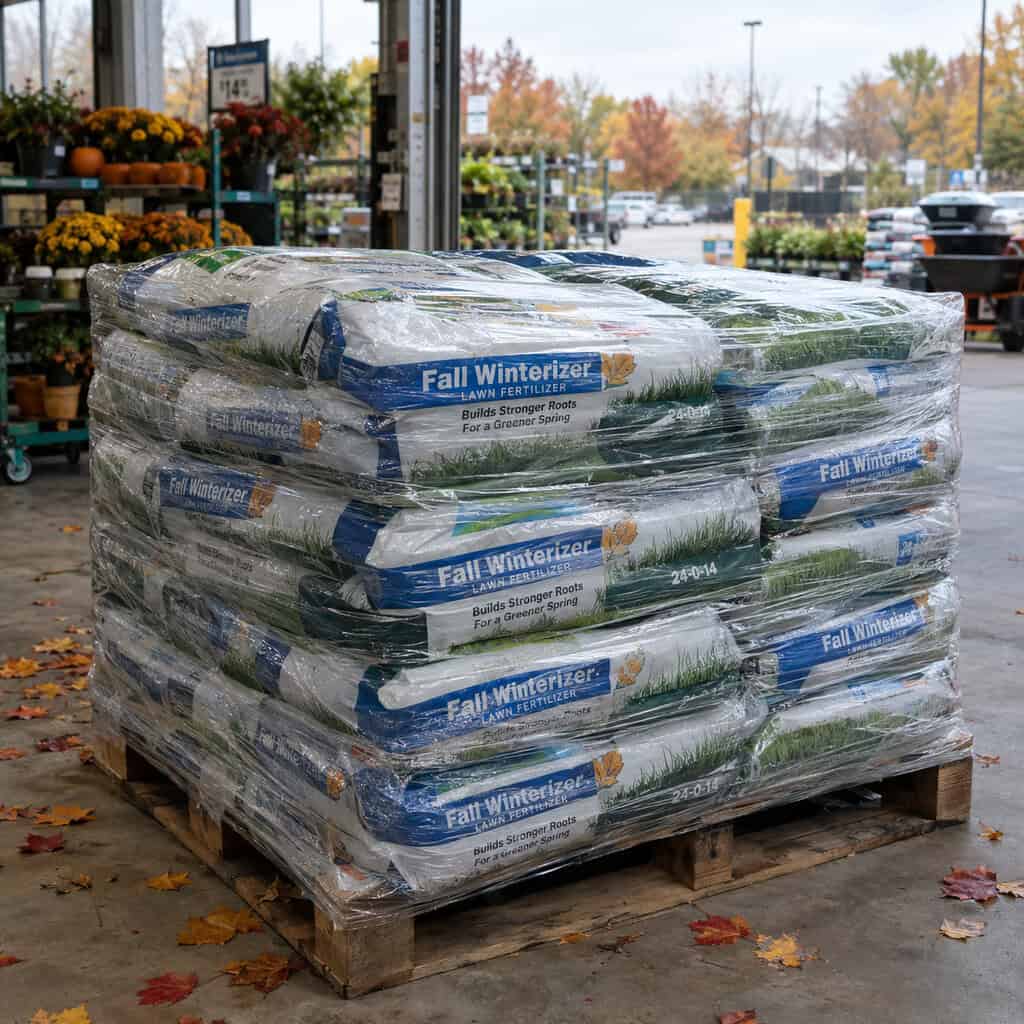
“Winterizer” is a marketing word. There’s no formulation standard behind it, no regulatory definition, nothing stopping two bags with identical labels from carrying wildly different analyses.
The old pitch was potassium for cold hardiness. But if you fed the lawn during the growing season, Clemson Cooperative Extension points out potassium is usually already sufficient in the soil.
Worse in the South. Pushing nitrogen into warm-season Bermuda, zoysia or St. Augustine as it heads for dormancy invites winterkill and large patch disease.
The insider version: a plain bag of slow-release nitrogen, applied on the right date for your grass type. Purdue Turfgrass Science has the cool-season timing mapped out, and none of it requires the word winterizer.
2. Bone Meal for Fall Bulb Planting
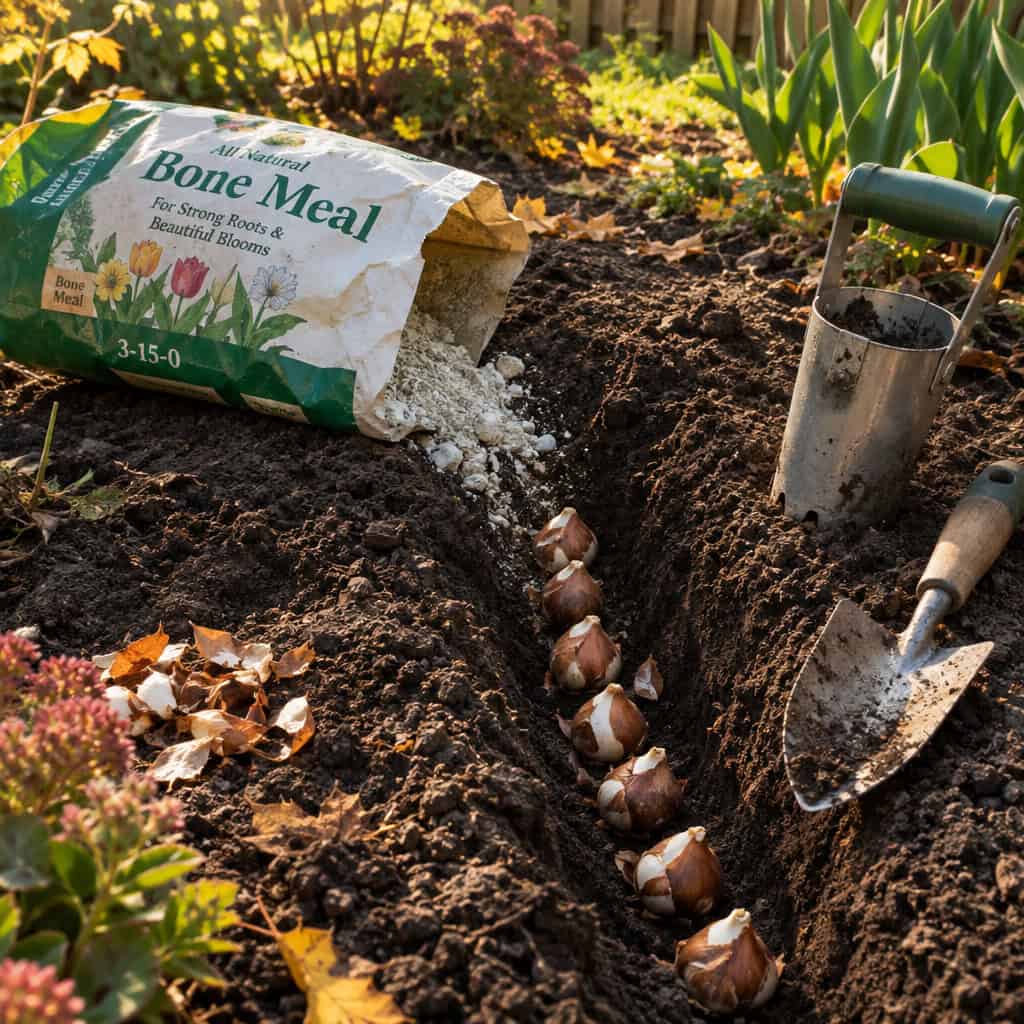
Your grandmother dusted a spoonful in every tulip hole. So did everyone’s.
Phosphorus barely moves through soil — it stays roughly where you put it, and most established beds already test high in it. Sprinkling more into a six-inch hole does close to nothing for a bulb that carries its own energy supply.
The smell is the real problem. Rendered meat and bone brings dogs and skunks straight to the fresh dirt.
Plant the bulbs, water them in, walk away. Skip the buffet invitation.
3. Liquid Aeration in a Hose-End Jug
Nothing gets pushed harder in September, and nothing has thinner evidence behind it. Extension horticulturists answering homeowner questions through Ask Extension have said plainly that there’s no scientific support for liquid aeration products relieving soil compaction.
Think about what compaction actually is. Soil particles pressed together until pore space collapses — the air and water channels roots need simply aren’t there anymore. A surfactant sprayed on the surface doesn’t rebuild pore space. It can’t.
Compacted turf tells on itself. Water puddles instead of soaking in. A screwdriver won’t push six inches into moist soil without real effort. The grass thins along mower paths, the dog run, the route the kids cut to the driveway. Roots stall out in the top two inches.
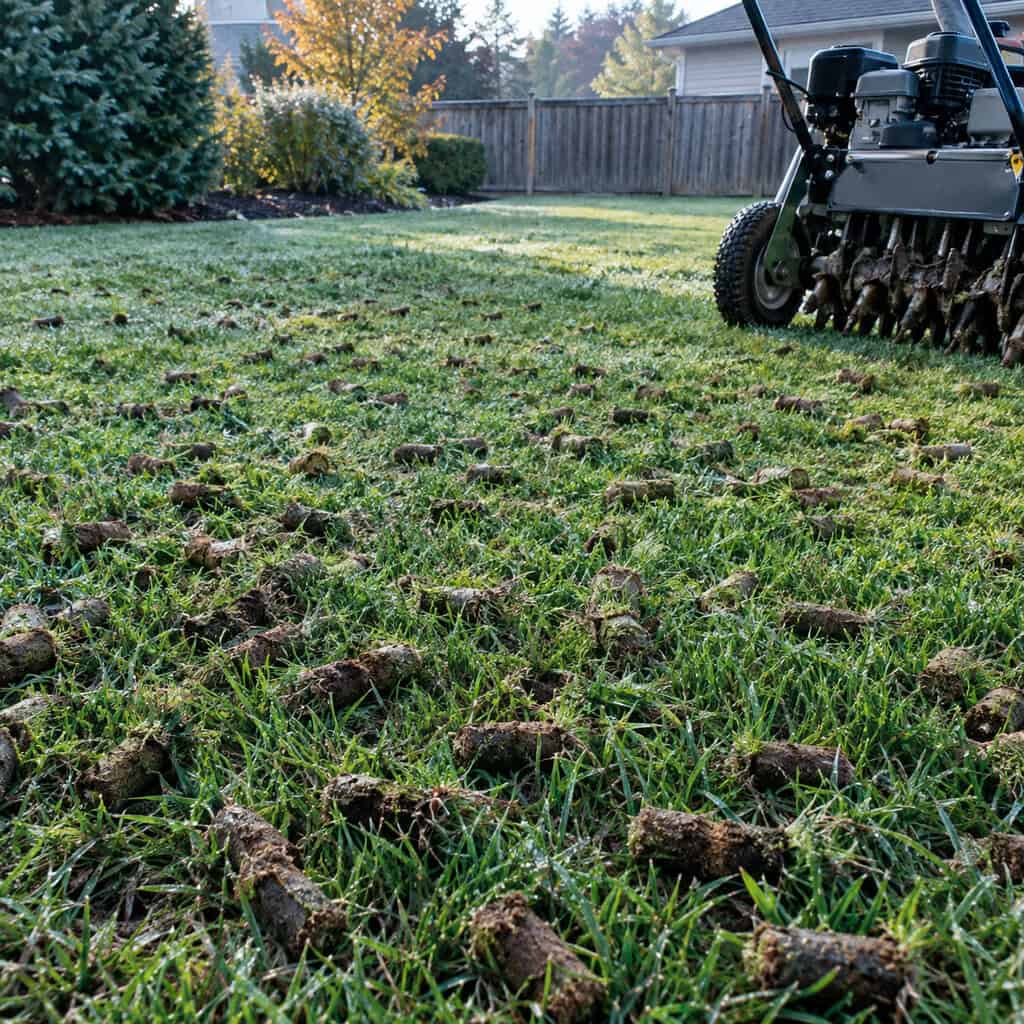
Core aeration fixes it mechanically by yanking out thousands of soil plugs — typically half-inch cores, two to three inches deep — and leaving actual holes. Those holes fill with air, roots, and whatever you topdress with.
Timing matters more than the machine. Cool-season lawns want late August through mid-October, when the grass is growing hard enough to heal the wounds and fill in. Warm-season lawns want late spring into early summer. Aerate at the wrong end of the calendar and you’ve opened thousands of perfect seed beds for weeds.
A half-day rental runs $60 to $90 at most equipment yards, and a hired crew usually lands between $100 and $200 for an average suburban lot. Leave the cores on the surface — they break down in two weeks and redistribute soil biology. And walking on the lawn after aeration is fine, so don’t rope it off.
The $30 bottle cannot pull a soil core. That’s the whole argument.
4. Bargain “Contractor Mix” Grass Seed

Flip the bag over. The seed tag is a legal document, and it tells on the product every time.
Look for annual ryegrass — it germinates in five days, looks fantastic in October, and dies by July. Look for “variety not stated,” which means generic, unimproved cultivars nobody bothered to name. Check the germination test date; a stale one means dead seed.
Then find the weed seed percentage. Even 0.5% in a 20-pound bag is a lot of weeds you paid to plant.
Pros read the tag before the price sticker. Always.
5. The $12 Four-in-One Soil Meter

Stick the probe in, watch the needle swing, get a number. Move it eight inches and get a different number.
Those analog pH/moisture/light meters are essentially conductivity gauges dressed up with a pH dial. They react to soil moisture more than anything chemical.
A county extension soil test runs $10 to $25 in most states and comes back with real pH, phosphorus, potassium and organic matter — plus a lime recommendation in pounds per thousand square feet.
Same money. Actual data.
6. Fall Weed-and-Feed in One Bag
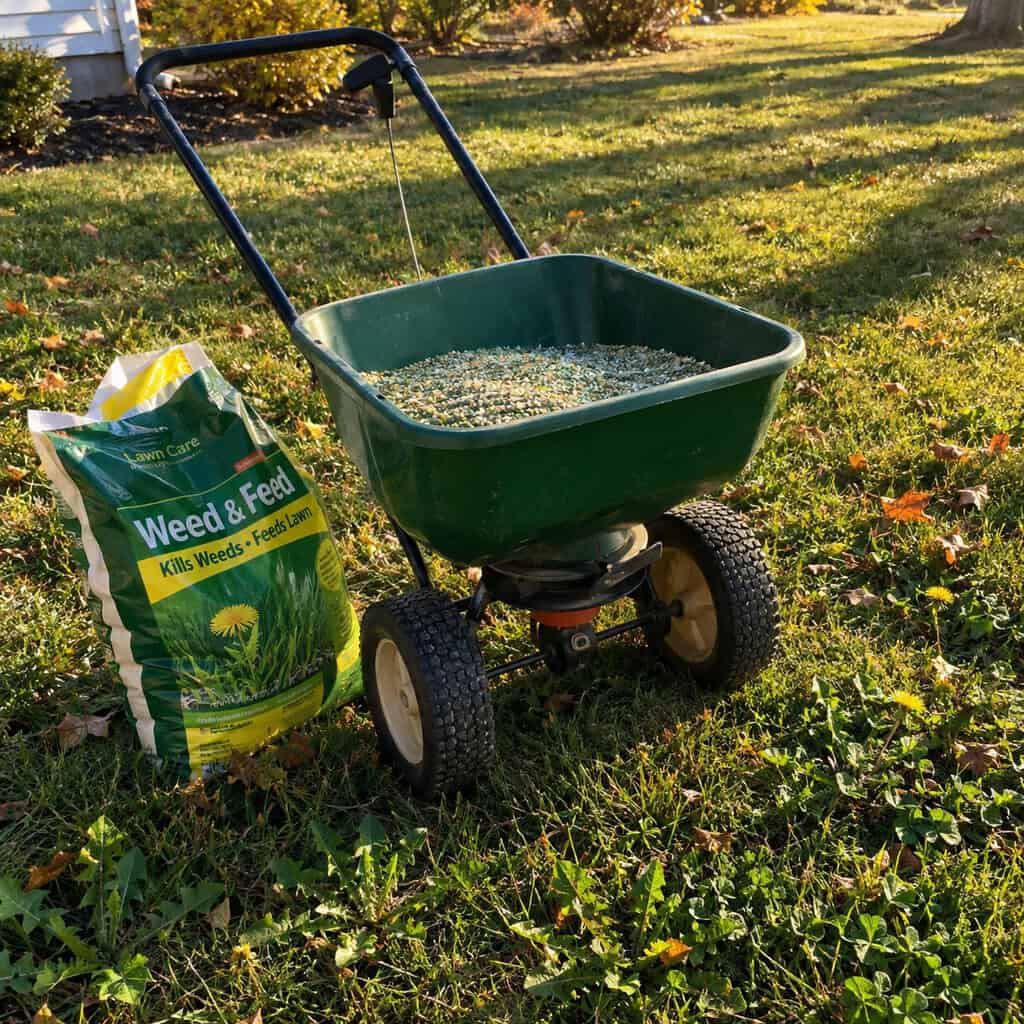
Fall really is the best window for broadleaf control. Dandelion, clover and plantain are pulling everything down into their roots in October, and they drag the herbicide with it.
But the two jobs in that bag want opposite conditions. Herbicide granules need damp leaf blades to stick and dissolve. Fertilizer wants dry, even spreading with no clumping.
You also broadcast herbicide across the entire lawn, including the root zones of every tree and shrub in it. Maple and dogwood feeder roots run well past the drip line.
Spot-spray the weeds. Spread the fertilizer separately. Two passes, better results, less chemistry on the ground.
7. Cocoa Bean Shell Mulch
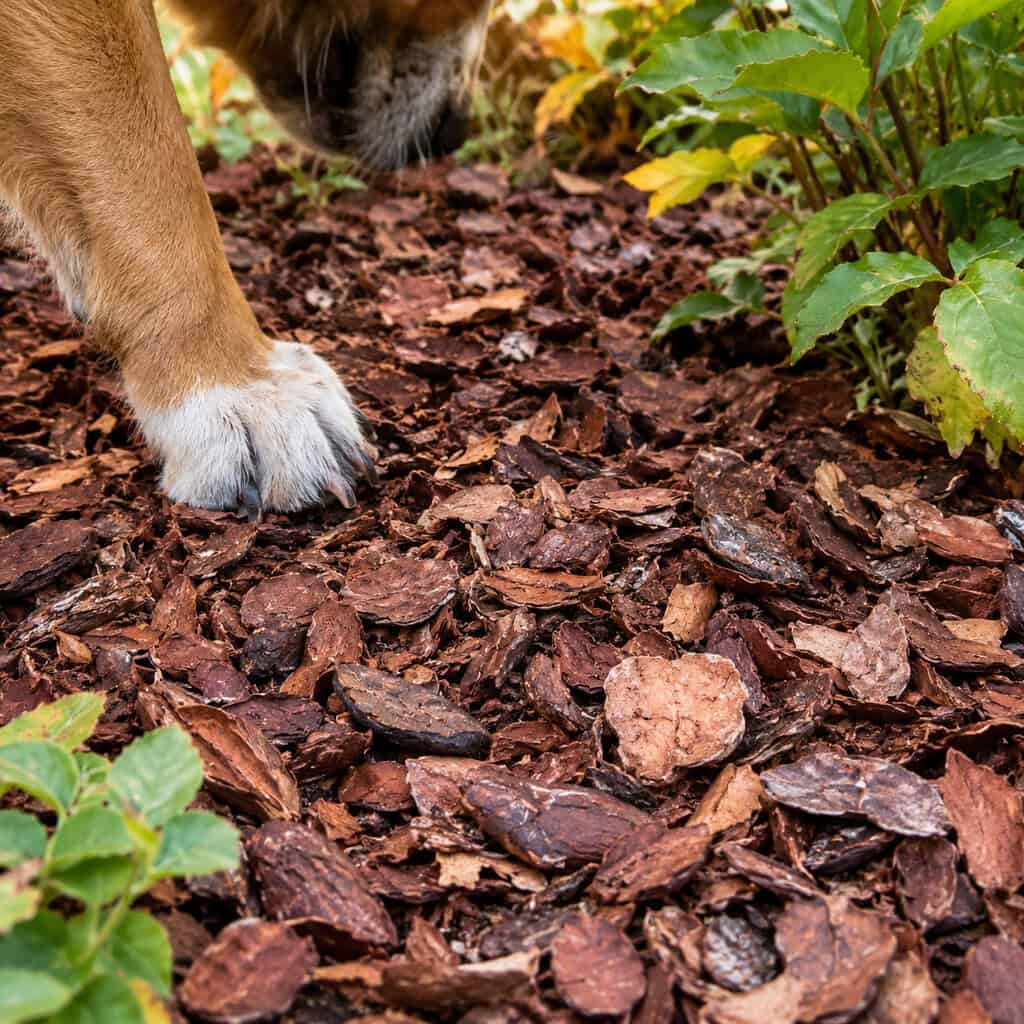
It smells like a bakery for the first ten days. That’s exactly the problem.
Cocoa shells contain theobromine and caffeine — the same compounds that make chocolate dangerous to dogs. A determined lab that eats mulch smelling like brownies can take in a meaningful dose.
Retailers stock it because it sells on smell alone. Plenty of them won’t spread a bag in their own beds if there’s a dog in the neighborhood. Skip this one entirely if you have a pet.
Shredded hardwood costs less and doesn’t come with a poison-control phone number.
8. Fall Grub Killer Bought “Just in Case”
Brown patches show up in September, someone says grubs, and a $40 bag of insecticide goes in the cart. Usually for nothing.
Japanese beetles and masked chafers lay eggs in midsummer. Those eggs hatch into tiny first-instar grubs in late July and August — soft, small, feeding right under the thatch. That’s the window preventive products like chlorantraniliprole and imidacloprid were designed for, and they need to go down before or during hatch.
By late October those grubs are third-instar: fat, armored, and burrowing six to eight inches down to overwinter below the frost line. Preventive chemistry can’t reach them and wouldn’t kill them if it could.
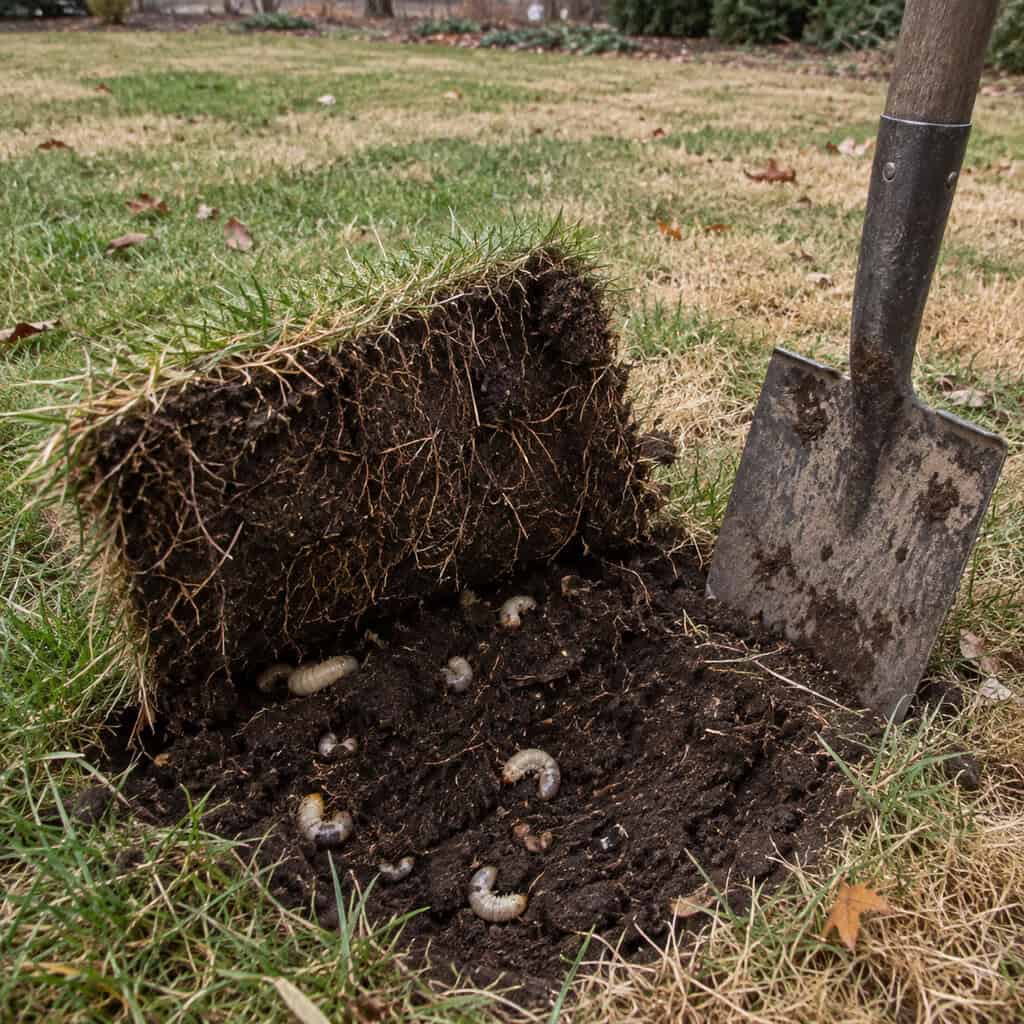
Nobody in the trade treats without counting first. Cut three sides of a one-square-foot flap of turf, peel it back like carpet, and sift the top three inches. Under five grubs, do nothing. Eight to ten per square foot is the usual action threshold for a healthy lawn — a thick, well-rooted stand tolerates more than a thin one.
If you genuinely have a fall infestation, the curative actives are trichlorfon or carbaryl, and they need heavy watering-in to reach the feeding zone. But raccoon and skunk damage often costs more than the grubs did — those animals tear up turf hunting them, and repairing grub-damaged lawn in spring is the more common fix.
Count before you spend. That one flap of sod saves most people forty bucks.
9. A Bag of Lime Every Single Fall

Somewhere in New England there’s a guy who has limed his lawn every October since 1994 and has never once tested the soil.
Lime is a prescription. Push pH past 7.0 and iron and manganese lock up chemically — the grass goes pale and nothing you feed it helps. Bringing a too-high pH back down takes years of elemental sulfur.
Test every three years. Lime when the report says so, in the amount it specifies, and not otherwise. Some soils need a ton per acre; some need nothing for a decade.
10. Patch-and-Repair Seed Pucks for the Whole Yard
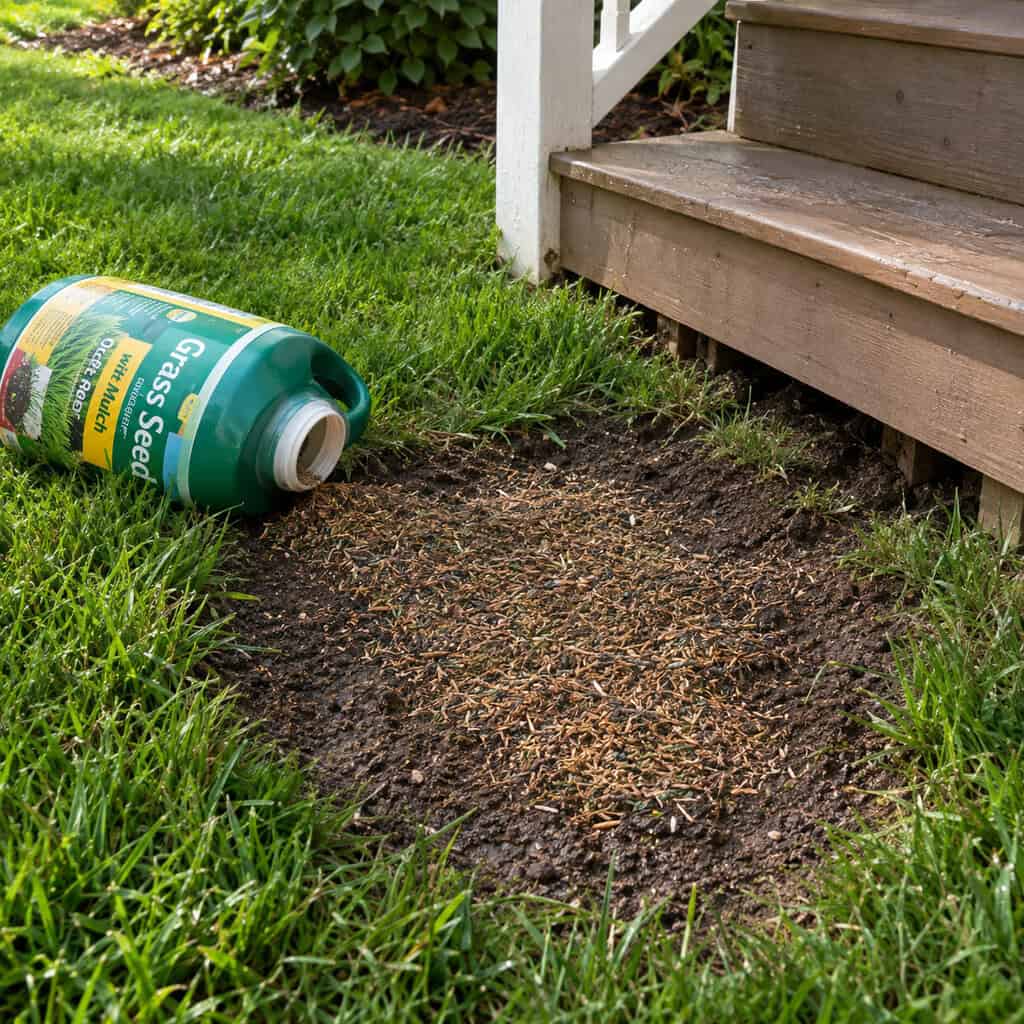
The mulch-coated all-in-one products genuinely work. On a dog spot by the back steps, or a bare patch where the trash cans sit, they’re worth every penny.
Run the math at lawn scale and it collapses. Those products often cost four to six times more per thousand square feet than quality seed plus a thin layer of screened compost.
You’re paying a premium for shredded paper mulch and a dye that tells you when to water.
Buy one jug for the small stuff. Buy real seed for anything bigger than a doormat.
11. Ultrasonic Mole Stakes and Castor-Oil Granules
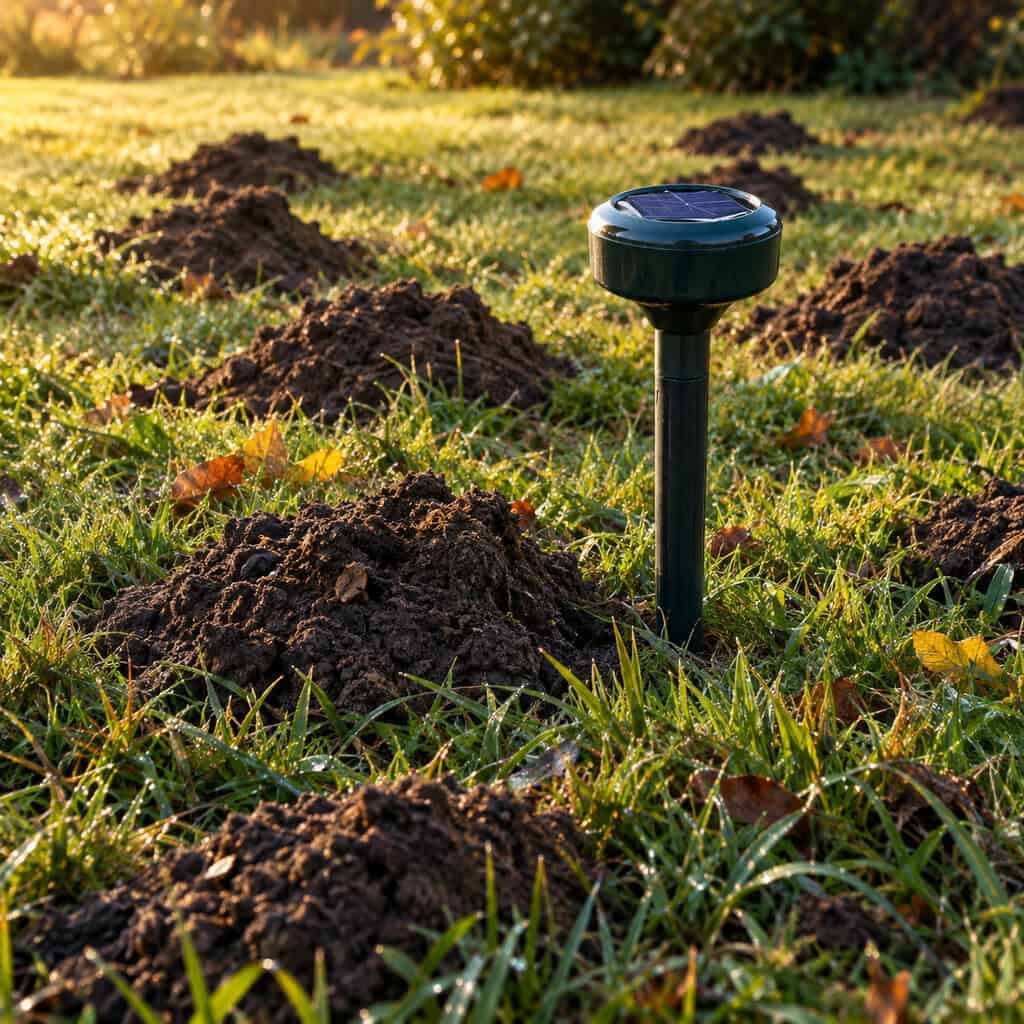
Battery-powered vibrating stakes have been sold for forty years on the same promise. Field results are consistently unimpressive — moles tend to shift their tunnels about ten feet and carry on.
Castor oil granules do slightly better in trials, mostly by making earthworms and grubs taste bad, but the effect fades with the first heavy rain and the moles come right back.
Understand what’s actually happening. A mole is an insectivore hunting earthworms, and autumn is prime time — the soil is soft, moist, and worms are active near the surface. Those surface tunnels you’re seeing are feeding runs, and maybe 10% of them get reused.
Trapping is what professionals do. Scissor-jaw and harpoon traps set on an active main runway — the straight one along a fence line or driveway edge that reappears within 24 hours after you stomp it flat — work reliably. Check your state regulations first; a handful restrict certain trap types.
The other honest option is tolerance. Moles aerate soil and eat grubs, the mounds rake out in five minutes, and a single mole may be working a whole acre. Plenty of nursery owners just knock the hills down and get on with their day.
12. Gypsum Sold as a “Clay Buster”
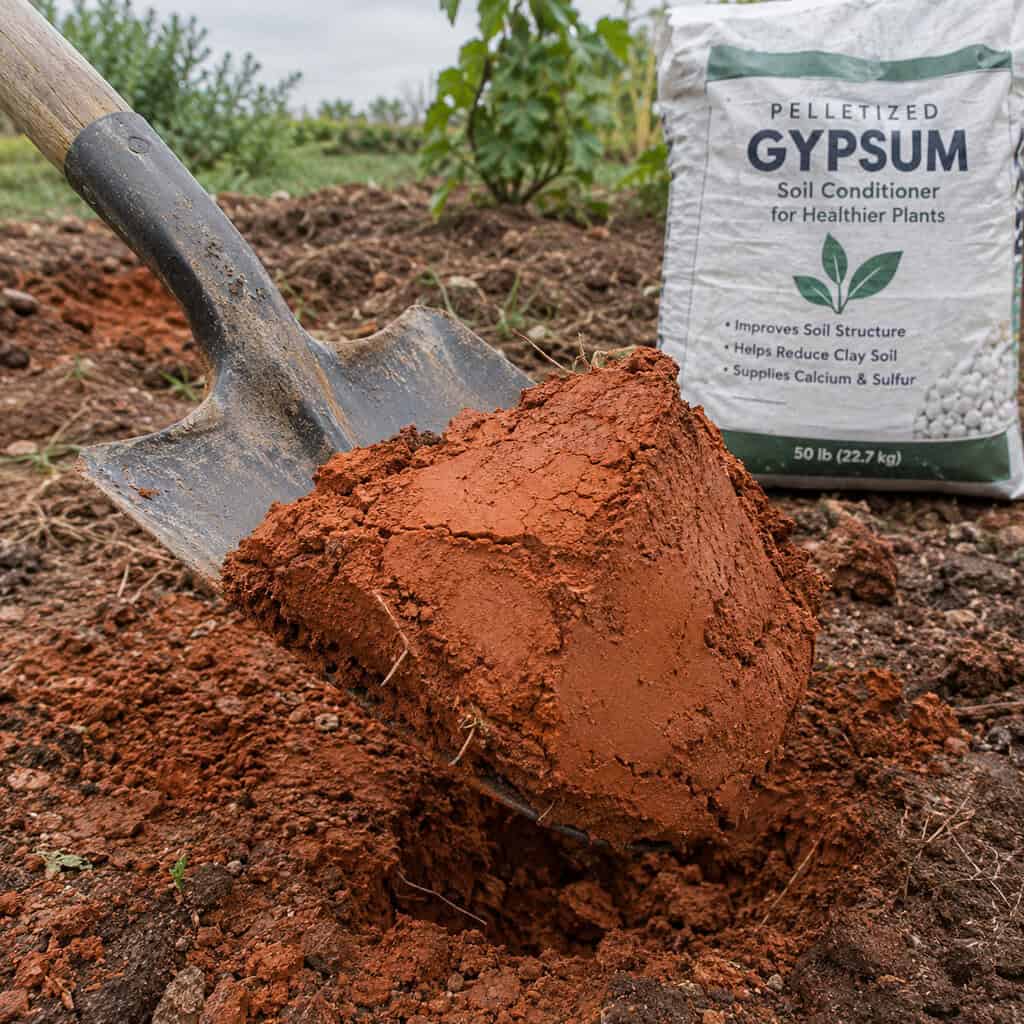
Gypsum works. On sodic soils. Which almost no residential yard in North America has.
Linda Chalker-Scott at Washington State University filed this one under agricultural practices misapplied to home landscapes — a treatment for irrigated Western farmland with high sodium, sold to suburbanites with ordinary clay.
Ordinary clay isn’t a chemistry problem. It’s a structure problem, and structure is built with organic matter over time.
Compost and core aeration do what the bag promises. Slower, cheaper, permanent.
13. Pruning Sealer and Tree Wound Paint
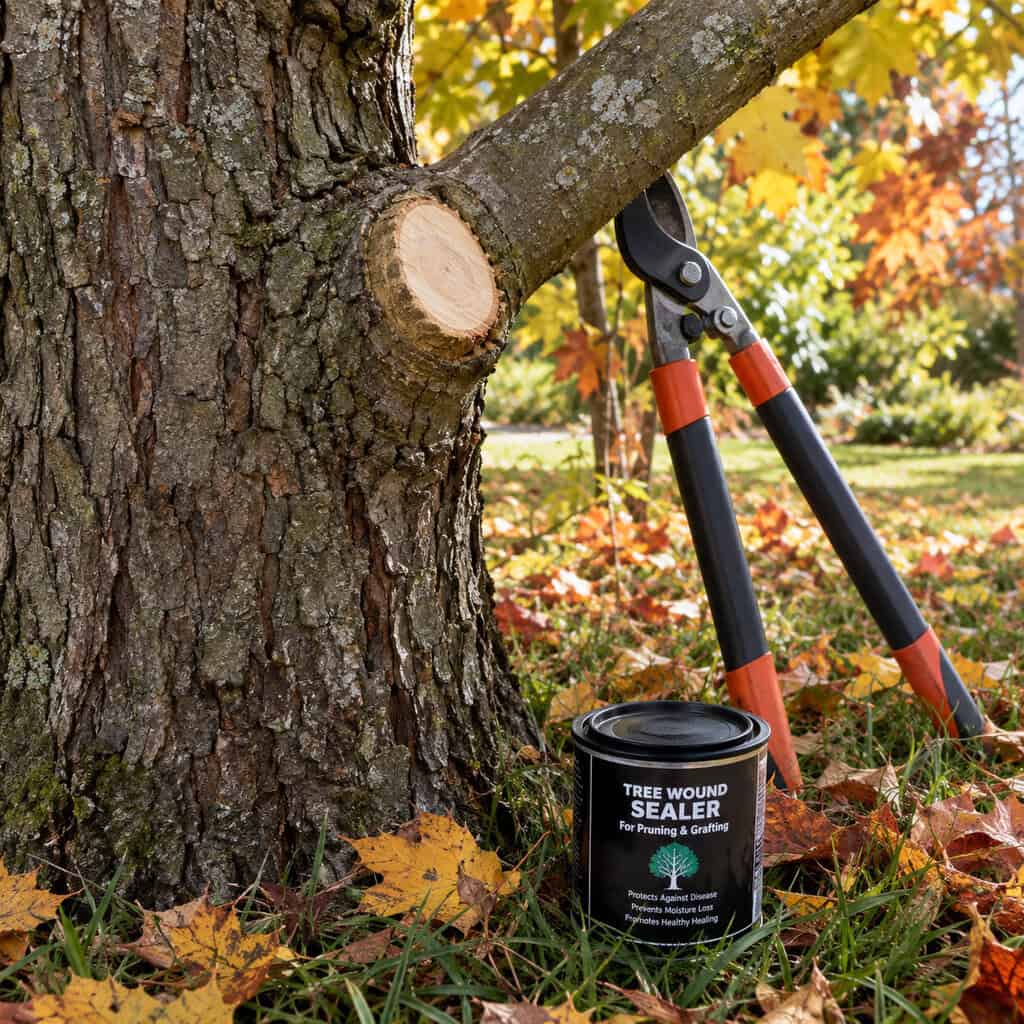
Arborists walked away from wound dressings in the 1980s and never came back.
The tar traps moisture against the cut, slows the tree’s own compartmentalization process, and can seal decay fungi inside the wound where they’re protected from drying out.
A clean cut just outside the branch collar — that swollen ring where the branch meets the trunk — is the entire treatment. The tree grows a callus over it on its own schedule.
Save the $14.
14. Fall Pre-Emergent for Crabgrass
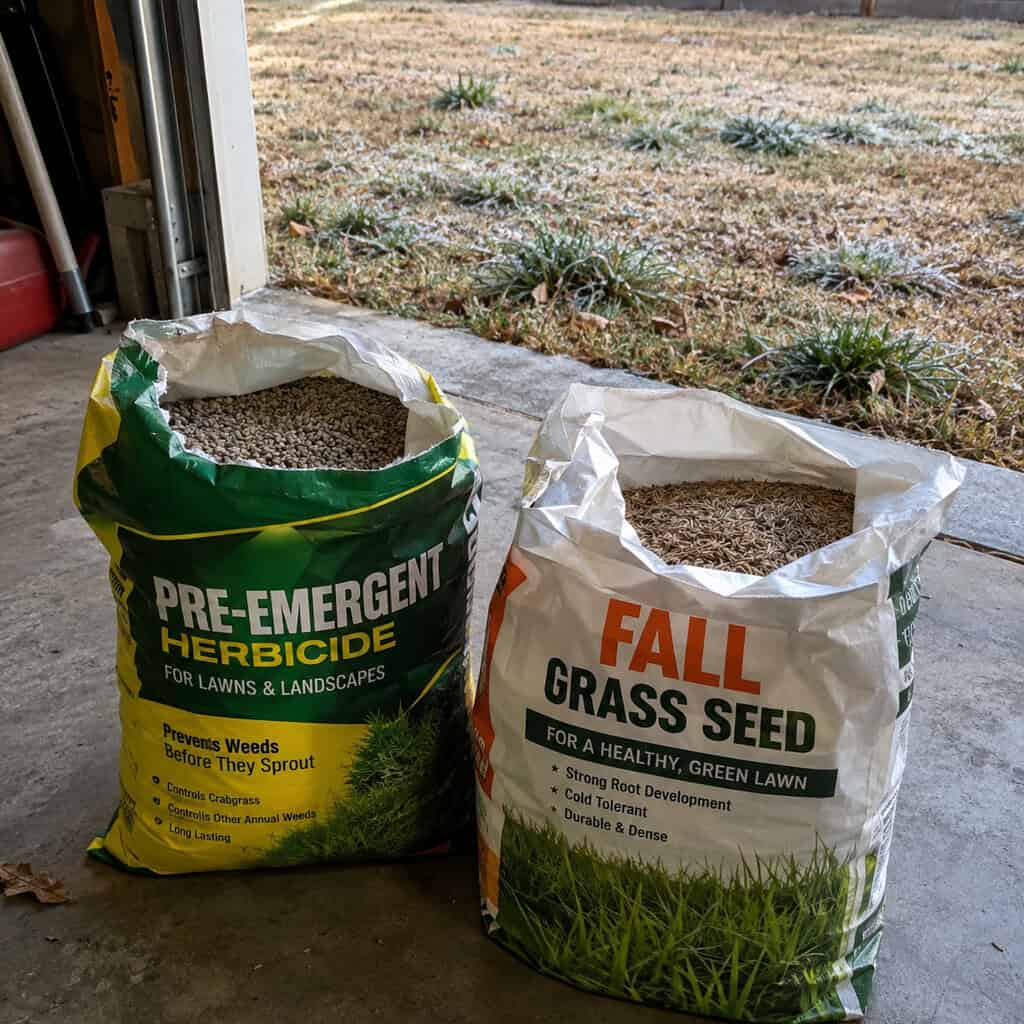
This one is almost comedic. Crabgrass is a summer annual. It’s killed outright by the first hard frost, every single year, without your help.
Paying in October to prevent something that’s already dying is one thing. Doing it in the same aisle where the fall grass seed is stacked is another.
Pre-emergent herbicides don’t distinguish between crabgrass seed and fescue seed. That barrier will block the $70 worth of seed you’re about to spread.
The two products cancel each other out. Pre-emergent belongs in spring — and if you’re seeding, not then either. Check what actually decides next spring’s grass before you buy either one.
15. Bales of Peat Moss for Topdressing
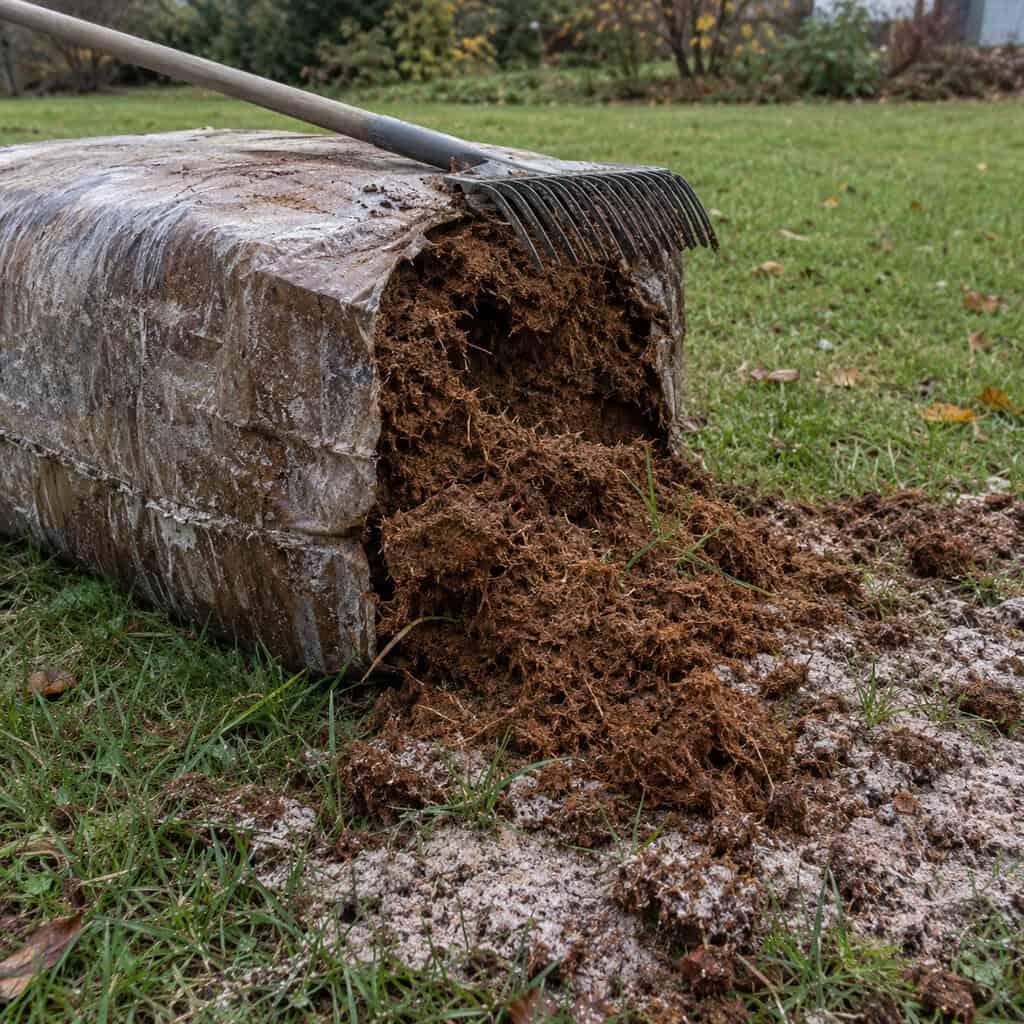
Peat looks like the premium option. It’s expensive per cubic foot, it comes compressed in a heavy bale, and it feels like a serious soil amendment.
Let it dry once and it forms a hydrophobic crust that actively sheds water off the surface you were trying to improve.
It also brings almost no biology to the party. Peat is largely inert — it holds water and that’s about the extent of it.
Screened compost costs less per yard, stays wettable, and carries live microbes into the soil.
16. Plastic Spiral Tree Trunk Wrap

It goes on in November to stop sunscald and rabbit damage. Then it stays on.
The spiral holds moisture against the bark, creates a sheltered corridor borers love, and — because nobody loosens it — girdles the trunk as the tree puts on diameter. The damage shows up three years later as a scarred, constricted band.
Professionals use a loose cylinder of hardware cloth held a few inches off the bark, or white latex paint diluted 50/50 on young thin-barked trees like maple and honeylocust.
And they take it off in spring.
17. A Power Rake or Dethatcher of Your Own
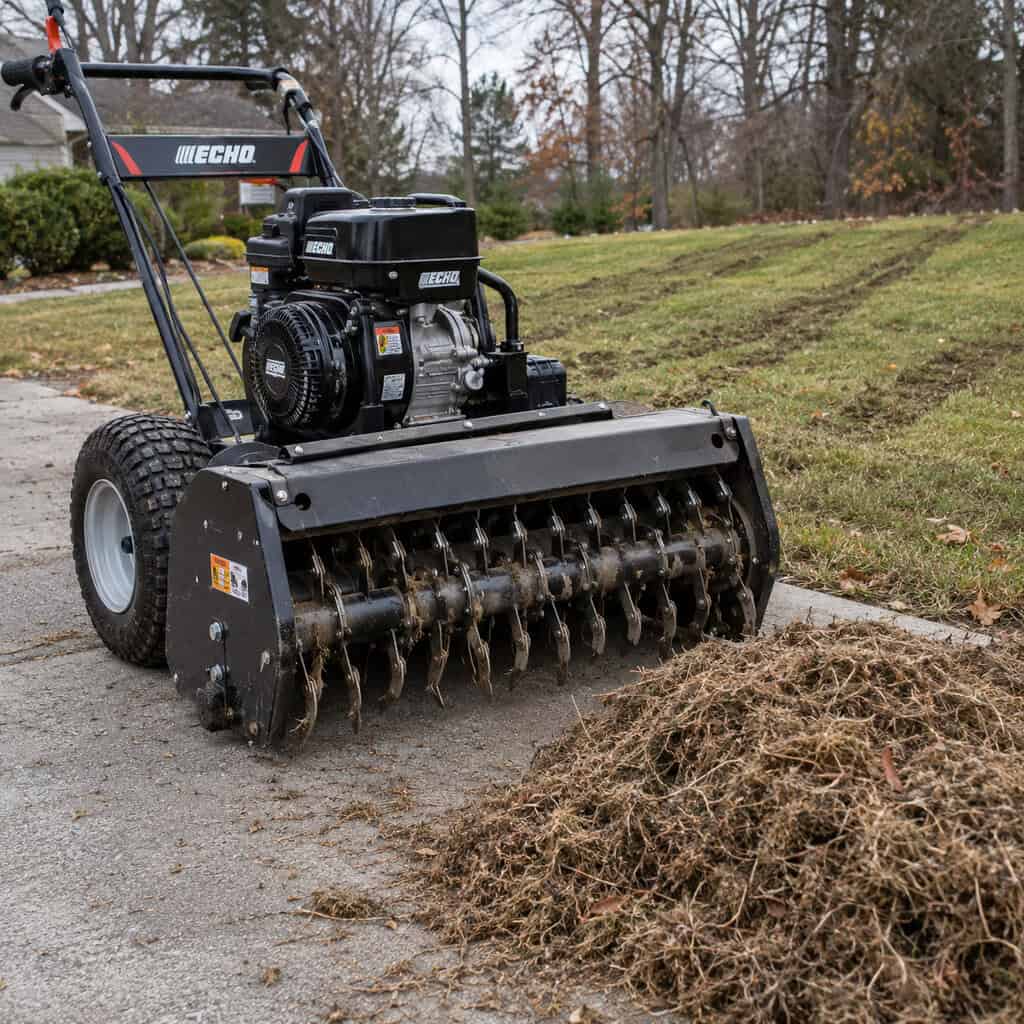
Most home lawns never accumulate the half-inch of thatch that justifies dethatching in the first place. Grass clippings aren’t thatch — they’re 80% water and decompose in days.
Run a power rake on turf that didn’t need it and you shred healthy crowns and stolons, leaving the lawn thin and stressed going into winter. Often the underlying problem was compaction all along.
Core aeration handles moderate thatch biologically, by mixing soil microbes up into the layer and letting them eat it.
If you genuinely need one, it’s a $50 day rental. Here’s what a scarifier actually does and when it’s warranted.
18. Preventive Snow Mold Fungicide
This is golf-course chemistry repackaged for homeowners, and the price reflects it — $40 to $70 for enough product to treat a suburban lawn once.
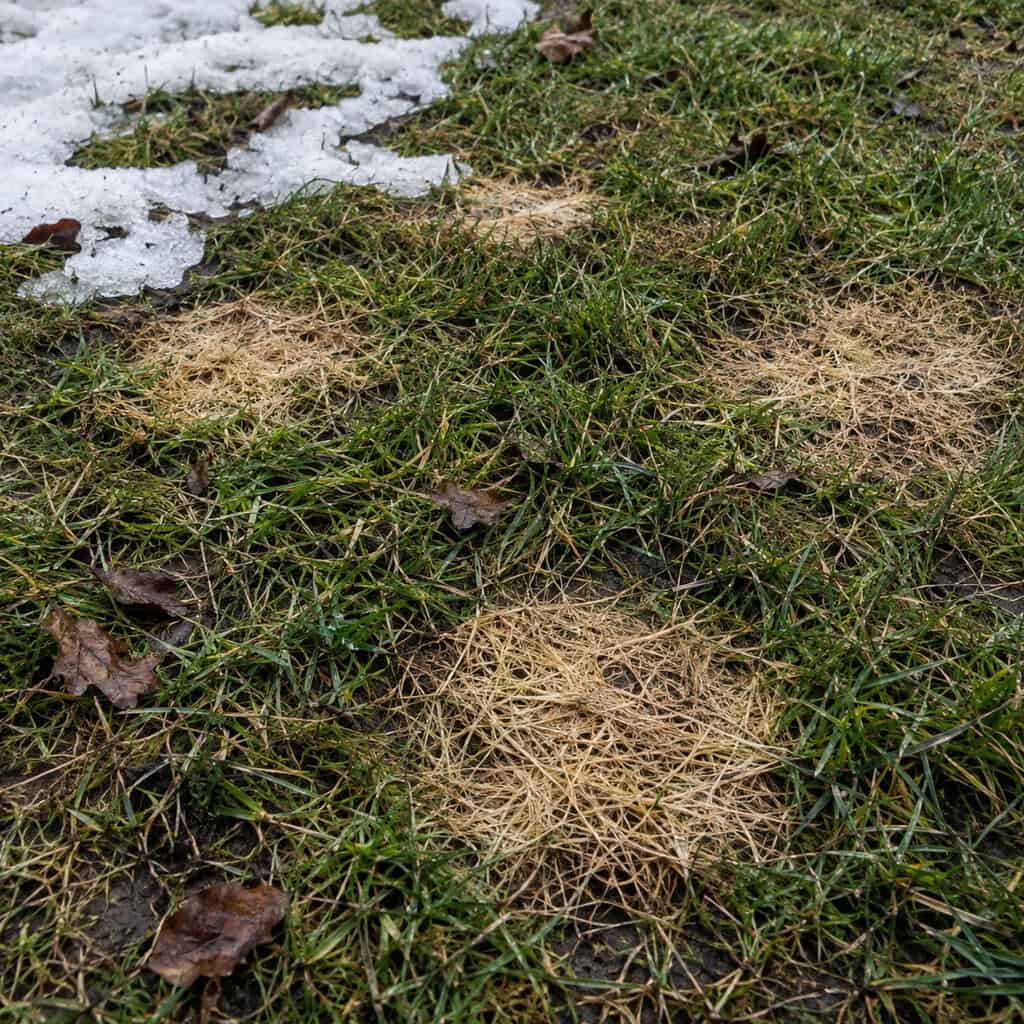
There are two kinds. Gray snow mold (Typhula) needs persistent snow cover over unfrozen ground, usually 60+ days, and shows up as matted straw-colored circles when the snow pulls back. Pink snow mold (Microdochium) doesn’t need snow at all — cold, wet, overcast stretches in the 32-60°F range will do it, which is why it turns up in the Pacific Northwest and the mid-Atlantic.
On a home lawn, both usually grow out. The damage is to the leaf blades, not the crowns. Rake the matted areas lightly in March to let air in, and the turf typically recovers by mid-May on its own.
The free prevention is entirely cultural. Keep mowing until the grass genuinely stops growing — tall grass flops over under snow and mats. Don’t apply late nitrogen that pushes soft, lush growth into winter. And get the leaves off; a wet leaf mat sitting all winter is the single most reliable way to create a dead patch.
Golf superintendents spray because a putting green can’t look ugly in April and can’t be reseeded in a weekend. Your lawn can.
19. Landscape Fabric Under Fall Mulch
Two clean years. That’s the honest return.
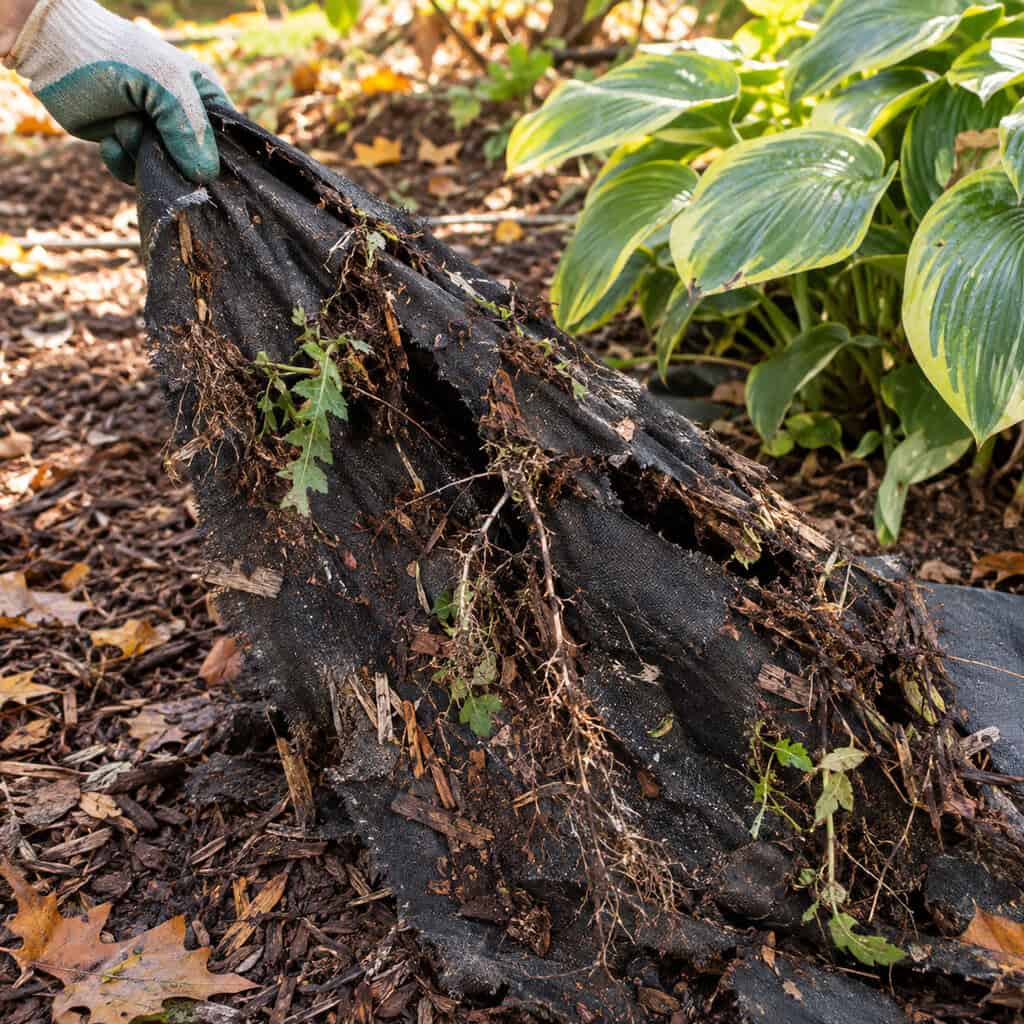
Year three, the mulch on top has broken down into a thin layer of compost, and weed seeds blowing in root happily in it — above the fabric, where you can’t get at the roots without pulling up plastic.
Meanwhile the fabric is blocking leaf litter, mulch fines and worm activity from ever reaching the soil below. The bed gets harder and more lifeless every year.
Ten years on, somebody’s paying a crew by the hour to tear shredded polypropylene out of the roots of perennials that grew through it. Three inches of mulch on bare soil, refreshed annually, does the job without the archaeology.
20. Sand to “Fix” Heavy Clay
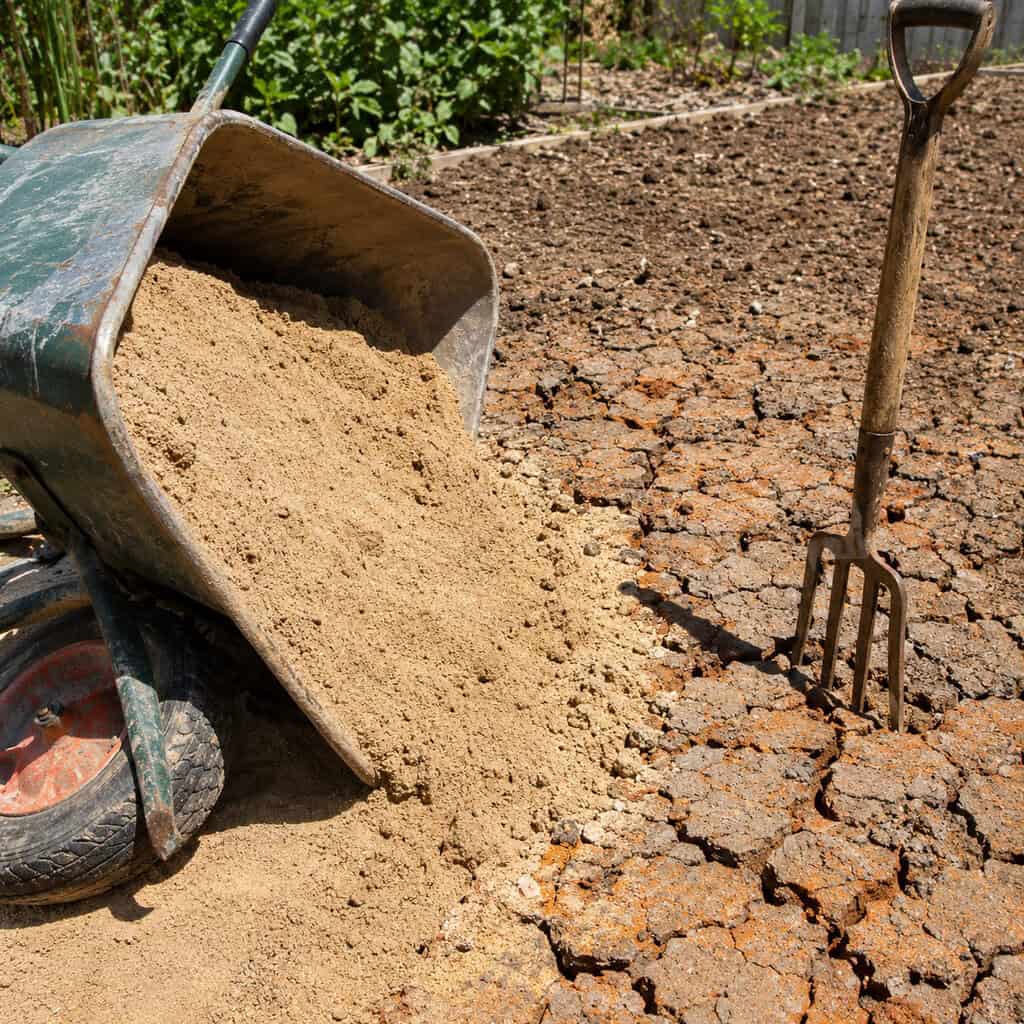
Garden center staff hear this plan weekly and talk people out of it weekly.
Clay particles are microscopic and plate-shaped. Add a modest amount of sand and the clay fills the spaces between the sand grains — which is roughly how you make mortar. Compact it with foot traffic and you’ve got something unpleasantly close to concrete.
To actually change clay texture with sand, you’d need it to make up more than half the total volume. That’s dump trucks, not bags.
Organic matter is the only realistic answer. Compost, every year, forever.
21. A Dedicated Leaf Vacuum or Shredder
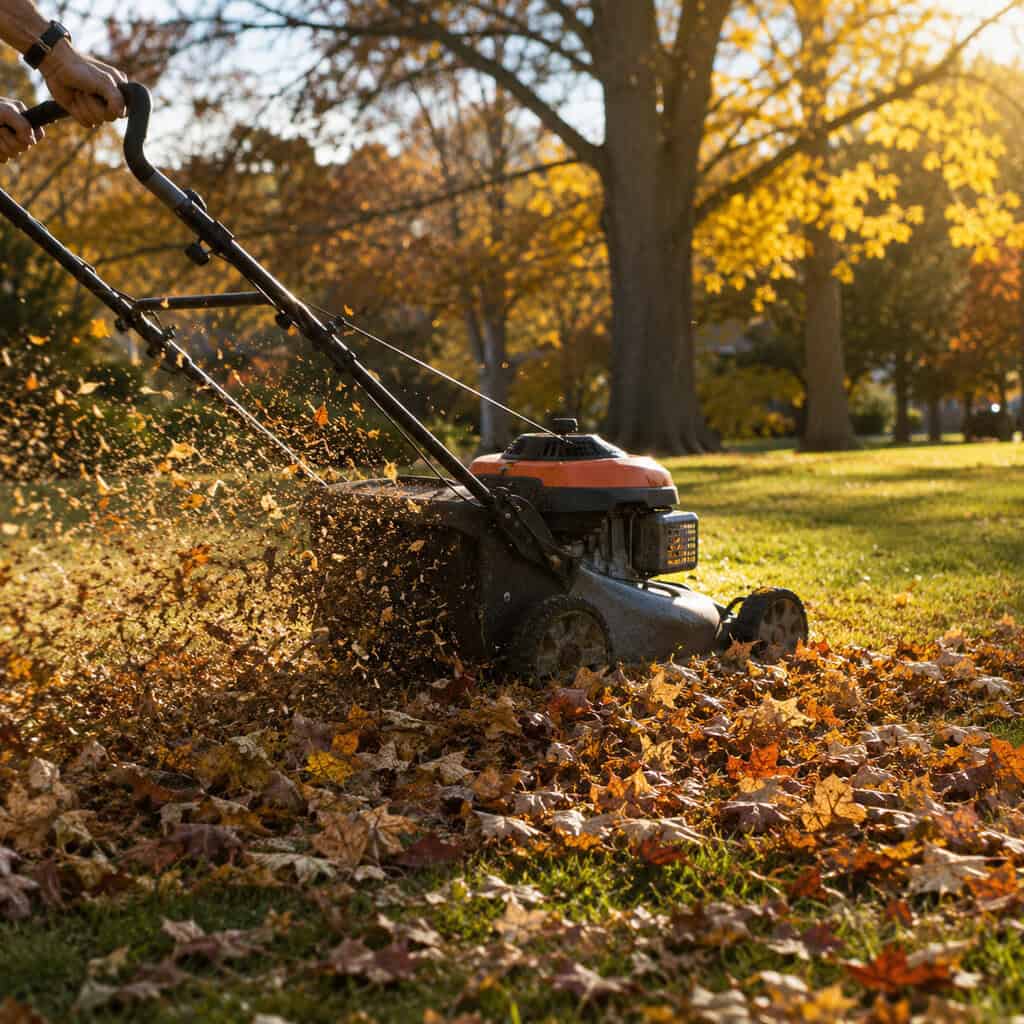
Loud, bulky, prone to jamming on the first wet oak leaf, and used maybe four weekends a year before it spends eleven months taking up wall space.
The trade answer is already in your garage. A mulching blade and two or three passes with the mower reduces a heavy leaf layer to confetti that filters down into the turf.
Shredded leaves feed soil biology and return nitrogen and carbon. Bagged leaves feed a landfill.
If the layer is genuinely too thick to mulch, a tow-behind lawn sweeper collects faster than any vacuum and shreds nothing.
22. Anti-Desiccant Spray for Evergreens
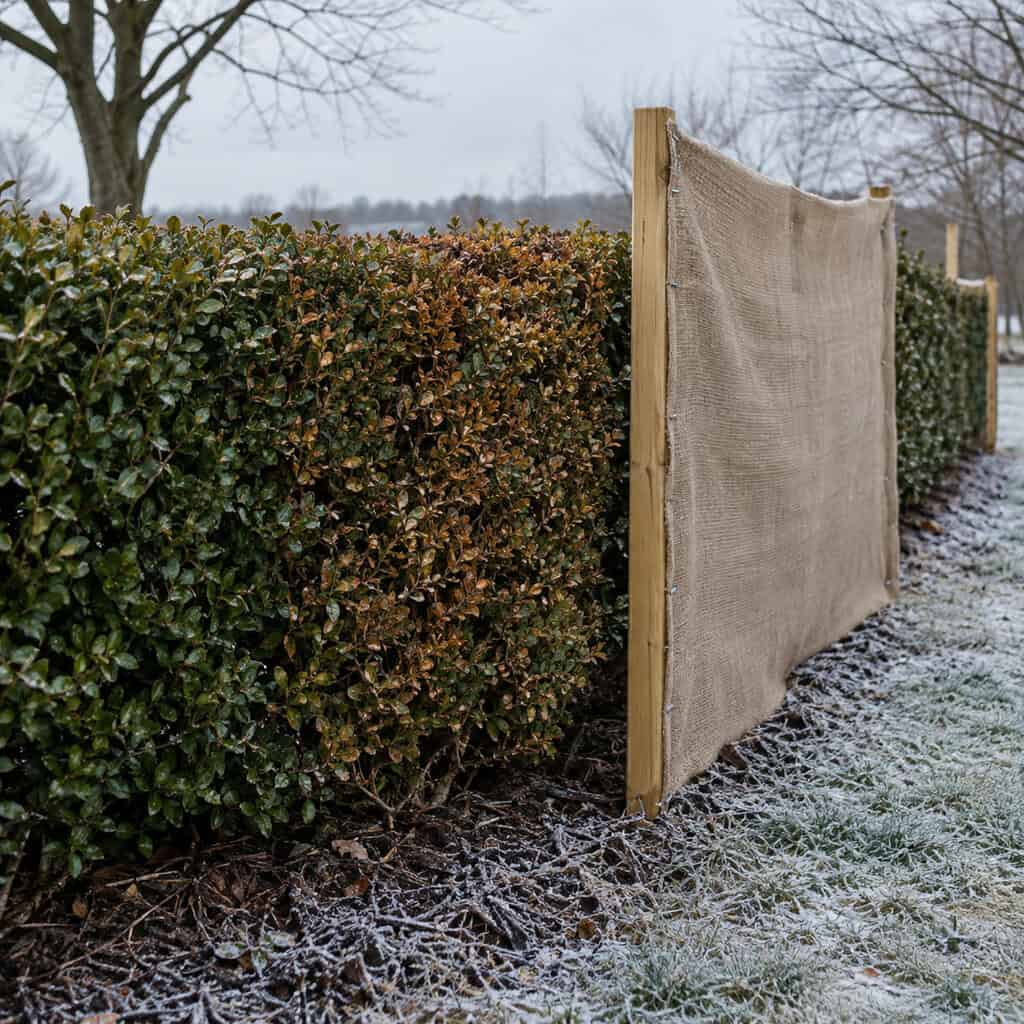
The pitch makes intuitive sense. A waxy film on boxwood and rhododendron leaves, reducing water loss through a dry, windy winter.
In practice the coating breaks down or weathers off within a few weeks, well before February — which is when winter burn actually happens. Research results on whether it meaningfully reduces damage are mixed at best, and several trials found no benefit.
What reliably helps: a deep soaking in late fall before the ground freezes, so the plant enters winter fully hydrated. Then a burlap screen on the windward side of anything exposed.
Costs about $12 in stakes and burlap. Works every year.
23. Dyed Red and Black Mulch by the Bag
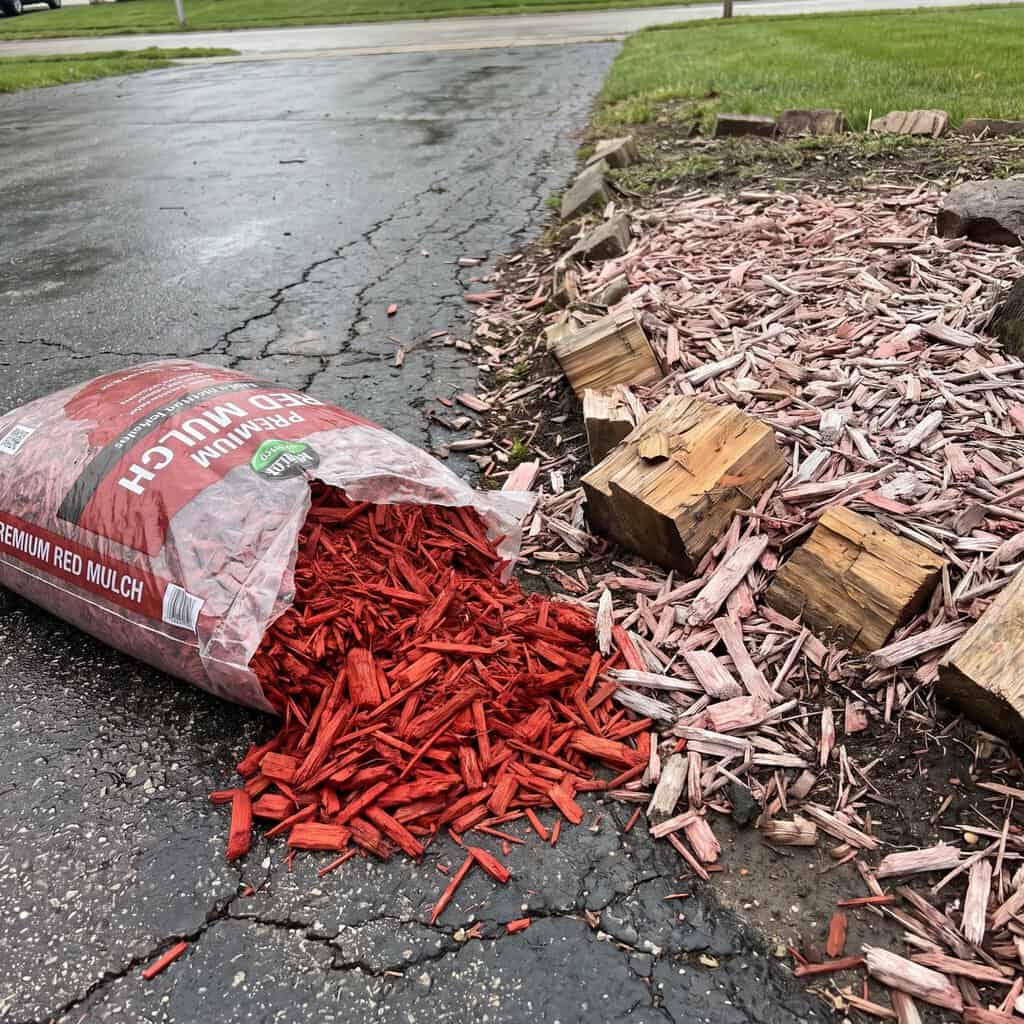
Two bags for $10 feels like a deal until you do the conversion. It takes roughly 13 two-cubic-foot bags to make a cubic yard — call it $65 to $90 for what a bulk yard costs at $35 to $45 delivered.
The color fades to a dull gray-pink by August. And the wood underneath is frequently recycled pallet, demolition scrap and ground construction waste, which is why it’s cheap enough to dye in the first place.
Nurseries order natural double-shredded hardwood by the truckload. It weathers to a decent brown, knits together so it doesn’t float away, and actually builds soil as it breaks down.
24. High-Phosphorus “Starter” Fertilizer
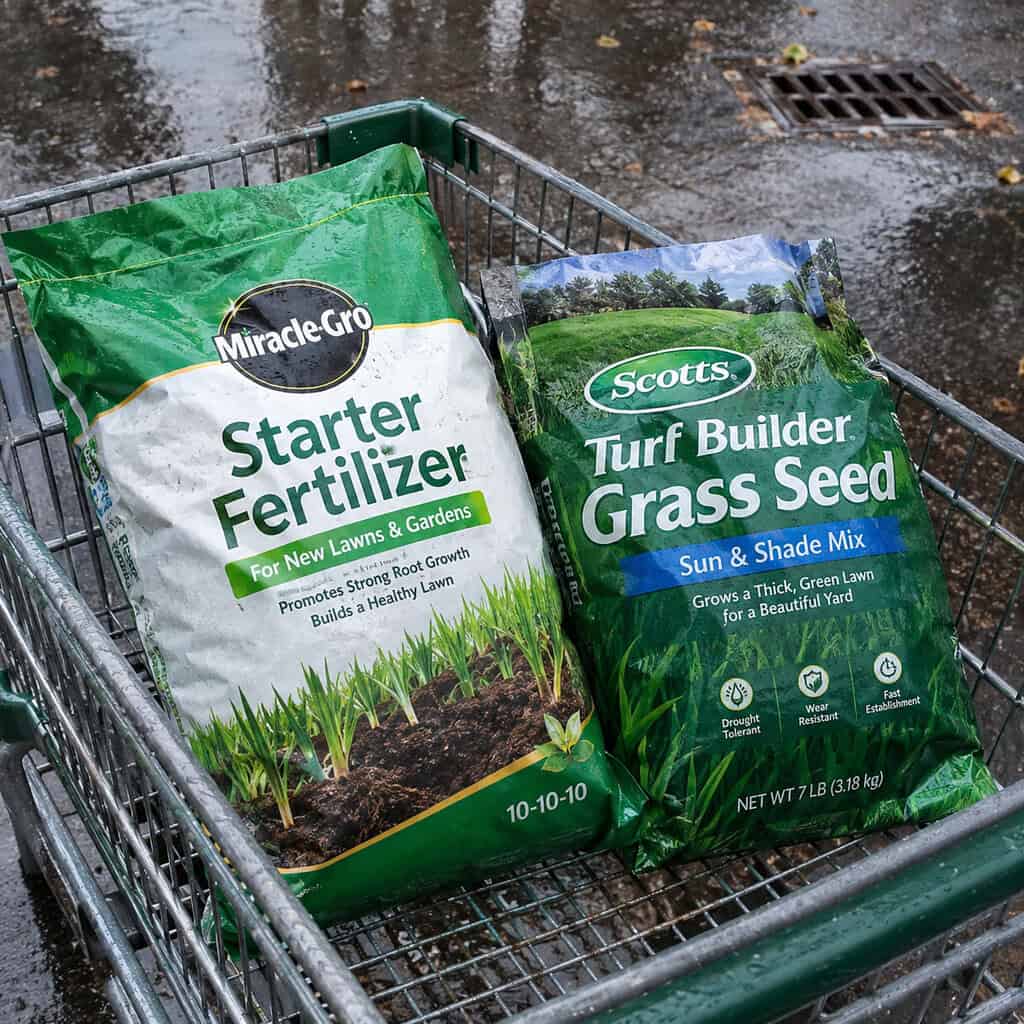
It gets rung up with the grass seed almost automatically. Nobody asks whether the soil needs it.
Most established lawn soils in the eastern half of the country test high or very high in phosphorus already — decades of fertilizer applications built up a reserve that doesn’t leach out. Seedlings can only take up a fraction of what’s applied anyway.
Minnesota, Maryland, New Jersey, Wisconsin and a growing list of other states now restrict phosphorus on established turf unless a soil test justifies it, because the runoff feeds algae blooms. University of Minnesota Extension has been making this point for years.
On truly bare soil, starter fertilizer earns its place. On an established lawn you’re overseeding, the middle number is usually money headed for the storm drain.
25. Moss Killer for the Shady Side of the Yard
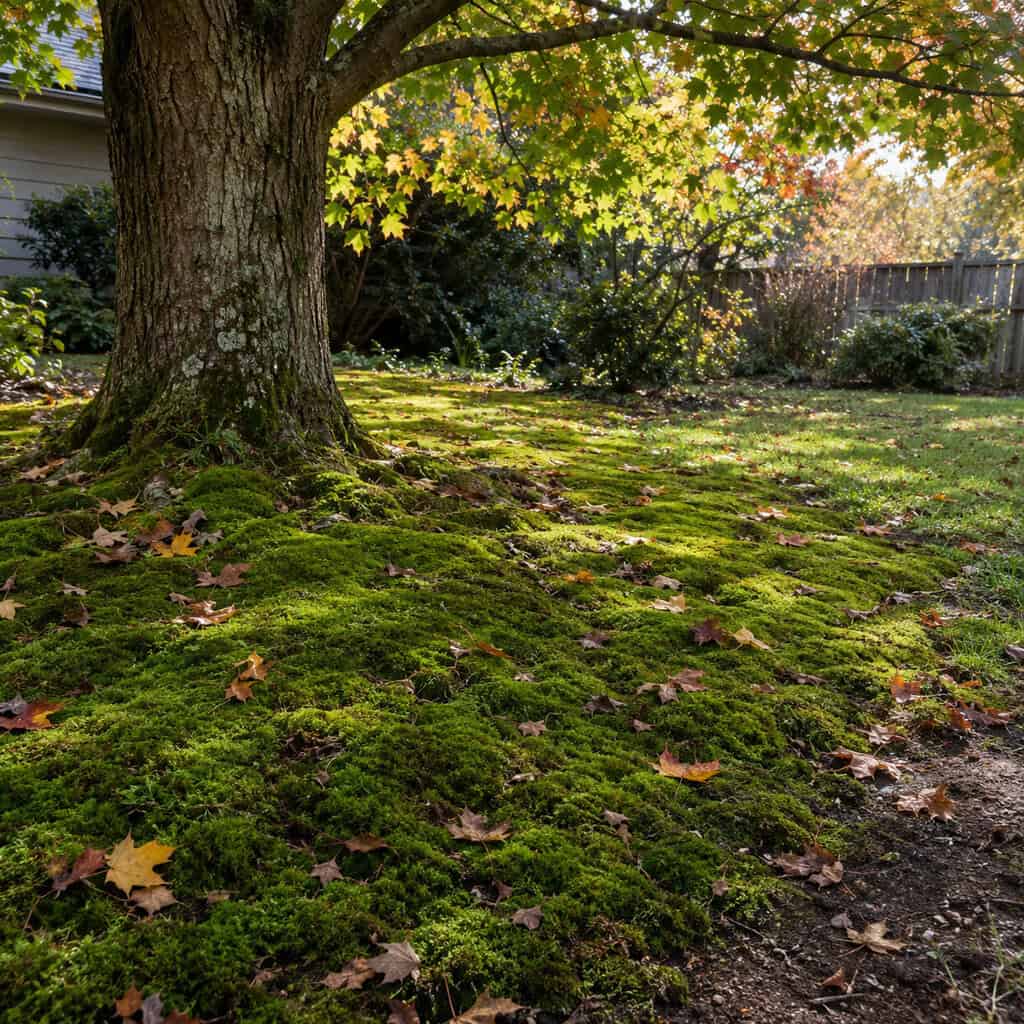
Ferrous sulfate is dramatic. The moss turns black inside a week and you feel like you accomplished something.
You changed nothing. Moss doesn’t outcompete grass — it colonizes ground where grass already failed. Deep shade, compacted soil, poor drainage, low fertility, acidic pH. Usually several at once.
Kill the moss and those conditions are all still there in the spring, so the moss comes back into the same bare ground.
Fix the cause or accept the moss. In heavy shade under mature maples, plenty of nursery owners do the second thing on purpose — moss as a deliberate ground cover stays green in January and never needs mowing.
26. Compost Accelerator and Leaf-Decomposer Granules
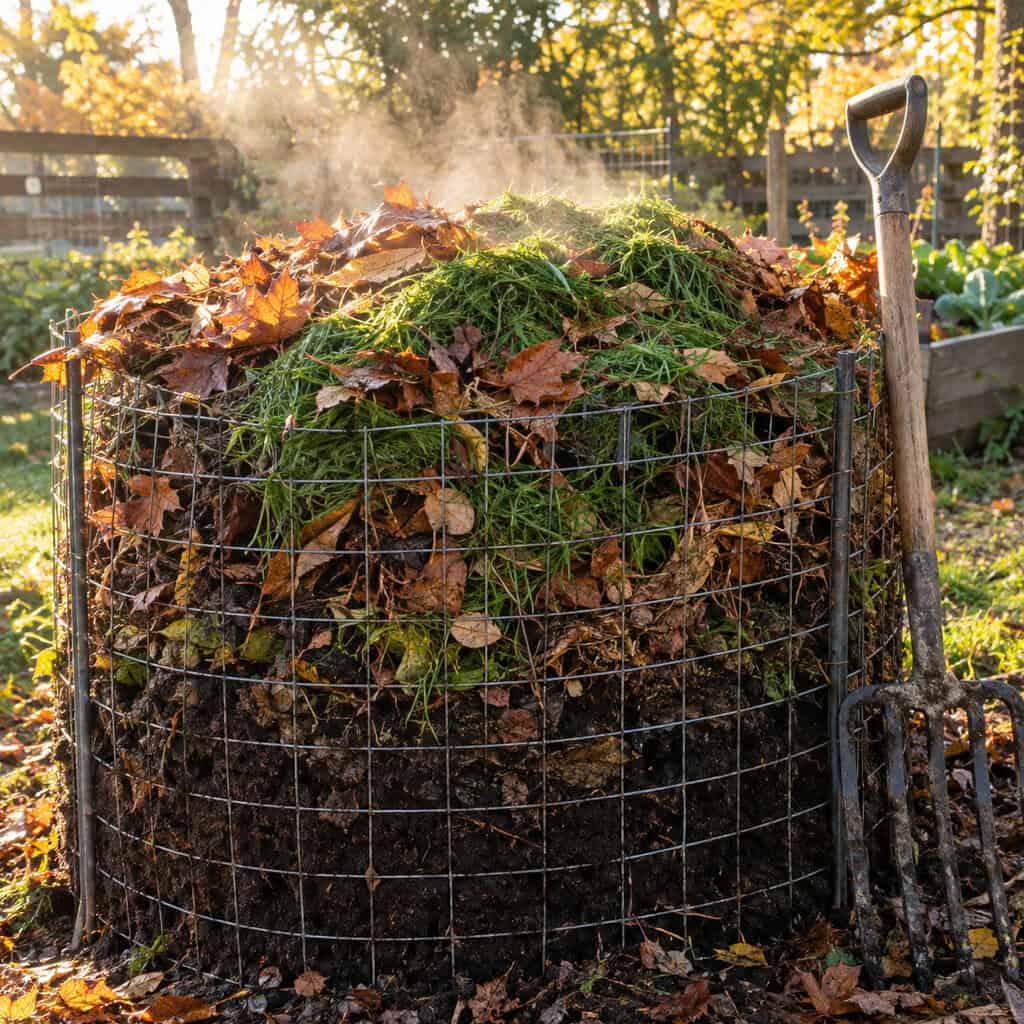
Leaves rot because fungi and bacteria are already living on them and in the soil underneath. They’ve been doing it without supervision for a very long time.
The boxed inoculant sells you microbes that were already present, at about $9 a canister.
What a slow pile actually lacks is nitrogen, moisture, or air. A few shovels of garden soil, a layer of grass clippings, and a hose fixes all three.
Turn it twice. Done.
27. Vitamin B1 “Root Stimulator”
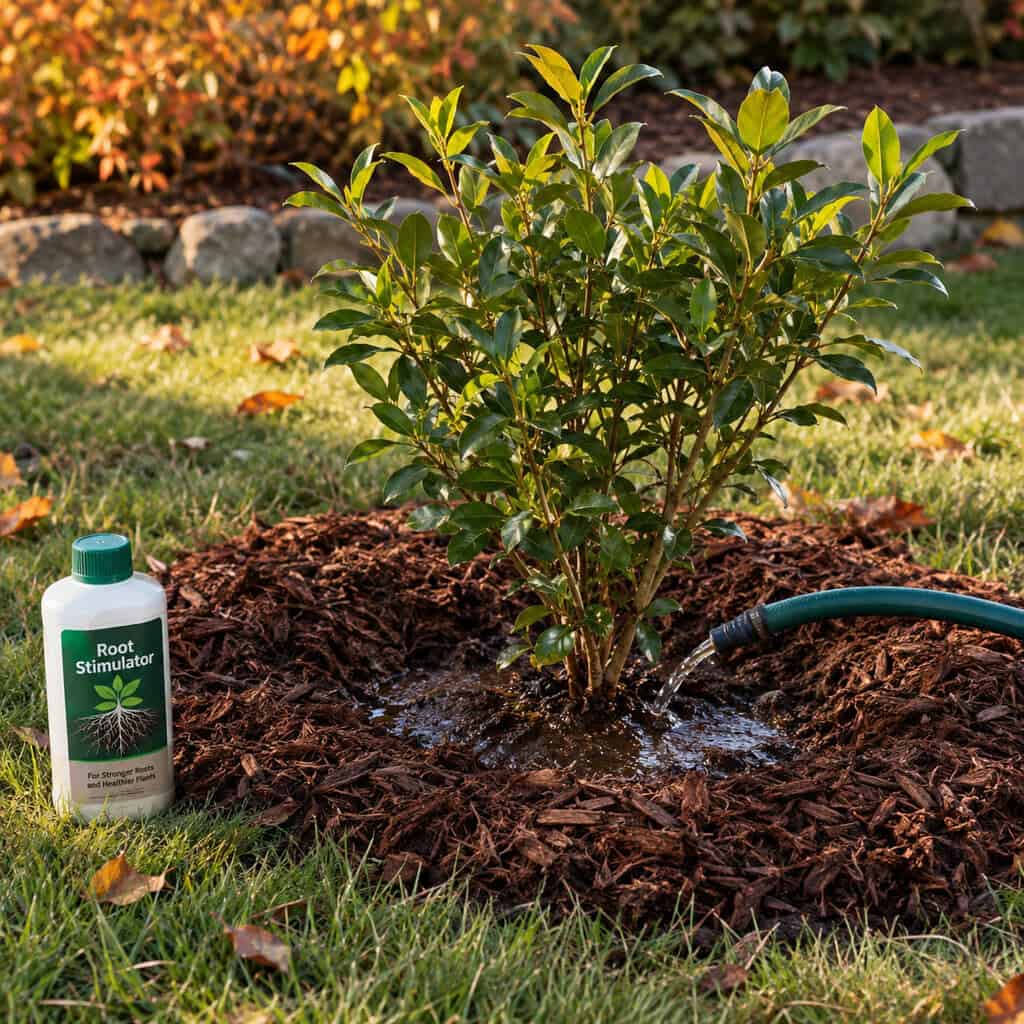
Sold with nearly every fall tree, shrub and perennial for fifty years, on research that was discredited almost as long ago.
Controlled trials going back to the 1940s show thiamine does not stimulate root growth on transplants. Plants synthesize their own. Where people do see a response, it traces back to the nitrogen and phosphorus blended into the same bottle.
What actually reduces transplant shock is unglamorous: a hole two to three times the root ball width, planted at the original depth, watered deeply once a week through the first season, and mulched — never mounded against the trunk.
28. Annual Ryegrass to Overseed a Bermuda Lawn
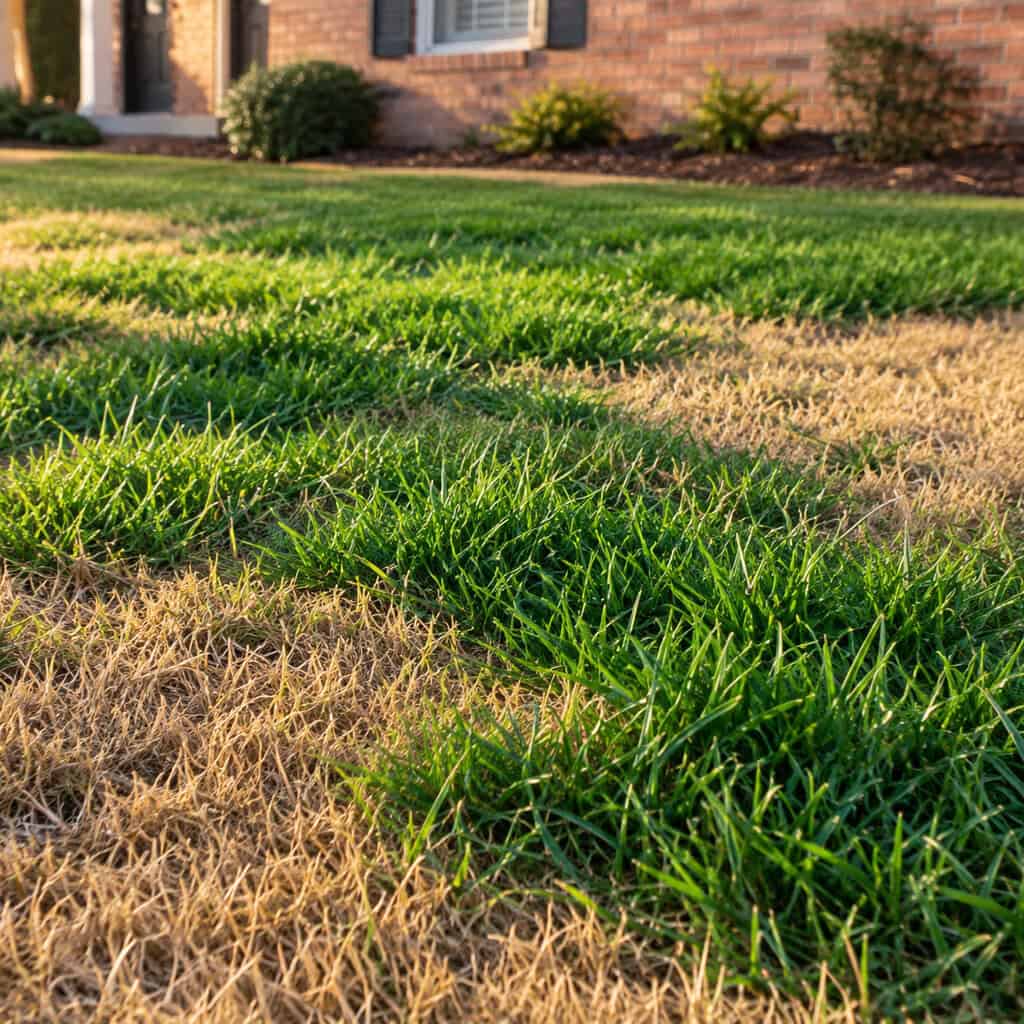
A green lawn in January is a genuine pleasure in Georgia or Texas. The bill comes due in April.
Ryegrass doesn’t politely step aside when temperatures climb. It shades the soil surface exactly when Bermuda needs heat and light to break dormancy, competes for water and nitrogen, and can push green-up back by two to four weeks.
Do it several years running on a thin lawn and the Bermuda never fully recovers its density.
Plenty of southern growers let the lawn go tan from November to March and sleep fine. It’s dormant, not dead.
29. Mycorrhizal Inoculant Packets

The concept is sound. Mycorrhizal fungi genuinely extend root systems and improve nutrient uptake, and the science behind them is real.
The packet is where it falls apart. Native mycorrhizae are already present in most landscape soil. Product viability after weeks on a warm retail shelf is unverifiable, and independent testing has repeatedly found low or zero live propagules in retail products. Species matching matters too, and the label rarely tells you enough.
Then there’s the self-defeating part: high-phosphorus fertilizer suppresses mycorrhizal colonization. Most people apply both, the same afternoon.
A lottery ticket, priced like insurance.
30. “Pet-Safe” Ice Melt Stacked by the Fall Door

No federal standard exists behind that phrase. None. A manufacturer can print “pet-safe” on a bag of sodium chloride, add a paw-print graphic, and charge $4 more.
Read the actual ingredients. Sodium chloride and magnesium chloride are both common in “pet-friendly” bags, and both irritate paw pads and cause GI upset if licked off. Both also wreck turf — that dead brown stripe along every walkway each April is salt damage.
Calcium magnesium acetate is the genuinely low-toxicity option and it’s gentler on concrete and plants too. It costs more and works slower below about 20°F.
The trade move is CMA on the stretches where pets and plants are, and plain sand for traction everywhere else. Sand doesn’t melt anything, but it doesn’t kill the hostas either.
31. Florist Mums Sold as “Hardy” Fall Color

They’re at the entrance of every garden center from September 1 onward, in maroon and gold, three for $20.
The label says hardy. The plant disagrees. Greenhouse-forced florist mums are bred for one thing — maximum bloom in a tight window — and they put almost everything into flowers instead of roots. Planted in October, there isn’t enough time or root mass to establish before the ground freezes.
Most of them don’t come back. The ones that do are usually sitting in a protected south-facing bed with a mulch blanket and some luck.
Garden center owners buy them anyway. Cheerfully. They just leave them in the pot, set them on the porch steps, and treat them as a six-week decoration — which is exactly what they are.
If you want mums that return, buy true garden mums in spring and plant them in May. They’ll spend the whole season building roots and bloom for you every fall after that.
32. Systemic “Tree & Shrub” Insecticide Drench
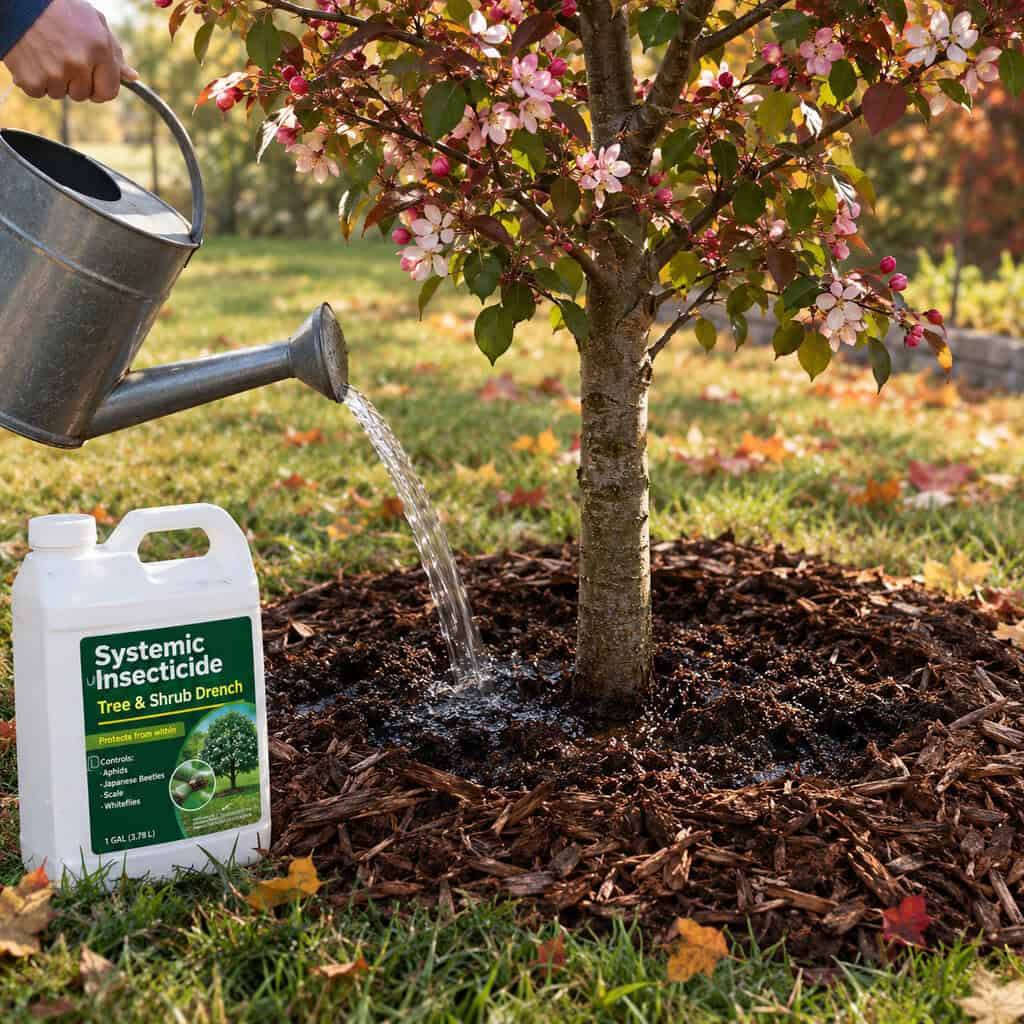
Poured around the base of a tree in fall, it’s absorbed through the roots and carried into every tissue — leaves, sap, and flowers.
That last part is the issue. Neonicotinoid drenches applied in autumn can still show up in the following spring’s blossoms, which is a hard problem for anything visiting a flowering crabapple or linden.
The application also puts concentrated insecticide in the soil where dogs dig and kids sit.
Treat a diagnosed problem on a specific plant. Don’t drench the whole yard as a precaution.
33. Hose-End Lawn “Tonics” and Biostimulant Boosters

Kelp extract, humic acid, molasses, beer, ammonia, a little dish soap. The recipes vary; the marketing doesn’t.
Read the guaranteed analysis on the back. Usually something like 3-1-2, heavily diluted, at ten times the cost per pound of nutrient of a bag of granular fertilizer.
Any green-up you see is the nitrogen. That’s the whole mechanism.
Soil health comes from organic matter, aeration and not compacting the ground — none of which arrive through a hose.
The Pattern Underneath All of It
Nearly every product on this list sells a shortcut around something that takes time: building soil, testing before treating, timing an application correctly, or just waiting.
The people who run garden centers know which shelves make payroll. They also know that most of what actually works in fall costs very little — a soil test, a mulching blade, compost, and doing things on the right date.
Save the $180 at the front of the store. Spend $20 at the extension lab instead.