

An agent pulls up to a listing and knows the price before the lockbox opens.
Not from the comps. From the yard.
Every property leaves a paper trail outside — water damage, deferred repairs, panic fixes applied three days before the photographer arrived. Sellers think landscaping is the part buyers won’t scrutinize. It’s the part professionals read first.
Curb appeal genuinely moves money. Research summarized by Phys.org puts the premium at roughly 7% of sale price. But there’s a difference between a yard that earned that premium over fifteen years and a yard that was costumed for a weekend.
Here are 31 things in a yard that quietly tell a buyer the asking price is too high.
1. The Mulch Line That Stops at the Corner of the House
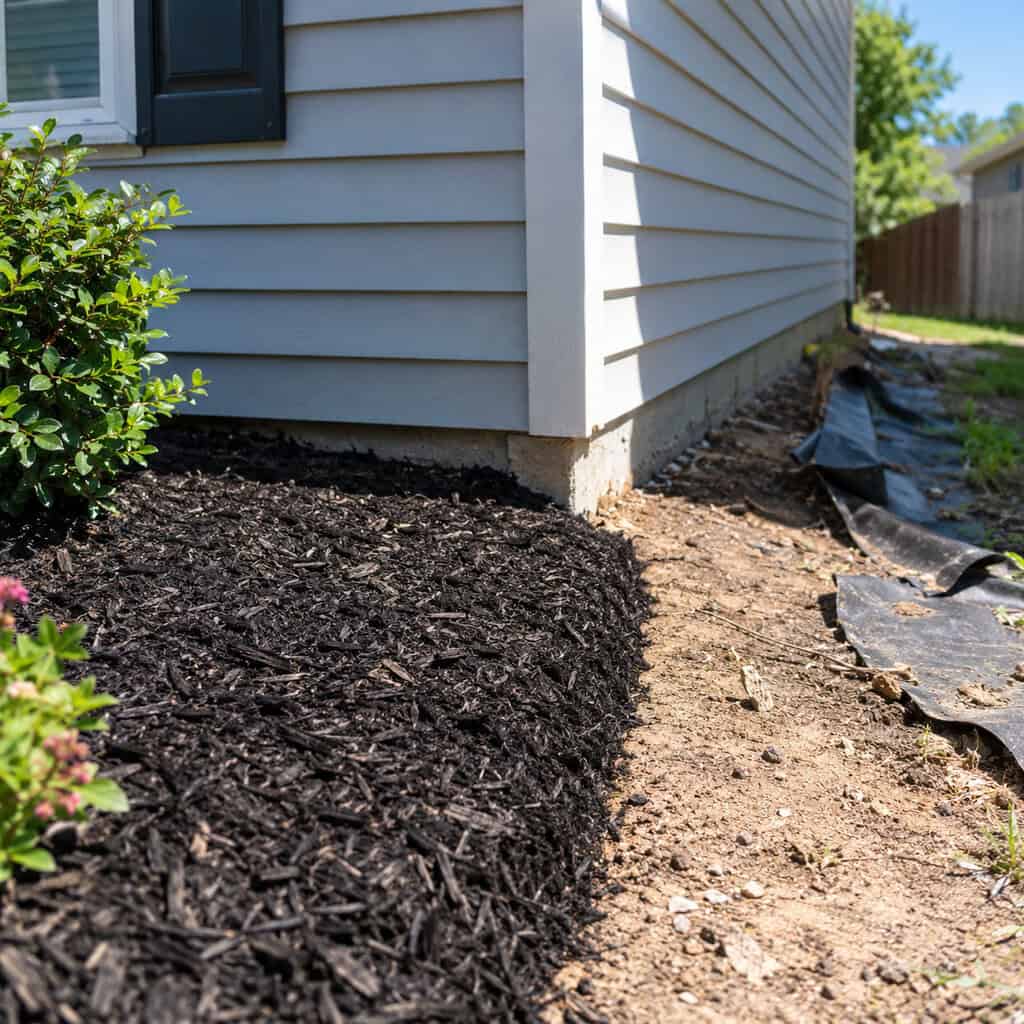
Fresh black mulch across the front beds. Crisp edge, deep color, still smelling like a bag.
Then you walk around the corner and the mulch just… ends. Bare compacted dirt, a few surviving hostas, weed fabric curling up at the seam.
That line is the boundary of the listing photo. Whoever spread it measured the camera angle, not the property.
Agents call it the photo perimeter, and it reframes everything else on the tour. If the maintenance budget stopped where the lens stopped, the asking price is buying cosmetics.
2. Brand-New Sod Laid Over the Entire Front Lawn

Visible seams mean the sod went down inside of three weeks.
Sellers rarely gift a buyer a fresh lawn out of generosity. Sod is the fastest, cheapest way to bury something — a regraded slope, a trenched utility line, a patched septic excavation, a lawn that drowned every spring.
Look for the checkerboard. Green rectangles with tan lines between them, laid in a hurry, sometimes not even watered in.
Ask what was under it. The answer is usually the reason it’s there.
3. The In-Ground Pool the Seller Priced In at Full Cost

A homeowner spends $65,000 on a gunite pool and adds $65,000 to the ask. The market laughs.
Industry estimates put the resale recovery closer to half the build cost, and HomeLight notes the value swings hard on climate and neighborhood norms — a pool in Phoenix behaves nothing like a pool in Ohio.
Buyers don’t stop at the recovery math. They start subtracting.
- Code-compliant safety fencing and self-latching gates
- A liability bump on the homeowners policy
- Vinyl liner replacement every 8-12 years
- Plaster resurfacing on a gunite pool every 10-15 years
- Heater, pump, and filter on their own replacement clocks
Any one of those is four or five figures. Together they’re a standing bill that arrives whether the pool gets used or not.
Then there’s the buyer pool itself — families with toddlers often screen pool listings out entirely, which shrinks demand at the exact moment the seller is asking for a premium.
Look at the coping stones and the tile line. Cracked coping, a calcium ring, or a patchwork of mismatched plaster means the expensive work is already overdue, not theoretical.
4. Foundation Shrubs Grown Up Past the Window Sills
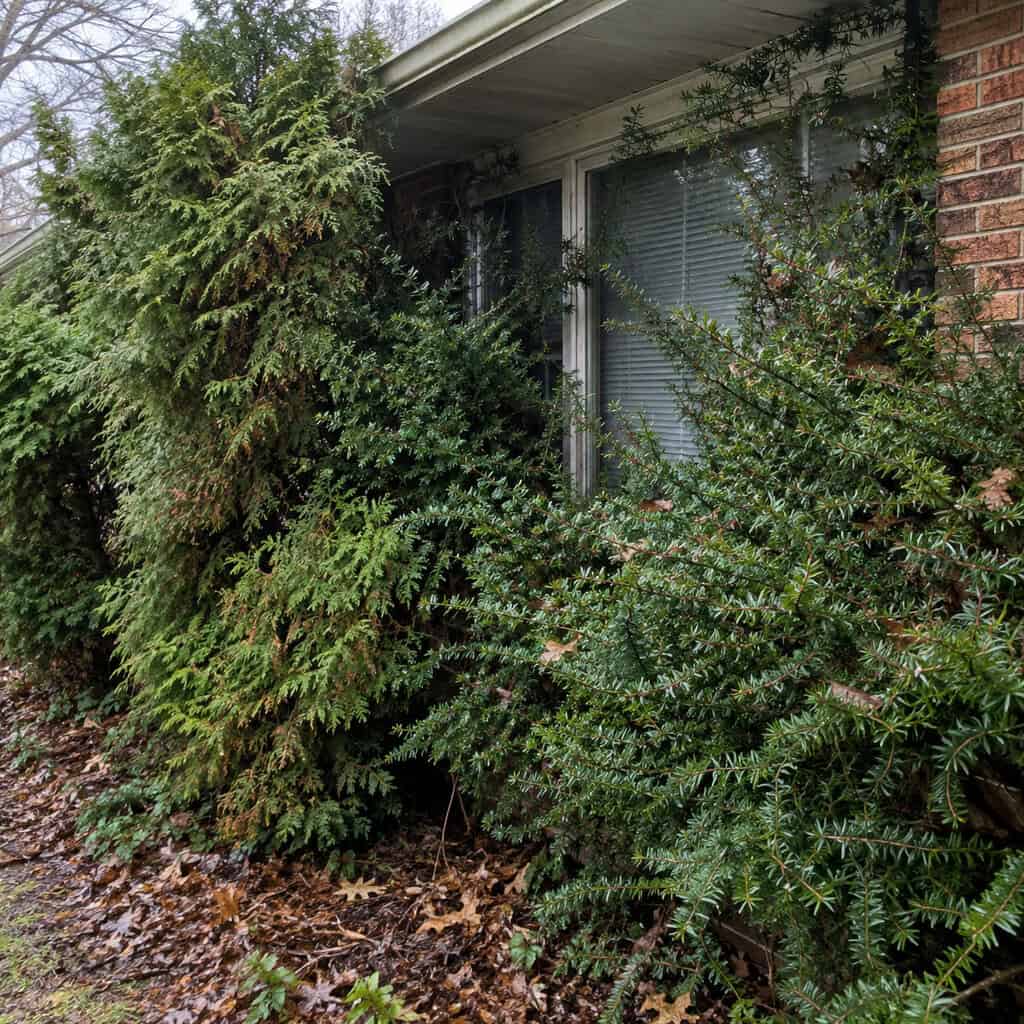
Everyone recognizes the blob. Yews or arborvitae swallowing the front windows, pruned into a green wall by somebody with a hedge trimmer and no plan.
Foundation plantings grow roughly six to twelve inches a year. Sills are usually about 30 inches up. Do the arithmetic and you’ve got a timestamp on how long nobody touched anything.
The bigger problem is behind them. Dense shrubs pressed against the house trap wet leaf litter against siding and sill plate, and that zone never dries out.
Virginia Tech’s research on landscape plants and perceived home value found buyers assign real dollar figures to plant quality and design — and overgrown, unsorted foundation planting scores at the bottom.
5. A Sump Pump Hose Snaking Across the Lawn
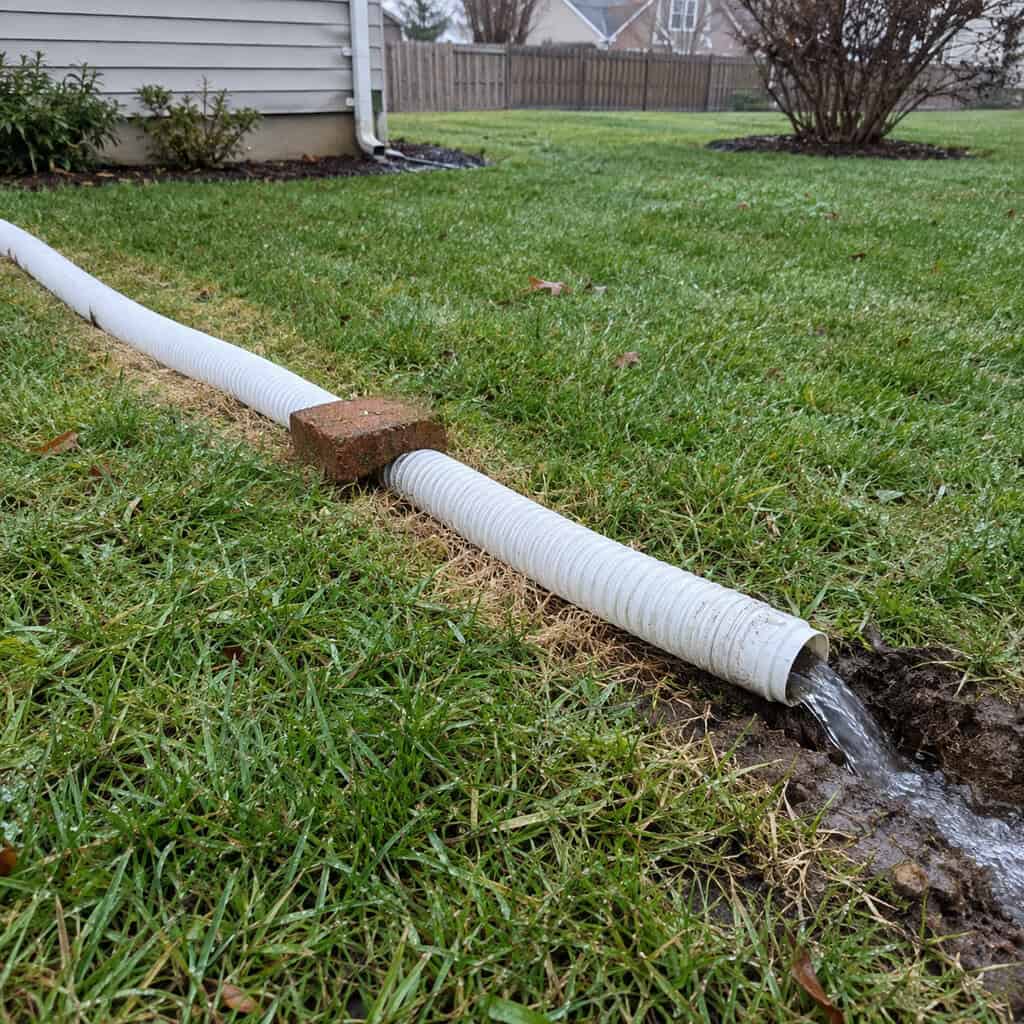
White corrugated hose, running 20 feet out into the grass, held down by a brick.
Every part of that sentence is information. The basement takes water. The discharge was never piped underground. And the hose gets moved for mowing, which means it’s been there long enough to have a routine.
Look underneath it. There’s usually a bleached, dead stripe in the turf, and a scoured channel at the outlet where the soil gave up.
A properly handled discharge runs in buried solid pipe to daylight, well away from the house, ideally downhill. A hose lying on the surface just circles the water back toward the foundation it came from — especially when the grade slopes in.
Worse, a hose that visible means the pump runs often. Check whether the yard has a drainage problem that shows up every time it rains, because a sump is the last line of defense, not a fix.
Buyers who understand this price in the whole chain: exterior grading, buried discharge line, possibly an interior perimeter drain. Interior drain tile systems commonly run $5,000-$15,000 depending on linear footage and whether the slab has to come up.
6. Mulch Volcanoes Piled Against Every Tree Trunk
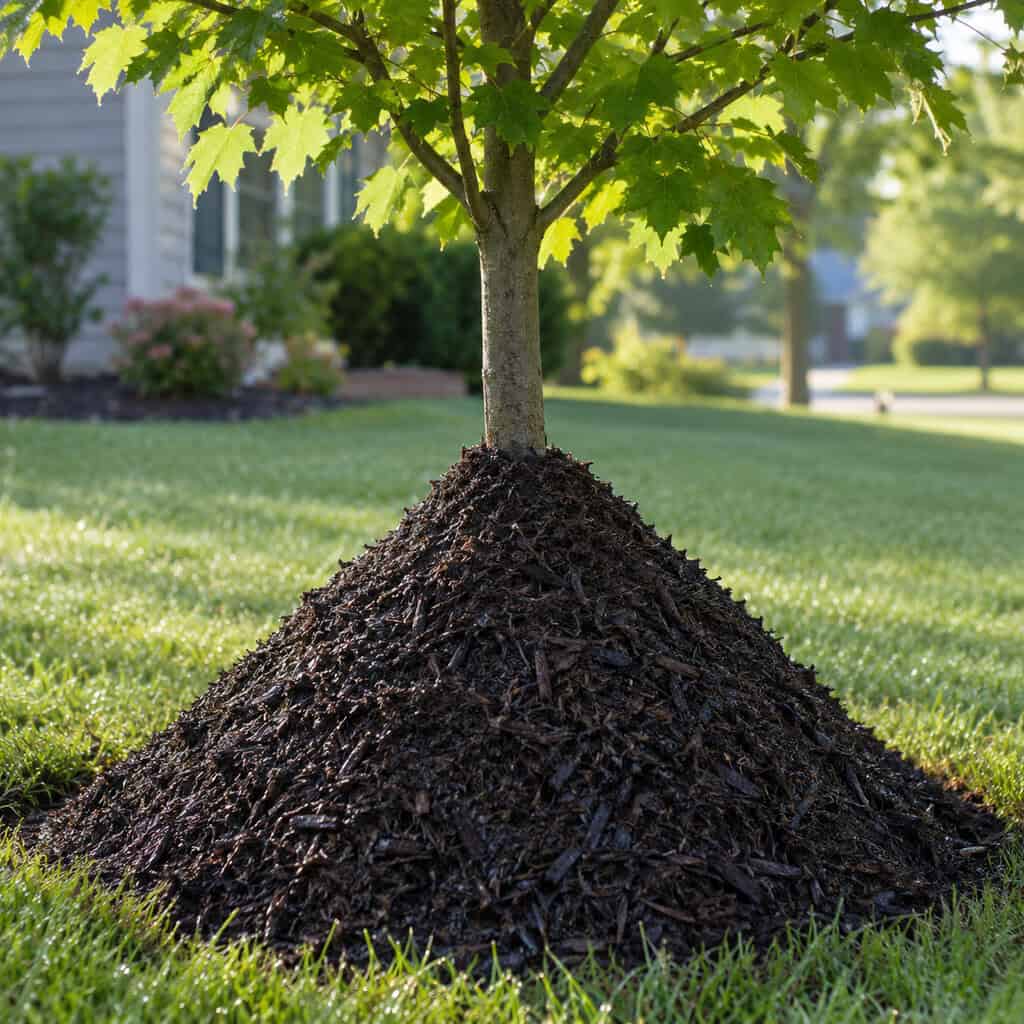
Mulch cones a foot deep, packed right against the bark, on every tree in the yard.
It’s the signature of the lowest bidder. Mow, blow, dump a yard of mulch, invoice, leave.
Bark buried in wet mulch rots, and roots circle back toward the trunk and strangle it years later. Mulch should stop two or three inches shy of the bark. Every time.
The costlier version is in the beds. Fresh mulch dumped over old, year after year, raises grade against the foundation — and home inspectors flag exactly that as a moisture and termite pathway. Ten years of lazy mulching can bury the siding line.
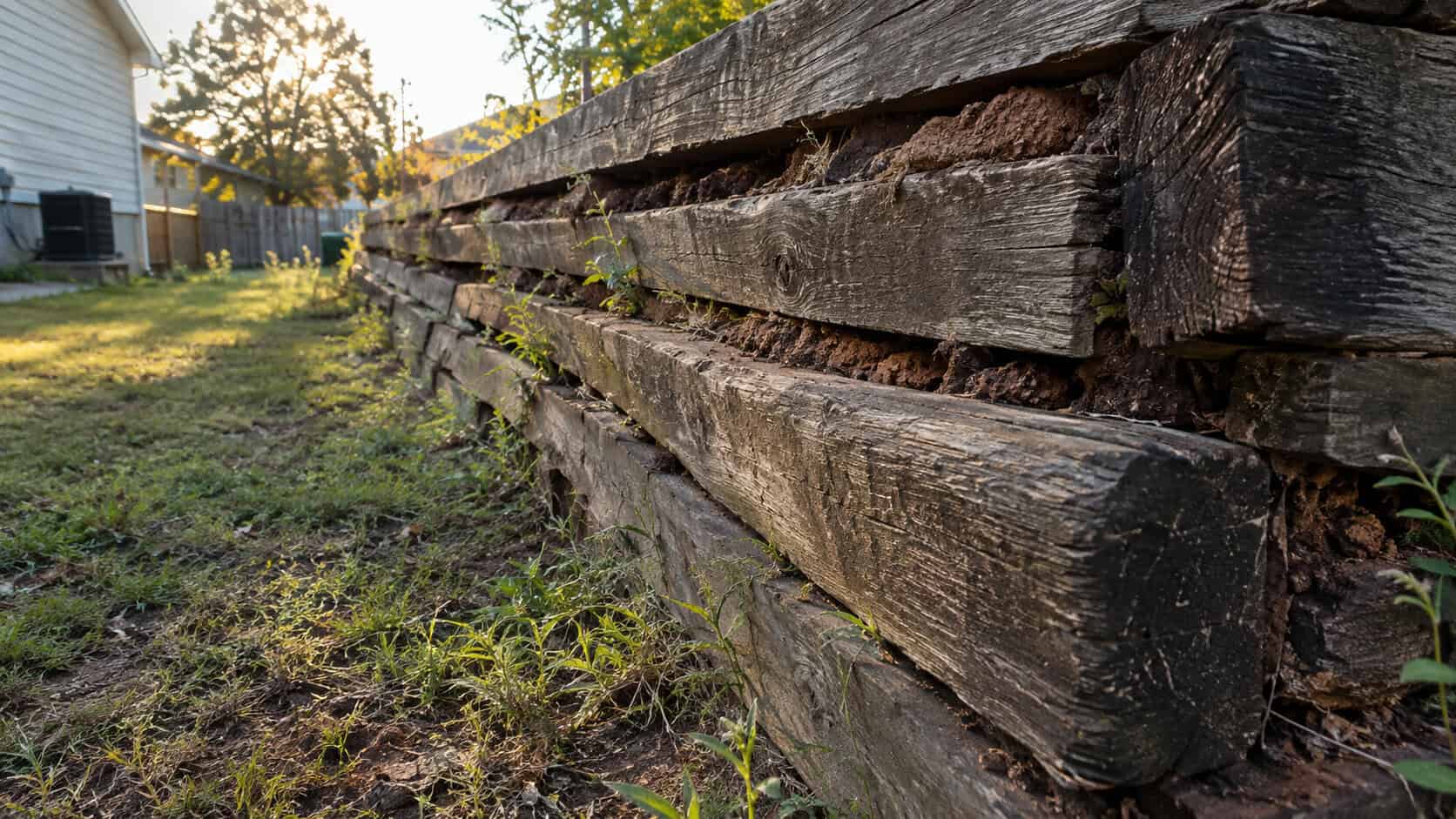
7. A Railroad-Tie or Stacked-Block Retaining Wall Leaning Forward
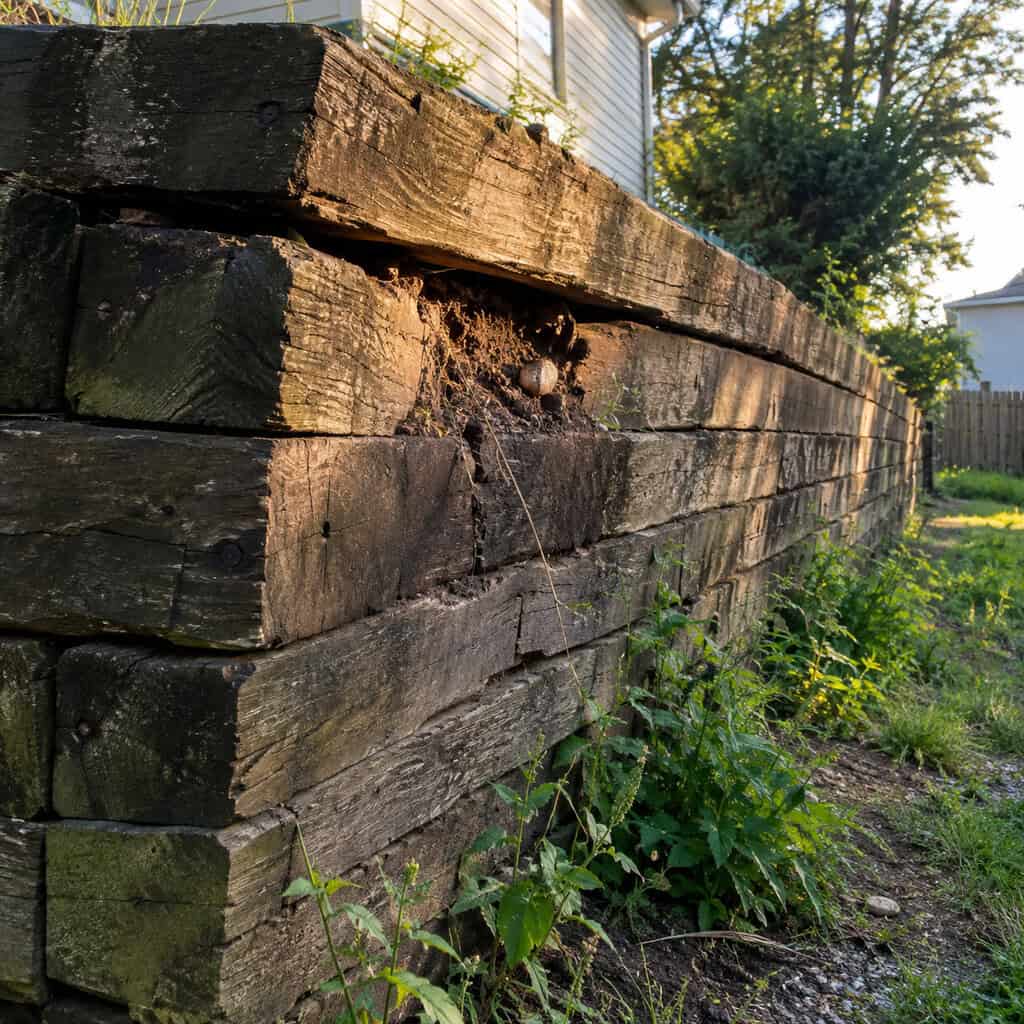
Sight down the top course from one end. If it bows toward the street, bellies in the middle, or tips forward at the top, it’s failing.
Most suburban walls were built by the homeowner or a landscaper in the 1980s through the early 2000s, back when a wall meant stacking timbers or dry-set block and hoping. No drainage gravel. No perforated pipe. No geogrid reaching back into the slope.
Soil behind a wall isn’t the problem. Water in that soil is. Saturated backfill can double the pressure on the face, and once a wall starts rotating there’s no shimming it back.
Above roughly four feet, most jurisdictions want an engineered design and a permit, which means the rebuild isn’t a weekend — it’s excavation, a compacted base, drainage stone, a drain line to daylight, geogrid layers every couple of courses, and backfill compacted in lifts. Engineered segmental walls commonly run $40-$70 per square face foot installed.
A 40-foot wall five feet tall is 200 square face feet. Run the math and you’re looking at a five-figure deduction that the seller almost certainly hasn’t taken off the ask.
Railroad ties add a second wrinkle. Creosote-treated timbers at end of life are a disposal question, not just a demolition one.
8. A Driveway Sealcoated Jet Black the Week of Listing

The oldest trick on the street.
Fresh sealer turns a tired asphalt driveway uniformly, unnaturally black. It looks new for about one season, then the underlying cracking telegraphs right back through.
Skip the surface and look at the edges. Crumbling, raveling shoulders and alligator cracking near the garage apron mean the base failed, and sealer does nothing for a failed base.
Sealing costs a few hundred dollars. Replacing a two-car driveway runs $4,000-$10,000.
9. Running Bamboo Marching Along the Fence Line
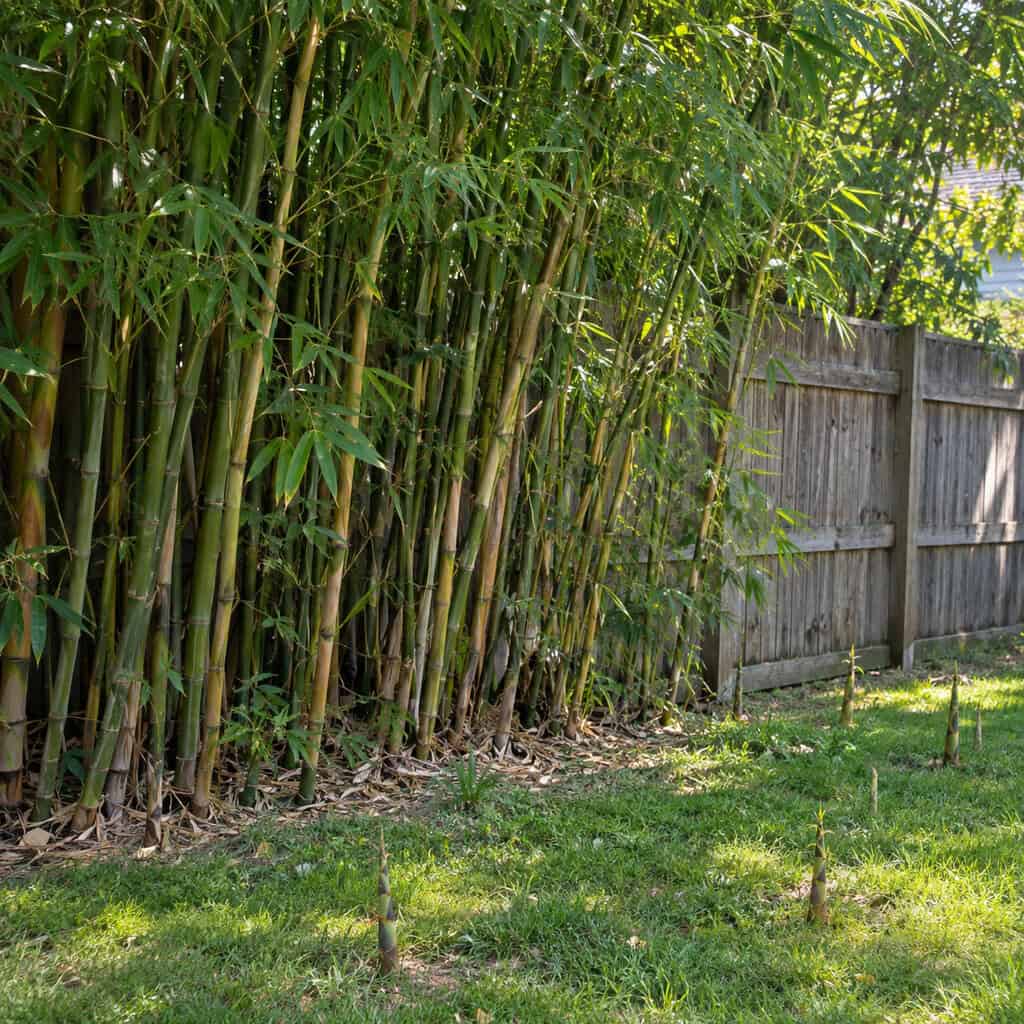
Somebody wanted privacy fast. Twelve years later, it’s a containment problem.
Running bamboo spreads by rhizome, and rhizomes travel horizontally under fences, through beds, beneath patios, and into the neighbor’s lawn. Cutting the canes accomplishes nothing.
Real removal means excavating rhizomes to depth and installing a barrier, and it routinely runs into the thousands.
Then there’s the neighbor. Bamboo is one of the few things in a suburban yard that can turn into an actual legal dispute over the property line — and buyers who’ve heard the stories won’t touch it. It ranks with the worst of the fast-growing privacy screens that cause problems later.
10. A Three-Tier Koi Pond or Waterfall Feature

Liner, pump, three basins, a bridge, and a bag of fish food on the patio table.
Water features add mood. They don’t reliably add appraised value — HomeLight reports agents generally treat them as aesthetic appeal rather than a line item on the valuation.
Buyers price the other direction: pump replacement, liner leaks, algae management, winterizing, and the annual reality that somebody has to net the leaves out every October.
Families with small children price in something else entirely — the cost of filling it in.
11. Downspouts Dumping Straight Down at the Foundation

Stand at a corner of the house after a hard rain and watch where the water goes.
A single downspout can discharge over a thousand gallons off a modest roof during one heavy storm. Dropping all of that at the foundation, six inches from the block, is the cheapest visible tell for the most expensive invisible problem.
The standard inspectors work from is straightforward: the grade should fall roughly six inches over the first ten feet away from the house, and downspouts should carry water past that zone. All Coast Home Inspections describes negative grading — soil sloping back toward the structure — as one of the most consequential defects they write up.
Look for the evidence, not the equipment. A splash block half-buried in a scoured trench. A mulch bed washed into a fan across the walkway. Rust stains and a line of soil splatter up the siding. A crack in the driveway that always holds water on the same side.
Extensions are $15 at a hardware store. So when they’re missing on a listed home, it’s not a budget question — it’s a signal that nobody has looked at the outside of this house on purpose in years.
Behind that: hydrostatic pressure against the wall, efflorescence inside, and eventually the foundation repair estimate that makes buyers walk.
12. An Artificial Turf Front Lawn
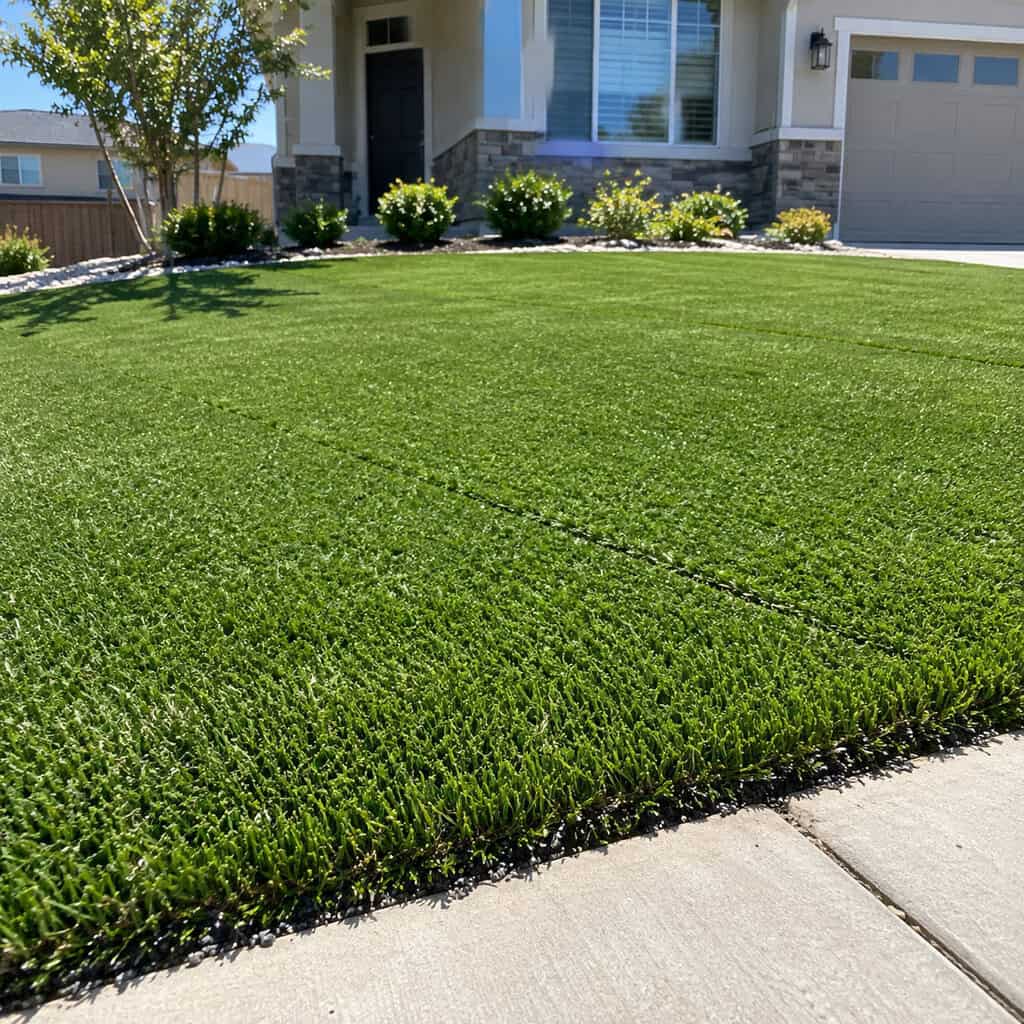
Premium synthetic turf installs took off after 2015, and the good ones cost $8-$15 per square foot.
Sellers expect credit for that. Buyers see a countdown.
Quality turf lasts roughly 15 to 20 years, so a 2016 install is already halfway through its life. Infill compacts, holds pet urine, and starts to smell in July. And in full sun, synthetic turf surface temperatures climb far above the air temperature — hot enough to be genuinely unpleasant barefoot.
It also reads as a permanent decision. Ripping it out means hauling turf, infill, and base rock before a single blade of grass goes in.
13. A Mature Tree Branching Out Over the Roofline
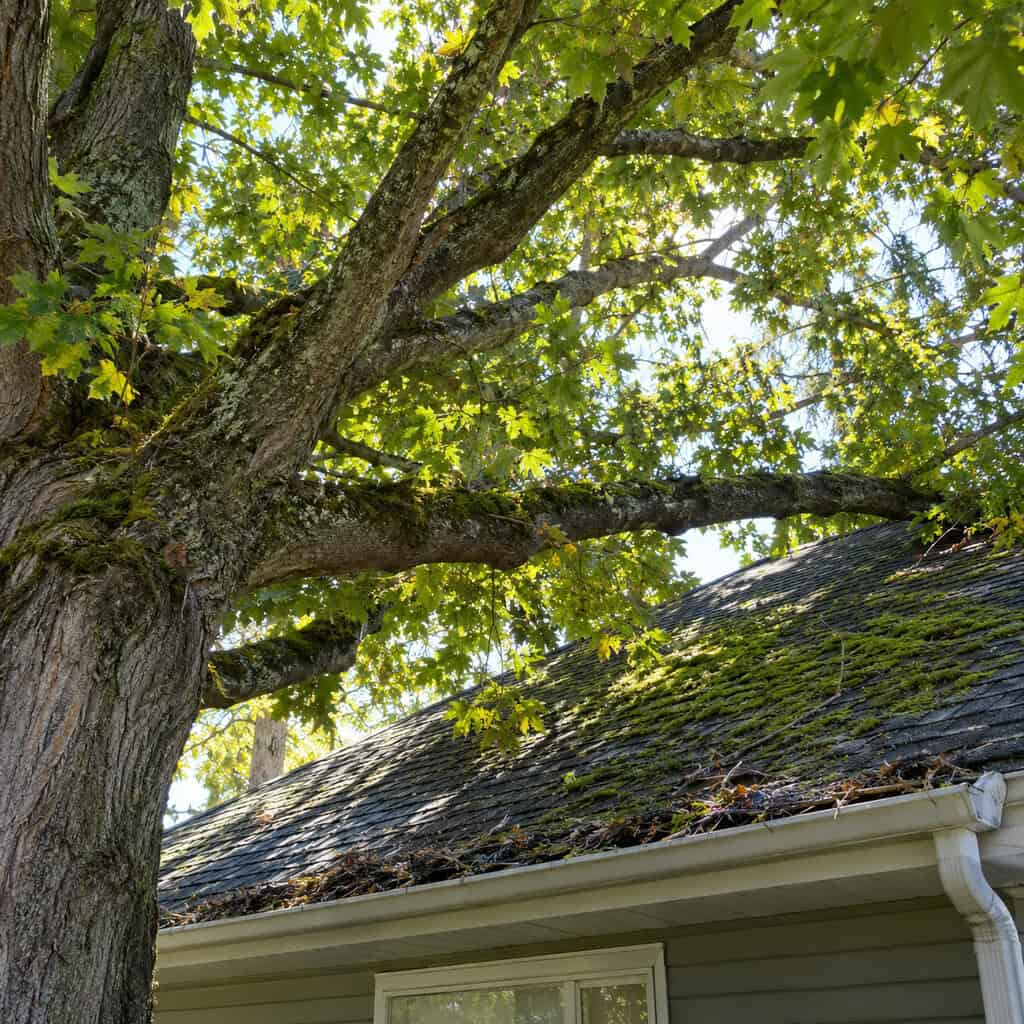
The canopy shading the whole house looks like an asset until you follow the limbs.
Branches over shingles mean constant gutter debris, moss on the north-facing slope, and abrasion every time it’s windy. Insurers have gotten specific about this — some carriers now require limb clearance from the roof as a condition of writing or renewing a policy, and a buyer who can’t get coverage can’t close.
Species matters more than size. Silver maple, willow, and poplar have aggressive, shallow, water-seeking roots. Any of them within ten feet of the foundation or the sewer lateral is a root-intrusion problem waiting for a slow drain and a camera scope.
Removal is where the numbers get real. A large mature hardwood over a house typically runs $1,500-$5,000, and crane-assisted removals on tight suburban lots can exceed that. Add stump grinding and haul-off.
Watch for the urgent version: a split crotch, a visible cavity, dead limbs in the upper canopy, or mushrooms at the base. Fungal fruiting bodies at the root flare mean internal decay, and that tree isn’t a maintenance item — it’s a hazard with a due date. Many buyers won’t plant a replacement without first thinking through what a tree becomes in five years.
14. A Stripe of Brighter, Faster-Growing Grass Across the Yard
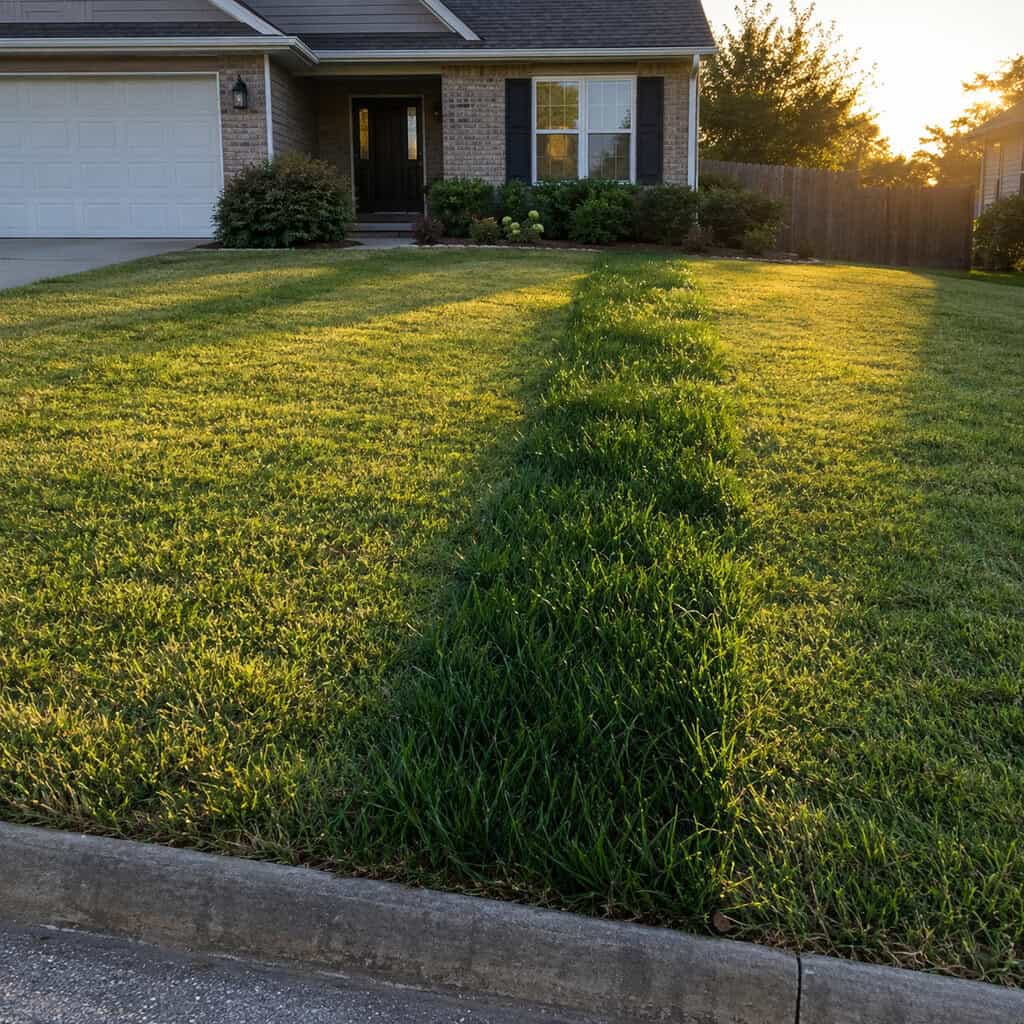
A ribbon of darker, taller green running from the house toward the street.
Disturbed backfill holds moisture and nutrients differently than the compacted soil around it, so grass over a trench grows faster and stays greener for a couple of seasons.
Nobody trenches a finished lawn for fun. That line traces a sewer lateral, a water service, a gas run, or new drain tile.
The listing almost never says which. Ask.
15. English Ivy Climbing the Brick or Siding

Gorgeous in a photo. Expensive in person.
Ivy’s rootlets work into mortar joints, behind lap siding, and under trim, and the mat holds moisture against the wall year-round. On older lime mortar it accelerates joint failure outright.
It also hides everything — cracks, rot, failed flashing, insect entry. An inspector can’t write up a wall he can’t see, which is exactly the gamble.
Stripping it leaves a scarred wall and, often, a repointing estimate.
16. An Above-Ground Pool With a Dead Ring of Grass Around It

Above-ground pools return effectively nothing at resale, and Opendoor’s look at the actual data is blunt about which pools move value and which don’t.
Many buyers make removal a condition of the deal.
The bleached circle is the useful part. It’s a preview of the yard the day the pool leaves — a dead, compacted ring that needs tilling, topsoil, and seed before it looks like a lawn again.
17. The Suspiciously Green Rectangle Over the Septic Field

Every rural buyer’s worst line item, visible from the driveway.
A drainfield that’s working correctly doesn’t announce itself. When you can see a sharply defined rectangle of lusher, faster-growing grass over the laterals, effluent is rising toward the surface instead of percolating down through the soil.
Walk it. Spongy ground, standing water in dry weather, or a faint sour smell after rain confirms it.
Here’s the distinction that matters at closing:
| Healthy Drainfield | Failing Drainfield | |
|---|---|---|
| Turf color | Matches the lawn | Bright green rectangle |
| Ground feel | Firm underfoot | Spongy or saturated |
| Odor after rain | None | Faintly sour |
| Typical fix | Pump every 3-5 years | New field, $10k-$30k |
Pumping runs a few hundred dollars. A replacement drainfield — new design, percolation testing, county permits, excavation, and sometimes an engineered mound system where soils won’t cooperate — regularly lands between $10,000 and $30,000.
Pre-1990 systems are the ones to scrutinize hardest. Many were sized for a smaller household and a lower daily flow than the home now produces, and a system that’s been quietly overloaded for twenty years fails on someone else’s timeline.
Never accept a seller’s word that it was “just pumped.” Pumping empties the tank and temporarily hides a failing field for a few weeks — which is precisely why it happens right before listings.
18. Deck Boards Freshly Painted Instead of Stained
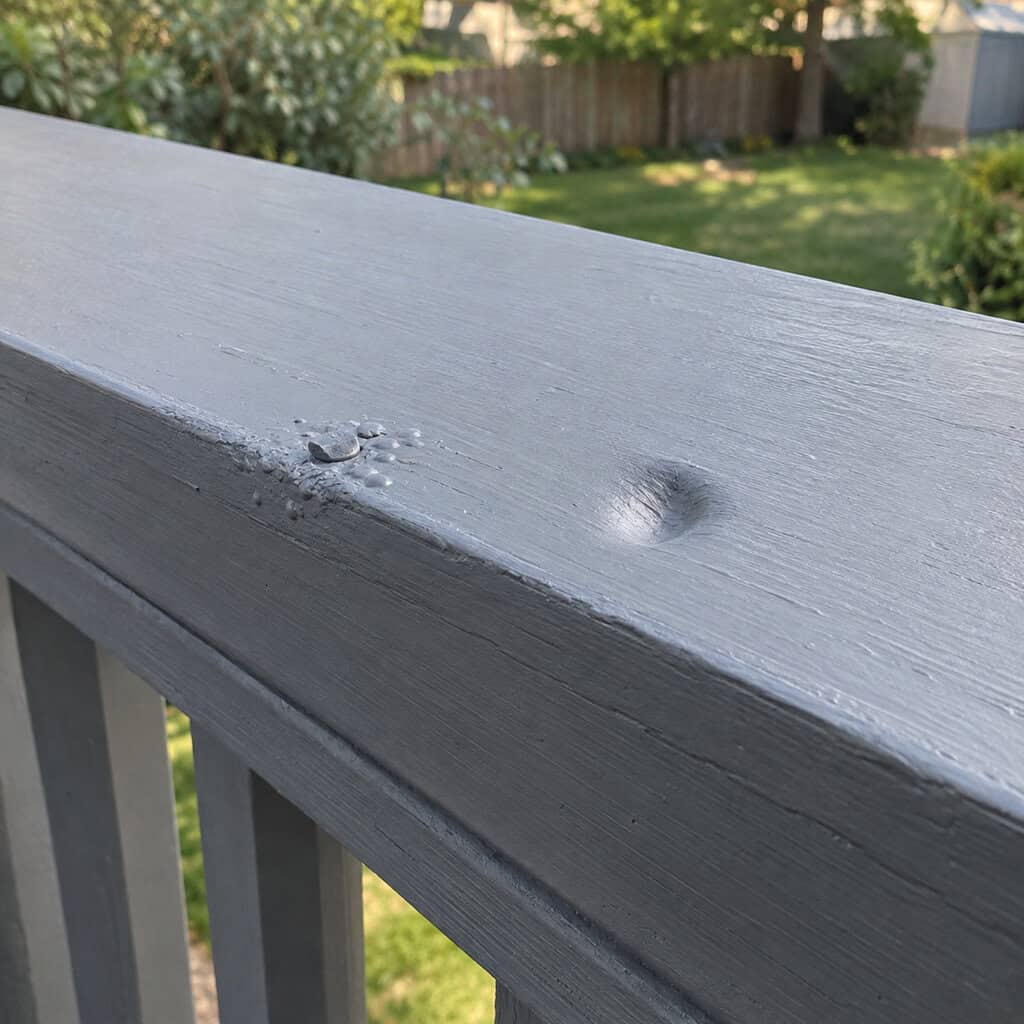
Solid deck paint is opaque by design. That’s the whole appeal to a seller.
Stain soaks in and lets grain and defects show. Paint buries everything under a uniform film — soft boards, checked ends, rot at the fasteners.
Agents press a thumbnail into the top of the rail and into the joist ends near the ledger. If it sinks, the paint is a lid.
The ledger connection is the one that matters. That’s the part that drops decks.
19. A Paver Patio With Lipped, Sinking Edges
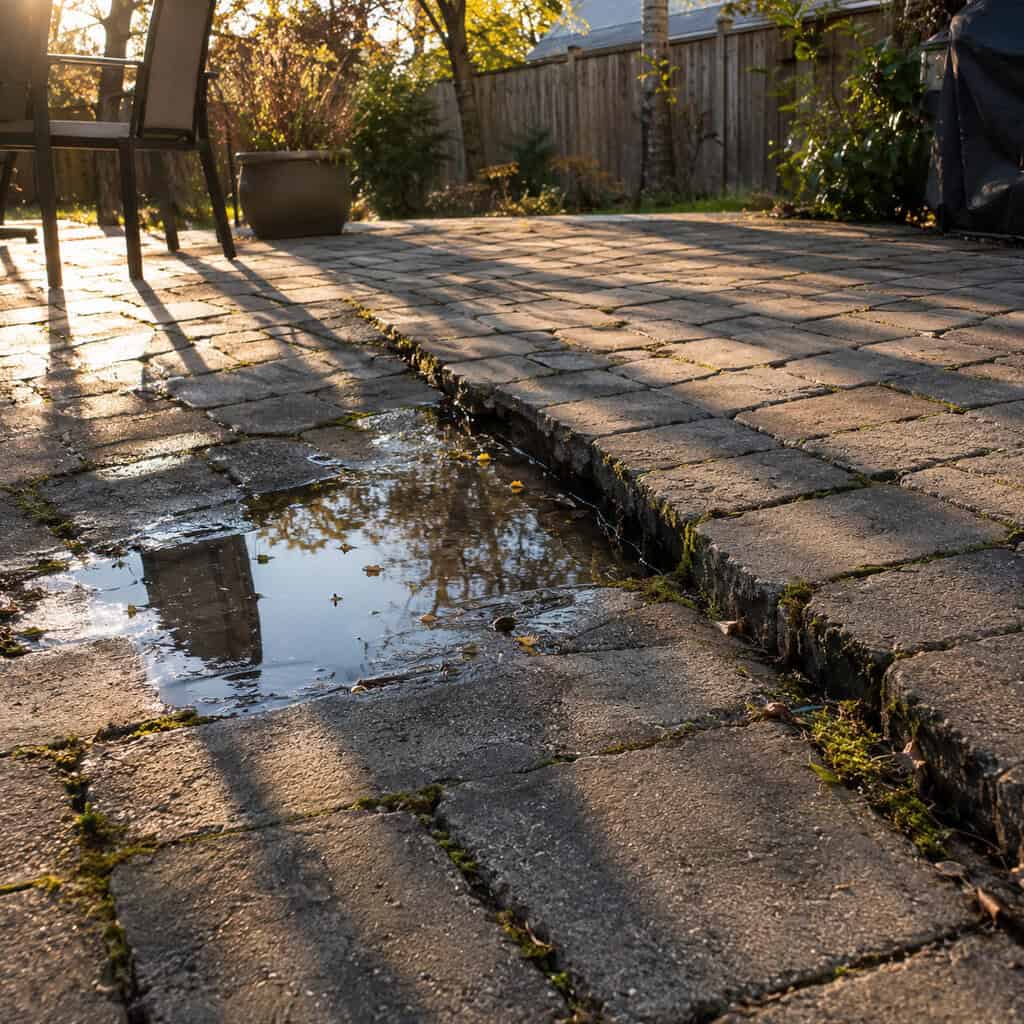
Walk the field and feel for rocking. Then look at the perimeter.
Pavers that step down an inch at the seams, or a border course tipping outward, mean the base was never compacted to depth — usually two inches of sand over dirt instead of six inches of compacted gravel in lifts.
There’s no patch for that. It’s a tear-out, a new base, and a relay.
And the sunken corner is almost always the low corner where roof water leaves the house, which makes this a drainage entry wearing a hardscape costume.
20. An Outdoor Kitchen Built for a Neighborhood That Doesn’t Have One

Built-in stainless, a run gas line, a stone pergola, a pizza oven — on a street of 1,400-square-foot ranches.
Textbook over-improvement. Appraisers work from comparable sales, and if no comp in the subdivision has an outdoor kitchen, there’s nothing to support the value.
Agents read it as the diagnosis rather than the symptom. That $45,000 build is usually the exact reason the list price is sitting above the block.
It’s a lovely thing to inherit. Nobody pays retail for it.
21. A Fresh Pile of Stump Grindings Where a Big Tree Used to Be
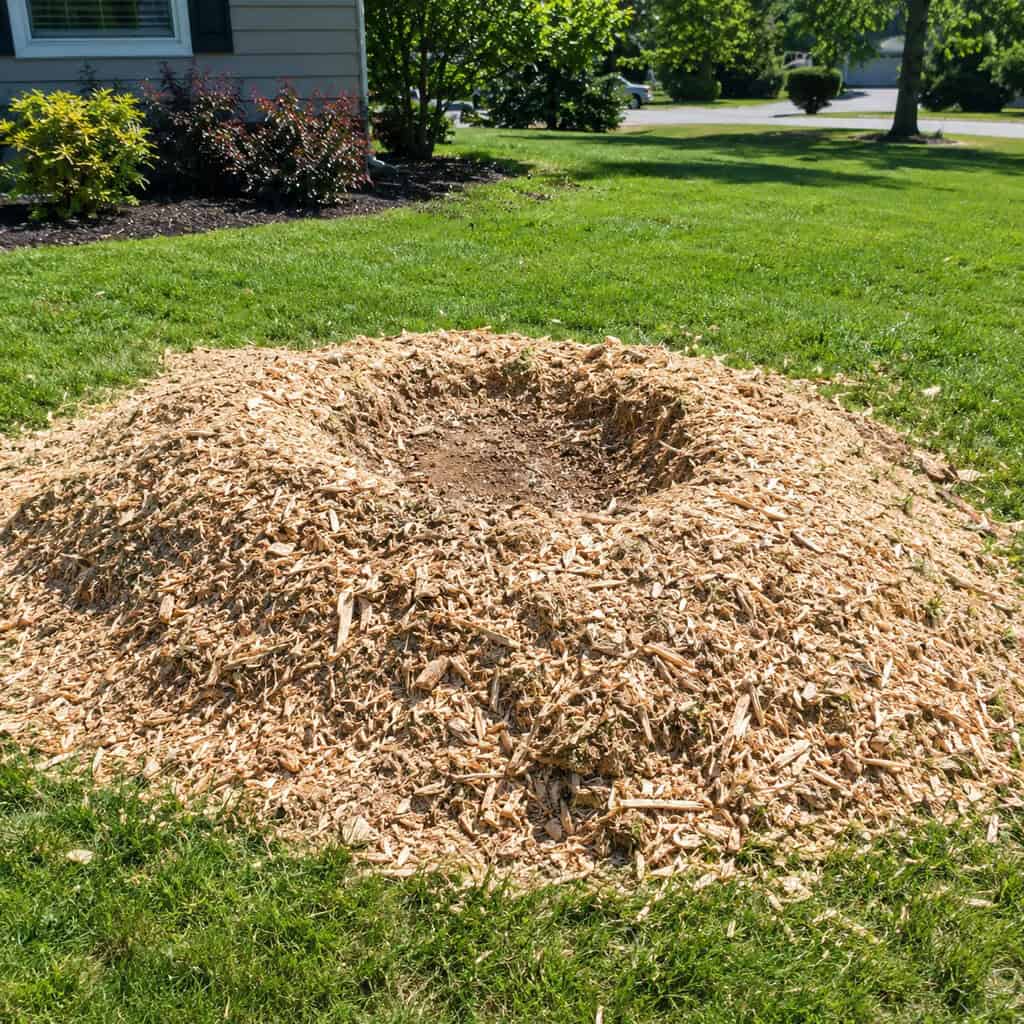
Pale sawdust, a sunken circle, and a sudden new patch of afternoon sun.
A mature tree came down within the last few months, and the reason is the whole story: disease that might be in the neighbor’s trees, storm failure, or roots that found the foundation or the sewer line.
Sellers rarely volunteer which. The grindings are still there because there wasn’t time to deal with the pile the grinder leaves behind.
The lot also just lost shade — which measurably affects both comfort and the cooling bill.
22. Three Different Kinds of Bed Edging in One Front Yard
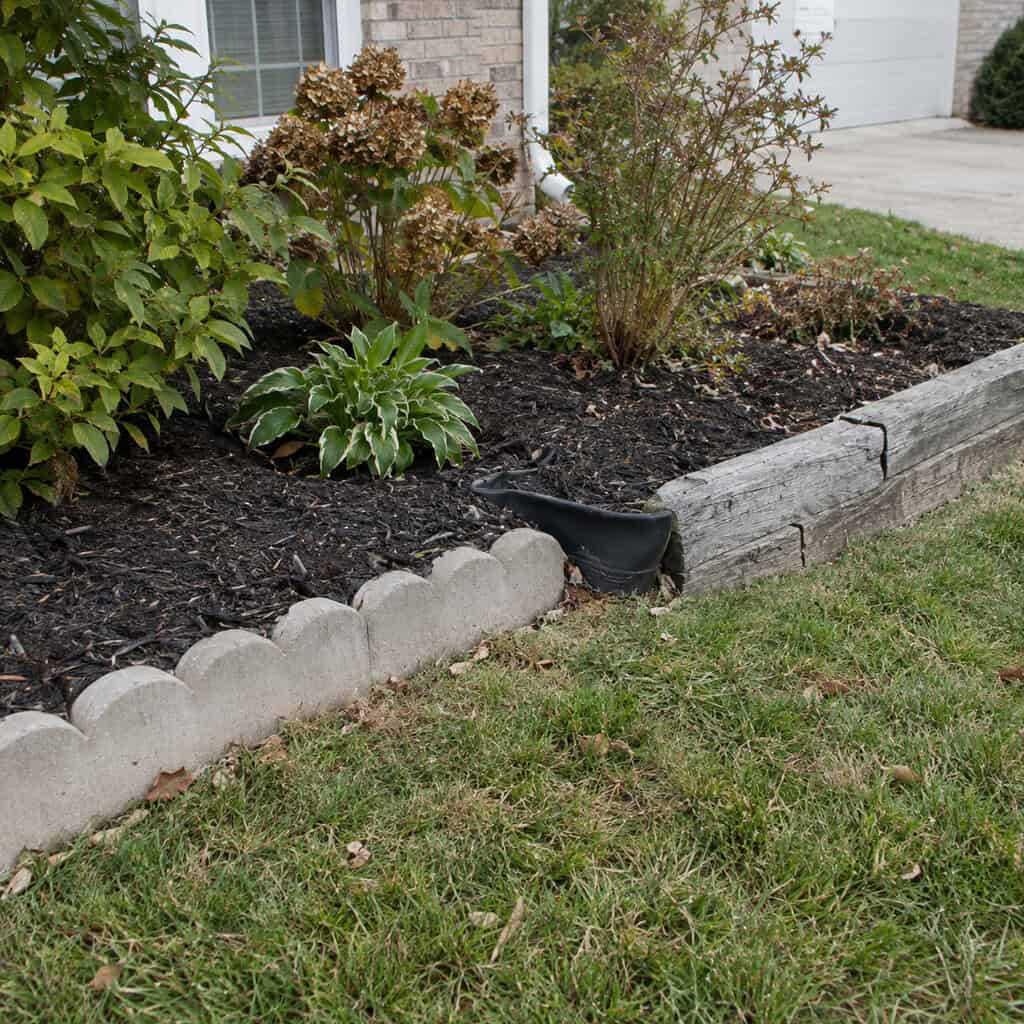
Scalloped concrete along the walk. Black plastic curling out of the ground around the maple. Landscape timbers at the corner bed, gone gray and splitting.
Each one was somebody’s Saturday. None of them were part of a plan.
Agents read mismatched edging as a preview of the interior — a house repaired one weekend at a time, by whoever was standing there, with whatever the hardware store had. Which is usually accurate.
23. Annuals Still Wearing Their Garden-Center Tags

Plastic ID stakes sticking up out of the mulch. A ring of loose, unsettled soil around every marigold.
That’s choreography, not gardening. One Saturday, one cart, one flat of color placed where the camera would see it.
Real landscape investment shows up as established perennials, shrubs sized to their spot, and beds with a shape somebody committed to years ago — the sort of thing that comes from perennials that come back on their own rather than a listing-week shopping trip.
Buyers notice the tags. They just don’t always say so.
24. A Rusted AC Condenser Choked by Overgrowth
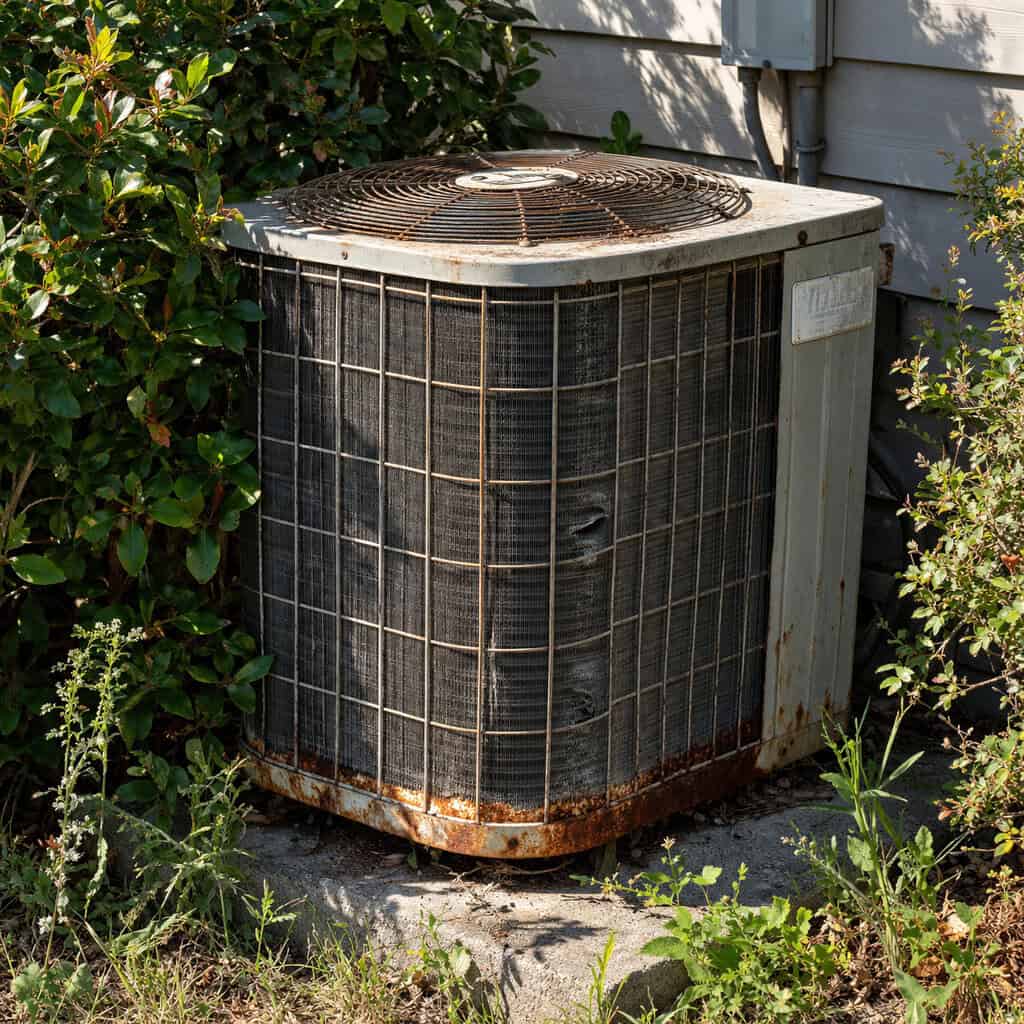
The condenser is a date stamp sitting in plain view at the side of the house.
Read the nameplate. Most carry a manufacture date, and the serial number decodes to one even when the label is sun-bleached. If it says 2006, the buyer is looking at equipment that’s already outlived the typical 12-15 year service life.
Then look at the condition. Rust at the base pan, bent or matted fins, a pad that’s settled out of level, and shrubs pressed against two or three sides.
That overgrowth isn’t cosmetic. A condenser needs clear airflow on all sides — most manufacturers want 18 to 24 inches minimum — because it rejects heat through the coil. Choke it and head pressure climbs, efficiency drops, and the compressor works harder every cycle until it doesn’t.
A full system replacement commonly runs $6,000-$12,000 installed, more with refrigerant line or ductwork changes. Older R-22 units add another wrinkle: the refrigerant has been phased out, so a leak on a 2008 condenser often means replacement rather than a recharge.
Buyers price that in immediately. And a seller asking top dollar with a rusting 17-year-old unit buried in yews has already told them what else in the house hasn’t been touched.
25. A Capped Fill Pipe and Vent Sticking Out of the Side Yard
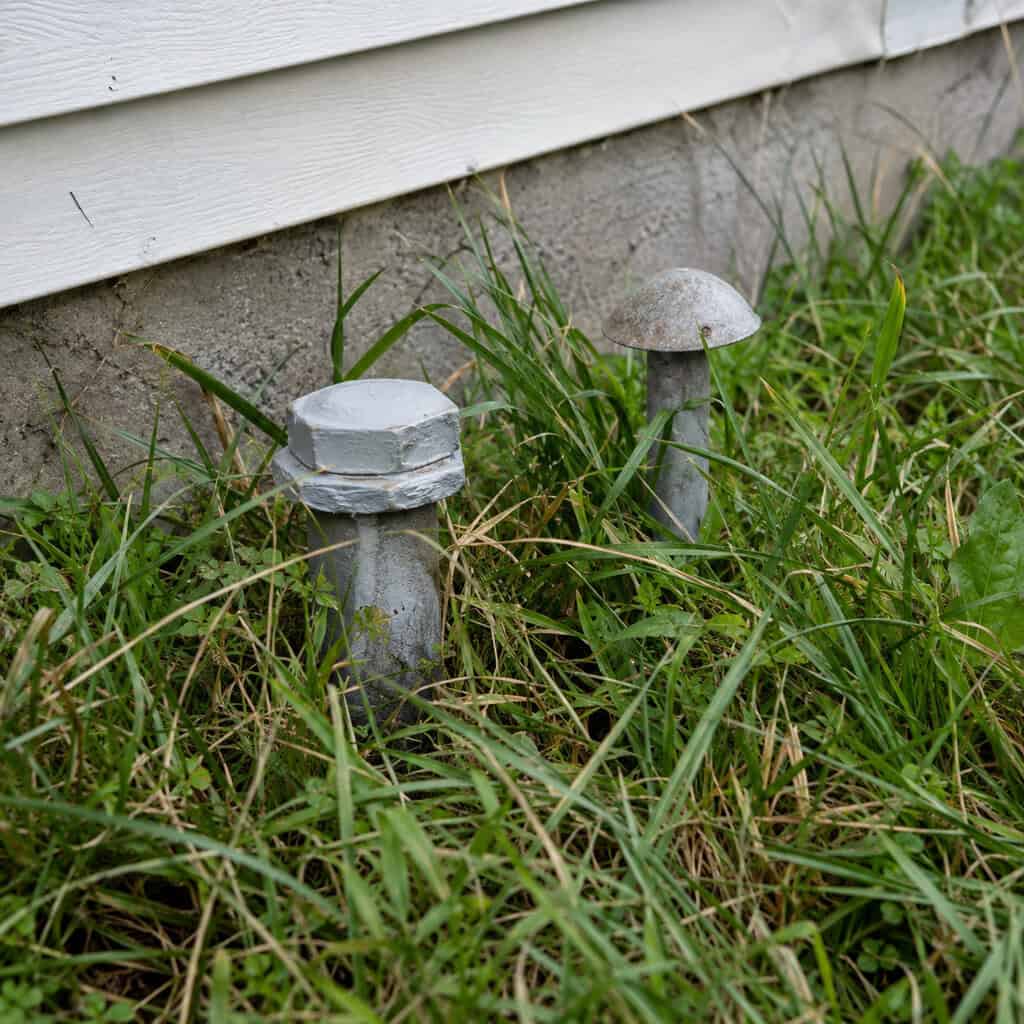
Two small pipes near the foundation. One capped, maybe painted over. The other a thin vent with a mushroom cap.
Most people walk past them for years. An agent stops.
Those are the fill and vent for an underground storage tank — usually heating oil, common in homes built before the mid-1970s in the Northeast and Midwest. When a house converted to gas, the tank was sometimes pulled, sometimes properly abandoned in place, and sometimes just disconnected and forgotten.
The pipes surviving in the yard means the paperwork probably didn’t.
Steel tanks corrode from the outside in. A leaking tank contaminates surrounding soil, and depending on the state and the extent, remediation can mean soil testing, excavation, disposal of contaminated fill, and a closure report. Costs range from a few thousand dollars for a clean removal to well into five figures once soil comes out.
Rules vary significantly by state, and so does what has to be disclosed. What’s consistent is who cares: lenders and insurers. Some carriers won’t write a policy on a property with an unresolved buried tank, and a financing contingency can die on that question alone.
If those pipes exist, the right move is to find the tank’s documented fate before anything else — tank sweeps by a licensed contractor are routine and inexpensive relative to the risk.
26. A Rectangle of Gravel Where Something Used to Stand
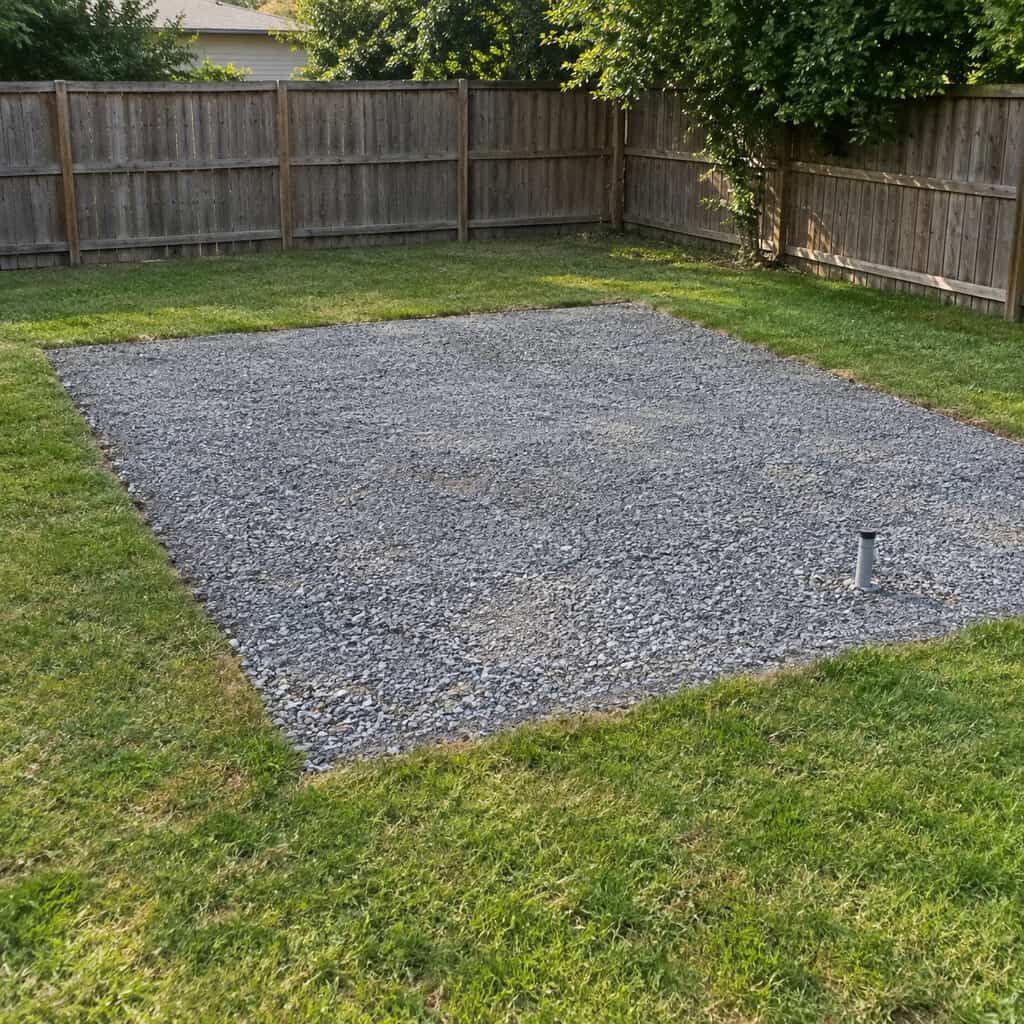
Flat pad, no grass, sharp square corners. Maybe a stub of conduit poking up. Maybe a capped water line.
A shed, a hot tub, or an above-ground pool came out — recently, and probably on purpose.
The question agents ask next is the one sellers hope nobody asks. Was the structure ever permitted, and was the electrical run to it done legally?
Unpermitted work that’s already gone is still a disclosure issue. And a buried, unlabeled circuit is a problem the new owner inherits the first time they dig.
27. A Carpet of Moss Where the Lawn Should Be
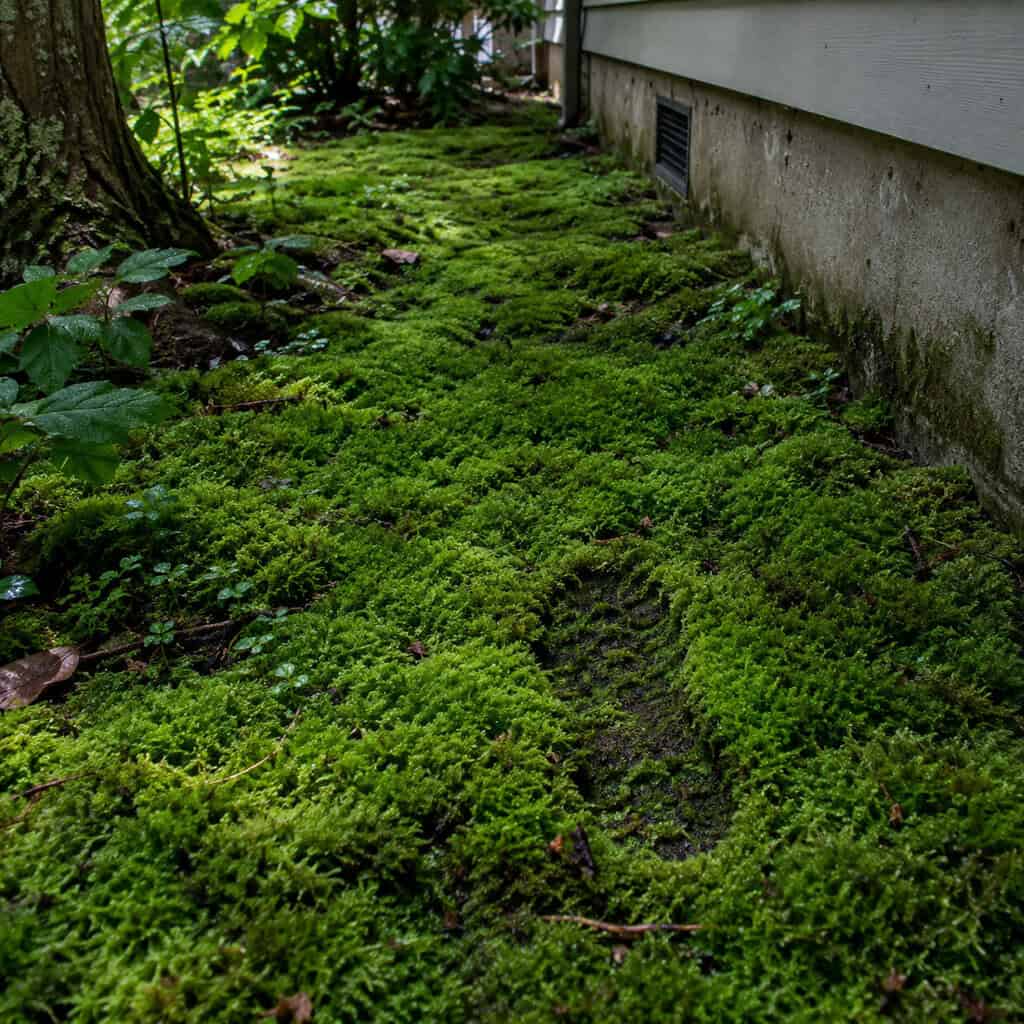
Moss isn’t a lawn problem. It’s a soil report.
It takes hold in ground that’s compacted, acidic, shaded, and perpetually damp — and all four of those conditions take years to establish. One wet spring doesn’t do it.
Step on it near the foundation and the beds. If the ground feels soft, spongy, or holds a footprint, that’s the yard admitting water sits there. RedFish Inspections treats persistently saturated soil along the structure as a grading defect, not a landscaping one.
A seller can kill moss in a weekend. Nobody can fix the reason it grew in a weekend.
28. One Brand-New Fence Panel in an Otherwise Weathered Fence
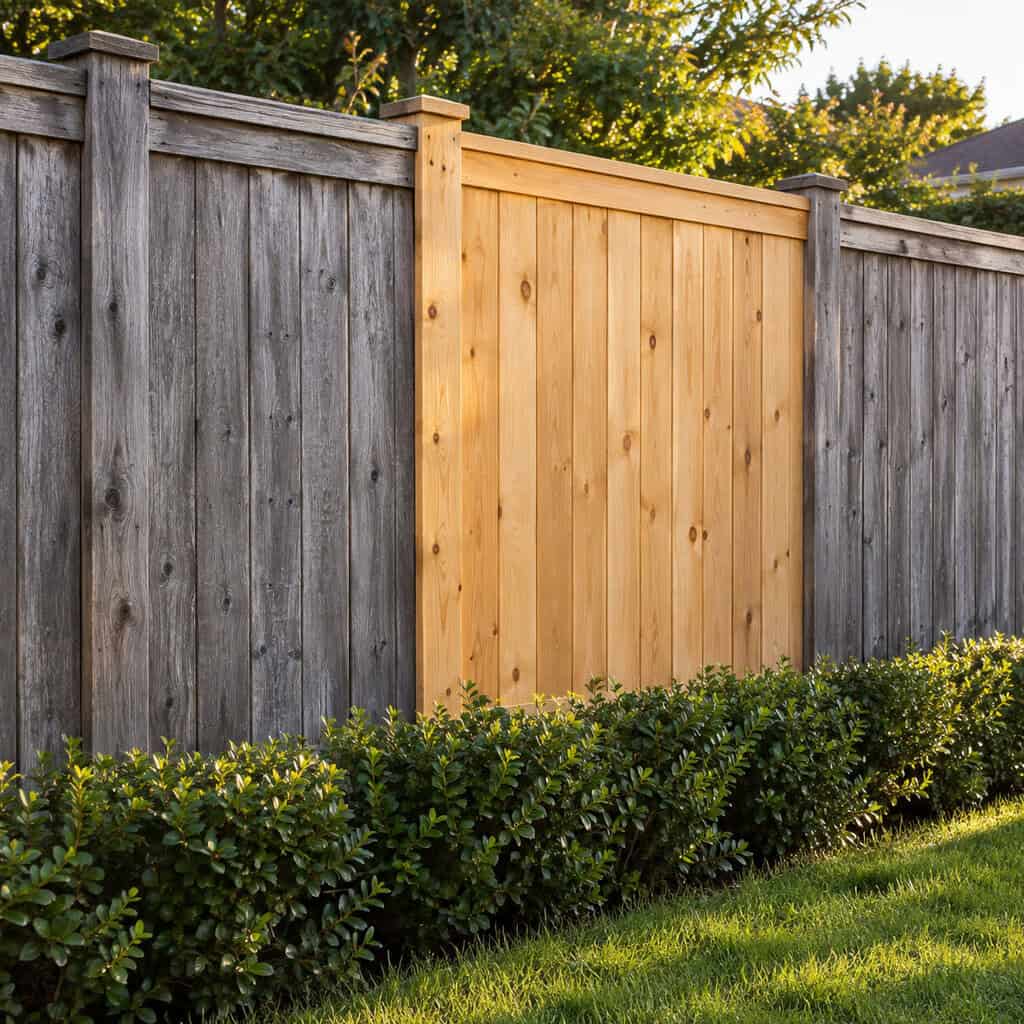
Eleven gray cedar sections. One the color of a fresh 2×4.
It’s the quietest, most informative thing in the yard.
Something happened right there. A limb came down. A vehicle backed through it. A dog went through it, or a neighbor took a section out during an argument about the property line.
Whatever it was, it’s the one chapter the listing will never include. And the yard told you anyway.
29. A Utility Pole, Transformer Box, or Easement Stripe in the Yard
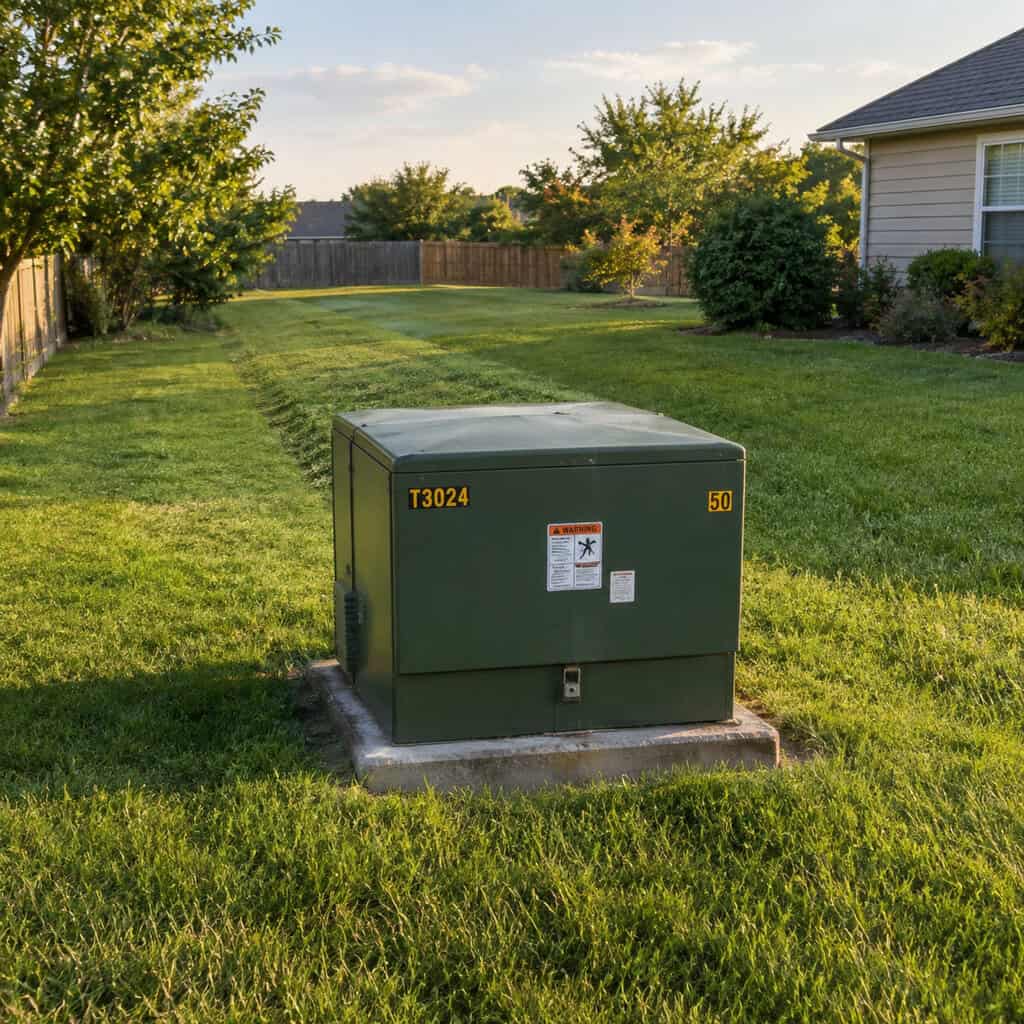
Common in 1950s-1970s subdivisions, and permanently attached to the lot.
An easement means the utility can enter, dig, and cut vegetation — and that you can’t build, fence, or plant a tree across it. Buyers consistently underestimate the discount until they read the plat.
Unlike everything else on this list, the seller didn’t create it.
They just didn’t price for it.
30. Chain-Link Fencing on a Home Priced Like a Luxury Listing
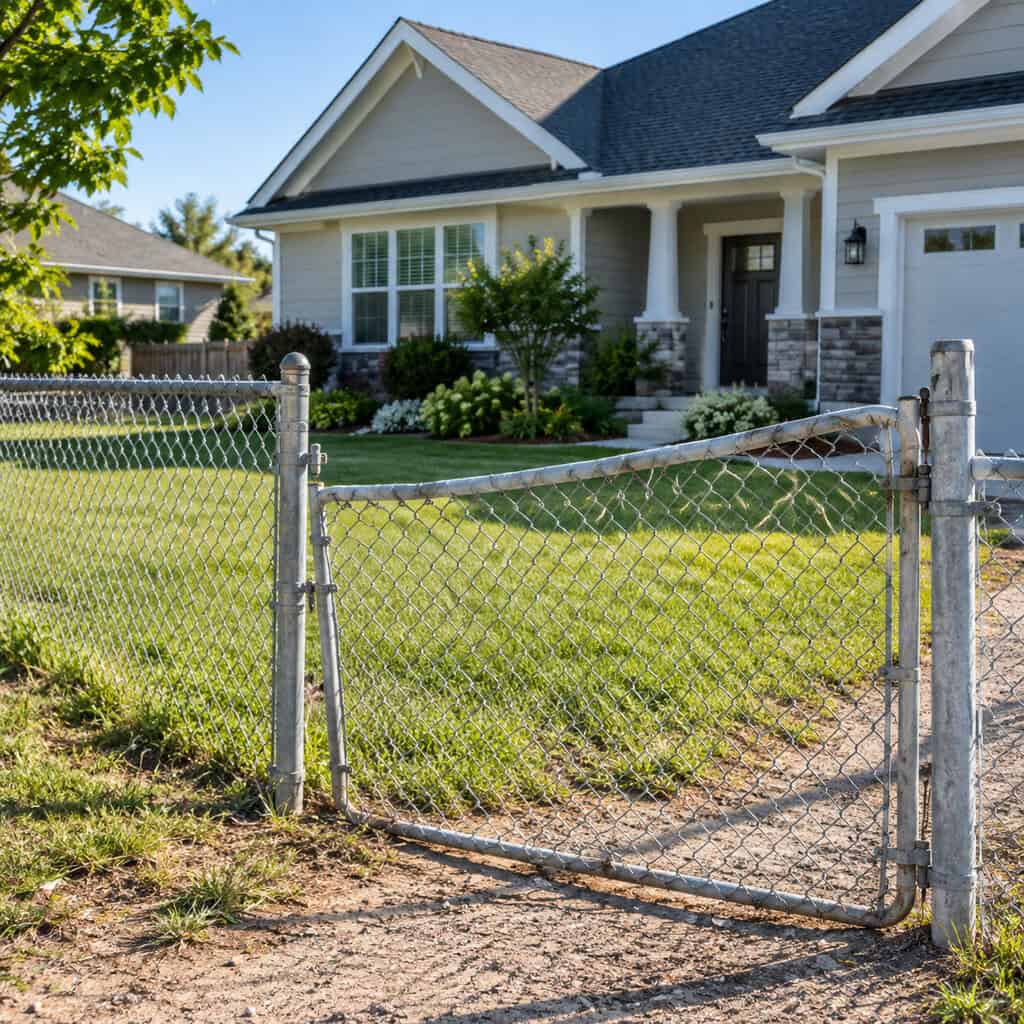
Galvanized chain-link, sagging top rail, a gate that drags.
Nothing wrong with it functionally. It’s a mid-century holdover that does its job for decades.
But when the ask says premium and the perimeter says 1962, the mismatch is doing the talking. It’s one of the yard details that make a home read older than it is — and it sets the buyer’s expectation before they reach the front door.
31. Window Wells Packed With Leaves and Rusted at the Lip
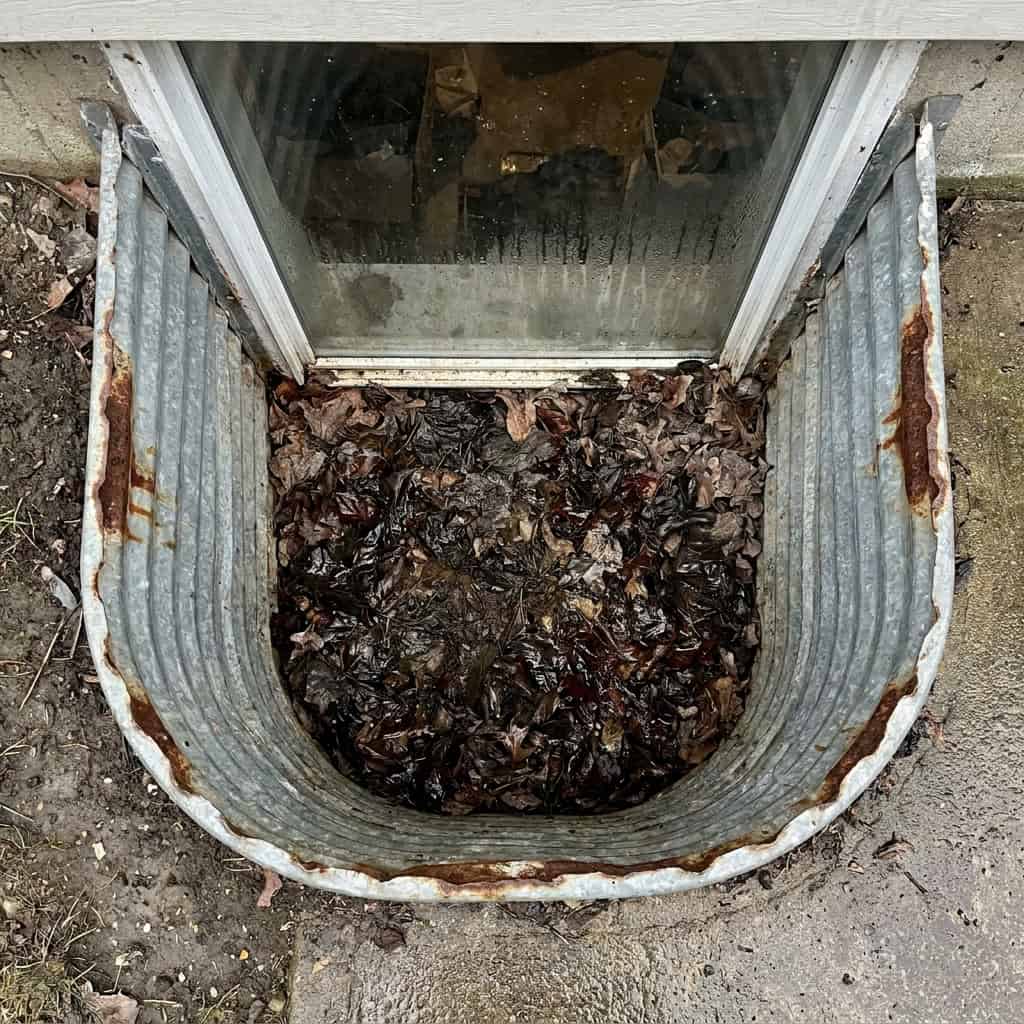
Corrugated steel wells filled to the sill with wet leaves, rust blooming along the top edge.
That’s a basin holding water against a below-grade window, with no visible drain and no cover.
Behind that glass is finished basement space, insulation, and framing. Water sitting in a clogged well finds the frame eventually, and what follows is the mold conversation nobody wants in the middle of a transaction.
Covers cost $40. Which tells you something about the house.
Look down into them on any tour. It takes four seconds and nobody ever does it.
A yard can’t lie the way a listing description can. It just sits there recording every decision — the deferred pruning, the panic sod, the hose nobody ever buried.
The seller sees a landscape. The agent sees a maintenance history with a price attached.
Walk the property line before you walk the hallway. The outside already told you what the inside is going to cost.