


The sliding doors open. Cold air rolls across forty poinsettias stacked three shelves high, and every one of them is already losing.
Holiday plants are the fastest-moving, worst-handled crop in American retail. They’re grown on a deadline, shipped in unheated trailers, staged in entryways, and priced to move before anyone notices the damage.
Some of them are mislabeled. Some are dyed, glittered, or hot-glued. A few are flat-out dangerous to the cat sleeping under your tree.
And nearly all of them have a better version available from somebody who actually grows plants for a living — usually for about the same money.
Here are 30 holiday plants worth skipping at the big box store, and exactly where to get the good ones instead.
1. The Poinsettia Parked by the Automatic Doors

Poinsettias are tropical shrubs from the Pacific slope of Mexico. They start taking damage below about 50°F.
So consider where the store puts them. Entryway displays blasted by December air every ninety seconds. Unheated loading docks overnight. Cellophane sleeves that crush the bracts and trap ethylene for days.
The chill injury doesn’t show up in the parking lot — it shows up in your living room a week later when the lower leaves yellow and drop all at once.
Check three things before you buy anywhere: intact leaves all the way down the stem, tight yellow cyathia in the center that haven’t shed their pollen, and soil that’s neither bone dry nor sitting in water. The Iowa State University Extension guide walks through the same checks.
Buy instead: a greenhouse that grew its own crop, where the plants have never left heated space. They’ll hold color into March.
2. The “Christmas Cactus” That’s Actually a Thanksgiving Cactus

Almost every plant sold as a Christmas cactus in a chain store is Schlumbergera truncata. That’s the Thanksgiving cactus.
It blooms four to six weeks ahead of the real thing, which is why so many people end up with a bare green plant on Christmas morning and assume they killed it.
The tell is the stem segments. Truncata has sharp, claw-like points along the edges. True Schlumbergera x buckleyi has soft rounded scallops.
Specialty epiphytic cactus nurseries sell real buckleyi, as do plant society sales — or you can beg a cutting off somebody’s grandmother’s forty-year-old plant, which is how most of them traveled in the first place.
3. The Wax-Dipped Amaryllis Bulb

It’s designed to be thrown away. That’s not cynicism — it’s the product spec.
The wax shell seals the bulb so it flowers on stored energy alone, no pot, no water, no mess. It also blocks every route for water and nutrients to get back in, and the roots are usually cut off entirely before dipping.
The bulb shrinks while it blooms. By late January it’s a spent husk, and extension horticulturists don’t recommend trying to save it.
Buy instead: a loose, rooted Hippeastrum bulb from a bulb specialist. Pot it in something that drains, and it’ll rebloom every winter for ten years or more.
4. The Pre-Cut Tree in the Parking-Lot Pen
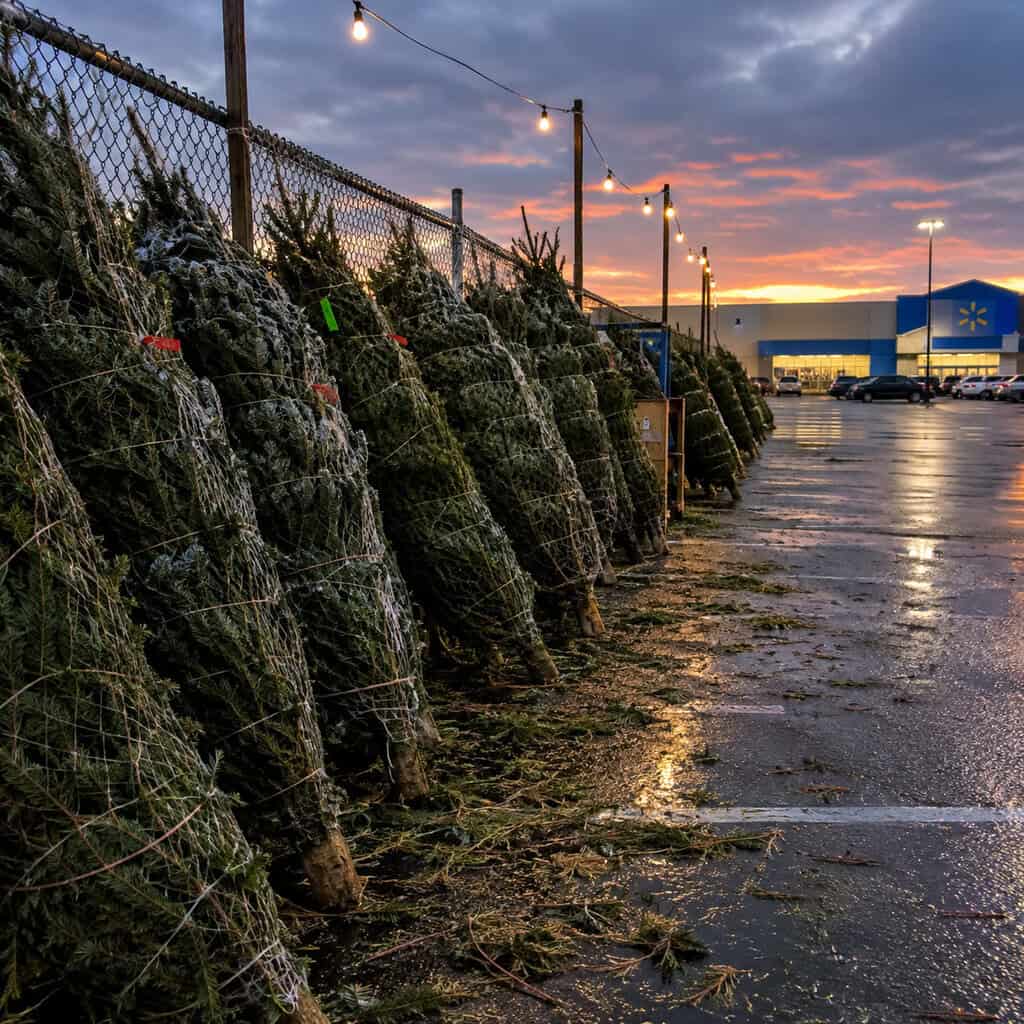
Most box-store trees were cut in late October or early November — six to eight weeks before you put one in your car.
They get baled, loaded onto trucks, hauled across several states, then stood upright in a chain-link pen with sun on one side and wind on all of them. No water the entire time. The cut end seals over with resin within a few hours of harvest, so even if the lot does spray the pile, the tree can’t drink.
That’s why needles rain onto your trunk liner on the drive home.
Run two tests before you pay. Grab an interior branch and pull your hand toward you — a fresh tree holds nearly all its needles, a stale one fills your palm. Then bend a needle: fir and spruce should snap crisply, pine should flex without breaking. Brittle, dull-colored needles that shatter mean the tree is already too far gone.
Lift the whole tree a few inches and drop it butt-first on the pavement. Some interior brown needles falling is normal. A shower of green ones is not.
A dry tree is a genuine fire hazard, not a figure of speech. Test burns at fire research labs show a dried-out tree going from first ignition to full room involvement in well under a minute, while a well-watered tree often won’t sustain a flame at all. Water is the whole defense.
Here’s the math people skip: a tree uses roughly a quart of water per day for each inch of trunk diameter. A 4-inch trunk can drink a gallon in 24 hours during its first week indoors. Most stands hold about a gallon. Check it every single morning for the first week.
And if the stand ever runs dry long enough for the cut end to seal, the tree stops drinking for good — you’d have to take it back out and recut it.
Buy instead: a choose-and-cut farm, where the tree is standing alive until you point at it. Second best is a local lot that makes a fresh half-inch cut off the trunk while you watch, then gets it into water within an hour.
5. The Rosemary “Christmas Tree” Topiary

Sheared into a cone. Jammed root-bound into a 4-inch pot. Wrapped in foil that holds every drop of water against the roots.
Then carried into a house running 70°F with 20% humidity, which is roughly the opposite of a Mediterranean hillside. Most of these are dead by Valentine’s Day, and the inside of the cone browns out first because no air moves through it.
Worse, the varieties used for forcing are usually tender types with no chance of surviving a northern winter outdoors, so you can’t even rescue it by planting it.
Buy instead: a hardy upright rosemary like ‘Arp’ or ‘Hill Hardy’ from an herb nursery in spring. Grow it a season, then shape it yourself in November. If rosemary’s on your list anyway, it’s one of the herbs worth growing on your counter year-round.
6. The Foil-Wrapped Holiday Lily Bouquet
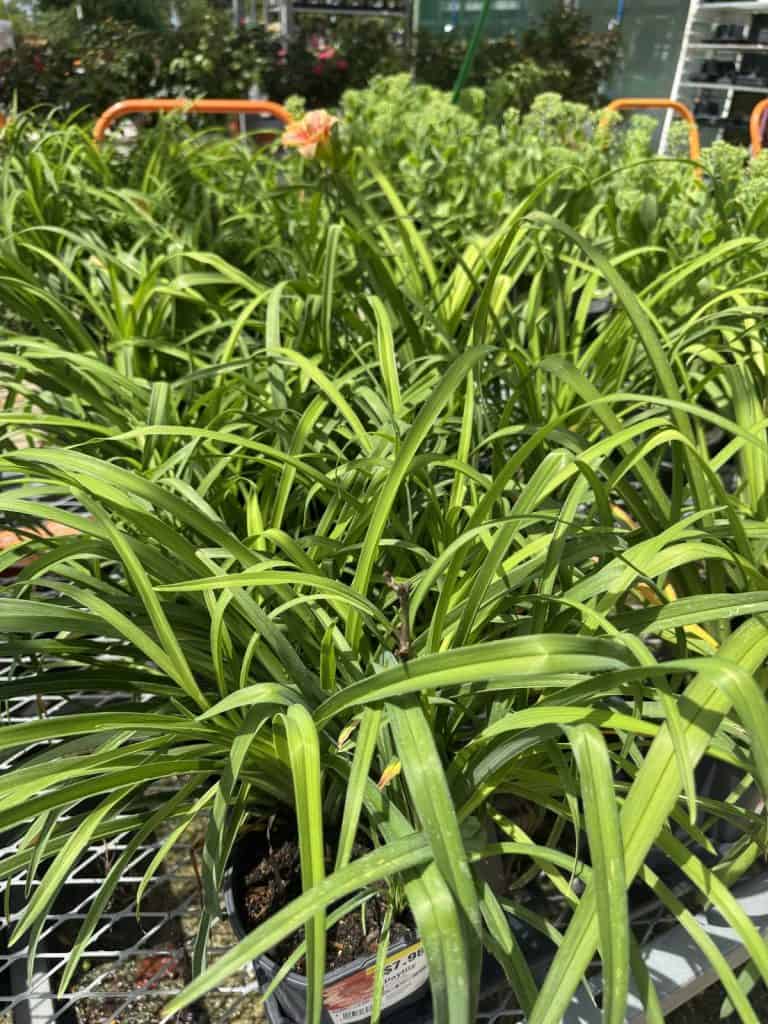
If you own a cat, this is the one entry on the list that can end in an emergency vet bill — or worse.
True lilies are acutely nephrotoxic to cats. That includes the Easter lilies, stargazers, Orientals, Asiatics, and tiger lilies bundled in red foil by the front registers all December. Every part of the plant is dangerous: petals, leaves, stem, and the pollen.
A cat doesn’t have to eat it. Brushing against an open flower, getting pollen on its fur, and grooming is enough. Even the water in the vase has caused poisonings.
The timeline is brutally fast. Vomiting and lethargy within a few hours, then a deceptive period where the cat seems to perk up, then acute kidney failure inside 24 to 72 hours. Treatment started early is often successful. Treatment started late frequently isn’t.
Nobody at the register is going to mention any of this.
If you suspect your cat has touched any part of a lily, call your veterinarian or an animal poison control line immediately — do not wait to see whether symptoms develop. Bring the plant or a photo so the species can be confirmed.
The swap here isn’t a safer lily. There isn’t one. It’s a different plant entirely.
Buy instead: a local florist who’ll build a cat-safe arrangement — roses, snapdragons, lisianthus, alstroemeria, and mixed greens read every bit as festive. Say “cat in the house” when you order and a good shop will handle the rest. Worth reviewing the other common plants that are toxic to pets before the holidays, too.
7. The Electric-Blue Orchid

No Phalaenopsis on earth blooms that color.
It’s a white orchid with dye injected directly into the flower spike while the buds are forming. The plant is real and usually healthy. The color is a pigment solution and a hypodermic needle.
Which would be fine if anyone told you. Instead the next bloom cycle comes back pure white, roughly a year after somebody paid gift-plant prices for a “rare blue orchid.”
Check the spike for a small puncture scar and a faint blue stain running down the stem. That’s the giveaway.
Buy instead: an orchid society show or a specialty nursery, where $30 buys a genuinely uncommon species that stays what it is.
8. The Bin of Loose Paperwhite Bulbs

Open bins under store heat and retail lighting are the worst possible place to store a bulb.
They dry out. They pre-sprout in the crate, sending up pale shoots that get snapped off by shoppers digging through. The result is a flower stalk that comes up short, blooms thin, and flops over the edge of the pebble bowl by week two.
Order from a bulb specialist and you also get to pick a cultivar. ‘Ziva’ is the fast one, blooming in three weeks. ‘Inbal’ and ‘Nir’ are the ones to choose if the usual barnyard smell drives you out of the room.
One more thing: every narcissus, paperwhites included, is toxic to dogs and cats. Keep the bowl off the coffee table.
9. The Cactus With Fake Flowers Hot-Glued On
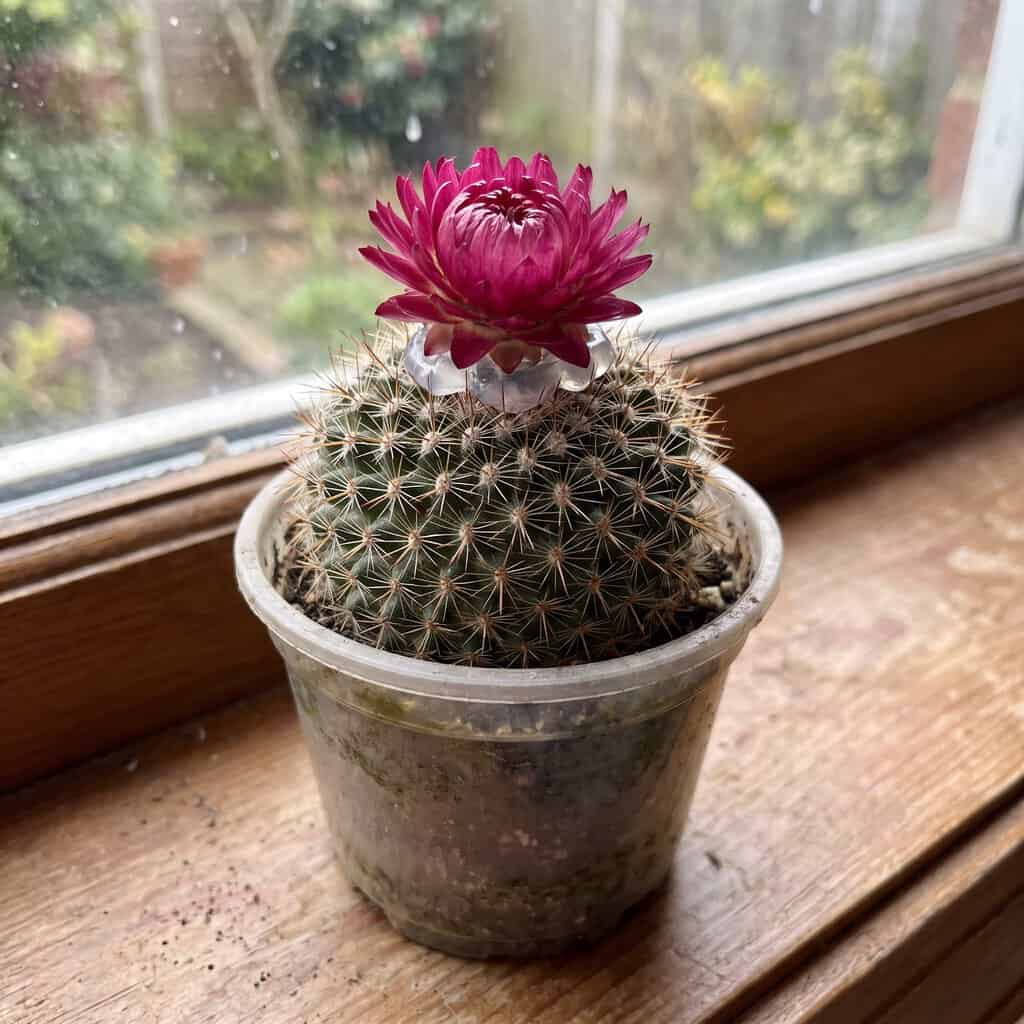
Those improbable magenta and orange blooms aren’t blooms. They’re dried strawflowers, hot-glued to the crown of the cactus in a wholesale greenhouse.
Try to pull one off and it comes away with a plug of living tissue. That open wound on the growing point is exactly where rot starts.
Some growers glue them on so thoroughly that the cactus can never produce a flower of its own from that spot again.
Buy instead: a cactus specialist or independent grower. A healthy mammillaria will ring itself in real flowers on its own schedule, which is the entire reason to own one.
10. The Norfolk Island Pine Sold as a Tabletop Tree

It isn’t a pine, and you can’t plant it outside unless you live in zone 10.
Araucaria heterophylla is a subtropical tree from a speck of land in the South Pacific. What gets sold in December is usually three or four seedlings crammed into one pot so the cluster looks full — they compete, and the weakest one dies by March.
Then there’s the glitter spray and the foil wrap, which clog the needles and hold water at the base.
Dry furnace air strips the lower branches, and here’s the part that stings: Norfolk Island pines don’t regrow branches they’ve dropped. The bare spot is permanent.
Buy instead: a single-stem specimen from a tropical foliage grower, kept above 55% humidity. Treat it as a houseplant for life, not a seasonal prop.
11. The Florist Cyclamen Next to the Heater Vent

Cyclamen are cool-season Mediterranean plants. They want 60°F nights and bright, indirect light.
A big-box interior gives them 72°F and dim fluorescent wash. Buds abort, leaves yellow from the center out, and the decline is well underway before the plant ever hits the checkout.
The tubers are also toxic to dogs and cats, which matters because the plant sits at exactly nose height on an end table.
Buy instead: a greenhouse that keeps its cyclamen in a cool house — they’ll bloom for three months. Or plant hardy Cyclamen hederifolium from a specialist and get fall bloom in the shade garden for decades.
12. The Bagged Mistletoe Sprig

What’s in the net bag is cut parasitic growth, harvested off oak and other hardwoods, and it’s already drying out before it reaches the shelf.
Which means the berries loosen. They roll onto the floor, under the couch, into the exact zone where a dog or a crawling toddler finds them first.
Mistletoe is genuinely toxic — the berries and leaves both.
Buy instead: a good faux sprig for the doorway, or a fresh bundle of cut greens from a local evergreen supplier if you just want the smell and the look. Same tradition, no poison-control call.
13. The “Frosty Fern”

It’s not a fern. It’s not frosted either.
Selaginella kraussiana ‘Variegatus’ is a spikemoss, an ancient non-flowering plant that evolved on damp forest floors. The white tips everyone assumes are snow are simply new growth.
What it needs is near-terrarium humidity, something like 70% or above. A heated December living room runs closer to 20%. The plant goes to brown crisps in about two weeks, and once a frond browns it doesn’t come back.
Buy instead: a terrarium specialist or a nursery with a tropical bench. Grow it under a cloche or in a closed glass container, where it’ll thrive for years instead of dying on your mantel by New Year’s.
14. The Jerusalem Cherry

Glossy orange-red fruit, sold at toddler height, every December since the Victorians.
Solanum pseudocapsicum is a nightshade. The fruit looks exactly like a cherry tomato — close enough that kids pick them, and cats bat them off the table and then chew them.
The berries contain solanocapsine and cause vomiting, drooling, and in larger quantities serious GI and neurological trouble in dogs, cats, and children.
There’s no good reason to have it in a house in the month when relatives bring small children over.
Buy instead: cut winterberry stems or a convincing faux berry branch for the arrangement. If you want a berried living plant, buy from a nursery that labels toxicity on the tag.
15. The Glitter-Sprayed Blue and Pink Poinsettia
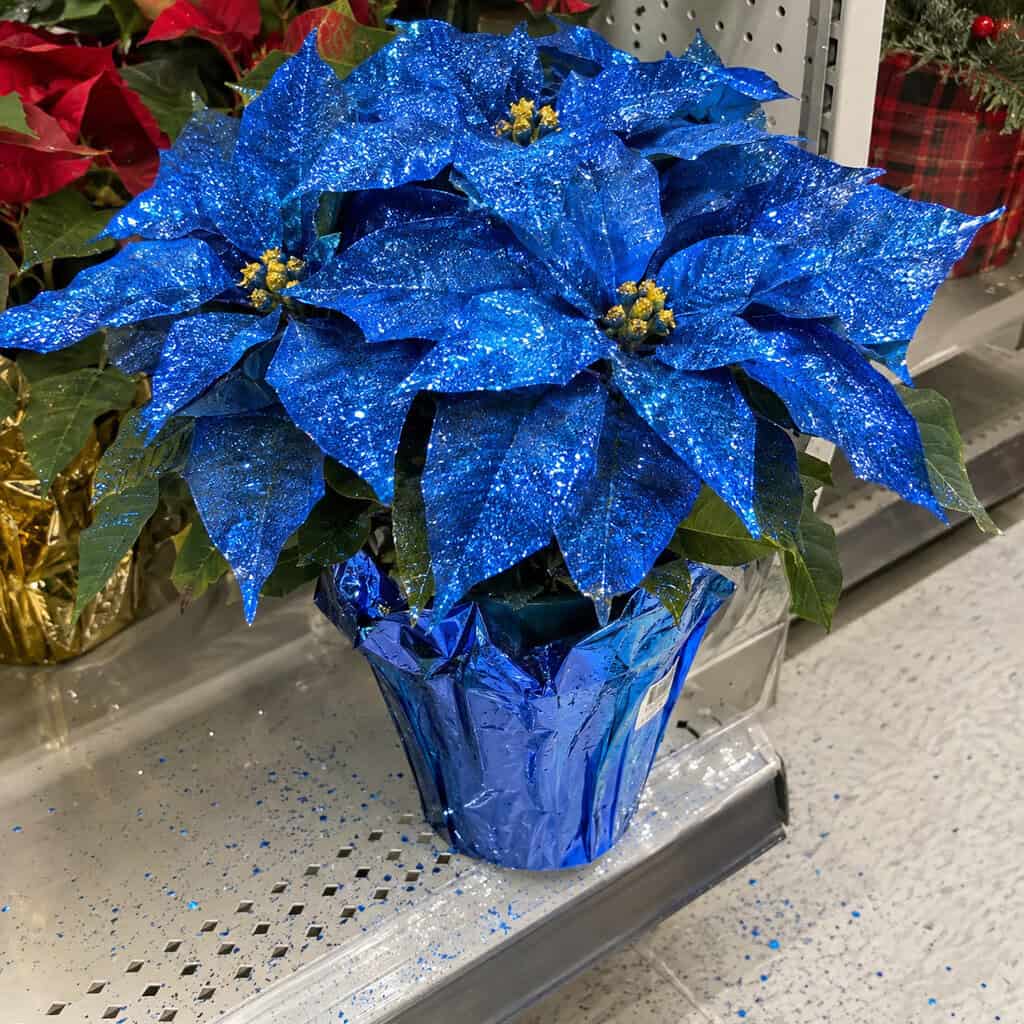
There’s no such thing as a blue poinsettia cultivar. Breeders have been trying for decades.
What you’re looking at is a white poinsettia run through a floral paint booth and dusted with glitter while the finish is tacky. The coating clogs the bracts, blocks gas exchange, and measurably shortens display life.
The glitter sheds. It ends up in the carpet, which is where the dog finds it.
Buy instead: an independent greenhouse. Real bred varieties are more interesting anyway — the marbled ‘Monet Twilight’, the red-and-white speckled ‘Jingle Bells’, the creamy ‘Polar Bear’. None of them come off on your hands.
16. The Boxed Amaryllis Kit With the Mystery Bulb

Flower count is determined almost entirely by bulb circumference. A sealed gift box never tells you the number.
That’s the whole trick.
| 26/28 cm bulb | 34/36 cm bulb | |
|---|---|---|
| Flower stalks | Usually one | Two to three |
| Blooms per stalk | Three or four | Four to five |
| Typical price | Gift-box pricing | Slightly more |
| Size disclosed | Almost never | Always listed |
Specialists sell by measured size because serious buyers demand it. Pay a few dollars more for a jumbo and you get roughly triple the show.
17. The Forced Florist Azalea

Rhododendron simsii arrives at absolute peak bloom, which sounds great and is actually the problem — there’s nowhere to go but down.
At 72°F with dry air, it drops every unopened bud within ten days. These are greenhouse-forced plants on a hormone and temperature schedule, not landscape shrubs, and they won’t survive a winter outdoors in most of the country.
The bigger issue is grayanotoxin. The entire plant — leaves, flowers, nectar — is seriously toxic to dogs, cats, and livestock, and azalea poisonings are among the more common ornamental-plant emergencies vets see.
Buy instead: a hardy landscape azalea from a nursery in spring if you want one in the yard. For indoor winter bloom with no toxicity drama, an undyed Phalaenopsis orchid holds flowers for three months straight.
18. The Boxwood Wreath and Kissing Ball

This one reaches past the holidays and into your landscape, permanently.
Boxwood blight is a fungal disease caused by Calonectria pseudonaviculata. It defoliates boxwood from the bottom up, leaves black streaks on the stems, and there is no cure — infected plants get removed. Established hedges that took fifteen years to fill in come out in an afternoon.
Holiday greenery made from boxwood has been documented as a pathway for the disease into home landscapes. The spores are sticky, they survive on dropped leaves, and the wreath that hung on your door for five weeks was shedding the whole time.
Several state extension services traced new residential outbreaks back to holiday decorations — specifically to clippings tossed onto compost piles, trimmings shaken out by the back door, and wreaths dismantled over a garden bed in January.
If you already have one, handle the disposal carefully. Take it down over a tarp or directly into a contractor bag. Seal the bag and put it in household trash — never the compost pile, never a brush pile, never curbside yard waste, which often gets composted municipally. Sweep up every fallen leaflet around the door and bag that too.
Then check your own boxwoods in spring for dark leaf spots and black stem lesions.
Buy instead: fir, cedar, juniper, or magnolia wreaths from a local greens supplier. They smell better, they hold up longer in cold, and they can’t infect anything in your yard. If you’re planning privacy hedges, this is one more reason to look past boxwood entirely.
19. The Cut Holly Branch With Berries

Cut, boxed, trucked, and by the time it hits the shelf the berries are already loosening at the stem.
They end up on the floor. Holly berries cause serious vomiting and diarrhea in pets and children — a couple of berries is usually a rough night, more than that is a vet visit. The leaf spines also cut mouths, which is how most dogs get into trouble with holly in the first place.
Buy instead: a local nursery and a living plant. A ‘Blue Princess’ holly with a ‘Blue Prince’ nearby for pollination will fruit in your own yard every single December. Native winterberry does the same thing and drops its leaves so the berries show better.
20. The Marimo Moss Ball Ornament Kit

Nobody sees this one coming, because it isn’t about the plant.
In March 2021, aquarium moss balls imported from Ukraine and sold nationwide were found to contain live zebra mussels — one of the most destructive aquatic invasive species in North America. Within days, the product was being pulled from pet chains, garden centers, and big-box stores in all 50 states.
Zebra mussels clog municipal water intakes, strip plankton out of lakes, and cost utilities and power plants hundreds of millions of dollars a year. A single adult female can release a million eggs in a season.
And they ride into waterways on things people flush, rinse, or dump.
Agencies issued a specific destroy-don’t-dump protocol. Boil the moss ball for at least a minute, or freeze it solid for 24 hours, or soak it in undiluted white vinegar for 20 minutes or in diluted bleach for the same. Then seal it in a plastic bag and put it in the trash.
Never flush one. Never rinse one down a sink or a storm drain. Never put one in a pond, a creek, or a landscape water feature. Tank water from a container that held one gets the same treatment — disinfect it before it goes anywhere.
They still show up in gift kits and glass-ball ornaments every December.
Buy instead: a dedicated aquarium shop that quarantines and inspects incoming stock, and ask directly where the plants were sourced. A shop that can’t answer isn’t the shop.
21. The Checkout-Counter Holiday Kalanchoe

Cheap, bright, and usually drowning.
Kalanchoe blossfeldiana is a succulent that wants its soil to dry most of the way through between waterings. Big-box plant staff water on a single route — the ferns, the pothos, and the kalanchoes all get hit with the same hose on the same schedule.
Crown rot is frequently underway before you buy it. Squeeze the base of the stem; if there’s any give or mush, put it back.
They also contain cardiac glycosides, which cause vomiting and heart rhythm problems in cats and dogs that chew the leaves.
Buy instead: a succulent grower selling plants in a gritty, fast-draining mix. Those rebloom year after year with a short-day treatment in fall.
22. The Air Plant Glued to an Ornament

Tillandsias absorb water through specialized scales on their leaves and anchor themselves with a small basal cluster of roots. So gluing that base to a wire frame, a seashell, or a glass ball is a slow sentence.
The hot glue seals off the growing point. The plant can’t be soaked properly because you can’t submerge the ornament, and misting alone doesn’t deliver enough water in a heated house.
It stays green for a couple of months, then browns from the center.
Buy instead: loose tillandsias from a specialist, nestled into holders you can lift them out of. Soak for 20 minutes once a week, shake them dry upside down, and put them back.
23. The Ornamental “Christmas Pepper”

Sold as decor. It’s Capsicum annuum — the same species as a jalapeño, a bell pepper, and a cayenne.
The fruit is often blisteringly hot, well up into the 30,000-plus Scoville range on some ornamental lines. Kids see glossy red candy at eye level.
Don’t eat them regardless. Ornamental crops are grown under greenhouse spray programs with products that aren’t labeled for food use, which is a different regulatory world than the pepper transplants sold in spring.
Buy instead: if you want to eat peppers, buy transplants in spring from a grower producing food crops. If you want winter color, pick something that doesn’t fruit at toddler height.
24. The Pre-Made Succulent Centerpiece in Dyed Moss
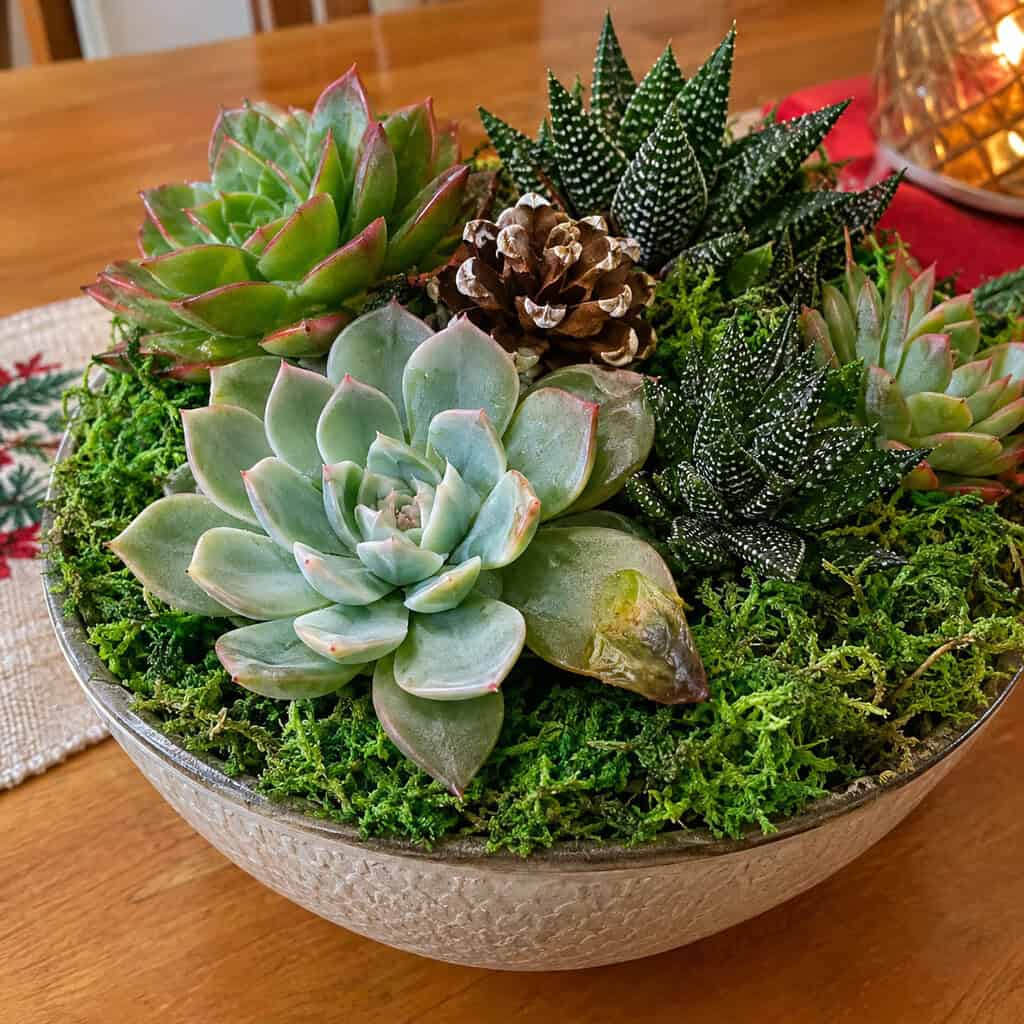
Look at what’s been assembled in that bowl.
Sun-craving echeverias pressed against shade-tolerant haworthias. No drainage hole. Dyed sphagnum packed up against every stem, holding moisture exactly where succulents rot. Sometimes a glued-on pinecone or plastic berry for good measure.
It’s a design that can’t be watered correctly, because any amount right for one plant is wrong for another and the water has nowhere to go.
Buy instead: individual plants from a nursery and a pot with a hole in the bottom. Group by light and water needs, use gritty cactus mix, skip the dyed moss. It costs less and it’s still alive in three years. Plenty of nearly kill-proof container combinations start the same way.
25. The Mini Citrus Tree Sold as a “Christmas Orange”

Citrus is one of the most tightly regulated nursery crops in the United States, and for good reason.
Huanglongbing — citrus greening — has devastated Florida’s industry, and citrus canker spreads on wind, water, and contaminated stock. Several states restrict or prohibit shipping citrus trees across their borders, and certified nurseries propagate under protective screen structures with inspected budwood.
The foil-wrapped calamondin on a holiday endcap is a coin flip on health, on grafting quality, and sometimes on variety — plenty are sold without any rootstock information at all.
Buy instead: a certified citrus nursery that lists the rootstock on the tag and ships only where it’s legally allowed. You’ll know what you own and what hardiness it actually has.
26. The Potted “Living Christmas Tree”

The pitch is irresistible. Decorate it in December, plant it in the yard in January, and your kid grows up alongside it.
It can work. It mostly doesn’t work when the tree came from a chain store.
Those are frequently field-dug late in the season with a large share of the root system left behind in the field, then potted into loose media that doesn’t hold the rootball together. Lift one by the trunk and you can often feel the whole plant shift inside the pot. That’s a tree with no anchoring roots.
Species matching is the other failure. Big-box holiday stock gets distributed regionally, not locally — a Fraser fir needs cool summers and good drainage, and it’ll sulk and die in Atlanta clay no matter how carefully you plant it.
Then there’s dormancy. A conifer that’s been chilled by late fall is holding dormancy, and a warm living room breaks it. The tree starts pushing tender growth in December, then goes back outside into January and gets killed. Seven to ten days indoors is the outside limit, and five is safer.
Do the staging properly. Move it from outdoors into an unheated garage for a few days, then indoors, keep it away from heat vents and as cool as the room allows, water it so the rootball never dries, then reverse the process on the way back out — garage for several days before it faces open winter.
And dig the planting hole in November, before the ground freezes. Pile the backfill soil in the garage where it won’t freeze solid either. Nobody digs a hole in frozen clay in January with a tree waiting on the patio — the tree sits there until spring and dies.
Plant with the root flare at or slightly above grade, mulch three inches deep but never against the trunk, and water it through its first summer. Then think hard about mature size before you pick the spot. A Colorado blue spruce sold at four feet tall reaches sixty, and a tree planted eight feet off the foundation becomes a removal bill in twenty years.
Buy instead: an independent nursery that matches species to your zone, confirms whether the tree is container-grown or freshly field-dug, caps your indoor time, and will tell you honestly if the tree won’t work on your site. If you want something that comes back year after year, that conversation is worth more than the discount.
27. Lucky Bamboo Gift Arrangement

It isn’t bamboo. Dracaena sanderiana is a West African shrub, and it’s sold in a glass vase of gravel because that’s cheap, not because it’s good for the plant.
Long term it wants soil. In water alone the stalks slowly yellow from the bottom and the leaf tips brown from chlorine and fluoride in tap water.
It’s also toxic to cats and dogs, which matters more than the usual gift-set shrug — the stalks sit at exactly the height a cat will chew.
Buy instead: a houseplant shop that sells it potted in soil, or skip it. It reads as a year-round gift filler anyway, not a holiday plant.
28. The Gardenia or Jasmine Holiday Topiary

Fragrant, expensive, and almost guaranteed to disappoint.
Gardenias and jasmines set buds under high humidity and drop them the moment conditions swing. A 20% humidity living room with a forced-air vent cycling on and off is the worst case, and the buds brown and fall within two weeks of coming home.
The topiary form makes it worse — the wire frame restricts airflow through the center and encourages spider mites in dry heat.
Buy instead: a greenhouse grower in spring, when you can give the plant a summer outdoors to build strength before you ask it to bloom indoors.
29. The December Hellebore Sold as “Christmas Rose”
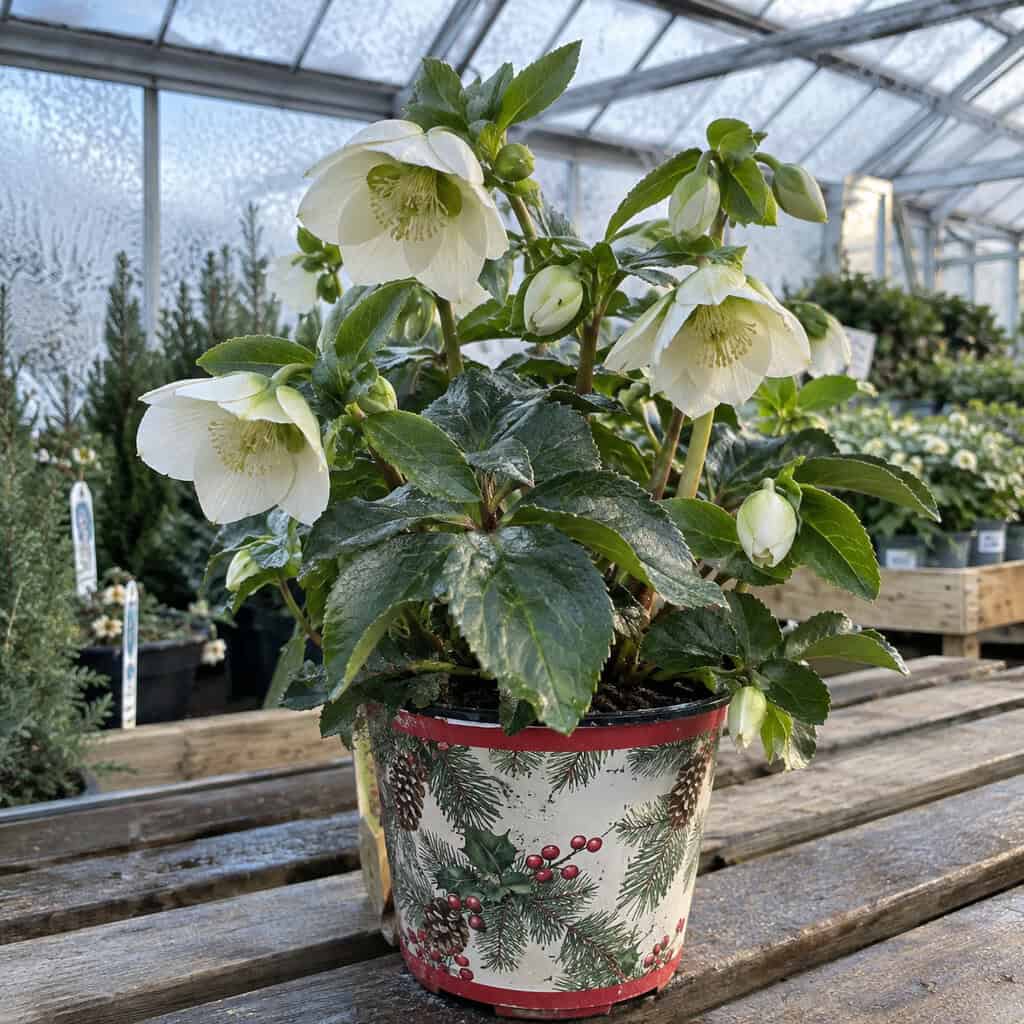
Helleborus niger is a genuinely beautiful plant, and the ones forced for December sale are frequently the wrong plant for the buyer.
They’re pushed into bloom under greenhouse conditions, sold in holiday sleeves with no zone information, and often shipped to regions where that species struggles. Then the plant goes in a warm house, where it wants cold.
All hellebores are toxic to dogs, cats, and horses — the roots most of all, which matters if you do eventually plant it out where a dog digs.
Buy instead: a perennial nursery in late winter, where you can buy a named hybrid suited to your zone and put it straight into the shade garden. It’ll bloom in February for the next twenty years.
30. The Red Anthurium Trucked North in December

Chilling injury is sneaky because it’s invisible at purchase.
Anthuriums are tropical and begin taking damage below about 55°F. An unheated trailer on an overnight run through Ohio does it quietly — cell walls rupture, and nothing looks wrong on the shelf.
About a week after you get it home, dark water-soaked blotches appear on the leaves and the spathes go dull and papery. That damage happened before you ever saw the plant.
Same mechanism that wrecks the poinsettias by the door, different plant.
Buy instead: a local greenhouse that receives tropicals on heated trucks and unloads them indoors. Ask when the shipment came in — a grower will know, and a cashier won’t.
The Pattern Underneath All of This
Holiday plants at a chain store aren’t sold as plants. They’re sold as decorations with a shelf life, priced and handled accordingly.
That’s not a conspiracy, it’s a business model. Nobody at corporate expects your poinsettia to see March.
The alternative is almost always a person — a greenhouse owner, a bulb specialist, a tree farmer, a florist who asks whether you have a cat. They cost a little more and they’ll answer questions a barcode never could.
Buy the plant from whoever grew it. That’s the whole list in one sentence.