

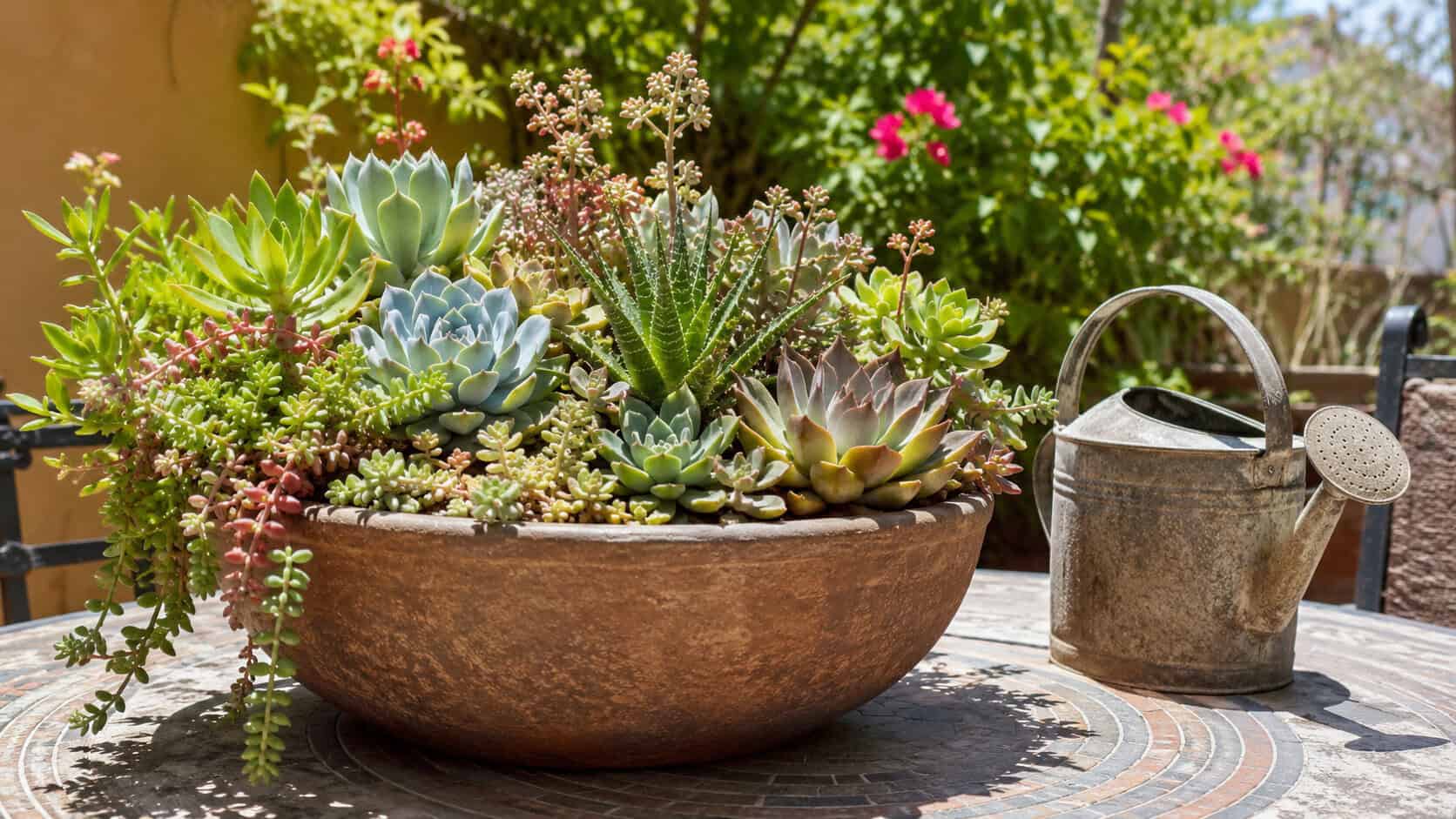
You’ve buried a few plants. Maybe more than a few.
The succulent that came with a little card promising it was “impossible to kill”? Gone. The basil from the grocery store? Crispy by Thursday. Somewhere in your past there’s a fern you’d rather not talk about.
Here’s the good news. The problem usually isn’t you. It’s the plant.
Most things sold at the garden center want fussing — daily checks, perfect light, a watering schedule you’ll never keep. But a whole category of plants actually does better when you leave them alone. They store their own water. They shrug off dim corners. They forgive the missed weekend.
A few of these can hurt a cat or a dog, so if you’ve got pets, read the warnings — they’re flagged. And when something’s dangerous, there’s a safe swap right alongside it.
Here are 31 container plants that survive neglect, plus exactly which ones are safe to keep on the porch.
1. Snake Plant (Sansevieria)

If you only buy one plant from this list, buy this one.
The snake plant wants to be ignored. Those stiff upright leaves are full of stored water, so it actually prefers the soil to dry all the way out before the next drink. Water it every two or three weeks and you’re overdoing it in winter. FlowerAura lists it among the hardest plants on earth to kill, and they’re not exaggerating.
It handles a dim hallway or a bright sunny window. It survives weeks without you. People have left for vacation and come home to a snake plant looking exactly the same.
But there’s a catch for pet owners. It’s toxic to cats and dogs.
The leaves contain saponins, and if a curious dog or cat chews them, you’re usually looking at drooling, vomiting, diarrhea, and a lot of nausea. It’s rarely fatal, but it’s a miserable night and a vet bill nobody wants. Cats in particular like to bite the tall vertical leaves.
So if you’ve got animals that nibble, set it high on a shelf they can’t reach — or skip it entirely and grow a spider plant instead (number 4 on this list). The spider plant trails the same way, survives the same neglect, and won’t send anyone to the emergency vet.
Toxic to pets. Keep it well out of reach, or swap it for a spider plant.
2. ZZ Plant (Zamioculcas)

The ZZ plant is the snake plant’s equally tough cousin.
Those glossy, waxy leaves store water like little reservoirs, so it cruises through droughts and shady corners that would flatten a normal houseplant. Stick it in the darkest spot on your covered porch and it’ll just keep growing.
Slow growing, too. It won’t outgrow its pot for years, so you’re not constantly repotting.
Like the snake plant, it’s toxic if a pet chews it — same calcium oxalate irritation, same drooling and stomach upset. Keep it up off the floor in a pet home.
Otherwise this one is close to bulletproof. Forget about it for a month and it forgives you.
3. Golden Pothos (Devil’s Ivy)

They don’t call it devil’s ivy because it’s hard to grow. They call it that because you can’t kill it.
Pothos trails out of a hanging basket in long leafy vines and tolerates an absurd range of abuse — low light, bright light, dry soil, soggy soil, the whole spectrum of forgetting. The heart-shaped leaves with the gold marbling look expensive. The plant is anything but.
It’s the plant people gift to friends who swear they can’t keep anything alive. And it works.
Now the warning, because this matters. Pothos is one of the most common toxic houseplants in the country, and it’s exactly the kind of trailing vine a cat will bat at and chew.
The leaves are loaded with insoluble calcium oxalate crystals. When a pet bites them, those crystals release like tiny needles into the mouth and throat — intense burning, drooling, pawing at the face, swelling, vomiting, trouble swallowing. It’s painful and it scares people. Severe swelling can even affect breathing.
If your cat is the type to climb for a dangling vine, this is a real hazard. Hang it somewhere genuinely unreachable, or do the easy thing and grow a spider plant instead.
The spider plant gives you the same cascading look from a hanging pot, takes the same neglect, and the GrowTropicals pet-safe list confirms what plenty of vets will tell you — it’s the no-worry trailer for animal homes.
Toxic to pets. Hang it out of reach, or swap it for a spider plant.
4. Spider Plant

This is your guilt-free trailing plant.
The spider plant is ASPCA-verified non-toxic to both cats and dogs, which makes it the answer every time pothos comes up. It spills out of a hanging container in arching green-and-white blades and handles forgiving, imperfect light without complaint.
Then it does something fun. It throws out little plantlets on long stems — “spiderettes” — that dangle off the mother plant like babies.
Snip one, set it in soil or water, and you’ve got a free new plant. Do that a few times and you’ve furnished your whole porch for nothing.
Forgiving, safe, and it multiplies itself. Hard to ask for more.
5. Aloe Vera

Aloe is built for forgetters. The fat, gel-filled leaves bank water, so the plant survives a dry spell far better than a soggy one.
In fact, the only reliable way to kill aloe is to love it too much. Overwater it and the roots rot. Leave it alone in a sunny window and it thrives for years.
And there’s the bonus everybody knows. Snap a leaf, squeeze out the gel, and it soothes a kitchen burn or a sunburn. A first-aid kit that grows on your windowsill.
Which is exactly why the next part surprises people. That same helpful aloe is toxic to cats and dogs.
The Coris Sears roundup ranks it among the toughest houseplants going, but the Pet Poison Helpline rates aloe mild-to-moderately toxic to pets. The compounds in the leaf — called anthraquinones — cause vomiting, diarrhea, lethargy, and loss of appetite when an animal eats it.
So you’ve got a plant that heals your skin and upsets your dog’s stomach. Both things are true at once.
If you’ve got pets, keep aloe somewhere they physically can’t get to it — a high sunny shelf, not the floor. Or grow an echeveria rosette instead (number 6) for the same sculptural succulent look without the risk.
Toxic to pets. Great for your burns, bad for their bellies — keep it up high.
6. Hens-and-Chicks & Echeveria Rosettes
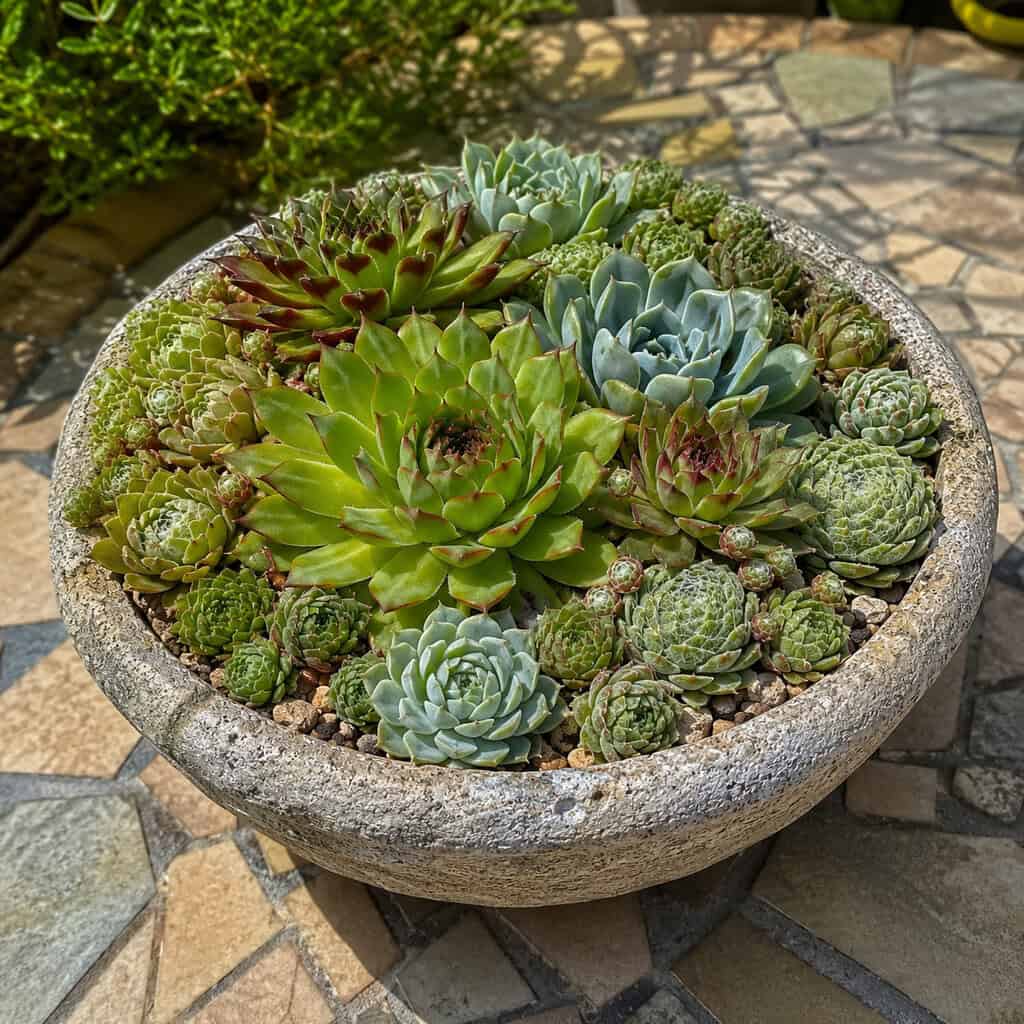
These look designed. Tight little rosettes of fleshy leaves, packed into a plain bowl, and suddenly your porch looks like a magazine spread.
They run on almost nothing. Full sun, a sip of water now and then, that’s the whole routine. Sempervivum — the classic hens-and-chicks — is even cold-hardy enough to live outdoors year-round in much of the country.
Good news for pet homes here. Echeveria and haworthia are pet-safe, unlike aloe, jade, and kalanchoe.
So you get the chiseled succulent look without the worry. Plant a few in a shallow dish and forget about them.
7. Sedum (Stonecrop)
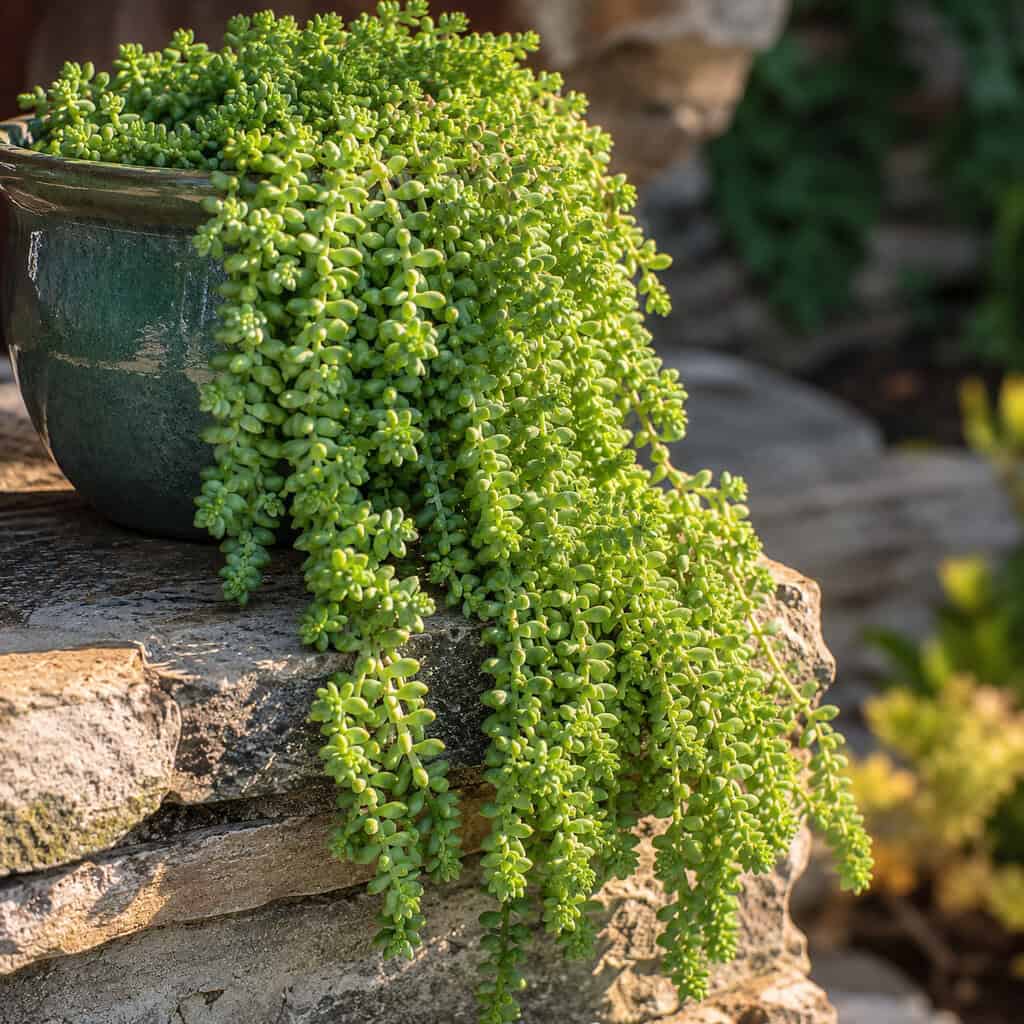
Sedum is the plant that grows on rooftops and in sidewalk cracks. That should tell you something.
The fleshy leaves bank water, so it pushes through dry spells with zero drama and doesn’t even mind poor soil. Neglect is basically its native habitat.
One thing to know before you buy. Some sedums grow tall and upright, which isn’t what you want spilling over a pot.
For containers, grab a creeping or trailing variety. It’ll cascade over the rim like a green waterfall and ask for nothing in return.
8. Agave

Want a centerpiece that makes a statement and never needs you? Agave.
This is a sculptural, architectural plant — bold spiky rosettes that store water in their thick leaves and resist pests, disease, and drought all at once. Bob Vila ranks it among the toughest container plants for blazing sun. It thrives on neglect the way other plants thrive on attention.
Two warnings. Many agaves get huge, so pick a smaller variety for a pot.
And those tips are sharp — genuinely sharp, the kind that draw blood. The sap can irritate skin, too. Wear gloves when you handle it, and don’t set it where someone will brush past it on a narrow walkway.
9. Ponytail Palm

It’s not actually a palm. And that swollen trunk isn’t just for looks.
The ponytail palm hoards water in that bulbous base, then doles it out slowly, which means it forgives long dry stretches without flinching. The spray of arching leaves on top gives it a goofy, fountain-like charm that works as a specimen pot all on its own.
Fine Gardening puts it on their list of containers that thrive on neglect, and that’s the whole pitch.
Bright light, the occasional drink, and you’ve got a quirky low-fuss plant that practically takes care of itself.
10. Ice Plant (Delosperma)

Ice plant doesn’t collapse if the watering can gets forgotten. That’s a near-direct quote from the experts, and it’s the reason it’s on this list.
NC State Extension calls it very drought and heat tolerant — the fleshy leaves store moisture, so blazing sun and missed waterings barely register. Then it covers itself in shimmering daisy-like flowers that look like they’re catching light.
Those blooms spill right over the container rim all season long.
Give it full sun and a pot that drains well. It’ll handle the rest while you’re busy forgetting about it.
11. Lavender
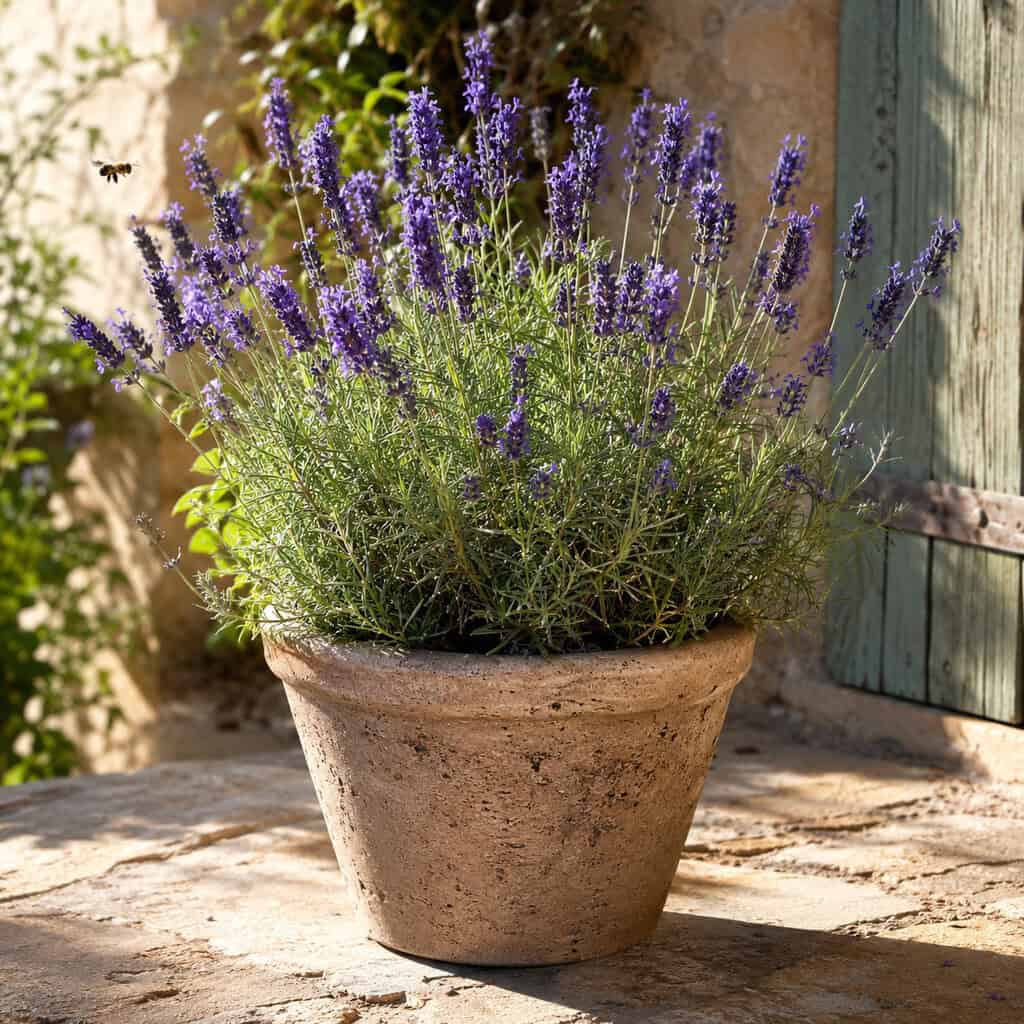
Lavender wants you to back off. That’s the trick most people get wrong.
Once it’s established it needs very little water, and it rewards that neglect with silvery foliage, purple spikes, and a scent that pulls in bees and butterflies. It’s also non-toxic to dogs, which the Pets Can Go guide confirms.
The killer here isn’t drought. It’s kindness.
Overwater lavender and you’ll rot it fast. Give it a gritty, fast-draining mix, a sunny spot, and the discipline to leave it thirsty. That’s how you keep it alive.
12. Rosemary

Rosemary likes its soil on the dry side, which makes it almost impossible for a forgetful person to kill.
This woody Mediterranean herb wants sun and a bit of drought between waterings. The only real way to lose it in a pot is to drown it — so if anything, do less.
It’s non-toxic to cats and dogs, so it earns a spot on a pet-friendly porch.
And it pays you back in the kitchen. Snip a sprig for roast potatoes or a chicken and the whole house smells like Sunday dinner.
13. Thyme
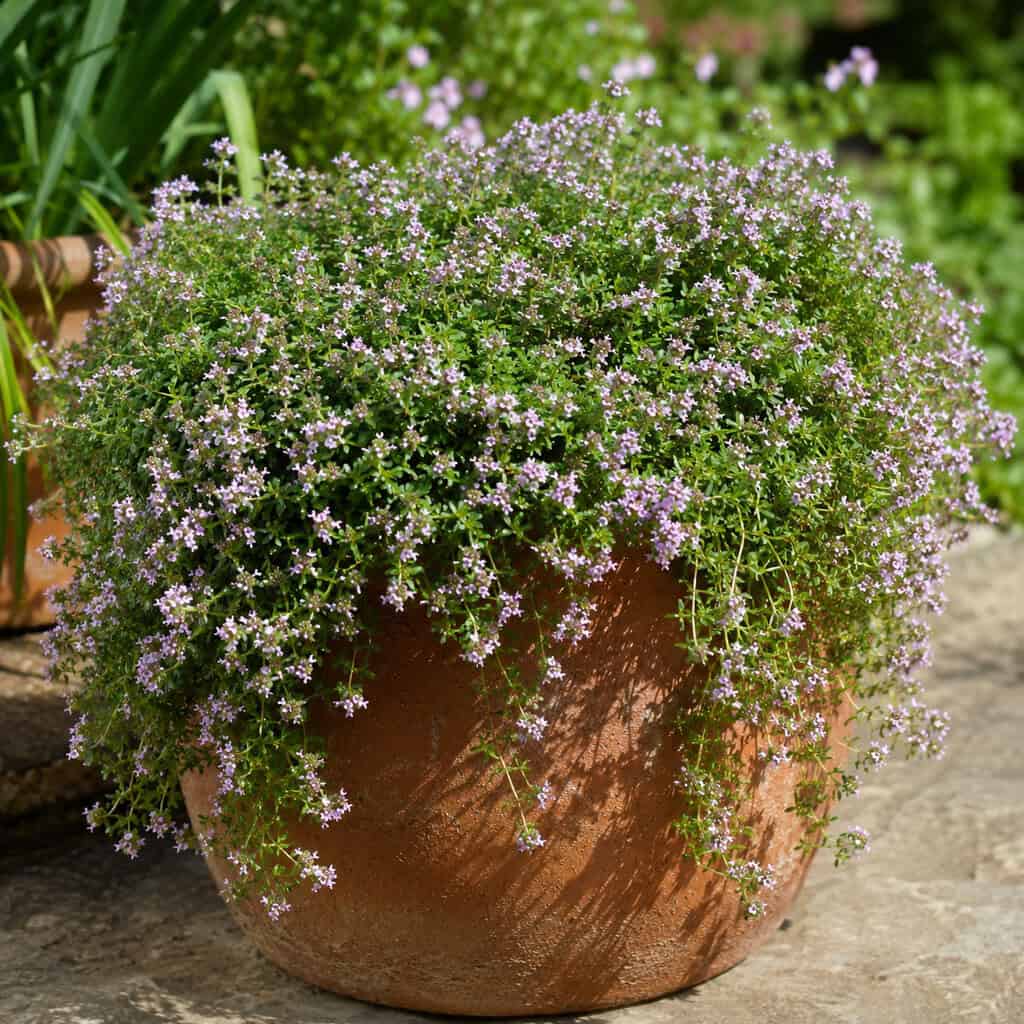
Thyme takes a bit of neglect. Savvy Gardening names it one of the best container herbs for exactly that reason — low maintenance, drought-tolerant, happy to be ignored.
It mounds low and spreads, tumbling prettily over the edge of a pot. Pretty enough to grow just for looks, useful enough to cook with.
Like the other Mediterranean herbs, it prefers dry soil to wet.
Plant it as a filler around something taller and let it sprawl. No fuss required.
14. Oregano
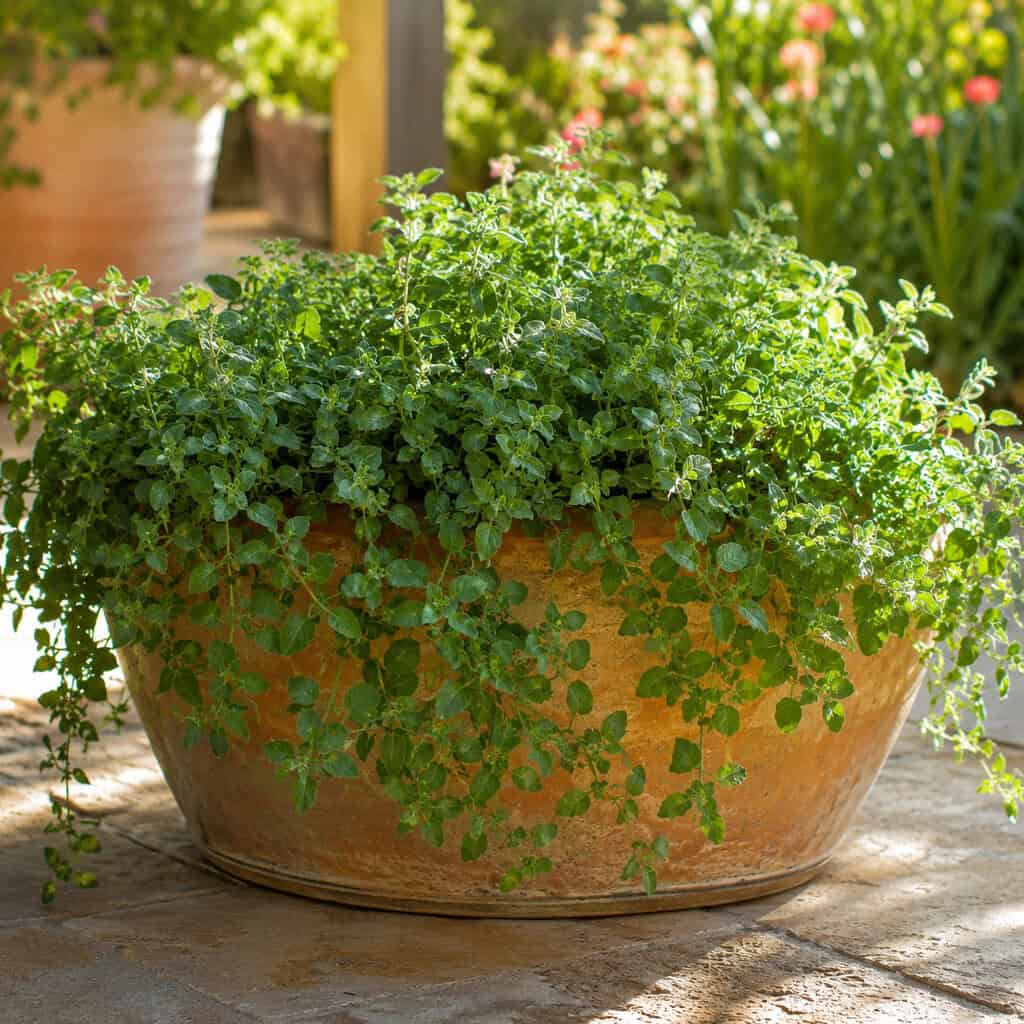
Oregano isn’t picky about much of anything.
It spreads, it handles drought, and it grows in soil that other plants would sulk in. That forgiving streak makes it a winner for beginners who want something edible without the babysitting.
Give it sun and it’ll reward you with more leaves than you can use.
Pinch off the flower buds when they appear to keep the flavor strong. That’s about the extent of the work.
15. Mint
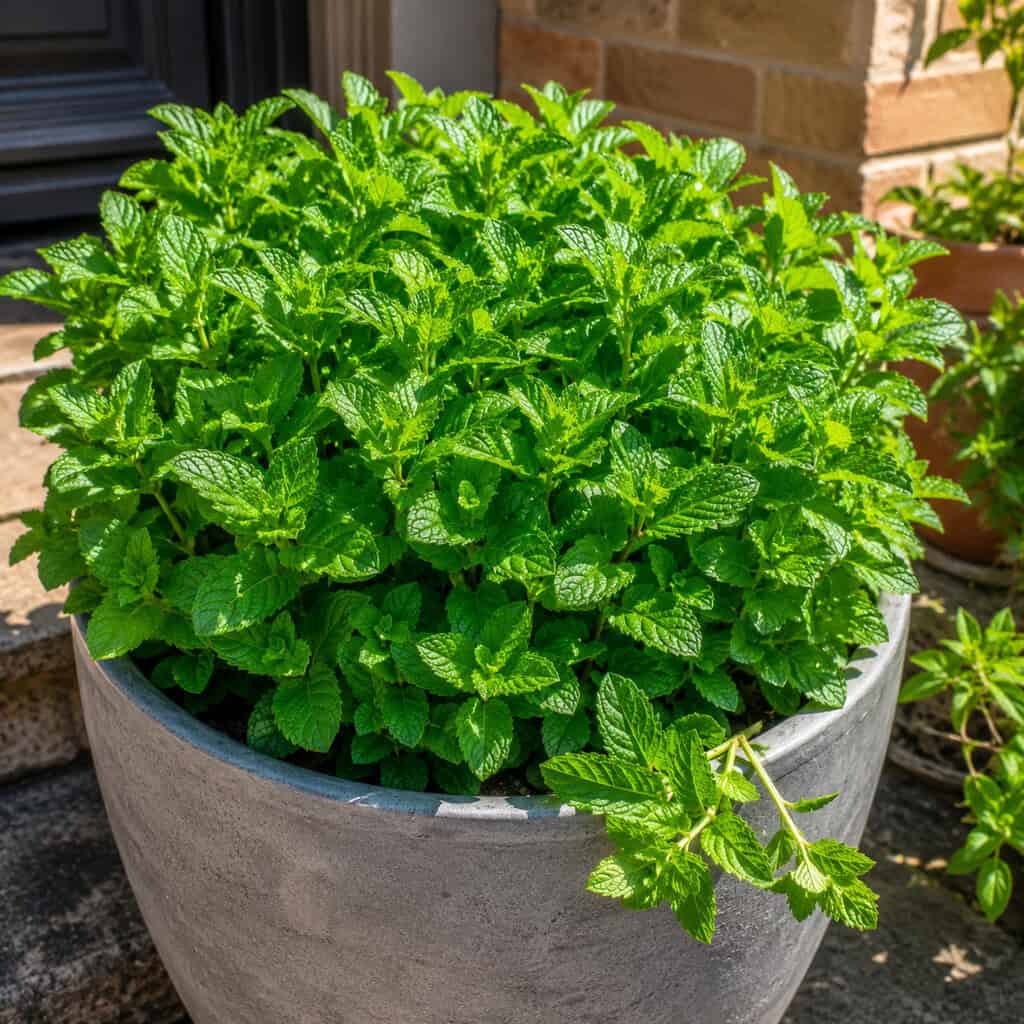
Some plants you struggle to keep alive. Mint is the opposite problem.
This stuff is so vigorous it borders on a pest. Plant it in the ground and you’ll be pulling runners out of your lawn twenty years later. People have moved houses and the mint stayed.
Which is the exact reason you grow it in a pot — to wall in all that aggression.
Contained, it’s gorgeous and endlessly useful. Sun or part shade, a regular drink, and you’ll have mint for tea, mojitos, and tabbouleh until frost. Just never, ever put it in a shared bed.
16. Chives

If you’ve genuinely never grown anything, start with chives.
They get named the single easiest herb for beginners over and over, and for good reason. Low maintenance, they regrow fast after every cut, and they’ll even forgive a spot with less-than-perfect light.
Snip a handful for eggs or a baked potato and they bounce right back.
The purple pom-pom flowers are a bonus, and the bees love them. This is the gateway herb — the one that convinces you maybe you don’t kill everything after all.
17. Marigolds

Tough as nails and practically foolproof. That’s marigolds in a nutshell.
They handle hot, dry spells without wilting and actually bloom better when they’re a little crowded in the pot. Less coddling, more flowers — the math every forgetful gardener wants.
Their sharp scent even helps keep some pests away from neighboring plants.
Go for the compact French types in containers. They’ll pump out orange and gold blooms from spring until the first hard frost.
18. Zinnias

Zinnias like to dry out a little between drinks, so a missed day here and there is fine. Better than fine, actually — they prefer it.
And the more you cut them, the more they bloom. Snip a bouquet and the plant answers with twice as many flowers.
Full sun is the one non-negotiable.
For pots, choose the dwarf “Profusion” or “Zahara” series. They stay compact, shrug off disease, and keep the color coming all summer.
19. Petunias (Wave/Trailing)

Petunias are the classic, near-instant container payoff. You plant them, they cascade, done.
About all the upkeep they ask for is a scoop of slow-release fertilizer when you plant, then water when the soil’s dry. That’s the whole job.
The trailing Wave types spill over a basket in a sheet of color.
Smaller-flowered varieties tend to be the toughest, blooming straight through wind and rain that flatten the big showy ones. Pick those if your porch takes weather.
20. Calibrachoa (Million Bells)

Think petunias on easy mode.
Calibrachoa blankets a basket in hundreds of tiny bell-shaped flowers from May right through October. And it has the one feature lazy gardeners dream about — it’s self-cleaning.
No deadheading. None.
It drops its spent blooms on its own and pushes out fresh ones without you lifting a finger. Just give it sun and water and let it carry the whole container.
21. Nasturtiums

Nasturtiums do something rare. They actually thrive in poor soil, so fussing over them does more harm than good.
Skip the rich potting mix and the fertilizer. Feed them and you’ll get a jungle of leaves and barely a flower.
They grow fast, trail over the pot edge, and bloom in hot orange, red, and yellow.
Both the leaves and the flowers are edible — peppery, a little like watercress, great on a salad. And the AAHA lists them among easy pet-safe garden plants, so they’re a solid pick for homes with animals.
22. Sweet Alyssum

This is the effortless little spiller that softens the edge of any pot.
Sweet alyssum foams over the rim in a cloud of tiny white or purple flowers that smell like honey on a warm day. Lean in and you’ll catch it.
It also pulls its weight. The blooms draw in beneficial insects that quietly keep pests off your other plants.
Low stakes, high reward. Tuck it around the front of a container and let it do its thing.
23. Geraniums (Pelargonium)

Picture a grandmother’s front porch in July. Odds are there’s a geranium on it.
There’s a reason this is the quintessential porch-pot flower. Geraniums love sun and heat, shrug off dry spells, and bloom all season with nothing more than a pinch of deadheading now and then.
The bold red and pink clusters read as classic for a reason.
Forget to water for a day or two and they hold on just fine. They’re built for the kind of casual care most people can manage.
24. Portulaca (Moss Rose)
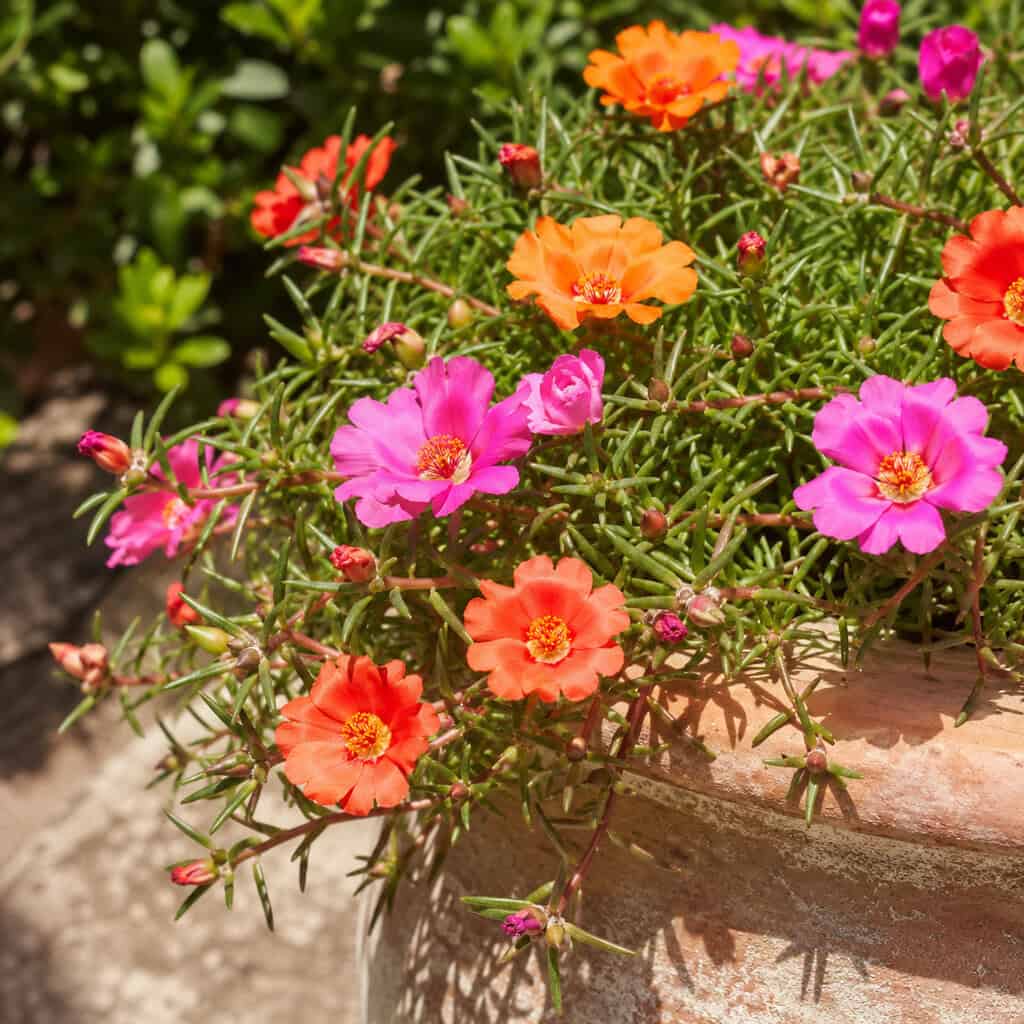
You’ll find portulaca in nearly every nursery, usually for cheap. Grab it.
It loves heat and drought and asks for almost nothing but sun. The needle-like leaves store water, and the jewel-toned flowers — hot pink, orange, yellow — open up in the brightest part of the day.
It drapes over the edge of a pot like a living trim.
This is the supporting player that makes a container look full without demanding any attention. Sun and neglect are all it wants.
25. Lantana

Lantana blooms relentlessly through the worst heat of summer on barely any water, and butterflies can’t stay away from it. On paper it’s perfect for this list.
But there are two real warnings, and both matter for this audience.
First, the berries are toxic to pets. The unripe green berries are the worst, and the leaves cause trouble too — eating them can lead to vomiting, diarrhea, weakness, and in serious cases liver damage in dogs. If you’ve got an animal that grazes, this is one to think hard about.
Second, it’s invasive. Lantana is flagged as an invasive plant in Florida and Hawaii, where it escapes gardens and chokes out native species. The Brooklyn Botanic Garden recommends it for drought-tough pots, but in those states it’s a problem child.
So here’s the honest take. In a hot, dry climate with no pets and no invasive concern, lantana is a champion. Anywhere with curious animals or a warm coastal ecosystem, choose something safer — the catmint a few entries down does the same butterfly-magnet job without the baggage.
Toxic to pets, and invasive in some states. Beautiful, but know your situation first.
26. Sweet Potato Vine
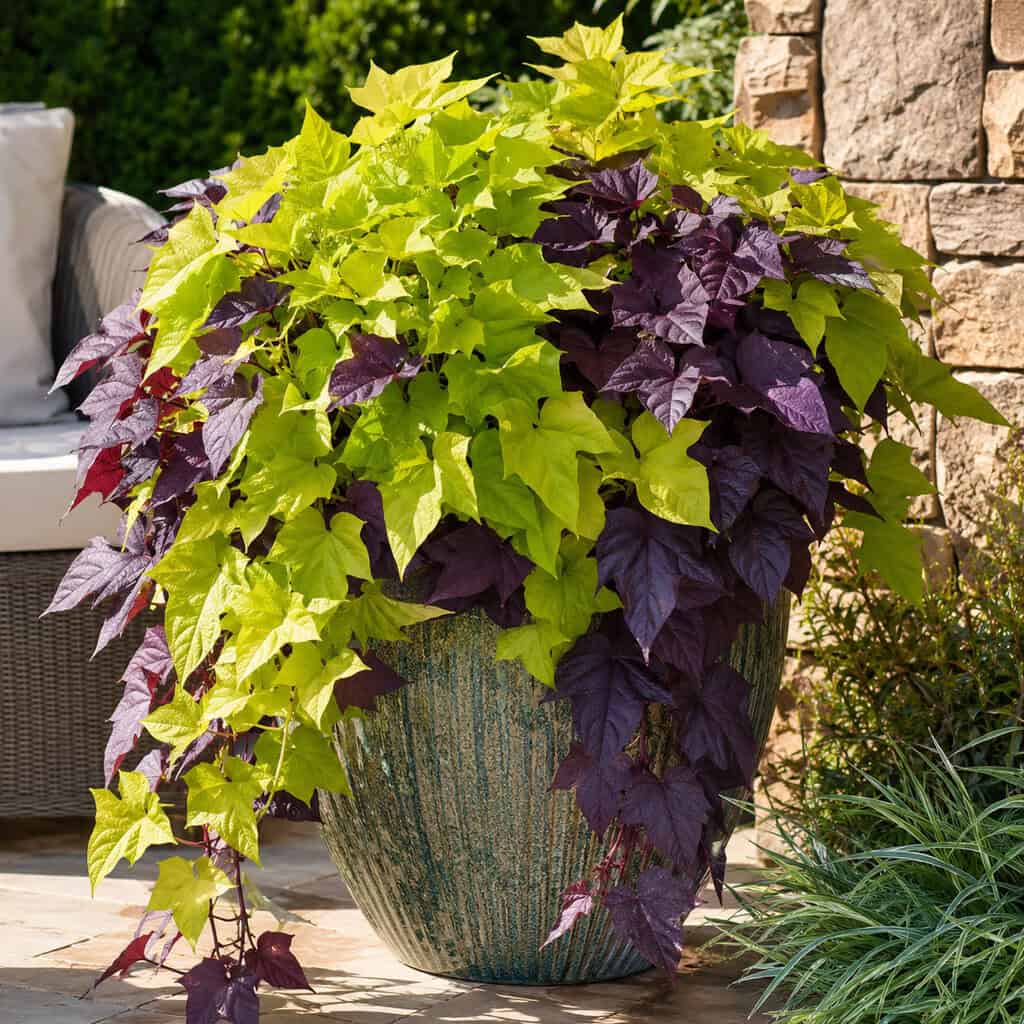
For drama at the edge of a pot, nothing beats sweet potato vine.
It tumbles out in lush cascades of chartreuse or deep purple foliage, growing fast and filling space in a hurry. The lime-green variety practically glows next to darker flowers.
It’s also low-maintenance and non-toxic to cats and dogs.
That combination is rarer than it should be — bold, dramatic foliage that’s also safe to keep around pets. Plant it as your spiller and let it run.
27. Catmint (Nepeta)
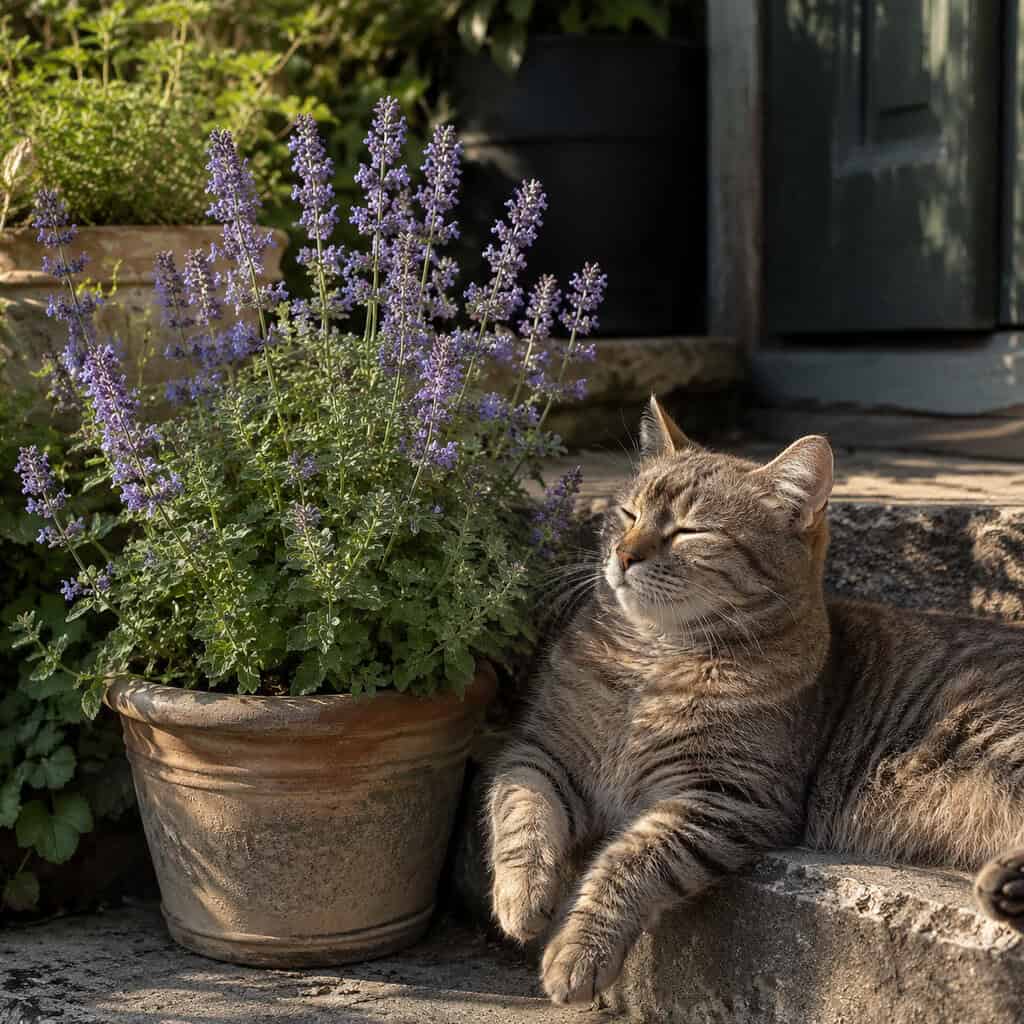
Catmint is catnip’s well-behaved, drought-tough cousin — and it’s the pet-safe answer to lantana.
This aromatic perennial grows happily in pots, blooms in soft purple-blue spikes, and handles dry spells like a champ. It’s won garden awards for being tough and reliable, and it even repels a few pest insects.
Cats adore it, and it won’t hurt them.
For a pet-focused home, this is close to a perfect plant. Drought-tolerant, pollinator-friendly, animal-safe, and it comes back year after year.
28. Purple Fountain Grass
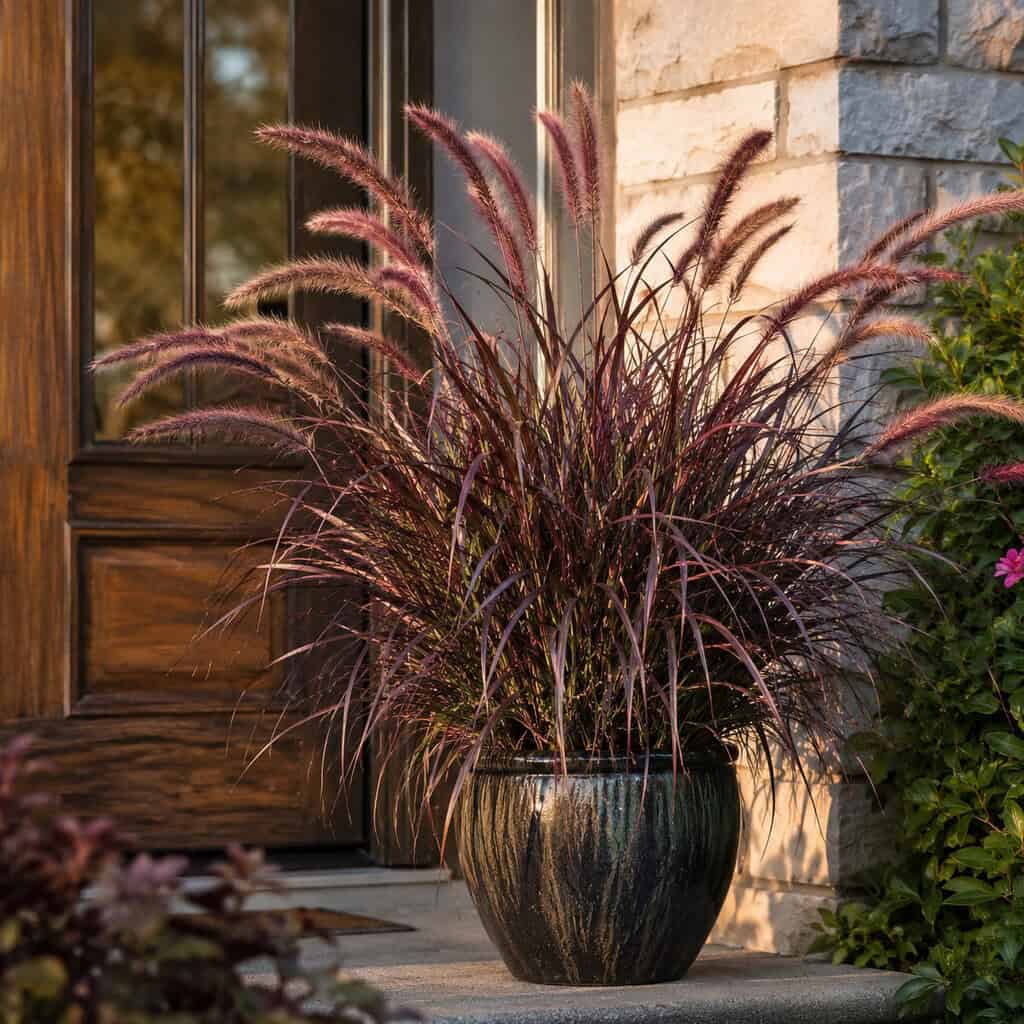
Every good container needs a tall element in the middle. This is the easiest one going.
Purple fountain grass gives you height, movement, and texture — burgundy blades that sway in the slightest breeze, topped with fuzzy plumes. And it needs less water than the flowering plants around it.
Set it center-pot to frame a doorway.
It tolerates blazing sun and asks for almost nothing. The drama-to-effort ratio is hard to beat.
29. Cosmos

Cosmos practically grow themselves.
Scatter the seeds, give them sun, and stand back. They sprout into airy, fern-like plants topped with daisy-like flowers in pink, white, and magenta — carefree from start to finish.
They even reseed themselves, so next year you may get a free encore.
Poor soil doesn’t bother them. Rich soil actually gives you fewer flowers, so this is another one where doing less works in your favor.
30. Dwarf Sunflowers

Sunflowers feel like a kid’s project, and they kind of are — which is the point.
They’re surprisingly easy, not fussy about soil, and they handle heat and drought without complaint. Dwarf varieties stay compact enough to fit a pot while still giving you those big cheerful faces.
Full sun and a regular drink is the whole formula.
If you’ve got kids, grow a few from seed with them. Watching them shoot up is half the fun.
31. Coral Bells (Heuchera)

Got a shady corner where every sun-lover you’ve tried has died? Coral bells.
This is a foliage plant first — mounds of ruffled leaves in caramel, burgundy, lime, and near-black that hold their color all season. It thrives in part shade to full shade, exactly where the marigolds and petunias give up.
It’s a low-maintenance perennial, so it returns each year.
And it’s pet-safe, which closes out this list nicely. A tough, colorful pick for the spot you’d written off entirely.
The Takeaway
You don’t have a black thumb. You just keep buying the wrong plants.
Pick from this list and the odds flip in your favor. These plants want to be left alone — they store their own water, tolerate bad light, and forgive the missed weekend. The kind of care you can actually deliver.
If you’ve got pets, lean on the safe ones: spider plant, echeveria, lavender, rosemary, nasturtium, sweet potato vine, catmint, coral bells. Keep the snake plant, pothos, aloe, and lantana out of reach or off the porch entirely.
Start with three. A snake plant in the window, chives by the kitchen, and a basket of calibrachoa out front. Kill none of them, and you might just become the neighbor people ask for advice.