

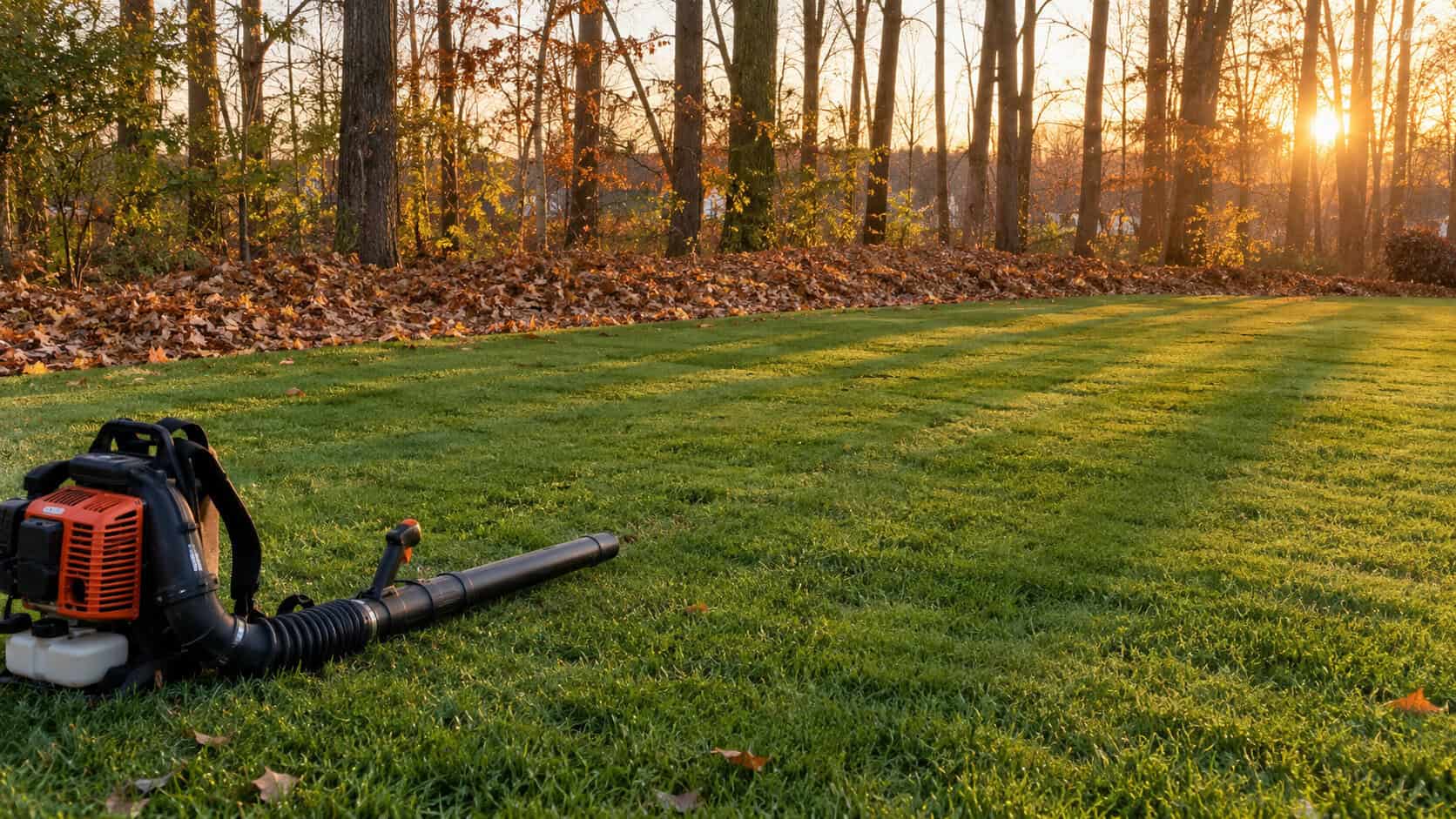
Walk a landscaper’s own property in November. Count the paper yard-waste bags at the curb.
You’ll usually find zero.
It’s not laziness. Hauling leaves is the single most expensive part of a fall cleanup — truck time, fuel, labor, and tipping fees at the yard-waste facility that run $20 to $60 a ton in a lot of counties. A crew that can keep the material on site keeps the money too.
And somewhere along the way they figured out the part homeowners missed: a leaf is a bag of free fertilizer, mulch, insulation, and soil conditioner that fell out of the sky. Throwing it away is like bagging up topsoil.
Here are 27 things the pros do with leaves instead of hauling them to the curb.
1. Mow Them Straight Into the Lawn
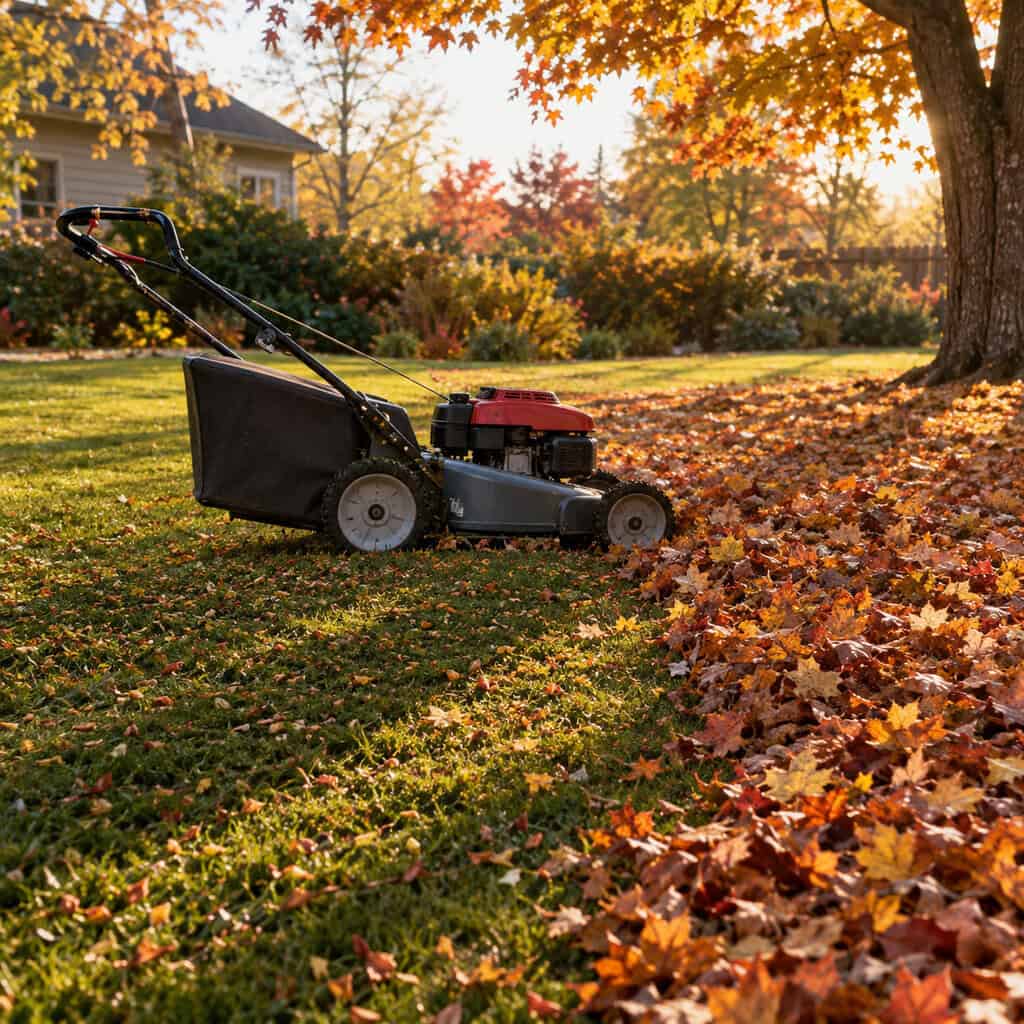
Start here, because this one replaces about 80% of the raking you’re doing.
Set the mower a notch high, leave the bag off, and run over the leaf layer until the pieces are dime-sized and you can see turf through the debris. Two passes in different directions if it’s heavy.
Michigan State researchers dug into this after Michigan banned yard waste from landfills in 1995, and the numbers surprised everyone — established turf handled roughly six inches of leaves mulched in over a season with no decline. Their trials also showed mulched maple and oak leaves cutting dandelion populations in the plots. Virginia Tech’s turf team now tells homeowners the same thing.
The one rule: don’t leave a solid mat sitting on the grass through December. Chop it, don’t bury it.
2. Shred Them Into 2–3 Inches of Free Bed Mulch
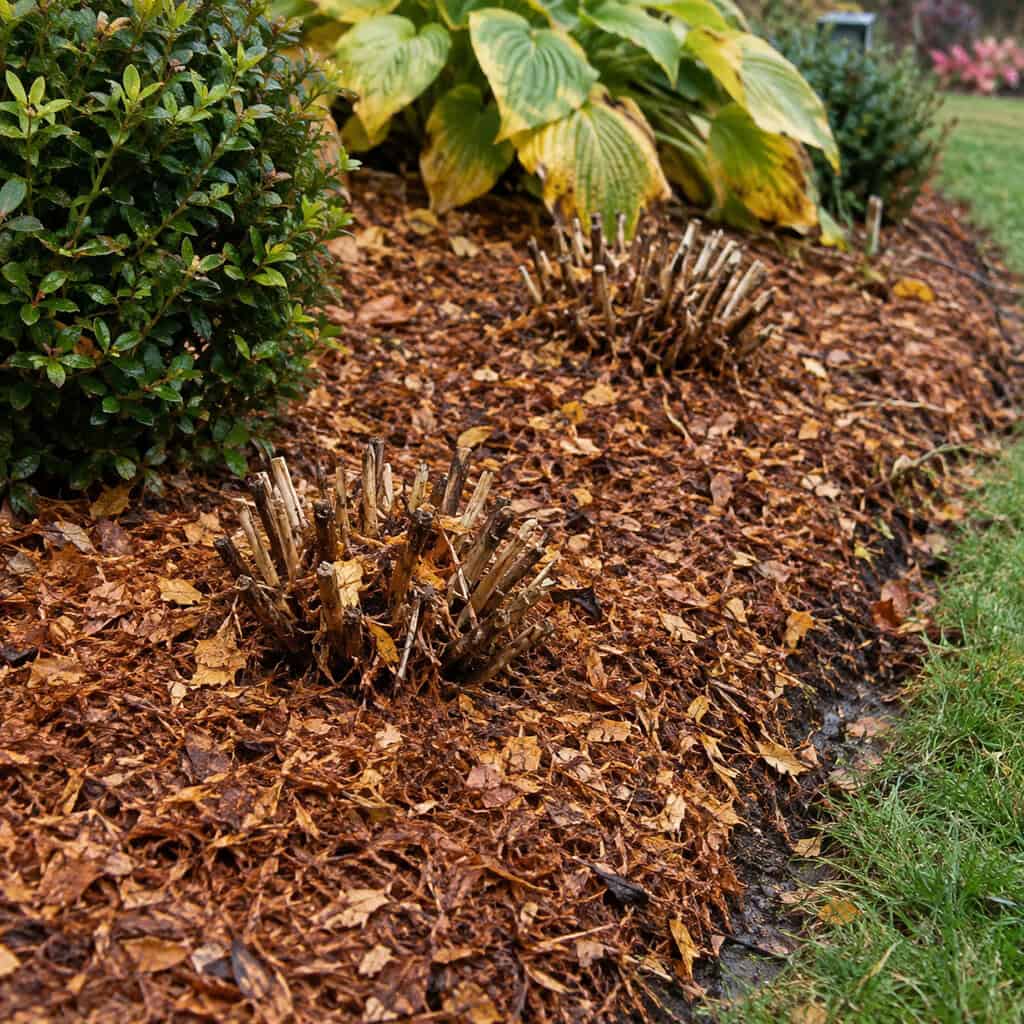
Shredded leaves do everything a $4 bag of hardwood mulch does. Suppress weeds, hold moisture, buffer soil temperature, feed worms.
Shred first. This part isn’t optional — whole leaves flatten into a shingled crust that sheds water instead of letting it through, and the bed underneath goes bone dry.
Two to three inches is the sweet spot. By July it’ll have shrunk to one.
3. Blow Them Into the Woodline and Back Bed Edges
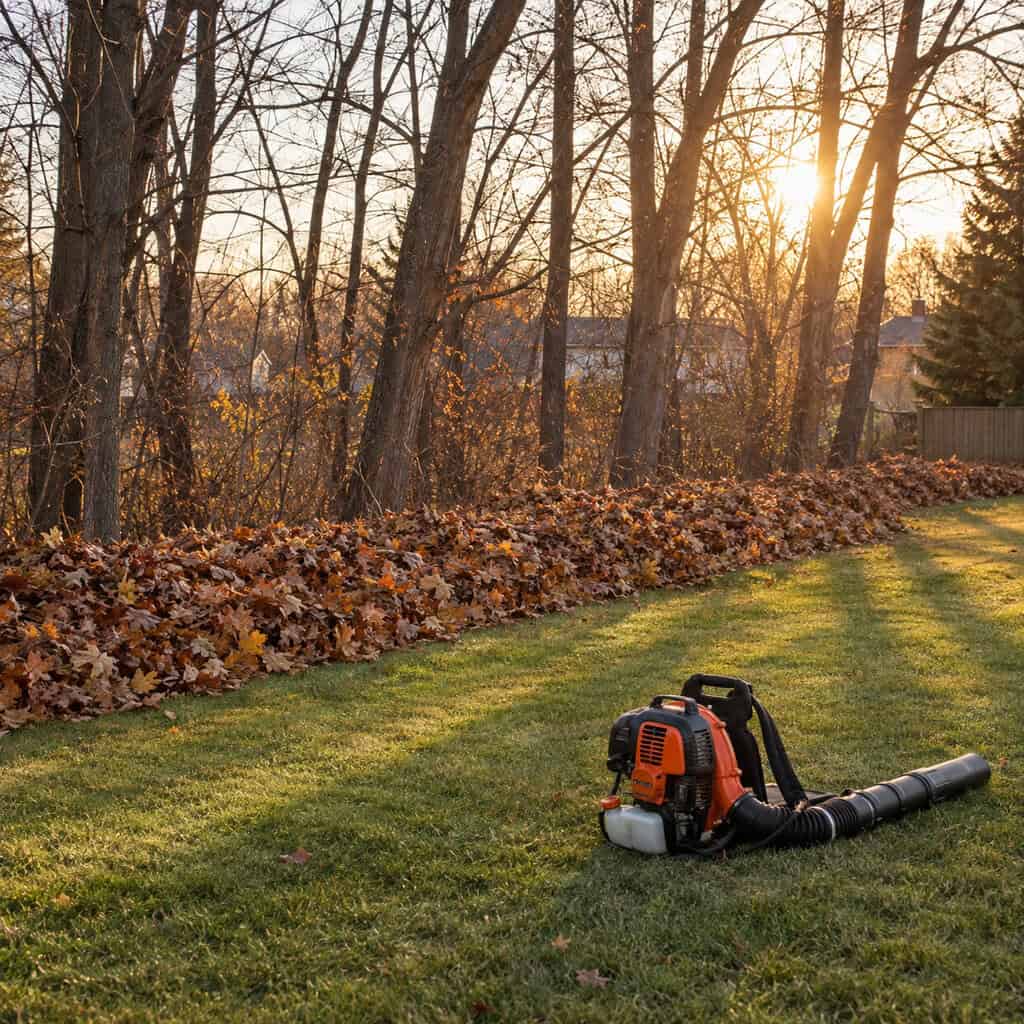
This is the move behind the headline.
Crews stage leaves along the back of the property — a fence line, a hedge row, the edge of the trees — and the truck leaves empty. No tip fee, no second trip, no hour of loading.
You can copy it on almost any lot. Pick the least-visible boundary, blow the leaves into a long low windrow there, and let it rot down over winter. By June it’s a dark strip of duff nobody notices.
4. Build a Leaf Mold Pile and Walk Away
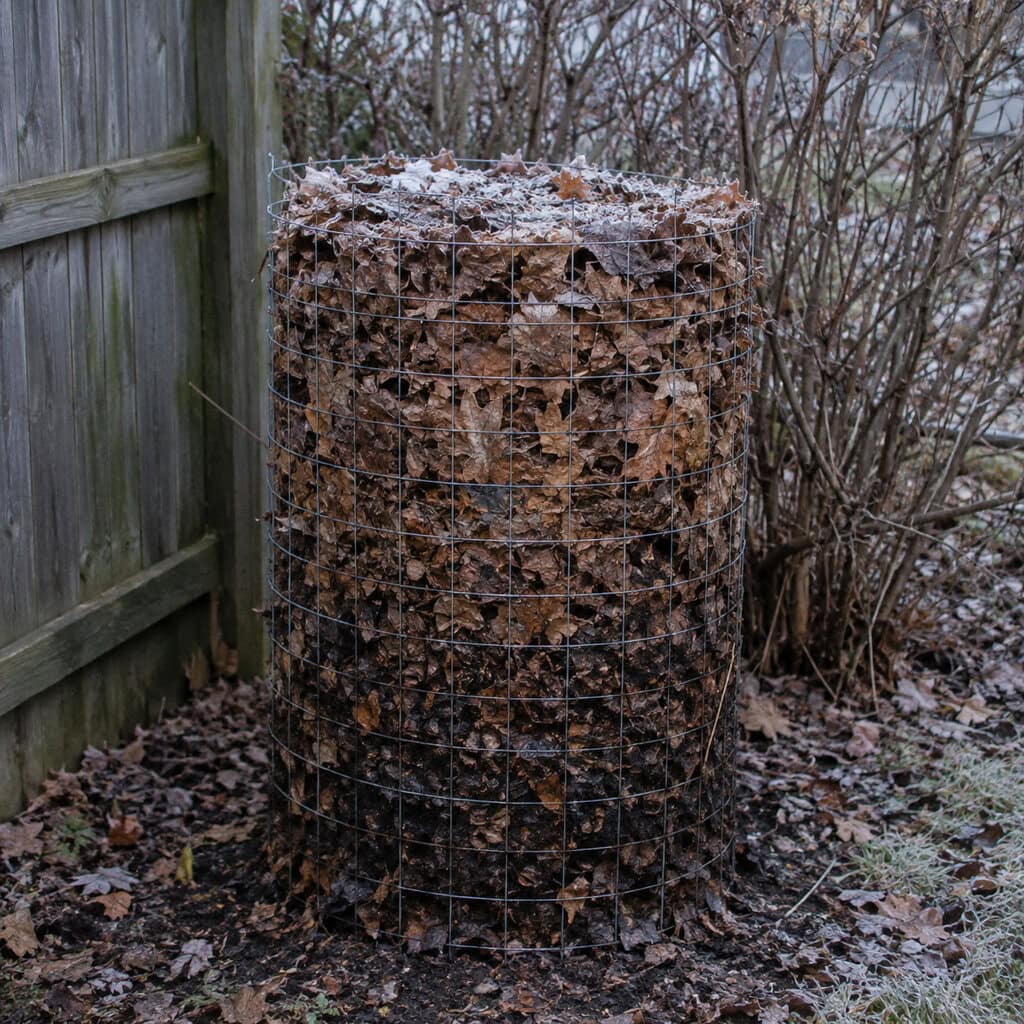
Leaf mold isn’t compost. It’s cold, slow, fungal decomposition, and it produces a crumbly black soil conditioner you can’t buy at any price.
A four-foot ring of welded wire fencing is the whole setup. Fill it, soak it once, forget it.
Give it two years. Mow the leaves before they go in and you’ll cut that closer to one, according to the Royal Horticultural Society.
5. Leave the Bed Layer for Overwintering Butterflies and Moths
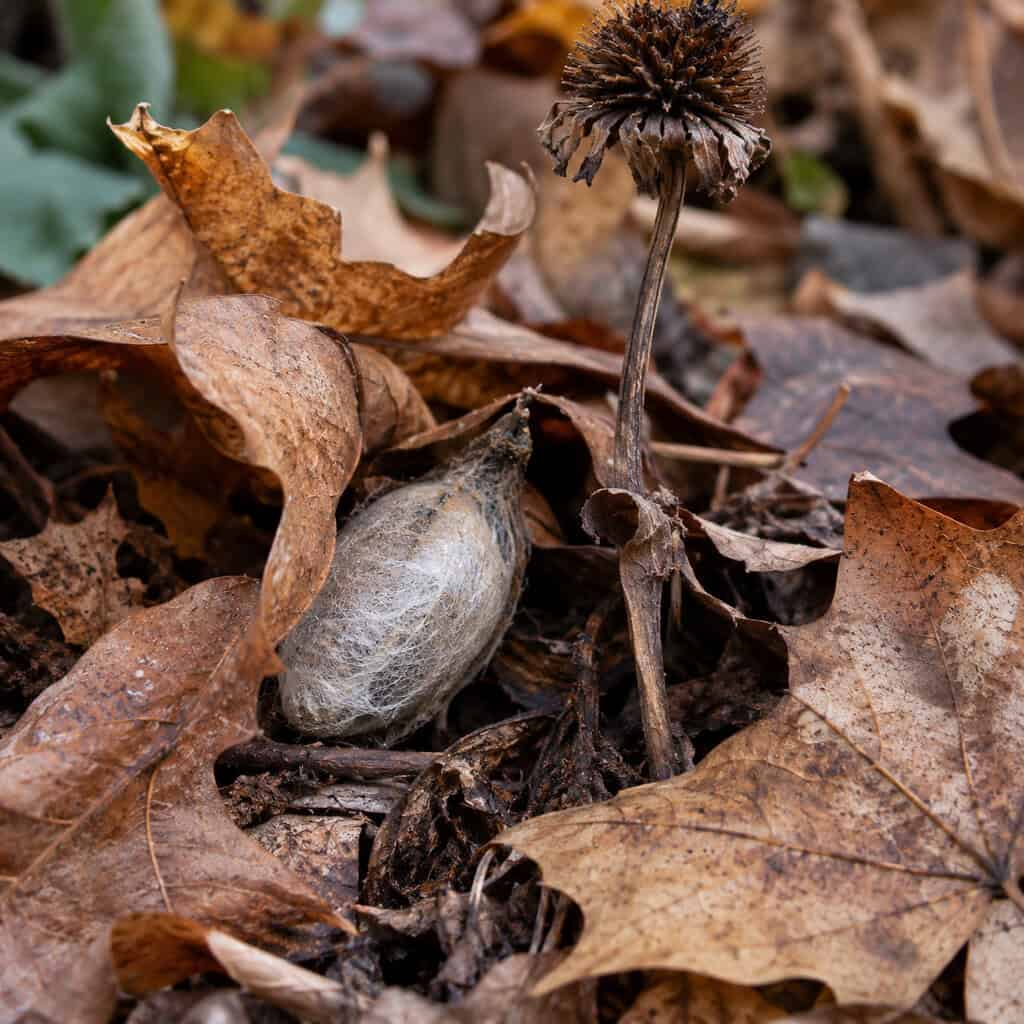
Most butterflies and moths don’t fly south. They spend winter right there in the yard — as eggs glued to twigs, as caterpillars tucked under litter, as chrysalises that look exactly like a dead leaf because that’s the entire point.
Luna moths overwinter in cocoons wrapped in fallen leaves on the ground. Swallowtails hang on stems inside that same layer.
Rake a bed down to bare dirt in November and you’ve bagged next July’s pollinators. The Xerces Society has been making this case for years, and it’s slowly changing how pros handle back beds.
6. Strip Them Off the Roof, Gutters and Foundation First
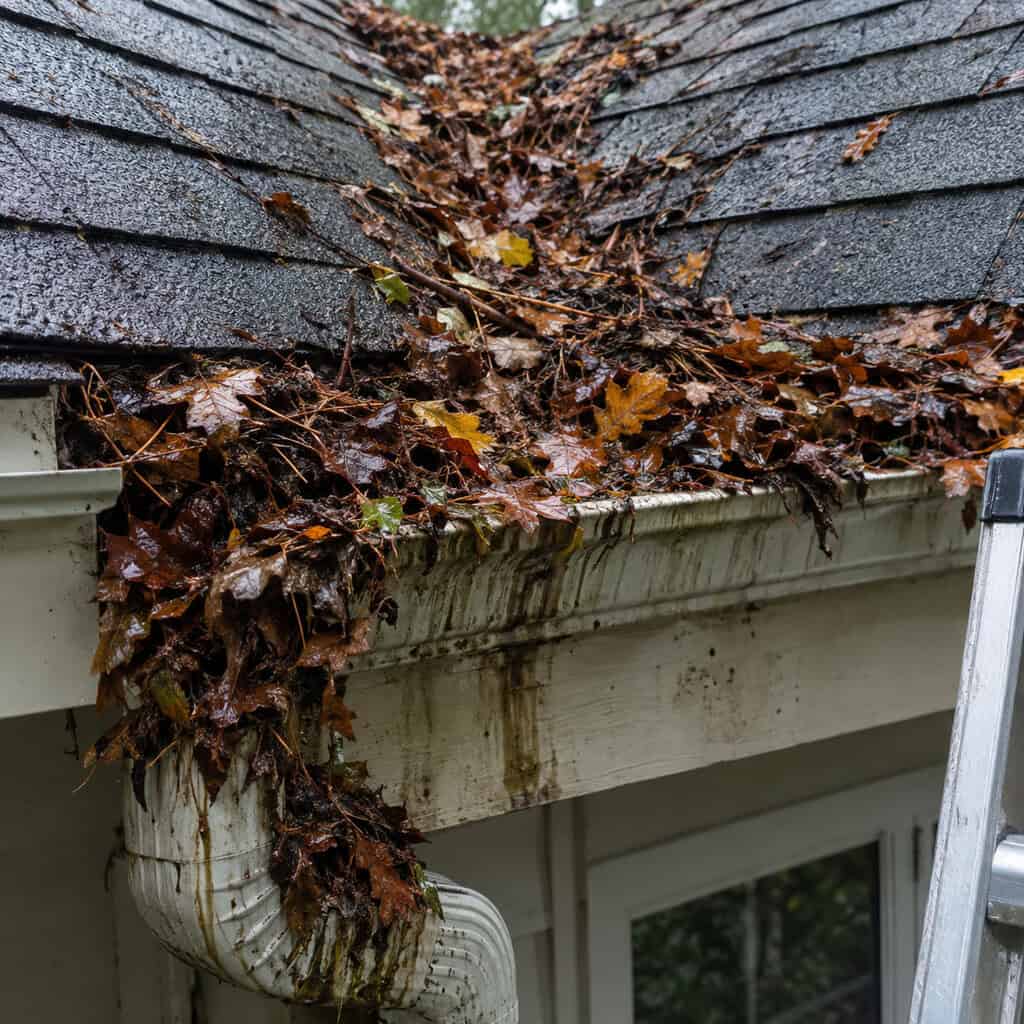
There’s exactly one place a landscaper will not leave a leaf, and it’s within six feet of the house.
Packed gutters are the obvious one. Water backs up past the drip edge, soaks the fascia, and in cold climates it refreezes into an ice dam that pushes meltwater up under the shingles and into the ceiling drywall. A single clogged run can cost you thousands.
Roof valleys are worse and almost nobody checks them. Leaves wedge where two roof planes meet, hold a permanent wet sponge against the shingles, and rot the decking from the top down.
Then there’s the ground. A drift of wet leaves banked against siding keeps the bottom course and the sill plate damp all winter — that’s how you get soft trim, mildew in the crawlspace, and carpenter ants that find the soft wood later.
It’s also a rodent highway. Mice travel under cover, and a continuous leaf blanket from the shrub line to the foundation gives them a roofed corridor to every gap around your dryer vent and hose bib.
- Clear gutters and downspout openings after the last heavy drop
- Pull leaves out of every roof valley and behind the chimney
- Rake a bare 12-inch strip of soil or gravel all the way around the foundation
- Check window wells and basement stairwells — they fill first
Everything you pull off the house still goes into the beds or the pile. You’re relocating it, not bagging it.
7. Stockpile Dry Leaves as Next Summer’s “Browns”
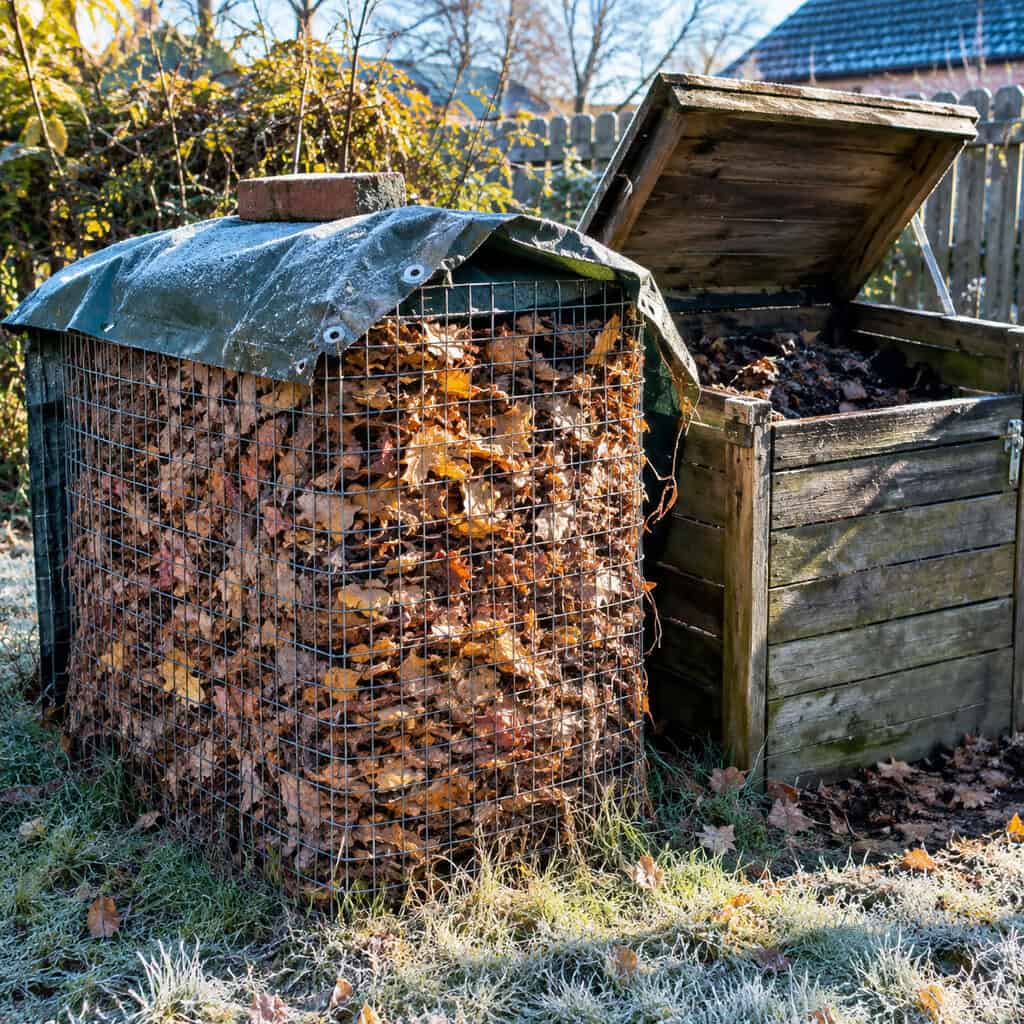
Your summer compost pile smells like a swamp for one reason: it’s all grass clippings and kitchen scraps with nothing dry to balance them.
Tree leaves run around 40:1 carbon to nitrogen. Fresh clippings sit near 20:1. An efficient pile wants to start around 30:1, which Cornell Composting lays out in detail.
So cage a pile of dry leaves in October and keep it under a tarp. Every time you dump a bucket of grass or melon rinds in July, throw two scoops of leaves on top.
Free odor control for a year.
8. Blanket the Garlic and Strawberry Beds
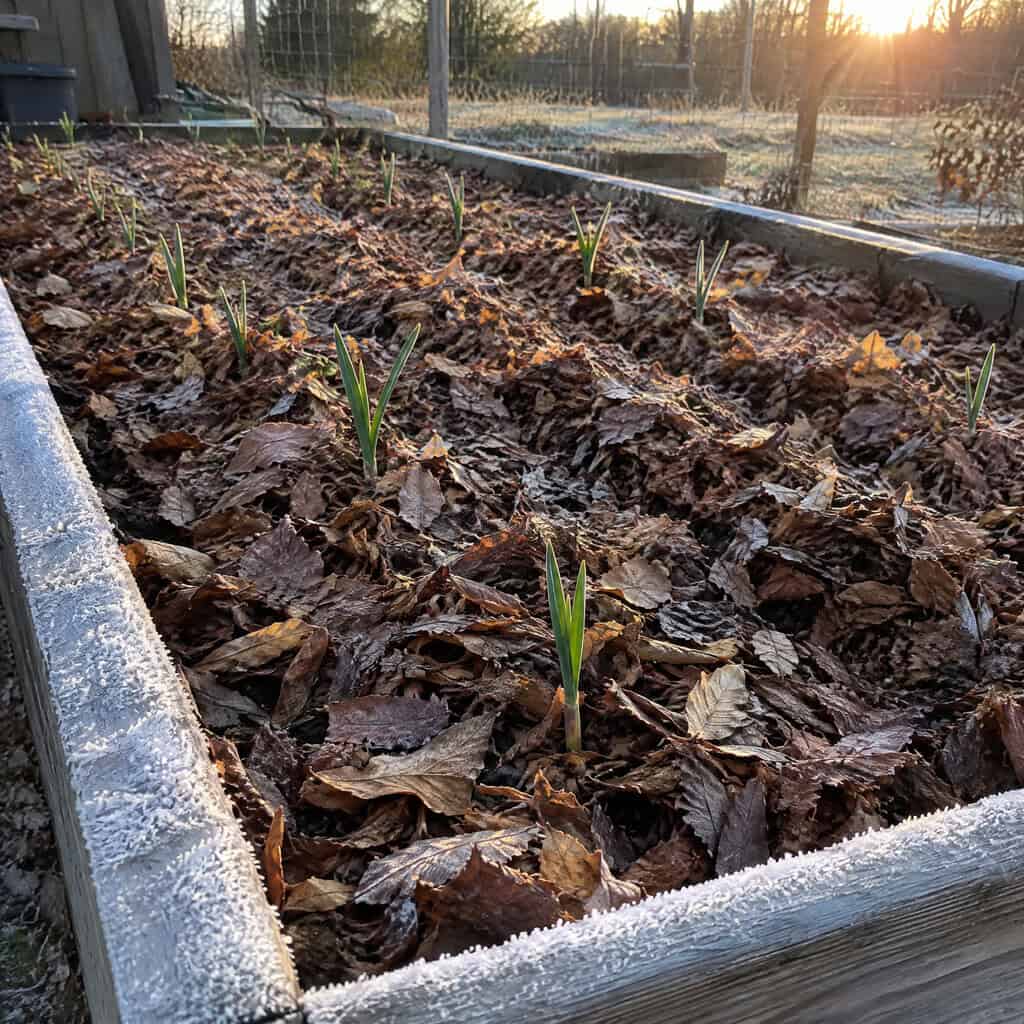
Winter mulch doesn’t keep plants warm. It keeps the soil from thawing and refreezing twenty times, which is what physically shoves crowns and bulbs up out of the ground.
Wait for the first hard freeze, then pile four to six inches of shredded leaves over fall-planted garlic and strawberry rows.
It’s the no-cost version of a straw bale. Pull it back off the garlic in early spring when shoots start pushing.
9. Smother Turf With Cardboard and Leaves to Make a New Bed
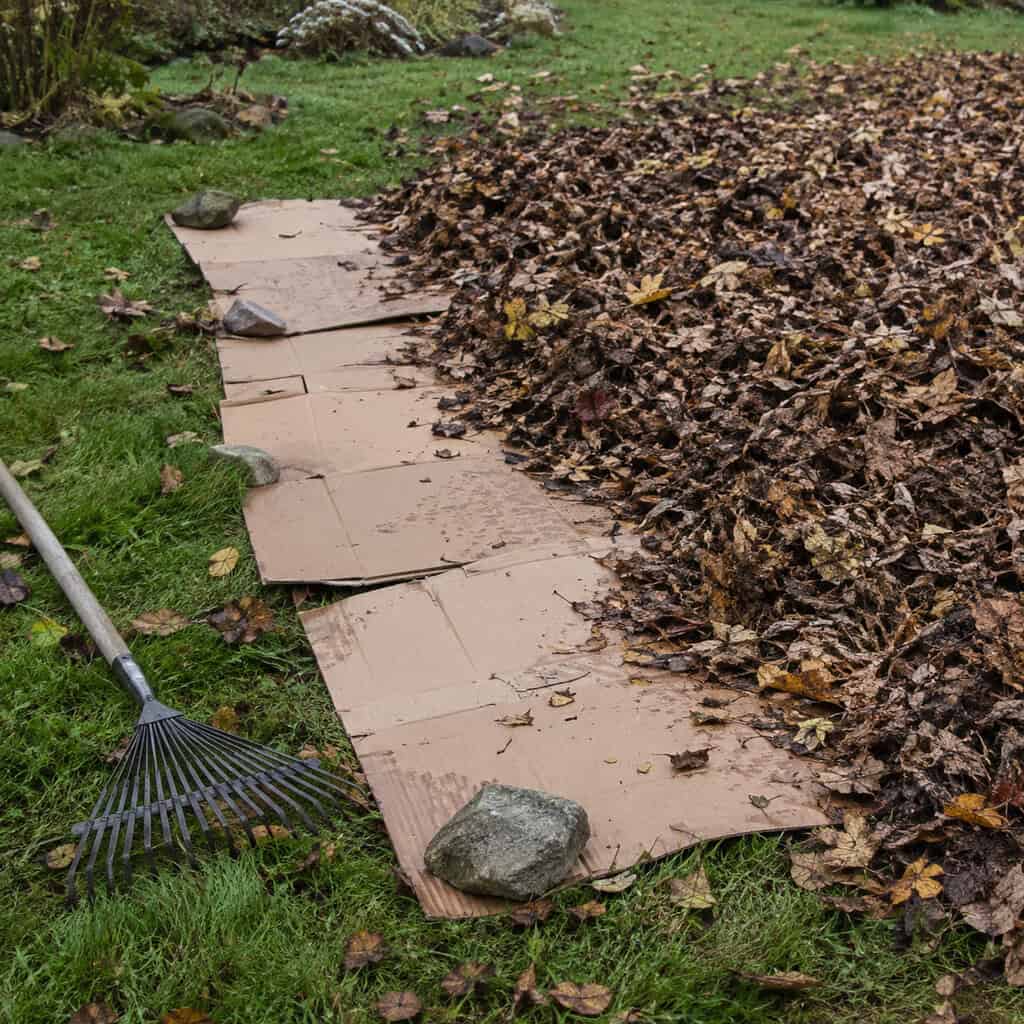
No sod cutter. No tiller. No herbicide.
Lay overlapping cardboard right on the grass, wet it down, then dump six to eight inches of shredded leaves on top. Weigh the edges with a few rocks so December wind doesn’t redecorate the yard.
By May the turf is dead, the cardboard is nearly gone, and the soil underneath is loose and full of worms. Cut a hole and plant.
Fall is the only season the material costs nothing.
10. Bottom-Fill New Raised Beds
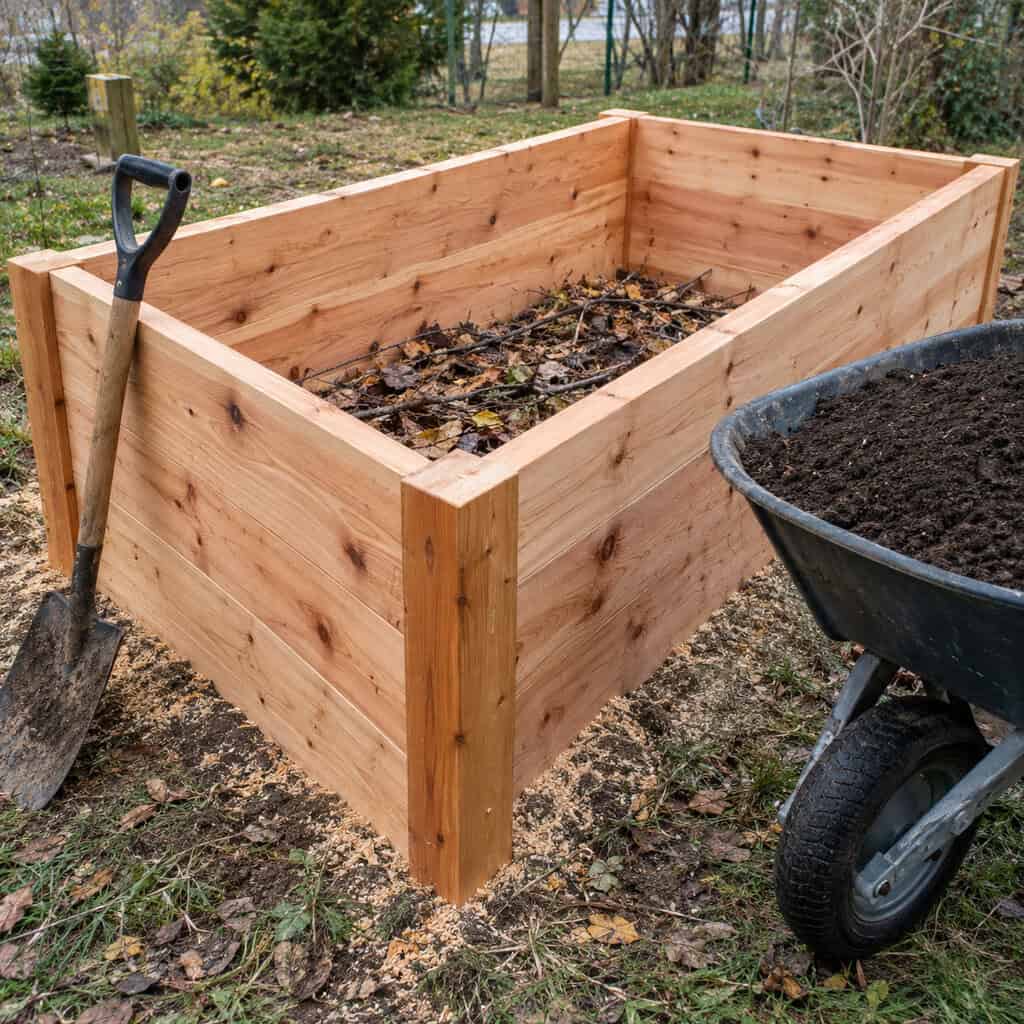
Filling a 4×8 bed two feet deep with bagged soil can run north of $300.
Crews don’t do that. They pack the bottom third with whole leaves, small branches, and sod chunks flipped upside down, then cap it with real soil and compost.
It settles the first year — plan on topping it off. What you get in exchange is a reservoir of decaying organic matter holding water under your root zone all summer.
11. Bag Them — In Black Plastic, On Purpose
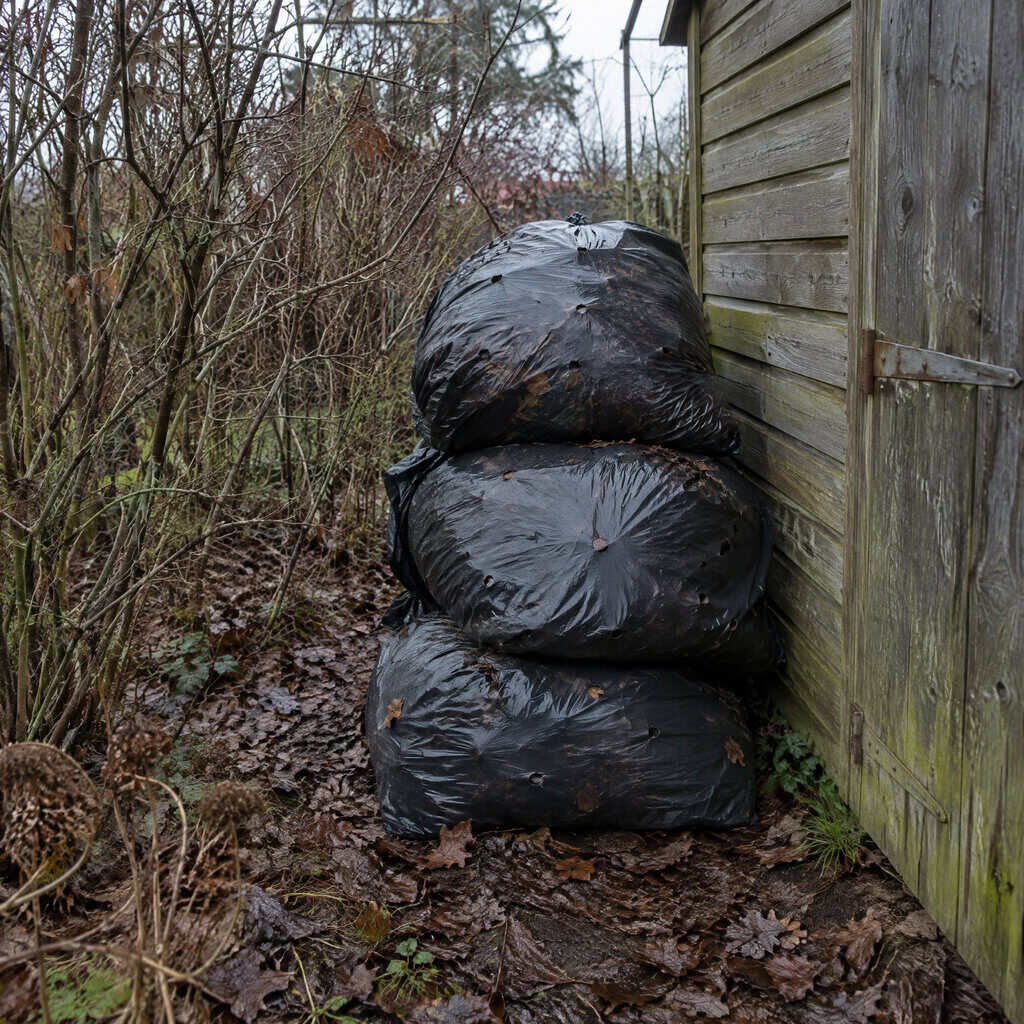
Here’s the twist on the headline. Pros do bag leaves sometimes. They just never set them at the curb.
Stuff damp shredded leaves into a black contractor bag, punch six or eight holes in it with a screwdriver, tie it loose, and stack it behind the shed where nobody looks.
Heat and moisture do the rest. You’ll have usable leaf mold in about a season instead of two.
The bag is a composting vessel. That’s the whole difference.
12. Cage Roses and Tender Perennials in Leaf Collars
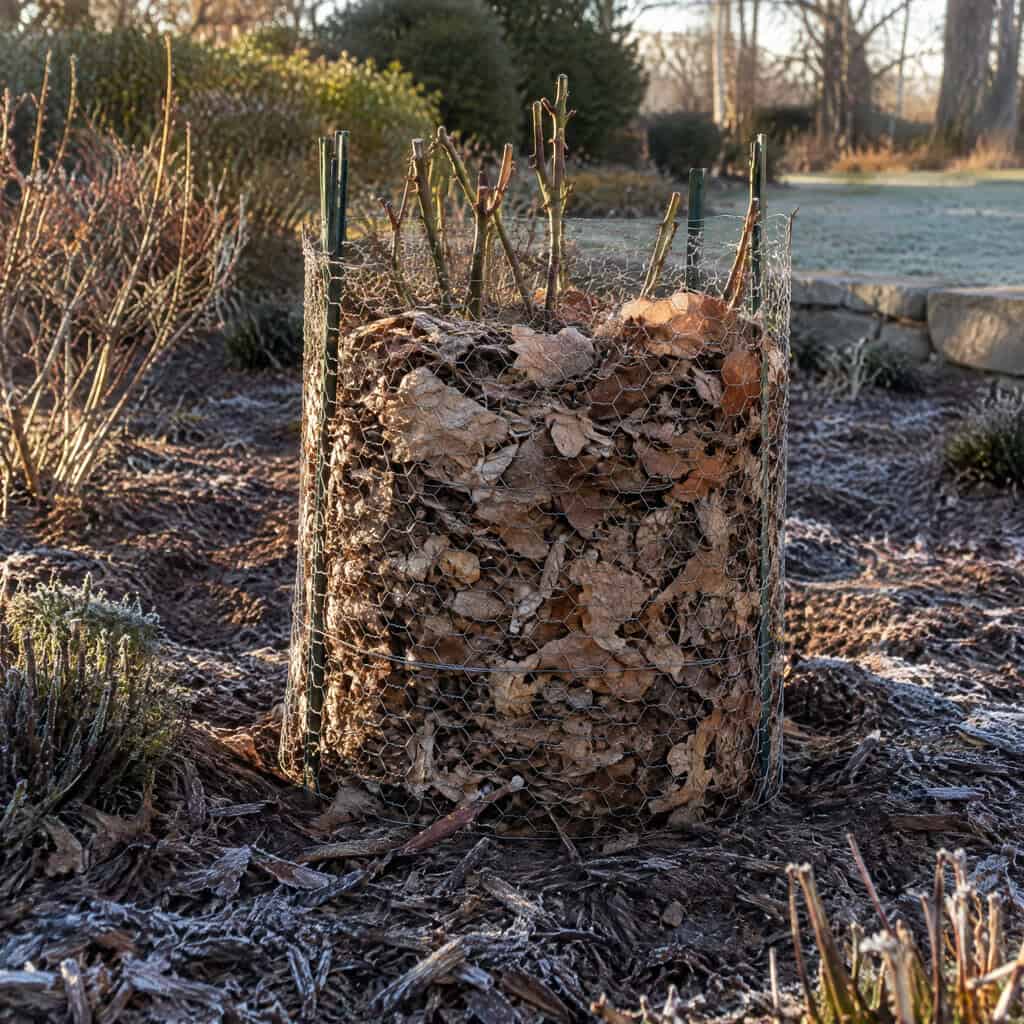
Old nursery trick, still the best one for grafted roses.
Wrap a two-foot cylinder of chicken wire around the plant, stake it, and fill it with dry leaves up over the graft union. The wire is what makes it work — a loose mound blows apart in the first December gale and leaves the crown naked at 5 degrees.
In April you pull the ring and rake the contents flat as bed mulch. Nothing wasted.
13. Mulch the Paths, Not Just the Beds
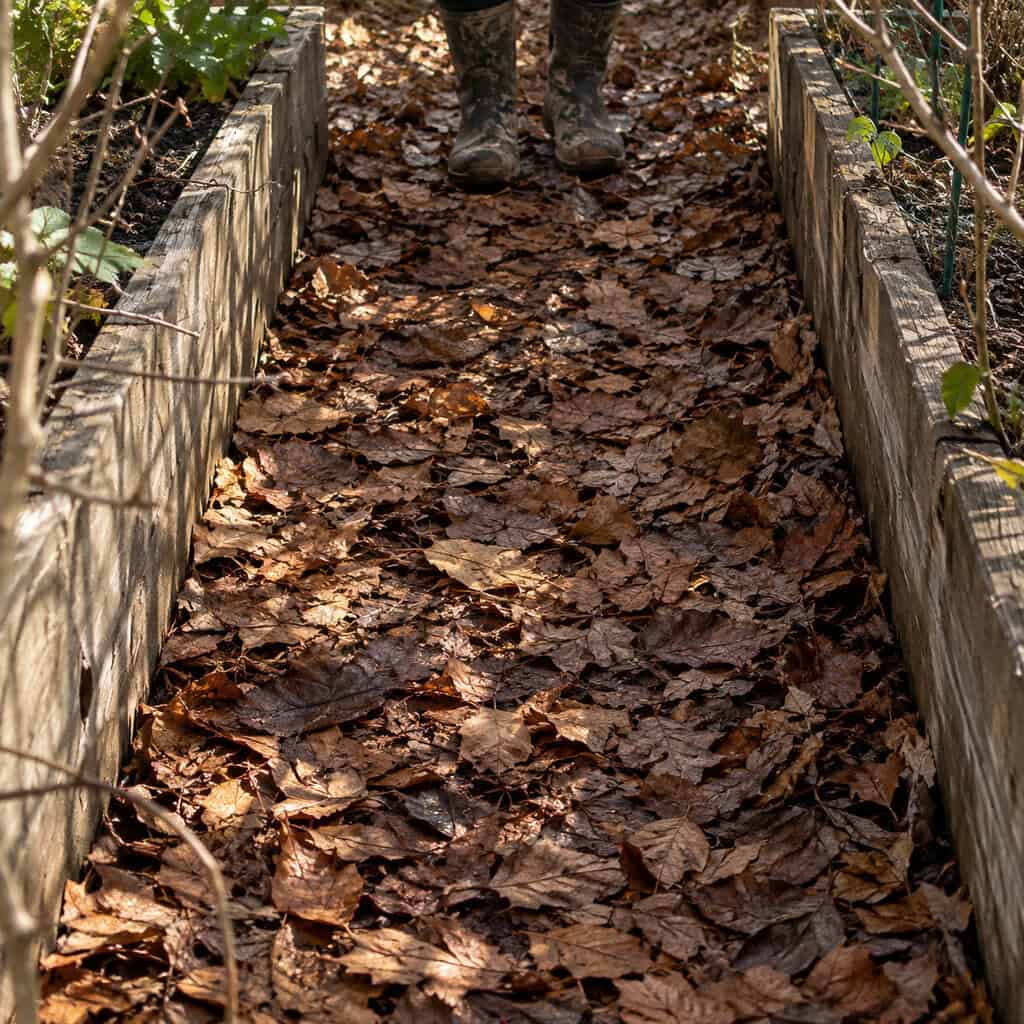
Whole, unshredded leaves finally have a job where matting is a feature.
Packed six inches deep on a woodland trail, a vegetable garden walkway, or the gaps between raised beds, they flatten into a springy weed-blocking surface that drains fine and feels great underfoot.
Refresh it every fall. It’s the one surface nobody wants to spend mulch money on anyway.
14. Run Them as Deep Litter in the Chicken Coop
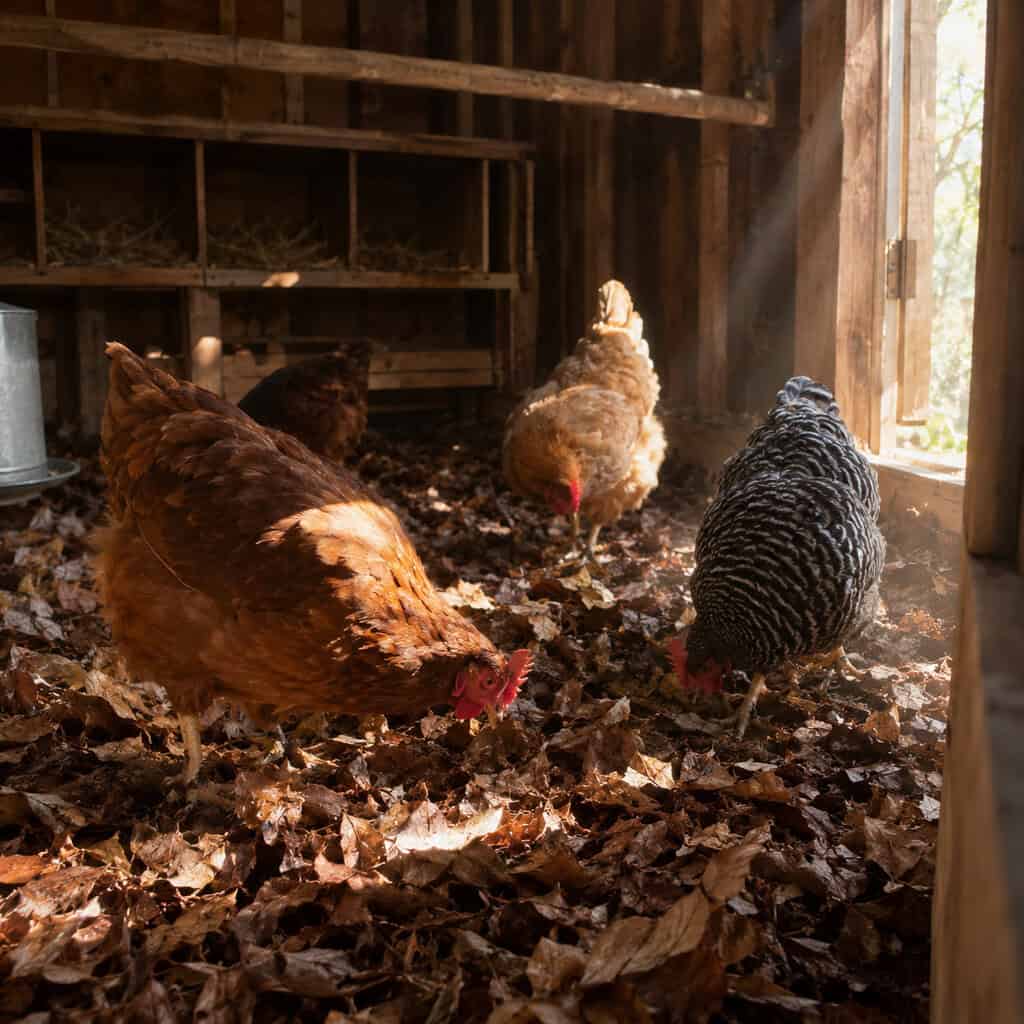
Pine shavings cost money. Leaves fall out of the sky.
Start with six inches of dry leaves on the coop floor, add more as it packs down, and let the birds do the turning. The deep litter method builds a slow compost layer that actually generates a little warmth under them through January.
Come spring you fork the whole floor out and it’s nitrogen-rich garden amendment. The run takes leaves too, and the flock will shred them for you.
15. Jacket the Active Compost Pile for Winter
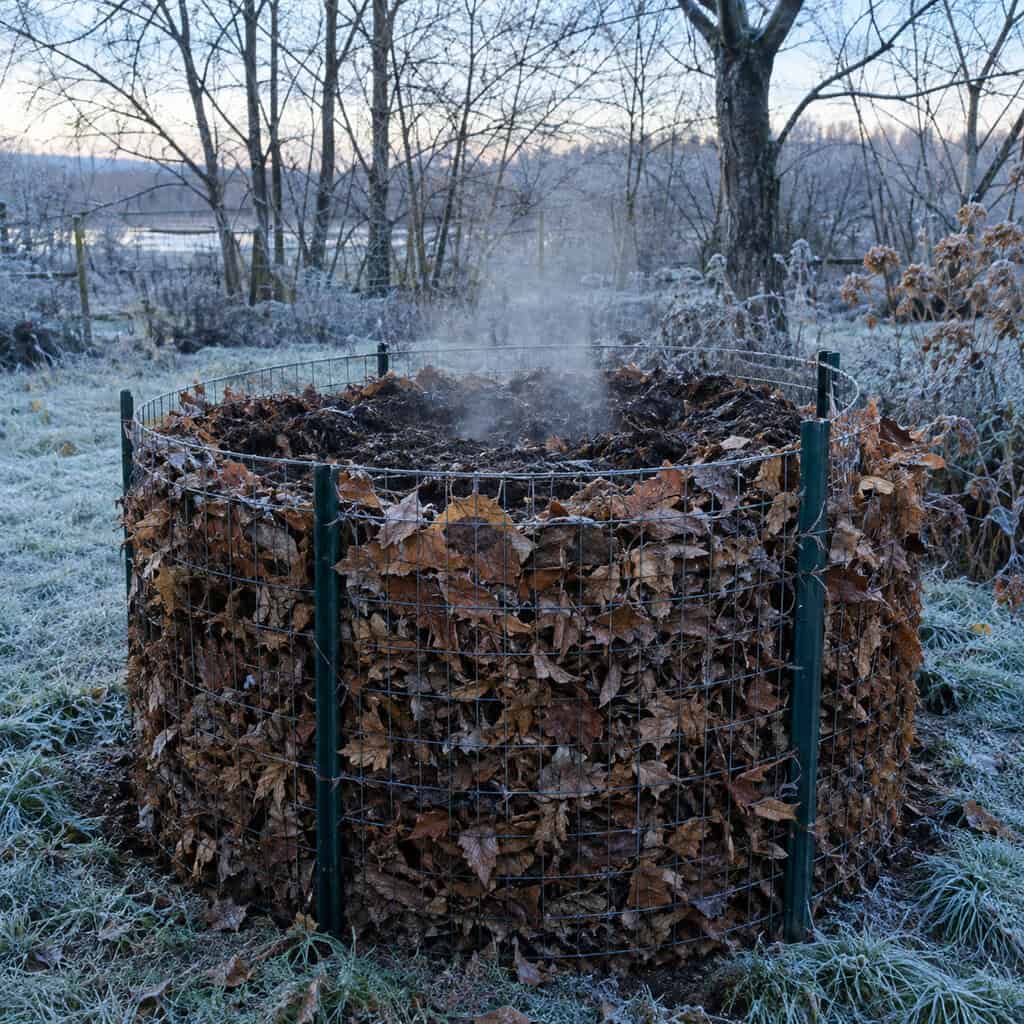
A pile that freezes solid in December is doing nothing for you until April.
Pack a foot of dry leaves all the way around the outside — easiest with a second wire ring set eight inches outside the first, filled like a wall cavity.
The core stays biologically active for weeks or months longer. In a Zone 5 winter that can mean finished compost in March instead of June.
16. Overwinter Carrots and Parsnips Under a Leaf Duvet
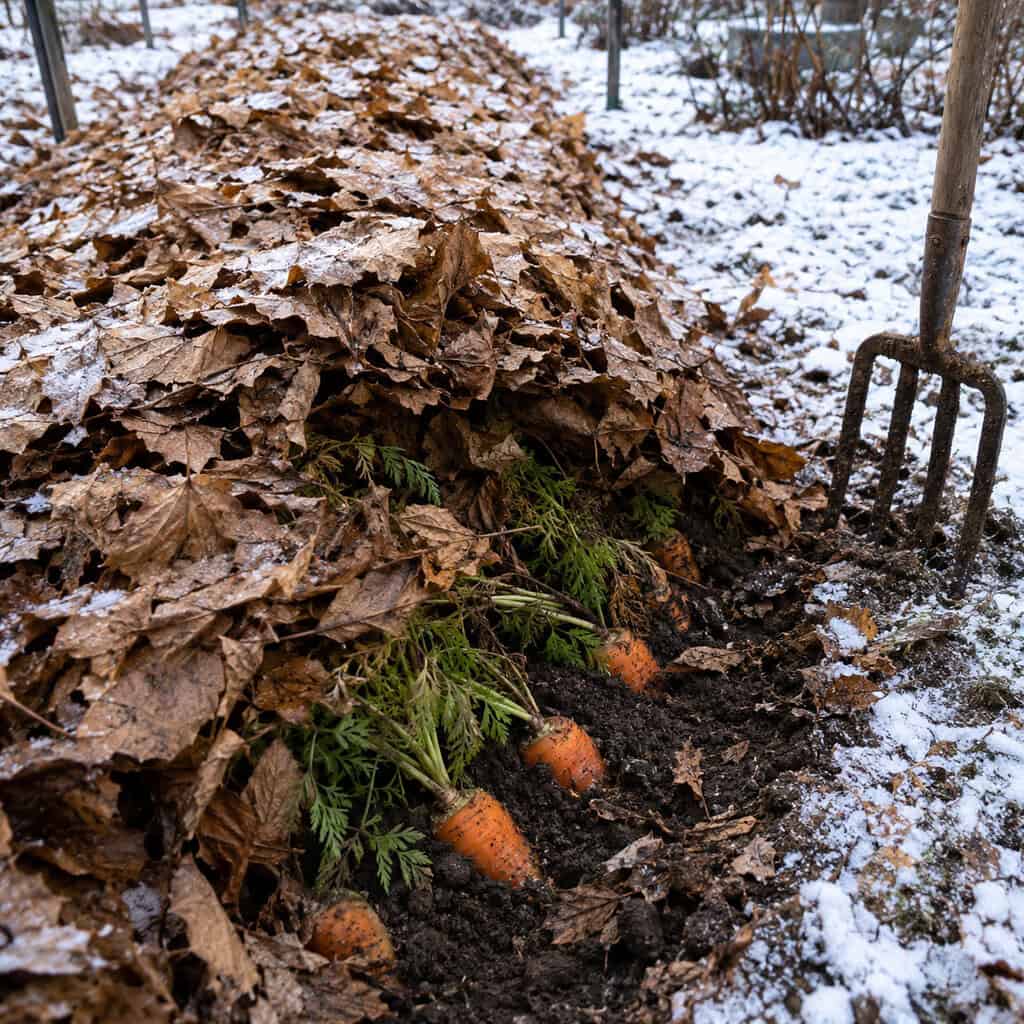
An in-ground root cellar, free, built in twenty minutes.
Pile a foot or more of dry leaves over a row of carrots, parsnips, beets, or leeks before the ground locks up. Throw a tarp or row cover over it to keep the leaves dry and in place.
The soil underneath stays diggable well into January in most of the country. Pull them as you want them.
Better yet, carrots and parsnips convert starch to sugar after repeated frost. December parsnips beat October parsnips by a mile.
17. Hold Bare Slopes and New Plantings With Leaf Litter
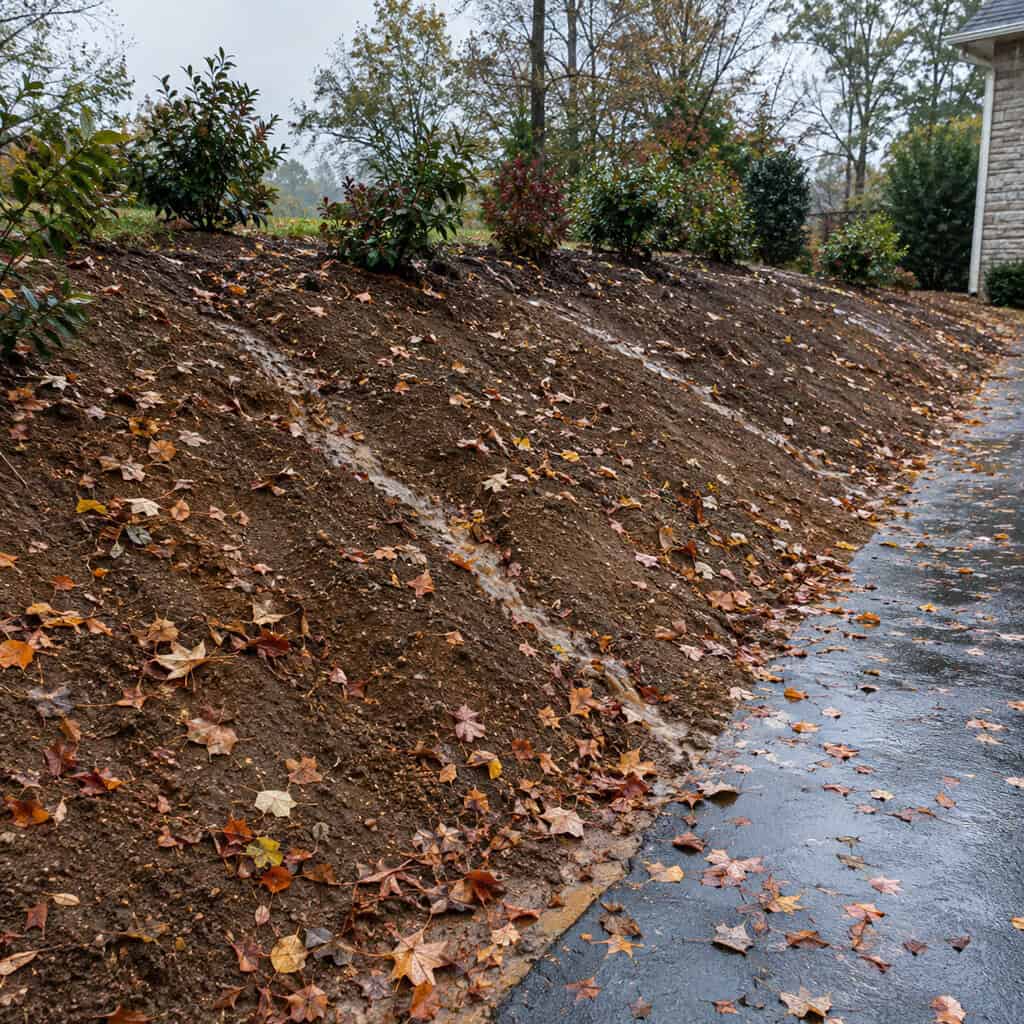
Raw graded soil on a slope is one hard rain away from the storm drain.
A loose layer of leaf litter breaks the impact of every drop and slows sheet flow enough that the soil stays put. On a newly seeded fall slope, it does the same job as straw without importing weed seed.
The forest floor has been running this system for a few million years. Pros just deploy it on purpose.
18. Screen Leaf Mold Into the Potting and Seed-Starting Mix
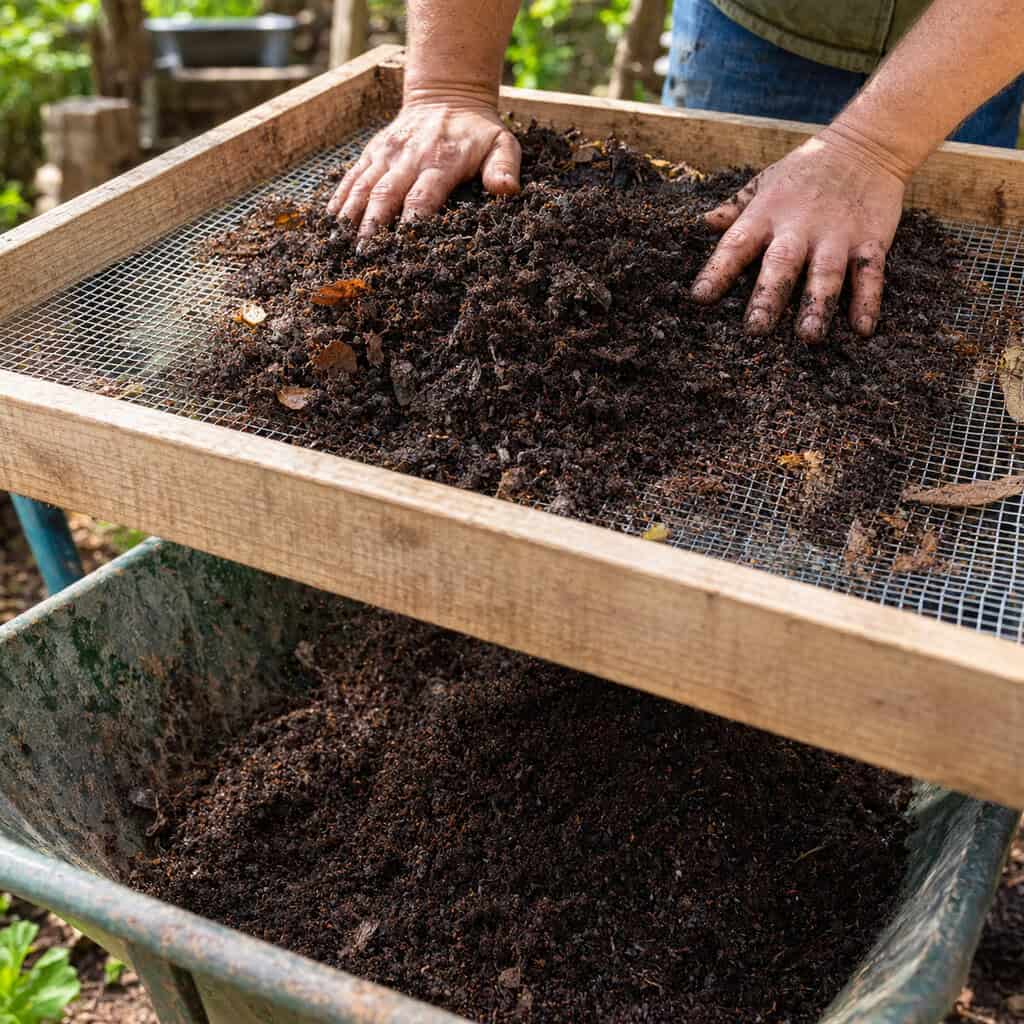
Two-year-old leaf mold, pushed through half-inch hardware cloth, comes out light, dark, and spongy.
That’s a legitimate peat substitute. Blend roughly a third leaf mold, a third finished compost, and a third coarse sand or perlite for a container and seed-starting mix.
It costs nothing and it didn’t come out of a drained peat bog.
19. Fork Them Into Heavy Clay and Sandy Beds
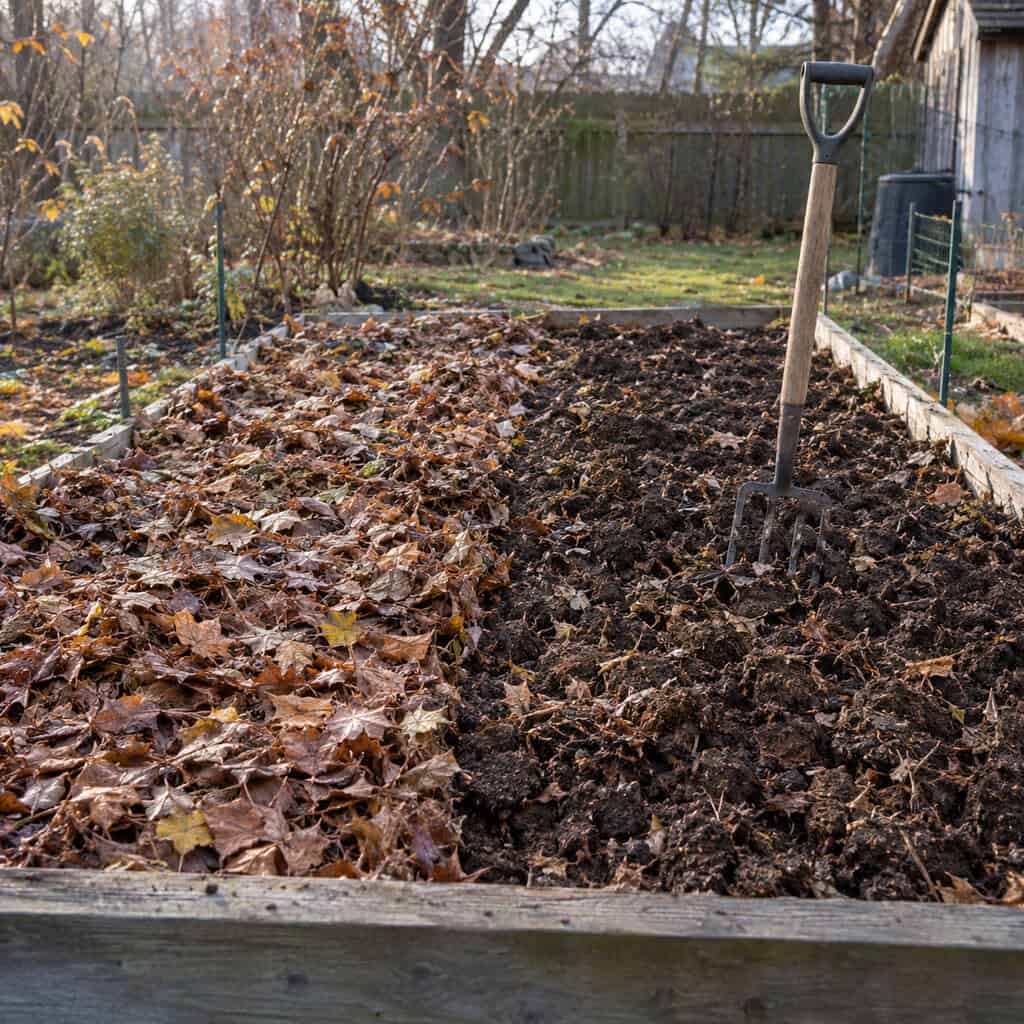
Surface mulch is only half the game.
Spread three or four inches of shredded leaves over an empty vegetable bed in late fall and turn them into the top six inches with a fork. In clay they wedge the particles apart and improve structure. In sand they act like a sponge.
Winter is exactly how long they need to vanish. Colorado State Extension covers the method in Using Leaves in the Landscape.
20. Sort Out the Leaves That Don’t Belong
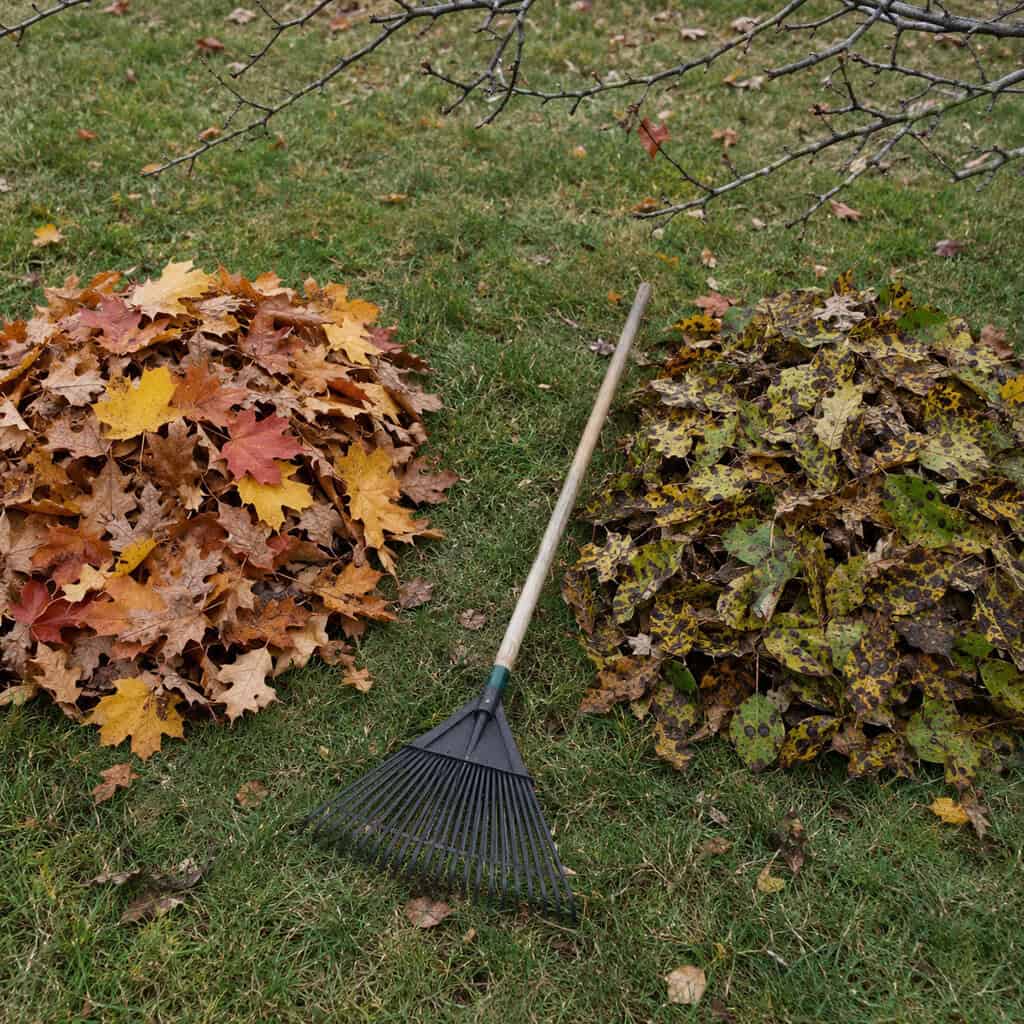
Not every leaf gets a free pass, and this is where careless advice gets people in trouble.
Black walnut is the big one. Walnut tissue contains juglone, a compound that’s genuinely toxic to tomatoes, peppers, eggplant, potatoes, and a long list of ornamentals — wilting and death in sensitive plants, sometimes with no obvious cause. The leaves carry far less of it than the roots, hulls, and bark, and juglone does break down in a hot, well-managed compost pile over a few months. But don’t gamble a tomato bed on it. Keep walnut leaves out of vegetable beds entirely, or compost them hard and use the result somewhere else.
Disease is the other filter. Apple scab overwinters in infected leaf litter under crabapples and apples, and the spores launch right back into the canopy next spring. Rose black spot does the same thing from leaves lying under the bush.
So those leaves leave the host plant. Period.
They can go into a genuinely hot compost pile — 130 to 150 degrees, turned — or into the municipal yard-waste stream where the windrows run hotter than anything you’ll build. What they can’t do is sit under the tree they fell from.
A couple of other judgment calls: avoid piling heavy oak litter deep and permanently on plants that want neutral soil, and don’t mulch with leaves from any tree you just treated with a persistent herbicide. Everything else stays on the property.
21. Pack and Huddle Containers for Winter
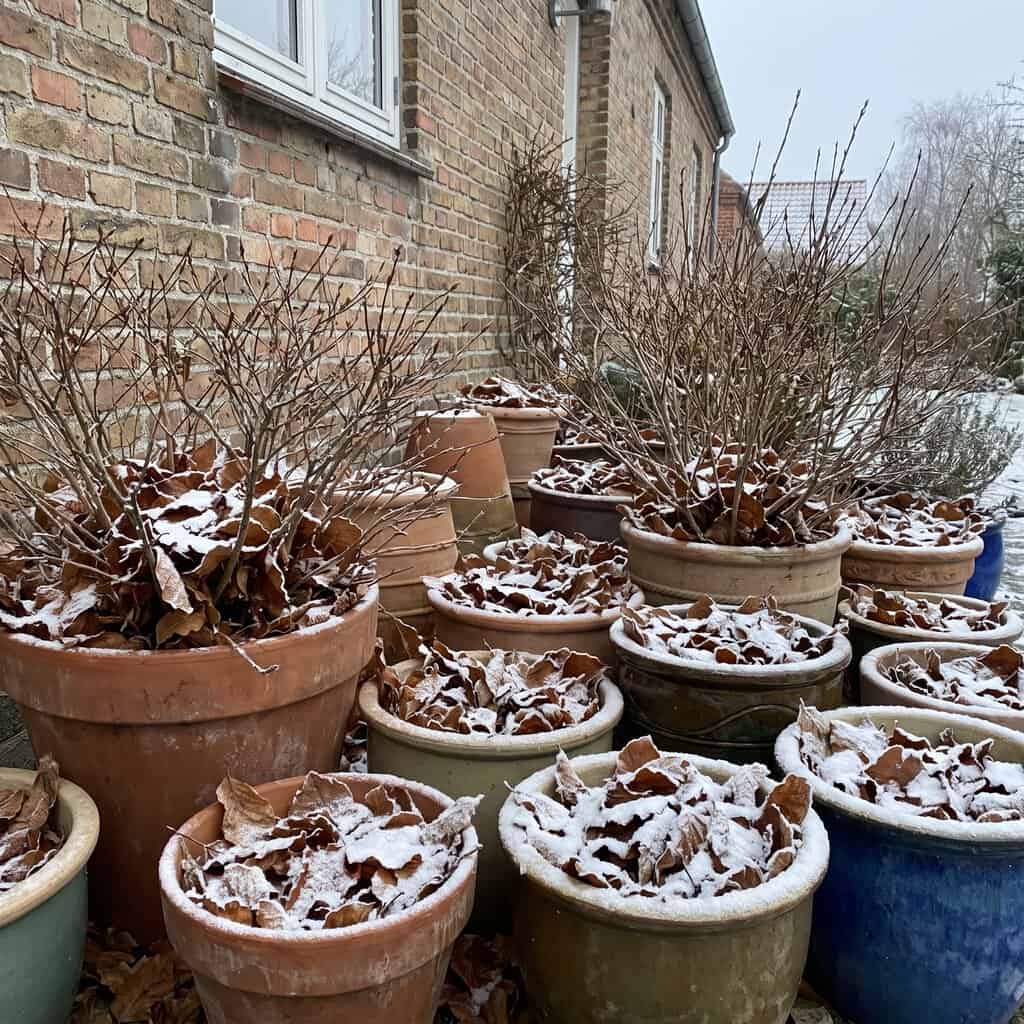
A shrub in a pot dies in winters the same shrub in the ground shrugs off. The reason is simple — a pot freezes from all sides, and the roots never evolved for that.
Drag the containers into a tight cluster against a north or east wall, pots touching. Then pack leaves into every gap and heap another foot over the top.
It’s a heeling-in bed that costs nothing and takes fifteen minutes.
22. Keep a Leaf-and-Brush Pile in the Back Corner
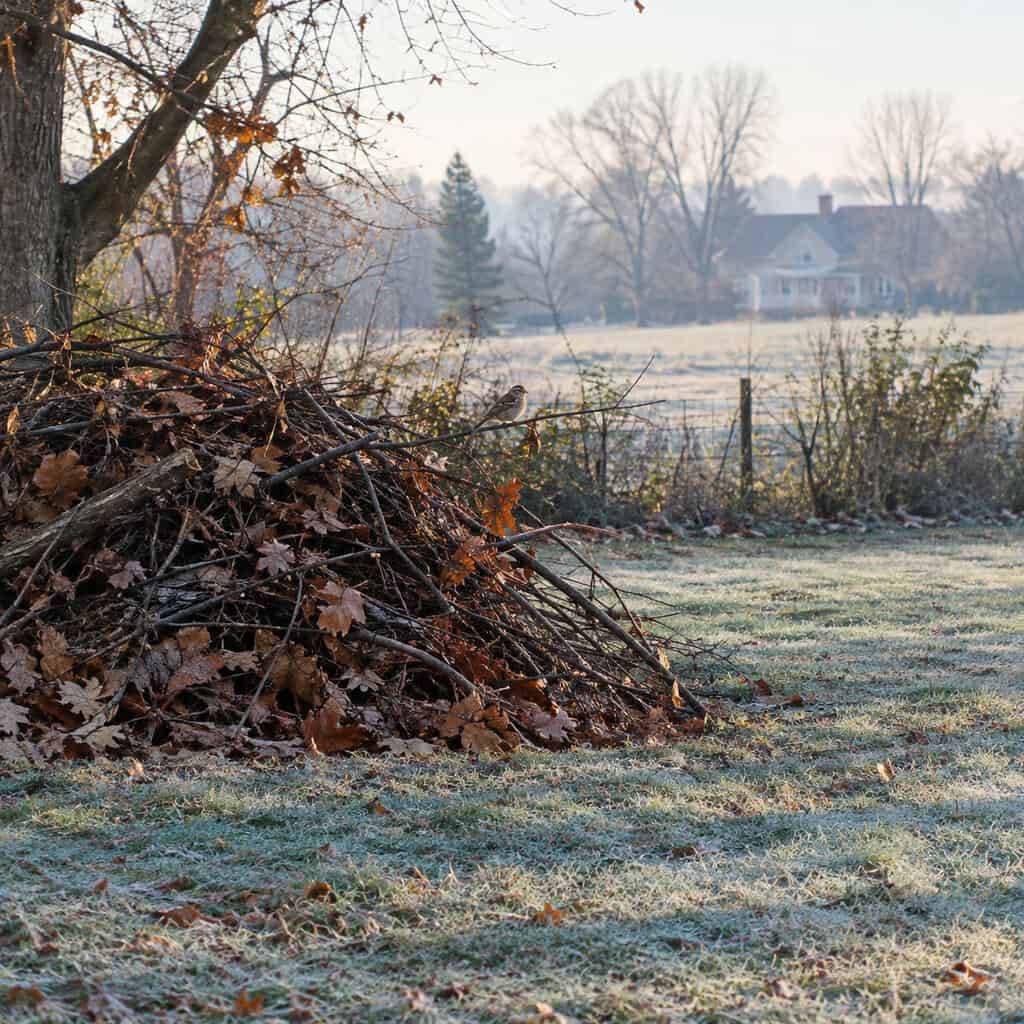
Build a loose lattice of branches two feet high, then bury it in leaves. That’s it.
What moves in is remarkable: toads, firefly larvae, ground beetles that eat slugs all summer, overwintering bumble bee queens tucked an inch under the litter, and every ground-foraging bird on the block flipping leaves for insects in February. The Xerces Society treats this kind of structure as core overwintering habitat.
Now the caveat, because it matters. The exact qualities that make a brush pile good wildlife habitat make it good rodent habitat too — cover, insulation, no foot traffic. Site it badly and you’ve built mice a staging area twelve feet from your crawlspace vent.
So put it at the far property corner, 50 feet or more from the house, garage, and shed if your lot allows it. Keep it clear of woodpiles stacked against the siding and away from any dryer vent, foundation crack, or utility penetration.
Keep food out of it — no kitchen scraps, no birdseed spill, no pet food. A brush pile with a food source is a bait station; a brush pile without one is just cover.
And if you’re already fighting rodents, skip this entry entirely until that’s handled. One pile isn’t worth the headache.
23. Give the Surplus Away Instead of Paying to Dump It
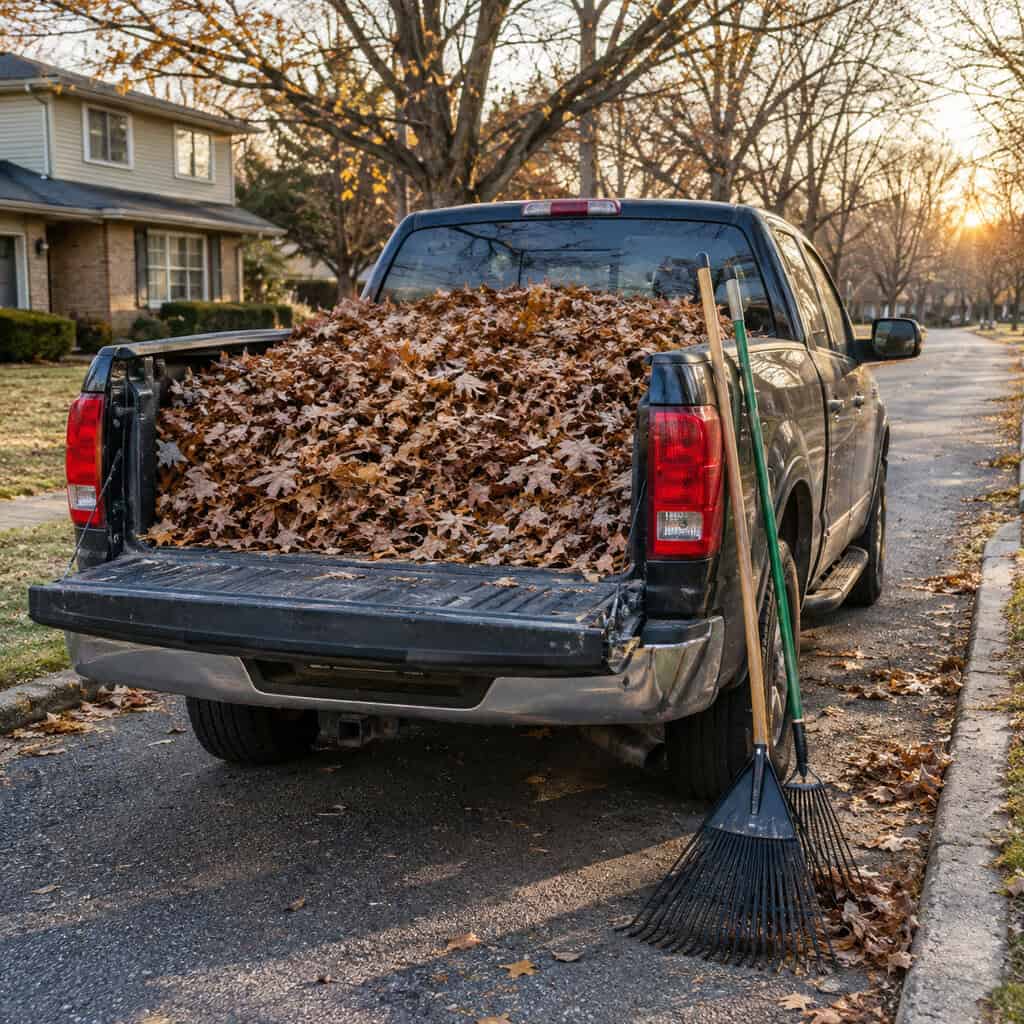
Some yards genuinely make more leaves than they can absorb. Big oaks, small lot, it happens.
Clean leaves are a wanted commodity. Community gardens, small market farms, homesteaders, and anyone within ten miles who keeps chickens will usually come get them. Post them free on a local group in late October and watch how fast they move.
Otherwise use the municipal leaf vacuum or drop-off. It becomes municipal compost, which is still the soil cycle — just not yours.
24. Let the Big Shade Tree Keep Its Own Leaves
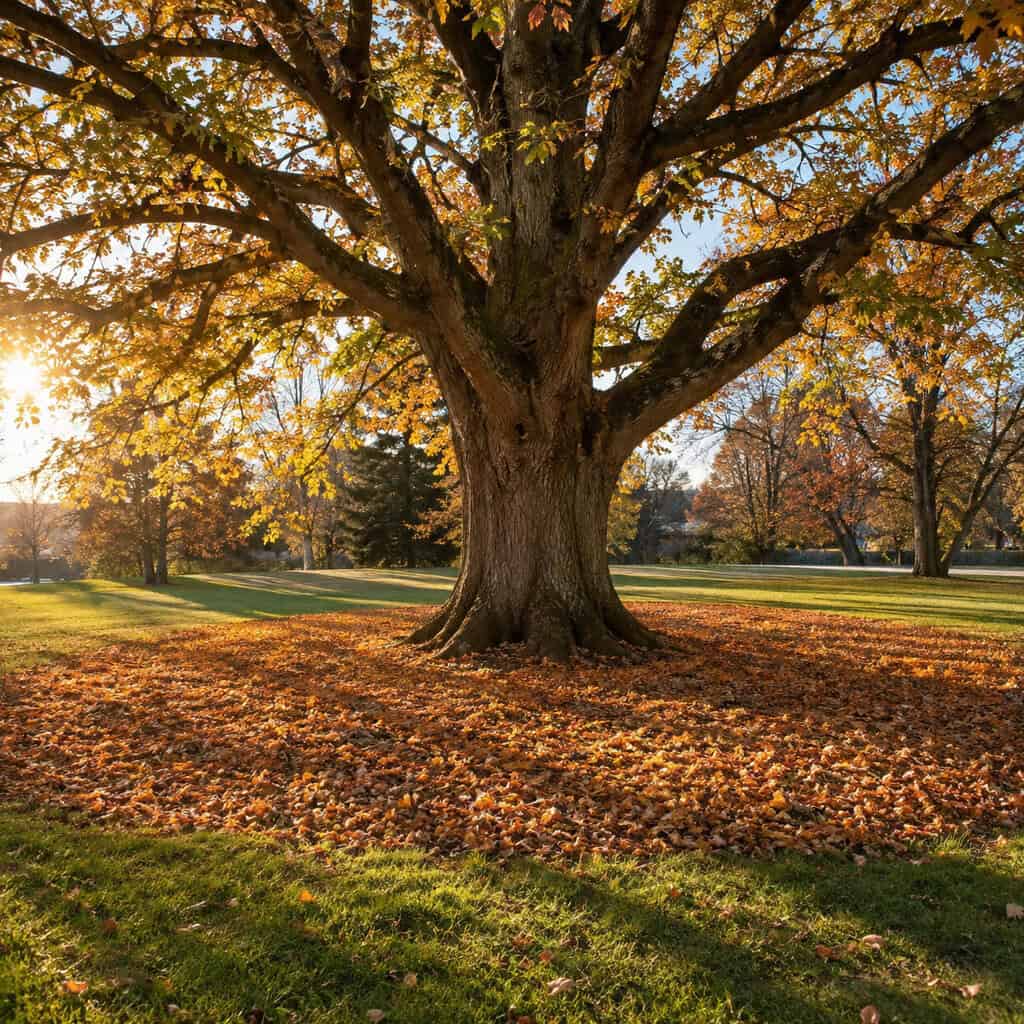
That oak spent all summer pulling minerals out of the ground under its own canopy and packing them into leaves.
Then it hands them back. The ring beneath the drip line is precisely where they were always meant to land.
Stop fighting it. Convert that strip of thin, root-choked, shade-starved turf into a mulched duff ring — let the leaves lie, edge it cleanly, and you’re done raking the hardest part of the yard forever while feeding the most valuable plant on the property.
25. Worm Bin Bedding
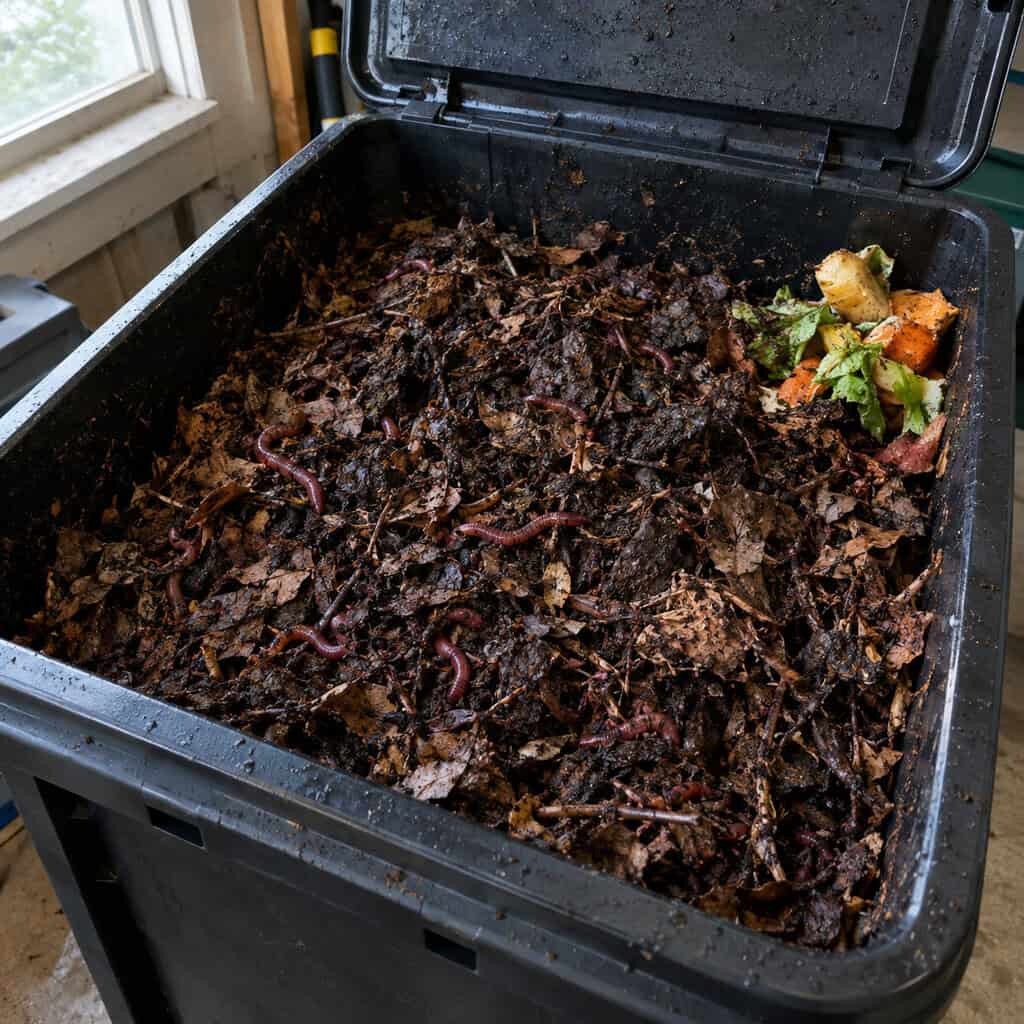
Shredded leaves beat shredded newspaper as worm bedding, and they beat coir on price, which is zero.
Run them through the mower, moisten to wrung-sponge damp, and fill the bin six inches deep before the food scraps go in.
Red wigglers work through it faster than paper. Keep a bin of dry leaves next to the worm bin and you’re set for the year.
26. Shred Them With a String Trimmer in a Trash Can
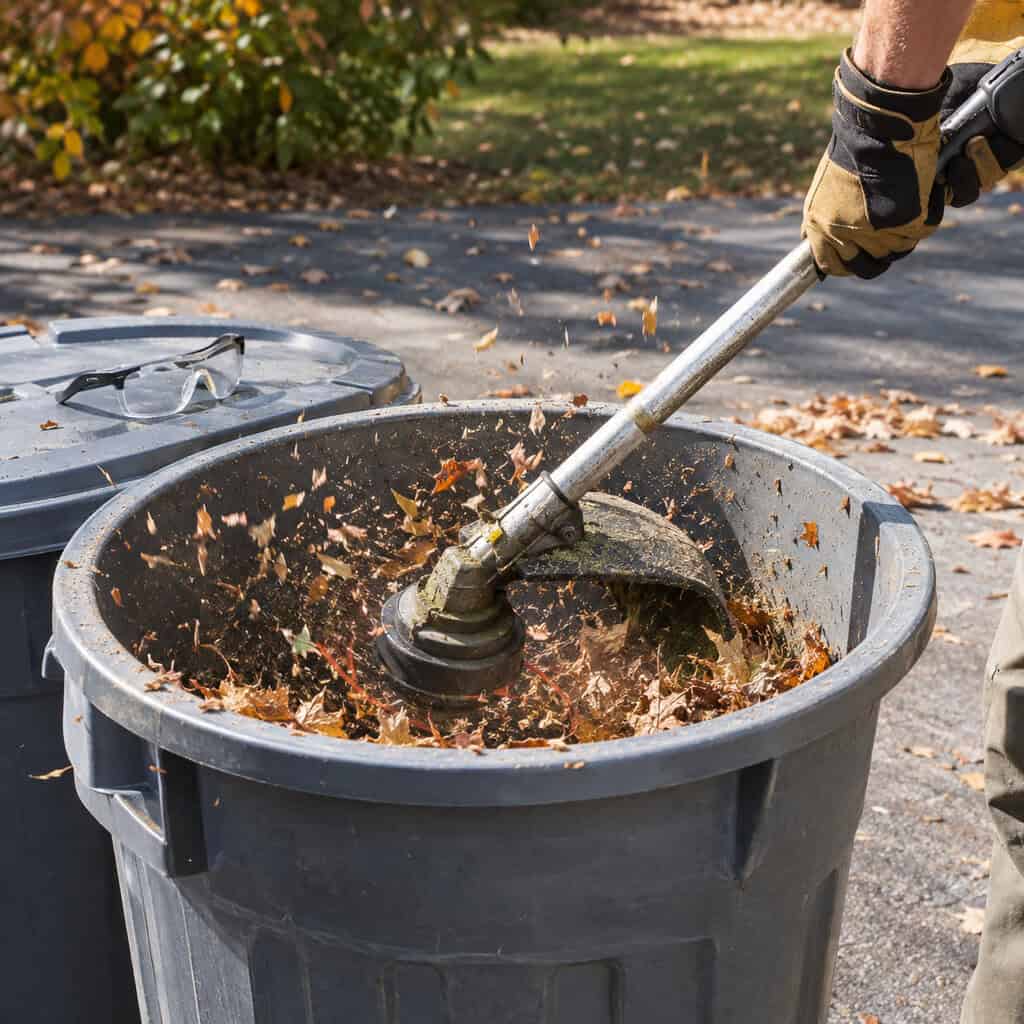
No leaf shredder? Nobody has a leaf shredder.
Fill a plastic trash can a third full of dry leaves, drop a string trimmer in, and run it like a blender for thirty seconds. Volume drops by two-thirds.
Wear eye protection and gloves, keep the can on flat ground, and never do it with wet leaves — they just wrap the head and bog the motor.
27. Insulate a Cold Frame or Low Tunnel
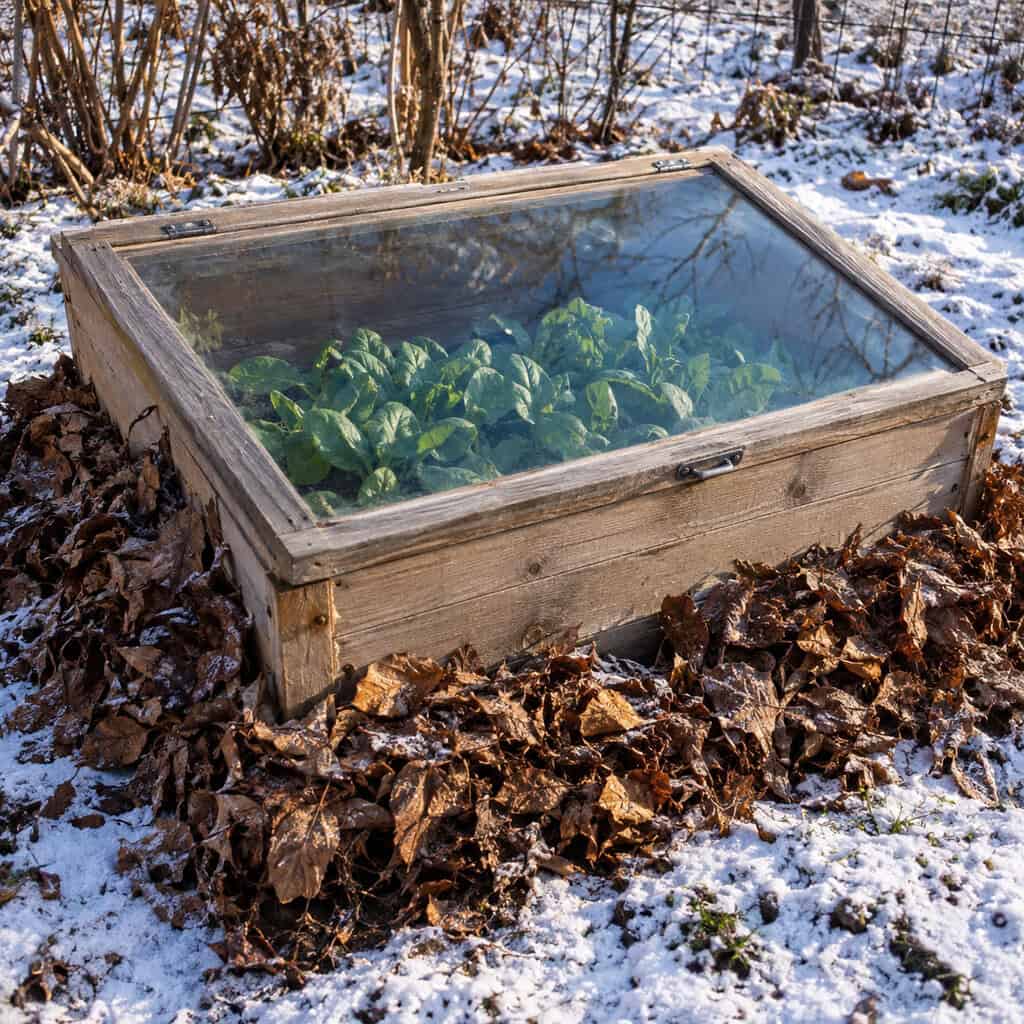
Bank dry leaves a foot deep against the outside walls of a cold frame and you buy several degrees on the coldest nights.
Same trick on a low tunnel — leaves heaped along both sides where the hoops meet the ground, which also stops wind from peeling the plastic.
Spinach in February is a reasonable reward for leaves you were going to drag to the curb anyway.
None of this is new. It’s just what people did before yard-waste bags existed and somebody convinced us the stuff falling off our own trees was garbage.
Start with the mower. One afternoon of mulching instead of raking will tell you everything you need to know about whether the pros are onto something.
The leaves were never the problem. The bags were.