


A buyer forms an opinion about your asking price before they open the car door.
They’re not reading the listing sheet. They’re scanning the yard, adding up what it cost, and guessing how much of that you expect them to pay back.
Curb appeal pays — researchers at the University of Texas at Arlington put the lift at about 7% of sale price. But there’s a line where a front yard stops reading as cared-for and starts reading as expensive. Cross it and buyers quietly subtract instead of add.
The features below don’t make a house worse. They make a house look like it’s priced for a seller who loved it a little too much.
Here are 28 of them.
1. A Tiered Stone Fountain in the Middle of the Lawn
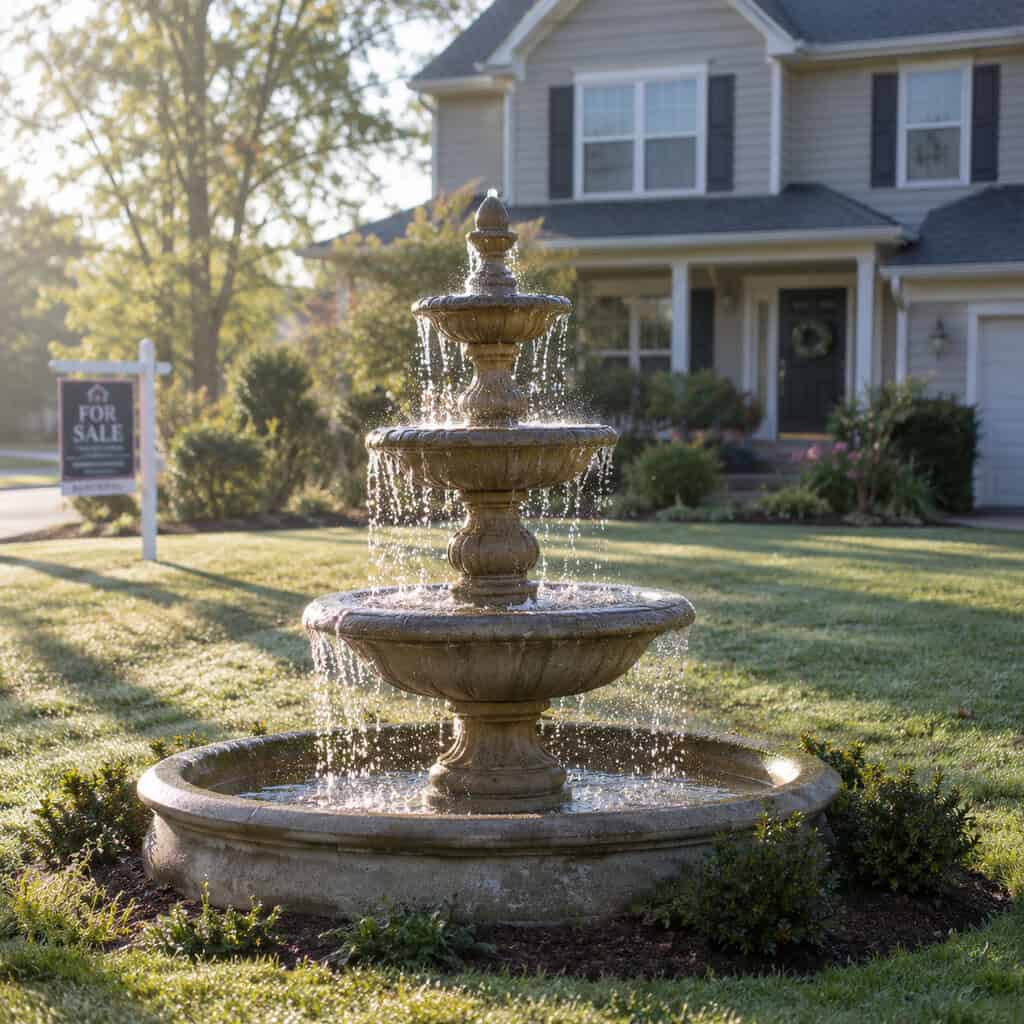
Buyers don’t see water. They see a receipt.
A cast-stone tiered fountain with a plumbed basin runs $10,000 to $15,000 installed, and the number is legible to anyone who’s priced one. The immediate assumption is that the seller baked it straight into the asking price.
That assumption is usually correct. Sellers who install unusual high-cost features are the most likely to overprice, because they’re anchored to what they spent rather than what the block supports.
And a fountain is the most anchored feature of all — it was a splurge, it was a decision, and it’s sitting right there in the front lawn announcing both.
2. Wall-to-Wall Artificial Turf

The math happens fast. A full front yard of synthetic turf costs $8 to $15 per square foot installed, which puts a modest 1,500-square-foot lawn in five-figure territory.
Then comes the second number: replacement in 15 to 20 years.
Families do a third calculation nobody talks about. No digging, no bare feet on cool grass, no dog that can roll in it without picking up rubber infill.
Landscape pros list it among the choices that leave buyers cold rather than impressed. Skip it on the street side.
3. A Gated Driveway With Stone Pillars on an Ungated Street

Nothing says priced above the block like an estate entrance on a street where nobody else has one.
Buyers see a motor, a keypad, a safety loop sensor, and a service call. Automatic gate operators fail, and they fail in the open or closed position at the worst possible hour.
Security isn’t the read. Pretension is.
4. A Koi Pond With a Waterfall by the Front Walk
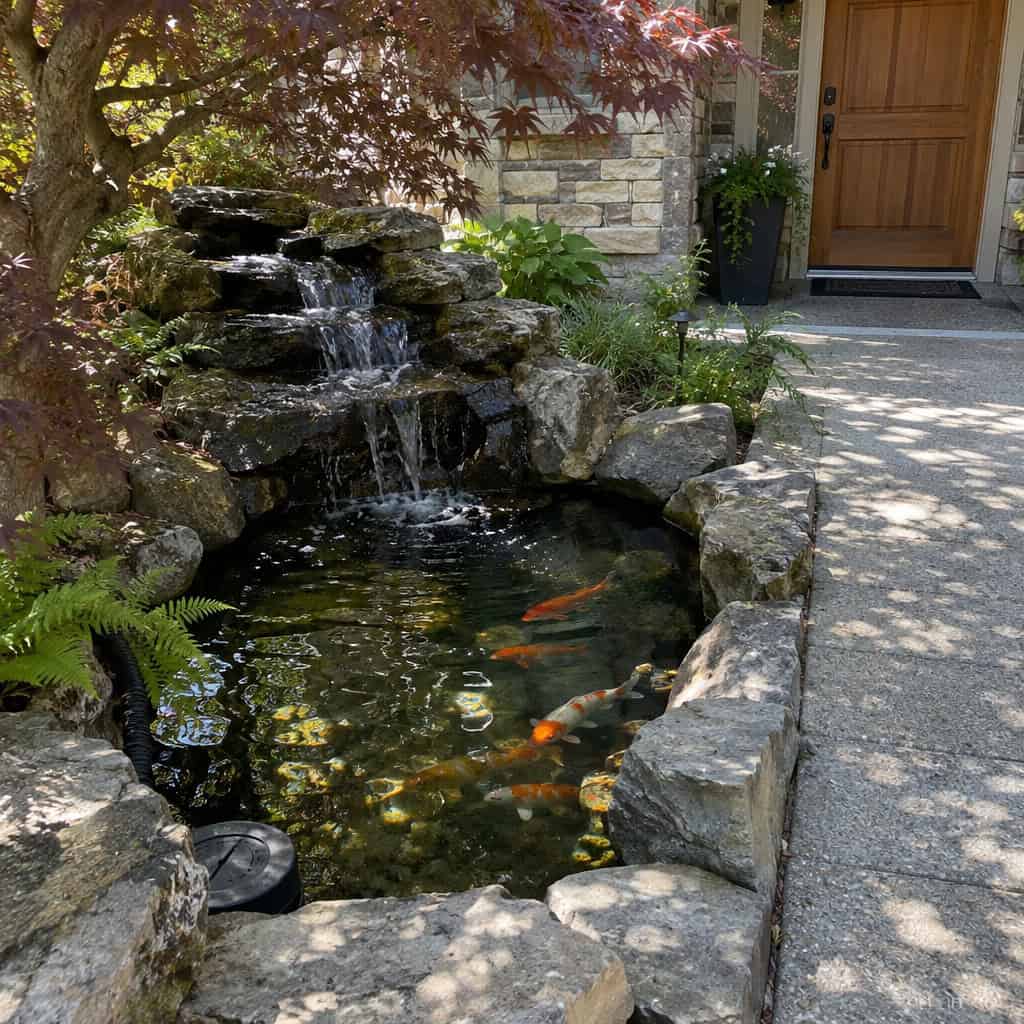
Of every water feature, koi demand the most consistent attention — filtration, aeration, winter care, and a predator problem the day a heron finds it.
Buyers price that chore in before they price the charm. Agents report the same thing over and over: the conversation turns to maintenance within seconds.
Open water within ten feet of a public sidewalk adds a liability question too. Parents of toddlers walk away mid-tour.
5. Concrete Lions Flanking the Front Steps
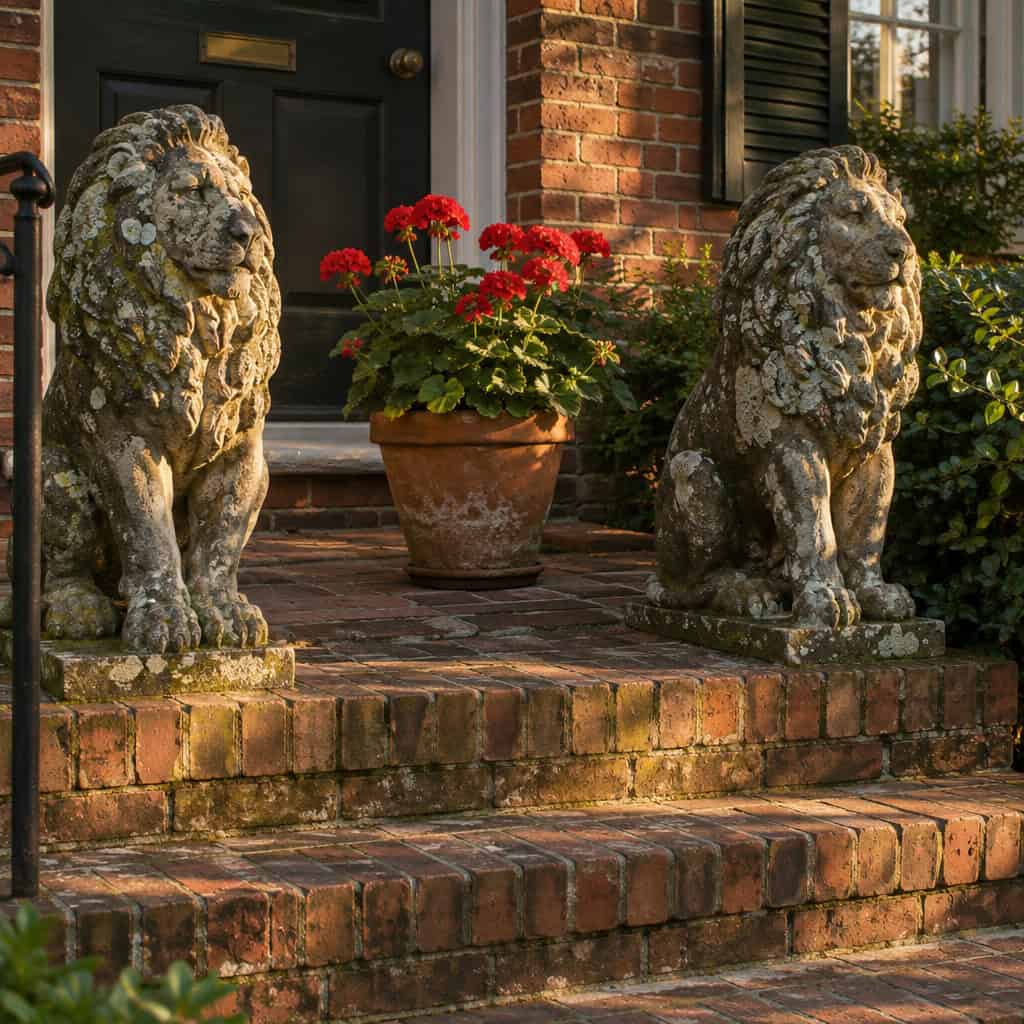
Statuary is a personality broadcast.
Lions, cherubs, a leaping stag — these say the owner has specific, deeply held taste and an emotional stake in the property. That’s precisely the seller profile buyers associate with a number pulled out of sentiment instead of comps.
Take them with you. They’ll look great at the next house.
6. Multi-Level Retaining Wall Terraces

Terraced walls on a sloped front lot are the single most expensive thing in most yards, and buyers know it.
Segmental block runs $25 to $60 per square face foot installed. Boulder or natural stone pushes higher. A three-tier front yard easily represents $20,000 to $40,000 of work — and rebuilding a failed wall costs more than the original, because the crew has to haul the old material out first.
So buyers inspect them. Look at yours the way they will.
Check whether the face bulges outward anywhere along the run — sight down the wall from one end at eye level and any belly shows immediately. Look for courses that have tipped forward at the top, a sign the backfill is pushing and the geogrid either failed or was never installed. Walk the base after a rain and find the weep holes; if they’re packed with silt, clogged with mulch, or missing entirely, hydrostatic pressure is building behind that wall every time it storms.
Stair-step cracking in a mortared stone wall means movement, not settling. Separated joints at the corners mean the same.
Here’s the part that kills deals. A buyer who spots any of that doesn’t negotiate for $2,000. They bring in a structural engineer, get a quote with a comma in it, and either walk or come back with an offer that assumes full replacement.
Walls also compound. Terraces that sit too close together load each other, and the lower one carries weight it was never designed for. Three short walls spaced four feet apart behave very differently than three spaced twelve feet apart.
Fix the drainage before you list. A clean weep line and a tight face buy you the benefit of the doubt.
7. Sculpted Topiary and Cloud-Pruned Boxwood
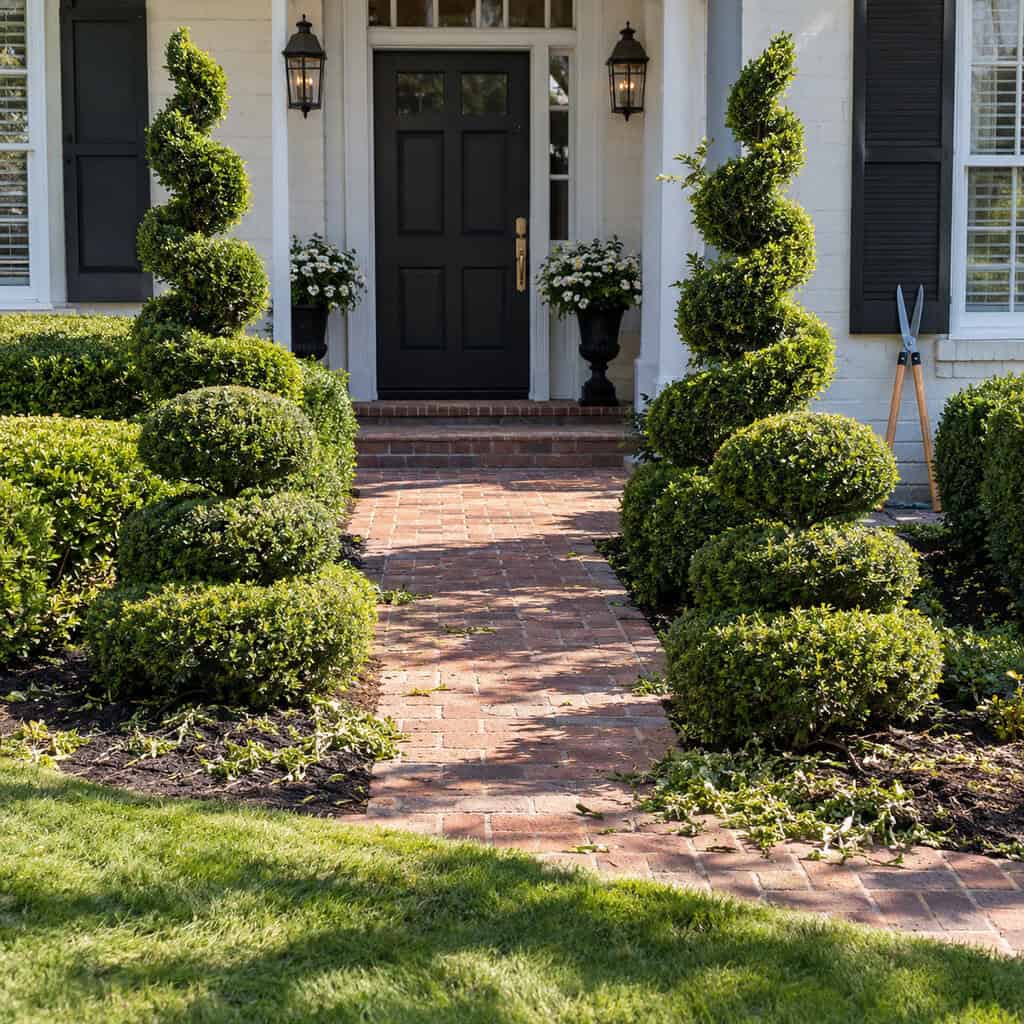
Shaped shrubs don’t stay shaped.
Spirals, globes, and cloud-pruned boxwood need two to four shearings a season by someone who knows what they’re doing. Buyers read that correctly as a standing landscaper bill they’d inherit.
They also assume the asking price includes a maintenance budget baked into the lifestyle — which is exactly the inference you don’t want them making at the curb.
8. A Circular Driveway on a Quarter-Acre Lot

On a two-acre estate it’s gracious. On a quarter acre it eats the front yard and looks like someone borrowed grandeur from a bigger house.
Buyers count square footage of concrete. More to seal, more to crack, more to shovel in February.
Less lawn, more cost, higher price. That’s the whole read.
9. Visible Sprinkler Heads and a Lawn-Service Flag

A flawless striped lawn should be the easy win — basic lawn care consistently delivers one of the strongest returns of any outdoor spend, and Virginia Cooperative Extension research found good landscaping measurably lifts perceived home value.
It’s the visible hardware that spooks people.
Pop-up heads in every bed line, a backflow preventer by the hose bib, and a yellow treatment flag by the mailbox all add up to a recurring bill: annual backflow testing, spring startup, winter blowout, broken heads, and a July water bill that doubles.
Keep the lawn immaculate. Pull the service flag the morning of the first showing.
10. Palm Trees Planted Outside Palm Country

Landscaping that fights its region is a recognized value-killer.
Windmill palms in Zone 6 survive — barely — until the winter that doesn’t let up. Buyers in Nashville or Cincinnati see a tree with a death sentence and a seller who spent real money on the wrong thing.
Mismatched planting also clashes with the architecture. Palms against a Colonial brick facade don’t read as tropical. They read as impulsive.
11. Stamped and Stained Concrete Driveway and Walkway

It cost two to three times a plain pour, and buyers know every downside.
The integral color fades on the sun side. The sealer needs reapplication every two to three years at a few hundred dollars a pop. And a crack can never be patched invisibly — the patch shows the pattern seams and the color never matches.
Expensive to install, expensive to maintain, impossible to repair cheaply. A buyer who’s owned one before will tell you so.
12. A Monogrammed Stone Address Pillar

A carved family name at the end of the driveway tells buyers the owner thinks of this as an estate.
Scrolled cursive house numbers do the same job in miniature. Ornate signage is also one of the fastest ways an exterior dates itself — Homes & Gardens puts it near the top of the list.
Worse, the buyer has to picture removing it. A masonry pillar with someone else’s surname chiseled into it isn’t a feature. It’s a demolition line item.
13. Uplighting on Every Tree in the Yard

Low-voltage landscape lighting photographs beautifully at dusk. That’s exactly the problem.
Buyers see the twilight listing photo and recognize it as an argument for a premium. Then they see twenty fixtures in daylight and start counting failure points: a transformer, hundreds of feet of buried wire, corroded brass housings, and connectors that green over and quit.
Three well-placed fixtures land better than twenty. Restraint reads as taste; saturation reads as spend.
14. A Soggy Low Spot Near the Foundation

This is the one that flips the math entirely.
Every other item on this list makes a buyer think the price is high. Standing water makes them subtract a number from it — and the number they imagine is always bigger than the real one.
A dark, mossy depression within six feet of the foundation tells a buyer three things at once. Water is pooling against the wall. The grading is wrong or has settled. And whatever’s happening below the surface has been happening for a while.
Bob Vila’s team flags poor drainage as one of the fastest curb-appeal killers there is, and inspectors treat it as a priority finding rather than a cosmetic note.
What buyers run through in their head: regrading at $1,500 to $5,000, a French drain at $20 to $40 a linear foot, downspout extensions, possible gutter replacement, and — the expensive fear — interior waterproofing or foundation repair somewhere north of $10,000.
Look for the tells before a buyer does. Efflorescence — chalky white mineral staining on the block or poured wall — means water has been moving through the concrete. Mushrooms in the mulch bed, algae on the brick, a watermark line on the siding, rusted downspout bases, or a strip of lawn that stays spongy four days after rain.
Soil should fall at least six inches over the first ten feet away from the house. That’s the standard. Most settled yards fail it.
The fix is usually cheaper than the fear. Extend downspouts at least six feet out, rebuild the grade with compacted soil rather than topsoil or mulch, and stop yard flooding when it rains at the source instead of chasing the puddle.
Do it in the fall, give the grass a season to knit in, and the whole conversation disappears before anyone tours the house.
15. Two-Story Portico Columns on a One-Story Ranch

The classic over-improvement tell.
Someone grafted a grand two-story entry onto a 1,400-square-foot ranch, spent $20,000 doing it, and created a facade the proportions can’t support. Buyers register the mismatch instantly even when they can’t name it.
What they conclude: money was spent chasing a price this neighborhood will never pay.
16. A Mature Oak Crowding the Roofline
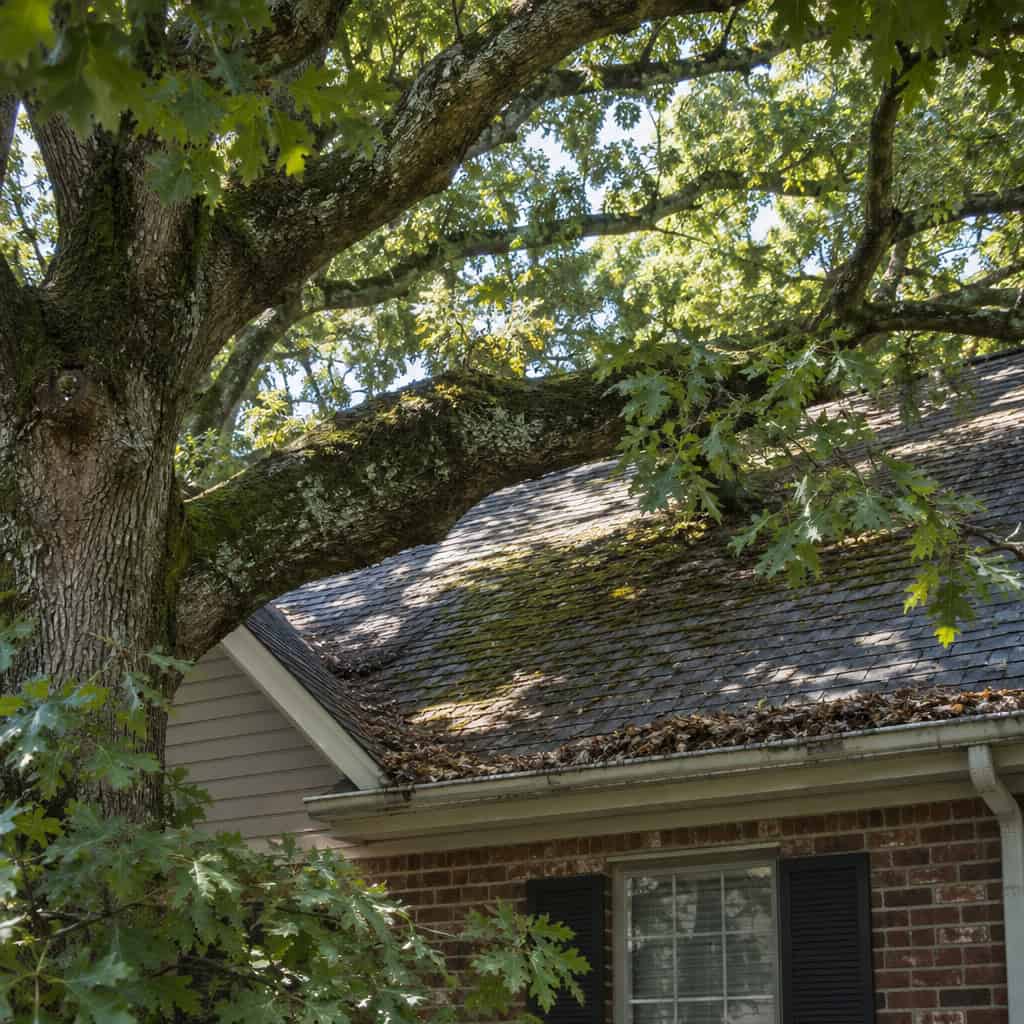
Buyers love the shade right up until they price it.
A 70-year-old oak with limbs over the roof is worth real money on paper. In a buyer’s head it’s a list of quotes. Removal of a large hardwood near a structure runs $1,500 to $5,000, and pushes past $8,000 when a crane is needed because there’s no drop zone. Stump grinding is extra. Hauling is extra.
Then the insurance question. Carriers increasingly ask about overhanging limbs during underwriting, and some will require trimming as a condition of binding a policy. A buyer who gets a conditional quote during their inspection period treats that as leverage.
Roof damage is the near-term worry. Branches abrade shingle granules every time the wind blows, and the shaded north slope stays wet long enough to grow moss and algae. Gutters under a mature oak clog twice a year minimum — once with spring catkins, once with fall leaf drop.
Below ground is the part nobody photographs. Oak roots extend two to three times the canopy width, and they find sewer laterals, lift walkways, and crack driveway slabs from underneath. Buyers who’ve dealt with root intrusion once never forget the bill.
None of this means cut it down. A healthy, well-pruned oak with eight feet of clearance above the roof is a genuine asset. An untouched canopy resting on the shingles is a negotiation.
17. A Wrought-Iron Fence Around the Front Lawn

Decorative iron ages an exterior faster than almost anything else out front.
Buyers look at the finials and the scrollwork and see a weekend of wire-wheeling rust, priming, and repainting — repeated every four or five years, forever.
Fencing a front lawn also signals formality the rest of the street isn’t participating in.
18. A Full Rock Xeriscape With No Grass
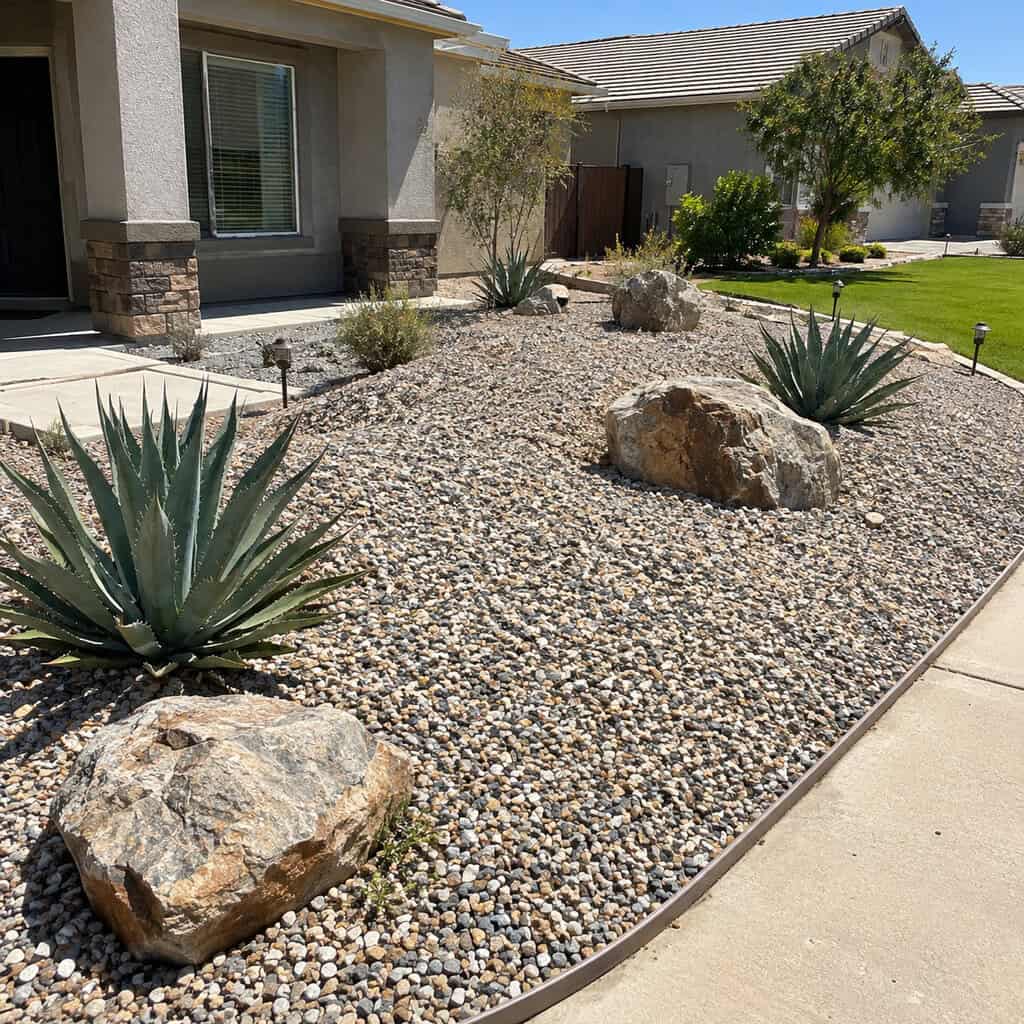
A professional boulder-and-gravel conversion with proper fabric, edging, and plant selection runs well into five figures.
Buyers who want a lawn don’t see savings. They see a demolition project — haul out tons of rock, strip the fabric, truck in topsoil, and start over.
They discount for the cost of undoing it. In a water-restricted market that calculus flips, but outside one it’s a liability dressed as a feature.
19. A Brand-New Mahogany Front Door on an Untouched House

One gleaming element surrounded by original everything is a tell.
A $4,000 mahogany slab with sidelights against 1986 aluminum storm windows, faded siding, and a cracked walkway reads as pre-listing cosmetics. Buyers conclude the money went where the camera points.
Then they price the house as if it had been fully renovated — because they assume the seller already did.
20. A Privacy Hedge Tall Enough to Hide the House
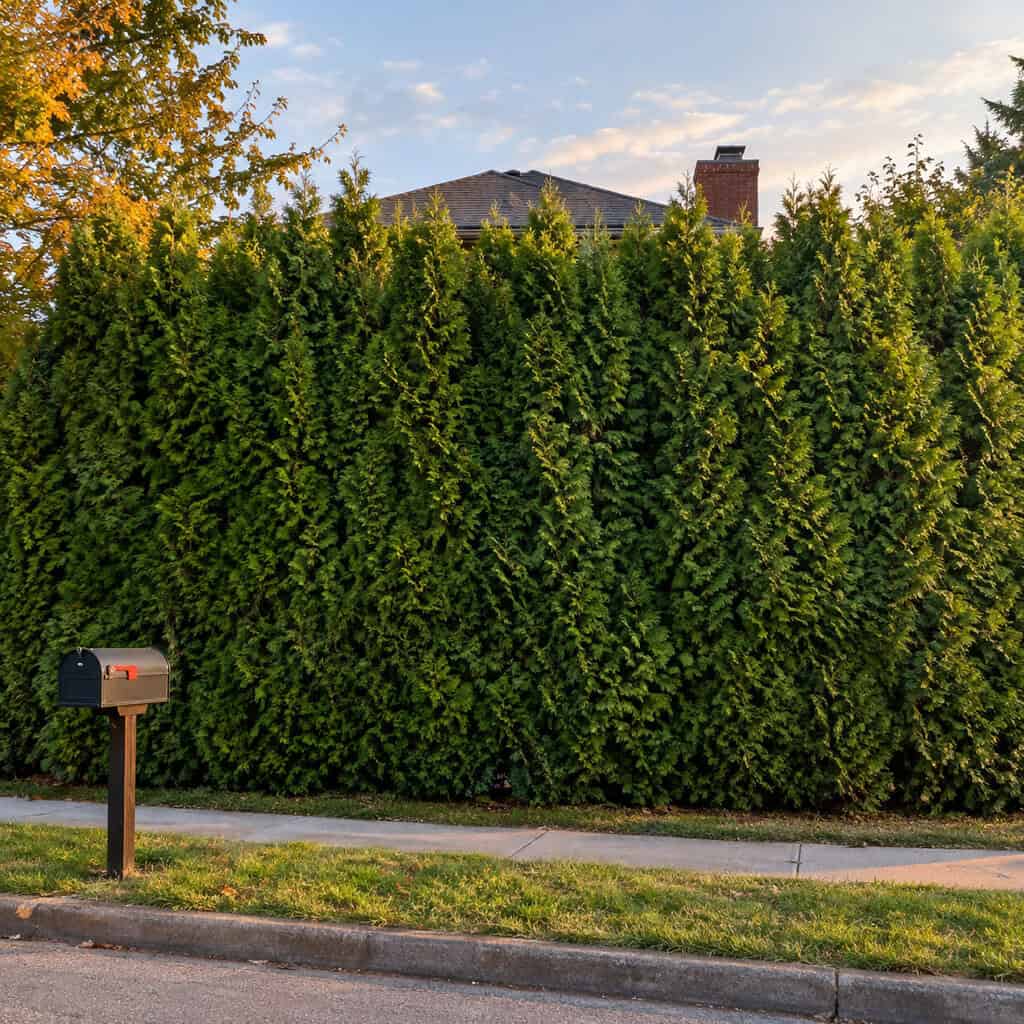
Buyers can’t value what they can’t see.
A twelve-foot wall of arborvitae or cherry laurel blocks the facade from the street, kills the drive-by appeal, and requires shearing twice a season to stay rectangular. The privacy shrubs that grow fast are the same ones that outgrow their spot in fifteen years.
There’s a quieter suspicion too. A fully screened house makes people wonder what’s being screened.
21. Front-Facing Solar Panels

Panels on the street-facing roof slope raise the question buyers dread asking: owned, financed, or leased?
The answer changes the deal more than the panels change the electric bill.
Owned outright and paid off, solar is an asset and generally appraises accordingly. Leased or under a power purchase agreement, the buyer has to qualify for and assume the contract — which can run 20 years with an annual escalator clause of 1% to 3%. Lenders scrutinize this. Some buyers simply can’t assume it.
Financed systems come with a UCC-1 fixture filing recorded against the property. Title companies catch it, closings stall while the solar company processes a subordination request, and that process takes weeks that nobody budgeted for.
Then the roof itself. Buyers want to know the shingle age underneath, because removing and reinstalling an array to replace a roof costs $2,000 to $5,000 on top of the roofing job. They want to know who did the penetrations and whether they were flashed properly. A leak under a panel doesn’t show up until the decking is already soft.
Insurance adds a last wrinkle. Some carriers want the panels listed on the policy, some want proof of a licensed installer, and a few in hail-prone states simply won’t write it.
None of that makes solar bad. But a buyer standing at the curb sees a monthly obligation they can’t yet size, and an obligation of unknown size always feels like a surcharge stapled to the asking price. Have the contract, the production data, and the roof age ready on day one.
22. A Putting Green in the Front Yard

A synthetic green with proper base, cup placement, and fringe runs $15 to $25 per square foot — easily $10,000 to $25,000 for something you can see from the sidewalk.
Golfers love it. Everyone else sees money spent on a stranger’s hobby and assumes they’re being invited to reimburse it.
Front yard placement is what turns it from quirky amenity into pricing signal. Nobody questions one in the back.
23. An Estate Mailbox With a Stone Surround and Lamppost

No one in the history of real estate has paid more for a house because of the mailbox.
But a masonry column at the curb with a brass lamp and a scrolled bracket costs $2,000 to $5,000, and it tells a buyer exactly how the owner thinks about appearances.
It also sits where a snowplow or a distracted driver will eventually meet it. Replacing masonry is not the same as bolting on a new post.
24. Dyed-Black Mulch and Sod Laid the Week of Listing
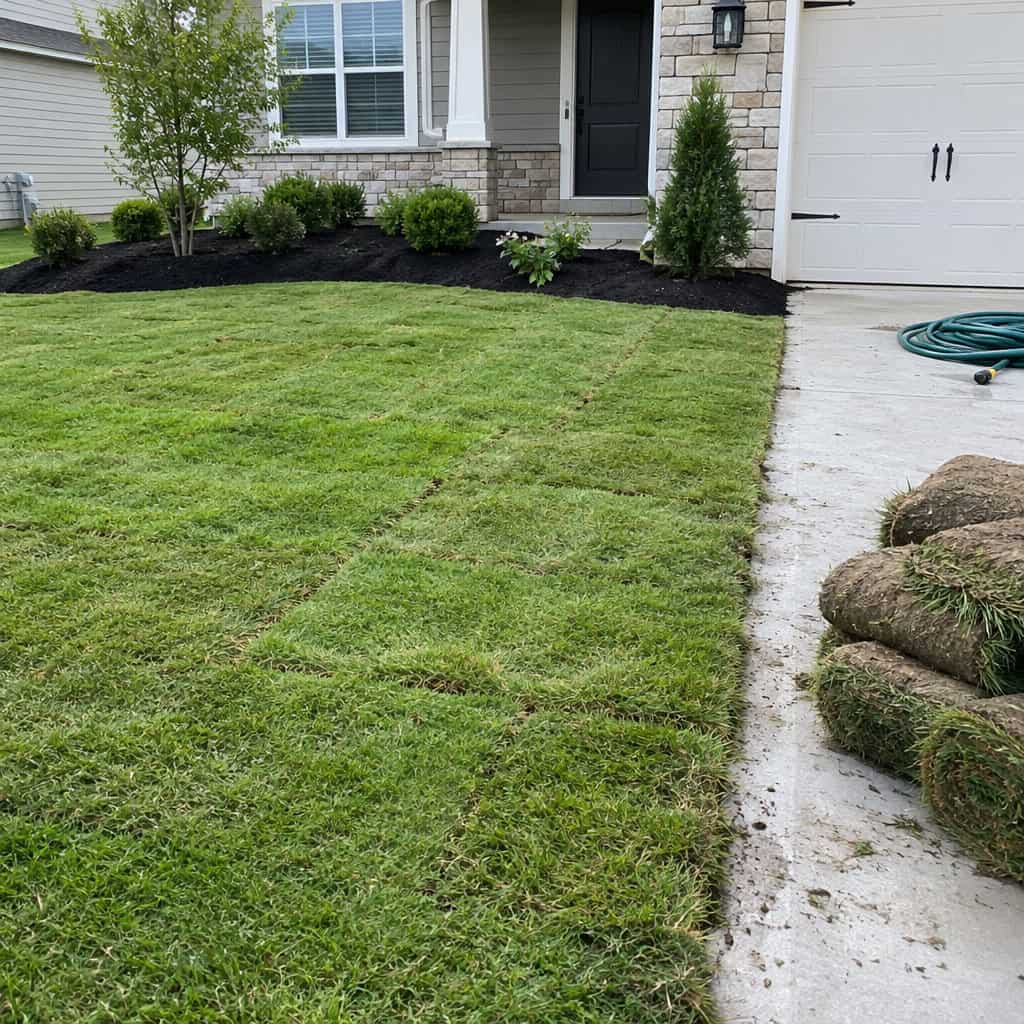
Visible sod seams and jet-black mulch over every bed don’t read as care. They read as cover-up.
Buyers see freshly laid turf and immediately wonder what was underneath — a dead patch, a drainage scar, a buried utility trench, a tree stump ground out last Tuesday.
Dyed mulch piled four inches deep against the foundation and up the trunks of every tree compounds it. That’s not landscaping; that’s concealment, and buyers know it.
Do the work in September. Let it settle. Spring showings should look established, not staged.
25. A One-of-a-Kind Collector’s Garden
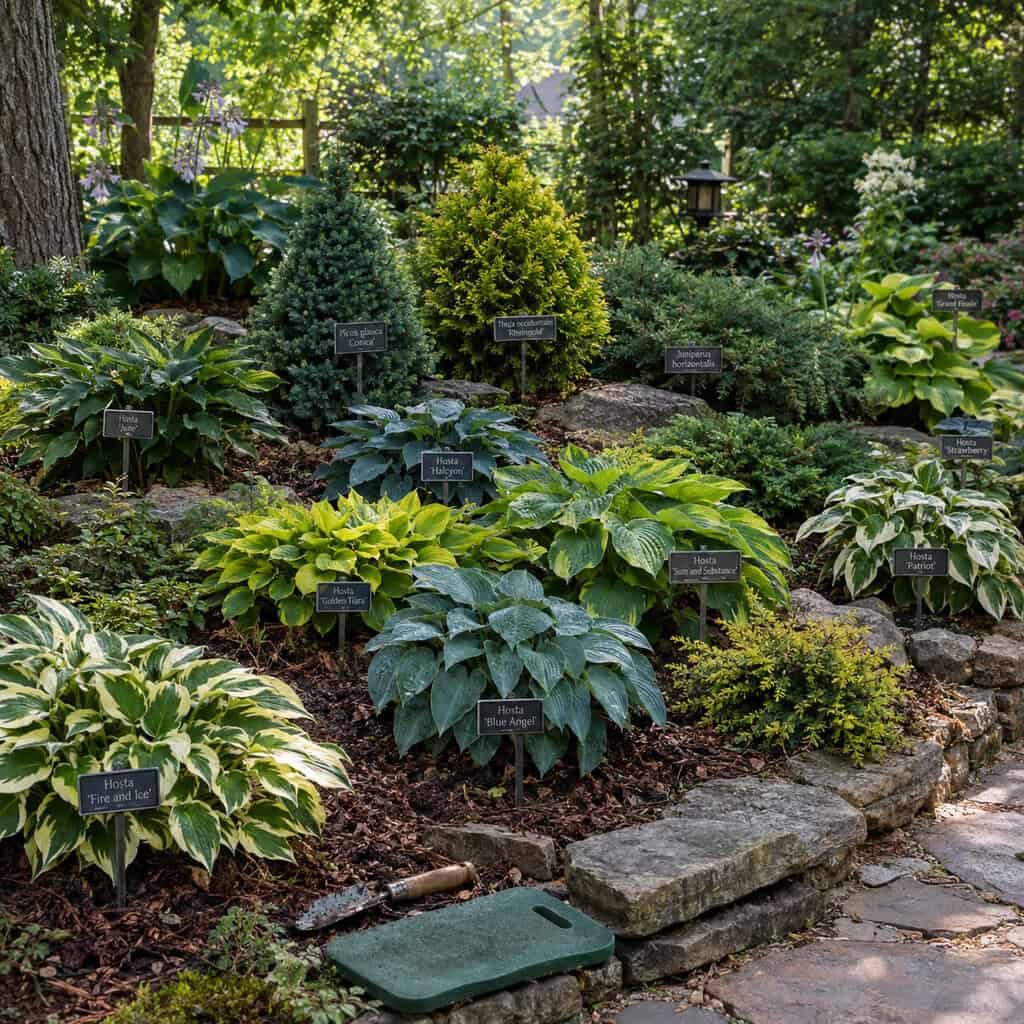
Forty labeled hosta cultivars. Three dwarf conifers that took eighteen years to reach knee height. Hand-laid stone beds that follow a plan only one person ever understood.
To the owner, it’s a lifetime. To a buyer, it’s every Saturday for the foreseeable future.
Highly customized landscaping is consistently named as a feature that narrows the buyer pool rather than raising the price — the people who’d pay for it are rare, and everyone else is doing subtraction. Many will prefer plants that come back year after year without a care schedule.
The Pennsylvania Association of Realtors makes the same point about landscaping generally: well-kept and broadly appealing beats personal and elaborate at resale, every time.
26. A Heated Snowmelt Driveway

Hydronic snowmelt tubing under a driveway costs $12 to $25 per square foot installed, plus a dedicated boiler and manifold. A two-car driveway clears $25,000 without strain.
Northern buyers know that number. They also know that when a loop fails, finding the break means cutting concrete.
It’s an unambiguous luxury signal — which is exactly why it makes an asking price feel inflated rather than justified.
27. A Front Courtyard With a Built-In Fire Pit

Walled courtyards with a gas fire feature, seat walls, and pavers photograph like a magazine spread. They also cost $20,000 to $50,000.
Out front, there’s a second issue. Nobody uses a fire pit facing the street.
Buyers register the expense, picture themselves sitting in it while the neighbors drive by, and quietly file it as money spent on a space that won’t get used.
28. An Oversized Outdoor Chandelier Over the Entry

A 30-inch caged-orb fixture hanging over a front porch was everywhere between 2012 and 2020.
It’s already dating. Buyers clock the trend, clock the price tag, and move on.
Scale is the other issue. Fixtures sized for a two-story foyer look cartoonish under an eight-foot porch ceiling.
Swap it for something simpler before the photographer shows up.
The thread running through all 28 is the same. Buyers aren’t pricing beauty; they’re pricing obligation — time, money, and the quiet suspicion that a seller who spent this much expects to get it back.
Mowed, edged, graded, trimmed, and legible from the street beats elaborate every single time.
The best front yard for a sale is the one a buyer can picture maintaining on a Saturday morning without calling anyone.