


A new fence is one of the few yard projects that looks its absolute best the day the last picket goes on.
Everything after that is decline. The question is how fast.
Walk any neighborhood built in the last decade and you can read the mistakes from the sidewalk — the gate that drags, the one leaning post, the vinyl panel with a hole punched through it, the bamboo creeping into a neighbor’s hostas. None of it was obvious at purchase. All of it was predictable.
Fence crews know which decisions come back as warranty calls. They build their own fences differently, and the differences are rarely expensive — mostly they’re about where the water goes and how much the wind can push.
Here are 31 fence choices that look fine on installation day and feel like a mistake within five years, plus what the people who do this for a living build instead.
1. Pressure-Treated Pine for the Entire Fence

It’s the cheapest wood on the lot, and that’s exactly why it’s on so many lots.
Angi prices pine fencing around $1 to $5 per linear foot against cedar’s $6 to $8 — but pine’s service life lands near 15 years to cedar’s 30. The fence doesn’t collapse at year five. It just looks exhausted. Pickets cup, corners twist, surface checks open up, and the whole run goes a flat gray that no amount of pressure washing brings back.
Treatment matters more than most buyers realize. Pressure-treated lumber is sold by use category — UC3B for above-ground exterior, UC4A for general ground contact, UC4B for heavy-duty ground contact like permanent wood foundations and posts in wet soil. Those categories reflect how much preservative is actually retained in the wood, and the difference between them is real. The USDA Forest Products Laboratory has tracked treated stakes in field tests for decades, and properly treated material in the right category outlasts under-treated material by a wide margin in the same soil.
Here’s the part that catches people: a lot of box-store pickets are rated above-ground only. Stand one in mulch and the preservative retention isn’t doing what you think it’s doing.
Termites and carpenter ants read the same cues. Untreated or lightly treated pine in contact with damp soil is a feeding station, and once they’re established in the fence line they’re twenty feet from your sill plate.
Build the hybrid. Ground-contact-rated pressure-treated posts below, cedar rails and pickets above, and stamp-check the end tag on every bundle before it goes on the truck.
2. Wood Posts Set in a Flat Concrete Collar

Pour concrete flush with the soil and you’ve built a saucer.
Every rain fills it. The water sits against the post at the groundline — the exact zone where oxygen, moisture and soil microbes overlap and decay runs fastest. In heavy clay that doesn’t drain, posts can be soft at the collar in four years.
Fence crews do three small things. They drop 4 to 6 inches of gravel in the hole so the post bottom can drain. They dome the concrete above grade so water runs off instead of pooling. Then they caulk the seam where post meets concrete.
University of Kentucky’s forestry extension has published on post longevity for years, and the pattern holds: drainage at the base beats almost every other variable.
The other answer is to keep wood out of the ground entirely. Galvanized steel post inserts take the buried duty, and the wood post bolts on above grade where it can dry.
3. Running Bamboo as a Living Privacy Screen

Fifteen feet of screen in two seasons. Nobody tells you about year four.
Running bamboo spreads by rhizome, and those rhizomes go under patios, under fences, into septic fields and into the neighbor’s lawn. Several states now regulate specific species as nuisance plants, and some towns make the planter liable for removal on adjacent property.
Removal is not a weekend. It’s excavation.
If you want bamboo, plant a clumping species like Fargesia, or install a 60-mil HDPE rhizome barrier 30 inches deep with the top inch exposed so you can spot escapes. Most pros skip the drama and build a fence.
4. A Builder-Grade Gate With No Diagonal Brace

A gate is a square. Squares don’t stay square.
Hang pickets on a simple rectangular frame, load it on three light residential hinges, and gravity pulls the latch corner down until the whole thing is a parallelogram. You’ll notice it when the gate starts scraping the ground. By then the screws have already elongated their holes.
The fix is geometry. A compression brace runs from the bottom hinge corner up to the top latch corner — wood pushes, so it has to go that direction. A steel cable with a turnbuckle does the opposite and runs top-hinge to bottom-latch.
Better: a welded steel gate frame with cedar cladding. Heavy strap or ball-bearing hinges. A latch rated for the actual weight, not the lightest one on the pegboard.
5. Big-Box Prefab Stockade Panels

Six by eight feet, stapled together, wrapped in plastic, stacked on a pallet in the rain.
Those panels use thin pickets on undersized rails, fastened with crown staples. The lumber is often green and wet when assembled. As it dries and shrinks, the staples lose their bite — then every seasonal swell-and-shrink cycle works them a little looser.
Pickets split. Rails pull away. By year four you’re looking at replacing whole panels because there’s no good way to fix one board.
Stick-built costs more in labor and pays it back in repairability. One bad picket, one screw, ten minutes.
6. Fencing to the Property Line Without a Survey
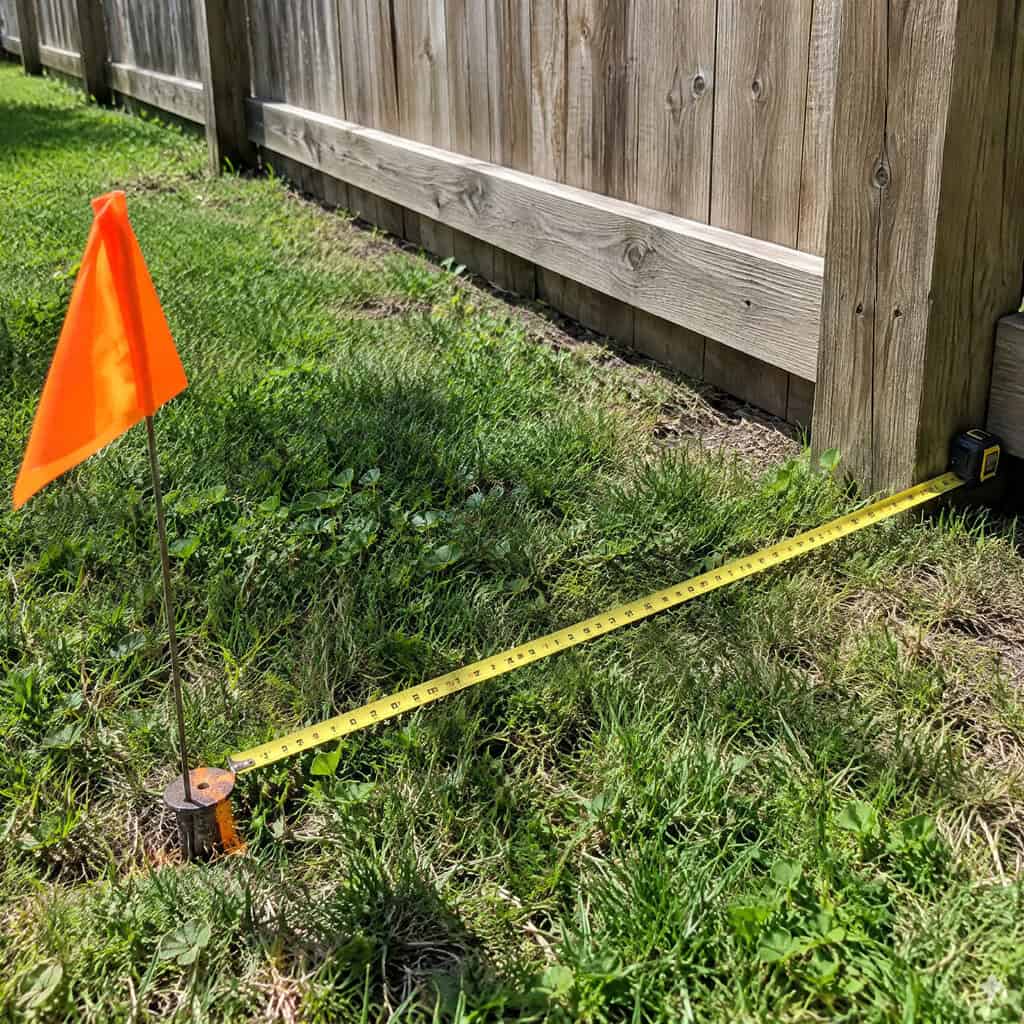
An existing fence is not a property line. Neither is a hedge, a tree row, a mowing edge, or what the previous owner told you at closing.
Deeds describe boundaries in bearings and distances from monuments that may have been disturbed decades ago. The only authoritative answer is a stamped boundary survey with pins set by a licensed surveyor. That typically runs $400 to $900 for a residential lot — less than the cost of moving thirty feet of fence.
Here’s what makes this one so expensive: the regret usually shows up when the neighbor sells. The new buyer orders a survey, the survey shows your posts eighteen inches over, and now a title company is involved. Encroachments can cloud a title, delay a closing, and get resolved by a demand letter that says move it.
The flip side is worse in some states. Let a neighbor’s fence sit on your side long enough and adverse possession doctrine can transfer that strip permanently — statutory periods run anywhere from 5 to 20 years depending on the state.
Fence contractors who want to stay out of court build 6 to 12 inches inside the surveyed line. Your posts, your footings, your maintenance access, your side of the argument. Note the setback in writing and keep the survey with your closing documents.
7. Bargain Vinyl With Unreinforced Rails

Vinyl’s selling point is that it never needs painting. That’s true. It’s also the only promise some of it keeps.
Thin-wall PVC without a proper impact-modifier package goes brittle below freezing. A soccer ball, a snowblower throwing a chunk of ice, a ladder set against it — and you get a crack that spiders. Unreinforced bottom rails bow downward under their own weight across an 8-foot span, and a sagging bottom rail is the clearest tell of a cheap vinyl fence from fifty feet away.
Installers see the same complaints repeatedly, and Good Neighbor Fence catalogs most of them: cracking, sagging rails, discoloration, wind damage.
Spec heavy-wall extrusions, aluminum-reinforced bottom rails, titanium dioxide UV package, and a transferable lifetime warranty you can actually read.
8. Pickets and Rails That Touch the Ground
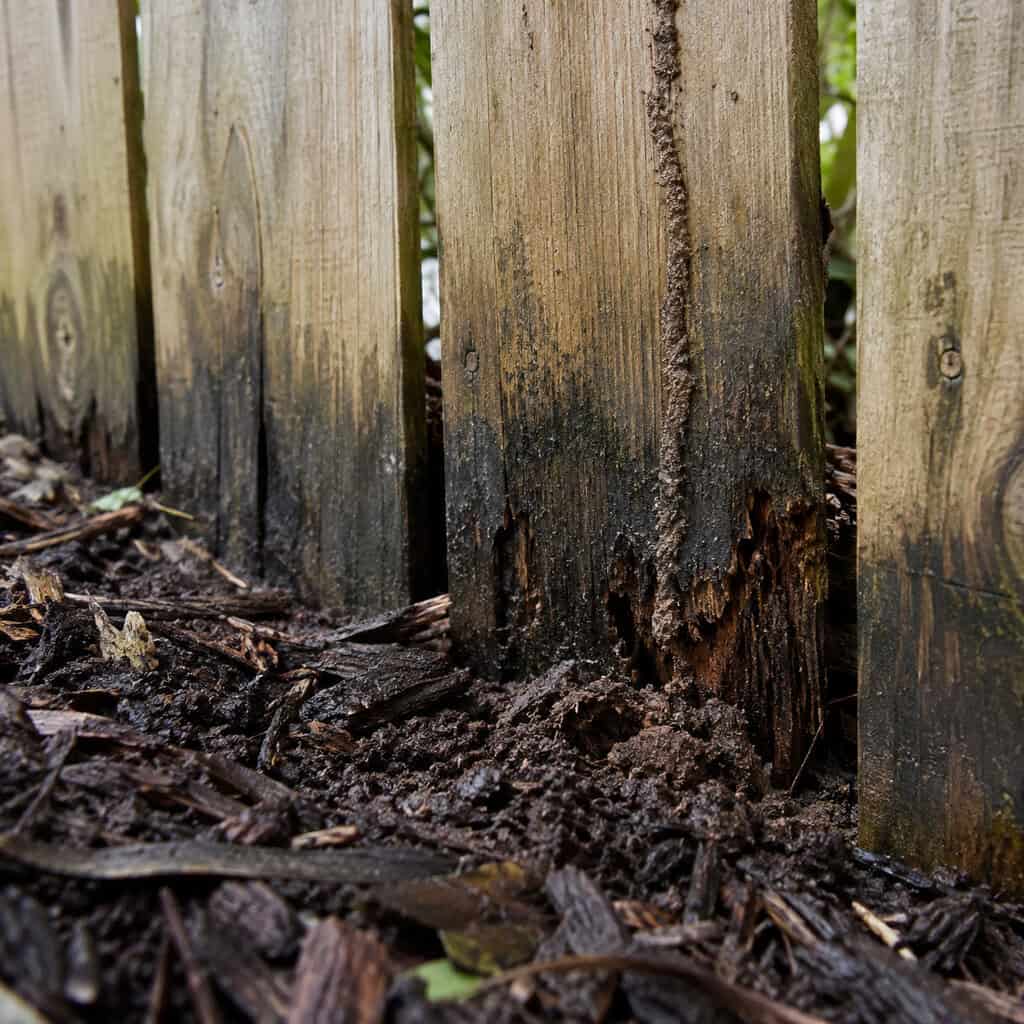
Wood wicks. That’s the whole problem in one word.
Bury the bottom inch of a picket in mulch or let turf grow up against it, and capillary action pulls soil moisture up into the end grain — which is the most absorbent surface on the board by a factor of ten. The picket stays wet long after a rain. Decay fungi need around 20% moisture content to get going, and a buried picket end sits well above that for weeks at a time.
The USDA Forest Service lays out the principle plainly in its decay-prevention research: keep wood dry, or keep it treated, because wood that stays below the fiber saturation point doesn’t rot.
Termites use the same door. Subterranean termites build mud tubes up from soil contact, and a picket sitting in damp mulch gives them a protected, humid highway they don’t have to engineer. Once they’re working the fence line, they’ll scout outward — including toward the house.
Three fixes, and good crews use all three. Hold every picket 2 inches off grade. Run a sacrificial ground-contact-rated rot board along the bottom that can be unscrewed and replaced in ten years for the price of lunch. Pour a narrow gravel or concrete mow strip underneath so nothing grows there and cutting the grass near the fence doesn’t mean chewing the picket ends with a string trimmer.
That trimmer damage matters more than it looks. Every nick strips the weathered surface and opens fresh end grain to water.
9. A Leyland Cypress Privacy Hedge

The nursery tag says fast. It’s not lying.
Leyland cypress can add 3 feet a year, which is why it’s planted by the thousands as an instant green wall. Then seiridium and botryosphaeria cankers show up, bagworms strip a branch at a time, and the shallow-rooted, top-heavy trees go over in ice storms.
One dead tree in a row of twelve leaves a gap you cannot prune your way out of. Nothing regrows from bare interior wood.
Plant a mixed screen instead — different species, staggered rows, so a single pest doesn’t take the whole wall. Or build the fence and plant a privacy hedge in front of it where a failure is cosmetic instead of structural.
10. Posts Set Above the Frost Line

Twenty-four inches is a fine post hole in Dallas. In Duluth it’s a lever.
Frost depth varies from near zero on the Gulf Coast to 42 inches or more across the northern tier, and when saturated soil freezes it expands and grabs anything with a shoulder on it. A concrete footing with a flared top is a perfect handle. Each winter lifts it a little, each thaw leaves it a little higher, and by the third season the fence line reads like a sine wave.
Bury roughly one-third of the post length and get the footing base below local frost depth. Keep the sides of the hole straight or slightly bell-bottomed — never wider at the top.
11. Screening Zip-Tied to Chain-Link
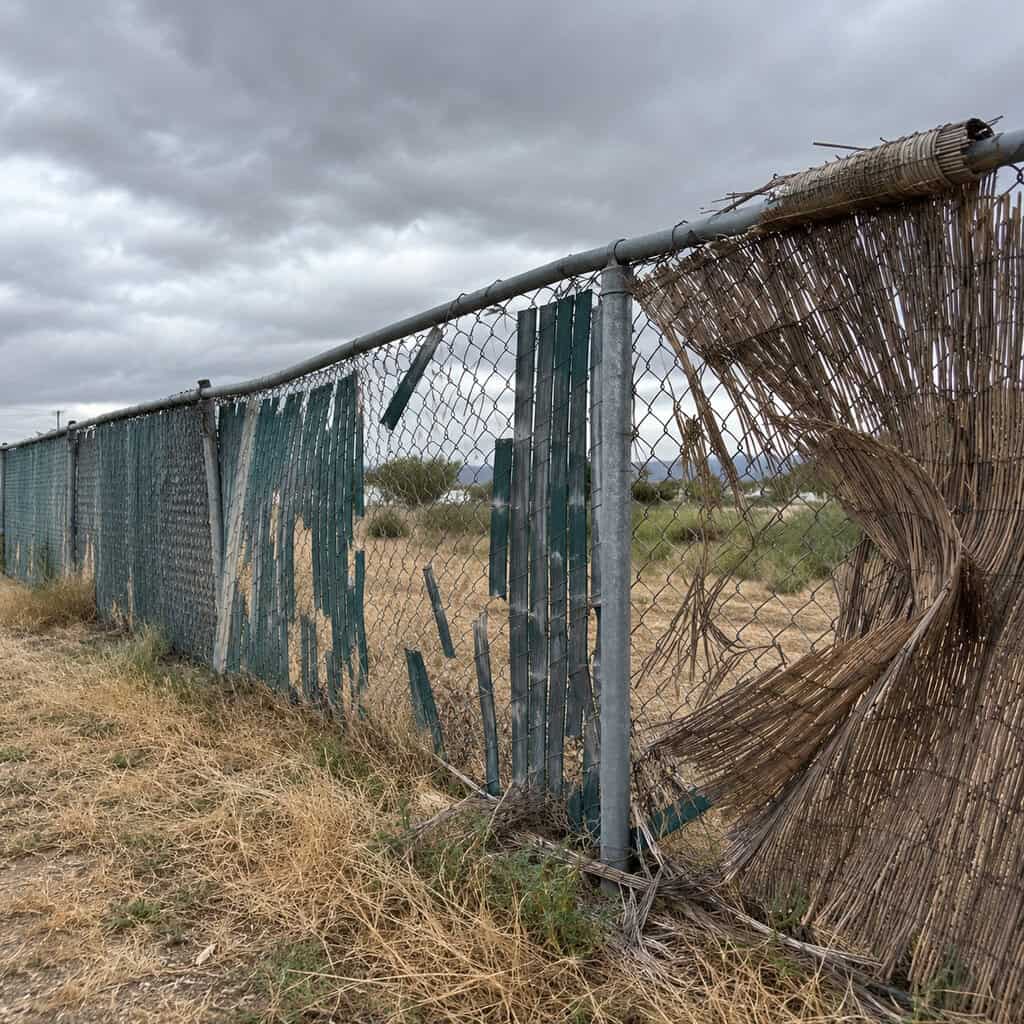
Every version of this fails, just on different timelines.
Plastic privacy slats go chalky and snap. Reed and willow rolls unravel and blow across the lawn in pieces. Mesh windscreen works best and fails worst — it turns a porous fence into a solid sail, and the top rail bows the first time a 50-mph gust hits it broadside.
Two to four years is typical. Often less.
If the chain-link has to stay, swap to black vinyl-coated fabric, which visually recedes, and plant something in front of it. If privacy actually matters, build it once in cedar or vinyl and stop buying rolls.
12. Painting a New Wood Fence Instead of Staining It

Paint sits on top of wood. Stain goes into it. That one difference decides how year four goes.
Almost nobody paints the back side of the pickets or seals the cut ends. Moisture gets in through those unsealed surfaces, migrates under the film, and pushes the paint off from behind. Now you’re scraping 150 feet of fence before you can recoat.
Semi-transparent oil or hybrid stain penetrates and fades rather than flaking. Recoating means pressure-wash, dry, spray. One weekend, no scraping.
Here’s how the two actually compare over a fence’s life:
| Paint | Penetrating Stain | |
|---|---|---|
| First-coat look | Opaque, uniform | Grain still visible |
| How it fails | Peels and flakes | Fades evenly |
| Recoat prep | Scrape or strip | Wash and dry |
| Typical interval | 5-7 years | 2-4 years |
| Weekend cost | High labor | Low labor |
Stain needs attention more often. It just never needs a scraper.
13. A Horizontal Slat Fence on 8-Foot Spans

Beautiful in listing photos. Rough in physics.
Horizontal boards span between posts with nothing underneath them, so an 8-foot run of 1×6 droops in the middle within a couple of seasons. Worse, the upward-facing edge of every board collects water and debris, and the board cups toward the sun — which widens the gaps and makes the sag more obvious.
Tighten post spacing to 4 to 6 feet. Use thicker kiln-dried clear stock, not wet construction-grade. Add a hidden mid-span stiffener behind the boards.
And seal all four sides before installation, including the ends. After install, two of those faces are unreachable forever.
14. An Invisible Fence as Your Only Dog Containment
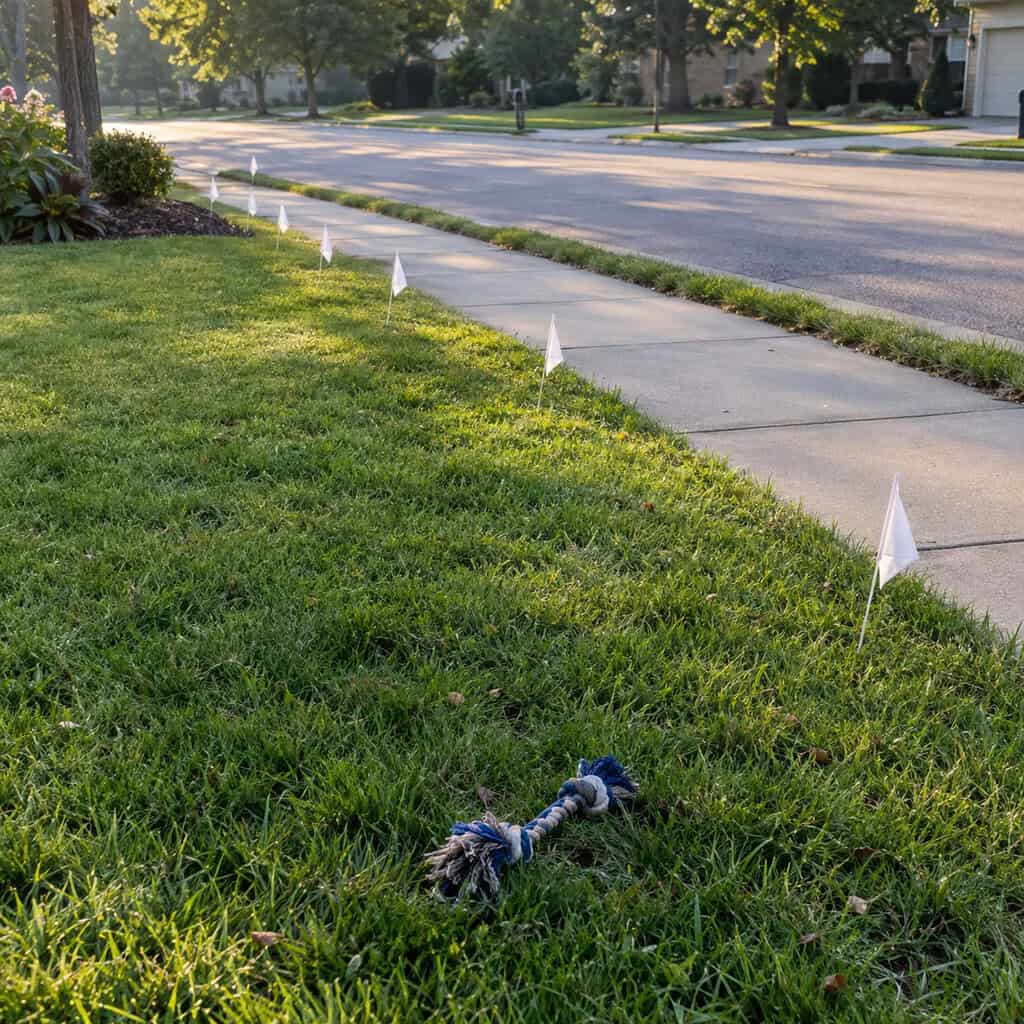
A buried wire only works in one direction, and it only works on a dog that’s thinking clearly.
Nothing is stopped from coming in. Loose dogs walk straight across the boundary. So do coyotes, delivery drivers, kids on bikes, and anyone who doesn’t know the yard is supposedly contained. Your dog is standing in an open yard with a collar that punishes retreat — because once a scared dog crosses the line outward, coming home means taking a second correction at the boundary.
Drive overrides correction more often than owners expect. A high-prey-drive dog chasing a rabbit will absorb the shock and keep going, and herding and sporting breeds are especially prone to it.
Equipment failure is the quiet one. A wire break, a dead collar battery, a power outage, a transmitter unplugged by a contractor — and the system is off with no visible sign that anything changed.
Then there’s what the system teaches. A dog that gets corrected every time a jogger passes the property edge can start associating strangers with pain, which is how boundary frustration becomes aggression.
Treat it as a supplement, never as the fence. A physical barrier first, with the e-collar layered in if you want reinforcement near a road. Dogs also need the yard underneath to be safe — which means knowing which landscaping plants are toxic to dogs before you plant along the fence line.
15. 4×4 Posts on a Six-Foot Privacy Fence

Do the arithmetic once and you never spec a 4×4 again.
A six-foot solid fence with posts eight feet apart presents roughly 48 square feet of surface per bay. Wind load on that area during a strong gust is measured in hundreds of pounds, and all of it levers against a post section that’s 3.5 inches square at the groundline — the exact spot where decay is also working.
The post doesn’t snap. It leans, then twists, then the pickets start opening gaps along the top.
Step up to 6×6 timbers for the whole run, or at minimum at corners, gate posts, ends, and any bay facing open ground. Steel-core wood posts and schedule-40 galvanized pipe both solve it permanently.
16. A Lattice Topper

It’s the weakest component on the fence, mounted at the highest point, where the wind is strongest.
Thin diagonal lattice has dozens of lap joints, and every one holds water. The frame racks in wind because diagonals in that pattern don’t triangulate anything. Three to five years and the topper is sagging while the pickets below are perfectly sound.
You can get the same airy top for less trouble. Spaced square-stock pickets above the solid section, or a simple cap rail with trim, both read as decorative and neither rots from the joints out.
17. A Solid Privacy Fence in a Wind Corridor
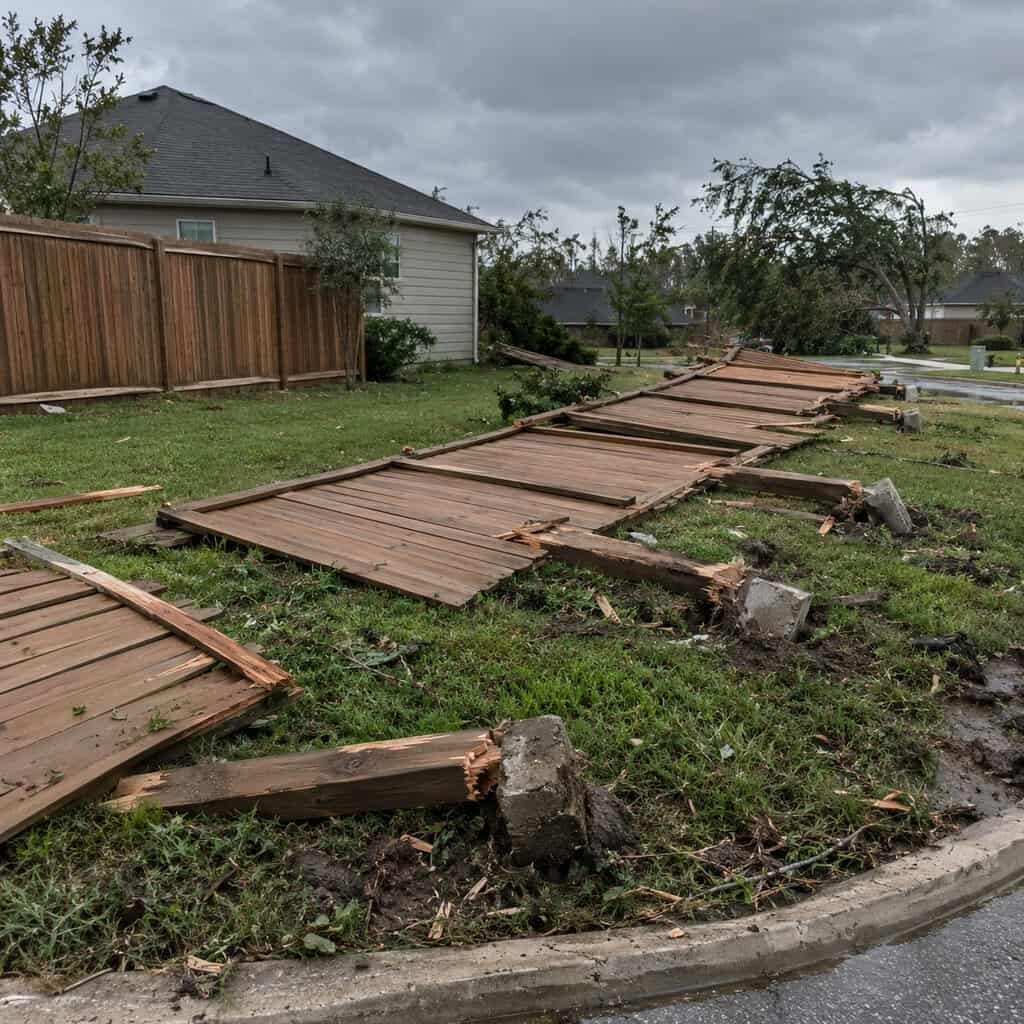
Build a wall and the wind treats it like a wall.
Air that can’t pass through a fence has to go around or over it, and the pressure differential loads every post and footing on the windward run. On an exposed lot — a corner, a ridge, the open end of a subdivision — that’s how a straight new fence ends up flat in the grass after one storm season.
Shadowbox and louvered styles let air bleed through while still blocking sightlines. Even a deliberate 3/8-inch gap between pickets cuts the load meaningfully and gives the boards room to swell.
Upsize the footings on whichever run faces open ground. It’s the cheapest insurance on the job.
18. Preassembled Panels on a Sloped Yard
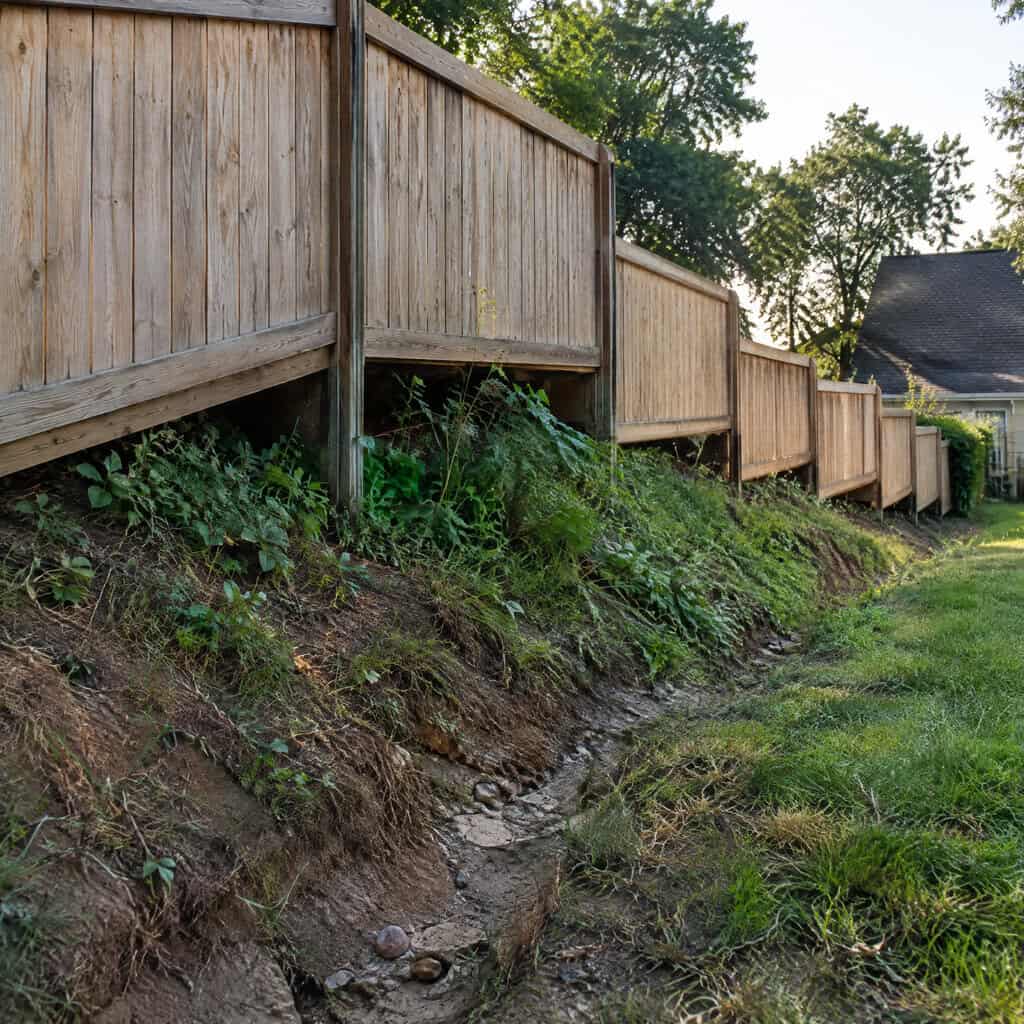
Rigid panels have one option on a grade: stair-step.
Each section stays level and drops at the post, which leaves a triangular gap under every panel. On a steep run those gaps get big — six, eight, twelve inches at the low corner. Dogs find them in a day. Weeds fill them. Runoff channels through and starts scouring soil away from your footings.
Stick-built fences rack. Rails follow the ground, pickets get cut to a consistent height above grade, and the bottom line of the fence parallels the slope.
Where the drop is too severe to rack, pour a short retaining curb along the low side and build on top of it.
19. Cheap Fasteners in Cedar and Redwood

Black streaks down a new cedar fence aren’t dirt. They’re a chemical reaction.
Cedar and redwood are full of tannic acid. Tannins attack bare steel and electro-galvanized coatings, corroding the fastener and bleeding iron-tannate stain down the face of every picket. You’ll see it inside the first year. The joint keeps weakening after that until the nail has almost nothing holding it.
Hot-dipped galvanized, stainless, or polymer-coated structural screws solve it. Ring-shank nails at absolute minimum.
Never smooth-shank staples. Those are what prefab panels use.
20. Powder-Coated Steel Ornamental Panels

In the showroom, painted steel and aluminum look identical and one costs less. Outside, they diverge fast.
Powder coat is a sealed skin, and steel underneath only stays protected while that skin is perfect. Every weld, every factory cut end, every mower nick and every string-trimmer scuff is an origin point. Rust starts at the picket tips near the ground where moisture sits longest, then creeps upward under the coating and lifts it.
Five to ten years and the bottom six inches of the fence is orange.
Heavy-gauge aluminum doesn’t have the problem at all — it oxidizes to a stable layer and stops. Where you genuinely need steel’s strength, specify true hot-dip galvanizing underneath the finish coat, not just paint over mill steel.
21. No Dig Barrier at the Bottom of a Dog Fence

Owners build for height. Dogs work the bottom.
Most escapes happen under the fence, not over it, and a four-inch gap over soft ground is all a determined terrier needs. Soft mulch beds and freshly tilled flower borders along the fence line are the easiest digging in the yard — you built the escape route while landscaping.
An L-footer is the standard answer: welded wire fastened to the bottom of the fence and bent outward 12 to 18 inches, buried a few inches down or pinned under turf. The dog digs, hits mesh, and gives up because the mesh extends in the direction they’re pushing.
A gravel trench works too, and so does a narrow concrete toe poured along the base before the pickets go on.
22. A Post Planted in the Sprinkler Spray Zone

One misaimed head. Twenty minutes a day. Every day, for years.
That’s the equivalent of a localized rainy season aimed at three posts, and those three fail a decade before everything else on the fence. Wood rots at the groundline. Steel rusts. Powder coat blisters. The irrigation runs at 5 a.m. so nobody ever sees it happening.
Walk the fence line with the zones running before you dig anything. Cap, rotate or swap nozzles so the spray stops short.
Where you can’t avoid the soaking — a low corner, a downspout outfall — use composite or galvanized steel posts there and move on.
23. A Solid Fence Across a Drainage Swale
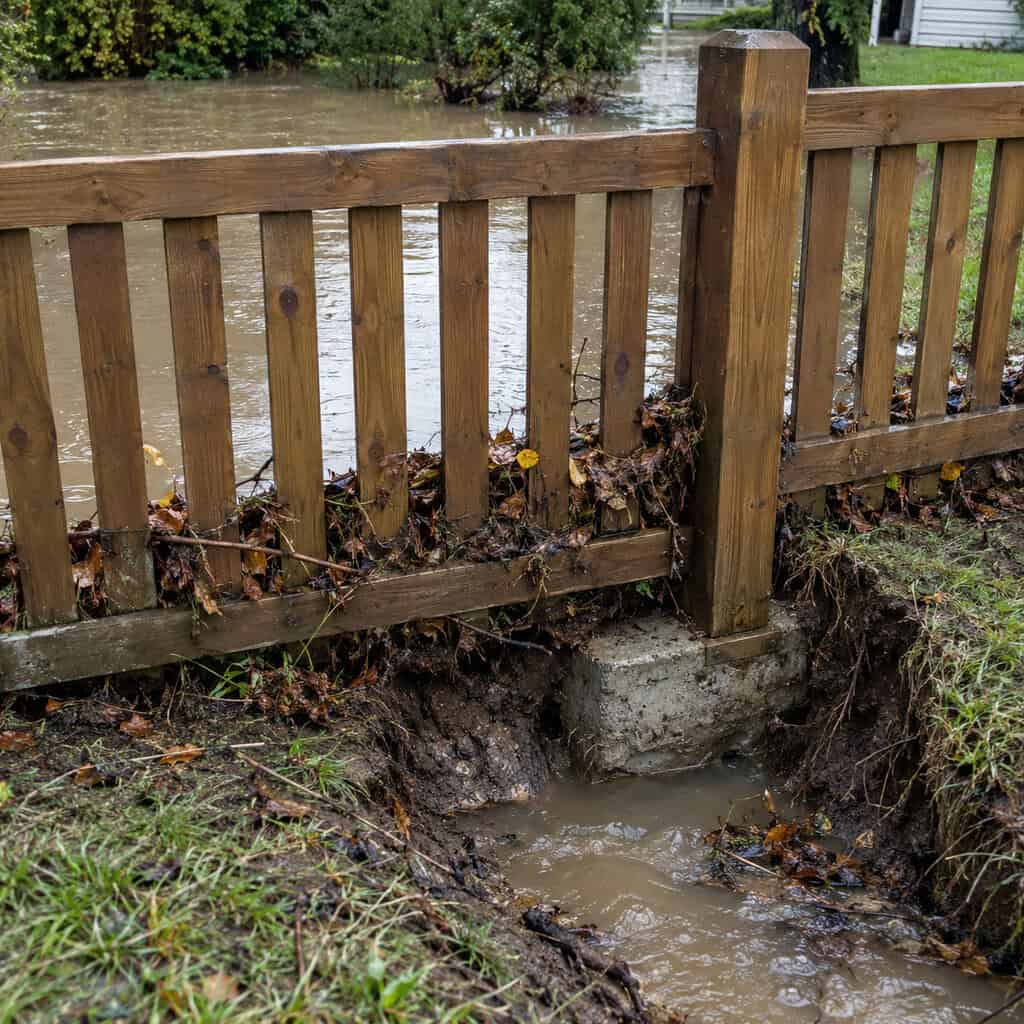
Water has been crossing your lot the same way since the subdivision was graded. A solid fence across that path is a dam, and it will act like one.
The first real storm shows you what you built. Debris — leaves, mulch, grass clippings, a kid’s ball — packs against the pickets and raises the effective height of the dam within minutes. Water backs up behind it. Then it does one of three things, all bad: it undermines the footings by scouring soil out from the downhill side, it overtops and channels hard enough to cut a trench through your lawn, or it pushes sideways and reroutes onto a neighbor’s property.
That third one has teeth. Most states apply some version of a reasonable-use rule to surface water, and altering natural drainage so it floods an adjoining property is grounds for a civil claim. A fence is an alteration.
It can also come back at your own house. Water that can’t continue across the yard ponds, saturates the soil, and finds the lowest permeable path — which in plenty of suburban lots is the backfill against your foundation. Hydrostatic pressure against a basement wall is how a $4,000 fence becomes a $20,000 waterproofing job.
And in a mapped floodway, a solid fence may be flatly prohibited. Floodplain administrators treat obstructions as a regulatory issue, not an aesthetic one.
Fence crews handle it three ways. Raise the bottom of the fence 6 to 12 inches above grade across the swale so water passes under. Build a hinged or removable bottom section that swings up with flow and can be cleaned out. Or switch to open picket or ornamental style for just that span where runoff crosses. If the yard already has standing-water trouble, fix the drainage causing the flooding before you add anything that blocks it.
24. A Split-Rail Fence Around a Dog Yard
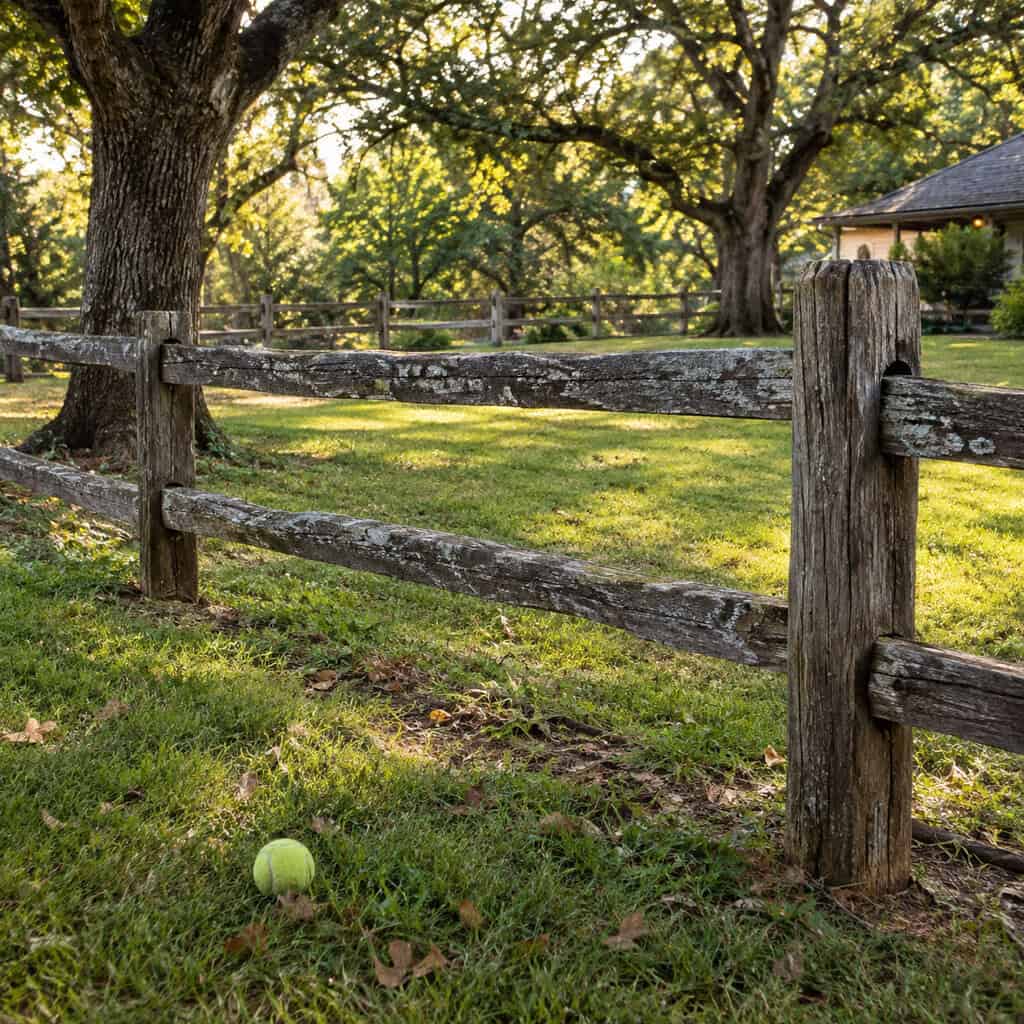
Split rail says boundary. It doesn’t say barrier.
Dogs walk between the rails. Deer step over the top without breaking stride. Toddlers climb it because it’s shaped exactly like a ladder. It’s a beautiful piece of landscape architecture that contains absolutely nothing.
Back it with black welded wire on the inside face. At twenty feet the mesh disappears visually, the rustic look survives intact, and the fence finally does a job.
25. A Pallet or Reclaimed-Wood Fence

Free lumber has a price. It’s just deferred.
Pallet boards are thin, untreated, and engineered for exactly one trip on a forklift. Many are heat-treated, but some older international pallets were fumigated with methyl bromide — not something you want surrounding a vegetable bed or a dog run. They’re also riddled with brittle nails that snap flush and wait for your hand.
Two years of charm. Year five it’s kindling, and pulling it out is worse than building it was.
Buy rough-sawn cedar if you want the rustic texture. Save reclaimed material for one short accent panel you can swap without dismantling a fence line.
26. Skipping the 811 Utility Locate
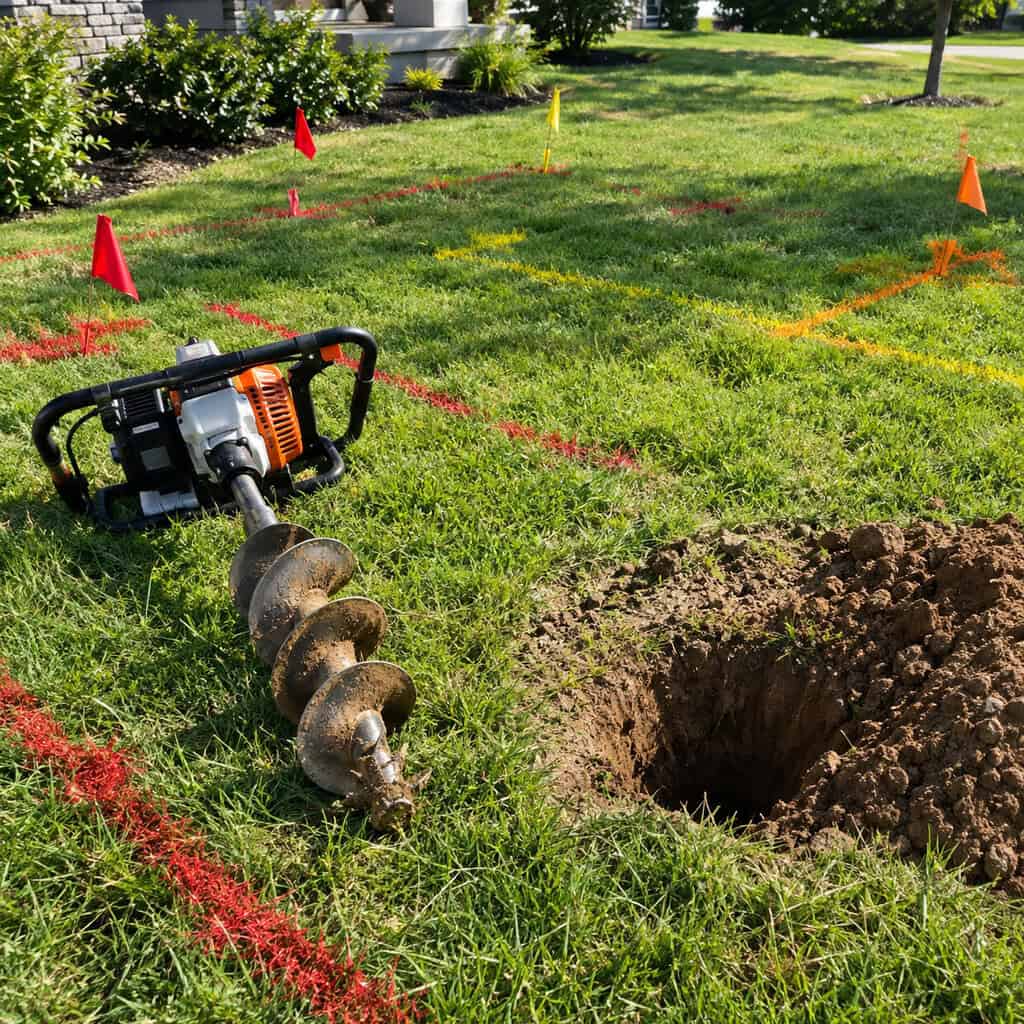
Post holes are dug to roughly the same depth utilities are buried. That’s not a coincidence — both follow the same trenching logic.
Gas service lines commonly run 18 to 24 inches down. Electric service, cable, fiber and irrigation often sit shallower, sometimes under a foot. A standard fence post hole is 24 to 42 inches. An auger does not negotiate.
Calling 811 is free and federally mandated in all 50 states. You call or file online, give the address and dig area, and member utilities mark their buried lines with color-coded paint and flags: red for electric, yellow for gas and oil, orange for communications, blue for potable water, green for sewer, purple for reclaimed water. Most states require 2 to 3 business days’ notice, and marks stay valid for a set period — typically 10 to 20 days depending on the state.
Then there’s the tolerance zone, which is the part homeowners skip. Marks indicate approximate location, not exact. Most state laws require hand-digging or soft excavation within 18 to 24 inches on either side of the mark. Put an auger inside that zone and you’re outside the law even if you called.
Skip the call entirely and the math gets ugly. You own the repair cost, the utility’s emergency response, any service interruption to the neighborhood, and potential fines. Homeowners insurance frequently excludes damage from unpermitted or negligent excavation. Hitting a gas line adds evacuation and the possibility that nobody’s insurance matters.
One more thing the locate won’t cover: private lines. Utility companies mark to the meter. The gas run from the meter to your grill, the electric feed to the detached garage, the irrigation mainline, the septic lateral — all yours to locate, and all exactly where you want a post.
27. Ignoring Height Limits, Setbacks and Sight Triangles

The rules are boring and they’re enforced.
Many municipalities cap front-yard fences at 3 or 4 feet while allowing 6 feet in the rear. Corner lots have sight triangles — a defined area near the intersection where nothing can obstruct a driver’s view, often regardless of what the rest of the code allows. Setbacks from sidewalks and alleys are common. HOA covenants layer on style, color, height and which side faces out.
A non-conforming fence comes down at your cost, including the footings.
Read the covenant and pull the permit before you buy a single picket. The permit fee is usually under $100 and the plan review catches the thing you were about to get wrong.
28. One 36-Inch Gate as Your Only Access
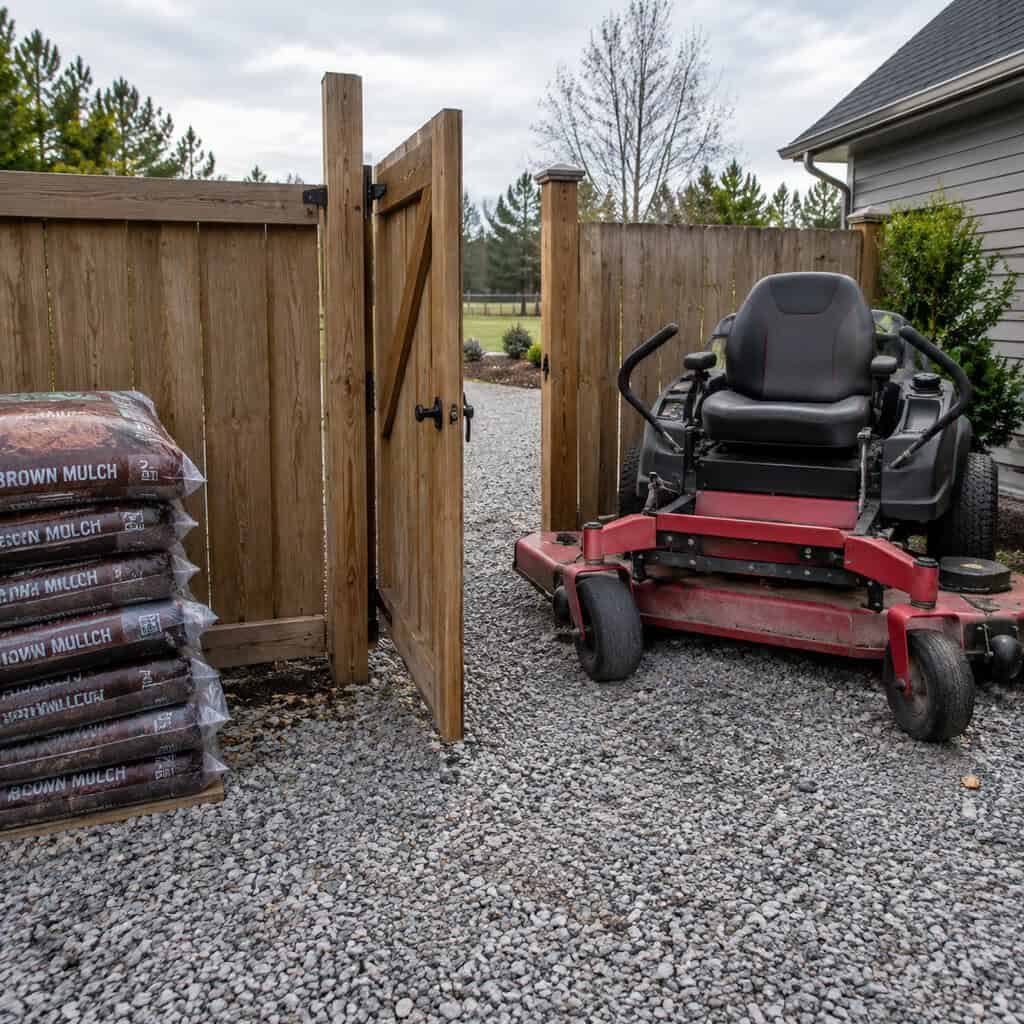
Everything you’ll ever need to get into the backyard is wider than a walk gate.
A riding mower won’t fit. Neither will a wheelbarrow with any real load, a pallet of pavers, a hot tub, a shed kit, a dumpster, or the mini-excavator that shows up the day a sewer line fails. People discover this on delivery day, standing in the driveway with a truck idling.
Widening later means pulling set posts and breaking out concrete footings.
Plan a double drive gate at least 10 feet wide on whichever side has equipment access, or frame one removable panel with through-bolted cleats instead of fixed rails. Put it where a truck can actually reach.
29. Turning the Unfinished Side Toward the Neighbor
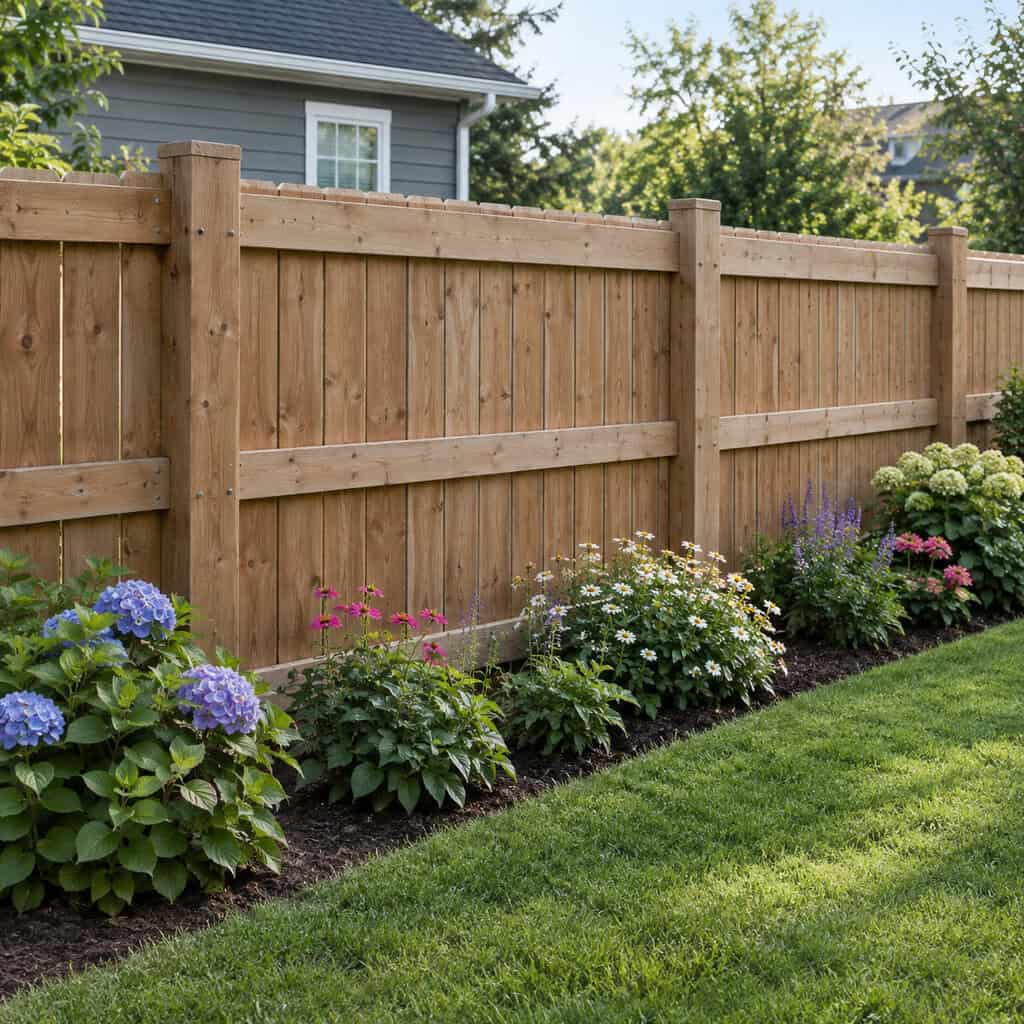
It’s the default because it’s faster to build that way. In a surprising number of towns, it’s also a code violation.
Plenty of municipalities and most HOAs require the finished side to face outward — toward the street and toward the adjoining property. Even where it’s legal, you’ve handed the people next door twenty years of looking at your rails and post faces while you get the clean side.
They remember. Fences outlast friendships.
Build shadowbox or board-on-board instead. Both read as finished from either side, both let wind pass through, and neither costs much more than a one-sided fence once you account for the goodwill.
30. Corrugated Metal Panel Fence

The modern-farmhouse pick, and it’s a genuine judgment call.
Cut edges on corrugated panel are sharp enough to open a hand, and panels on a south exposure get hot enough to burn a leaning kid. In humid climates, ordinary galvanized panel starts weeping rust at the cut edges and fastener holes within a few years, and those streaks run straight down the cedar frame you paid for.
In Arizona or eastern Colorado, the same fence looks sharp for twenty years.
If you want it, spec true Galvalume or a factory-finished panel, hem or trim every exposed edge, and use gasketed screws rather than face nails. Regional call.
31. Cattle Panel and Hog Wire Fencing
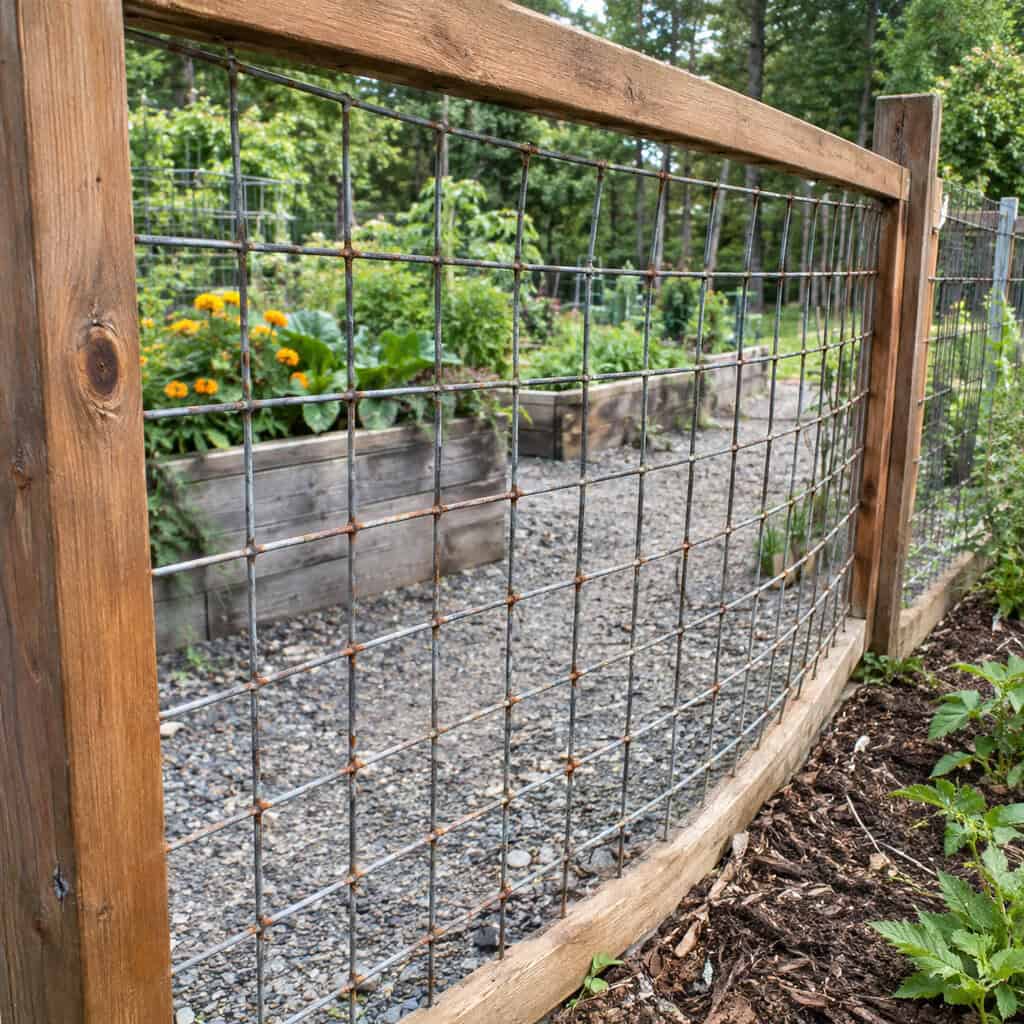
It photographs beautifully — welded panel inside a clean cedar frame, open view, airy and cheap.
Light-gauge panel bows outward over a long span because nothing resists lateral push. Welds are the first thing to rust, since the galvanizing burned off there during manufacture. And the wood frames almost nobody braces will rack out of square within a few seasons.
Done right, it holds up. Heavy galvanized panel, spans under six feet, and a frame with real corner bracing.
Done the Pinterest way, you get four to eight years. Could go either way.
Almost every item on this list comes down to the same two forces: water and leverage. Water decides where the fence rots. Leverage decides where it leans.
Spend the money where those forces are strongest — posts, footings, gates, the bottom six inches — and go ahead and economize on everything else.
The fence that still looks right in year ten usually cost about 20% more than the one that didn’t. The one that didn’t costs 100% more the second time you build it.