

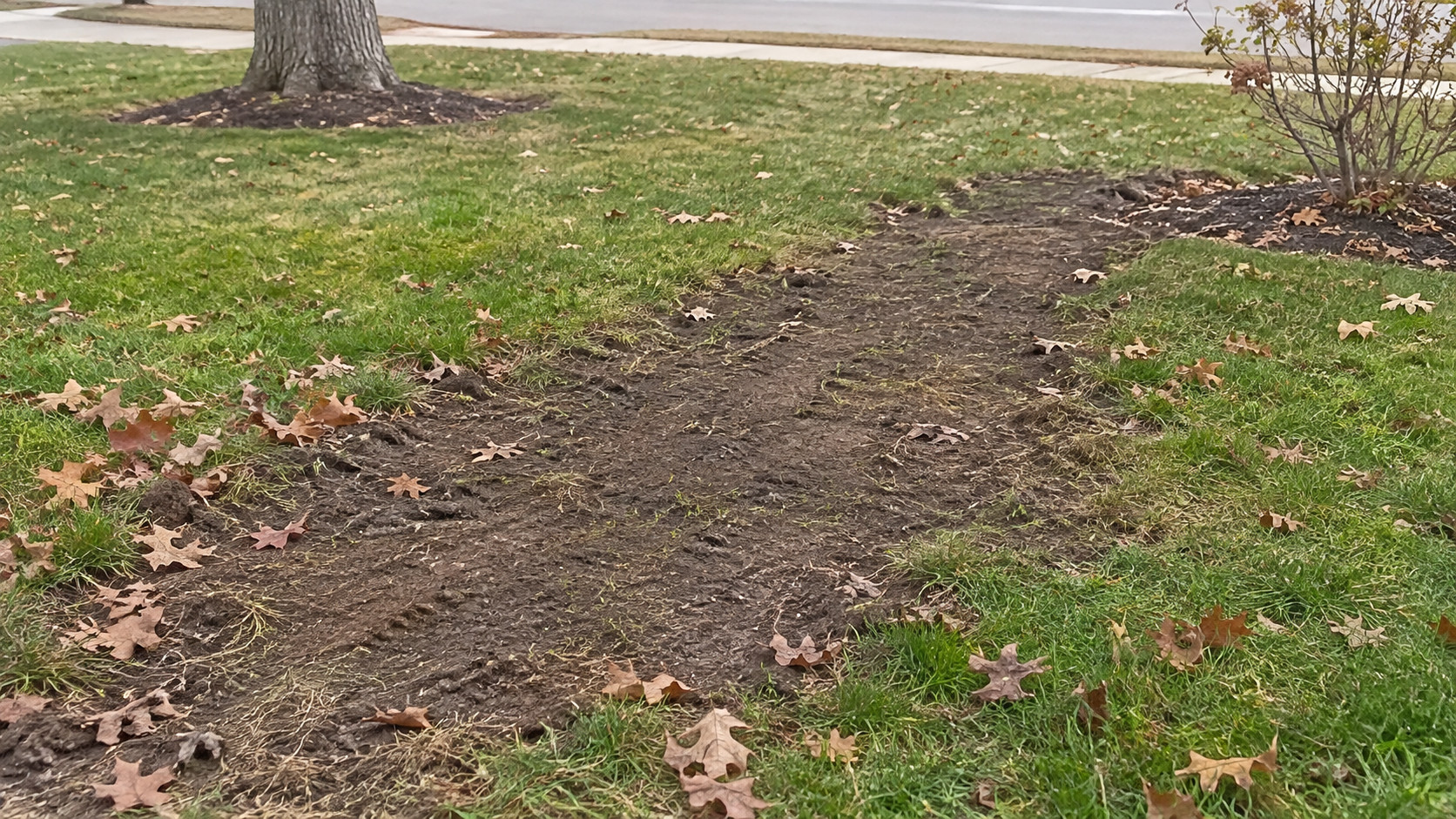
Yes, you can put grass seed down in November — but not to grow grass this year. What you’re doing is called dormant seeding: laying seed on cold soil so it sits there all winter and germinates on its own in early spring.
The timing rule is the opposite of what most people assume. You don’t want warm soil. You want it cold enough that the seed can’t sprout.
Seed that wakes up in mid-November, pushes out a half-inch of root, then gets hit by a hard freeze is dead seed. Seed that stays asleep until March is money well spent.
So the question isn’t really whether November works. It’s whether your November is cold enough yet.
What Dormant Seeding Actually Is
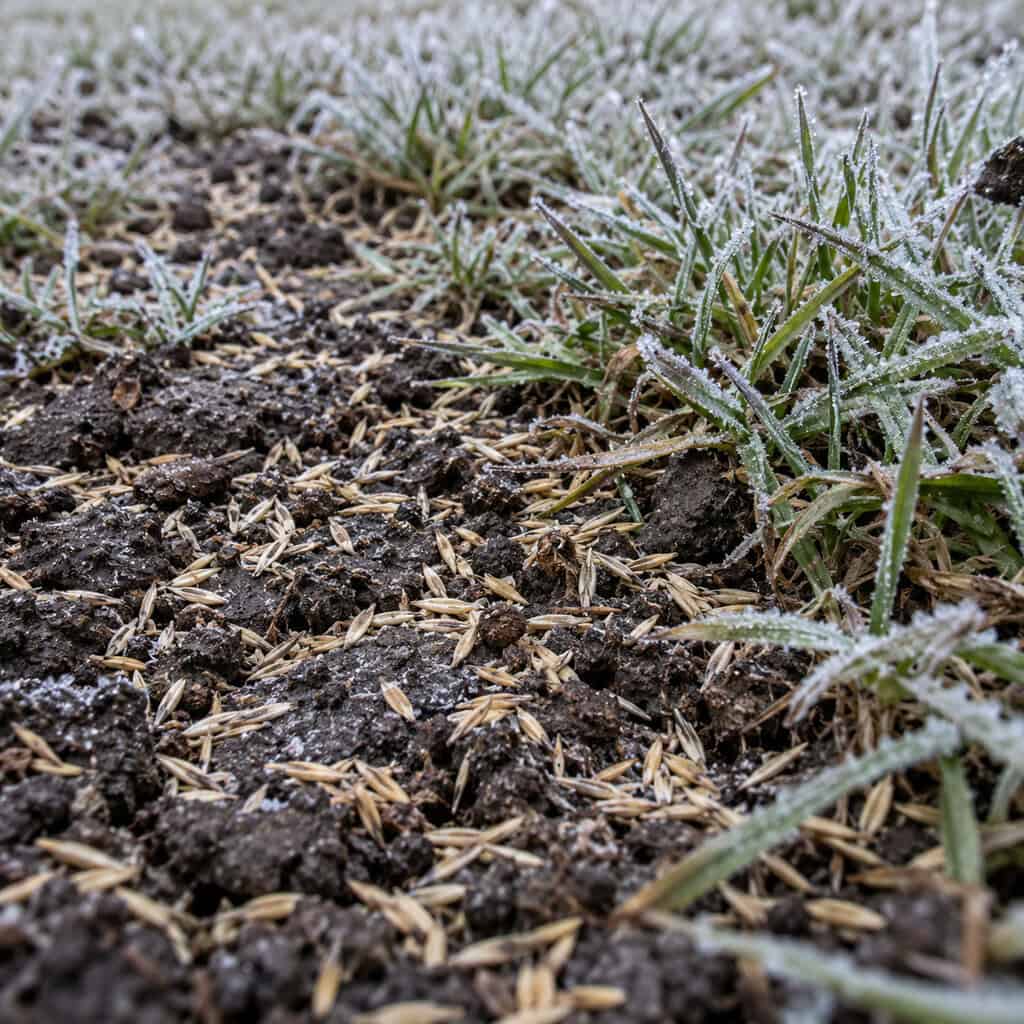
Dormant seeding means broadcasting seed onto soil that’s already too cold for germination, then walking away. No watering. No babysitting. Winter does the work.
Freeze-thaw cycles crack the soil surface open and close it again, pulling seed down into good contact with the dirt. Snowmelt keeps things damp. By the time soil hits 50°F in spring, the seed is already in position.
Cool-season grasses are the candidates — Kentucky bluegrass, perennial ryegrass, fine fescue, tall fescue. University of Minnesota Extension puts the window for this roughly from late October through soil freeze-up, and again in late winter when the ground is still cold.
The Soil Temperature That Decides Everything
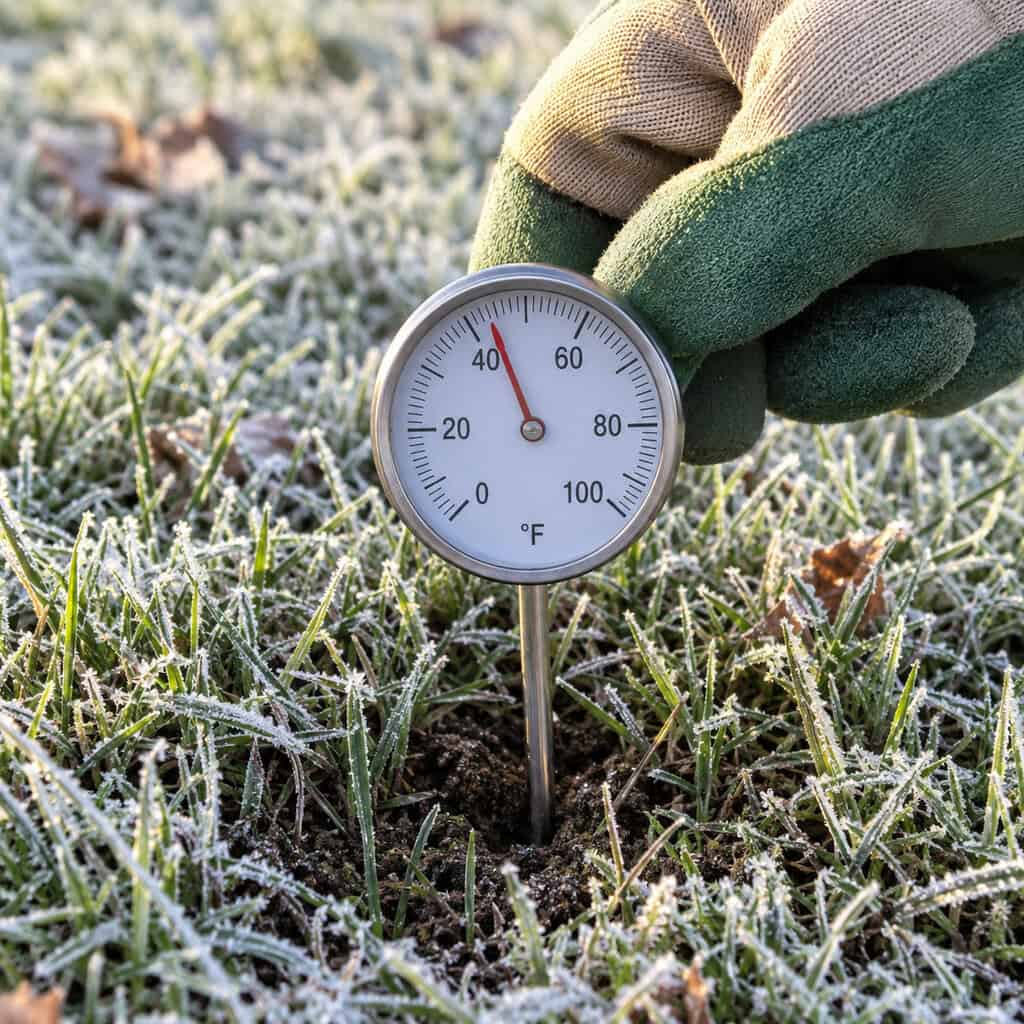
Cool-season seed needs soil around 50°F to germinate reliably. Below that, it sits.
So the goal in November is soil consistently under 50°F, and ideally under 45°F, with no warm stretch coming. In most of the northern half of the country, that’s mid-to-late November. In zone 5 and colder, it can be the first week.
Buy a cheap soil thermometer. Stick it four inches down in the morning, not the afternoon. If it reads 48°F three mornings running and the forecast is dropping, you’re clear.
The trap is the opposite case — soil at 55°F with a warm week ahead. That seed sprouts, puts out a thread of root, and dies the first night it hits 20°F. Our grass seed germination temperature chart breaks the numbers down by species.
How to Actually Do It
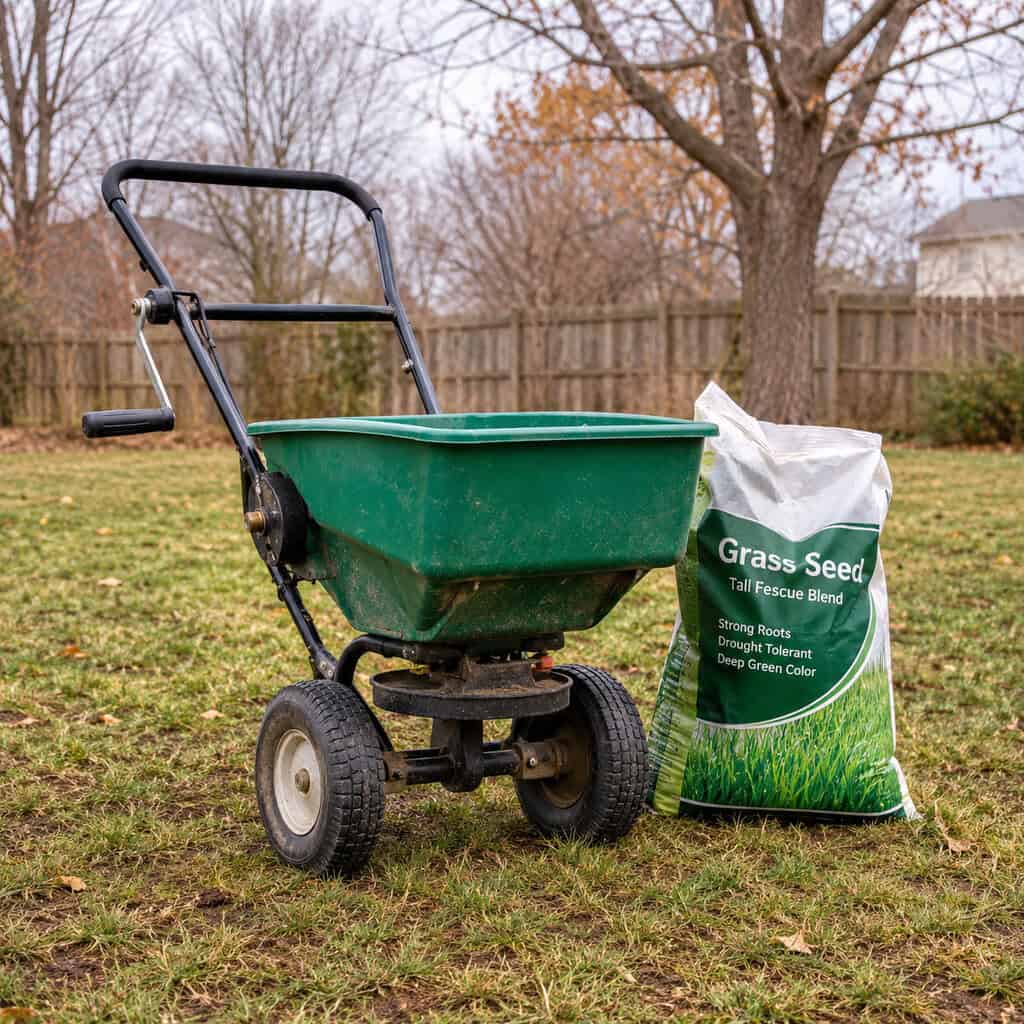
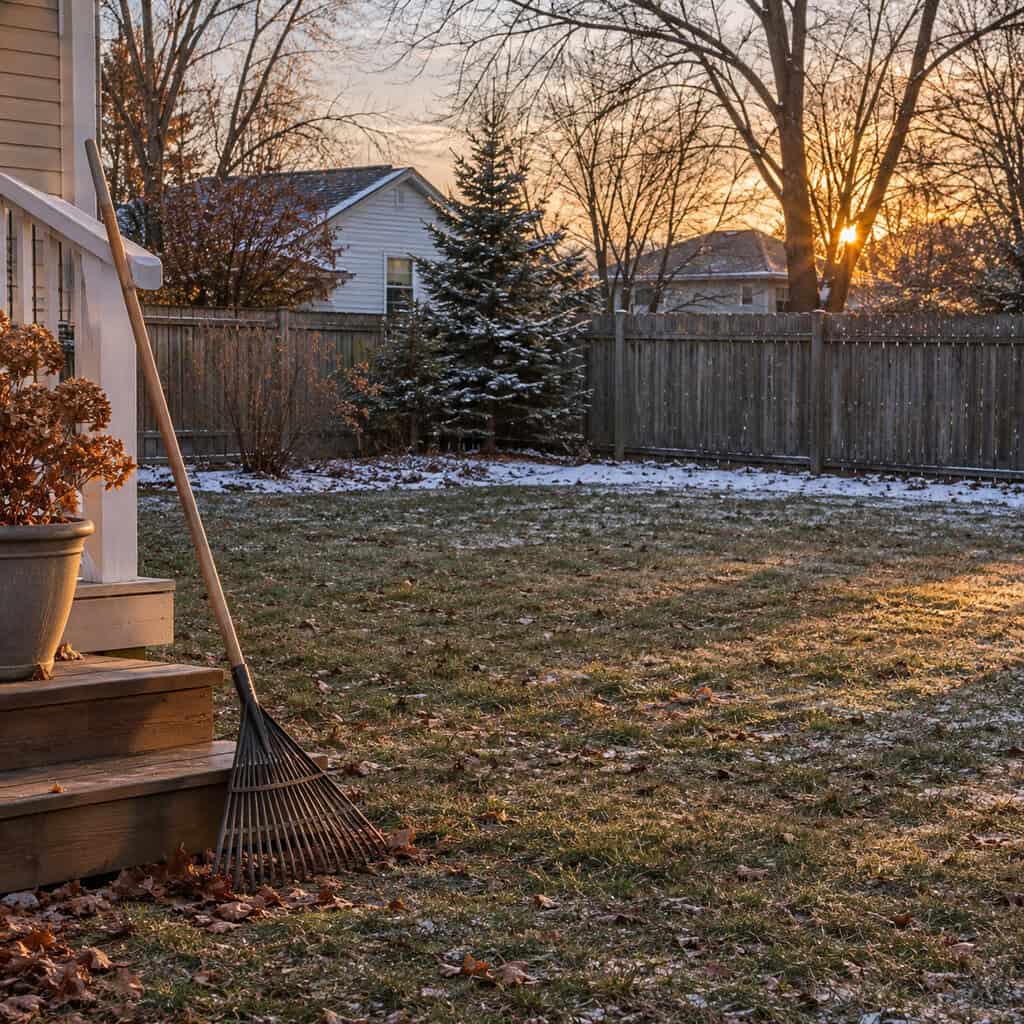
Mow short first. Two inches or less, bag the clippings, and rake off every leaf. Seed that lands on a mat of thatch or wet maple leaves never touches soil.
Then scratch the surface. A stiff rake, a dethatcher, or core aeration all work — you just need bare dirt showing. Broadcast the seed at normal overseeding rates, or bump it up 25% to cover winter losses.
Skip the fertilizer. Nitrogen in November feeds weeds and does nothing for seed that isn’t growing. Save the starter fert for spring, when the seedlings actually show up.
And don’t water it in. You want that seed dry and asleep.
What You’ll Lose — And Why That’s Fine
Expect to lose seed. Birds take some. Heavy rain floats some into low spots and storm drains. A few seeds germinate during a freak warm spell and die.
Realistic germination from dormant seeding runs well below what you’d get from a proper September seeding. That’s the trade. You’re paying in seed to buy a jump on spring.
Steep slopes are the one place to skip it entirely. Seed on a grade washes off in the first spring thaw, and you’ll have reseeded the ditch at the bottom of your yard.
Flat ground, thin lawns, bare patches where the dog wore a trail — those are the wins. Squirrels and birds working your seed are easier to tolerate when the whole project cost you one bag and an afternoon.
Common Misconceptions
“Snow will kill the seed.” It won’t. Snow cover is one of the better things that can happen — it insulates the soil and keeps temperatures steady instead of swinging.
“Frozen seed is ruined seed.” Dry seed handles freezing fine. It’s hydrated seed that’s vulnerable, which is exactly why you don’t water in November.
“I’ll just wait and do it in spring.” Spring seeding competes with crabgrass, warms up unpredictably, and leaves you watering through June heat. Cornell’s turf program notes in its seeding strategies guidance that late-season and dormant seedings get established ahead of spring weed pressure.
“Any seed works.” Warm-season grasses — bermuda, zoysia, St. Augustine — don’t dormant seed. Different biology, different rules.
When November Is Too Early or Too Late
Too late is the easy one: once the ground is frozen solid, you can’t get seed into contact with soil. It’ll sit on top like gravel.
But a light surface freeze doesn’t disqualify you. If the top inch thaws by midday, spread then.
Too early is the real risk in the Southeast and the Mid-Atlantic, where soil can hover near 55°F into December. In those zones, November seeding is just late fall seeding that may or may not establish before dormancy — a worse bet than either September or true dormant timing.
Check the ten-day forecast before you open the bag. If highs stay in the 50s, wait two weeks.
The Takeaway
Cold soil and dry seed. That’s the whole formula.
Put a soil thermometer in the ground this week, watch for three straight mornings under 45°F, then rake, spread, and forget about it until the snow goes. The grass that comes up in late March will be three weeks ahead of anything you plant in spring.