

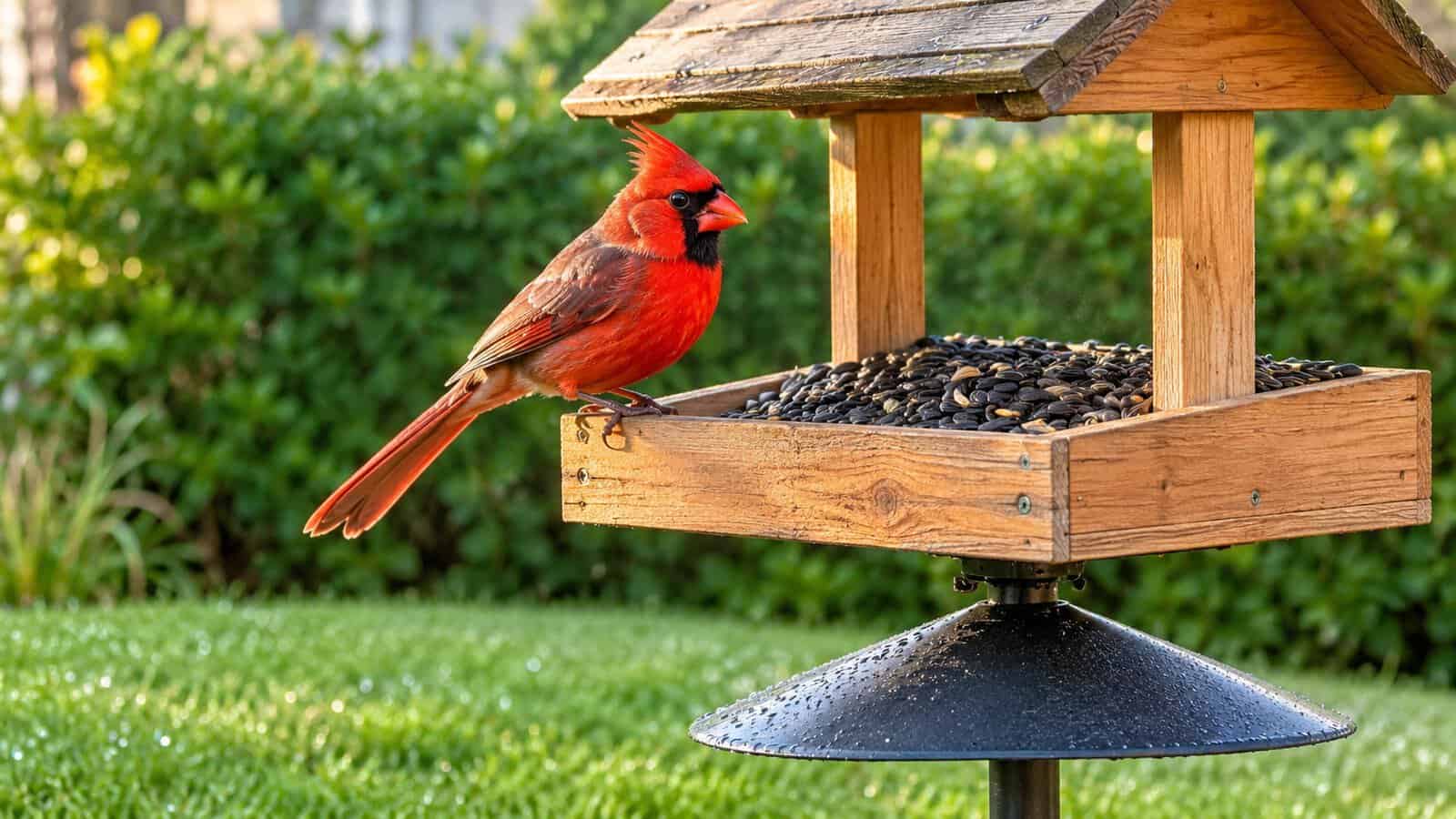
You hung the feeder for cardinals. What showed up was a grackle mob, a squirrel doing pull-ups, and something moving fast along the fence after dark.
That’s not bad luck. Almost every part of a backyard feeding setup — the seed, the feeder, the pole, the timing — either invites songbirds or invites vermin. Most store-bought setups quietly invite both.
Rats don’t climb a pole for fun. They follow spill, smell, and a predictable schedule. Starlings and grackles follow bulk filler seed. Cardinals follow black-oil sunflower and safflower, a sturdy perch, and a feeder they don’t feel exposed on.
The fixes are small. Most take ten minutes and cost nothing.
Here are the specific habits feeding the wrong animals in your yard — and the single change that flips each one back toward cardinals.
1. Cheap Mixed Seed Loaded With Milo and Cracked Corn
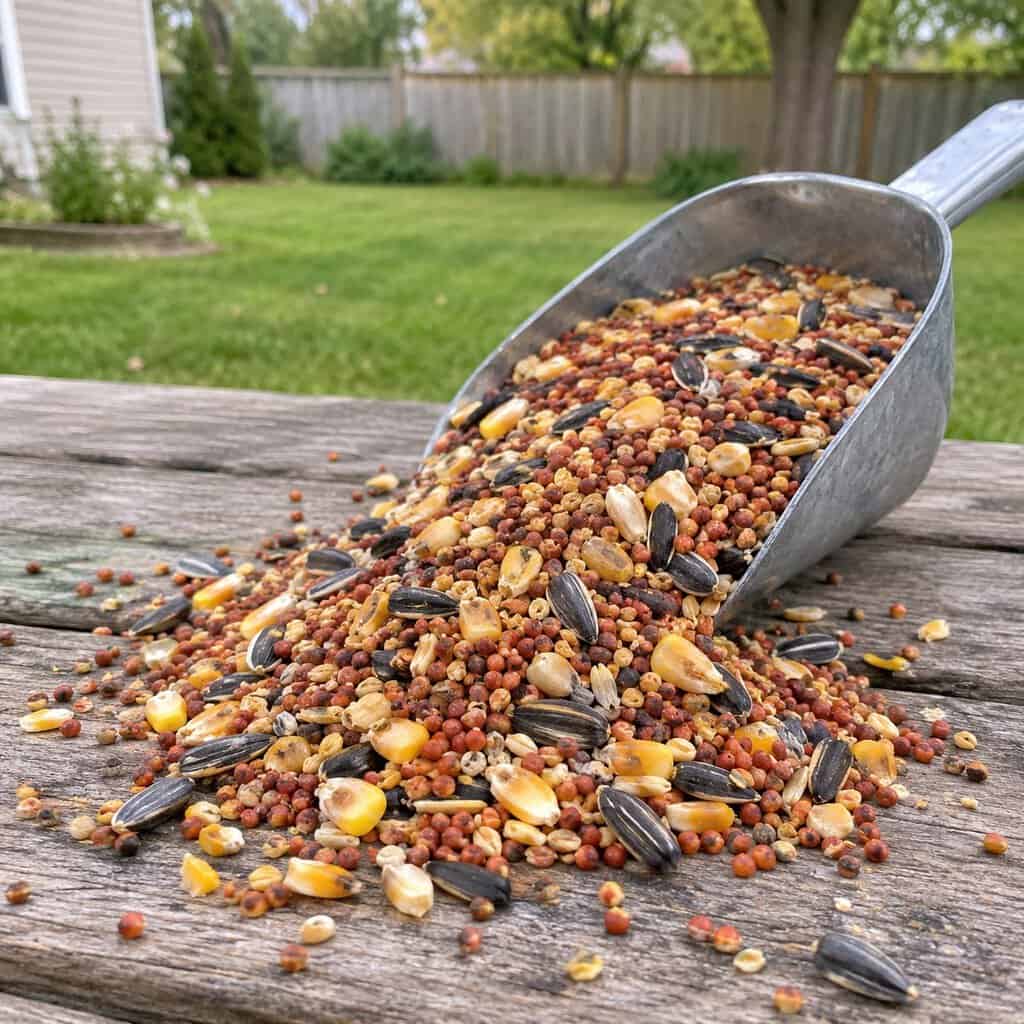
Flip the bag over. If the first ingredient is milo, millet, or cracked corn, you didn’t buy birdseed. You bought filler.
Cardinals won’t eat milo. They flick it out looking for sunflower, and the rejected seed rains down into the grass where rats, mice and house sparrows clean it up overnight. One bad bag can run a rodent buffet for a week.
Grackles and starlings, on the other hand, love corn. So does every raccoon in the neighborhood.
Switch to straight black-oil sunflower, or safflower if you want to cut the grackles out entirely. Cardinals crack safflower easily. Most bully birds and squirrels find it bitter and leave.
2. Bread and Kitchen Scraps Tossed Out for the Birds
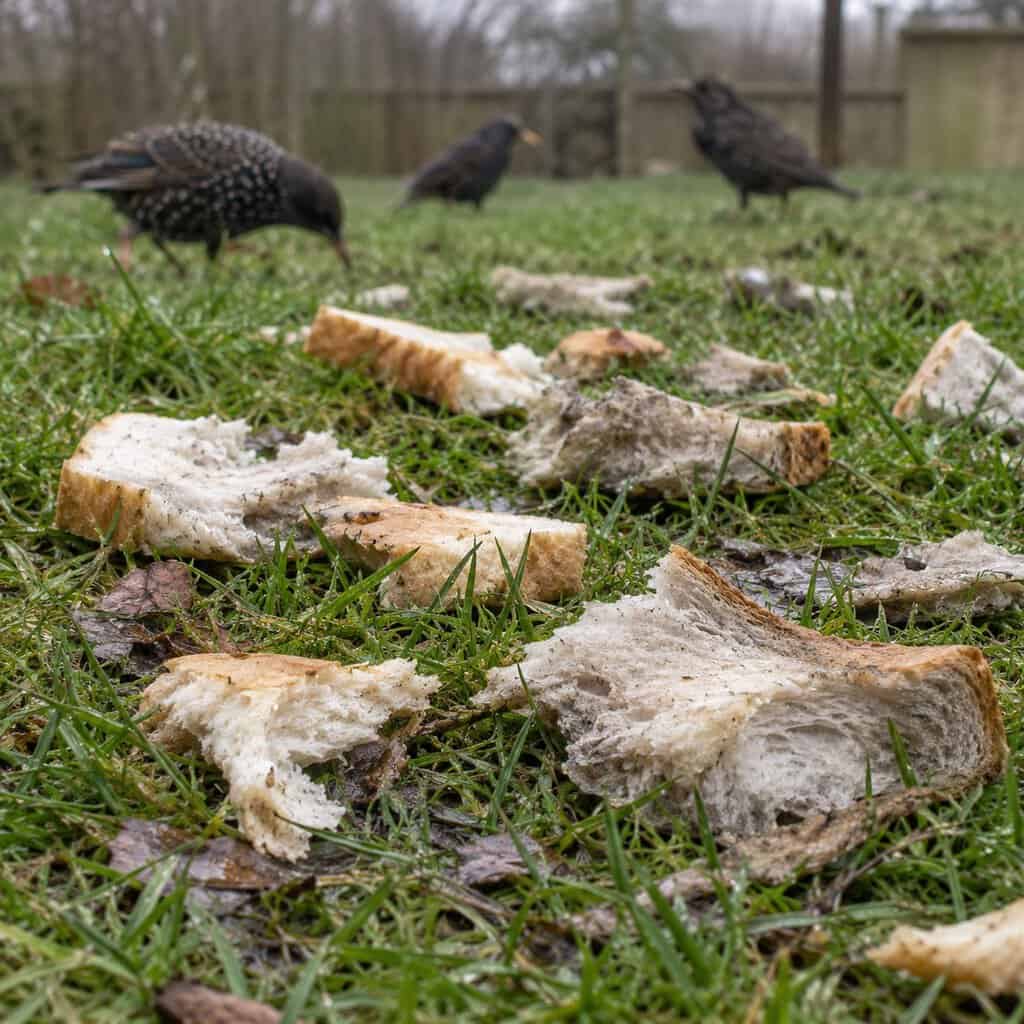
Stale bread feels generous. It’s rat food with a crust.
Bread, muffins, crackers, leftover rice — none of it has the fat or protein a cardinal needs, and all of it sits on the ground long enough to attract rodents, crows and opossums. Soaked bread turns to mush and molds in a day.
Starlings will mob it. Cardinals ignore it completely.
Compost the scraps instead and put that effort toward one good seed. Nothing edible should ever be scattered loose on the lawn.
3. The Seed Pile Growing Under Your Feeder
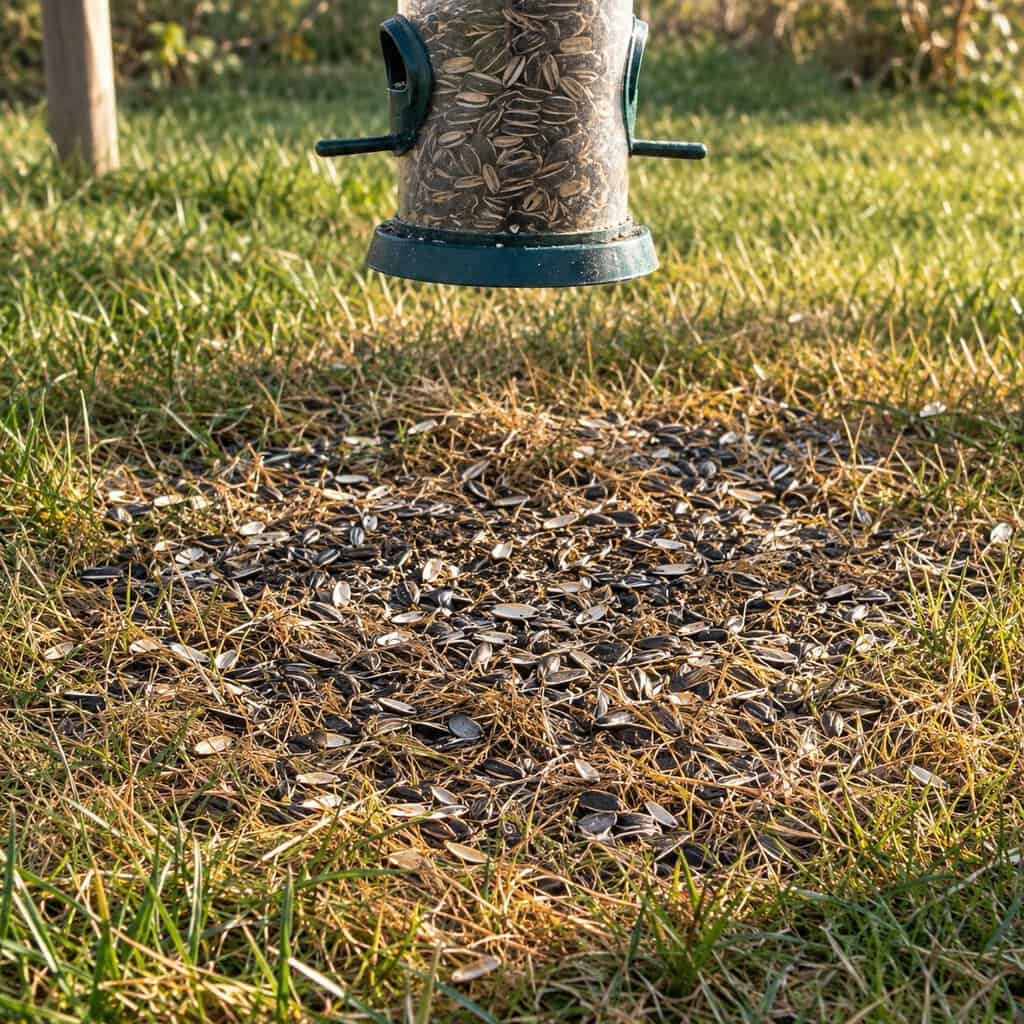
Look directly under your feeder right now. If there’s a crust of hulls and loose seed in the grass, that’s the actual problem.
Rats forage at ground level and almost never climb. They don’t care about your feeder — they care about the two cups of spill beneath it. Cooperative Extension offices field this complaint constantly, and Ask Extension points to ground spill as the number one reason rats find a yard.
Rake it weekly. Better, add a wide seed tray under the feeder so the spill never reaches the dirt.
Cardinals will happily feed off that tray too. They’re ground-feeders by nature and prefer a flat surface to a skinny perch.
4. Topping Off the Feeder at Dusk

Timing matters more than most people expect. Fill at 6 p.m. and the fresh seed sits untouched by birds for twelve hours — during the exact window rats, mice, raccoons and opossums are working.
Fill in the morning instead. Birds empty most of it by late afternoon, and the night shift arrives to an empty yard.
Two or three nights of nothing and the nocturnal crowd moves on. They’re efficient. A yard that stops paying gets dropped from the route.
Morning fills also put seed out when cardinals are most active — first light and again right before dark.
5. An Open Platform Feeder Left Out Overnight

A tray feeder is the most cardinal-friendly design there is. It’s also an all-night buffet with no lid.
Raccoons climb onto them. Rats walk right across them. A platform holding two cups of sunflower is a loaded dinner plate sitting in the dark.
Use the platform during the day and bring it in at night, or scale down to what the birds will actually finish before sunset.
Nothing wrong with the feeder. The problem is leaving it loaded at bedtime.
6. Suet Hanging Through the Summer Heat
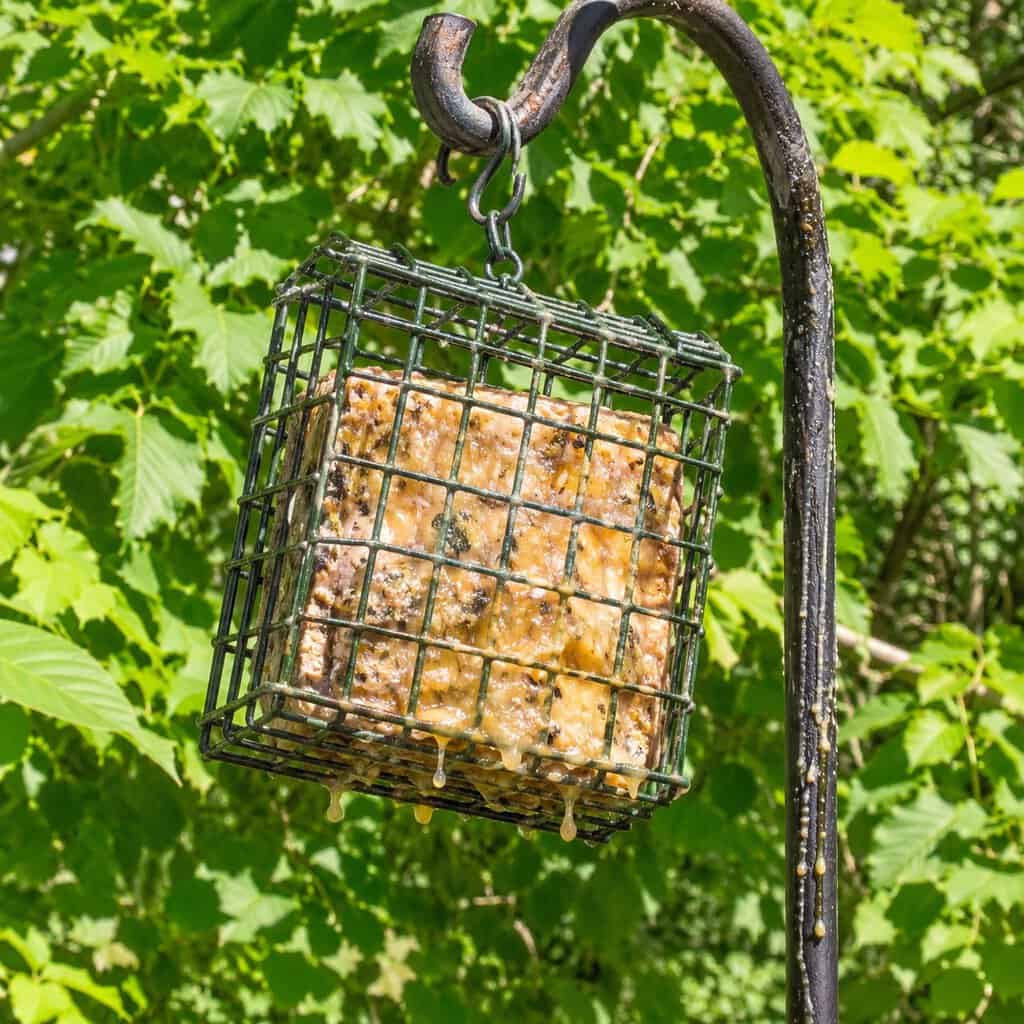
Regular suet starts softening around 70°F. By August it’s a rancid grease block dripping fat down the pole.
That smell carries. Raccoons find it in one night, bears find it in regions that have them, and the melted drip on the ground pulls in rodents and flies.
Pull standard suet once daytime highs hit 70 and switch to no-melt dough cakes, or skip suet entirely until October.
Cardinals barely touch suet anyway. They’re seed birds. You’re feeding woodpeckers and, unintentionally, everything else.
7. A Feeder Bolted to the Deck Rail

Rails are highways. Rats, mice and squirrels travel along the top of a deck rail or fence all night without ever touching the ground.
Mounting a feeder on one hands them a drive-through window. No climbing, no risk, no baffle in the way.
Move it to a free-standing pole set well away from the rail. Five to six feet high, with open space all around.
Cardinals don’t mind the move. They prefer a feeder they can approach from cover anyway, not one pressed against your sliding door.
8. Hung Within Jumping Distance of a Tree or Roof
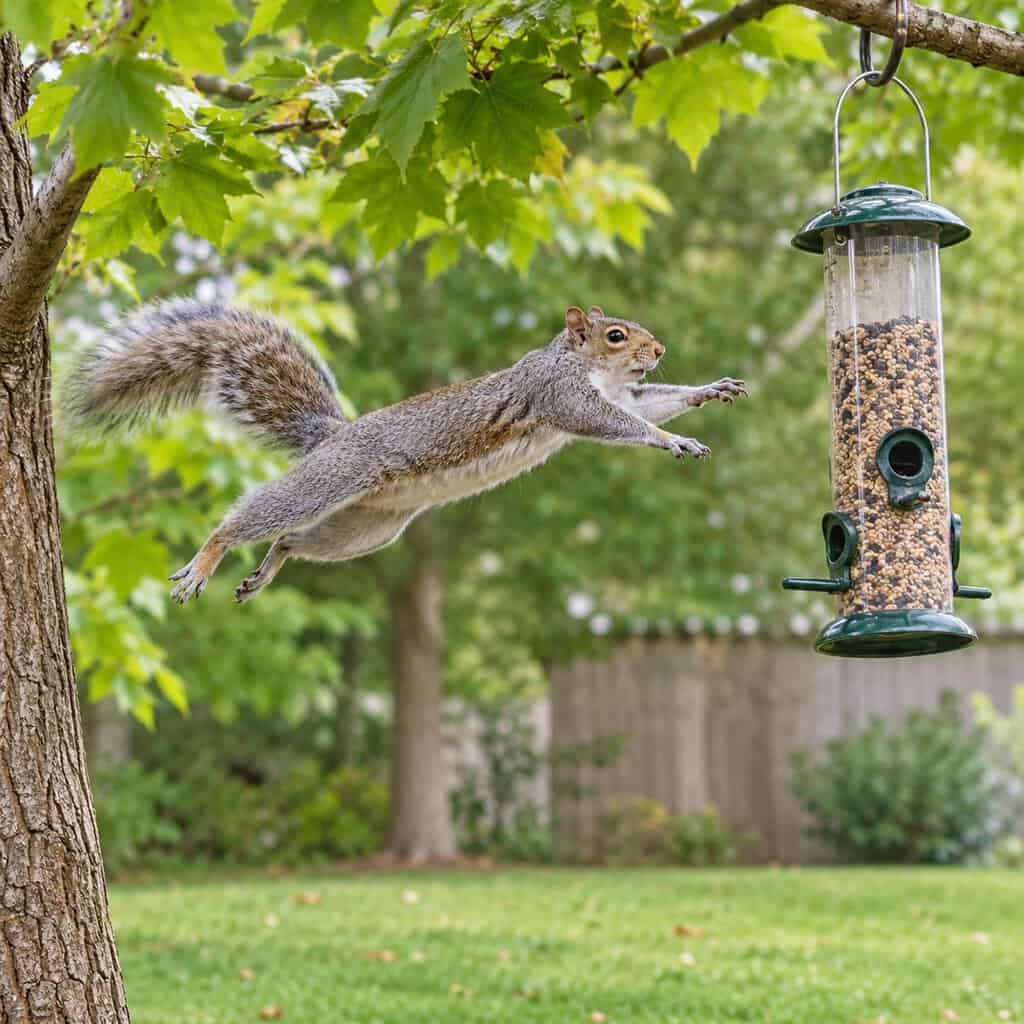
Squirrels clear about ten feet horizontally and five feet straight up from a standing start. Most people hang feeders well inside that range.
From a roofline they do better, because gravity helps. A feeder under an eave is basically a landing pad.
The old rule still holds: ten feet from any launch point, five feet off the ground, with a baffle underneath.
Measure it with a tape, not an eyeball. Nearly everyone guesses short by three or four feet.
9. Seed Stored in Its Paper Bag in the Garage

A mouse chews through a paper seed bag in under a minute. A rat does it faster.
Leaving a half-used bag slumped against the garage wall is how feeding birds turns into a house problem. They find the seed, then they find the warm spot above the water heater.
Move it to a metal can with a locking lid. Galvanized trash cans work and last decades.
Plastic bins delay rodents. Metal stops them.
10. Hummingbird Nectar Left to Ferment

Sugar water goes bad fast — two days in 90°F heat, maybe five when it’s mild. Fermented nectar smells sweet and sour at once, and that combination pulls in ants, wasps, yellowjackets and raccoons.
Raccoons knock the feeder down to drink it. Then they remember where it was.
Change it on a schedule, not when it looks cloudy. By the time it looks cloudy you’ve been running a fermentation tank for a week.
Rinse the ports every time. Black specks inside the tube are mold, and that’ll hurt hummingbirds long before it bothers the raccoons. If you want more of them around, the plants that keep hummingbirds coming all season do more work than any feeder.
11. Peanuts in the Shell

Shelled peanuts are squirrel currency. Put out a handful and you’ll have a standing appointment with every gray squirrel in a two-block radius.
Blue jays cart them off and cache them in your flower beds. Crows show up. The empty shells pile up under the feeder and go moldy in wet weather.
Peanuts also carry aflatoxin risk when they get damp, which is genuinely dangerous for songbirds.
Cardinals aren’t peanut birds. Skip them and put the same money into sunflower — you’ll feed more of what you want and less of what you don’t.
12. Dried Fruit and Raisins in the Mix
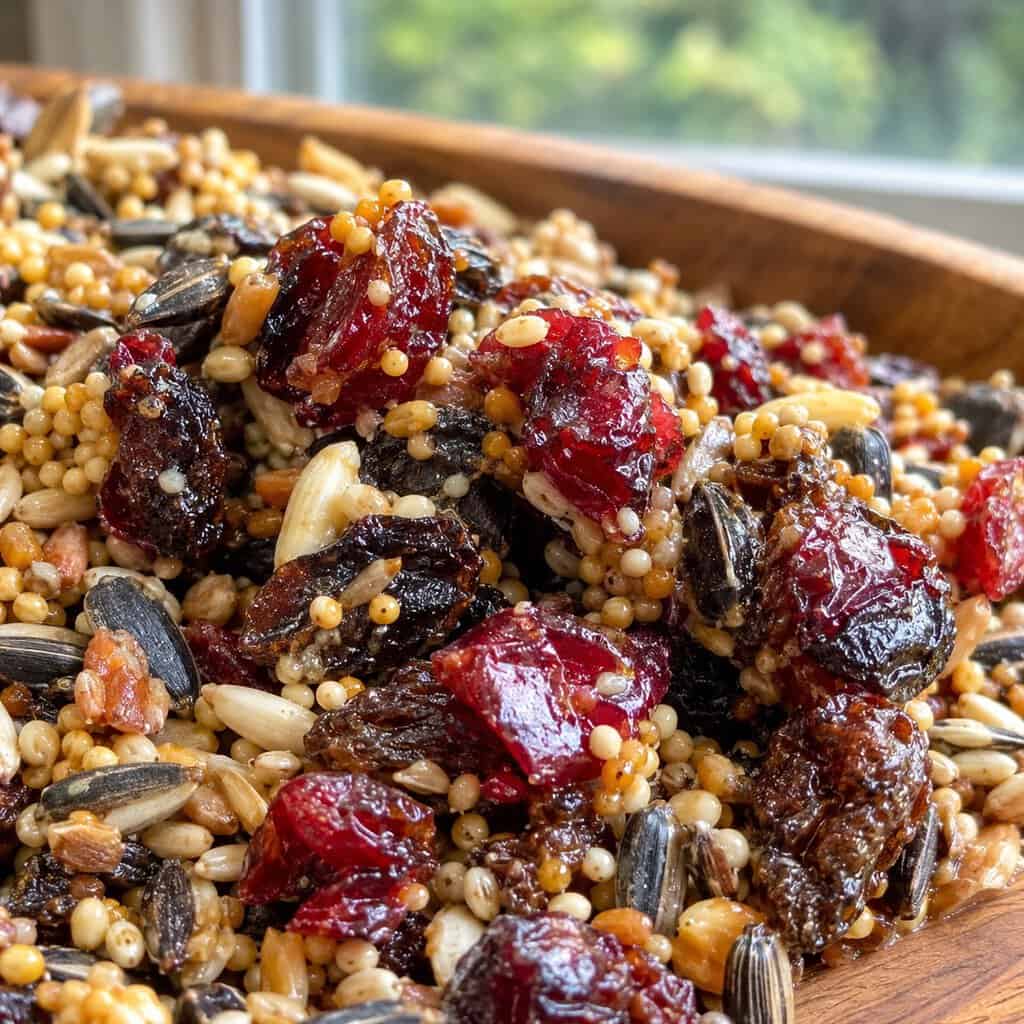
Raisins, dried cranberries and chopped dates show up in a lot of “songbird blends.” They’re there to look appealing to you in the bag.
Starlings love them. So do rats, which rank dried fruit near the top of their preference list.
Fruit also holds moisture, so it clumps the seed around it and speeds up mold in the hopper.
If you want to feed fruit birds, put a single orange half on a dedicated spike and take it down before dark. Keep it out of the seed entirely.
13. A Brush Pile or Firewood Stack Right Below It
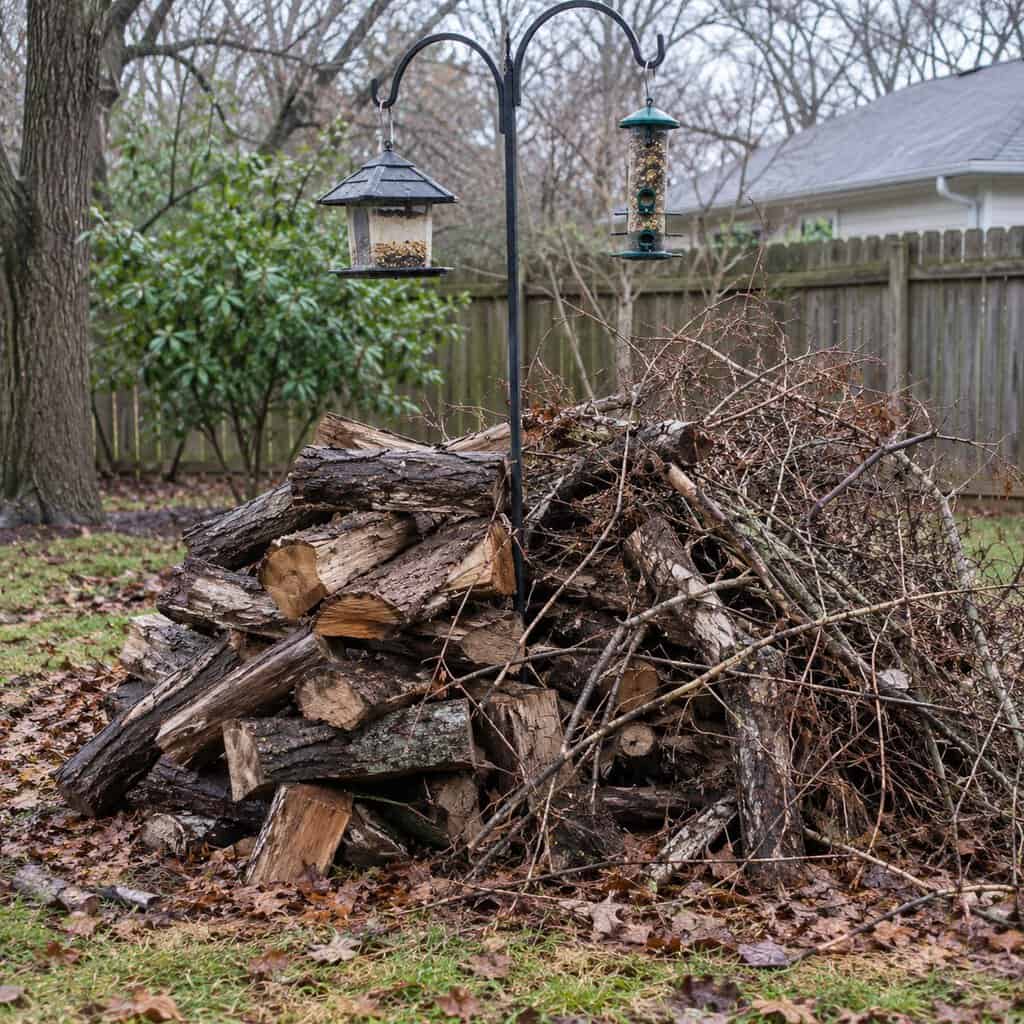
Rodents need two things: food and cover within a short dash. A feeder over a woodpile gives them both in the same square yard.
Stacked firewood, a pile of trimmings, a tarp over leaves — any of it becomes a nesting site the moment reliable food lands on top.
Move the stack at least twenty feet away and get it up on a rack with airflow underneath. Same goes for a leftover pile of wood chips sitting where you dumped it.
Cardinals do want cover nearby — a shrub ten feet out is perfect. The difference is a shrub they can flee into versus a mulch pile something can live in.
14. No Baffle on the Pole

A smooth metal pole slows a squirrel down by about four seconds. Rats climb poles too, more often than people believe.
A baffle is the single highest-return piece of equipment in the whole setup. Cone or cylinder, it doesn’t matter much — what matters is that it sits at least four feet off the ground and the feeder sits above it.
Install it too low and they jump over it. That’s the mistake almost everyone makes.
One baffle properly placed does more for your cardinal count than any seed upgrade.
15. A Bird Bath Doubling as a Rat Water Bowl

Rats need water daily. A yard with seed and no water is tolerable. A yard with seed and a full basin is a place to settle.
Ground-level basins and saucers are the worst offenders — easy access, no climbing, available all night.
Raise the bath to pedestal height and dump it every two or three days. The scrub-and-refill also kills the mosquito larvae cycle.
Cardinals bathe constantly and will use a clean pedestal bath more than a stagnant one. Green water drives birds off and nothing else.
16. Overfilling Until the Seed Cakes and Molds

Filling a tube to the brim feels efficient. The bottom third never moves.
Humidity gets in, seed swells, and the bottom turns into a damp plug that grows mold. Aspergillus in caked seed causes a respiratory infection that kills songbirds.
Birds avoid moldy feeders fast. The things that don’t avoid them — rodents and starlings — are exactly who takes over.
Fill only what gets eaten in three or four days. A half-full feeder emptied regularly beats a full one that sits.
17. “Wildlife Blend” Bags Built Around Cracked Corn
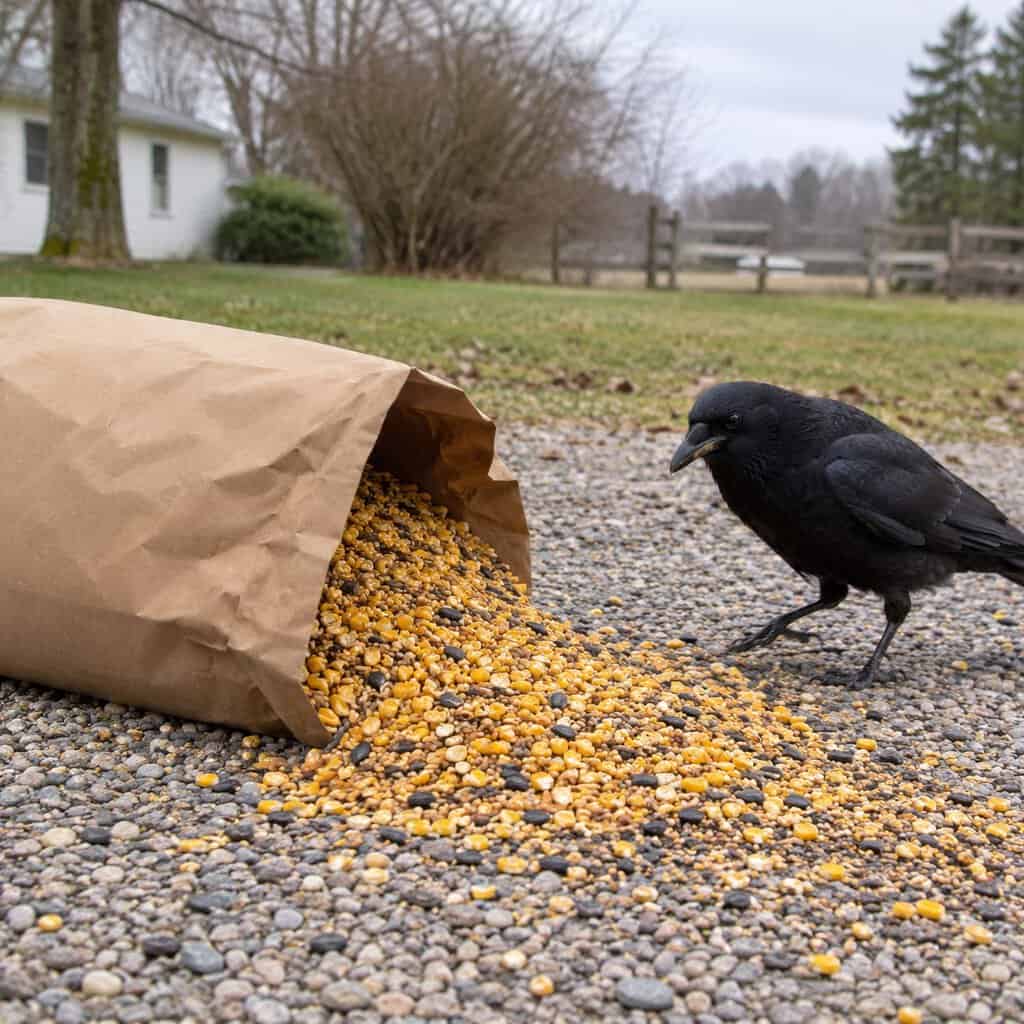
Wildlife blend means deer, turkey and whatever else wanders by. The base is almost always cracked corn, because corn is cheap.
Put it in a songbird feeder and you’ve advertised to raccoons, grackles, crows and every rodent in the yard. Corn is also the seed most likely to grow aflatoxin-producing mold when damp.
Cardinals will eat a little cracked corn. They’d rather have sunflower every single time.
Keep wildlife blends for a dedicated ground feeding spot far from the house, or skip them completely.
18. Running Full Volume Twelve Months a Year
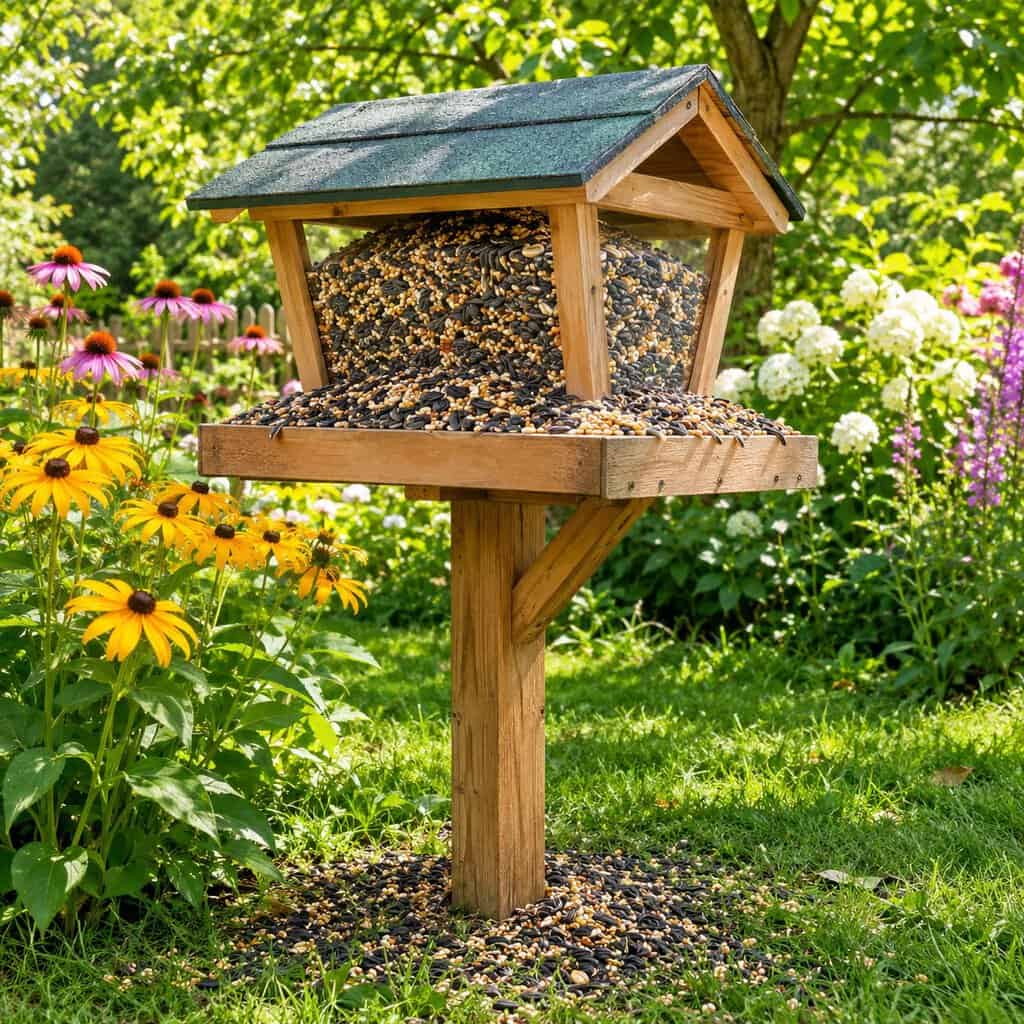
Birds need the most help in deep winter and early spring. Mid-summer, there are insects, berries and seed heads everywhere.
Feed the same volume in July as January and the surplus doesn’t disappear — it gets eaten by whoever’s left. Usually rodents and starlings.
Cut summer output by half or more. Nobody starves. Natural food is at peak.
Scale back up in late fall. Cardinals come right back, and they bring the first-year birds with them.
19. Nuts Scattered on the Lawn for the “Ground Birds”
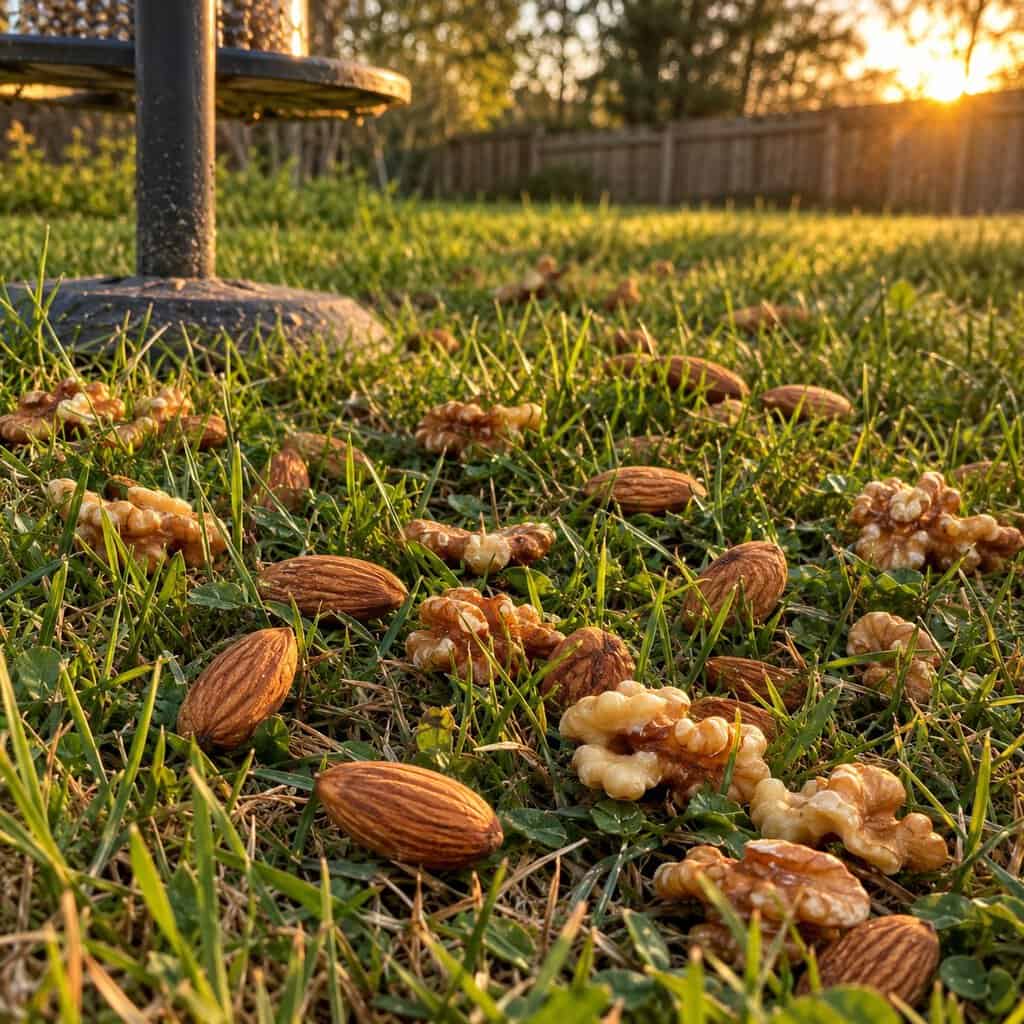
Someone will tell you to toss unsalted almonds or walnut pieces in the grass for juncos and towhees. Resist.
Loose nuts on open ground are the single most efficient rodent attractant in a backyard. High fat, high calorie, easy to carry off and cache.
Ground-feeding birds want millet and cracked sunflower, not tree nuts.
If you feed at ground level, use a low tray you can lift and empty before dark. Never loose on the dirt.
20. Hung Three Feet From the Foundation

Feeders near the house are nice to watch. They’re also a direct line from food to your crawlspace.
A mouse that feeds eight feet from the siding will test every gap in that siding. Dryer vents, hose bibs, the gap where the AC line enters — all of it gets inspected.
Get the feeder twenty feet out minimum. You’ll still see everything from the window.
Cardinals actually prefer the distance. They’re skittish about movement behind glass and feed more calmly away from the house.
21. A Feeder That Hasn’t Been Cleaned Since Spring

Salmonella moves through finch flocks every winter, and the transmission point is almost always a dirty feeder.
Droppings land in the tray. Wet hulls rot in the ports. Birds crowd together on a contaminated surface and the whole local population takes the hit.
Cornell Lab of Ornithology recommends cleaning every two weeks — more during outbreaks or wet stretches. A nine-to-one water and bleach soak, scrub, rinse, and dry completely before refilling.
Dry matters. A damp feeder molds within days of refilling.
22. Nyjer Dumped Into a Sunflower Tube
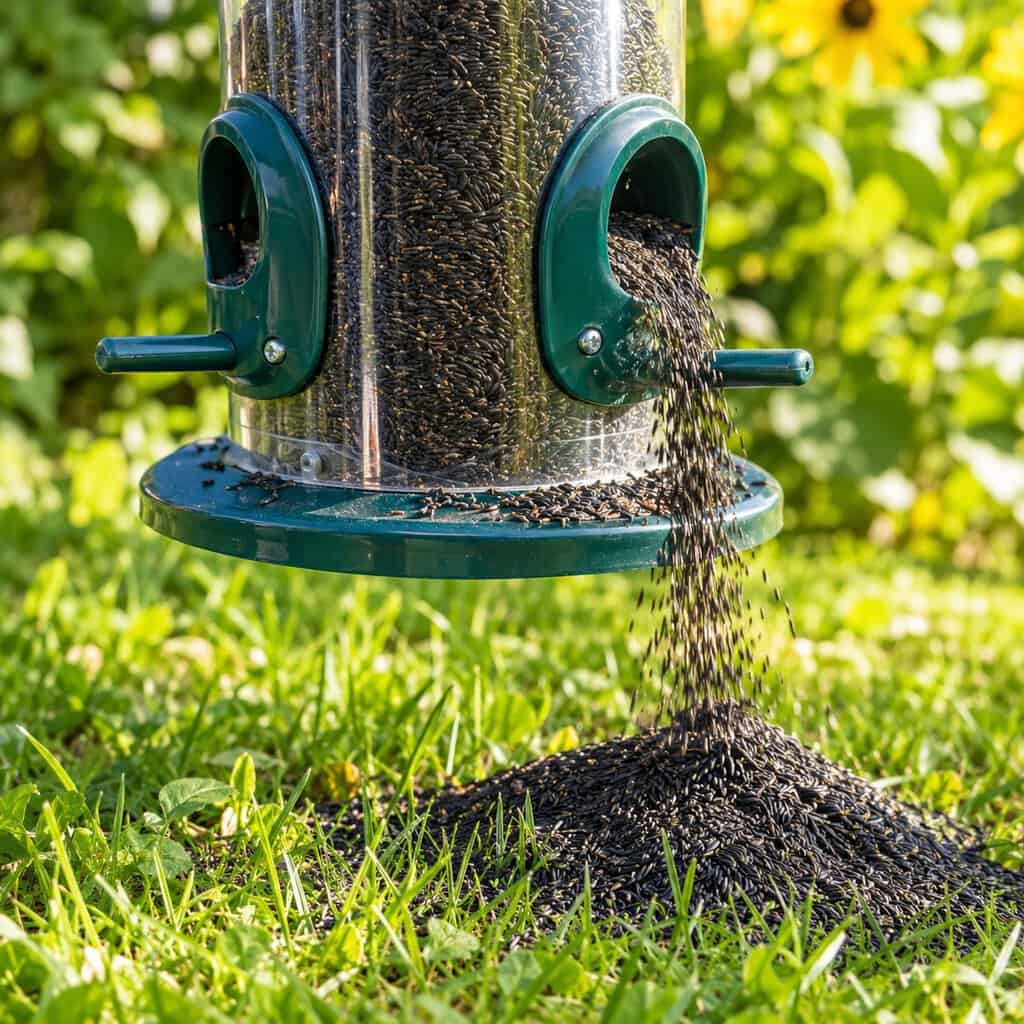
Nyjer seed is tiny. Sunflower tube ports are not.
Put thistle in a standard tube and most of it pours onto the ground within a day. Goldfinches can’t use what’s left, and the pile below becomes rodent feed.
Nyjer needs a dedicated finch feeder with slit ports or a mesh sock.
Cardinals don’t eat nyjer at all — their beaks are built for cracking, not for seeds the size of a pencil tip. Keep the two feeders separate and matched to their seed.
23. A Seed Can With a Loose Lid

A metal can only counts if the lid stays on. A lid resting at an angle, or one a raccoon can flip with a paw, is just a shiny box of free food.
Raccoons open unsecured cans routinely. They have real hands and a lot of patience.
Use a bungee cord across the lid or a clamp-style ring. Costs almost nothing.
Keep the can indoors or in a shed, not against an outside wall. A can on the back patio is an announcement.
24. The Wrong Feeder Style for Cardinals

Cardinals are big, heavy birds with short legs. A narrow tube with stubby plastic perches is uncomfortable for them and they’ll give up on it.
Starlings and grackles don’t care — they’ll hang off anything. So the feeder that frustrates your cardinals is often the one that feeds the bullies just fine.
What cardinals want is a hopper with a wide landing ledge, or a tube with a tray lip bolted to the bottom.
Here’s how the two common setups actually compare in a backyard:
| Tube with no tray | Hopper with wide ledge | |
|---|---|---|
| Cardinal comfort | Poor perch, short visits | Full footing, long visits |
| Ground spill | Heavy | Minimal |
| Grackle access | Easy | Easy, but weight-sorted |
| Rodent draw | High, from spill | Low |
| Cleaning | Awkward ports | Opens flat |
Add the tray and two things happen at once: cardinals stay longer, and the spill that was feeding rats never hits the ground.
25. Feeding in the Open With No Cover Nearby

A feeder marooned in the middle of a bare lawn gets ignored by cardinals and used freely by everything bold.
Cardinals are edge birds. They want a shrub or hedge within about ten feet so they can flush to safety when a hawk cuts through.
Too close and cats and rodents get a staging area. Ten feet is the sweet spot — a quick hop for a bird, open ground for anything that has to cross it.
No shrub there? Lean a cut Christmas tree or brush bundle on a stake. Temporary cover works while a real flowering shrub fills in.
26. Leaving Spilled Seed Under Snow All Winter

Snow hides the problem without solving it. Seed that fell in December is still down there in February, under an insulating white blanket.
Voles tunnel at the snow-soil line and feed on it all winter. Come spring you find the runways carved through your dead grass.
Shovel or sweep the feeder zone after each significant snow. It takes two minutes.
You’ll also spot the damage early instead of discovering it in April when the lawn thaws out shredded.
27. Hanging a Feeder From the Gutter or Eave

Convenient hook, terrible location. A feeder under the eave gives squirrels a drop-in from the roof and gives rodents a reason to work the roofline every night.
Squirrels that spend time on your roof find soffit gaps. Soffit gaps become attic problems.
Seed and hulls also pile in the gutter, which grows mold and clogs the downspout.
Take it off the house entirely. A pole in the yard with a baffle beats any hook on the building.
28. Scrubbing With a Hose and Calling It Clean
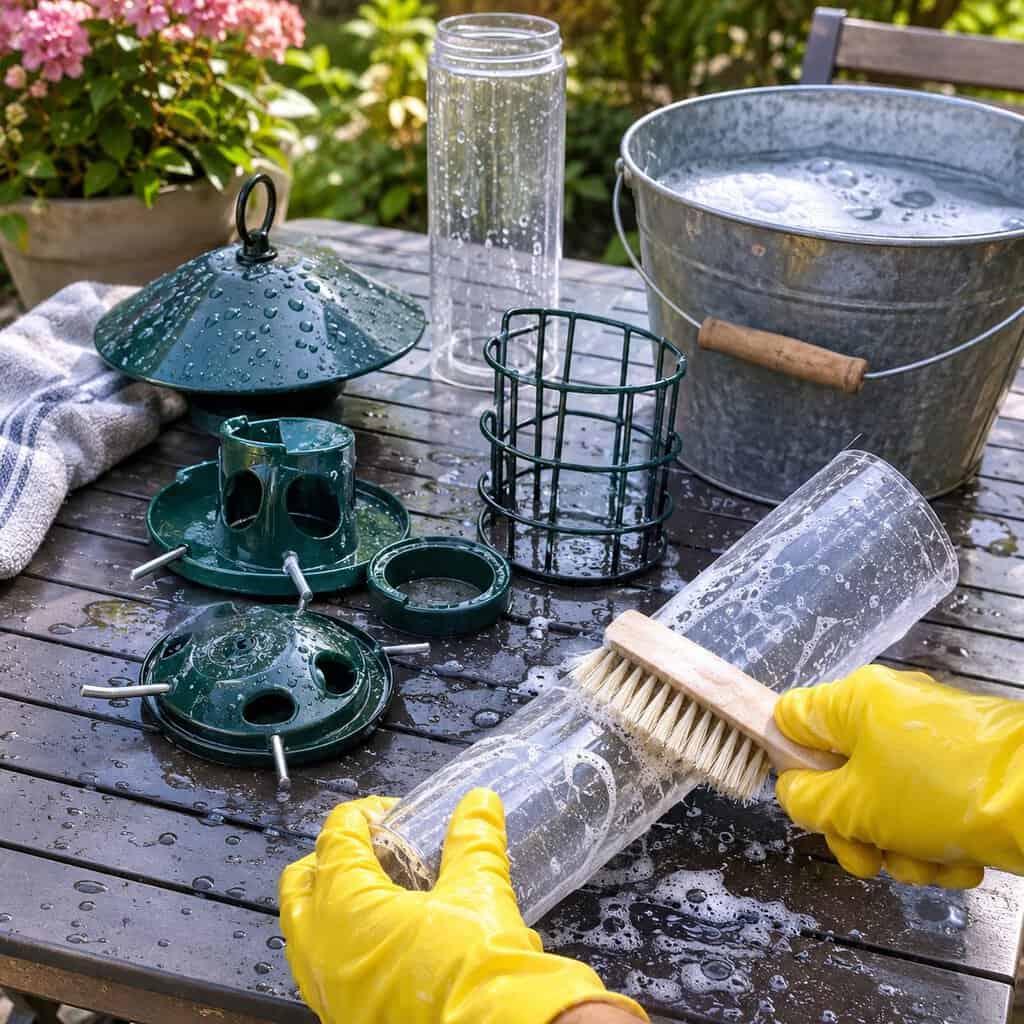
Rinsing knocks loose hulls out. It doesn’t touch the biofilm in the corners or the bacteria in the port seams.
The spots that matter are the ones you can’t reach with a spray nozzle — the base of the tube, under the ledge lip, inside the ports.
Take it apart. Clemson Cooperative Extension recommends a full soak and a stiff brush on every surface, then air-drying completely before refilling.
Keep a dedicated brush for it. Not the dish brush.
29. Feeding Right Through a Known Rat Sighting

You saw one at dusk. You told yourself it was a chipmunk.
Once rats have located a feeder, incremental changes rarely break the habit. They’ll keep checking a spot that paid off for weeks.
The reset that works is a hard stop — pull every feeder for two to four weeks and clean up all the ground spill. No food, no reason to return.
Then rebuild correctly: pole, baffle, tray, sunflower, morning fills only. The cardinals come back within days. The rats take much longer to bother checking again.
Shortcutting that pause is the most common reason people fight the same rats all winter.
30. Letting Fallen Seed Sprout Into a Weed Patch
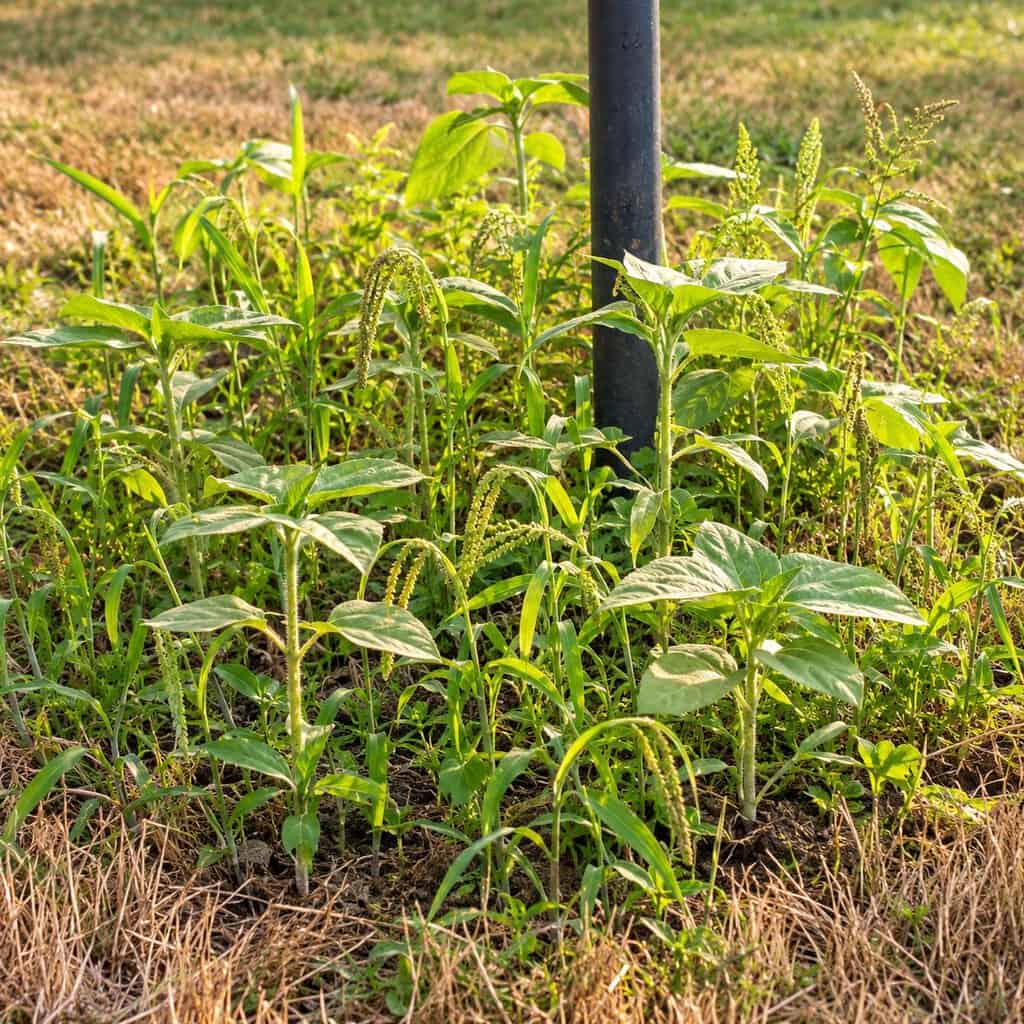
Spilled sunflower and millet germinate. By midsummer there’s a ragged patch of volunteer stalks under the feeder that nobody planted.
That patch is cover. Rodents move through it unseen, and it holds moisture at the soil line that keeps the whole area damp and smelly.
It also kills the turf underneath — one of those quiet lawn problems people blame on grubs.
Pull it, rake the zone bare, and consider a paver or flagstone pad under the feeder. Sweep it weekly and the whole issue disappears.
Clean ground under a feeder is the clearest sign of someone who’s figured this out.
31. Expecting Results Before the Birds Find You
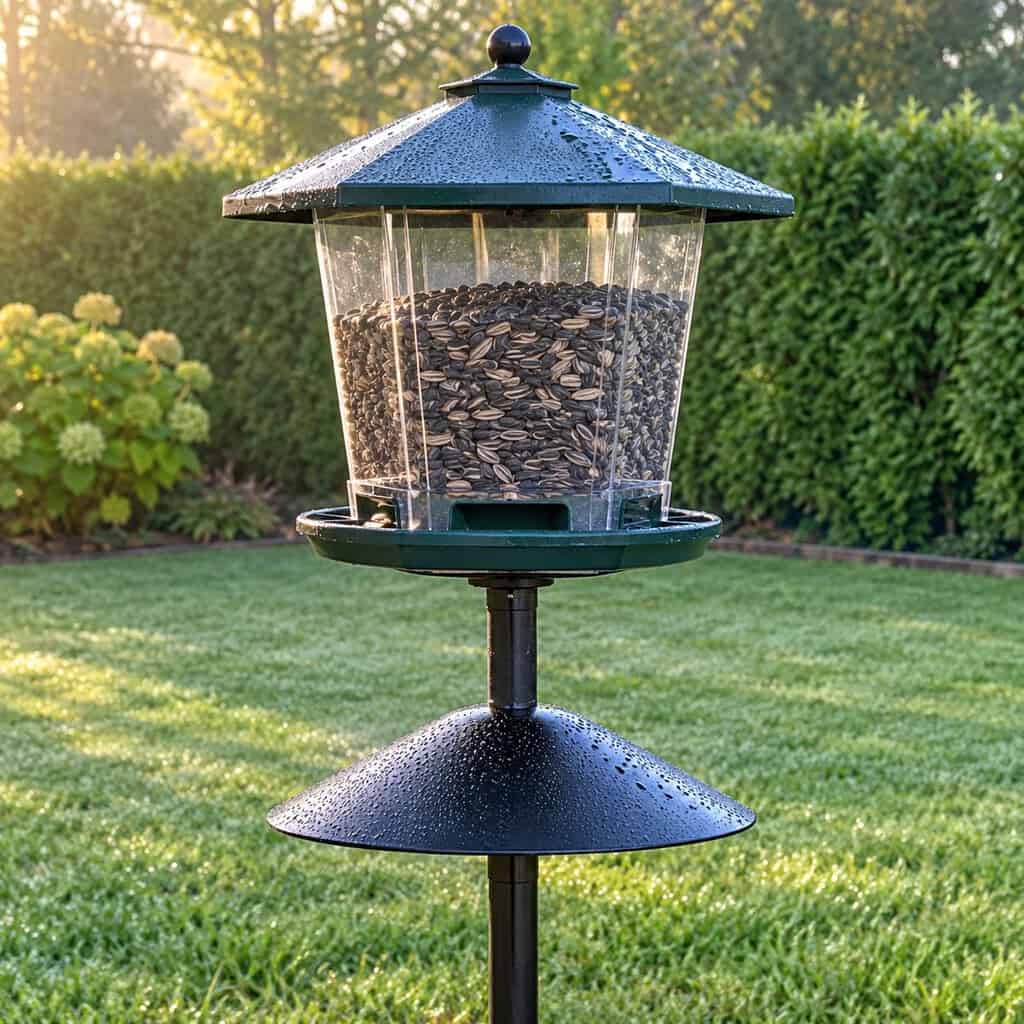
You fix everything on this list and the feeder sits empty for ten days. Most people panic and go back to cheap mix.
Cardinals are cautious about new objects in a familiar territory. Two to three weeks is normal before a pair commits to a new feeder, longer if you moved it.
Leave it alone. Keep it stocked with a small amount of fresh sunflower and let them work it out.
One pair finds it, and the rest follow. Cardinals are loyal to a reliable feeder for years — which is exactly why it’s worth getting the setup right the first time.
Still nothing after a month? There’s a longer list of reasons cardinals skip a full feeder worth working through.
32. Running One Feeder for Every Bird in the Yard

A single feeder forces every species into the same spot. The aggressive ones win, every time.
Grackles and starlings arrive in groups and hold a feeder for an hour. A cardinal pair waits, gets tired, and goes somewhere else.
Spread two or three feeders across the yard, out of sight of each other. Put safflower in the one you want cardinals on.
Bullies can’t dominate what they can’t see. That one change, more than any seed swap, is what fills a yard with red birds.
Backyard feeding is a system, not a purchase. Seed, feeder, height, placement, timing, cleaning — change one and the rest still decide who shows up.
Most people flip the result with three moves: better seed, a baffled pole away from the house, and no spill on the ground after dark.
Do that and the yard sorts itself out. The grackles thin, the night traffic stops, and one morning in February there’s a cardinal on the tray with snow on the rail behind him.
Which was the whole point.
Best, most complete article I’ve read – ever!