


There’s a pattern hiding in plain sight across every new subdivision: the same five plants, repeated block after block, chosen not because they suit the soil or the homeowner’s life — but because they were the lowest-cost option on a landscaper’s invoice.
That’s how landscaping margins work. A plant that costs almost nothing at the wholesale yard, makes a yard look “finished” on the day of installation, and survives a season of zero maintenance is a plant that moves by the pallet — regardless of whether it belongs anywhere near your property.
The true price tag shows up years later. A tree crown through your roof. Roots threading through a sewer pipe. A hedge that browns out in a single, devastating row. A groundcover spreading silently into the forest behind your fence line, impossible to stop.
The 26 plants below all got installed for the same reason: they were cheap. What follows is what they actually end up costing.
1. The True Price of a Weeping Willow
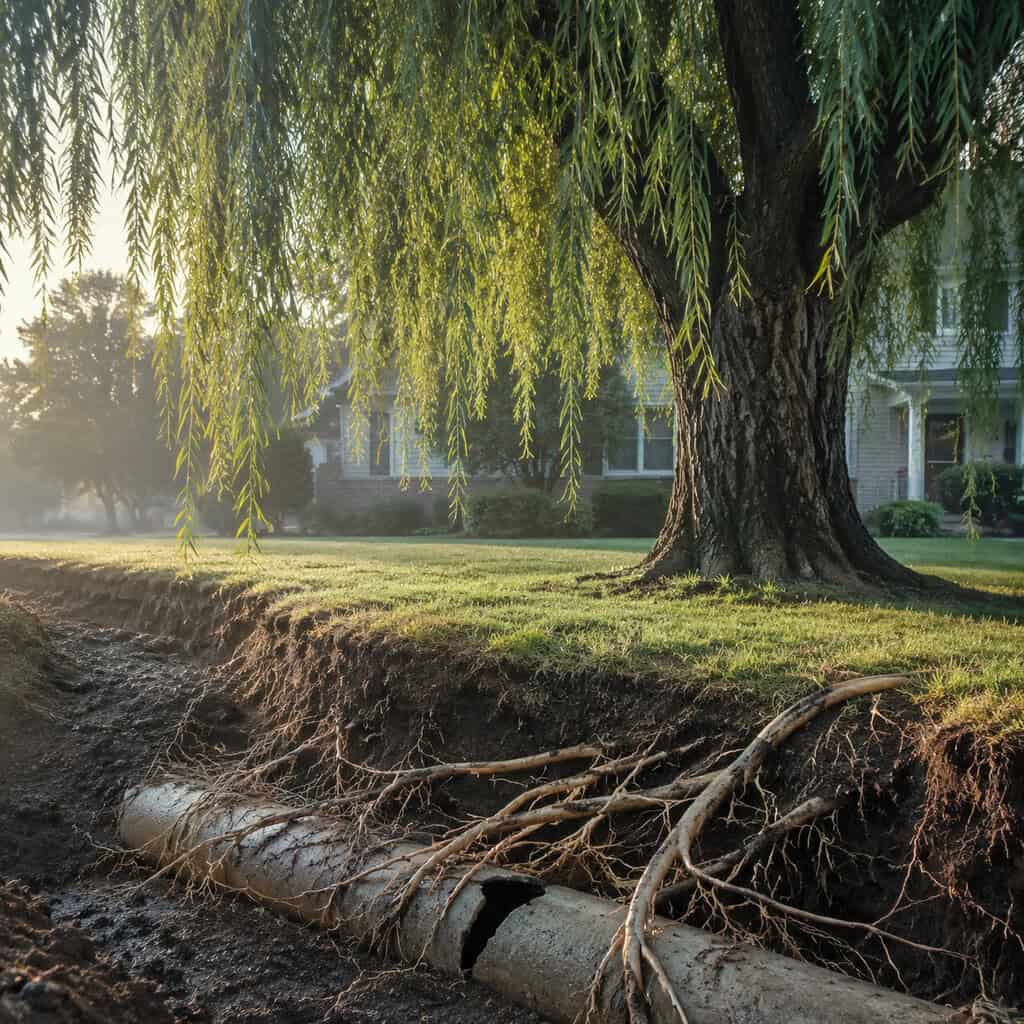
Few trees sell themselves as effortlessly as the weeping willow — graceful, affordable when young, and gorgeous in every garden photograph. What those photos leave out is the plumbing invoice.
Willows are thirsty, and their roots know it. They actively hunt water, and the wettest thing in your yard is usually your septic field or your sewer line.
The roots spread far wider than the canopy, sometimes two to three times the height of the tree, and they push straight toward any moisture they can smell. Septic tanks, drain fields, and buried pipes are all fair game.
Once willow roots are inside a septic system, you’re not pruning them out. You’re excavating and replacing — a five-figure afternoon.
It’s a mess above ground too. Willows drop twigs, leaves, and bark year-round, and they get far too big for the average lot.
Beautiful tree. Plant it 50 feet from anything you don’t want to dig up, or don’t plant it.
2. Why Leyland Cypress Hedges Fail

Three to five feet of growth per year, evergreen screening, and pennies per plant in a nursery pot — the Leyland cypress is the first thing every budget-minded landscaper reaches for when a client wants a privacy wall fast.
So they get planted in a tight row. That’s the mistake.
Leylands packed shoulder to shoulder are a monoculture, and monocultures are how disease travels. Bagworms strip them. Spider mites brown them out. And two cankers — Seiridium and Botryosphaeria — move straight down the line like dominoes.
Once a canker takes hold in a 40-foot tree, there’s no spray, no injection, no save. The branch dies, then the tree, and you’re left with a brown gap in the middle of your green wall. Clemson’s Home & Garden Information Center now steers homeowners toward almost anything else.
Here’s the real cost. Taking out a single dead 40-foot Leyland runs hundreds of dollars. Take out six of them because the canker walked the row, replant, and wait another decade for privacy you already paid for once.
The “instant” hedge that gaps out by year 15 wasn’t a bargain. It was a loan.
3. Running Bamboo: The Plant That Ends With a Lawyer
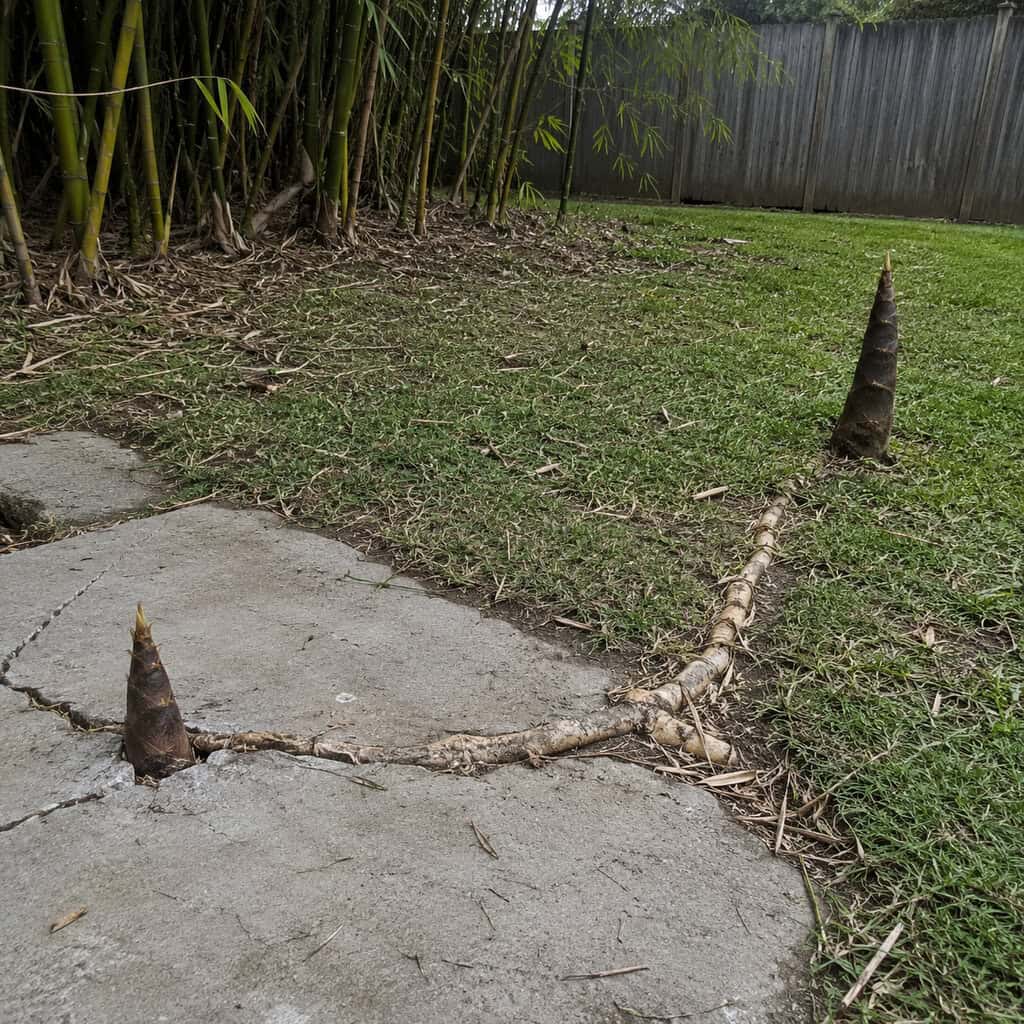
Sold as an exotic, budget-friendly instant privacy screen, running bamboo is the single plant most likely to result in a letter from the neighbor’s attorney.
Understand the word “running.” That’s the warning label.
Running bamboo spreads by rhizomes that travel dozens of feet from where you planted it — under fences, under patios, and straight into your neighbor’s yard. It cracks hardscape, pushes up through lawns, and surfaces in flowerbeds you never touched.
Containing it requires a heavy-duty root barrier, buried deep and inspected every year, and almost nobody who buys the cheap privacy screen installs one. By the time the shoots come up next door, the rhizomes are already 20 feet out and dividing.
Removing an established running bamboo grove is a professional excavation. Crews dig out the rhizome mass, and stray pieces resprout for years afterward, so it’s rarely one visit.
Then comes the neighbor problem. Bamboo crossing a property line has produced real lawsuits and real damage awards, and in some towns you’re liable for what your bamboo does to the yard next door.
The cheap privacy screen that turns into a survey dispute, a hardscape repair, and a strained relationship with the people next door. Plant it in a sealed container above ground, or don’t plant it.
4. Japanese Knotweed: The Worst Inheritance
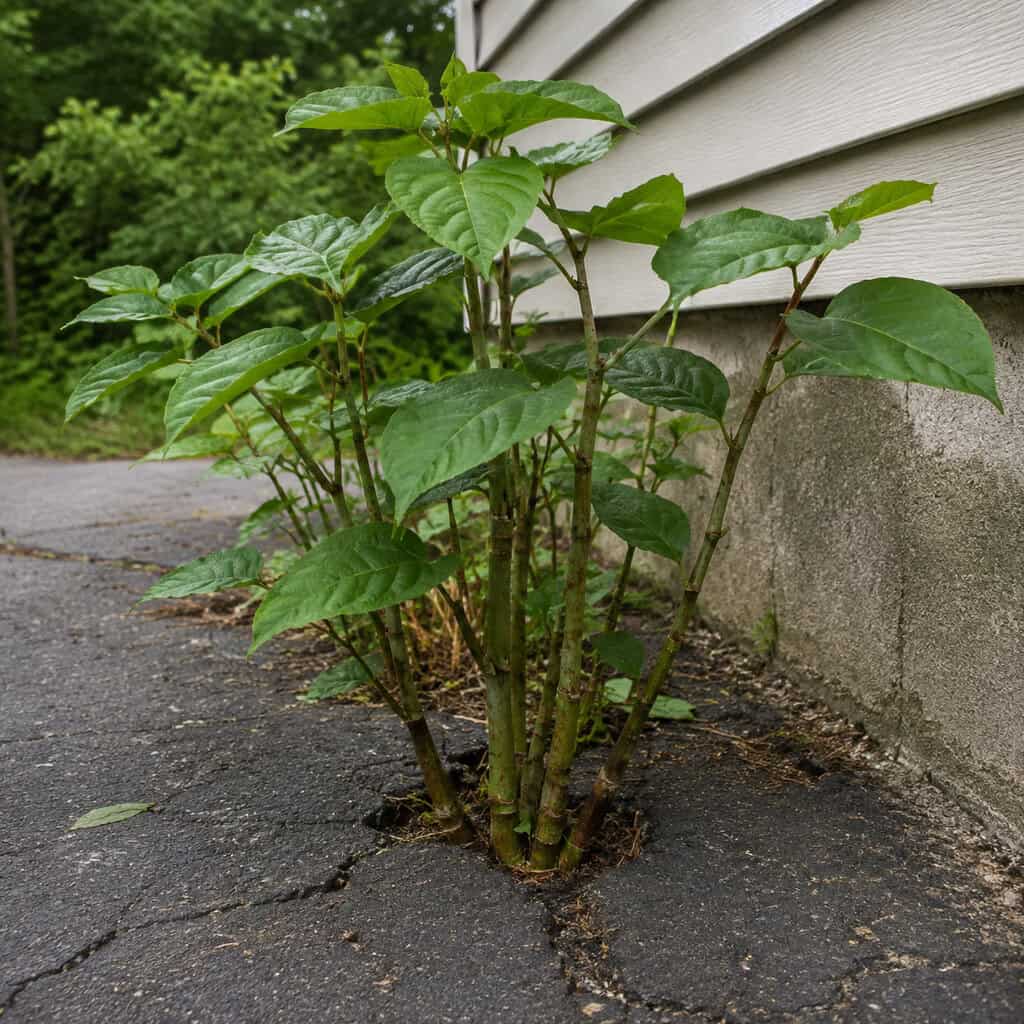
Brought over as a Victorian ornamental, knotweed is almost never planted intentionally these days — it’s more often inherited, and it’s the most punishing inheritance on this entire list.
It grows inches a day and forces its shoots up through asphalt, concrete, and foundation cracks.
In parts of the world it can affect whether a house is even mortgageable, because the roots run so deep and resprout from the tiniest fragment. Herbicide and repeat treatment over multiple seasons is often the only real answer. Once it’s in the ground, it’s less a plant than a structural problem.
5. Black Locust: One Tree Becomes a Grove
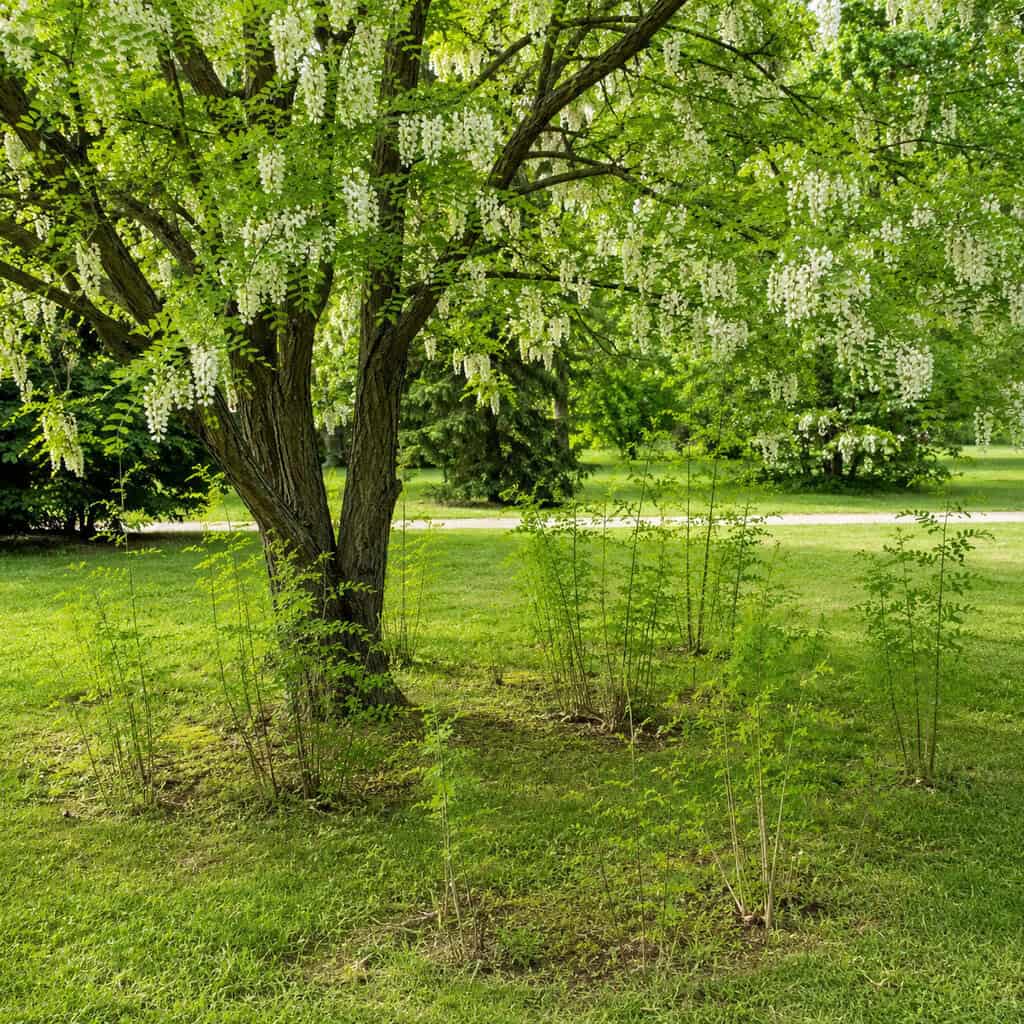
Sweet-smelling white blooms in late spring, rapid establishment, and a low purchase price — black locust has always looked like an easy win for a quick shade tree.
It’s a colonizer.
Black locust suckers aggressively from the roots, sending up new trunks 50 feet or more from the parent, so one tree becomes a grove you didn’t plant. It’s brittle and messy on top of it. Nice flowers, wrong tree for a small yard.
6. Butterfly Bush: Half the Story Is Missing
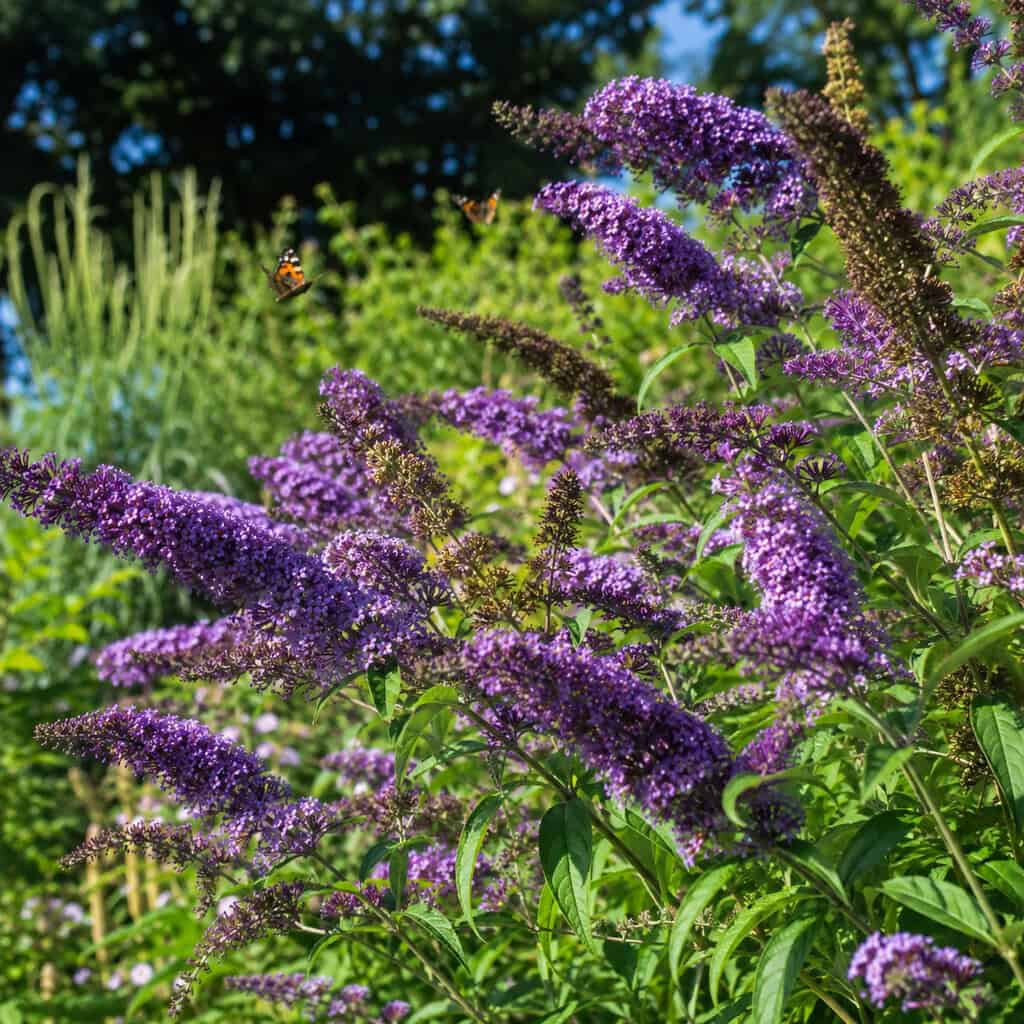
No plant in the nursery has a better reputation for a lower price — “good for butterflies,” loaded with blooms, and available for next to nothing. Most of that reputation is built on marketing, not ecology.
Butterfly bush is invasive across many regions, throwing masses of seed that travel far and colonize disturbed ground.
And the butterfly claim only tells half the story. The flowers offer nectar to adults, but the plant is worthless to caterpillars — no native butterfly can lay eggs on it or feed its young from it. Penn State Extension puts it on the invasive-shrub list.
It’s a nectar bar, not a nursery. It feeds the adults a snack while supporting none of the next generation — which is the opposite of what a butterfly plant should do.
7. Bradford (Callery) Pear: Built to Break
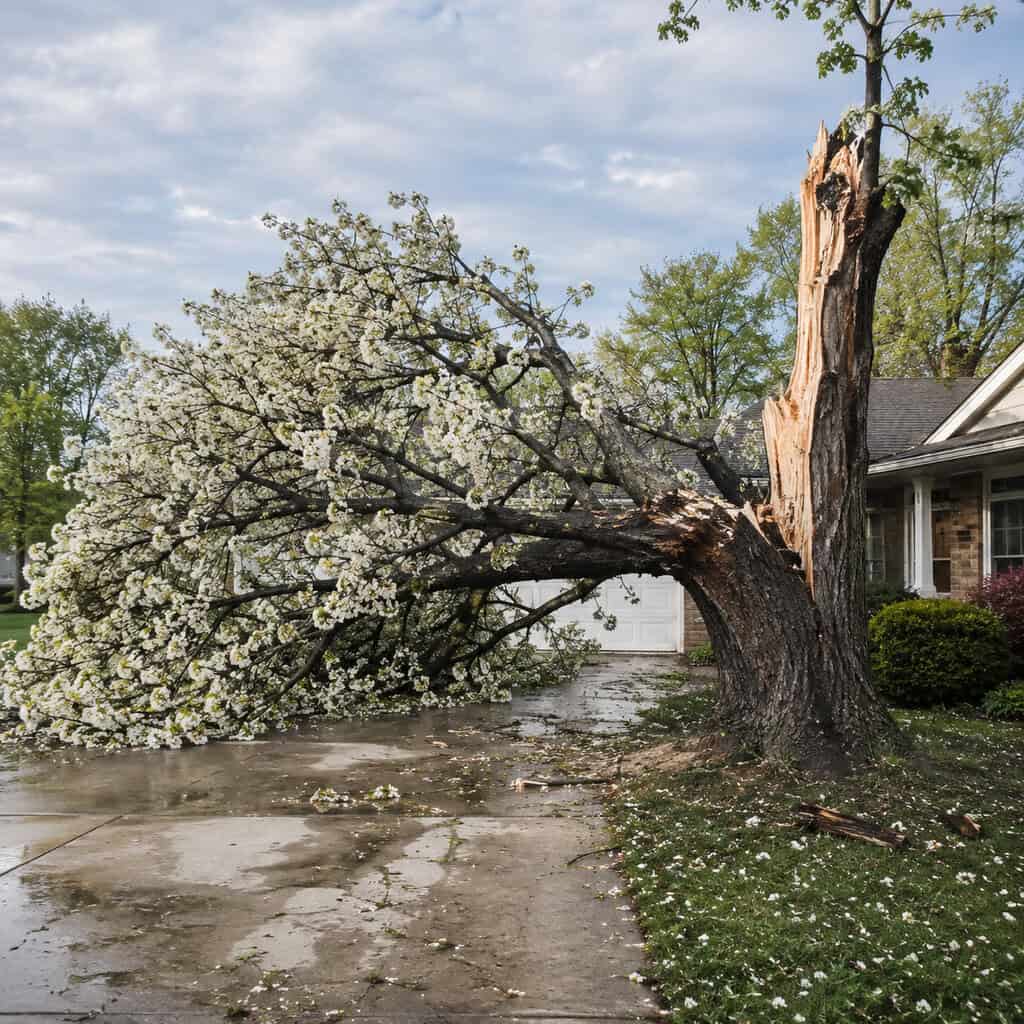
The USDA introduced it in the 1960s as the perfect street tree. By the 1990s it was everywhere — tidy, uniform, covered in white blooms every April, and dirt cheap.
Then it started coming apart.
The problem is built into the shape. Bradford pears grow their limbs at tight, narrow angles off a single point, and that crotch traps bark instead of forming solid wood. Around year 15, when the canopy gets heavy, the whole tree splits down the middle in the first real windstorm. Oklahoma State University Extension flatly calls it one of the worst trees you can plant.
A mature Bradford failing over your driveway or roof isn’t a pruning problem. It’s a crane, a crew, and an insurance claim.
The blooms don’t help its case either. Get close and they smell like rotting fish.
Then there’s the invasive part. Bradfords were sold as sterile, but different cultivars cross-pollinate and throw fertile seed. Birds spread it, and the offspring revert to a thorny wild Callery pear that chokes out fence lines, ditches, and abandoned lots.
It’s now bad enough that South Carolina, Ohio, and Pennsylvania have banned the sale of it outright. A tree that started as the cheap, easy choice is now something states pay to rip out.
- Splits apart around year 15 at weak branch unions
- Blooms smell like rotting fish
- Escapes into thorny wild thickets
- Banned for sale in a growing list of states
Skip it. If you inherited one, plan for the day it comes down — on your terms, not the storm’s.
8. Purple Loosestrife: Beautiful, Banned, and Devastating
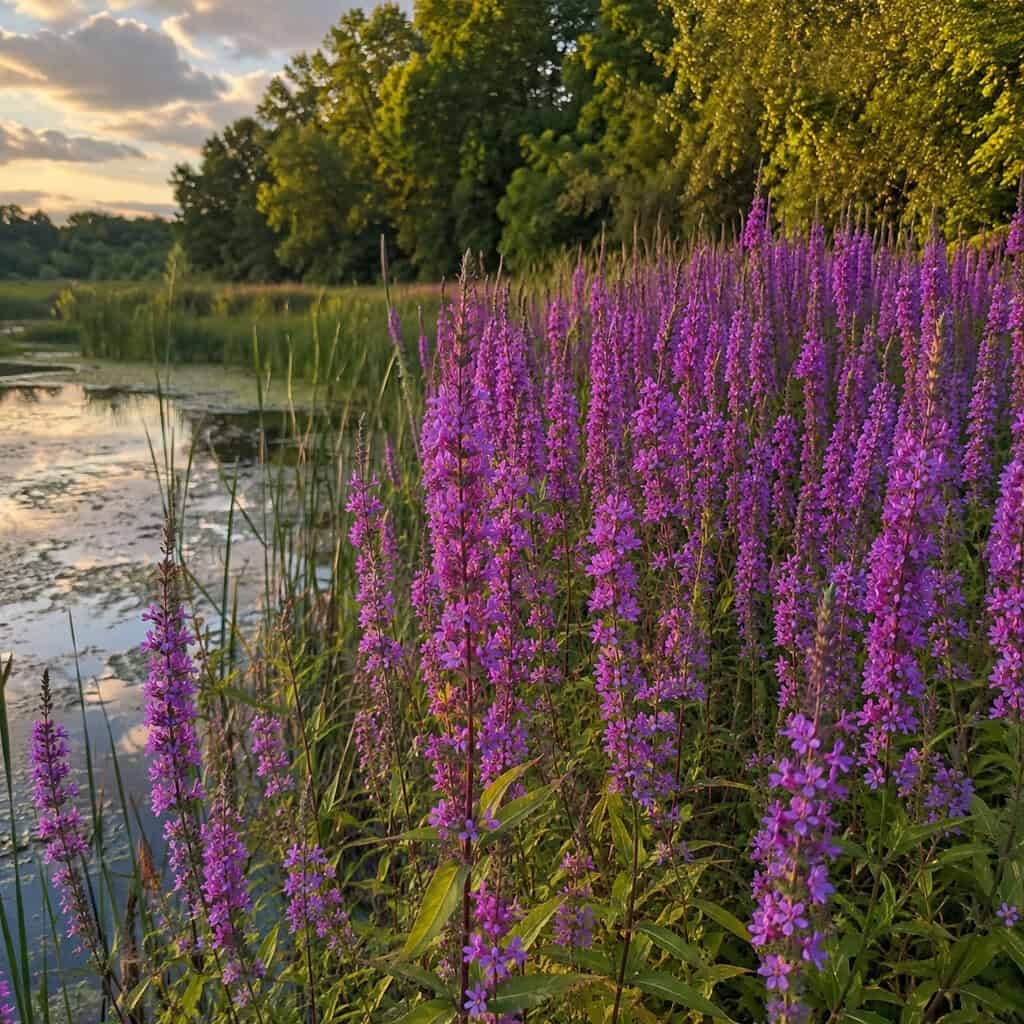
Striking purple flower spikes, a low price tag, and a reputation for thriving in the boggy corner where nothing else would — purple loosestrife seemed like a gift for difficult spots. That usefulness in wet ground is precisely the problem.
Loosestrife loves wet ground, and it doesn’t stay in the corner.
A single plant produces millions of seeds, and it has flat-out devastated wetlands across the country, crowding out the cattails and sedges that waterfowl and fish depend on. Many states ban its sale.
Plant it near any water and you’re seeding a marsh you don’t own.
9. Mimosa (Silk Tree): Three Weeks of Beauty, 49 of Problems
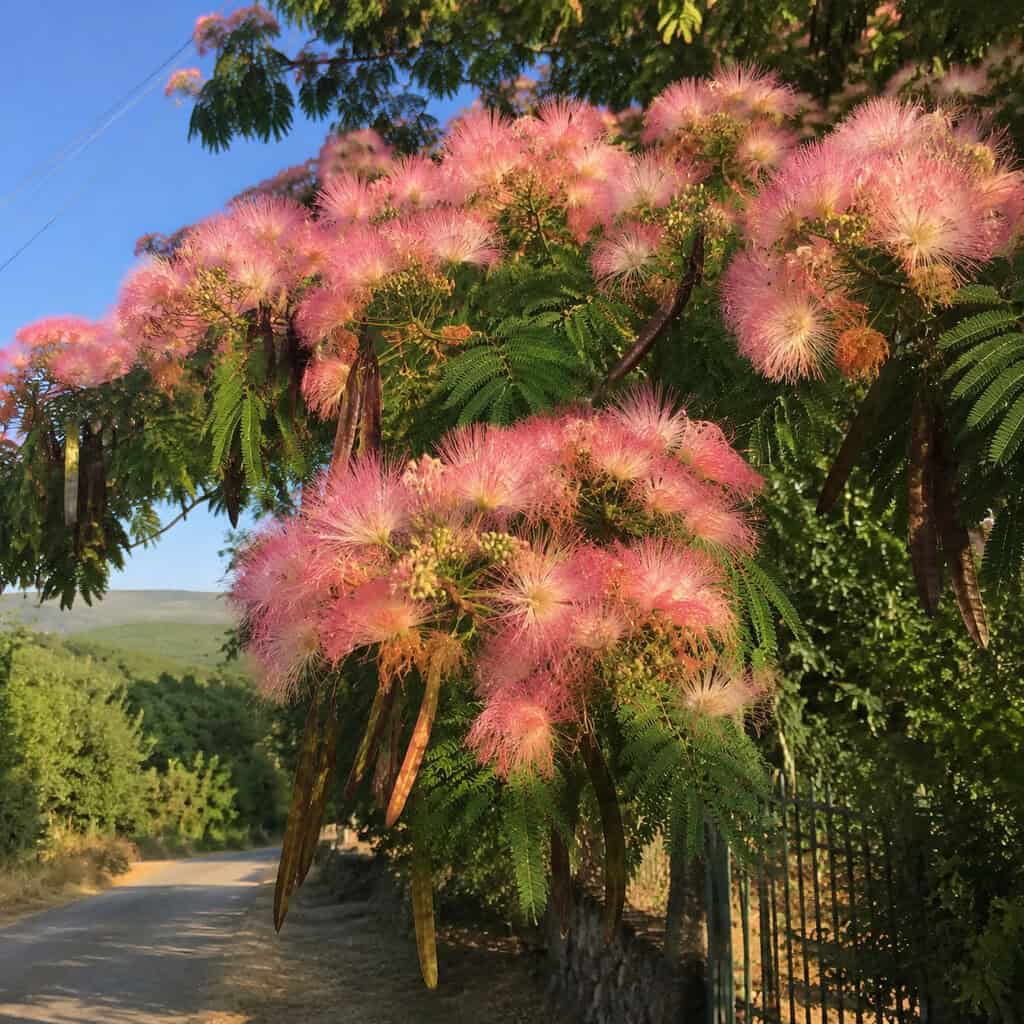
The mimosa’s pink powder-puff blooms close the sale every time — cheap, adaptable, and genuinely breathtaking for a few weeks each summer.
The other 49 weeks are the catch.
Mimosa is weak-wooded and short-lived, and it litters constantly — first spent flowers, then long seed pods that hang on all winter. The seeds are also toxic to dogs and livestock.
And it escapes. Introduced back in the 1700s, mimosa now runs wild along roadsides and woodland edges across the South, where UF/IFAS Gardening Solutions lists it as invasive. Pretty, cheap, and gone rogue.
10. Wintercreeper (Euonymus fortunei): The Ivy You Didn’t Know You Were Planting
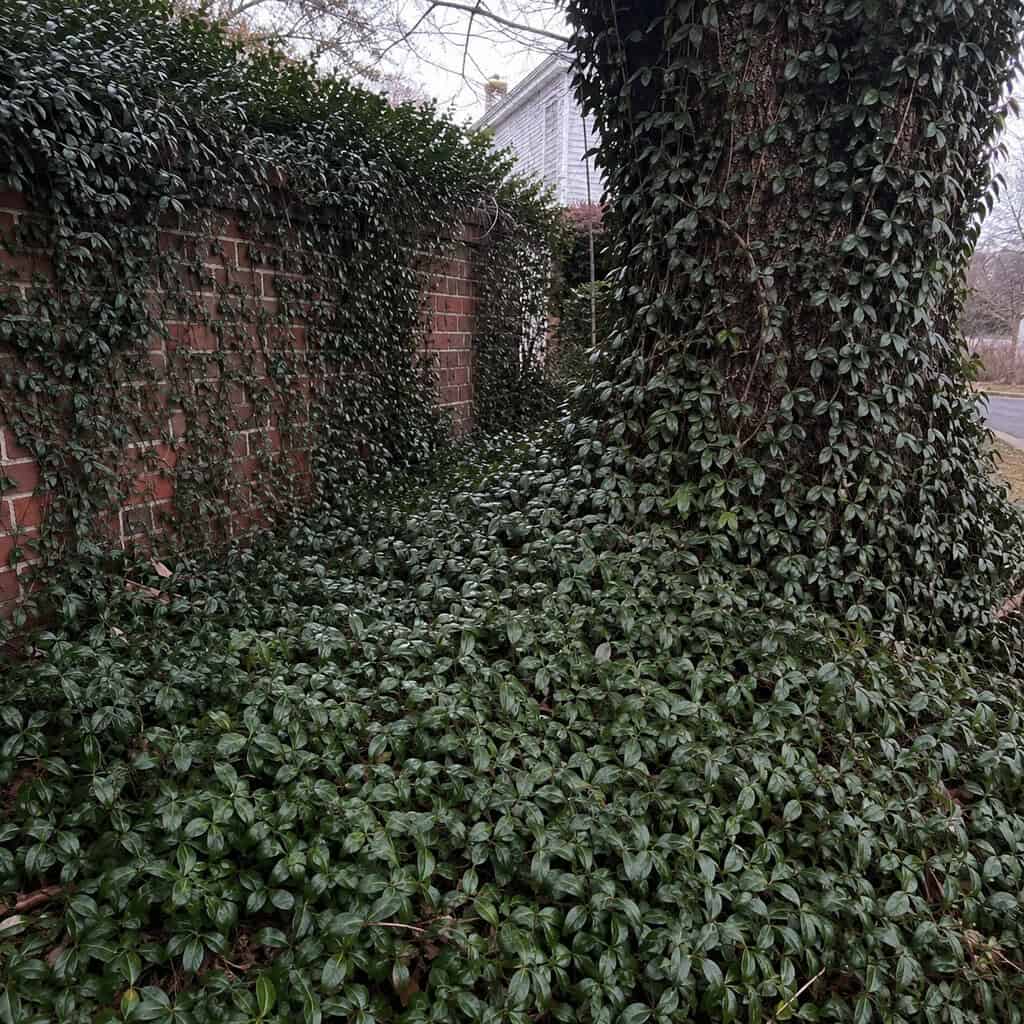
English ivy’s lesser-known cousin arrives with the same promise: a tough, affordable evergreen groundcover that establishes quickly and covers bare ground. That rapid establishment is the trap.
Birds eat the berries and plant wintercreeper all over the county for free.
It climbs trees and buildings the way ivy does, blanketing whatever it reaches, and it’s brutally hard to eradicate once it’s established. The South Carolina Native Plant Society lists native groundcovers that do the same job without the fallout. Fills in fast — then never lets go.
11. Autumn Olive: The Government’s Worst Giveaway
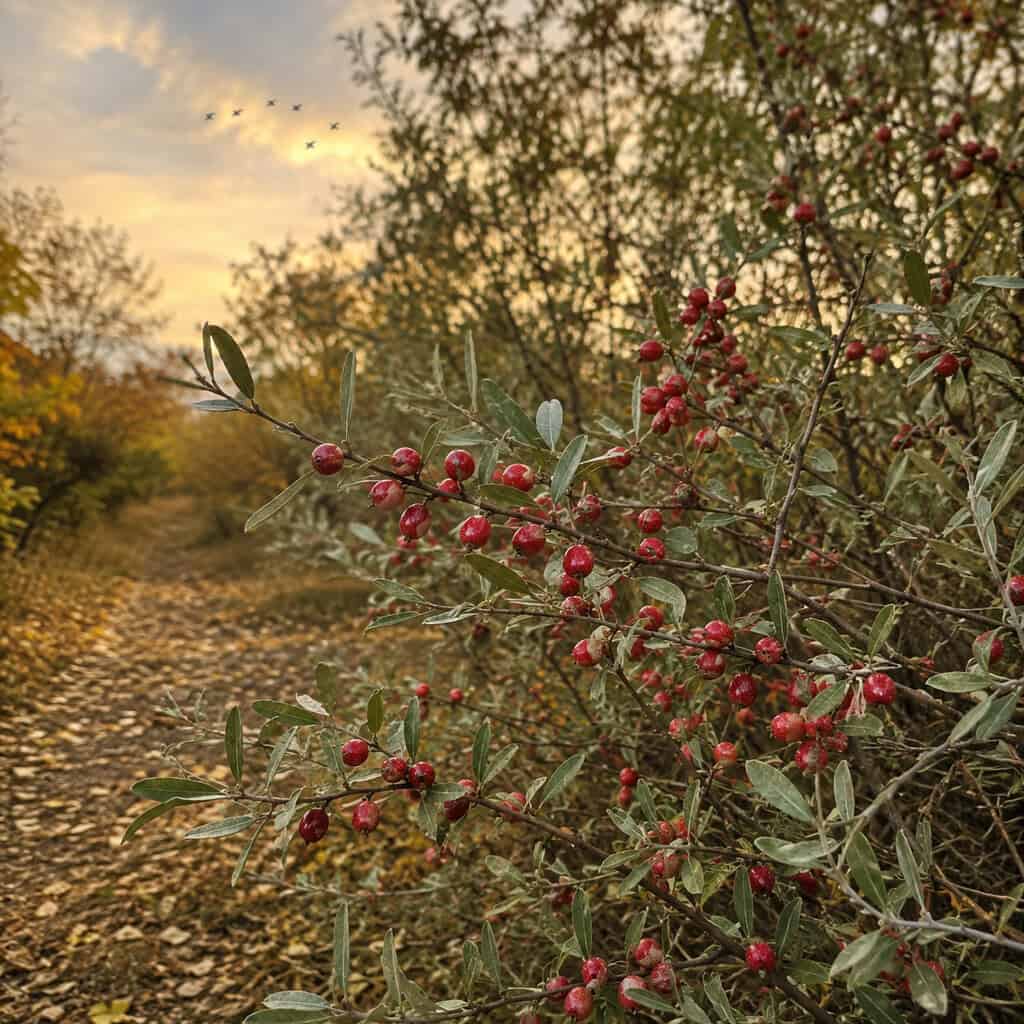
The government literally gave this one away. Cheap, fast, and able to fix its own nitrogen, autumn olive was pushed for shelterbelts and wildlife plots starting in the mid-1900s.
It became one of the worst invaders in the eastern U.S.
A single mature shrub can drop up to 80 pounds of fruit, and birds scatter every seed. Here’s the irony Penn State Extension points out: those berries are nutritional junk food, high in sugar and low in the fat native birds actually need before migration.
So it spreads on the backs of the very birds it shortchanges. A cheap conservation plant that turned into a conservation problem.
12. Japanese Barberry: The Tick Incubator in Your Foundation Planting
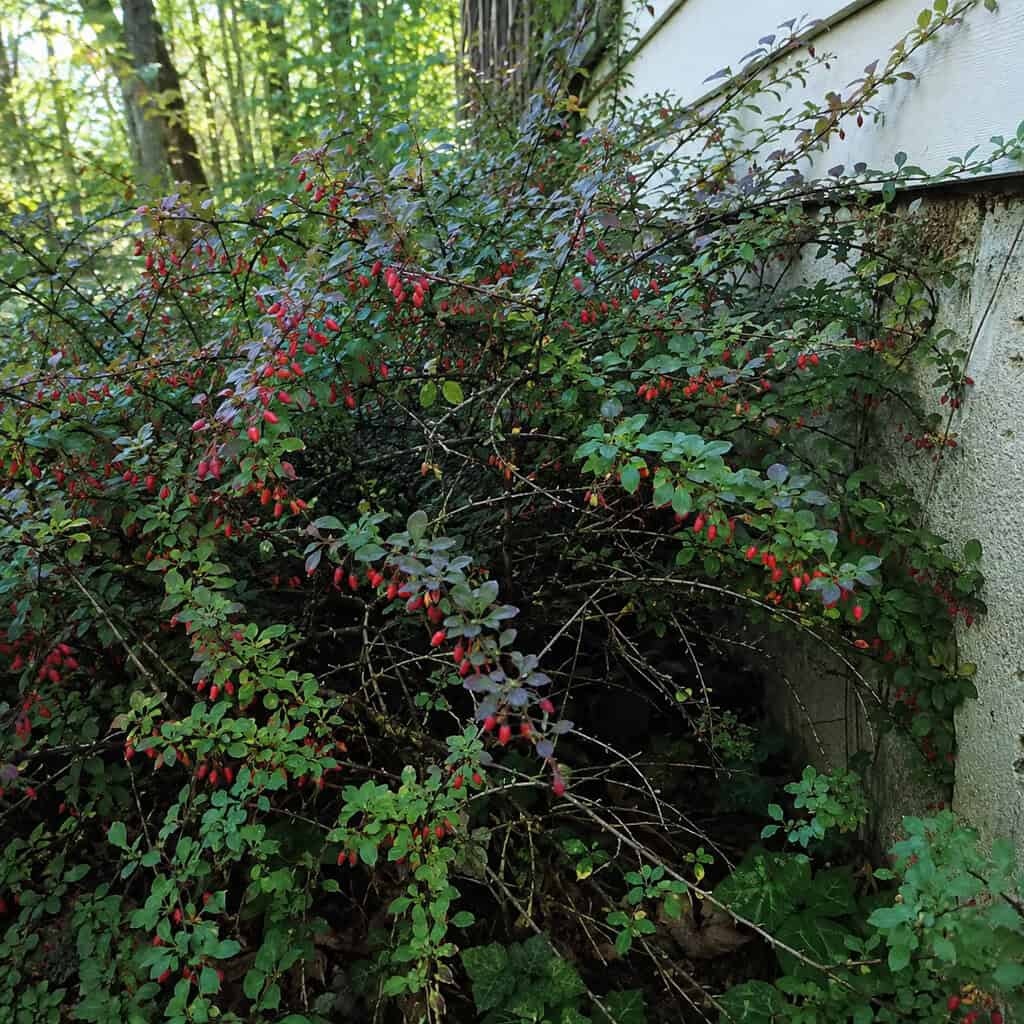
Three traits make landscapers reach for Japanese barberry constantly: it’s inexpensive, it tolerates virtually any condition, and deer won’t touch it. Those same three traits explain why it’s a quiet catastrophe.
Anything deer refuse and drought can’t kill will take over a woodland, and barberry does — introduced in 1875, now blanketing forest floors across the Northeast.
But the detail that should stop you cold is the ticks.
Barberry grows into a dense, thorny mound that traps humidity underneath it, and that damp, sheltered interior is exactly what blacklegged ticks — the ones that carry Lyme disease — need to thrive. Studies from University of Maryland Extension and others have found dramatically higher densities of infected ticks in barberry stands than in surrounding habitat.
Mice shelter in it. Ticks feed on the mice. The whole cycle concentrates right where you planted a cheap foundation shrub.
A hedge that farms Lyme disease against your house is not a bargain at any price.
13. Burning Bush: Two Weeks of Color, Years of Consequences
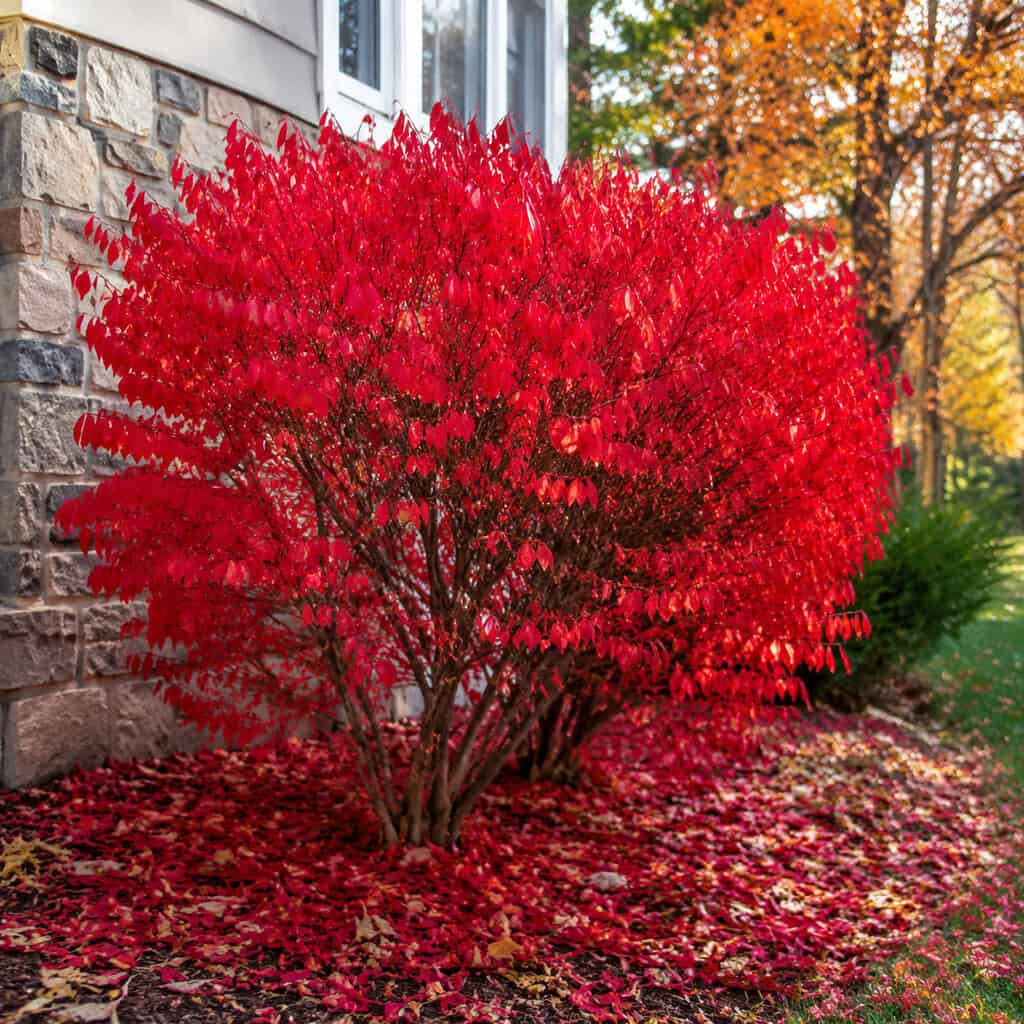
The honest math on burning bush is blunt: you’re paying a low price for roughly a fortnight of spectacular crimson fall color, and the plant is entirely forgettable for the other 50 weeks of the year.
The two weeks aren’t worth the rest of the story.
Burning bush is highly invasive in natural areas and already banned in several states, its seeds carried into the woods by birds. It harbors scale insects, too.
And researchers suspect it does something worse: its dense, low form may create the same humid, tick-friendly microclimate that makes Japanese barberry such a problem. Penn State Extension puts it on the avoid list. Plenty of native shrubs turn just as red without any of it.
14. Siberian Elm: Fast Shade, Faster Problems
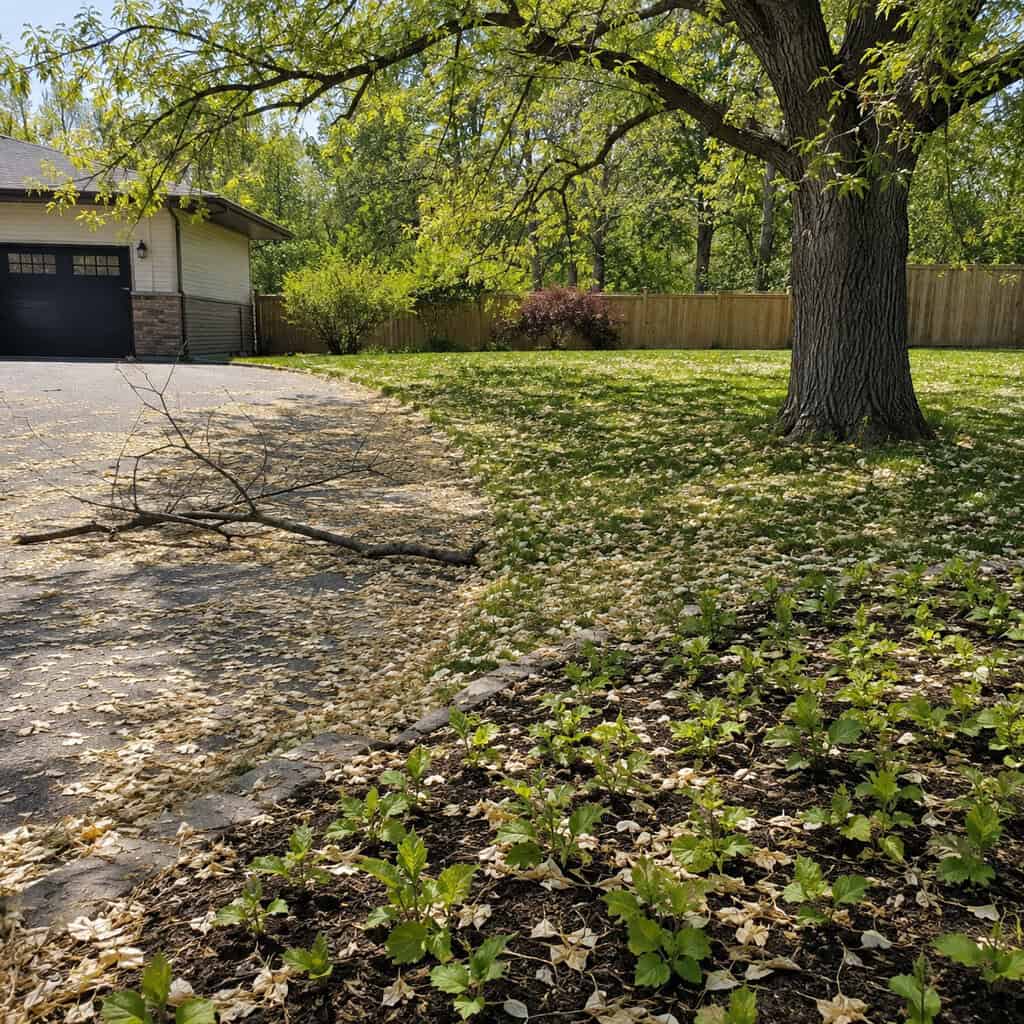
Engineered for the plains during the Dust Bowl era, the Siberian elm laughs at cold, drought, and neglect — and it reaches mature size in about a decade, which is why it’s still sold as a quick shade solution today.
The speed is the con.
The wood is brittle and full of deadwood, so it drops branches in every storm. And the seeds — a Siberian elm buries your yard in papery samaras that germinate into a carpet of saplings.
Those saplings root hard and fast. Miss a season of pulling them and you’ve got an elm problem instead of an elm. Angi files it with the invasive trees worth actively removing.
15. Nandina (Heavenly Bamboo): Pretty Berries That Kill Birds
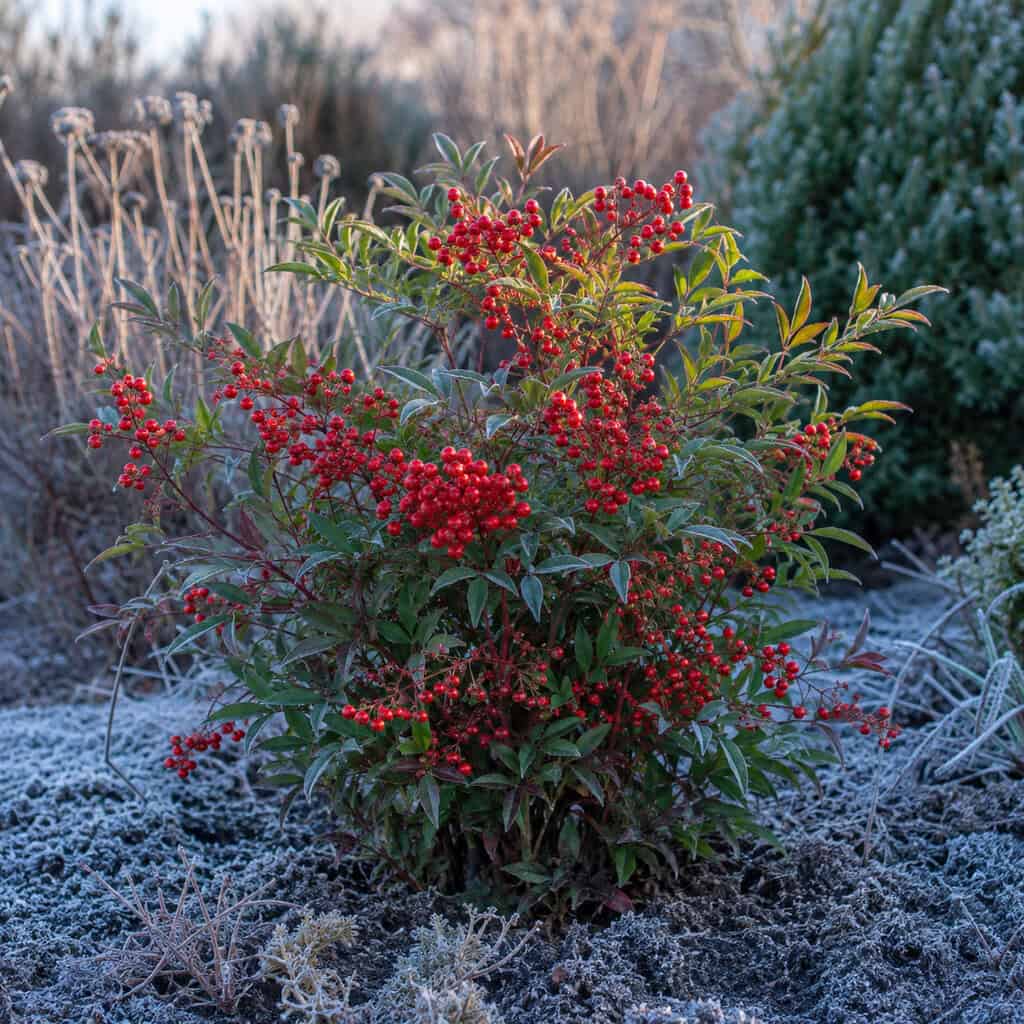
“Nearly indestructible” is the sales line, and it’s true. Nandina is cheap, evergreen, shrugs off neglect, and holds bright red berries all winter. That’s why it’s under half the windows in the South.
Those berries are the problem.
Nandina berries contain cyanide compounds, and they’ve killed entire flocks of cedar waxwings — birds that gorge on fruit in a single sitting and drop dead from it. The North Carolina Botanical Garden has documented exactly that.
The plant is also toxic to pets, and the USDA treats it as a noxious invasive that spreads by those same berries.
Pretty red fruit that poisons songbirds. Hard to think of a worse trade for curb appeal.
16. Lombardy Poplar: The Screen That Decays Before You Need It

Tall, narrow, and rocket-fast out of the ground, the Lombardy poplar was the go-to “living fence post” throughout the mid-1900s — an instant privacy column at a fraction of what fencing cost.
It grows like a weed. That’s the whole pitch and the whole problem.
Lombardy poplars are short-lived and disease-prone. Canker disfigures the trunks, aphids and beetles pile on, and the graceful column you planted starts dropping dead branches and thinning out before it ever matures.
Most are ugly and declining within 15 years. You planted a screen and grew a liability.
17. Chinese Wisteria: The Vine That Kills Its Host
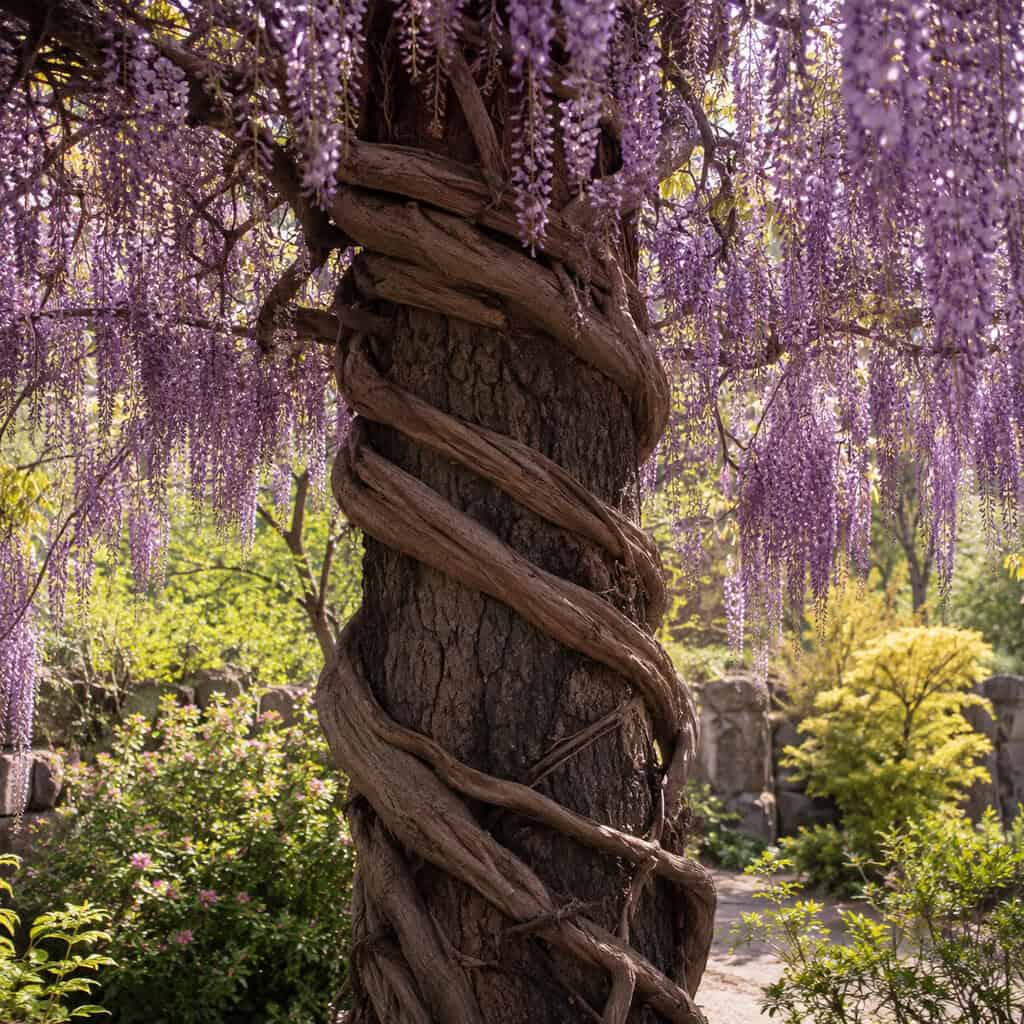
Cascading purple blooms and a budget-friendly price make Chinese wisteria one of the most purchased vines in the trade — and one of the most destructive once it gets a foothold.
Wisteria doesn’t just climb. It constricts.
Its woody stems wrap around a host tree and thicken year after year, biting through the bark and cutting off the tree’s circulation until it dies. It’s invasive across much of the eastern half of the country, as EcoWatch notes.
The bloom is genuinely spectacular. So is the damage it does on the way to producing it.
18. Silver Maple: Speed, Weak Wood, and Your Sewer Line
Postwar builders needed shade over bare tract-home lots, and they needed it before the buyers complained. The silver maple delivered — cheap, and one of the fastest shade trees in the trade.
Fast wood is weak wood. That’s the trade every time.
Silver maples grow multiple trunks with included bark, and that soft, brittle timber shatters in ice storms and summer squalls. Big limbs come down on cars, fences, and rooflines with almost no warning.
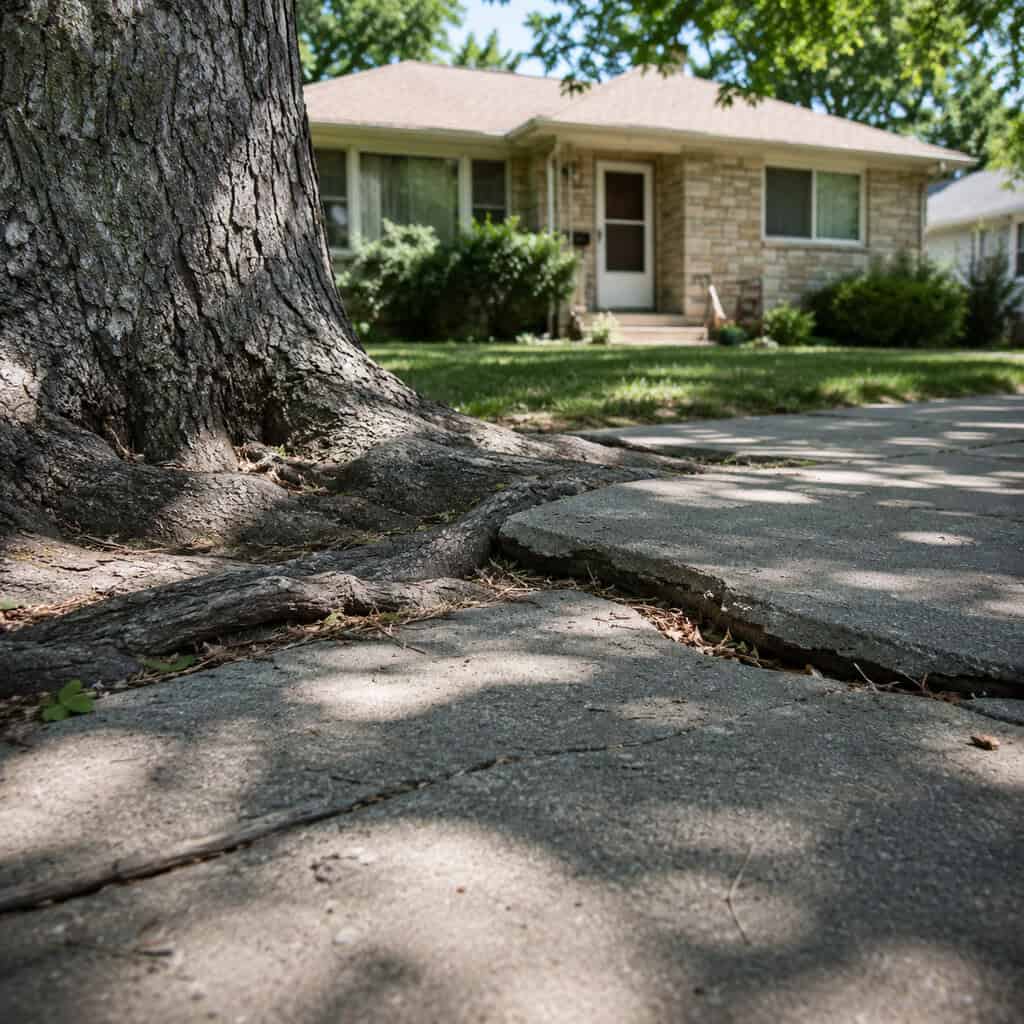
But the roots are where it really gets expensive. Silver maple runs a shallow, greedy, water-hunting root system that heaves sidewalks, cracks driveways, and lifts foundations. Family Handyman lists it among the trees you should never plant near a house.
Those roots also find your plumbing. A hairline crack or a loose joint in an old clay sewer line is an open invitation, and silver maple roots will fill the pipe until you’re staring at a backed-up basement and a bill with a comma in it.
Add the seedlings. Silver maple throws thousands of helicopter seeds, and they sprout in every gutter, bed, and crack you own.
Not near the house. Not near the drive. Honestly, not on a normal lot at all.
19. Vinca / Periwinkle: The Shade Solution That Spreads
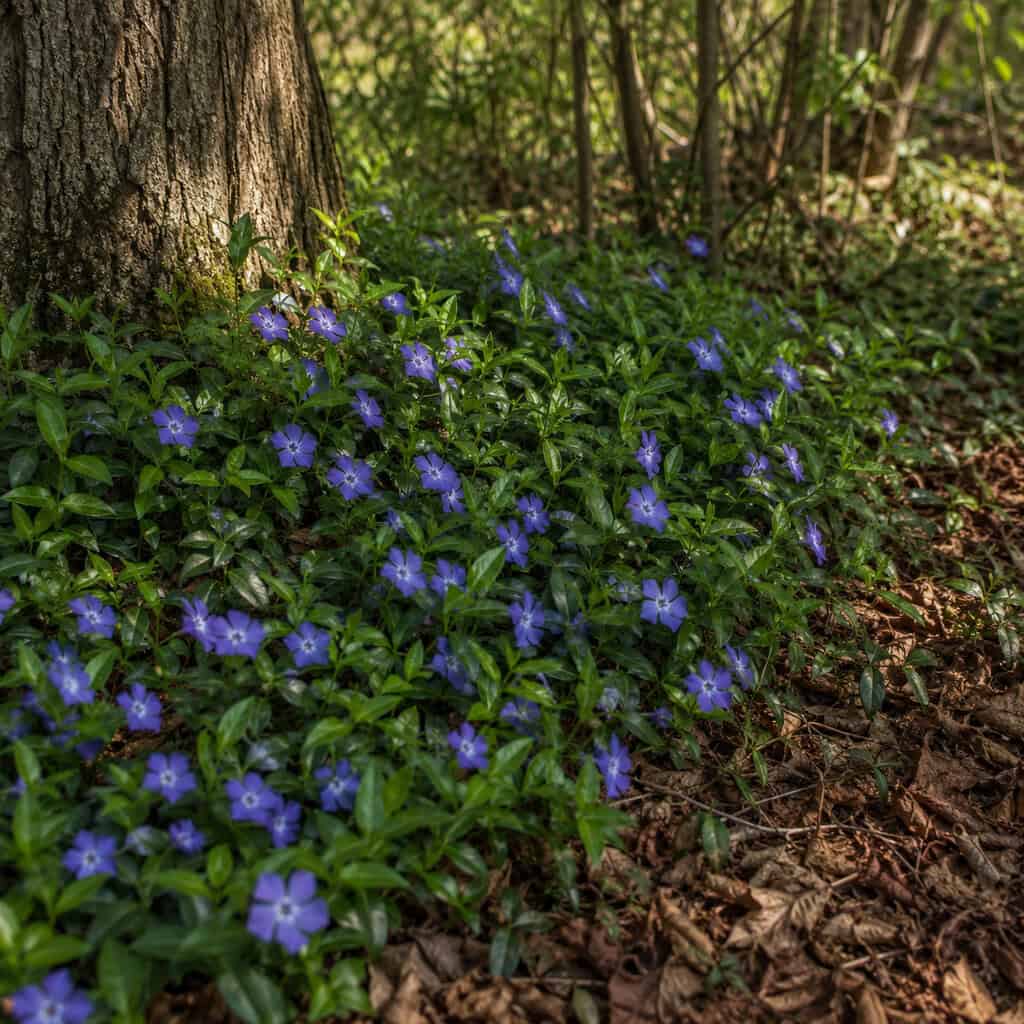
For dry shade under a tree where nothing else seems to take hold, vinca has been the cheap, obvious fix for decades — evergreen, pest-resistant, and self-spreading without any help from you.
Too much on its own.
Periwinkle forms dense, single-species mats that smother spring wildflowers before they can push through. It escapes old homesteads and creeps into the woods, and it’s toxic to pets.
Several states now classify it as invasive. It solves your shade problem and starts a slower one that spreads well past your property line.
20. Liriope / Monkey Grass: Know Which Kind You Bought
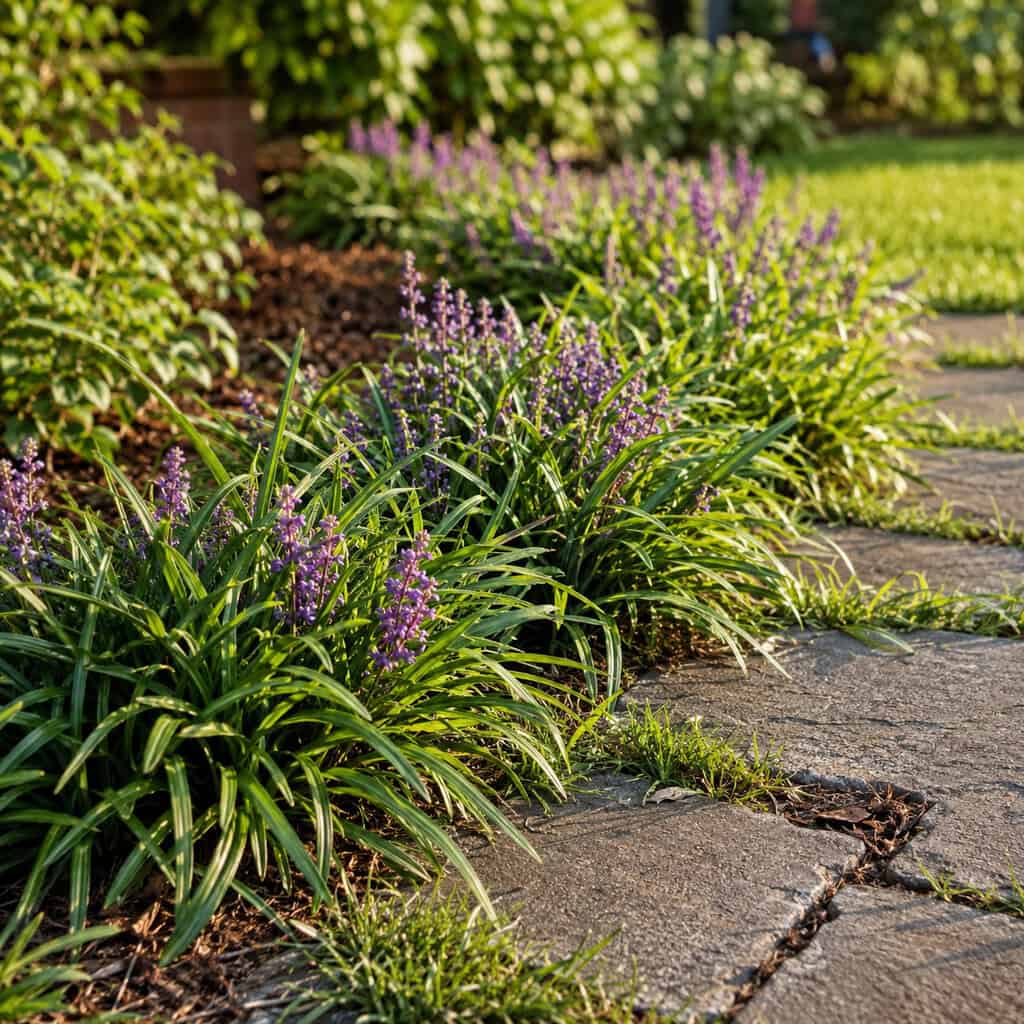
Monkey grass is the South’s default cheap border plant — widely available, fast-spreading, and practically care-free, which is why it edges flowerbeds on every other street in the region.
The catch is which kind you got.
The clumping type stays put. The running species, Liriope spicata, travels by underground rhizomes straight into your lawn and beds, and pulling it out is a genuine chore. NC State’s Plant Toolbox flags it as invasive in Tennessee and Georgia.
It’s the “why is this suddenly in my flowerbed” plant. Because the cheap flat was the running kind.
21. Privet (Chinese & Japanese): The Hedge That Never Stops
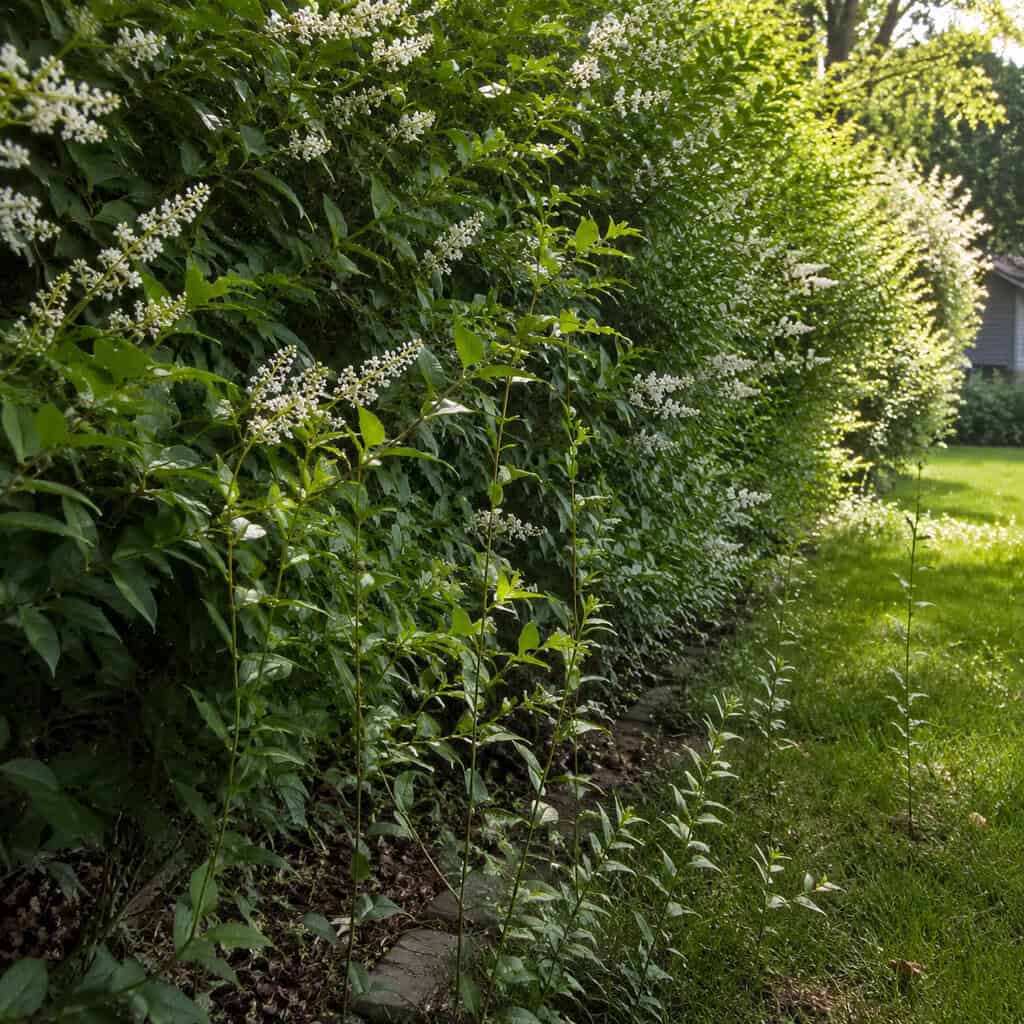
For well over a century, privet has been the reflexive answer when someone wants a green privacy wall on a tight budget — imported in the 1800s specifically because it grew fast and cost almost nothing.
It does. Then it keeps going.
Privet self-seeds with abandon. Birds eat the berries and scatter them, and the seedlings colonize into dense thickets that smother everything native underneath. It also hosts whiteflies and mealybugs that drift onto your other plants.
Cheap this weekend. Then a decade of yanking privet seedlings out of every bed and fence line you own.
22. English Ivy: The Cover That Topples Trees
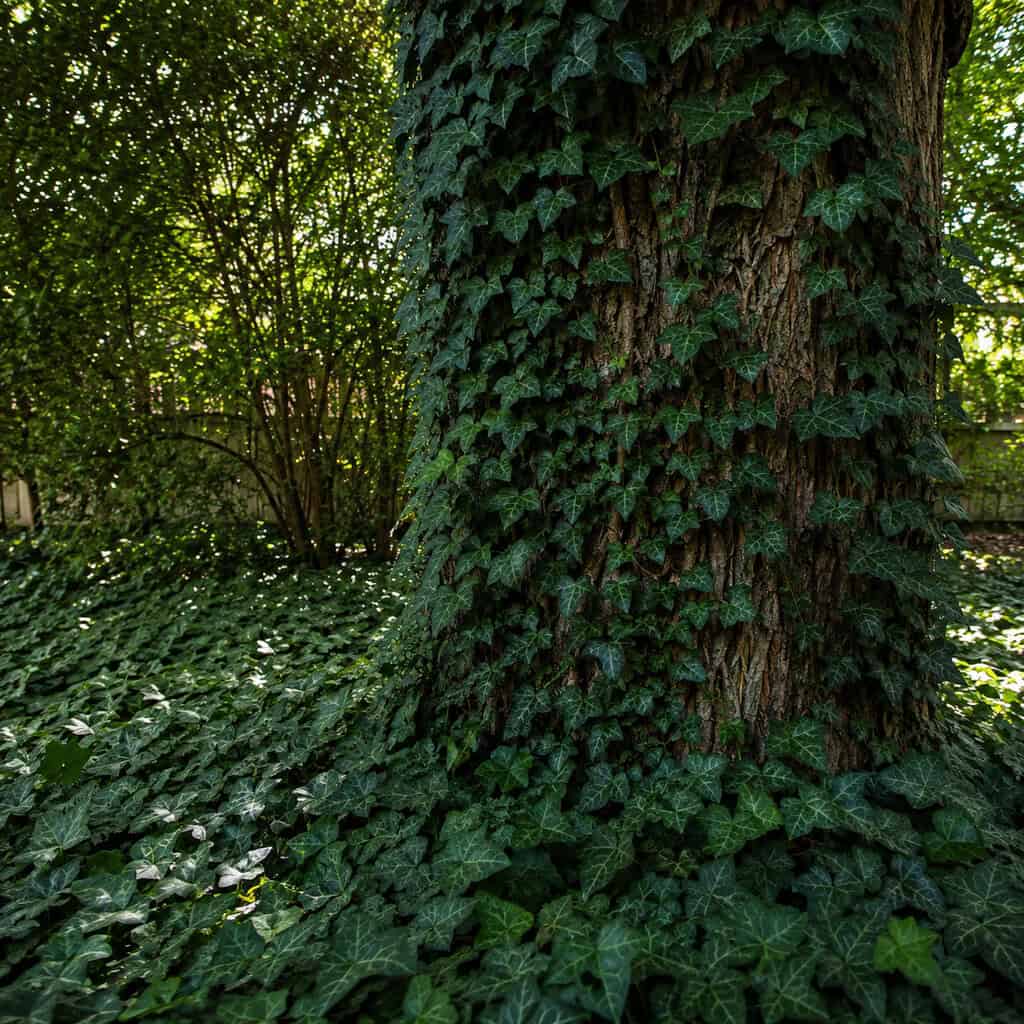
A shady bank, an unattractive wall, a bare slope — English ivy has been the cheapest answer to all of them since the 1700s, and it remains the go-to low-cost groundcover in the trade today.
It never stops.
Ivy escapes the bed and smothers the forest floor, and it climbs — up trees, up walls, up anything. On a tree it blocks light from the trunk and piles on weight the crown was never built to carry, which is how a healthy oak ends up toppling in a storm.
It also carries bacterial leaf scorch, a disease that spreads to native trees. Rural Sprout ranks it among the plants worth actively removing. Cheap green cover that quietly strangles the tree it’s climbing.
23. Red Tip Photinia: The Hedge That Dies in Sequence
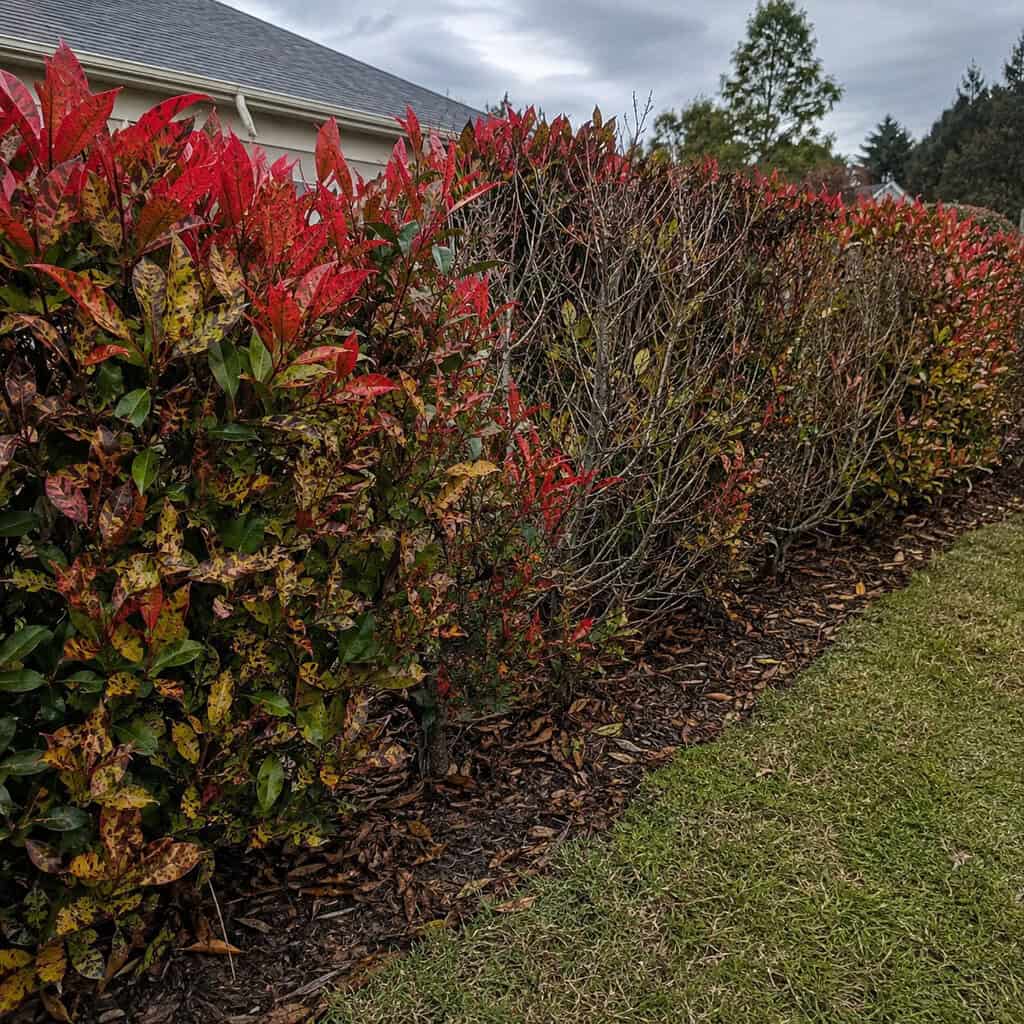
Through the 1980s and into the ’90s, that flush of glowing red new growth made red tip photinia the privacy hedge of choice across the South — and it was cheap enough to plant by the flat.
Then the leaf spot arrived.
Entomosporium leaf spot loves exactly the conditions people planted photinia in — long, tight, crowded rows with no air movement. It defoliates the shrubs, then kills them, working down the hedge one plant at a time.
Extension offices have spent more than 20 years telling people to quit planting it, and Clemson’s HGIC still fields the calls. A hedge that dies in sequence is the definition of a false economy.
24. Kudzu: What Happens When Fast and Cheap Go Unchecked
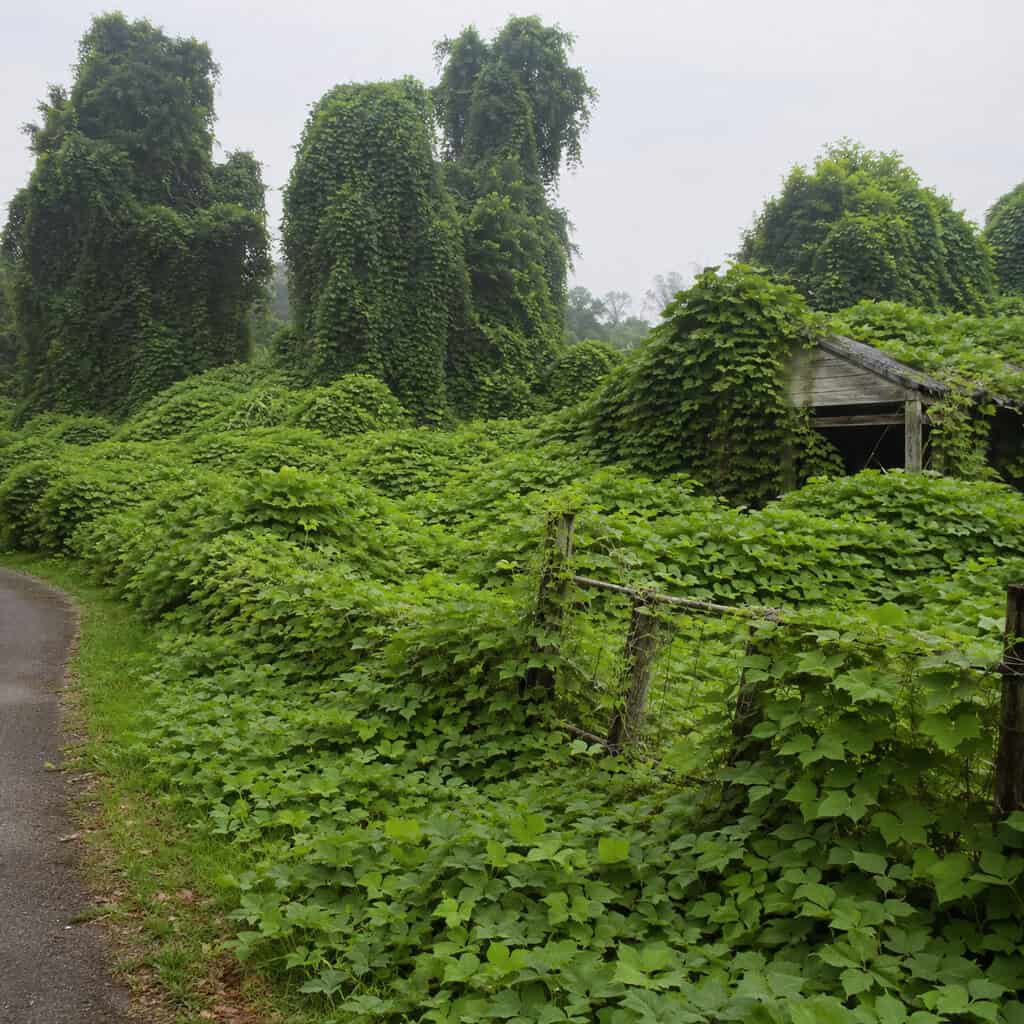
No landscaper installs kudzu today — but somebody’s grandfather might have, because the government gave it away in the 1930s to stop erosion.
It became the vine that ate the South.
Kudzu can grow a foot a day in summer, burying trees, barns, and telephone poles under a green blanket that never quits. It’s the cautionary tale behind every “fast and cheap” plant on this list — proof of where the logic ends when nobody thinks past install day.
25. Russian Olive: Cheap, Tough, and Now Illegal in Much of the West
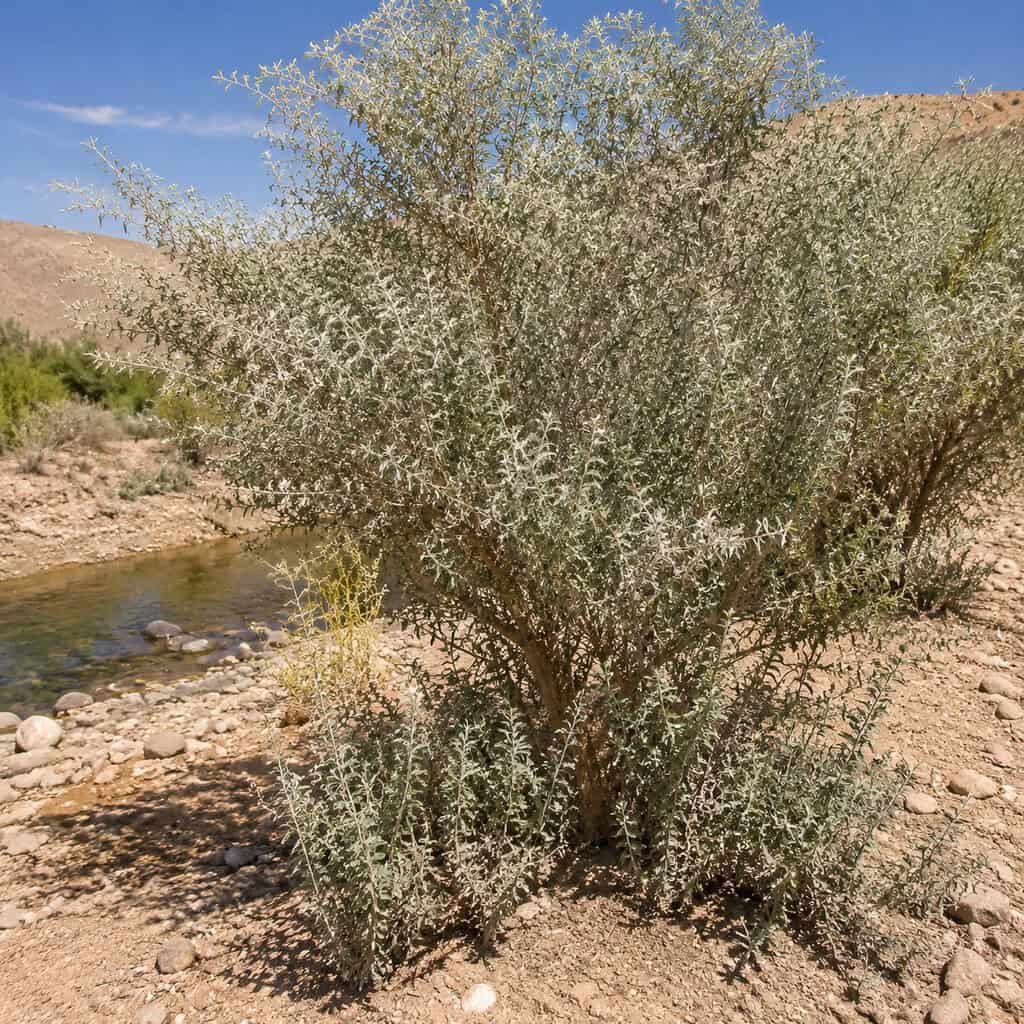
Silvery leaves, tough as nails, cheap — Russian olive was handed out in the early 1900s as a windbreak and soil stabilizer, and it did the job too well.
It’s now a listed noxious weed in 17 western states.
Deep-rooted and impossible to fully kill, it resprouts from every cut stump, chokes out native riparian plants along streams, and actually changes how water moves through the land it invades. California Department of Fish and Wildlife lists it flat-out as “don’t plant me.”
In a lot of the West, planting one isn’t just a bad idea. It’s against the law.
26. Japanese Honeysuckle: Fragrance That Hides a Strangler

That sweet, heavy perfume on a June evening is what moved Japanese honeysuckle by the flat for generations — cheap coverage and instant fragrance that made it one of the most widely planted vines in the eastern U.S.
Fragrance is the bait. Strangling is the habit.
It blankets whatever it climbs and twists so tightly around young trunks and shrubs that it girdles them, cutting off the flow that keeps the host alive. AOL counts it among the common garden plants that are quietly invasive. That perfume is coming from a strangler.
What the Low Price on Install Day Actually Buys You
Not one of these plants set out to cause damage. They share a common origin story: they were fast, affordable, and easy — exactly the combination that gets something loaded onto a truck by the thousand, installed in an afternoon, and regretted across the following decade.
The fastest-growing tree is the one with the weakest wood. The hedge that fills in overnight is the one that fails plant by plant. The groundcover that never needed weeding is the one you’ll spend years pulling out of the tree line behind your house.
Before you approve a landscaping contract, take ten minutes to research every plant on the list — your state’s cooperative extension office publishes exactly which of these are banned, classified as invasive, or simply a poor choice for your region.
The savings on install day are real. So is the decade of costs that follow.