

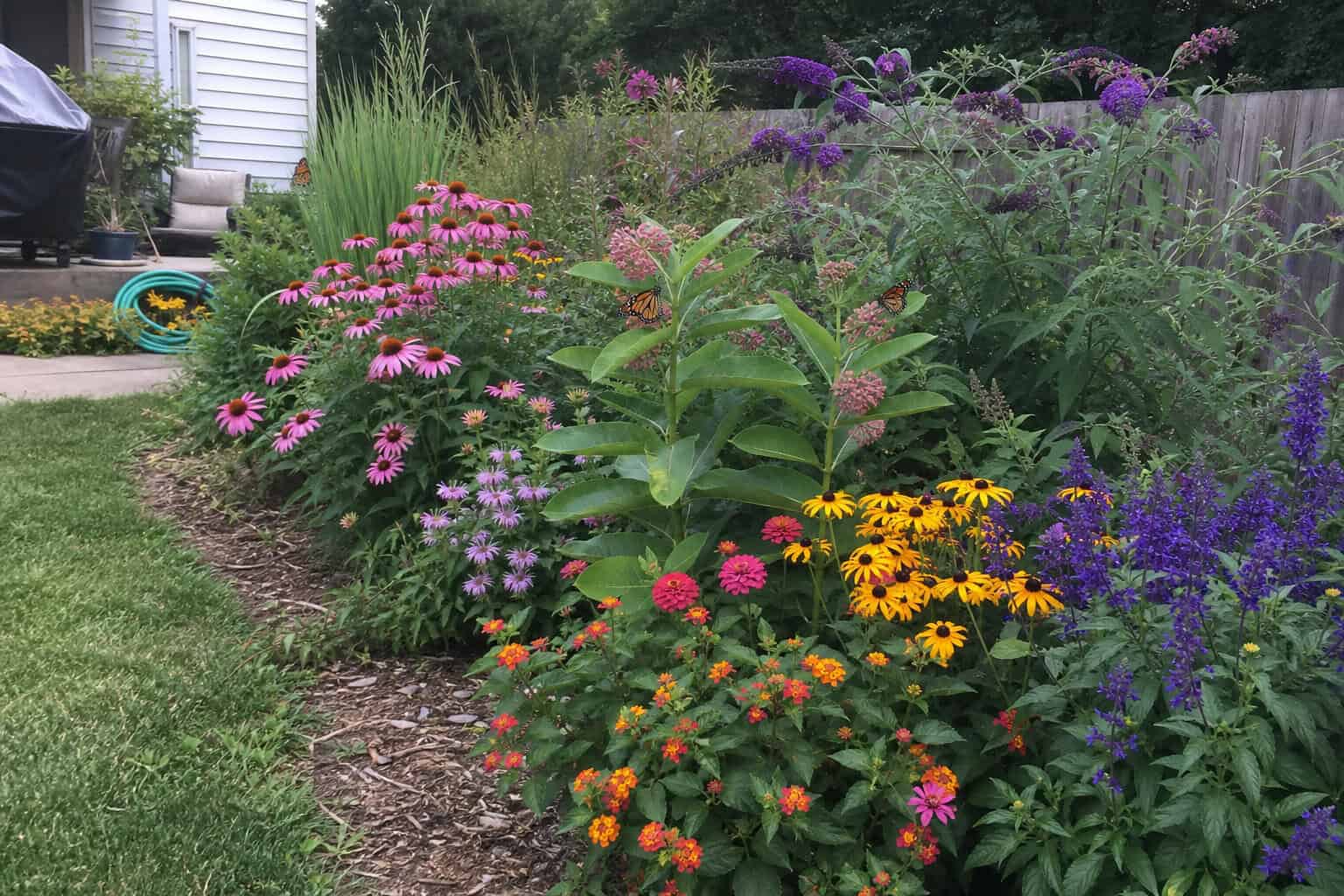
Stand in a butterfly garden in late August and you’ll hear it before you see it. A soft dry rustle of wings. A tiger swallowtail tipping sideways off a phlox cluster.
Butterflies don’t arrive by accident. They come for two things — nectar to fuel adult wings, and specific leaves for their caterpillars to eat. Miss either one and you’ve built a pretty flowerbed that stays empty.
The best butterfly yards feed both stages. They bloom from May through the first frost, never leaving a hungry gap. And they lean hard on native plants, because native butterflies evolved alongside native leaves.
Some of these you already know. A few will surprise you — including one famous “butterfly” plant that shouldn’t wear the name at all.
Here are 33 plants that turn a plain yard into a butterfly stopover.
1. Milkweed (Asclepias)
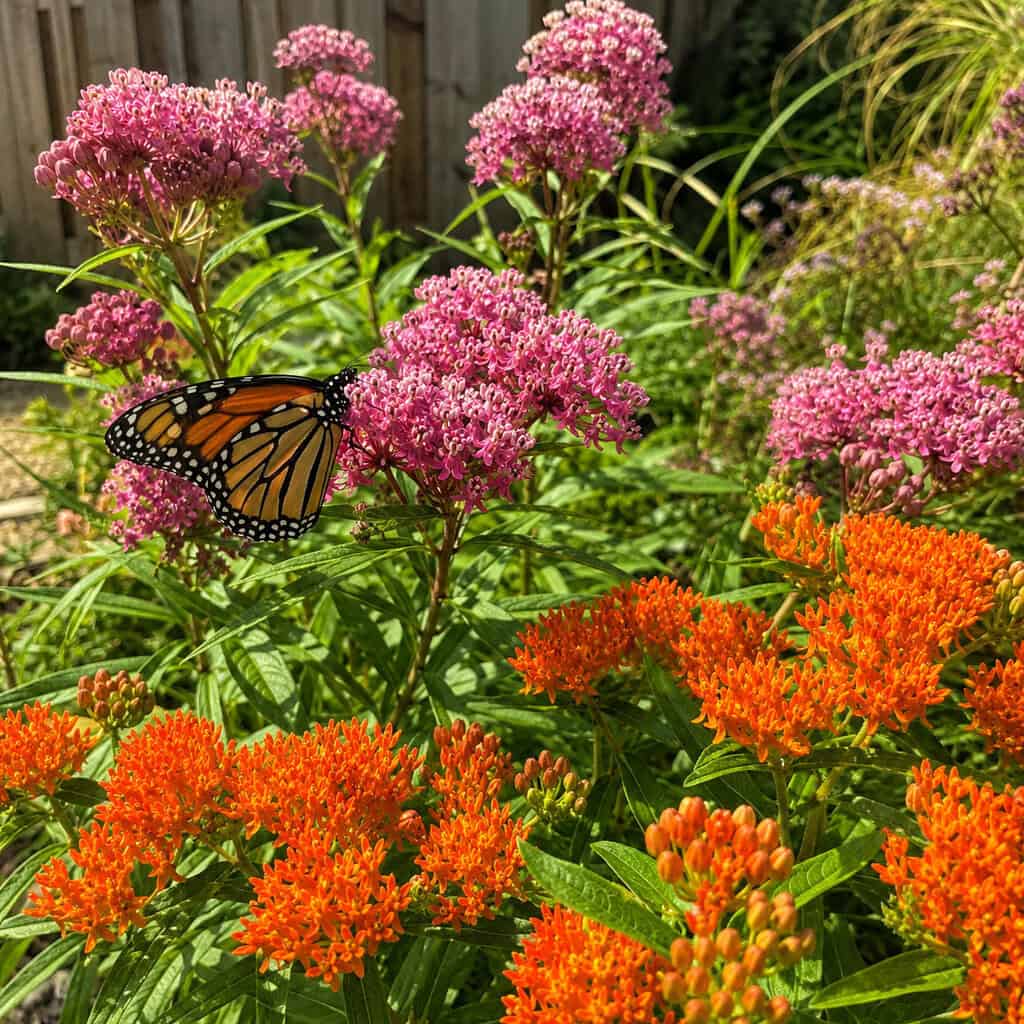
Start here. Nothing else on this list carries the weight milkweed does.
Monarchs lay their eggs on milkweed and nothing else. No milkweed, no monarch caterpillars — it’s that simple. The leaves feed the young, and the flowers pour out nectar for every adult that passes.
You have choices. Butterfly weed throws bright orange heads and stays compact. Swamp milkweed handles damp clay and smells faintly of vanilla. Common milkweed spreads by root and fills a whole corner if you let it.
The Chicago Botanic Garden calls milkweed the anchor of any monarch planting. Plant a patch, not a single stem — caterpillars are hungry, and one plant vanishes fast.
2. Purple Coneflower (Echinacea)

The beginner’s butterfly plant. Hard to kill, harder to keep butterflies off.
Each bloom is a raised orange cone ringed by pink petals — a built-in landing pad with the nectar right underneath. Butterflies grip the cone and feed without effort.
Monarchs, swallowtails, skippers, fritillaries, admirals. They all show up.
It shrugs off drought and poor soil. Leave the spent cones standing into winter and goldfinches will strip the seed.
3. Black-Eyed Susan (Rudbeckia)
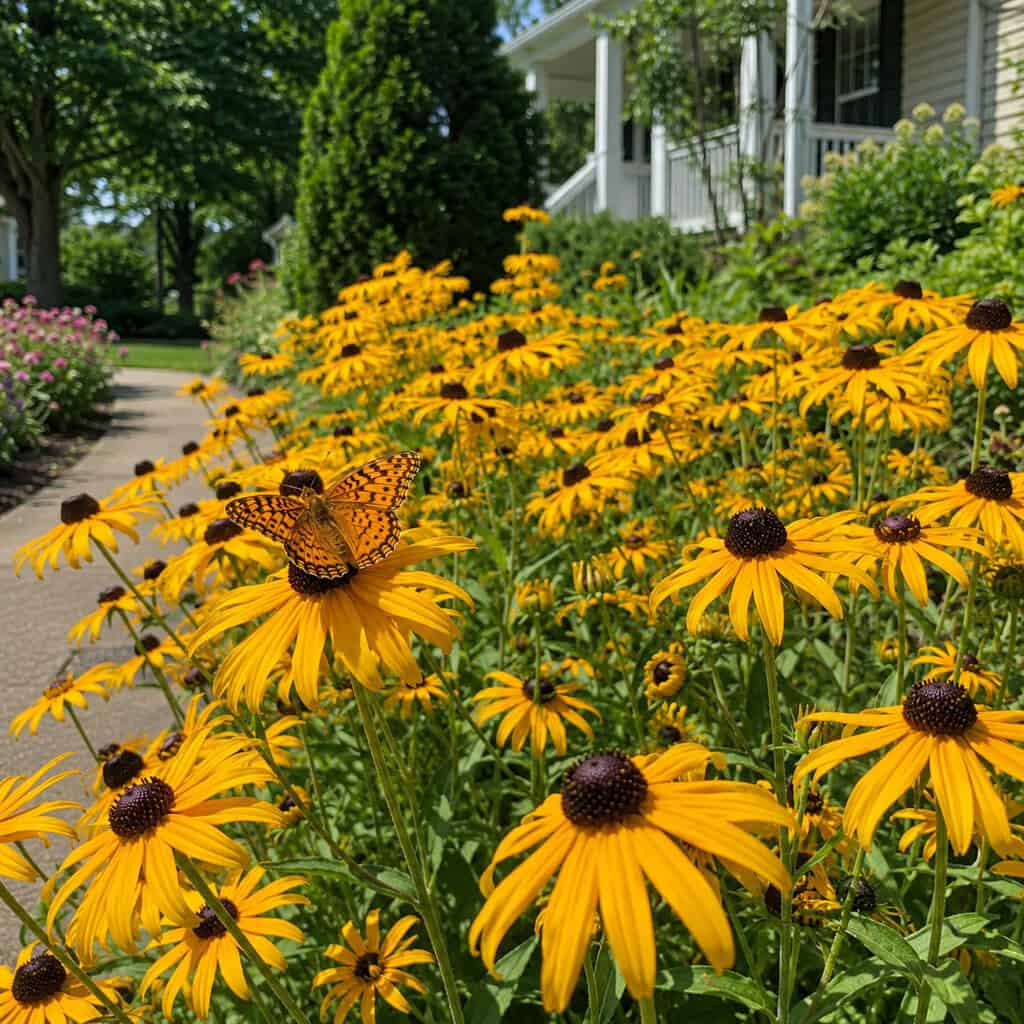
You’ve seen these along every highway ditch in July. That’s the point.
Golden petals around a dark button, blooming when summer hits its peak. Every Rudbeckia is a strong nectar source, and they draw the crescents and checkerspots most flashy flowers miss.
Great spangled fritillaries and pearl crescents work them all afternoon. Spring azures too.
They self-sow with cheerful abandon. Plant three and you’ll have thirty in a few years.
4. Bee Balm (Monarda)

A mint-family native with ragged, firework-shaped blooms in red, pink, and violet. Tubular flowers packed with nectar.
Butterflies work them alongside hummingbirds and bees. Everything wants a turn.
Deer leave it alone. It’s long-lived and close to care-free once established.
Give it airflow. Crowded bee balm gets powdery mildew on the lower leaves — space it out and it stays clean.
5. Blazing Star (Liatris)

Tall violet wands that bloom top-down, which no other spike flower does. Butterflies cling to them like they’re purple ladders.
Pair blazing star with milkweed and you’ve built a monarch fueling station. The two bloom together and feed the same crowd.
Conservation groups push it as a replacement for non-native butterfly bush — same drama, native roots.
It grows from a corm and forms a tidy clump. No flopping, no spreading out of bounds.
6. Asters
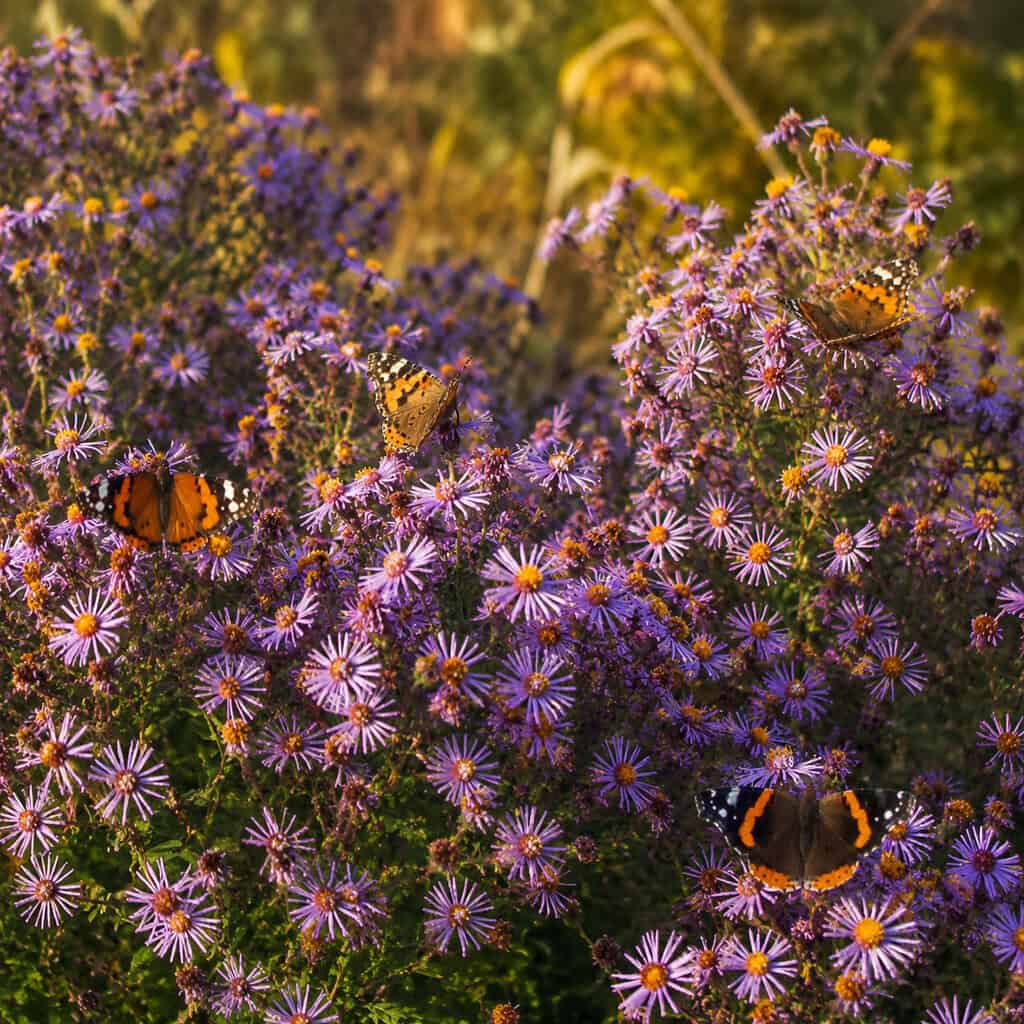
The make-or-break plant. When most of the garden has quit, asters open.
From August through October they cover themselves in small daisy flowers — purple, blue, white. That timing matters more than beauty. Migrating monarchs need fuel for the trip south, and asters are one of the last full tanks.
They also host pearl and painted crescent caterpillars.
New England, New York, and smooth asters are the standouts. Plant them where you can see them, because they’ll be the busiest thing in the yard come September.
7. Goldenrod (Solidago)

Falsely accused for a century. Goldenrod does not cause your hay fever.
Its pollen is heavy and sticky, carried by insects, not wind. The real culprit is ragweed, which blooms at the same time and blows fine pollen for miles. Goldenrod just has the bad luck of being visible.
And it’s one of the last great nectar sources of the year, feeding migrating monarchs when almost nothing else is open. Epic Gardening lists it among the strongest fall performers for that reason.
Choose a clumping type like ‘Fireworks’ if you’re nervous about spread.
8. Joe Pye Weed (Eutrochium)
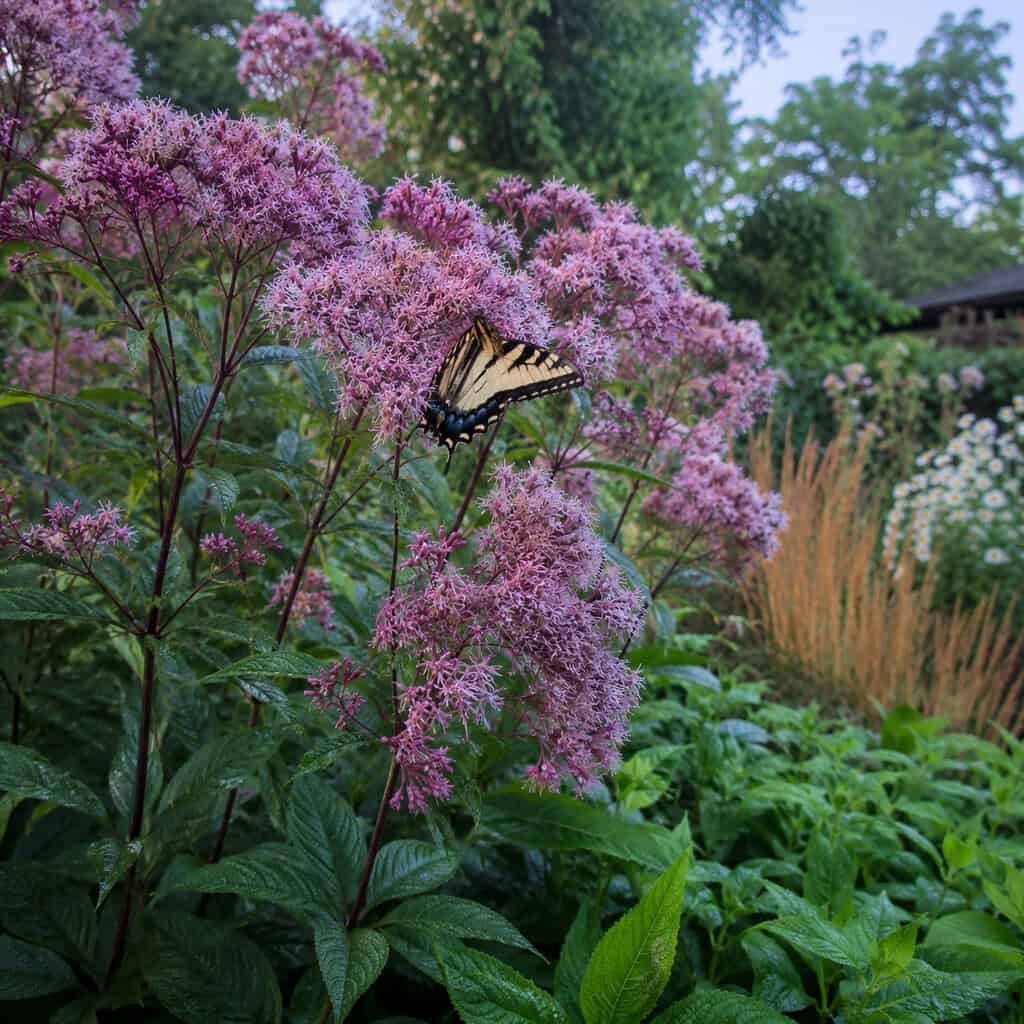
A giant. It reaches eight feet in a good wet spot and crowns itself with mauve plumes.
The flowers smell faintly of vanilla and swallowtails can’t resist them. It’s a serious fuel stop during fall monarch migration too.
That soggy low corner where nothing grows? This is your plant. Joe Pye loves the wet feet everything else hates.
Put it at the back of the bed. It’ll tower over everything by August.
9. Ironweed (Vernonia)

Take Joe Pye’s height, swap the mauve for electric violet, and you’ve got ironweed. Bolder color, same commanding scale.
The flat-topped clusters glow at the end of summer. Butterflies cover them late in the season when the color reads like a beacon.
It’s oddly underused. Most people have never planted it.
They should. Few natives add this much drama and late nectar in one stem.
10. Anise Hyssop (Agastache)
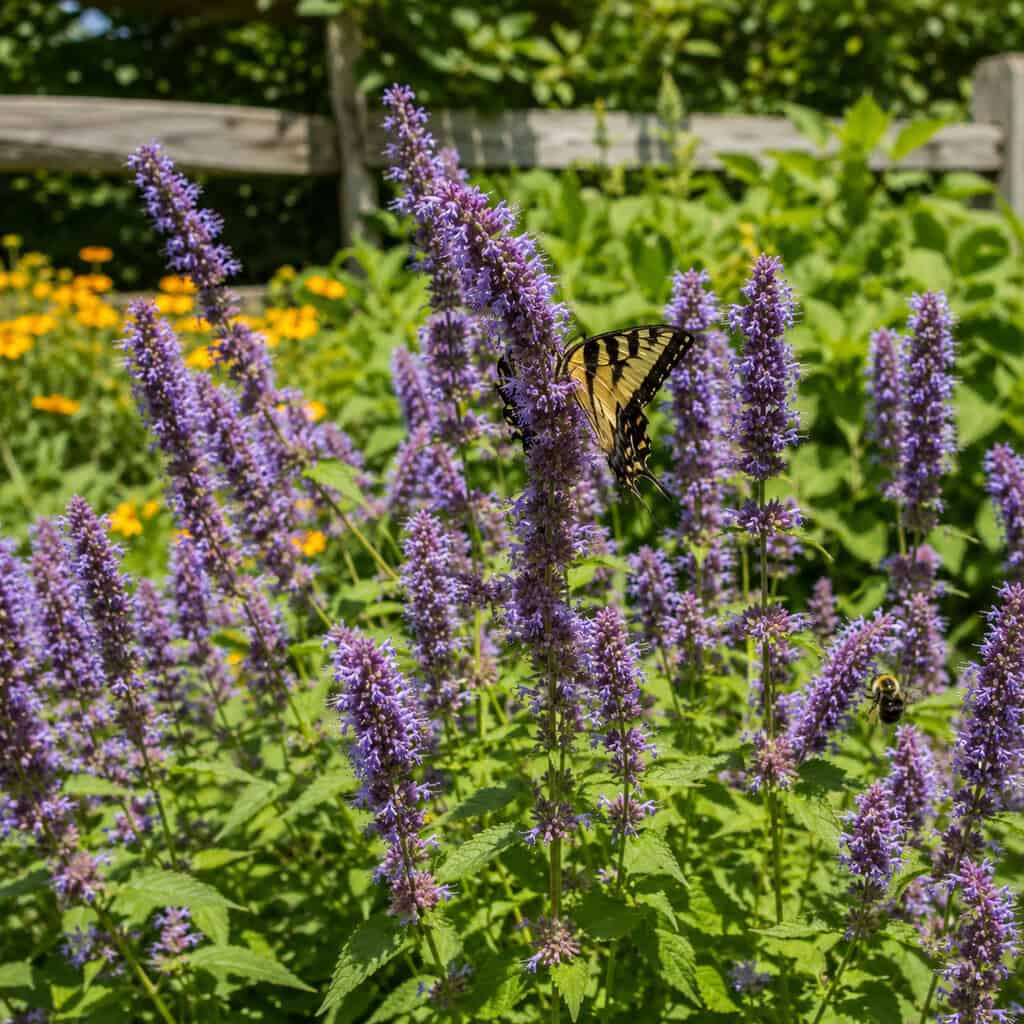
Crush a leaf and it smells like licorice. The flowers are soft purple spikes that keep coming from late spring clear into fall.
That long bloom is the gift. It runs as a season-long nectar station while other plants take their turns opening and fading.
Butterflies, hummingbirds, and bees all feed on it daily.
‘Blue Fortune’ is the reliable one. Easy from the start, and it blooms itself ragged.
11. Yarrow (Achillea)
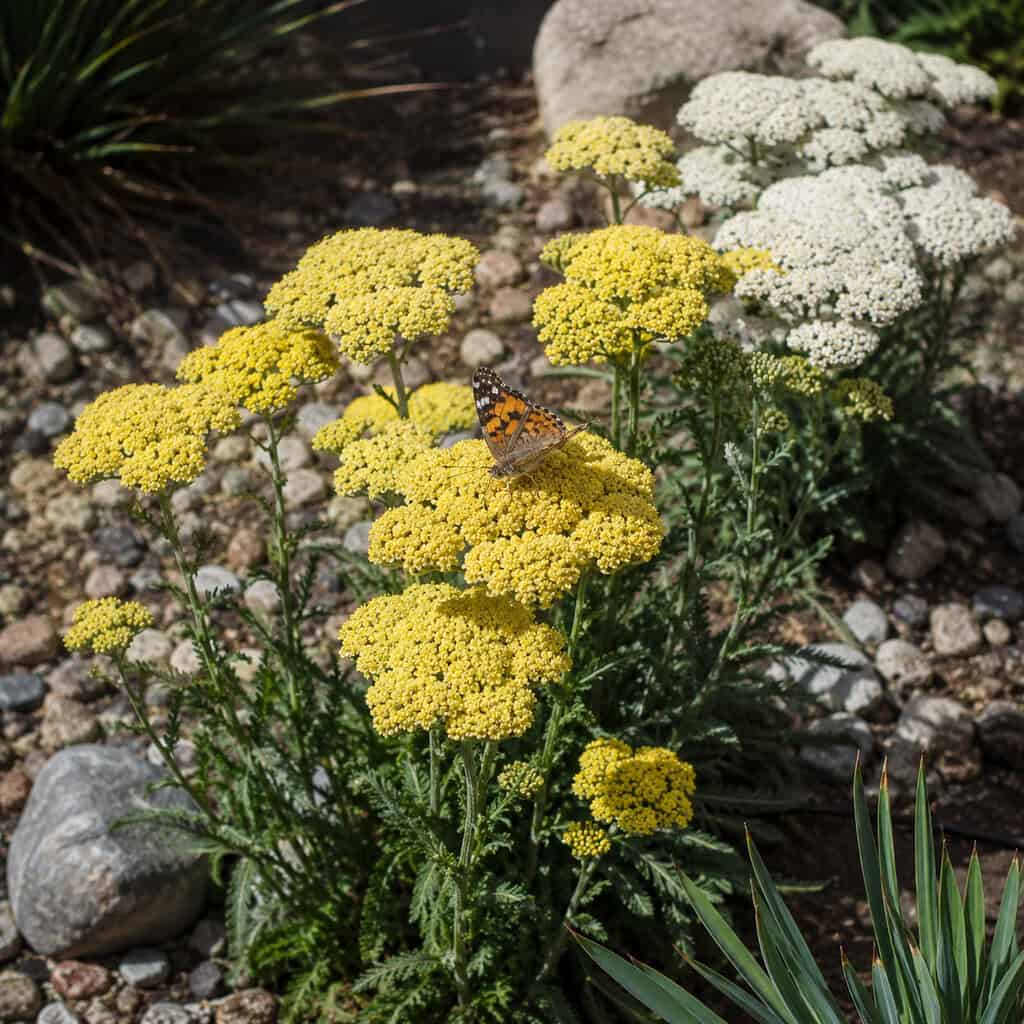
Flat-topped flower clusters that work like a table. Butterflies land on the whole surface and walk while they feed.
It thrives in the worst soil you’ve got — dry, poor, gravelly. The kind of spot that kills fussier plants.
Comes in white, gold, red, and dusty rose.
Deadhead the spent heads and it blooms again. Skip that step and it slows down by midsummer.
12. Garden Phlox (Phlox paniculata)

Big fragrant flower clusters on tall stems, blooming through the heat of summer. The scent alone tells you it’s working.
Swallowtails, silvery checkerspots, and clouded sulphurs crowd the star-shaped blooms. It’s ornamental enough for a formal border and functional enough for a wild one.
Give it sun and airflow. Like bee balm, packed-in phlox catches mildew.
Look for mildew-resistant types like ‘David’ if that’s a problem in your yard.
13. Salvia & Sage (Salvia)
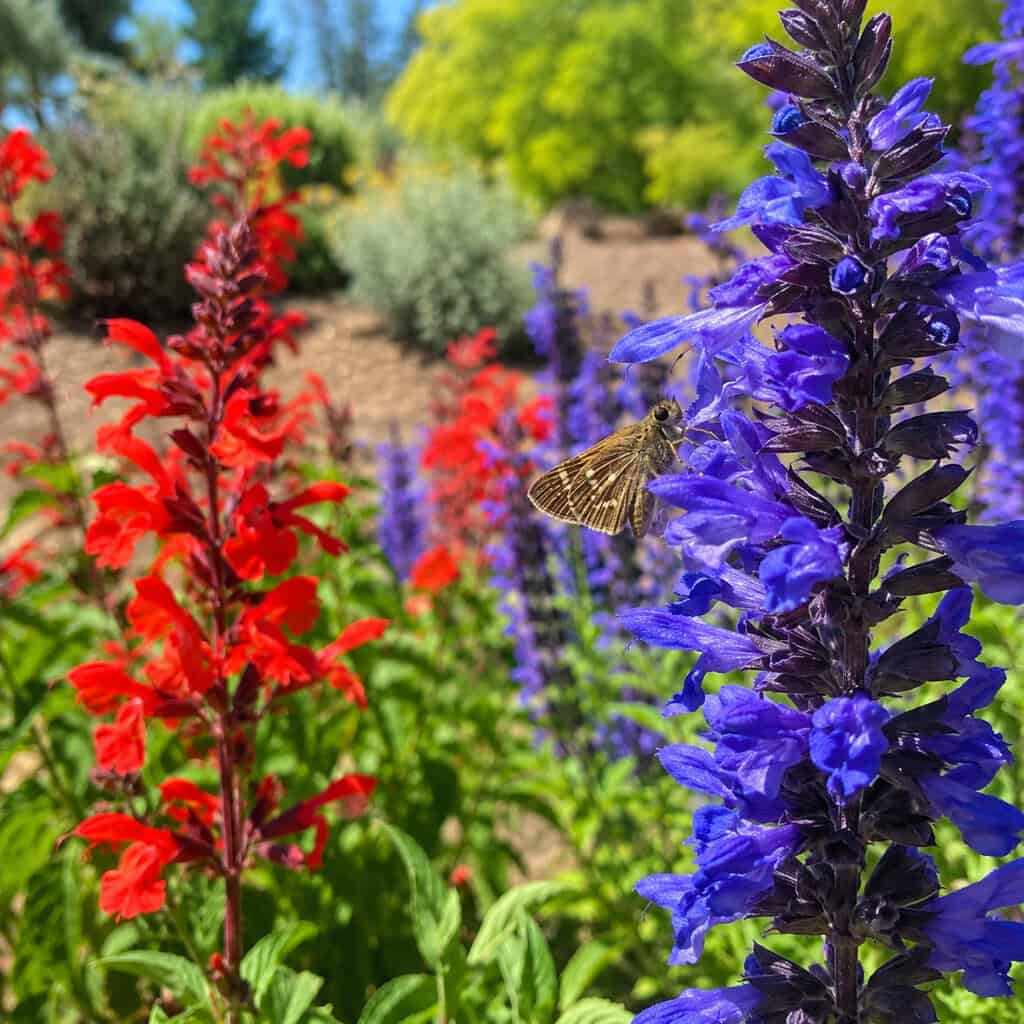
Spiky, scented, drought-proof. Salvias run the range from tough perennials to fast annuals.
American lady, cabbage white, skippers, swallowtails, sulphurs — the flower spikes feed a broad crowd. Bees adore them too.
Perennial salvias come back reliably. Mealycup and scarlet sage fill in as annuals and stretch the season.
Shear them after the first flush and most rebloom within weeks.
14. Tickseed (Coreopsis)

Sunshine in flower form. Small yellow daisies that start early and refuse to quit.
That length of bloom is what earns it a spot. Coreopsis gives butterflies a dependable nectar source across nearly the whole growing season.
It’s tough, it’s cheerful, and it asks for almost nothing.
Shear it lightly midsummer for a fresh wave. The threadleaf types barely need even that.
15. Blanket Flower (Gaillardia)
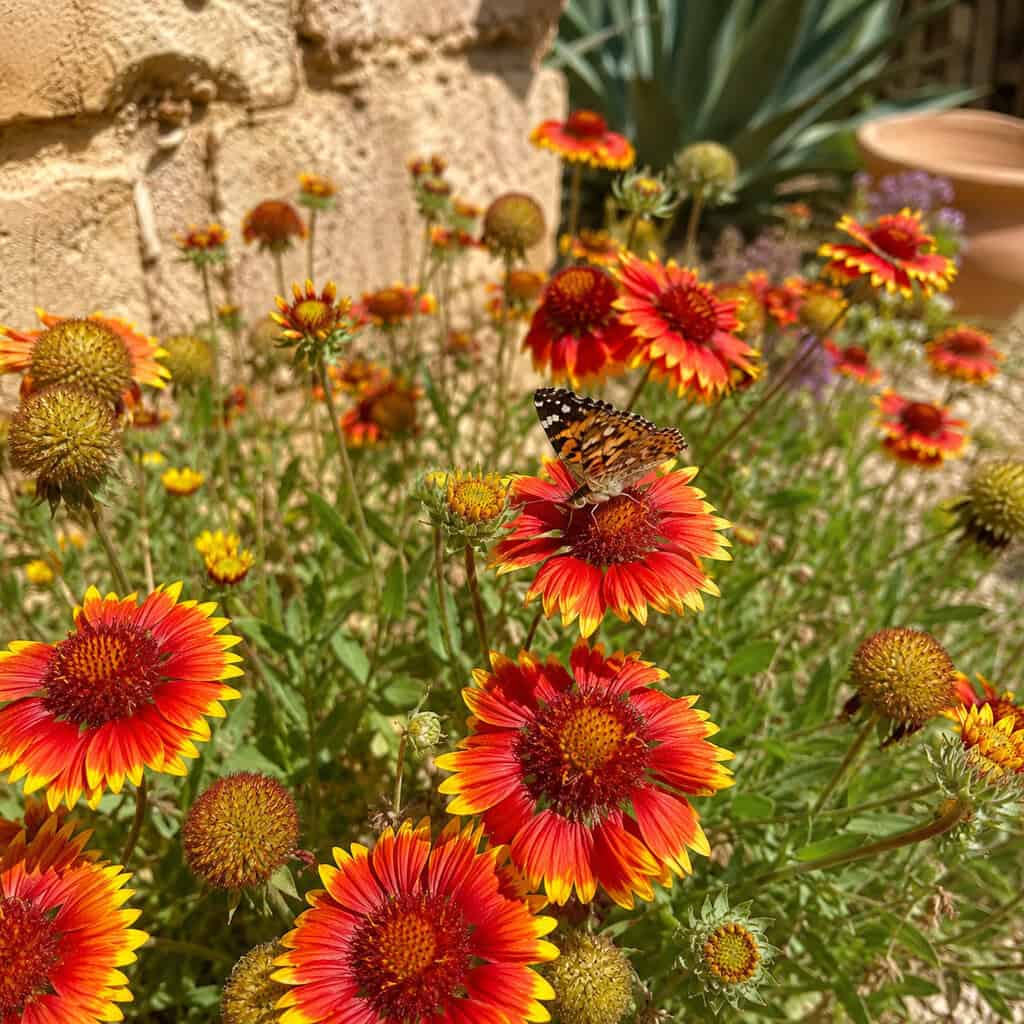
Red-and-orange blooms that look like a sunset caught mid-fade. Those are exactly the warm colors butterflies spot from across a yard.
It craves heat and dry soil. Bake it in the worst full-sun corner and it blooms harder.
Flowers keep coming from summer until frost knocks them back.
It even performs in containers, which few tough natives manage.
16. Catmint (Nepeta)
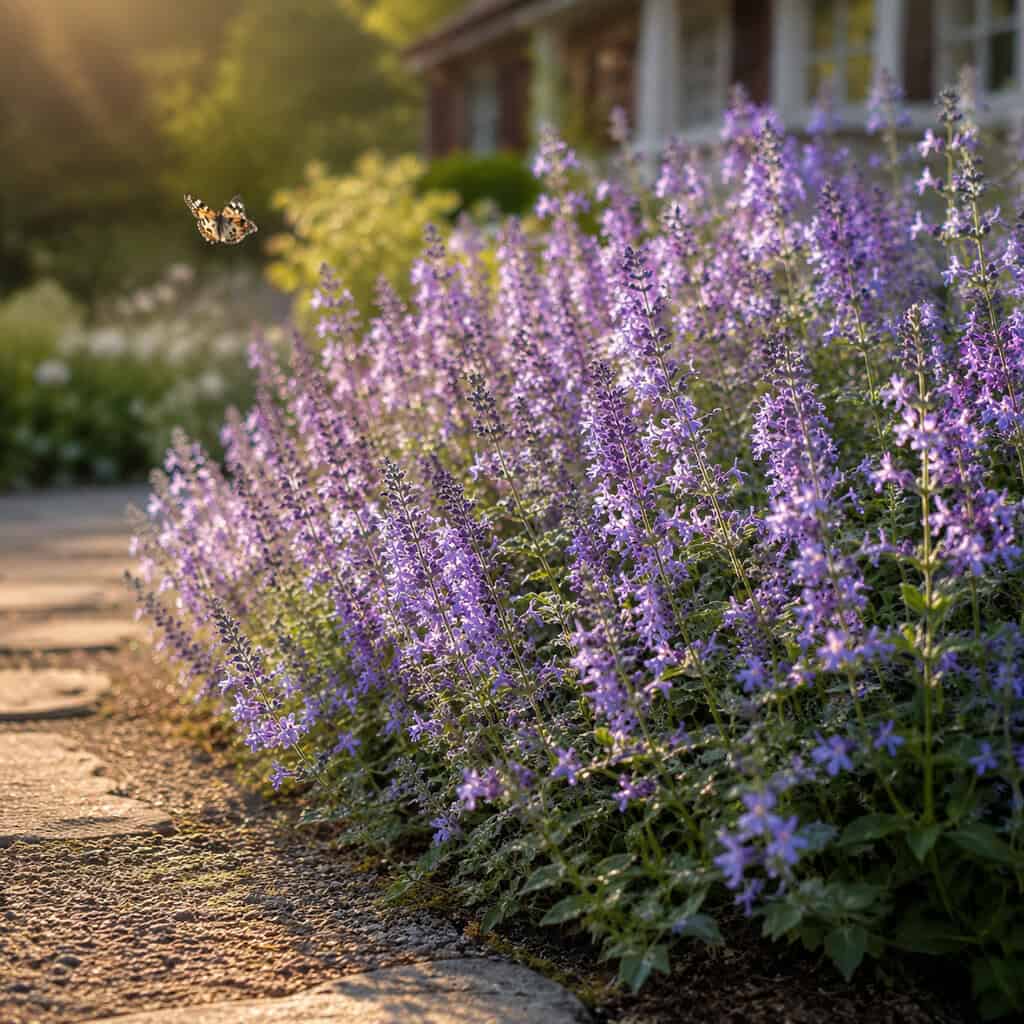
Nearly indestructible. Soft grey-green foliage under a haze of lavender-blue flowers.
It blooms from late spring into fall, keeping the buffet open for months while showier plants come and go. That reliability is the whole appeal.
Butterflies, hummingbirds, and honeybees all work it.
Use it as filler between bigger perennials. Shear it after the first bloom and it flushes again fast.
17. Stonecrop (Sedum)
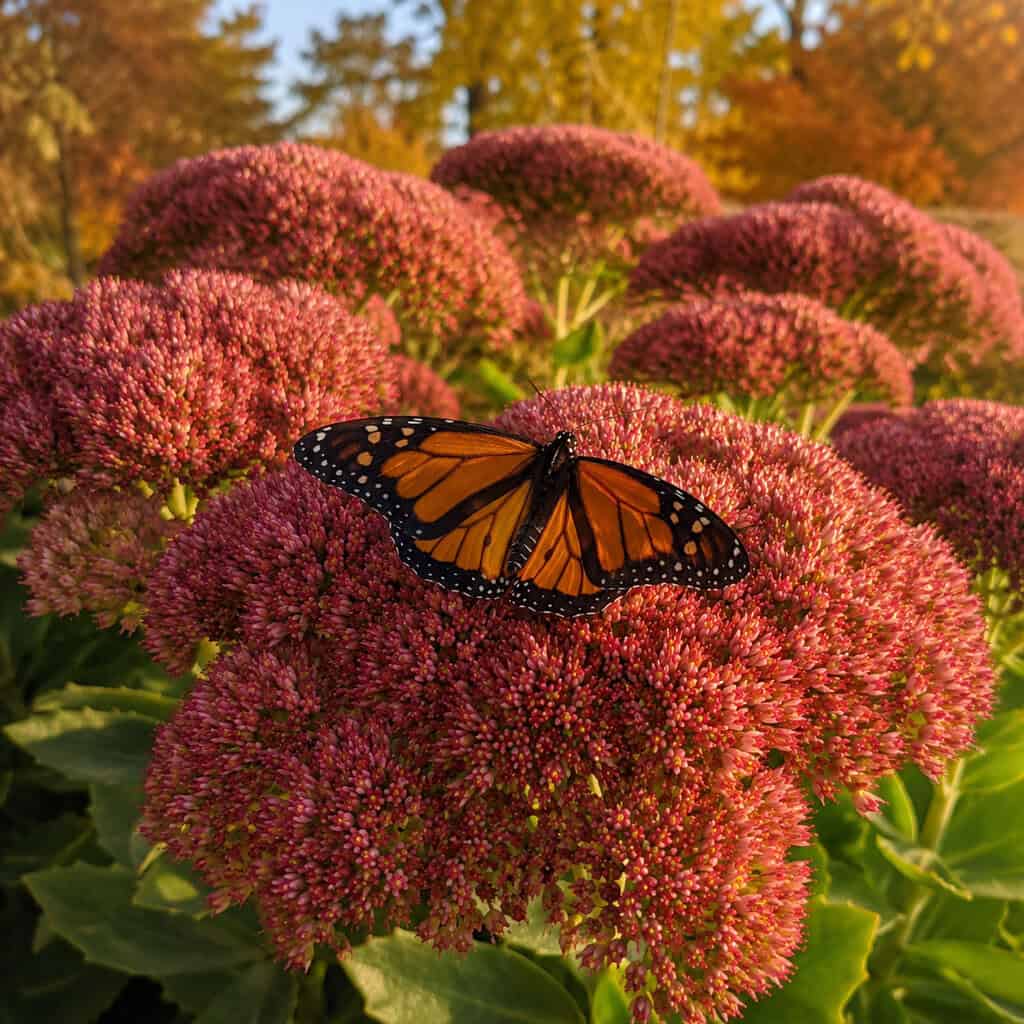
A succulent that saves its show for fall. ‘Autumn Joy’ types open broad pink flower heads exactly when late butterflies go looking for one last meal.
The flat heads make a solid perch. Butterflies land and stay a while.
It’s drought-proof to the point of neglect. Forget to water it and it thanks you.
Some butterfly caterpillars feed on the foliage too, so it pulls double duty.
18. Zinnia

Pound for pound, one of the most productive nectar plants you can grow. And dead easy from seed sown right in the ground.
One rule, and it matters: plant the single-flower kinds. Butterflies can’t reach nectar buried inside dense double blooms — those extra petals lock the pantry shut.
Lawn Love flags the single-versus-double issue for exactly that reason.
They bloom in every color until frost. Cut them for the vase and they bloom harder.
19. Mexican Sunflower (Tithonia)

A monster of a monarch magnet. It rockets to six feet and blazes with velvety orange flowers.
Rank the best monarch draws and Tithonia lands near the top of nearly every list. The color and sweet nectar make it a migration-season heavyweight.
Grow it from seed after the soil warms. It’s fast, it’s cheap, it’s enormous.
Stake it if you’re in a windy spot. Top-heavy stems can topple in a storm.
20. Cosmos

Airy, feathery, effortless. Cosmos self-sows and pumps out nectar from summer into fall.
The bright orange types are noted monarch draws. Give them lean soil and they bloom their heads off — rich soil just makes leggy foliage and fewer flowers.
Neglect suits them. Skip the fertilizer entirely.
Scatter seed once and you’ll have cosmos for years.
21. Lantana
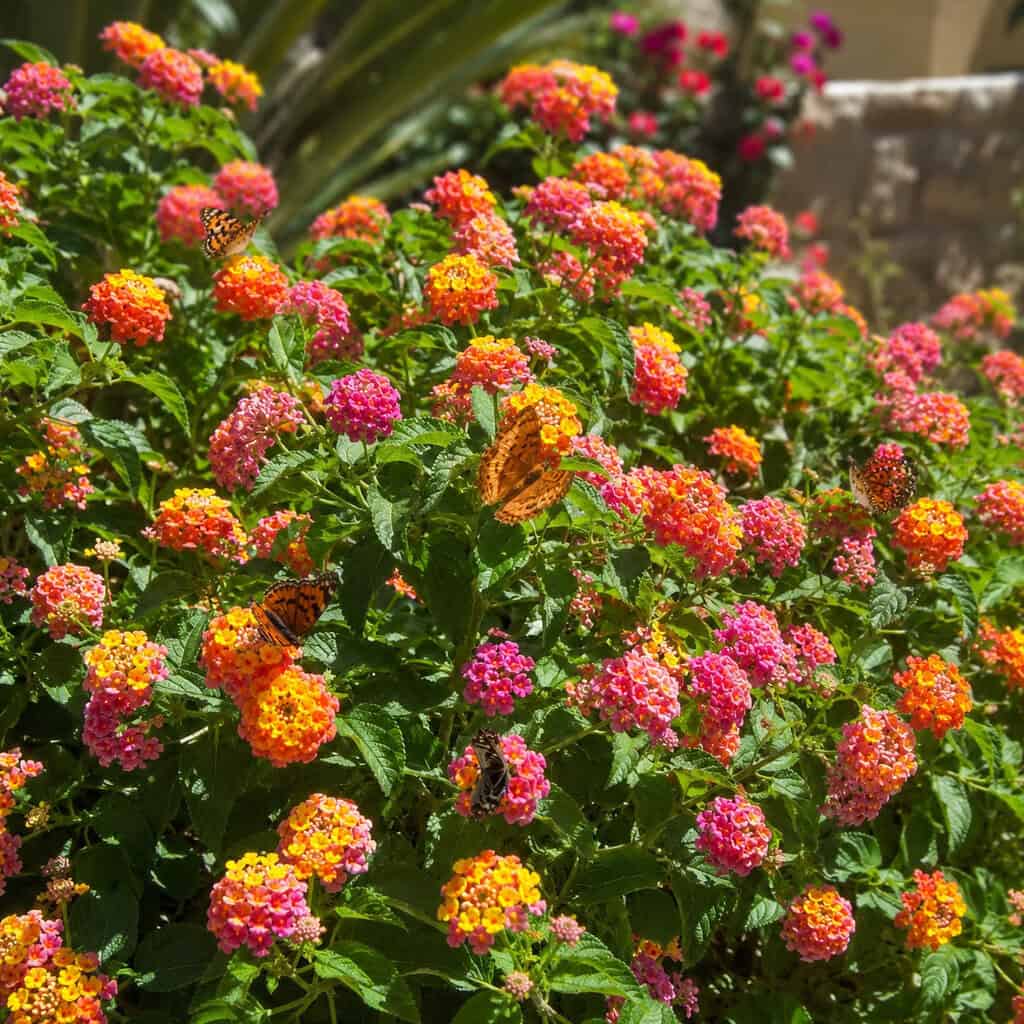
A nonstop bloomer that butterflies and skippers can’t leave alone. In warm regions it flowers to frost without pausing, each cluster a shifting mix of orange, yellow, and pink.
But there’s a real caveat here, and it deserves a hard look.
The fruiting types of lantana produce green berries that ripen dark, and those berries are poisonous. Toxic to dogs, cats, and children who might mistake them for something edible. A curious pet or toddler grazing on the fruit is a genuine hazard, not a footnote.
The fix is simple. Choose a sterile cultivar that sets little or no fruit — ‘Miss Huff’ is the standout, hardy and nearly berry-free. Sterile lantanas keep all the butterfly traffic and drop the danger.
If you have pets or small kids, don’t gamble on the seed-grown mixes. Buy a named sterile variety and you get every ounce of the butterfly show with none of the worry.
22. Pentas (Starflower)

Clusters of tiny star-shaped flowers, and swallowtails treat them like a favorite diner. The nectar sits right at the tip of each star.
It self-cleans, blooming for months without deadheading. Non-invasive, well-behaved, tidy.
A pet-safety bonus: pentas is listed non-toxic to cats and dogs. Birds & Blooms calls it a butterfly-garden natural.
In cold zones grow it as an annual. It won’t blink at summer heat.
23. Brazilian Verbena (Verbena bonariensis)

Tall, see-through, almost weightless. Thin stems hold small clusters of purple flowers up at eye level, and you look right through the plant to whatever’s behind it.
Some gardeners swear it pulls a wider variety of pollinators than anything else they grow. Butterflies work it constantly.
It self-sows freely without becoming a bully. Seedlings are easy to pull where you don’t want them.
Plant it up front. The transparency means it never blocks the view.
24. Marigold

The bulletproof bedding classic, but with a catch most people miss.
Plant the single-flower marigolds, not the dense pom-pom doubles that fill garden centers. Singles get far more butterfly visits because the nectar is actually reachable.
Those tight double heads look full but feed nothing. All show, no supper.
Singles bloom from summer to frost and reseed themselves. Easy, cheerful, and finally useful to a butterfly.
25. Buttonbush (Cephalanthus occidentalis)
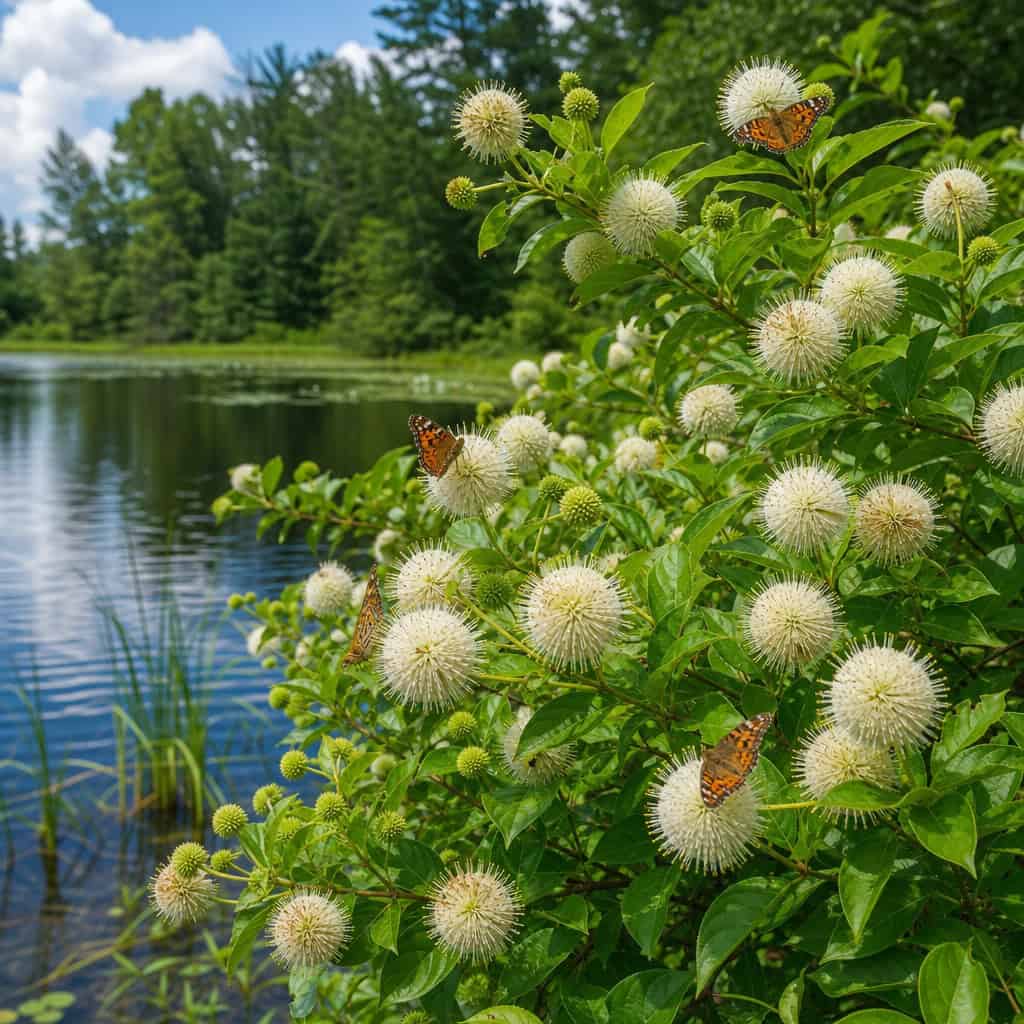
A native shrub that produces something odd and wonderful — perfect white spheres bristling with tiny flowers, like pincushions on the branch.
Butterflies swarm those globes in summer. So do bees and hummingbirds, and songbirds take the seed later.
It loves wet ground, making it ideal for pond edges and soggy corners. The Northern Virginia Bird Alliance names it a top native swap for non-native butterfly bush.
Unlike that impostor, buttonbush actually hosts native caterpillars. Nectar and nursery in one.
26. Sweet Pepperbush (Clethra alnifolia)

You’ll smell it before you find it. White bottlebrush spikes with a sweet, carrying fragrance in the heat of midsummer.
It fills the July nectar gap — that stretch when spring bloomers are done and fall ones haven’t started. Butterflies find it fast.
It tolerates shade, which few nectar shrubs do. Tuck it under taller trees and it still blooms.
Damp soil suits it best. Give it moisture and it thrives on the edge of the wet.
27. Spicebush (Lindera benzoin)
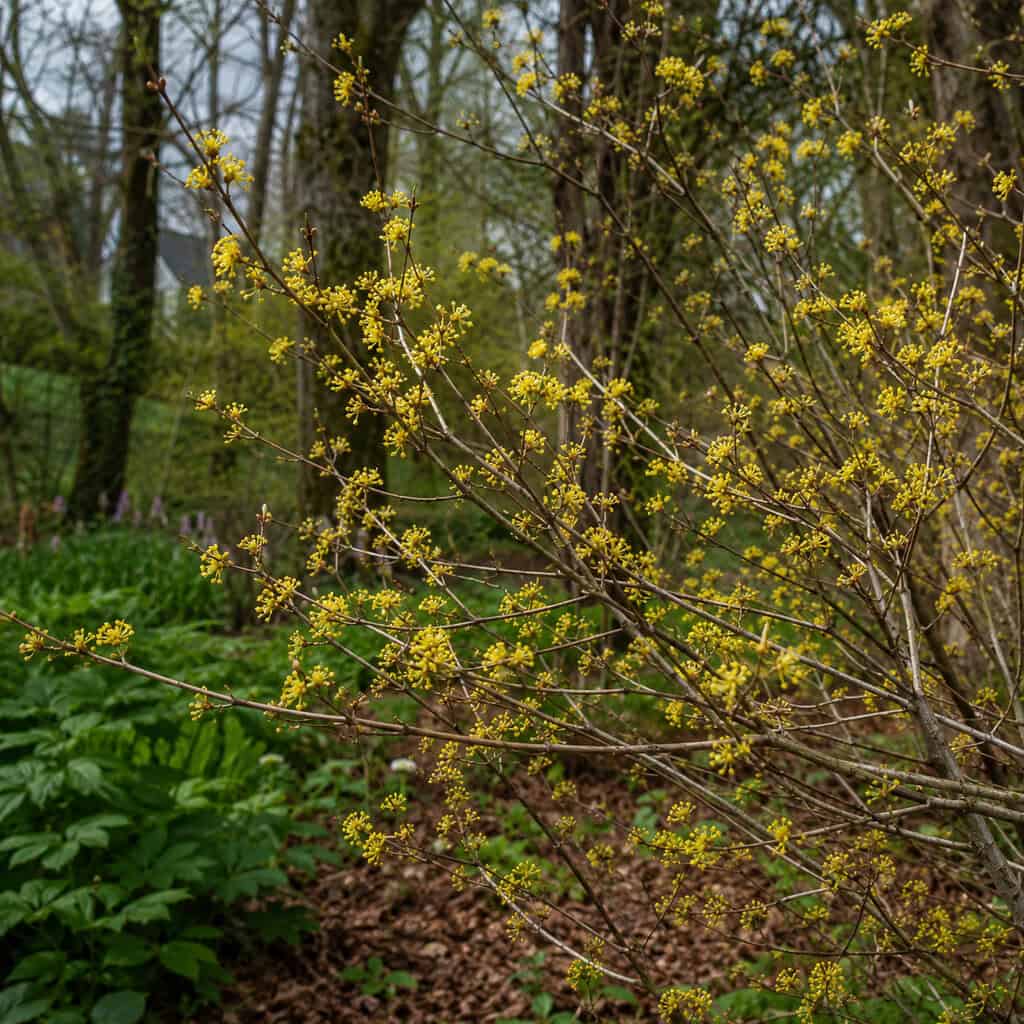
The whole point of this shrub is the caterpillar.
Spicebush is the essential host for the spicebush swallowtail — a striking butterfly whose young simply can’t survive without these leaves. No butterfly bush can offer that; none supports a single caterpillar.
Lewis Ginter Botanical Garden lists it among the native alternatives worth planting for exactly this reason.
Small yellow flowers open early in spring, and the fall foliage turns clear gold. It earns its space three seasons out of four.
28. Pawpaw (Asimina triloba)
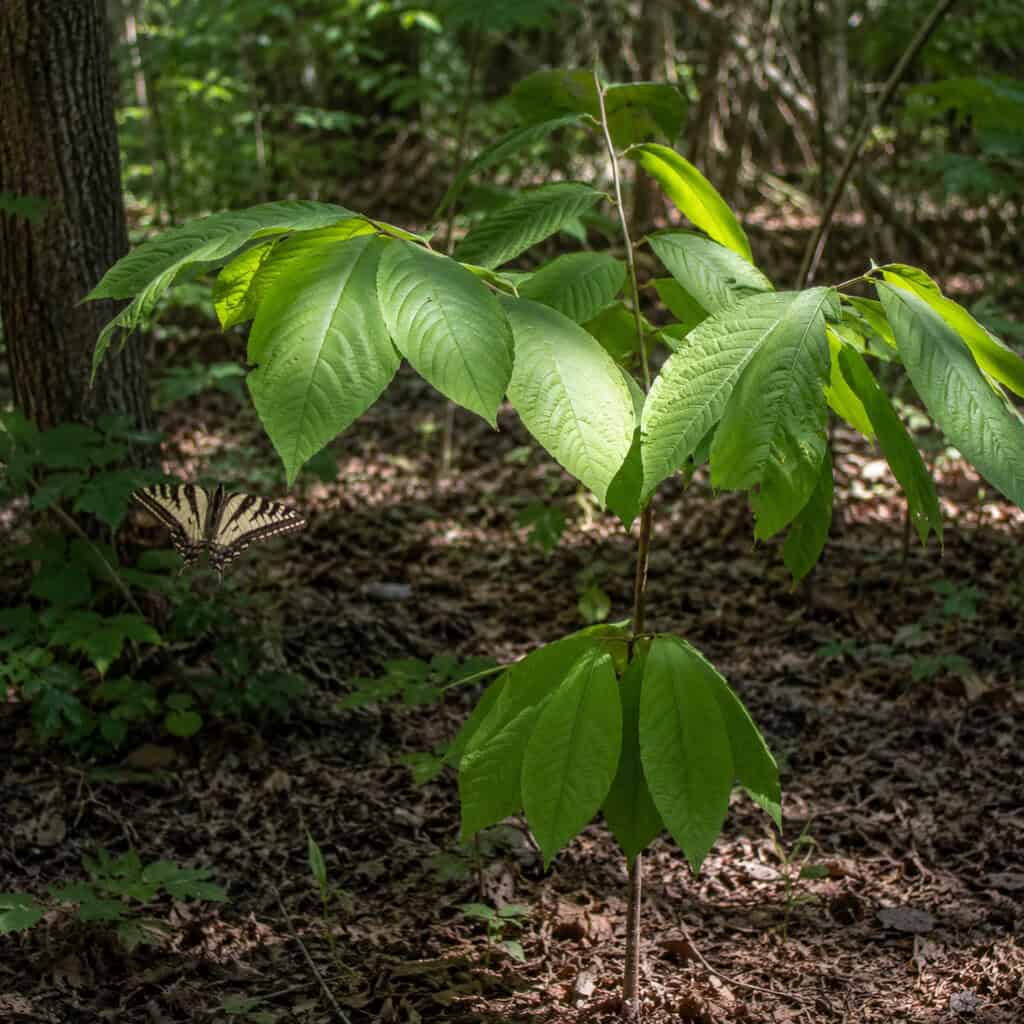
Plant a pawpaw and you can summon a butterfly you’d otherwise never see.
It’s the only host plant for the zebra swallowtail — bold black-and-white stripes, long swordtail wings. That butterfly goes exactly where the pawpaws grow, and nowhere else.
It’s a native understory tree, happy in part shade beneath bigger canopy.
The bonus is edible. Ripe pawpaw fruit tastes like mango-banana custard, a flavor you won’t find at any grocery store.
29. Passionflower (Passiflora)

An exotic-looking native vine with flowers that seem beamed in from a rainforest — fringed, intricate, purple and white.
It’s the larval host for gulf and variegated fritillaries. Grow it up a fence and you’ve built a butterfly nursery, especially across the South.
American Meadows pairs it with the fritillaries that depend on it.
It spreads by runner, so give it a spot where wandering is welcome.
30. Parsley, Dill & Fennel
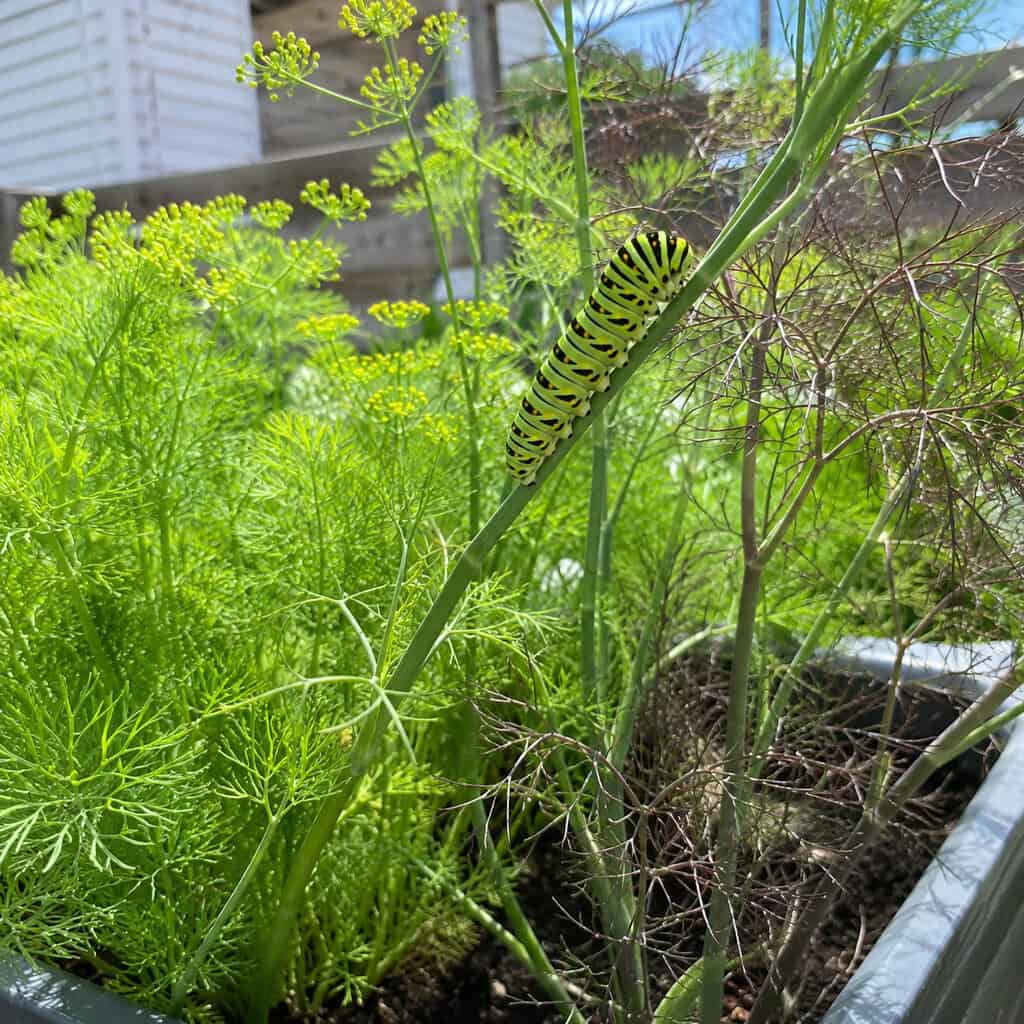
The easiest host-plant trick in gardening. These carrot-family herbs feed black swallowtail caterpillars.
Plant extra on purpose — some for your kitchen, some for the caterpillars to strip. The UMN Extension recommends exactly this for a working butterfly garden.
When you spot fat green-and-black striped caterpillars mowing down your dill, resist the urge to panic. That’s the whole plan.
Bronze fennel does double duty as an ornamental. Feathery, dark, and beautiful in a border.
31. Violets (Viola)

The weedy little patch you keep yanking out of the lawn? It might be a butterfly nursery.
Violets are the sole host for great spangled fritillaries. Those big orange butterflies lay near violet patches, and their caterpillars eat nothing else.
The plant you’ve been fighting is quietly doing conservation work.
Leave a shady corner of them alone. You’ll be surprised what shows up in June.
32. Butterfly Bush (Buddleja davidii) — With an Asterisk
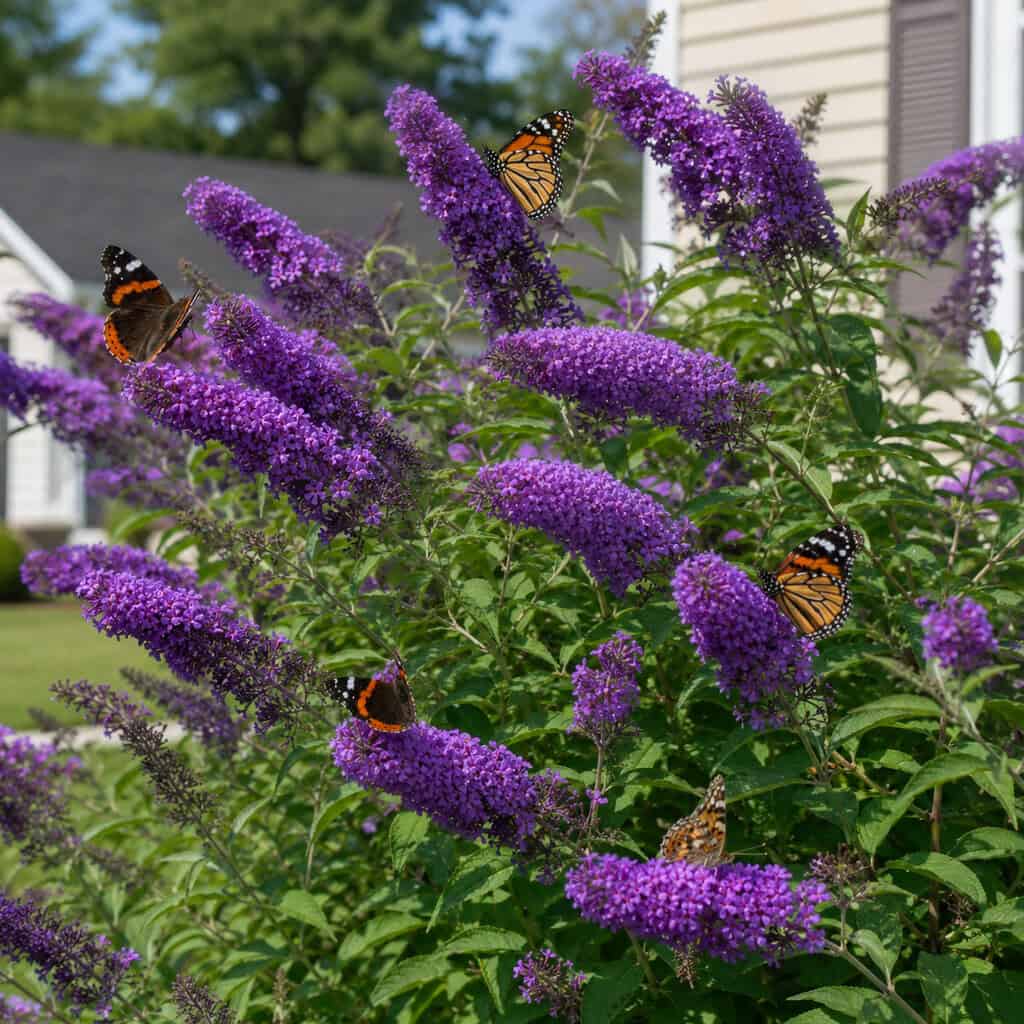
Here’s the twist the name never tells you.
Butterfly bush is a fantastic nectar plant. Adult butterflies pile onto those long purple flower cones all summer, and it’s genuinely covered in them. That’s why it earned the name and why garden centers can’t stock enough.
But not a single native caterpillar can eat it. Zero host value. It feeds adults sugar and offers their young nothing — sweet, empty calories, the soda pop of the butterfly garden.
Worse, it’s invasive across much of the country. The plant sets seed that blows into wild areas and crowds out the natives that butterflies actually need to reproduce. In some states it’s on formal invasive lists, and Penn State Extension lays out the case against it plainly.
The “sterile” cultivars sold as a fix are still questioned, since even low seed set adds up across thousands of yards. A truly seedless shrub is a hard promise to keep.
None of this means you hate butterflies for planting one. It means there are better swaps. Want the nectar cones? Plant blazing star. Want a nectar shrub? Buttonbush or sweet pepperbush. Want to feed caterpillars too? Spicebush and milkweed do what butterfly bush never will.
Keep the one you have if you must — but deadhead it religiously so it can’t seed, and start adding natives around it.
33. New Jersey Tea (Ceanothus americanus)
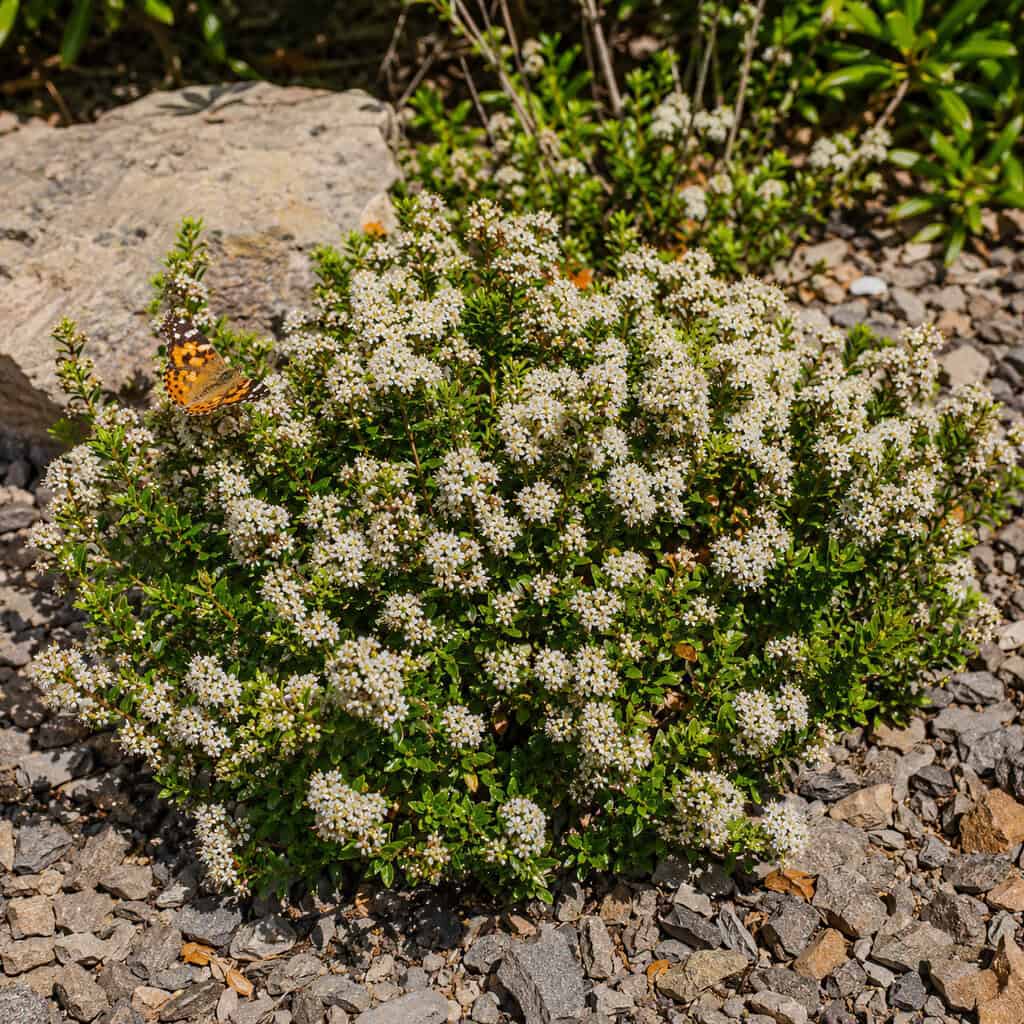
A tough, low native shrub that thrives where the soil is dry and stony. The kind of spot where you’d expect nothing to grow.
Frothy white flower clusters feed a broad crowd of butterflies, and it hosts the mottled duskywing caterpillar besides.
It’s compact and well-behaved, easy to slot into a bed.
If a shrub spot opens up on your driest ground, this is the native to reach for.
The Real Secret
A butterfly garden isn’t a single showstopper plant. It’s a relay.
Something has to bloom in May, something in July, something in October. Nectar for the adults, leaves for the caterpillars, and a run of color that never fully goes dark.
Get the timing right and the yard fills on its own. You won’t have to lure a thing.
Plant the milkweed. Skip the butterfly bush. Then sit on the porch in September and watch the monarchs decide your yard is worth the stop.