


Most flowers give you three good weeks and then quit.
You plant a tray of petunias in May, they look gorgeous through June, and by August they’re leggy, crispy, and done. Then you’re back at the garden center buying mums to cover the gap.
That cycle gets expensive. It also gets exhausting.
There’s a better way to fill a yard, and it’s built around plants that refuse to take the season off. Some bloom literally year-round in mild climates. Others rebloom in waves spring through frost, then hand the show off to a winter performer next to them.
The trick is picking the right ones and pairing them so something is always open. Here are 27 plants that keep the color coming when the annuals have long since given up.
A few of these are perennials you plant once. A few are annuals that earn their spot by flowering for seven months straight. The rest are shrubs and fall-to-winter bloomers that cover the dead months nobody plans for.
No single plant does it all in a cold climate, so the real move is layering. Pair a summer workhorse with a winter bloomer, tuck a cold-season annual between them, and the bed hands the show from one plant to the next instead of going brown in October.
1. Geranium (Pelargonium)

Geraniums don’t know when to stop.
In USDA zones 10 and 11 they flower all year outdoors. Everywhere else, they bloom from spring straight through the first hard frost, then keep going indoors on a bright windowsill.
Deadhead the spent clusters and they’ll push new ones within days. Skip the deadheading and they sulk.
Give them six hours of sun and let the soil dry between waterings. They actually flower harder when they’re a little stressed.
Zonal types with the dark leaf band are the toughest. Ivy geraniums trail, so use them in window boxes and let the zonals hold the beds. One feeding a month is plenty, and they forgive a missed watering far better than a soggy week.
2. Lantana
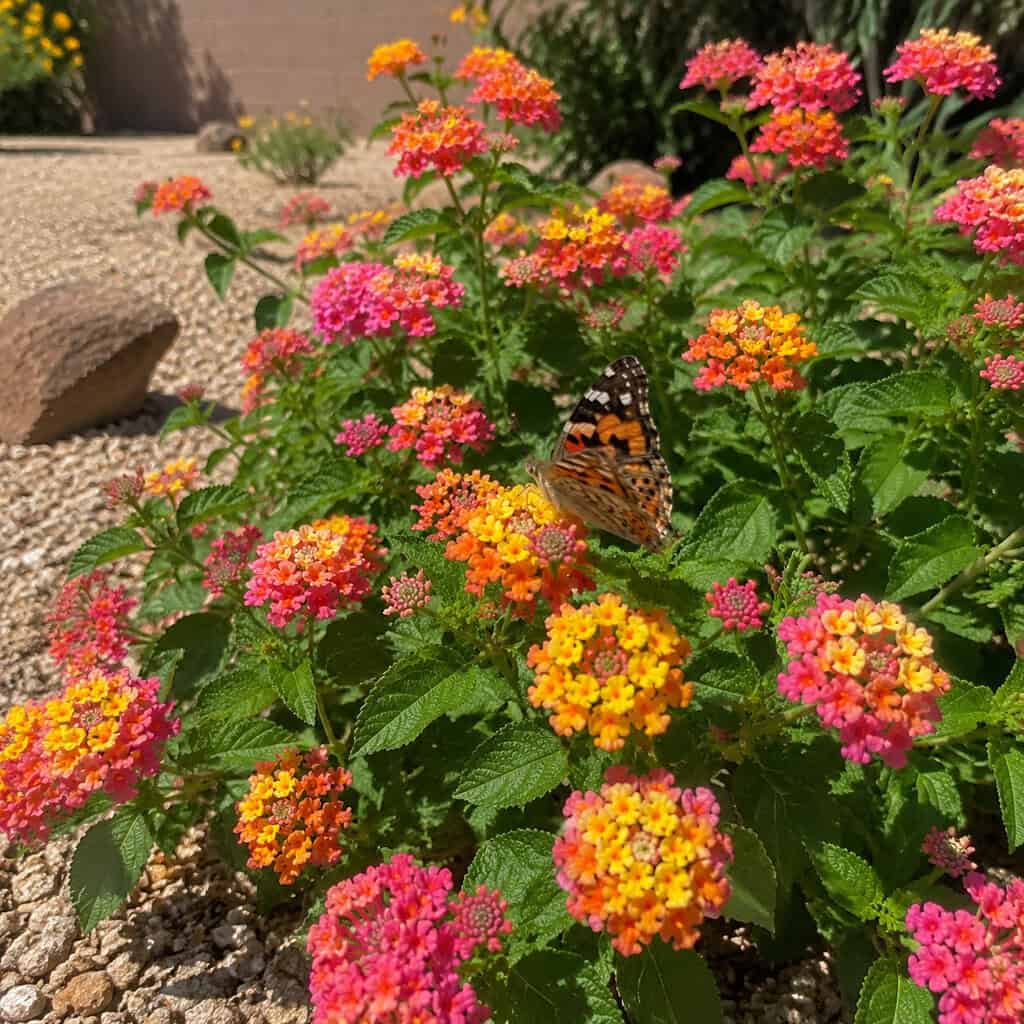
Few plants take heat like lantana.
It blooms continuously from spring until frost in most of the country, and truly year-round in zones 9 through 11. The flower clusters shift color as they age, so a single plant shows orange, pink, and yellow at once.
Butterflies swarm it. Deer leave it alone.
It wants full sun and almost no babysitting. Overwater it and you’ll get leaves instead of flowers.
Trailing varieties like ‘New Gold’ make a sheet of color along a hot driveway edge where nothing else survives. In the North, treat it as an annual and buy new plants each spring. In zone 8 it often dies back and returns from the roots.
3. Begonia (Wax and Tuberous)

Begonias are the answer for shade.
Wax begonias bloom nonstop from spring through frost, and they barely flinch in the heat that flattens everything else. In zones 10 and 11 they run all year.
The glossy leaves come in green or deep bronze, so the plant looks good even between flushes.
Morning sun, afternoon shade. They rot in soggy soil, so let them drain.
Tuberous begonias give you the big, showy flowers, but wax types win on stamina. The ‘Dragon Wing’ and ‘Whopper’ hybrids split the difference with larger blooms on plants that still run until frost. Pull the tubers before a hard freeze if you want to save them.
4. Knock Out Rose
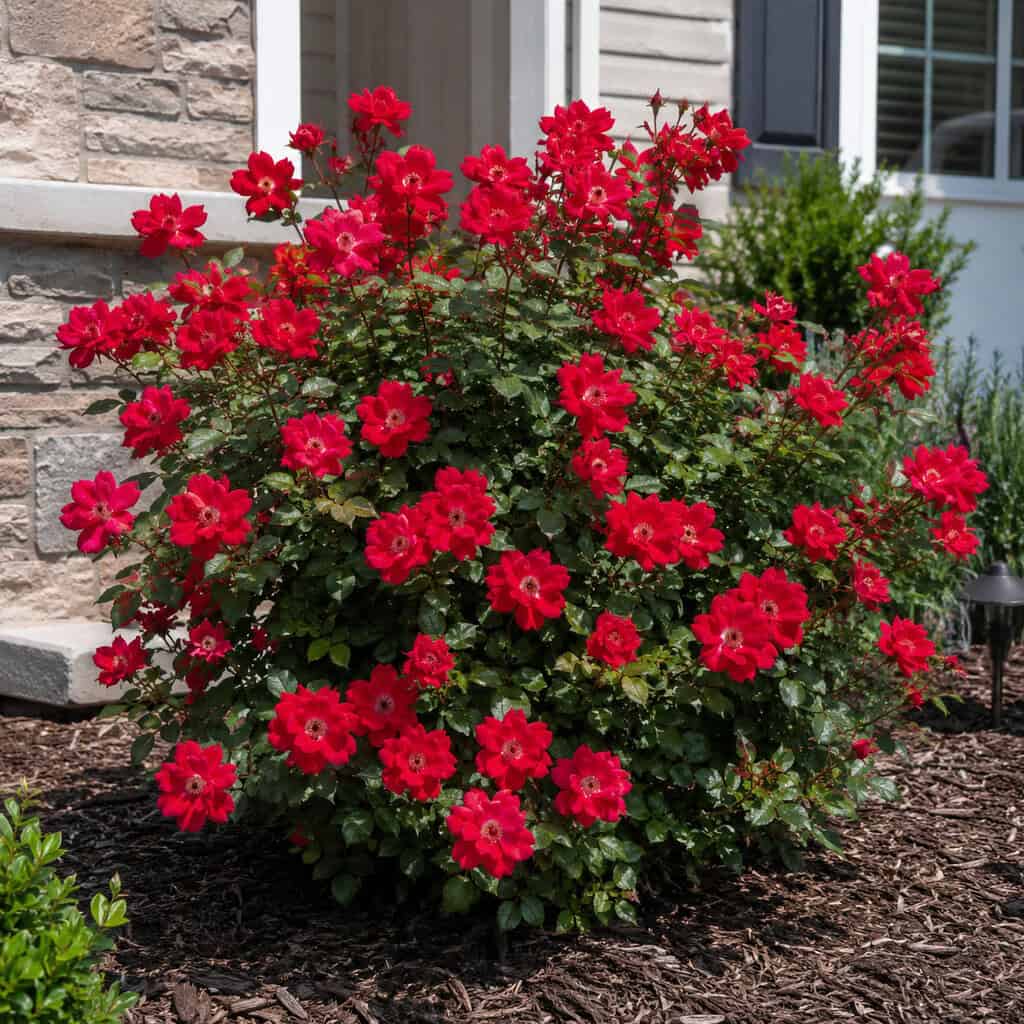
Roses with a reputation for being needy. This one isn’t.
The Knock Out series reblooms every five to six weeks from spring until frost, and it does it without spraying, without deadheading, without the fuss old garden roses demand. It was released in 2000 and has sold more than 100 million plants since.
Black spot barely touches it. That’s the whole reason it exists.
Give it full sun and a hard cut back to about a foot in late winter. It’ll come back bushier every spring.
The ‘Double Knock Out’ has fuller flowers, and ‘Petite’ stays under three feet for small beds. Space them four feet apart so air moves through, and skip the overhead sprinkler. Wet leaves at night are the only thing that ever gives them trouble.
5. Petunia (Wave and Supertunia Types)

Old petunias quit by July. The spreading hybrids don’t.
Wave and Supertunia varieties bloom from spring until frost without needing to be pinched or deadheaded. They’ll spill three feet over a wall or fill a basket solid.
Feed them. Hungry petunias stop flowering fast.
A weekly dose of liquid fertilizer keeps the color coming all summer. In zone 10 and warmer, they shrug off winter entirely.
Plant them a foot apart and they’ll close the gap in a month. If the centers go bare by late July, cut the whole plant back by half and feed it. It looks rough for ten days and then comes back thicker than before.
6. Marigold
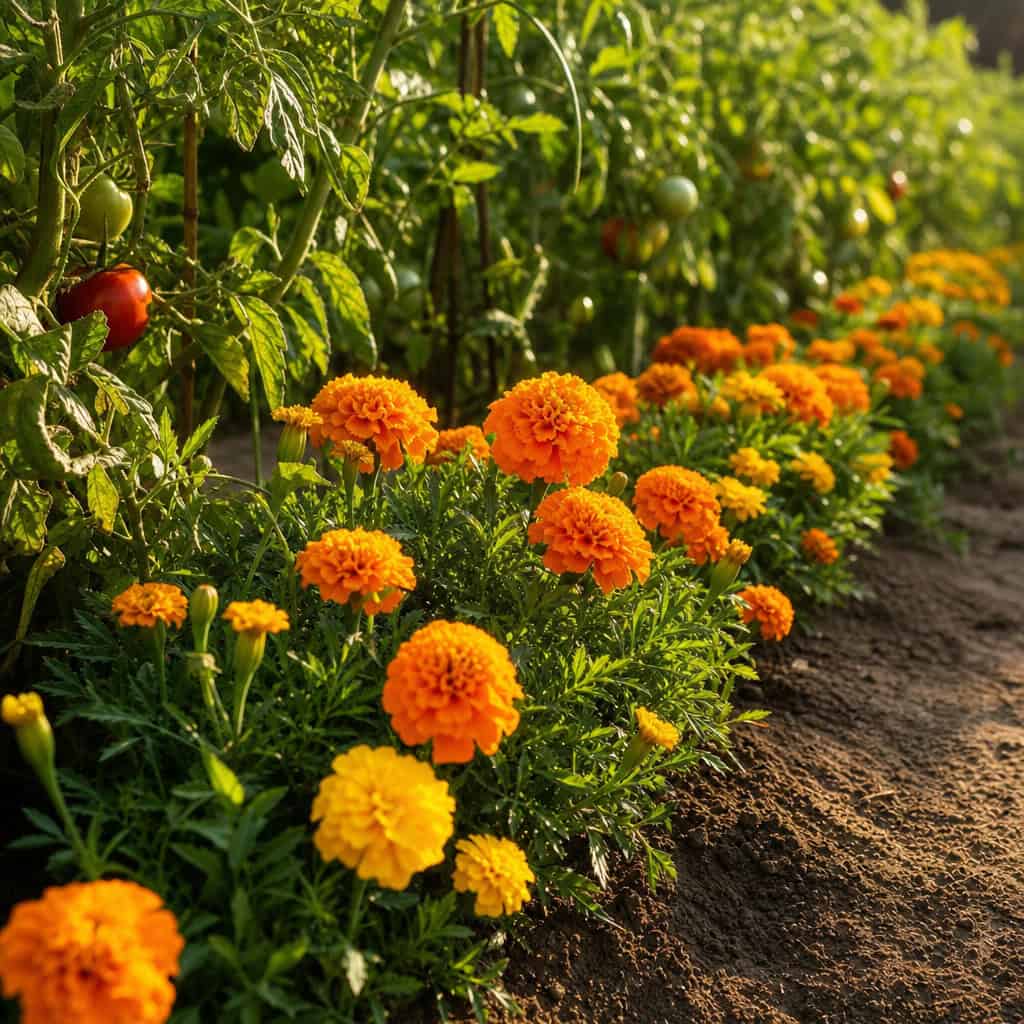
Plant them once and they keep going.
Marigolds bloom from late spring through the first frost, and the more you cut them, the more they make. Snip a bouquet and you’ve just guaranteed another round.
The roots release a compound that suppresses root-knot nematodes in the soil. Vegetable gardeners plant them as a living pesticide.
Full sun, average soil, and they’ll outlast almost everything around them.
French marigolds stay compact at a foot tall. African types get knee-high with blooms the size of a tennis ball, and they hold up in a vase for a week. Plant them along the vegetable rows, where the smell keeps rabbits guessing.
7. Coreopsis (Tickseed)

A native that blooms like it’s getting paid.
Coreopsis throws daisy-like flowers from early summer until frost, and many varieties are hardy down to zone 4, so the plant returns bigger every year. Shear it back by a third in midsummer and it explodes with a second wave.
Drought doesn’t bother it. Neither does poor soil.
The yellow and gold types are tough as nails. Bees can’t get enough of them.
‘Moonbeam’ is the classic pale yellow that goes with everything. ‘Zagreb’ is a brighter gold and stands up better after rain. Divide the clumps every three years in spring or the centers die out and the bloom thins.
8. Salvia
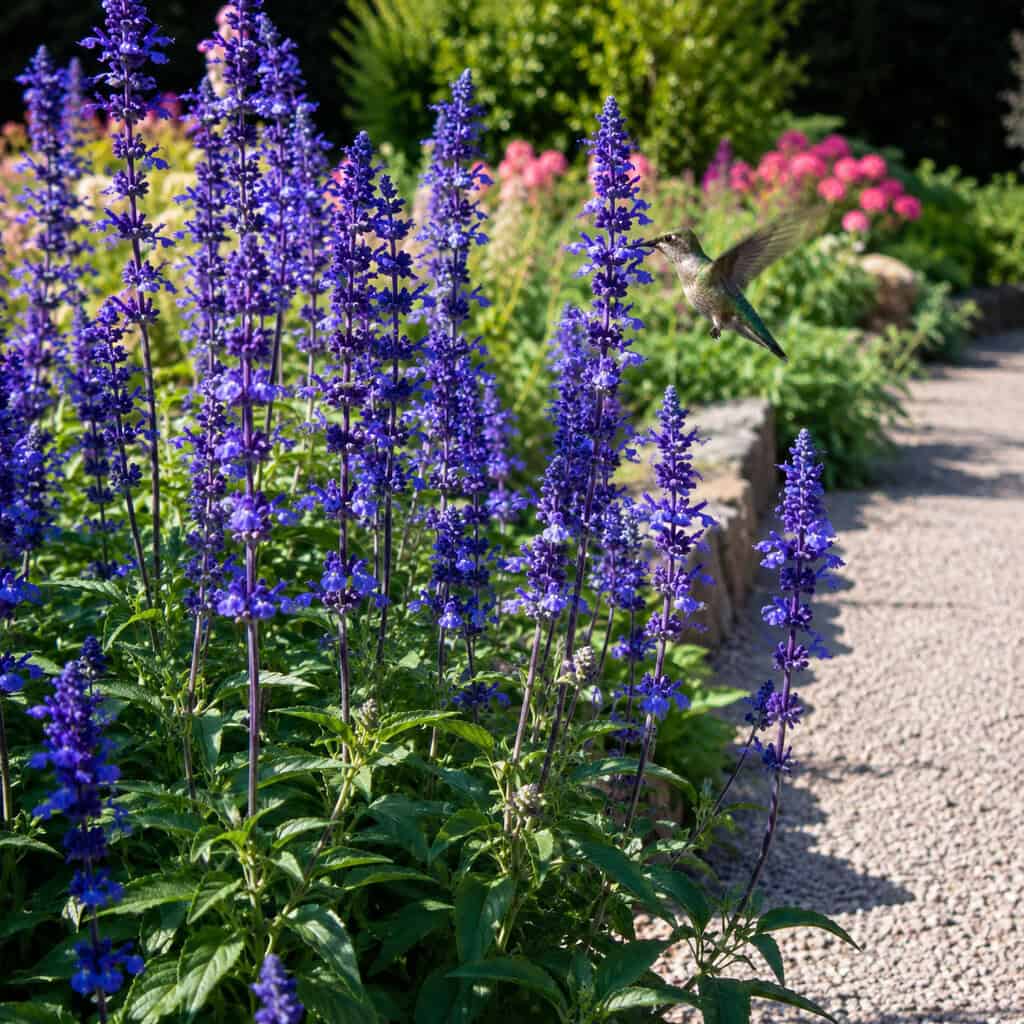
Cut it back and it reblooms. Every time.
Perennial salvias flower in spring, and a shearing right after the first flush triggers a second and often third round into fall. Tender types like ‘Black and Blue’ bloom right up until frost.
Hummingbirds key in on the tubular blooms. Deer and rabbits skip them entirely.
It wants full sun and sharp drainage. Wet feet kill it faster than any cold.
‘May Night’ and ‘Caradonna’ are the hardy perennial workhorses, surviving to zone 4. In warm zones, ‘Mystic Spires’ blooms nearly nonstop. Plant it near the patio, because the hummingbird traffic in late summer is better than television.
9. Hibiscus (Tropical)

Each flower lasts a day. The plant never runs out.
Tropical hibiscus blooms continuously in zones 9 through 11, pumping out dinner-plate flowers in red, yellow, and coral all year long. Elsewhere it’s a container plant you drag indoors before frost.
It’s heavy-feeding and thirsty. Skimp on either and the buds drop before they open.
Give it the brightest, warmest spot you’ve got.
Choose a pot a size larger than the nursery container and use a potting mix that drains fast. Feed every two weeks through summer with a bloom formula. When you bring it in for winter, expect it to drop leaves for a week and then settle.
10. Angelonia (Summer Snapdragon)
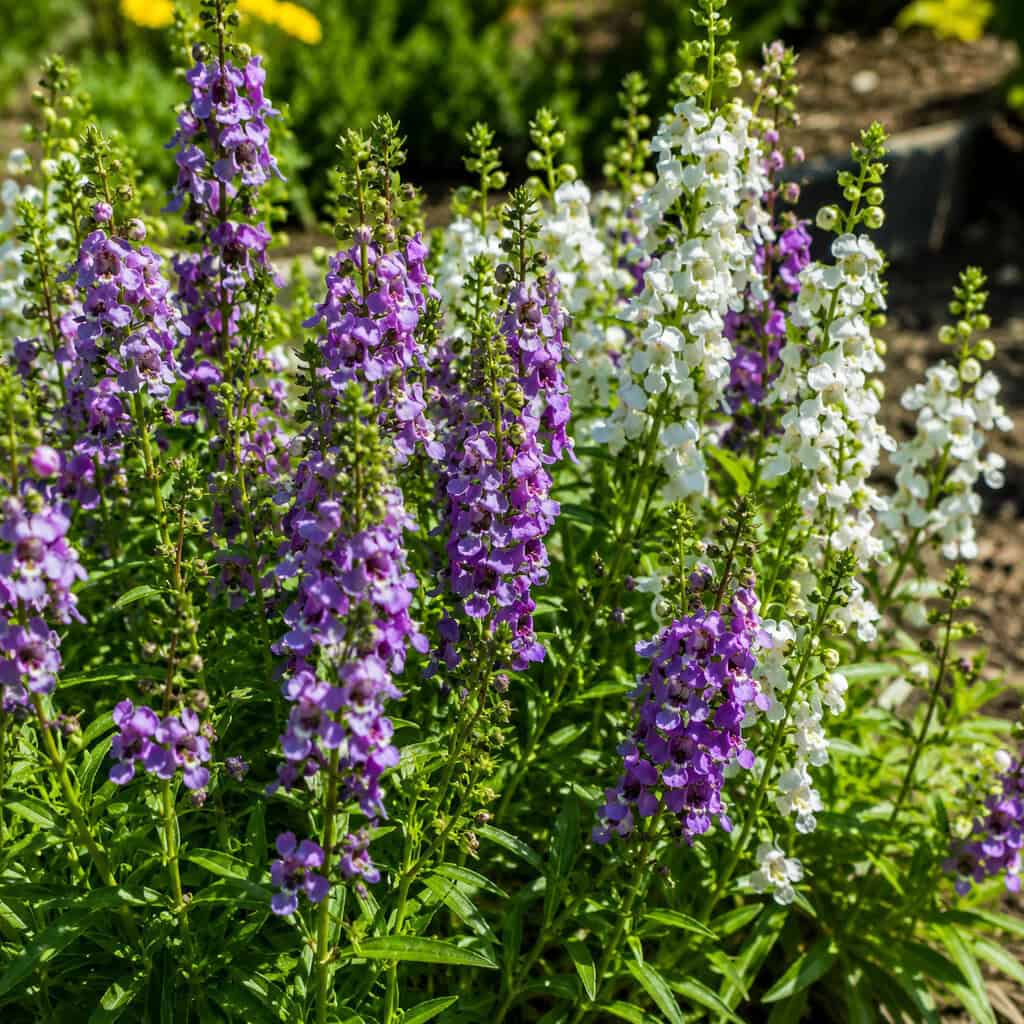
Heat is when angelonia gets going.
It blooms from spring through frost in spikes of purple, pink, and white, and it never needs deadheading to keep producing. In frost-free zones it runs year-round.
Humidity that wilts other flowers doesn’t faze it. That’s why it thrives across the South.
Full sun, decent drainage, and it’ll stand tall through the worst of August.
The ‘Serena’ and ‘Angelface’ series are the easiest to find and the most reliable. Space them a foot apart in a bed and they’ll form a solid block of color by July. Cut a few stems for the kitchen table, since they last well in water.
11. Coneflower (Echinacea)

Bloom in summer, structure in winter.
Coneflowers open in June and keep going into fall, and the seed heads stay standing through snow to feed goldfinches and give the bed shape when everything else is gone. Hardy to zone 3.
Leave the spent stalks up. Cut them in early spring instead of fall.
Full sun and you can forget about them. Drought, clay, heat—it handles all of it.
‘Magnus’ is the classic purple that butterflies prefer. The newer orange and red hybrids are showier but shorter-lived, so mix a few into a bed of the species type. Divide only when you must, because the taproot resents being moved.
12. Verbena
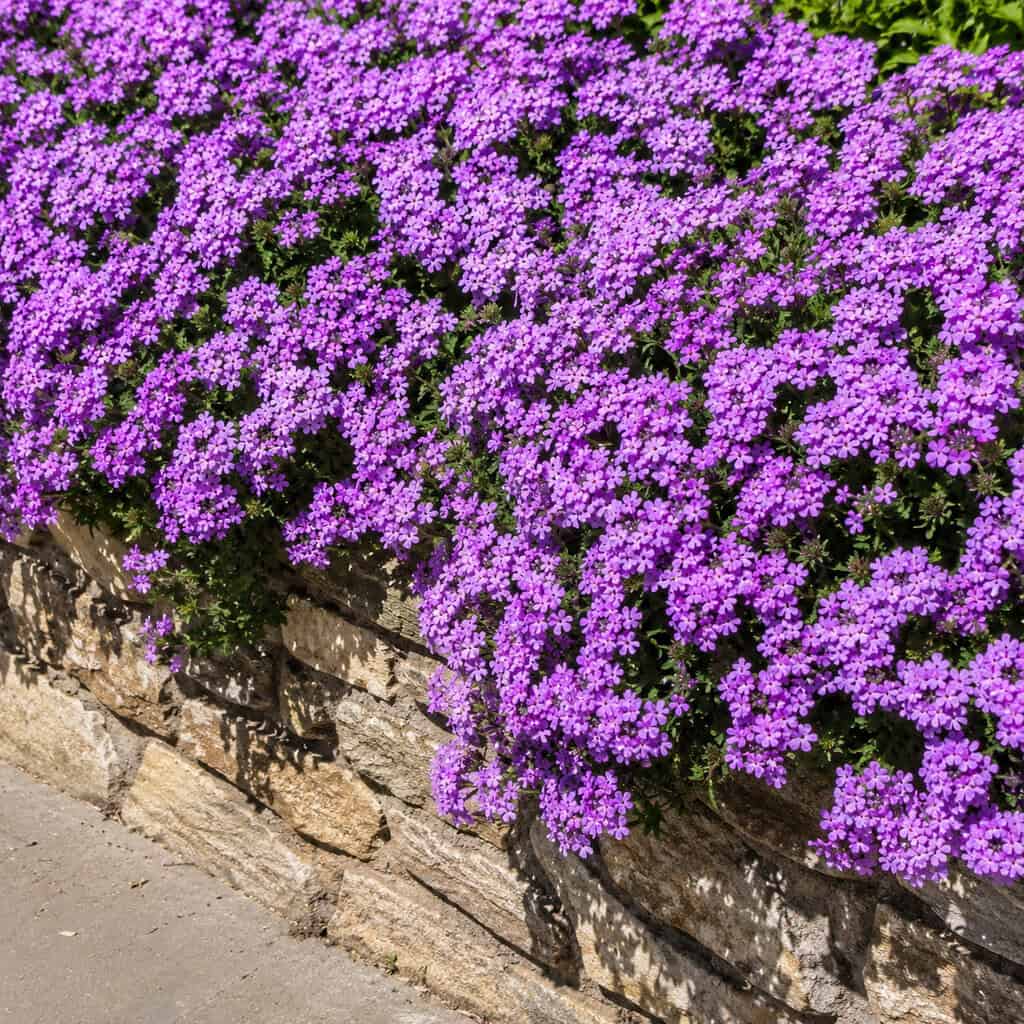
A carpet of color that won’t quit.
Trailing verbena blooms from spring until frost and spreads two to three feet wide, smothering itself in clusters of purple, red, or white. In zones 9 and up it stays evergreen and flowers nearly year-round.
Shear it back when it gets gappy in the middle. It’ll refill within two weeks.
Give it sun and good airflow. Crowded verbena gets powdery mildew.
Perennial verbena like ‘Homestead Purple’ comes back year after year in zone 7 and up. Annual hybrids from the ‘Superbena’ series are bred for mildew resistance and bloom harder. Both spill nicely over a retaining wall.
13. Camellia
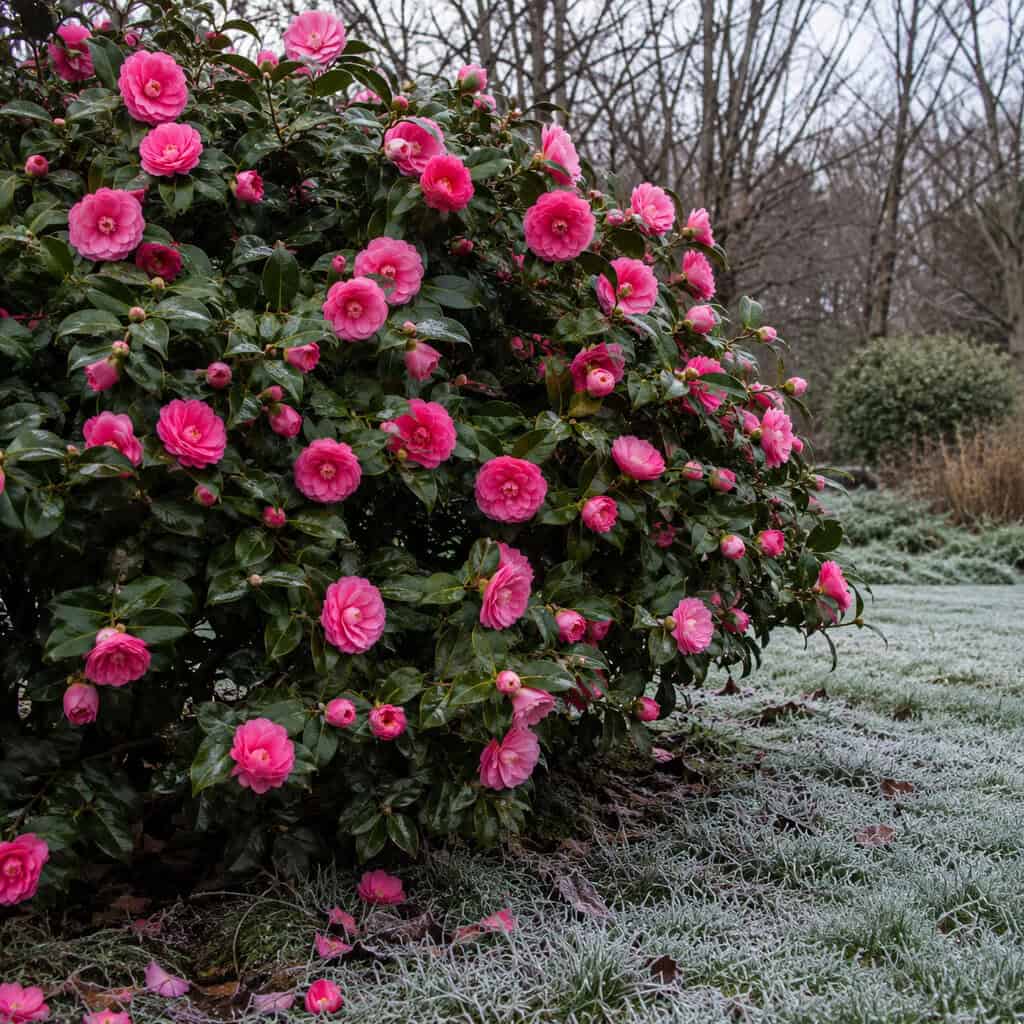
This one flowers when nothing else dares.
Camellias bloom in fall and winter—sasanqua types start in October, japonica types carry the show through March. While the rest of the yard sleeps, they’re covered in roses-of-winter.
The glossy evergreen leaves look sharp the other nine months too.
Plant them in part shade with acidic soil. Hardy to zone 7, and worth the wait every cold January.
‘Yuletide’ sasanqua opens red flowers right around the holidays. ‘Kramer’s Supreme’ japonica carries deep red doubles through late winter. Mulch the roots with pine straw and give it a spot out of the morning sun, which browns frozen buds.
14. Pansy and Viola

Cold doesn’t stop them. It’s their whole thing.
Pansies bloom through fall, hang on under snow, and surge again the second it warms. In mild winters across zones 6 and up, they flower straight through the season when nothing else will.
Plant them in October for color when everyone else’s beds are brown.
Deadhead and feed lightly. They’ll reward you right into May.
In zones 7 and up, fall-planted pansies survive winter and bloom twice as long as spring-planted ones. Violas are smaller but tougher and reseed themselves into paths and cracks. The ‘Cool Wave’ series spreads like a petunia.
15. Bougainvillea

Drape a wall in it and walk away.
In zones 9 through 11, bougainvillea blooms nearly year-round in blinding magenta, orange, and purple. The color comes from papery bracts, not the tiny true flowers, so it holds for weeks.
It flowers best when it’s dry and a little neglected. Baby it and you get vines with no color.
Full blazing sun. Nothing less.
In a container, use a pot that looks a size too small. A root-bound bougainvillea flowers far more than a comfortable one. Prune right after a flush fades, since new growth is what carries the next round of color.
16. Dianthus (Pinks)
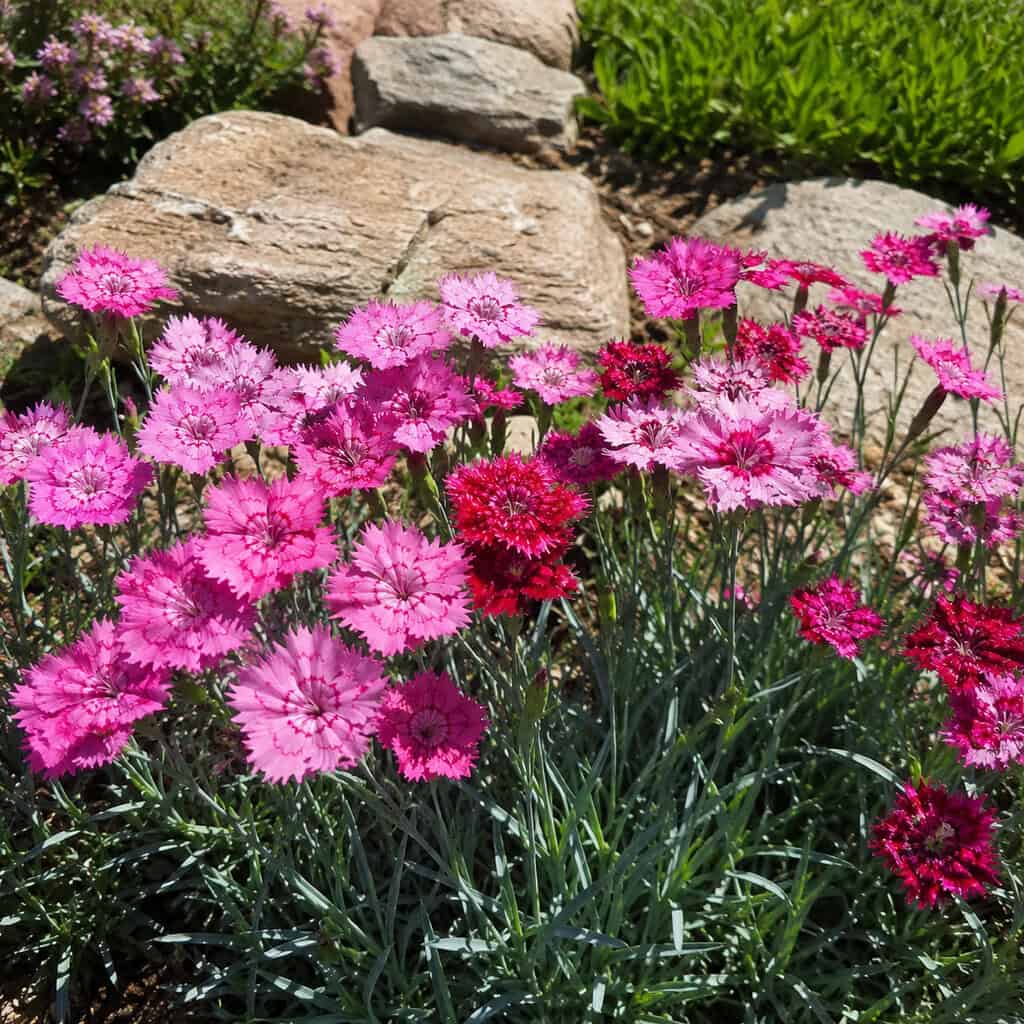
Smells like cloves. Blooms forever.
Many dianthus varieties flower spring through fall, and in mild climates they keep going through winter, the blue-gray foliage staying neat year-round. Deadheading keeps the flushes coming.
The fringed petals come in pink, red, white, and bicolor.
Full sun and gritty, well-drained soil. They hate sitting wet more than they hate cold.
‘Firewitch’ is the toughest of the cheddar pinks, with magenta flowers over blue foliage. The ‘Everlast’ series was bred to rebloom all season. Shear the whole clump back by a third after the first flush and it resets for summer.
17. Gaillardia (Blanket Flower)
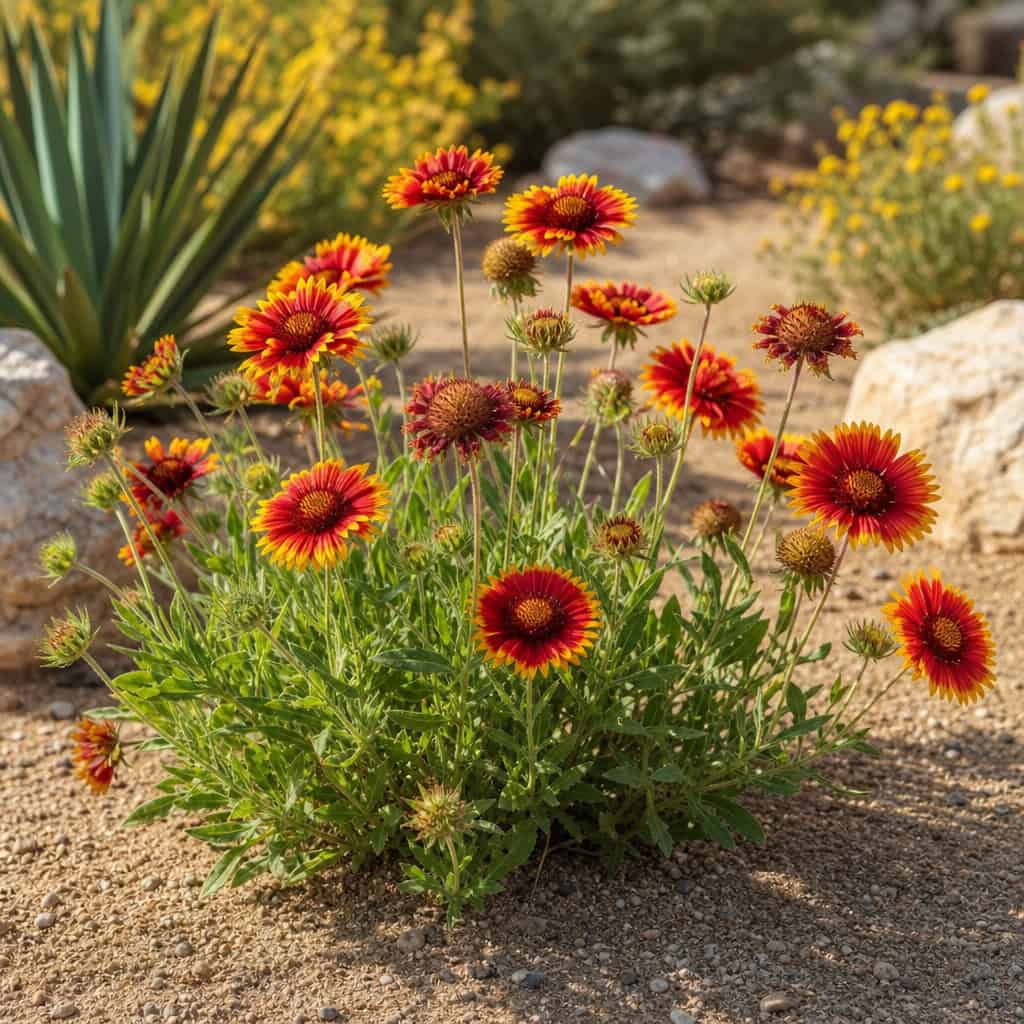
Red and gold like a campfire, all summer long.
Blanket flower blooms from early summer to frost without a pause, and it actually prefers poor, sandy soil that would starve other perennials. Hardy to zone 3 and unbothered by heat, salt, or drought.
Deadhead it and it just keeps firing.
Plant it once in full sun and it’ll reseed itself around the bed for years.
‘Arizona Sun’ stays compact and blooms its first year from seed. ‘Mesa’ is more uniform if you want a tidy edge. Avoid rich soil and heavy mulch, which rot the crown over winter. It is one of the few perennials that likes neglect.
18. Calibrachoa (Million Bells)

Like a tiny petunia that never takes a break.
Calibrachoa blooms spring through frost in hundreds of small trumpet flowers, and it’s self-cleaning—no deadheading required. In zone 9 and warmer it can hold on through winter.
Feed it heavily. It burns through nutrients fast and pales out when starved.
Hanging baskets, containers, the front of a bed. It spills and blooms wherever you put it.
It is a heavy drinker in a hanging basket. On a hot day it may need water twice, and a dried-out basket drops its buds. Mix it with a trailing verbena and a spike of angelonia and you have a container that goes from May to October.
19. Alyssum
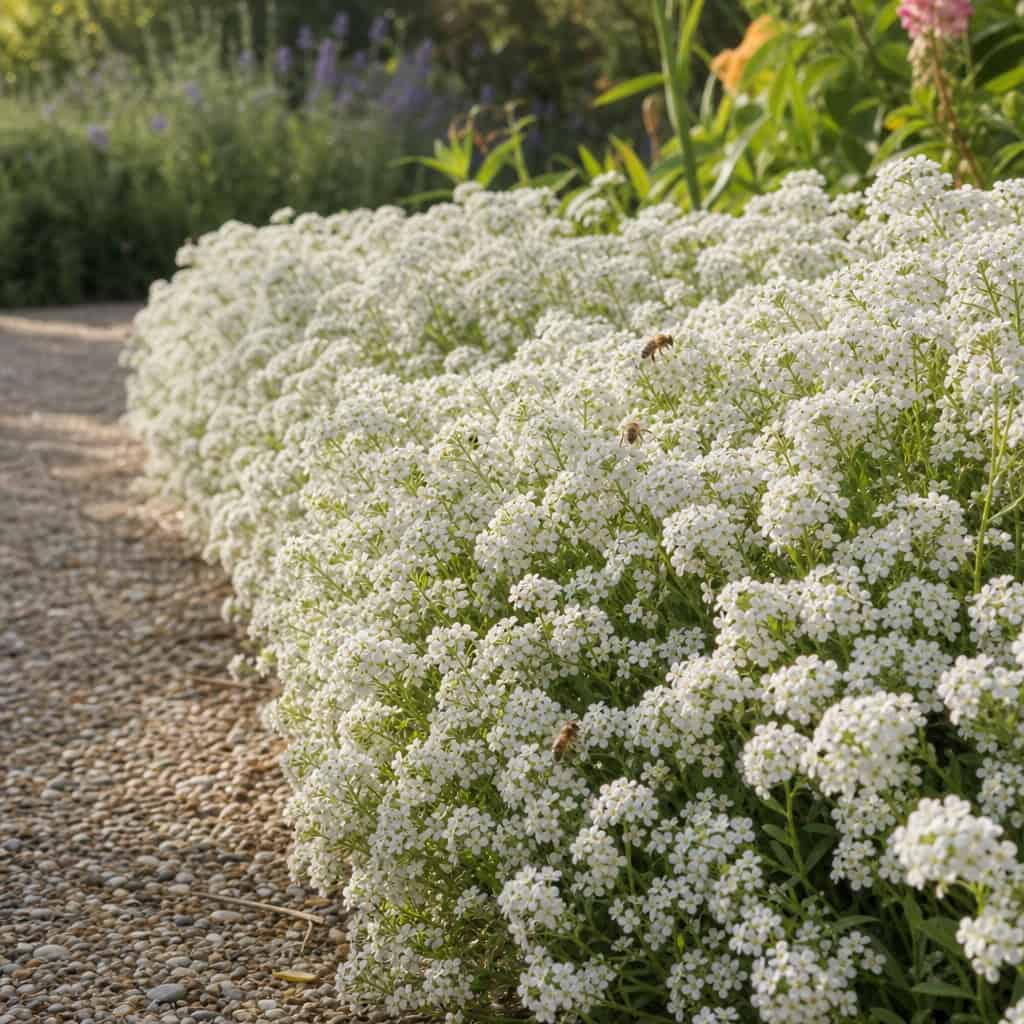
A low cloud of white that smells like honey.
Sweet alyssum blooms from spring until frost and reseeds itself so freely that it returns year after year. In mild-winter zones it flowers straight through the cold months.
Shear it back when it fades midsummer. A fresh flush follows in days.
It tucks into cracks, edges, and gravel where nothing else grows. Bees find it from across the yard.
‘Snow Princess’ is sterile, so it never reseeds but blooms far harder and longer than old-fashioned types. Use it as a spiller in containers or as an edging between stepping stones. It tolerates light foot traffic without complaint.
20. Catmint (Nepeta)
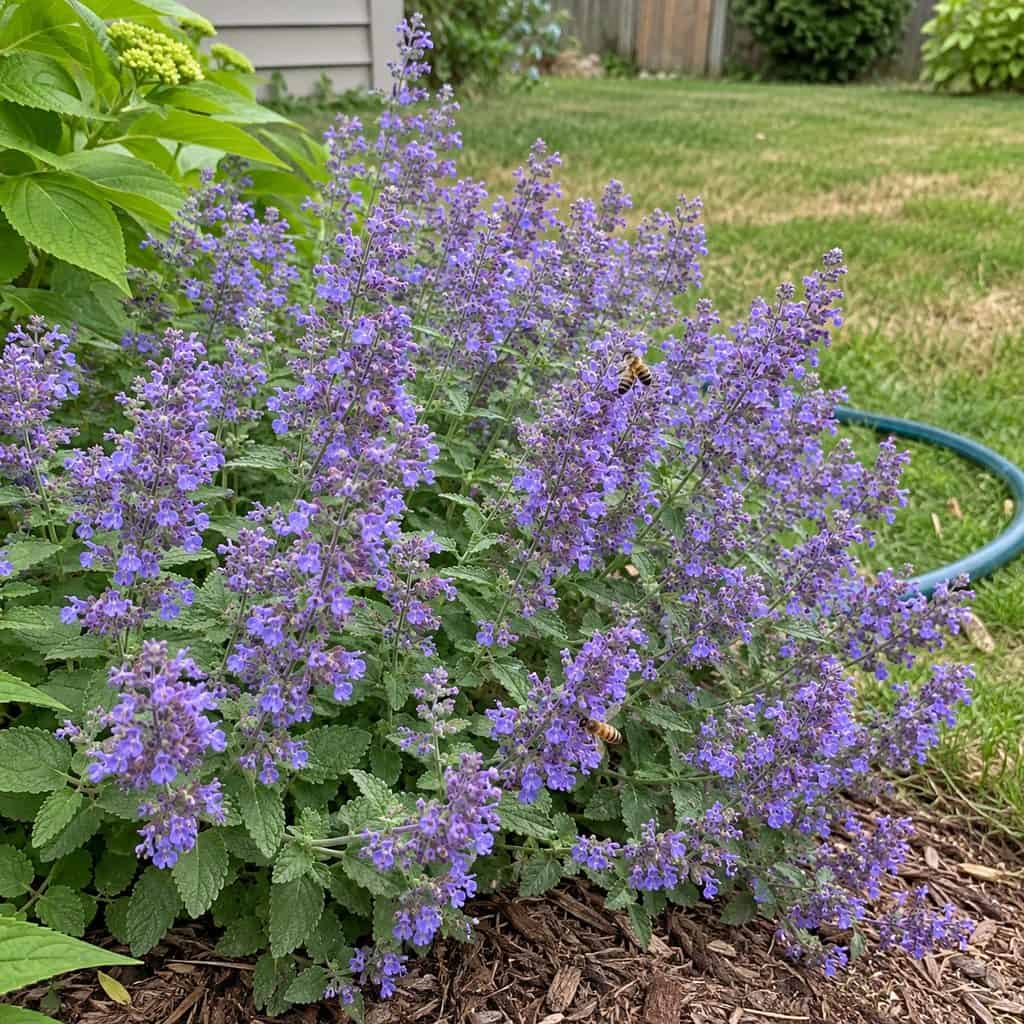
Lavender looks without the lavender fuss.
Catmint sends up clouds of soft blue flower spikes starting in late spring, and one hard shearing after the first flush brings a second wave that runs into fall. ‘Walker’s Low’ and ‘Cat’s Pajamas’ are the reliable ones, hardy to zone 3 and unbothered by drought, clay, or neglect.
Bees and small butterflies crowd it from morning to dusk. Deer and rabbits walk right past.
Plant it along a hot, sunny path where it can sprawl. It softens hard edges, hides the bare legs of roses, and asks for nothing but a trim.
21. Gaura (Wandflower)
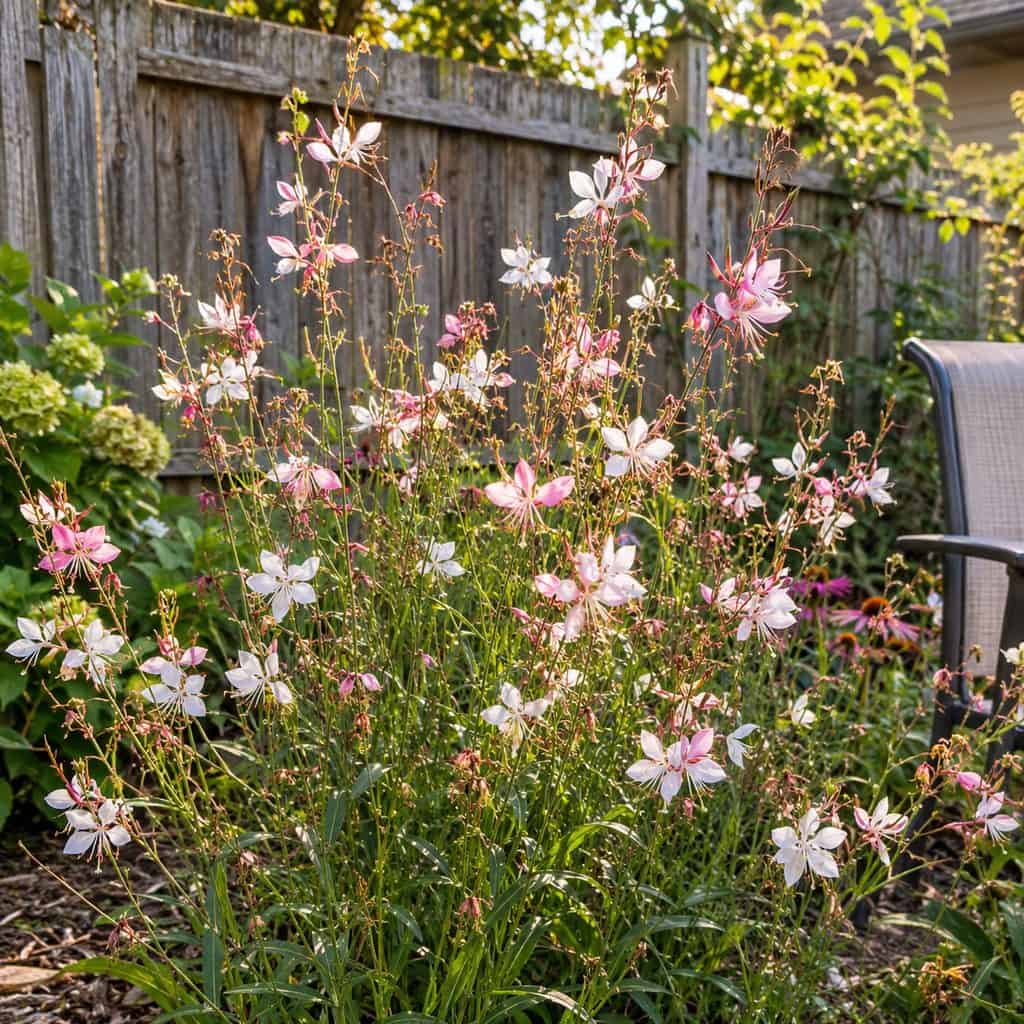
Looks like a cloud of butterflies hovering over the bed.
Gaura throws airy wands of small white or pink flowers from late spring until frost, and it never needs deadheading, because each stem keeps opening new buds at the tip. Hardy to zone 5, it comes back bigger each year from a deep taproot.
Heat and drought barely register. Rich, wet soil is the only thing that shortens its life.
Tuck it between stiffer plants like coneflower and salvia. The movement it adds in a breeze makes the whole border look alive.
22. Zinnia
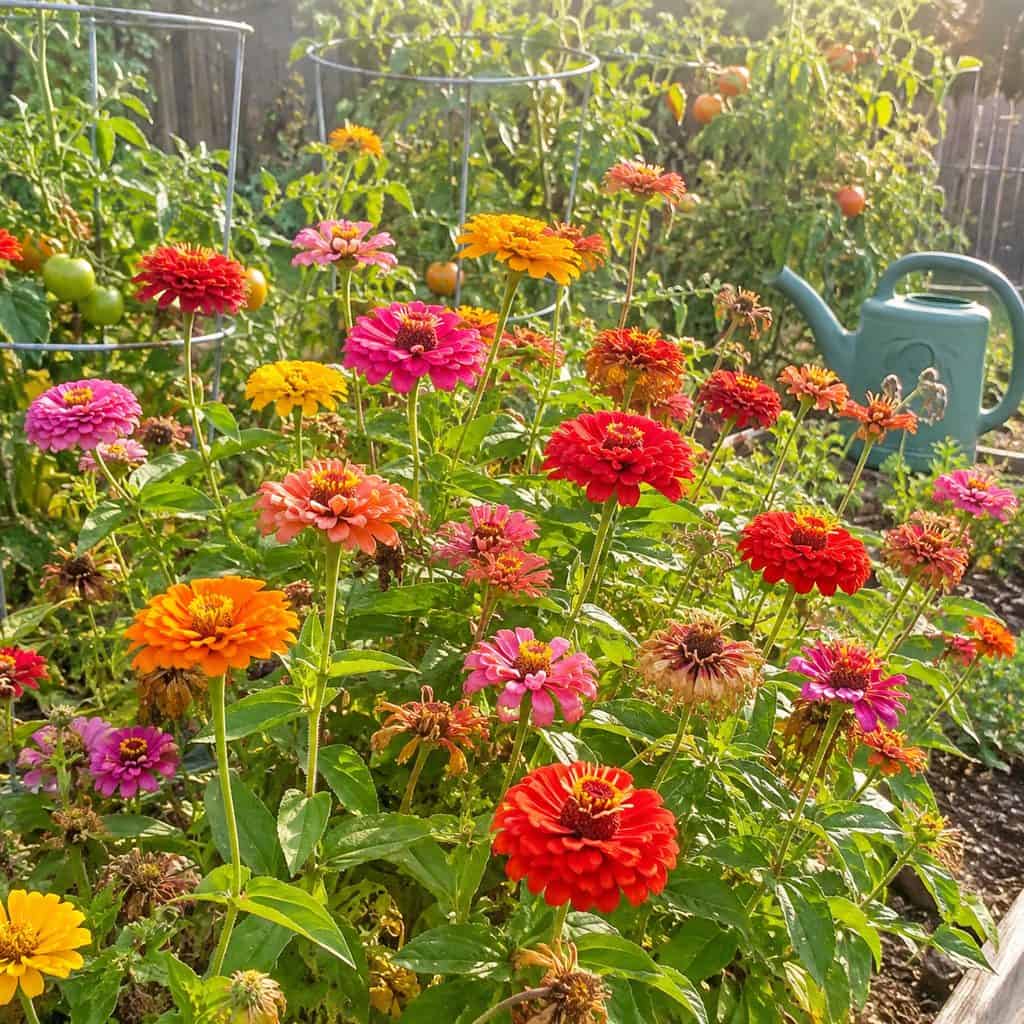
The cheapest nonstop color you can buy.
A two-dollar packet of zinnia seed sown directly in warm soil blooms in six weeks and keeps going until frost. The ‘Profusion’ and ‘Zahara’ series are compact and mildew-resistant. Tall ‘Benary’s Giant’ types give you cut flowers by the armload.
Cutting is the secret. Every stem you take forces two more.
Sow a second round in July and the fresh plants carry the bed through the tired days of September. Full sun and average soil, nothing more.
23. Glossy Abelia
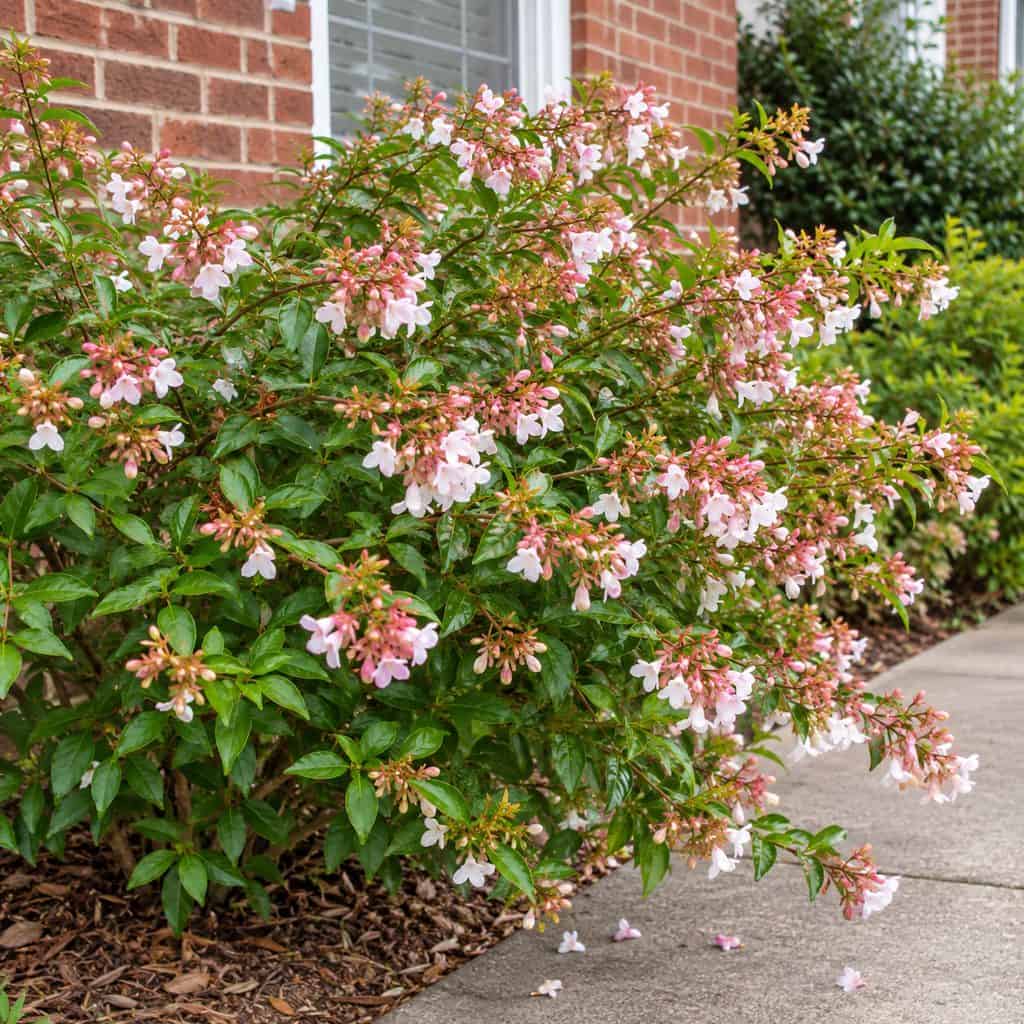
A shrub that flowers for five months and still looks good in January.
Abelia opens small white and pink bells from late spring until the first hard frost, and the papery sepals hang on in rusty rose after the petals drop. In zone 7 and warmer it stays evergreen, and compact types like ‘Kaleidoscope’ and ‘Rose Creek’ stay under four feet.
Pollinators work it right up until the weather turns. It handles clay, heat, and part shade.
Use it as a low foundation hedge or an anchor at the corner of a bed. Prune lightly in late winter and otherwise leave it alone.
24. Ice Plant (Delosperma)
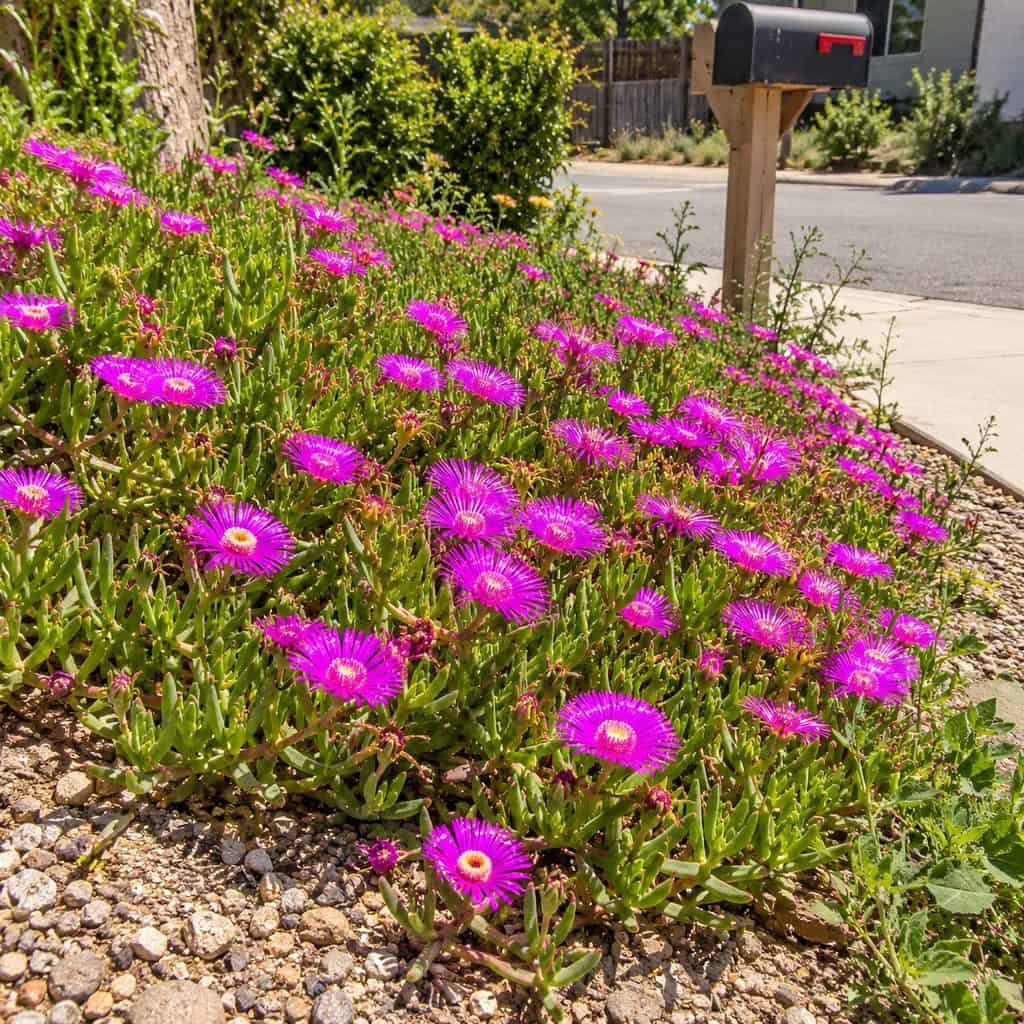
Neon color on a plant that lives on sun and gravel.
Hardy ice plant spreads into a low mat of succulent leaves and covers itself in glowing magenta, orange, or yellow daisies from late spring until frost. The ‘Fire Spinner’ and ‘Jewel of Desert’ types are hardy to zone 5 as long as the soil drains fast.
It thrives in the strip along the driveway where nothing else survives. Wet winter soil is the only way to kill it.
Plant it on a slope, in a rock wall, or around stepping stones. Water it in, then forget it exists.
25. Hellebore (Lenten Rose)
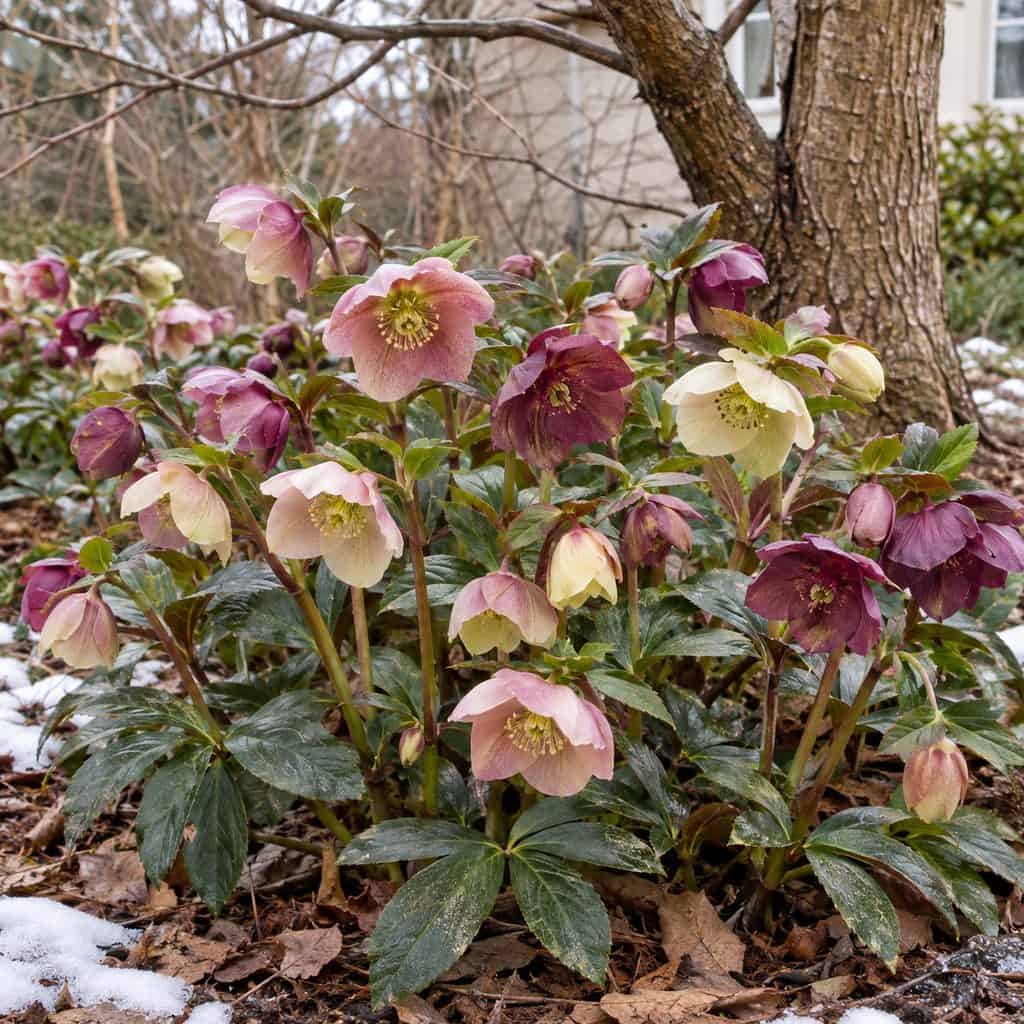
Blooms in February. Through the snow, if it has to.
Hellebores open nodding cups of cream, pink, plum, and near-black in late winter and hold them for two to three months, then the leathery evergreen leaves carry the shade bed the rest of the year. Hardy to zone 4, and they live for decades.
Deer, rabbits, and voles leave them alone. Dry shade under a maple suits them fine once established.
Cut the old leaves off in January so the flowers show. Pair them with camellias and pansies and the yard has color in the month most yards have none.
26. Cuphea (Mexican Heather)
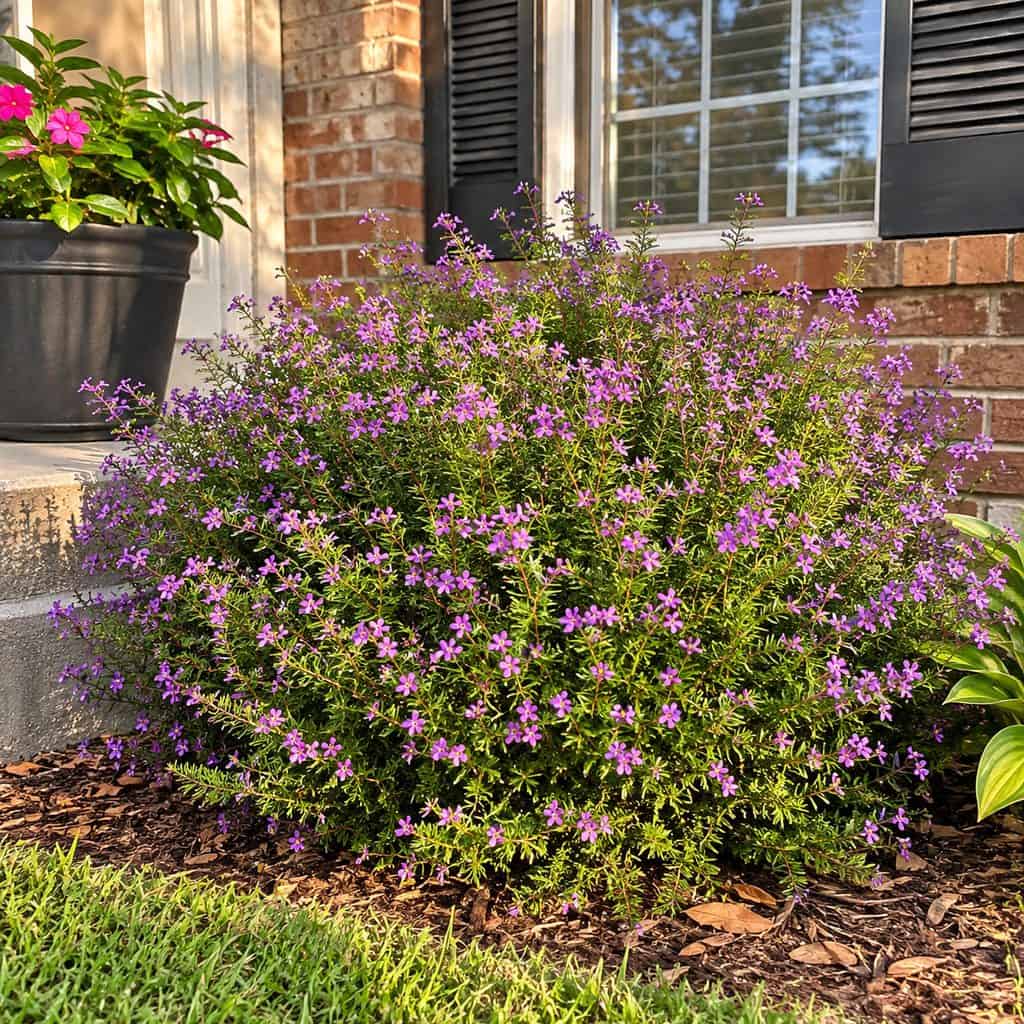
Tiny flowers, huge stamina.
Mexican heather forms a neat green mound sprinkled with small purple, pink, or white blooms from the day you plant it until frost, and in zones 9 through 11 it simply never stops. Its cousin, the cigar plant, adds orange tubes that hummingbirds hunt down.
Humidity, heat, and reflected pavement heat do not slow it. It is a staple across the Gulf Coast for a reason.
Edge a walkway or fill the front of a bed with it. It stays tidy at a foot tall without a single trim.
27. Black-Eyed Susan (Rudbeckia)
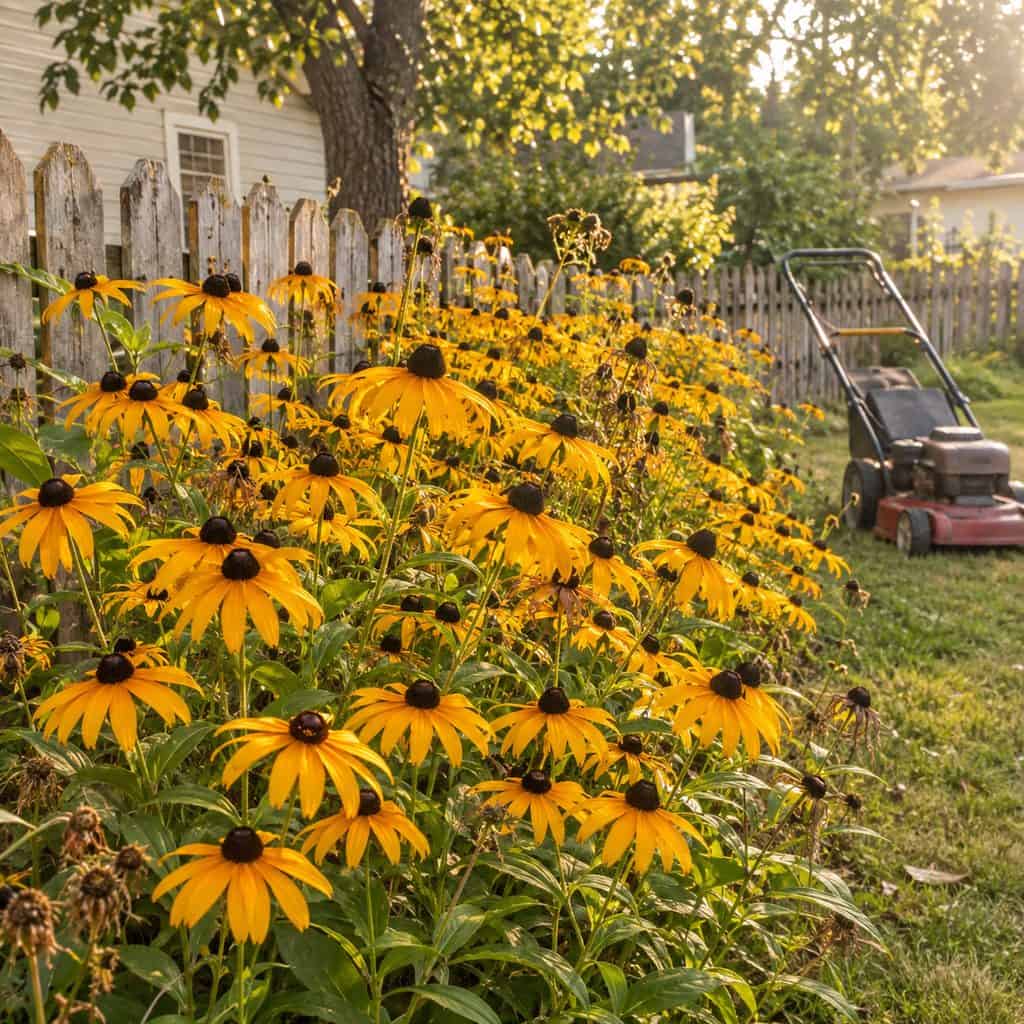
Gold from July until the frost knocks it down.
‘Goldsturm’ is the classic, hardy to zone 3 and blooming for two months or more, while ‘American Gold Rush’ resists leaf spot and keeps flowering longer. Annual types like ‘Indian Summer’ bloom the first year from seed with flowers six inches across.
Leave the dark seed heads standing. Goldfinches strip them all winter and the stems give the bed shape under snow.
Mass it with coneflower and catmint for a border that runs from June into November with almost no work.
Fantastic info, super writing — very entertaining reading!
Loved this. Very good article and helpful for us seniors!