

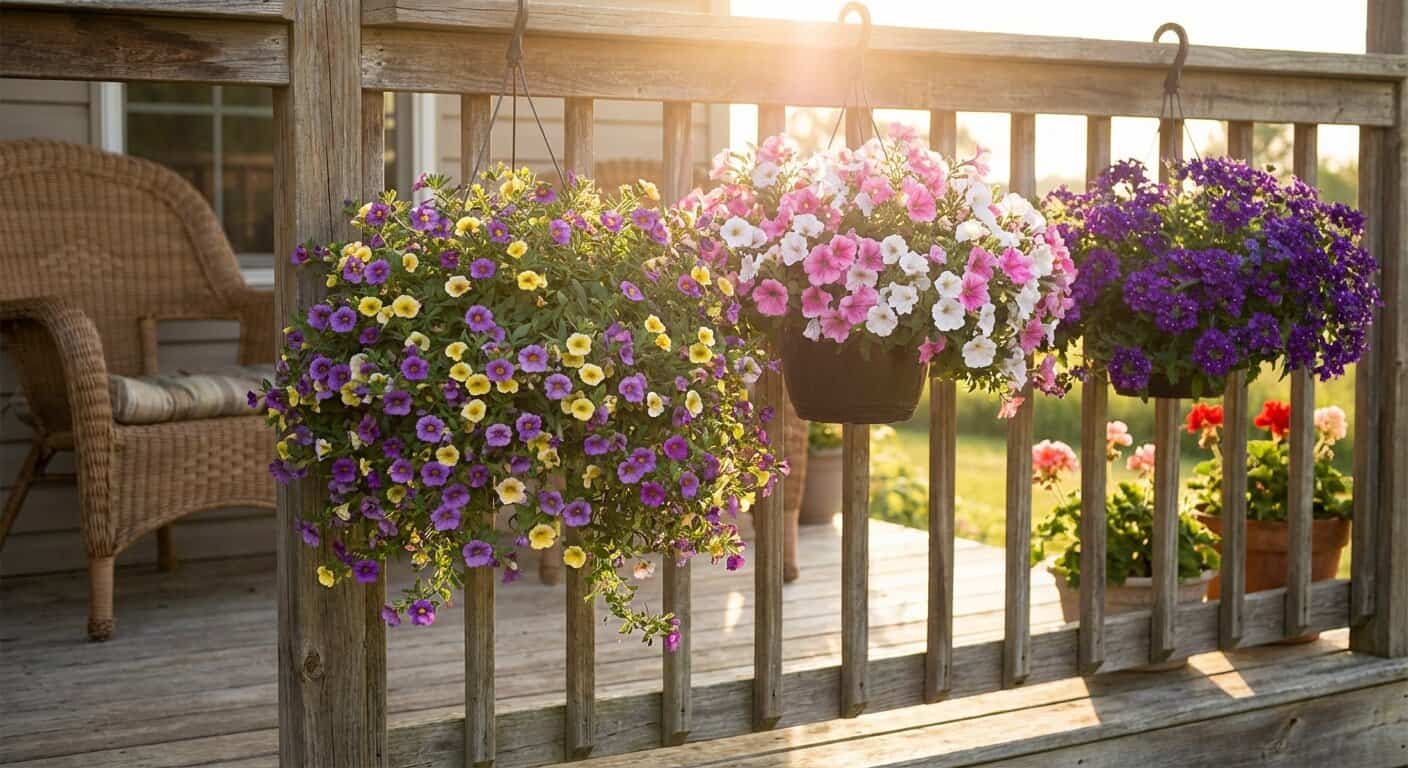
You have killed plants before.
Not on purpose. Not out of cruelty. You just forgot. You went on vacation, or the week got away from you, or you simply did not think about the pot on the patio until the thing inside it was brown, crispy, and beyond saving.
It happens. It happens to almost everyone. And the result is always the same — a dead plant, a pang of guilt, and a quiet vow to “try again next year” that you both know is a lie.
Here is the good news. There are plants that do not care if you forget about them. Plants that sit in full sun all day, go a week without water, and look better for it. Plants that are so tough, so forgiving, and so determined to survive that your neglect is not a death sentence — it is just Tuesday.
Here are 21 of them. Every one thrives in a container, handles full sun, and will not punish you for having a life.
1. Lantana
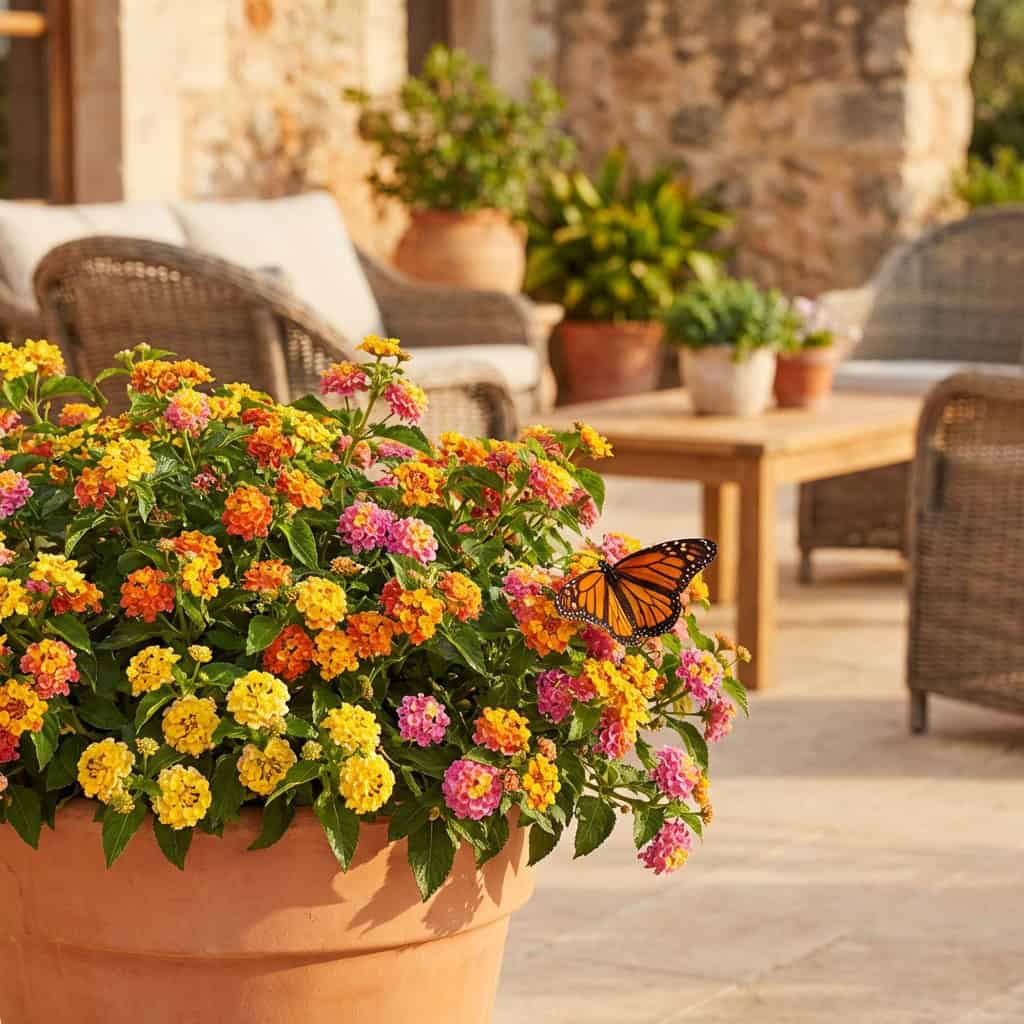
Lantana is the plant that thrives on the exact conditions that kill everything else.
Full sun. Intense heat. Irregular watering. Lantana does not just tolerate these things — it prefers them. Give it a pot, a sunny patio, and a general sense of abandonment, and it will reward you with clusters of tiny flowers in yellow, orange, pink, red, and sometimes all four at once on the same plant.
Butterflies are drawn to lantana like it is sending out invitations. A single pot on your patio will have swallowtails, monarchs, and painted ladies circling it all summer.
It blooms from late spring until frost. It does not need deadheading. It does not need fertilizer. It barely needs you. That is exactly the point.
2. Bougainvillea
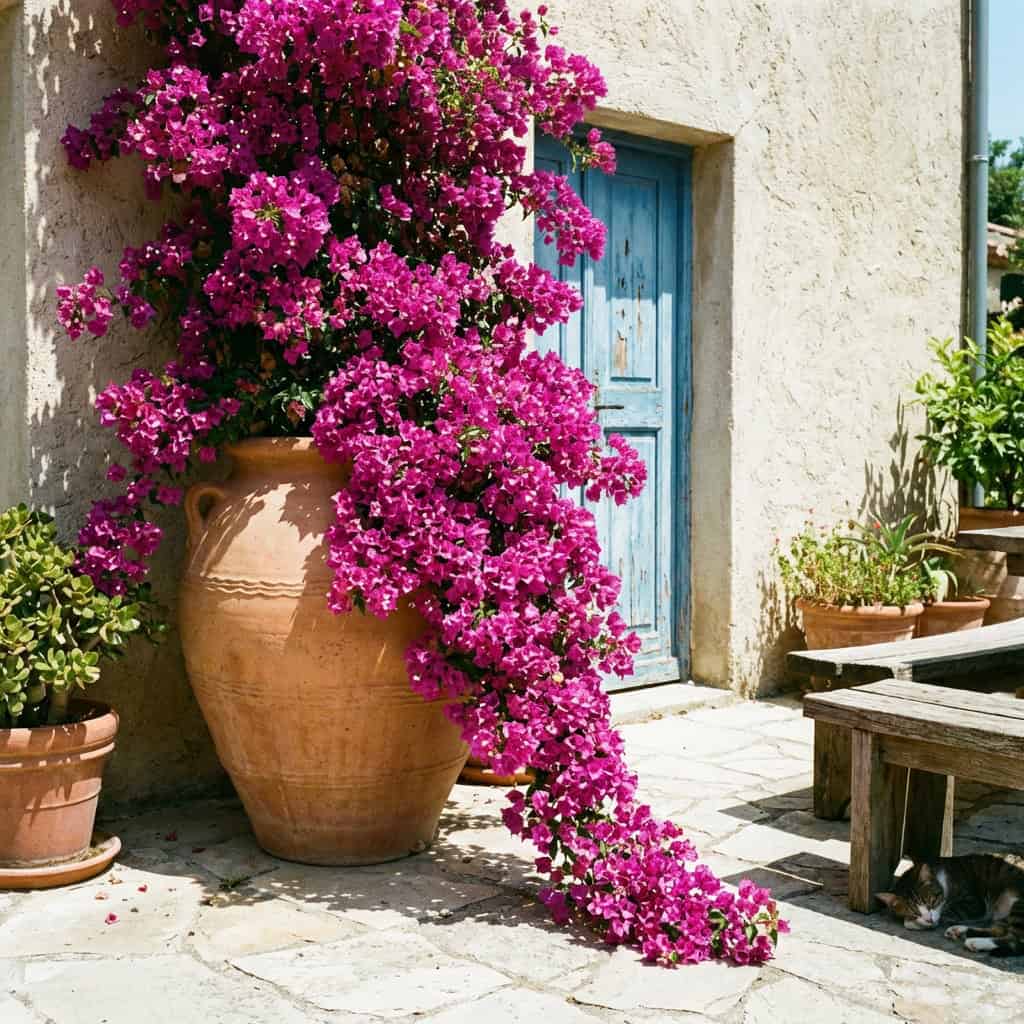
Bougainvillea is the plant that makes a patio look like it belongs on a Mediterranean coastline.
Its “flowers” are not actually flowers — they are papery bracts in shades of hot pink, magenta, purple, orange, or white that surround tiny, almost invisible true flowers at the center. The bracts are what give bougainvillea its drama, and they last for months.
This plant wants full sun and dry soil. In fact, it blooms more aggressively when it is slightly stressed — meaning the less you water it, the more it flowers. That is not a typo. Neglect makes it prettier.
Give it a large pot, a trellis or railing to climb, and get out of its way. Bougainvillea does not need your help. It just needs your patio.
3. Portulaca (Moss Rose)
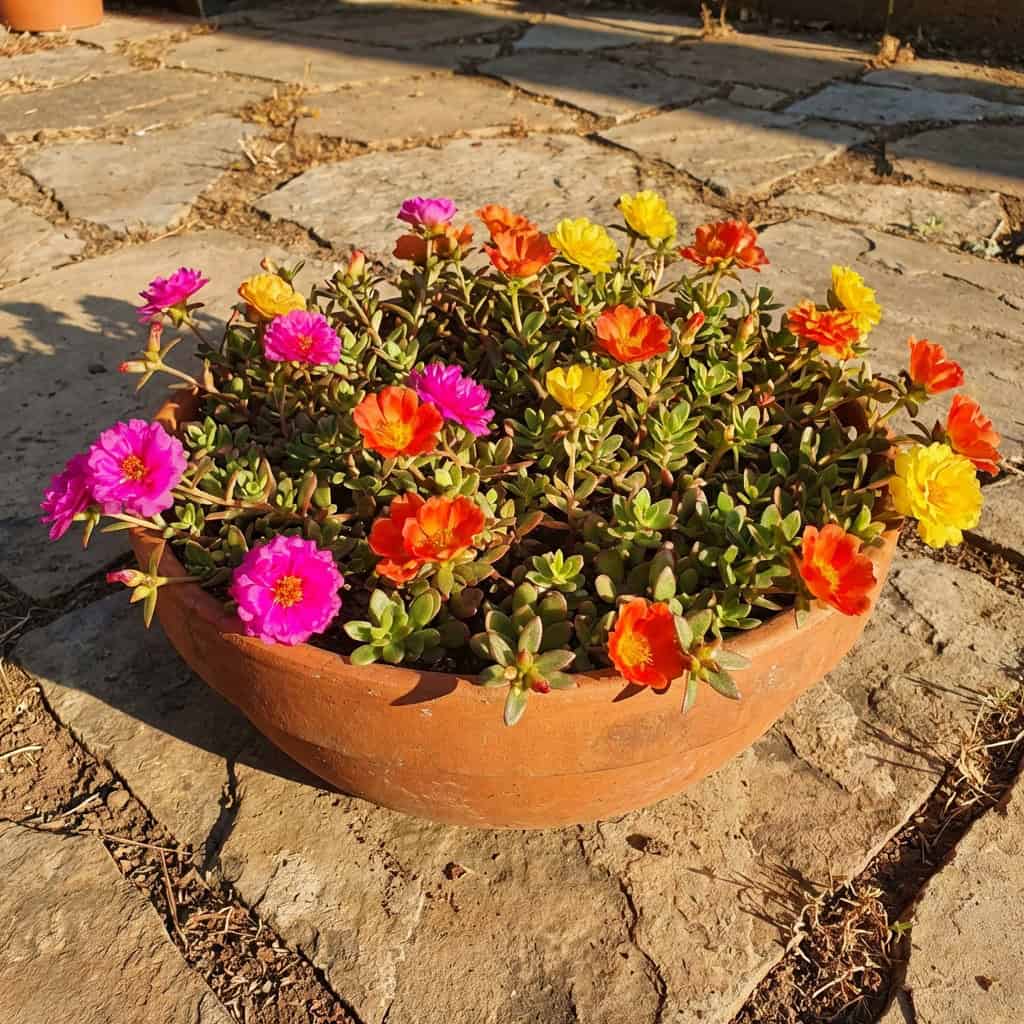
Portulaca is the overachiever of the succulent world — neon-bright rose-shaped flowers on a plant that stores water in its thick, fleshy leaves and asks for absolutely nothing in return.
The flowers open in the morning sun and close at night. They come in electric pink, orange, yellow, red, and white — colors so vivid they almost look artificial. But they are real, and they keep coming all summer long.
Portulaca loves heat. The hotter the better. It is the perfect plant for the spot on your patio that gets blasted by afternoon sun — the spot where everything else wilts by 2 PM. Portulaca will sit there and glow.
It spills beautifully over the edges of containers and looks stunning in shallow pots, window boxes, or hanging baskets. Water it occasionally. Or do not. It genuinely does not mind.
4. Geraniums
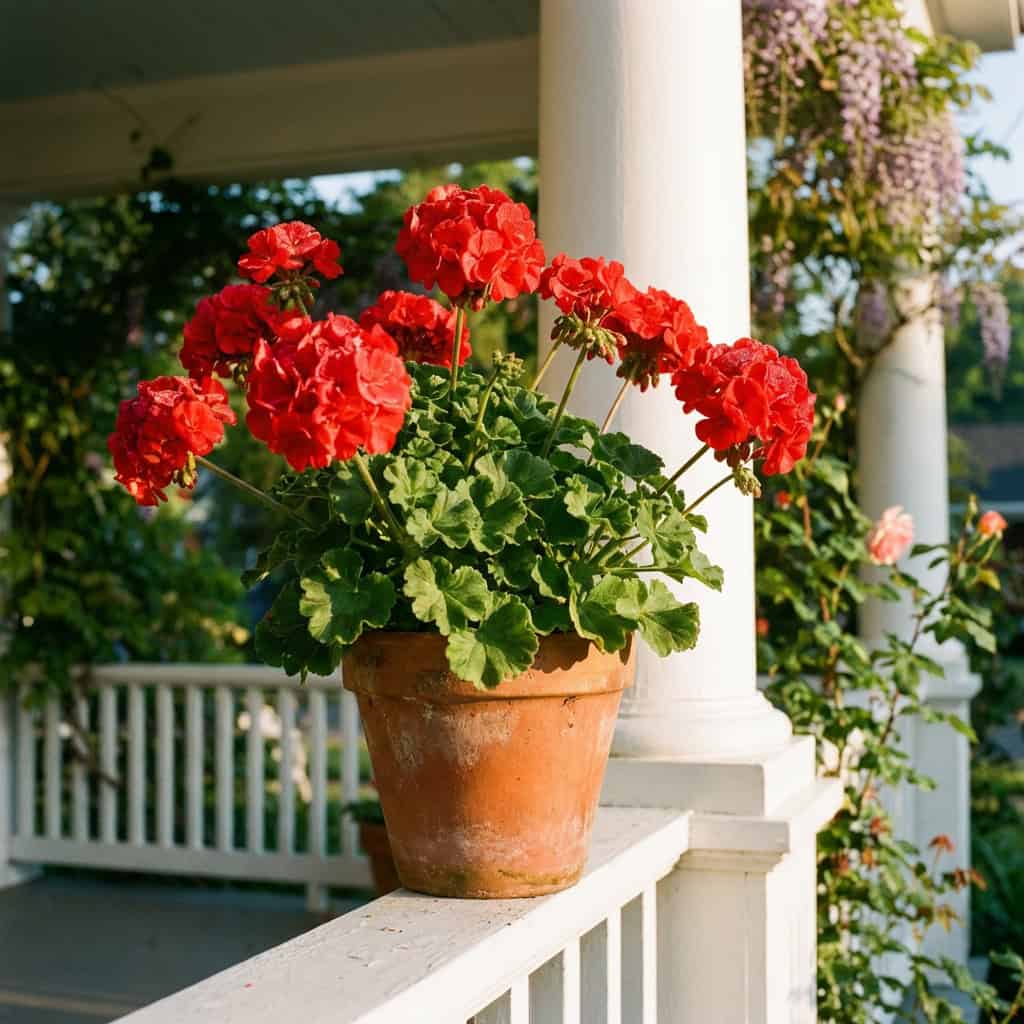
Geraniums have been sitting on American porches and patios since before anyone reading this was born. There is a reason for that. They work.
Big, round clusters of flowers in red, pink, salmon, white, and coral. Thick, scalloped leaves with a distinctive scent that mosquitoes reportedly hate. A tolerance for heat, drought, and inconsistent attention that has kept them in the front row of container gardening for generations.
Geraniums prefer to dry out a bit between waterings. Overwatering is actually the fastest way to kill them — which means your habit of forgetting about them is not a flaw, it is a feature.
Deadheading spent blooms will keep new ones coming, but even if you skip that step, geraniums will continue producing flowers at a pace that makes most other plants look lazy.
5. Calibrachoa (Million Bells)
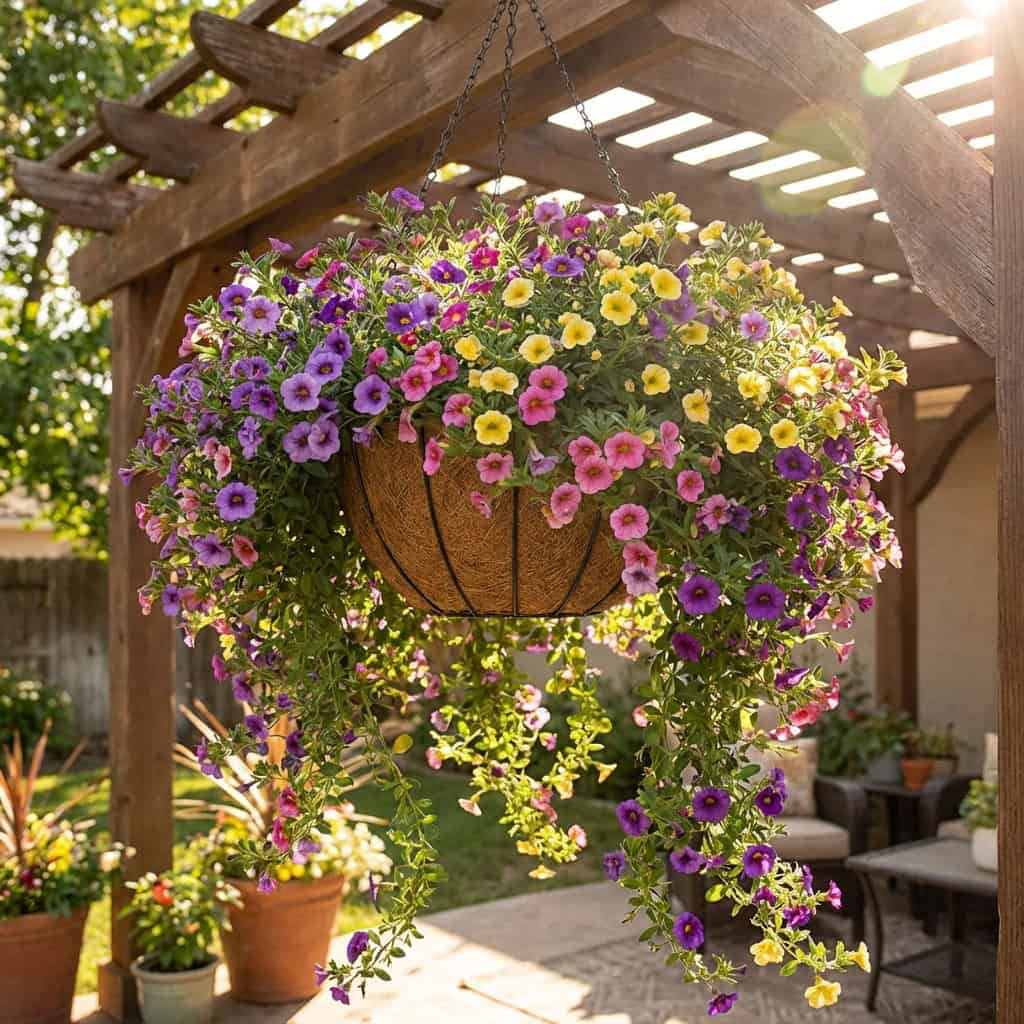
Calibrachoa looks like someone shrunk a petunia to a quarter of its size and then tripled its output.
These tiny trumpet-shaped flowers pour out of containers in cascading waves — purple, pink, yellow, red, coral, and bicolor varieties that bloom so heavily the foliage almost disappears underneath them.
Calibrachoa is a trailing plant, which means it spills over the edges of pots, window boxes, and hanging baskets in a way that looks effortless and abundant. A single plant can cover the side of a container in flowers.
It handles full sun and heat well, though it does appreciate consistent moisture more than some of the other plants on this list. If you are the type to water once or twice a week, calibrachoa will love you for it. If you forget for a few days, it will bounce back without holding a grudge.
6. Lavender
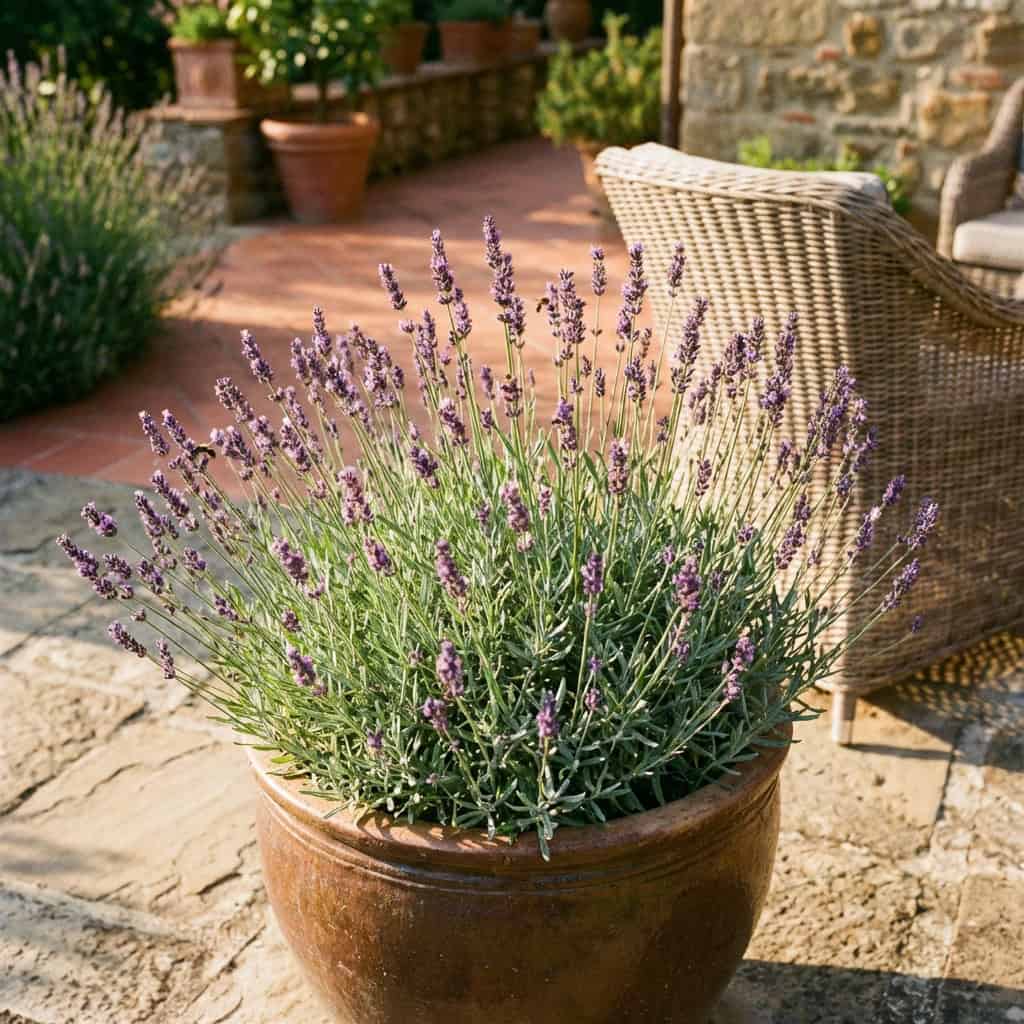
Lavender is the plant that makes your patio smell like a vacation.
Its silvery-green foliage and purple flower spikes are beautiful on their own, but the fragrance is the real reason people grow it. Brush against it, and the scent fills the air — calming, clean, and unmistakable. It is the smell of every high-end soap, candle, and linen spray, growing live in a pot on your patio for the cost of a garden center trip.
Lavender is drought-tolerant to the point of being offended by overwatering. It wants full sun, well-drained soil, and to be left alone. It does not want rich soil. It does not want fertilizer. It wants the conditions that most other plants consider abuse.
It also repels mosquitoes naturally, which makes it both beautiful and functional sitting next to your patio chairs.
7. Sedum (Stonecrop)
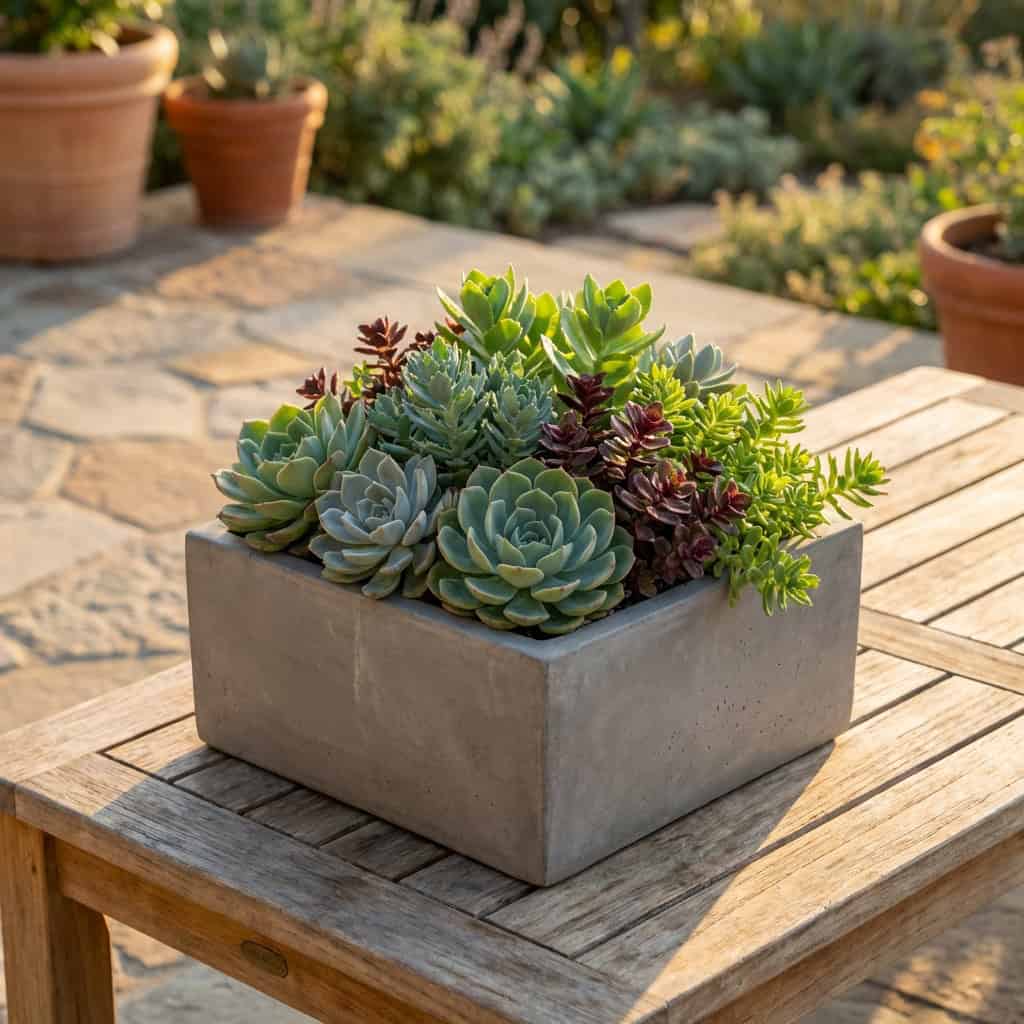
Sedum is the plant for people who want something that looks intentional but requires zero effort.
There are hundreds of sedum varieties — some low and creeping, some upright and bushy — but they all share the same superpower: they store water in their thick, fleshy leaves and can go weeks without a drink. Their foliage comes in shades of green, blue-gray, burgundy, and gold, and many varieties produce clusters of star-shaped flowers in late summer.
In a container, sedum looks sculptural and modern. It pairs well with other succulents, or it can stand alone in a simple pot and look like you paid a landscape designer to choose it.
Water it when you remember. It will be fine either way.
8. Hibiscus
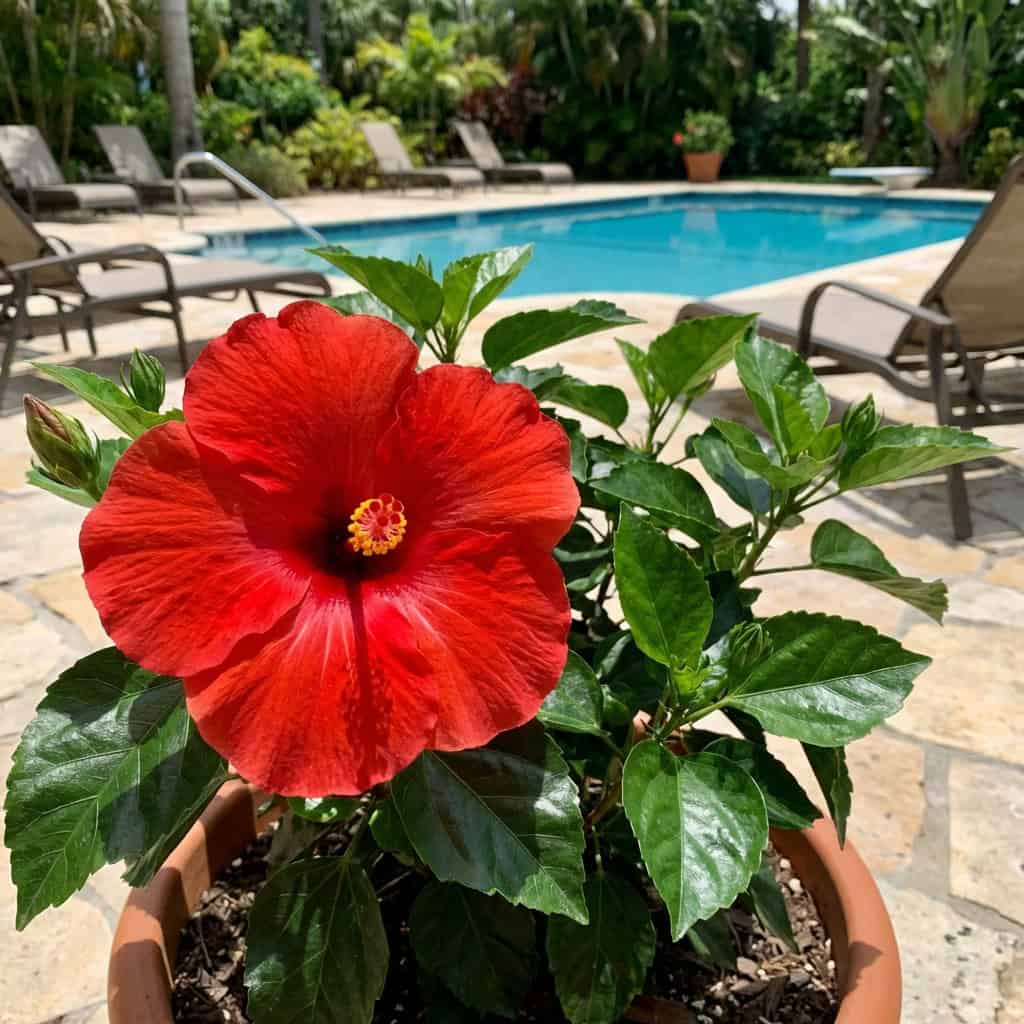
Hibiscus is the showstopper.
Its flowers are enormous — dinner-plate-sized blooms in red, pink, orange, yellow, and coral that open fresh every morning and last a single day before dropping to make room for the next one. A healthy hibiscus in full sun can produce dozens of flowers over the course of a summer.
This is not a background plant. This is the plant people walk up to and ask about. It is the centerpiece of a patio container arrangement, the thing that makes the whole setup feel tropical and deliberate.
Hibiscus does like a bit more water than some of the other plants on this list, so it is not quite as “forget about it” as lantana or portulaca. But in a large pot with good drainage and a sunny spot, it is remarkably low-maintenance for the amount of drama it delivers.
9. Mandevilla
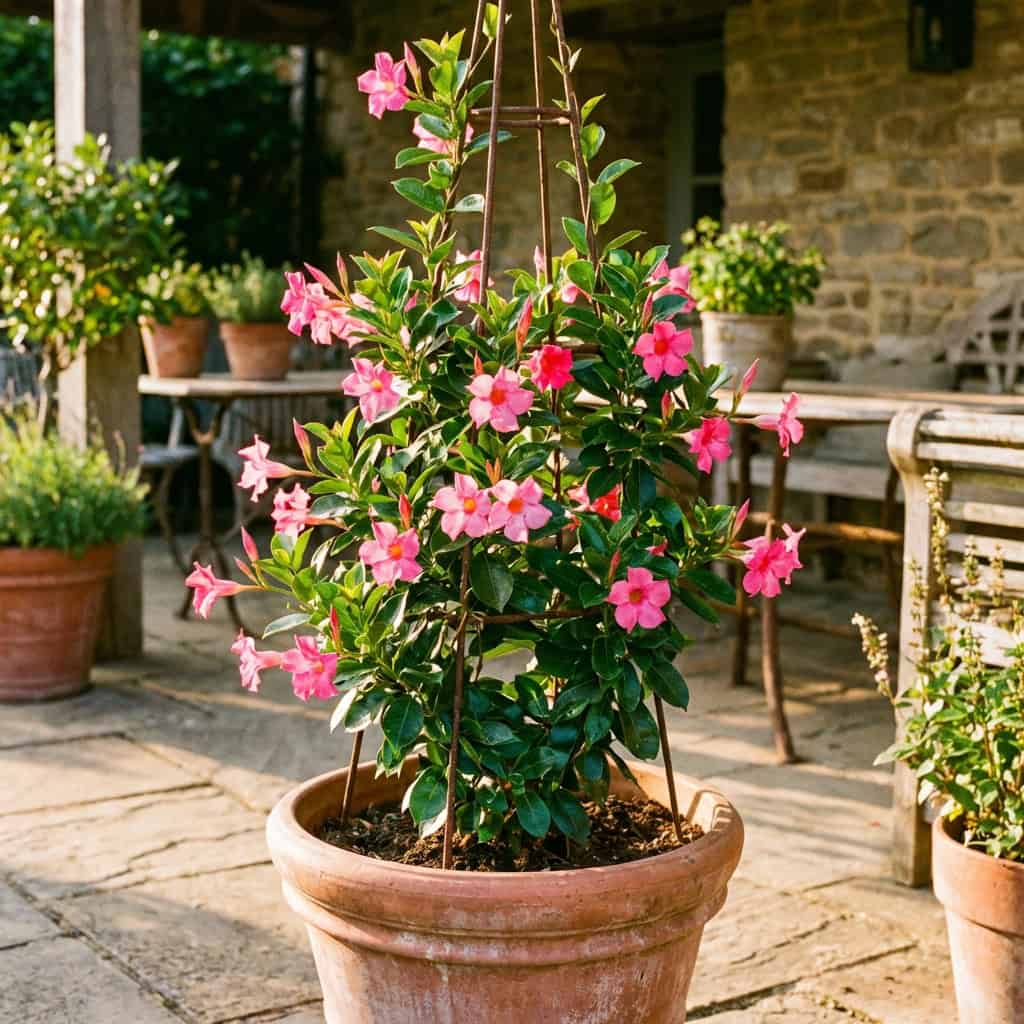
Mandevilla is the vine that turns a simple pot with a trellis into something that looks like it belongs at a resort.
Its large, trumpet-shaped flowers come in shades of pink, red, and white, and they bloom continuously through the summer against glossy, dark green leaves. Give it a small trellis, an obelisk, or even a tomato cage in a pot, and it will climb and bloom its way to the top.
Mandevilla loves heat and full sun. It is a tropical plant, so it thrives in the exact conditions that make you want to sit in the shade with a cold drink — while it sits in the sun and flowers.
In a container, mandevilla adds vertical interest that most patio plants cannot. Everything else spreads out or trails down. Mandevilla goes up. That contrast is what makes a container arrangement look designed rather than random.
10. Angelonia (Summer Snapdragon)
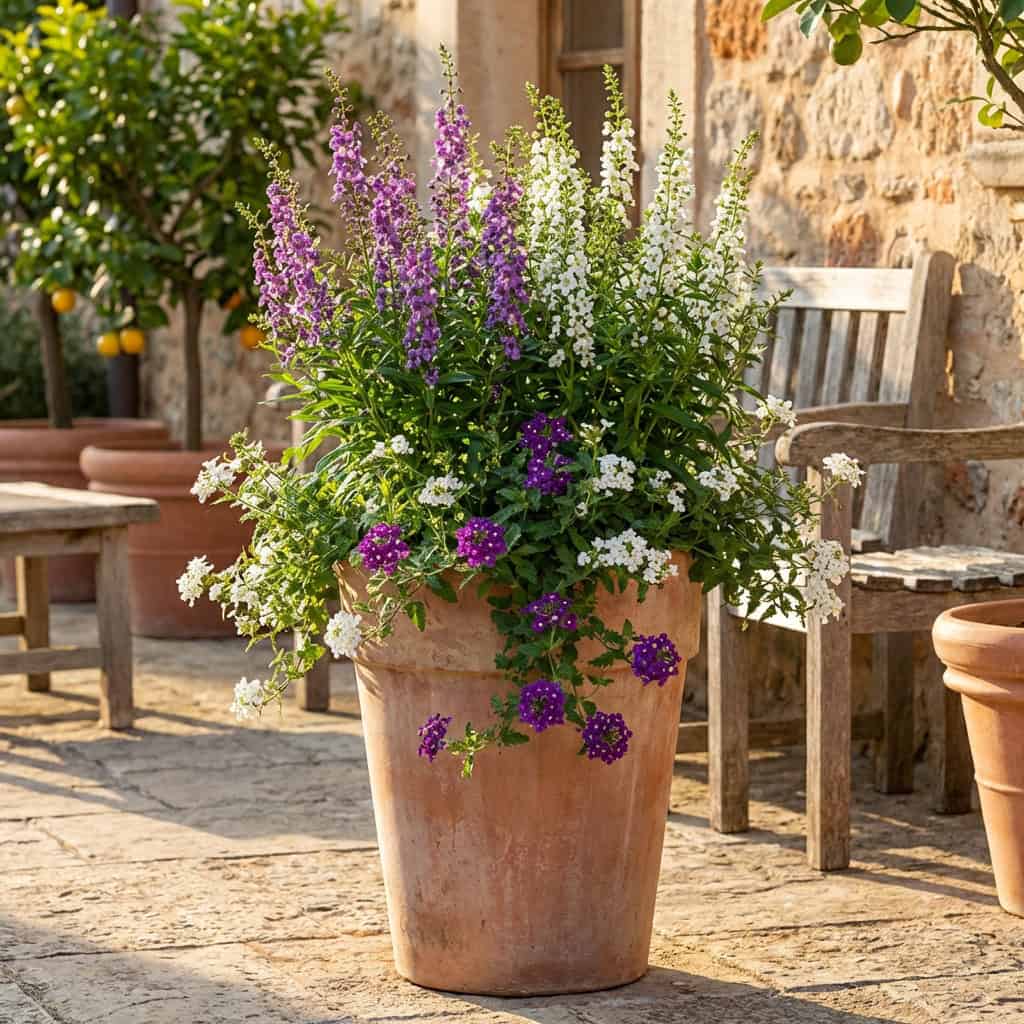
Angelonia is the plant that keeps blooming when everything else on the patio has given up.
Its spiky flower stalks — in shades of purple, pink, blue, and white — bloom nonstop from late spring through the first frost. No deadheading required. No special feeding. Just sun, occasional water, and a complete lack of drama.
Angelonia grows upright, which makes it excellent for the center or back of a mixed container. Pair it with trailing calibrachoa or verbena spilling over the edges, and you have a container that looks like it was styled by a professional.
The flowers have a light, grape-like fragrance that you will notice when you lean in close. It is subtle, not overwhelming — the kind of thing that makes you pause and appreciate the plant for half a second before going back to your life.
Which is all this plant asks of you.
11. Echeveria
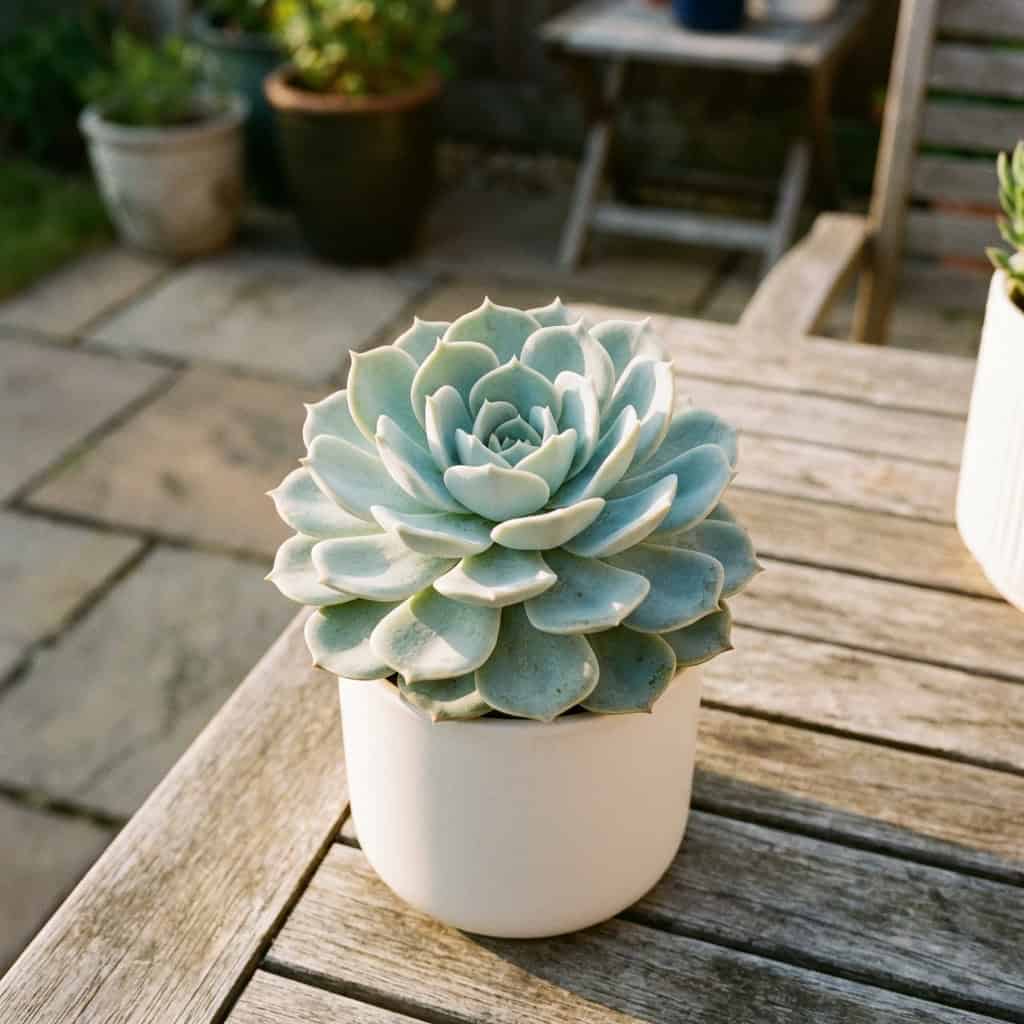
Echeveria is the succulent that people photograph more than they water — and that is exactly how it wants to be treated.
Its rosette-shaped clusters of thick, fleshy leaves come in shades of pale green, blue-gray, dusty pink, and deep purple. The symmetry is almost unnatural — each leaf arranged in a perfect spiral that looks like it was designed by a mathematician.
In a shallow pot or a mixed succulent arrangement, echeveria is the anchor. It sits there, looking sculptural and expensive, requiring nothing but sunlight and the occasional sip of water.
Overwatering is the only way to kill it. The leaves start to turn translucent and mushy if the soil stays wet too long. So if you are the type of person who forgets to water for two weeks — congratulations. You are the ideal echeveria owner.
12. Coneflower (Echinacea)
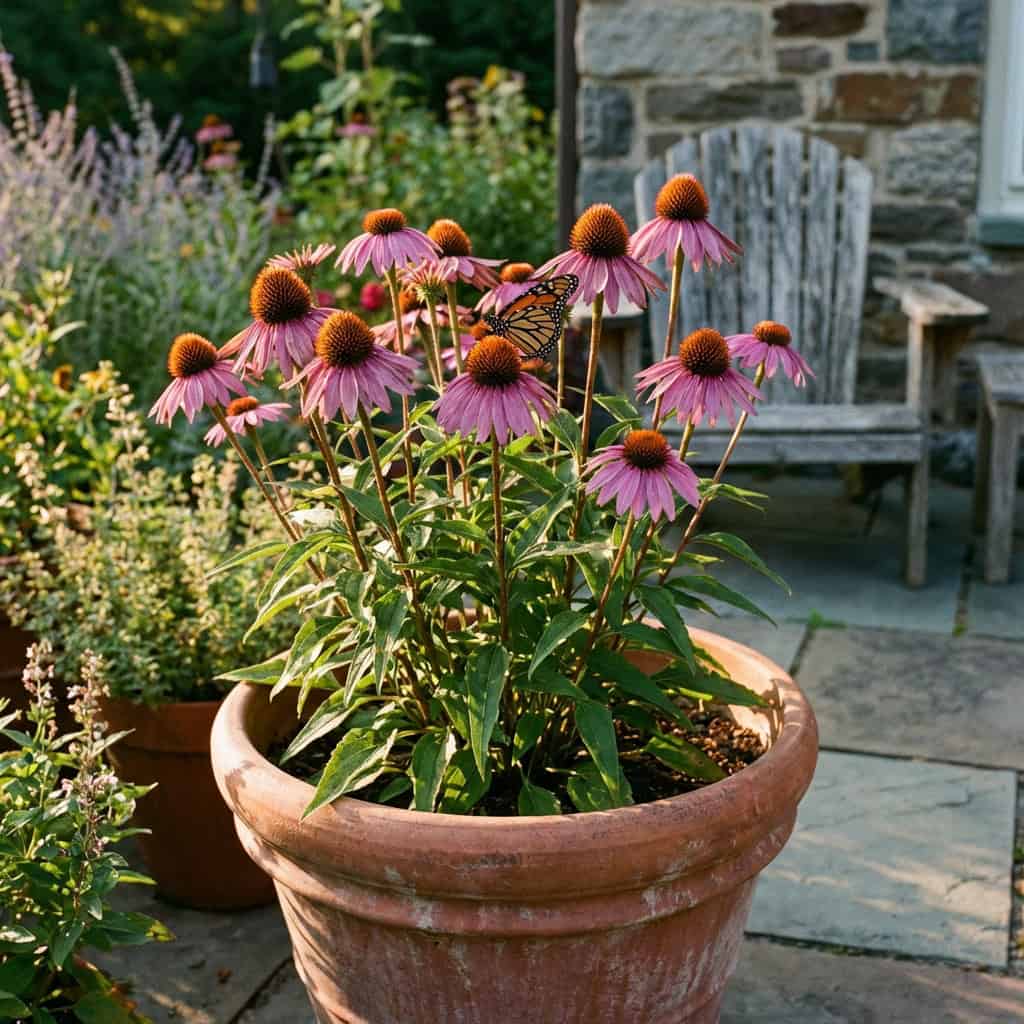
Coneflower is the native prairie wildflower that looks equally at home in a meadow and on a patio.
Its large, daisy-like blooms sit on sturdy stems that hold up in wind, rain, and heat without staking or fussing. The classic variety is purple with a raised orange-brown center cone, but newer cultivars come in shades of red, orange, yellow, pink, and white.
In a deeper container, coneflowers thrive with minimal attention. They are perennials, which means they come back year after year — plant them once and they will return each spring without being asked.
The spent flower heads attract goldfinches in the fall, which is an unexpected bonus. You planted a flower. You got butterflies in summer and birds in autumn. Not a bad return on a $5 plant.
13. Salvia
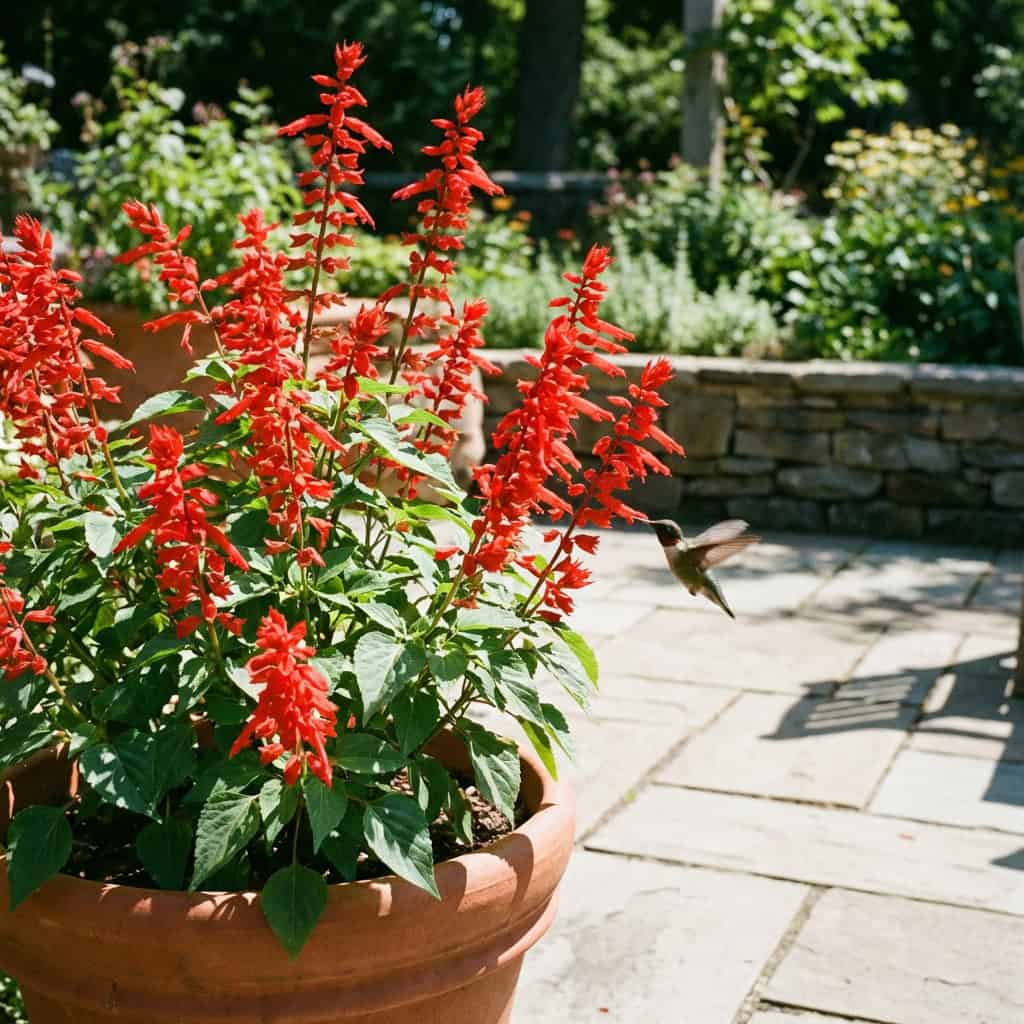
Salvia is the plant that makes hummingbirds appear out of thin air.
Its tall spikes of tubular flowers — in brilliant blue, red, purple, coral, and white — are specifically shaped for hummingbird beaks. Plant a pot of red salvia on your patio and you will have hummingbirds visiting within days. That is not an exaggeration.
Salvia handles full sun and heat without complaint, and most varieties are drought-tolerant once established. It blooms from late spring through fall, and cutting the spent spikes back encourages a fresh flush of flowers.
In a container, salvia adds height and movement. The flower spikes sway slightly in a breeze, which gives the plant a looseness that balances heavier, more compact plants around it.
14. Petunias
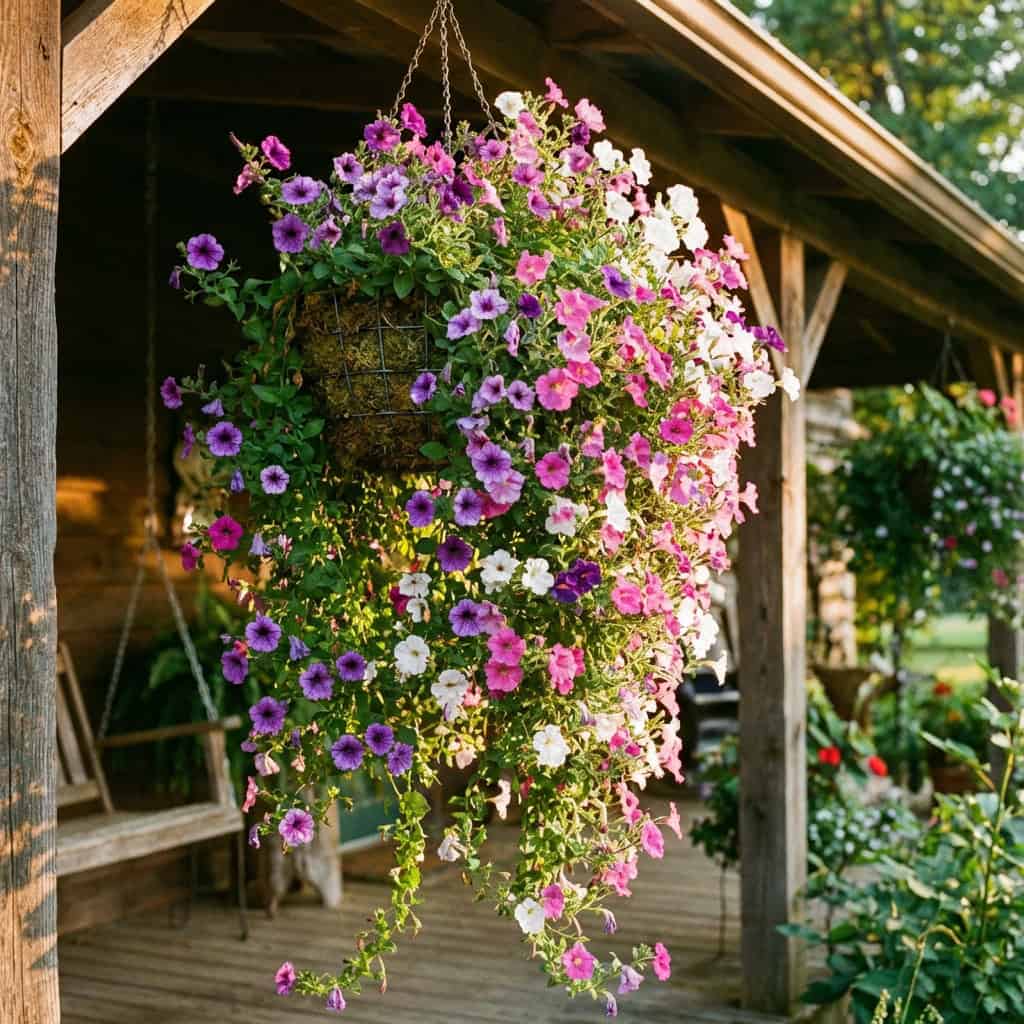
Petunias are the workhorse of patio containers — and there is a reason they show up in every hanging basket at every garden center in America.
They bloom relentlessly. They come in every color imaginable. And the trailing varieties — like the Wave and Supertunia series — pour over the edges of pots and hanging baskets in a waterfall of flowers that is genuinely hard to achieve with any other plant.
Petunias do appreciate regular watering and a dose of fertilizer every couple of weeks to keep the blooms coming at full volume. They are slightly needier than lantana or portulaca. But the payoff is a container that looks like it was planted by a garden center professional.
If you only buy one plant for a hanging basket this year, make it a trailing petunia. You will not be disappointed.
15. Blanket Flower (Gaillardia)
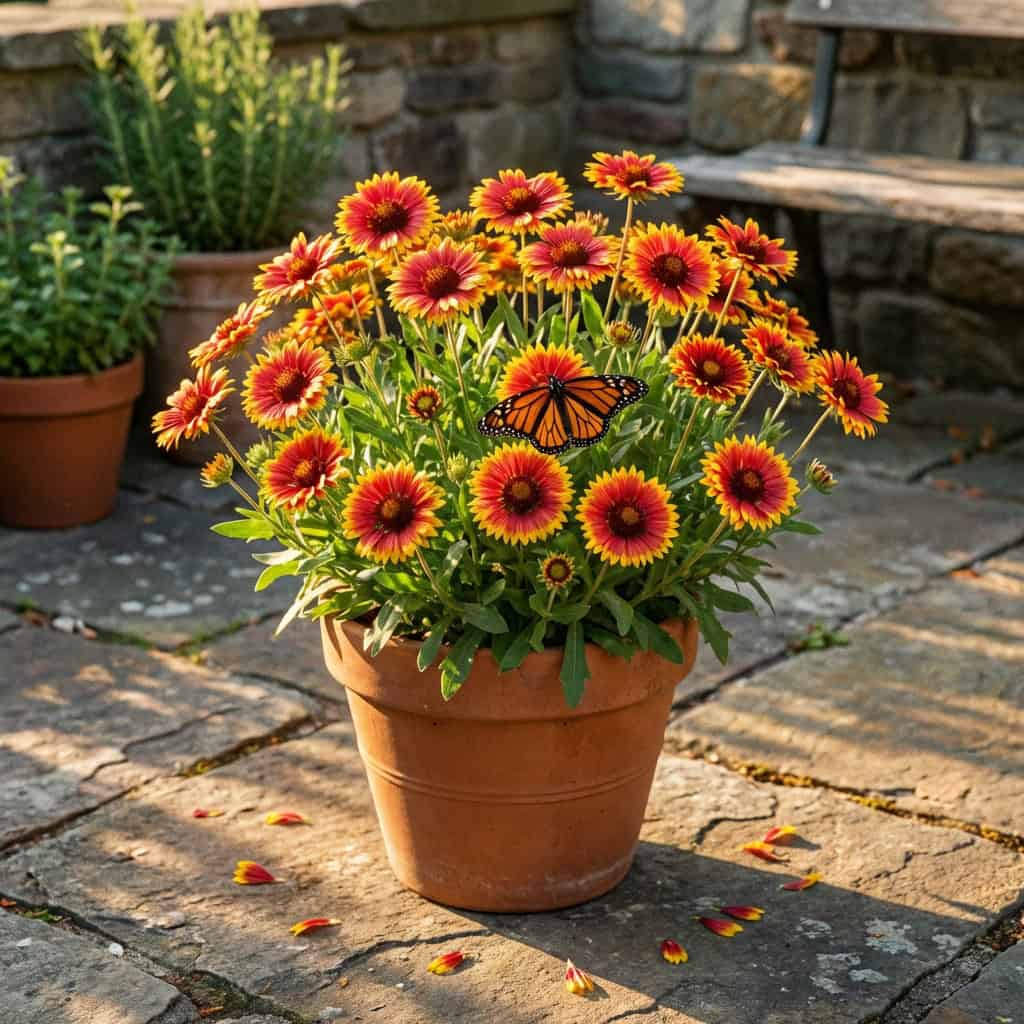
Blanket flower looks like someone painted a sunset onto a daisy.
The petals are banded in shades of red, orange, and yellow — warm, fiery tones that practically glow in full sun. The flowers sit on wiry stems above gray-green foliage and bloom from early summer until frost with almost no intervention.
Gaillardia is a native wildflower, which means it evolved to handle heat, drought, and poor soil. In a container, it is perfectly content with infrequent watering and no fertilizer. It is also a magnet for butterflies and bees.
This is one of those plants that people do not expect to see in a pot — it feels like a meadow plant. But in a container, its compact size and intense color make it a standout. It looks like it wandered in from a wilder, more beautiful place.
16. Agave
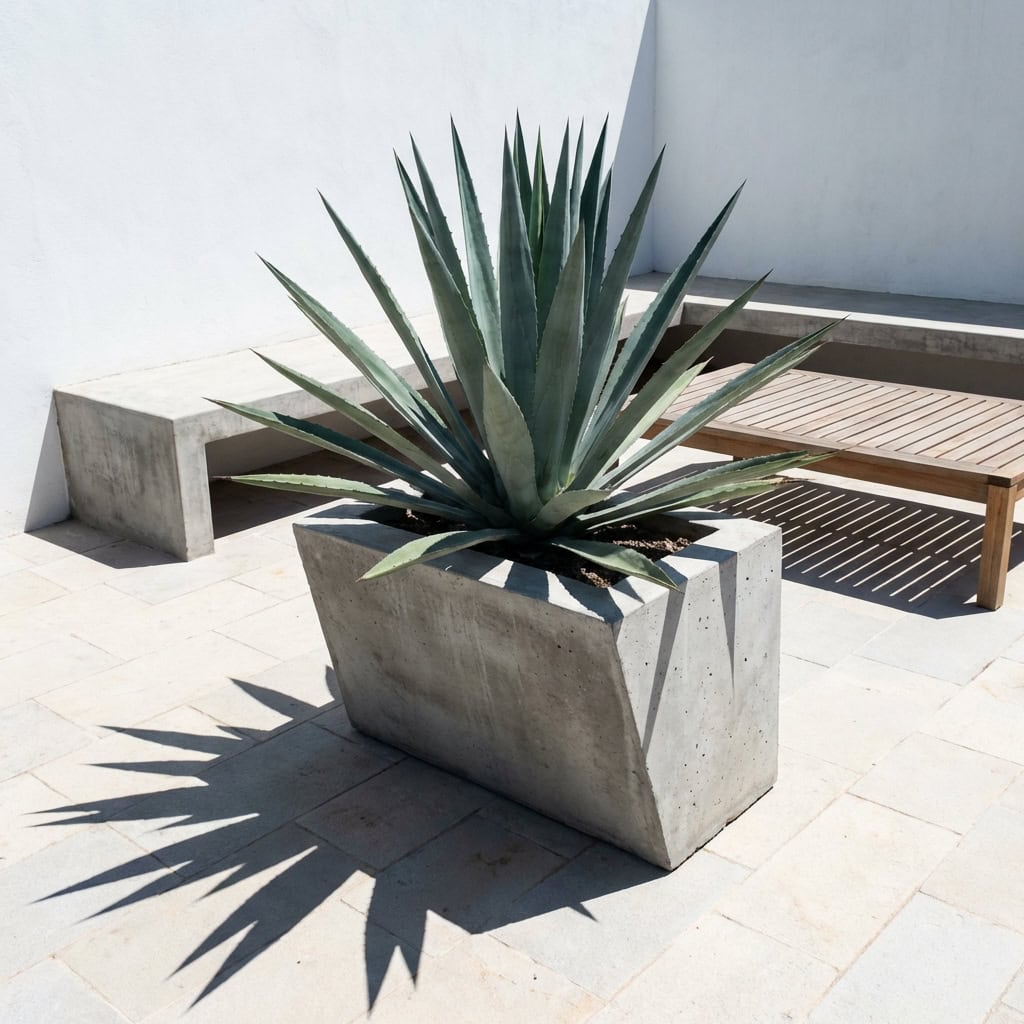
Agave is the plant that turns your patio into a design statement.
Its thick, fleshy leaves fan out in a dramatic rosette — blue-green, gray, or variegated with sharp tips that mean business. A single agave in a simple modern planter communicates “I know what I am doing” louder than a dozen flowering pots combined.
Agave stores water in its leaves, which means it needs watering maybe once or twice a month in a container — even less if it rains. Overwatering will rot it. Underwatering will not faze it. It is the ultimate low-maintenance architectural plant.
Some varieties stay small and compact. Others grow to the size of a small car over time. Choose accordingly. But in a pot on a sunny patio, even a small agave commands attention in a way that soft, flowering plants simply cannot.
17. Catmint (Nepeta)
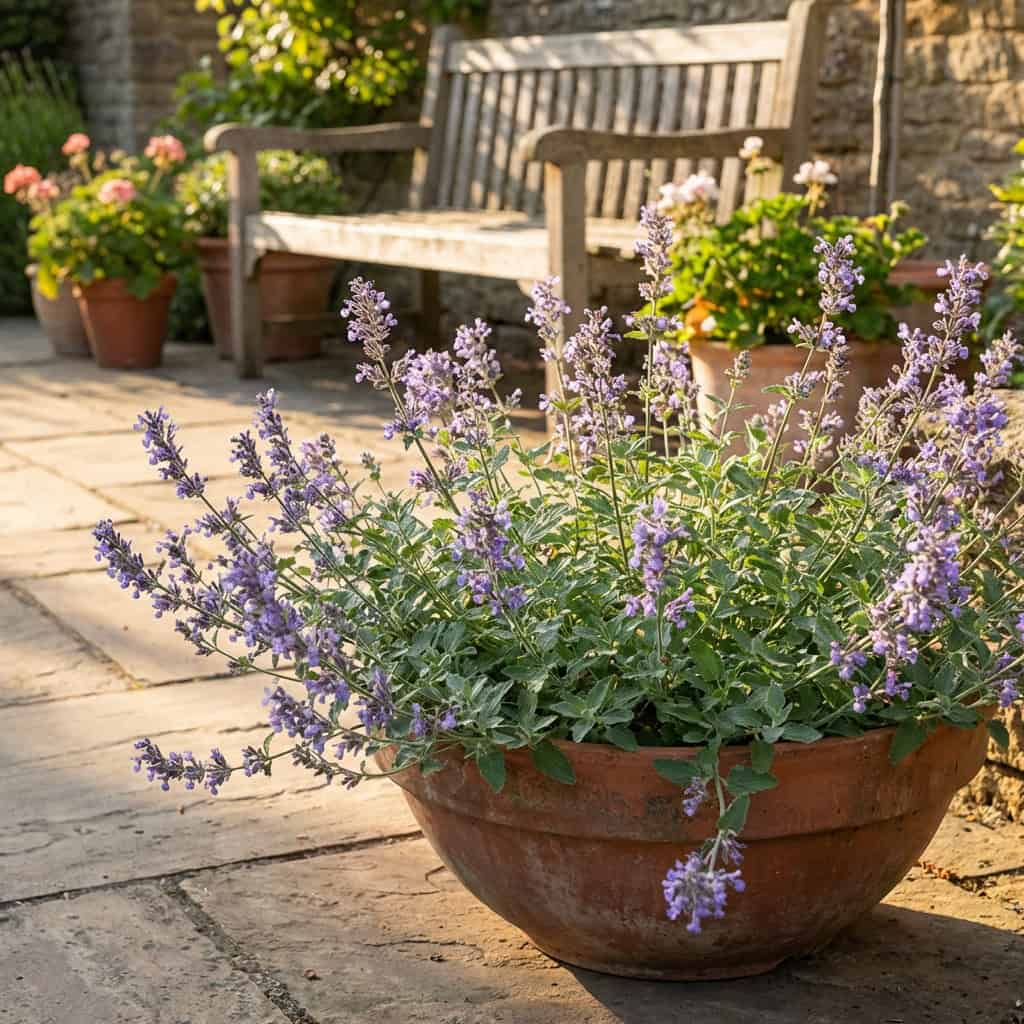
Catmint is the plant that looks like lavender’s more generous cousin.
Its soft, billowing mounds of blue-purple flower spikes bloom from late spring through fall, spilling gently over the edges of containers. The foliage is gray-green and aromatic — deer, rabbits, and most pests want nothing to do with it.
Catmint is almost impossible to overwater or underwater. It handles heat, drought, humidity, and poor soil without complaint. Cut it back by half after the first flush of blooms fades and it will rebloom within weeks — often looking better the second time around.
In a mixed container, catmint provides a soft, romantic base that makes everything planted with it look better. It is the supporting actor that elevates the whole cast.
18. Verbena
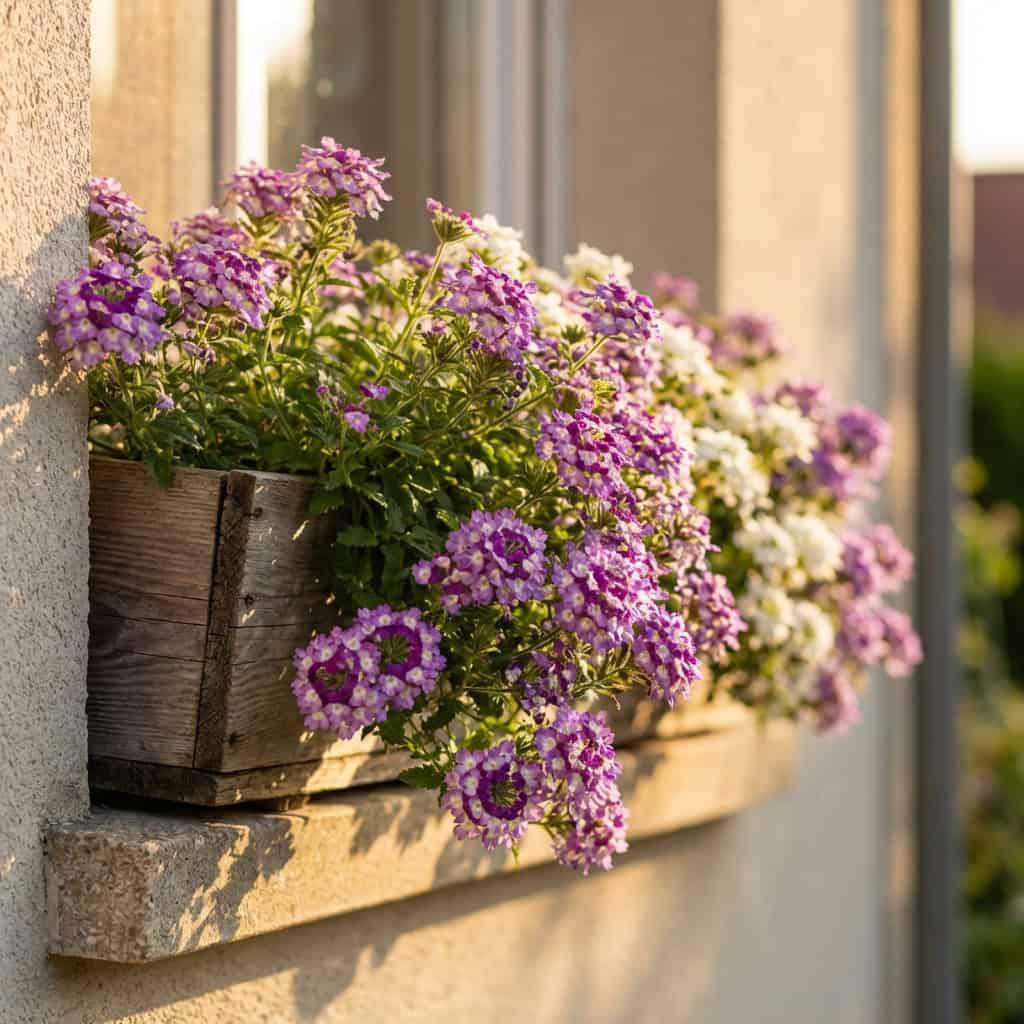
Verbena is the trailing plant that fills in every gap and makes a container look finished.
Its tight clusters of small flowers — in purple, pink, red, white, and bicolor — bloom continuously through the summer and cascade over the edges of pots, window boxes, and hanging baskets. A single verbena plant can fill a surprising amount of space.
It is heat-tolerant, drought-tolerant, and genuinely difficult to kill. It does not need deadheading. It does not need fertilizer. It does not need you to hover over it with a watering can.
Verbena is the plant you tuck into the edge of a container to tie everything together. It is not the star. It is the thing that makes the star look good — and every great patio arrangement needs at least one plant that does that job.
19. Oleander
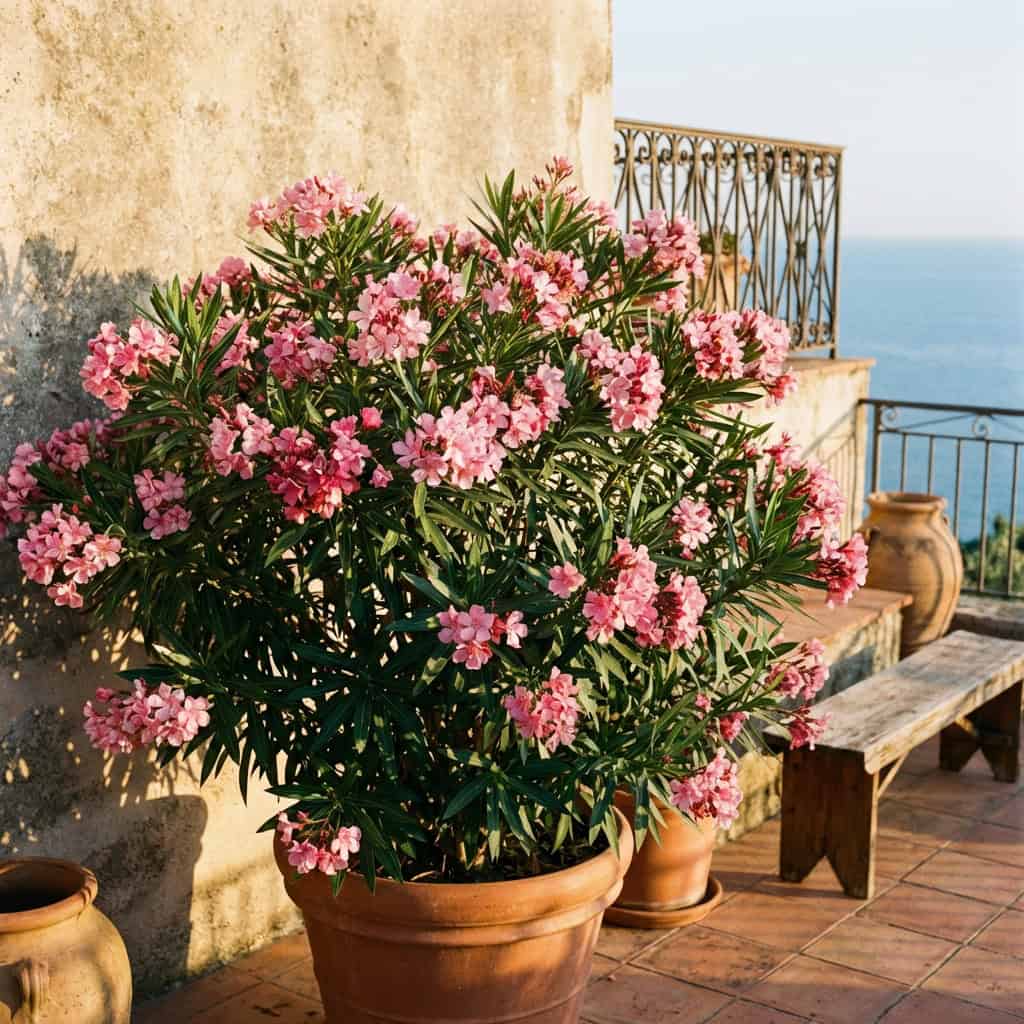
Oleander is the plant you see lining Mediterranean highways and surviving on nothing but exhaust fumes and sunshine.
In a large container, oleander produces clusters of pink, white, red, or salmon flowers on top of leathery, evergreen foliage. It handles extreme heat, drought, wind, and salt spray. It barely notices poor soil. It is, in a word, unkillable.
Oleander grows upright and can reach several feet tall even in a pot, which gives it a shrubby, substantial presence on a patio. It fills space and provides a backdrop that smaller flowering plants can perform against.
One important note — all parts of oleander are toxic if ingested. Keep it away from small children and pets who chew on plants. For adults who simply want a tough, beautiful, flowering shrub in a pot on a sunny patio, it is hard to beat.
20. Zinnia
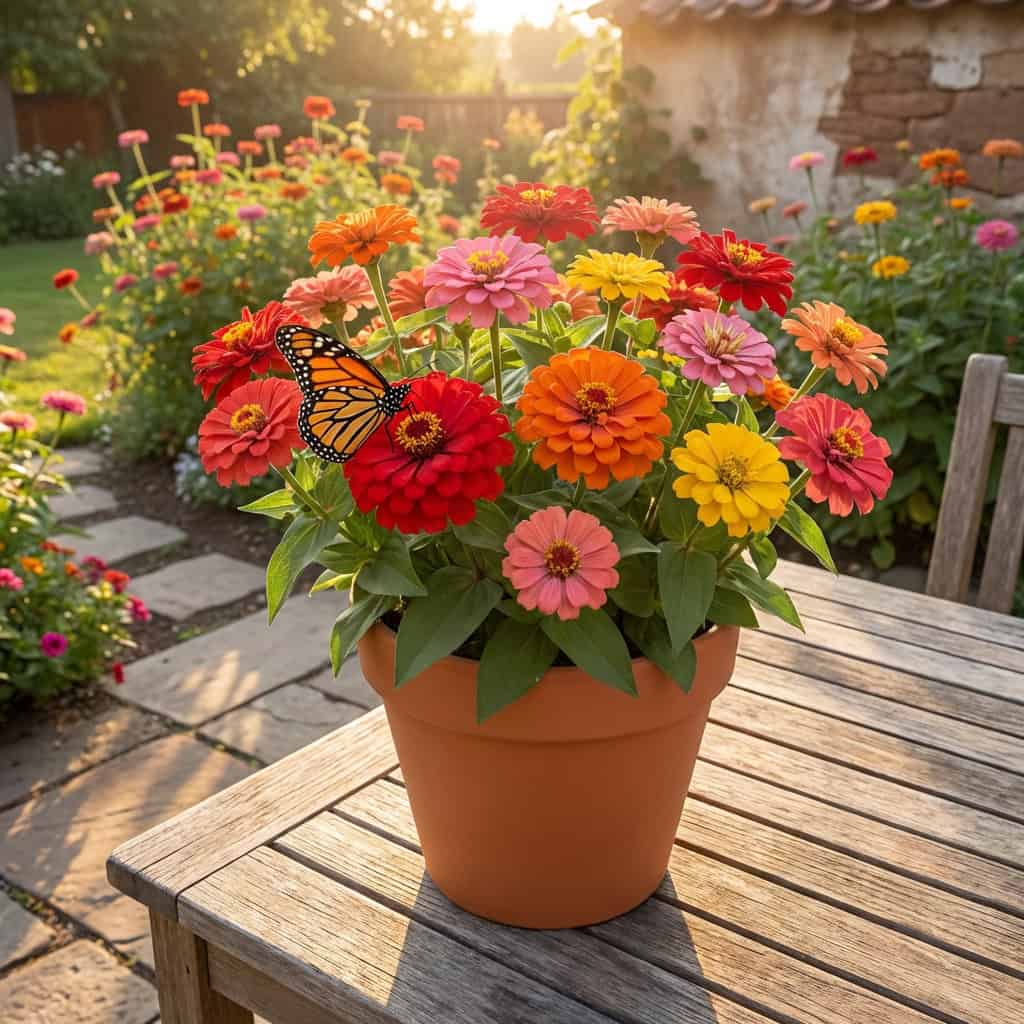
Zinnia is the annual that delivers the most color for the least money of anything on this list.
A packet of seeds costs a few dollars. The plants grow fast, bloom within weeks, and keep producing flowers in every color — red, orange, pink, yellow, coral, purple, white, and green — from midsummer until the first frost shuts them down.
In containers, zinnias look cheerful and abundant. The taller varieties add height. The dwarf varieties fill pots with dense, compact color. They attract butterflies constantly — a pot of zinnias on a patio is a butterfly magnet all season.
Zinnias are annuals, which means they complete their entire life in one season and do not come back. But at a few dollars for a pack of seeds that produces dozens of plants, the cost per bloom is essentially zero. It is the best deal in gardening.
21. Ice Plant (Delosperma)
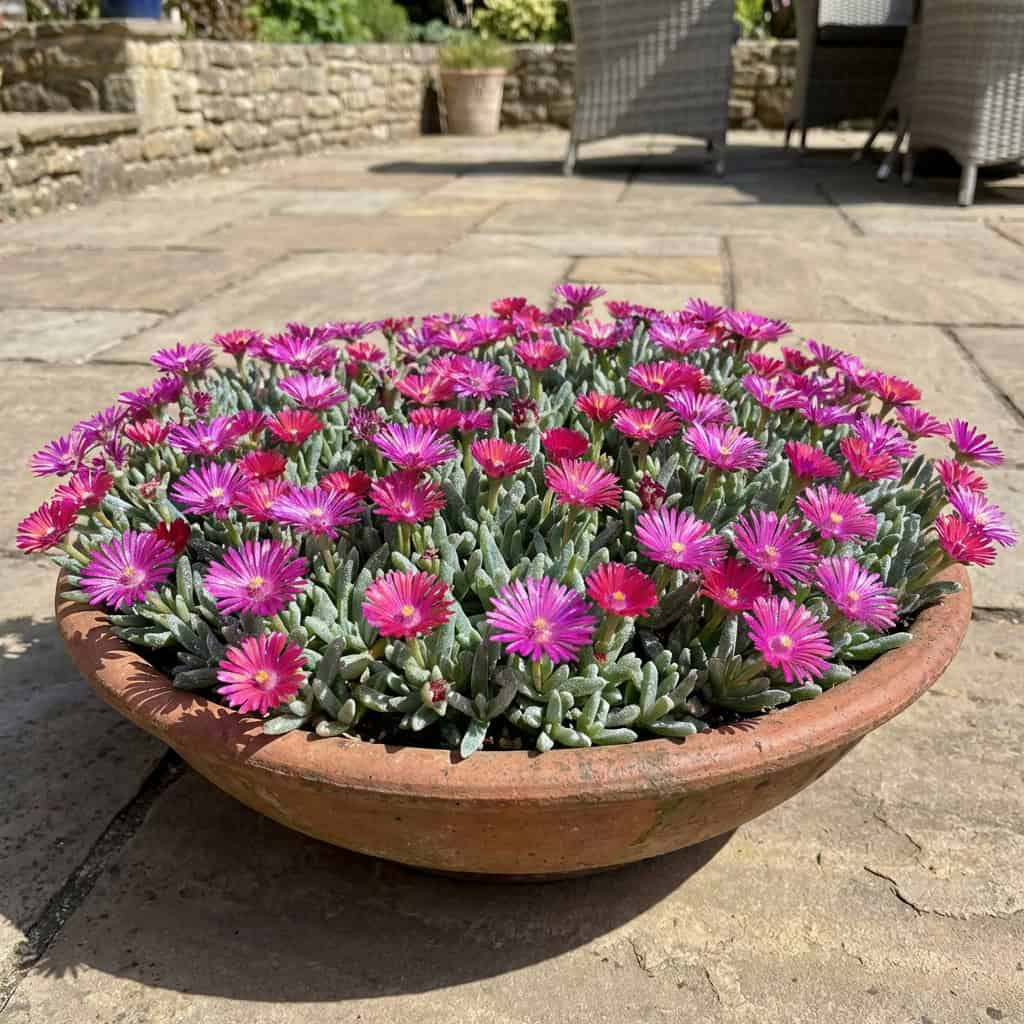
Ice plant is the succulent groundcover that flowers like it has something to prove.
Its fleshy, finger-like leaves form a low, spreading mat, and from that mat rise hundreds of daisy-shaped flowers in neon shades of pink, purple, orange, yellow, and magenta. The petals have a shimmering, almost metallic quality that catches light in a way that looks electric in full sun.
In a shallow pot, a wide planter, or spilling over the edge of a raised container, ice plant is eye-catching and effortless. It stores water in its leaves, handles drought without flinching, and blooms heaviest in the hottest part of summer — exactly when you need color the most.
Water it once a week or once a month. It does not care. It is too busy flowering.
A sunny patio does not have to be a plant graveyard.
Every plant on this list was built for the conditions that kill the plants you bought last year — full sun, intense heat, and an owner who has better things to do than hover over a watering can every morning.
Pick three or four. Put them in pots. Put the pots in the sun. And then go live your life.
They will be fine. They were fine before you showed up, and they will be fine after you forget about them for a week. That is the whole point.