


You planted them for the color. The neighbors slow down to look. The petals catch the light at six in the evening and the whole bed glows.
And something is watching too.
Some of the prettiest flowers in your yard are doing double duty. By day they’re the showpiece. By night, or in the heat of August, they’re a buffet line for beetles, slugs, aphids, and wasps that wouldn’t otherwise bother stopping by.
This isn’t about ugly weeds or obvious problem plants. It’s about the ones you chose on purpose, paid good money for, and babied through a dry July. The fragrance, the soft petals, the sugary nectar — the same traits that sell them to you sell them to the pests.
None of this means you should rip them out. Most earn their place. But you should know what you’re inviting before you wonder why the patio suddenly has a wasp problem.
Here are 25 gorgeous flowers quietly turning your yard into a pest magnet — and what to do about each one.
1. Roses

Start with the obvious one. Everybody grows roses, and almost nobody connects the chewed-up petals to the bug that did it.
That bug is the Japanese beetle. Extension services at the University of Minnesota, the University of Missouri, and the University of New Hampshire all name roses the number-one host plant. The beetles work fast — they’ll skeletonize petals and leaves overnight, leaving lace where a bloom used to be.
Roses pull aphids too. Soft new growth and sweet fragrance read like a dinner bell.
So what actually works? Handpicking, mostly. Go out in the early morning when beetles are sluggish, hold a bucket of soapy water under the bloom, and tap. They drop straight in and can’t climb out. Do it daily during peak season, June through August, and you’ll knock the population down hard.
For the grubs in your lawn — the next generation — milky spore is a slow but lasting option that builds up in the soil over a few seasons.
One thing to never do: hang a Japanese beetle trap. Those pheromone lures pull in far more beetles than they catch, and most of the new arrivals land on your roses instead of the bag. You’d be advertising dinner to the whole neighborhood.
Keep — but plan your defense before June.
2. Hollyhocks
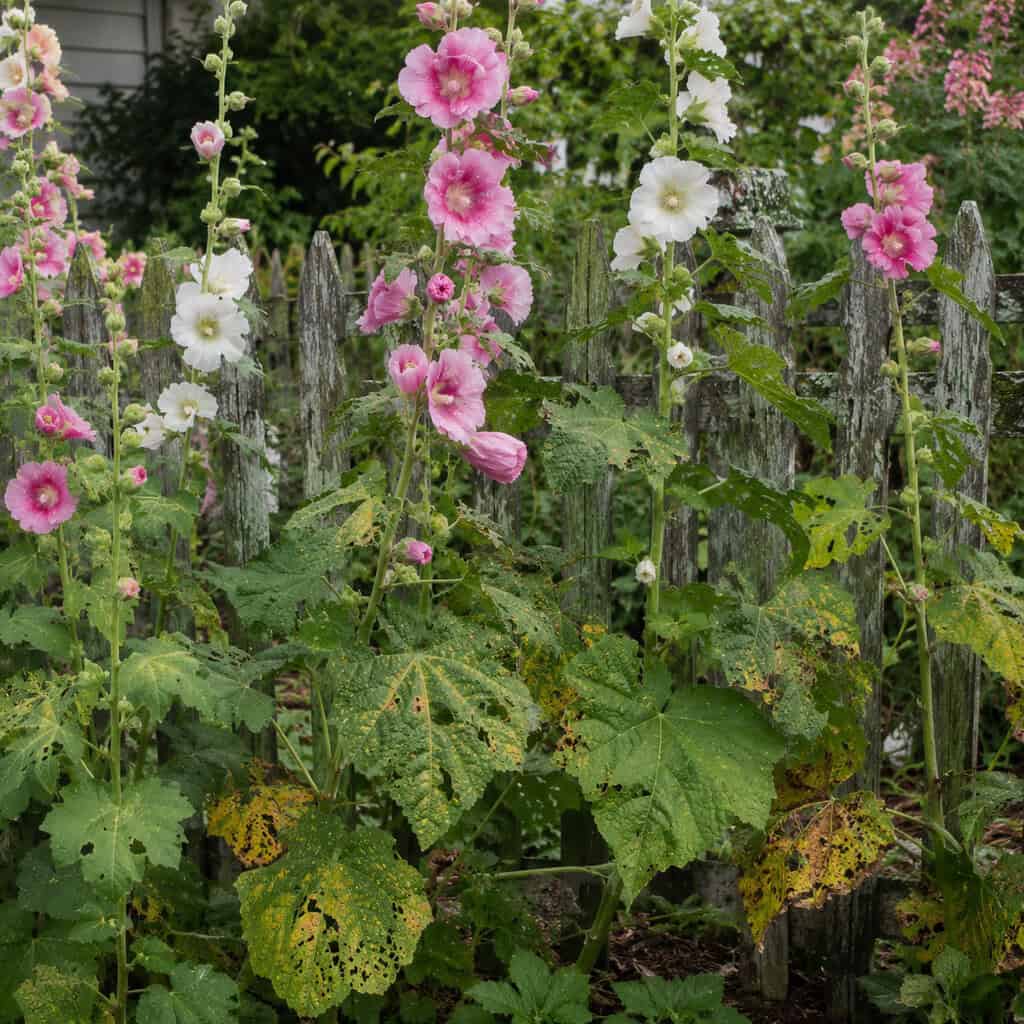
The cottage-garden classic. Six feet of paper-thin blooms climbing a fence, exactly the look people chase when they say “old-fashioned garden.”
Pest experts flag it for the same reasons you love it. Fox Pest Control points to the sweet scent, the bright color, and the soft petals — an easy target for Japanese beetles.
Then there’s hollyhock rust. Orange pustules spread across the undersides of the leaves and work upward until the foliage looks scorched. It’s almost a guarantee in humid summers.
So you get the beetle damage and the disease in one plant. Grow them anyway if you love the look. Just plant them where ratty lower leaves won’t ruin the view.
3. Rose of Sharon (Hardy Hibiscus)
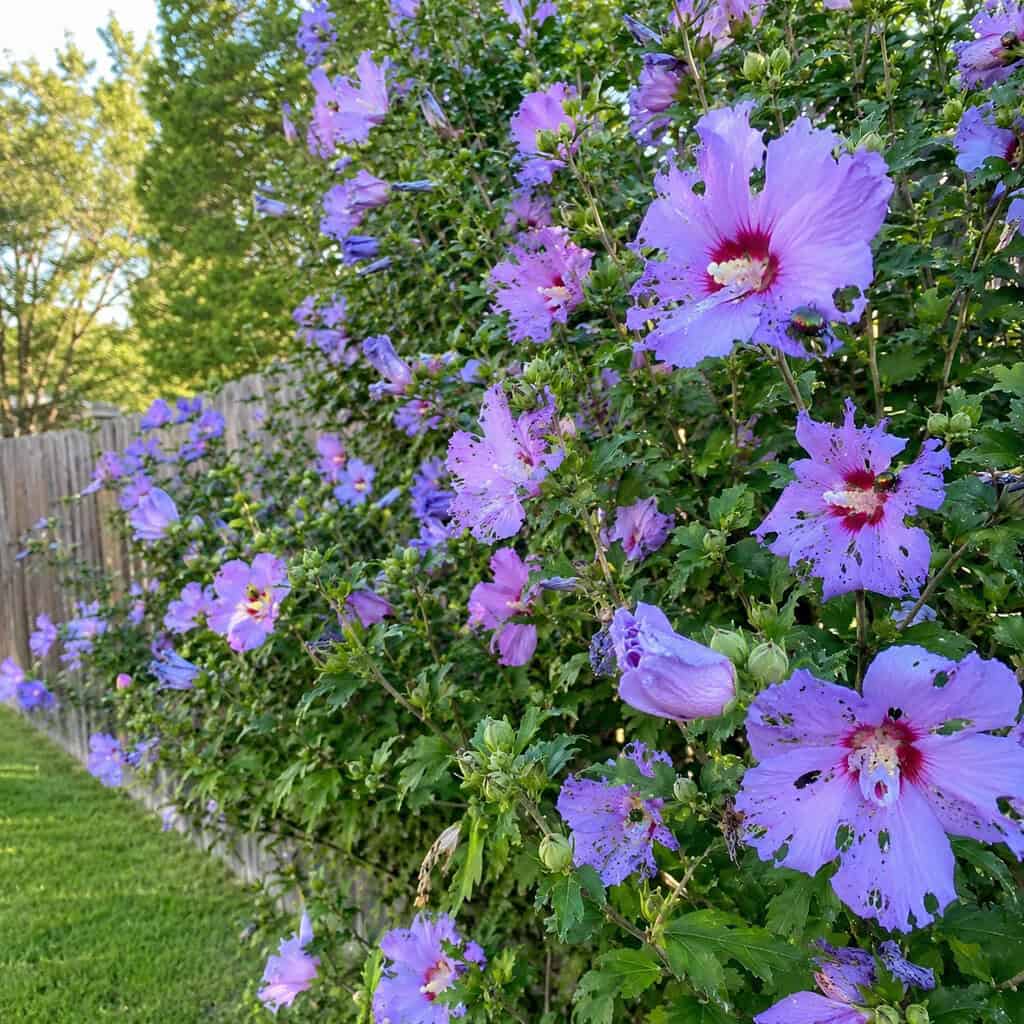
People plant this one to be left alone. It’s the low-care privacy shrub — fast, tall, covered in trumpet blooms by mid-summer.
The beetles have other plans. Missouri and New Hampshire extensions both list hibiscus and Rose of Sharon among Japanese beetle favorites, and those big open flowers shred fast.
You’ll notice the chewed blooms before you notice the beetles. By then there are usually a lot of them.
Same defense as roses: morning handpicking into soapy water, and skip the traps entirely.
4. Crape Myrtle
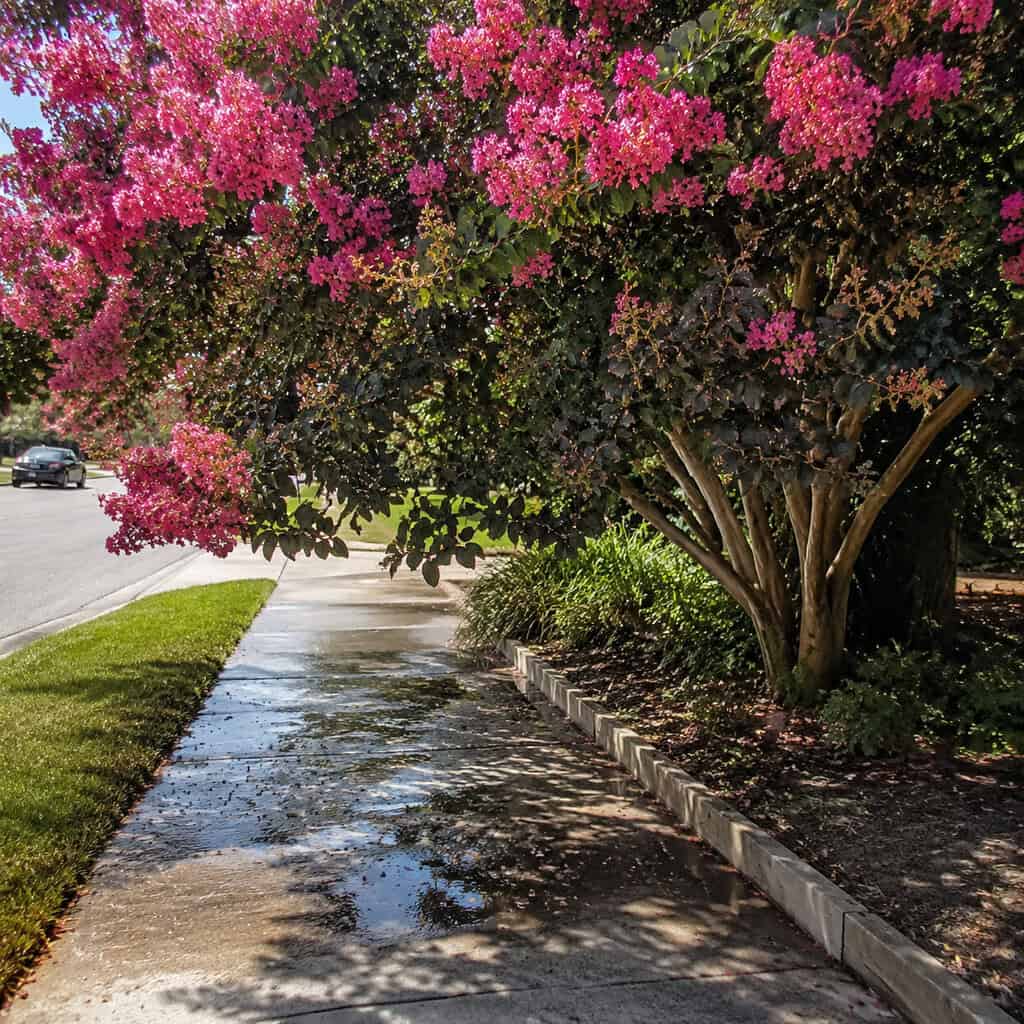
The signature flowering tree of every Southern street. And a double threat.
Japanese beetles go after the frilled blooms and seedpods. But the bigger nuisance is the crape myrtle aphid, which coats the leaves in honeydew — a sticky, sugary film.
That honeydew turns black. Sooty mold grows on it, blackening the leaves and anything underneath.
If you’ve ever parked under a crape myrtle and come back to a windshield glued shut, that’s the aphids. Same goes for the sticky sidewalk nobody can explain. Hose the tree down, encourage ladybugs, and don’t park your good car under it in July.
5. Purple Coneflower (Echinacea)

Here’s the irony. You plant echinacea specifically to feed the good bugs — bees, butterflies, finches working the seed heads in fall.
Gardening Know How lists those same tall daisy blooms among Japanese beetle favorites. So the native pollinator plant pulls in the pest beetles right alongside the pollinators.
Aphids find it too, clustering on the stems below the flowers.
The damage is mostly cosmetic on an established clump. A coneflower can take a beetle hit and keep blooming, which is more than roses can say.
6. Sunflowers

Tall, cheerful, the most optimistic plant in the yard. Also a genuine pest hub.
Sunflowers have extrafloral nectaries — little nectar glands on the stems and leaves, not just the flower. Ants find those, and ants farm aphids, herding colonies up and down the stalk for the honeydew.
The pollen-heavy disc draws wasps too, especially as summer wears into fall.
None of this is a reason to skip them. Gardeners often plant sunflowers as a deliberate trap — a sacrificial magnet that pulls pests off everything else. Just don’t line them up next to the patio table.
7. Zinnias
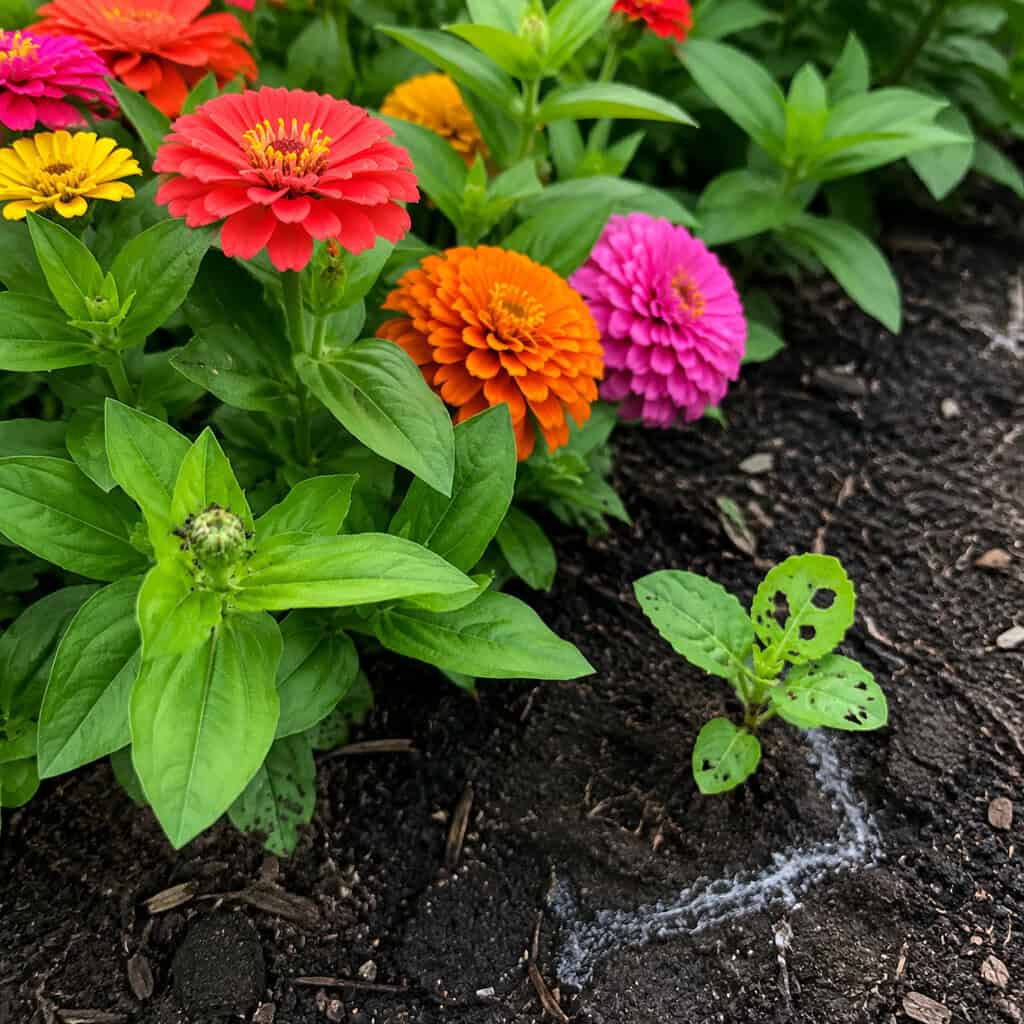
The cut-flower workhorse. Easy, colorful, blooms till frost.
Stressed or crowded zinnias attract aphids in a hurry, clustering on the soft new tips. And the seedlings barely stand a chance — slugs can wipe out a tray of young zinnias overnight.
Get them past that tender stage and they toughen up. Start them strong, space them for airflow, and bait the slugs early.
8. Cosmos

Airy and romantic, the picture of a low-maintenance flower. The kind you scatter and forget.
Aphids and thrips don’t forget. Both move in on the soft foliage and buds, which is exactly why some gardeners use cosmos as a sacrificial plant to pull thrips off their vegetables.
Delicate-looking doesn’t mean innocent. A cosmos patch can be quietly hosting a thrip population while it sways in the breeze.
9. Nasturtiums
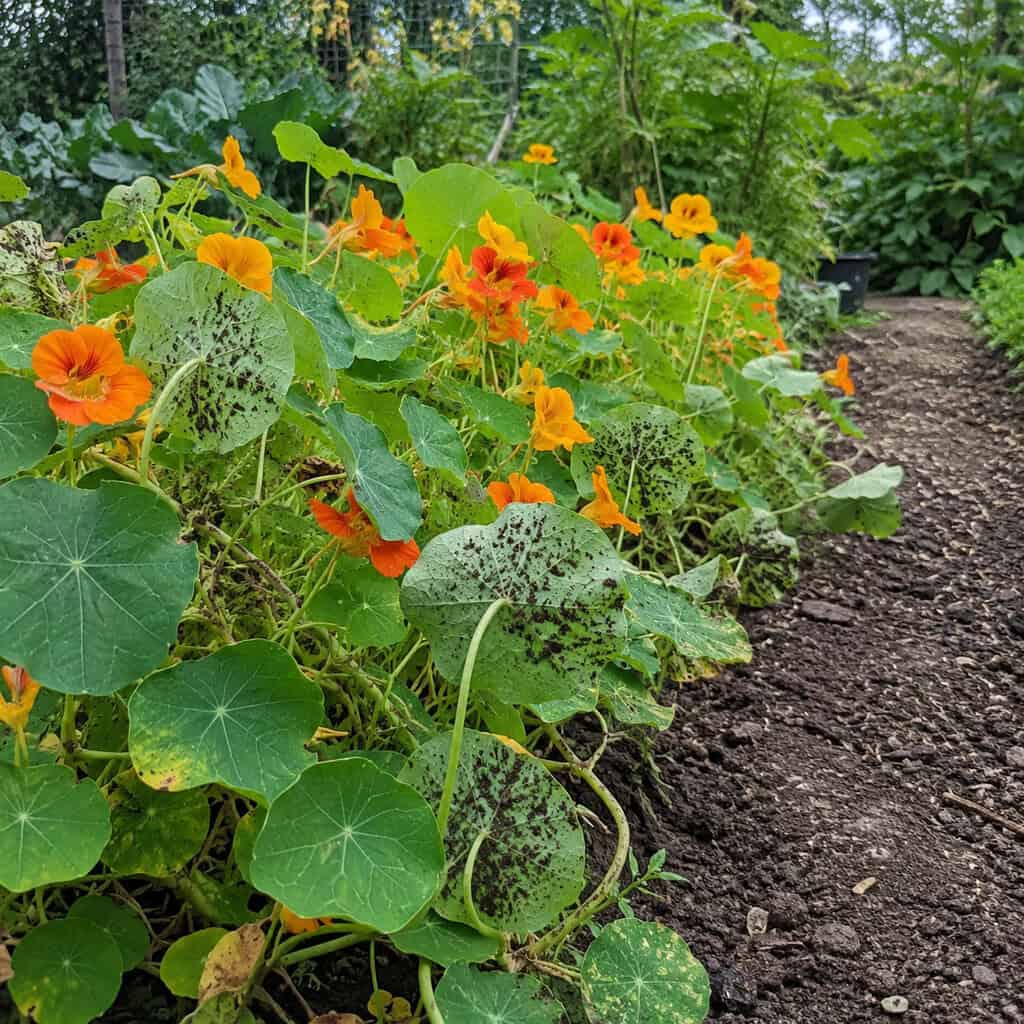
This one’s a confession. Nasturtium is the textbook aphid trap crop.
Park Seed and plenty of others recommend it precisely because it magnetizes aphids, whiteflies, and squash bugs — drawing them away from your tomatoes and squash.
So gardeners plant a pest magnet on purpose. That’s the whole strategy.
Fine, as long as you know what you’re doing. Plant nasturtiums as a decoy at the edge of the garden, not as a pretty border by the back door where you’d rather not host aphids.
10. Calendula (Pot Marigold)

Cheerful, edible, easy to confuse with true marigolds. It earns its own slot because it behaves differently.
Calendula is notoriously loved by pests. It pulls aphids, thrips, and whiteflies, and slugs go straight for the soft foliage.
Like nasturtium, it gets used as a trap crop for exactly that reason. The flowers are gorgeous and edible — the leaves are bait.
11. Marigolds
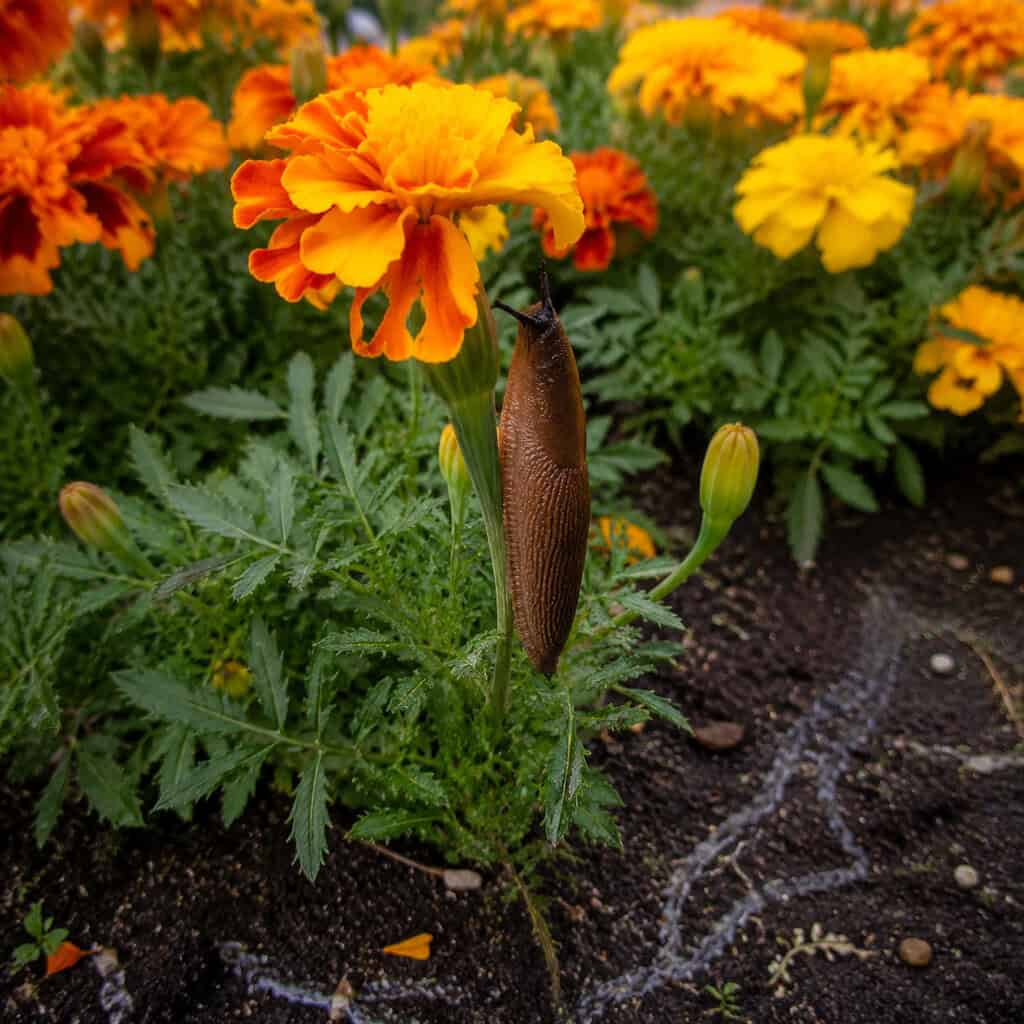
Time for the big myth-buster. Marigolds have a reputation as a repellent, the plant you tuck around the vegetable bed to keep pests away.
Slugs didn’t get the memo. They treat marigolds as a favorite meal and will climb walls and hanging baskets to reach them.
The plant’s pest-attracting side pulls in predatory wasps as well. Some of that is useful — wasps hunt caterpillars — but it’s not the bug-free zone the reputation promises.
Plant marigolds for the color. Don’t plant them expecting a force field.
12. Dahlias

People baby these. The tubers get dug up, dried, stored in a cool basement all winter, and replanted with real hope in spring.
Then the slugs find the new shoots. Gardeners report slugs bypassing every other plant in the bed to reach the dahlias and shredding the tender growth to nothing.
Ants and aphids work the buds and stems too.
The heartbreak factor is high here. Bait for slugs the moment shoots break ground in spring — not after the damage shows. By then the season’s already dented.
13. Hostas
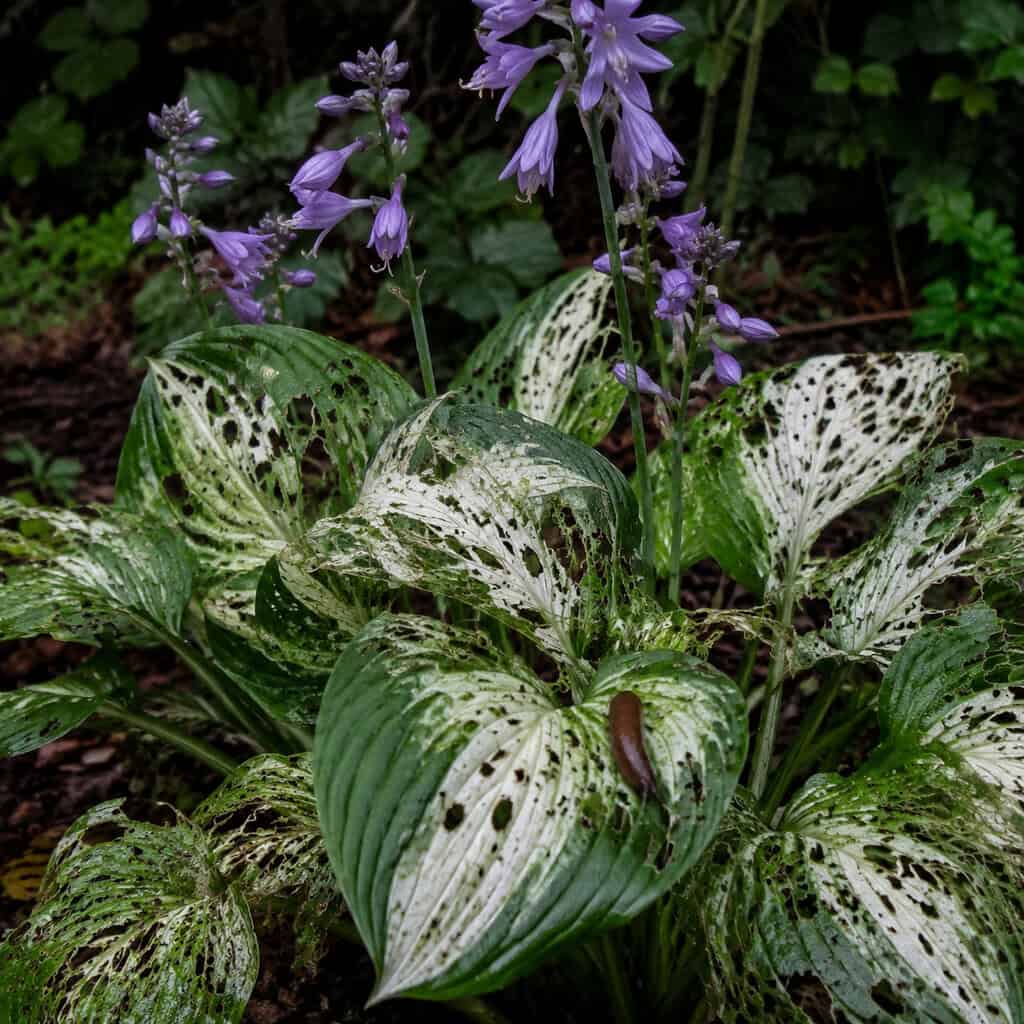
If you garden in shade, you already know. Hostas are the slug buffet against which all other slug buffets are measured.
Those lush, broad leaves hold moisture and sit close to the damp ground — perfect slug territory. The overlooked lavender flower spikes draw them too.
Come back after a wet week and the leaves are lace. Holes everywhere, edges chewed ragged.
Copper tape around the bed, beer traps, or iron-phosphate bait will all help. So will watering in the morning instead of at night, so the soil dries before the slugs go hunting.
14. Petunias

Another reputation that doesn’t hold up. Petunias get marketed as nature’s pesticide, a flower that supposedly keeps bugs off.
UK growers describe the soft, juicy leaves as candy to slugs. In borders and hanging baskets alike, they get devoured.
Tobacco budworms are the other problem, boring into buds so the flowers never open or come out riddled with holes.
Lovely flower. Just not the bodyguard the label suggests.
15. Larkspur & Delphinium
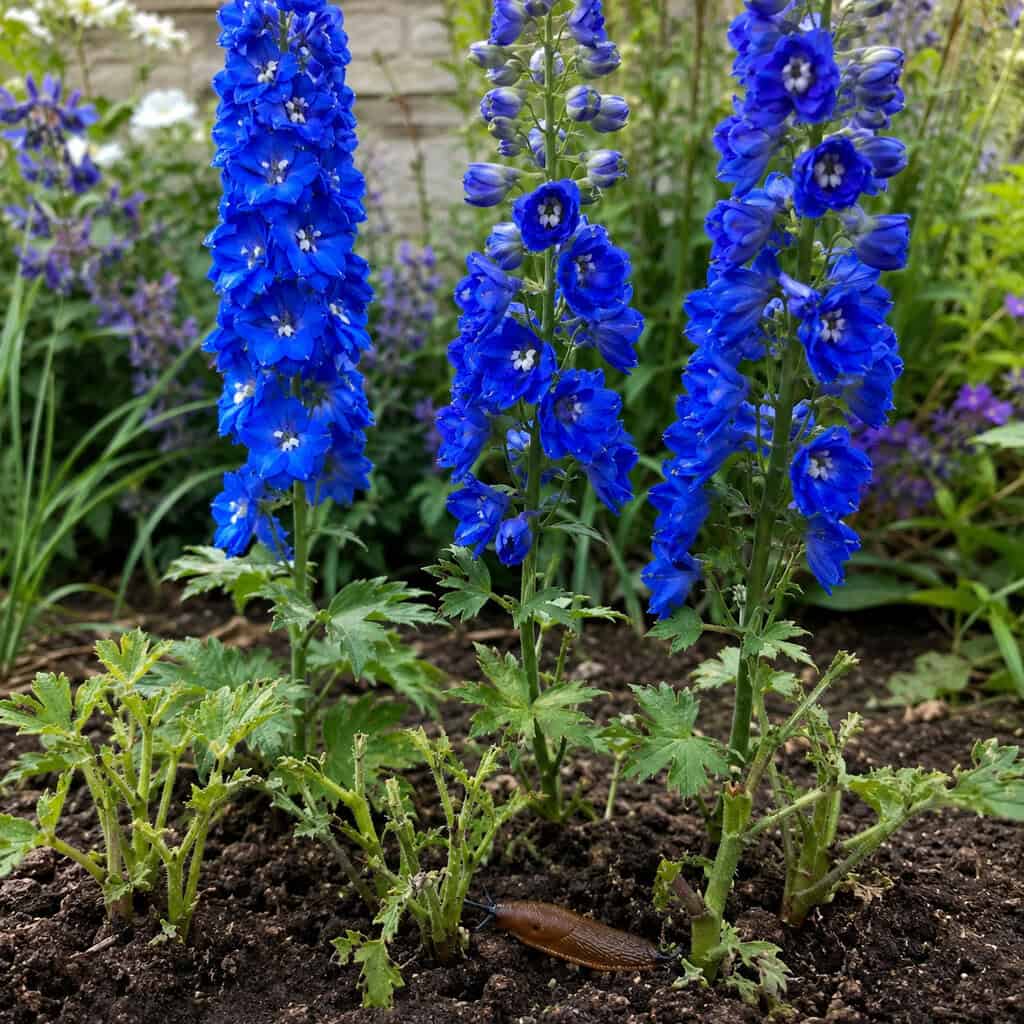
The blue spires every cottage garden wants. Vertical drama, that hard-to-find true blue, the back-of-the-border star.
Slugs love them without fail. The petals and especially the new shoots get hit early, before the plant has any size to spare.
It’s a less obvious pick than hostas, which is exactly why people get blindsided. You’re watching the bloom spike for color and missing the chewing at the base.
Protect the young growth in spring. After that the stems toughen up and the worst is over.
16. Lupines

The eco-friendly darling. A nitrogen-fixer, a pollinator magnet, the plant you’re told to feel good about.
It attracts slugs at an alarming rate. Young lupine growth gets shredded fast, and lupine aphids are a known, specific pest — big pale aphids that pile onto the flower spikes.
So the virtuous plant comes with a pest list of its own. Bait slugs early, blast aphids off with the hose, and the lupines will reward you anyway.
17. Sweet Alyssum
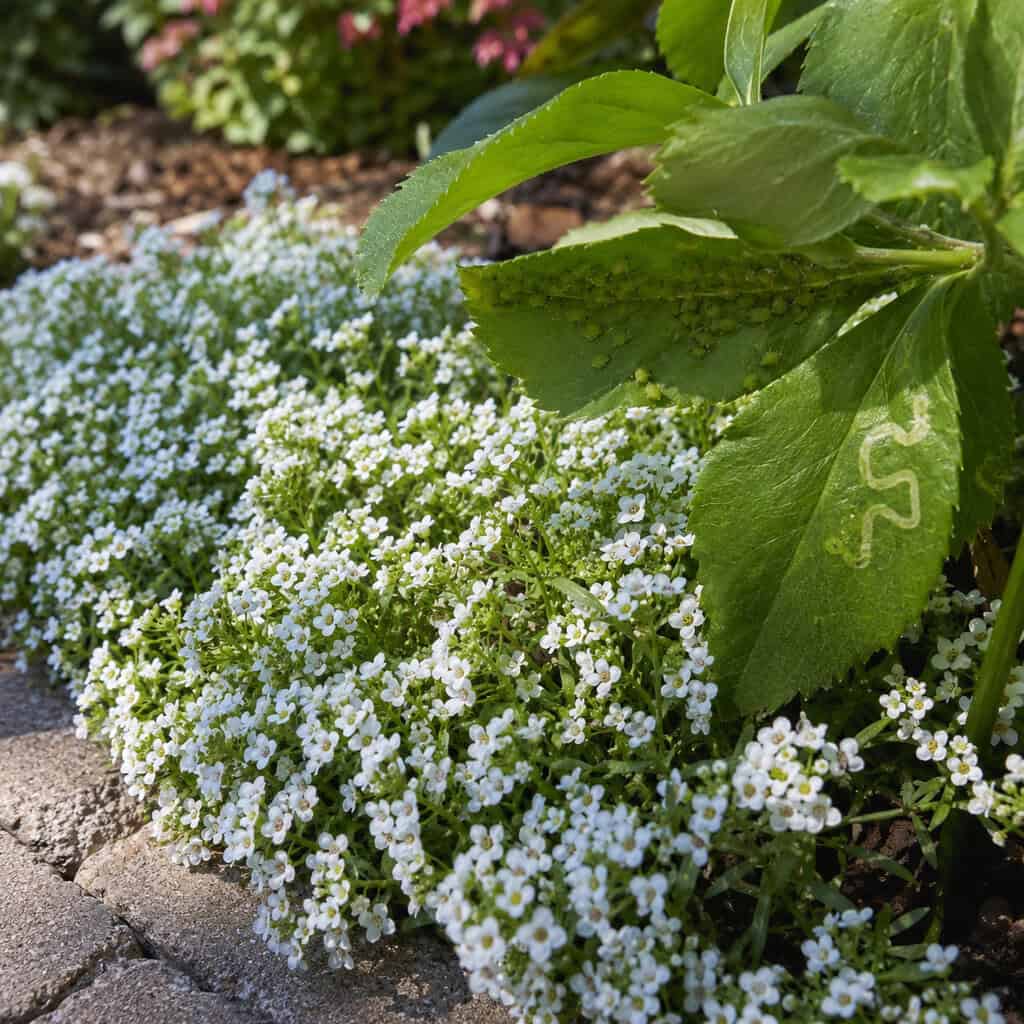
This one fits the word “quietly” perfectly. Sweet alyssum is a low carpet of tiny flowers, often used as living mulch around bigger plants.
That carpet doubles as a trap. It draws aphids and leaf miners, effectively growing an aphid-attracting mat right where you tucked it for ground cover.
It’s subtle and it’s everywhere — edging beds, spilling out of containers. Most people never suspect the sweet little froth of white flowers is also a pest nursery.
18. Milkweed

Read this one carefully, because the easy reaction is the wrong one.
Milkweed is the single most important plant for monarch butterflies. It’s the only thing monarch caterpillars eat. Its conservation value is enormous, and nothing below changes that.
But it gets swarmed by oleander aphids — those bright yellow clusters that pile onto the stems in summer until the plant looks dipped in mustard. They’re hard to miss.
What makes them stubborn is clever. The aphids sequester milkweed’s toxins in their own bodies, so they taste foul. Even ladybugs tend to leave them alone, which means the usual cleanup crew doesn’t show up.
The damage is almost entirely cosmetic. The plant survives, the monarchs keep coming, and the aphids look worse than they are.
If you can’t stand the sight of them, blast them off with a strong jet of water or wipe them off by hand. That’s it. Do not reach for insecticide — sprays kill monarch eggs and caterpillars right along with the aphids, which defeats the entire reason you planted milkweed.
And never pull the milkweed. The monarch value dwarfs the nuisance every time.
19. Lantana

Heat-loving, drought-proof, a nonstop color machine through the worst of summer. Sold in some places as a mosquito-repellent plant, which is where the irony starts.
Lantana is a documented whitefly host. Patent literature on the subject describes whiteflies overwhelming plantings of lantana — clouds of them lifting off when you brush the leaves.
Aphids work the new growth too.
So the plant you bought to push bugs away is itself a whitefly motel. Grow it for the heat tolerance and the color. Don’t grow it as pest control.
20. Butterfly Bush
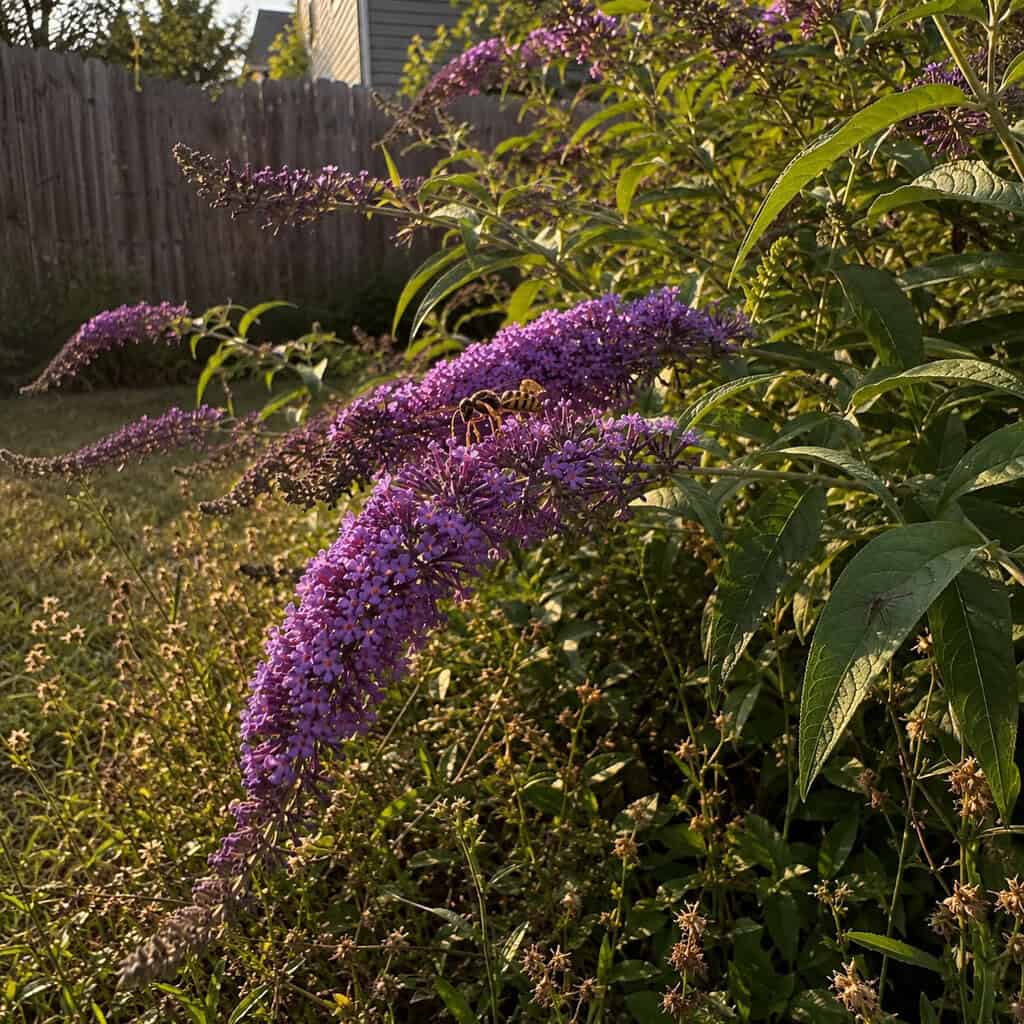
Few plants get sold harder as a pollinator dream. The name does half the work — buddleia, the butterfly bush, covered in nectar spikes and fluttering wings.
The reality underneath is messier on several fronts.
Peer-reviewed field studies found butterfly bush more attractive to Asian tiger mosquitoes than native plants. That’s the aggressive daytime-biting mosquito that ruins backyard time, and it’s drawn to the very shrub you planted to enjoy the yard. The nectar pulls wasps in too.
Then there’s the butterfly problem hiding in the name. Butterfly bush feeds adult butterflies nectar but offers nothing to their caterpillars — no host value at all. So it’s a dead end. The butterflies sip and leave, and the next generation has nowhere to grow up.
On top of that, it’s invasive across much of the country, seeding into wild areas and crowding out the native plants that actually support the full butterfly life cycle.
If mosquitoes near the patio are your battle, this shrub isn’t helping. Swap it for a true native nectar plant that earns the pollinator name, and keep the standing-water and mosquito basics in check around the yard.
21. Goldenrod

First, the myth: goldenrod does not cause your fall allergies. Its pollen is heavy and sticky, carried by insects, not wind. The real culprit is ragweed, blooming at the same time and getting blamed by association.
Now the actual issue. Goldenrod lights up in late summer and fall in glowing yellow plumes — exactly when wasps and yellowjackets are hunting hardest for nectar. The timing makes it a beacon.
That’s the quiet trap. A stand of goldenrod hums with wasps right when families are still using the yard before the season closes.
Placement is everything. Keep goldenrod well away from patios, doorways, and play areas, out toward the back of the property where the wasp traffic doesn’t matter. It’s fantastic for native pollinators when it’s not parked next to where you eat lunch.
If a yellowjacket nest turns up in the ground nearby, that’s not a DIY job at dusk with a flashlight. Ground nests can hold thousands of wasps, and they defend aggressively — call a pest professional rather than risking a swarm of stings.
22. Sedum ‘Autumn Joy’
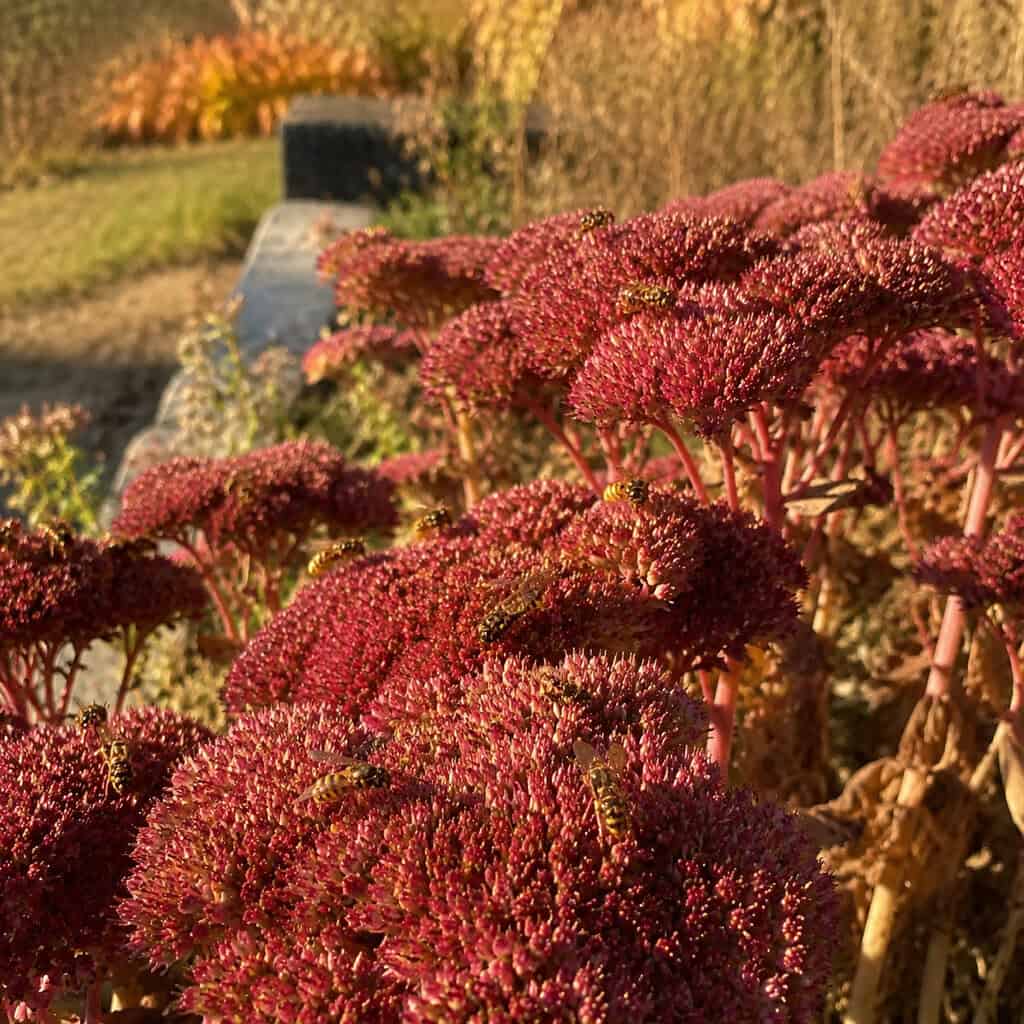
The reliable low-water perennial, flat broccoli-head flowers turning from pink to rust as fall comes on. Tough as nails, beloved by xeriscapers.
Those dense flower clusters become a wasp hotspot in autumn, when almost nothing else is blooming and the wasps are desperate for nectar.
This explains a mystery a lot of homeowners notice — the sudden wasp surge in September around one particular plant. It’s usually the sedum.
Enjoy it. Just plant it where a crowd of wasps in fall won’t be a problem.
23. Asters

Asters get recommended as the wasp-free late-season alternative. That’s only half true.
The University of Wisconsin Arboretum notes a wide range of wasps visiting aster flowers. Meanwhile the foliage feeds lace bugs and aphids down below.
So they’re not the clean swap they’re billed as. They’re a great native fall bloomer — they’re just not a wasp-free one.
Honesty keeps the list useful. No late-summer nectar plant is going to be truly wasp-proof.
24. Queen Anne’s Lace

Those flat white umbels make a perfect landing pad for wasps. Wide, sturdy, easy to walk across — the flower shape practically rolls out a welcome mat.
It self-sows aggressively, too, edging toward weed rather than well-behaved ornamental. Let it go and it takes over.
If you want the lacy look anyway, deadhead before it sets seed. Otherwise you’ll be pulling volunteers for years and feeding wasps the whole time.
25. Foxglove

The tall biennial spire, those speckled bell flowers marching up the stalk. Statuesque, a little gothic, a back-border showpiece.
Foxglove aphids are a named pest — pale green and partial to the soft growth and flower stems. Some slug damage shows up on young plants too.
The good news: mature foxglove largely shrugs off slugs, so the worst of it hits early and fades. Watch the aphids on the spikes, hose them off when they cluster, and let the plant do its dramatic thing.
Conclusion
None of these flowers are mistakes. They’re on every “best of” list for a reason — they’re stunning, and most of them earn their keep ten times over.
But beauty and bait aren’t opposites. The fragrance, the soft petals, the late-season nectar — the exact traits that won you over are the ones broadcasting to the beetles, slugs, and wasps.
Knowing which plant pulls which pest is half the battle. Now you can place them on purpose: the trap crops out by the vegetables, the wasp magnets away from the patio, the slug favorites where you’ll actually remember to bait.
The prettiest yard isn’t the one with no bugs. It’s the one where you saw them coming.