

The forecast is set. Snow is coming.
You are worried about bread and milk. But your indoor plants are facing a “triple threat.”
Acute low light. Freezing drafts. Aggressive dry heat.
Don’t let one storm undo months of growth. Here is your prep checklist to ensure your plants come out the other side unscathed.
1. The “Touch Test”
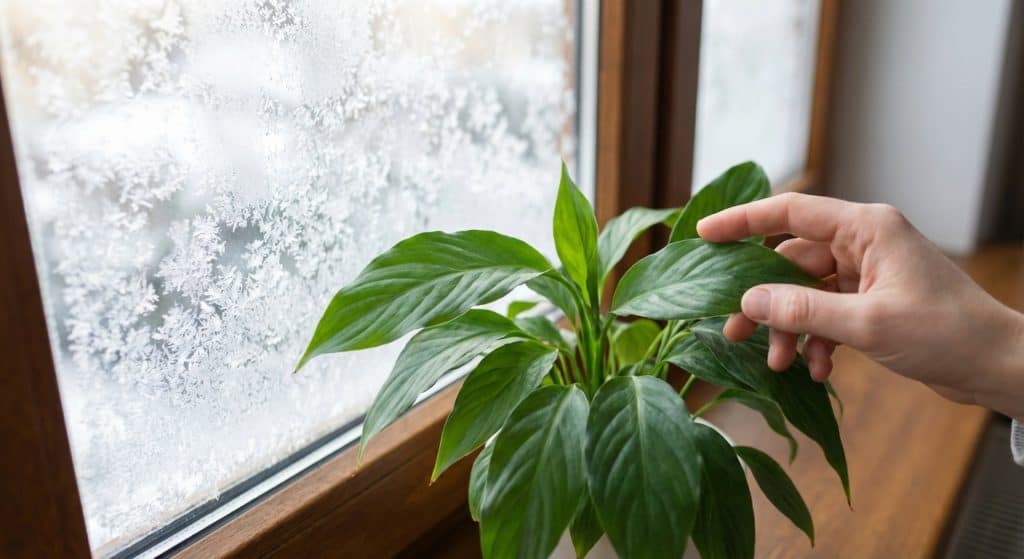
The Rule: No leaves touching the glass.
Window glass can reach near-freezing temperatures during a storm. If a leaf touches the pane, the cells rupture immediately. This is “cold burn.” It turns leaves permanently black or mushy.
Pull all window-sill plants back. Give them at least 6–12 inches of space.
2. Check for “Micro-Drafts”
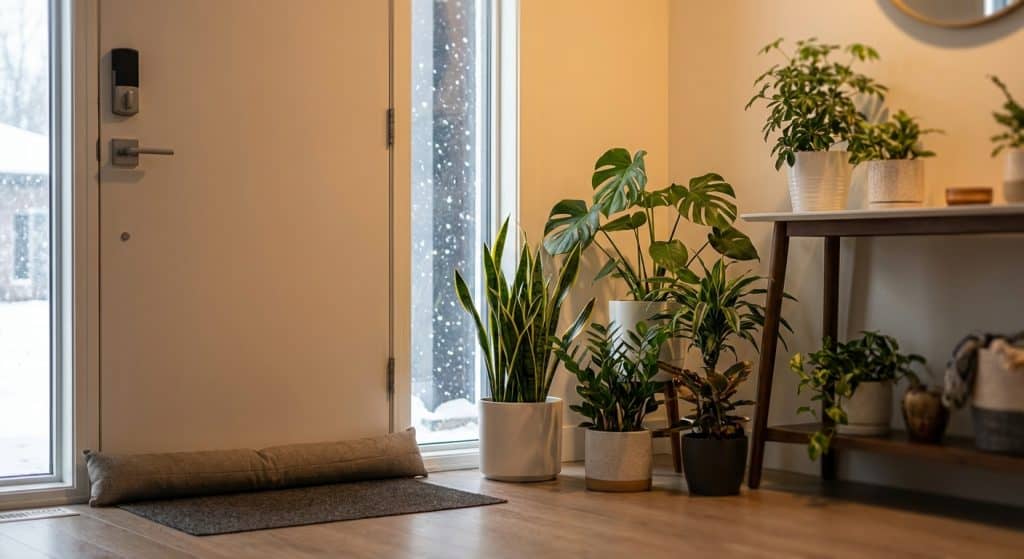
The Rule: If you feel a chill, they feel a freeze.
Snowstorms bring high winds. This forces cold air through tiny cracks in sealed window frames or door jams.
Move plants away from entryways. Move them out of drafty corners. Touch the pot. If the ceramic feels cold, the roots are too cold.
3. Watch the “Heater Blast”
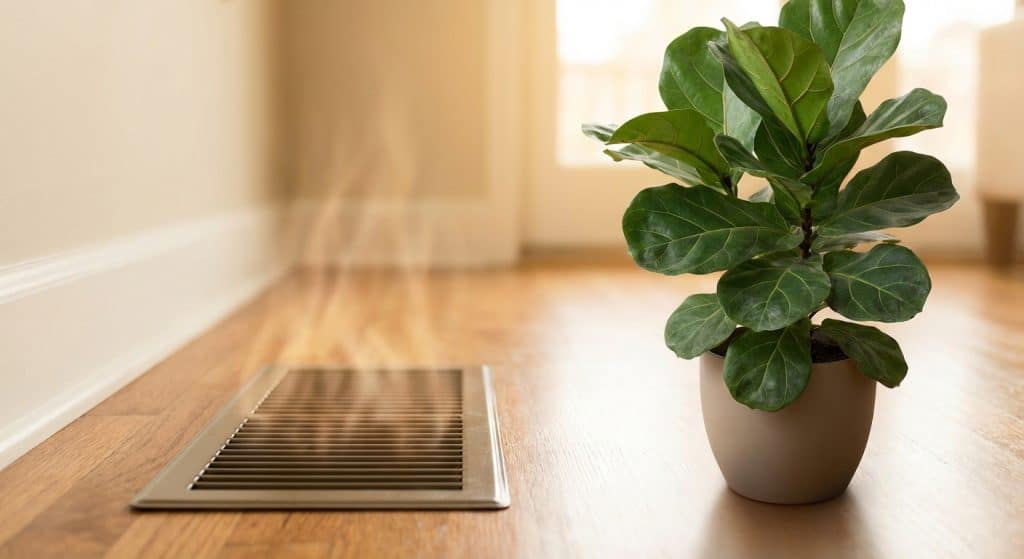
The Rule: No direct line of fire from vents.
When it snows, your heating system works overtime. Radiators get hotter. Vents blow longer.
Hot, dry air blowing directly on a plant can crisp up foliage in hours. Check your airflow. If a plant is in the path of a vent, move it.
4. The Humidity Huddle
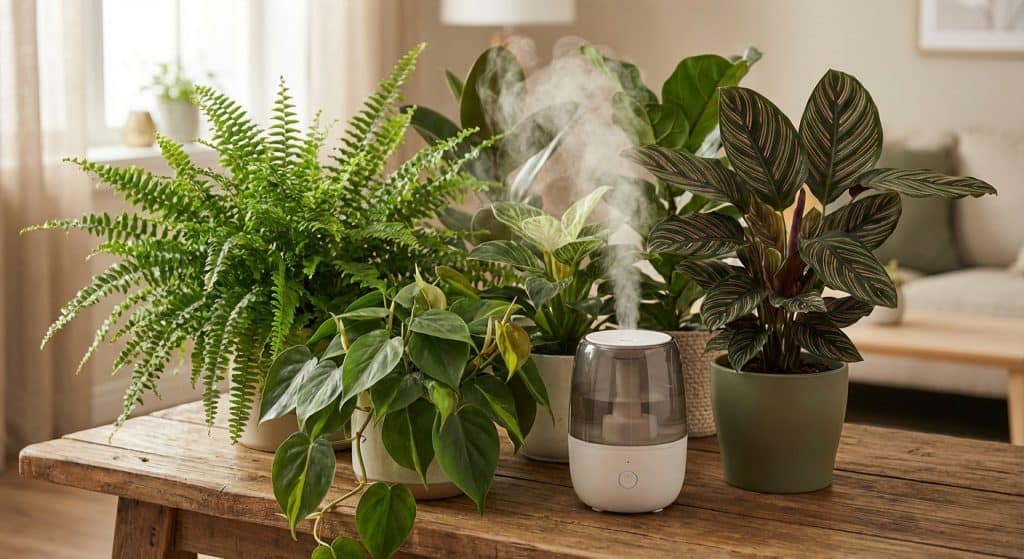
The Rule: Group your plants together.
The combination of cold outside air and cranking up the heat inside is brutal. Indoor humidity drops drastically. Often below 20%.
Move your plants into a cluster. They create a micro-climate. They share moisture as they transpire. It is a survival huddle.
5. The “Floor Lift”
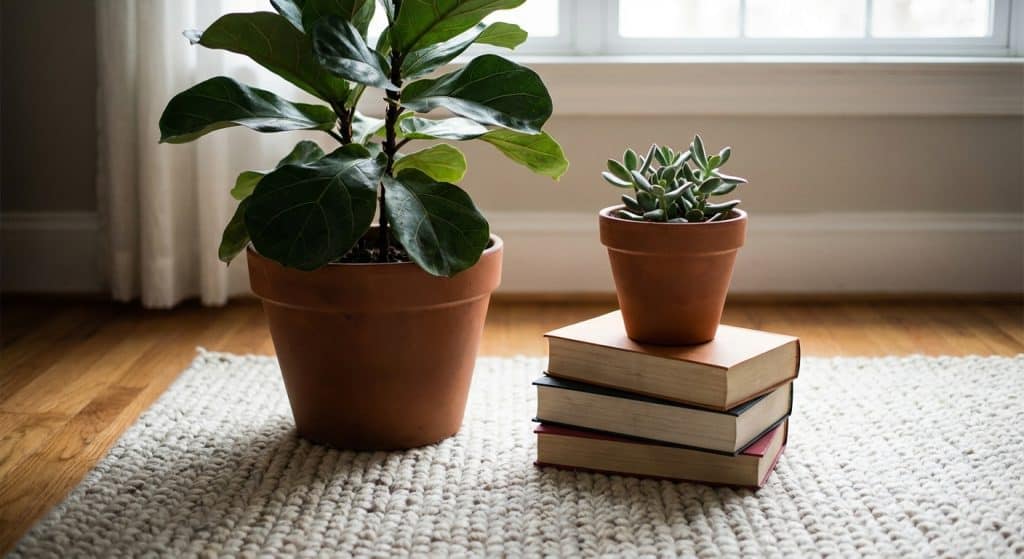
The Rule: Get plants off bare floors.
Cold air sinks. Uninsulated floors—especially tile or hardwood—can get very cold during a storm. This shocks the root systems of tropical plants.
Place floor plants on a rug. Put them on a stack of books. Use a plant caddy. Just get them off the cold ground.
6. Hold the Water
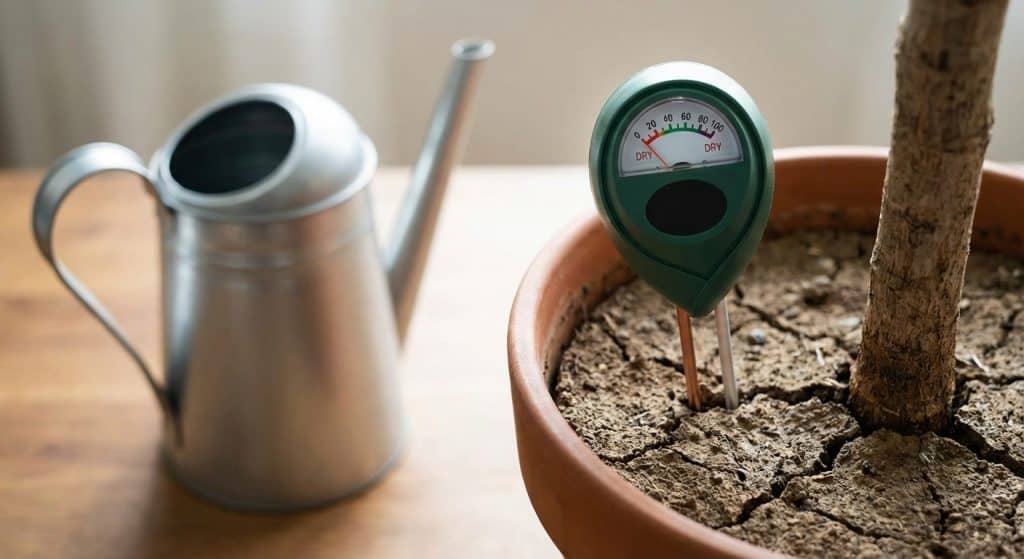
The Rule: Keep them on the dry side during the storm.
“Wet feet” plus “Cold air” is the fastest recipe for root rot. Water acts as a conductor for the cold.
Unless a plant is drooping from thirst, do not water it. Wait until the house warms up after the cold front passes.
7. Dust the Leaves
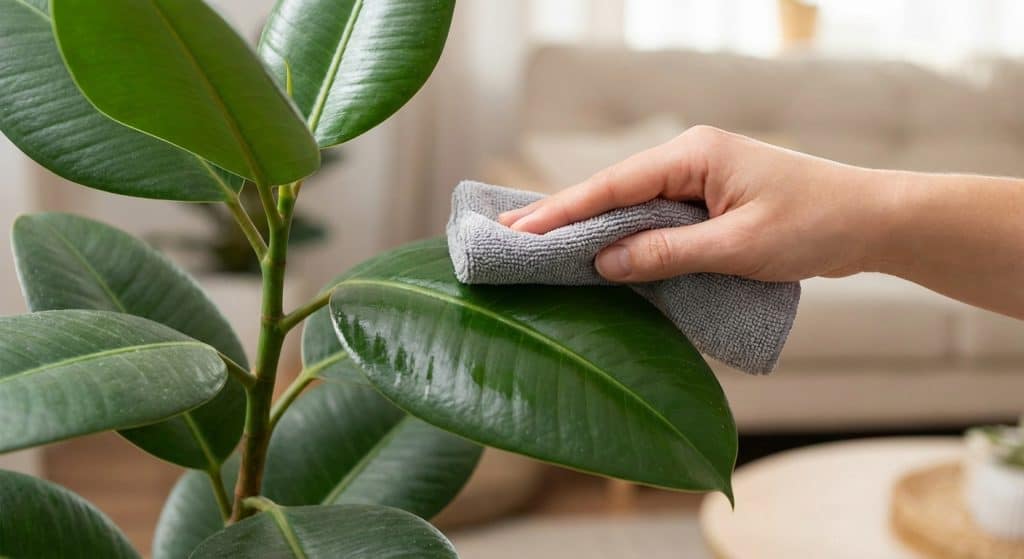
The Rule: Wipe foliage down before the clouds roll in.
Snowstorms mean grey, dark days. Dust blocks light.
Your plants need every photon they can get. Wipe the leaves. Ensure they can absorb the limited light available for photosynthesis.
8. The “Curtain Trap”

The Rule: Keep plants on the room side of the curtains.
Closing curtains at night helps insulate your home. But if you leave a plant on the windowsill behind the curtain, it is trapped.
That space becomes a pocket of freezing air against the glass. Make sure the plants are on the warm side of the drape.
9. No Snacks

The Rule: Do not fertilize right now.
A cold snap puts plants into survival mode. Forcing them to grow with fertilizer causes stress. It promotes weak growth that can’t survive the chill.
Let them rest. Save the plant food for a sunny day.
The Bottom Line
You have spent months growing your indoor jungle. Don’t let one storm ruin it.
Do the prep now. Then you can relax while the snow falls.