

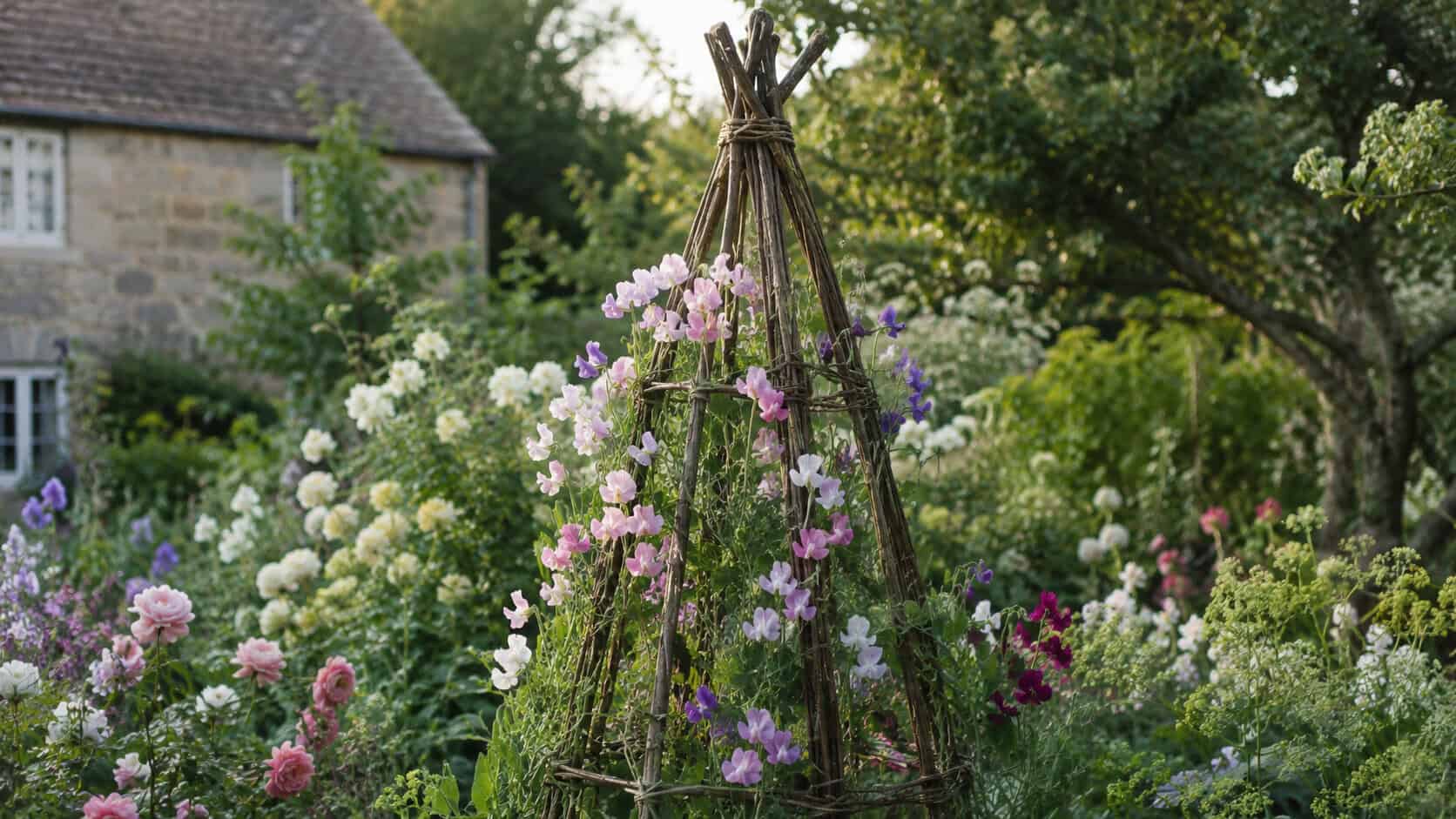
You’ve seen the gardens. The ones tumbling with roses, frothy with poppies, a mown path curving through it all like something out of a postcard.
Then you priced it out. A single garden arch runs $200. Stone paving? Don’t ask.
Here’s the trick the fancy magazines don’t lead with. The most expensive-looking cottage gardens are usually the cheapest to build.
Cottage style was born on the poor side of the fence. It came from cottagers cramming food, flowers, and herbs into tiny plots with no money and no plan. That scrappy, self-seeded, made-do look is exactly what reads as luxury now.
So lean into it. Here are 24 cottage garden ideas that look like you spent a fortune — while you spent almost nothing.
1. One Packet of Self-Seeding Annuals
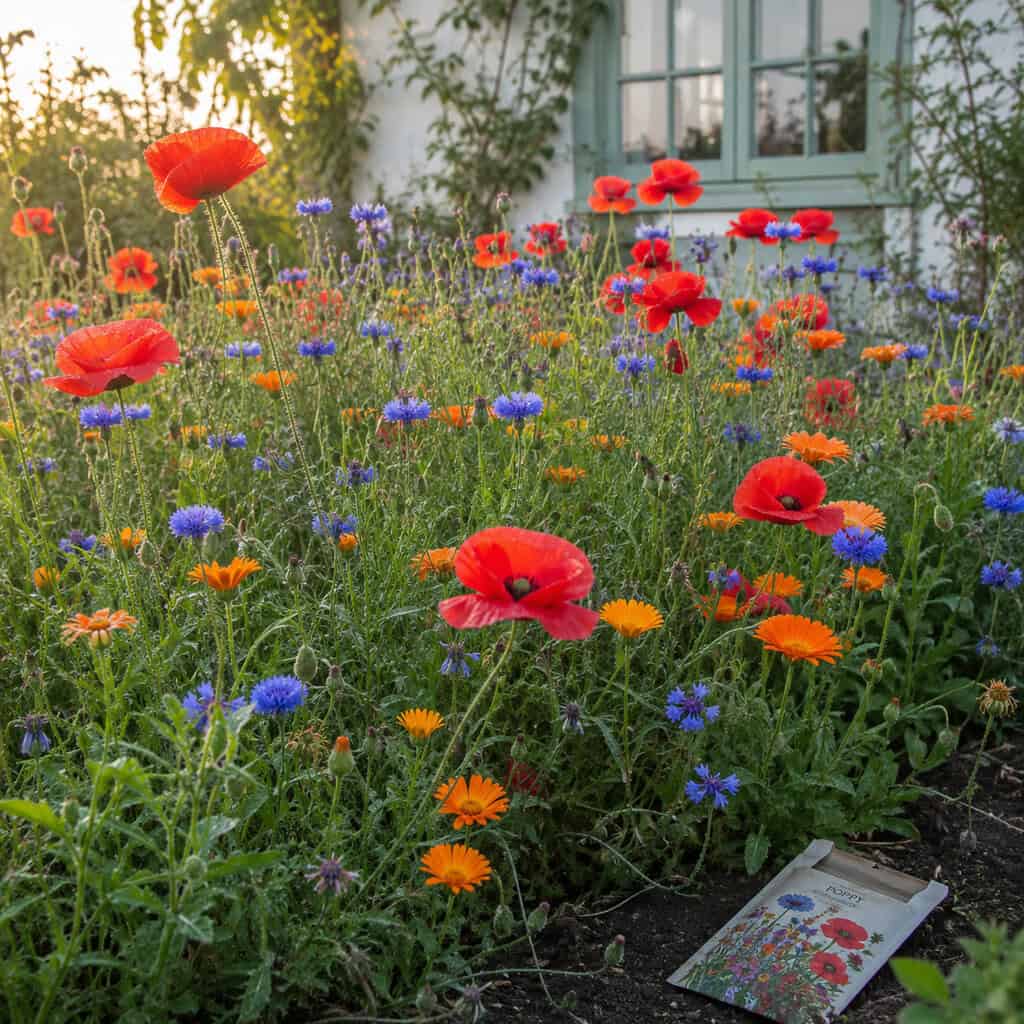
Start here. This is the cornerstone move that makes the whole thing work.
Poppies, calendula, cosmos, larkspur, nigella, cornflowers. Scatter one packet of each, and they drop their own seed at the end of the season and come back next year on their own.
You pay once. They fill your beds for years.
And the reason they look so good is that they arrange themselves. A plant reseeds where it wants — a poppy in the gravel, a cornflower leaning through a rose. That loose, unplanned drift is the exact look designers charge thousands to fake, according to Gardening Know How.
Let a few flowers go to seed each fall. Don’t deadhead everything. That’s the whole secret.
2. Foxgloves and Hollyhocks for Instant Height
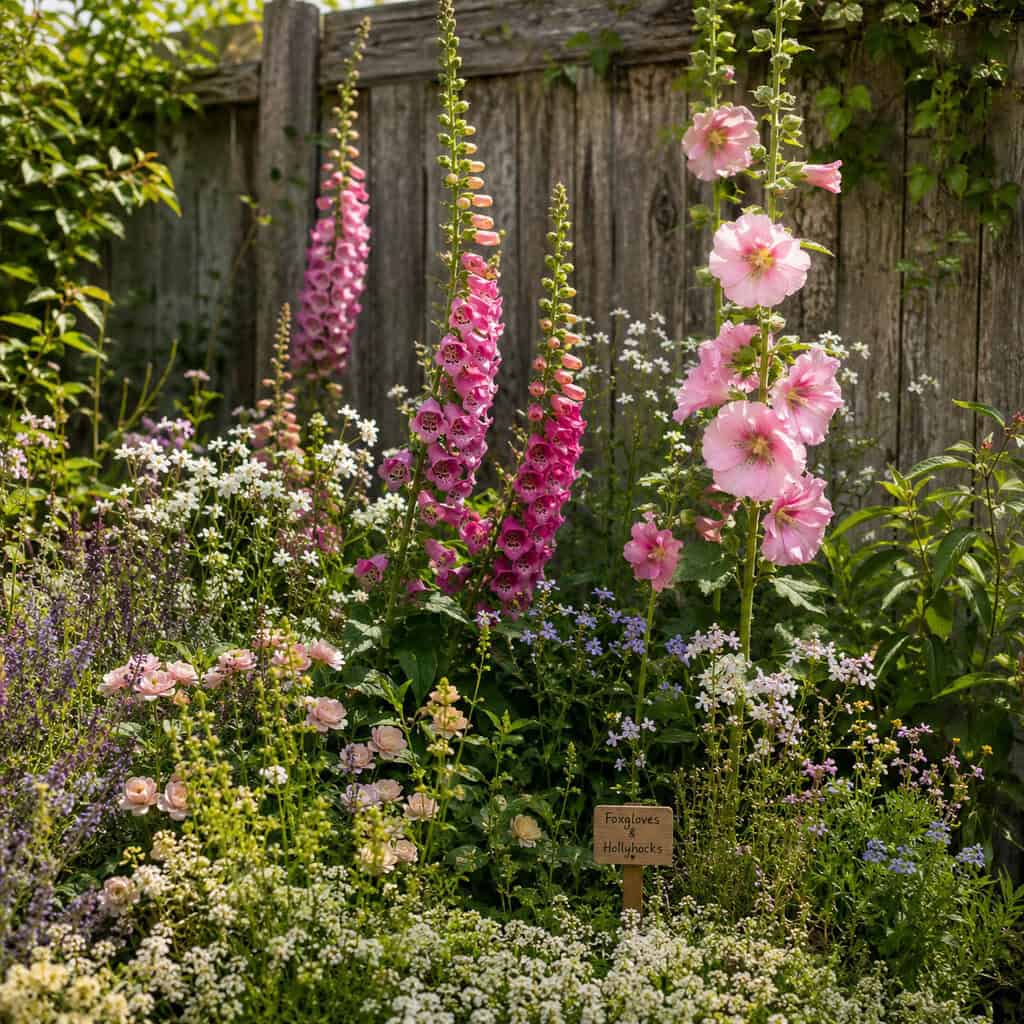
Want that layered English-border look? You need tall spires punching up through the froth.
Foxgloves and hollyhocks do it for the price of a seed packet. Both are biennials — leaves the first year, towering flower spikes the second — and both self-seed once they’re happy. Plant once, and they perpetuate on their own.
The tall vertical lines are what make a border look designed instead of dumped.
One warning, and it matters. Foxglove is poisonous. Every part of the plant is toxic to dogs, cats, and kids if eaten — it contains the same compounds used in heart medication. If you’ve got pets or little ones who chew, skip the foxglove and lean on hollyhocks, which are safe, for your height.
3. Divide Perennials Into Free Plants
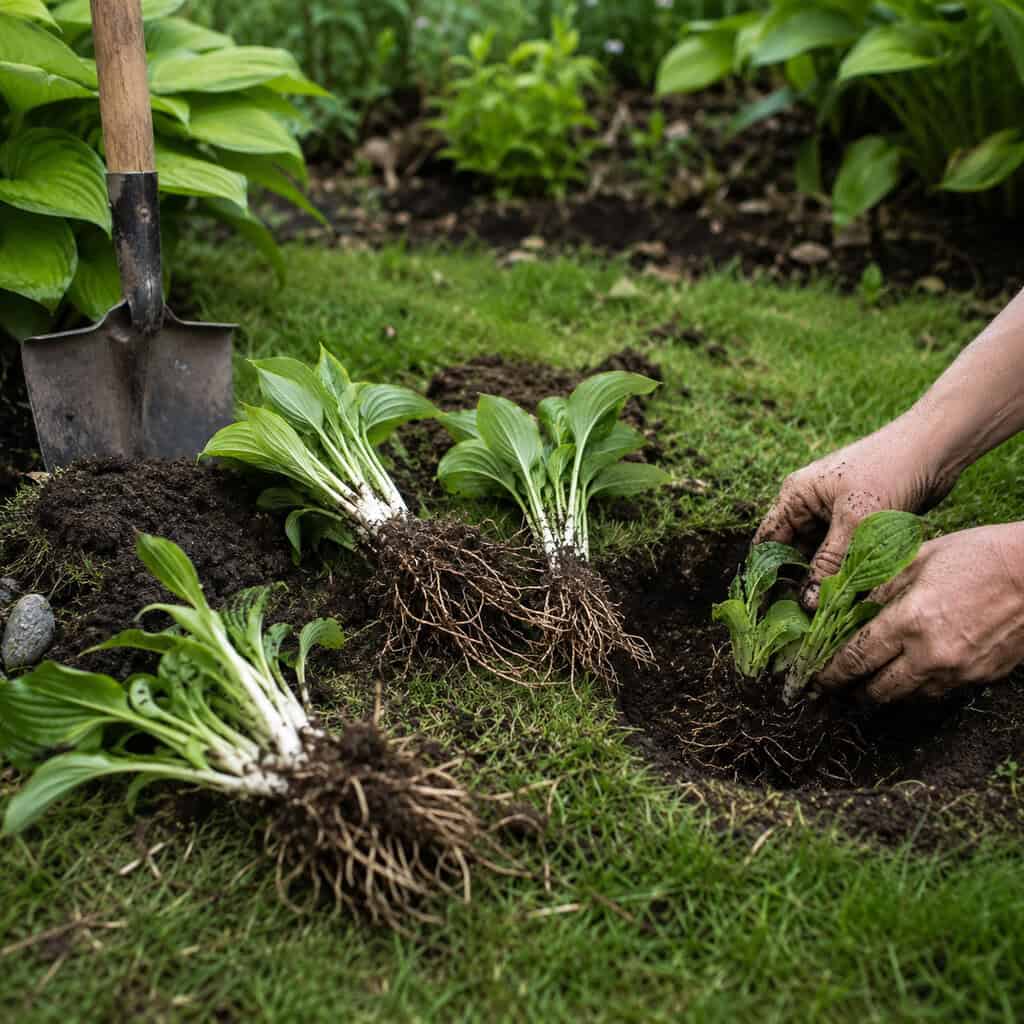
You already own more plants than you think.
Hostas, daylilies, and sedums bulk up into fat clumps over a few seasons. Every few years you dig one up, slice it into pieces with a spade, and replant each piece as a whole new plant.
One plant becomes four. Four becomes a dozen. For nothing.
Better still, dividing gives you multiples of the exact same plant. Cambridge University Botanic Garden runs a whole “plants for free” program on this idea. Repeating identical plants down a border is precisely what makes a garden look professionally planned.
4. Take Cuttings of Lavender, Salvia and Penstemon

Buy one lavender. End the summer with twelve.
Cottage staples like lavender, salvia, penstemon, and verbena root ridiculously easily from cuttings. Snip a few non-flowering shoots, strip the lower leaves, push them into gritty compost, and wait a few weeks.
Most of them take. You’ve turned a $6 nursery plant into a whole edging for a border.
This is the ultimate look-expensive, spend-nothing hack. A mass of matching lavender lining a path costs the same as one plant plus patience.
5. Plant in Drifts, Not Singles
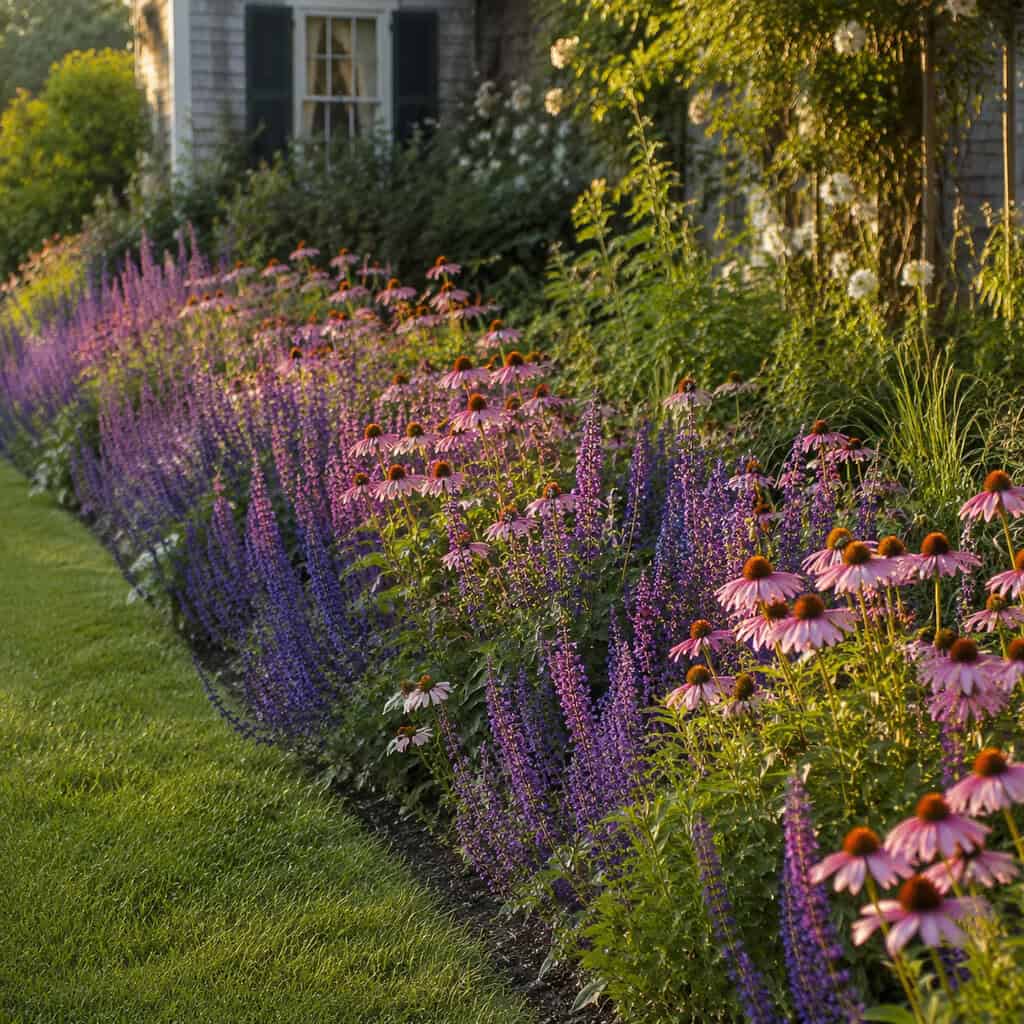
Here’s the mistake that makes a garden look cheap: one of everything.
You get excited at the nursery, grab a single plant of ten different things, and dot them around. The result looks busy and chaotic, like a sample rack.
Do the opposite. Plant in drifts — five, seven, nine of the same thing grouped together, then repeated further down the bed.
Designers at Homes & Gardens say repetition and mass planting is what reads as refined and high-end. And because you’re using your own divisions and self-seeders to make those drifts, it costs you exactly zero extra dollars.
6. Layer Your Planting for Height
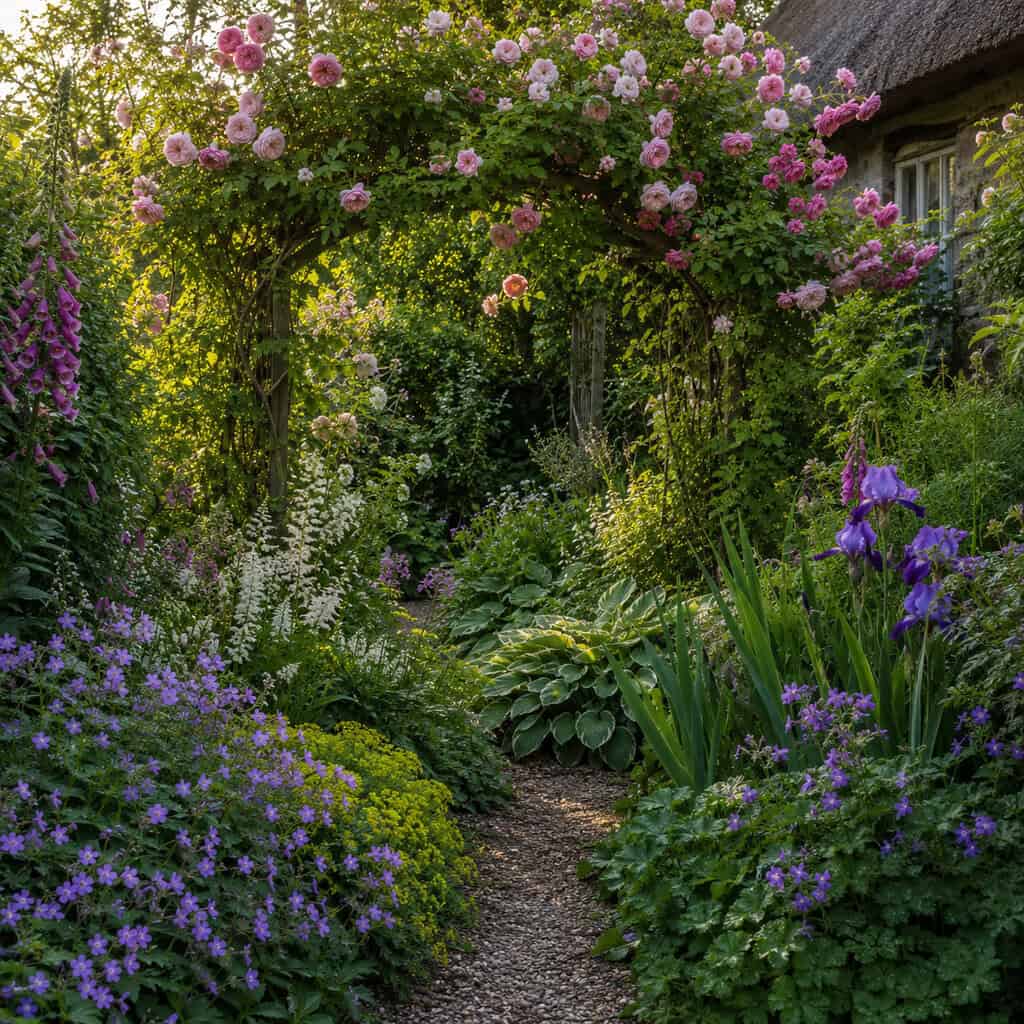
Flat gardens look cheap. Every plant at knee height, nothing overhead, no depth.
Think in layers instead. Low ground cover at your feet. Mid-level shrubs and perennials in the middle. Then something climbing or arching overhead.
Suddenly the garden feels lush and cocooning, like it wraps around you.
It’s a composition trick, not a spending one. You’re not buying more — you’re stacking what you have into vertical space so the eye has somewhere to travel.
7. Kill Bare Soil With Ground Cover
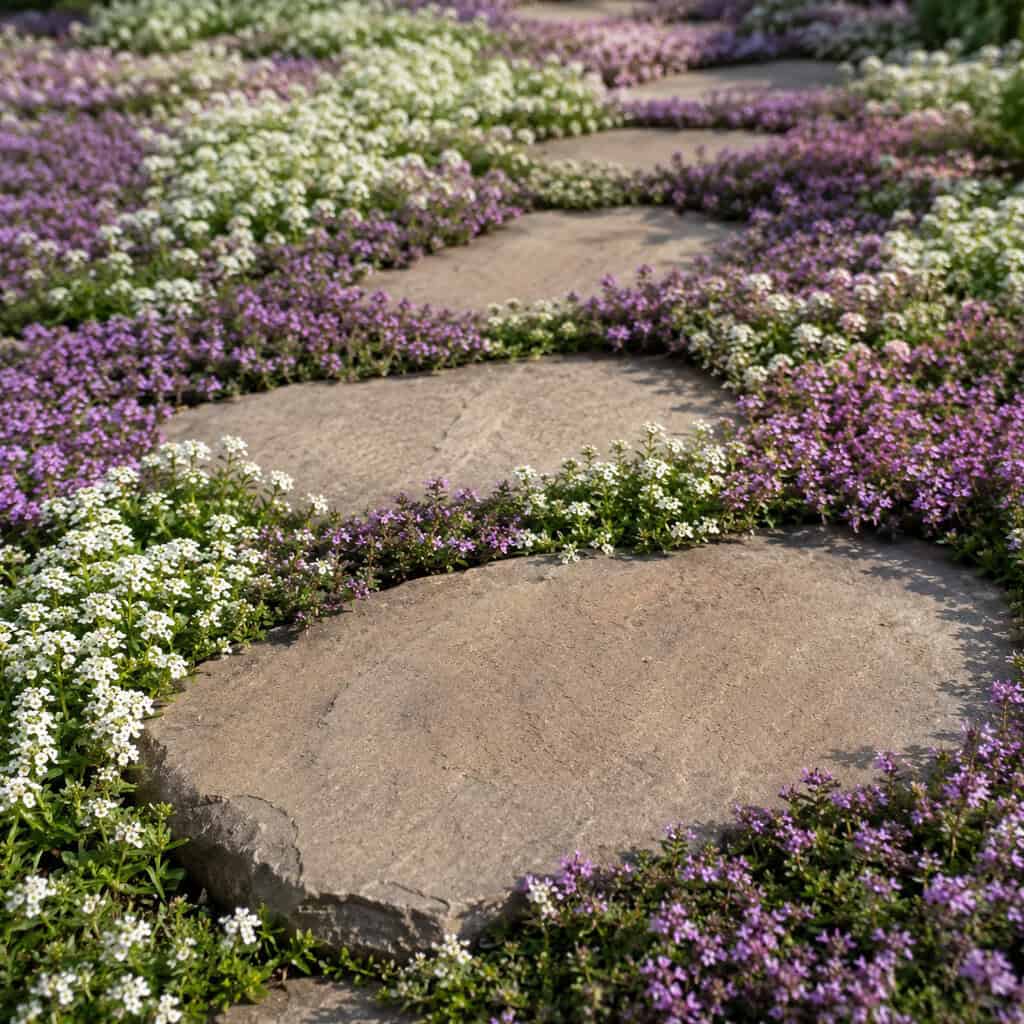
Bare dirt between plants is a dead giveaway. It says unfinished, it grows weeds, and it cheapens everything around it.
Fill it. Creeping thyme, sweet alyssum, and low sedums knit into a soft, textured mat that hugs the ground.
They spread. They self-seed. A few small plants blanket a big area within a season.
The mat smothers weeds so you do less work, and it makes the whole bed look intentional — like every inch was planned.
8. Grass Paths Instead of Paving
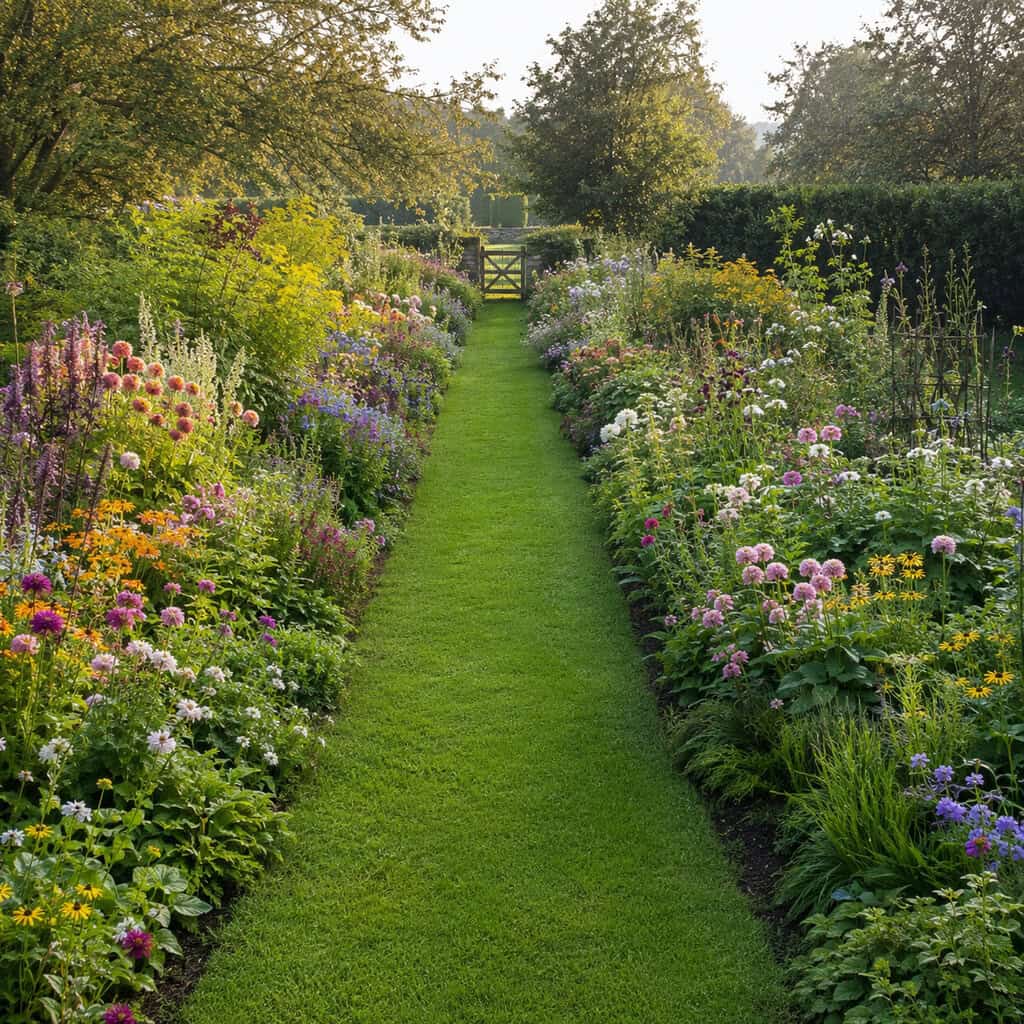
Hard landscaping is where the money goes. Paving, stone, concrete — it’s usually the single priciest line on any garden budget.
Cottage style skips it. A mown grass path running straight down the middle of your borders looks classic and costs the price of a box of lawn seed.
This isn’t a compromise. A grass path is a signature of real, old cottage gardens, per the budget breakdown at Gardeningetc.
Keep it mown and edged and it looks like green velvet between beds bursting with flowers.
9. Reclaimed Brick and Gravel Paths
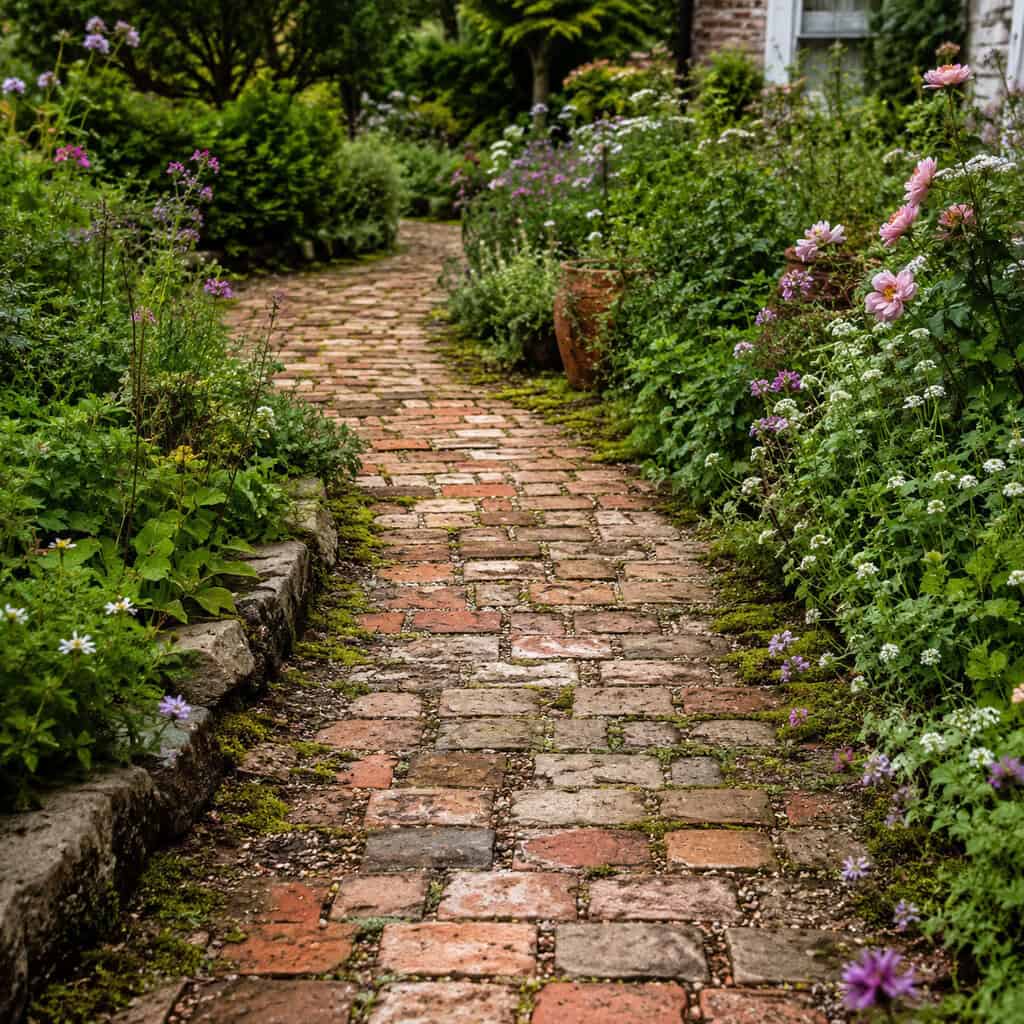
Where you do want a hard path, don’t buy new.
Old bricks, leftover stone, broken concrete, even sawn log rounds make winding paths full of character. Set them loosely and fill the gaps with cheap gravel.
The weathered, mismatched look is the point. Porcelain pavers would ruin it.
Check building-site skips, marketplace listings, and demolition jobs. People often give old brick away just to be rid of it.
10. DIY Hazel Arches and Obelisks
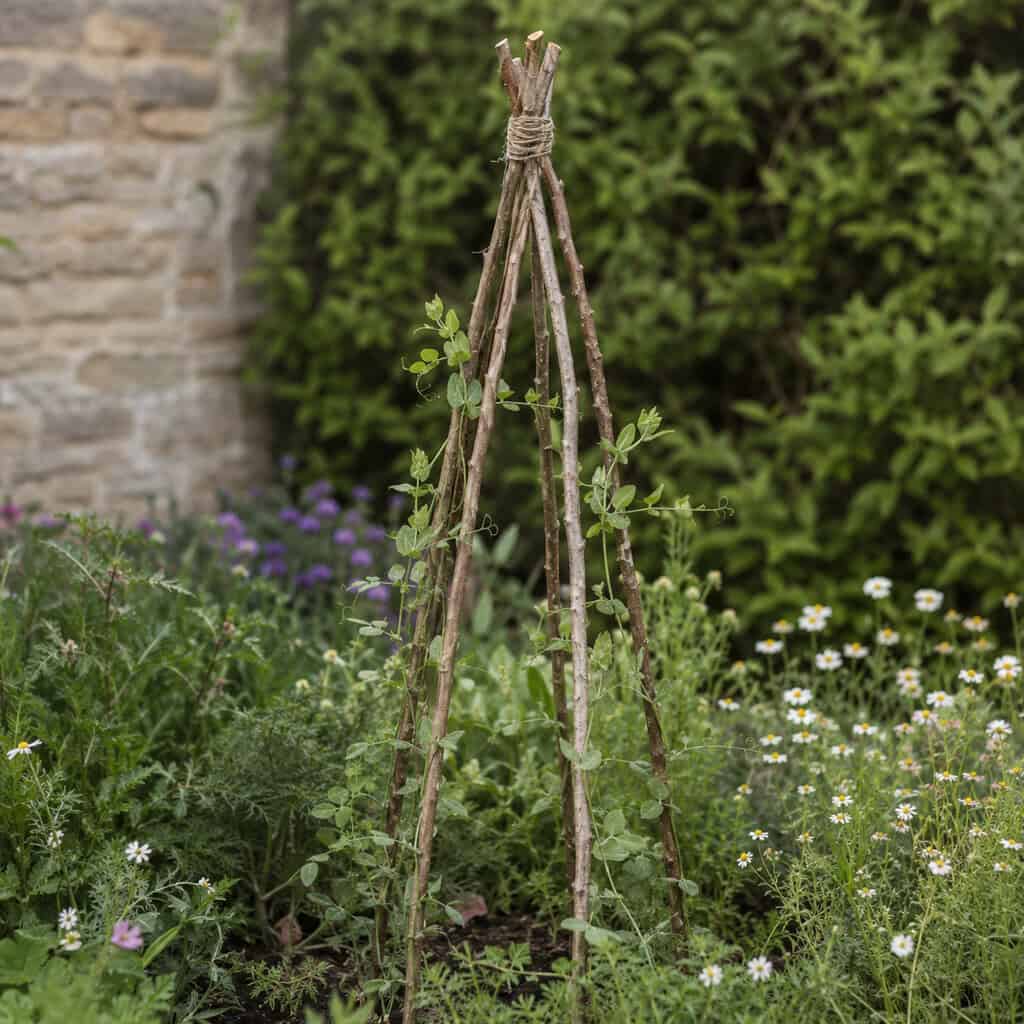
A store-bought garden obelisk runs $50 to $150. An arch, far more.
Or you bend your own from hazel poles for nothing. This is an old cottage-gardener’s trick — cut long, whippy hazel rods, push the ends into the ground, and lash them into an arch or a tepee obelisk.
Use hazel, not willow. Willow roots where you stick it and sprouts into a tree.
The rough, handmade, slightly wonky look is exactly what you want. The Middle-Sized Garden calls it a shoestring classic for good reason.
11. A Climbing Rose and Clematis on One Arch
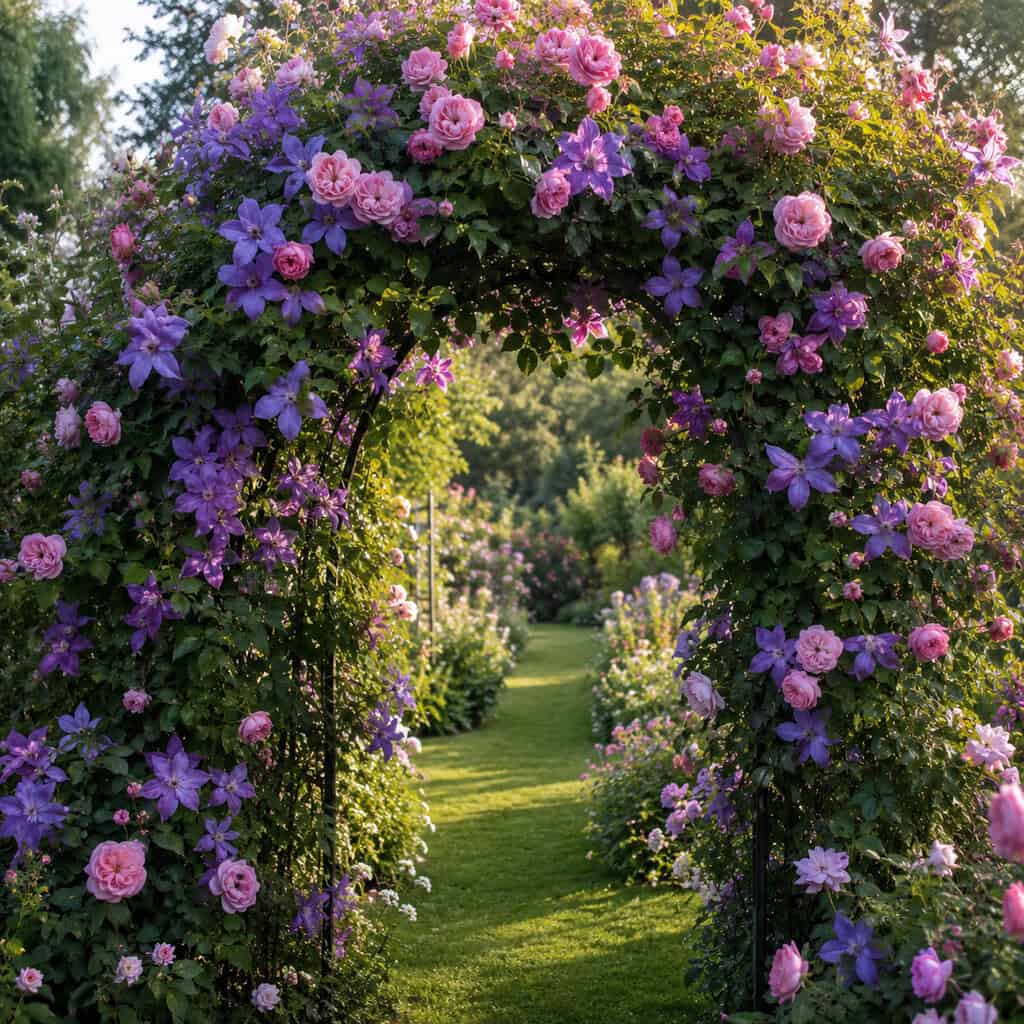
This is the money shot. A rose and a clematis tumbling together over an arch — it’s the most romantic image in all of cottage gardening.
And it’s cheaper than it looks, for two reasons.
The clematis hides the rose’s bare, leggy stems down low, so you get flowers top to bottom on one structure. Two plants, double the bloom.
Buy the rose bare-root in winter and it costs a fraction of a potted one. Supermarket clematis are famously cheap. Pair them well and you’ve built a $300-looking feature for under $30, the way Gardenia lays out.
12. Sweet Peas Up a Wigwam
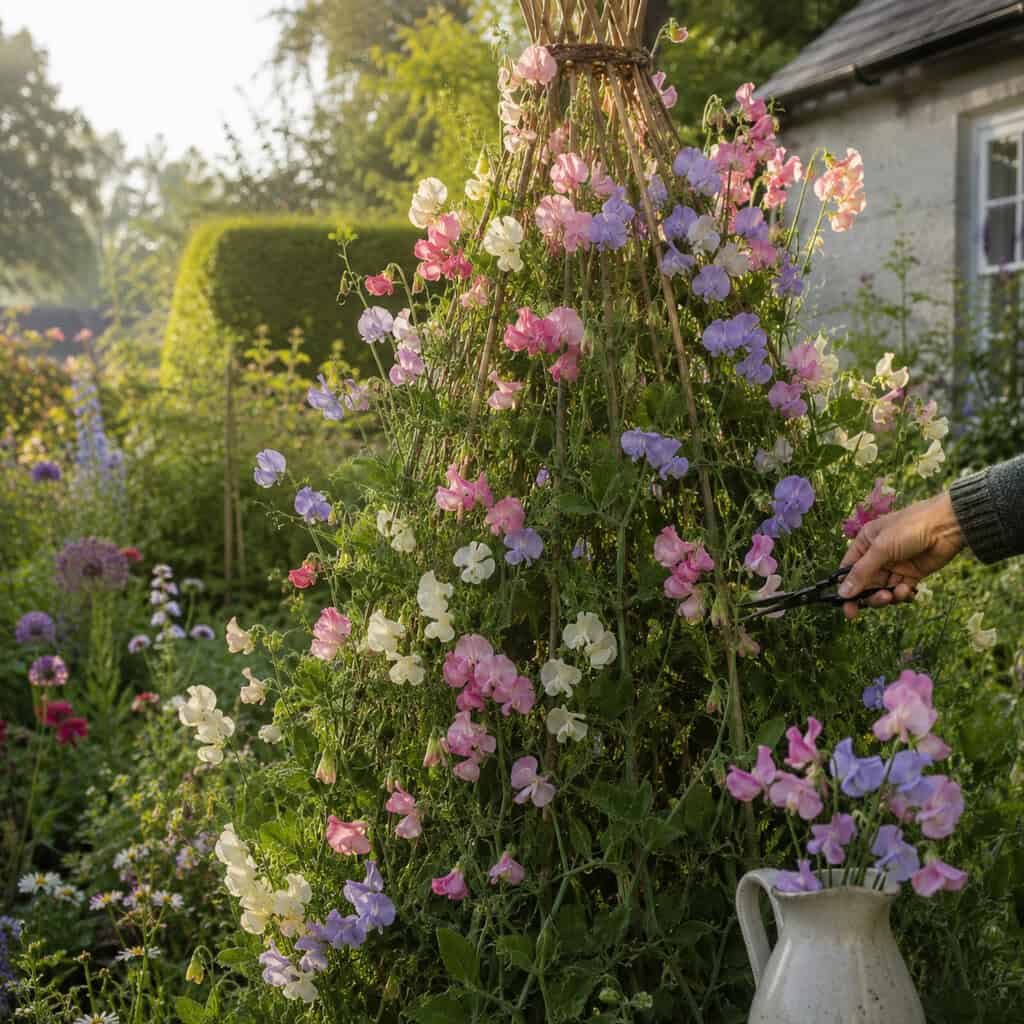
Push five bamboo canes into the soil, tie the tops together, sow sweet pea seeds at the base. That’s the whole project.
By midsummer you’ve got a tower of scented flowers in pinks, purples, and creams.
And they pay you back. The more you cut sweet peas for the house, the more they bloom — stop picking and they stop flowering.
Free cut flowers on the kitchen table all summer, from one seed packet. High romance, near-zero cost.
13. Clothe Bare Fences in Climbers
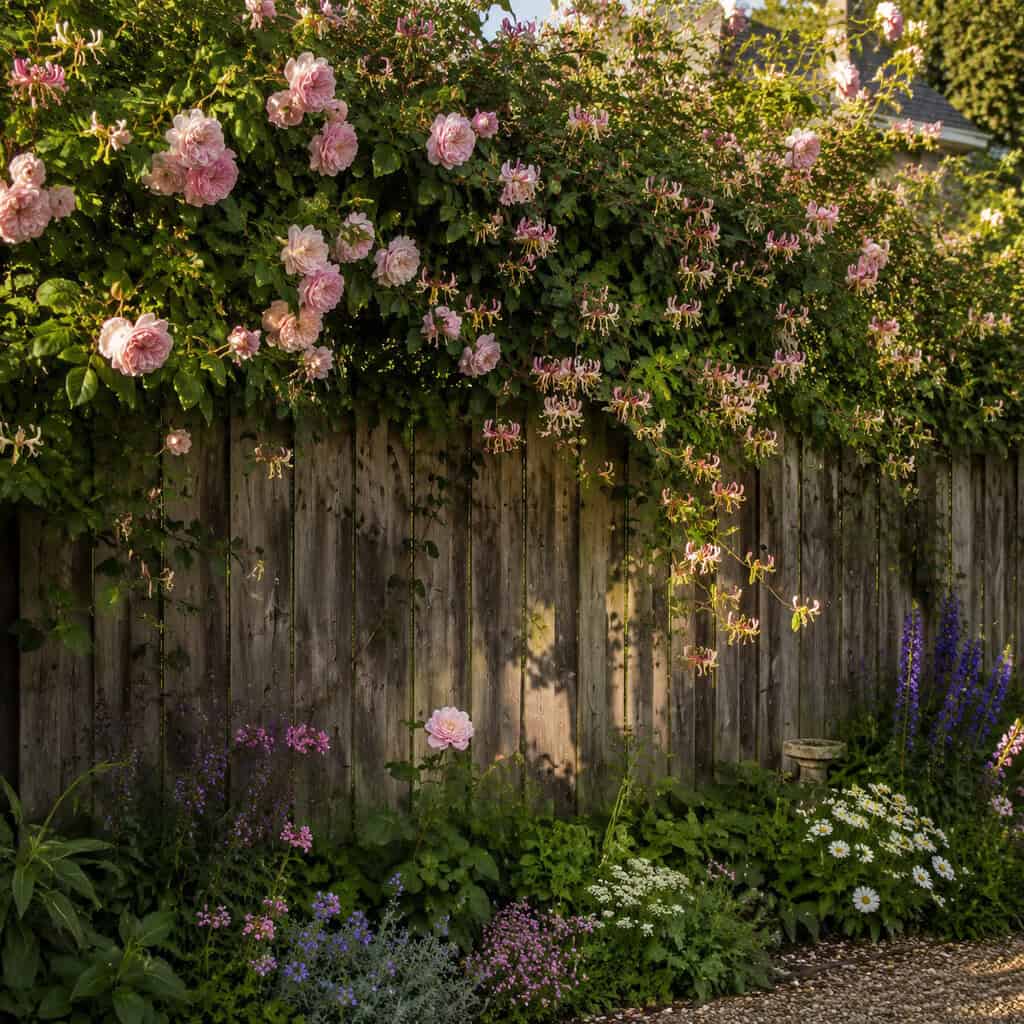
Look at your fences. All that vertical space, sitting bare and gray, doing nothing.
Designers point out that fences and walls are huge, wasted growing surfaces that cheapen a garden when left empty. One climber changes that.
A single rose, honeysuckle, or clematis trained up a fence hides a multitude of ugly panels and adds that layered, cocooning depth.
One plant. A whole boundary transformed. That’s the kind of math cottage gardens run on, as Livingetc notes.
14. Vintage Containers From Yard Sales
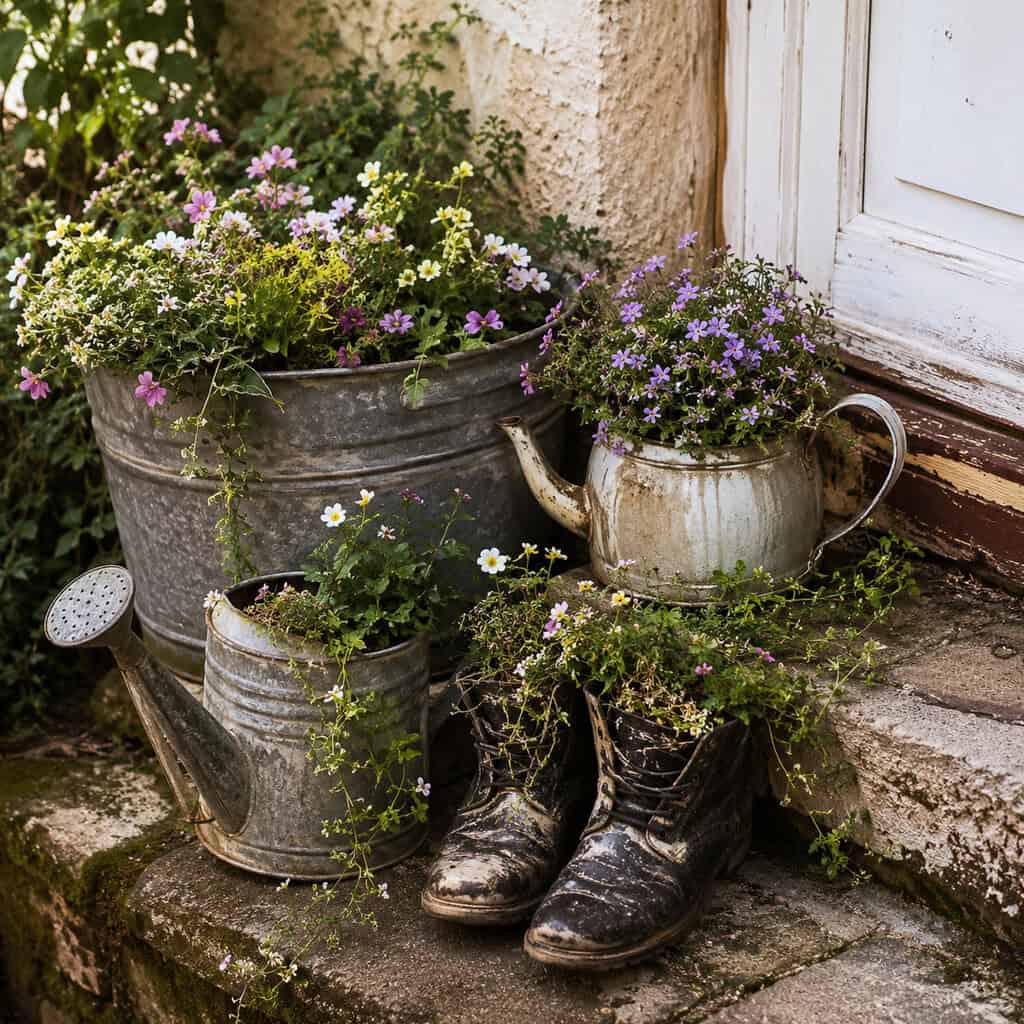
Skip the garden-center pot aisle. Those matching plastic pots cost a fortune and add nothing.
Hit the yard sales and flea markets instead. Galvanized tubs, old teapots, dented watering cans, a wheelbarrow, a pair of boots, even an old kitchen sink — they all make charming planters.
Drill a drainage hole in the bottom and plant them up.
The patina is the whole value. That worn, rusted, been-here-forever look is something new plastic will never give you, no matter what you pay.
15. A Terracotta-Pot Birdbath

Water features read as luxury. A proper stone one costs hundreds.
Fake it for under $10 with parts you might already own. Flip a terracotta pot upside down for a pedestal, balance its matching saucer on top, drop in a few stones, and fill with water.
Birds find it fast. So do bees, which need a shallow drink and a stone to land on.
You’ve built a pollinator station and a focal point for the price of a coffee.
16. A Salvaged Picket-Fence Accent
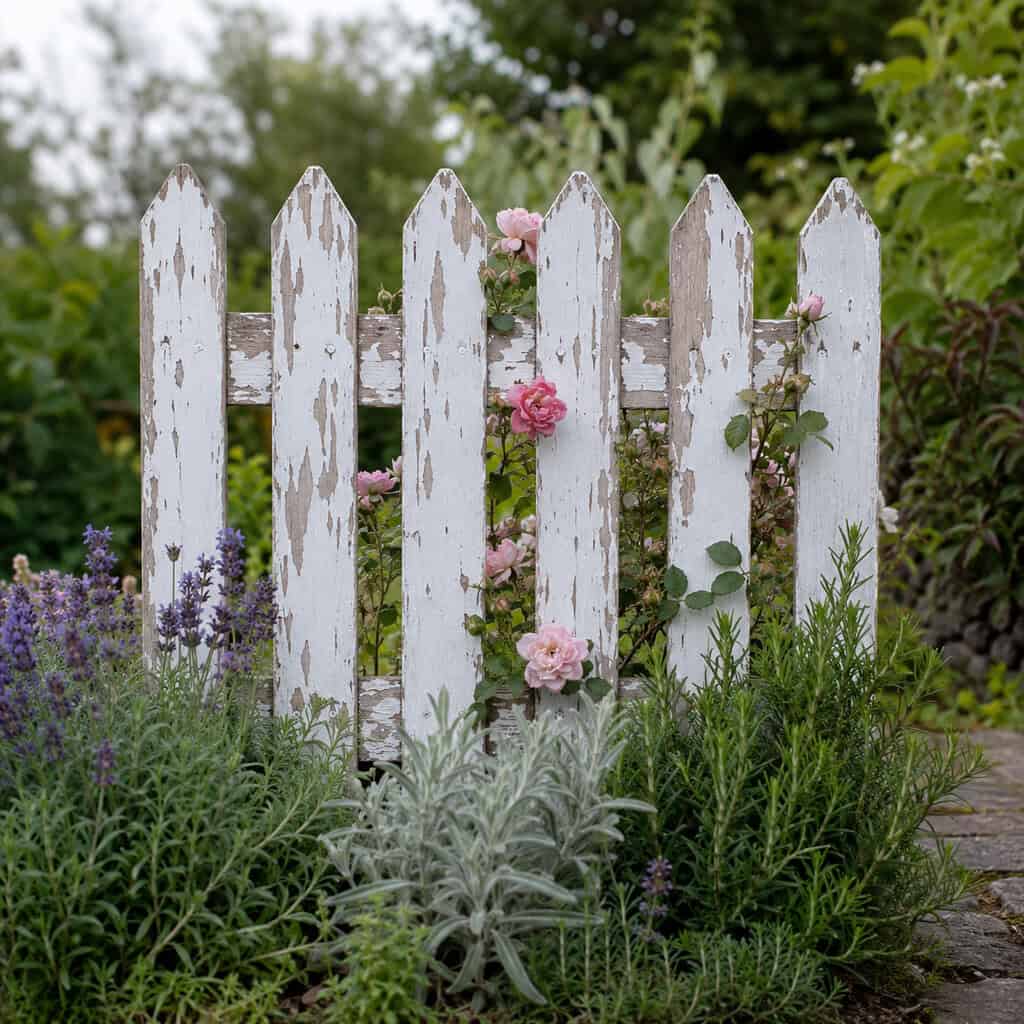
You don’t have to fence the whole yard to get the cottage look. That’s the expensive version.
Grab a single salvaged section instead — one chippy, weathered run of old picket. Stand it behind a border or around a small bed as an accent.
One panel delivers the iconic look. And in a small garden, a bit of low fence tricks the eye into feeling more space, not less.
Set it around the herbs or veg and it keeps rabbits out too.
17. Paint the Shed a Muted Green

A tired shed drags the whole garden down. Bare orange wood or peeling brown — the eye goes straight to it.
One tin of exterior paint fixes it. Sage green, stony gray, or a soft oak tone lets the shed sink back into the planting instead of shouting.
Muted, earthy colors recede. Bright ones jump forward.
It’s honestly startling how much a single afternoon and one can of paint change the feel of a whole yard, as Woman & Home points out.
18. Paint the Fence Black or Charcoal

Orange honey-toned fence panels are the fastest way to make a garden look cheap.
Paint them dark. Deep charcoal, near-black, or a soft muted gray — the whole boundary recedes and instantly feels more premium.
Here’s the bonus. A dark fence is the perfect backdrop. Green foliage and pale flowers pop against it like they’re lit from within.
One tin of exterior stain. One boring fence turned into a designer background.
19. Crisp, Defined Bed Edges
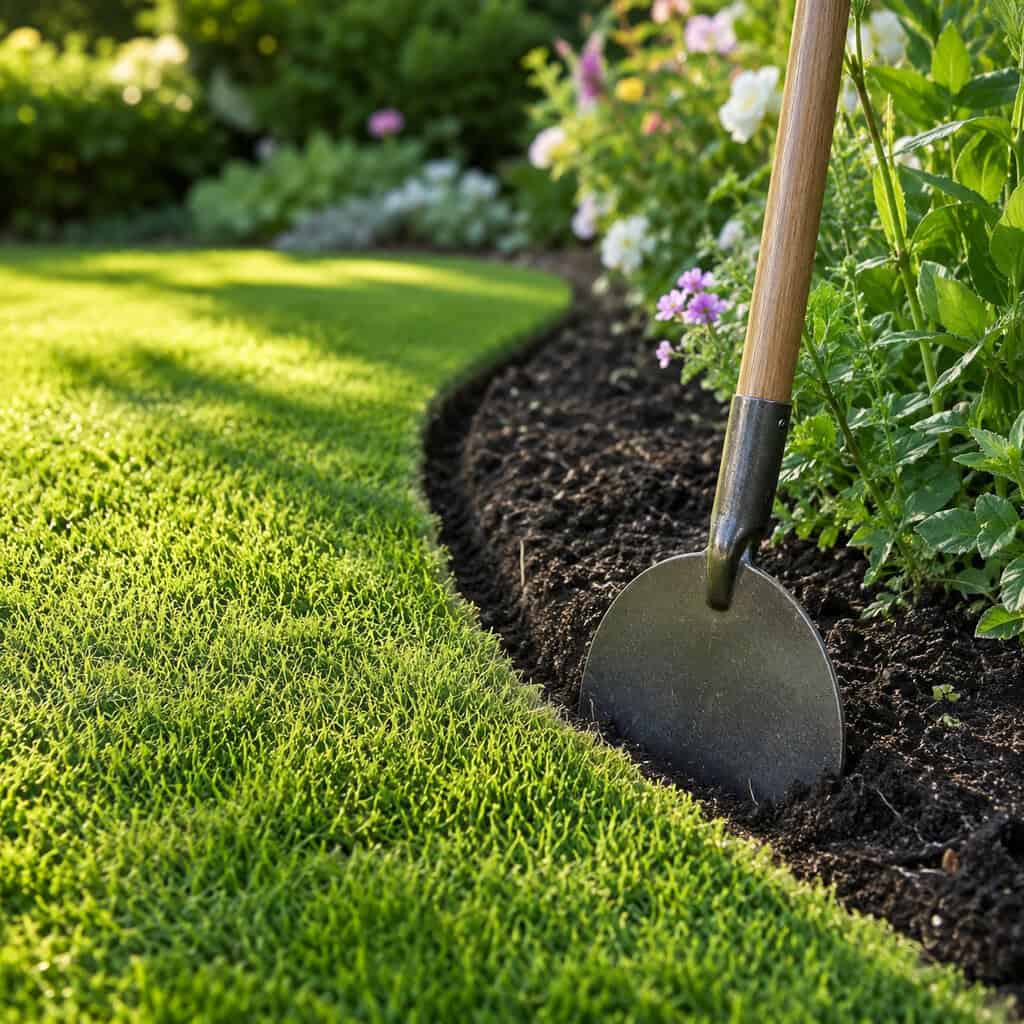
This one’s free, and it’s the detail that fools everyone.
Cut a clean, sharp edge where the lawn meets the border. A defined trench between grass and soil makes a garden look manicured, cared-for, and expensive — even when the planting is wild and cheap.
All it takes is a spade and an hour. Slice down along the border edge, pull the turf back, and you’ve got a crisp line.
Precision is what small gardens need most. A messy edge undoes good planting; a sharp one flatters bad planting.
20. Boulders Nestled Like They Belong
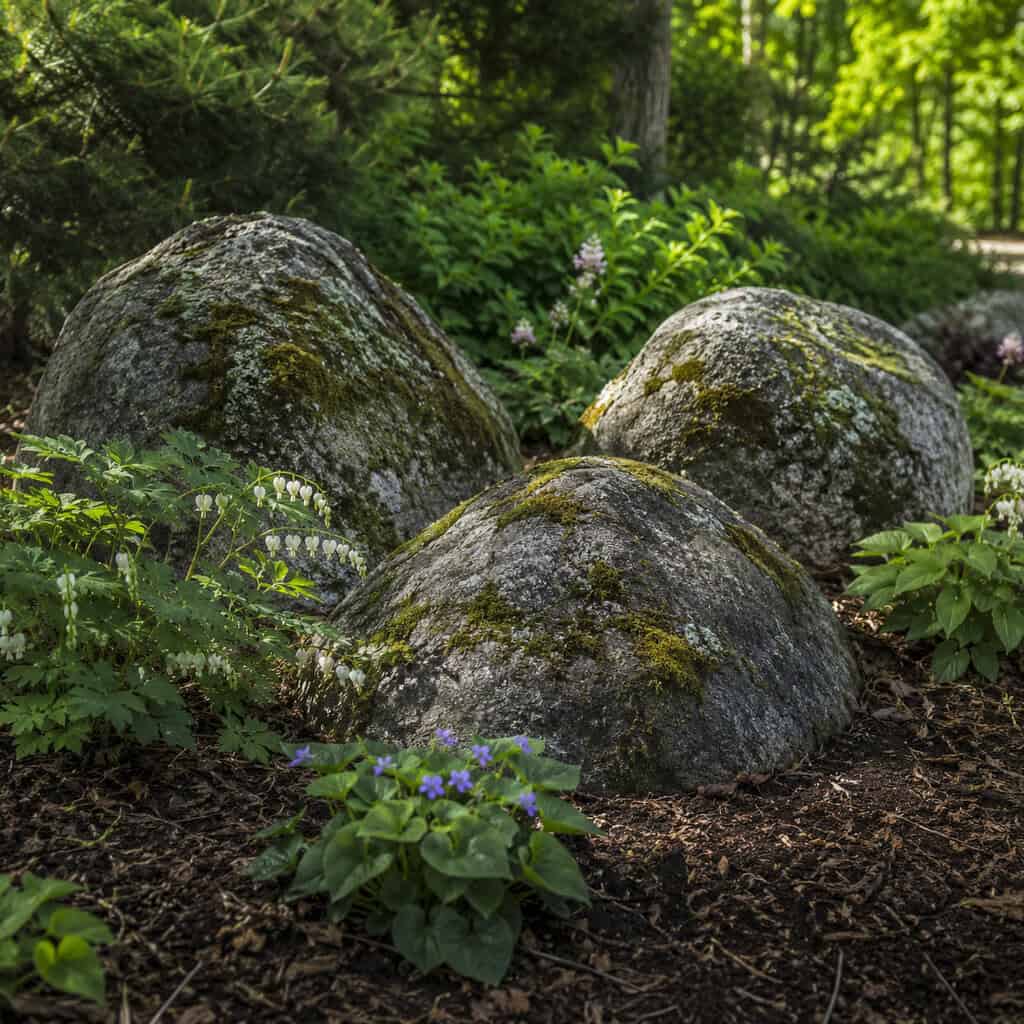
A few well-placed rocks make a natural, high-end statement. Done wrong, they look like they rolled off the back of a truck.
The trick is burying them. Sink each boulder a third of the way into the ground so it looks glacier-dropped, like it’s been there ten thousand years.
A rock sitting on top of the soil looks fake. A rock rising out of the soil looks ancient.
Breadbox-size ones are cheap at landscaping suppliers, and sometimes free off construction sites, according to Family Handyman. Group them in odd numbers and tuck plants around the base.
21. Flea-Market Statuary and Urns
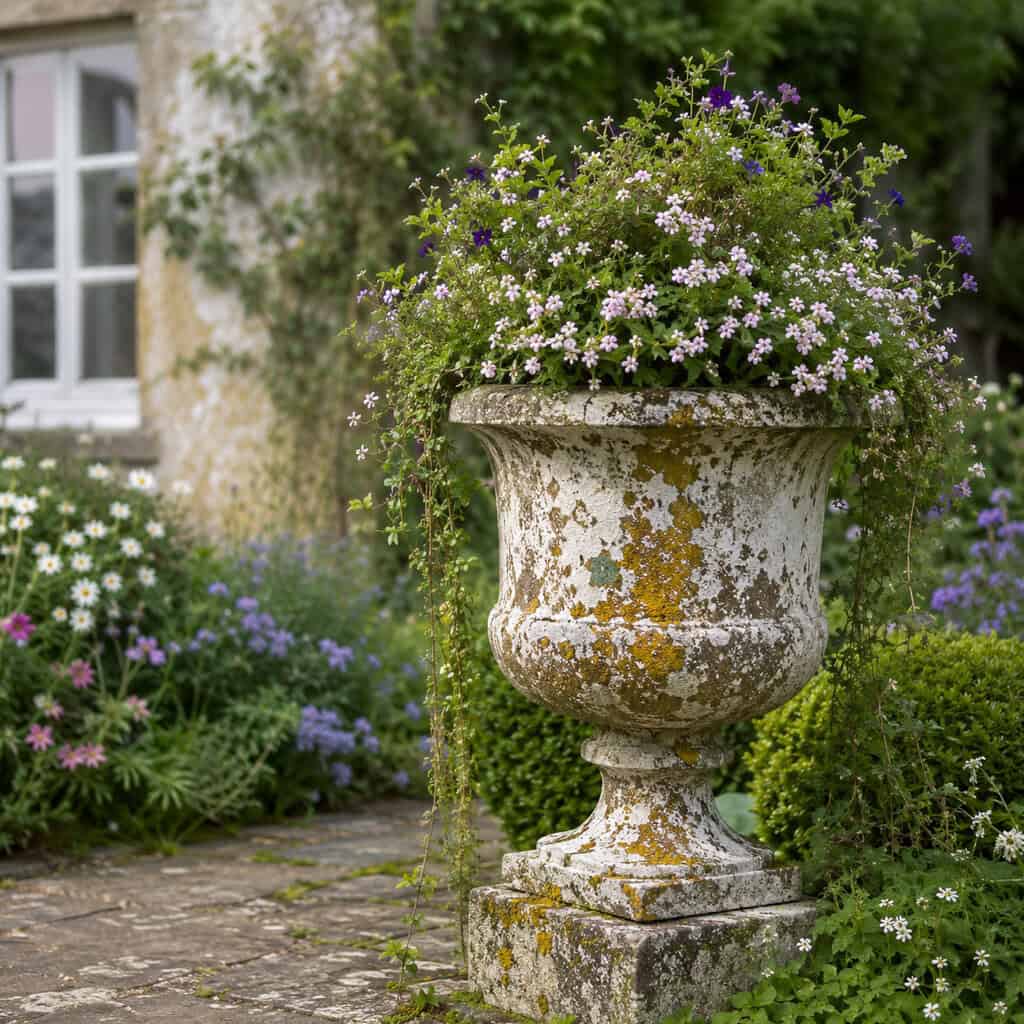
An aged concrete urn or a weathered statue gives a garden a focal point that feels collected over decades.
Buy it secondhand. Estate sales, flea markets, and architectural salvage yards are full of chippy, moss-stained concrete for a fraction of retail.
And the wear is the point. A brand-new urn looks brand-new. A cracked, lichen-spotted one looks like it came with the house.
You want patina you’d have to wait twenty years to grow yourself. Someone else already grew it for you.
22. A Restrained Pastel Palette
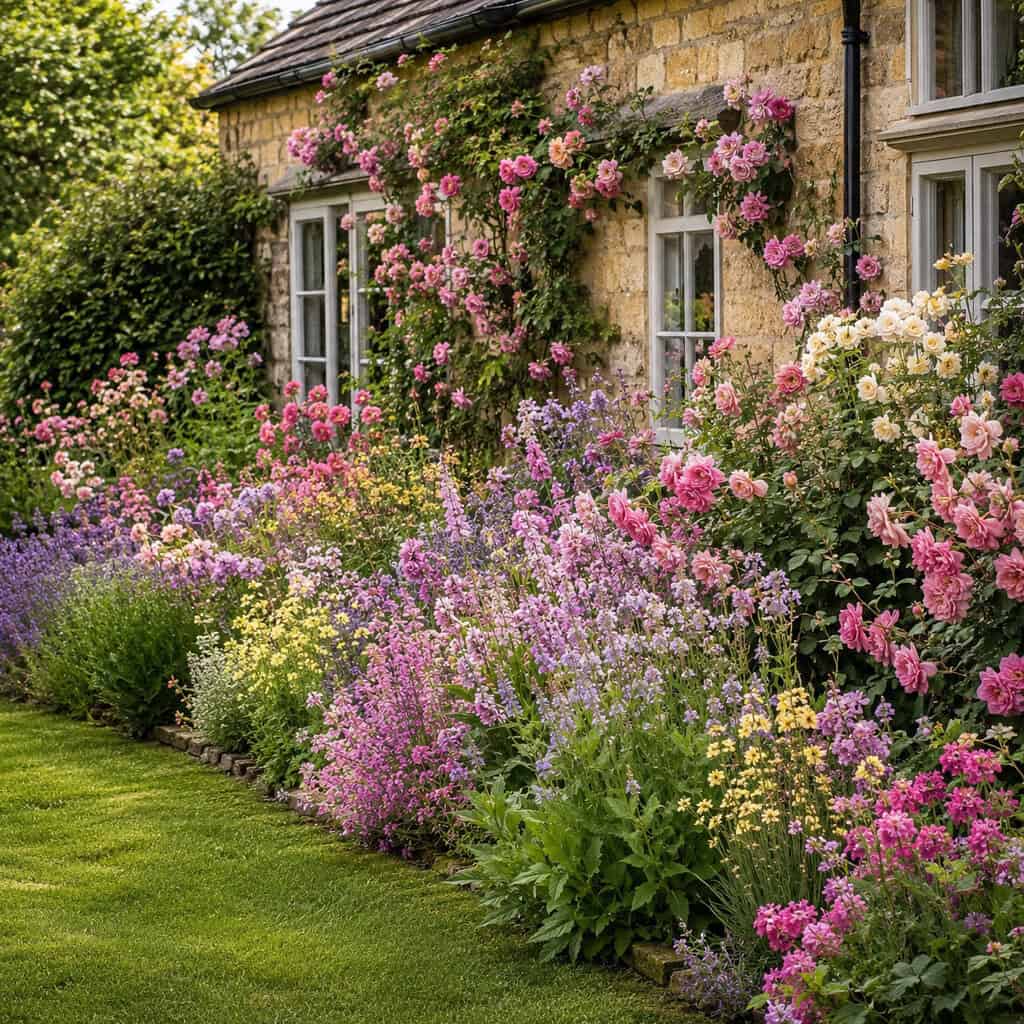
Here’s how you make a crammed, cheap border look elegant: limit the colors.
Pick a tight palette and stick to it. Pinks, lavenders, creams, soft yellows — that classic cottage pastel range.
A bed with fifteen kinds of flower in three colors looks cohesive and designed. The same bed in every color of the rainbow looks jumbled.
It costs nothing. It’s a buying rule, not a purchase. Just leave the clashing hot-orange marigolds at the store and your whole garden pulls together.
23. Mason-Jar and Solar Lanterns

Lighting is the designer trick that turns a nice garden into a magical one after dark.
Fake the pricey version for pennies. Drop cheap solar lights or tea lights into reclaimed mason jars, wrap wire around the necks, and hang them in trees or line them along a path.
Come dusk they glow soft and warm, and the whole space feels like a five-star hotel courtyard.
No wiring, no electrician, no bill. Just jars you were about to recycle and a strip of solar lights.
24. An Upcycled Potting Table

A curbside table nobody wanted becomes the charming centerpiece of your garden.
Find a beat-up old table on the curb or at the dump. Give it a coat of muted paint, add a shelf, hang a few tools, line up terracotta pots along the top.
Now it’s a French-country potting station and a little vignette all at once.
Prop an old enamel jug and a trailing plant on the corner and it looks styled, not scavenged. Which it is. That’s the fun of it.
The Takeaway
Notice what almost none of these cost. A packet of seeds, a can of paint, a spade, a Saturday.
The expensive-looking cottage garden isn’t built with money. It’s built with time, cuttings, curb finds, and the patience to let things reseed themselves.
That’s the beautiful part. Cottage style was invented by people who had nothing but a scrap of land and refused to let it look poor.
Start with one packet of poppies this fall. In two summers you won’t recognize the place — and no one will believe what you spent.