

The mulch smelled like a brownie pan. That was the selling point.
Twelve hours later the dog was vomiting in the kitchen and the emergency clinic was asking what color the mulch was.
Most yard regrets don’t announce themselves on install day. They show up in month three, month six, the first July — right about the time the invoice is paid and the mulch has settled.
Vets and trainers see the same short list over and over. Same mulch, same fence, same gravel, same pond. The homeowners aren’t careless. They just bought something that looked good in a showroom photo and never thought about a 60-pound animal living on it.
Here are 34 yard choices dog owners come to regret inside a year — and what to do instead.
1. Cocoa Bean Shell Mulch
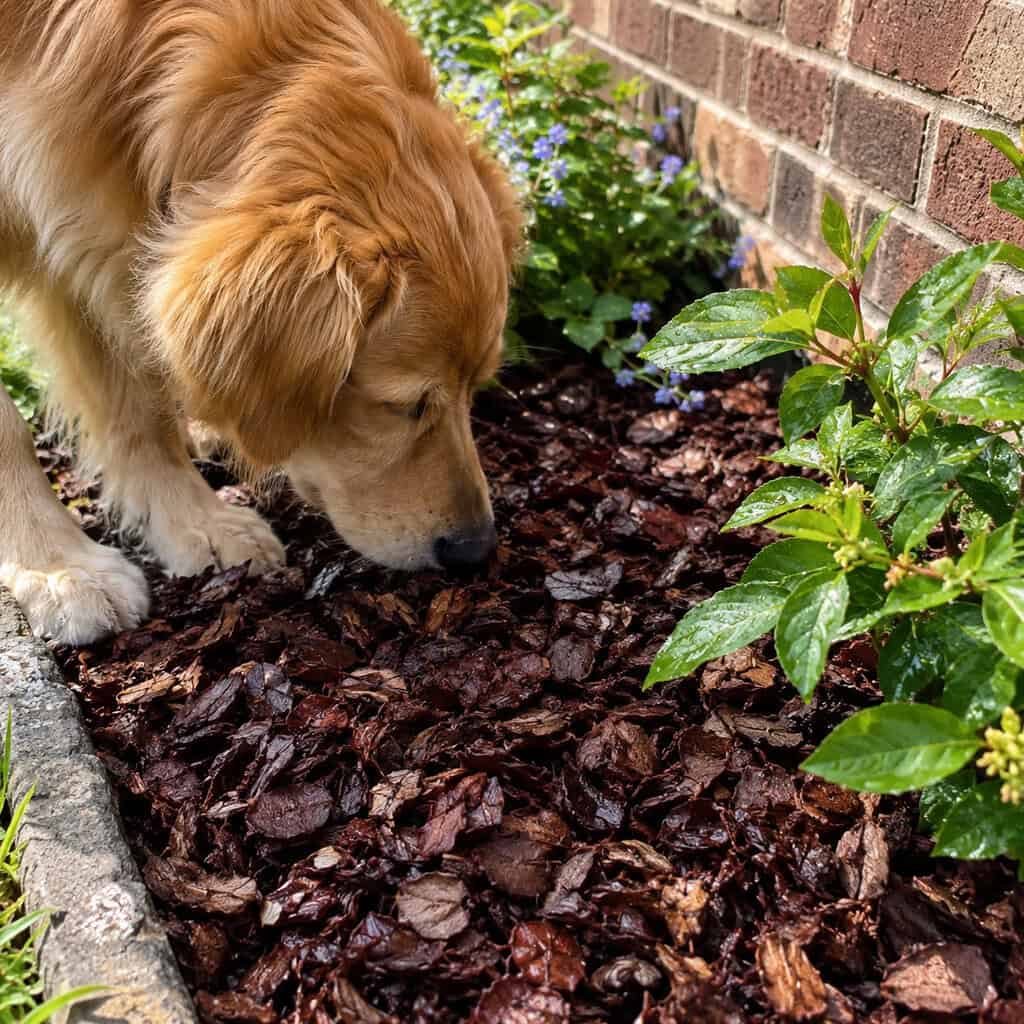
It’s made from cacao shells, a byproduct of chocolate processing. It carries theobromine and caffeine — the same compounds that make chocolate dangerous to dogs.
And it smells like dessert. That’s the whole problem. Dogs don’t nibble it out of boredom; they’re drawn across the yard by the scent.
Symptoms run from vomiting and diarrhea to tremors and racing heart rate, depending on how much went down and how fresh the batch was. The National Capital Poison Center fields these calls every spring.
Use shredded hardwood or pine bark instead. Skip cocoa mulch entirely if a dog has yard access.
2. Artificial Turf in Full Sun
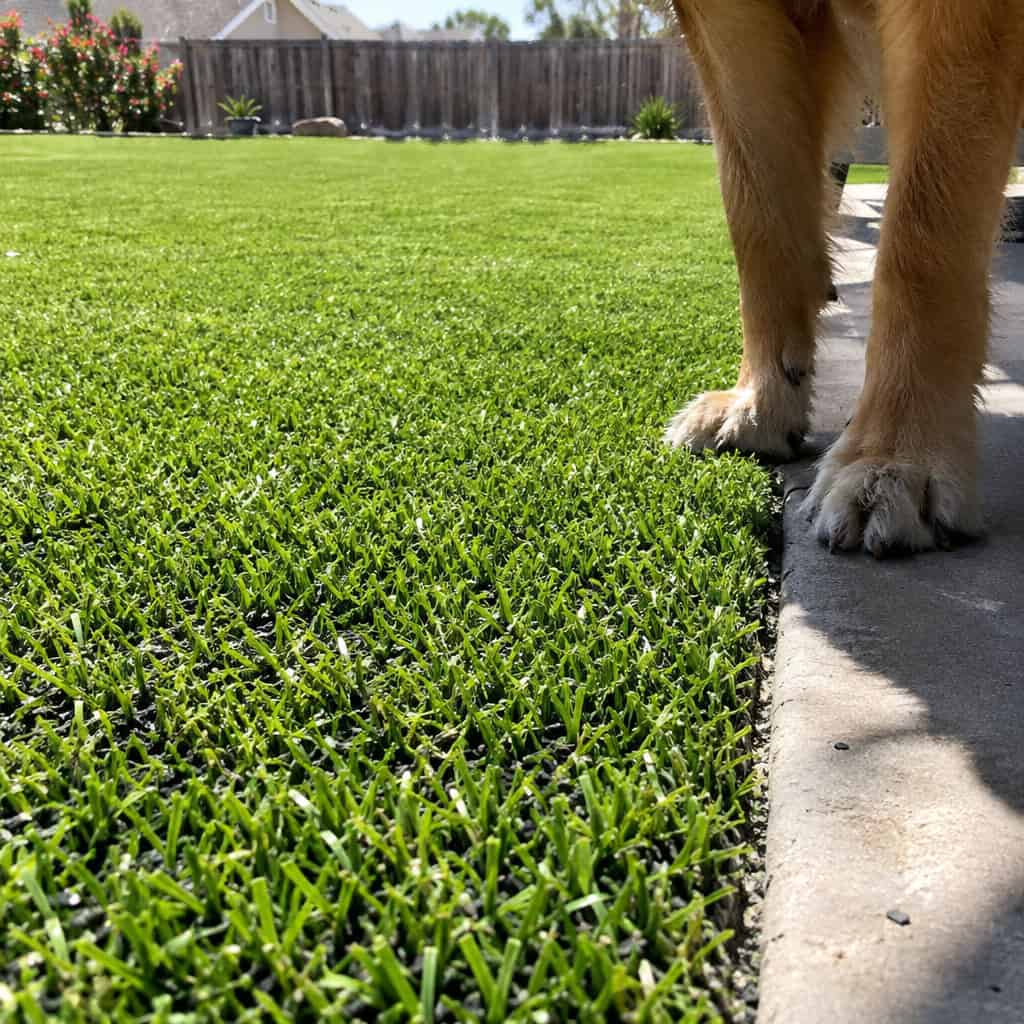
This is the fix people buy specifically because of the dog. No mud, no urine burn, no bare patches along the fence line. Installed at roughly $8 to $20 per square foot, a modest 800-square-foot backyard runs $6,000 to $16,000.
Then comes the first 90-degree week.
Synthetic turf has no evaporative cooling and no root mass underneath. On a 90-degree day, surface temperatures on dark infill turf routinely read 140 to 160 degrees. Asphalt does the same thing, and the American Kennel Club is blunt about what that does to pads.
The second wave of regret is smell. Urine drains through the backing but the solids and the bacteria stay in the infill. Crumb rubber infill is the worst offender — it holds odor and heat both. Silica sand or antimicrobial zeolite infill drains better and runs cooler, but it costs more and most installers quote the cheap stuff by default.
If turf is already down, plan on enzymatic rinsing every week or two in summer and a shade sail over at least a third of it.
3. An Invisible Fence Instead of a Real One

Trainers see this one more than any other containment failure. A dog with enough drive — a squirrel, a kid on a scooter, another dog — takes the correction and keeps going.
Then it won’t come back. Crossing the line hurt once, and now the boundary works in exactly the wrong direction.
It also stops nothing from coming in. Loose dogs, coyotes, a toddler reaching through nothing at all.
Useful as a layer on top of real fencing. Dangerous as the only thing between a dog and the road.
4. A Sago Palm by the Patio
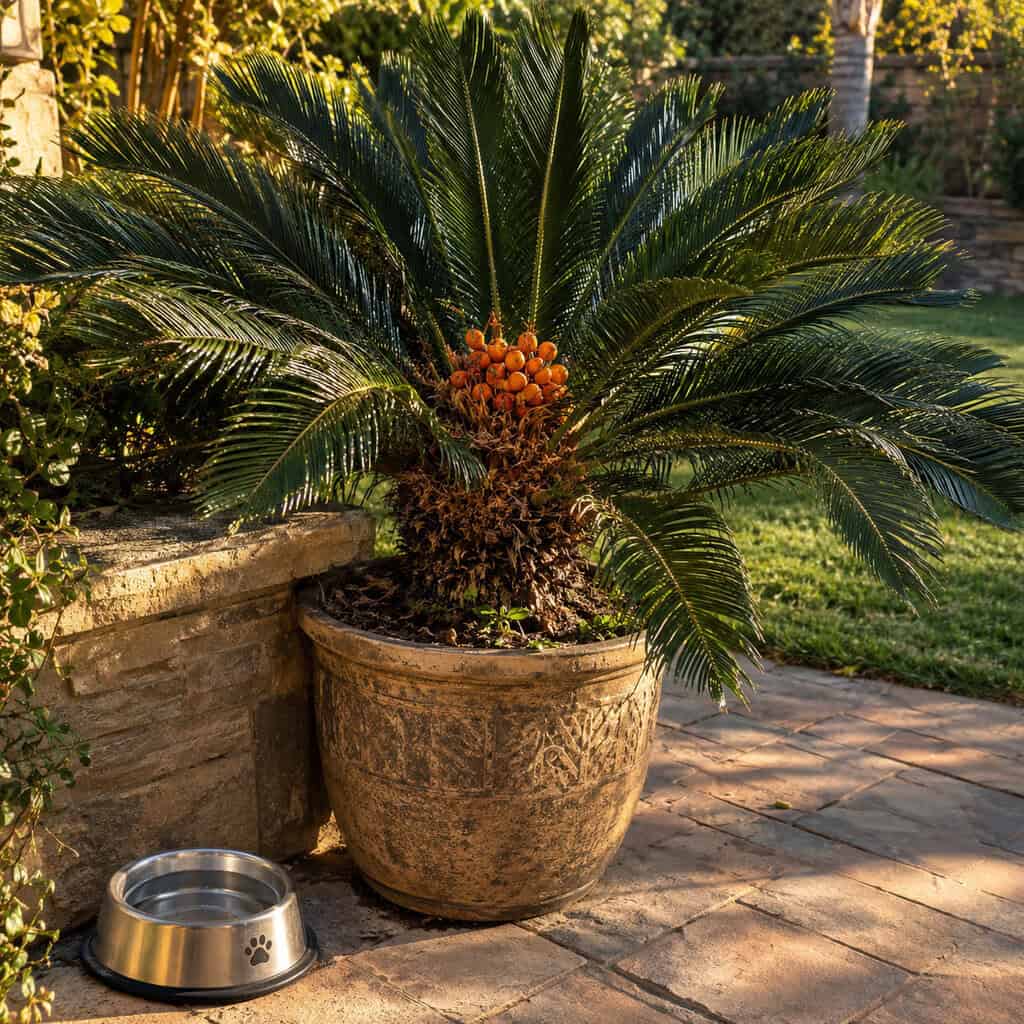
Sold at big-box garden centers as a tidy architectural accent for about $30. The tag rarely says anything useful.
Every part of the plant is toxic. The seeds are the worst, carrying cycasin, and ingestion causes acute liver failure — not an upset stomach, liver failure.
Survival rates in reported cases hover around 50 percent even with aggressive treatment. A single seed can do it to a small dog.
Remove it. Dig the whole thing, seeds and all, and swap in a dwarf palmetto or a hardy fern.
5. Signing Up for a Weed-and-Feed Lawn Program
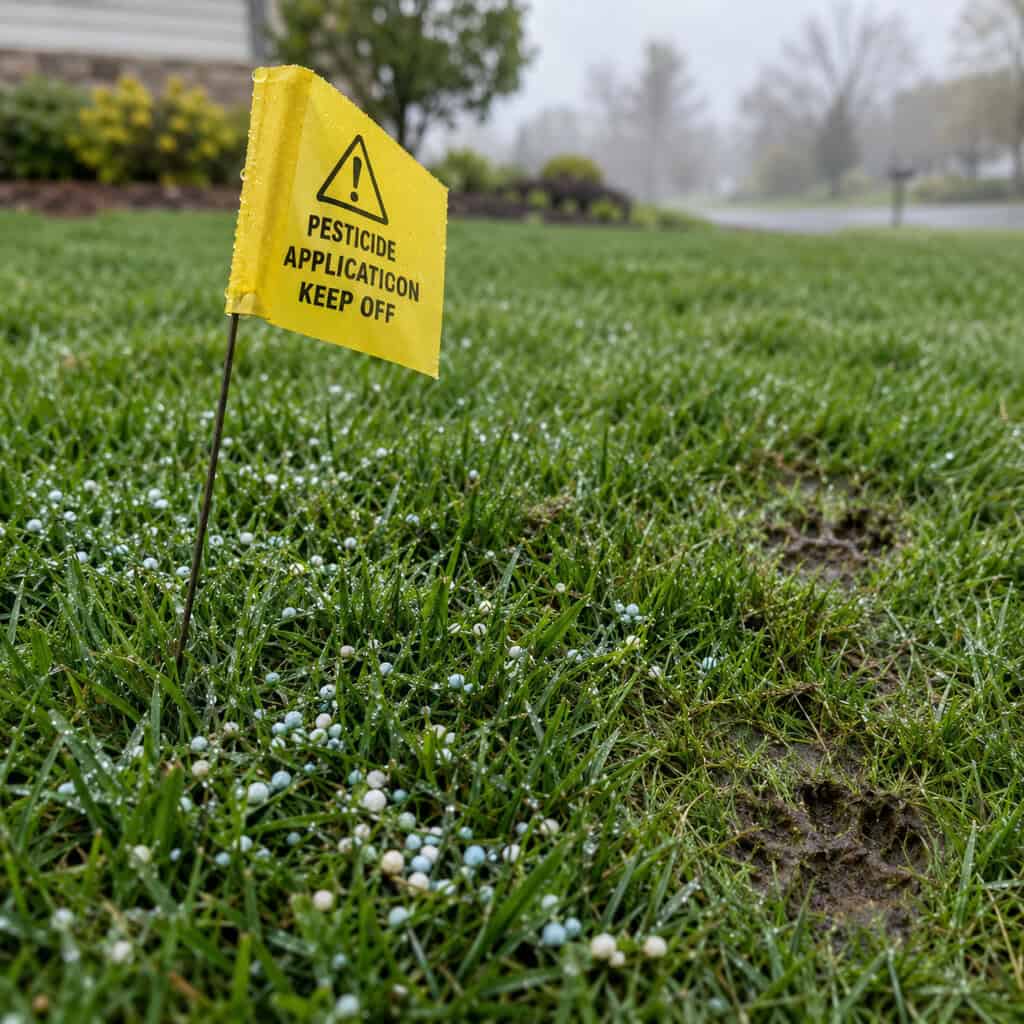
Six or seven visits a year, somewhere around $400 to $700 for an average lot. The little flags go in, the tech leaves, and the instruction is always the same: keep pets off until dry.
Drying isn’t the whole story. The real exposure route is residue picked up on paws and licked off hours later, and it persists far longer than the sign implies.
A long-running Purdue study of Scottish Terriers found an association between lawn herbicide exposure and transitional cell carcinoma of the bladder. Association, not proof of cause — but that study is why vets started asking what you spray.
If you’re going to treat, ask for granular over liquid, water it in thoroughly, and keep the dog off for 72 hours rather than until-dry. Spot-spray broadleaf weeds by hand instead of blanket-treating 6,000 square feet you don’t walk on.
Clover lawns are the other direction entirely — no herbicide program needed, because clover is the thing most programs are trying to kill.
6. Chain-Link Along the Sidewalk

Cheap, fast, and see-through. That last part is the problem.
A dog stationed at a transparent fence on a busy sidewalk rehearses lunging at strangers dozens of times a day. Trainers call it barrier frustration, and the behavior doesn’t stay in the yard.
It follows the dog onto leash walks, where the reactivity now has no fence to stop it.
Privacy slats, a solid panel section at the sidewalk side, or a planted screen breaks the sightline. The fence choices you’ll regret by year five mostly come down to visibility and footing.
7. A Pea Gravel Dog Run
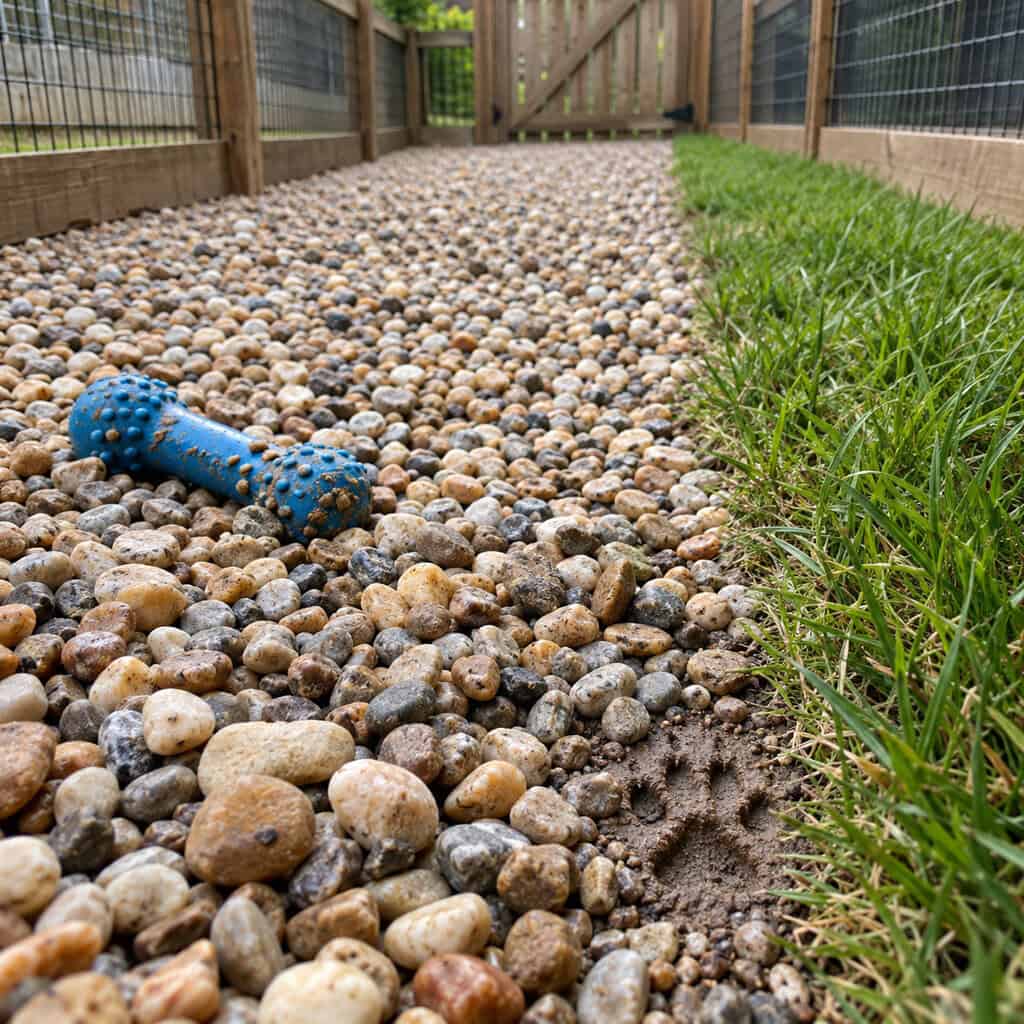
Marketed as the perfect potty surface — drains instantly, rakes clean, never turns to mud.
Pea gravel is also almost exactly the size dogs swallow. Puppies especially.
Intestinal obstruction surgery runs $3,000 to $7,000 and that’s before the overnight stay.
The stones also wedge between toes and pack into pad grooves, then come inside and find the hardwood. Decomposed granite compacts into a firm surface instead, and it doesn’t fit in a mouth.
8. Azalea and Rhododendron Foundation Beds
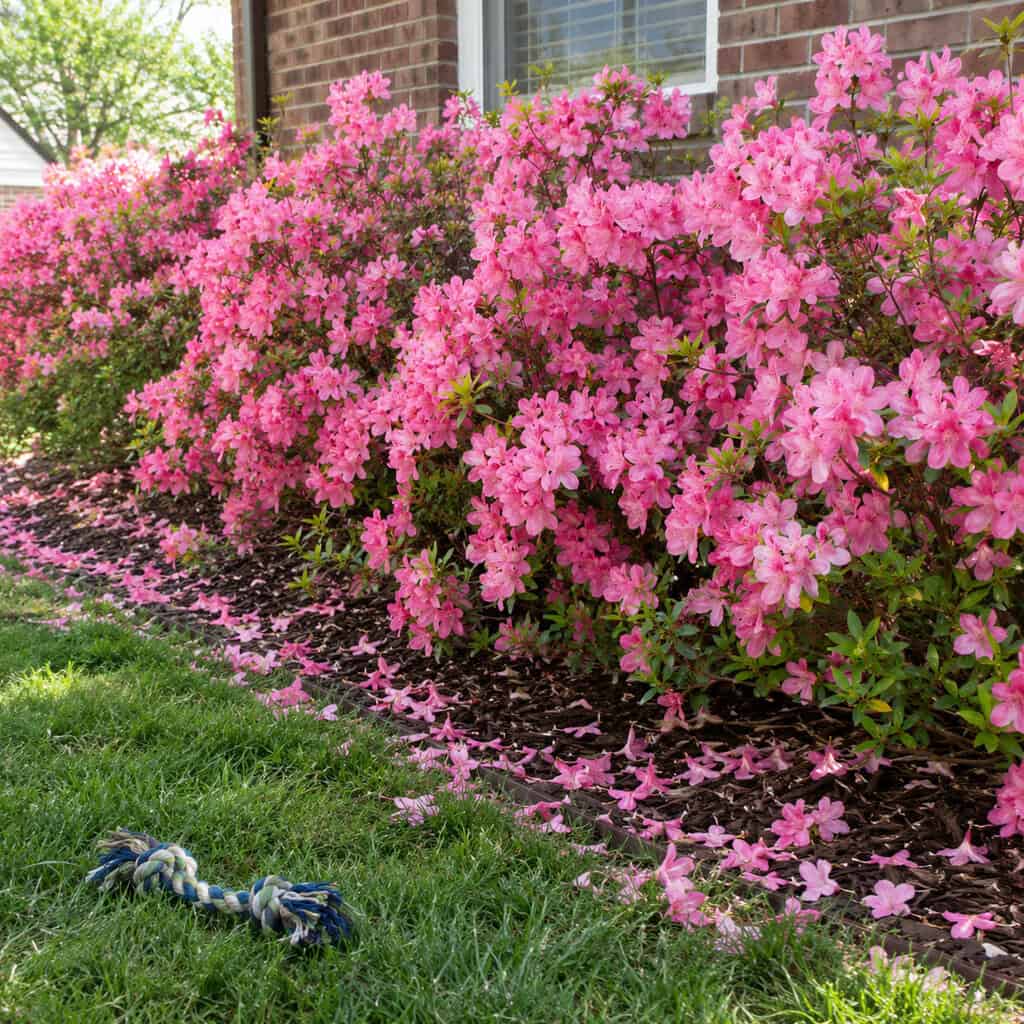
Nobody chooses these. They come with the house.
Builder landscaping defaults to azaleas because they’re cheap, evergreen, and they bloom on schedule for the open house.
They also contain grayanotoxins, which hit the heart and the gut. A few leaves can cause drooling, vomiting, weakness, and arrhythmia.
You don’t have to rip out the whole foundation planting. Fence the bed, or replace the two shrubs the dog actually walks past. Plenty of common landscaping plants are toxic to dogs and have straightforward safe swaps.
9. An Open Compost Pile
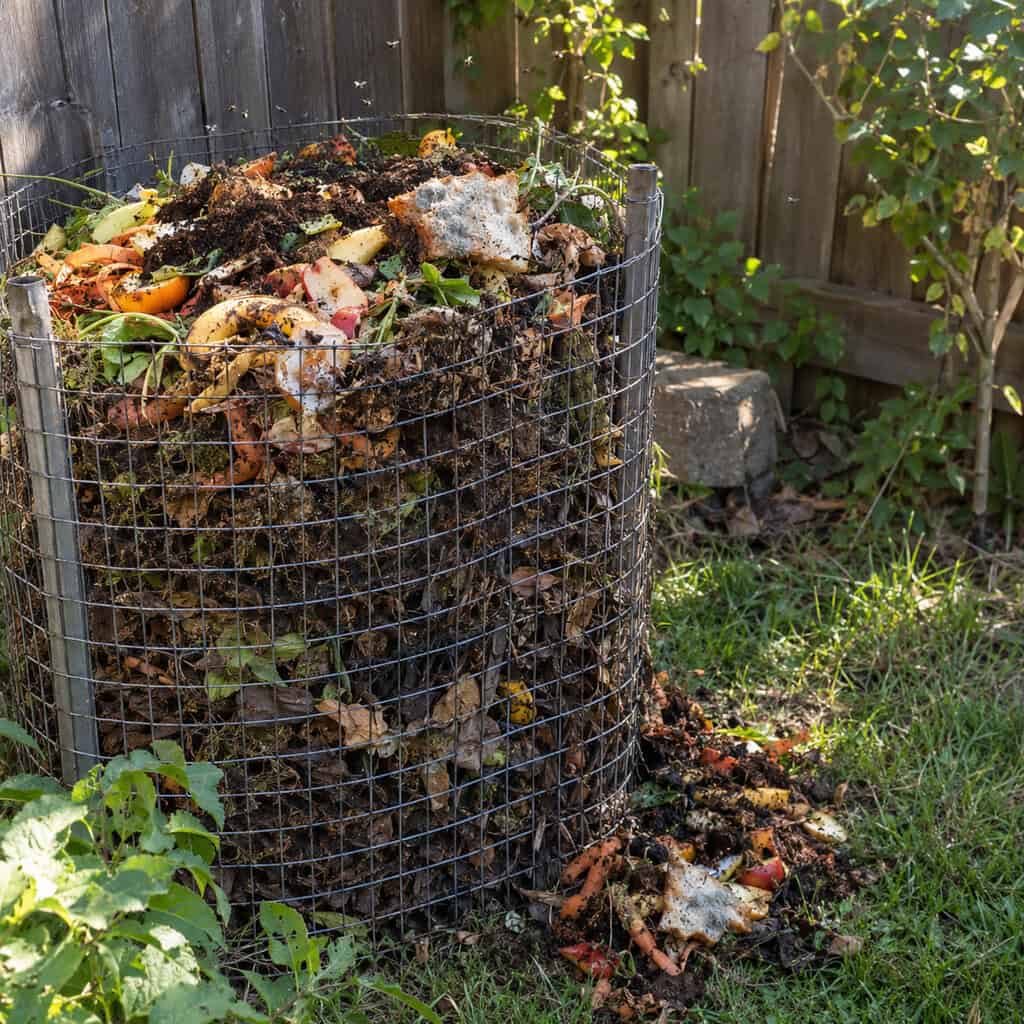
Compost is good for the garden. An unfenced heap is a buffet.
Decomposing food waste grows molds that produce tremorgenic mycotoxins. A dog that raids the pile can be tremoring or seizing within the hour, and the ASPCA flags it as one of the most under-recognized backyard poisonings.
Moldy bread, old cheese, coffee grounds, rotting fruit — all of it.
A latched tumbler solves it completely for about $120. Almost nobody starts there.
10. Rubber Playground Mulch
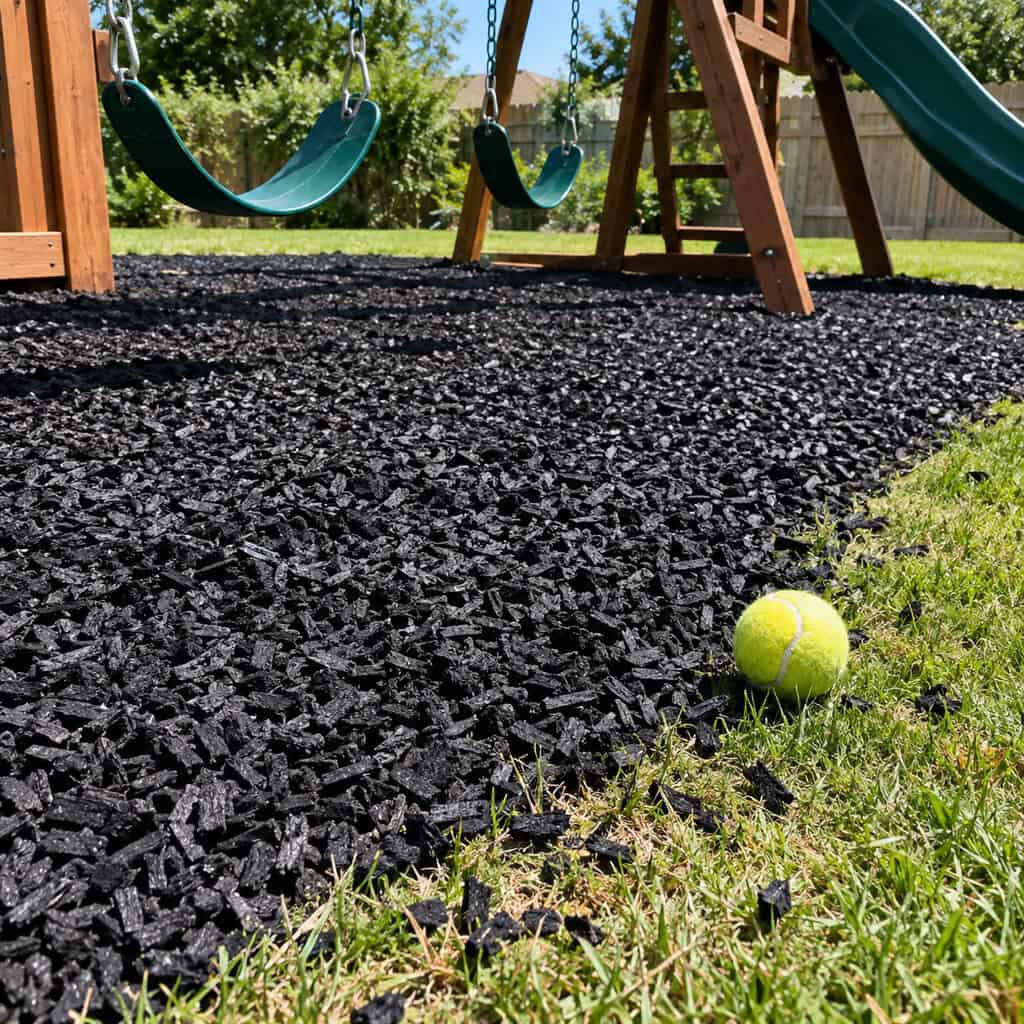
Never rots, never needs topping off, looks the same in year five. All true.
Rubber doesn’t break down in a stomach either. That’s the catch.
Chewers swallow nuggets that pass through nothing, and shredded tire mulch has steel belt fragments in it often enough to matter.
Dark rubber also bakes. Same heat story as turf, in a smaller footprint.
11. A Pond or Fountain That Goes Stagnant
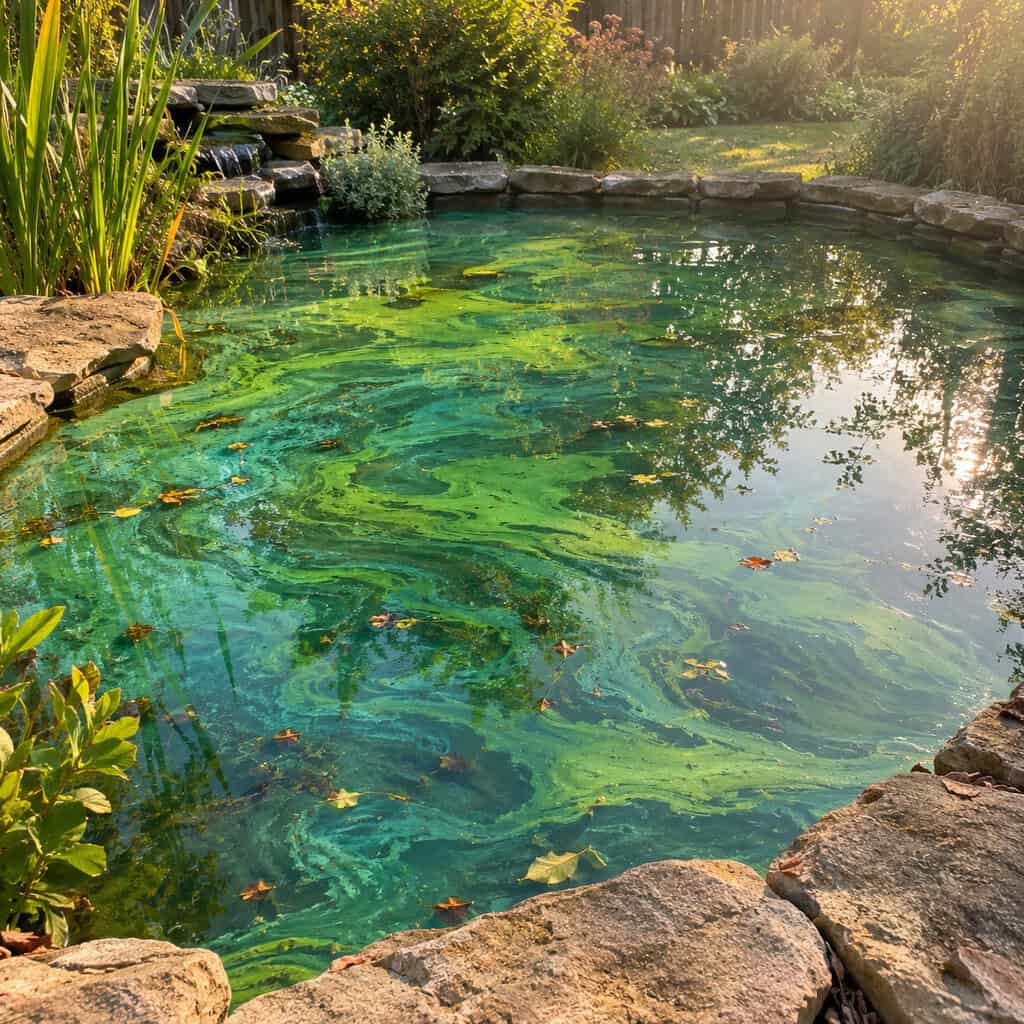
The feature people love for exactly one season.
Warm, still, nutrient-rich water grows cyanobacteria. Blue-green algae blooms produce microcystins and anatoxin-a, and dogs die from them fast — sometimes within 30 minutes of drinking or even just swimming and licking their coat.
The bloom looks like spilled paint or pea soup on the surface. By the time it’s visible, the water is already dangerous.
Keep water moving with a pump, keep leaves out, and fence any feature you can’t keep clear. If the water looks green, nobody drinks it.
12. New Sod That Can’t Take Traffic
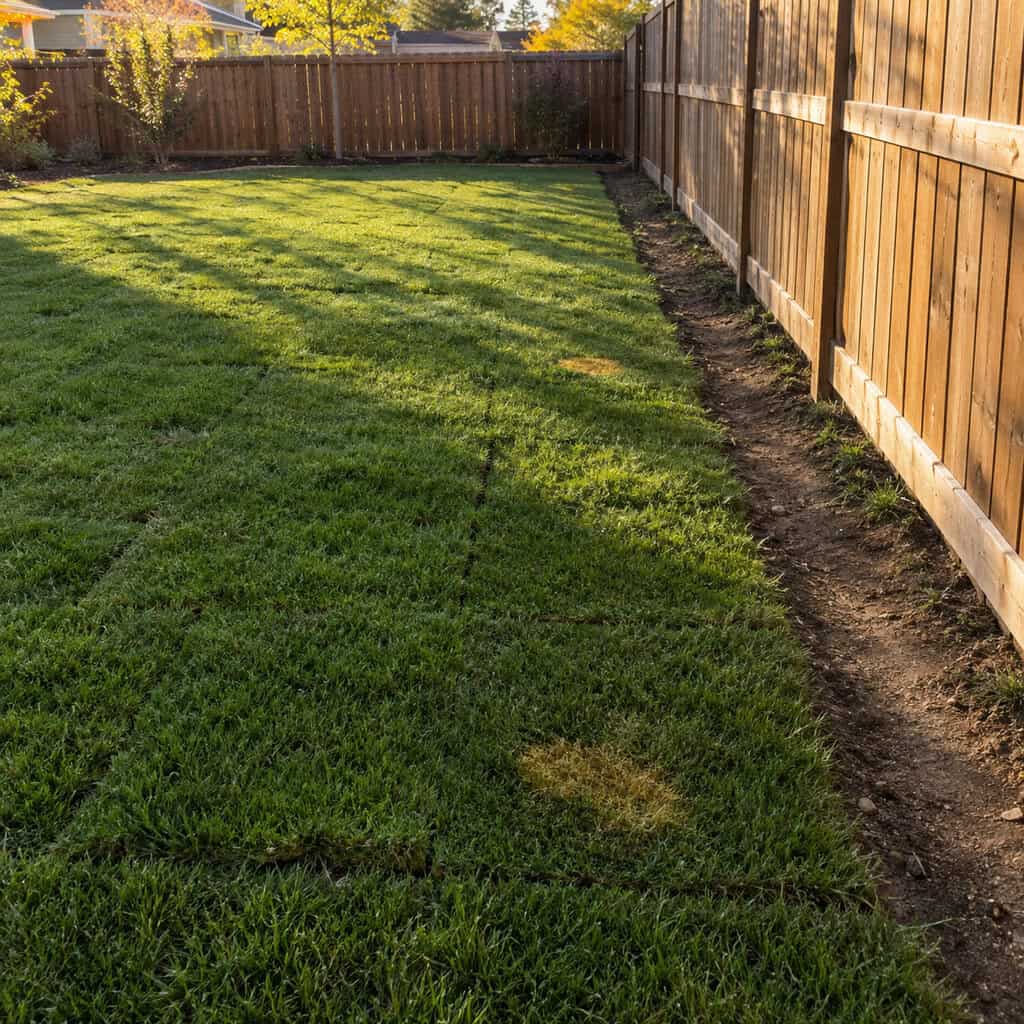
Fresh sod looks like a golf fairway for about six weeks.
Then one medium dog carves a running line along the fence, and the fine-bladed cool-season blend the installer used has no lateral growth to fill it back in. Kentucky bluegrass self-repairs. A fine fescue blend does not.
Urine spots on young sod don’t heal the way they do on an established lawn — the root system isn’t deep enough to push through the nitrogen burn.
The durable play is a tough self-repairing grass plus a mulch or stone path where the dog already runs. Build the path where the trail is, not where the plan says.
13. Ornamental Fountain Grass and Other Awn Producers
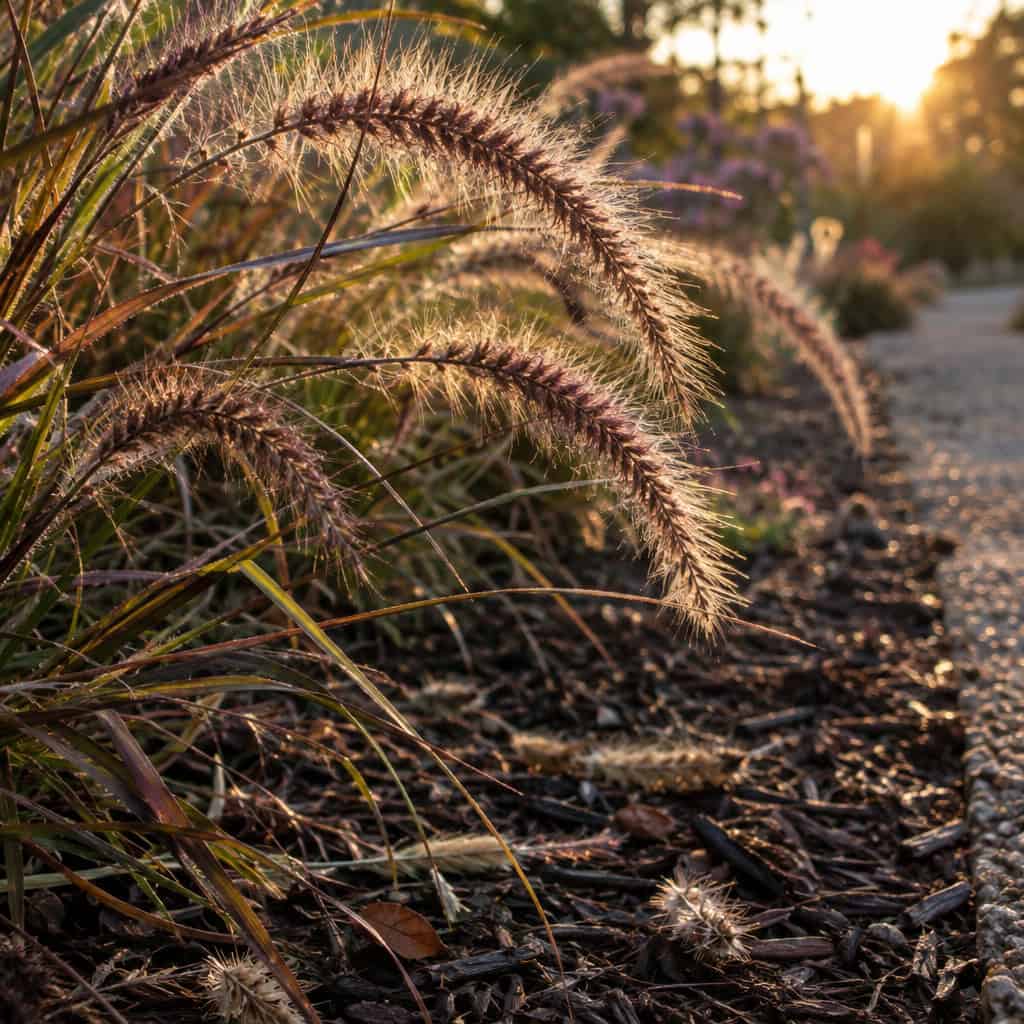
Those feathery plumes photograph beautifully in September.
By then they’ve dried into barbed seed awns that only travel one direction — in. They lodge in ears, eyes, nostrils, and the webbing between toes, then migrate under the skin.
Foxtail and awn removal is one of the most common summer sedation procedures in Western clinics, running $300 to $1,500 depending on how deep the thing traveled.
Cut the plumes before they dry. Or plant sterile cultivars and ornamental grasses that don’t shed awns.
14. Slug and Snail Bait in the Hosta Bed
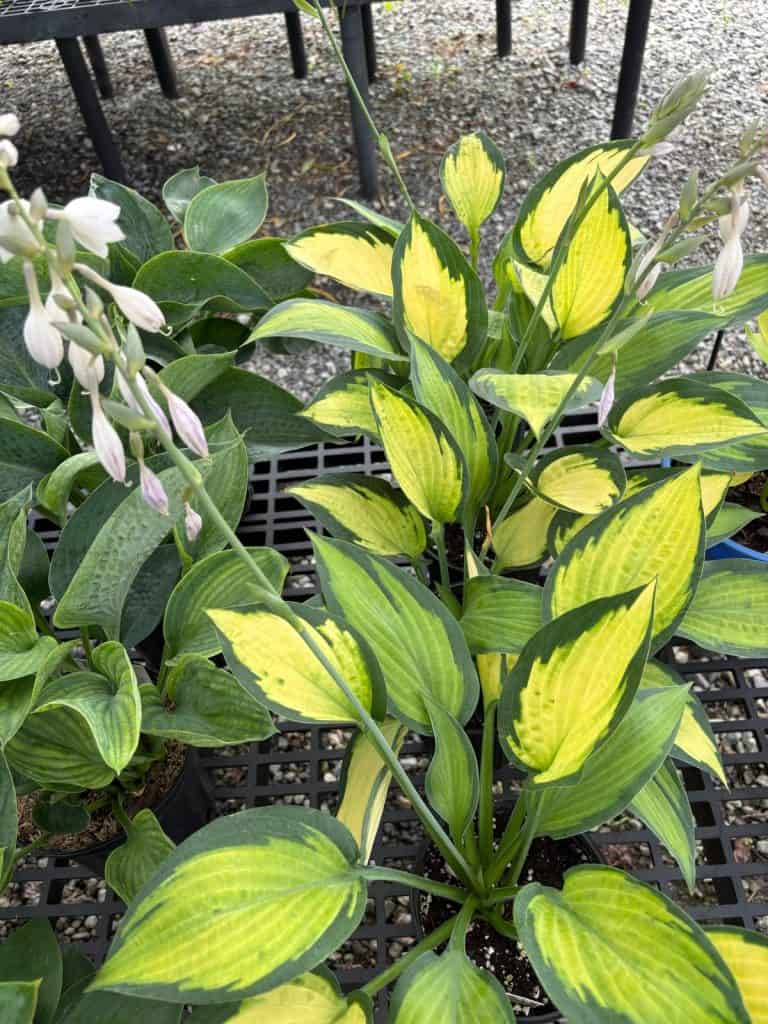
Metaldehyde pellets are flavored with molasses and bran to attract slugs. Dogs find that just as interesting.
Ingestion causes violent tremors and dangerous hyperthermia within 30 to 60 minutes. Vets call it “shake and bake” for a reason, and body temperature can climb past 108 degrees.
Iron phosphate baits do the same job on slugs with a far wider safety margin. They cost about $4 more per container.
The cheap blue pellets are what’s stacked on the endcap in April. Walk past them.
15. A Fence That Stops at the Dirt Line
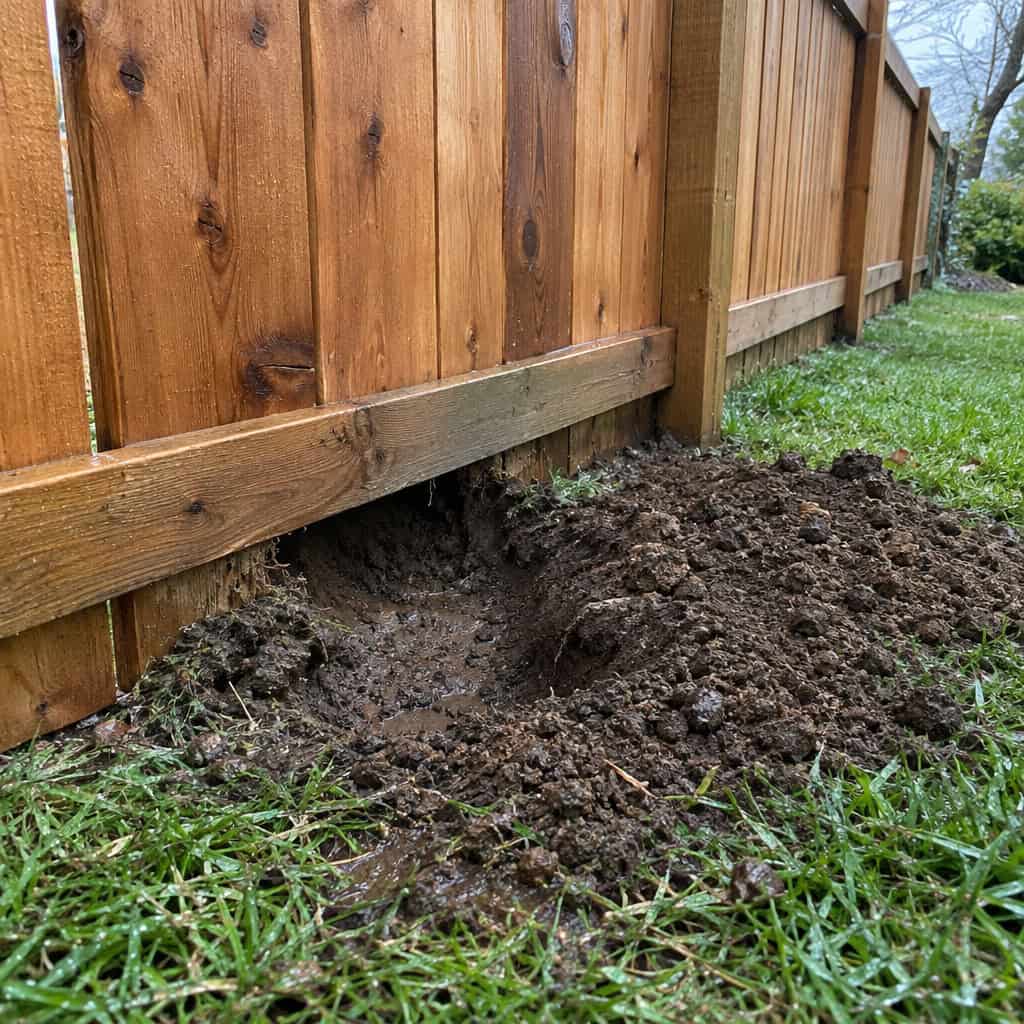
Six feet of cedar means nothing if there’s a two-inch gap at the bottom and soft soil underneath.
Diggers don’t test the whole perimeter. They find the one low spot — usually where the ground slopes away — and they work it for weeks.
Common retrofits:
- An L-footer: hardware cloth bent 90 degrees and buried a foot out from the fence
- Pressure-treated kickboard set two to four inches into the soil
- Poured concrete curb along the worst 20 feet
- Large flat stones laid flush at the dig spots
None of it was in the fence quote. All of it costs less than a fence that doesn’t contain the dog.
16. River Rock Beds Over Landscape Fabric
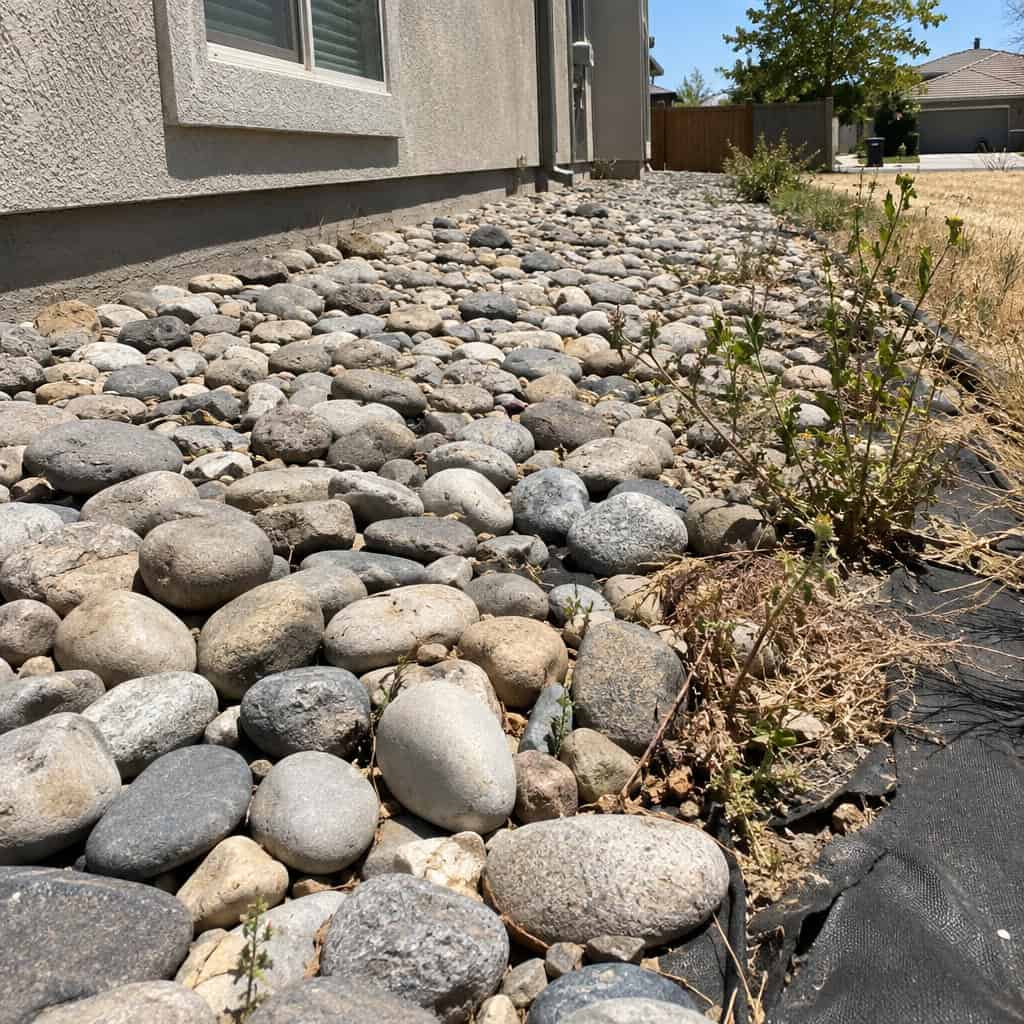
Chosen to be the surface that never needs anything.
Stone stores heat all afternoon and radiates it back up at a panting dog lying nearby. Surface temps on dark river rock in full sun match asphalt closely.
Urine sits in the voids and sours instead of washing through, so the bed starts to smell by August.
And the fabric underneath fails in about three years anyway, which is when the weeds arrive and you can’t pull them out of the rock.
17. A Mosquito Misting System or Barrier Spray Service
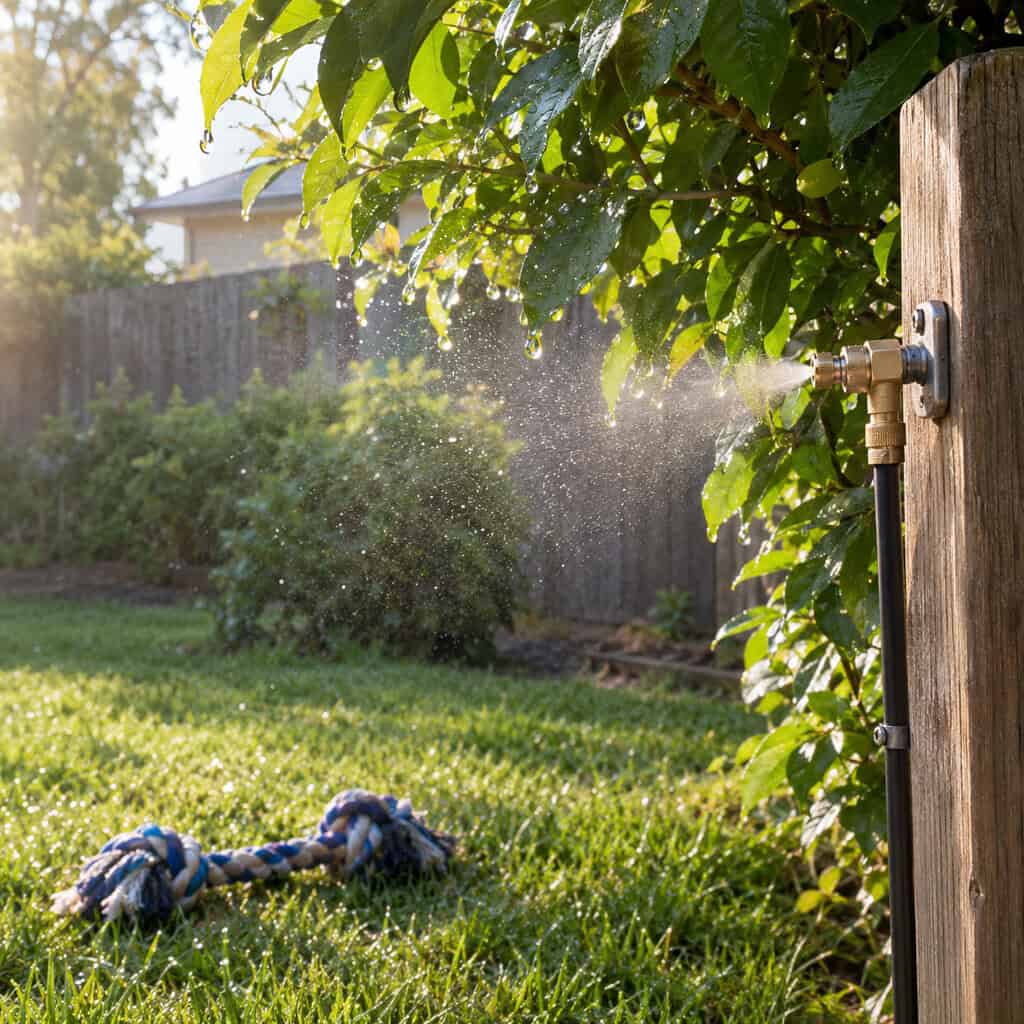
Two visits a month, May through September, usually $400 to $800 for the season — and most contracts auto-renew.
The chemistry is almost always a synthetic pyrethroid: bifenthrin, permethrin, or lambda-cyhalothrin. It’s sprayed onto the underside of leaves and the lower three feet of shrubs, because that’s where mosquitoes rest.
That’s also the exact zone a dog walks through, brushes against, and lies down in.
Label language says keep pets off treated areas until dry, which is typically 30 minutes to two hours. Dogs who lie in damp mulch, drink from a bowl left outside during treatment, or chew grass right after get a much bigger dose than the label contemplates.
Automated misting systems are worse because they fire on a timer, often at dawn, and nobody is home to bring the dog in.
Better moves: dump standing water weekly, add a bat house or dragonfly habitat, run a box fan on the patio, and treat only the shaded perimeter zones a dog doesn’t use. Cancel the auto-renew before you decide.
18. Taking Down the Shade Tree
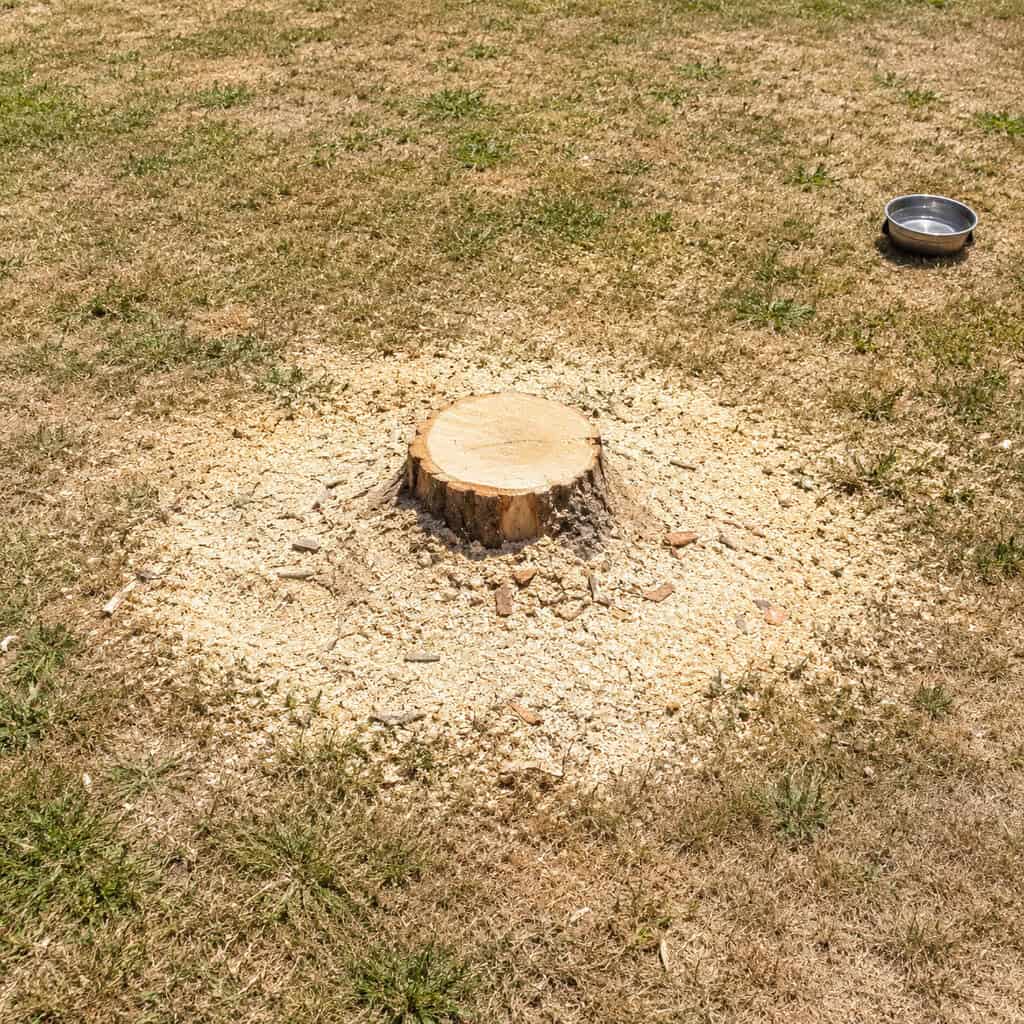
The old silver maple dropped branches and buried the yard in leaves every October. Removal cost $1,800 and the leaf problem ended.
Then July arrived.
A mature tree canopy drops ground temperature 10 to 15 degrees compared to open turf. Without it, the only shade in the yard is a two-foot strip by the house at 4 p.m.
Dogs don’t tough it out. They stop using the yard entirely, which means a dog that used to self-exercise now doesn’t.
Plant a replacement before the saw shows up. A shade sail bridges the eight-year gap.
19. Bone Meal and Blood Meal in the New Beds
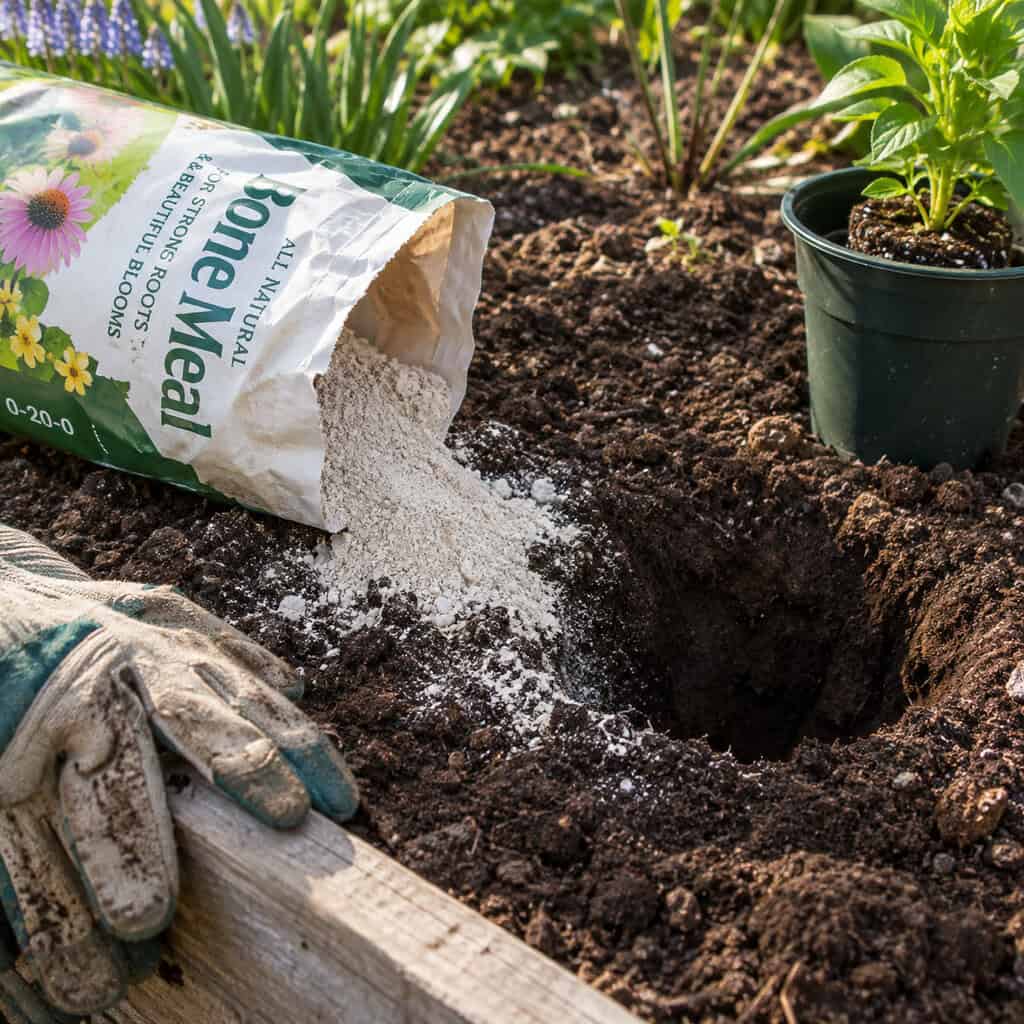
Organic amendments smell like what they are: ground-up animal.
Dogs excavate the fresh bed, find the source, and eat it straight out of the planting hole.
A large bone meal ingestion congeals into a dense, cement-like mass in the stomach that sometimes requires surgical removal. Blood meal’s iron content causes its own problems.
Work amendments deep, water them in hard, and keep the dog off the bed for a day. Or use a balanced granular that doesn’t smell like dinner.
20. Raised Vegetable Beds at Nose Height
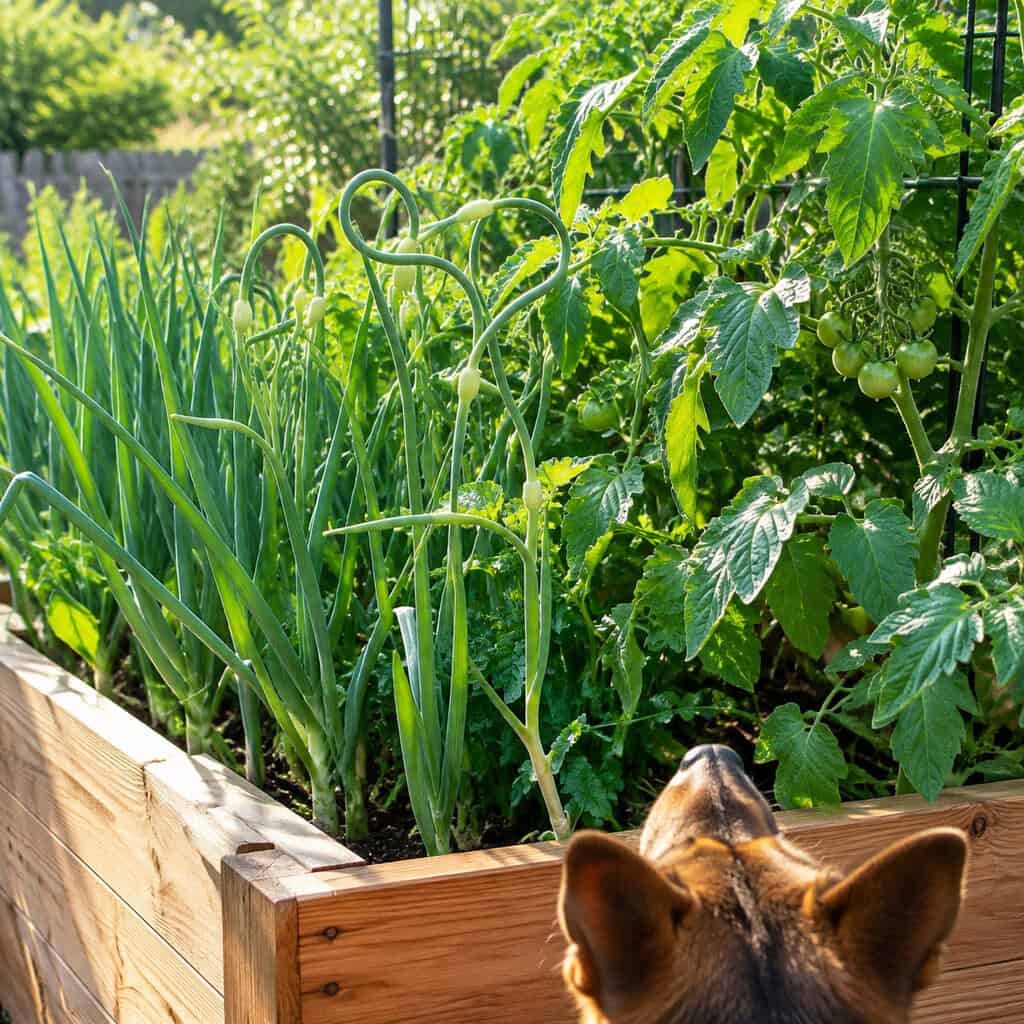
A 30-inch raised bed is comfortable for your back. It’s also perfect browsing height for a Lab.
The real dangers aren’t the tomatoes. Onions, garlic, chives, and leeks damage red blood cells. Grapes and grapevines cause acute kidney failure at doses nobody can predict.
Tomato and potato foliage carries solanine, which won’t kill a dog but will ruin a weekend.
Fence the allium end of the garden specifically. Most of what you actually plant is fine — it’s four or five crops that matter.
21. A Pool With No Dog-Accessible Exit

Dogs swim. That’s not the issue.
The issue is that a pool has one set of steps, usually in a single corner, and a panicking dog in open water doesn’t find it. They swim the perimeter clawing at the coping until they’re done.
It happens most at night and most often with dogs who’ve swum successfully dozens of times. It also happens under solar covers, where a dog that steps on the floating blanket gets wrapped and pushed under.
The fix is a pool ramp — a rigid, textured exit platform that runs $200 to $350 — placed in the corner the dog naturally swims toward. Then you train the exit. Walk the dog to the ramp from the water ten times over two weeks until it’s automatic.
Mark it with something visible: a bright pool noodle, a flag, a solar light clipped to the rail. A dog at water level can’t see a ramp that’s flush with the deck.
Check your homeowners policy too. Many carriers treat a pool as an attractive nuisance and some exclude animal-related claims entirely.
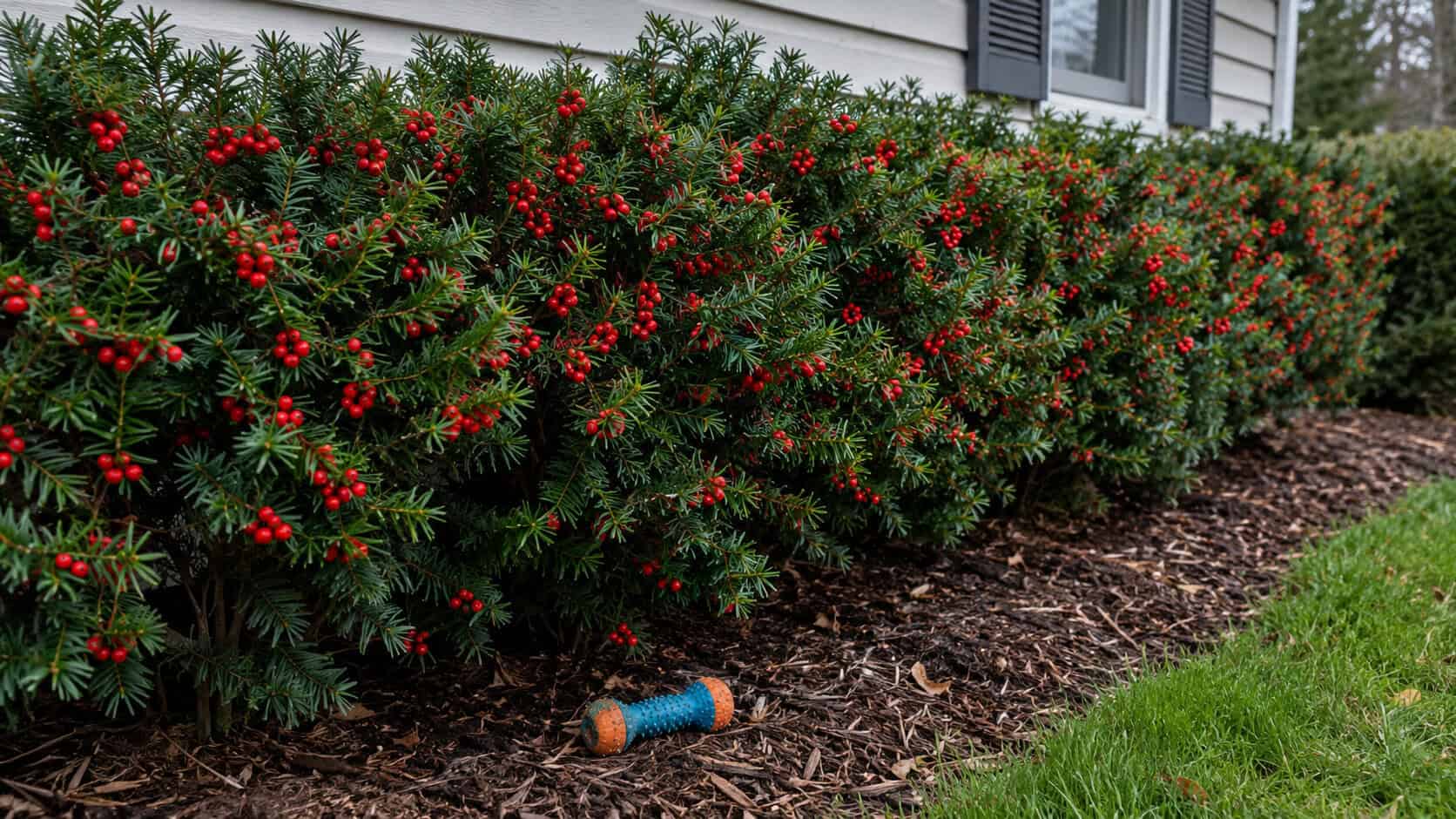
22. A Yew Hedge Along the Foundation
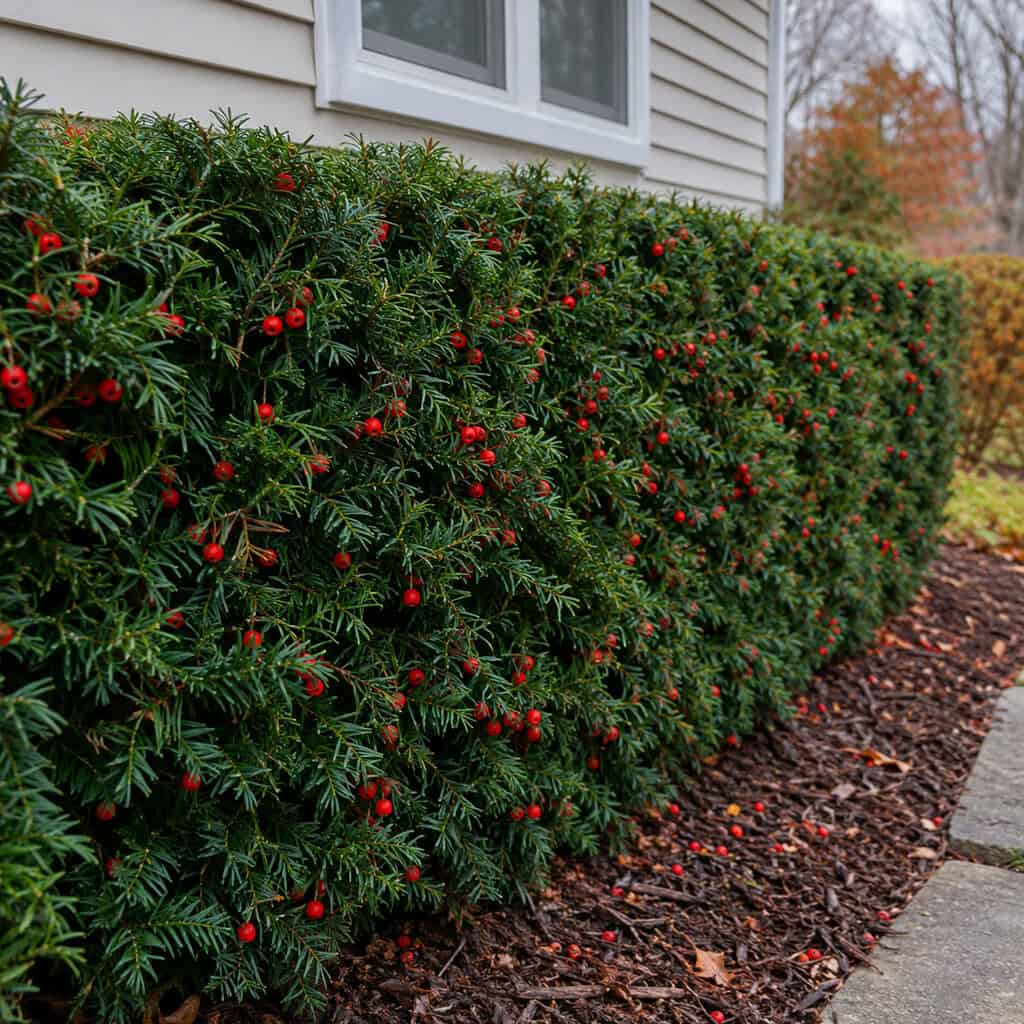
Japanese yew is everywhere in builder landscaping. Dense, evergreen, shears into a block, survives neglect.
It’s also among the deadliest plants you can put in a yard. Taxine alkaloids cause sudden cardiac failure, often with no warning phase — the dog is fine, then collapses.
The bright red aril is the part dogs find first. The flesh is the only non-toxic part; the seed inside it isn’t.
Clippings are just as dangerous as the live plant and stay toxic after drying. Bag and haul yew trimmings — never pile them.
23. Rodent Bait Stations Tucked Into the Landscaping

These are the hazard that doesn’t look like a hazard. Black plastic boxes the size of a brick, tucked behind the hostas and along the foundation.
Most homeowners on a quarterly pest contract can’t tell you where the technician placed them. The stations are tamper-resistant, not tamper-proof, and a determined dog gets one open.
Two chemistries, two very different emergencies. Anticoagulants like bromadiolone and brodifacoum cause internal bleeding that doesn’t show for three to five days — by the time the dog is lethargic and pale, it’s advanced. Vitamin K1 is the antidote, and it works if you catch it.
Bromethalin is the one that scares vets. It causes cerebral edema, there’s no antidote, and the window for decontamination is measured in hours.
Then there’s relay poisoning. A dog that eats a dying rodent gets a secondary dose, and that route accounts for a meaningful share of cases.
Ask your pest company for a station map in writing, ask which active ingredient they’re using, and ask whether snap traps in enclosed boxes will do the job instead. If a bait gets opened, bring the label to the clinic — treatment depends entirely on which compound it was.
24. Smooth Flagstone and Sealed Concrete Patios

A high-gloss sealer makes the stone color pop. It also makes a wet patio into a skating rink.
Dogs take corners at speed. On sealed stone that means splayed-leg falls and torn cruciate ligaments — a CCL repair runs $3,500 to $7,000 per knee.
Senior dogs handle it differently. They just stop crossing it, which quietly shrinks the part of the yard they use.
Use a matte penetrating sealer or add grit additive to the topcoat. A runner of outdoor rug across the main traffic line fixes an existing patio for $60. The patio choices people regret almost always involve finish, not material.
25. The Low Corner That Never Drains

Every spring it’s the same four hundred square feet of soup.
That corner is a mud factory, a mosquito nursery, and a leptospirosis exposure route — raccoon, rat, and opossum urine concentrates in standing water, and lepto gets into a dog through a cut or a drink.
It’s also the thing that wrecks a lawn permanently. Saturated soil suffocates roots, compacts under paw traffic, and grows the algae and moss that takes over once the grass gives up.
Fixes scale with the problem. Regrading a low spot with screened topsoil costs a few hundred dollars and a Saturday. A proper French drain to daylight runs $1,500 to $5,000 depending on length and whether anything has to be tunneled under. A dry well is the middle option when there’s nowhere downhill to send water.
Check the gutters first — a disconnected downspout dumping 600 gallons per inch of rain against the foundation causes more backyard swamps than grading does. Yard flooding after rain usually traces back to roof water before soil.
Regrading is a one-time cost. Living with it is a weekly one — towels, mud, and a vet bill you didn’t see coming.
26. A Bird Feeder Hung Over the Dog’s Run
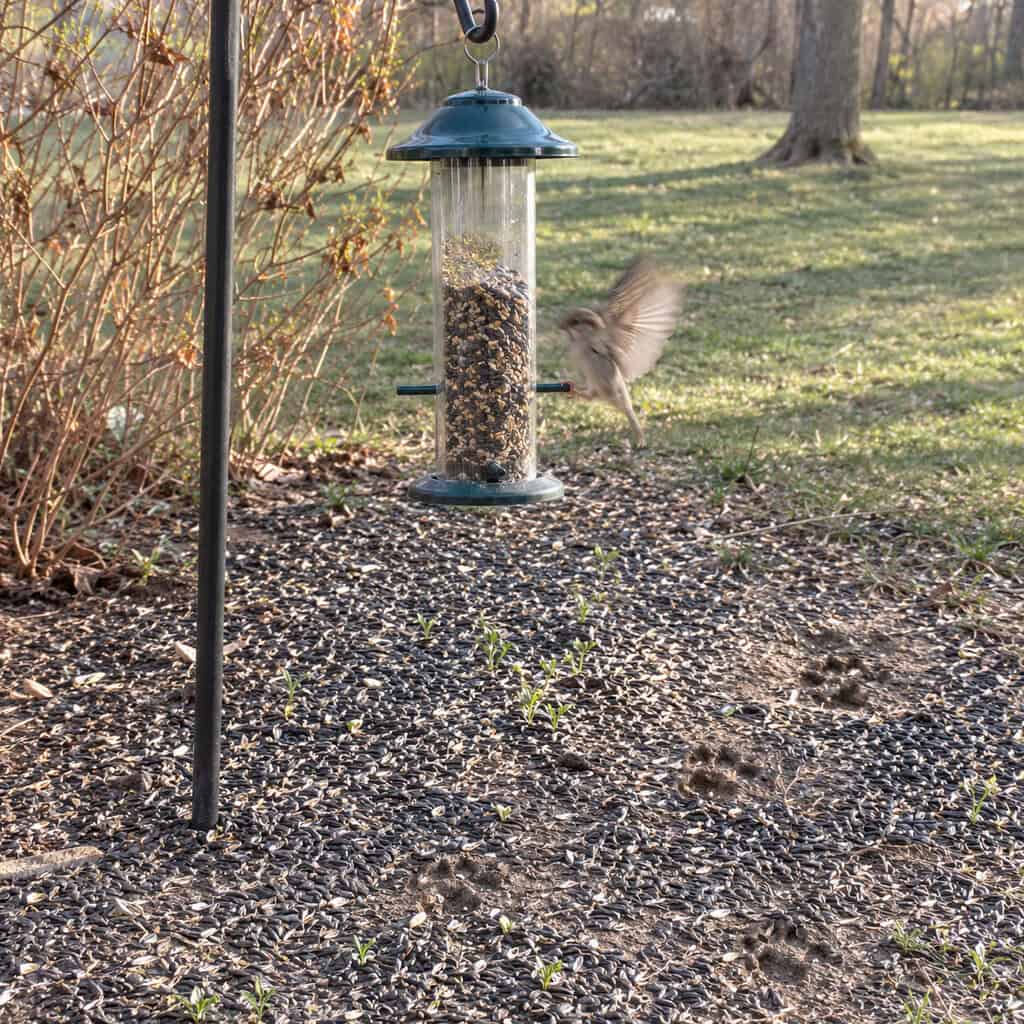
Birds are messy eaters. Roughly a third of what goes in the feeder ends up on the ground.
Spilled seed molds in wet weather, grows aflatoxins, and draws exactly the rodents the bait stations are supposed to handle.
Dogs hoover all of it — seed, hulls, droppings underneath.
Move the feeder to the far side of the yard, put a catch tray under it, and rake the drop zone monthly. Don’t hang one over the spot the dog sleeps.
27. A Japanese Barberry Hedge
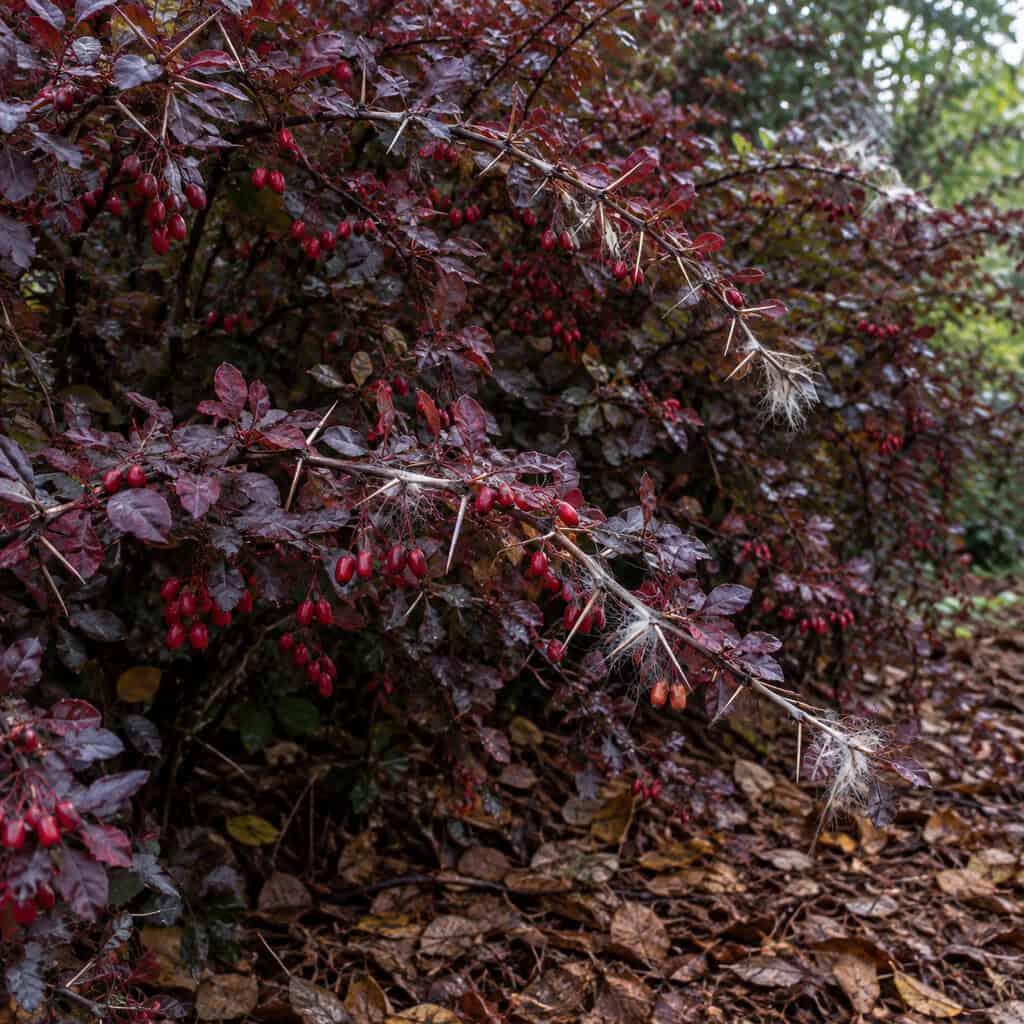
It’s the hedge that bites twice.
First the thorns — stiff, needle-sharp, and positioned at dog eye level. Corneal punctures and muzzle abscesses from barberry are routine in clinics anywhere the plant is common.
The second problem is less obvious and worse. Barberry grows into a dense, low thicket that holds humidity near the ground, and that microclimate is ideal for blacklegged ticks. Connecticut Agricultural Experiment Station research found substantially higher densities of infected ticks in barberry-invaded understory than in nearby clean woodland.
More ticks, held at exactly the height a dog pushes through.
Japanese barberry is banned or restricted in more than a dozen states now, including New York, Pennsylvania, and Massachusetts, largely for that reason. Remove it, keep a three-foot mulched buffer between lawn and woods, and keep the dog on year-round tick prevention regardless.
Inkberry holly or a thornless viburnum gives the same screening without either problem.
28. A Fire Pit With Next-Day Ashes
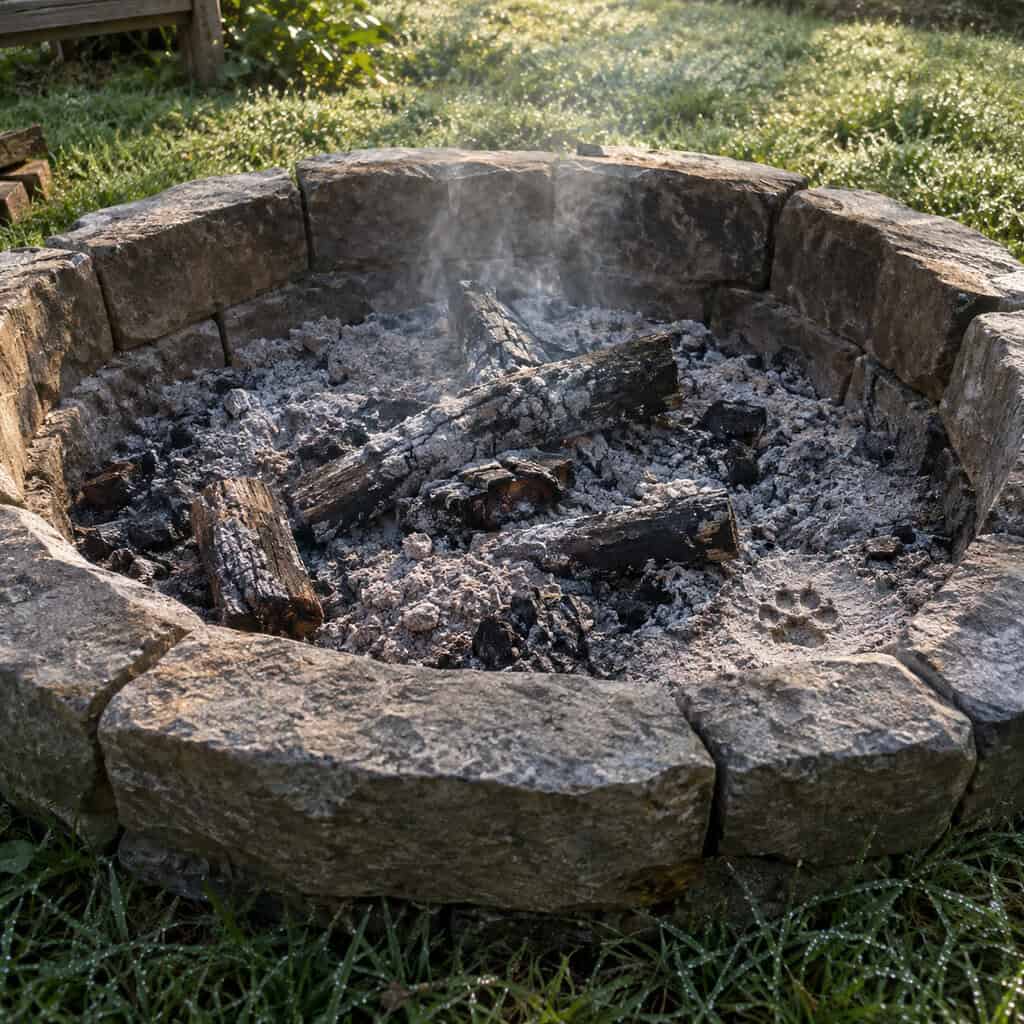
Ash beds hold usable heat for 24 hours and sometimes longer, especially under a layer of white ash that looks completely cold.
Dogs step in them. Some roll in them.
Pad burns from day-old fire pits are a standard spring and summer call.
Greasy wood ash causes gut upset once it’s licked off, and ash from treated lumber is worse than that. Douse the pit before bed — don’t let it “burn down naturally.”
29. Spring Bulb Beds
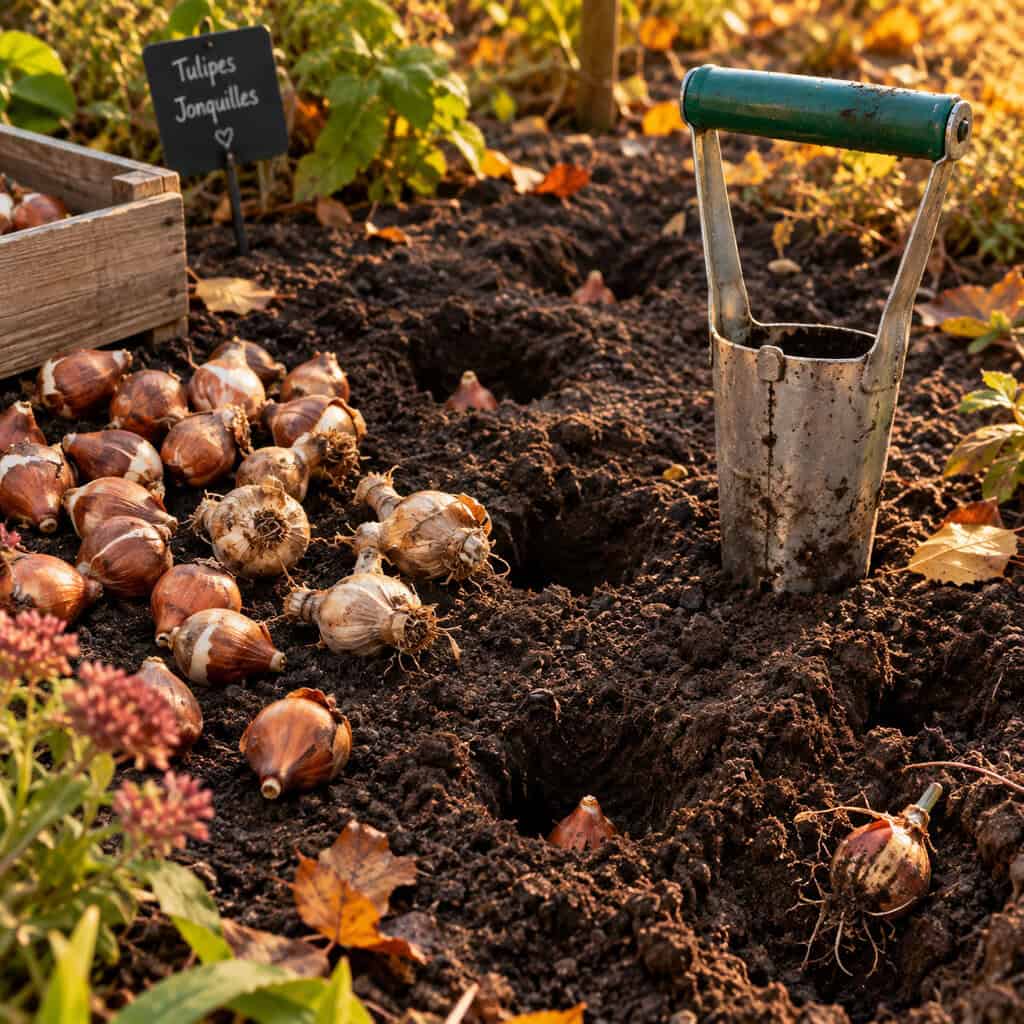
You plant 200 daffodil bulbs on a Saturday in October. You’ve just buried something that smells interesting in freshly turned soil.
The bulb is the toxic part — concentrated lycorine in daffodils, tulipalin in tulips, and both cause heavy drooling, vomiting, and sometimes arrhythmias in quantity.
Autumn crocus is the genuinely life-threatening one. Colchicine causes multi-organ failure, and it’s often mistaken for a harmless fall crocus.
Lay chicken wire flat over the bed and cover it with mulch. The shoots come up through it; paws don’t go down through it.
30. A Gate That Doesn’t Latch Itself

Every trainer tells a version of the same story. A delivery driver, a lawn crew, a kid taking a shortcut.
Somebody pushed the gate closed and it didn’t click.
A self-closing hinge is about $25. A spring-loaded latch is about $20. A second carabiner clipped through the latch hardware costs four dollars and has saved a lot of dogs.
Put a laminated sign at dog height on the outside: CLOSE AND CHECK THE GATE.
Nobody budgets for this one until the weekend they spend driving the neighborhood.
31. The Gap Under the Deck

It’s the coolest spot in the yard in July, and dogs are den animals. They find it in the first week.
Underneath, they meet skunks, rats, feral cats, and ground wasp nests built into the joist bays. Yellow jacket stings to a muzzle shut down an airway fast.
Dogs also get stuck — wedged between a joist and the soil after digging in deeper than they can back out of.
Lattice skirting with a buried L-footer closes it. Leave one access panel so you can get under there when something else moves in.
32. Letting the Back Corner Go Wild
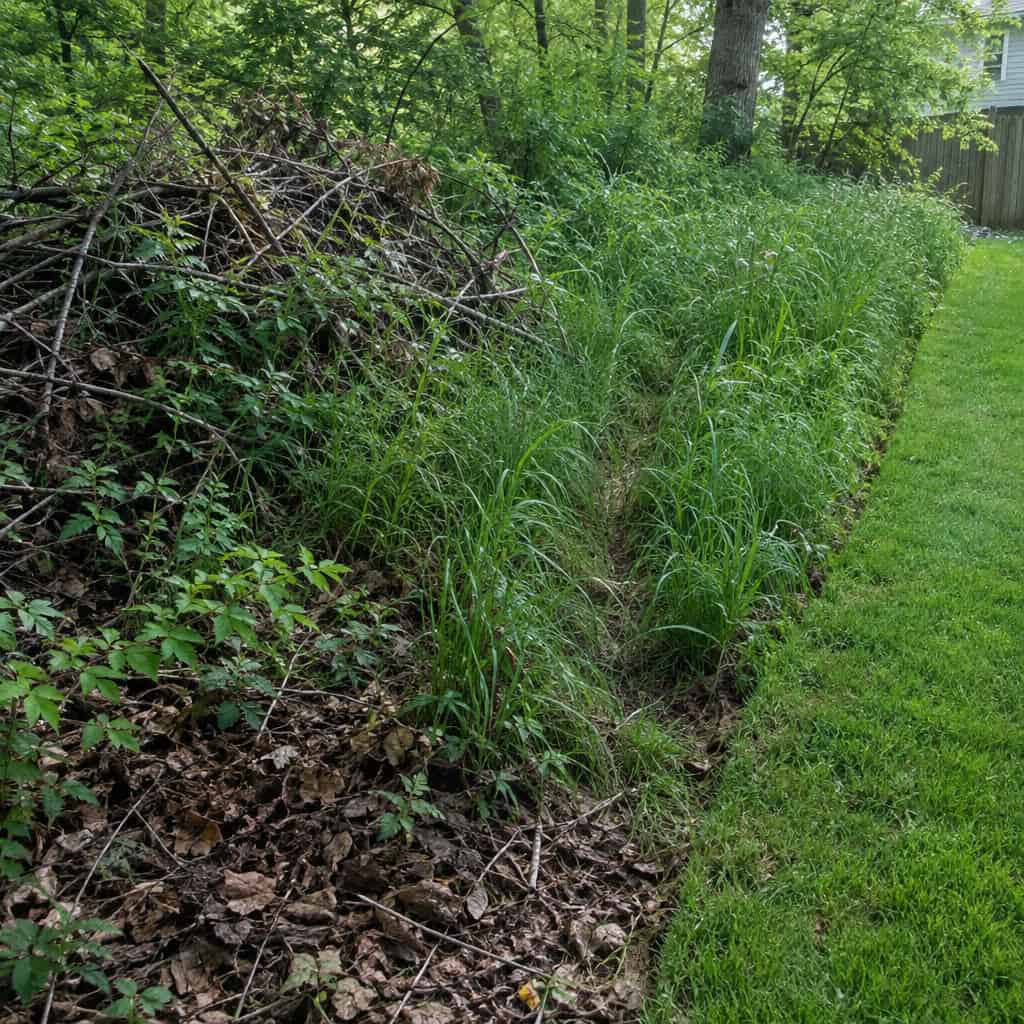
It started as a pollinator patch. Three years later it’s waist-high grass, leaf litter, and a brush pile.
That’s a tick and flea reservoir, built right where the dog patrols the fence line.
Blacklegged ticks need leaf litter humidity above 80 percent to survive the day. Mowed turf dries out and kills them; unmown edge habitat doesn’t.
Keep the pollinator plantings. Mow a four-foot strip around them, pull the brush pile, and rake the litter. A real pollinator planting isn’t the same thing as neglect.
33. An Oleander Hedge
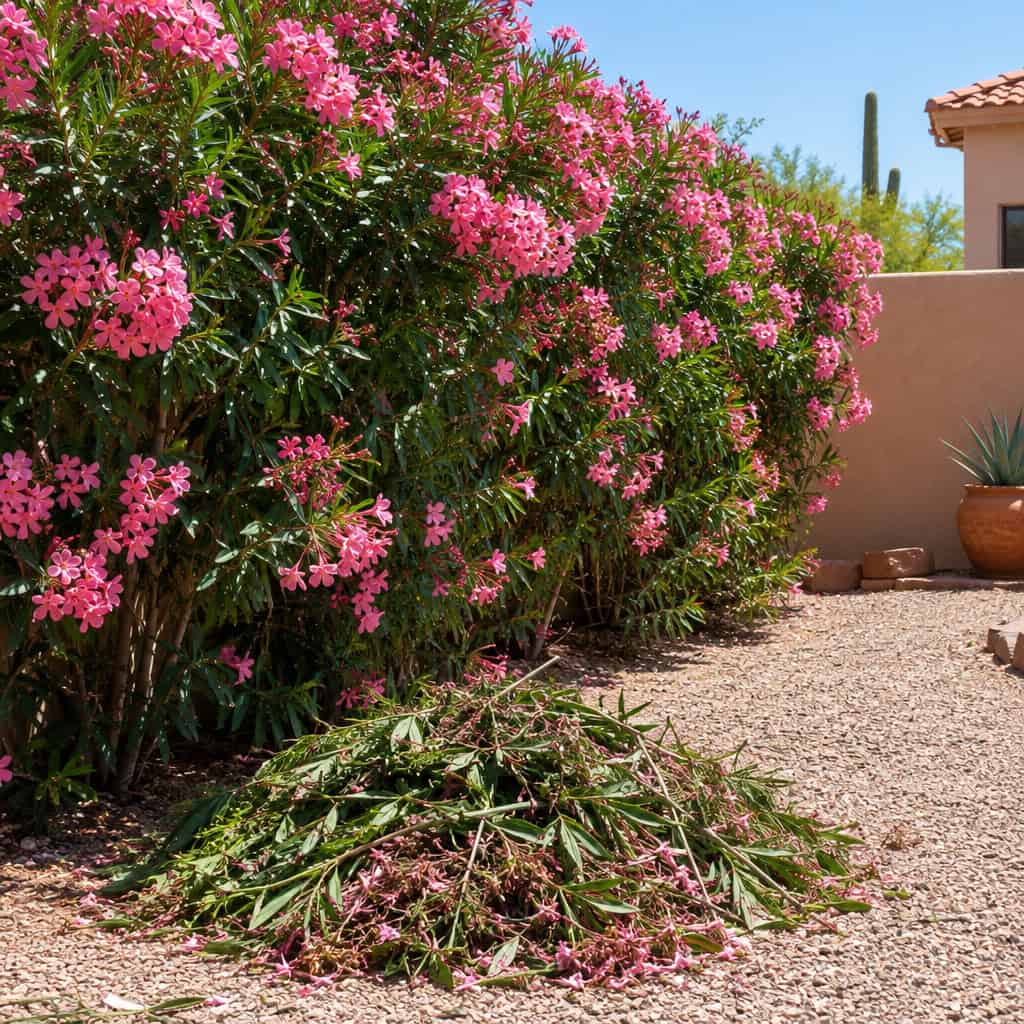
In zones 8 through 10 it’s the default privacy screen — fast, drought-proof, blooms all summer.
Oleandrin is a cardiac glycoside and it’s lethal in very small amounts. A few leaves can stop a dog’s heart.
Dried clippings are just as dangerous as fresh ones, which is how most incidents happen — a hedge trimming raked into a pile the dog investigates.
Smoke from burning it is toxic too. Bag it and haul it, never burn it.
34. A Hot Tub With a Soft Vinyl Cover

The cover looks like a platform. To a dog, it reads as solid ground slightly above the deck.
Older vinyl covers absorb water and sag at the center seam, and the foam cores waterlog over three or four years until they won’t hold much weight at all.
A dog that steps on it goes through and gets pinned underneath in 102-degree chlorinated water. There’s no exit and often no sound.
Use the locking clips every single time — not just when you remember. Replace a cover the moment the center dips under hand pressure, and keep the steps pulled away when the tub isn’t in use.
Almost none of these are exotic mistakes. They’re standard yard choices made by people who care about their dogs and never got told what the tradeoff was.
The ones worth fixing this weekend are the cheap ones. Check the gate latch. Walk the fence base. Look at what’s growing within reach of a nose.
The rest can wait for a budget cycle. Just make the next yard decision with the dog in the room.