

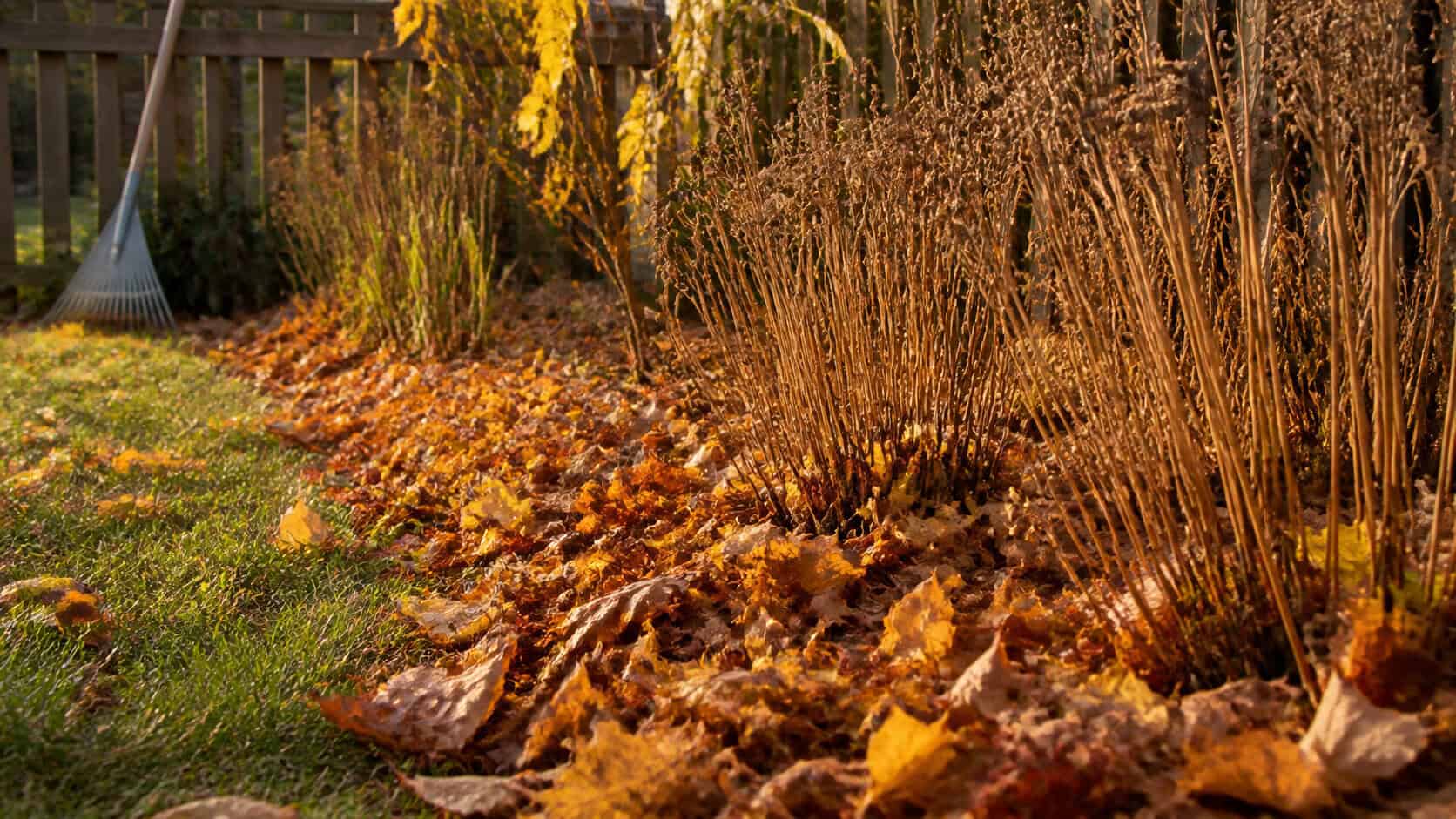
The leaves come down, and the reflex kicks in. Rake. Bag. Cut. Haul it all to the curb.
A stripped-bare garden feels like an accomplishment. Clean beds, short grass, empty stems standing at attention.
But most of what looks like tidiness is actually damage in slow motion.
Under that leaf litter, bumblebee queens are asleep. Inside those hollow stems, next year’s native bees are waiting out the cold. On those brown seedheads, finches will feed in January when nothing else is left.
Strip it all in October and you evict every one of them — then wonder in June why the yard feels emptier than it used to.
Here are 18 fall cleanup jobs your garden is better off without.
1. Raking Every Last Leaf Out of Your Beds
Start here, because this is the one that changes everything.
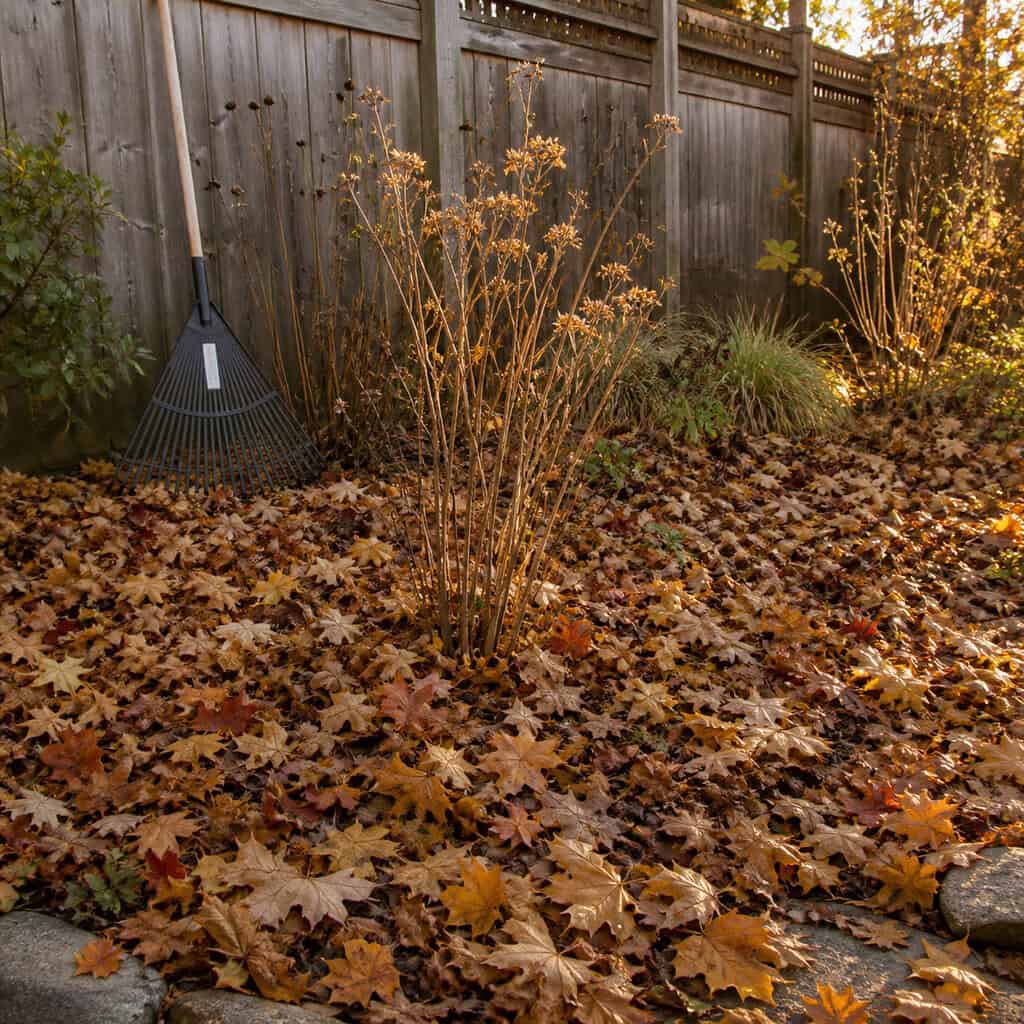
A layer of fallen leaves isn’t mess. It’s habitat. Butterfly and moth pupae, bumblebee queens, firefly larvae, and beneficial beetles all overwinter in leaf litter, tucked into that few inches of damp cover on your beds.
Rake it all away and you throw those insects out with it — including the pollinators and the predators that eat next year’s pest problems. The Xerces Society points out that a leaf layer actually shelters the natural enemies of aphids and other garden pests, so clearing it can leave you with more trouble, not less.
Leaves break down into free mulch and fertilizer too. That dark, crumbly stuff at the bottom of an old leaf pile is leaf mold — the same thing people pay for in bags.
Now the honest part, because leaf litter does get blamed for ticks and rodents. Ticks need consistent moisture and thrive in tall, unmanaged brush along wooded edges, not in a thin leaf layer over an open flower bed. Keep leaves off the lawn and away from the foundation and you sidestep most of the rodent worry. The habitat you want is in the beds, in the back, not piled against the house.
Skip it. Leave a light leaf layer in your garden beds. Just rake leaves off ponds, off paths, and off any thick mats smothering the lawn — everything else stays.
2. Shredding the Leaves You Decide to Keep

Plenty of people hear “leave the leaves” and reach for the mower to chop them first. Feels like a smart compromise.
It isn’t.
Those whole leaves are hiding cocoons, eggs, and caterpillars. Luna moths and swallowtails disguise their chrysalises to look exactly like a curled brown leaf — which means your mulching mower shreds them without you ever seeing it.
Whole leaves protect what’s inside. Shredded leaves are just confetti with the life blended out.
Skip it. Rake or blow whole leaves into beds and under shrubs. Don’t run the mower over the ones you’re keeping.
3. Bagging Leaves and Hauling Them to the Landfill

Forty black bags at the curb is the classic image of a job well done. It’s also the least useful thing you can do with a leaf.
Bagged leaves buried in a landfill never return their nutrients to your soil. Sealed away without oxygen, they break down slowly and generate methane instead of feeding anything. A University of Delaware specialist framed it plainly: raking and bagging turns a free resource into a problem you paid to create.
You bought fertilizer, then rented a truck to throw fertilizer away.
Mulch-mow a thin layer right back into the lawn, or pile the rest into a compost heap or a back corner. If you want the full breakdown on turning them into something useful, composting leaves into garden gold costs nothing but time.
Skip it. Mulch-mow or compost on-site. Keep the nutrients on your property where they started.
4. Scalping the Lawn on the Final Mow
The “cut it short so it doesn’t mat down over winter” advice sounds reasonable. It’s mostly wrong.
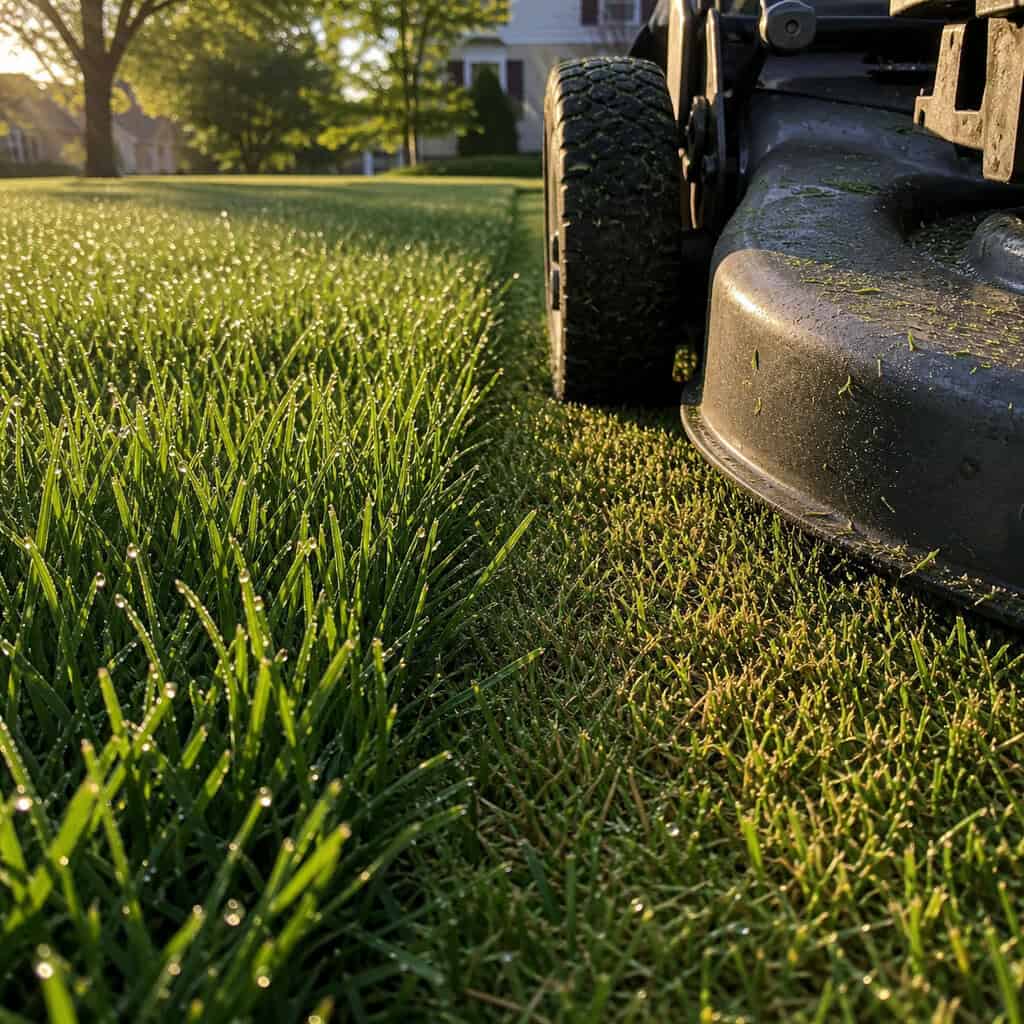
Soil-enriching insects and beneficial organisms burrow into the thatch layer at the base of your grass. A scalped lawn strips that cover away and leaves the crown of the turf exposed to freeze-and-thaw damage all winter.
A slightly longer final cut insulates the soil and protects the grass. There’s a difference between a tidy last mow and a buzz cut — and the buzz cut is the one that hurts you. Before you drop the deck, it’s worth knowing whether you should scalp your lawn in the fall at all for your grass type.
Skip it. Raise the blade for the last cut. Leave the turf a touch longer than you think you should.
5. Cutting Every Perennial Back to the Ground

The fall ritual: hedge shears out, everything chopped to two inches, beds swept bare for winter.
Standing perennials do more good left up. Their stems and crowns insulate the plant’s roots, shelter beneficial insects, and hold snow that acts as extra cover. They also give the winter garden actual structure instead of flat brown dirt.
The only stems worth cutting now are the sick ones — anything hit hard by disease or heavy pest pressure should come out and go in the trash, not the compost.
Everything healthy? Let it stand.
Skip it. Leave healthy stems standing until spring. Cut back only the diseased plants.
6. Snipping Off the Seedheads

That brown, spent coneflower looks finished. To a goldfinch in January, it’s a full plate.
Dried seedheads of echinacea, rudbeckia, and globe thistle are a winter buffet. Finches, chickadees, juncos, and jays pick them clean through the cold months when almost nothing else is producing food.
Cut them in fall and you’ve thrown away a bird feeder you didn’t have to fill. The “ugly” seedhead is the whole point.
Leave the black-eyed Susans and coneflowers standing and watch who shows up in December. If feeding birds is the goal, the standing garden pairs well with a proper pollinator garden setup.
Skip it. Leave the seedheads on. Coneflowers and black-eyed Susans feed birds all winter.
7. Cutting Down the Ornamental Grasses

Ornamental grasses get flattened every fall out of habit. Two reasons not to.
First, they earn their keep in winter — that movement and gold color in a dead-looking garden is worth something, and the clumps give small wildlife cover.
Second, and more practical: warm-season grasses like switchgrass and muhly grass have hollow stems. Cut them low in fall and those hollows collect water. It freezes, expands, and can rot or kill the crown before spring.
This isn’t just an aesthetic argument. Cutting early can literally damage the plant.
Skip it. Leave ornamental grasses standing. Cut them back in early spring instead.
8. Clearing Out the Hollow Flower Stems

Here’s the one that surprises even experienced gardeners.
Roughly 30% of native bees nest inside hollow and pithy plant stems. Cut those stems flush in fall and you open the door for moisture and cold to get in and kill the eggs and larvae sealed inside.
Those dead-looking stalks of raspberry, elderberry, joe-pye weed, and bee balm are bee nurseries. Nebraska Extension entomologists recommend that if you must cut, leave 8 to 24 inches of stem standing — tall enough that next year’s bees still have a home.
Cutting them to the ground is the quiet mistake behind a lot of “where did all the bees go” questions.
Skip it. Leave hollow stems standing. Cavity-nesting native bees are overwintering inside.
9. Cutting Back Cold-Tender and Evergreen Perennials
Some plants don’t just prefer their foliage over winter. They need it to survive.
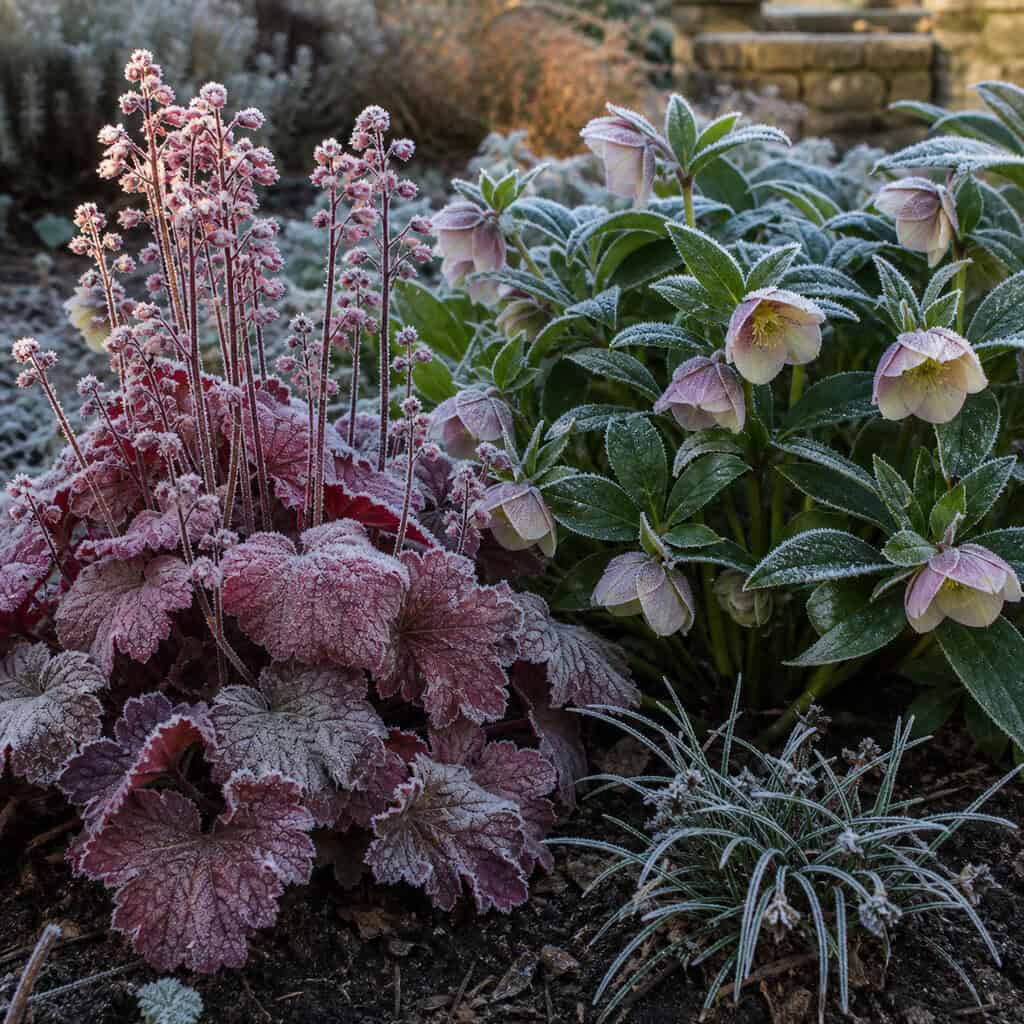
Marginally hardy perennials — garden mums, coral bells, anise hyssop, Nippon daisy — use their own leaves as winter insulation. Cut them to the ground in fall and you strip away the blanket right before the cold sets in. Plenty of “hardy” mums die this way every winter and get blamed on the weather.
Evergreen perennials work the opposite way. Hellebore and Christmas fern hold their leaves on purpose. They only need a light tidy in spring, once you can see what actually made it through.
This is the entry that crosses from “less pretty” into “dead plant.”
Skip it. Leave mums, coral bells, and hellebore alone. Their foliage is keeping them alive.
10. Pruning the Spring-Blooming Shrubs

Grab the loppers in October and you might be cutting off next April’s flowers without knowing it.
Lilac, forsythia, azalea, rhododendron, and bridal wreath spirea all set their flower buds the previous season. Those buds are already on the branches by fall. Prune now and you’re removing the entire spring show before it happens.
The timing is simple once you know it. Prune these right after they finish blooming, not in fall.
Skip it. Don’t prune spring bloomers now. You’re cutting off next spring’s flowers.
11. Giving Trees and Shrubs a General Fall Haircut

Fall feels like pruning season. For most woody plants, it’s the worst one.
Cuts made in fall heal slowly, and pruning stimulates tender new growth right as the first hard frost arrives to kill it. Wet fall weather also pushes fungal disease straight into every fresh wound you open.
Late winter, deep in dormancy, is when most deciduous trees and shrubs want to be pruned — no active growth to shock, no fungal pressure, clean cuts that heal fast come spring.
Put the saw down until February. Crepe myrtles are one common exception people ask about — here’s whether you can actually trim crepe myrtles in the fall.
Skip it. Wait for dormancy in late winter to prune trees and shrubs.
12. Rototilling the Beds and Vegetable Garden
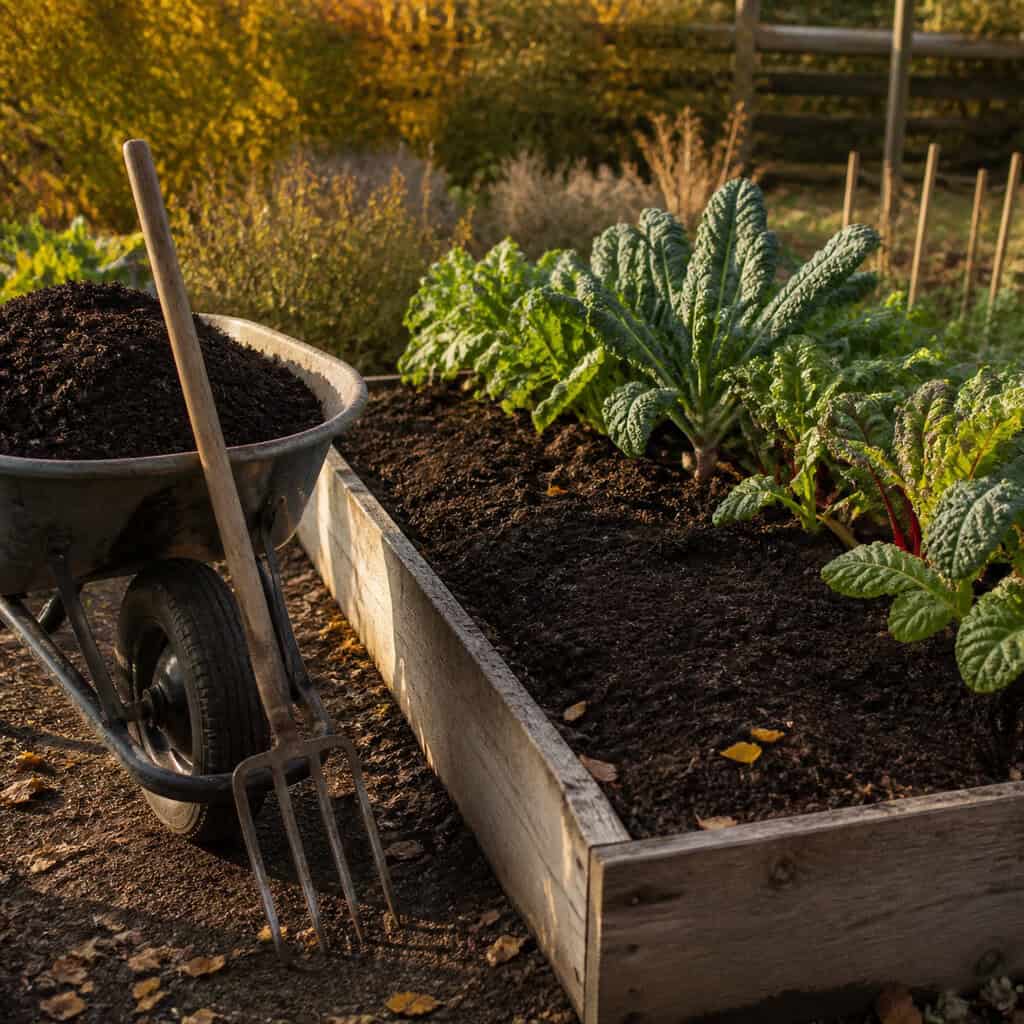
Turning the soil over feels like giving the garden a fresh start. It’s closer to demolition.
Tilling shreds soil structure and rips apart the underground network of worms, fungi, and microbes that took years to build. Bare, churned soil erodes over winter. Worse, tilling drags long-buried weed seeds up to the surface where light triggers them — which is why a freshly tilled bed often comes back weedier the next spring, not cleaner.
The soil does better if you just leave it intact and feed it from the top. Spread an inch or two of compost or mulch over the surface and let the worms and freeze-thaw cycles work it down for you. That’s how top-dressing with compost improves ground without a tiller ever touching it.
The vegetable garden gets one important exception. Anything that was diseased this season — tomato plants with blight, squash with mildew, anything you’d hate to see return — should still be pulled and thrown out, not left to overwinter and reinfect next year’s crop. Clearing sick debris is smart. Tilling healthy soil to “clean” it is not.
Skip it. Top-dress with compost or mulch instead of tilling. Just remove diseased plants from the veggie beds.
13. Hauling Away Every Branch and Clipping

Every stick and clipping gets bagged and dragged to the curb. What if the pile itself is the useful part?
A loose brush pile of shrub prunings and tree clippings in a back corner turns into serious habitat. Birds shelter in it during storms. Small mammals, reptiles, amphibians, and overwintering bumblebees all use it. You’ve converted a disposal chore — and often a disposal fee — into a living feature of the yard.
Location matters, though, and this is where honesty helps. A brush pile stacked against your foundation or right by the back door is an invitation to voles, mice, and the things that eat them. Build it in a far corner of the property, well away from the house, and you get all the wildlife benefit without inviting rodents indoors.
Distance is the whole trick. Far corner, good. Next to the siding, bad.
Skip it. Build a brush pile in a back corner instead of hauling clippings away — just keep it far from the foundation.
14. Mulching Over Every Bare Patch of Soil
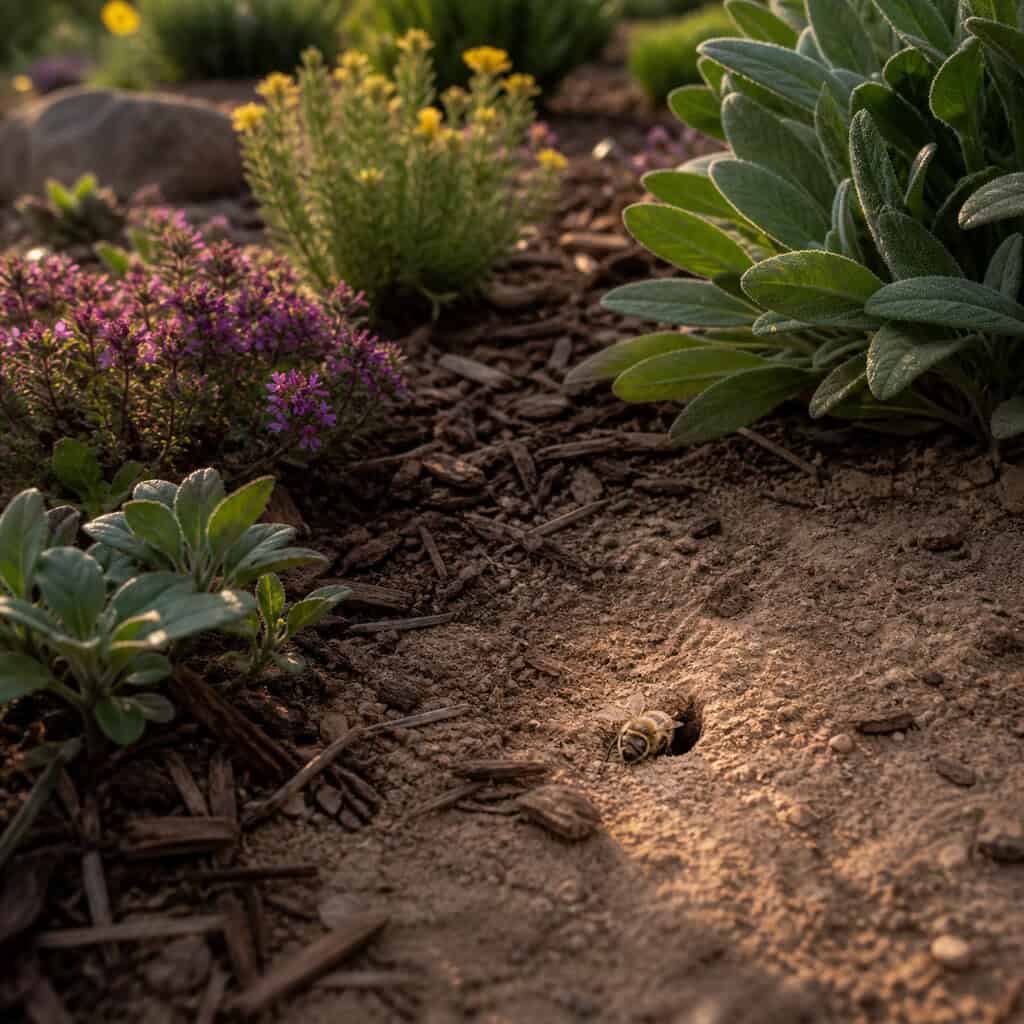
Blanketing every square inch in fresh mulch looks finished and clean. It also locks out a huge share of your pollinators.
Most native bees don’t nest in stems or wood — they nest in the ground, in bare or lightly covered soil. Cap every open patch with three inches of mulch and you seal those nests shut before the bees can dig.
This is the rare fall message that’s “less mulch, not more.” Leave a few sunny, undisturbed patches of bare or thinly covered dirt, especially on gentle slopes, and you give ground-nesting bees a place to overwinter.
You don’t have to mulch it all. Some open ground is the point.
Skip it. Leave some bare ground unmulched for ground-nesting bees.
15. Rushing the Big Cleanup Before Spring Warms Up
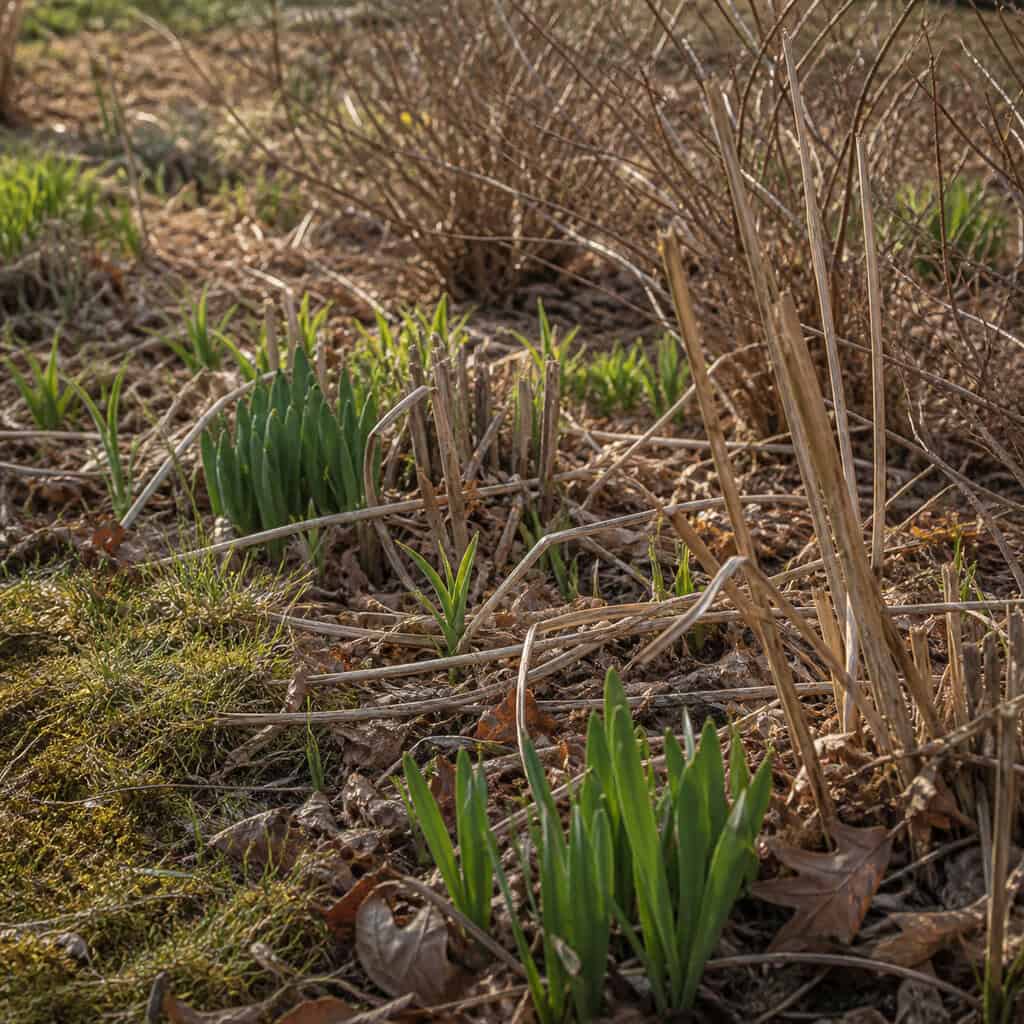
Warm week in March, and the itch to finally clean everything up gets overwhelming. Wait a little longer.
The overwintering pollinators you protected all winter are still asleep inside those stems and leaves. Cut and clear too early and you evict them days before they’d have emerged on their own — undoing every bit of restraint you showed in fall.
The rule of thumb: hold off on the real cleanup until daytime temperatures are consistently near 50°F. Penn State Extension recommends delaying spring cleanup until insects have had a chance to wake and move on.
So the whole theme isn’t really “never clean up.” It’s “clean up later, and correctly.” Here’s how the two timelines compare.
| Fall Cleanup | Spring Cleanup | |
|---|---|---|
| Leaf litter | Leave in beds | Rake once bees emerge |
| Perennial stems | Leave standing | Cut after 50°F |
| Pruning shrubs | Skip most | Late winter dormancy |
| Best timing cue | First frost | Days near 50°F |
Patience through one warm week is the difference between a garden full of pollinators and an empty one.
Skip it. Wait until days hold near 50°F before the big cleanup.
16. Deadheading Your Self-Seeding Flowers

Deadheading in summer keeps things blooming. Deadheading in fall throws away next year’s free garden.
Self-sowing flowers — cosmos, larkspur, poppies, columbine, black-eyed Susans — drop seed that comes up on its own next spring at no cost to you. Cut every spent bloom off in fall and you cancel that whole free crop.
Leave some heads to shatter and scatter. You get volunteer plants come spring and, in the meantime, more winter food for birds.
Free plants and a bird feeder from the flowers you already grew. Hard to argue with.
Skip it. Let some spent blooms drop and reseed themselves.
17. Stripping Every Leaf Off the Lawn Surface
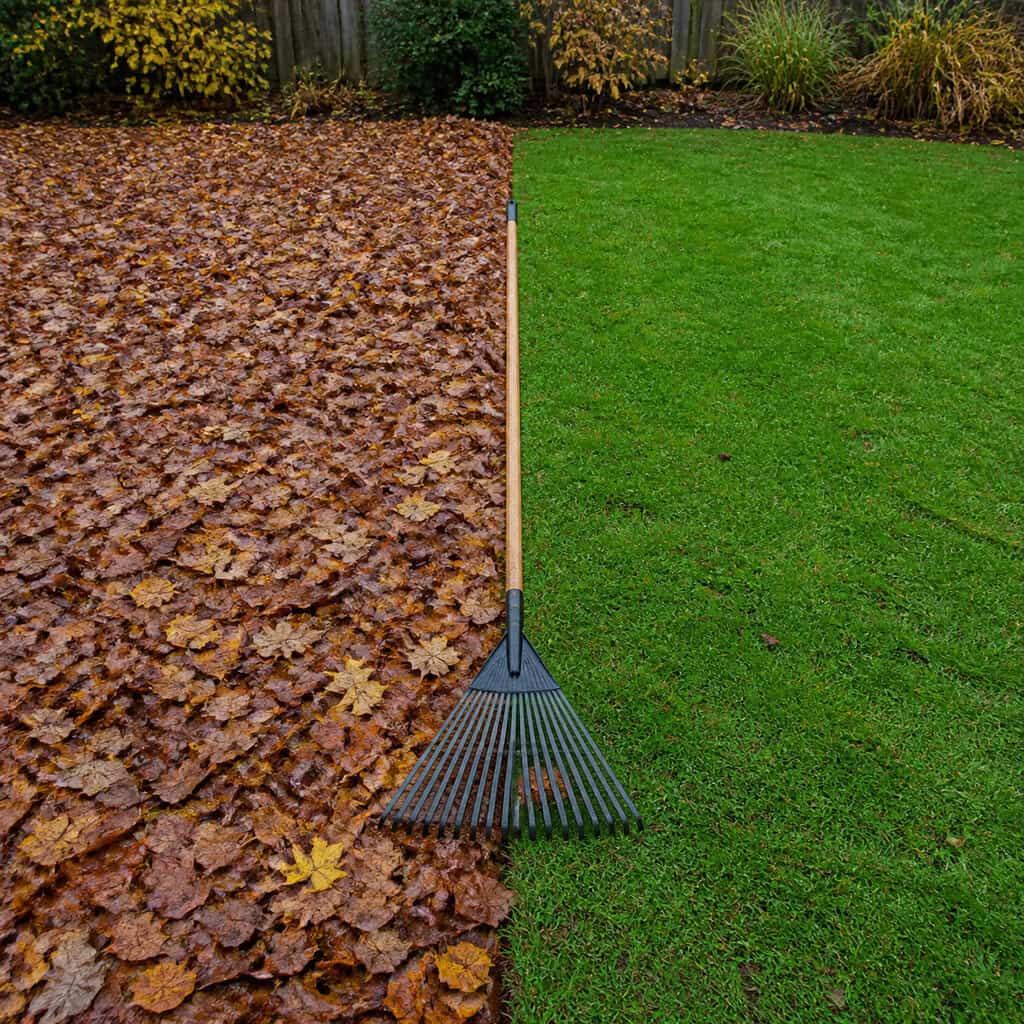
This one’s a genuine judgment call, and it’s worth being straight about.
A light scatter of leaves on the lawn is a gift — mulch-mow it in and it breaks down into free fertilizer for the turf. But a thick, wet mat is a different animal. Once leaves cover more than about half the grass, they block light and air and set up snow mold, and you’ll find dead, matted patches when the snow melts.
So this isn’t a flat “skip it.” Thin layer, mow it in. Heavy blanket, get it off the grass. Not sure it’s worth the trouble at all? Here’s how to deal with leaves without raking.
Judgment call. Mulch-mow a light layer, but clear thick mats before they smother the turf.
18. Cutting Roses Hard Before Winter
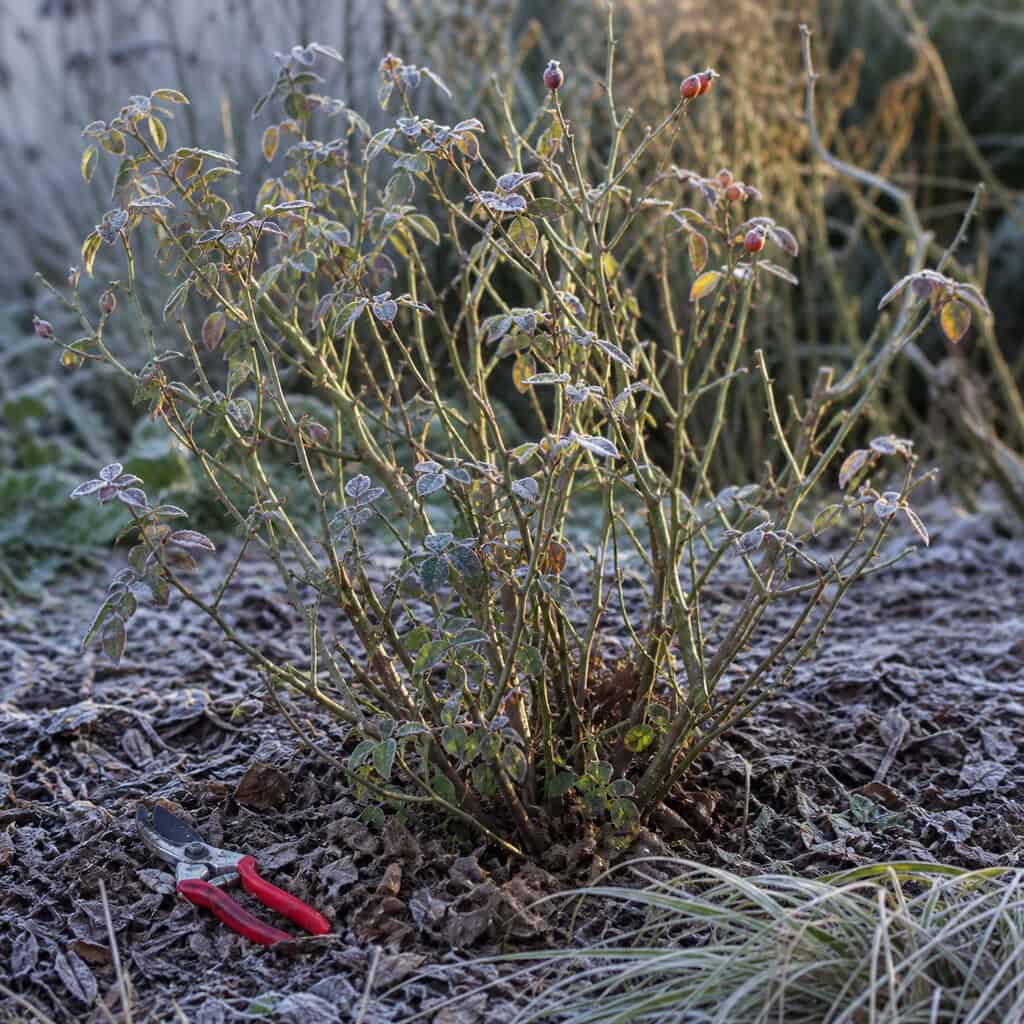
The instinct to give roses a hard chop before winter is a strong one. For most roses, it backfires.
Roses bloom on new wood, and a hard fall prune both wastes energy and opens fresh cuts to frost dieback — the cold works its way down the cut canes and kills more than you removed. Late winter or early spring is when the real pruning should happen, once the worst cold is behind you.
There’s regional and rose-type nuance here, so this is a guideline, not gospel. A light trim to stop tall canes from whipping in winter wind is fine. The severe cutback is what waits for spring.
Skip it. Hold the hard prune on most roses until late winter.
Conclusion
Notice the pattern running through all 18. Almost every “chore” is really an eviction notice for something you’d want to keep.
The tidiest yard on the block is often the emptiest one — no bees waking up in the stems, no finches on the seedheads, no fireflies rising out of the leaf litter in June.
Doing less this fall isn’t laziness. It’s the version of yard work that actually pays you back.
Leave the leaves, leave the stems, put the saw down until February — and let the garden take care of itself for once.