

The grill goes in the garage. The pool cover comes out. The mower gets one last lap and then sits in the corner until April.
That’s the exact moment cool-season grass starts working hardest.
September and October are peak root-growth months for fescue, bluegrass and ryegrass. Soil is still warm, air is cooling, and the plant quits pushing leaves and starts building the root mass that carries it through next summer. Quit on it now and you’re not saving effort — you’re borrowing against May.
Warm-season lawns in the South run the opposite calendar, and half the bad advice online comes from mixing the two up.
Here are 26 things to stop doing to your lawn after Labor Day, and what to do instead.
1. Stop Treating Labor Day as the Finish Line
Grass doesn’t read the calendar. It reads soil temperature.
For cool-season turf, the stretch from early September to hard freeze is the most productive growing period of the year — more root development than spring delivers, with none of the heat stress. Mowing, watering, feeding, weed control: all of it pays back more now than it did in July.
The homeowners with thick April lawns aren’t lucky. They were still out there in November.
2. Stop Letting Leaves Sit Until the Weekend After Next
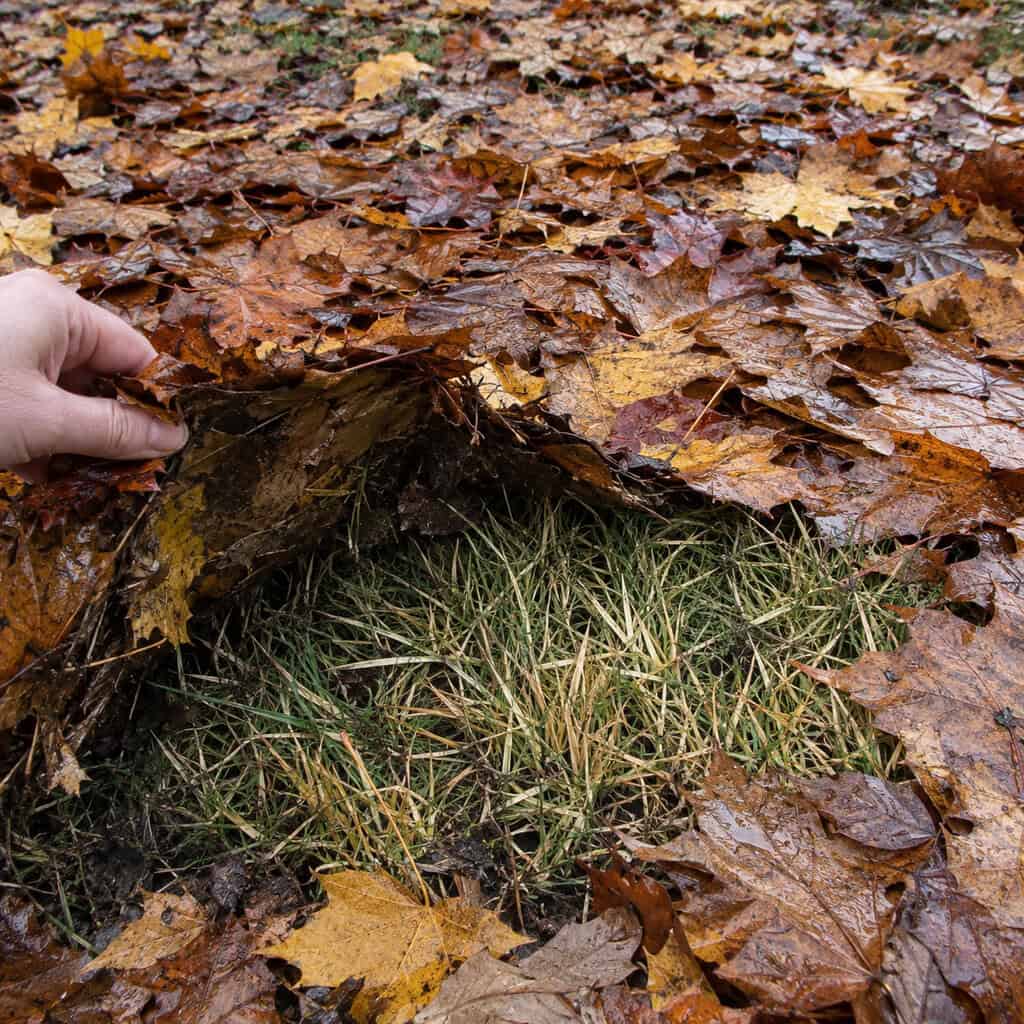
A wet leaf mat is a greenhouse. It blocks light, holds humidity against the crowns, and creates the exact conditions gray and pink snow mold need to set up shop.
Simple test: if you can’t see grass blades through the leaves, the layer is too thick.
You don’t need a bagged-and-hauled operation every Saturday. A pass with a mulching deck chops a light layer into the turf where it feeds the soil. Heavy oak and sycamore drop, though, needs to actually leave.
3. Stop Running the Sprinklers on the July Schedule
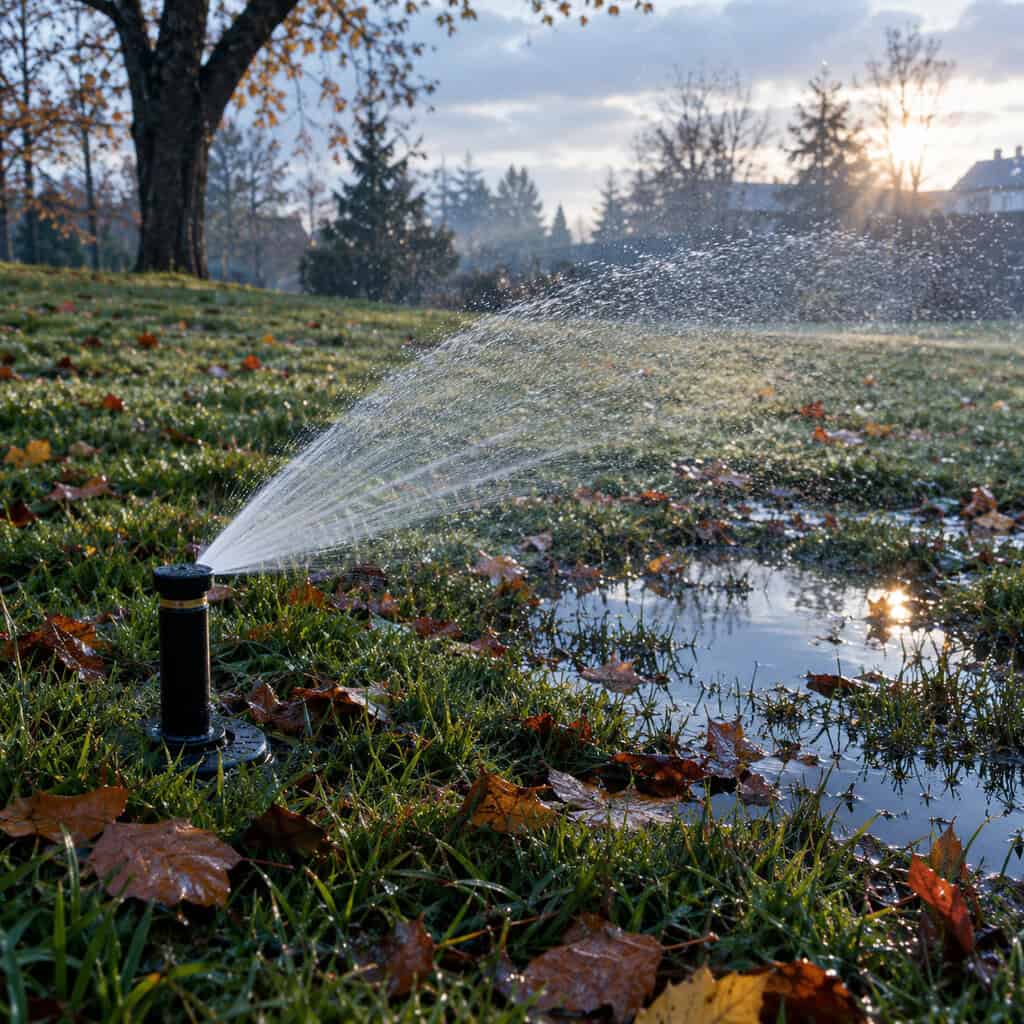
Nights are cooler. Evaporation slows. The same 20-minute zones that barely kept up in August now leave soil soggy for days.
Soggy soil grows shallow roots and fungal disease.
Cool-season lawns still want roughly an inch of water a week, deep and infrequent, with rainfall counted toward the total. Put a rain gauge in the yard and dial run times down accordingly — most people can cut fall irrigation by a third and see a better lawn.
4. Stop Guessing at Your Final Mowing Height
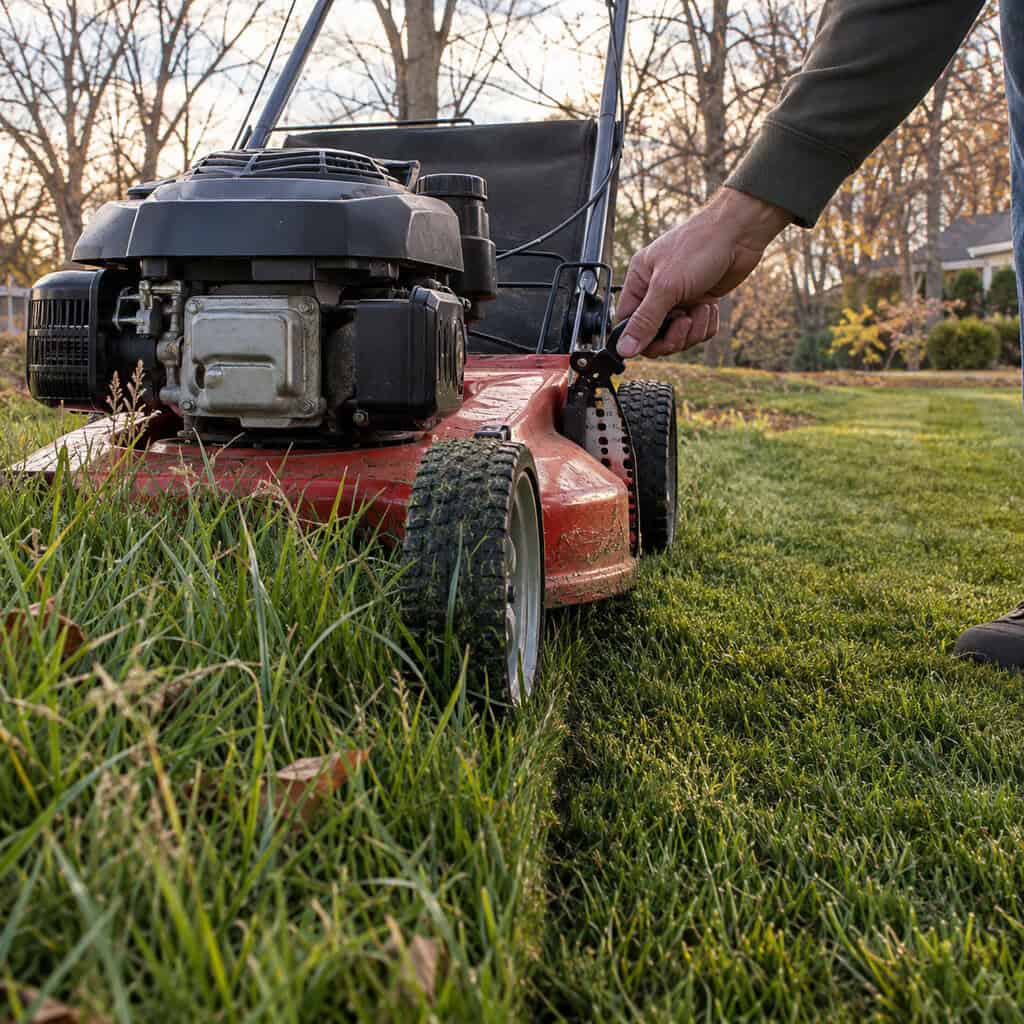
Both fall mowing mistakes cost you, and they’re opposites.
Scalping the last cut exposes crowns to cold and desiccating wind. Leaving it shaggy mats the canopy under snow, breeds snow mold, and builds vole highways right through your turf.
Target about 2.5 inches for cool-season grass on the final mow, 1.5 to 2 inches for warm-season. And keep mowing until growth genuinely stops — in the upper Midwest that’s often late October, not Labor Day. University of Minnesota Extension puts the last cut about a week ahead of the first hard frost.
5. Stop Waiting Until Spring to Kill the Dandelions
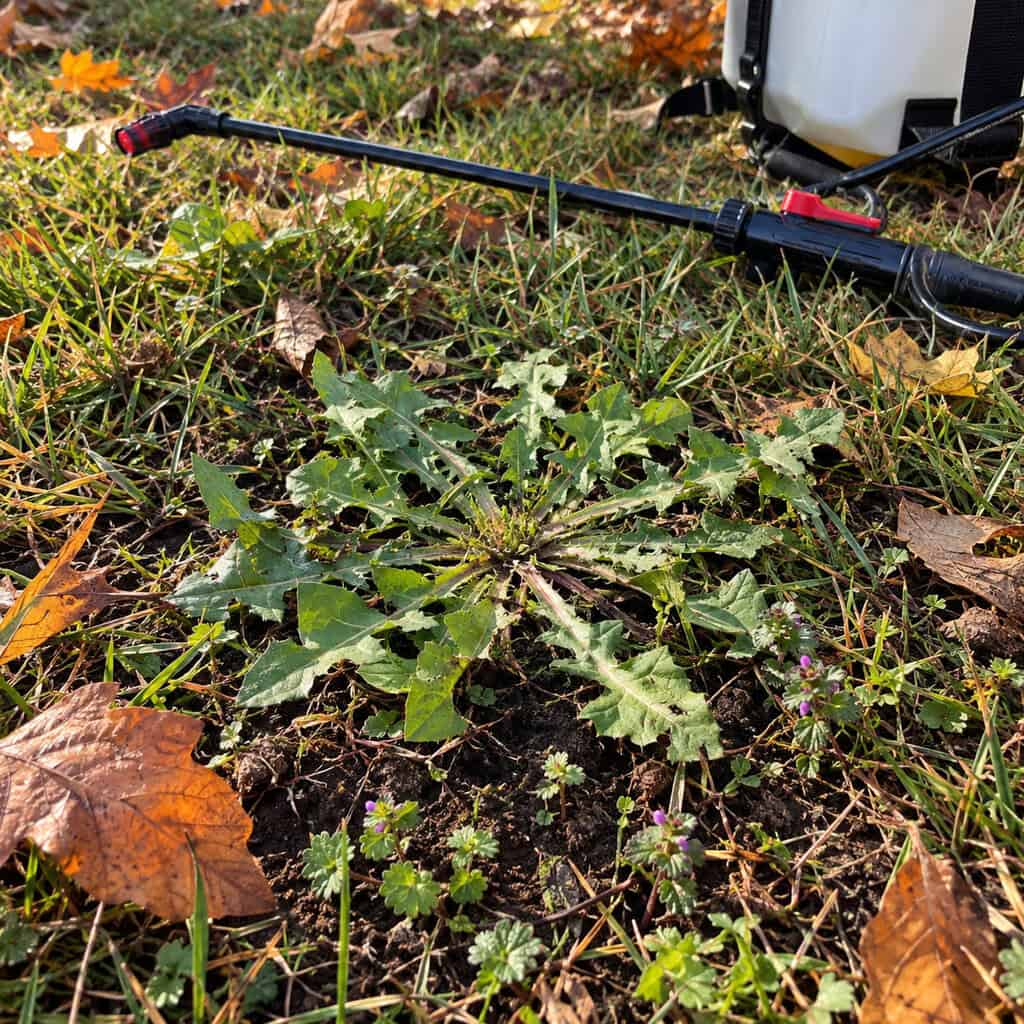
This one surprises people every year. Fall is the best broadleaf-control window of the entire season.
Dandelion, plantain, white clover and creeping Charlie are all pulling carbohydrates down into their roots right now to overwinter. A systemic herbicide applied in that window rides along and reaches tissue a spring application never touches.
Winter annuals matter too. Henbit and chickweed germinate in September and October and sit there quarter-sized and nearly invisible — the purple carpet everyone curses in April is already in your lawn. Kill it at that size and it’s easy. Wait until it flowers and it’s basically over. Iowa State University Extension puts the practical window from early September into early November, as long as weeds are still actively growing.
If you’re covering a big area, a tow-behind spreader for granular weed control beats a hand sprayer on your knees.
6. Stop Feeding Nitrogen to a Warm-Season Lawn
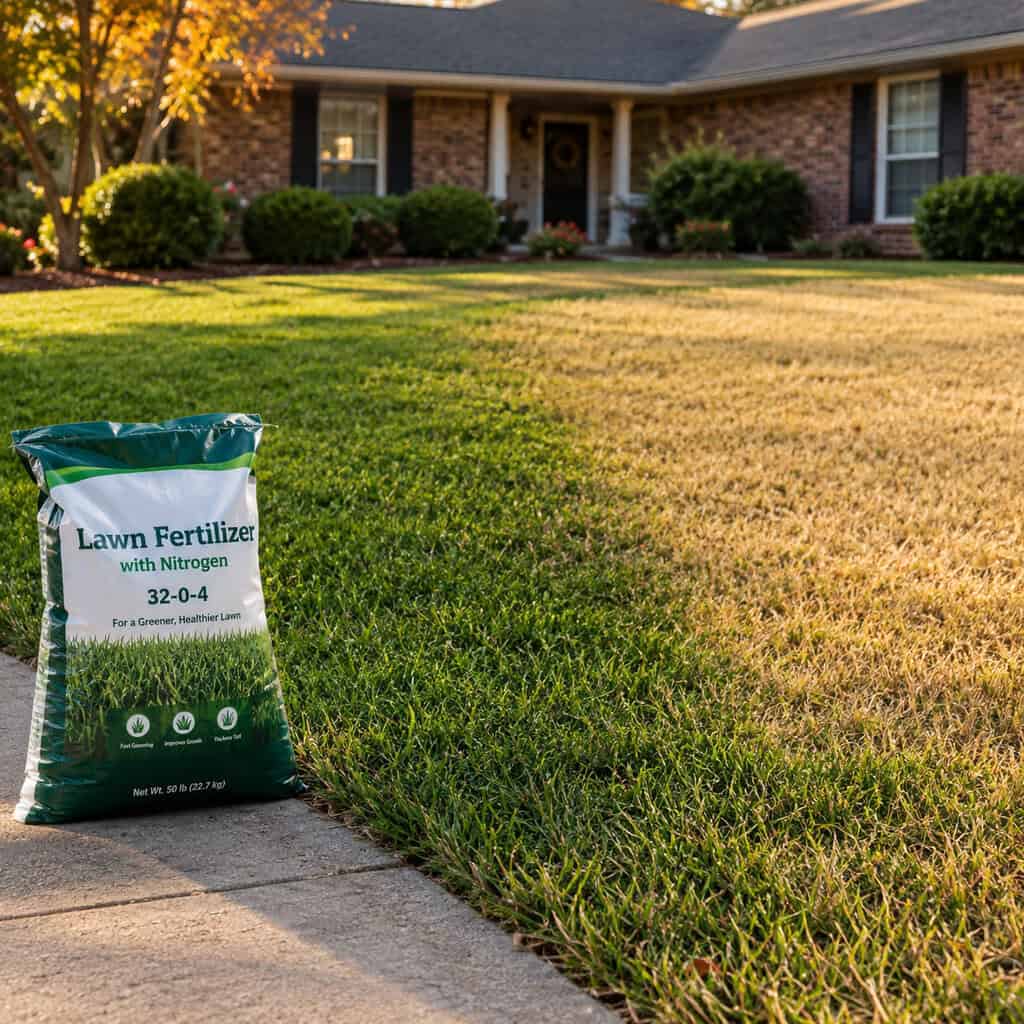
Bermuda, zoysia, centipede and St. Augustine are doing the opposite of fescue right now. They’re hardening off and storing carbohydrates for dormancy.
Late nitrogen forces tender new growth that the first freeze kills outright, and it weakens cold tolerance across the whole stand. Worse, it feeds the cool-season weeds moving in.
The Southern extension rule is blunt: no nitrogen after August until spring green-up. Potassium is a different conversation, but the N goes in the shed.
7. Stop Using the Lawn as a Staging Area
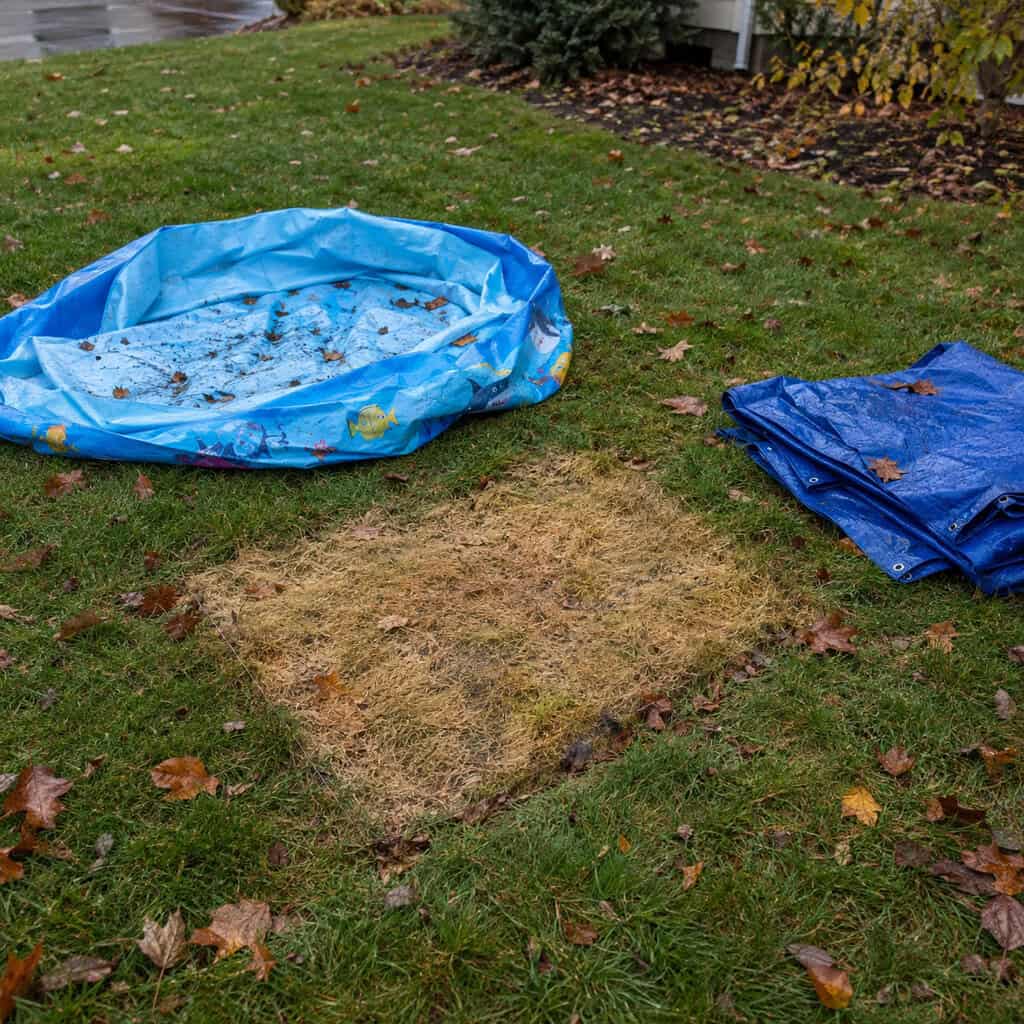
The deflated kiddie pool. The trampoline that hasn’t moved since June. Tarps, firewood stacks, straw bales, deflated inflatable ghosts.
Each one leaves a footprint. Light exclusion plus trapped moisture equals crown rot, and by the time you drag it off in spring you’ve got a yellow-to-dead patch that won’t fill in until midsummer.
There’s a second problem. Anything sitting on turf all winter is prime mouse and vole cover, and those runways show up as gnawed brown trails at snowmelt.
Move it to pavement. Move it every two weeks if it has to stay.
8. Stop Throwing Down Grass Seed After the Soil Drops Below 50 Degrees
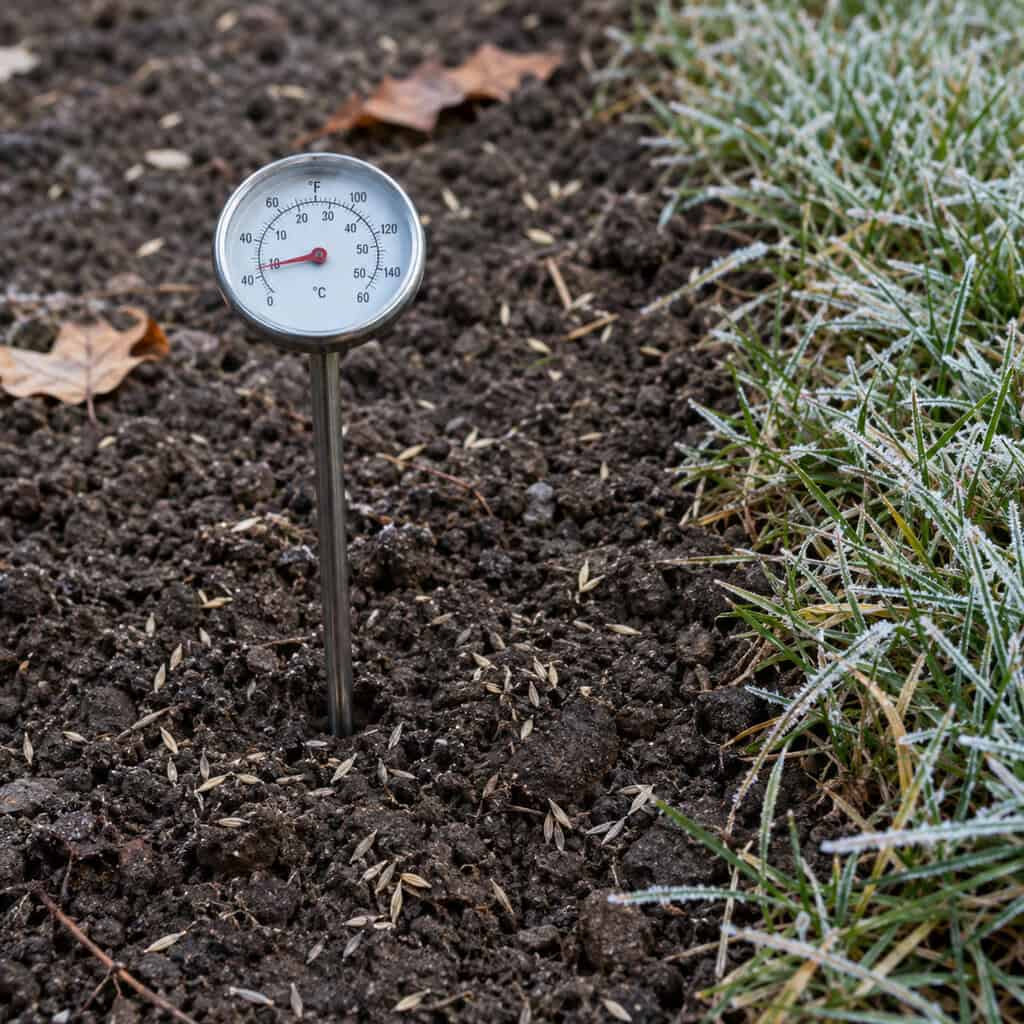
Cool-season seed needs soil consistently above 50°F to germinate and establish. Below that, tall fescue and bluegrass just sit in the dirt.
Seedlings that do sprout too late never root deep enough. They heave out of the soil during freeze-thaw cycles and die where they stand.
A soil thermometer costs about eight dollars and settles the argument in ten seconds. Figure your fall reseeding window closes roughly six weeks before your average first frost.
Past that, don’t dump a premium bag into cold mud. Wait for true dormant seeding in late November or December, when the ground is cold enough that nothing germinates until spring.
9. Stop Chasing Grubs With a Curative Treatment in October
Every October, garden centers sell a lot of grub killer that does almost nothing.
Here’s the life cycle that explains it. Japanese beetle and masked chafer adults lay eggs in midsummer. Those eggs hatch into tiny first-instar grubs in late July and August, which feed voraciously on roots in shallow soil — that’s when they’re soft, small, and sitting where insecticide can reach them.
By mid-October they’re third-instar, nearly full grown, feeding far less and burrowing down ahead of the cold. Curative products applied then largely miss the target. You’ve bought a bag of peace of mind.
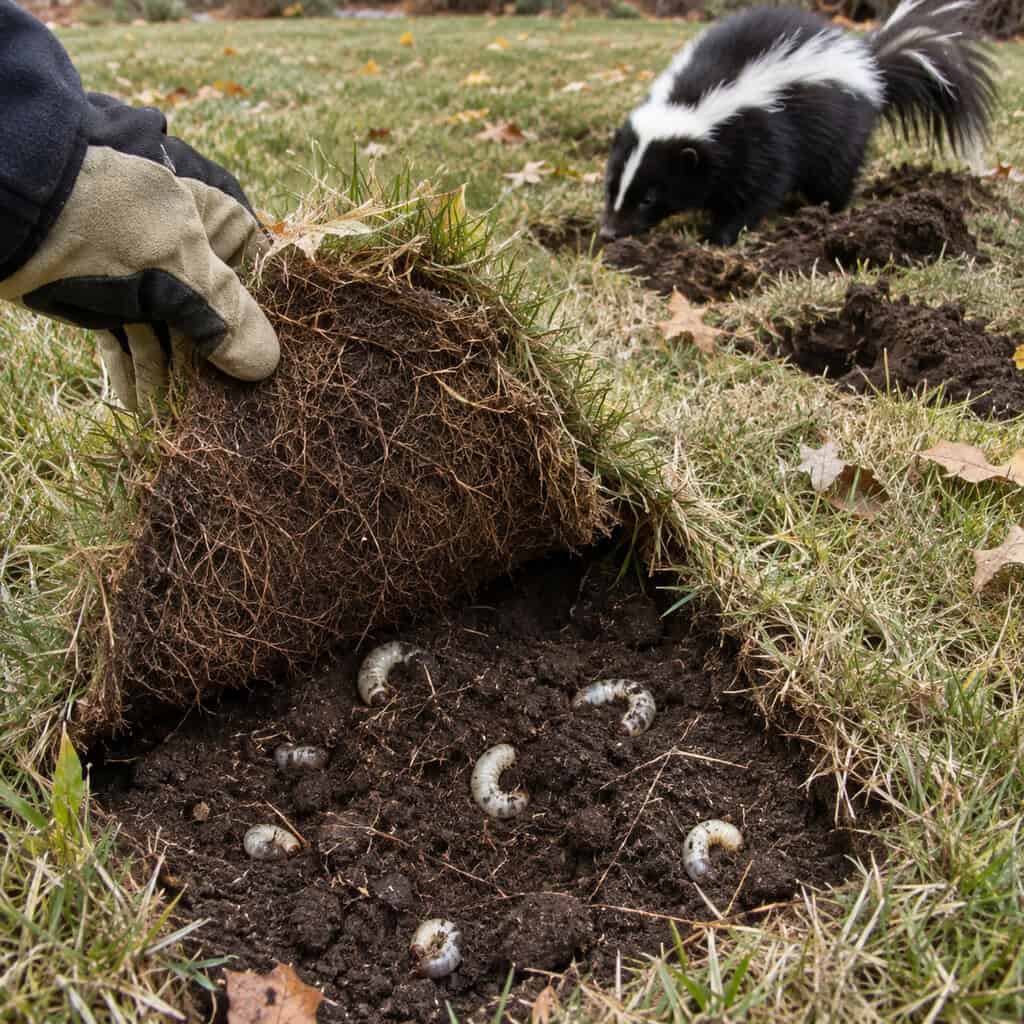
Diagnose instead. Pull back a suspicious patch — grub-damaged turf peels up like loose carpet because the roots are gone. Dig a square foot of sod four inches deep and count: fewer than five grubs is normal and needs nothing, ten or more in cool-season turf justifies action next year.
The secondary tell is animals. Skunks, raccoons and crows tearing fist-sized divots out of your lawn at night aren’t vandals — they’re eating well.
- Turf that lifts with no root resistance
- Spongy feel underfoot, like walking on a mat
- Irregular brown patches that don’t respond to water
- Fresh nightly digging by skunks or birds
Then calendar the real fix: a preventive application of a product containing chlorantraniliprole or imidacloprid in late spring to early summer, before or during egg-laying, watered in properly. That’s where the money works.
Calling a pro is worth it when you’ve got recurring damage across more than a few hundred square feet, or when you’re not sure whether you’re looking at grubs, chinch bug damage, or drought stress. A licensed applicator gets access to timing and rates the consumer shelf doesn’t, and correct diagnosis alone often saves the cost of the visit. For the repair side of grub damage, you’re reseeding — the roots aren’t coming back.
10. Stop Bagging Every Clipping
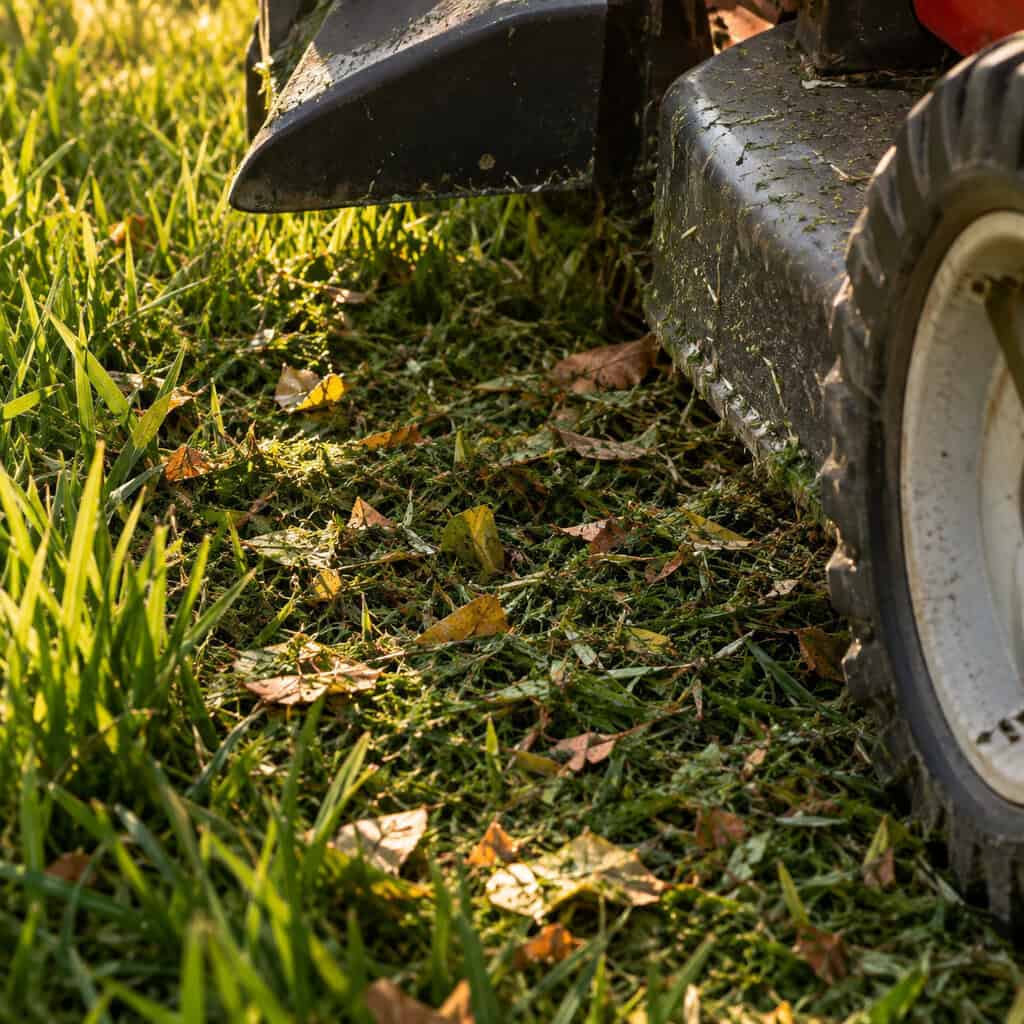
Bagging feels tidy. It’s also you paying to haul nitrogen to the curb.
Returned clippings decompose fast and recycle a meaningful share of the fertilizer you already applied — enough that researchers put it near a full application’s worth over a season. They don’t cause thatch. That myth won’t die.
Run a mulching blade and a modest leaf layer disappears into the turf in the same pass as the grass. Save the bagger for heavy leaf drop and the last cut before winter.
11. Stop Aerating and Dethatching at the Wrong End of the Season
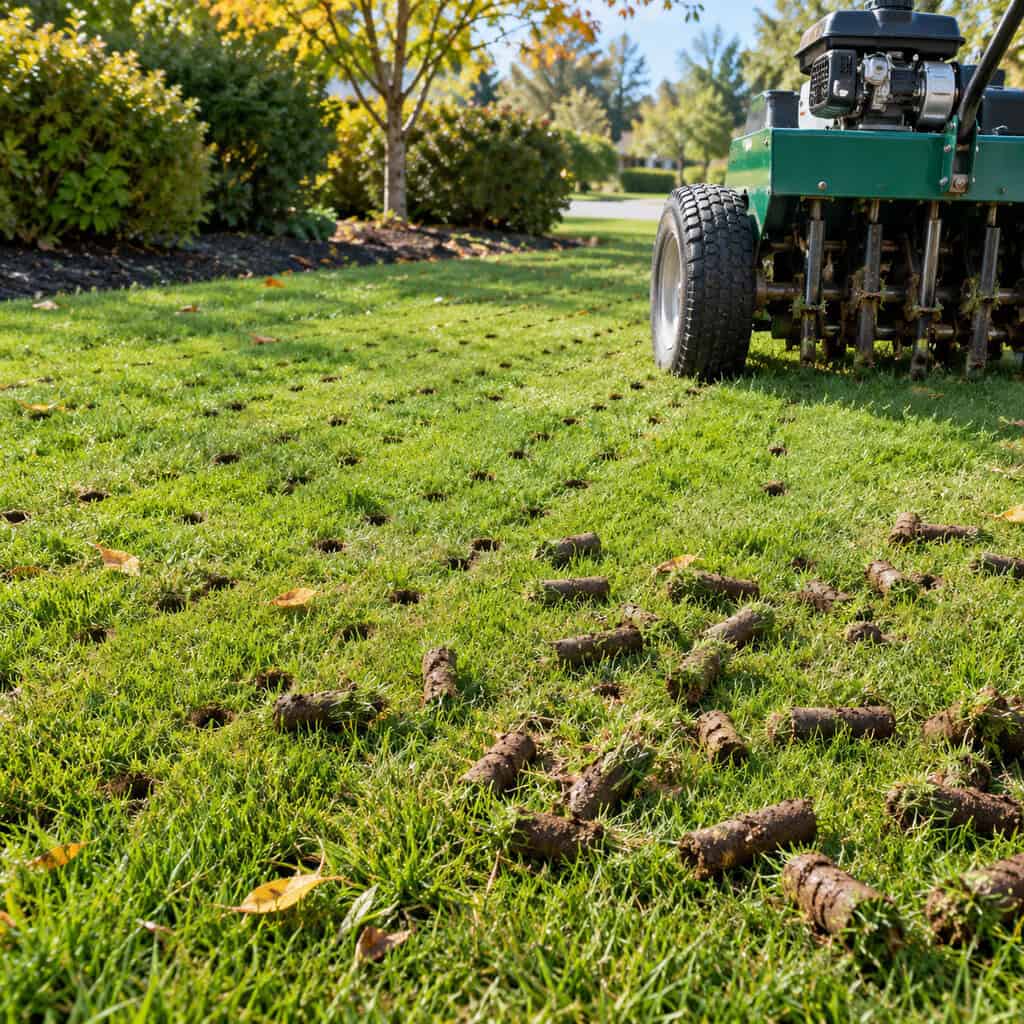
Timing is everything with mechanical work, and the right answer flips depending on what you’re growing.
Cool-season lawns want core aeration in early fall. Peak root growth follows immediately, the holes fill with new roots, and the surface heals in a couple of weeks. Aerate after growth stops and you’ve punched thousands of open holes that sit exposed all winter.
Warm-season lawns are the opposite. Dethatching or power-raking bermuda or zoysia in October strips a grass that can’t regrow until May, and hands the bare soil straight to winter weeds. That job belongs in late spring.
If you’re renting a machine, plan your post-aeration traffic too — the cores need to break down undisturbed.
12. Stop Mowing With a Dull Blade

A dull blade doesn’t cut. It tears.
Look closely at the tips after a mow — frayed, whitish, shredded ends instead of clean cuts. Every one of those is an open wound, and you’re creating them heading into the wettest, most disease-prone stretch of the year.
Sharpen or swap before the final three cuts. Ten dollars and twenty minutes in October, visible in April.
13. Stop Spreading Weed-and-Feed Over Newly Seeded Grass
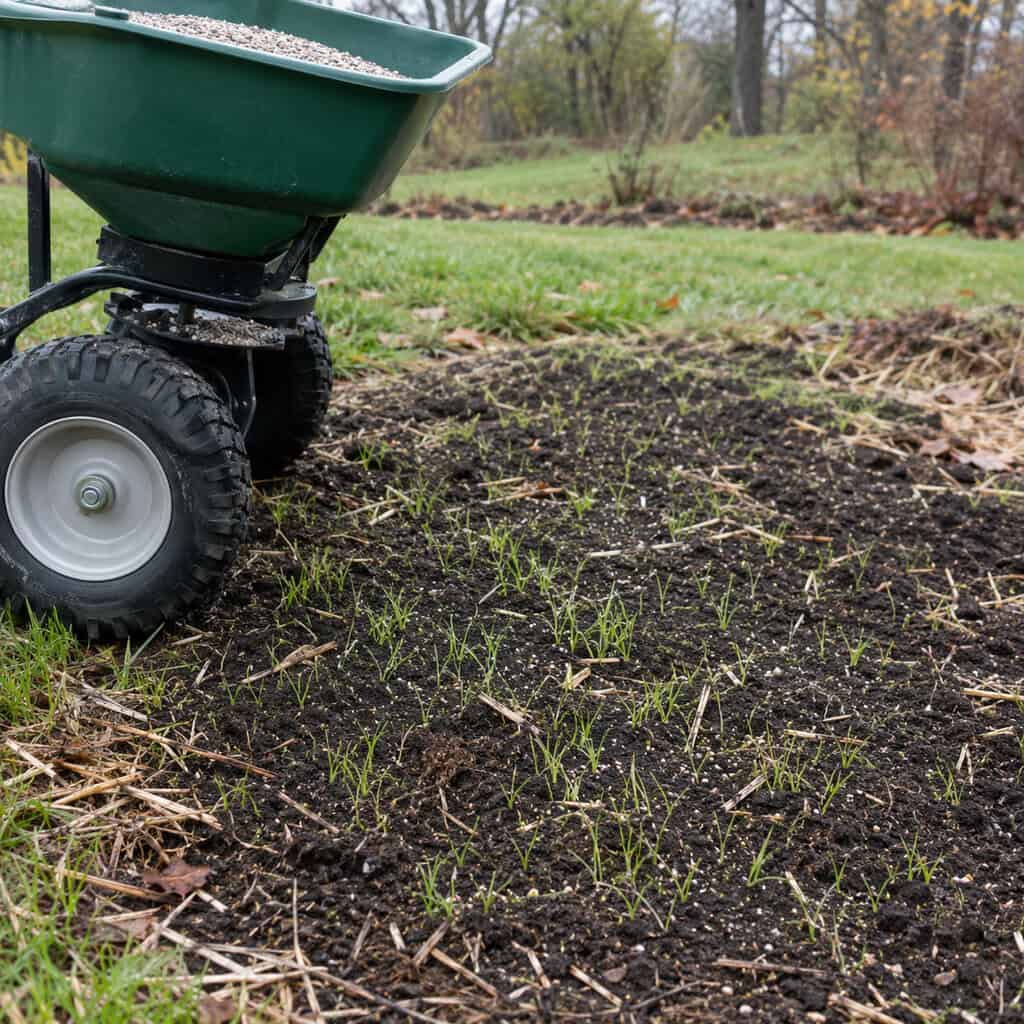
People seed and weed the same weekend, then blame the seed company.
Most combination products carry either a pre-emergent that blocks germination outright or a broadleaf herbicide that fries seedlings with two blades and no root system. Read the bag — labels commonly require waiting until new grass has been mowed three or four times.
Pick one job per weekend. Seed now, spray the established areas, and keep the spreader off the new stuff entirely.
14. Stop Watering at Dusk

An evening soak leaves the canopy wet through a long, cool fall night. That stretches leaf wetness well past 12 hours, which is roughly the threshold where dollar spot, brown patch and later snow mold get comfortable.
Early morning delivers identical water with hours of drying time behind it.
Set the controller for 4 to 6 a.m. and forget it.
15. Stop Buying Bargain-Bin Grass Seed
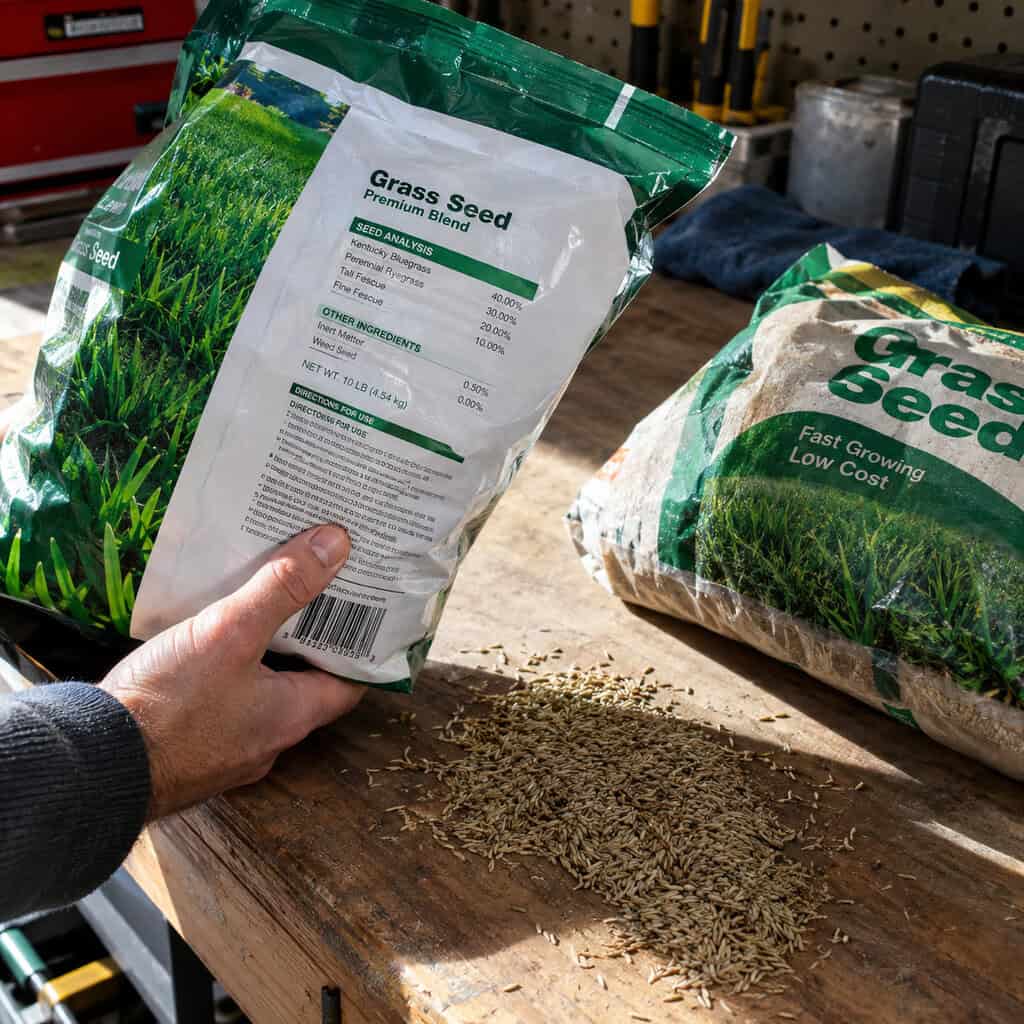
A $19 bag and a $49 bag of the same size are not the same product, and the difference is printed on the tag nobody reads.
Cheap contractor mixes lean hard on annual ryegrass. It germinates in five days, looks fantastic in October, and is dead by the following July — which is why the patch you seeded last fall is bare again.
Flip the bag over and check three lines:
- Named cultivars, not just “tall fescue” or “VNS”
- Weed seed under 0.5 percent
- Crop seed at 0.00 percent
Inert matter above 5 percent means you’re buying filler by the pound.
16. Stop Skipping the Late-Fall Feeding on a Cool-Season Lawn
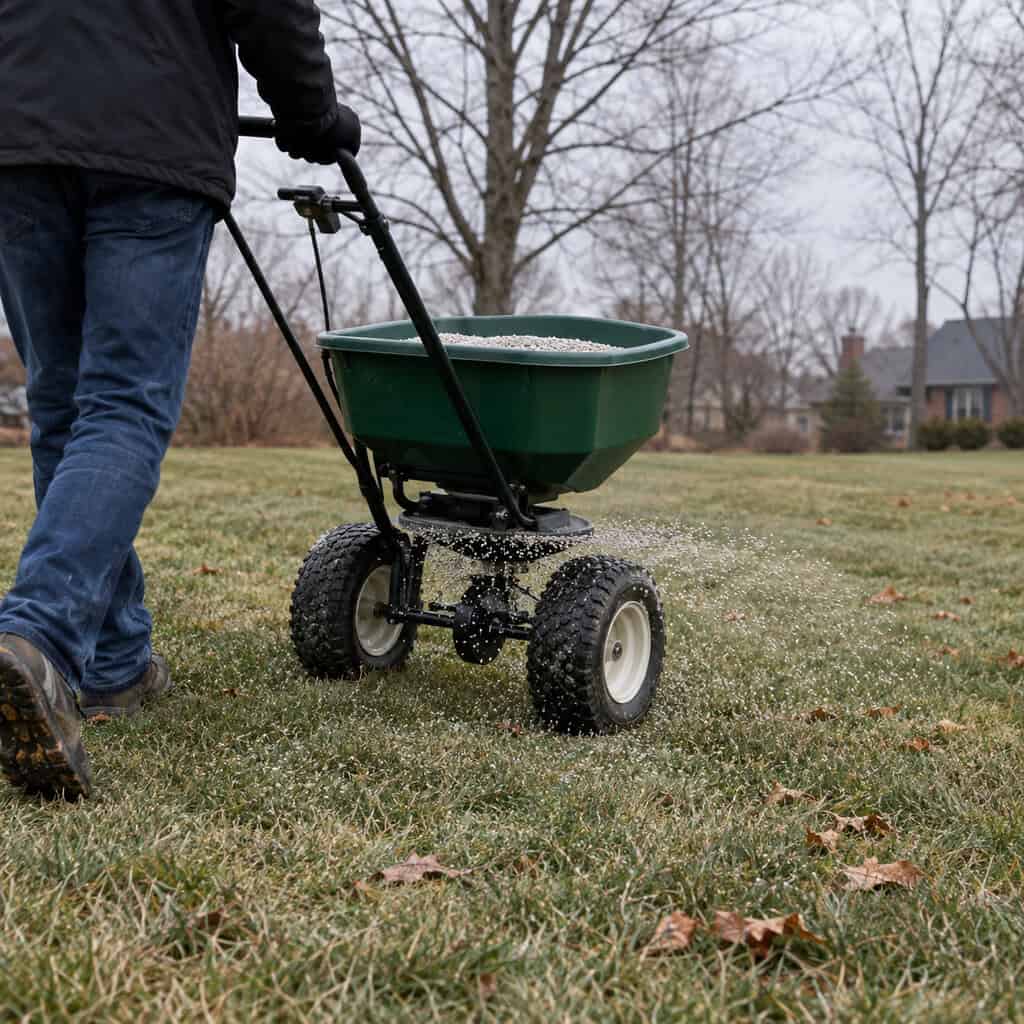
This is the single most valuable fertilizer application of the year for fescue and bluegrass, and most homeowners never make it.
It goes down after top growth stops — mid-October to late November, depending on your latitude. The grass isn’t making leaves anymore, so a quick-release nitrogen source goes straight into root development and carbohydrate storage.
The payoff is earlier, deeper green-up next spring without the flush of mowable growth that a March application triggers. Virginia Cooperative Extension has been making this case for two decades.
One caveat: check your state. Maryland, New Jersey and several others have legal fertilizer blackout dates in late fall tied to watershed protection. Know yours before you fill the spreader.
17. Stop Seeding and Then Walking Away
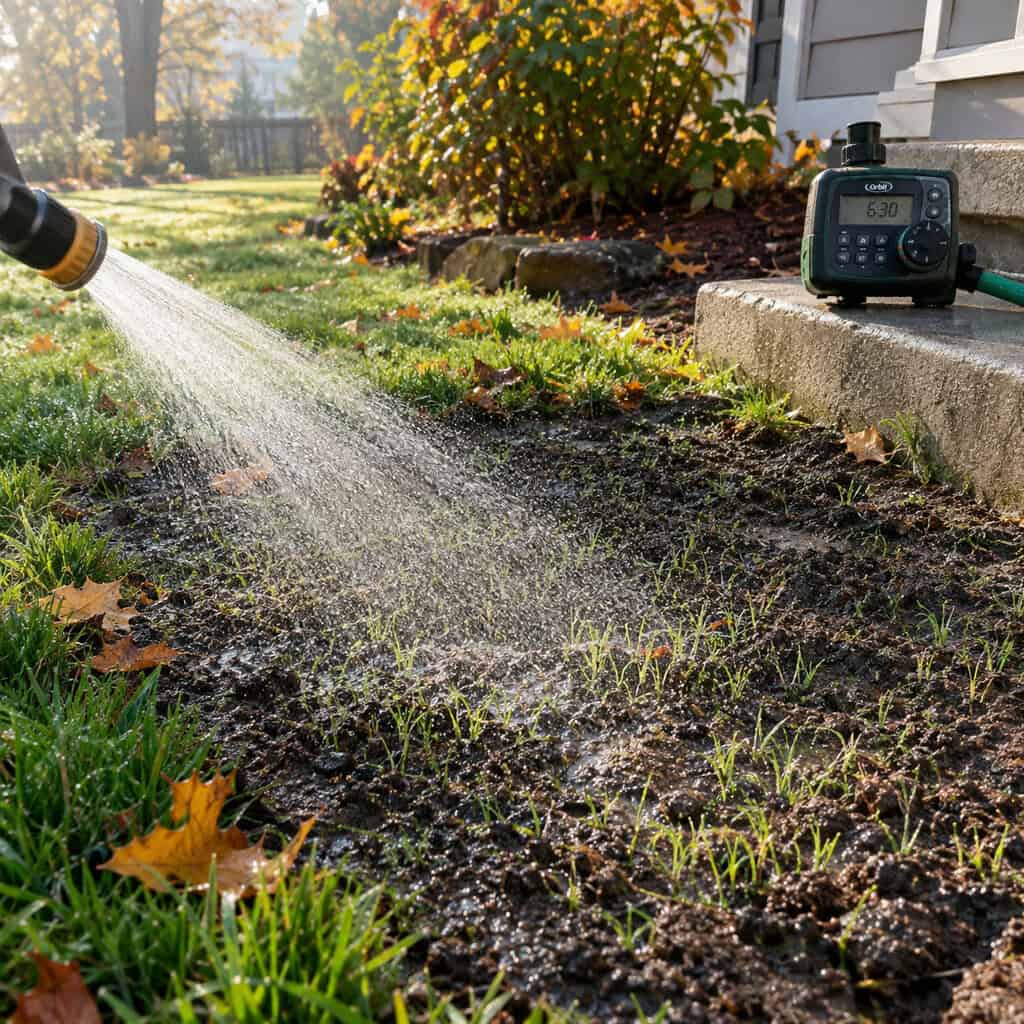
The work isn’t the hard part. The three weeks after are.
New seed needs the top half-inch of soil consistently damp — light watering once or twice daily until germination, then tapering as roots go down. One dry, windy week kills the entire investment, and it can happen while you’re at work.
This is why so many people conclude fall seeding “doesn’t work.” It worked. It dried out on day nine.
Know how long to water new fall seed before you open the bag, not after.
18. Stop Buying Lime Because Your Neighbor Did
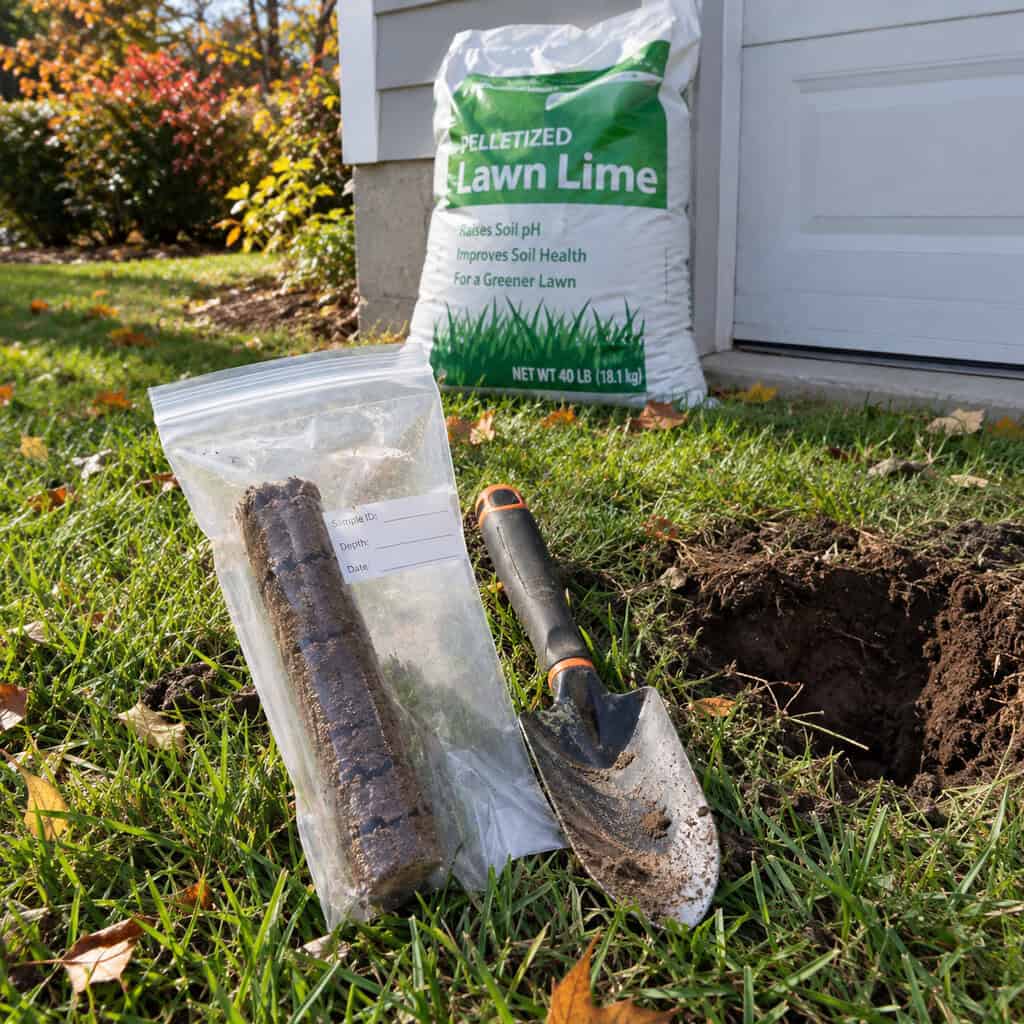
Lime isn’t a lawn vitamin. It’s a pH correction, and it only helps if your pH is actually low.
Blind applications can push soil alkaline, which locks up iron and manganese and gives you a yellow lawn you then try to fix with more product.
Fall is ideal soil-test season. Most state extension labs charge $10 to $20 and turn a sample around in a couple of weeks. Spend the twenty, get numbers, and let spring spending follow data instead of folklore.
19. Stop Putting Off the Irrigation Blowout

Nobody has ever regretted winterizing their sprinkler system early. Plenty of people regret waiting.
Here’s the physics. Water expands roughly 9 percent when it freezes. Whatever sits in your backflow preventer, valve bodies, lateral lines and heads has nowhere to go, so it splits brass, cracks PVC and blows the poly out of the sides of fittings. It happens the first night temperatures drop into the low 20s.
And you don’t find out in November. You find out at spring startup, when you open the main and water comes up through the lawn in three places.
Cost comparison is what makes this entry sting. A professional blowout with a compressor runs roughly $75 to $150 for a typical residential system. A cracked backflow preventer — the most common casualty because it sits above grade — runs $200 to $600 installed, and brass models can hit more. Add a burst supply line inside the house and you’re into water-damage remediation, which starts in the thousands.
What to do, in order:
- Shut off the supply and open the manual drain valves
- Blow the lines with compressed air zone by zone, or have it done
- Insulate the exposed backflow assembly with a foam cover
- Drain and store hoses, and cap the hose bibs
If you’re in the North, October is the month. Contractors book solid the week of the first frost warning, and after that you’re gambling with a calendar.
20. Stop Parking the Mower Wet and Full of Summer Gas

Ethanol-blended fuel starts separating and gumming within a few months. Sit a half tank all winter and you’re pulling a rope in April against a varnished carburetor.
Either run the tank dry or fill it and add stabilizer — half-full is the worst option, because the air space breeds condensation.
Scrape the deck too. Caked wet clippings hold moisture against steel all winter and rust it from the inside out. Ten minutes in October beats sitting in the repair shop queue during the first warm week of spring, and a fall mower checklist catches the rest.
21. Stop Stockpiling Deicing Salt at the Lawn’s Edge
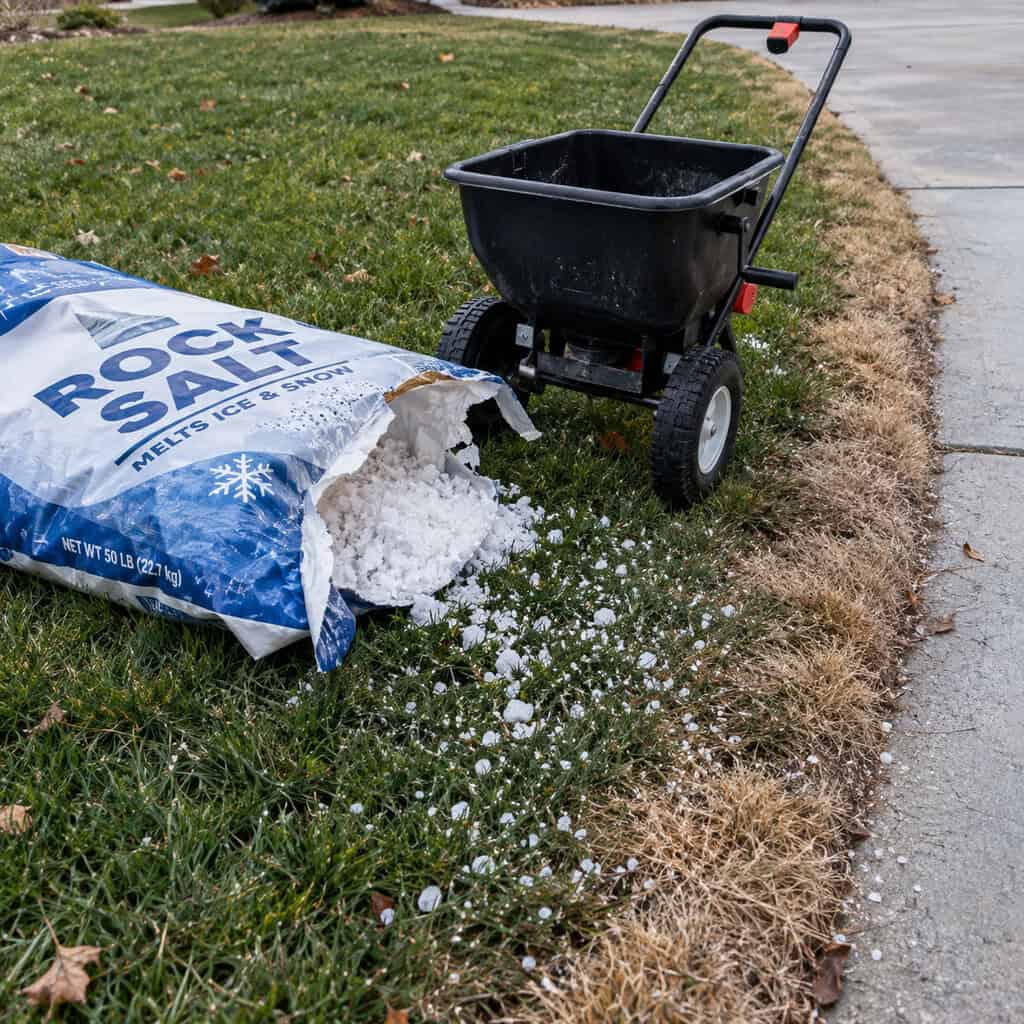
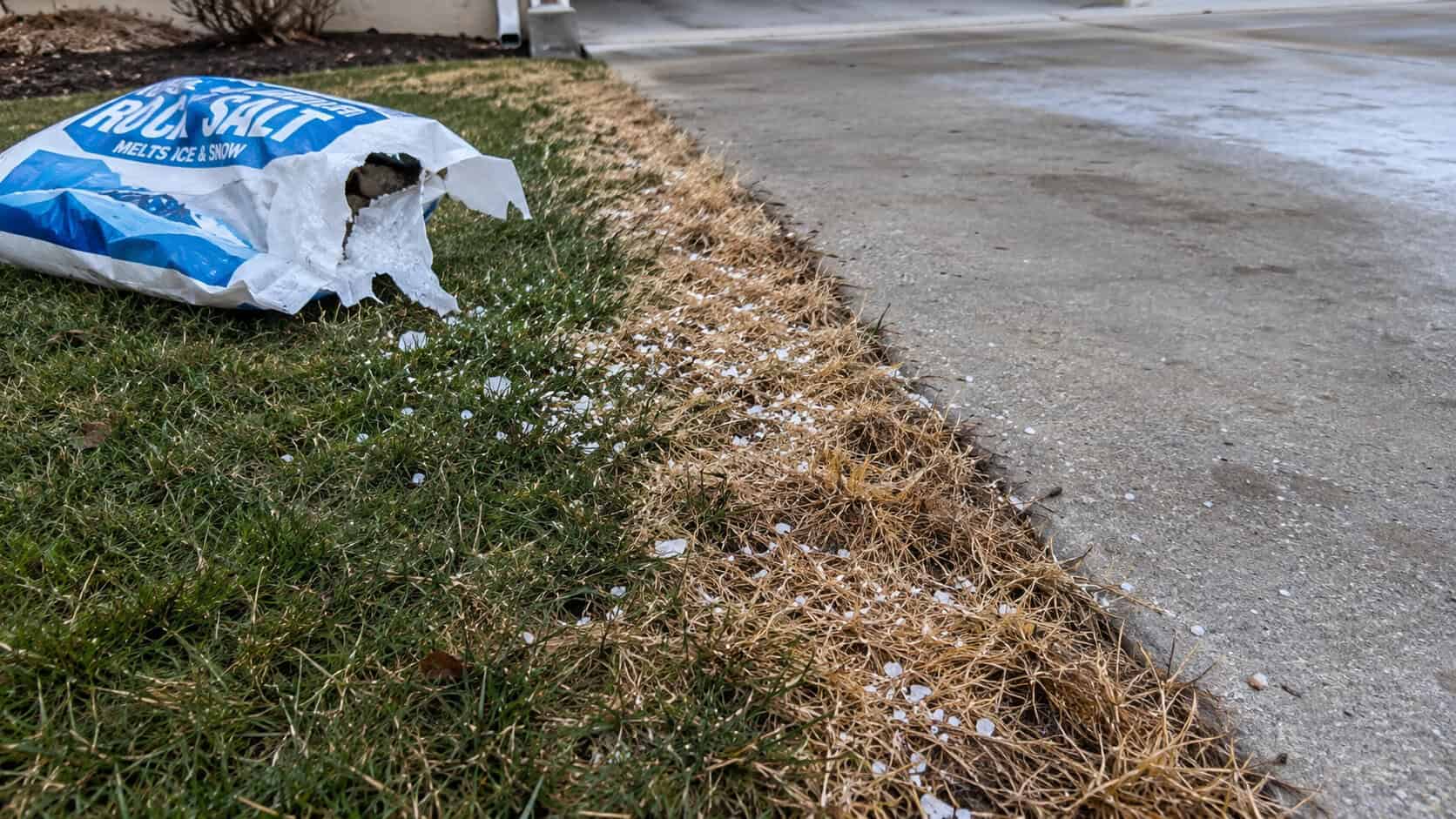
Look along your driveway next April. There’s a straw-colored band, worst right at the concrete edge, fading out a foot or two into the lawn.
That’s salt injury, and it comes from two directions. Plow and shovel throw puts crystals directly onto turf, and meltwater carries dissolved chloride into the root zone where it pulls water out of grass roots and collapses soil structure. The damage doesn’t show until green-up, which is why almost nobody connects it to January.
Staging the bags themselves on the lawn makes it permanent. A leaking 50-pound bag of sodium chloride sitting on turf for three months sterilizes that spot. Same for parking the spreader there.
Fix it on three fronts. Store everything on pavement or a garage shelf, on a tray. Switch products near lawn and planting edges — calcium magnesium acetate and magnesium chloride are far gentler on turf and concrete than rock salt, and they keep working in colder temperatures. And cut your rate: most people apply three to four times what’s needed, when roughly a coffee mug per 20 feet of walk is plenty on a properly cleared surface.
Sand and traction grit do no chemical damage at all, though you’ll be sweeping it up later. A strip of coarse mulch or gravel along the worst hardscape edges also absorbs splash that turf can’t survive, and plow damage prevention is the same conversation.
Come March, flush the salt bands with a long deep soak before you seed them. University of Minnesota Extension notes salt injury often looks identical to winter desiccation — the giveaway is the location.
22. Stop Ignoring the Dog’s Urine Spots Until Spring
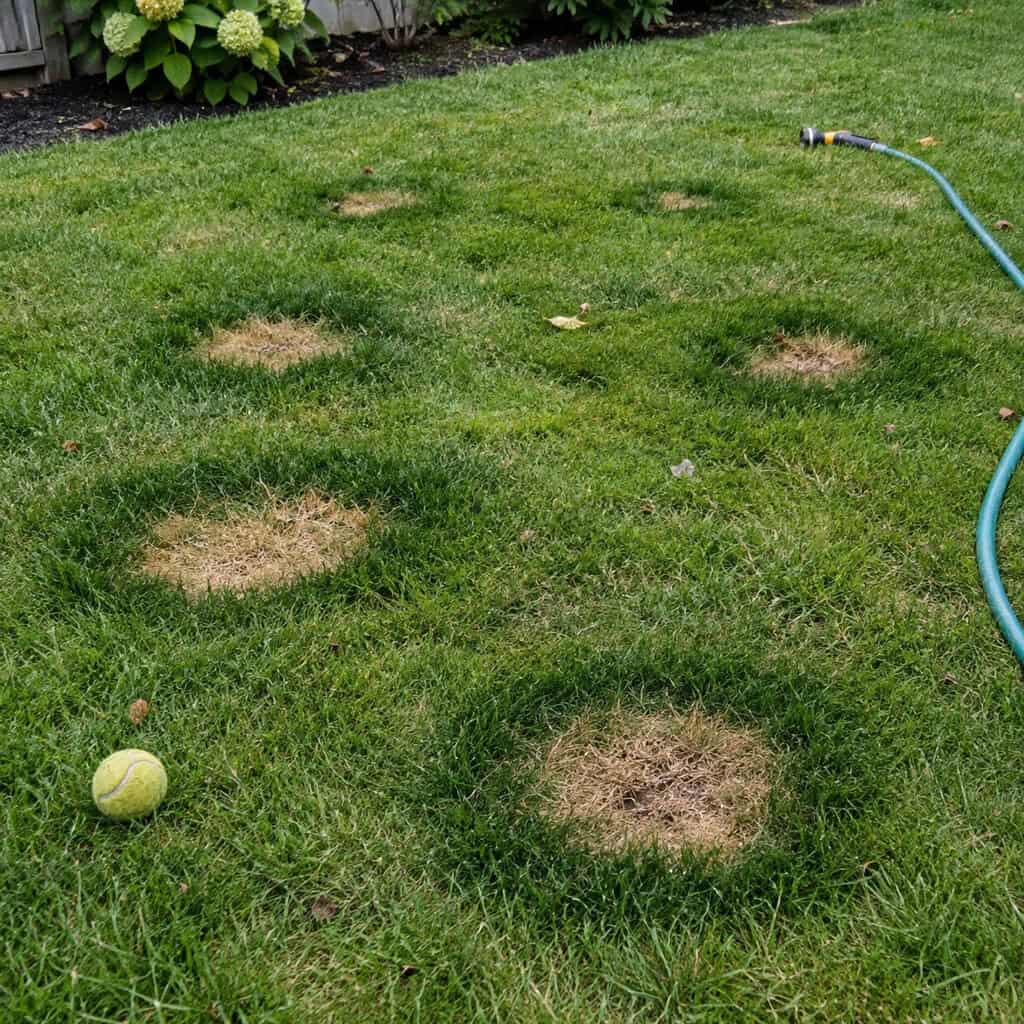
Urine burn gets worse in fall, not better. Growth is slowing, so the lawn can no longer outgrow the nitrogen load the way it did in June.
Once turf goes dormant, it can’t repair anything. Those dark rings with dead centers sit frozen for four months and reappear in March as bare soil.
September is your last real window. Flush fresh spots with water within a few hours, rotate the potty area if you can, and patch the dead centers while seed still has time to root. Come spring, those same spots are a weed nursery.
23. Stop Walking Across Frost-Covered Grass
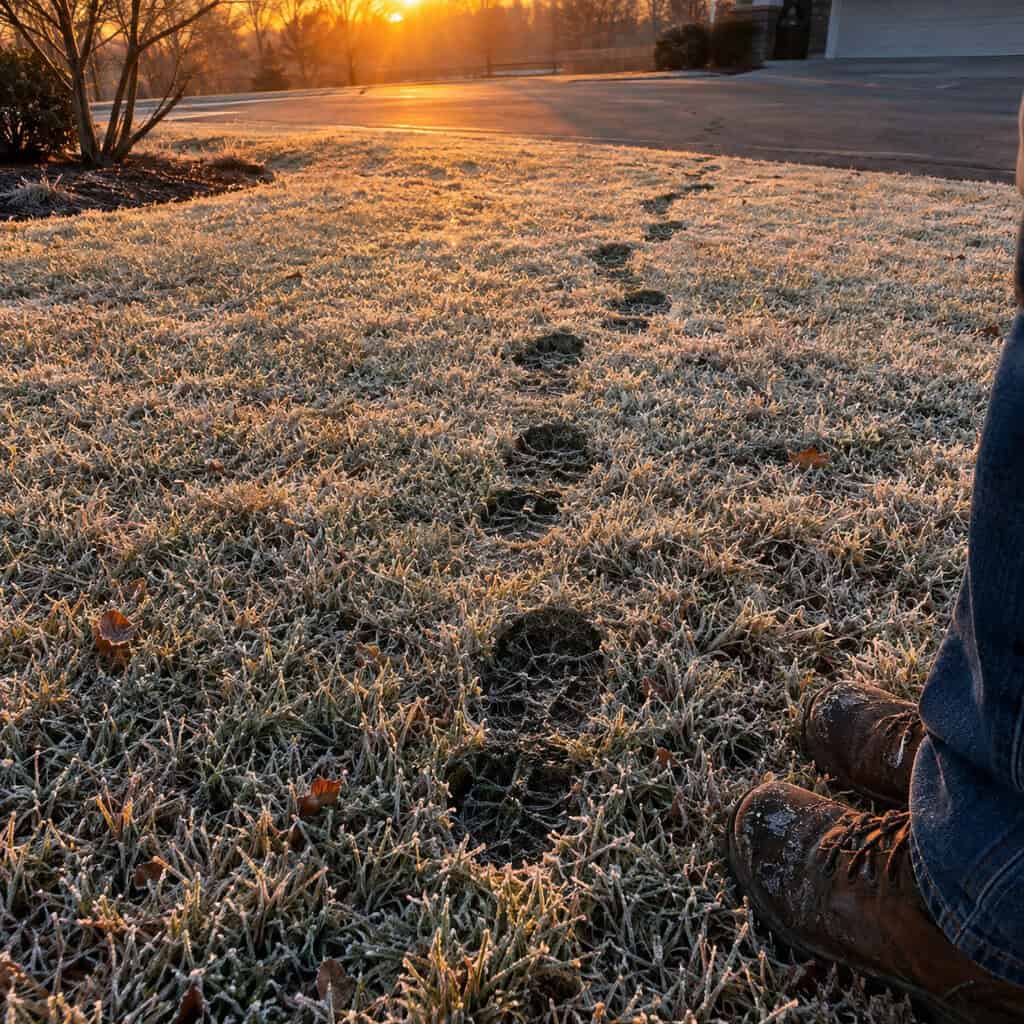
Frozen grass blades are brittle glass. Step on them and the cell walls rupture — the plant doesn’t bend back, it dies in place.
Your shortcut to the car prints itself into the lawn. Brown footprints, perfectly spaced, visible for weeks.
Wait for the melt. Use the walk. Ten seconds of convenience on a gorgeous crunchy October morning is the thing you’ll still be looking at in April.
24. Stop Laying New Sod This Late
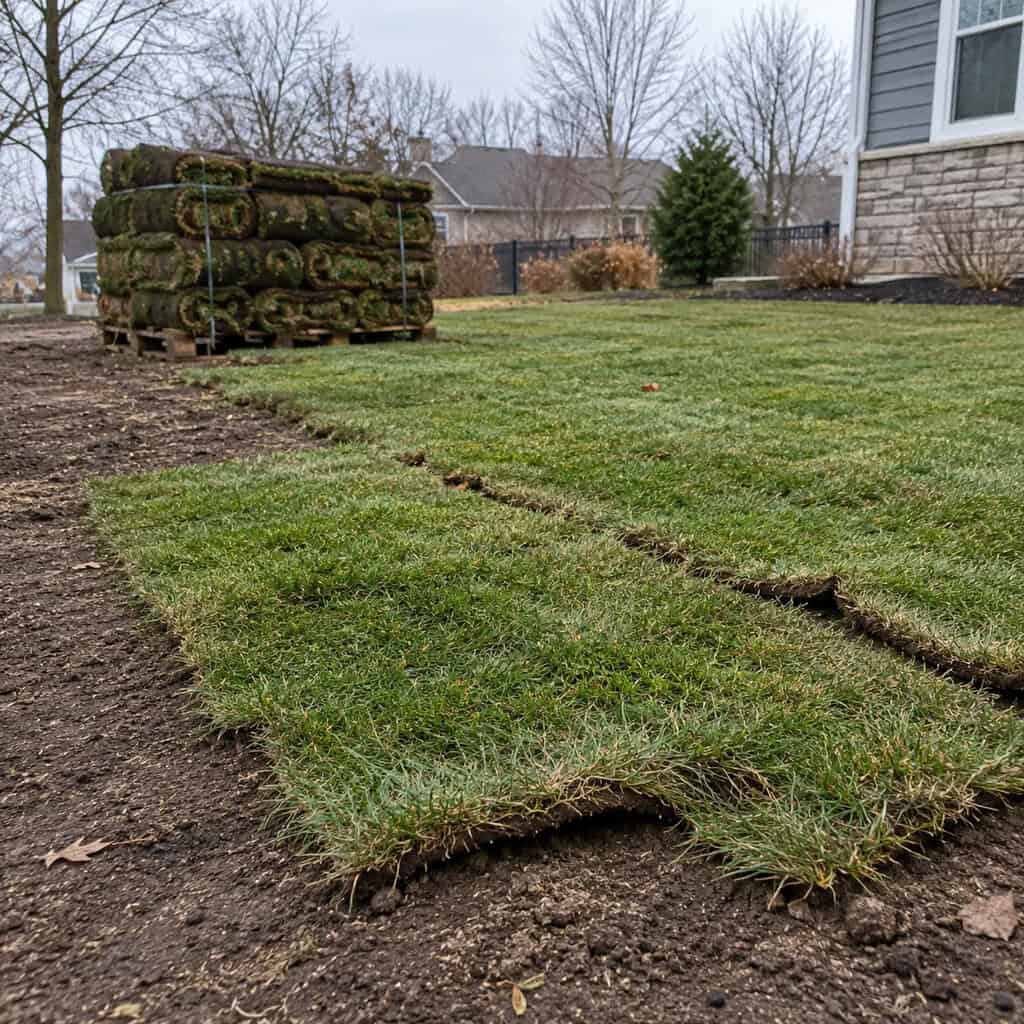
Sod needs four to six weeks of active root growth to knit into the soil before the ground freezes. Short of that, it sits there like a rug.
Unrooted sod dries out from the edges, shrinks, and lifts at the seams over winter. Freeze-thaw cycles finish the job.
In the transition zone and the South, mid-fall sod often still works. North of the Ohio River, November installs are a coin flip you’re paying $400 a pallet for. Wait for spring.
25. Stop Blowing Leaves and Fertilizer Into the Street
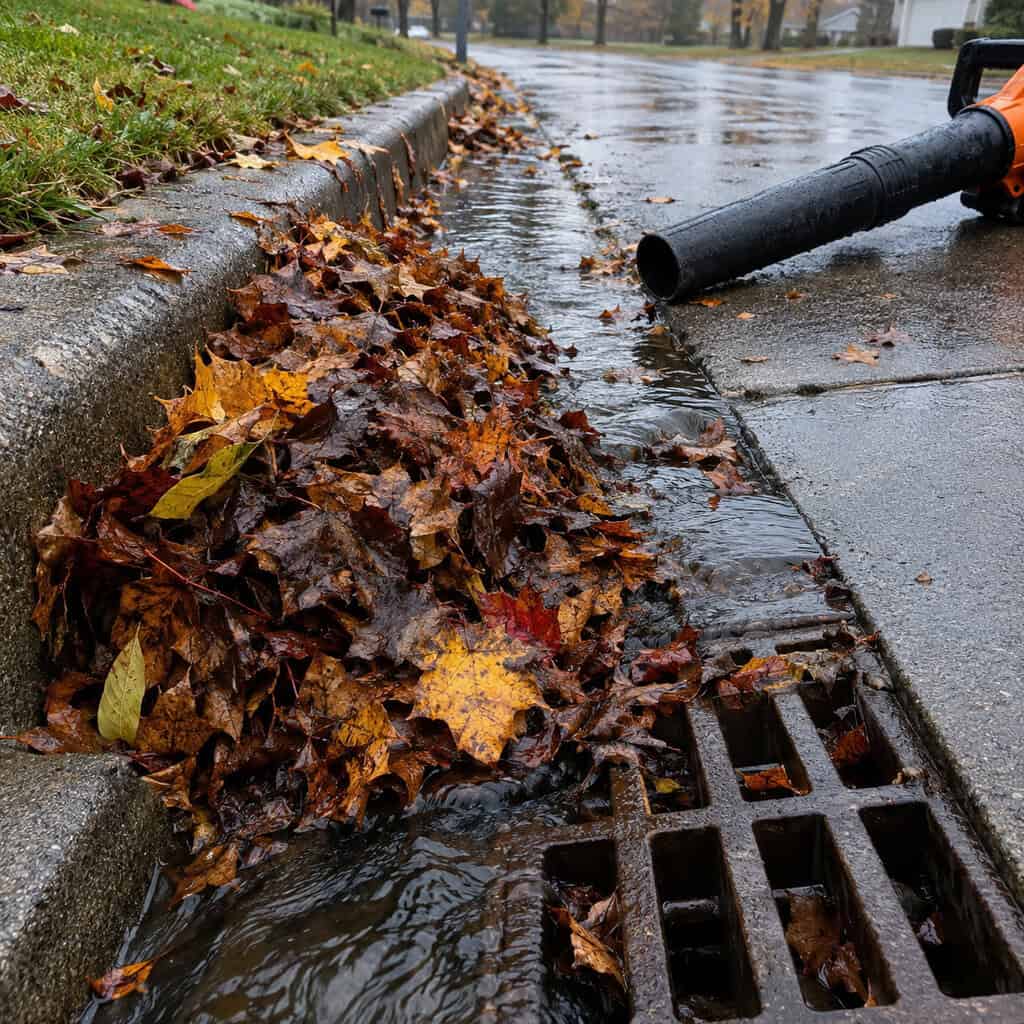
The gutter is not a compost pile. It’s a pipe to a creek.
Leaf litter in the street is a significant phosphorus source in urban watersheds — as it sits and gets rained on, phosphorus leaches out and runs straight to the storm drain. Granular fertilizer swept off the driveway does the same thing, faster.
Many municipalities now fine for it. Sweep hard surfaces back onto the lawn, and keep the pile off the pavement.
26. Stop Fertilizing Ahead of a Downpour or Onto Frozen Ground

Timing the late-fall feeding matters as much as making it.
Spread granular fertilizer the afternoon before two inches of rain and most of the nitrogen leaves your property. Spread it on frozen ground and it can’t move into the soil at all — it sits on the surface waiting for the next melt to carry it away.
Watch the forecast for a dry stretch, put it down while soil is still workable, and water it in lightly if nothing’s coming. The application is only good if it stays where you put it.
Fall lawn work has the worst feedback loop in homeownership. You do everything right in October and see nothing. You skip it and the bill arrives seven months later, in a season when you’ve forgotten what caused it.
Pick the three from this list that apply to your yard and do them in the next two weekends. That’s usually all it takes.
The thick lawns on your street in May were decided in September.