

There was a time when a Saturday meant the low drone of a mower rolling up and down every yard on the block. The smell of cut grass. The hiss of a sprinkler catching the light at seven in the morning.
Somewhere along the way, a lot of people got tired of it.
Tired of the watering. Tired of the mowing. Tired of pouring a weekend into a rectangle of lawn nobody actually sits on.
And the yards that turned heads stopped being the greenest ones. They became the ones that looked composed — gravel and grasses, a boulder catching afternoon shadow, a border alive with bees. The kind of front yard that makes a passing car ease off the gas just to look a second longer.
None of it takes more work than the old way. Most of it takes far less. Here are 27 ideas that trade upkeep for the kind of curb appeal that gets noticed.
1. Rip Out the Thirsty Turf for a Gravel-and-Plant Xeriscape
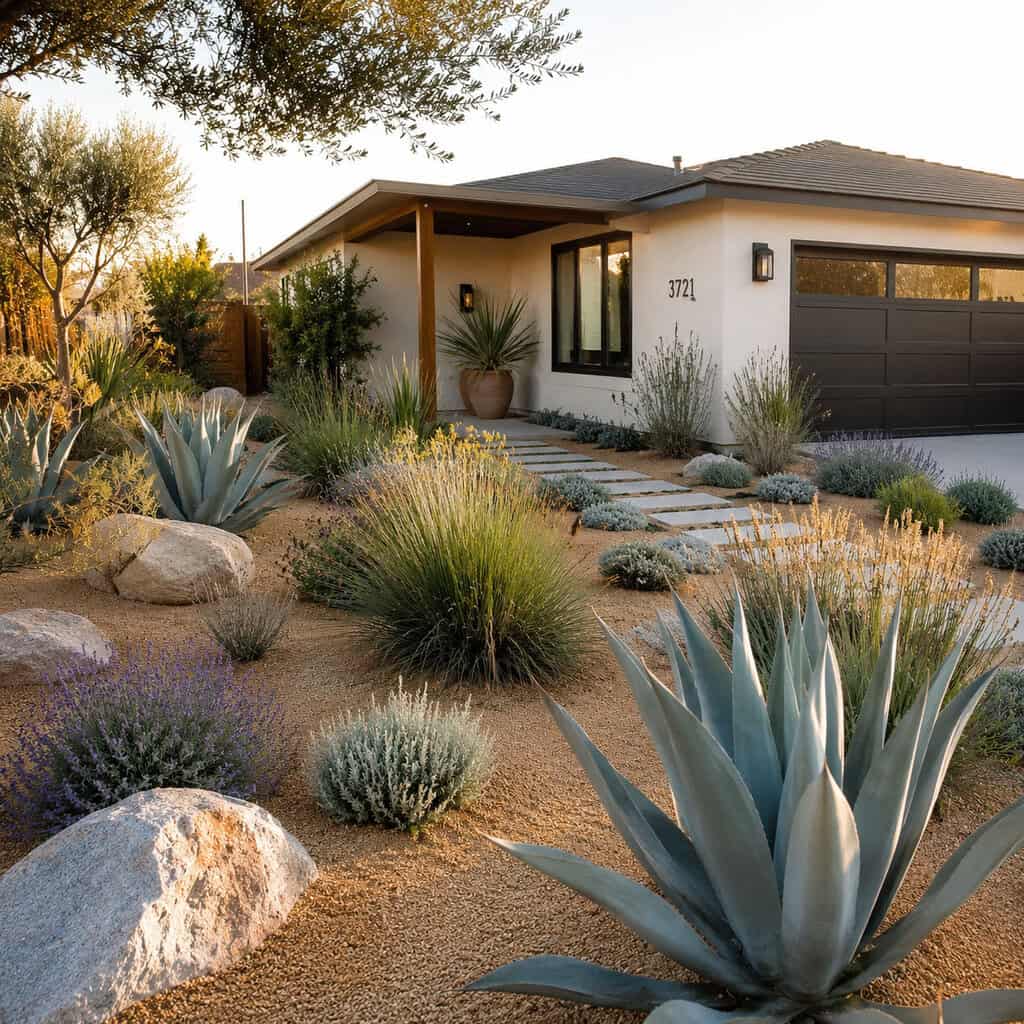
Start with the boldest move on the list. Pull the lawn.
Nothing cuts water and mowing faster than getting rid of the grass entirely and replacing it with gravel or decomposed granite. In its place you dot clusters of drought-tolerant plants at staggered heights, so the ground reads like a designed space instead of a bare lot.
The look is deliberate. Low mounds of gravel, a spray of agave here, a clump of grasses there, everything spaced to breathe.
Guides from Colorado State University Extension show how much visual interest you get from a xeriscape that never needs a hose dragged across it. Once it’s in, the mower goes in the shed for good.
2. Plant One Thing, a Hundred Times (Mass Plantings)
Maintenance isn’t only the hours. It’s the mental load of remembering what every single plant needs.
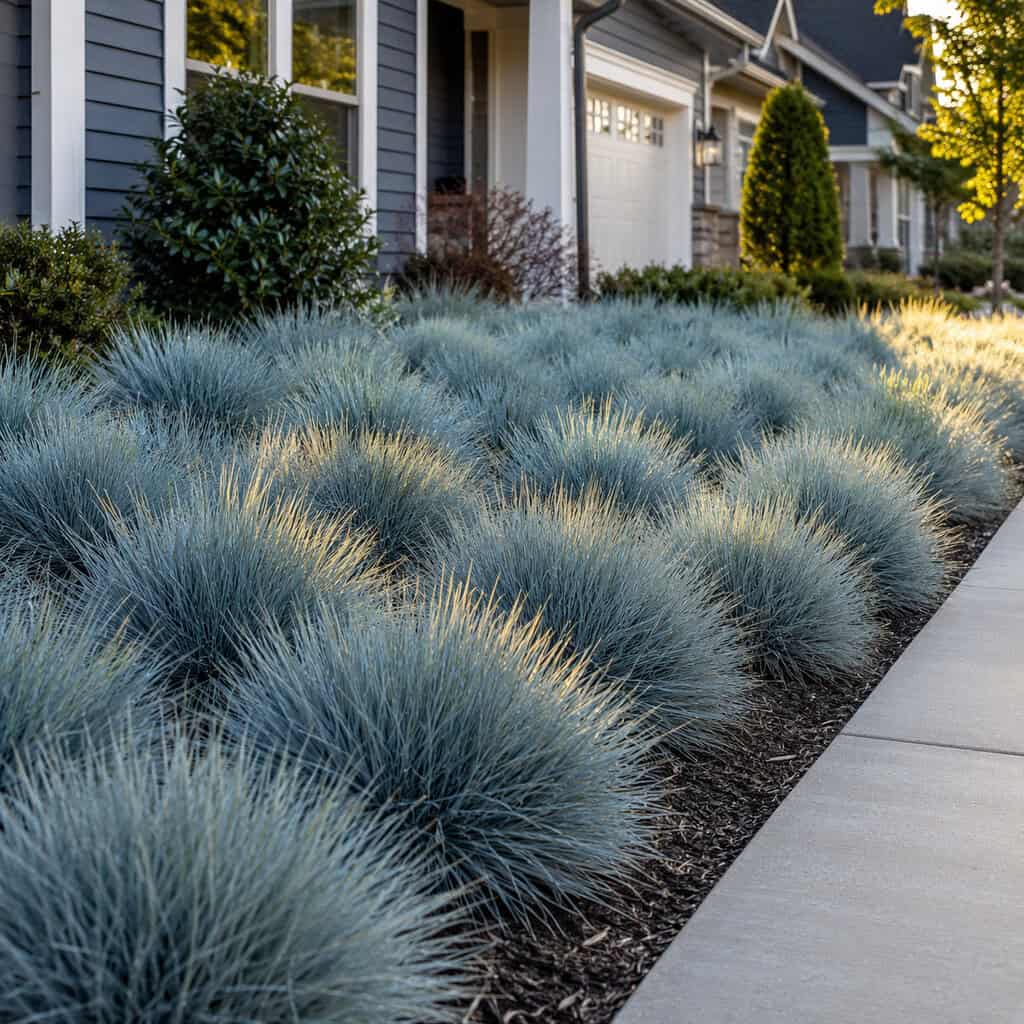
Landscape designers get around that by planting one thing in bulk. Thirty of the same grass. A drift of a single perennial repeated across a whole bed.
The upkeep simplifies to one plant’s habits, and the look turns lush and intentional from the street.
Picture a bed of blue fescue running the length of a walk. The whole house seems to glow blue all season. It reads as a choice, not a coincidence.
3. Trade Grass for a Creeping Thyme Carpet
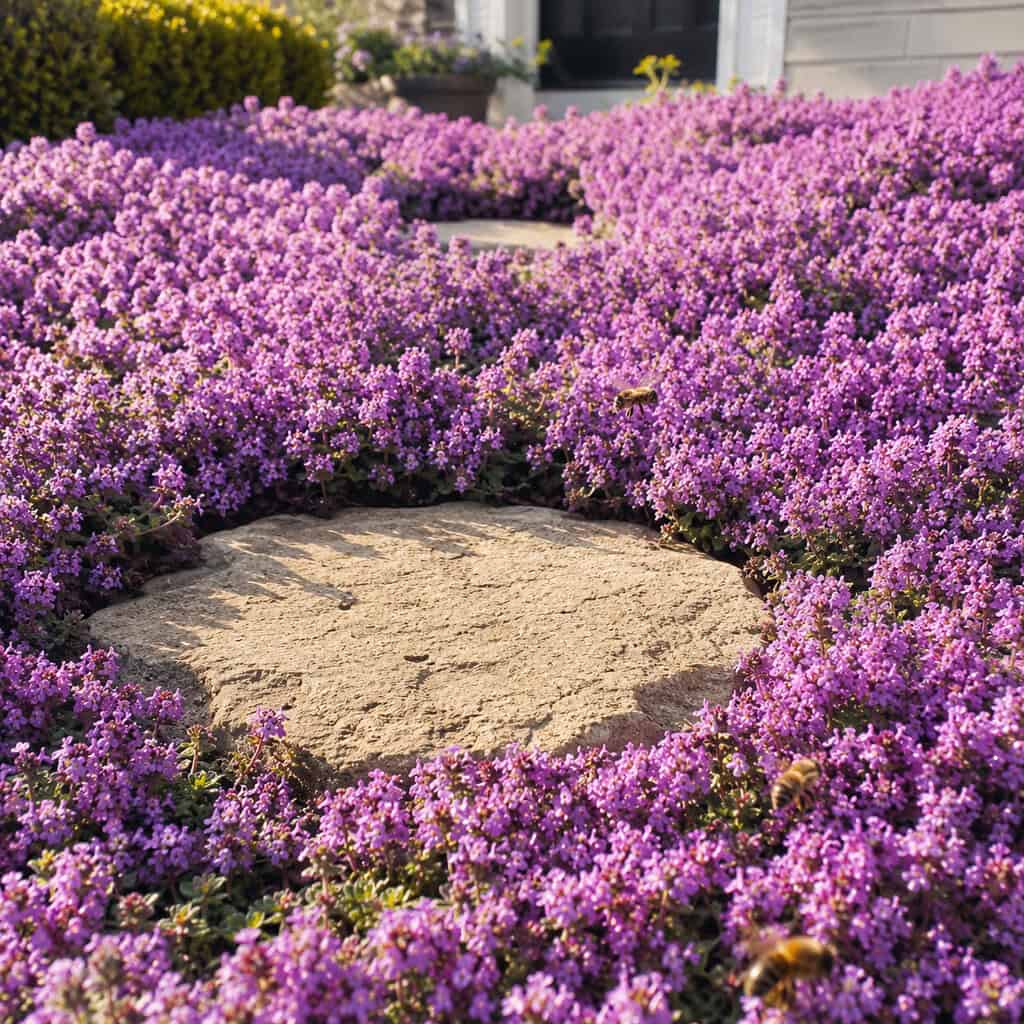
Creeping thyme forms a low, fragrant mat that never needs a mower. Step on it and the scent lifts up around your ankles.
It handles drought, feeds pollinators, and blooms in a haze of tiny purple flowers by early summer.
One catch worth knowing. Year one asks for patience and full sun — the plugs look sparse and you’ll wonder if it took. By year two or three it knits into a solid carpet. Plant it, water it in, and wait.
4. A Clover (or Microclover) Lawn That Feeds Itself
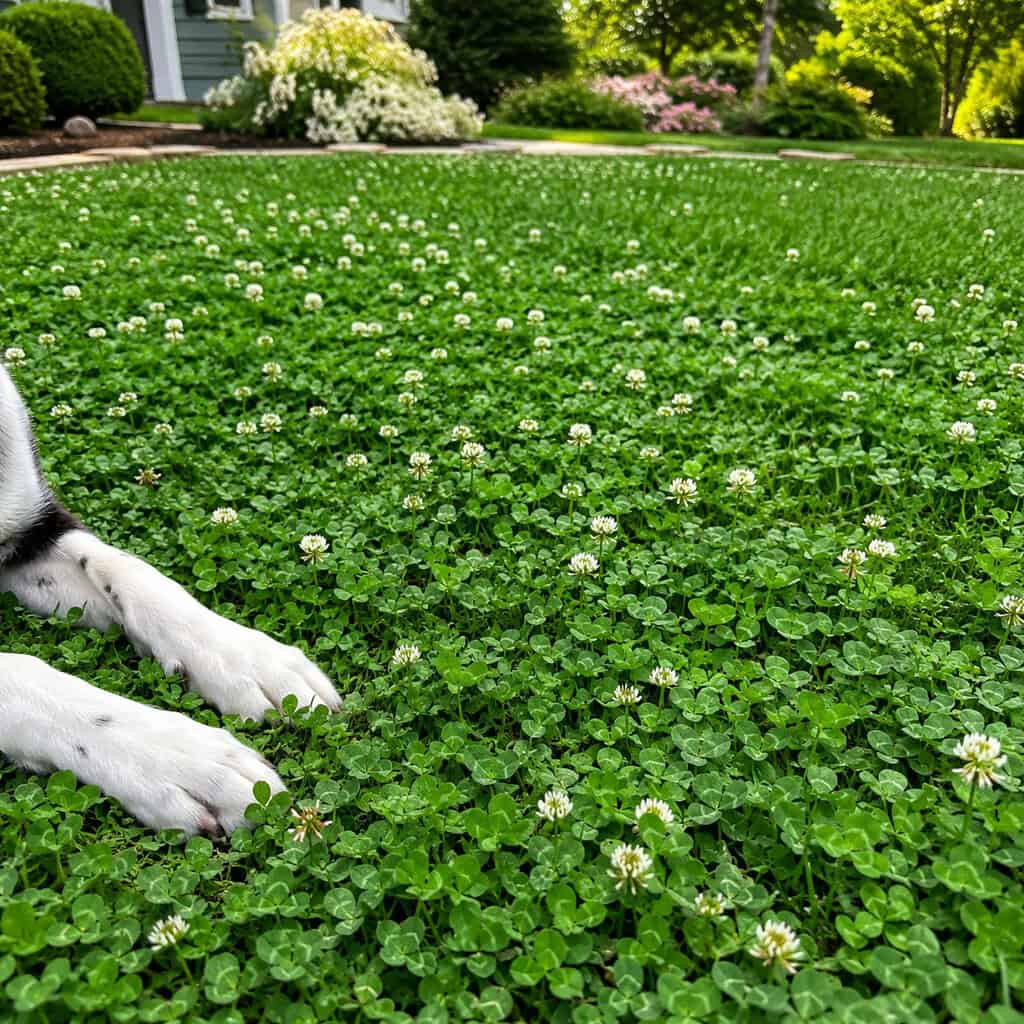
Clover fixes its own nitrogen out of the air, which means it fertilizes itself and stays green through dry spells that turn regular turf brown.
It needs a mow once or twice a season. That’s it.
For pet owners, there’s a bigger draw. Clover is non-toxic to dogs and cats, confirmed by the ASPCA, so there’s nothing to worry about when the dog rolls in it.
If you want something that still reads like a traditional lawn from the curb, plant microclover. The leaves are smaller and the whole thing looks tidier.
5. Let Ornamental Grasses Do the Swaying

Movement is what catches the eye from a passing car. And nothing moves like grass in a breeze.
Fountain grass, blue fescue, and native little bluestem bring motion, color that shifts through the seasons, and seedheads that hold their shape all winter.
The care is almost nothing. One cut-back in early spring and you’re done for the year.
Little bluestem turns copper and rust as the weather cools. A row of it against a gray sky is a quiet kind of beautiful.
6. Build a Backbone of Evergreen Shrubs
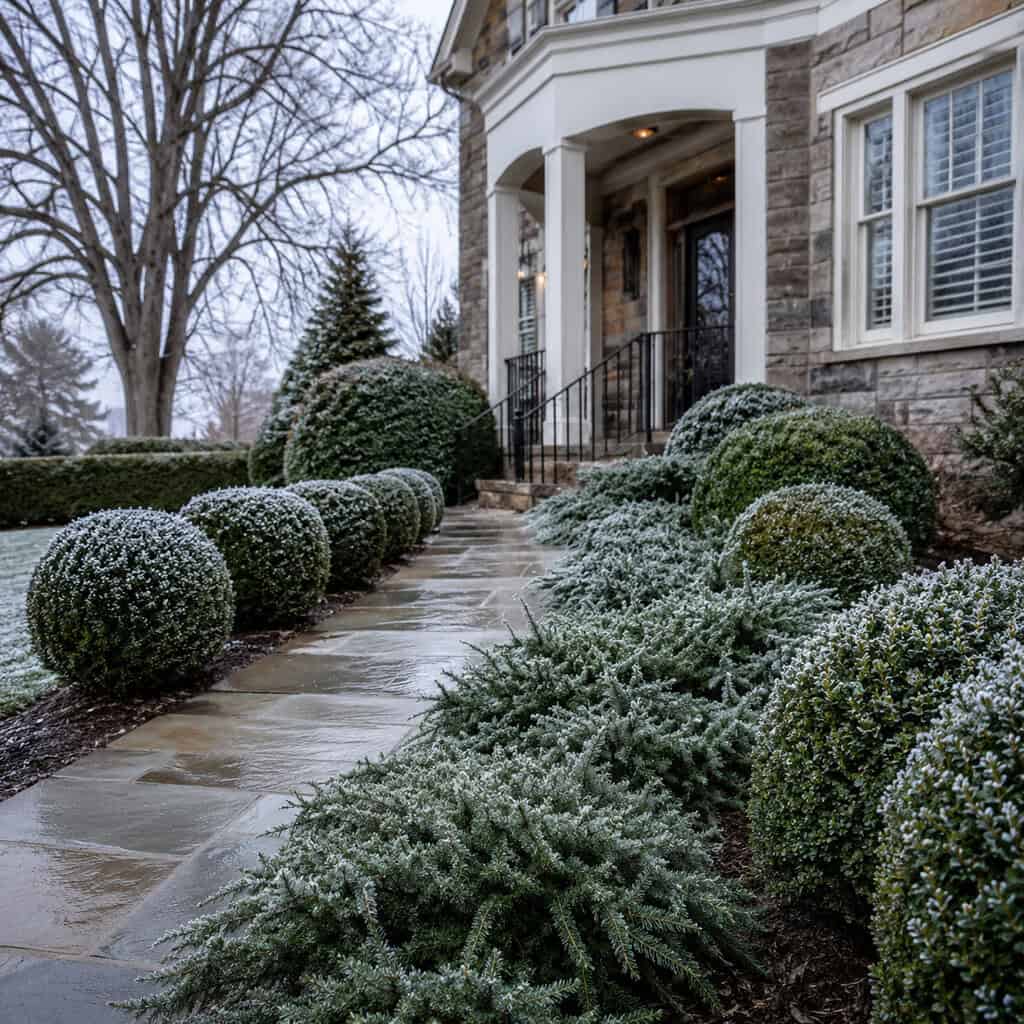
Every good front yard needs bones. Something that still looks like something in January.
Boxwood, Japanese holly, arborvitae, and juniper give you deer-resistant, shear-tolerant greenery that stays polished through the coldest months.
Plant them as the structure everything else fills in around. When the perennials die back and the grasses go dormant, these hold the shape of the whole design.
Gardening Know How rounds up the toughest of them if you want a starting shortlist. A yard with good evergreen bones never looks bare.
7. Swap the Lawn for a Native Pollinator Border
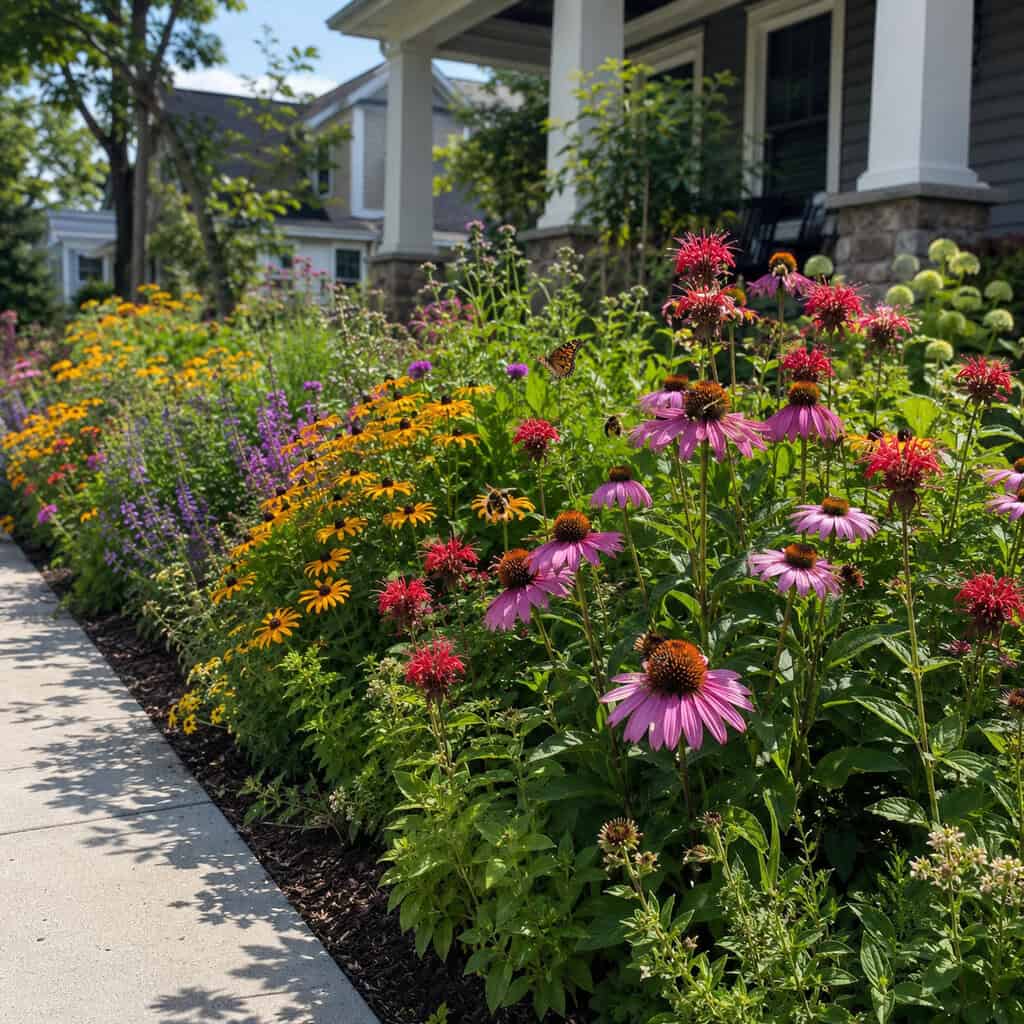
Native plants ask for almost nothing once they’re settled. Their roots run deep, they out-compete weeds, and they turn a flat green lawn into a scene that hums.
Coneflower. Bee balm. Black-eyed Susan. Milkweed for the monarchs.
Neighbors slow down for this one because it’s alive — butterflies working the blooms, bees moving from flower to flower all afternoon.
Keep the edges clean and the shape defined, and the wild interior reads as intentional. Formal on the outside, wild on the inside. That’s the trick that keeps it neighbor-approved.
8. Turn Part of the Yard Into a Gravel Courtyard

Stop thinking of the front yard as a lawn. Think of it as a room you haven’t furnished yet.
Trade a section of turf for limestone or locally sourced gravel, hold it in place with clean steel edging, and you’ve built an outdoor courtyard instead of a patch of grass.
It’s structured. It’s inviting. And it lasts for decades with almost no maintenance.
Set a bench or a pair of chairs in it and suddenly the front of the house is somewhere you’d actually sit.
9. Cut Crisp, Defined Bed Edges
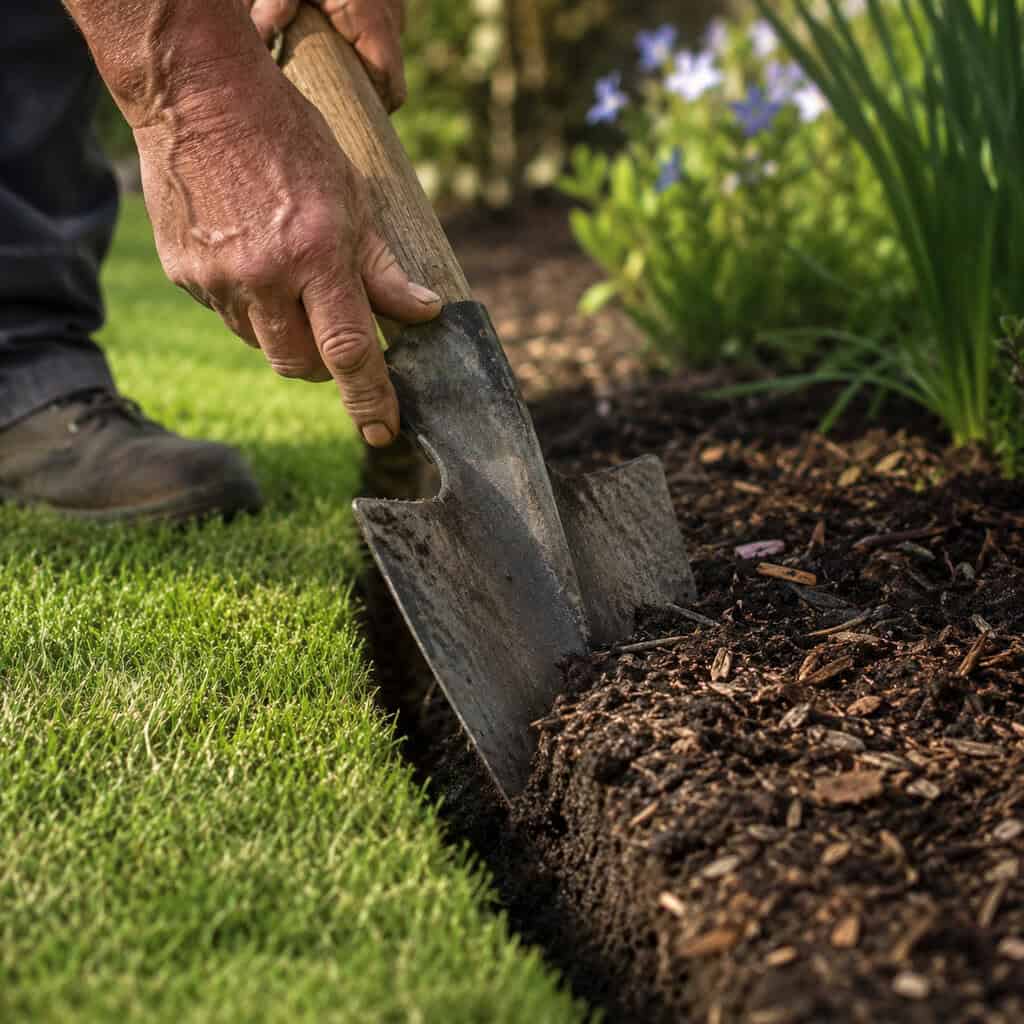
This is the five-minute move that makes everything else look maintained.
A sharp spade edge — or a strip of steel edging — stops the turf from creeping into your beds, holds the mulch where it belongs, and blocks weeds from marching in.
The cost is next to nothing. The payoff in perceived neatness is enormous.
A messy bed with a crisp edge still looks cared for. A tidy bed with a blurry edge never does.
10. Frame Everything in Fresh Mulch
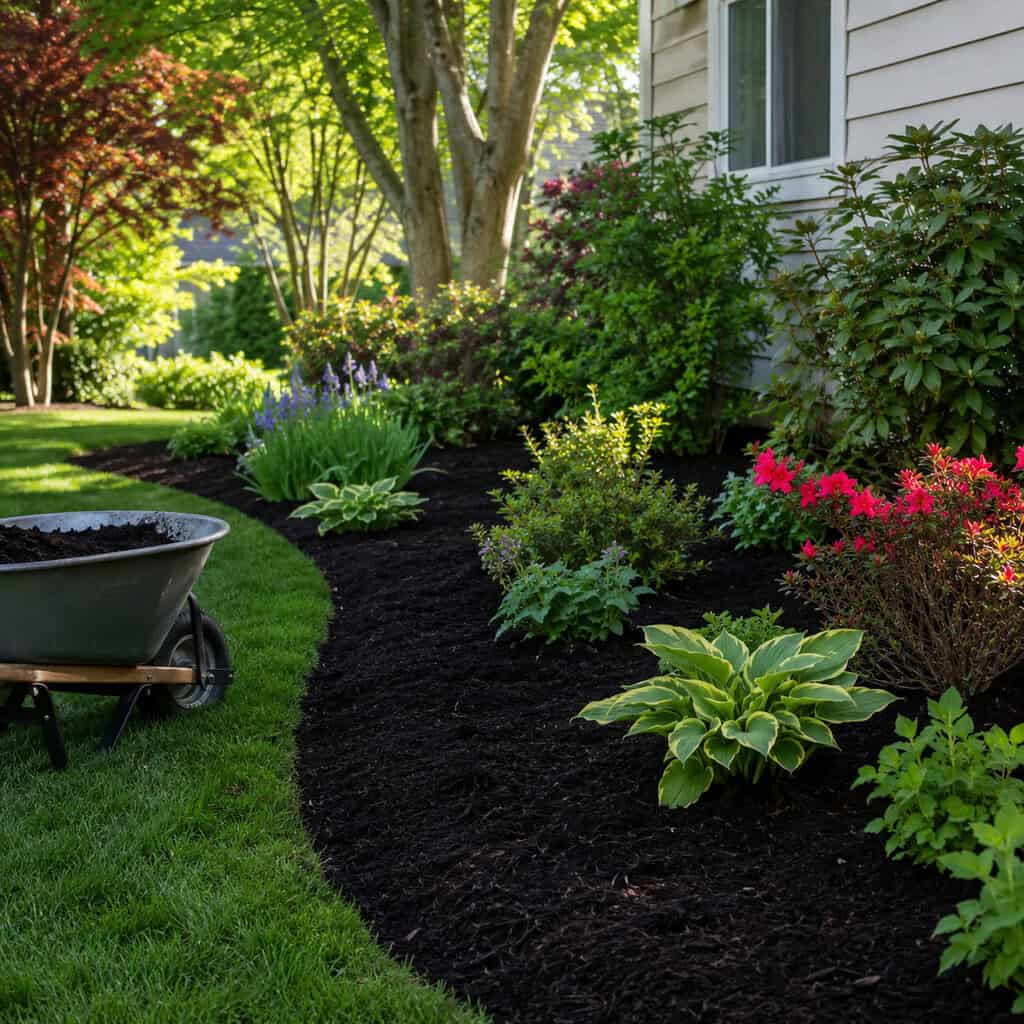
Cheapest instant upgrade there is.
Mulch smothers weeds, holds moisture in the soil so you water less, and frames your plantings so they read as deliberate instead of scattered.
A yard mulched in early spring looks cared for even if you did nothing else that weekend.
Go with a natural hardwood tone and skip the dyed stuff. The dark, even color is what your eye reads as maintained.
11. Anchor the Front Door With Two Big Containers

Even a gorgeous yard can feel like it’s missing something. Usually it’s the entry.
Two well-proportioned pots flanking the front door fix that instantly. It’s the lowest-effort version of a whole garden — a lot of impact packed into two containers.
Go big. Small pots by a door look like an afterthought.
Fill them with something evergreen for structure and a few seasonal blooms for color, and the door frames itself.
12. Light It Up After Dark With Low-Voltage Fixtures

This is the entry that makes people slow down at night.
A yard that looks good at noon and disappears at dusk is only half a yard. Low-voltage landscape lighting keeps it working after the sun goes down — and it’s one of the biggest curb-appeal returns you can install yourself.
The whole system runs on 12 volts through a transformer that plugs into a standard outdoor outlet. There’s no shock risk buried in the wire, which is why so many homeowners do it themselves over a weekend.
Two techniques do most of the heavy lifting. Uplighting means placing a fixture at the base of a specimen tree or the corner of the house and aiming the beam up — it throws dramatic shadows and gives the facade real depth. Path lighting means low fixtures spaced along the walkway that wash soft pools of light onto the ground so guests can see their footing.
Use both. Uplight the pretty things, path-light the practical ones.
Fixture types are worth learning before you buy. Spotlights throw a tight beam for uplighting a trunk. Flood lights spread wider for a wall or a hedge. Well lights sit flush in the ground for a clean daytime look. Path lights cap the walk, and downlights mounted high in a tree mimic moonlight filtering through the branches.
You can absolutely DIY a low-voltage setup — the parts are forgiving and the wire is safe to handle. But if you want dozens of fixtures, a hidden transformer, and buried runs done cleanly, a pro pays off in a system that looks built-in instead of tacked on.
Guides from VOLT Lighting walk through fixture placement if you’re planning your own layout. Beyond the beauty, lit paths and entries add real security. A dark house says nobody’s watching; a warmly lit one says the opposite.
13. Give the Eye a Focal Point — Boulder, Agave, or Specimen Tree
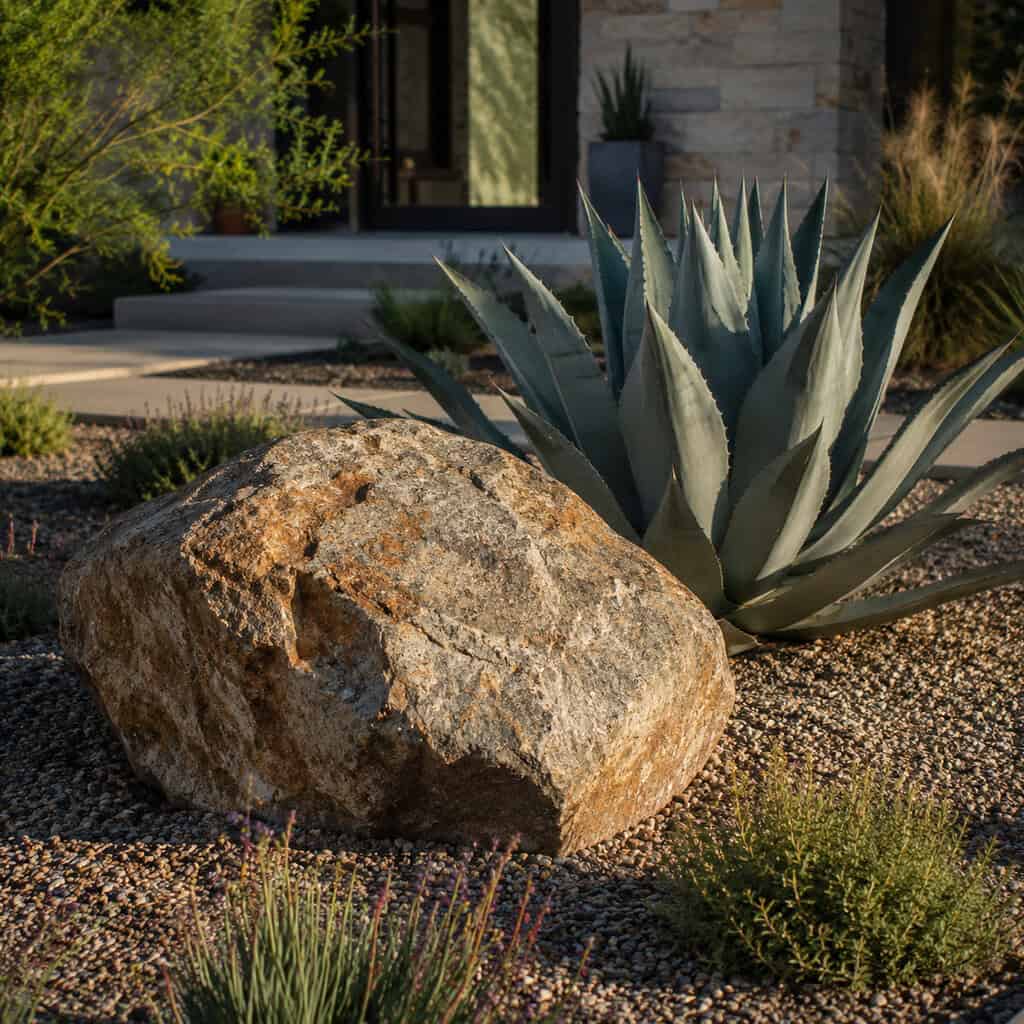
The eye needs somewhere to land. Without a focal point, even nice plantings read as random.
A large boulder does it. So does a sculptural agave, or a small ornamental tree near the entry.
One strong anchor pulls the whole composition together and makes the simplest arrangement look designed.
Set it near the front door or where the walkway turns. That’s where the eye wants to rest anyway.
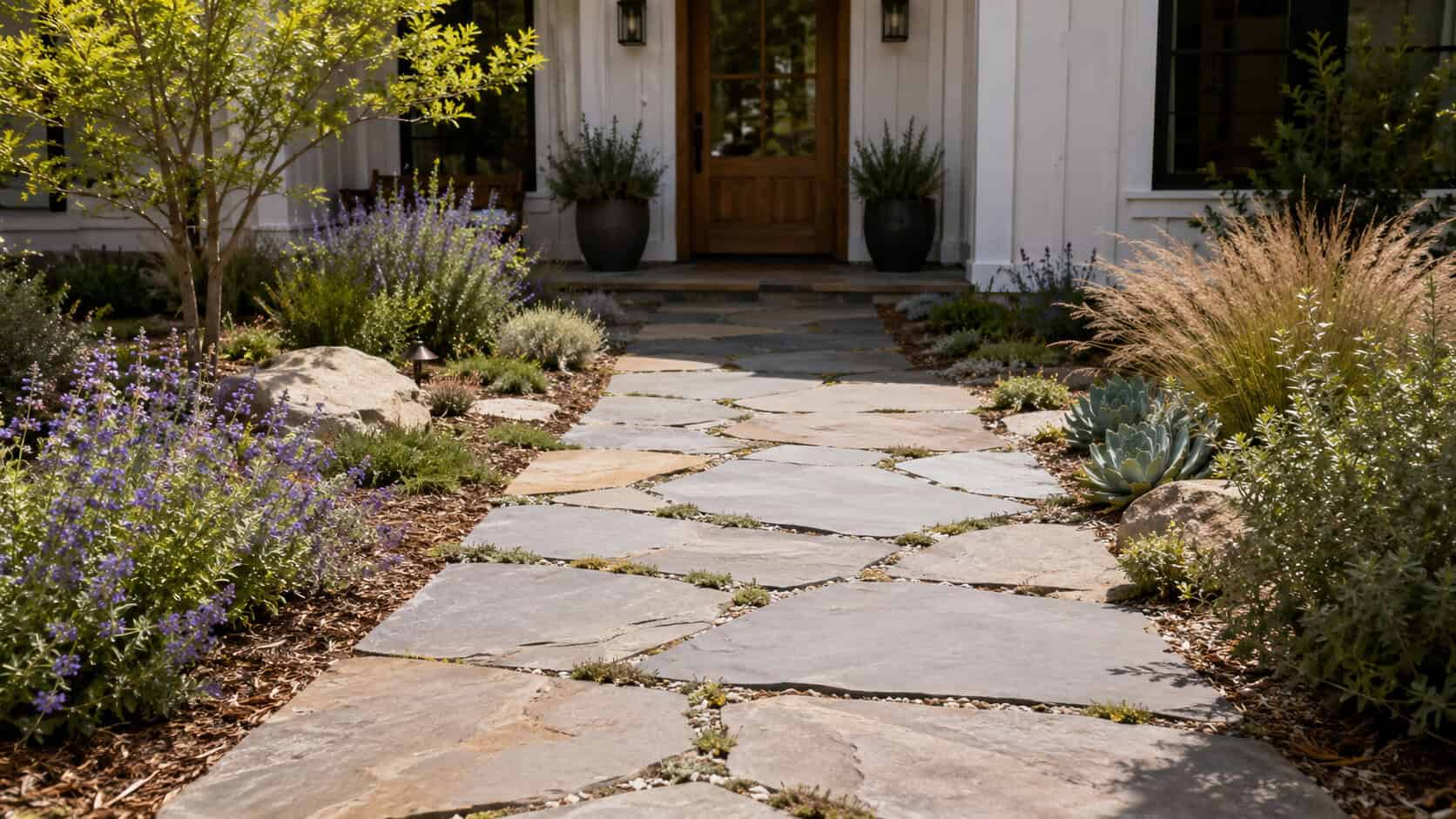
14. Lay a Flagstone or Stepping-Stone Path
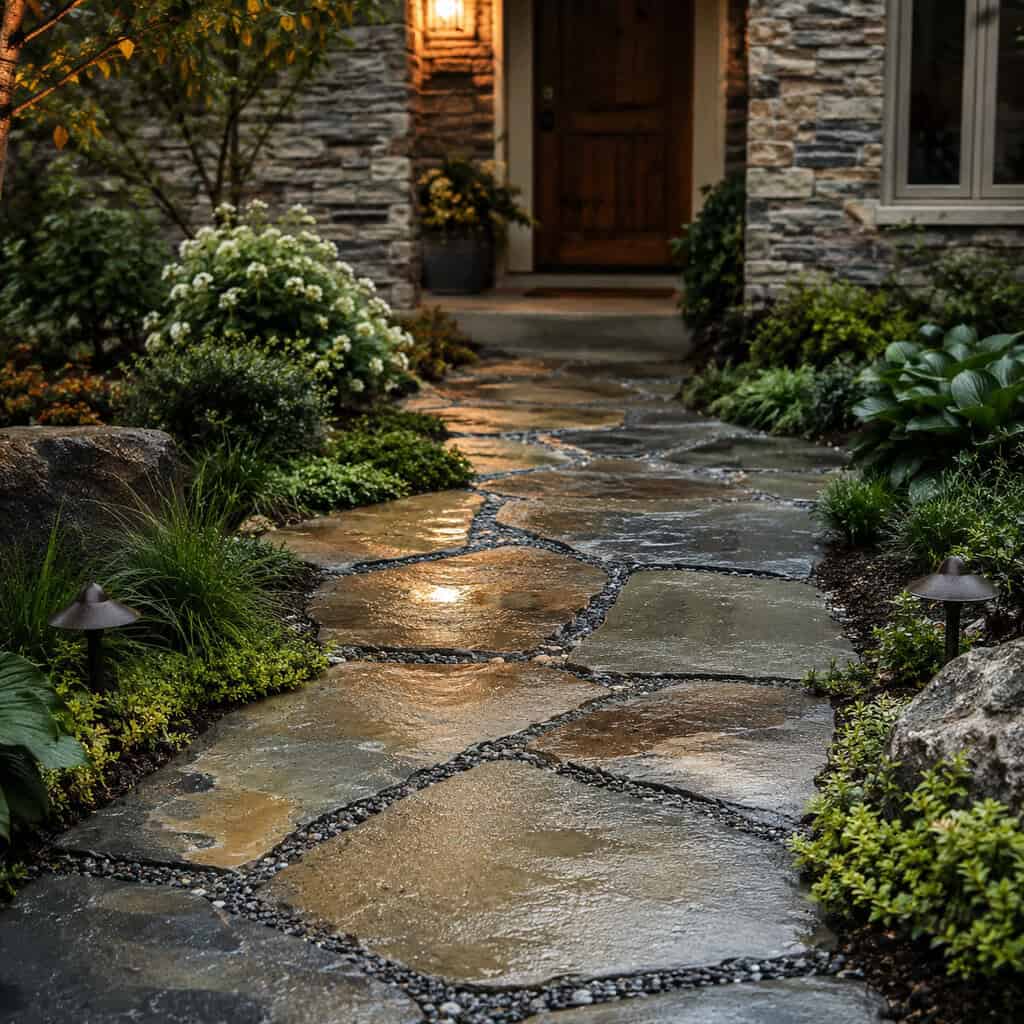
A path to the door does two jobs at once. It adds structure, and it takes planted area off your maintenance list.
Flagstone or wide steppers set with gravel or planted joints let rain soak straight into the ground instead of running off.
Every square foot of path is a square foot you’re not weeding or watering.
It also adds depth. A yard reads flat until a path cuts through it and gives the eye somewhere to travel.
15. Go Green Year-Round With Artificial Turf

For the look of a lush green lawn with zero mowing and zero watering, artificial turf has come a long way.
Paired with gravel and stone, it slots into a modern, clean layout — which is why you see it so often on small urban lots and in dog runs where real grass would turn to mud.
The upsides are real. No mower, no sprinkler, no fertilizer, no brown patches in August. It stays exactly the same shade of green every single day of the year, and a quality product lasts fifteen to twenty years.
Now the caveats, because they matter. Good turf isn’t cheap — installed cost typically lands somewhere in the range of eight to fifteen dollars a square foot once you factor in the base prep, which is most of the job.
And it gets hot. On a full-sun afternoon, artificial turf can climb well above the air temperature and stay uncomfortable underfoot for kids and pets. Site it where it gets some shade, or keep the run small.
Think of it as a hardscape that happens to be green, not a living lawn. Judged that way, it earns its place.
16. Dig a Rain Garden or Dry Riverbed
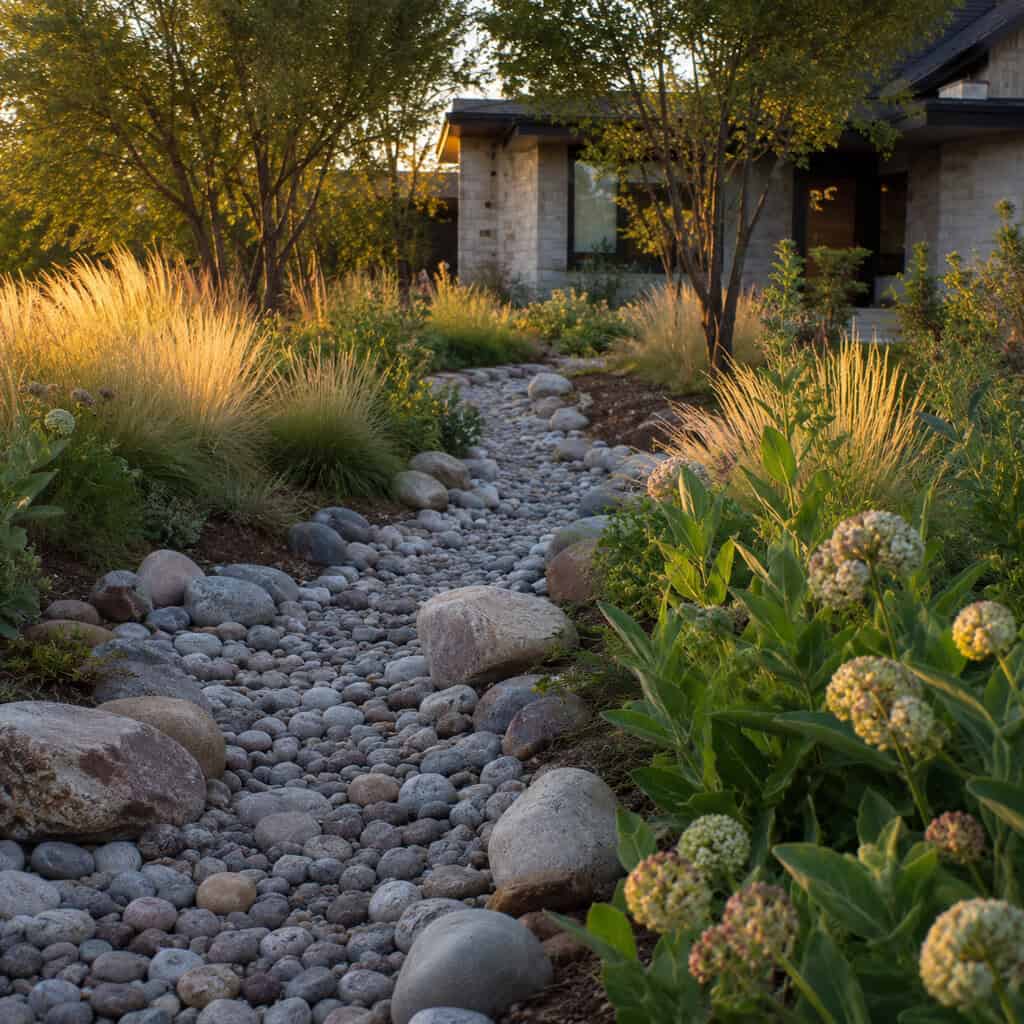
Function that happens to look intentional.
A shallow swale or rain garden catches runoff from the roof and driveway and lets it soak in slowly instead of rushing to the storm drain. A dry riverbed of river rock does something similar while adding a sculptural, water-shaped line through the yard.
Keep any rain garden a good distance from the foundation so water drains away from the house, not toward it.
Plant it with moisture-flexible natives that don’t mind a soaking then a dry stretch — milkweed and blue grama handle both. Even bone dry, a river-rock bed looks like it belongs.
17. Pack Beds With Tough Flowering Perennials
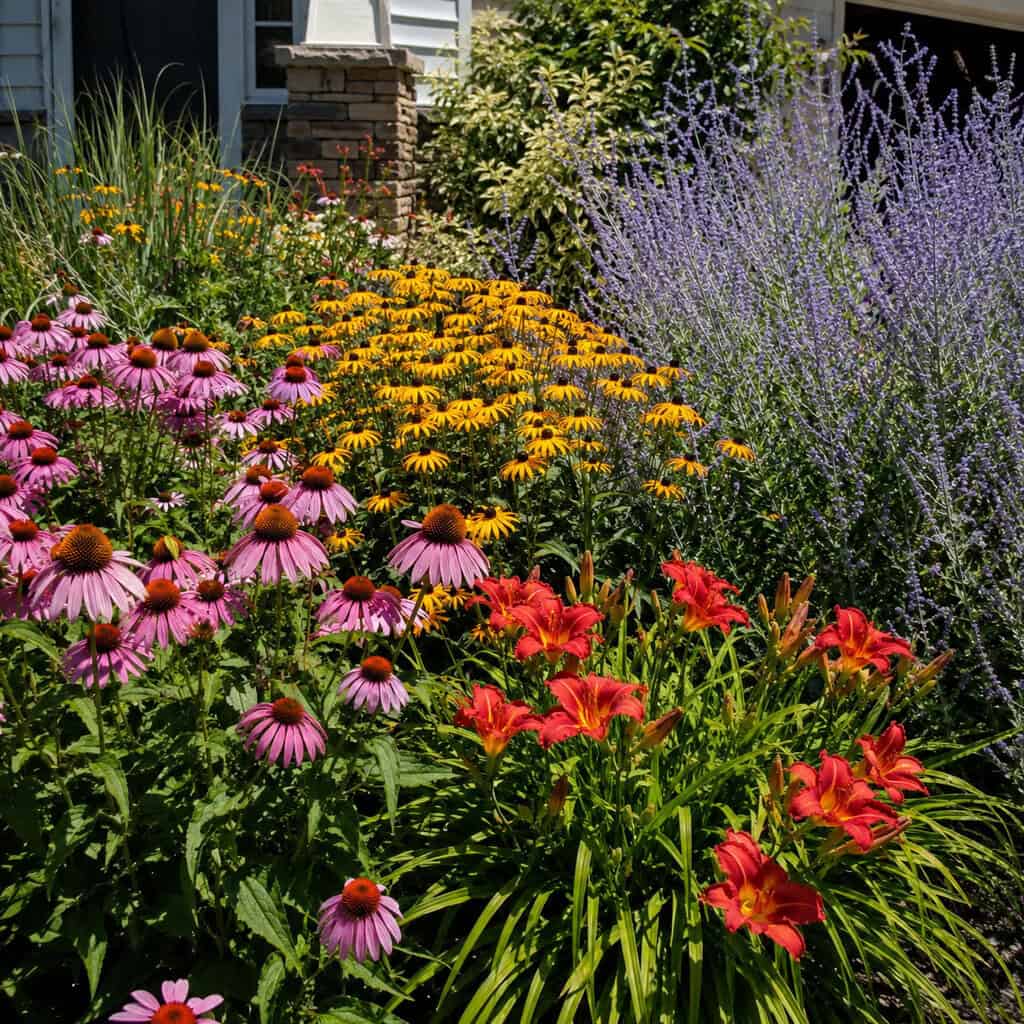
This is the color engine of the whole yard.
Coneflowers, black-eyed Susans, daylilies, and Russian sage bloom for months, shrug off heat and drought, and come back on their own every single year.
Plant them once. Enjoy them for a decade.
Stagger the bloom times so something’s always flowering from early summer into fall, and the beds never go dull.
18. Plant a Mailbox Garden
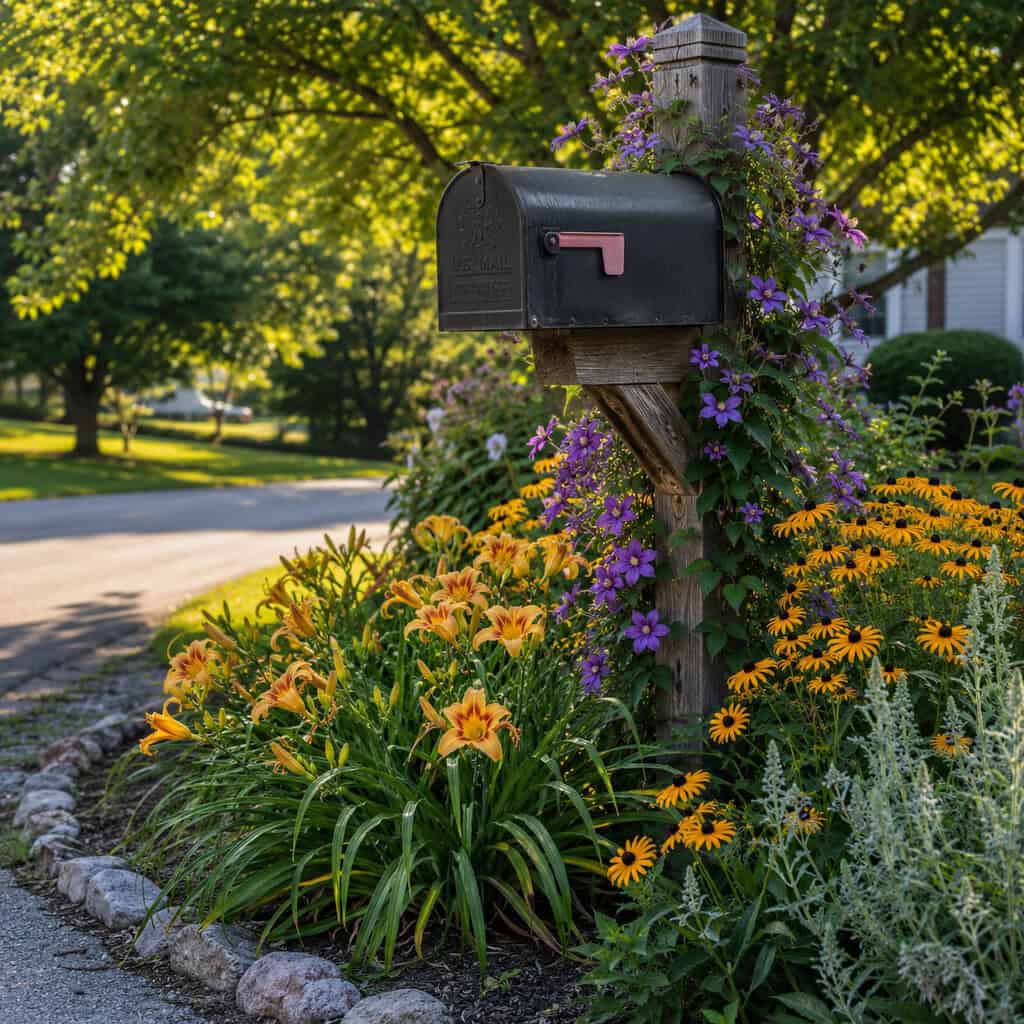
Small footprint, outsized charm.
A tight cluster of drought-tolerant plants around the mailbox greets everyone right at the curb — daylilies, black-eyed Susans, a sprig of rosemary, maybe a clematis climbing the post.
No hose to drag out there. Once it’s established it fends for itself.
It’s the first thing anyone sees pulling up, and one of the cheapest gardens you’ll ever plant.
19. Repaint the Front Door and Trim

An afternoon of paint does more for the facade than a month of anything else.
A bold front door with coordinated trim and shutters — pulled from the same color family as the roof — makes the whole front of the house read refined.
Keep the palette tight. Two or three colors, no more.
There’s something about a freshly painted door. It signals a house that’s loved, before anyone’s even reached the porch.
20. Add a Few Picket Fence Panels

You don’t have to fence the whole yard to get the charm of one.
A couple of white picket panels flanking the walkway or the end of the driveway do the job for around fifty dollars a panel. It’s cottage character on a budget.
Plant low-water blooms right in front of them and the picket becomes a backdrop instead of a barrier.
It’s the kind of detail that makes a passerby think of an older, slower street. The good kind of old.
21. Put Watering on Autopilot With Drip and a Smart Controller

The truly low-effort yard has an invisible backbone. It’s the irrigation you never think about.
Converting old spray heads to drip lines is the single biggest water saver in the yard. Drip delivers water straight to the roots at ground level, so almost none is lost to wind and evaporation the way it is with overhead spray.
Pair that with a smart controller and the system starts thinking for you. These units pull local weather data and skip watering when rain is coming or the soil’s already damp. Over a season or two, you can dial the whole thing down to drought-only support as the plants mature and their roots go deep.
Here’s the part most people miss. Many water utilities offer rebates on both drip conversions and smart controllers — sometimes covering a real chunk of the cost. Check your local water district before you buy anything, because the paperwork is usually simple and the money is real.
Set it up once. Then mostly forget it exists. That’s the whole point.
22. Plant One Small Flowering Tree
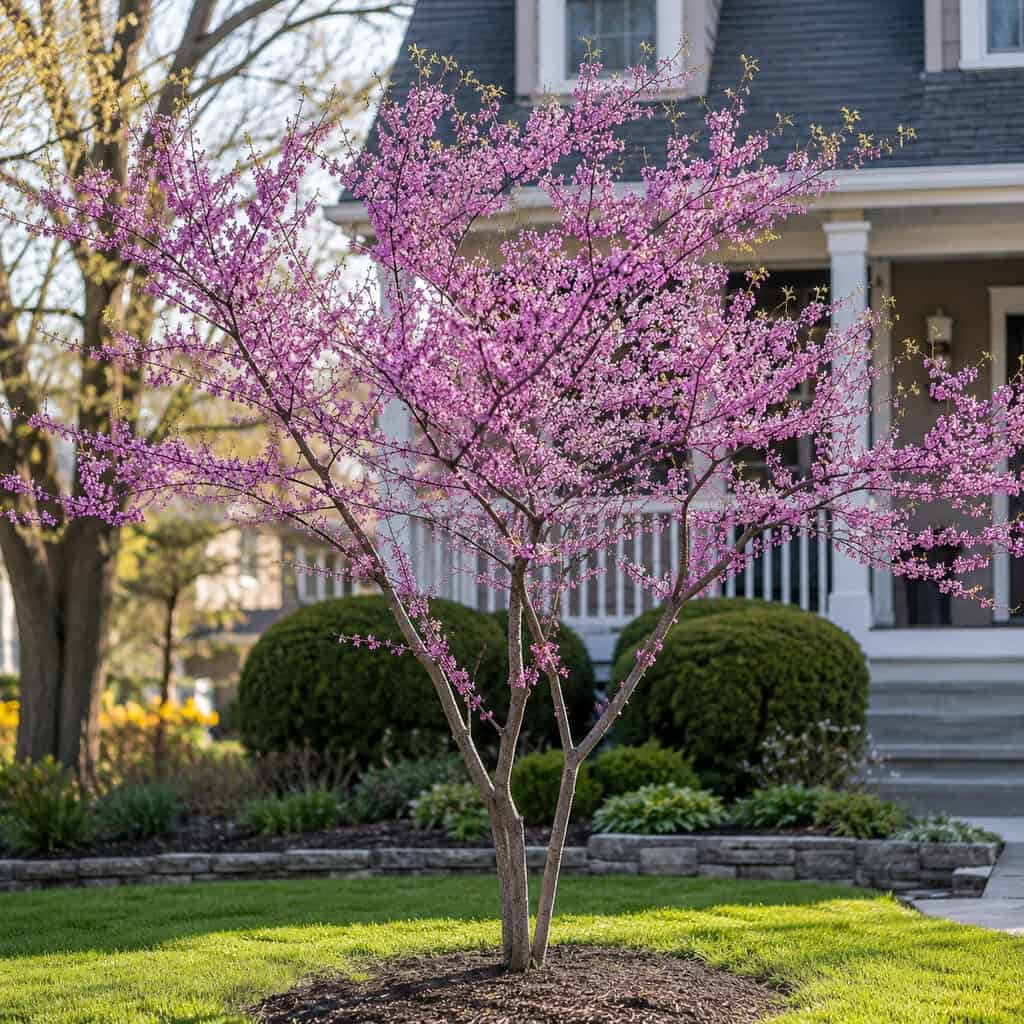
Vertical drama for almost no work.
A redbud, desert willow, crape myrtle, or serviceberry brings height, seasonal bloom, and a natural focal point all at once.
Trees also move the needle on home value in a way a flower bed never will. One well-placed specimen does the heavy lifting.
A redbud in early spring, hazed pink before it leafs out, stops people in their tracks. Plant it young and watch it become the thing the house is known for.
23. Layer the Planting — Tall in Back, Low in Front
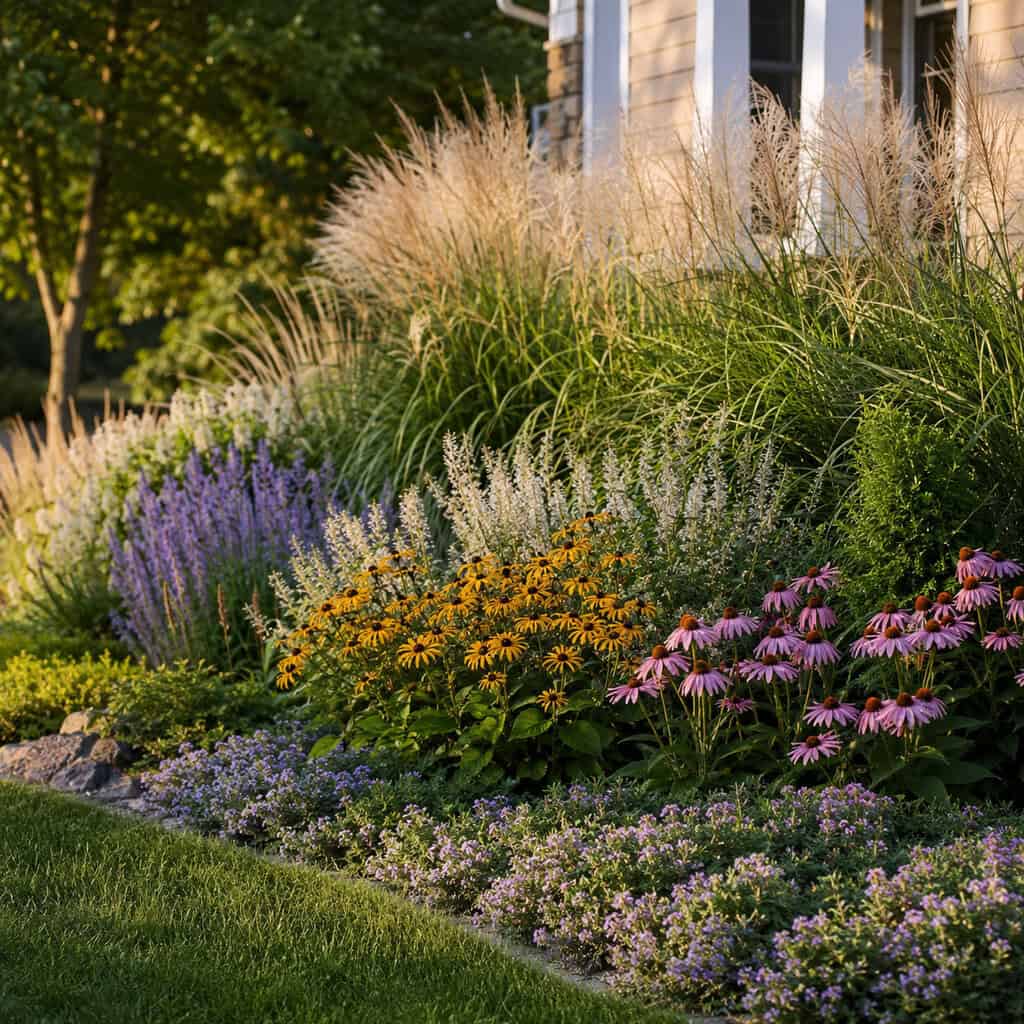
One design principle ties every other idea on this list together.
Layer by height. Tall plants and grasses in back, medium in the middle, low groundcovers up front. Group things with matching sun and water needs so one watering schedule serves the whole bed.
Layered plantings shade the soil, which chokes out weeds and holds moisture. Less work, by design.
And it’s the difference between a yard that looks planted and a yard that looks designed. The plants can be simple. The arrangement is what reads as professional.
24. Skip Fall Cleanup (On Purpose)
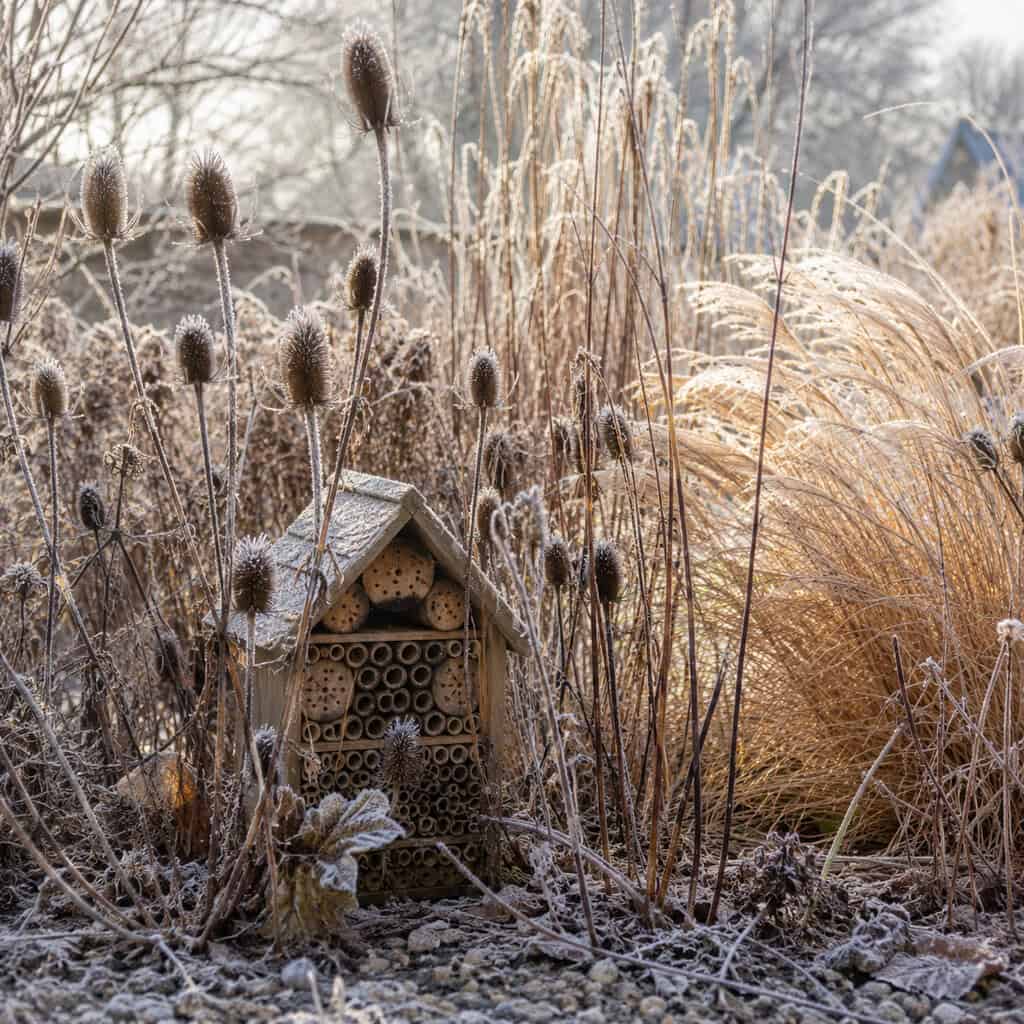
The laziest move on the list is also one of the best things you can do for wildlife.
Leave the perennial stalks and ornamental grasses standing through winter. Hollow stems shelter native bees, and the seedheads feed birds and catch frost in a way that’s genuinely lovely on a cold morning.
Then cut it all back once, in late winter, before new growth pushes up.
Extension programs like University of Maryland Extension back the do-less approach for pollinator health. Doing nothing has never looked so responsible.
25. Add a Small Water Feature or Birdbath
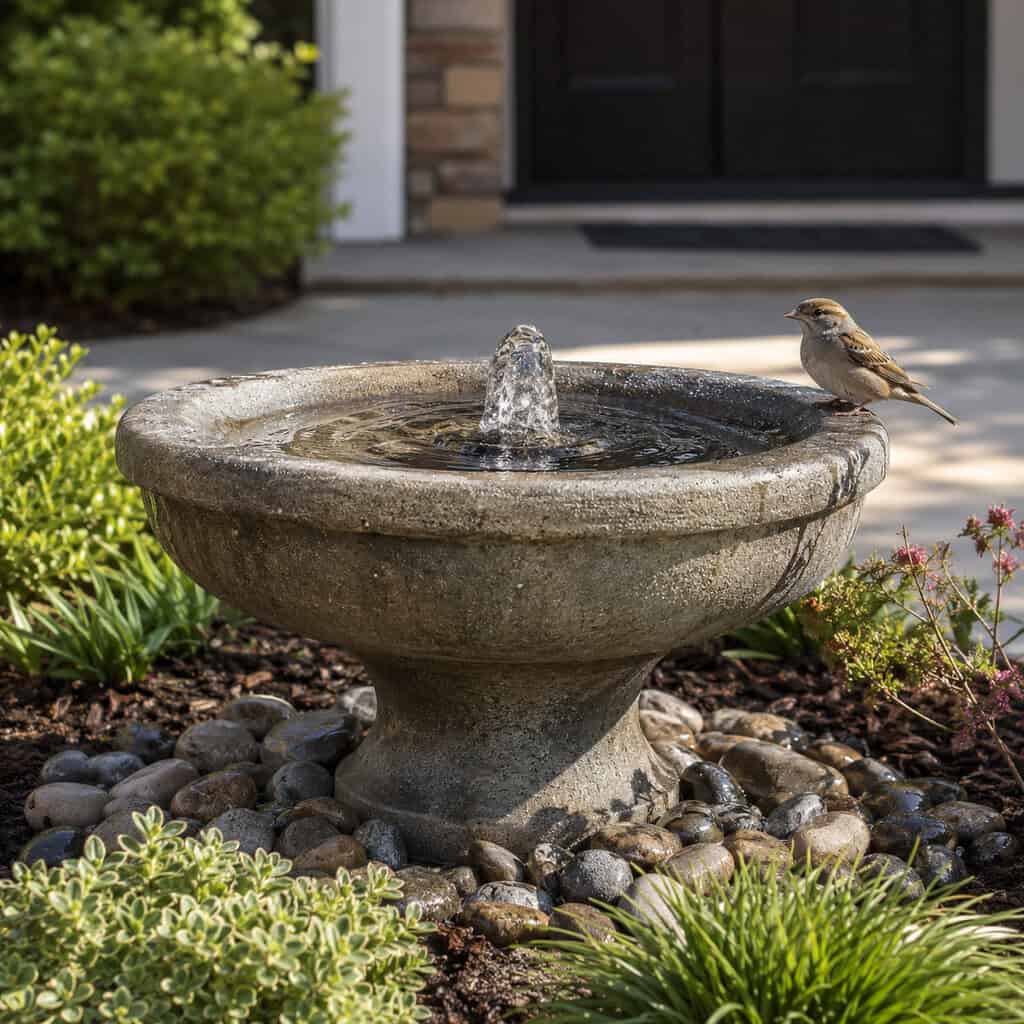
Some yards need a sound as much as a sight.
A compact recirculating fountain or a simple birdbath adds a calm focal point and pulls in birds all day long.
It does ask for a little upkeep — a rinse now and then, a top-off in the heat. So it’s only worth it if you want that sensory beat.
But the sound of moving water at the front step changes how the whole yard feels. Quieter. Older. Like a place that isn’t in a hurry.
26. Hang Window Boxes

Color at eye level, right where the house meets the sky.
Window boxes packed with low-maintenance flowers bring charm to a window-heavy facade and soften all that hard architecture.
They overlap a little with the front-door containers, so you don’t need both going all-out. Pick the spots that read from the street.
A row of boxes trailing petunias or trailing greenery is the kind of thing that used to be on every house. It still looks like home.
27. Plant a Hydrangea or Two
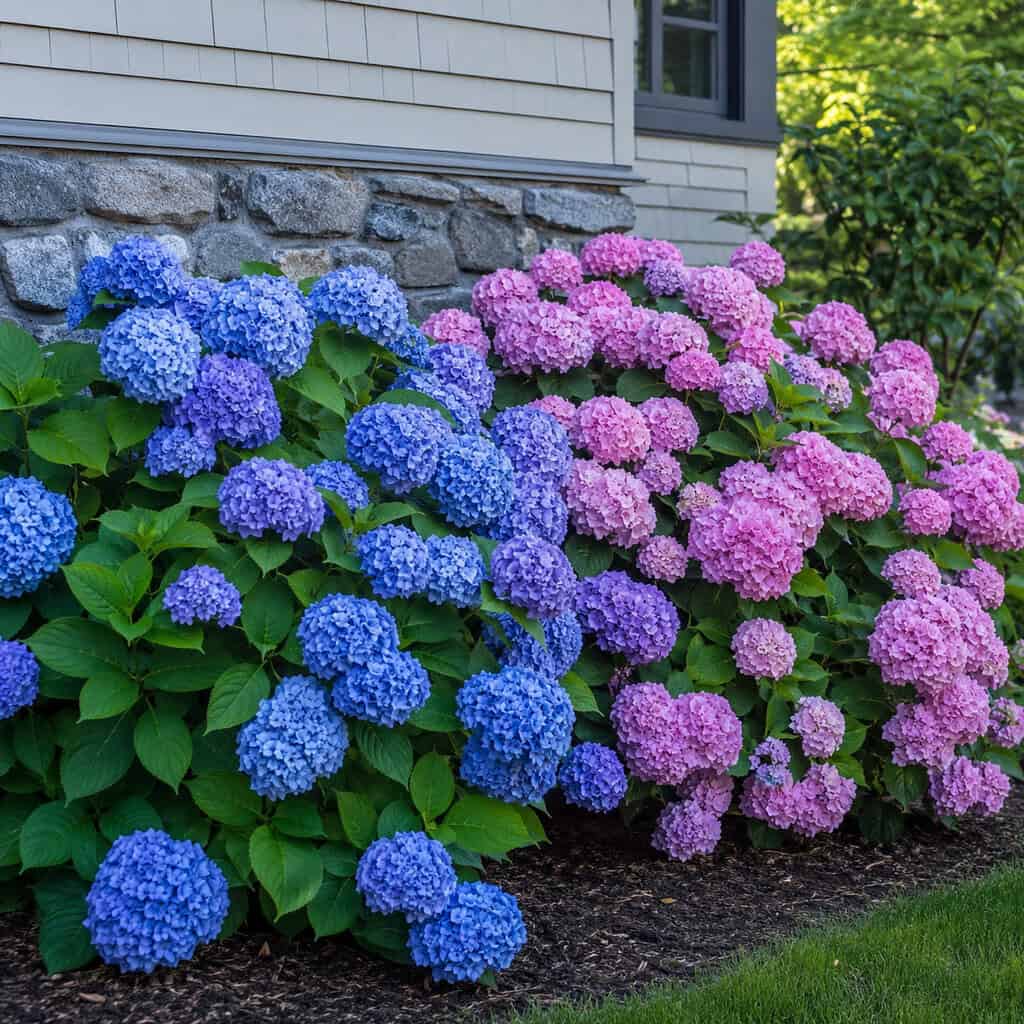
Nothing on this list makes a bigger show than a hydrangea in full bloom. Those heavy heads of blue and pink stop conversation.
They tolerate a wide range of climates, which is part of why they’ve been a front-yard staple for generations.
Fair warning. Hydrangeas drink more than anything else here, so they’re a judgment call on a low-maintenance list. Site them in part shade, mulch them well, and put them on the drip line from idea 21.
Get the placement right and they’ll reward you every June with the kind of bloom that makes a whole yard worth it.
The Yard That Slows People Down
The best front yards aren’t the ones that took the most work. They’re the ones that look composed and cared for while quietly asking for almost nothing.
You don’t need all 27 of these. Pick three or four that fit your house and your climate, and start there.
Rip the turf, or don’t. Add the lights, edge the beds, plant the tree that outlives the mortgage.
Do it right and someday a car will ease off the gas out front, and someone will look a beat longer than they meant to. That pause is the whole reward.