


Something moves under the hay bale when you flip the porch light on.
You tell yourself it was a leaf. It wasn’t a leaf.
Every September, millions of homeowners build what amounts to a rodent resort within six feet of their front door — food, bedding, shelter, and cover, arranged in a tidy seasonal display and then left undisturbed for ten straight weeks. That’s the exact window when outdoor mice start looking for somewhere warm to spend winter.
A single female house mouse can produce five to ten litters a year. She doesn’t need your kitchen. She just needs a staging area close enough to find the gap.
Here are 26 porch decorations doing the recruiting for her.
1. Hay Bales Stacked by the Front Steps
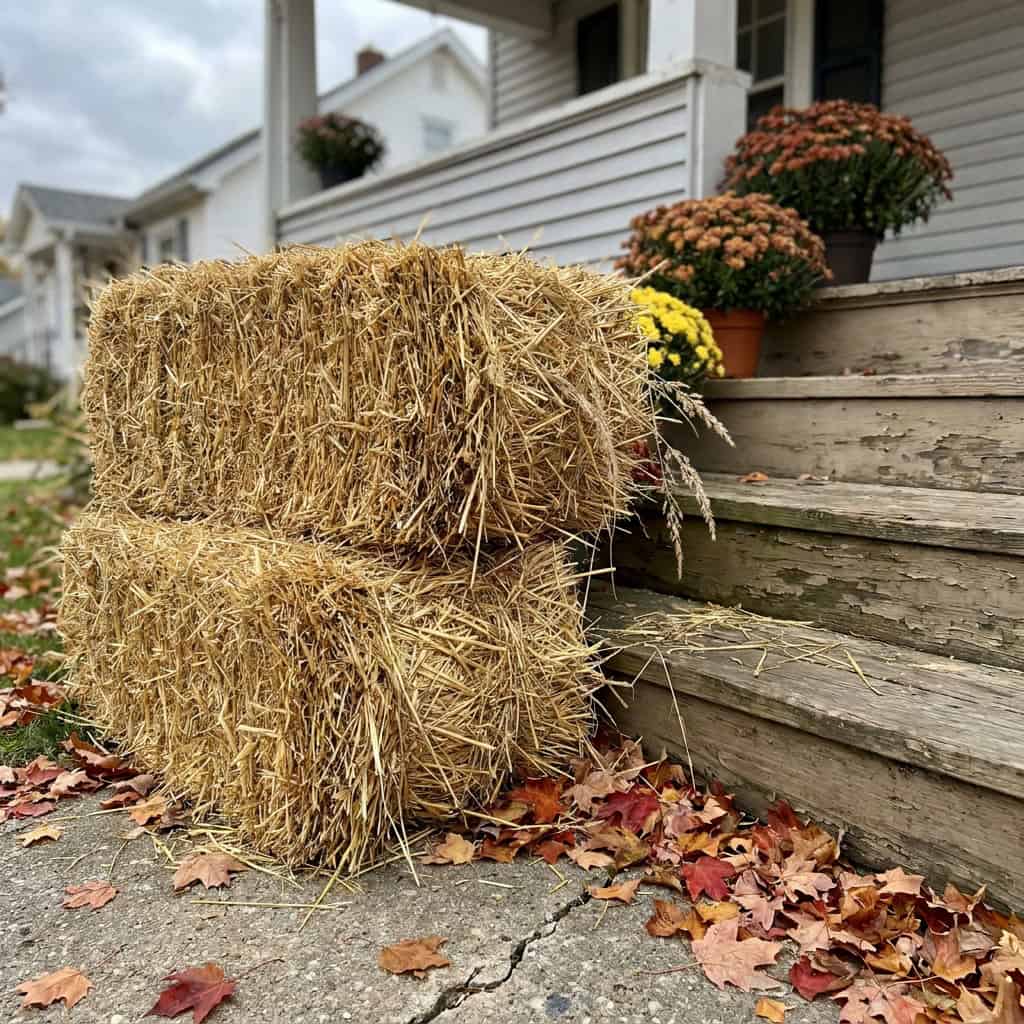
Start here, because almost nobody knows the difference.
Hay is cut grass or legume harvested with the seed heads still attached. It’s livestock feed. Straw is what’s left after grain has been threshed out — hollow stalks, no seed, almost no nutrition.
So when you stack two hay bales beside your front steps, you’ve placed a food pantry and a pre-insulated nest in the same object, inches from the threshold. Mice tunnel into the center, where it’s dry and roughly twenty degrees warmer than the air outside. They eat the walls of their own house.
Bales also wick moisture from the bottom up. By mid-November, the layer touching your porch boards is damp, dark, and composting slightly — which produces warmth and attracts insects, which attracts more rodents. Pest companies see this constantly; Mosquito Squad lists hay and straw displays among the top fall décor pest magnets for exactly this reason.
The swap is simple. Buy straw, not hay. Ask for it by name — feed stores sell both and the price difference is usually a couple of dollars. Straw still gives you the golden harvest look without the seed.
Then get it off the wood. Set bales on a pallet or a pair of bricks, keep them at least a few feet from the siding, and pull the display the week after Thanksgiving instead of letting it ride into December.
2. The Uncarved Pumpkin and Gourd Pile

Intact skin feels safe. It isn’t, not after two weeks on damp boards.
The underside where a pumpkin meets the porch stays wet, softens, and eventually gives. One gnaw hole the size of a nickel turns a 20-pound pumpkin into an all-winter feeding station.
Stacking them tight against the siding makes it worse. You’ve built shaded cover along the exact seam rodents use to scout for foundation gaps.
Rotate the pile every few days and check the bottoms. Anything soft goes.
3. Firewood Stacked Against the Porch Wall
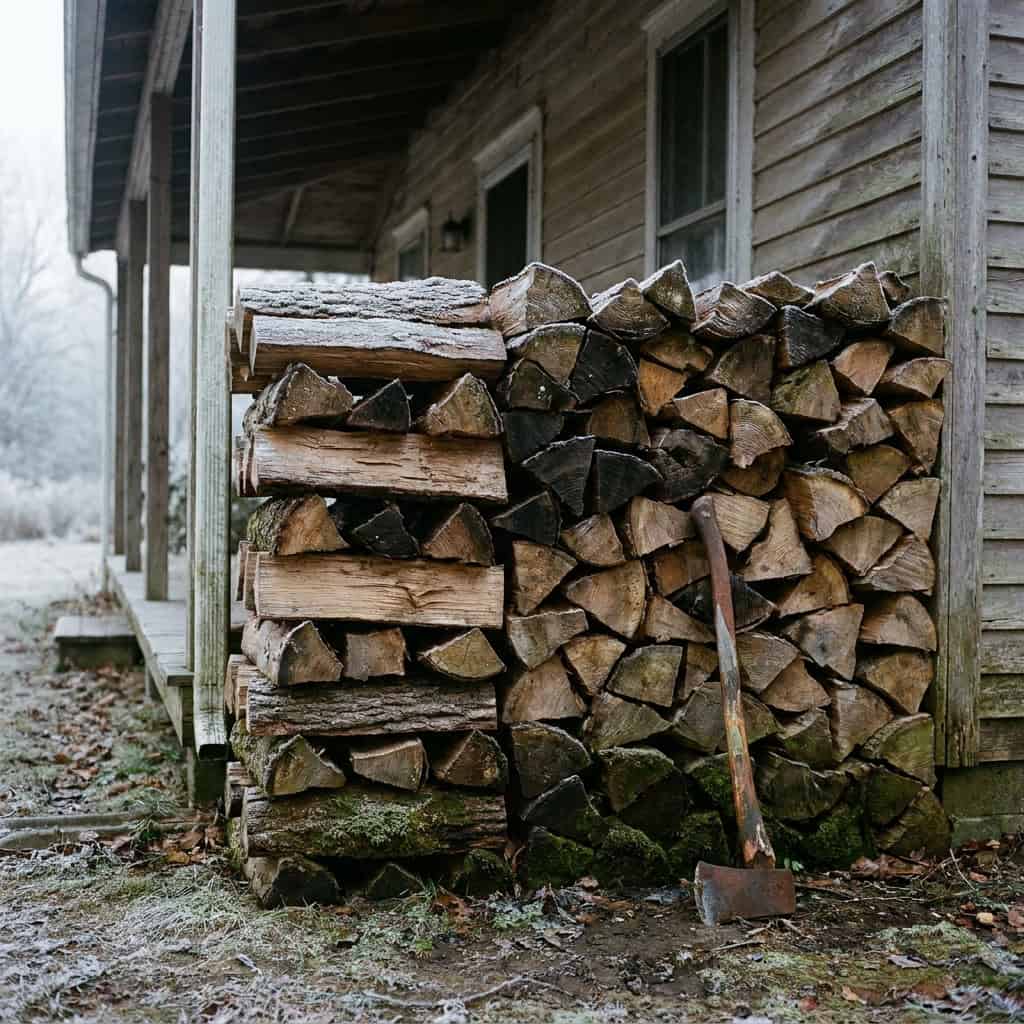
The rustic woodpile by the door photographs beautifully and functions as a rodent condominium.
Split wood creates hundreds of dry, dark, stacked voids — the precise architecture mice, rats, and chipmunks select for. Stacked flush against the house, it also becomes a ladder. Rodents climb the pile and work the siding seam, soffit edge, and dryer vent at their leisure, completely hidden from view.
Orkin and most termite inspectors give the same number: keep firewood at least five feet from the foundation, and ideally twenty. Almost no decorative stack meets that.
Get it up off the ground, too. Six to eight inches on a rack breaks the moisture bridge and removes the ground-level cover that makes the pile attractive in the first place.
Bring in what you’ll burn in two or three days. Not a week’s worth, and never a decorative cord parked under the porch rail all season.
Move the stack. It’s the single highest-value thing on this list after the hay.
4. Potted Mums Lined Up Along the Foundation

A row of mums looks like curb appeal. Functionally, it’s a tunnel.
Pots pushed against the house create a dark, wind-sheltered corridor right where siding meets slab, with watered soil for moisture and seed-heavy spent blooms overhead. A mouse can inspect forty feet of foundation without ever stepping into open light.
Pull the pots six inches off the wall. That one gap kills the corridor.
5. The Jack-o’-Lantern Still Out in November

Carving changes everything.
You’ve turned a sealed gourd into an open bowl that starts fermenting within days. That sweet-sour smell carries, and the hollow interior holds heat overnight like a clay oven.
Pest companies get the same November call every year — Jones Brothers Pest Control notes that carved pumpkins left past Halloween are one of the most reliable rodent invitations on a porch.
Four days. That’s the realistic outdoor life of a carved pumpkin before it’s feeding something.
6. Layered Doormats Hiding the Quarter-Inch Gap
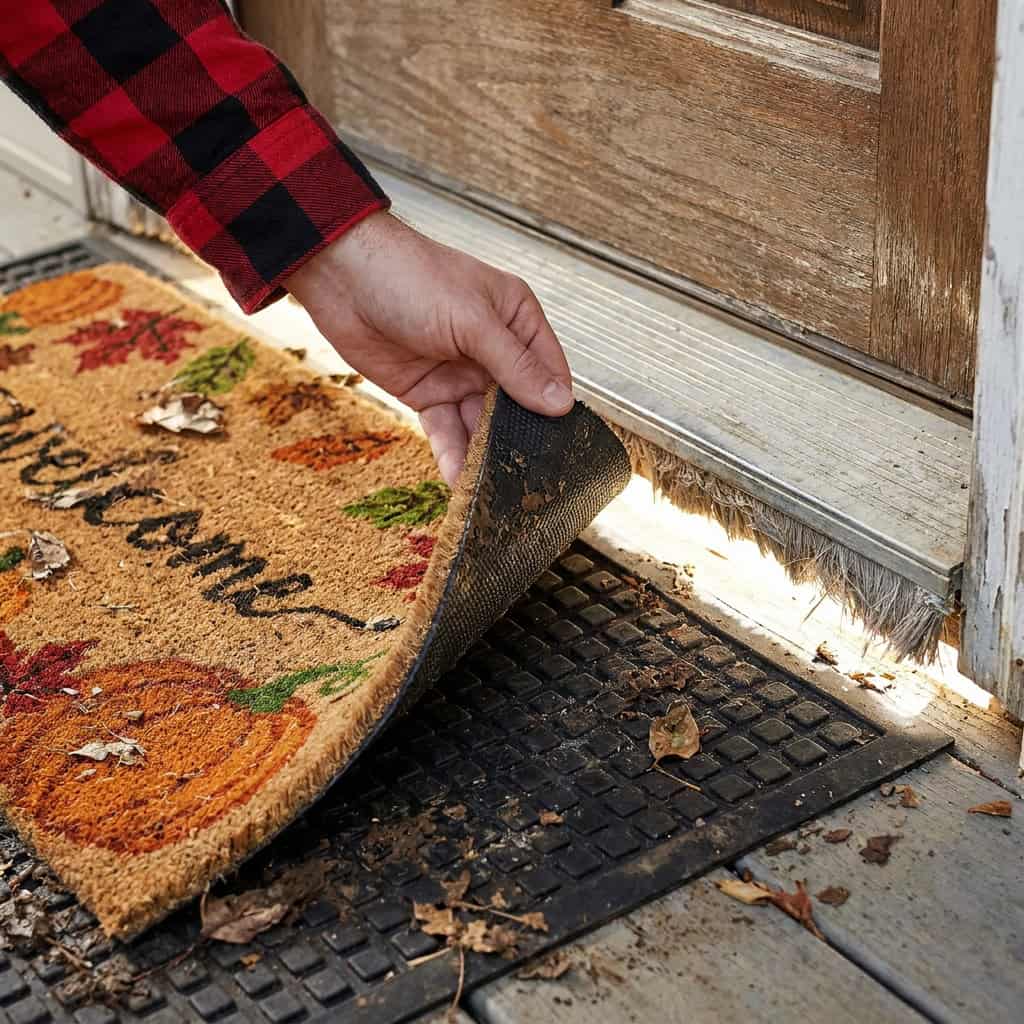
This is the mechanism behind the whole article.
A house mouse fits through an opening roughly a quarter inch across — about the width of a pencil. If its skull clears, the body follows, because mouse ribs flex and there’s no rigid shoulder girdle to stop it. The Farmers’ Almanac uses the same pencil test, and it’s worth doing at your own threshold tonight.
Most exterior doors have a gap that big or bigger at one corner, especially older ones where the sweep has compressed or the threshold has settled. You never see it, because there’s a jute mat on top of a rubber mat on top of a seasonal coir mat.
The layering does two things. It hides the gap from you, and it gives the mouse a padded, concealed staging spot to sit and chew the gap wider.
Pull every mat up and look at the light line from inside with the porch light on. Any daylight at the bottom corners means you have an entry.
Fix it with a $12 door sweep and a new threshold seal. Exclusion specialists — including the methods documented by Extension Wildlife Damage Management — treat sealing openings as the only permanent control. Traps handle symptoms. Sweeps handle causes.
Then go back to one mat.
7. Cornstalk Bundles Tied to the Porch Posts

Dried shocks always carry leftover kernels, no matter how clean they look at the garden center.
The stalks themselves are hollow tubes — pre-built runways. Lash a bundle to a column and you’ve created a vertical corridor of cover running from the ground straight up to the porch ceiling and soffit.
Shake a bundle over the driveway before it goes up. You’ll be surprised what falls out.
8. Fake Cotton Spiderwebs and Burlap Bunting
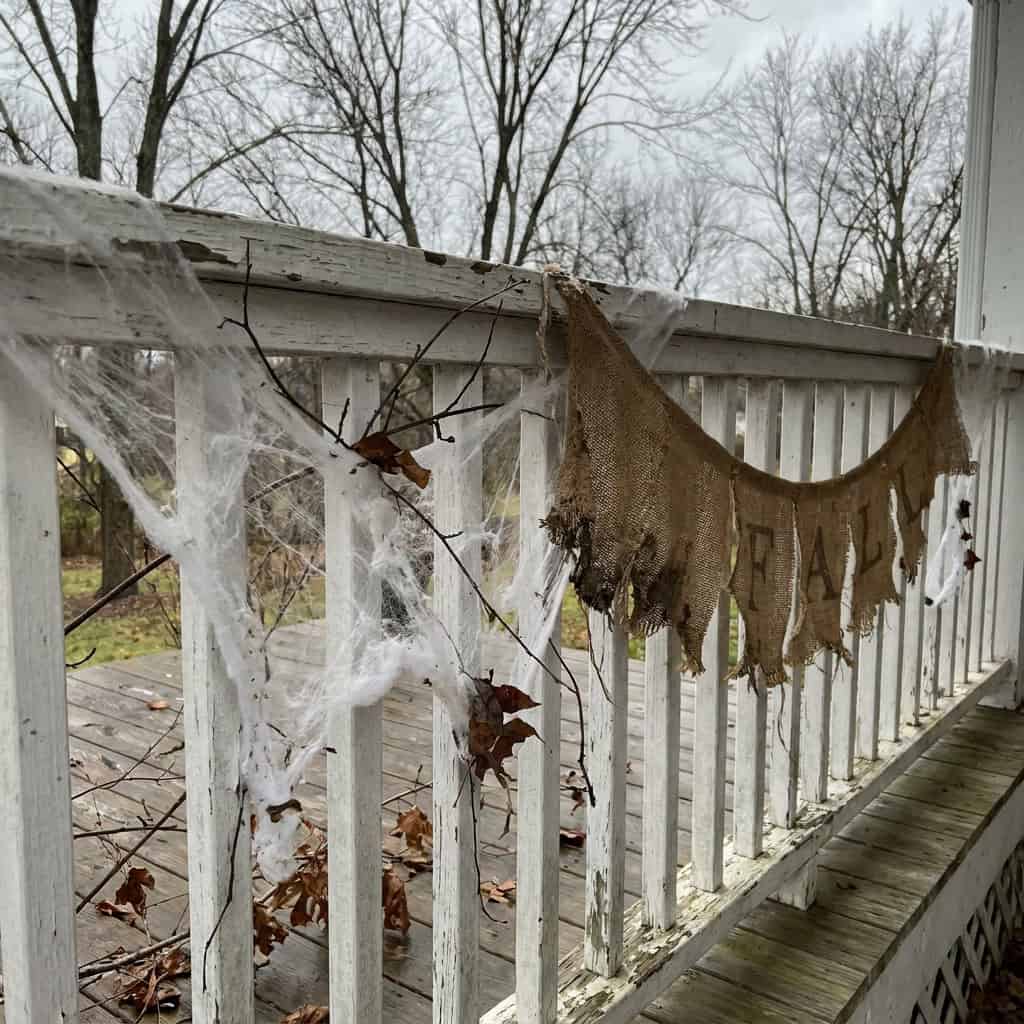
Mice don’t eat polyfill. They harvest it.
Stretchy synthetic webbing and shredded burlap are premium nesting fiber — soft, dry, warm, and free. It disappears in tufts, a little at a time, which is why nobody notices until they find the nest in a porch column or inside a grill cover in spring.
Halloween décor that lingers into Thanksgiving is the worst offender, because by then the fiber has weathered soft and the nights are cold enough to matter.
Take the webs down November 1.
9. The Birdseed Wreath on the Front Door

A seed-and-suet wreath is a bird feeder mounted at the exact point mice are already probing.
Birds are messy eaters. Fallen millet and sunflower hulls collect in the threshold crack, and after dark the cleanup crew shows up.
Hang the seed wreath on a shepherd’s hook twenty feet out in the yard. Hang something inedible on the door.
10. The Straw-Stuffed Scarecrow

A scarecrow is a bale with sleeves.
Loose straw, old flannel, a wired body cavity, and a hat — propped in a porch chair where nobody touches it for eight weeks. That’s longer than a mouse needs to raise two litters.
Give it a squeeze every couple of weeks. If it feels heavier at the bottom, something has moved in.
11. Porch Cushions and the Blanket Basket
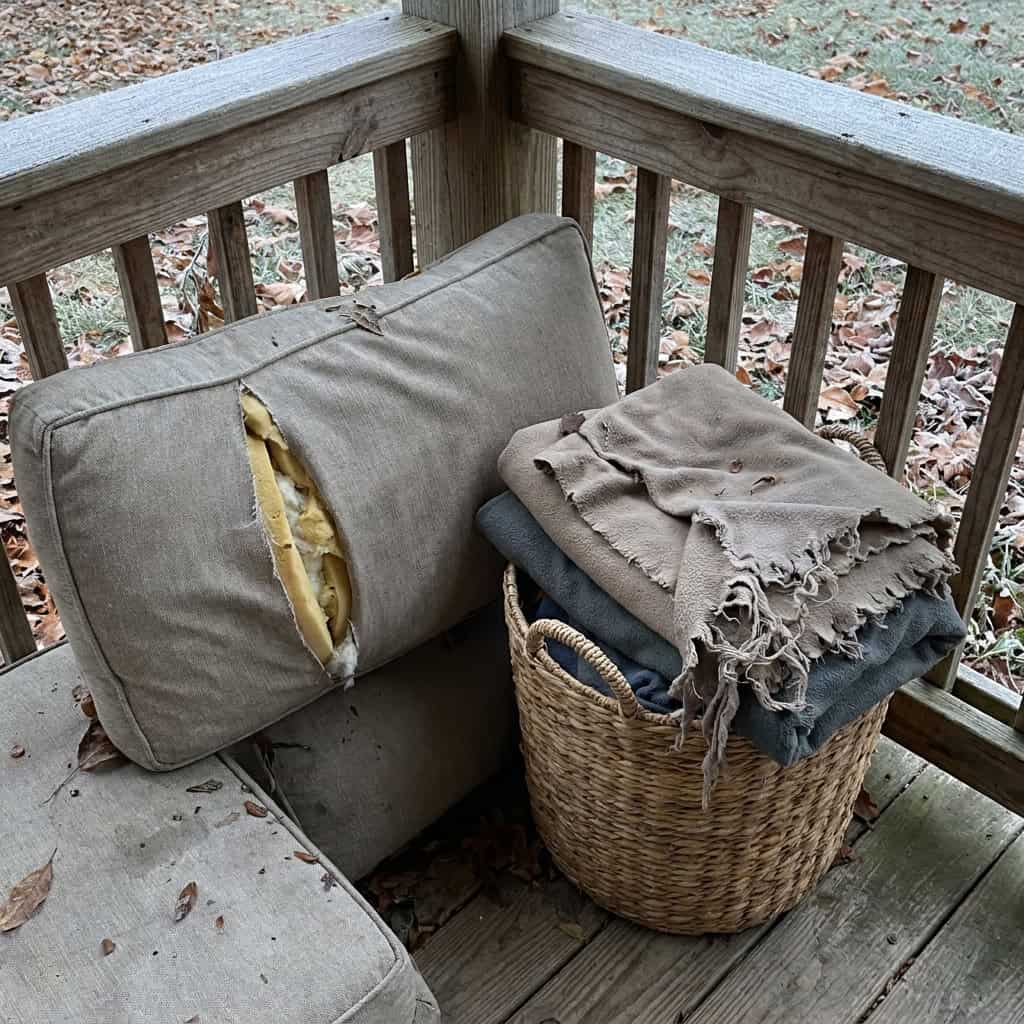
Once you stop sitting outside, the cushions become the warmest real estate on the property.
Mice tunnel into foam through a seam and hollow out a chamber. Fleece throws get shredded into bedding and packed back in.
You find out in April, when the cushion feels wrong and smells worse.
Store cushions in a sealed rigid bin the week the weather turns. Not a cardboard box, not a fabric bag.
12. Dried Indian Corn Hung by the Door

Ornamental flint corn is grain. The pretty colors change nothing.
Pest companies specifically flag dried corn décor as a seasonal pest problem — Vulcan Termite & Pest Control warns that it degrades outdoors and draws both insects and rodents as it goes.
Squirrels will strip a cob in a single afternoon. Mice work the drop zone underneath all night.
If you love the look, hang it indoors or seal it with clear spray and keep it off the ground.
13. Rustic Wagons, Crates, and Pallet Risers

Farmhouse porch styling runs on stacked wood, and stacked wood is void space.
Crates on pallets under a wagon bed create dark, dry, layered cavities with multiple exits. Rodents rank that near the top of their preferences.
The real issue is that these displays get arranged once in September and never moved again. A nest matures undetected for the entire season.
Lift and look every two or three weeks. Droppings and shredded fiber tell you everything.
14. Bowls of Pine Cones and Acorns

You see a centerpiece. A squirrel sees a cache someone delivered to the porch.
Acorns also arrive with passengers. Weevil larvae chew their way out over the following weeks, which means one decorative bowl generates two separate pest problems on the same table.
Bake acorns at 175°F for about half an hour before they come anywhere near the house. Or use glass ornaments and skip it.
15. Pet Bowls Left Out on the Porch

Kibble left out overnight is the highest-calorie, lowest-effort meal on your entire property.
Add a standing water bowl and you’ve met every survival need a mouse has in a two-foot radius. Rodents will travel a surprising distance for a reliable outdoor food source and then relocate to the nearest shelter — which is your porch.
Feed pets indoors, or bring bowls in at dusk and rinse them. Water too.
16. Wheat Sheaves and Dried Grass Bundles
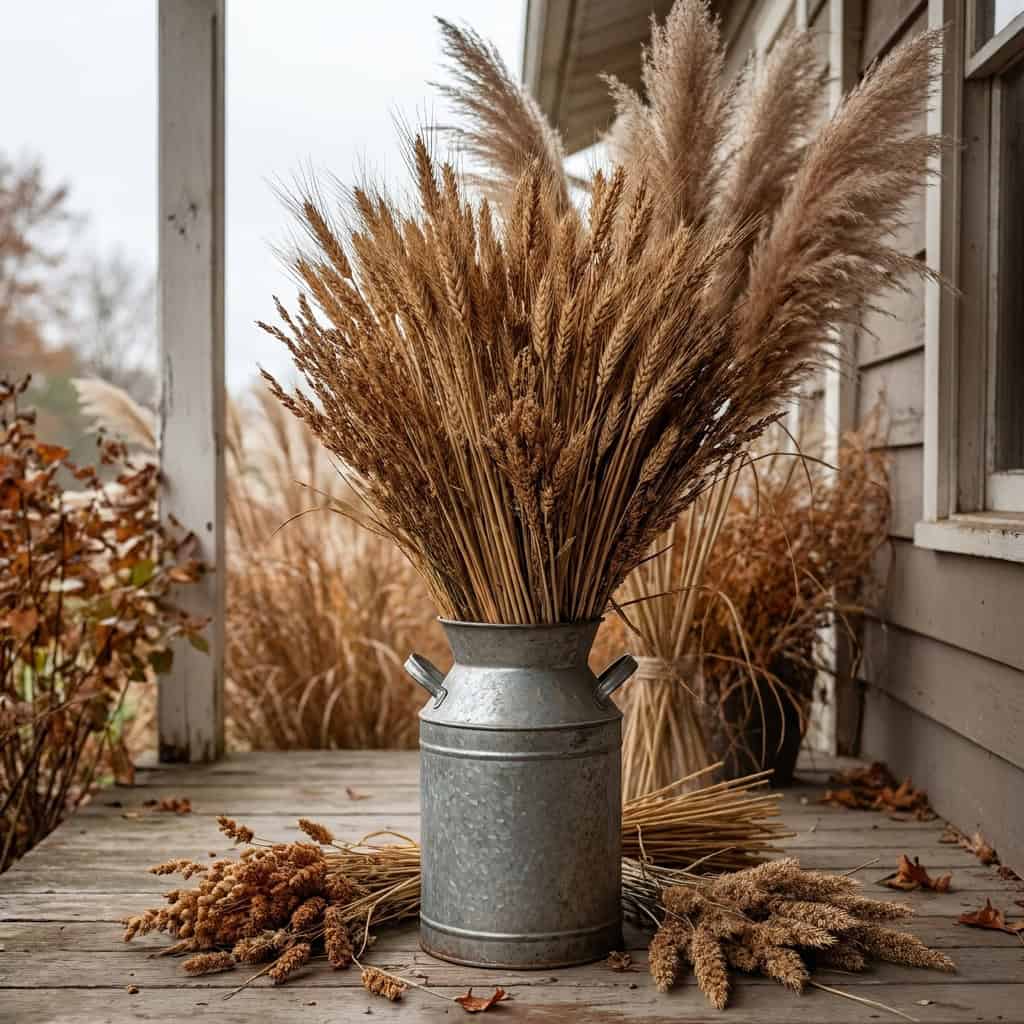
Decorative wheat, oats, and broomcorn are seed heads on sticks. Same attraction as hay, prettier silhouette.
Pampas and other dried plumes don’t feed anything, but they shred into perfect nest lining — and they’re usually displayed in an open urn at ground level where everything can reach them.
Keep dried bundles up high and off the porch floor. Better: keep them inside the storm door.
17. Hollow Resin and Foam Pumpkin Shells

Fake pumpkins feed nothing. They’re still a problem.
The open underside makes a rainproof, insulated dome sitting flush on a warm porch board. Food is the easy part of a mouse’s life in a suburb; shelter this good is rare, and it’ll take the shelter and forage elsewhere.
Flip them over, or set a brick inside so the rim sits off the deck and the cavity stays ventilated.
Two seconds of adjustment, whole problem gone.
18. Popcorn, Cranberry, and Dried Orange Garlands

This is the one decoration literally strung from food.
Sugar-dried fruit and popcorn draw rodents up onto railings and door frames — and once they’re climbing at that height, they find the siding gaps, window weep holes, and soffit seams they’d never encounter at ground level.
Hang edible garlands on an interior mantel. Outside, use felt or wooden beads.
19. The Bird Feeder Hung Off the Porch Rail

Every fall, people move the feeder closer so they can watch it from the kitchen window.
The spill zone underneath becomes a nightly buffet a few feet from the door. A single tube feeder can drop a pound of seed on the ground in a week.
Move it at least thirty feet from the house and add a catch tray. You’ll still see the birds and pollinators your yard brings in, just without the overnight shift.
20. Deflated Inflatables and Folded Tarps
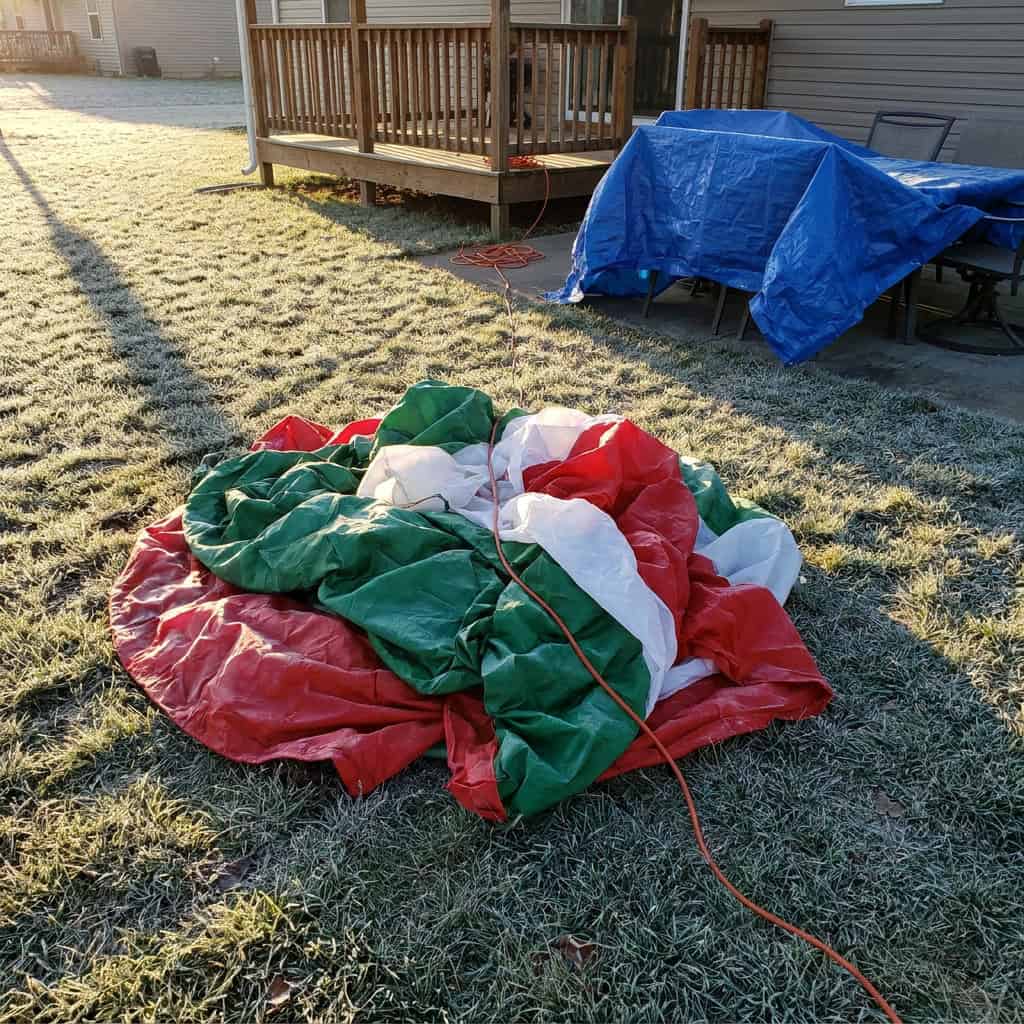
Every morning at sunrise, that eight-foot turkey collapses into a warm pile of folded nylon on the lawn.
Tarps over porch furniture do the same thing — dead-air pockets, dry, dark, undisturbed for ten hours a day. Rodents learn the schedule fast.
Then in December the whole thing gets stuffed into a bag and carried to the attic, nest included.
Shake everything out hard before it gets packed. Every time.
21. Wicker Baskets Packed With Moss and Raffia
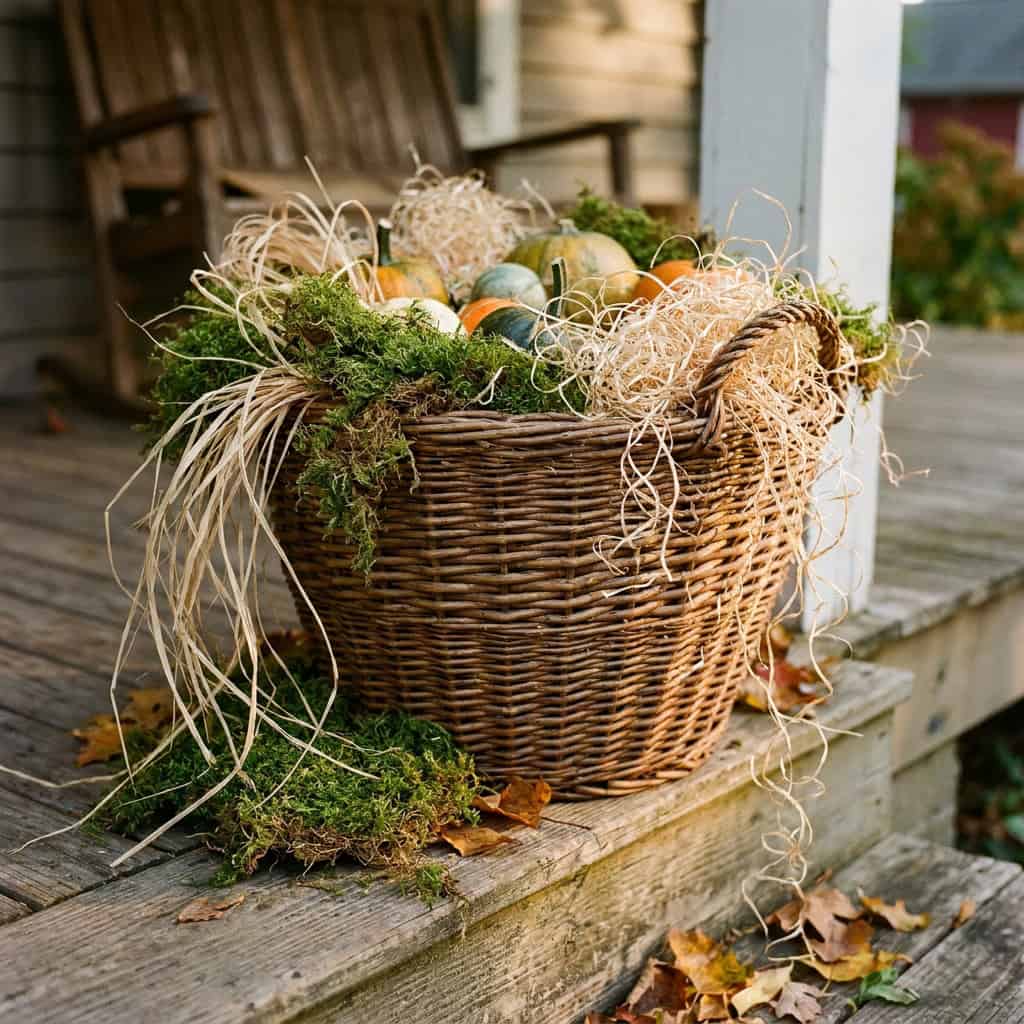
Excelsior, sheet moss, raffia, Spanish moss — that’s nesting material sold by the bag at the craft store.
The woven basket supplies the walls. A rodent moving in barely has to build anything.
Spanish moss is the worst of the bunch because it also arrives with its own insect population.
Use a solid ceramic planter instead and skip the filler.
22. The Candy Bowl That Never Came Inside

Halloween ends. The bowl stays on the step, half full, until someone remembers.
Wrappers stop nothing. Incisors go through foil and cellophane like paper, and a chocolate bar is roughly 500 calories of concentrated fat and sugar — a windfall a mouse will return to every night. Simple Pest Management calls leftover candy storage the overlooked half of Halloween pest-proofing.
Worse, it trains them. A reliable food source at your threshold turns a passing mouse into a resident.
Bring it in November 1 and store it in a hard container.
23. Extension Cords Running Under the Door

Here’s the one that costs more than a pest control visit.
Running a cord under a closed door props that door open by about a quarter inch along its entire width. That’s the pencil-width clearance again — you’ve manufactured the exact opening a mouse needs and then held it open for six weeks.
The second problem is the cord itself. Rodents chew insulation to maintain their incisors, which grow continuously. A chewed outdoor cord on a damp porch means exposed conductors, nuisance tripping, shock risk, and a real fire hazard where the cord passes through a confined gap packed with nest material.
Electrical fires caused by rodent damage are notoriously hard to prove after the fact, which complicates claims.
Fix it properly. Install an exterior GFCI outlet if the porch doesn’t have one, or use a weatherproof cord pass-through plate designed for the job. Short term, run the cord through a window with a proper cord guard rather than under a door, and never pinch a cord in a door jamb.
The National Park Service rodent exclusion manual is blunt about it — any penetration through the building envelope has to be sealed with material rodents can’t chew, which rules out foam, caulk alone, and duct tape.
24. Leaf Litter and Mulch Banked Against the Skirting
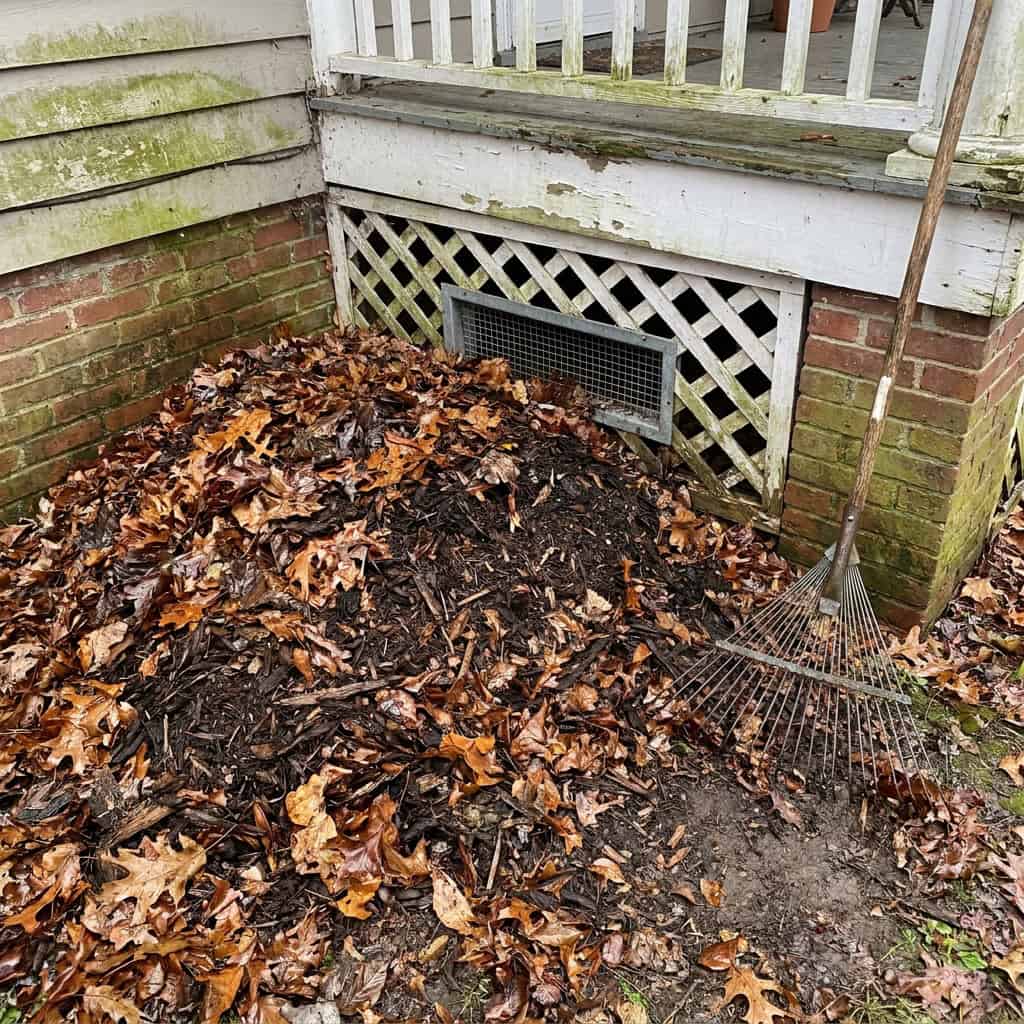
Décor hides what collects underneath it.
By late October, husks, stems, wet leaves, and seed hulls have drifted into the space behind the hay bale and against the porch skirt. Nobody sweeps there, because the display is in the way.
That wet mat does three things at once. It holds moisture against wood and masonry, it shelters insects that feed on it, and it gives rodents fully covered access to every crawlspace vent, utility penetration, and skirting gap along the base of the house.
Mulch piled against the foundation is the same failure with better intentions. Deep mulch mounded up the siding bridges the gap between ground and structure — it conceals termite tubes from inspection, wicks water into the sill plate, and lets rodents work the foundation line invisibly.
Keep mulch at a maximum of two to three inches deep and pull it back six inches from the foundation to leave a clean inspection strip. Bare soil or gravel in that band. Braman Termite & Pest Elimination treats that clearance as basic fall prevention.
Then actually clean behind the display. Move the bales, rake it out, and look at the skirting while you can see it. If you’re already deciding between raking leaves or mulching them this season, handle the foundation strip first either way.
25. Cardboard Bins of Décor Staged on the Porch

The fall-to-Christmas swap takes most people about four days. The boxes sit out the whole time.
Cardboard is shelter and chewable nest stock in one material. Corrugation is warm, dry, and already full of channels.
Then the box gets carried into the attic or basement. That’s the moment a porch mouse becomes a house mouse — and the reason the January infestation seems to come from nowhere.
Switch to hard plastic totes with locking lids. Store décor off the floor on shelving.
26. Old Pumpkins Tossed Into the Flower Bed
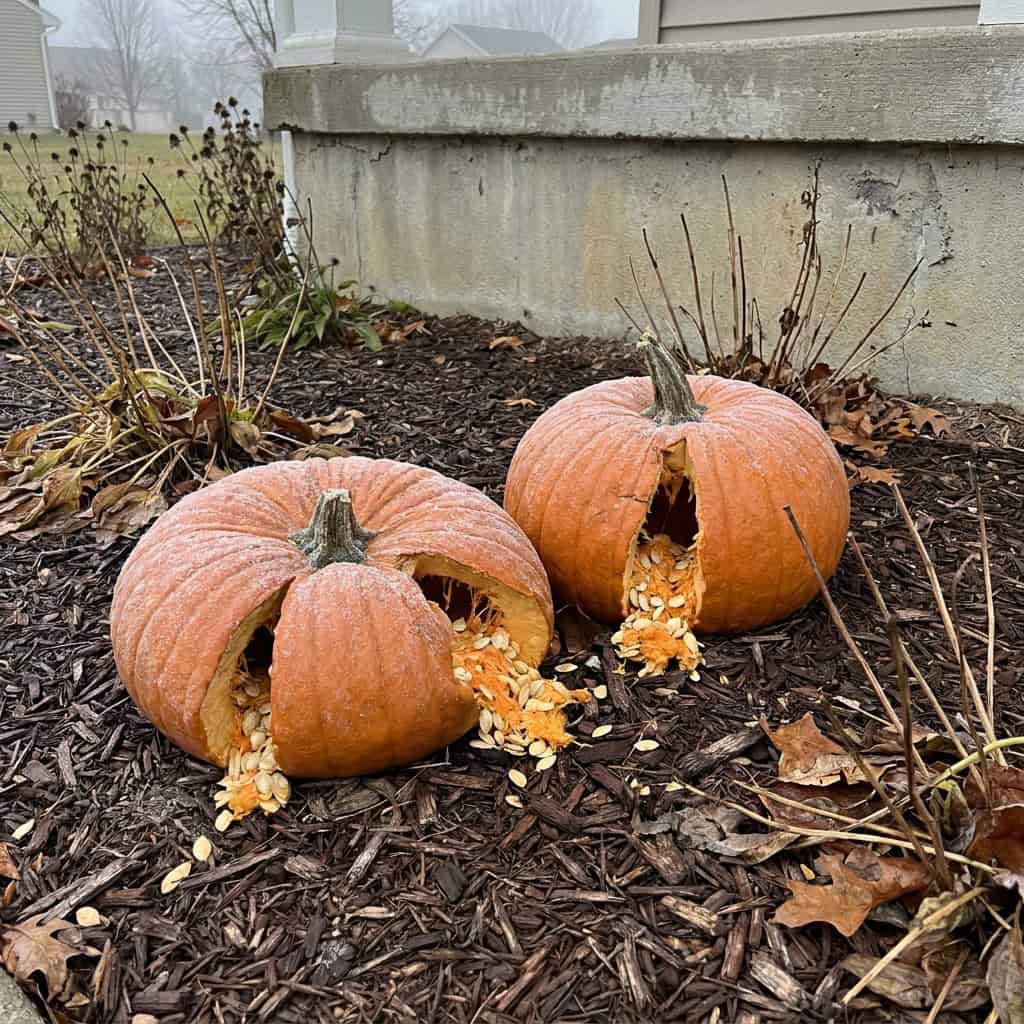
The porch looks spotless by December 1. The problem just moved twelve feet.
Tossing split pumpkins into the bed feels responsible — you’re composting, technically. But a frost-burst pumpkin doesn’t break down in a cold bed. It sits there as a wet, sugar-rich mass against the foundation, feeding mice, voles, and everything else well into January.
Bury them in an active compost pile away from the house, or bag them. Some municipalities run pumpkin collection the first week of November.
Either way, get them out of the planting bed where you put so much effort the rest of the year. There’s a reason grandma cleared the beds in November instead of leaving a mess to overwinter.
Clean porch, clean beds. Both or neither.
The Takeaway
Nothing on this list is a bad decoration. It’s a timing and placement problem.
Buy straw instead of hay. Keep everything six inches off the siding and up off the porch floor. Pull edible décor the day it stops looking fresh. Check your threshold gap with a pencil.
Do those four things and your porch still looks like November — minus the tenants.