


You want better sleep. But you don’t want to change your entire routine.
No expensive sound machines. No blackout curtains that cost a fortune.
Adding the right indoor plants can support rest. They improve air quality. They ease nighttime dryness. They create a calmer bedroom environment.
Here are the top 15 plants that support cleaner air and a more relaxing space at night.
1. Snake Plant
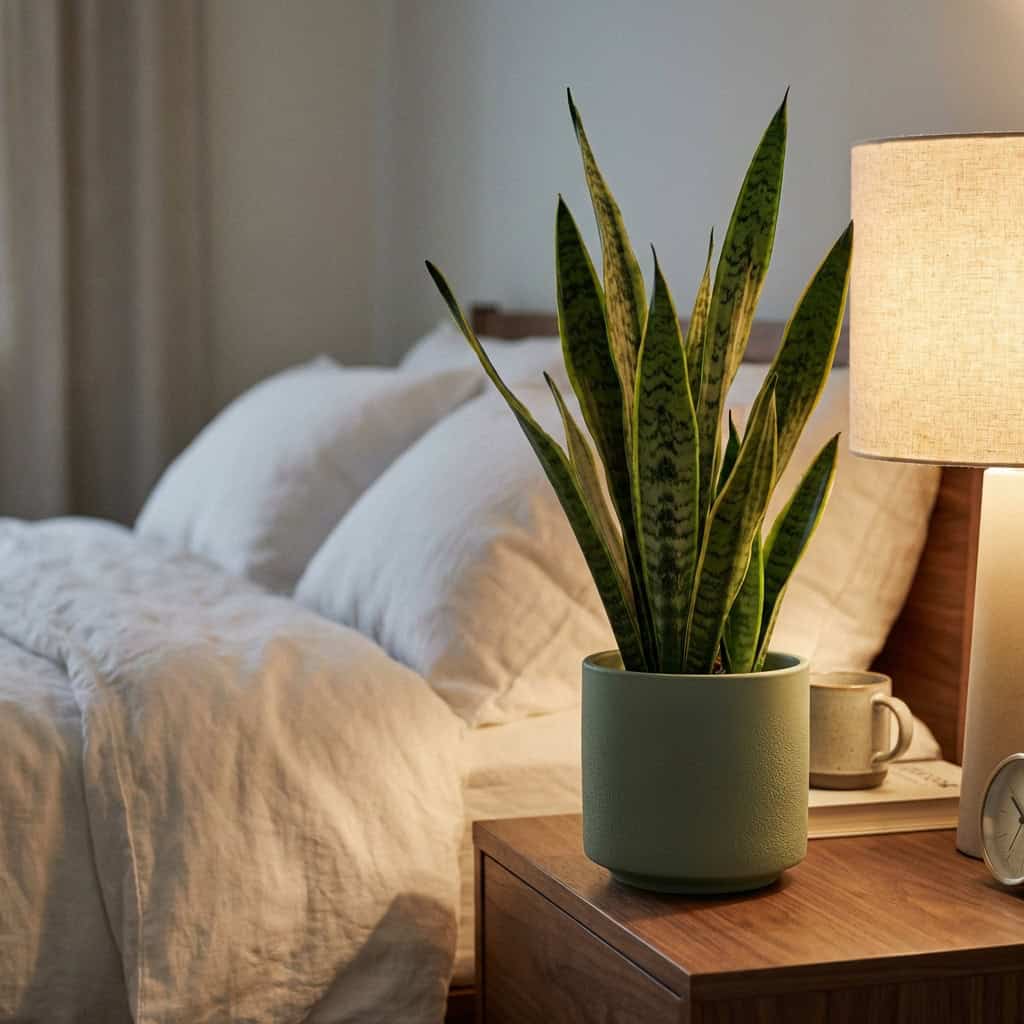
The snake plant is widely considered the top choice for bedrooms.
Why? Because of how it handles oxygen.
Unlike most plants, snake plants continue gas exchange at night. They release small amounts of oxygen after dark while you sleep.
It is also perfect for a relaxing environment because it thrives on neglect. You can place it in low light. Water it every few weeks. It won’t die if you forget it exists.
This means you don’t have to worry about complex care before bed.
2. Aloe Vera
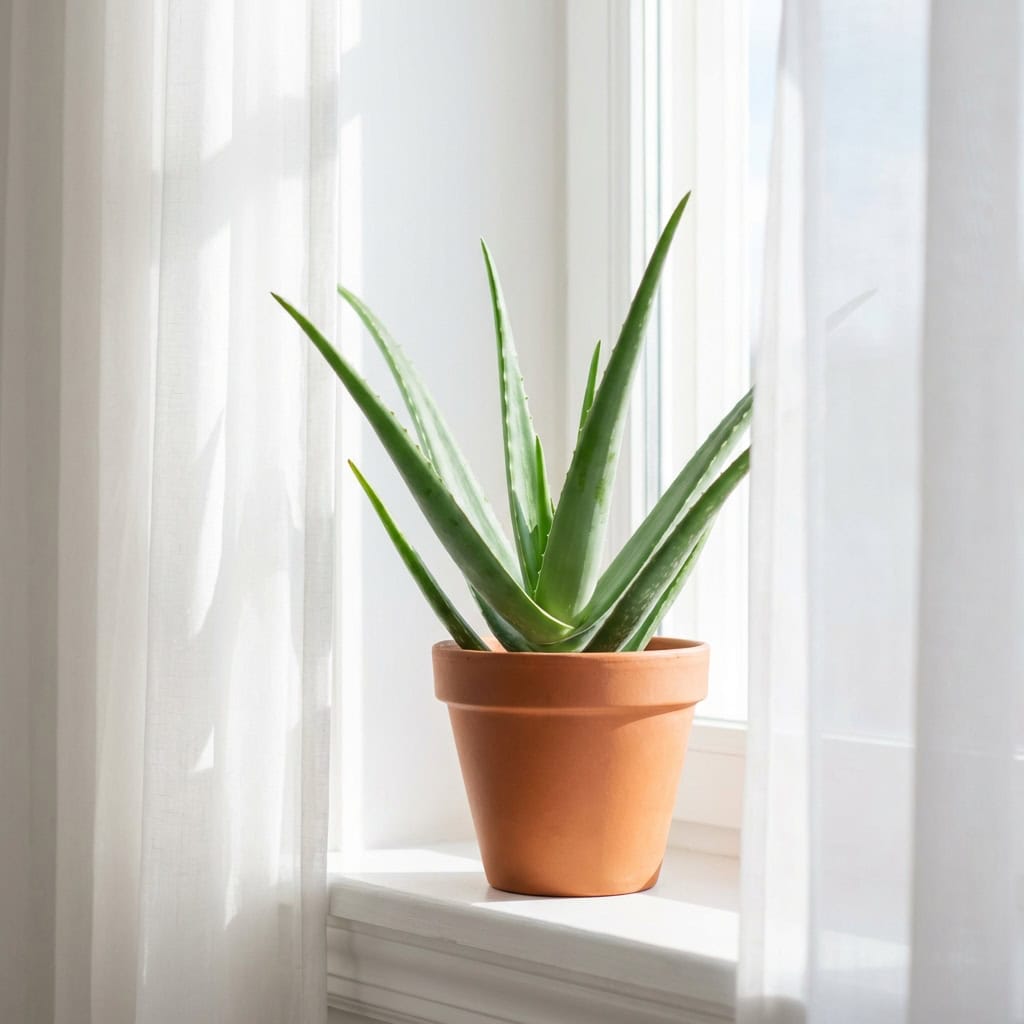
Aloe vera shares the unique nighttime gas exchange pattern seen in snake plants. It makes it highly compatible with overnight use.
It adds structure to your bedroom. The leaves are bright and clean. They feel uncluttered.
To keep it healthy, place it near a bright window. It requires infrequent watering. It prefers dry soil.
This is helpful if your bedroom tends to be humid.
3. Peace Lily
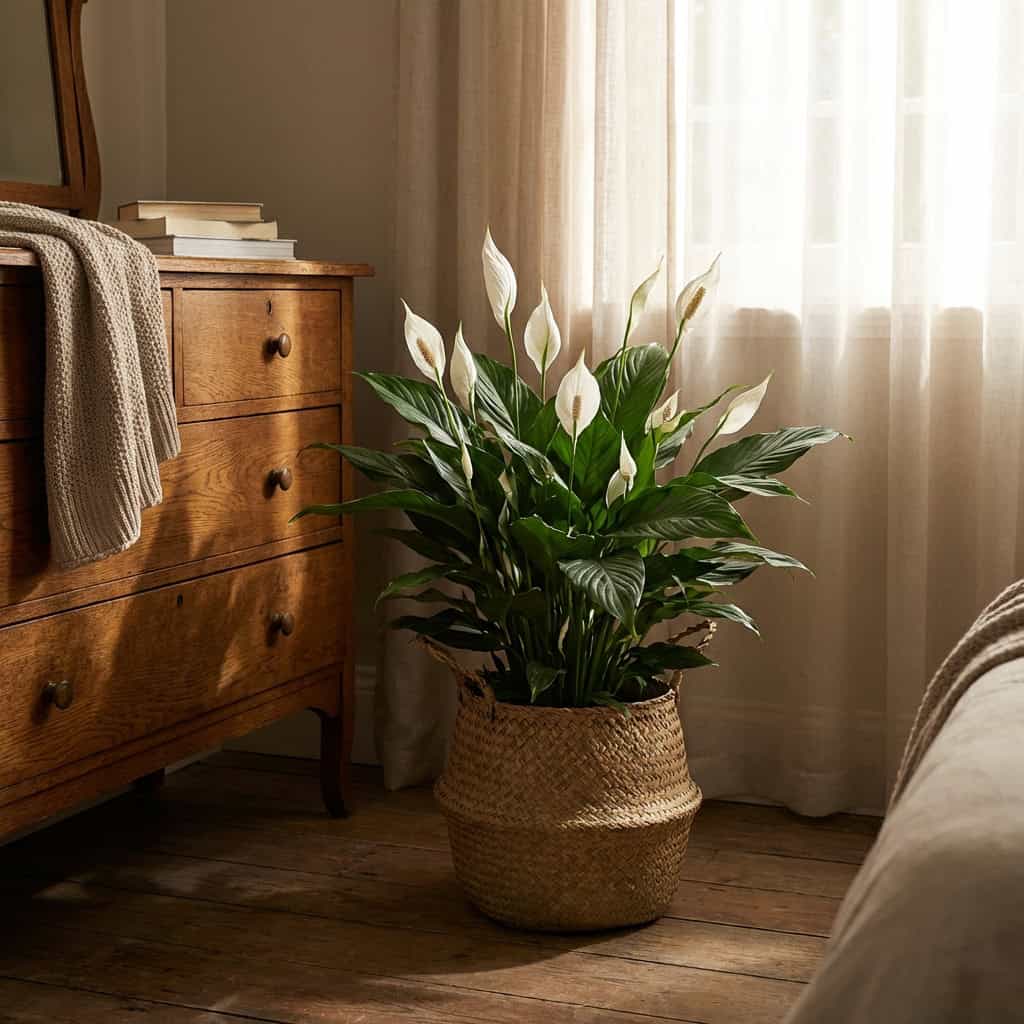
The peace lily is a multitasking plant for your sleep space.
It filters pollutants like ammonia and benzene. It provides a visible humidity boost through natural transpiration.
It fits well on a nightstand or dresser. It tolerates low to moderate light.
Just be mindful to keep it out of reach of pets. The leaves can cause irritation if chewed.
4. Spider Plant
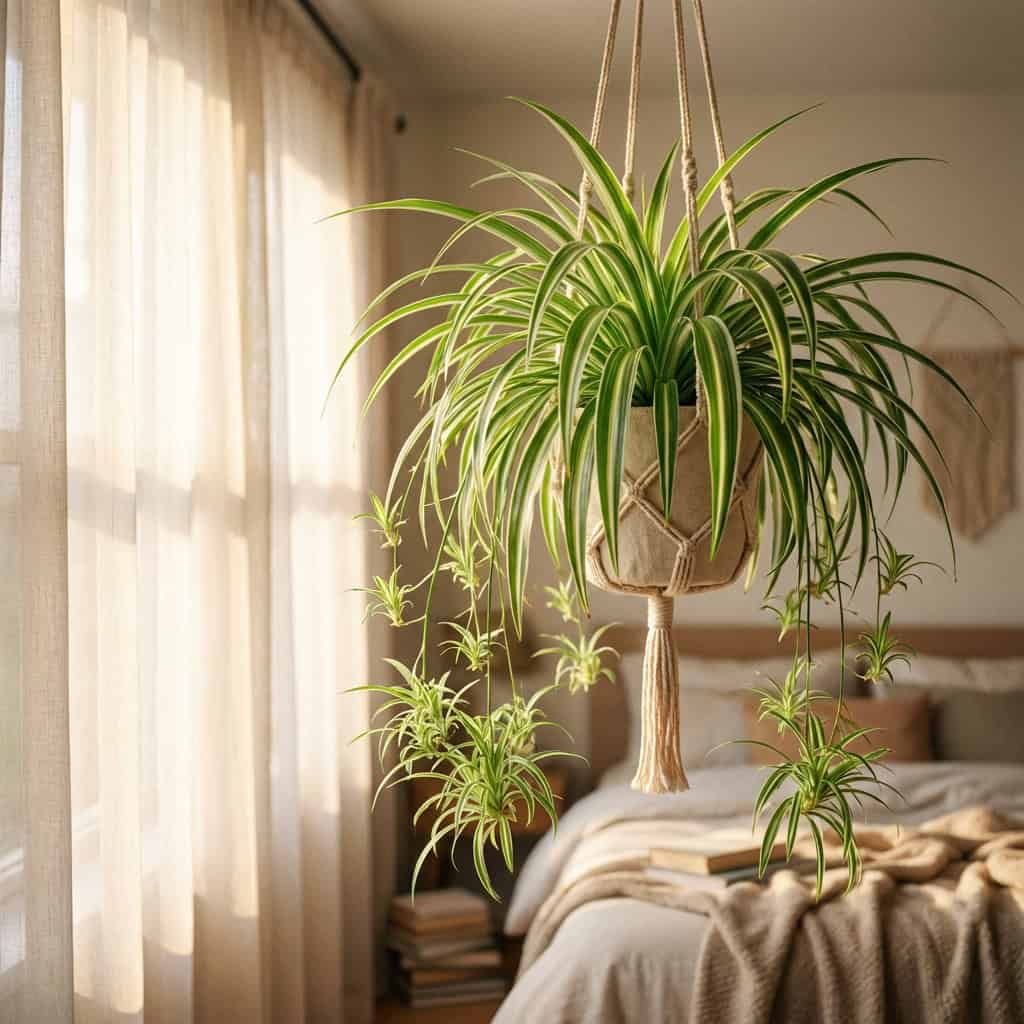
If you are concerned about air quality, the spider plant is a strong contender.
Research shows it can absorb volatile organic compounds. This helps make your bedroom air feel fresher by evening.
This is also the best choice for pet owners. It is non-toxic to pets. It handles dry indoor air well.
A stress-free addition to your home.
5. Pothos
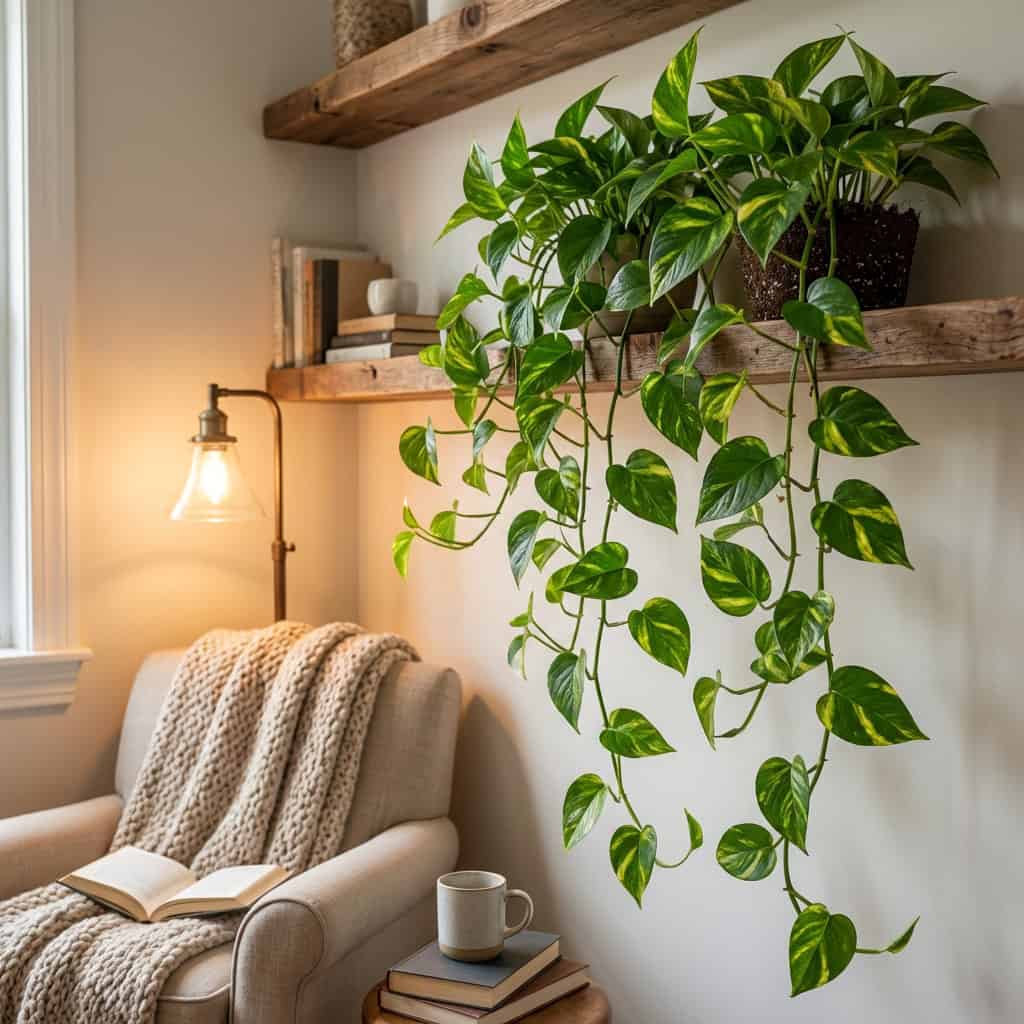
Pothos stands out for its flexibility. It is incredibly easy to care for.
It grows in low to bright indirect light. It tolerates missed waterings. This makes it easier to maintain a calm bedroom routine without plant-related stress.
You can grow it vertically. Or let it trail from a high shelf.
This saves floor space. It keeps walkways clear. It reduces visual clutter around your bed.
6. Boston Fern
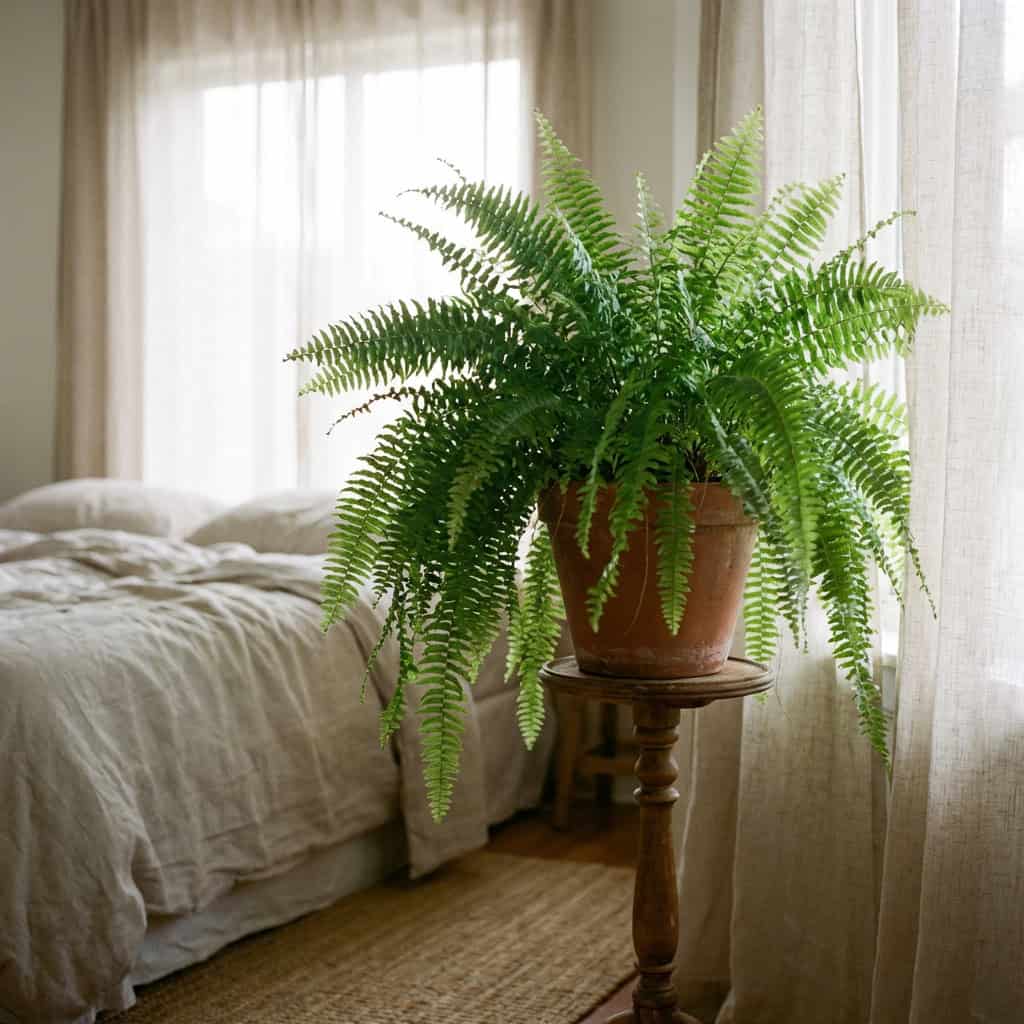
For those who struggle with dry air at night, the Boston fern is a natural solution.
It adds moisture to the air through transpiration. This can help if you wake with a dry throat. Or if you suffer from irritated sinuses.
Place this plant where it receives indirect light. Keep the soil evenly moist.
Its soft, dense fronds also reduce visual harshness. It makes the room feel softer and more inviting.
7. Bamboo Palm
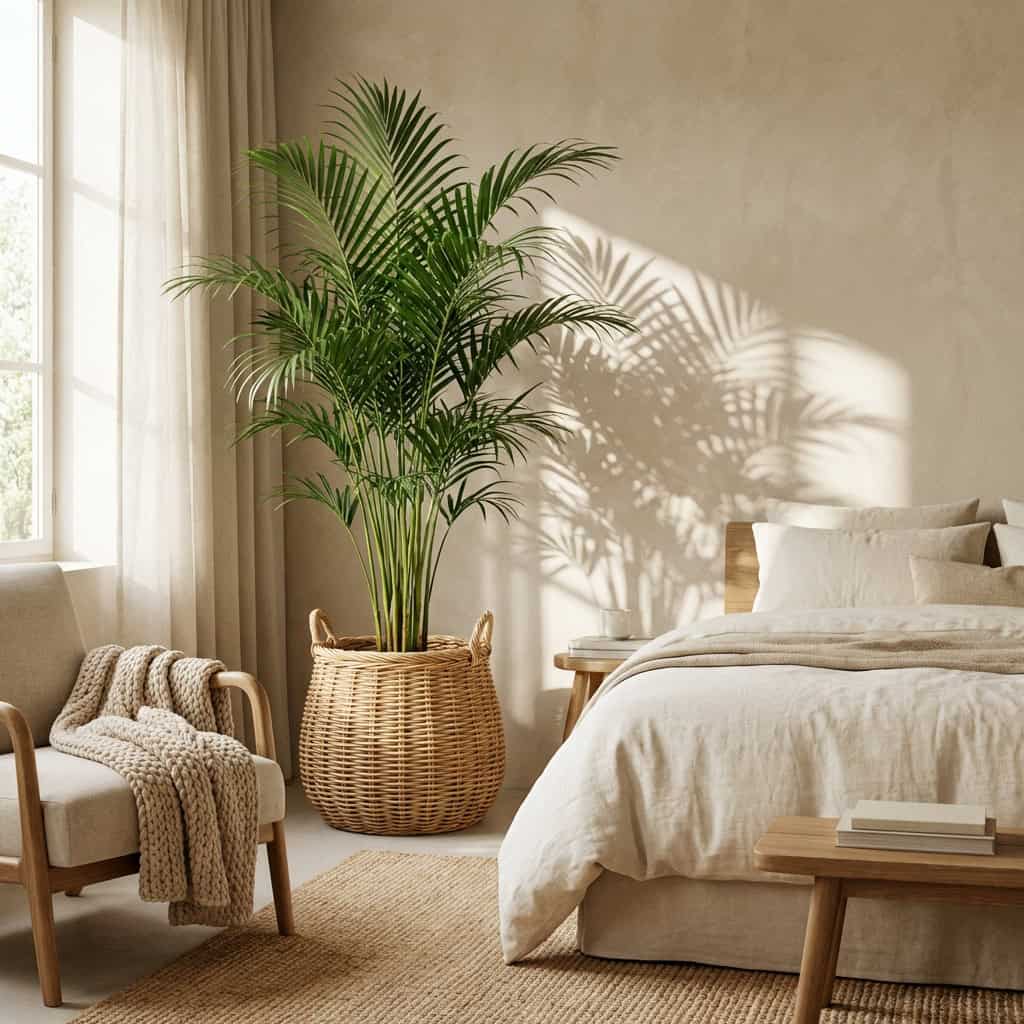
Like the fern, the bamboo palm works well if dry indoor air affects your sleep.
It releases moisture into the room. This can ease dry skin and scratchy throats during the night.
It stays compact and upright. Suitable for bedroom corners without taking up too much space.
It prefers bright, indirect light and consistent watering.
8. Chinese Evergreen
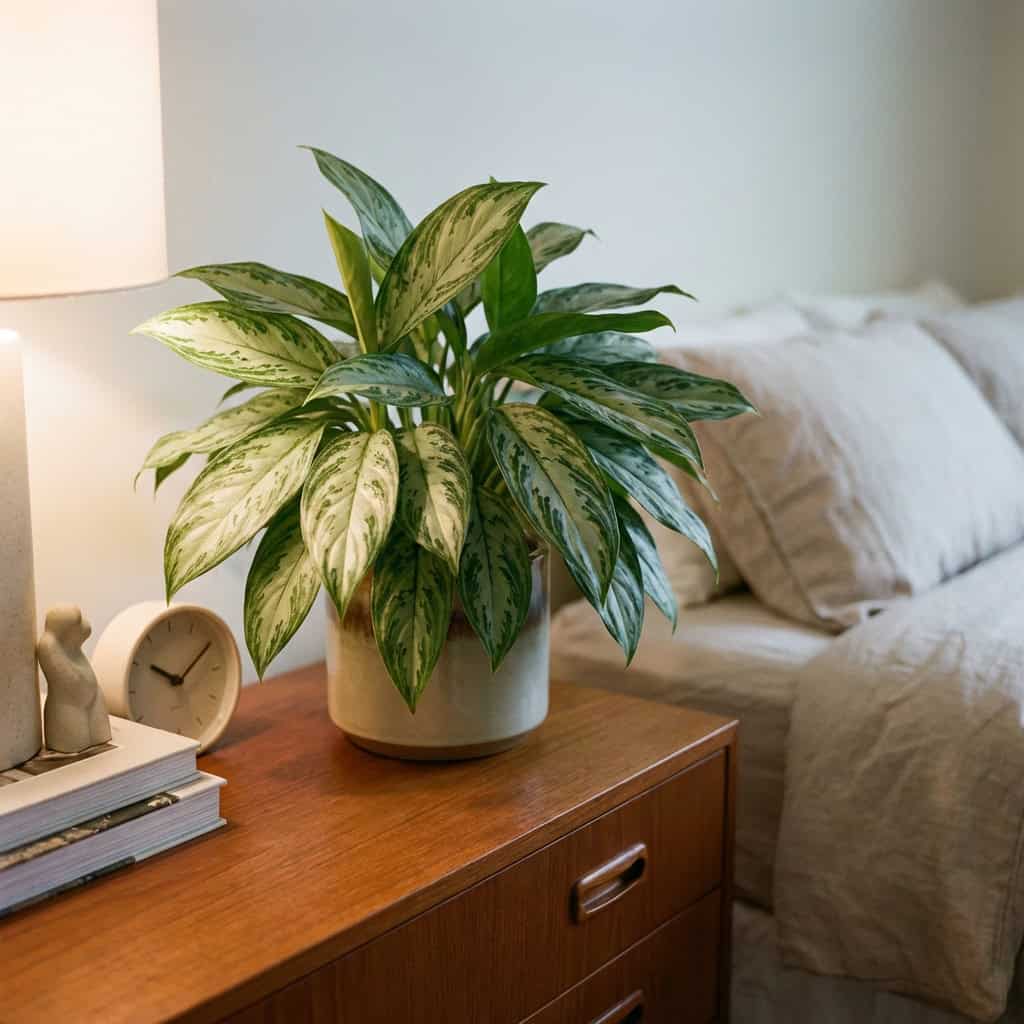
The Chinese evergreen, or Aglaonema, adapts exceptionally well to bedrooms. Especially those with limited natural light.
Its broad leaves can help slightly increase humidity. This supports comfortable breathing while you sleep.
This plant prefers consistency. But it recovers well if you forget to water it once in a while.
This balance suits nighttime routines that need to stay simple and predictable.
9. Lavender
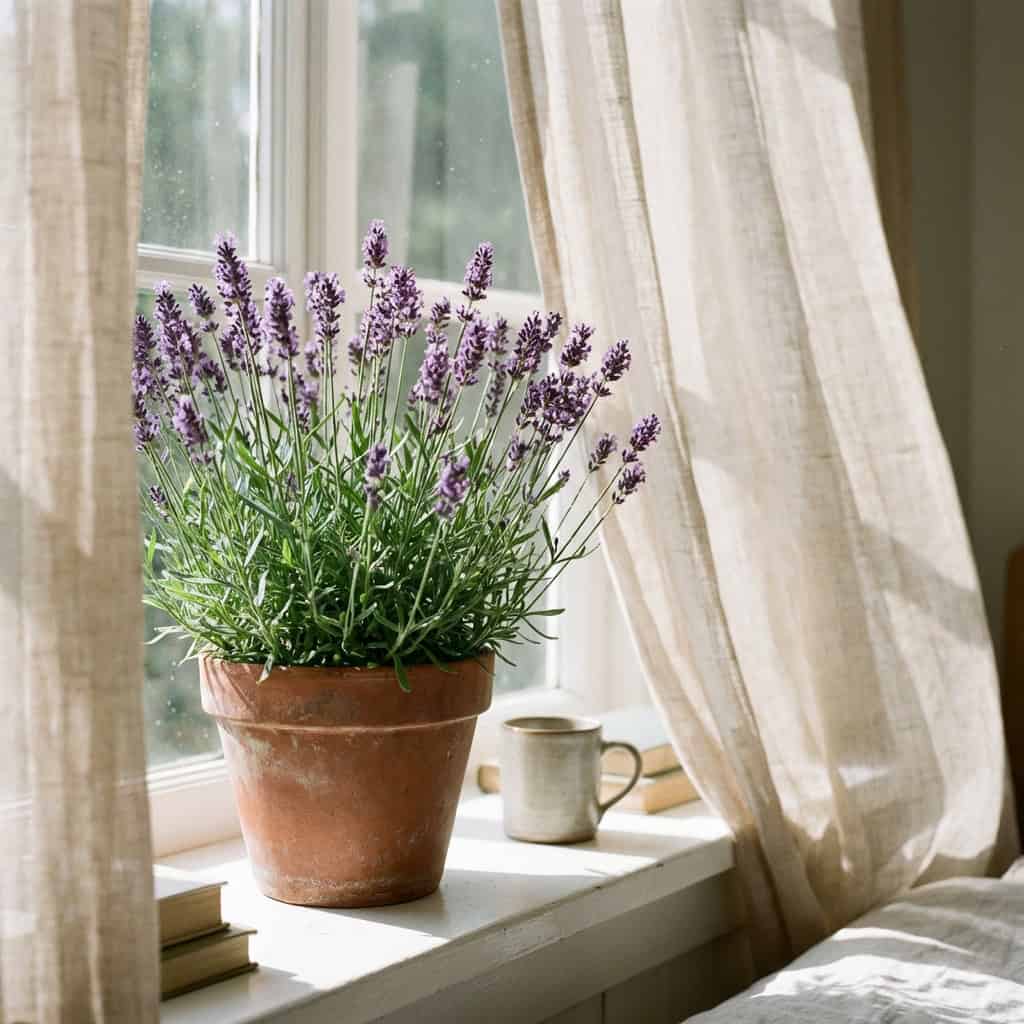
Lavender remains one of the most researched plants for sleep support.
Its scent is linked to a slower heart rate. It reduces nighttime restlessness. This can help you unwind before bed.
You get the best effect when you place lavender near your bed. But ensure it gets enough sun during the day.
It needs bright light. It needs dry soil between waterings to survive indoors.
10. Jasmine
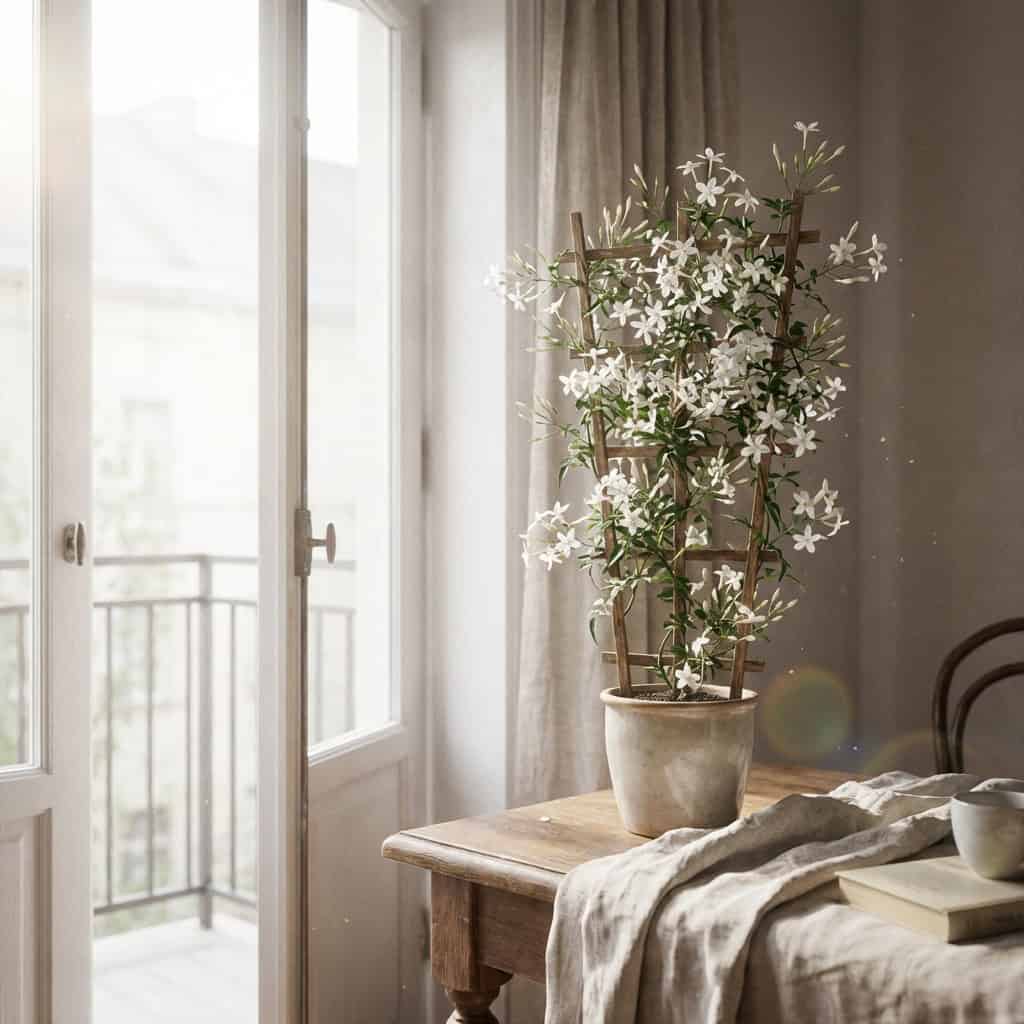
Jasmine produces a sweet fragrance that many people find comforting at night.
Research links its scent to lower anxiety levels. It is associated with fewer sleep disruptions. A strong natural sleep aid.
Place jasmine where air can circulate. Near a window or open doorway works best.
The scent spreads gently. It does not need direct contact to remain effective.
11. Valerian
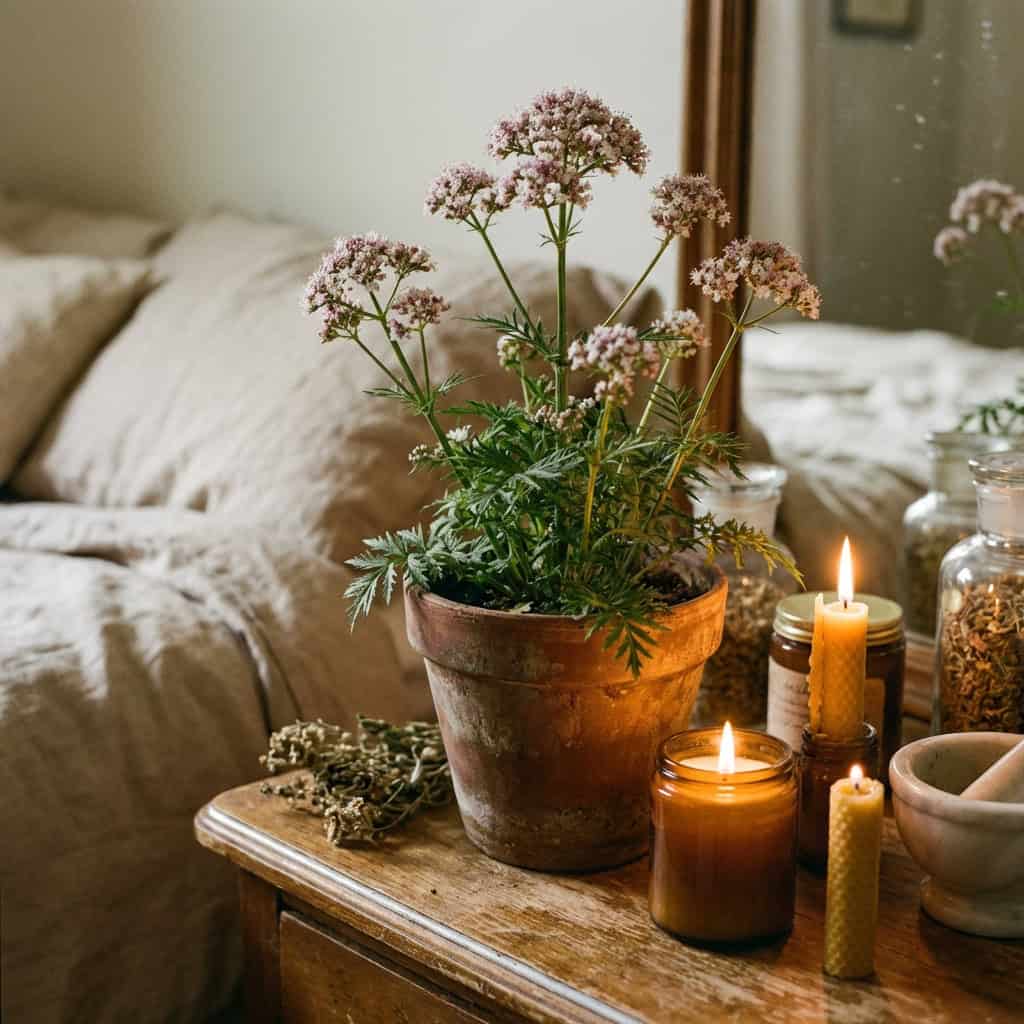
Valerian has a long history in traditional herbal practices for sleep.
The flowers release a mild scent. It is earthier than lavender. Some people find this grounding and relaxing at night.
This plant needs several hours of sunlight daily. It prefers consistently moist soil.
It works best for people who appreciate herbal aromas. And for those with a well-ventilated bedroom.
12. Hoya
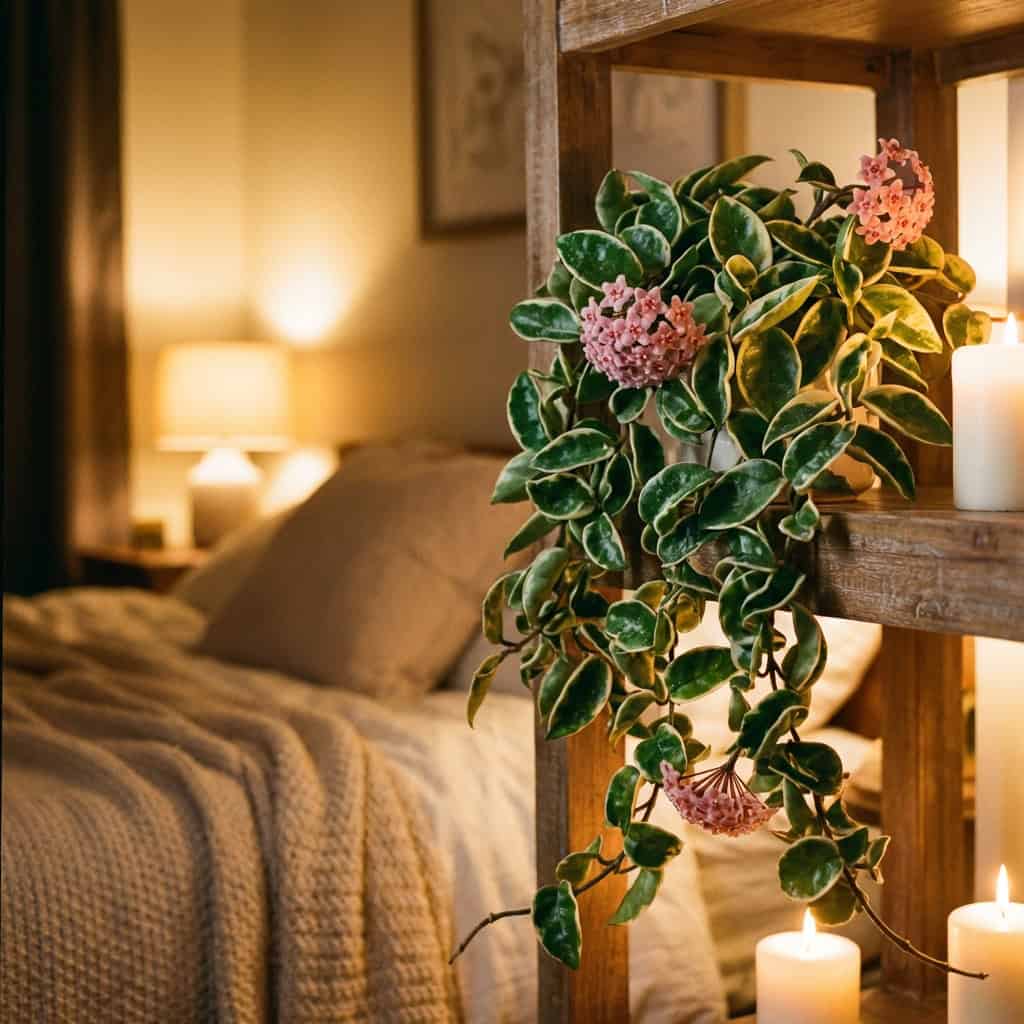
Hoya plants are unique because of their scent timing.
Their star-shaped flowers release a mild fragrance. Specifically in the evening.
You may notice the scent most at night. Many people find it relaxing rather than overpowering.
Place the hoya a few feet from your bed to enjoy the aroma. Its slow, controlled growth keeps it tidy. This helps maintain a calm environment.
13. Mint
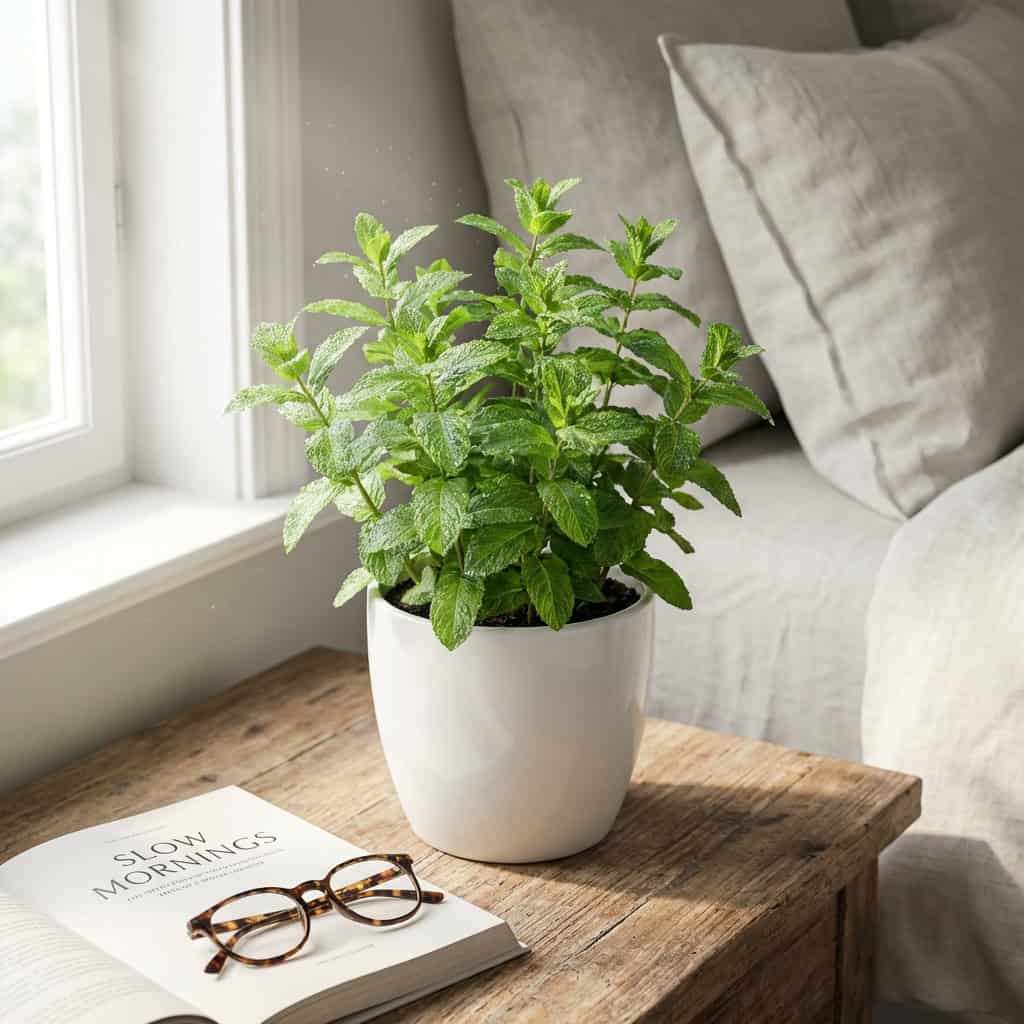
A mint plant can help you feel more comfortable at night. It supports easier breathing.
The leaves contain natural menthol compounds. This creates a cooling sensation. This is helpful when mild congestion interferes with sleep.
You can keep mint on a bedside table. Lightly brushing a leaf releases the aroma without overwhelming the room.
The scent stays crisp. It fades quickly.
14. ZZ Plant
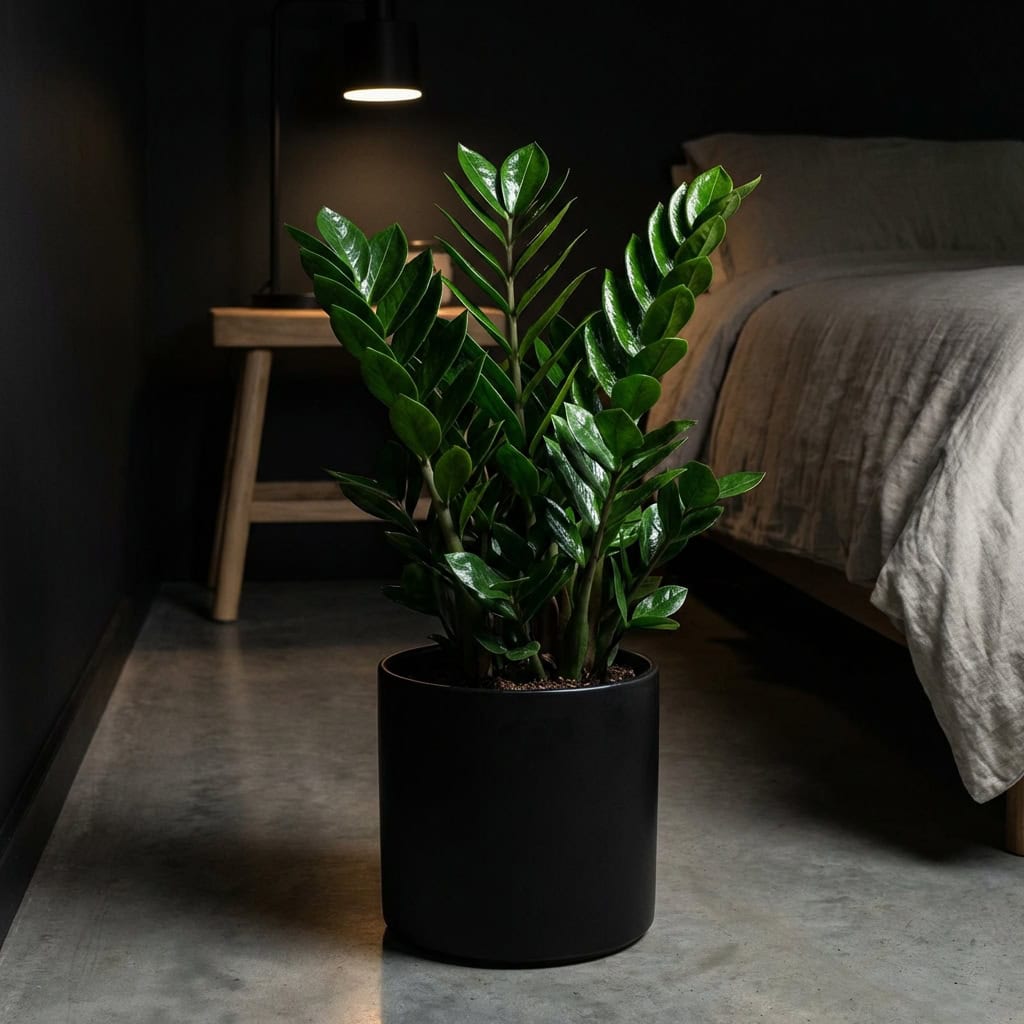
The ZZ plant is ideal if you want a plant you rarely have to think about.
It tolerates low light. It tolerates dry air without visible stress. This keeps your bedroom free of dying or messy foliage.
From a sleep perspective, the plant’s tidy structure is key. It grows slowly. It helps keep your room uncluttered.
A visually calm space supports relaxation before bed.
15. Heartleaf Philodendron
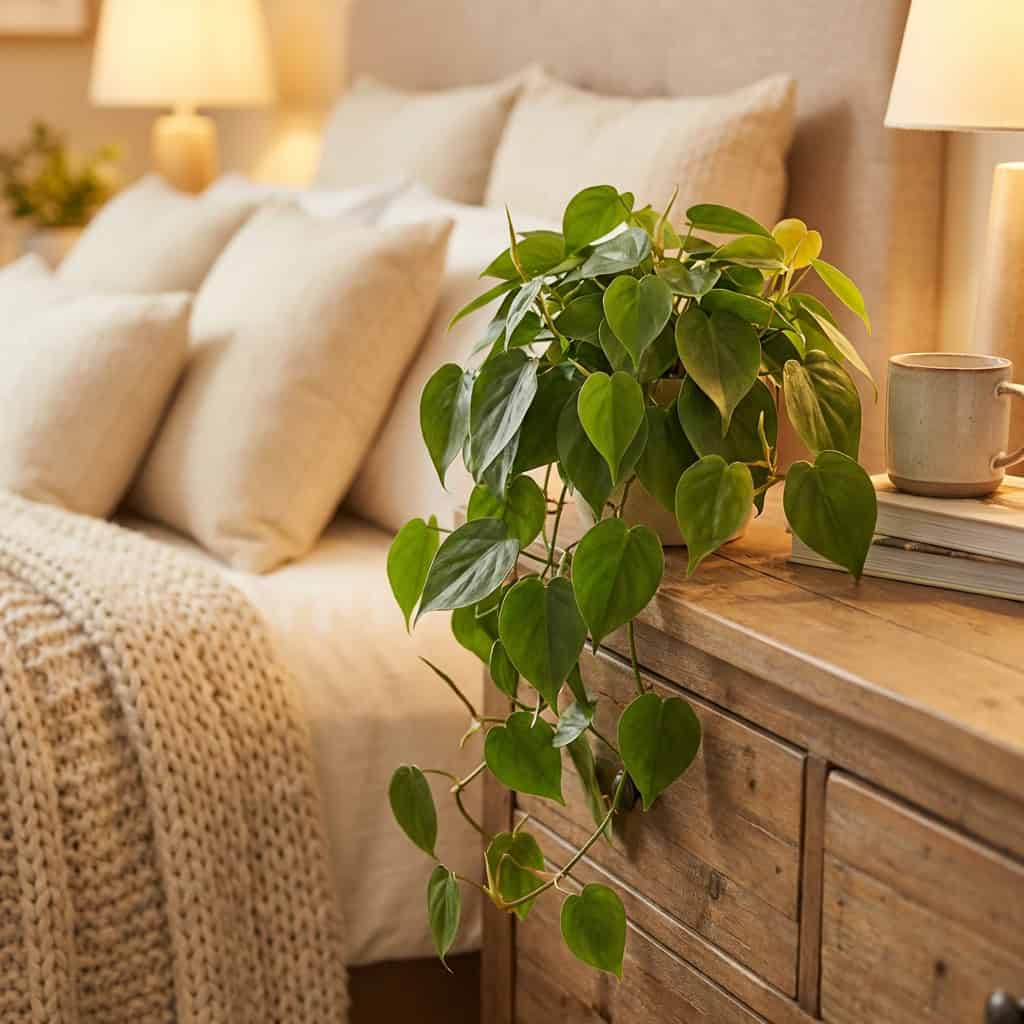
Heartleaf philodendron brings soft, trailing greenery. It visually calms a room.
The heart-shaped leaves create a relaxed look. It works well on shelves or hanging planters near your bed.
This plant tolerates low to moderate light. It handles irregular watering.
Its simple presence adds natural texture. It does this without demanding attention or causing stress.
The Bottom Line
Your bedroom is for resting. It shouldn’t be a place of stress, clutter, or bad air.
These plants aren’t magic, but they are tools. Tools to lower your heart rate. Tools to clear the air. Tools to remind you to breathe.
You don’t need a jungle to see the benefits. Start with one. Maybe a Snake Plant for oxygen. Maybe Lavender for the scent.
Place it near your bed. Watch how the room changes. See if your sleep follows.