


November in her yard smelled like wet leaves and cold dirt.
The flowers were gone. The tomato cages were stacked against the garage. Anybody driving by would’ve said the gardening season was over, and she let them think it.
But she was out there in a barn coat and gloves with the fingertips worn through, doing a dozen small things that nobody saw. A shovelful of soil over a rose. A bucket of dirt carried into the garage. Garlic pushed into cold ground with her thumb.
Then April came and her garden woke up two weeks before everybody else’s, thicker and fuller, and the neighbors asked what her secret was.
It was November. Here are 34 things she did in it.
1. The Deep Soak Before the Ground Froze
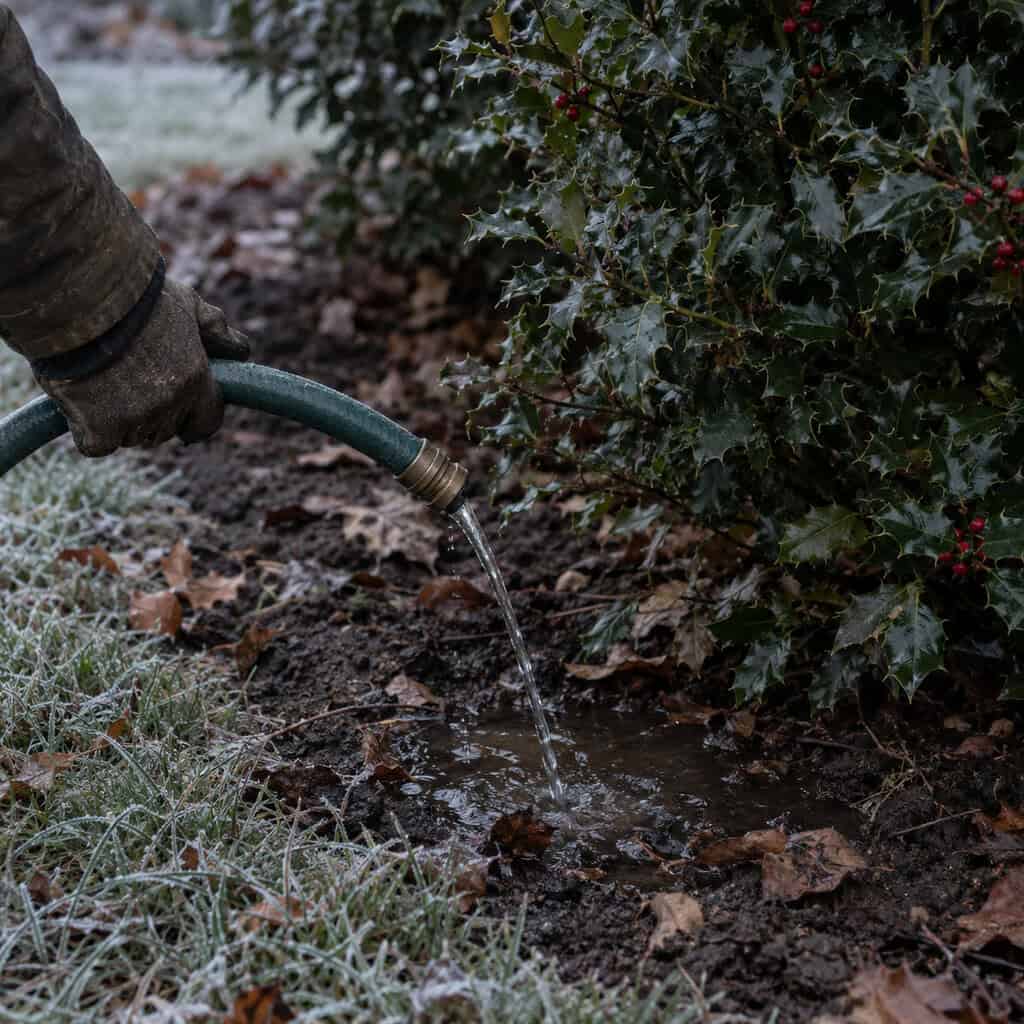
She watered in November. People thought she’d lost it.
Evergreens don’t shut off for winter — needles keep releasing moisture on every sunny, windy day, and frozen ground can’t replace a drop of it. A shrub that goes into freeze-up with a dry root ball comes out of it brown and crisp, and most folks blame the cold.
So the hose came out one last time for the hollies, the new maple, and anything planted that year. Slow trickle, an hour per plant, until the water stopped soaking in.
That’s the whole thesis of her November. She wasn’t cleaning up fall. She was loading the spring.
2. Raking the Leaves Onto the Beds, Not the Curb
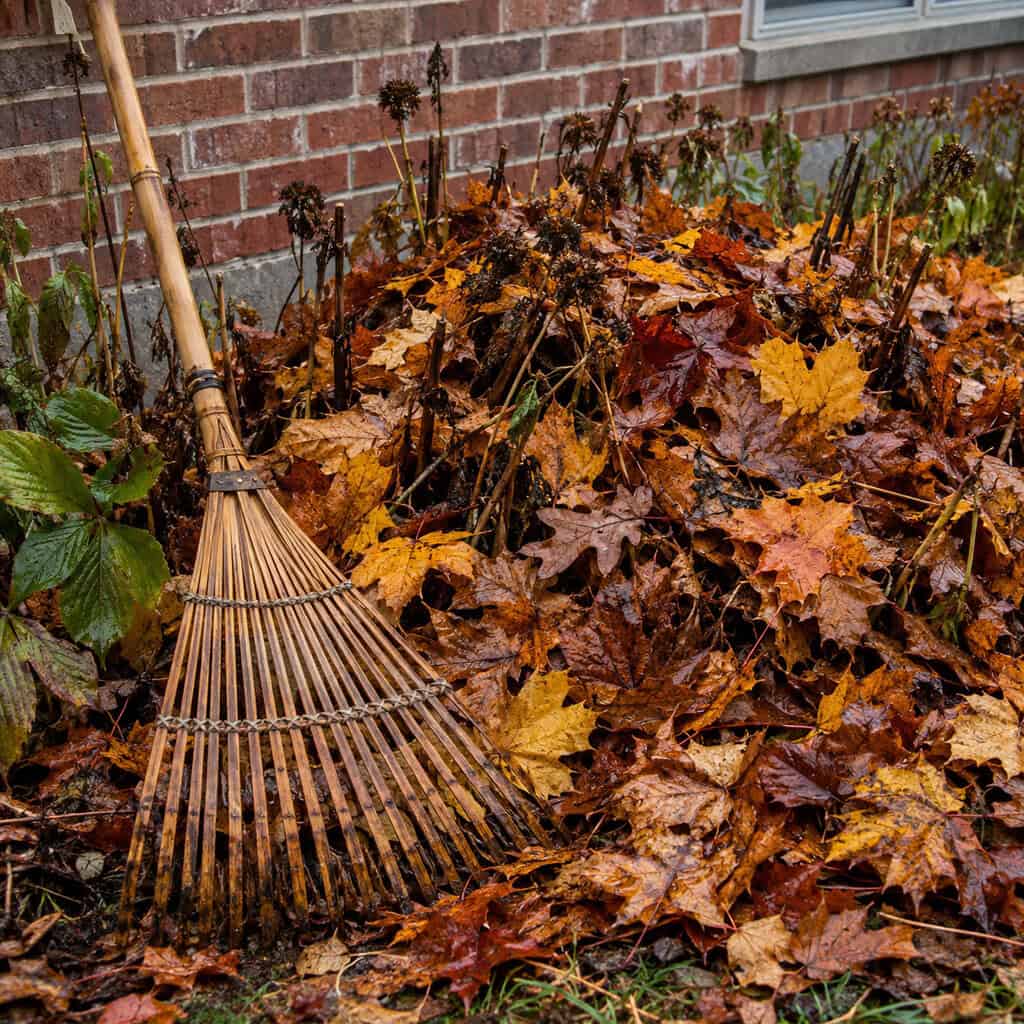
The maple dropped everything in about four days.
She raked it all into the perennial beds, knee-deep over the peonies and the daylilies, and left it there. Nothing went to the curb in paper sacks.
That leaf blanket isn’t about warmth. It’s about keeping the soil temperature steady so the January thaw doesn’t heave shallow-rooted plants halfway out of the ground and snap their roots. Iowa State Extension still recommends the same approach for overwintering perennials.
Free mulch, delivered by the tree, hauled about fifteen feet.
3. Garlic Cloves, Pointy End Up, After the First Hard Freeze
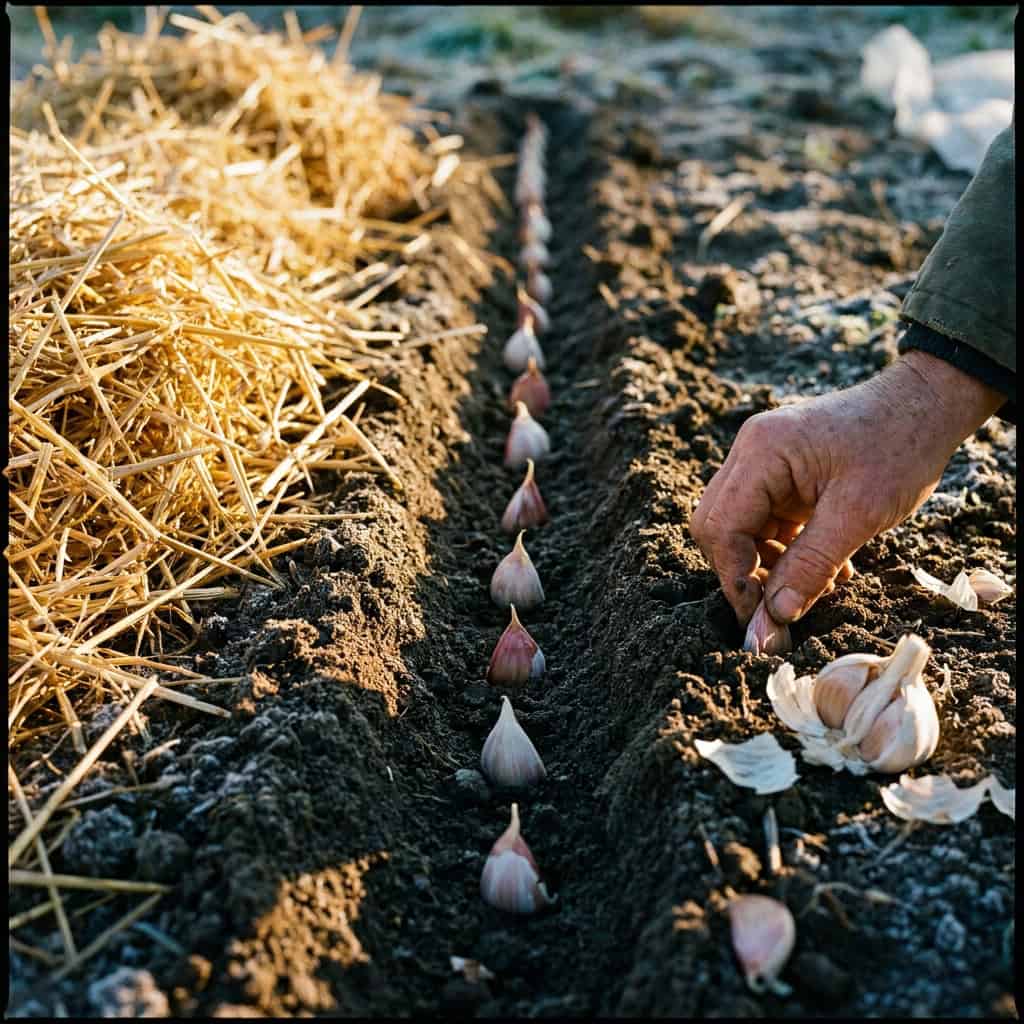
One head broken apart on the kitchen table, biggest cloves only.
Pushed two inches down, six inches apart, flat end sitting on the soil. Then straw over the top.
Fall garlic roots quietly through December, sits still, and throws leaves in March while the ground is still half-frozen. Those early leaves are what build a fat bulb by July.
Plant it in April instead and you’ll harvest marbles. There’s no fixing that mistake once the window closes.
4. Dahlias Dug, Dusted, and Boxed for the Cellar
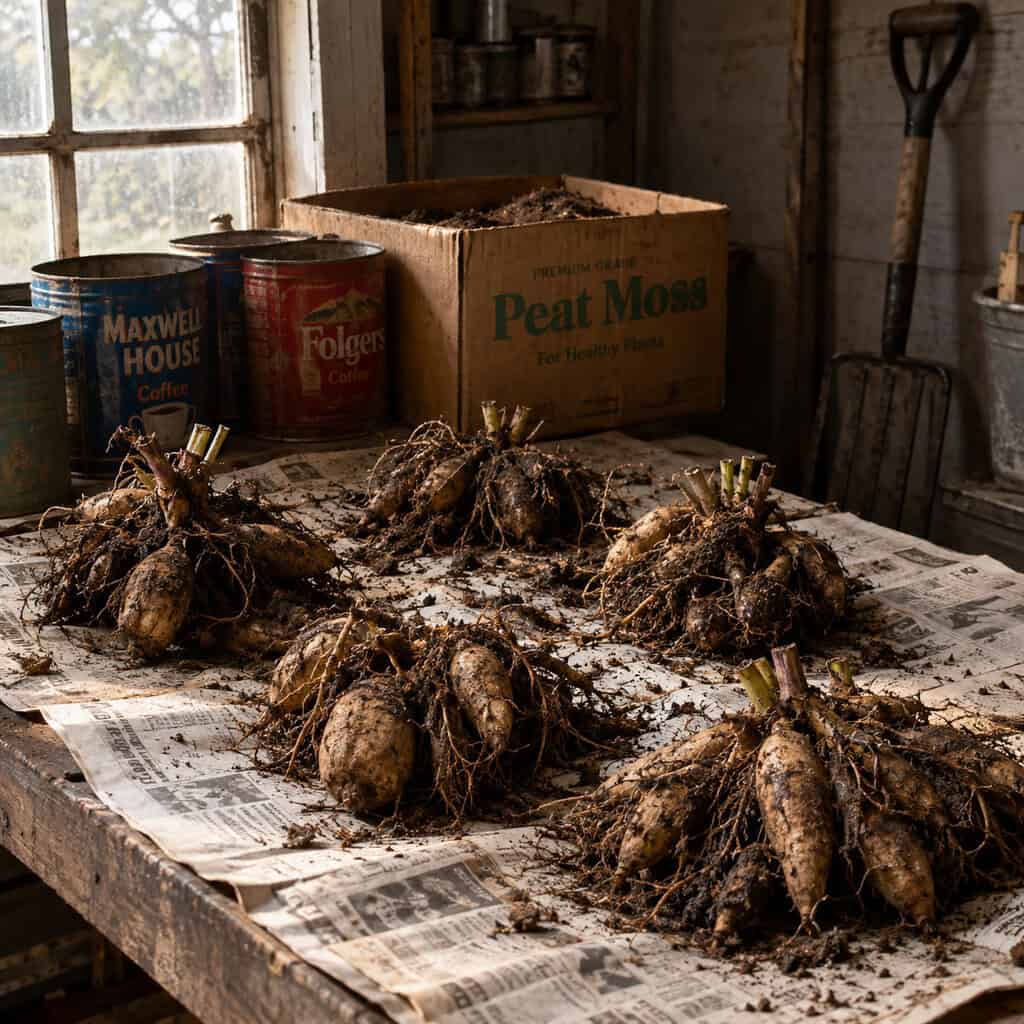
She waited for frost to blacken the tops. That was the signal — not a date, not a weather forecast, the plant itself going black overnight.
A week later she’d lift the clumps with a spading fork, shake off the dirt, and let them cure a few days on newspaper in the garage.
Then into coffee cans and cardboard boxes of peat, stacked under the basement stairs where it stayed around 45 degrees all winter.
Dig too early and the tubers haven’t cured enough to hold. Too late and they turn to mush in the box by February.
5. Mowing the Rest of the Leaves Straight Into the Lawn
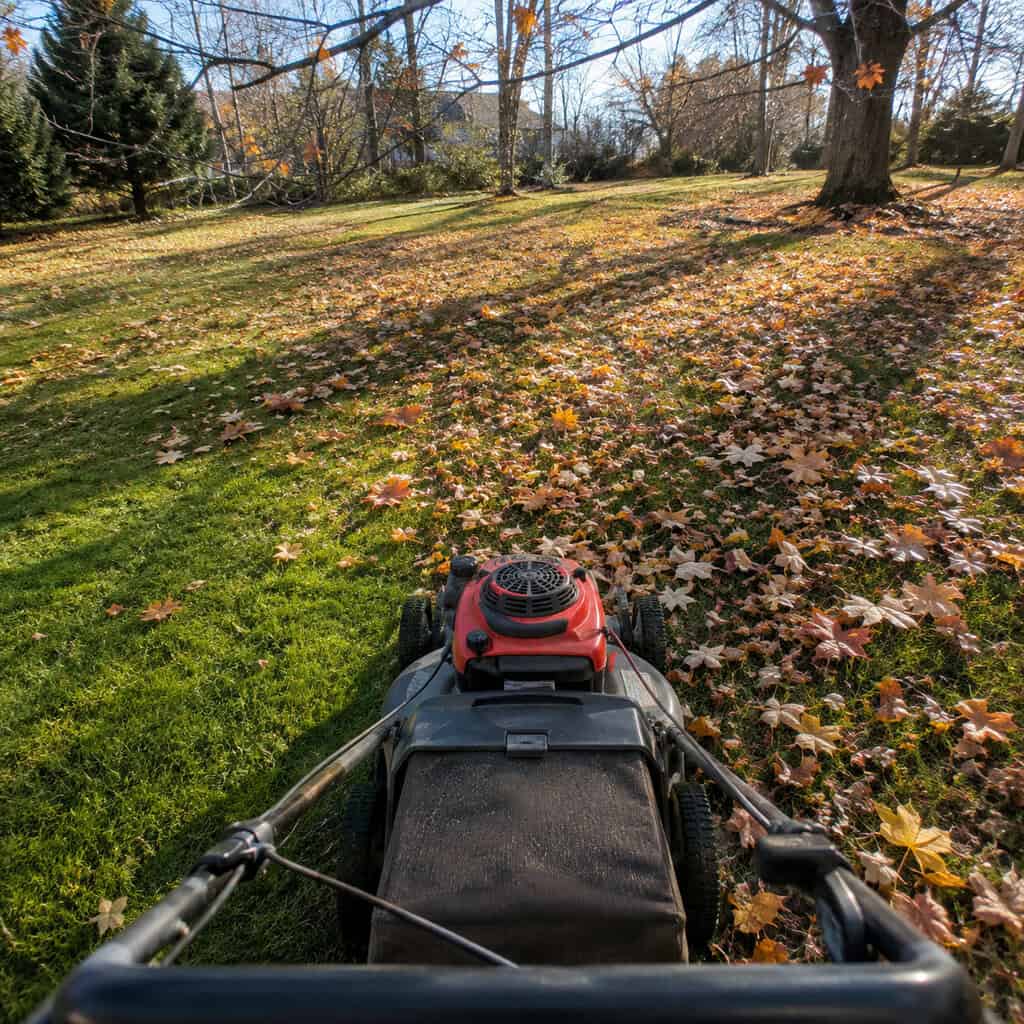
Whatever leaves landed on grass got mowed, not raked.
Two or three passes until they were confetti and disappeared down into the turf. She did it because hauling was work and she was tired.
Turfgrass researchers at Michigan State later ran it for years and found that mulch-mowing leaves into a lawn feeds the soil and measurably suppresses dandelion and crabgrass germination the next spring. Colorado State University Extension walks through the same breakdown process.
She was doing free weed control and didn’t know it.
6. Mounding Soil Over the Rose Graft
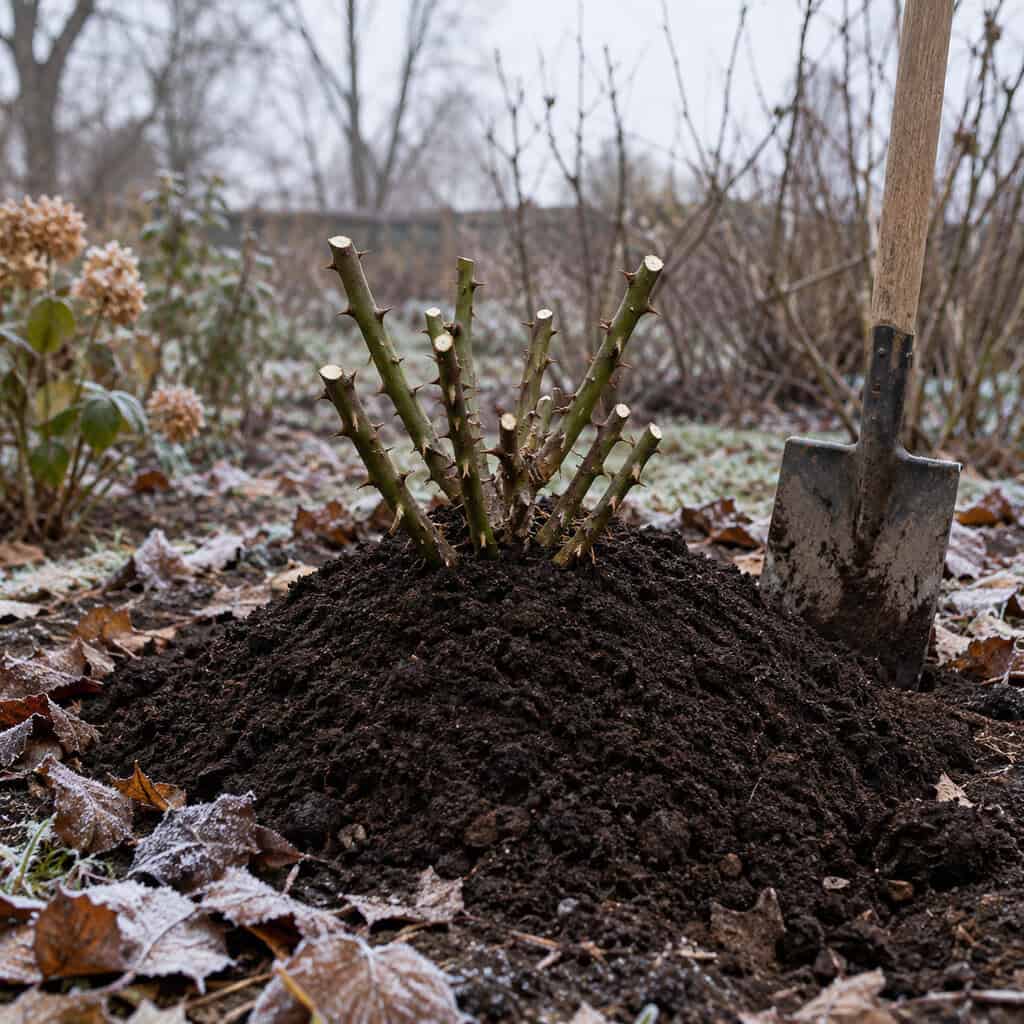
Hybrid teas have a swollen knob at the base where the good rose got grafted onto tough rootstock. Kill that knob and you get a thorny nothing in June.
After two or three hard freezes, she’d bring a shovelful of soil or finished compost from somewhere else in the yard and mound it eight inches deep right over the union.
Everybody remembers the styrofoam rose cones at the hardware store. The mound is what actually carried those roses through a zone 5 winter.
7. Leaving the Coneflowers and Black-Eyed Susans Standing

The border looked ragged all winter and she didn’t care.
Goldfinches worked the coneflower heads in December. Juncos cleaned up what dropped. And small native bees spent the whole winter sealed inside hollow stems that a November haircut would’ve sent to the compost pile.
Cut those stems in March instead, once things warm up. Penn State Extension lays out which perennials genuinely need fall cutting and which ones don’t.
A spotless November border is a quiet June. Fewer bees, fewer birds, and nothing to look at from the kitchen window in January. Plenty of other fall cleanup jobs are worth skipping for the same reason.
8. Draining the Hoses and Shutting Off the Outside Spigot

This is the one that costs real money when you forget it.
Water expands roughly 9% when it freezes. A hose left screwed onto the spigot traps water in the faucet body and in the pipe behind the wall — and because the hose end is sealed, that expanding ice has nowhere to go but outward against the pipe.
Frost-free sillcocks don’t save you either. Their whole design depends on the valve seat sitting back inside the heated wall, draining forward through the spout. Leave a hose attached and the drain path is blocked. The pipe splits behind the siding in January and you don’t find out until March, when somebody turns the water on and the basement ceiling starts dripping.
So: unscrew every hose. Drain it by walking it out downhill, coil it, hang it over the garage rafters where it won’t get crushed or chewed.
Then find the interior shutoff — usually a small valve on the supply line in the basement or crawlspace, within a few feet of where the pipe exits the wall. Close it. Go back outside, open the spigot, and leave it open all winter so anything left in the line can expand harmlessly.
If your spigot has a little bleeder cap on the interior valve, loosen it with a bucket underneath and let the stub drain.
Ten minutes in November. A burst supply line runs $150 to $400 for the plumber alone, and water damage remediation starts around $1,300 and climbs fast.
9. Tulips and Daffodils Planted Last, After the Soil Cooled
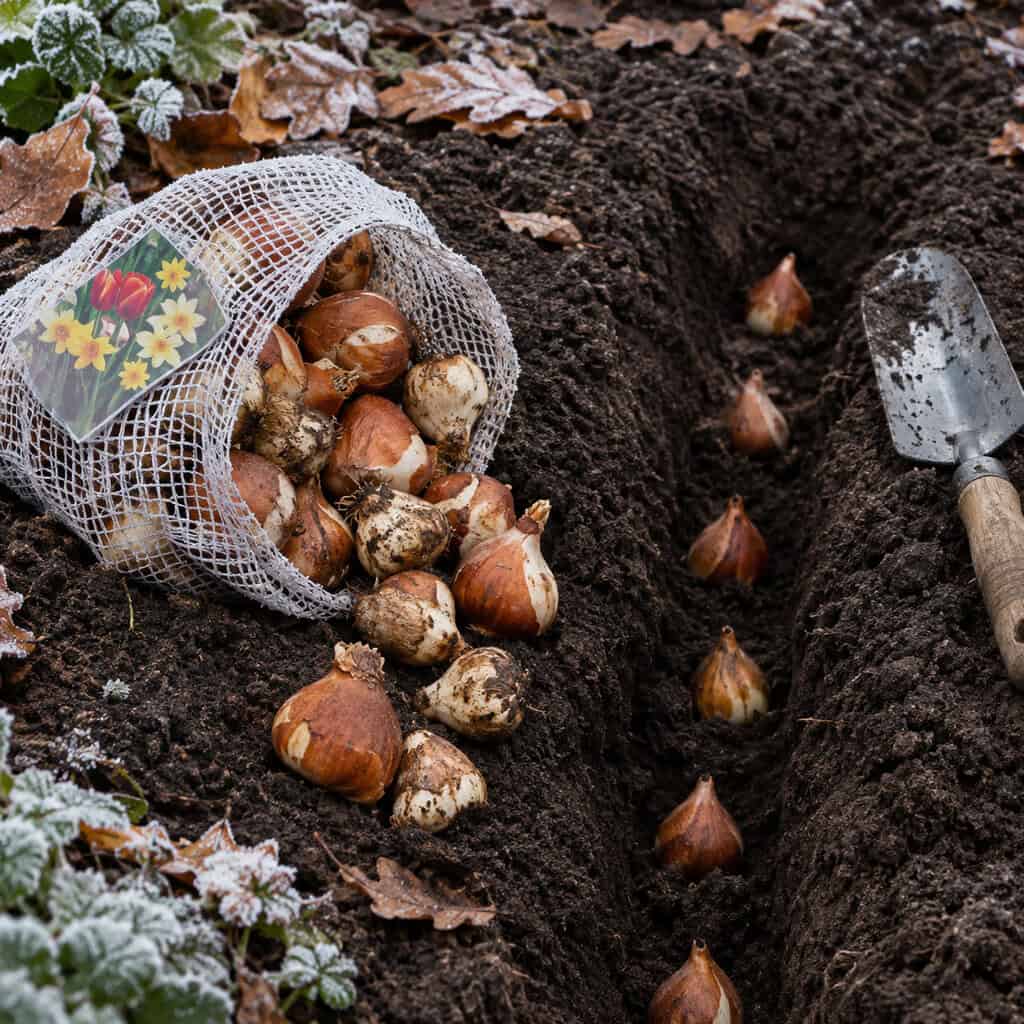
The mesh bag of bulbs sat in the garage since September. It always did.
She planted them mid-November on purpose, once soil temperature dropped under about 55 degrees. Warm soil pushes tulips into premature top growth that winter kills, and it invites the fungal rots that turn a bulb into a soft gray lump.
Daffodils six inches deep, tulips eight. Pointy end up, a handful of bone meal in the hole if she had it.
With spring bulbs, late beats early almost every time. That’s half of why the best spring displays get planted in fall.
10. Stripping the Vegetable Beds Down to Bare Dirt
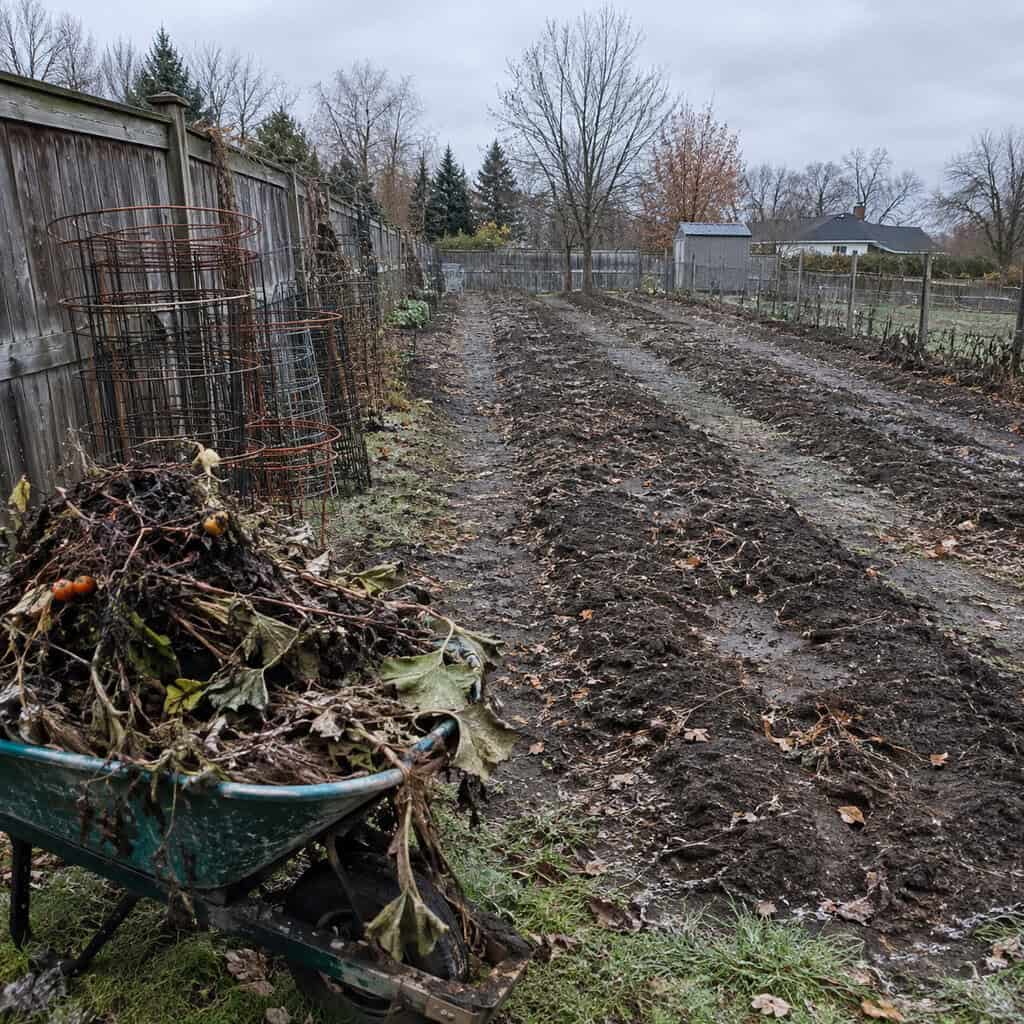
Here’s where she broke her own rule about leaving things messy.
Flower beds stayed shaggy. The vegetable garden got stripped to bare soil the week after the first killing frost — every tomato vine, every squash leaf, every bean stalk, pulled and burned or hauled off. None of it went in the compost pile.
Late blight spores ride on tomato debris. Squash bug adults tuck under dead leaves and wait for June. Mexican bean beetles do the same thing.
Leave the mess and you’re not composting. You’re storing next year’s infestation twelve inches from where you’ll plant.
11. The Last Feeding the Lawn Got All Year
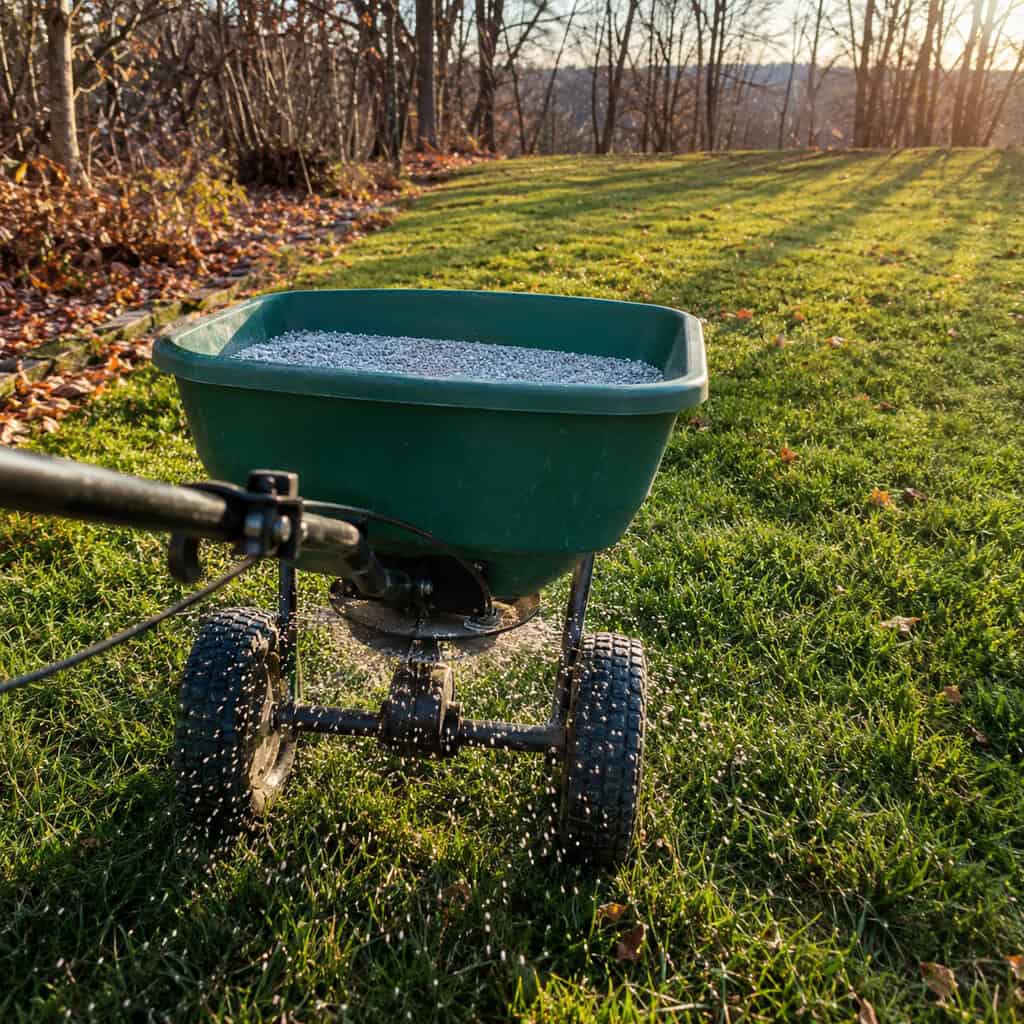
If there’s one November job that explains a great April lawn, it’s this one.
Cool-season grass — Kentucky bluegrass, fescue, perennial rye — stops growing blades when soil temps fall into the 50s, but the roots keep working for weeks after. Nitrogen applied in that window doesn’t go into top growth. It gets stored in the crown and root system and sits there until the soil warms.
That’s why her lawn was green in late March while the neighbor’s was still the color of a paper bag. Hers didn’t have to build anything from scratch. It had a full tank.
Timing is the whole trick. Too early — say, mid-October while the grass is still actively pushing blades — and you force tender growth that gets flattened by the first hard freeze and invites snow mold. The right window is after top growth has clearly stopped but while the lawn is still green and the ground isn’t frozen. In most northern states that’s roughly the first three weeks of November.
Warm-season grass is the opposite. Bermuda, zoysia, St. Augustine, and centipede are heading into dormancy and nitrogen now just weakens them and feeds winter weeds. If that’s your lawn, you were done fertilizing back in late summer.
North Dakota State University Extension puts the late-fall application at about one pound of actual nitrogen per thousand square feet. Water it in if rain isn’t coming.
Here’s the short version of who gets fed and when.
| Cool-Season Grass | Warm-Season Grass | |
|---|---|---|
| Examples | Fescue, bluegrass, rye | Bermuda, zoysia, St. Augustine |
| Late-fall nitrogen | Yes — best feeding of year | No — skip it entirely |
| Best timing | After growth stops, soil unfrozen | Late summer, before dormancy |
| Payoff | Early green-up, deeper roots | Winter injury if fed late |
Know which one you’ve got before you open the bag. Feeding the wrong grass in November does more harm than skipping it.
12. Splitting the Peonies and Planting the Eyes Shallow
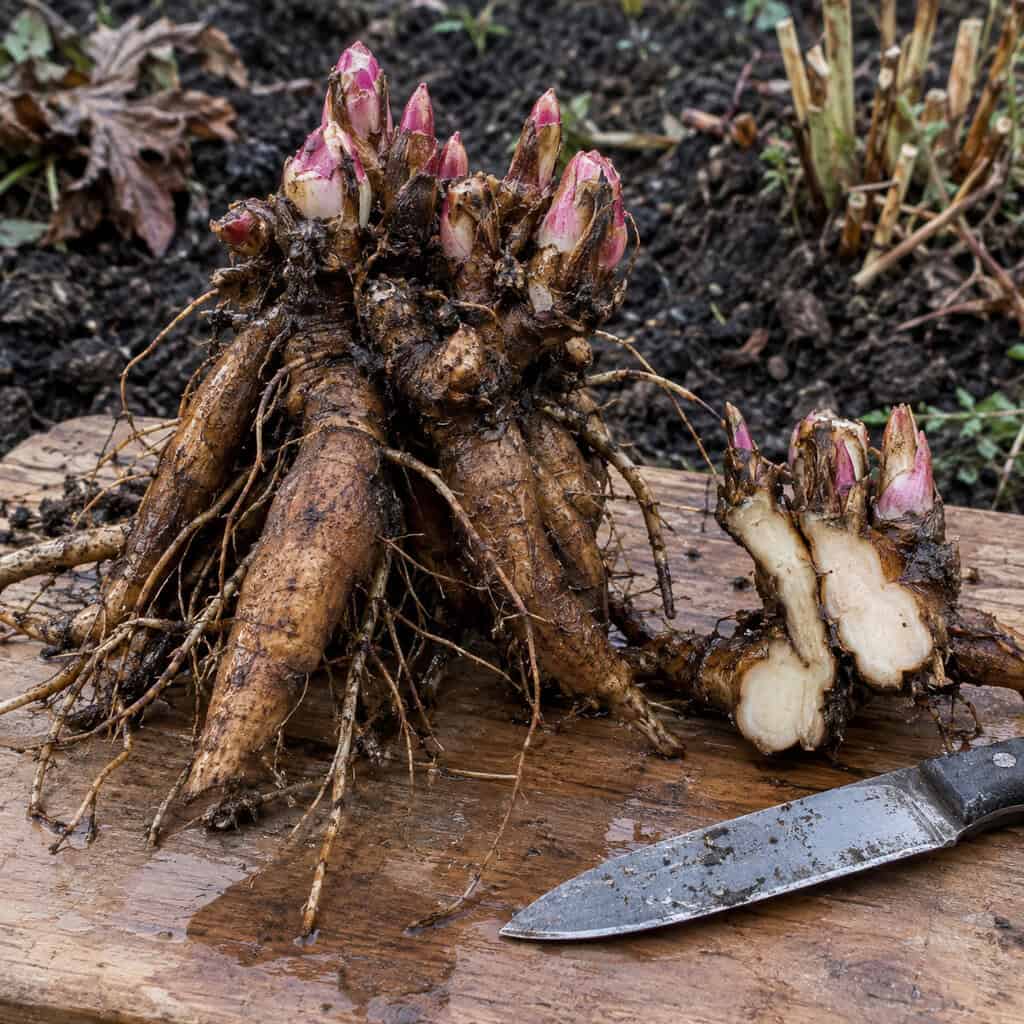
Fall is the only safe window to divide a peony, and she used it.
Foliage cut off, clump lifted whole, washed with the hose so she could see the pink buds — the eyes — on the crown. Then a sharp knife, three to five eyes per division.
And this is the part that matters: the eyes go no more than an inch and a half below the surface. Two inches is pushing it. Any deeper and you get a big healthy plant that makes beautiful leaves and refuses to bloom for a decade.
That inherited peony of your grandmother’s that never flowers? Somebody planted it too deep. University of Illinois Extension says the same thing, plainly.
13. Hardware Cloth Collars Around the Young Trunks
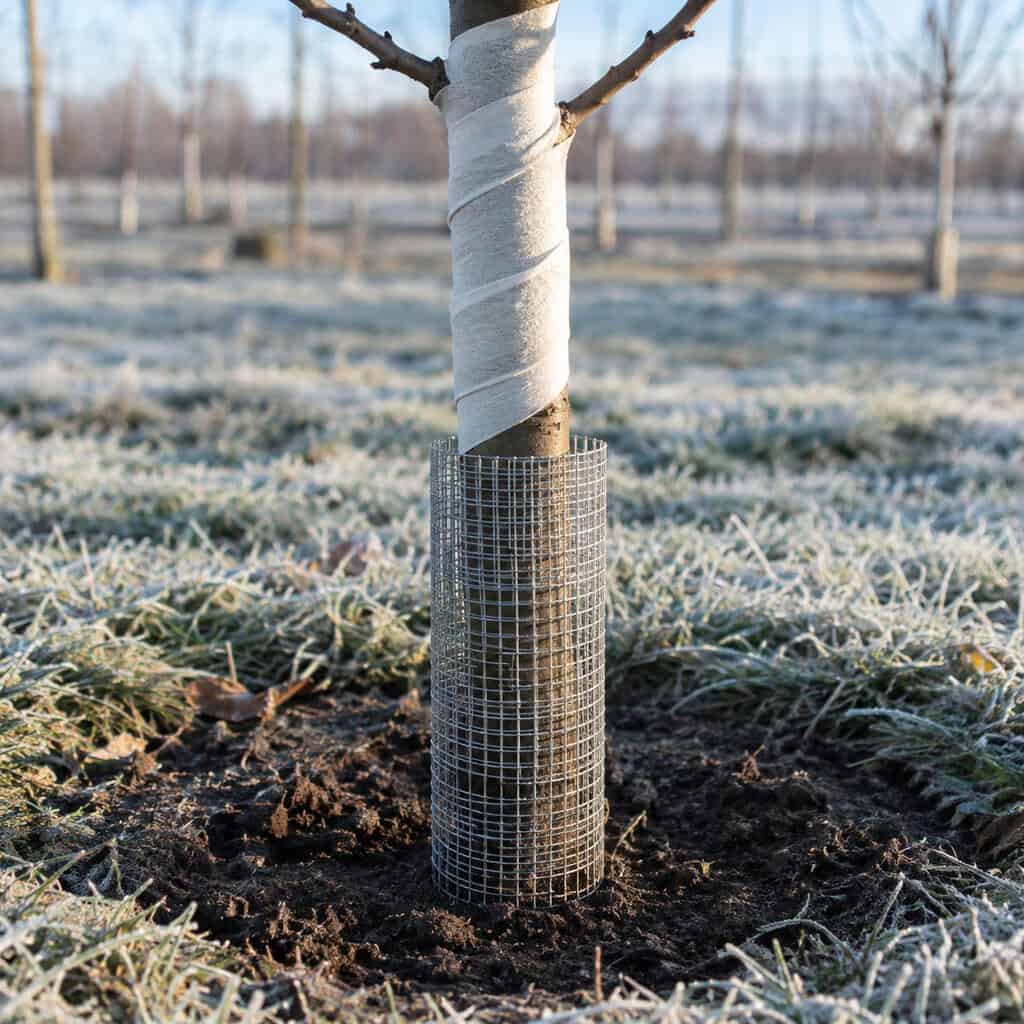
A young apple tree can look perfectly fine in March and be dead by June.
What happens is voles. They tunnel under snow cover all winter, completely hidden, chewing bark off the base of young trees for the moisture and nutrition. If they ring the trunk all the way around, they’ve cut every channel the tree uses to move food from leaves to roots. The tree leafs out in spring on stored energy, then collapses when that runs out.
Rabbits do the same damage from above the snow line, and their cut is clean and angled, like someone went at it with pruners.
Her fix cost about three dollars a tree. Quarter-inch hardware cloth, rolled into a cylinder two or three inches wider than the trunk so it doesn’t bind, pushed an inch into the soil at the base and standing at least 18 to 24 inches tall — higher if your snow gets deep, because rabbits reach from whatever surface they’re standing on.
She also wrapped thin-barked young trees — maples, fruit trees, lindens — with light-colored tree wrap. That one’s not about animals. February sun hits the southwest side of a trunk on a cold afternoon, warms the bark, the cells come out of dormancy, and then the temperature drops 40 degrees after sunset and that strip of bark splits wide open. Sunscald. The light wrap reflects the sun and keeps the trunk the same temperature all day.
Wrap goes on in November. It comes off in April — leave it on through summer and you’ve built a nice humid hotel for borers.
14. Winter Rye Broadcast Over the Empty Rows
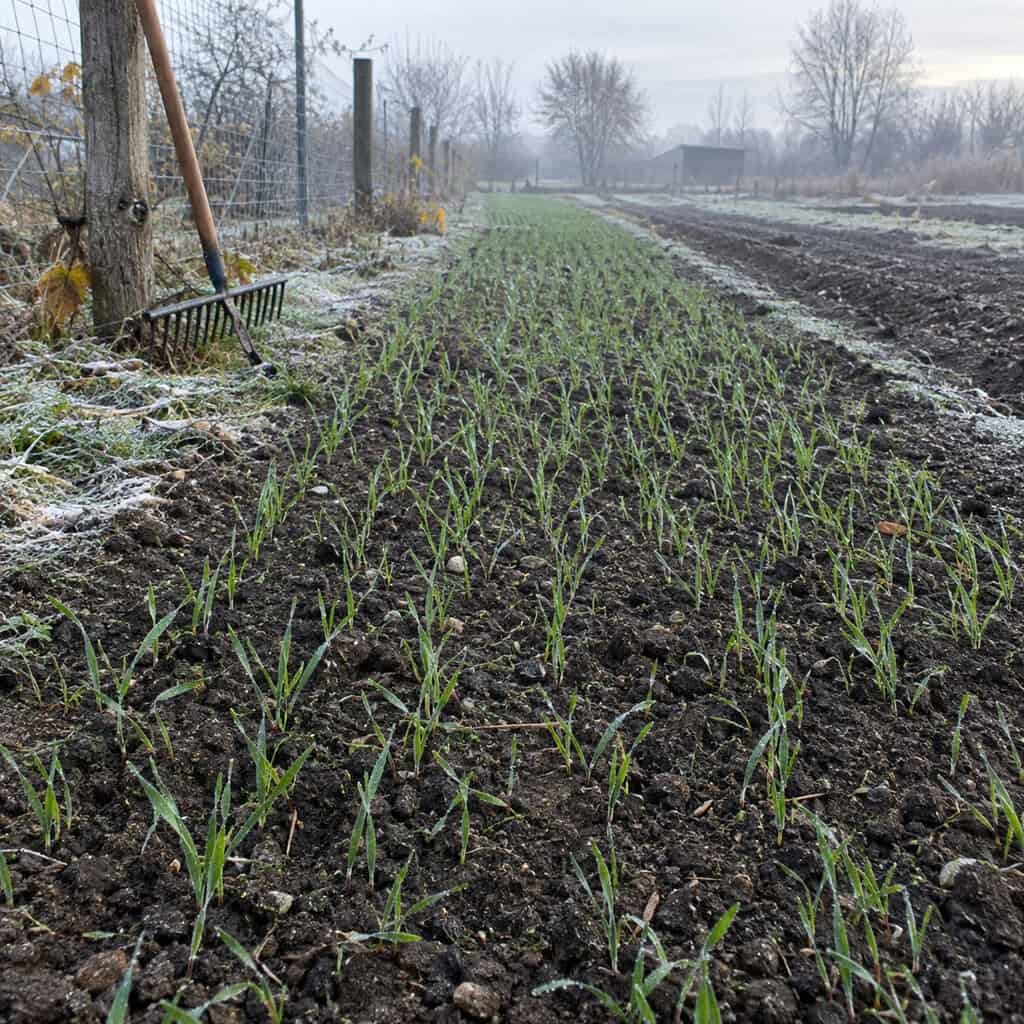
The vegetable garden didn’t stay bare long.
Early November she’d scatter winter rye over the cleared rows, rake it in rough, and let the rain do the rest. It germinated in cold soil when nothing else would.
All winter those roots held the topsoil in place through rain and snowmelt, and grabbed leftover nitrogen that would’ve washed out into the ditch.
Come April she turned it under green. Free organic matter, free fertilizer, nothing bought. Organic gardeners rediscovered this forty years later and gave it a better name.
15. The Geraniums Came Inside

The porch geraniums were the same plants they’d been for fifteen years.
Some years she cut them back hard, potted them up, and lined them along the cold basement window where they got leggy and pale and bloomed anyway. Other years she shook the soil off the roots, slid them into a paper grocery bag, and hung the bag from a basement joist.
Bare roots, upside down, in the dark. Soak them in February and they’d come right back.
Nobody bought flats of geraniums every May. You just brought yours back out.
16. A Load of Aged Manure Spread and Left Rough
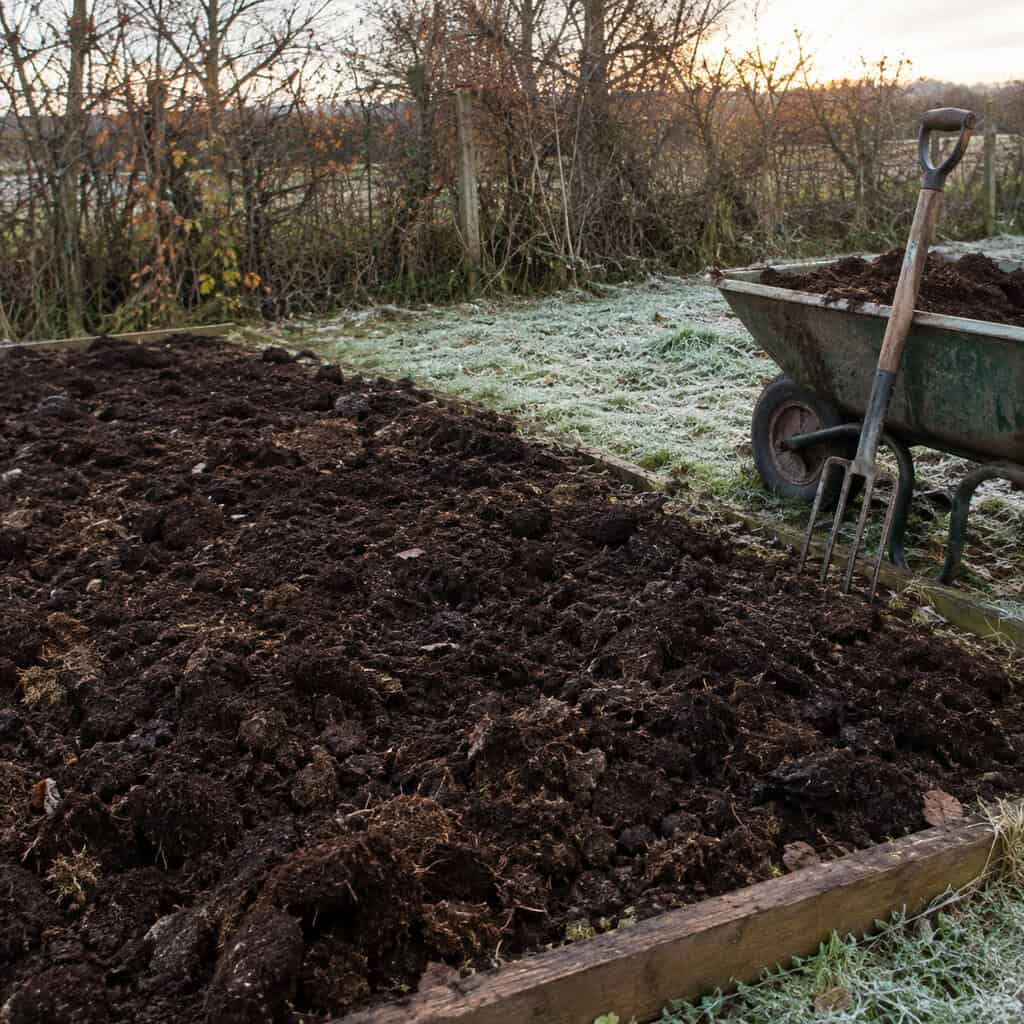
Somebody with a horse or a few cows always had a pile they wanted gone.
She’d spread it two inches deep over the cleared beds in late November and leave it lumpy. No tilling. No raking it smooth.
Freeze-thaw cycles broke it apart and earthworms pulled it down through the winter, so by April it was gone into the soil and the bed was ready.
Spreading in fall also gave raw manure five months to mellow, which is the difference between feeding your seedlings and burning them to the ground.
17. Cutting the Iris Fans Down and Hauling the Leaves Away
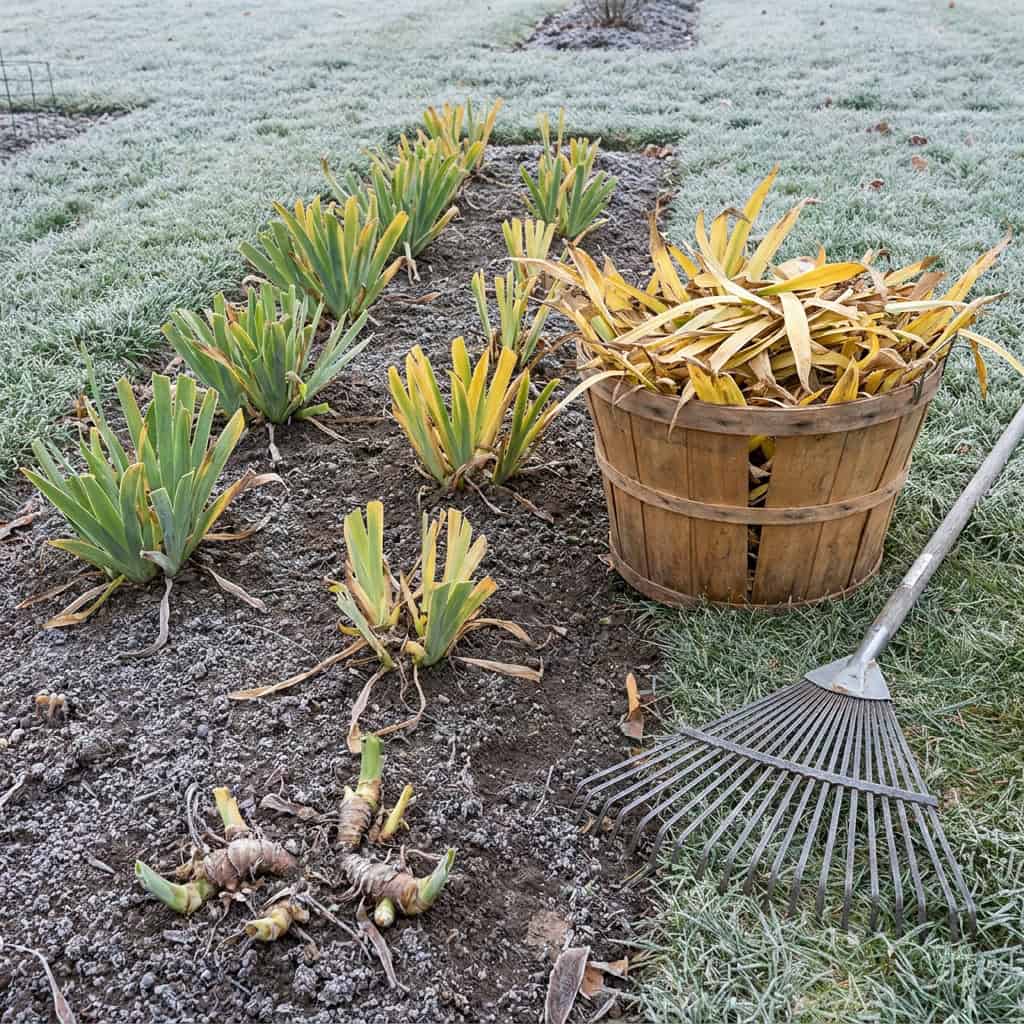
Bearded iris are one of the few perennials you genuinely should cut back in fall, and the reason is a single insect.
Iris borer moths lay their eggs in October on old iris foliage and the dead leaf litter right around the clump. Those eggs sit there all winter. In April they hatch, and the tiny larvae crawl up the new fans, chew their way inside, and tunnel down into the rhizome — hollowing it out over the summer until the whole thing turns to foul-smelling mush and the plant falls over in August.
You can’t spray your way out of it once it’s inside. By the time you see the problem, the rhizome is gone.
But the eggs are sitting out in the open in November, on leaves you can pick up.
So she cut every fan down to about four inches, raked the bed clean of every last scrap of dead leaf, and hauled all of it away — burned or bagged, never composted. That single November hour is the most effective iris borer control there is, and it costs nothing but a rake.
She’d also lift and check a rhizome or two while she was at it. Soft spots or sawdust-looking frass meant dig the clump, cut out the damage, and replant the clean pieces.
18. Straw Mounded Over the Strawberry Patch
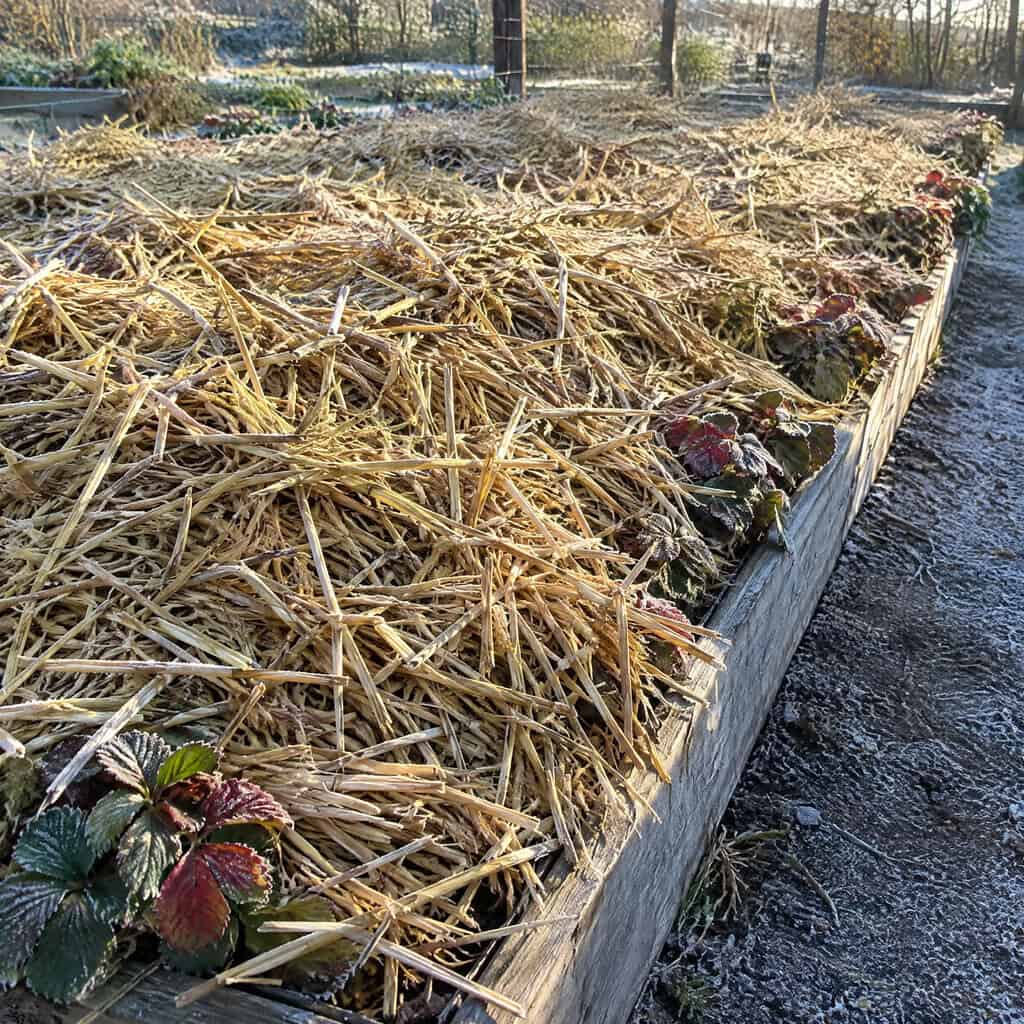
Strawberry crowns die outright around 15 degrees with nothing over them.
But she didn’t cover them in October. She waited for several hard freezes — usually right around Thanksgiving — because mulching plants that haven’t hardened off yet just smothers them and invites rot.
Then four inches of clean straw, right over the top of everything.
In April she’d pull it back into the aisles, where it sat all June keeping the berries off the mud. That’s why the name is strawberry.
19. Seeds Saved in Paper Envelopes on the Windowsill

Marigolds, zinnias, scarlet runner beans, hollyhocks, morning glories.
Collected dry through October in coffee cups and pie tins, then sorted on the kitchen table in November into used envelopes with the flap tucked in — name and year in pencil, because ink runs.
They lived in a shoebox somewhere cool and dry. Never a plastic bag, never the garage in July.
One family in Ohio has grown the same pole bean for four generations off a system exactly this sophisticated. Paper, pencil, shoebox.
20. Dropping the Mower Deck for the Final Cut
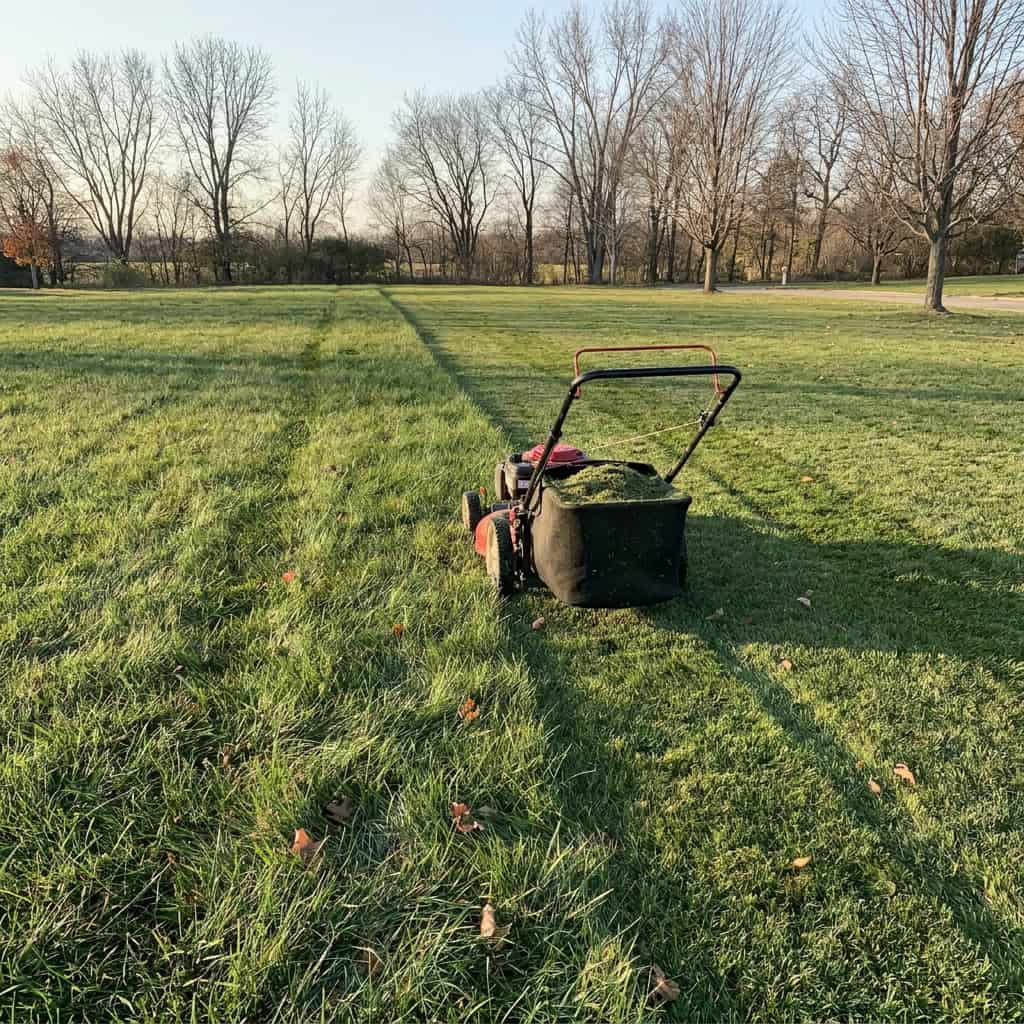
The last mow of the year wasn’t the same as the others.
She dropped the deck one notch — cutting cool-season grass to about two to two and a half inches instead of the three-plus she kept it at all summer. One cut, not a scalping.
Long grass is the problem. When it mats down under wet snow it stays damp and dark for weeks, and that’s exactly what pink and gray snow mold need. You find the damage in March: matted gray-white circles that look like somebody spilled dishwater on the lawn, and they’re slow to fill back in.
Tall grass also gives voles covered runways. They tunnel between the snow and the turf all winter, eating crowns and leaving winding brown trails that show up at melt.
Cut too short, though, and you expose the crowns to cold and dry wind. That’s why it’s one notch down, taken gradually over your last two mows — not a single brutal scalping in late November.
Then bag that final clipping instead of mulching it. You don’t want a layer of wet green debris sitting on the turf under snow. What you do in fall decides next year’s lawn more than anything you do in April.
21. Kitchen Scraps Buried in a Trench Down the Empty Row

No pile, no bin, no turning, no thermometer.
She dug a furrow eight inches deep down an empty row, dumped in potato peelings, coffee grounds, eggshells, and carrot tops, and covered it with the soil she’d just removed. Next week, she moved a foot over and did it again.
By spring it was gone. No smell, nothing for raccoons to find, no bin to buy.
And the row she buried scraps in through November grew the best tomatoes in the garden the following July. Every single year. If you want the full method behind turning scraps into garden gold, it’s the same principle at a bigger scale.
22. Clay Pots Emptied and Turned Upside Down

Terra cotta is porous. It drinks water all season.
Leave a pot full of wet soil outside and the first hard freeze expands that water inside the clay wall and splits it, usually right down one side. You learn this exactly once, when you find the stack behind the shed in March.
So: dump the soil into a bed, knock out the roots, flip the pots upside down, stack them under the eaves or in the garage.
Five minutes. Saves a whole set of pots that cost real money to replace now.
23. Burlap Screens Staked Around the Evergreens
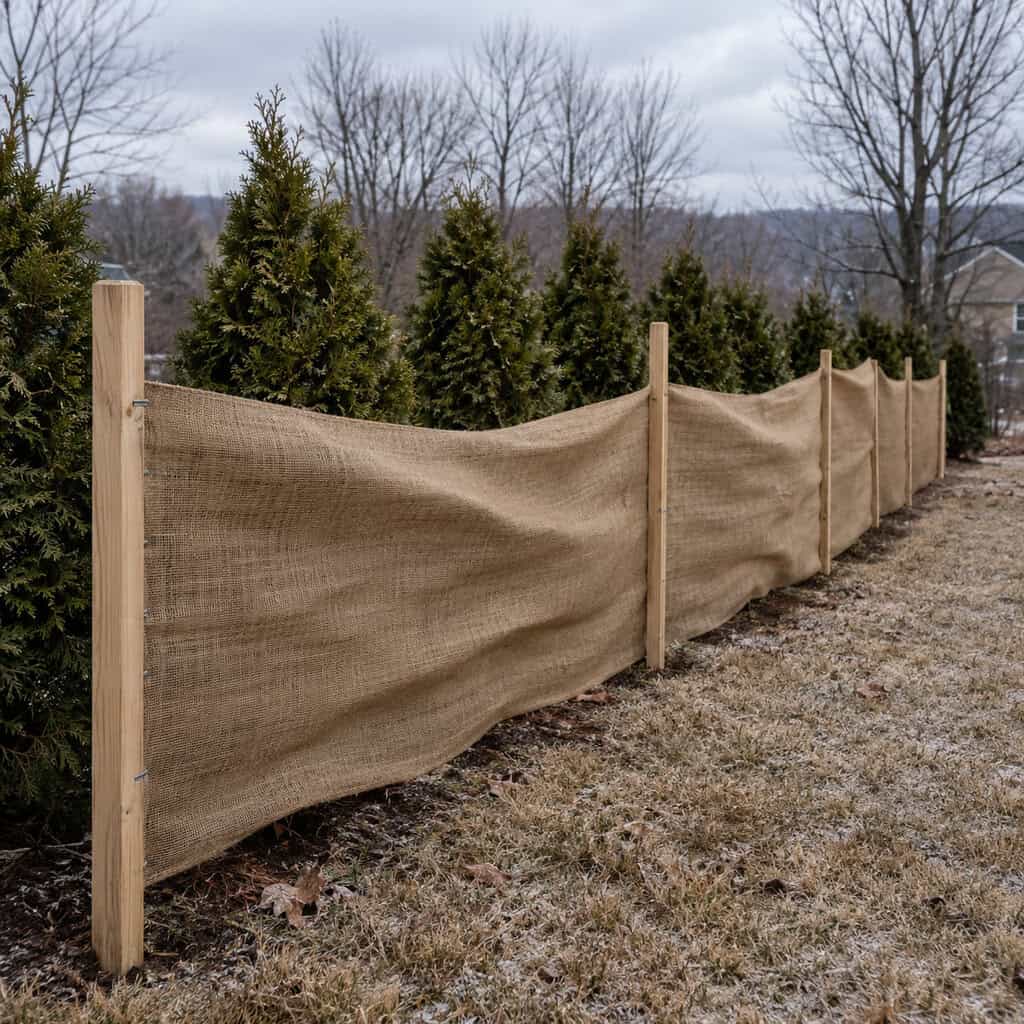
Boxwood, arborvitae, and rhododendron don’t turn brown from cold. They turn brown from wind.
Dry winter wind pulls moisture out of the leaves faster than frozen roots can replace it, and by March the windward side looks scorched while the sheltered side is fine.
She drove three stakes on the north and west sides of the vulnerable shrubs and stapled burlap between them — a screen, not a wrapper. Air still moved through; the wind just didn’t hit the foliage directly.
And the stakes had to go in while the ground was still soft. That’s what makes this a November job and not a December one.
24. A Soil Test and a Scattering of Lime
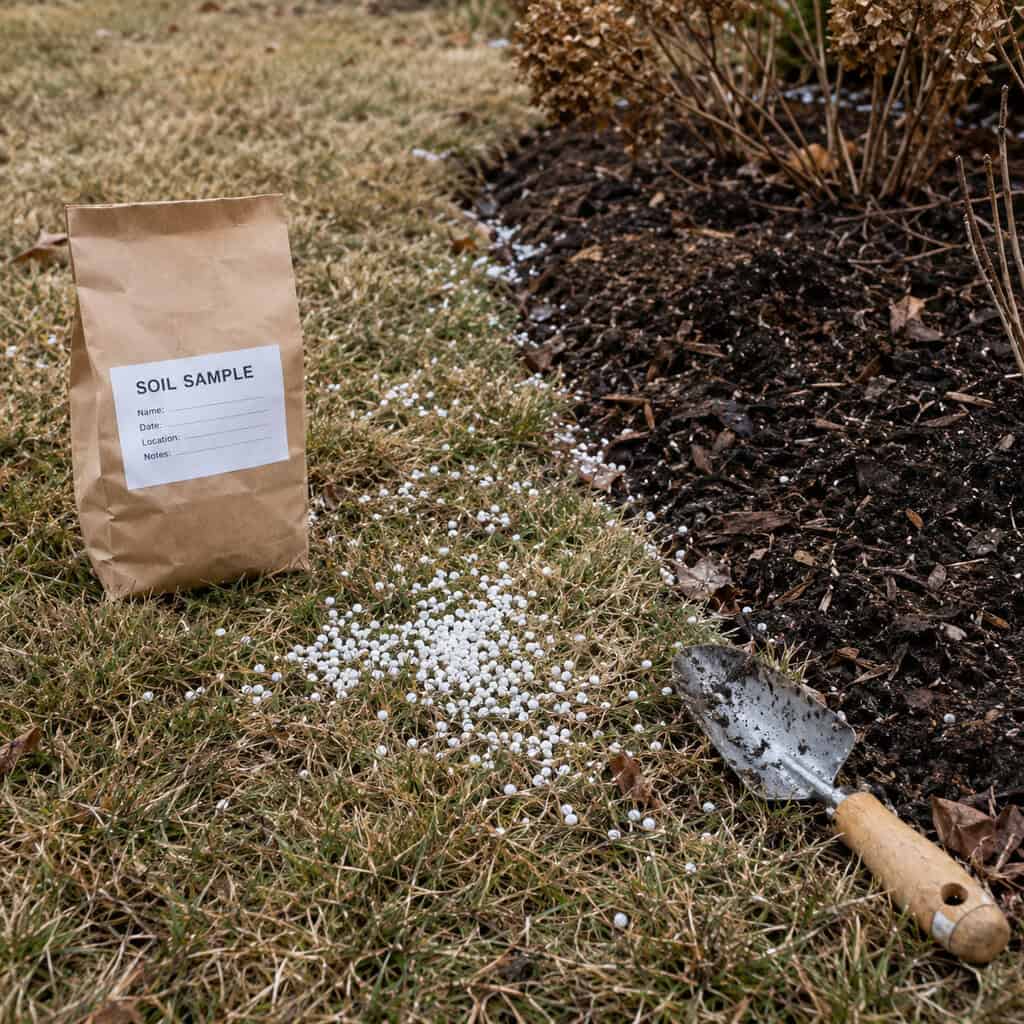
Most county extension offices still run soil tests for somewhere between $10 and $25.
She didn’t need the paperwork every year, but when the hydrangeas sulked or the lawn went mossy, she’d pull a sample in November and send it in.
Lime works slowly. Ground limestone needs months of moisture and freeze-thaw to shift soil pH at all, which is exactly why fall application beats spring — scatter it in November and it’s finished working by the time you plant.
Lime in April is mostly a next-year investment you paid for this year.
25. Every Tool Cleaned, Sharpened, and Dunked in Oiled Sand

Cold rainy afternoons meant the garage.
Shovels scraped clean with a putty knife, blades touched up with a mill file, pruners taken apart and the sap scrubbed off with steel wool. Wooden handles rubbed down with linseed oil.
Then the bucket: five gallons of builder’s sand with about a quart of old motor oil stirred in. Plunge the shovel in, pull it out, hang it up. Comes out next March without a speck of rust.
The other half of it is sanitation. Dirty blades carry fungal spores and nematodes from a sick plant straight into a healthy bed the following spring.
26. Trees and Shrubs Planted While the Soil Was Still Warm

Dormant tops, active roots. That’s the whole argument for fall planting.
Soil above 50 degrees keeps woody roots growing well past the time the leaves drop, so a tree planted in early November spends the winter quietly expanding its root system instead of trying to support leaves at the same time.
By May it’s established. An identical tree planted in April is still in shock and heading into summer heat with nothing underneath it.
It’s also when the nursery marks everything down 50% because they don’t want to overwinter inventory. Cheaper plant, better outcome. Just check what that tree actually becomes in five years before you fall for the price tag.
27. One Last Pass at the Cool-Season Weeds
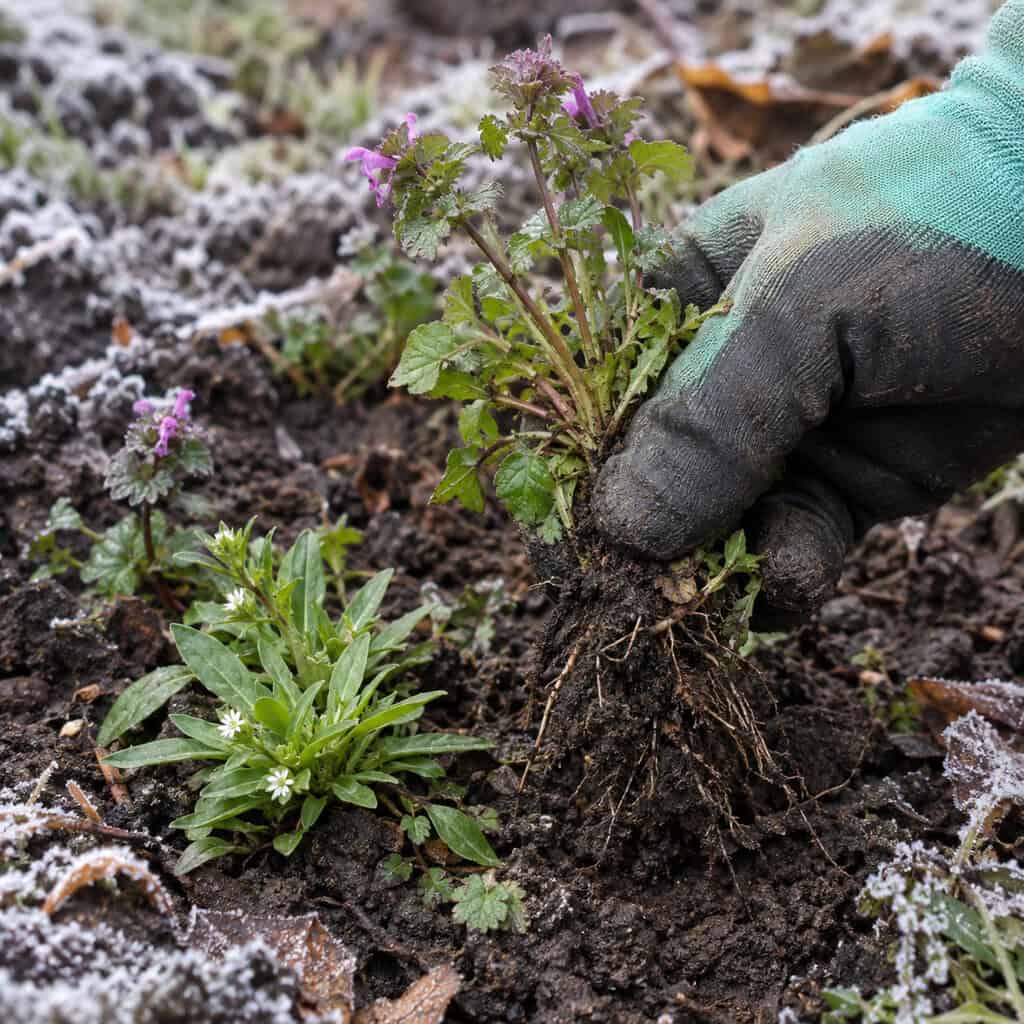
Chickweed, henbit, purple deadnettle, dandelion. All of them wide awake in November while everything else quits.
And they’re doing something specific right now: pulling sugars down out of the leaves and into the roots to survive winter. Anything you put on the leaves goes down the same pipeline.
That makes November the single most effective time of year to kill a perennial weed. Better than spring, by a wide margin.
She mostly just pulled them — the soil’s soft and damp and they come up whole. Every chickweed plant left standing drops a few thousand seeds before March.
28. Paperwhites Potted and Tulips Chilled in the Refrigerator

The one November job that paid off indoors.
Thanksgiving week she’d set paperwhite bulbs on pebbles in a shallow dish, add water just to the base of the bulbs, and put them in a cool bright window. Three to five weeks to bloom — meaning white flowers in the kitchen during the first week of January.
Tulips and hyacinths need the cold first. Twelve to sixteen weeks in a paper bag in the refrigerator, well away from apples, because ripening fruit gives off ethylene gas that kills the flower bud inside the bulb.
Pot them up after the chilling and you get spring on the windowsill in February, which is when you need it most.
29. A Bucket of Garden Soil Carried Into the Garage

Nobody thinks of this until the day they need it.
In February you want to pot up a cutting, start onion seed, or fill a seed flat — and the compost pile is a frozen brick and the garden center isn’t open yet.
So in November, before the ground locked up, she’d carry in one five-gallon bucket of good garden soil and a feed sack of sifted compost and set them in the corner of the garage.
Thirty seconds of foresight. It’s the kind of thing you only learn by having been caught out once.
30. Poppy and Larkspur Seed Scattered on Bare Ground
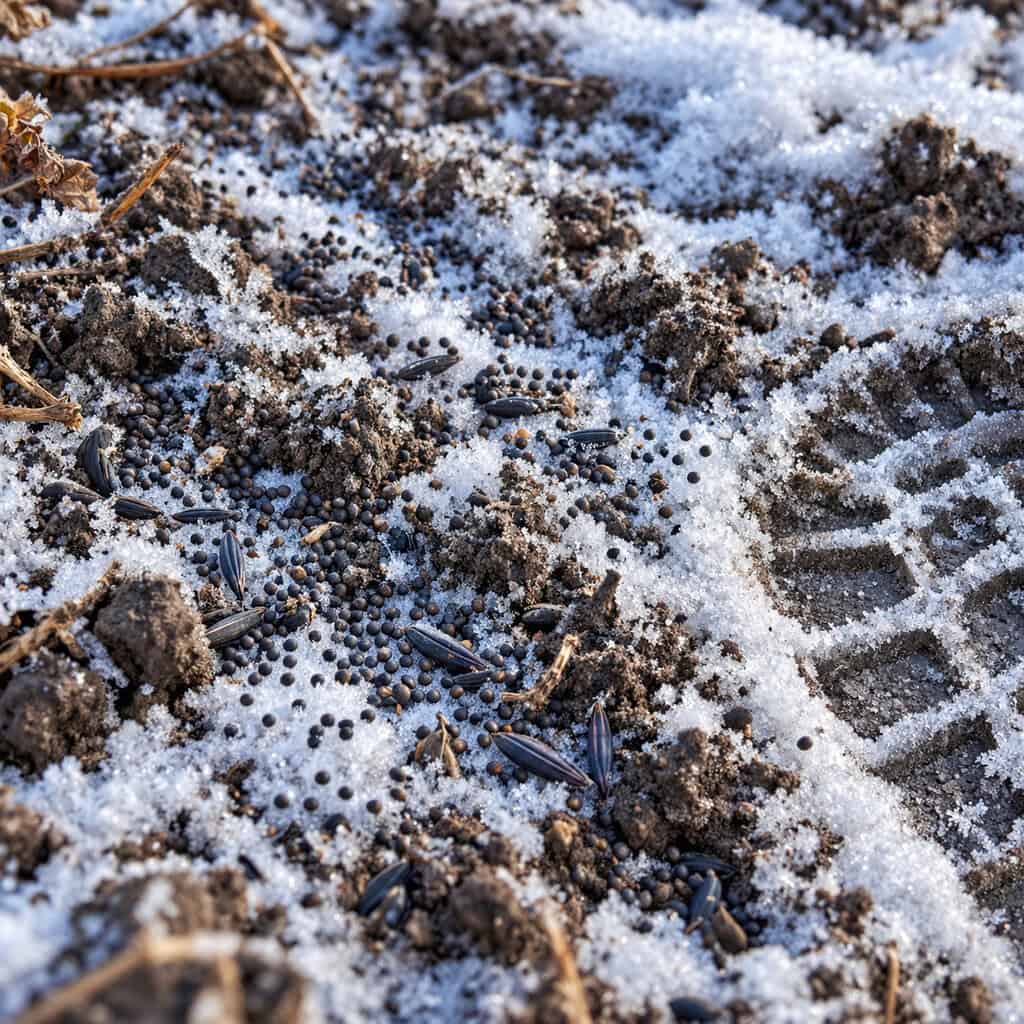
Some seeds need to be rained on and frozen before they’ll ever come up.
Breadseed poppies, Shirley poppies, larkspur, bachelor’s buttons, nigella — hardy annuals that want cold, damp conditions to break dormancy. Start them indoors in March and most of them sulk or die on transplant.
She’d scatter them over bare ground in late November, sometimes onto a dusting of snow so she could see where they landed, and press them in with her boot. No raking, no covering.
They germinated in a cold March and bloomed in June. That’s the entire secret behind the cottage garden that looks expensive and wasn’t — self-sowers, seeded on frozen dirt, free.
31. Carrots, Leeks, and Parsnips Left in the Ground Under Straw
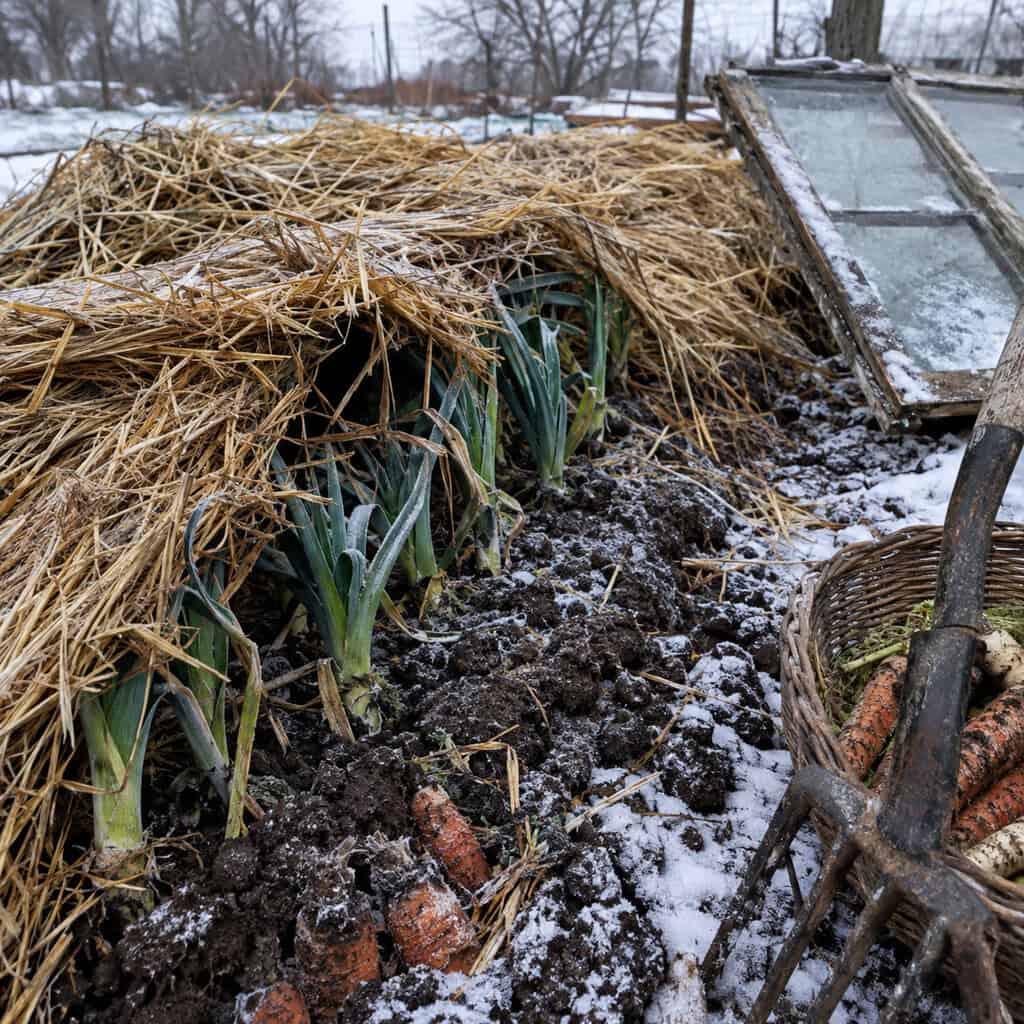
The vegetable garden kept feeding her into January.
Carrots, parsnips, leeks, and salsify stayed right where they grew, with a foot of loose straw heaped over the row before the ground froze hard. An old storm window or a board on top kept the straw from blowing to the neighbor’s.
Frost actually improves them. Cold triggers the roots to convert stored starch into sugar as antifreeze, which is why a November parsnip tastes nothing like an August one.
On a cold Sunday she’d pull the straw back like a blanket, dig what she needed for supper, and tuck it back in.
32. Everything Written Down in the Garden Notebook

The last job of the season happened indoors, on the first night cold enough to need a sweater.
A spiral notebook at the kitchen table. Which bed held the tomatoes. Where the daffodils went and how many. The date of the first frost. Which rose died and what the tag had said. Which squash the bugs ruined and which they left alone.
Four years of that and you stop guessing. You know your own ground — your frost dates, your bad corner, your variety that always bolts — in a way no book or website can tell you.
That’s why her garden got a little better every single year while everybody else’s stayed the same.
It’s also the one thing in this entire list you can’t buy at a garden center.
33. Cleaning Out the Birdhouses and Hanging the First Suet
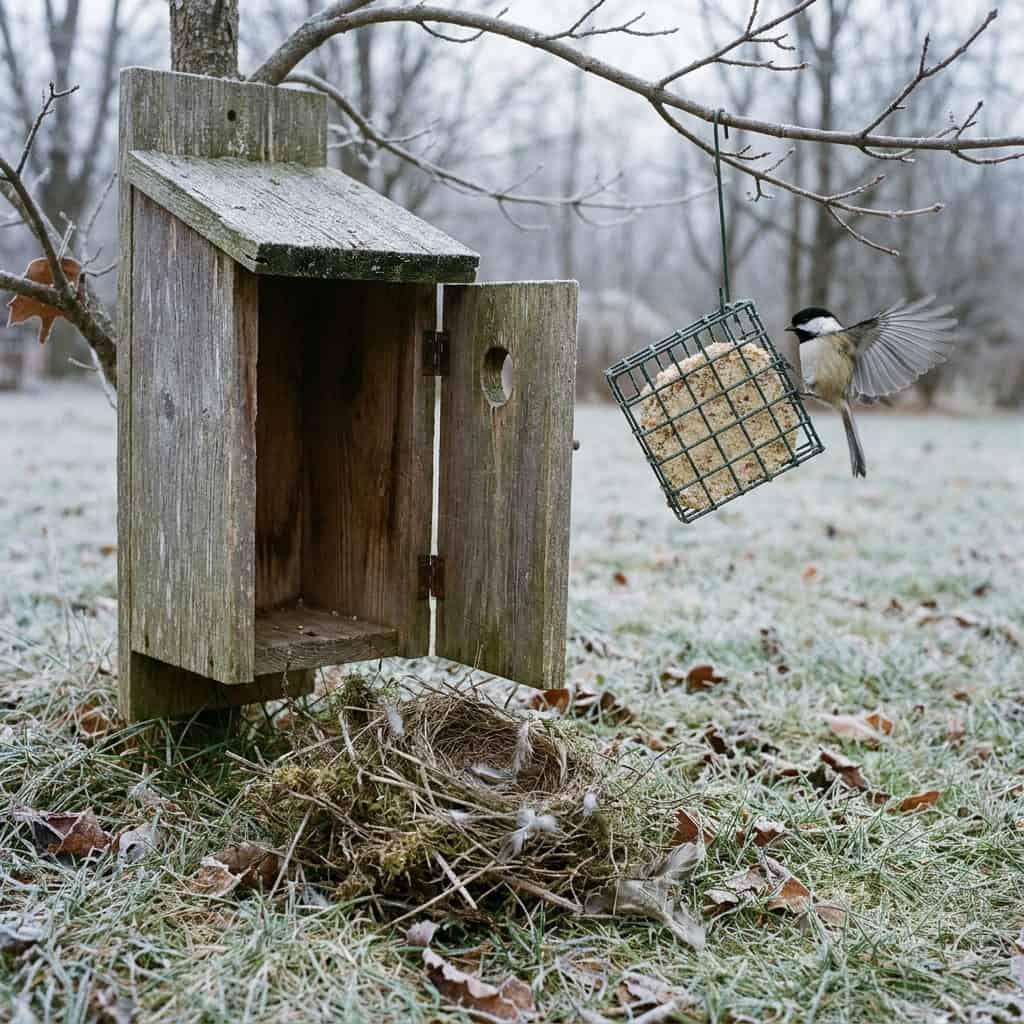
Old nests came out in late November, before mice and wrens claimed the boxes for winter roosting.
A scrape, a rinse with hot water, hinge left open to dry. Then the suet cake went up on the maple.
Chickadees and nuthatches that spend the winter in your yard spend it working the bark for overwintering insect eggs and aphid clusters. Feed them in December and they’re still patrolling your fruit trees in April.
A twelve-pack of suet runs about nine dollars. It’s the cheapest pest control going, and better company than a spray can. The same logic runs through building a yard that works for pollinators.
34. Netting the Pond and Pulling the Pump
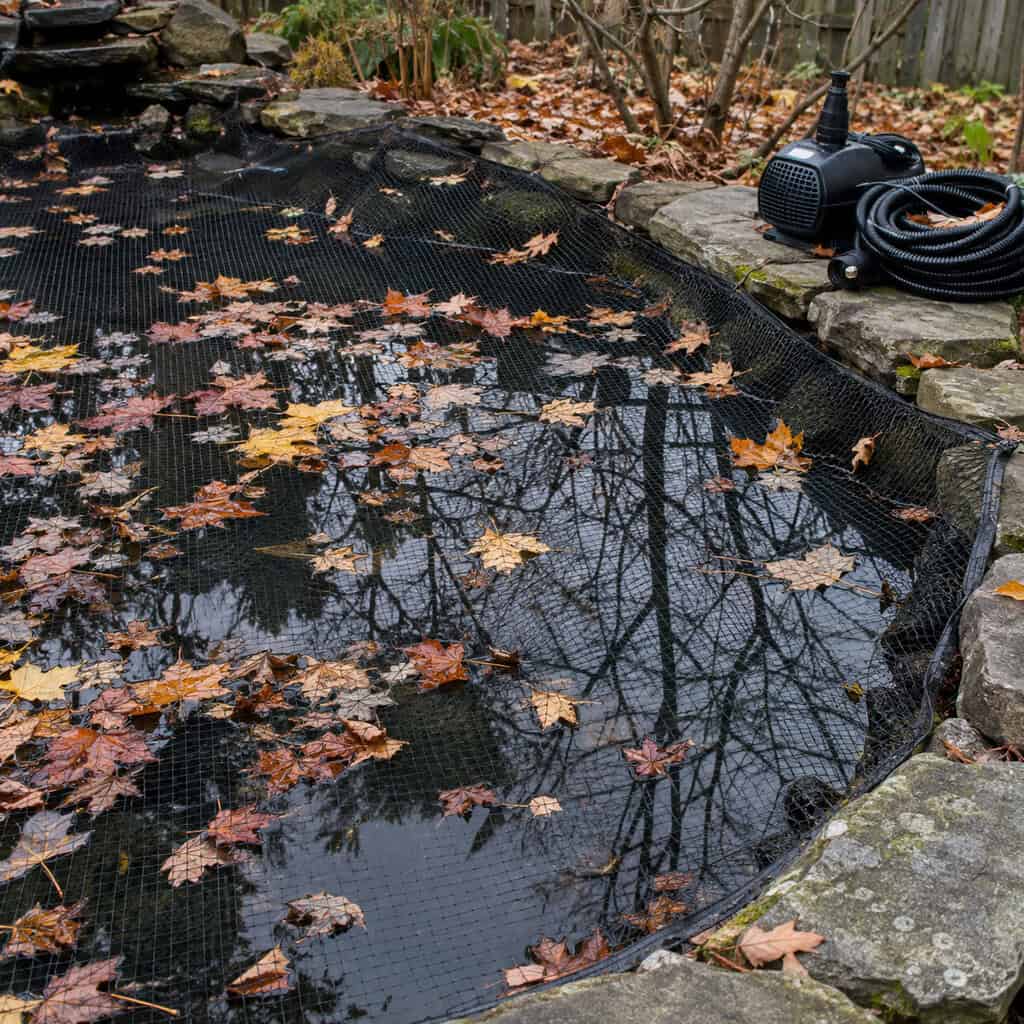
If there was a water feature, November decided whether it survived.
Netting went over before the last leaves fell, because a foot of rotting maple leaves on the bottom uses up oxygen all winter and suffocates fish under ice.
The pump came out, got rinsed, and spent the winter in a bucket of water in the basement so the seals wouldn’t dry and crack. A floating de-icer went in to keep one small hole open in the ice for gas exchange.
Skip it and you find out in March. That’s an expensive lesson for something that takes an afternoon.
November never looked like gardening. It looked like chores — hauling, covering, draining, writing things down in the dark at five in the afternoon.
But that’s where the whole next year got decided. The lawn that greened up first, the peonies that bloomed, the garlic the size of a fist, the roses that made it through.
Nobody was out there watching her do any of it.
They just asked, every April, what her secret was.