

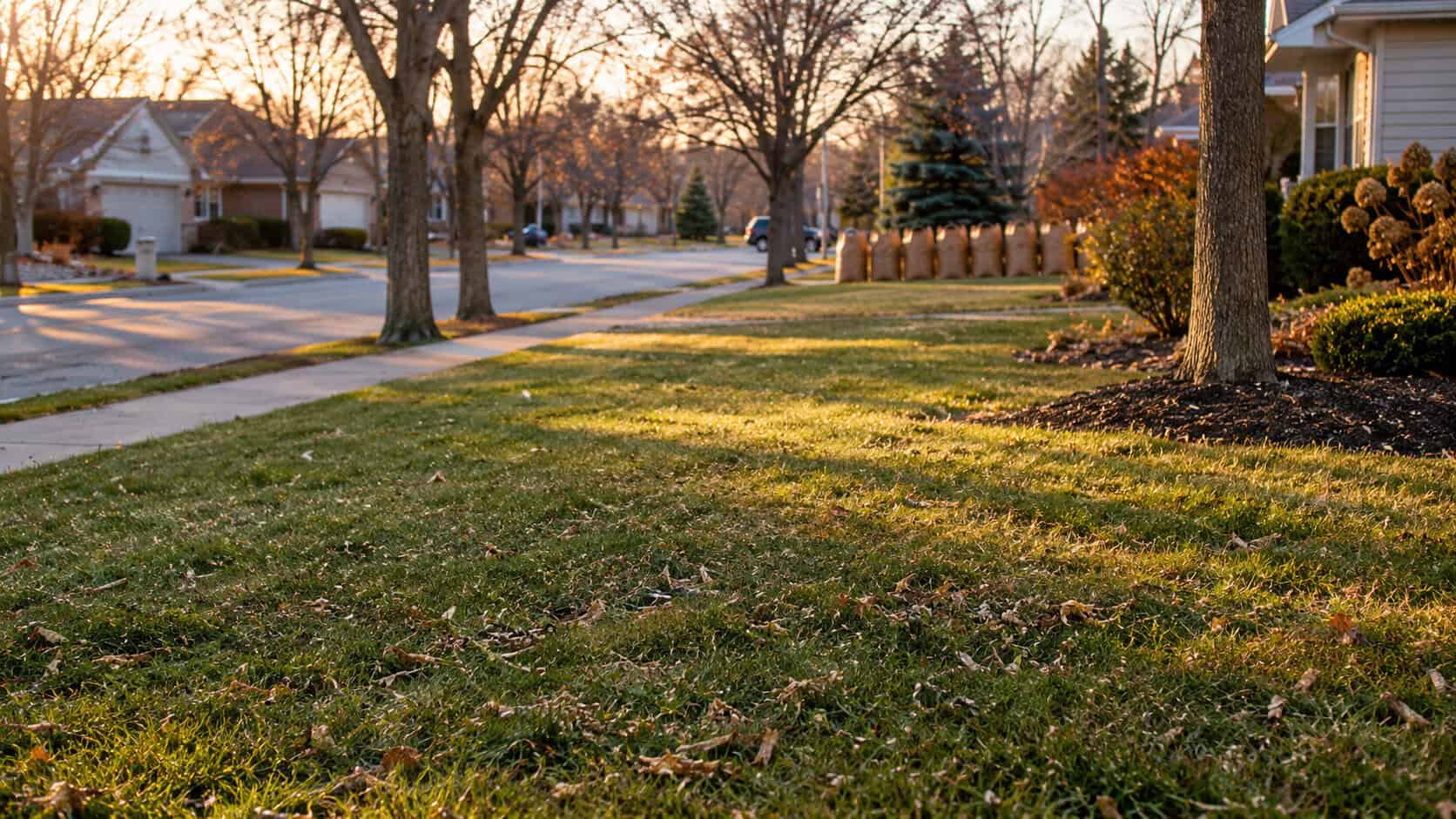
Drive through any neighborhood the second week of November. Count the bags at the curb.
Now look at the yard belonging to the guy whose truck has a trailer and a logo on the door. There are no bags. There’s probably no evidence of anything at all.
That’s not laziness. Pros have a short list of things that actually pay off before the ground freezes, and a much longer list of jobs they’ve learned to walk away from — jobs the big-box seasonal aisle is still selling hard.
Most of what homeowners do in November is either three months too late or four months too early.
Here are 26 things landscapers do to their own lawns this month, and the ones they skip entirely.
1. The Last Feeding of the Year — Timed to the Final Mow, Not the Calendar
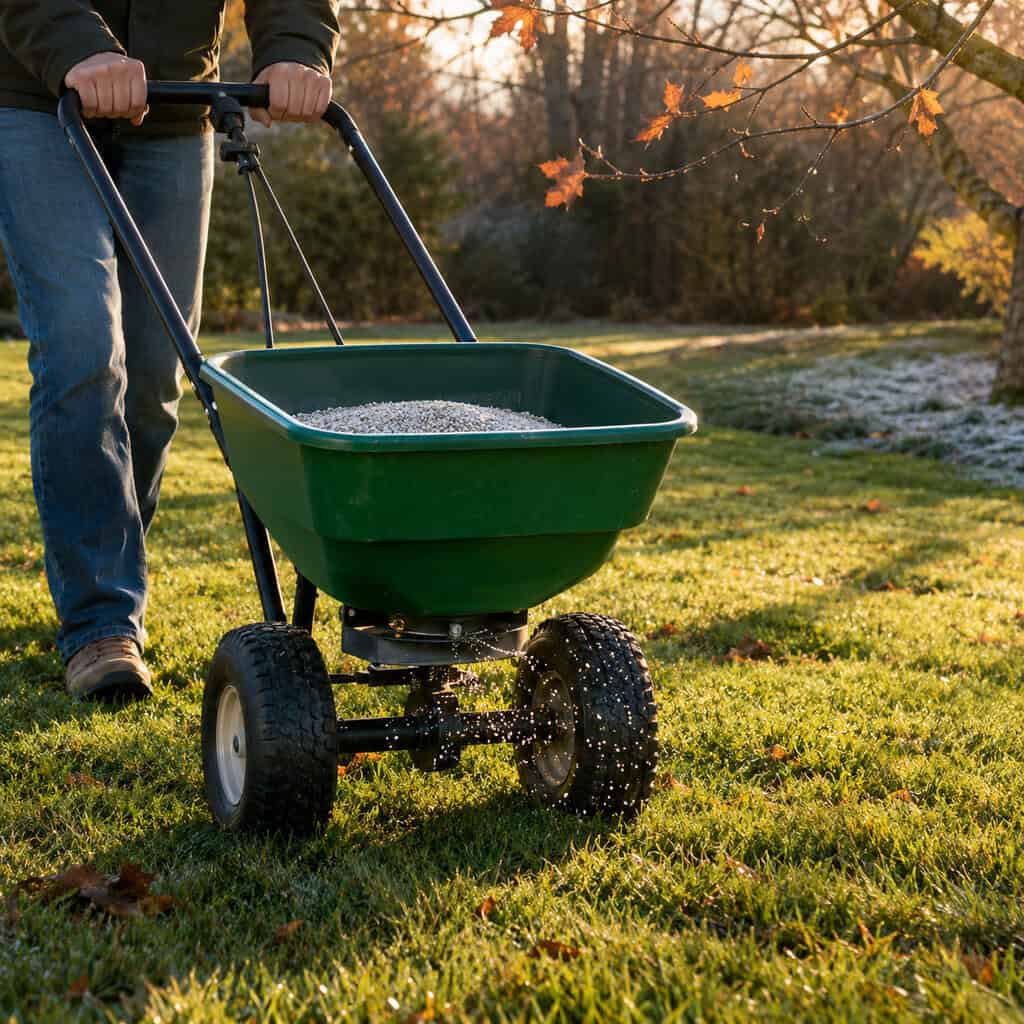
Nobody in the trade says “I fertilize in November.” They say “I fertilize about a week after the last cut.”
The grass has to still be green and the soil has to still be workable — roughly 40 to 55°F. At that point the blades have stopped stretching upward but the roots are still awake and stockpiling carbohydrates.
Nitrogen applied then doesn’t make the lawn grow. It makes the lawn store. Purdue Extension splits fall nitrogen into a September application and a second one after the final mowing, which is the single highest-return thing most homeowners could copy and don’t.
Apply it too early and you push soft growth into frost. Too late, on frozen ground, and it just runs off into the storm drain.
2. Mowing the Leaves Into the Lawn Instead of Bagging Them
Forty bags at the curb is a monument to wasted Saturdays.
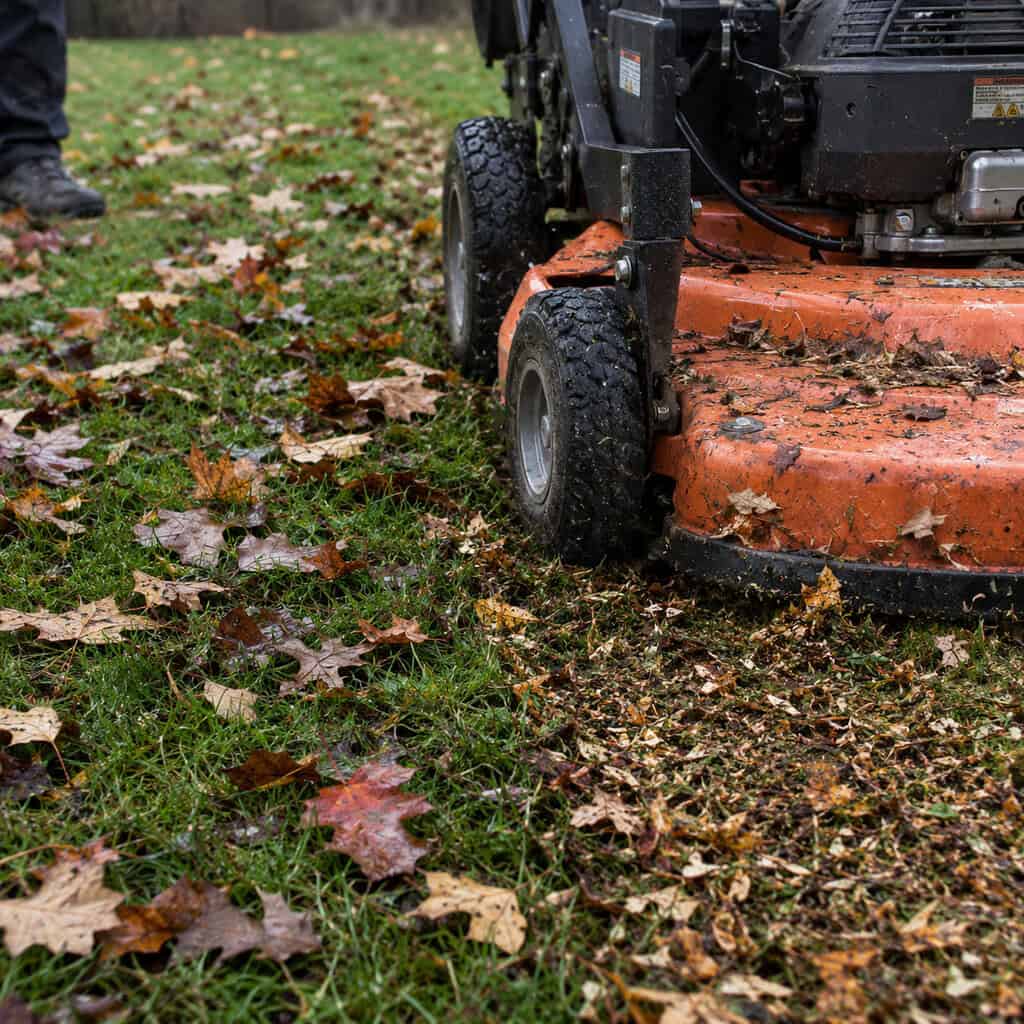
Pros make two or three passes with a mulching deck and the leaves disappear into dime-sized confetti that filters down to the soil. Michigan State ran this for three years and watched crabgrass and dandelion populations collapse, because shredded leaf litter plugs the bare gaps where weed seed germinates.
The free fertilizer is a bonus. The weed suppression is the actual win.
Go slow, overlap your passes, and don’t try to do eight inches of wet oak in one shot. There’s a whole range of things landscapers do with leaves instead of bagging them, and almost none of it involves a rake.
3. Skipping Grub Control Entirely

The grubs are gone. Not dead — gone, down past the root zone where no granular product is reaching them.
By November they’ve finished feeding and burrowed deep to wait out the freeze. Anything you spread now is money sprinkled on cold dirt.
What pros do instead is note the damage, flag the square footage, and put a reminder on the calendar for the preventive window next June or July. That’s when the eggs hatch and the treatment actually touches something alive.
4. Dropping the Deck a Half-Inch for the Final Cut — and Never Scalping
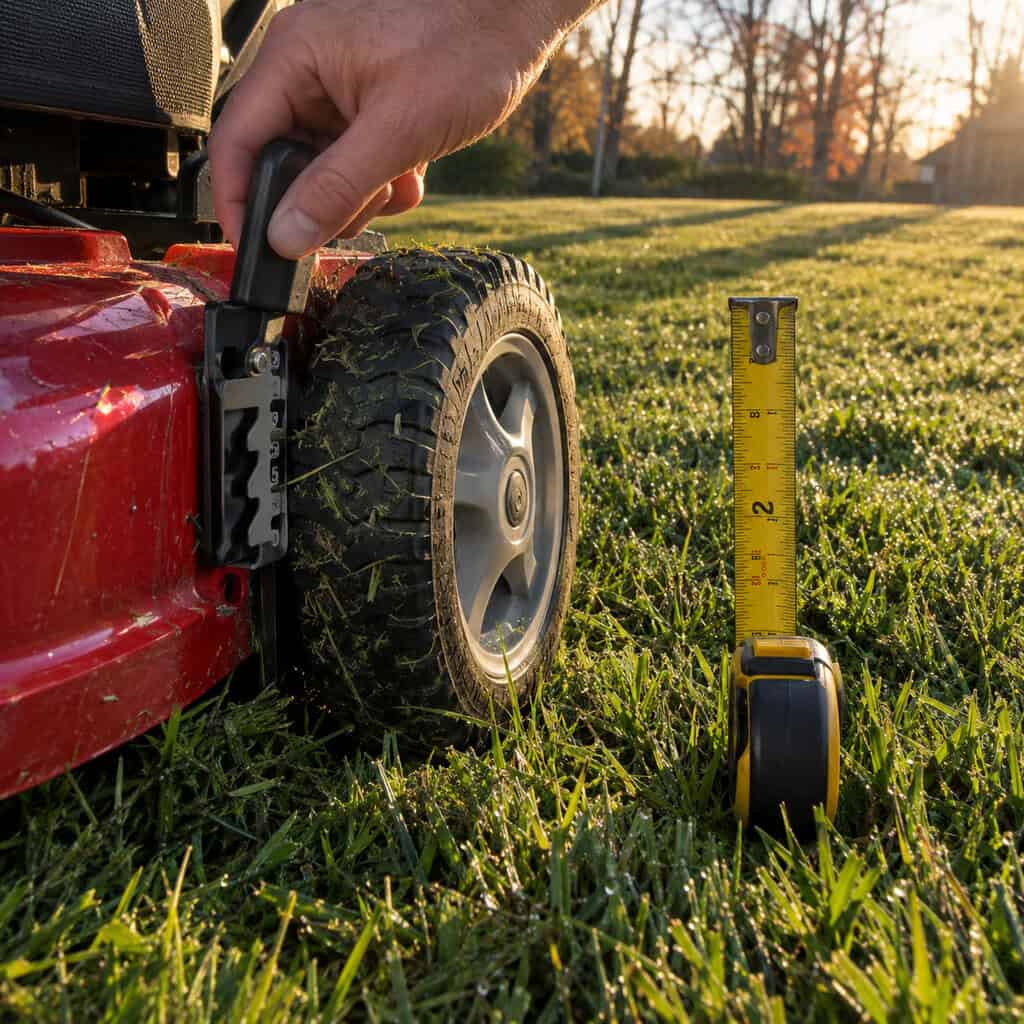
The target is 2 to 2.5 inches on cool-season turf. Not one inch.
Short enough that the blades don’t fold over and mat under wet snow, which is exactly the humid little blanket snow mold needs. Tall enough that the crown still has insulation.
Homeowners hear “cut it short for winter” and take it to the dirt. That’s the classic overcorrection — a scalped lawn in November is an exposed lawn in January.
Step the deck down over your last two cuts rather than hacking it all off at once.
5. The 50-Degree Weed Spray on Dandelions, Plantain and Clover
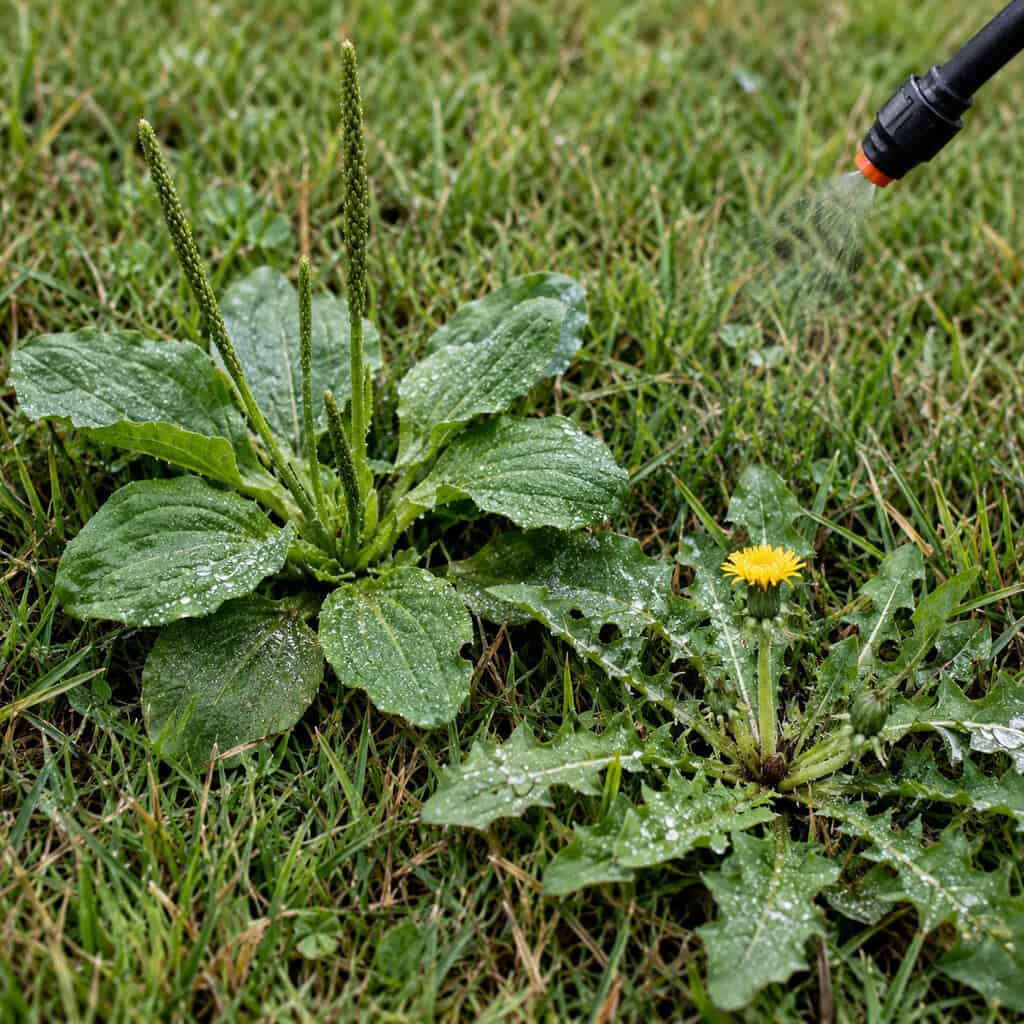
This is the window everybody forgets, because mentally they’ve already quit for the year.
Perennial broadleaf weeds spend late fall pumping sugars down into their root systems for winter storage. Spray them and the herbicide rides along, straight to the part of the plant that survives.
Pick a mild afternoon above 50°F. Iowa State University Extension puts the effective window at mid-September through early November.
A dandelion sprayed in May often comes back. One sprayed now usually doesn’t.
6. Walking Right Past the Aerator

Core aeration only works because growing turf knits those holes back shut within a few weeks.
In November there’s no knitting left. You’ve punched a few thousand open wounds into the lawn and handed them to the freeze-thaw cycle.
The window closed in early-to-mid October. Pros rent the machine in early fall or they don’t rent it at all.
7. Blowing Out the Irrigation Lines and Killing the Hose Bibs
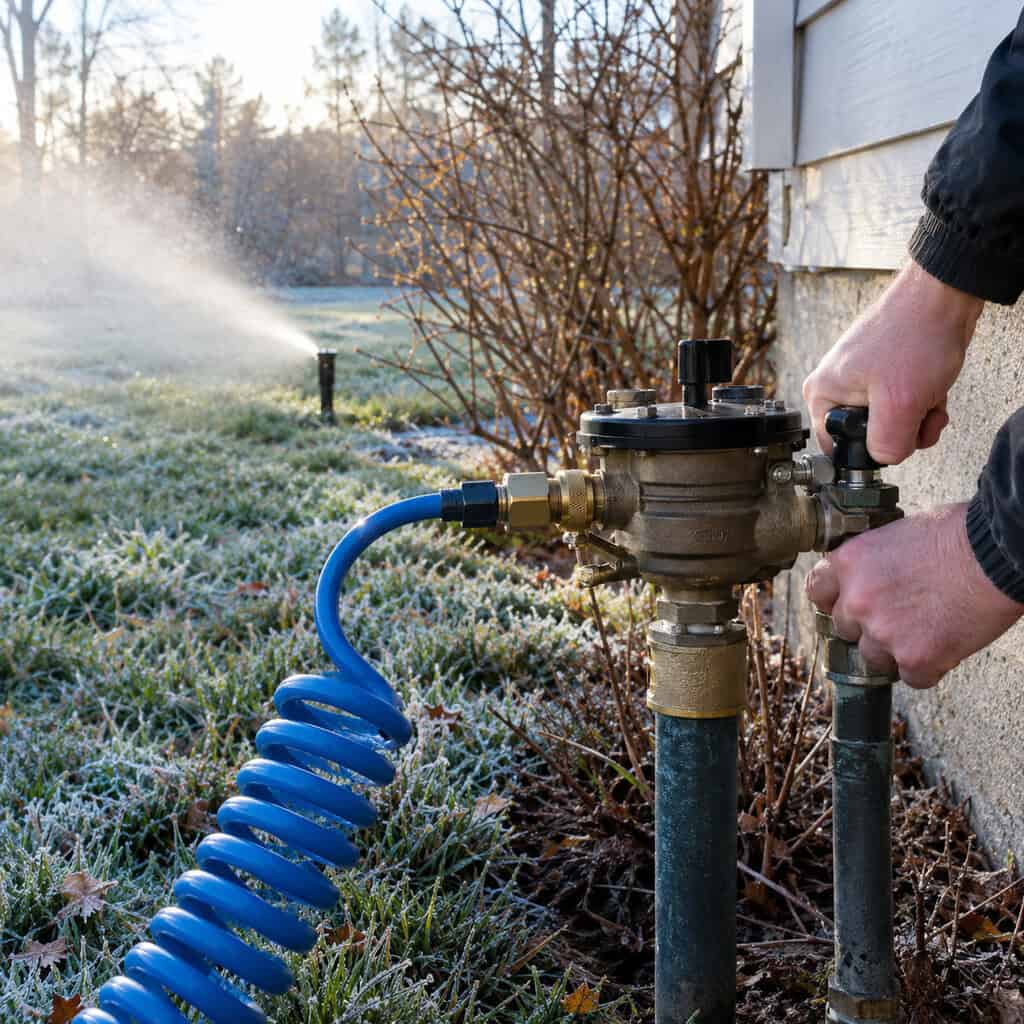
This one’s non-negotiable, and landscapers do their own house before they do yours.
Water expands roughly 9% when it freezes. That expansion doesn’t care what it’s inside of — polyethylene lateral lines split lengthwise, PVC shatters, and brass backflow preventers crack right at the body where the casting is thickest.
The sequence matters. Shut off the main supply to the system, open the test cocks on the backflow, then run compressed air through zone by zone — starting with the zone farthest from the compressor — until the heads spit mist instead of water. Each zone gets short bursts, not one long blast, and pressure stays under about 50 psi for poly pipe so you don’t blow a head off its riser.
Then the hose bibs. Disconnect every hose, because a coiled garden hose left attached holds a slug of water right against the spigot and backs the freeze up into the wall. Drain the hose and hang it. On an older non-frost-free bib, find the interior shutoff, close it, and open the outside valve to let the stub drain.
Here’s what makes this worth the afternoon. A split irrigation lateral in the yard is a spring annoyance — a muddy patch, maybe $200 to dig and repair. A burst supply line inside the wall behind a frost-damaged spigot is a different animal entirely: it often runs for hours before anyone notices, and water damage restoration on a finished basement routinely lands in the $3,000 to $8,000 range before you’ve replaced a single piece of drywall.
Quick walkthrough before the first hard freeze:
- Every hose off every spigot, drained and stored
- Backflow preventer drained or removed and brought inside
- All zones blown out, heads retracted
- Interior shutoff closed on any non-frost-free bib
- Insulated foam cap on exposed outdoor faucets
Do it the week before your first forecast overnight in the 20s. Not after.
8. Leaving the Leaves in the Beds — While Clearing Them Off the Turf
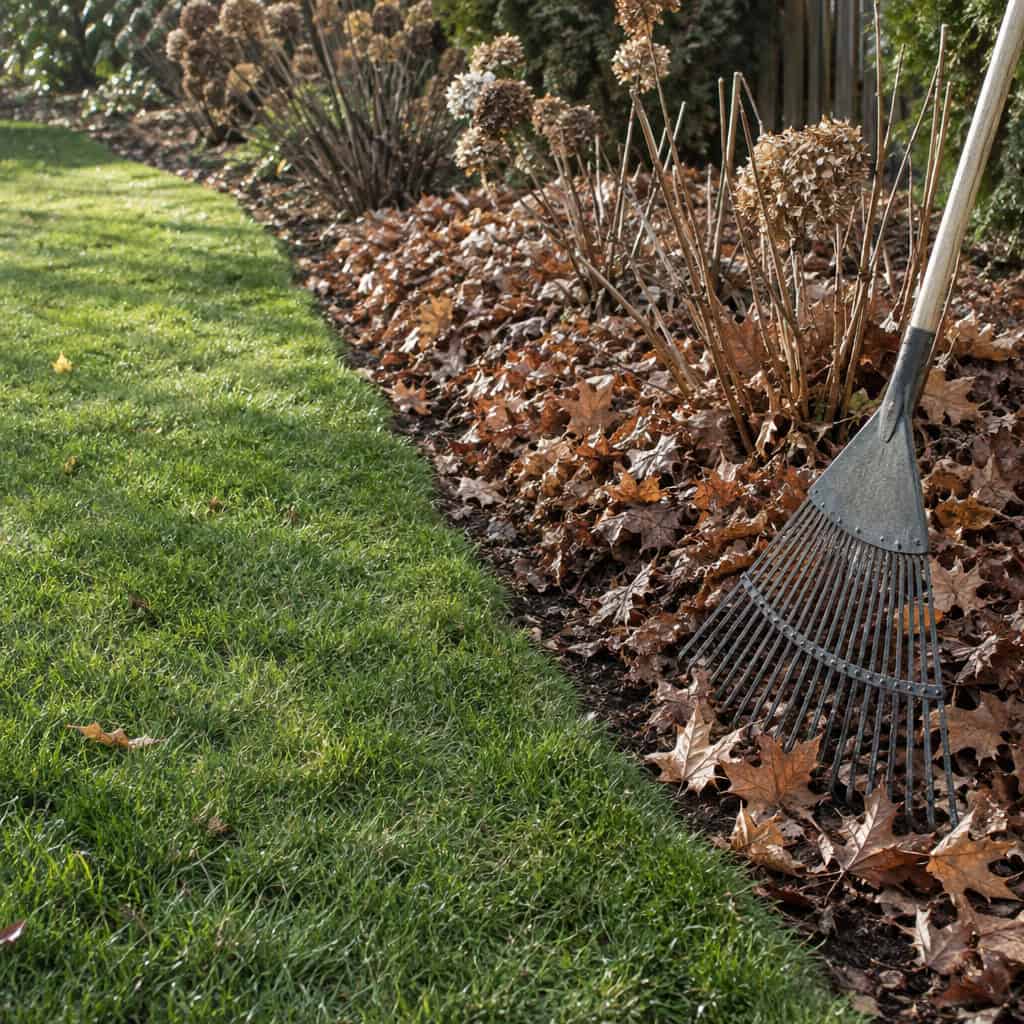
Same leaves, two completely different verdicts depending on what they’re lying on.
On the lawn, a wet packed mat is a problem — it blocks light, holds moisture against the crowns and incubates snow mold under snow cover. On a planting bed it’s free insulation and overwinter habitat for bumblebee queens, firefly larvae and butterfly pupae that bed down in leaf litter.
So pros blow toward the beds, not toward the curb. The leaves end up three or four inches deep around the shrubs and stay there until things warm up in spring.
It’s the same logic behind the fall cleanup jobs your garden is better off without.
9. Skipping the Dethatcher and the Power Rake
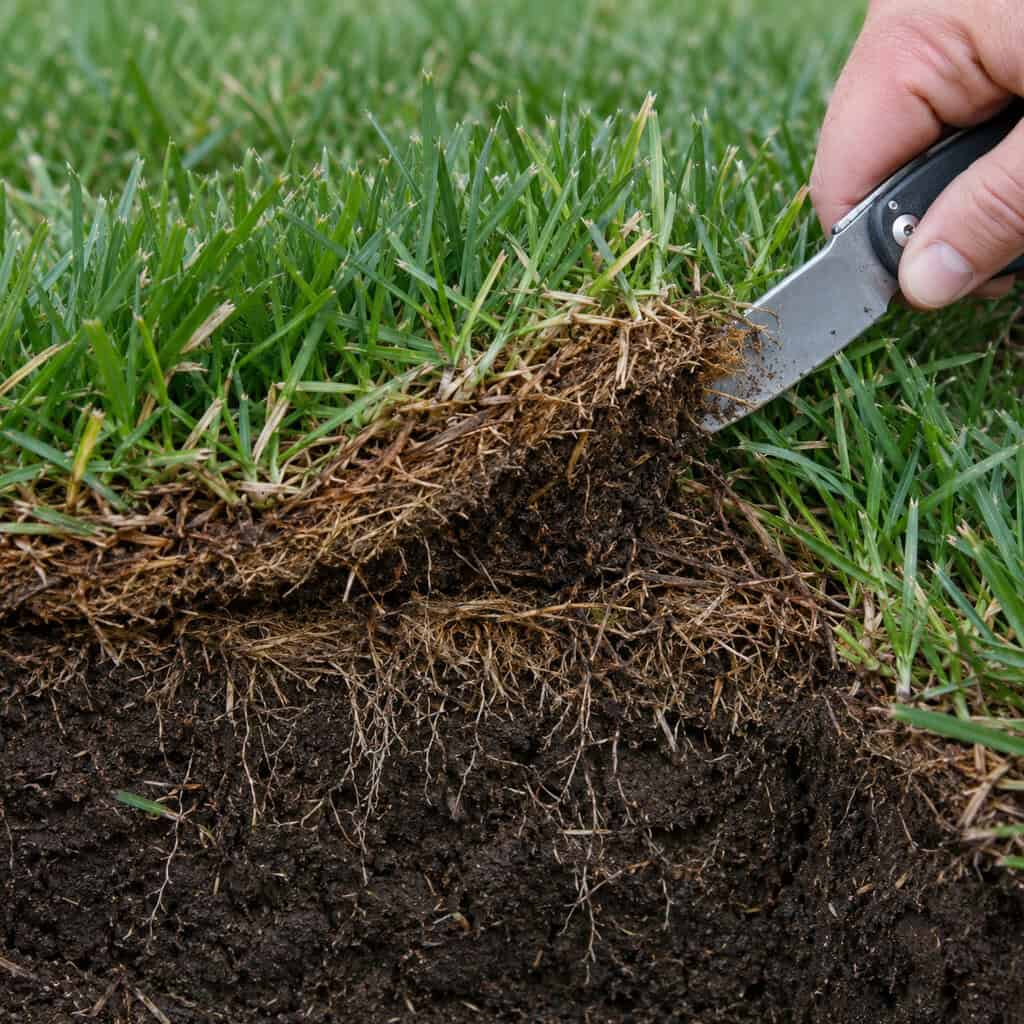
A power rake rips living turf out of the ground. That’s the whole mechanism.
In late August that’s defensible, because the lawn has six weeks of growing weather to fill back in. In November you’ve just created bare soil going into winter, which is a seedbed for next year’s crabgrass and nothing else.
Most home lawns don’t have a real thatch layer anyway. Push a finger into the turf — if the spongy brown layer between green blades and soil is under half an inch, there’s nothing to dethatch and the machine is just doing damage.
10. Pulling a Soil Test — and Liming Only If It Says To
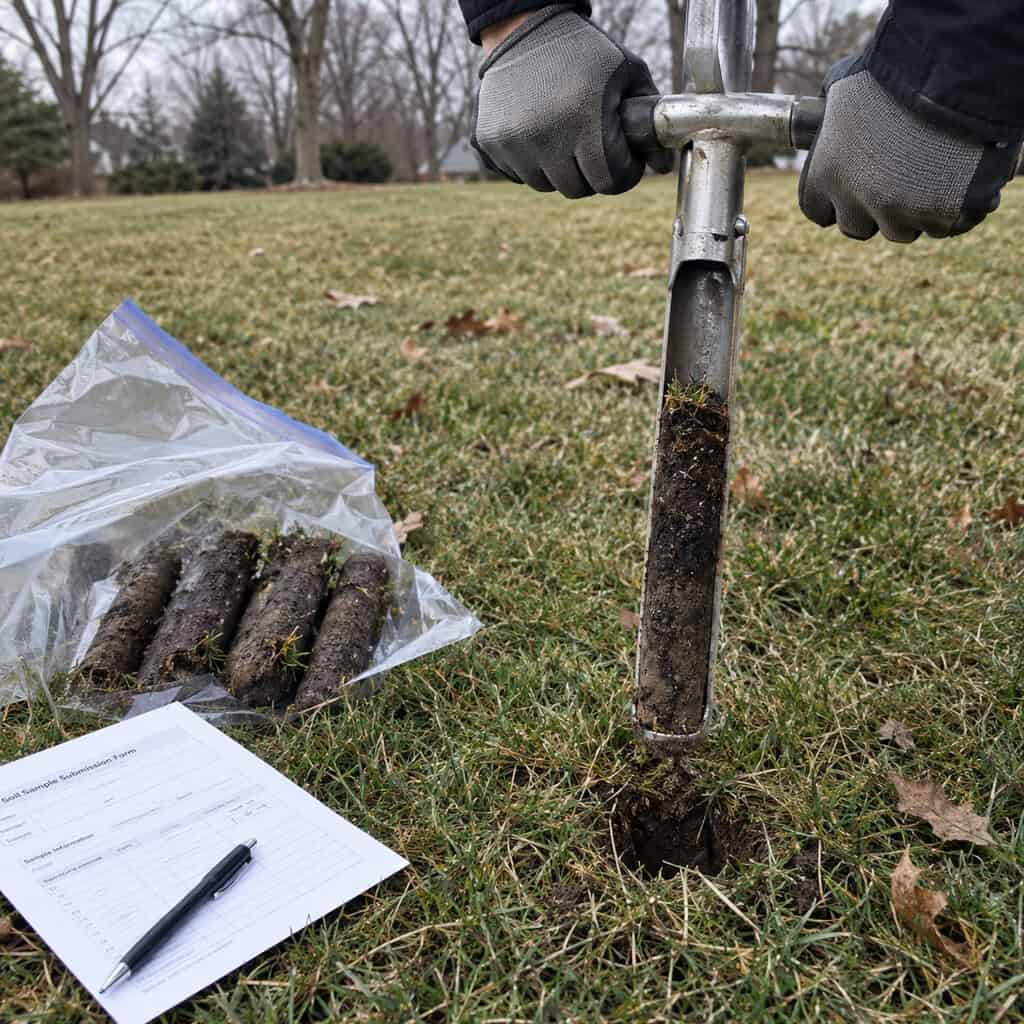
November is when the testing labs are quiet and the turnaround is fast. Pull your samples now and you’ll have numbers on the counter long before the spring rush.
Lime also wants time. Dropped in November, it has all winter of moisture and freeze-thaw to actually react with the soil instead of sitting on top of it.
But the skip here matters as much as the do. Pros don’t spread “maintenance lime” every year out of habit — pushing an already-neutral soil above 7.0 locks up iron and manganese, and you end up with yellow grass and no idea why.
Test first. Lime second, if at all.
11. Mowing Until the Grass Actually Stops — Not Until a Date on the Calendar
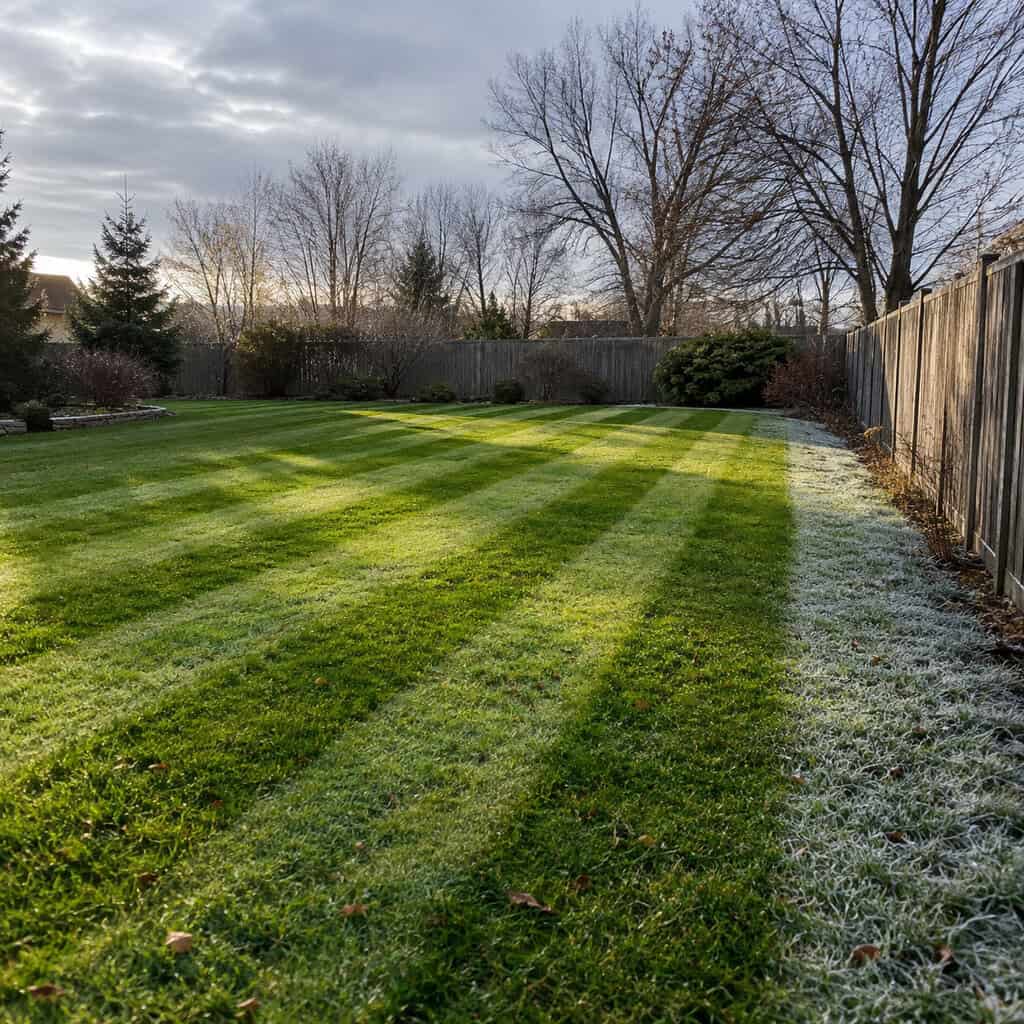
Cool-season turf doesn’t check the date. It checks the soil temperature.
A mild autumn keeps fescue and bluegrass putting on growth well past Halloween, and shaggy six-inch grass folds flat under the first wet snow and stays there for three months. The University of Minnesota Extension November checklist even tells people to keep the mower out past the end of growth, purely to keep mulching leaves.
Pros put the mower away when the lawn tells them to. Usually that’s two or three cuts later than the neighbors.
12. Skipping the Fall Crabgrass Pre-Emergent
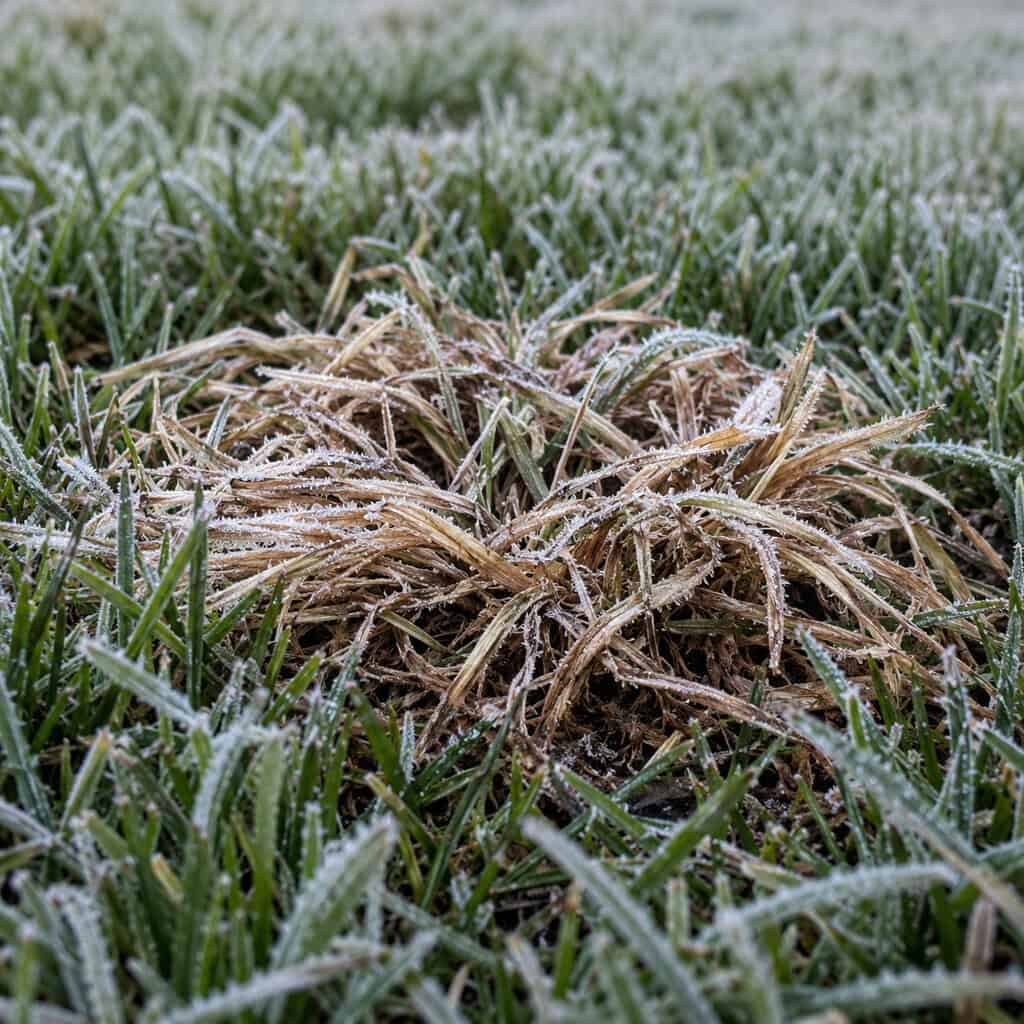
Crabgrass is an annual. The frost already killed it.
Its seed is sitting in the soil waiting for May, when soil temps hit the mid-50s. A pre-emergent barrier laid down in November will have broken down long before then and accomplished exactly nothing.
Worse, it’ll kill any dormant seeding you had planned, because a pre-emergent can’t tell a crabgrass seed from a fescue seed.
The one narrow exception is annual bluegrass prevention, and that application belongs in late summer, not now.
13. Vole Patrol: Short Grass at the Fence Line, Mulch Pulled Off the Trunks
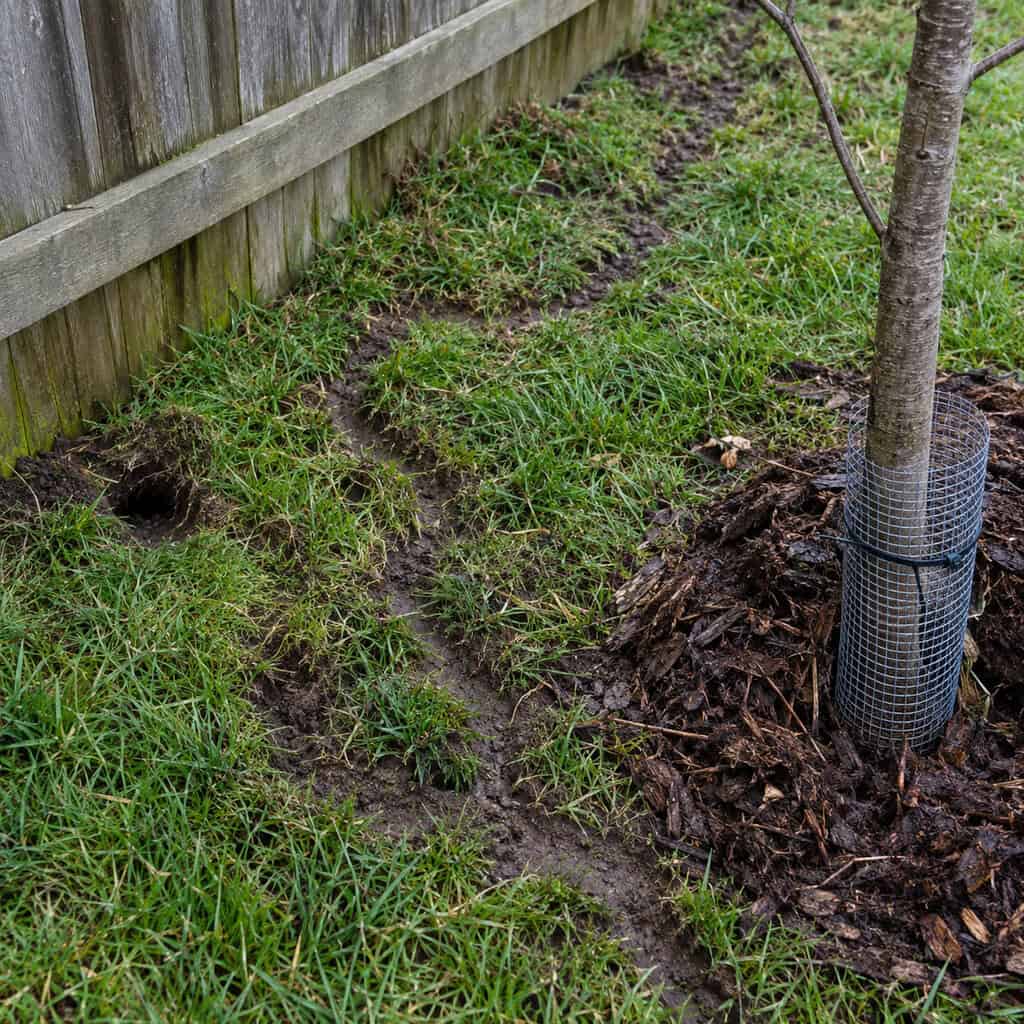
Nobody sees vole damage happen. You see it in March, all at once, and it looks like someone drove a weed trimmer under the snow.
Meadow voles don’t hibernate. They spend the entire winter in the subnivean zone — the few inches of open space between the soil surface and the bottom of the snowpack — chewing grass down to the crown and running highways through the turf, completely hidden from hawks and owls.
What shows up at melt-off is unmistakable:
- Winding surface runways about an inch and a half wide, grass grazed to the dirt
- Small clean holes at the end of the runways, dime to quarter sized
- Tiny grass clippings and brown rice-sized droppings in the trails
- Bark stripped off young tree trunks right at ground level, with visible gnaw marks running sideways
The turf runways fill back in. The girdling doesn’t. A young maple or fruit tree chewed all the way around the trunk is dead and doesn’t know it yet — the phloem is severed and the tree leafs out in May on stored energy, then collapses in July.
So pros attack the cover, not the animal. Cut the tall grass along fence lines, foundation walls and shed skirts short before the first lasting snow, because voles will not cross open ground if they can help it. Pull mulch volcanoes back so there’s a clean three- to four-inch gap of bare soil around every trunk. Move the brush pile away from the tree line.
On young trees, a 24-inch sleeve of quarter-inch hardware cloth pushed an inch into the soil ends the problem permanently. Plastic spiral wraps work until a determined vole chews through them.
Nothing here costs much. All of it has to happen before the snow stays.
14. Watering Right Up Until the Ground Freezes
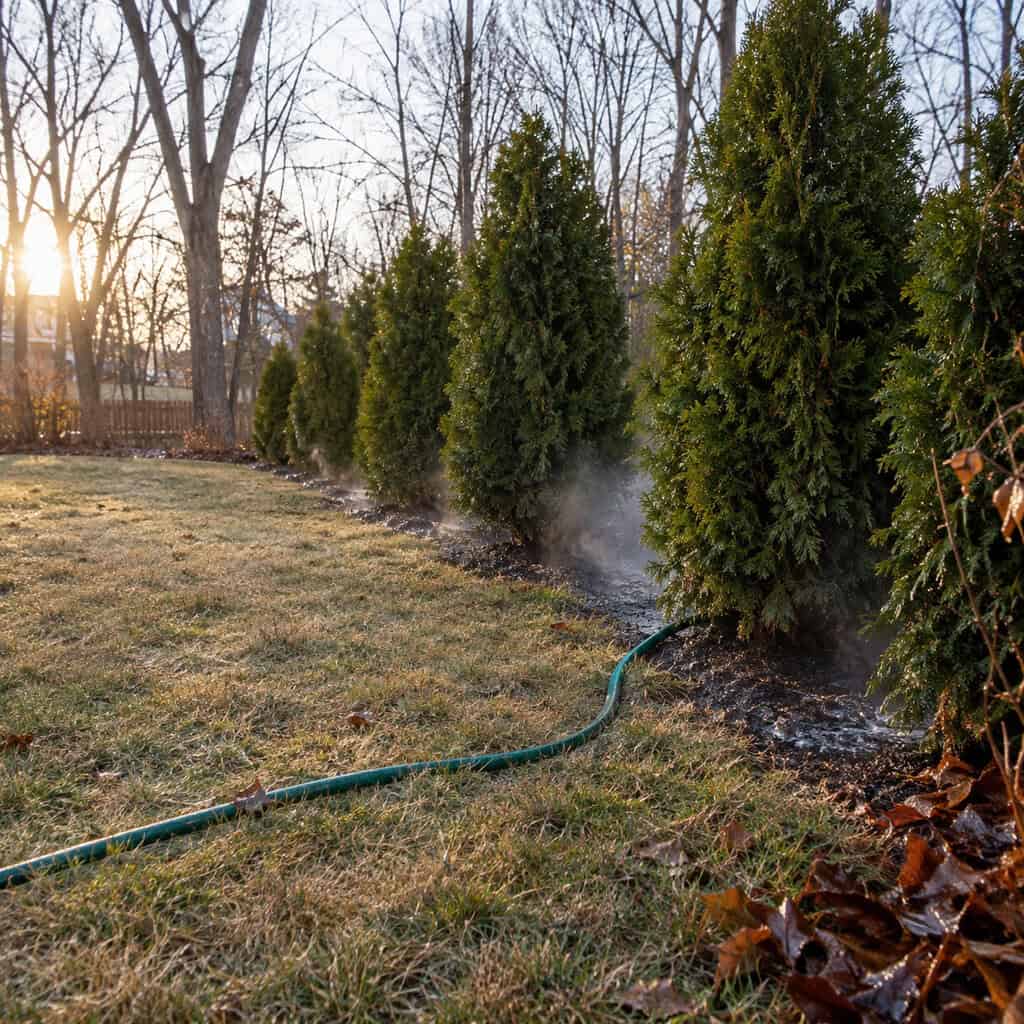
This is the step almost every homeowner skips, and it’s the one pros are most stubborn about.
A lawn that goes into winter bone dry comes out of it desiccated. Same for arborvitae, boxwood and anything else evergreen — they keep transpiring through sunny winter days and can’t pull replacement moisture from frozen soil.
So yes, the irrigation is already blown out. Pros drag a hose out anyway for one final deep soak, then drain it and put it back.
Anything seeded or sodded this year needs it most. Those root systems are three inches deep and have nothing in reserve.
15. In the South: Skipping Late Nitrogen on Bermuda and Zoysia Entirely
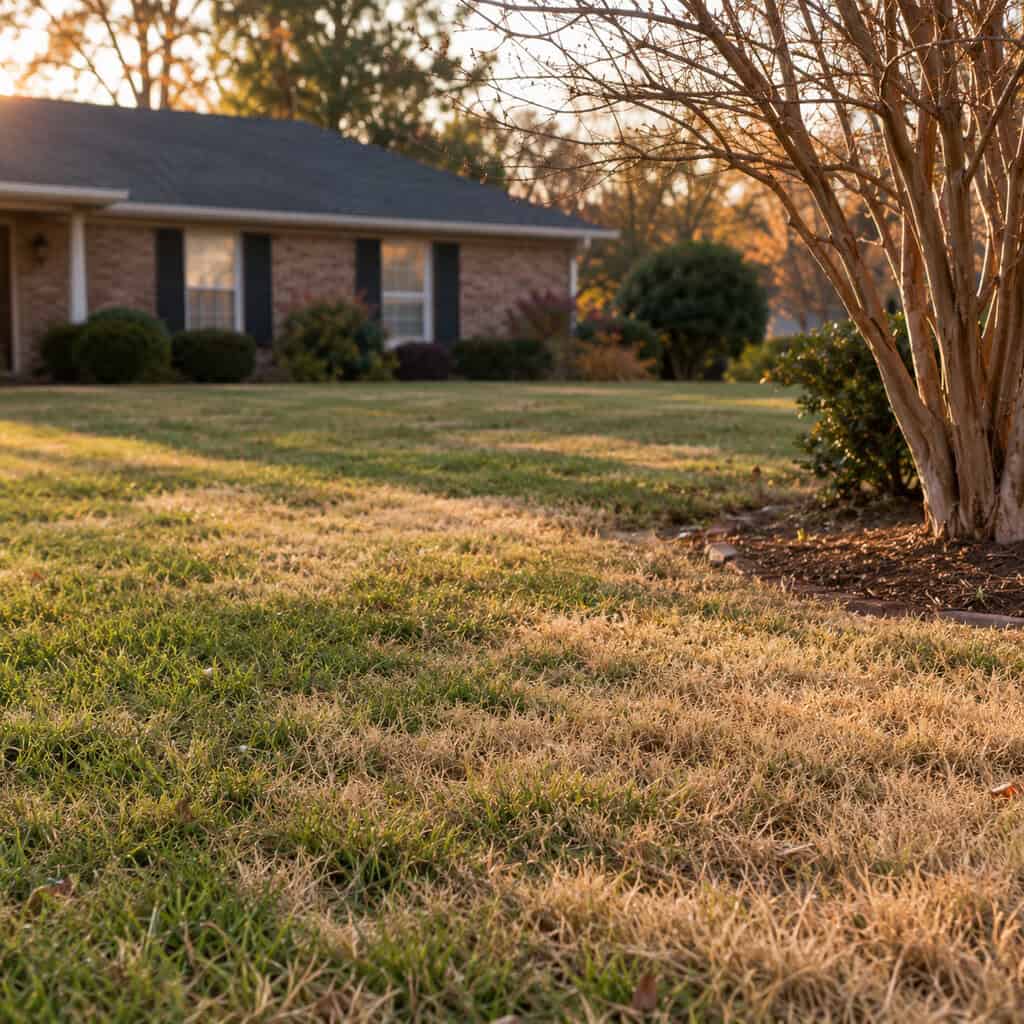
Northern winterizer advice applied in Atlanta or Dallas does real damage.
Bermuda and zoysia are trying to shut down. Feed them nitrogen now and you force tender growth on a plant with no time to harden off, which invites winterkill and sets up spring dead spot the following March.
Guidance out of the University of Georgia is to stop nitrogen entirely as the warm season winds down. The Farmers’ Almanac state-by-state breakdown lands in the same place.
Potassium is a reasonable fall application down there. Nitrogen isn’t.
16. Putting the Mower to Bed: Stabilizer, Oil Change, Sharpened Blade
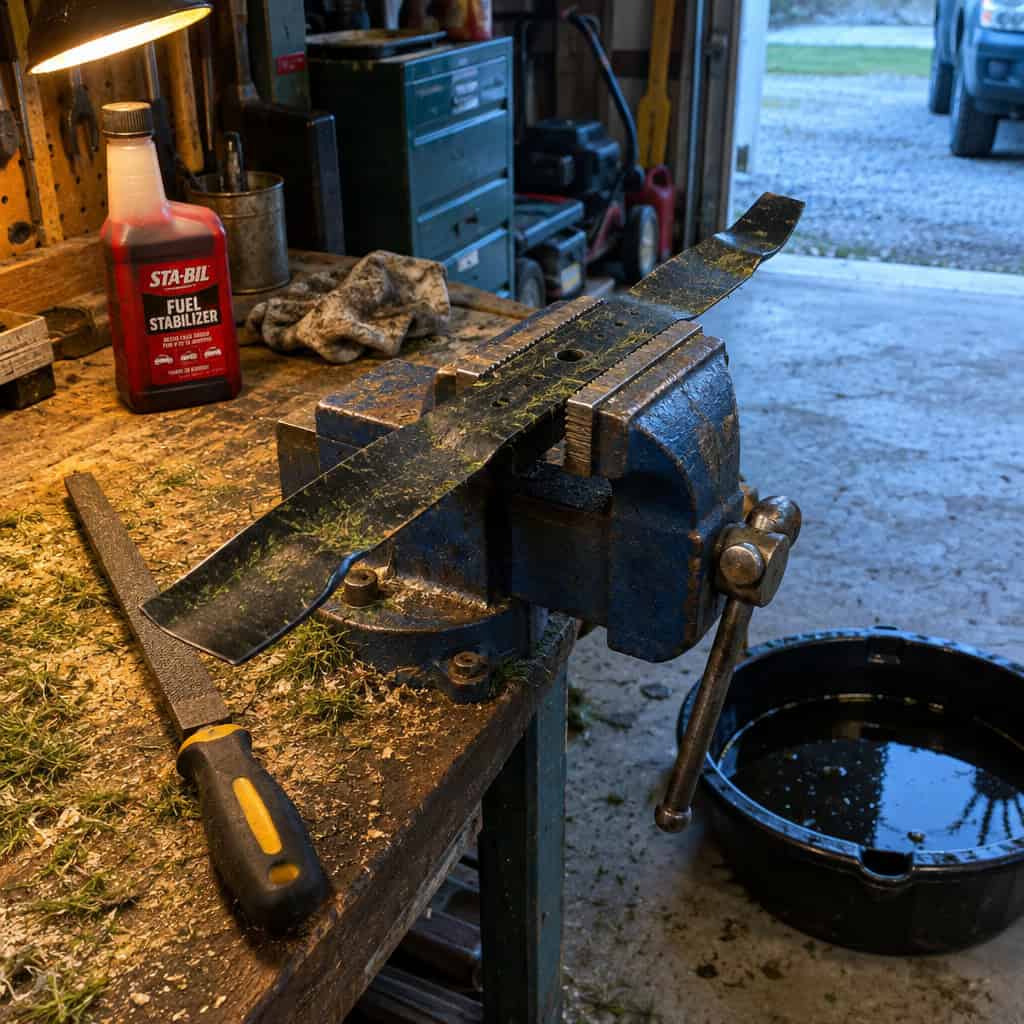
Same weekend as the final cut, the mower gets dealt with.
Ethanol-blended fuel absorbs water and separates over a winter of sitting, and the varnish it leaves behind is the number one reason a mower won’t start in April. Stabilizer in a full tank, then run the engine five minutes to pull treated fuel through the carb.
Oil comes out warm, right after that run. Air filter gets checked. Blade comes off and goes to the bench.
Sharpening now isn’t about vanity. A dull blade tears the leaf tip instead of slicing it, and a ragged wound is an open door for disease on the first cut of spring. Pros want that first April pass to be clean.
17. Driving Snow Stakes Along the Drive and Bed Edges
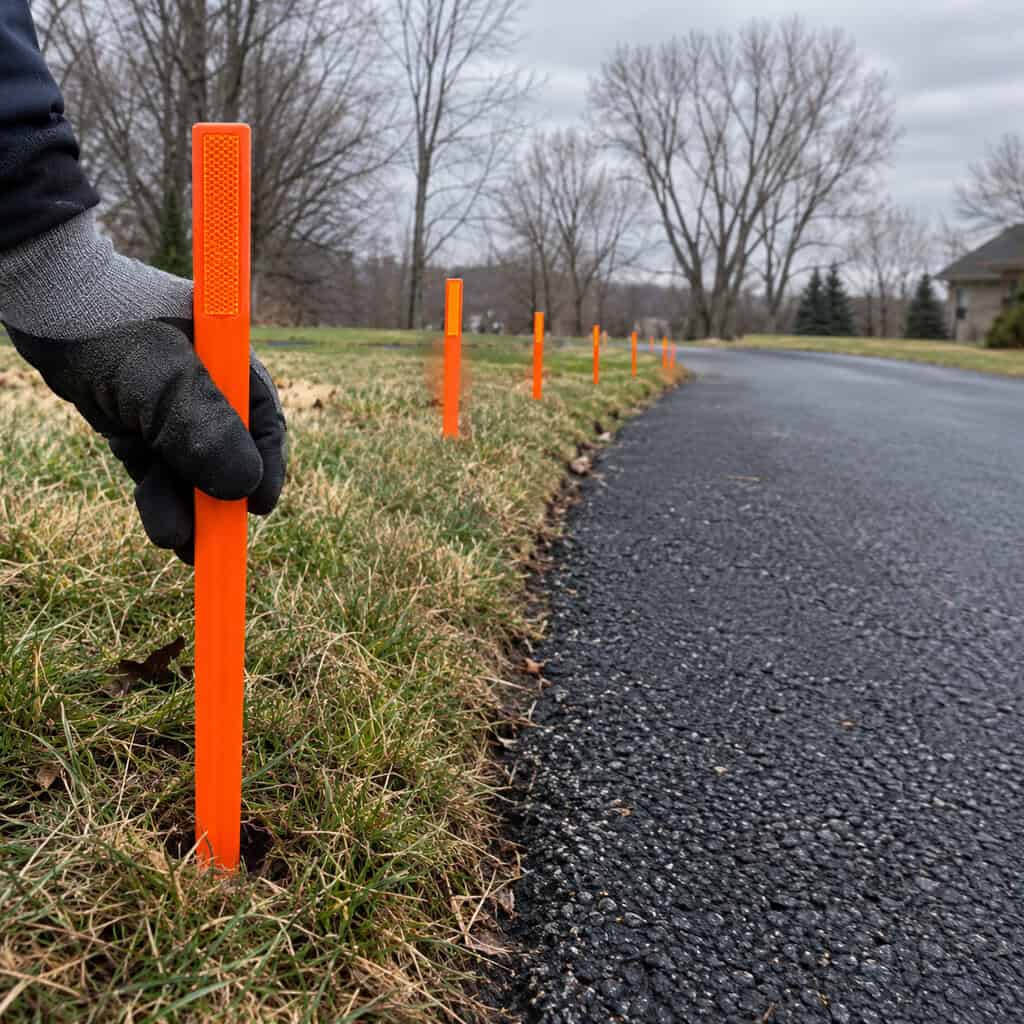
Try pushing a fiberglass stake into frozen ground sometime. You can’t.
That’s the whole reason this happens in November instead of December. Once the top four inches lock up, the window is gone for the season.
An unmarked turf edge along the driveway is what a plow operator shears into mud at 2 a.m. in a whiteout — and the apron of a driveway, where the lawn meets the pavement, takes the worst of it every time.
A $12 bundle of reflective stakes every eight feet prevents a few hundred dollars of regrading and sod in April. Mark the bed corners and any irrigation heads near the drive while you’re out there.
18. Switching the De-Icer Before the First Storm

That dead crusty strip of lawn along the sidewalk every spring? That’s sodium chloride.
Rock salt dissolves, splashes two feet onto the turf, and the sodium displaces calcium and magnesium in the soil while chloride burns the roots directly. Grass doesn’t recover from it quickly — sometimes it needs reseeding.
Pros buy before the aisle empties in the first storm panic. Calcium magnesium acetate along turf edges, plain sand for traction where melting isn’t critical, rock salt only where there’s pavement on both sides.
And they sweep up the leftover granules after the melt instead of letting them soak into the soil. Takes four minutes.
19. Preventive Snow Mold Fungicide — Only on the Lawns That Earn It
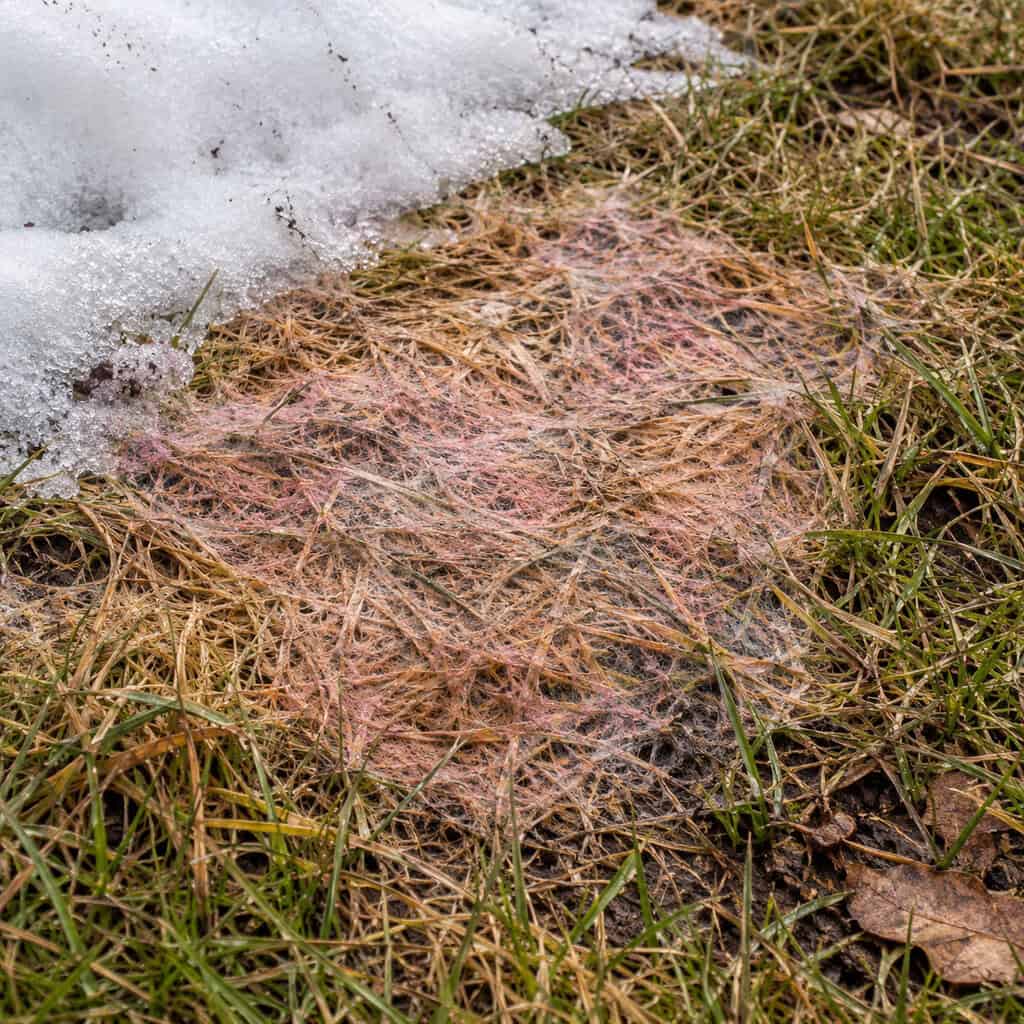
Most lawns don’t need this. That’s the actual professional position, and it’s the opposite of what a treatment service will tell you.
Snow mold comes in two flavors. Gray snow mold needs 60 or more days of continuous snow cover and leaves matted, straw-colored patches with a crusty grayish web at the edges when the snow pulls back. Pink snow mold — Microdochium — is the nastier one, because it doesn’t need snow at all. It’ll run in cold wet weather right around freezing, and the patches have a salmon-pink cast to them in morning light.
A preventive fungicide only makes sense if your lawn has a documented history. Meaning: you saw it last March, and the March before, in the same places. Usually that’s a north-facing slope, a spot where plowed snow gets piled, or turf under a tree that drops leaves late.
If you’re in that category, the application goes down just before persistent snow cover arrives — not in October, not after the first flurry melts. Timing is the whole thing.
For every other lawn, the free version works. Keep the final cut at 2 to 2.5 inches so blades don’t mat. Clear wet leaf piles off the turf completely. Skip late nitrogen that leaves lush succulent growth heading into snow. Don’t pile shoveled snow in the same spot on the lawn all winter.
Those four steps handle the overwhelming majority of home lawns without spending a dollar on chemistry. Pros treat maybe one yard in ten.
20. Staying Off the Grass When It’s White With Frost
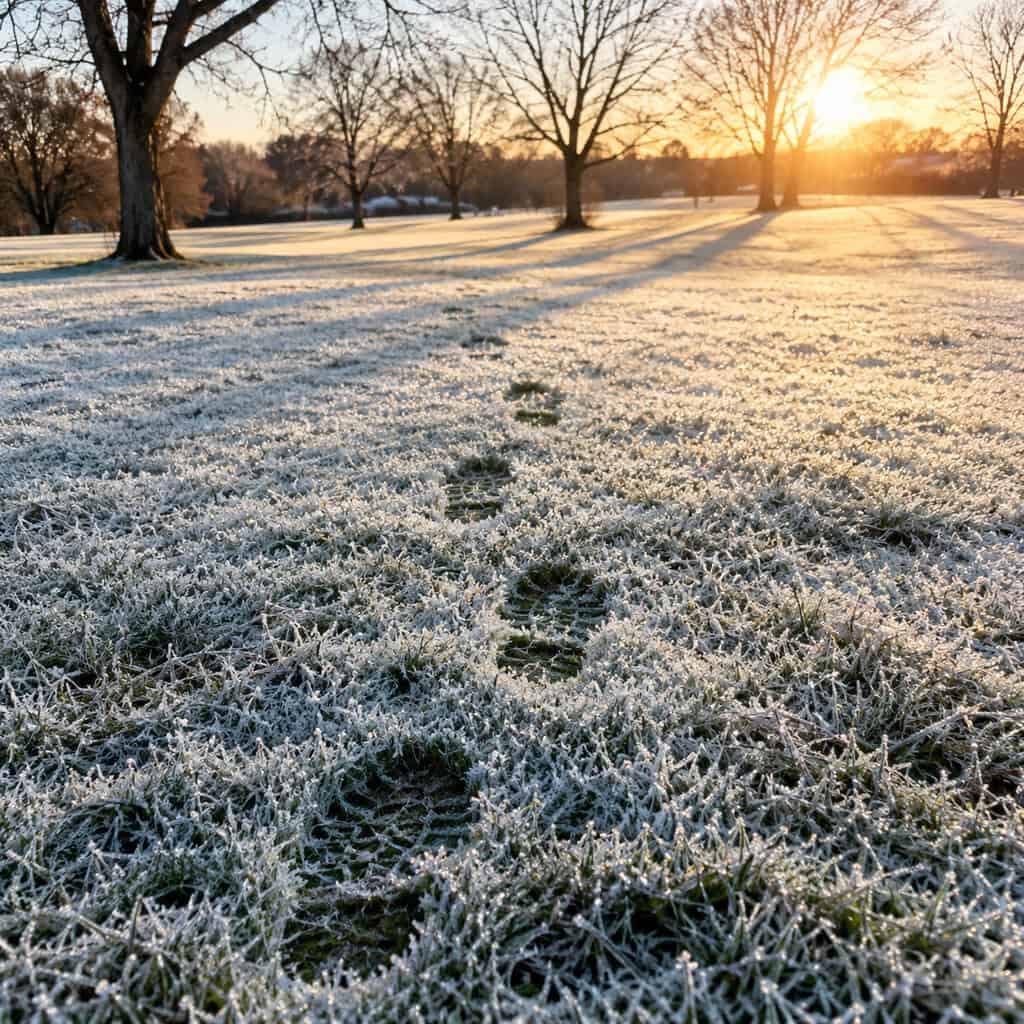
Frosted blades are full of frozen water. Step on them and the ice crystals rupture the cell walls from the inside.
The damage shows up a few days later as brown footprints — a perfect record of exactly where you walked, lingering for weeks because the grass can’t grow out of it in November.
Pros reroute their own crews around frosted turf and wait for the thaw. At home, that means the dog’s morning loop goes on the driveway until the sun’s been up a couple hours.
One careless trip to the mailbox is visible until March.
21. Leaving the Heavy Shrub Pruning for Late Winter
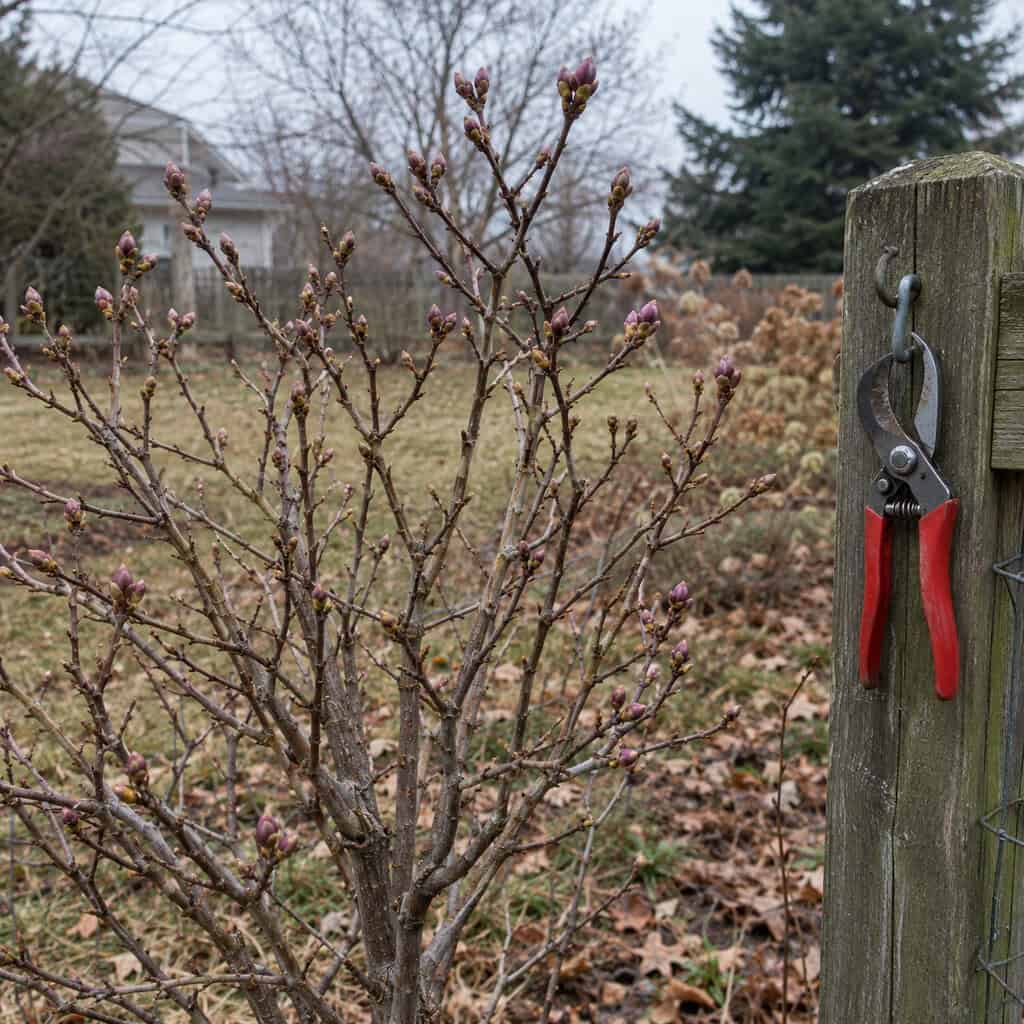
November pruning cuts heal slowly, because the plant has no growing season left to seal them.
Worse, a hard cut can signal the shrub to push tender new growth right as the first serious freeze arrives, and that growth dies back further than the original cut would have.
Spring bloomers like lilac, forsythia and azalea have already set next year’s flower buds. Cut them now and you’ve thrown away the entire show.
The only November pruning pros do is dead, broken or genuinely hazardous wood. Everything else waits for February or March.
22. Clearing the Gutters Once the Trees Are Actually Bare
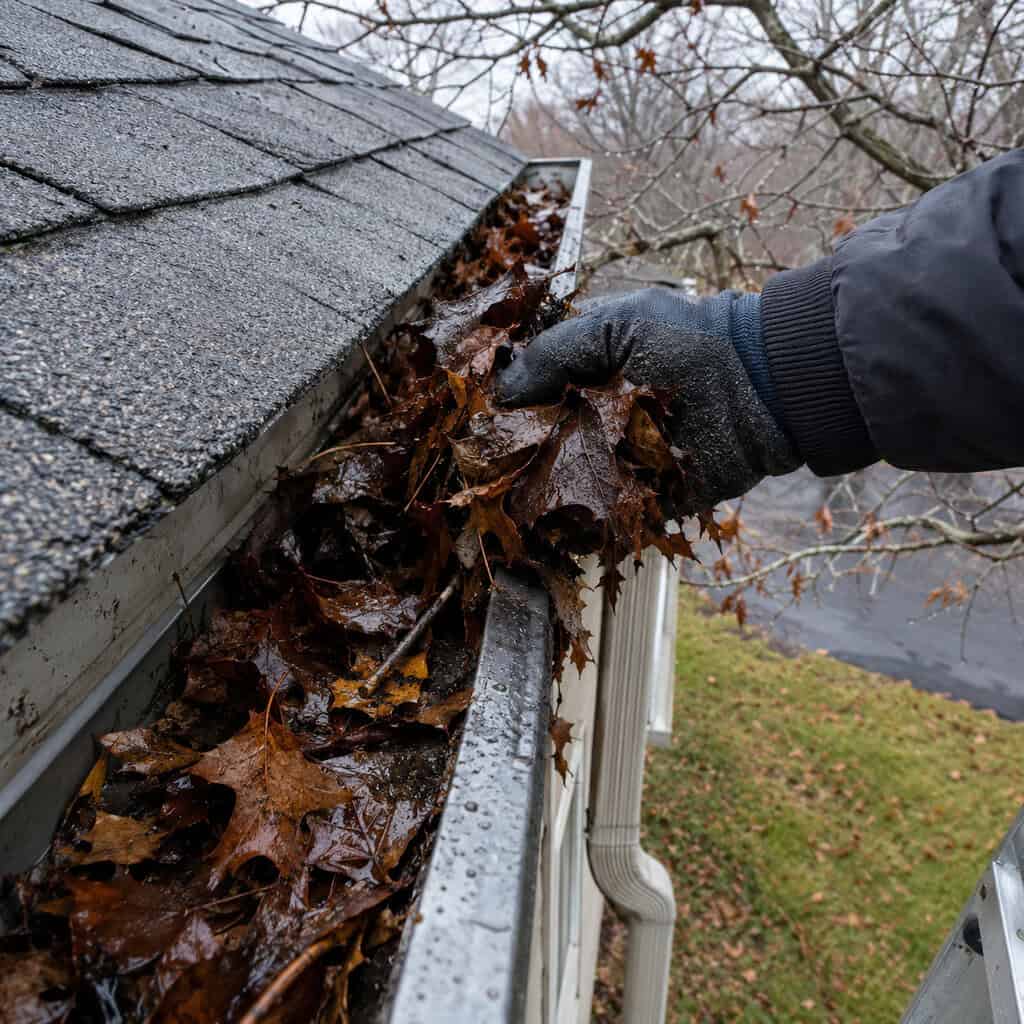
Clean them in October and you’ll be back up the ladder in three weeks. Oaks hold their leaves into late November in most of the country, and that’s the drop that matters.
A packed gutter in winter is a specific kind of problem. Water can’t move, so it freezes in the trough, and the next melt runs over the lip instead of to the downspout — pouring off the same two-foot section of roofline all winter long.
Underneath that overflow, the lawn drowns. Saturated soil with no drainage and no growing grass to use the water turns to anaerobic mud, and that strip comes out of winter dead, compacted, and often colonized by moss.
The more expensive version happens at the foundation. Concentrated meltwater dumping against the wall month after month saturates the backfill, and saturated soil against a foundation means hydrostatic pressure — the force that pushes water through hairline cracks in poured concrete and through the mortar joints in block. Freeze-thaw cycling in that same saturated soil widens every crack it finds.
Clogged gutters also build ice dams, which back water up under the shingles and into the sheathing.
Check that the downspouts actually discharge somewhere useful while you’re at it. Four feet from the wall is the usual minimum, and an extension costs about $8. A cracked foundation repair starts in the low thousands and goes up from there.
Do it once, in mid-to-late November, after the last leaf is down.
23. Flagging the Soggy Low Spots for Spring Regrading

The first cold November rains hand you information you cannot get any other time of year.
In July, a thick growing lawn hides everything — the grass drinks the water, the soil dries fast, the slope looks fine. In November the turf is dormant, the soil is already saturated, and evaporation has basically stopped. Water does exactly what the grade tells it to and then sits there for days, in plain view.
So pros put on a rain jacket and walk the yard during a steady rain, with a bundle of marking flags in one hand.
Flag the puddles. Flag the squelchy spots that don’t show standing water but soak your boot. Most importantly, watch which direction sheet flow moves near the house — you want a drop of about six inches over the first ten feet away from the foundation, and a surprising number of yards have settled backward over the decades.
Pay attention to the base of downspouts, the low corner where two slopes meet, and anywhere the turf has gone thin and mossy. Moss is a drainage report you didn’t have to pay for.
Then photograph it. Flags blow over and memory is terrible by April, but a phone photo with the house in frame tells a contractor everything.
The fix — regrading, a dry well, a french drain, extending a downspout — happens in spring. But the diagnosis only exists right now, which is why most homeowners end up guessing at it six months later. If you’re already dealing with a yard that floods when it rains, November is when you find out why.
24. Dormant Seeding the Bare Spots in the Last Week of November
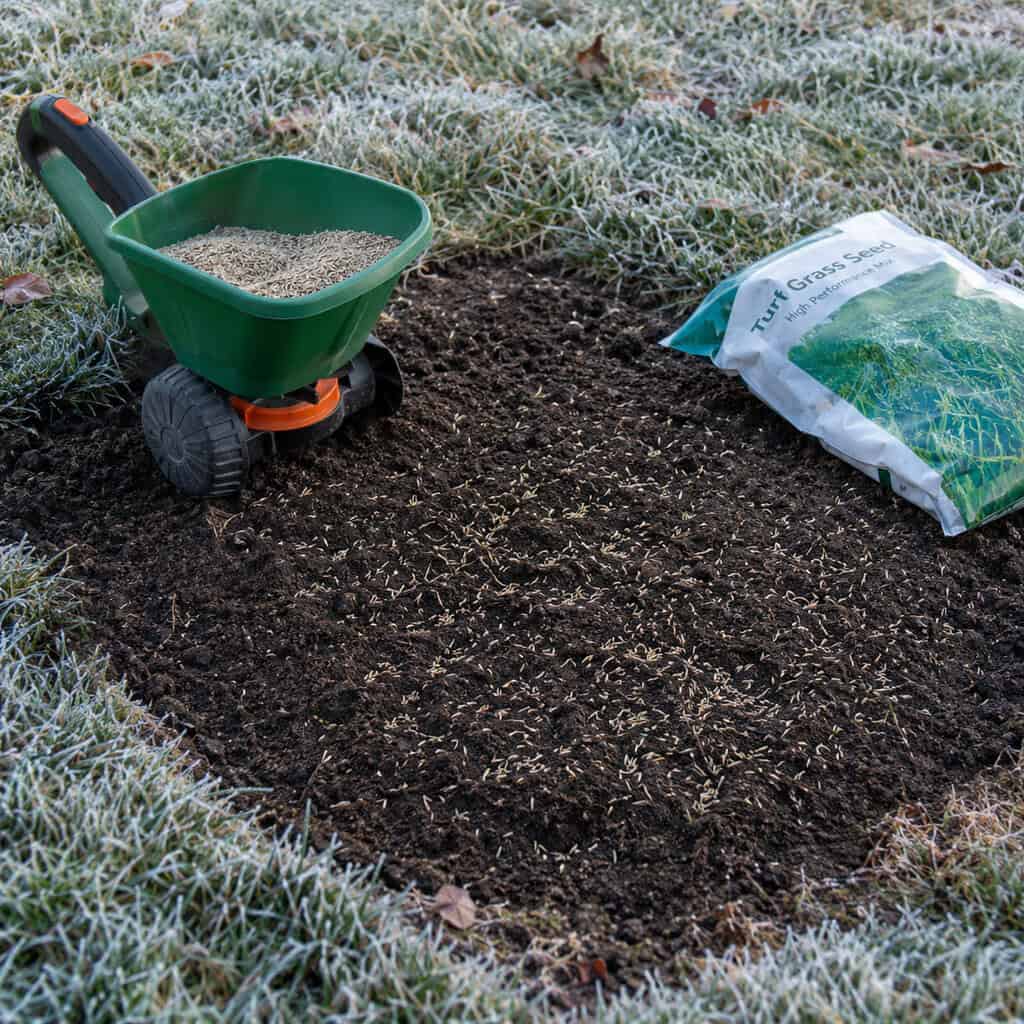
This is the move nobody outside the trade seems to know about.
Wait until soil temperature drops below roughly 40°F — cold enough that the seed physically cannot germinate — then spread it anyway on your bare and thin areas. It just sits there. All winter, freeze-thaw cycles heave the soil surface open and closed and work each seed down into perfect contact with the dirt, which is the step everybody struggles with in spring.
Then in March, the second the soil hits germination temperature, it goes. A week or two ahead of anything you could have sown by hand, and in ground that’s still holding snowmelt moisture.
The University of Minnesota Extension recommends it specifically for thin and bare patches. Rake the spot lightly first so there’s open soil, use a bit more seed than you would in September to cover winter losses, and resist any urge to put down pre-emergent in spring.
You’ll forget you did it. Then one morning in late March there’s green where there was mud.
25. Skipping “Weed and Feed” Combo Bags

Two jobs, two completely different conditions, one bag that can’t satisfy either.
Granular herbicide needs to stick to wet leaf surfaces on an actively growing weed — which means applying to dew-covered turf on a mild day. Fertilizer wants dry application and water afterward to move it into the soil.
Do it right for one and you’ve done it wrong for the other. Pros spray the weeds liquid, on their own schedule, and spread straight fertilizer on its own schedule.
The combo bag exists because it’s easier to sell, not because it works better.
26. Topdressing Thin Turf With a Quarter-Inch of Compost
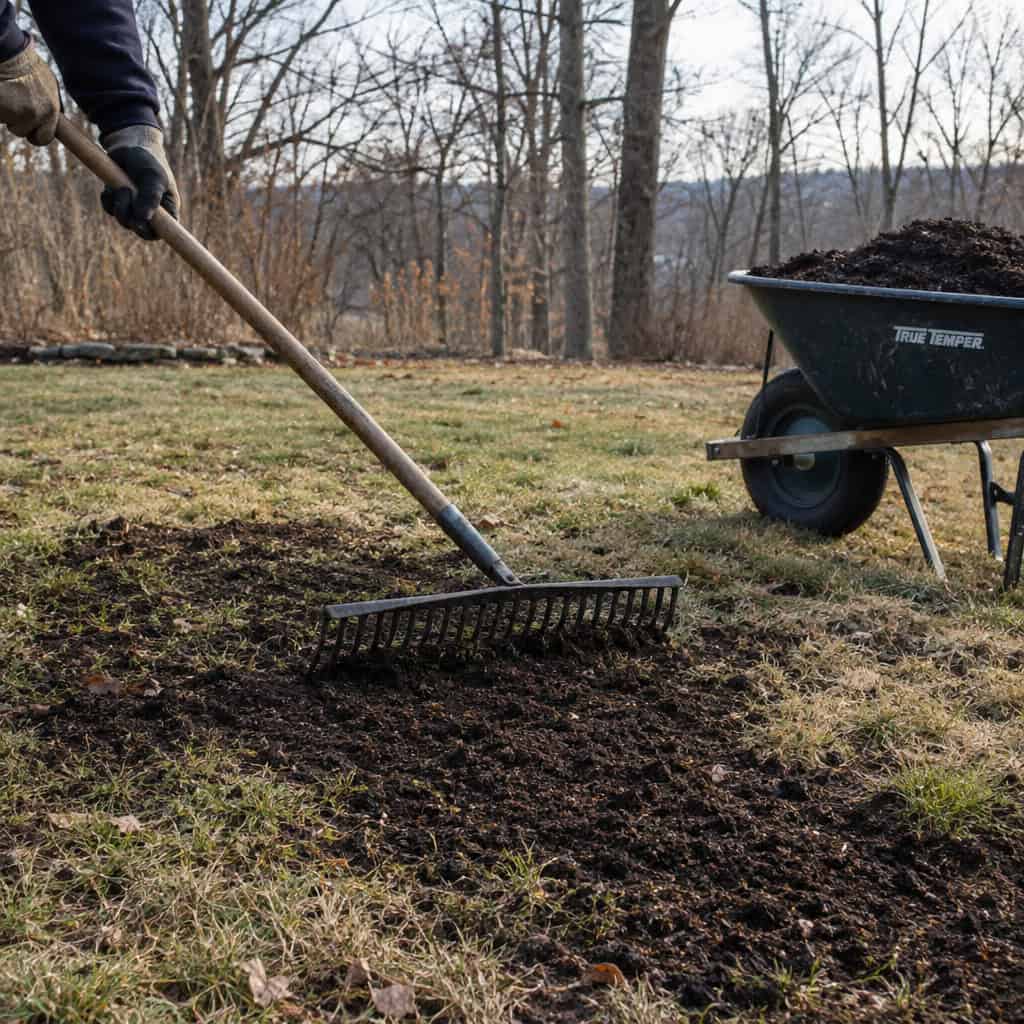
Honest answer: you’re late, but not necessarily too late.
Compost topdressing belongs in September or early October, when the turf is growing and can push up through it. By late November, it’s marginal — the organic matter won’t integrate much until spring, and a heavy hand will smother dormant grass.
The exception is pairing it with dormant seed. A thin quarter-inch screened layer over fresh seed holds moisture and gives the freeze-thaw something to work with.
Mild zones, go ahead. North of the Ohio River with snow already in the forecast, put the compost on the beds instead and plan it properly for next fall.
Half the list above is doing nothing. That’s not an accident.
The jobs that pay off in November are the ones nobody will notice until April — a mower that starts, a hose bib that didn’t split, green seedlings in a spot that was bare mud. Everything else is retail theater.
Walk your yard in the rain once this month. You’ll learn more about it than you did all summer.
Excellent details and justifications. Thank you!