

Somebody pulled up in a trailer, worked for six hours, and left. The beds look fresh. The grass is cut. The check cleared.
And the guy three doors down, the one who’s been shaping his own yard for fifteen years, knew the price before the truck turned the corner.
Landscaping leaves fingerprints. Not the kind you notice on day one, when everything is dark mulch and crisp lines, but the kind that surfaces in month six and never goes away.
Cheap bids don’t fail by leaving things out. They fail by doing the fast version of each step, and the fast version always shows eventually.
Here are 34 things in a yard that tell the neighbors exactly which bid you took.
1. Mulch Volcanoes Piled Against Tree Trunks
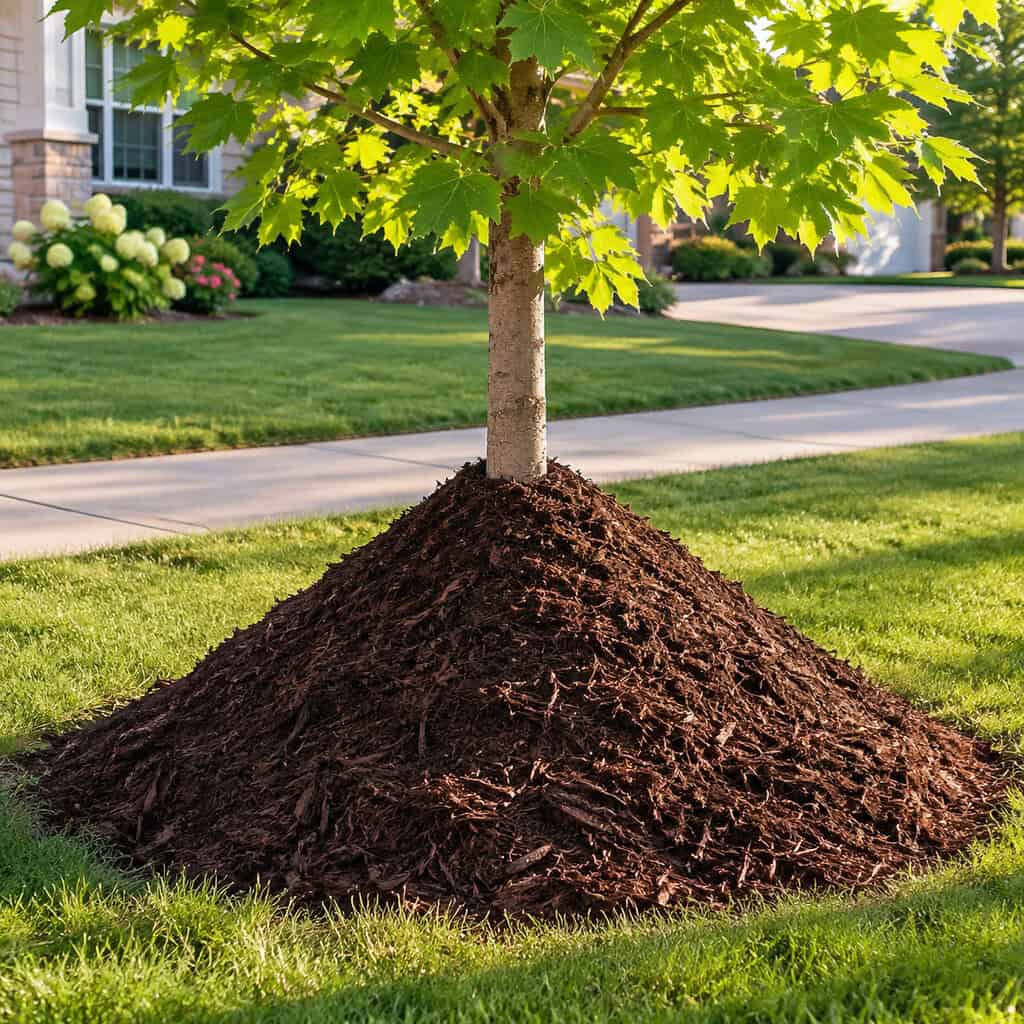
Look at the base of any street tree in a new subdivision. If the mulch climbs the trunk like a cone, somebody dumped a wheelbarrow and raked it outward instead of pulling it back.
A correct mulch ring is wide and shallow — two to three inches deep, pulled clear of the trunk so the root flare is visible. The flare is that widening at the base where the tree meets the ground. Bury it and you’re holding wet bark against living tissue year-round.
What follows is slow. Bark softens, decay moves in, and roots that should have grown outward start circling the trunk and strangling it. UNH Extension puts it plainly in a post titled “Volcanoes Kill Trees!”
The tree doesn’t die this year. It dies in nine.
2. A Lawn Scalped Down to Brown Patches
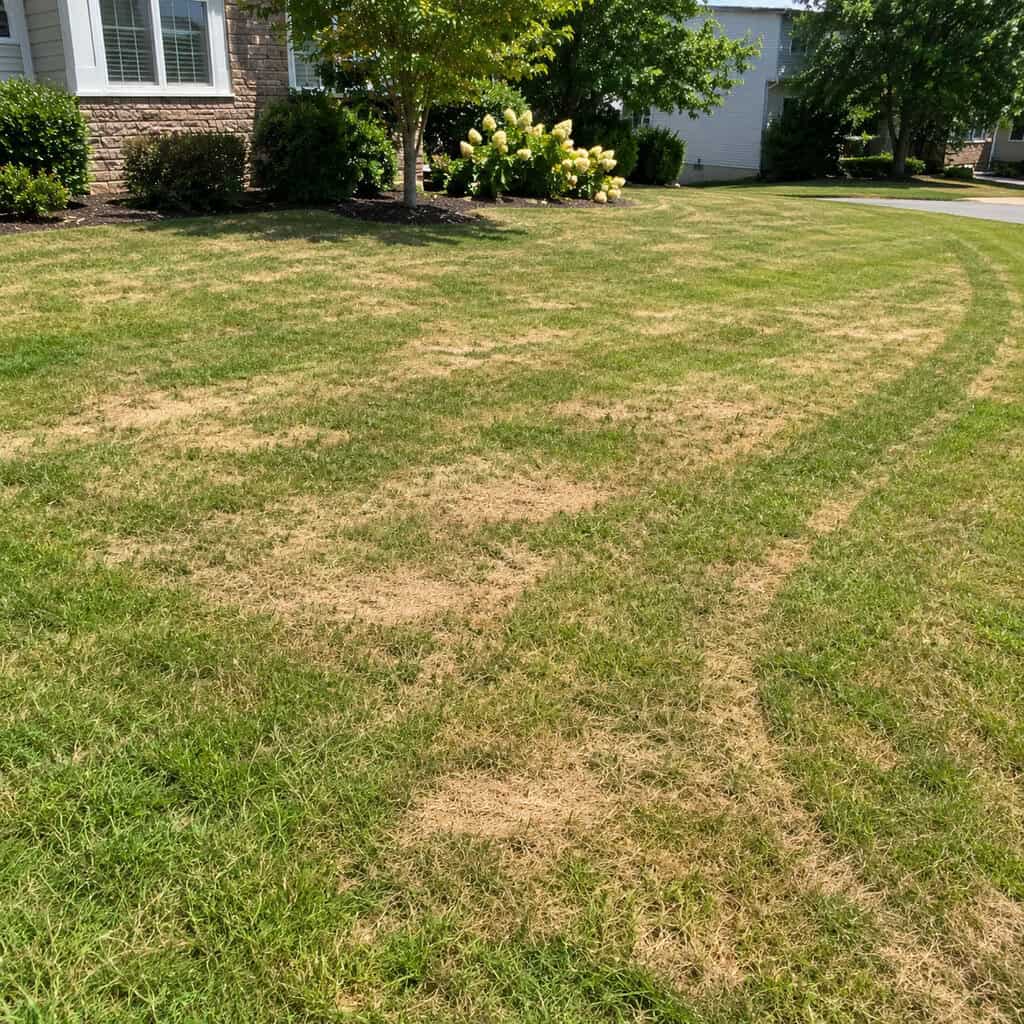
Scalping is a scheduling trick. Cut it to the dirt and the crew can stretch two weeks into three.
Removing more than a third of the blade in one pass shocks the plant into dumping root mass to rebuild leaf. Every high spot in the yard — the hump over the old stump, the ridge along the driveway — burns tan within three days.
The University of Illinois Extension holds the line at that one-third rule and three inches of height for most cool-season turf. Taller grass shades its own soil and crowds out crabgrass for free.
Brown patches in July aren’t drought. They’re a deck set too low.
3. Weed-Whacker Scars Ringing Every Tree Base
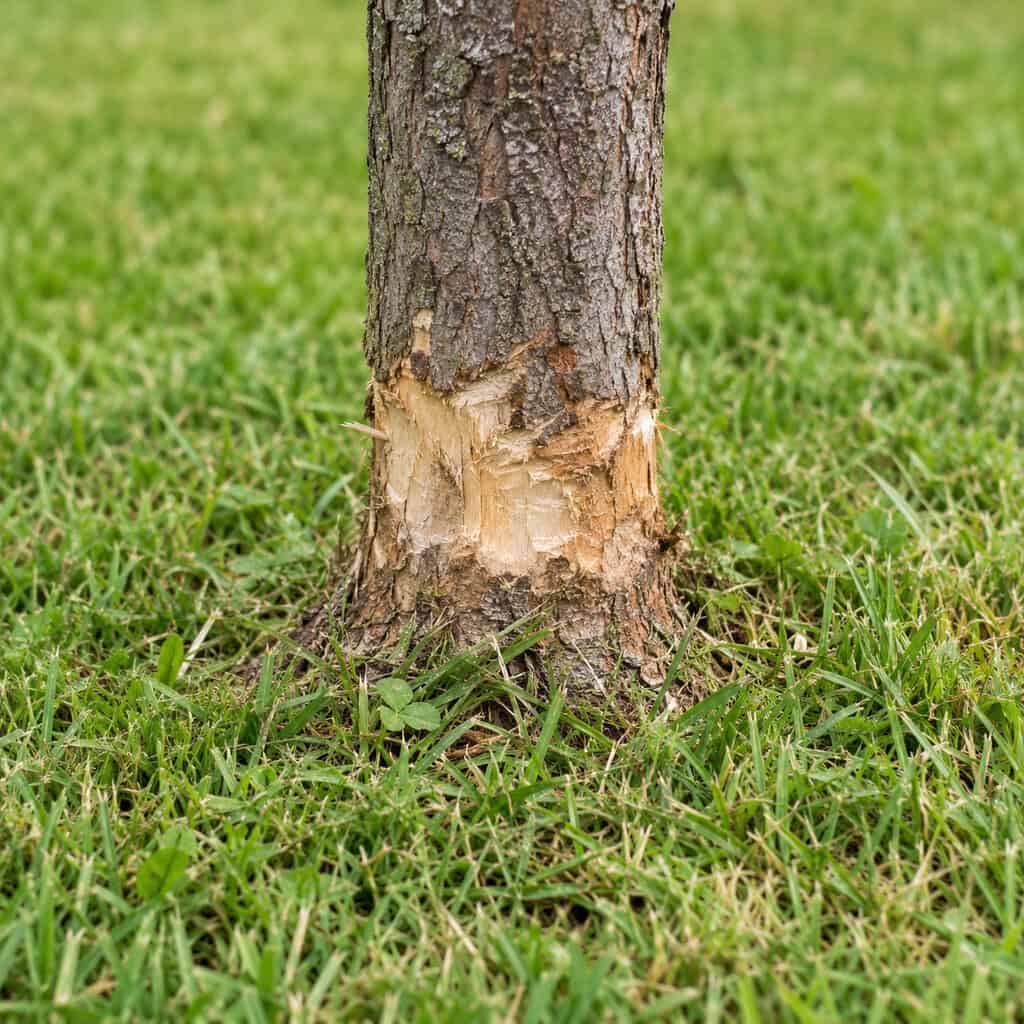
Pale, shredded bark at ankle height. Once you see it you’ll see it on every young tree on the block.
Iowa State’s horticulturists named it mower blight. String hitting bark at 6,000 RPM strips the thin outer layer, and on a young maple or birch there’s barely any outer layer to spare.
Do it weekly for two seasons and you’ve girdled the tree without ever cutting it. Borers find the wound. So does rot.
A mulch ring solves it permanently and costs one bag.
4. Landscape Fabric Peeking Through the Mulch
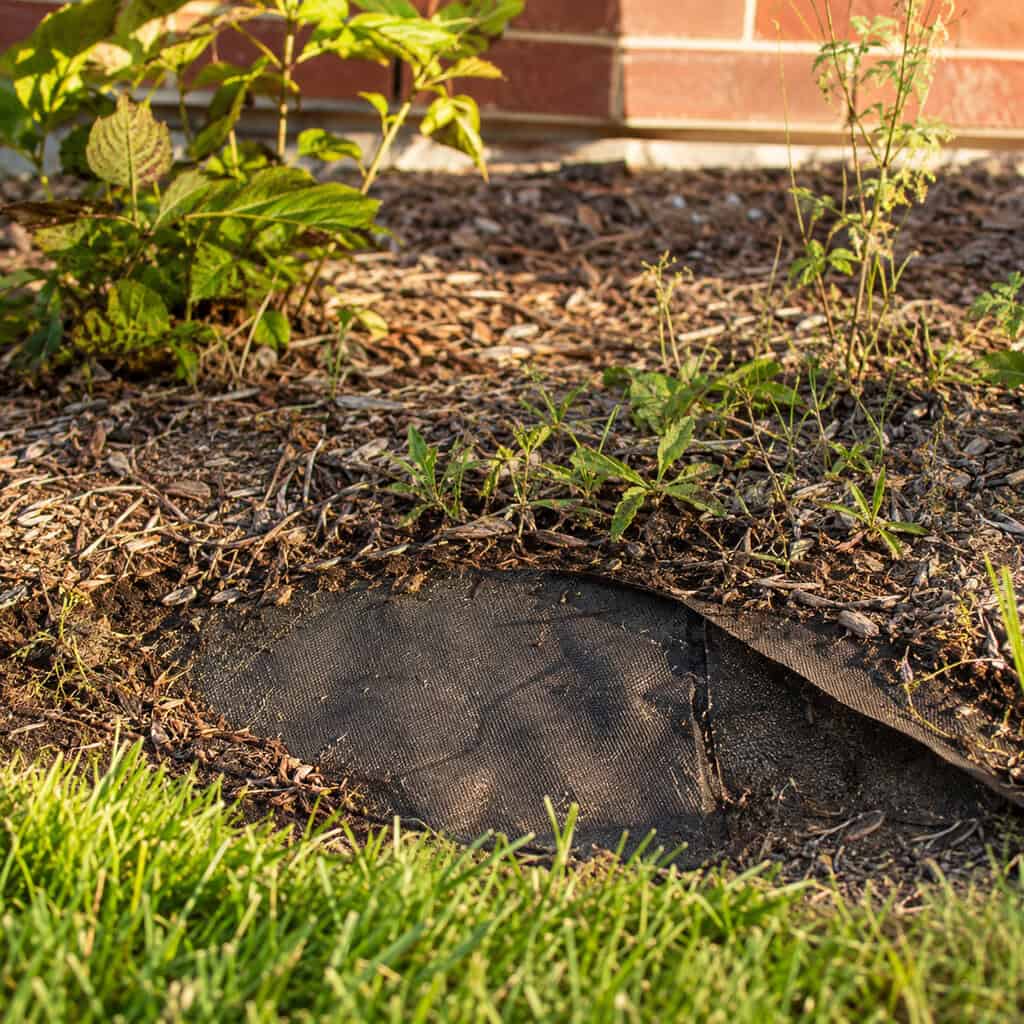
Black polypropylene flapping out of a bed edge is a receipt. Somebody sold weed fabric as a guarantee instead of selling maintenance.
Fabric works for about eighteen months. Then mulch breaks down on top of it into a perfect seed bed, and weeds root in that layer with nothing underneath to grab onto — which means they pull out leaving the roots behind every time.
Underneath, soil goes dense and gray. Earthworms can’t move through it. Penn State Extension published a first-hand account of ripping fabric out of their own beds, and the excavation sounds worse than the weeds ever were.
5. Shrubs Planted in a Single-File Soldier Row

Seven identical boxwoods, 36 inches apart, running the length of the foundation.
That’s a tape measure, not a design. One-day installs work this way because evenly spaced holes are fast to dig and nobody has to think about it.
Yards that look expensive use odd-numbered clusters, varied heights, and plants that overlap as they fill in. The eye reads layers as intentional and lines as default.
Same plants. Same budget. Entirely different result.
6. Black Plastic Edging Heaved Up Out of the Ground
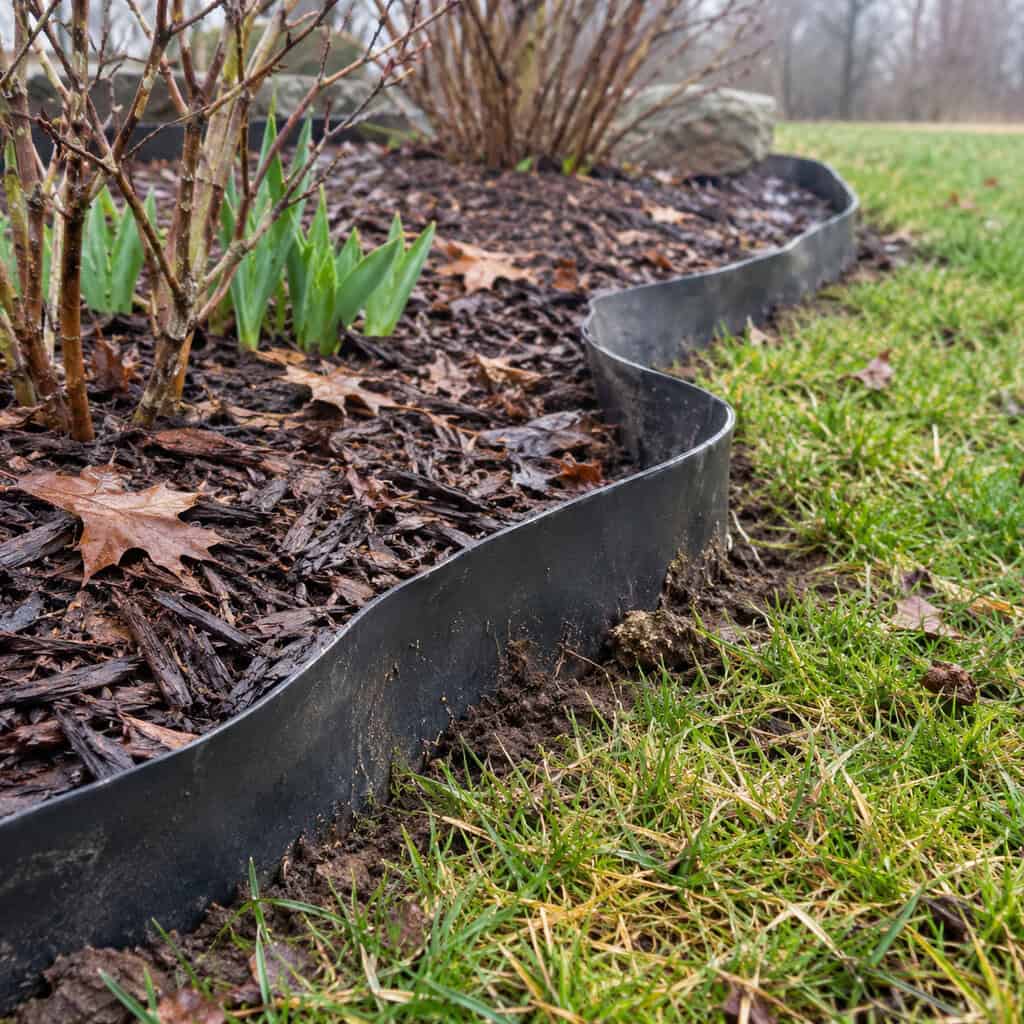
It goes in flat. It comes up wavy.
One freeze-thaw cycle lifts cheap roll edging into a black snake rising three inches out of the dirt, and the mower deck catches it every pass until somebody stomps it back down. Then it does it again next March.
A spade-cut trench edge costs nothing but labor and looks sharper. Steel edging runs more but stays put for twenty years.
Plastic coil is the line item that announces itself.
7. Sprinklers Watering the Sidewalk at Noon
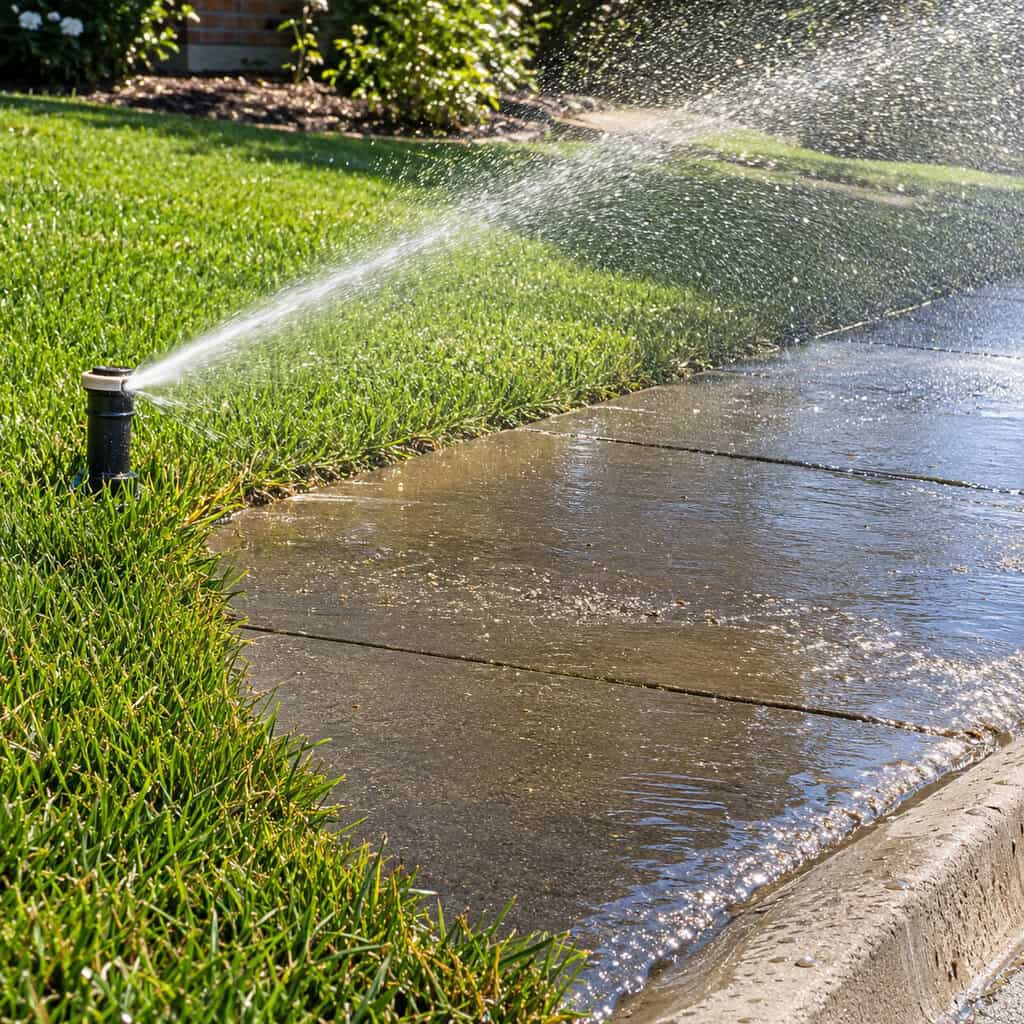
Two things wrong at once, both visible from the street.
Overspray hitting concrete means the heads were never adjusted after install day. Running at noon means nobody touched the controller either — most of that water evaporates before it reaches roots.
Meanwhile the turf that needed it is getting short-changed, which is why the lawn still looks thirsty despite the puddle on the walk.
Water between 4 and 8 a.m. Deep and twice a week beats shallow and daily.
8. Shrubs Sheared Into Gumdrops and Meatballs
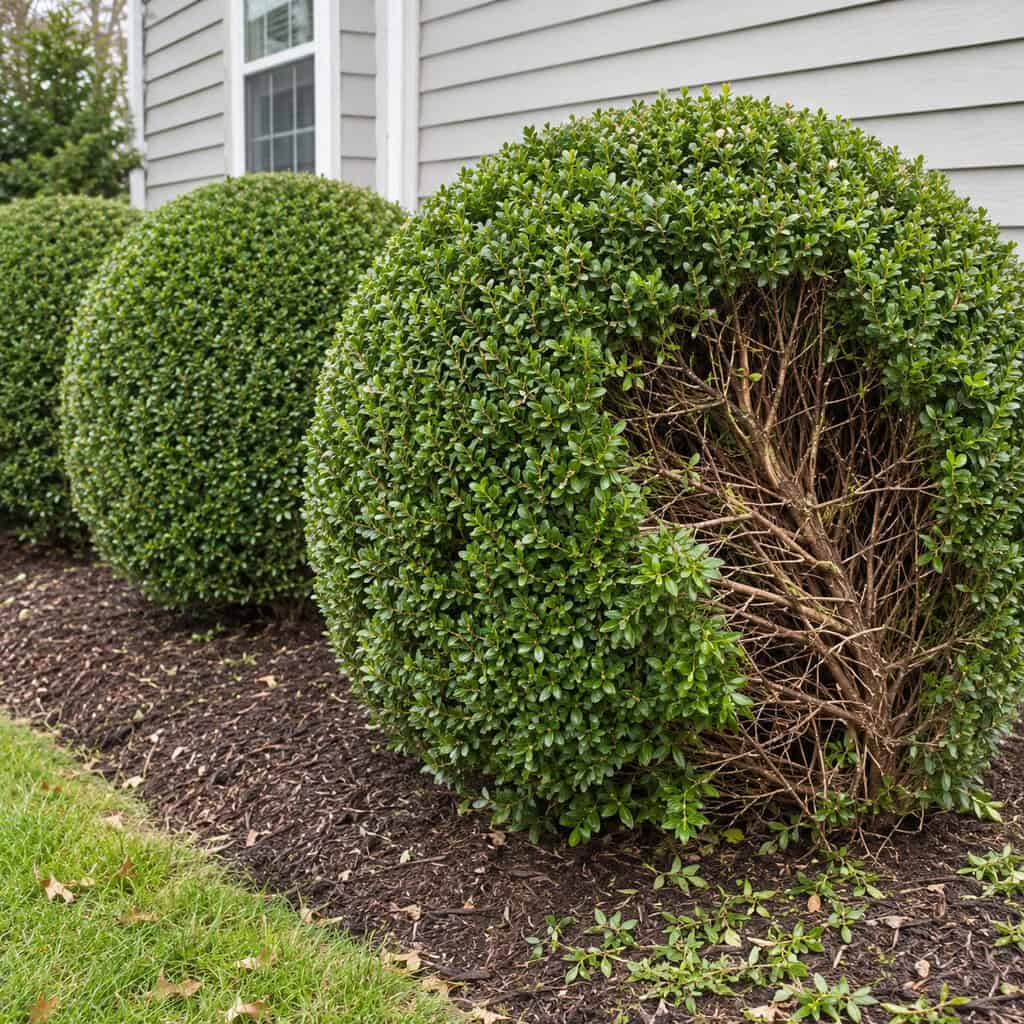
Power shears clear a foundation bed in eleven minutes. Hand-thinning the same bed takes an hour and requires knowing what each plant is.
Shearing creates a dense green shell of outer growth. Light can’t reach inside, so the interior goes bare and twiggy — pull a branch aside and it’s brown sticks all the way to the trunk.
That matters the day the shrub outgrows its spot. Cut it back hard and there’s nothing left to regrow from. You’ve got a dead-looking stump.
Reach in, remove whole branches at the base, let the shape stay loose.
9. Tree Stakes and Straps Still On Three Years Later
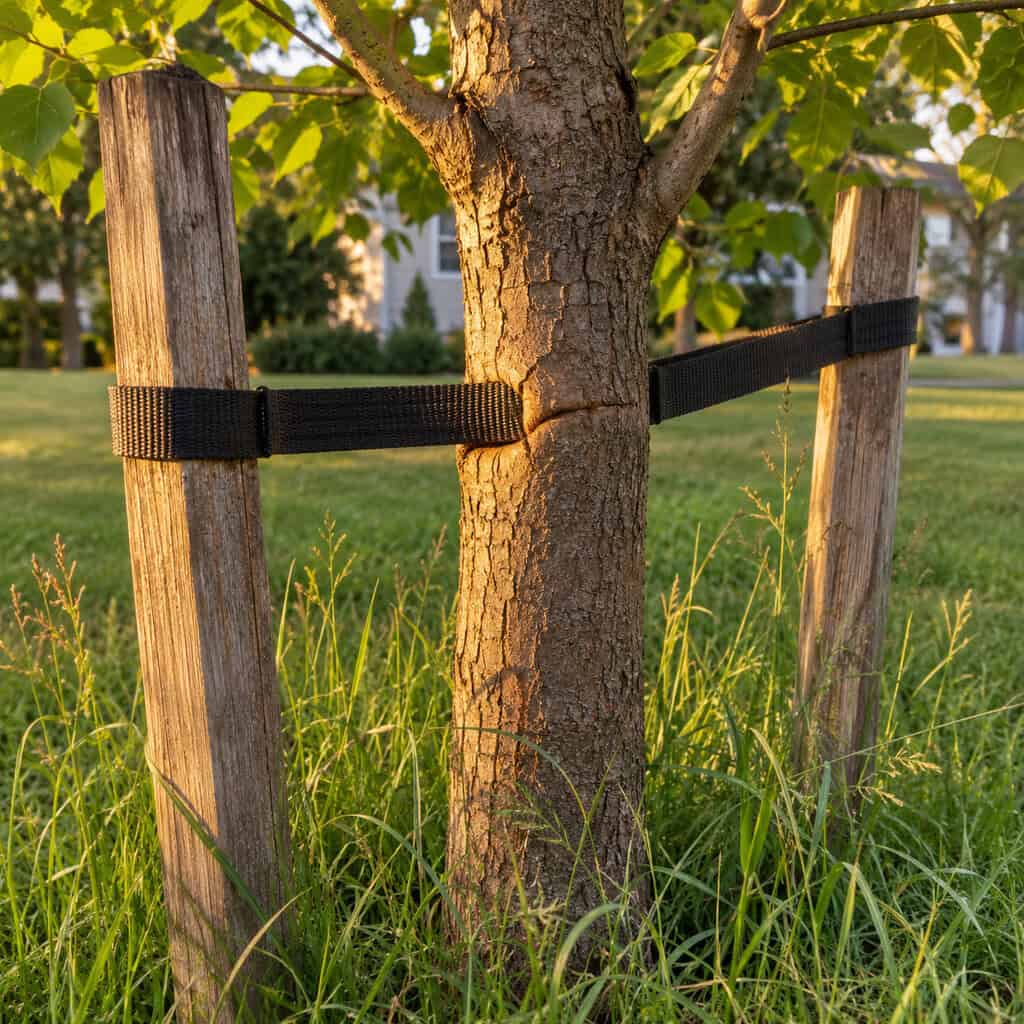
Staking is supposed to last one growing season. Maybe two on a windy exposure.
Leave the webbing on and it cuts a ring into expanding bark. Worse, a tree held rigid never flexes, and flexing is what builds trunk taper and strength. Unstake it at year four and it leans.
Nobody came back because the contract ended the afternoon the tree went in the hole.
10. Grass Clippings Blown Into the Street
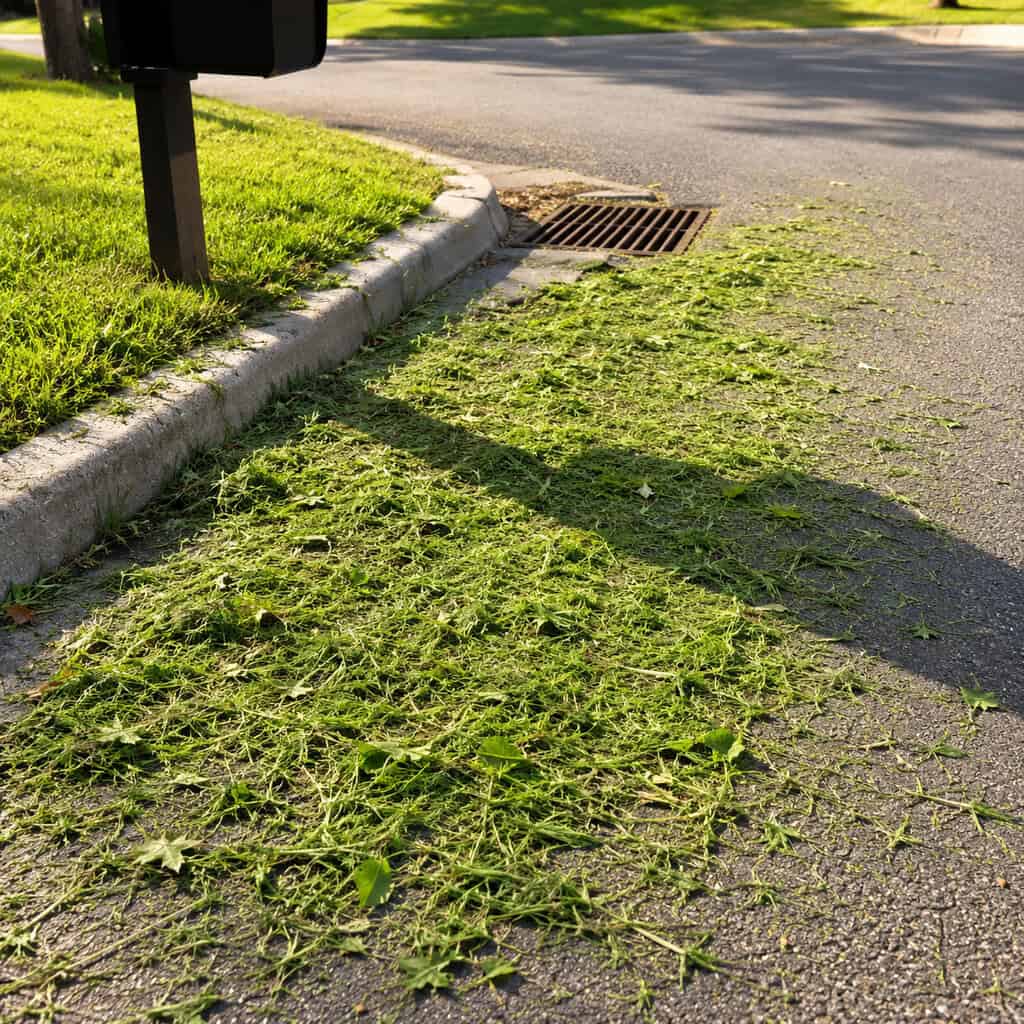
Watch the curb after a mow day. A green smear across the asphalt means the blower operator pointed outward instead of back toward the turf.
Saves maybe a minute. Sends nitrogen and phosphorus straight into the storm drain, which is why a growing number of towns now write tickets for it.
Clippings blown back onto the lawn break down and return roughly a quarter of the season’s nitrogen for free.
The neighbors notice the street before they notice the grass.
11. Fire-Engine-Red Dyed Mulch on Every Bed
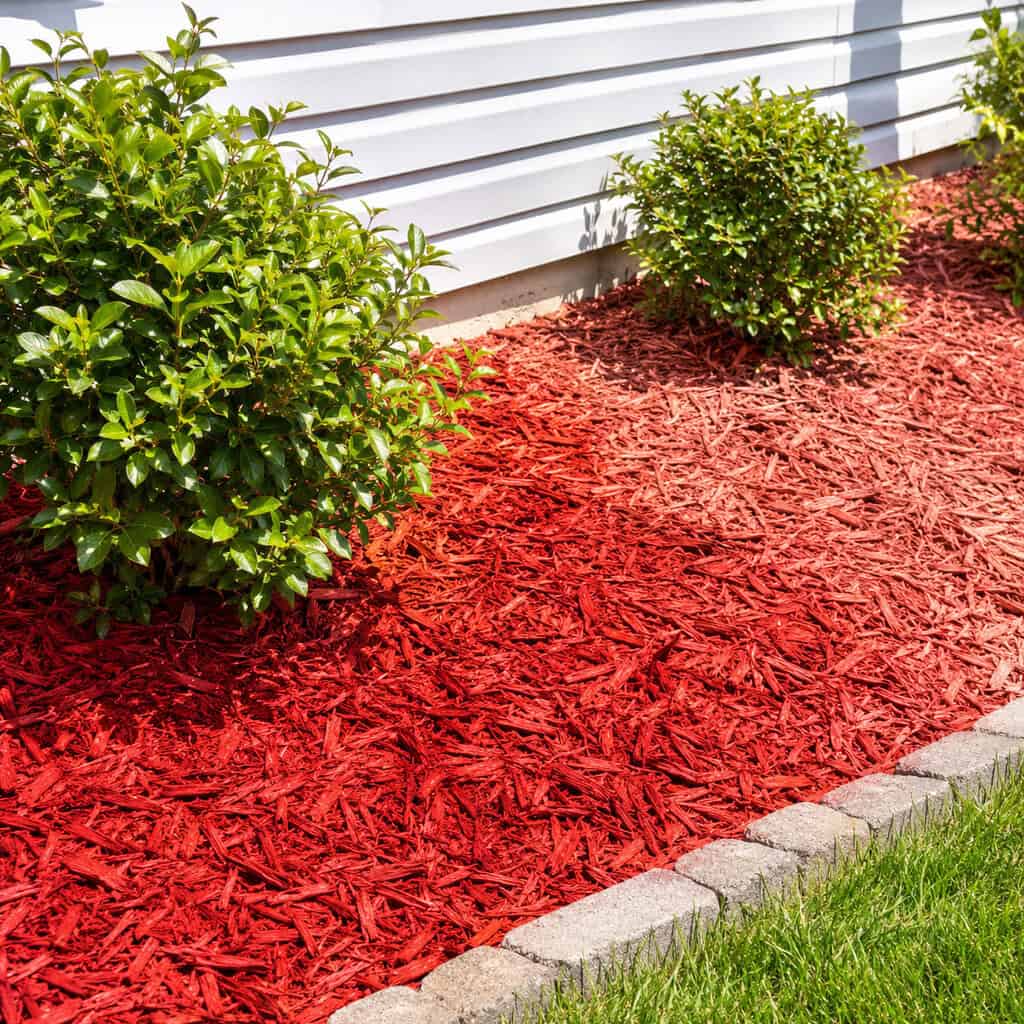
It’s the color of a cherry popsicle in April and dusty salmon by August.
Most heavily dyed mulch isn’t bark at all — it’s ground-up pallets, construction scrap, and whatever wood waste came through, colored to look uniform. The carbon-heavy material pulls nitrogen out of the top layer of soil as it breaks down.
Shredded hardwood, pine fines, and arborist chips all read as expensive, and they read that way because they’re unremarkable. Brown. Then grayer brown.
Nobody has ever walked past a bed of natural hardwood mulch and thought about the mulch.
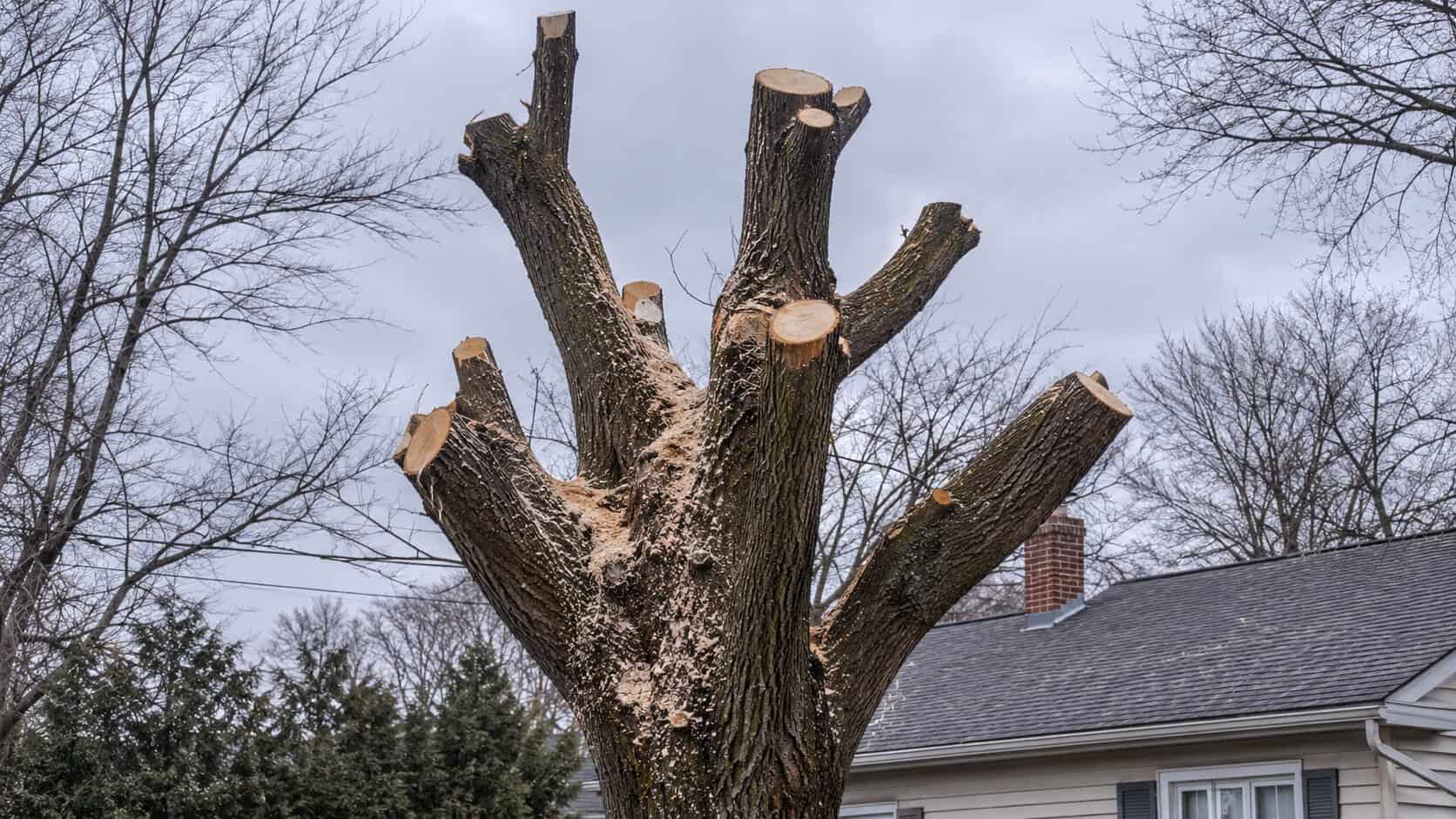
12. Hat-Racked Trees With Stub Cuts
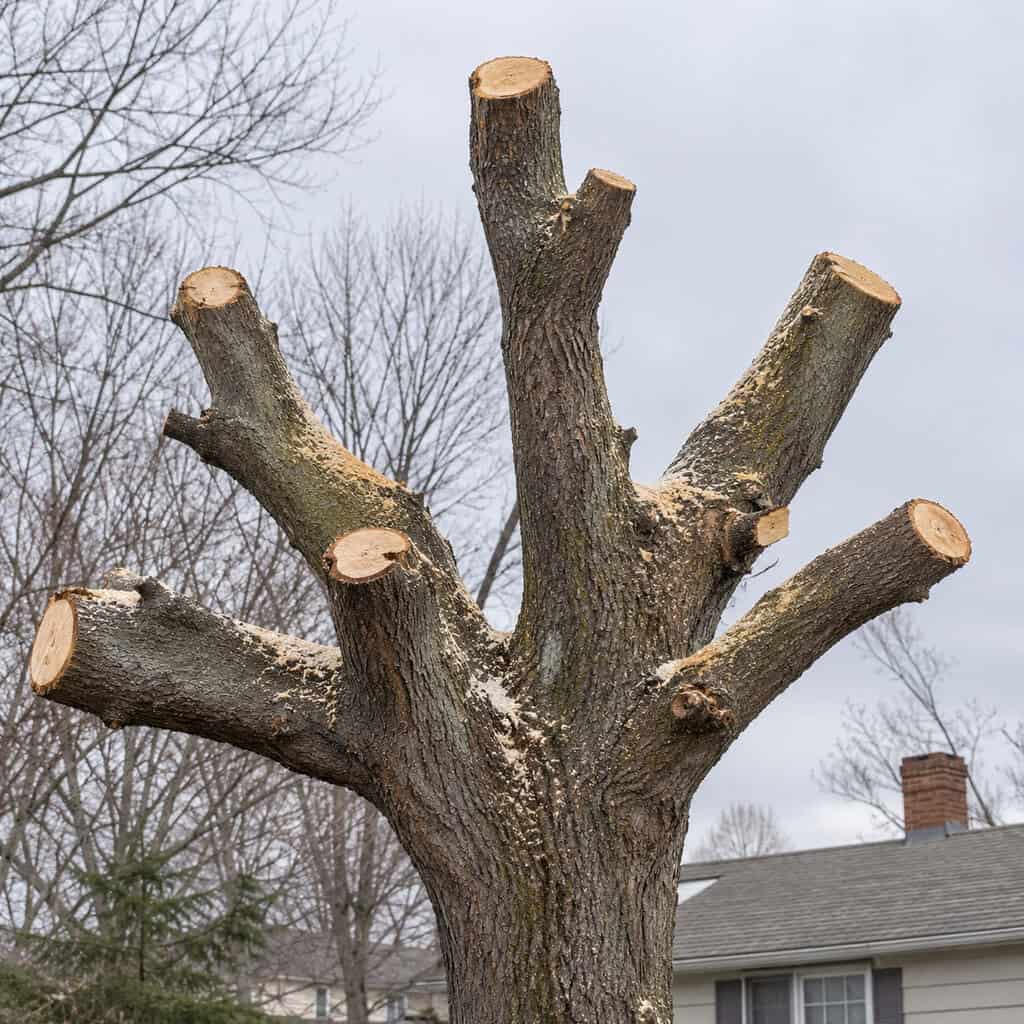
Big limbs sawed off mid-span, leaving naked stubs pointed at the sky. Usually done in February when the crew is looking for winter work.
Topping isn’t pruning. Proper cuts go back to a branch collar or a lateral big enough to take over; a stub cut has no way to seal and starts decaying inward immediately.
What grows back is worse than what was removed — dozens of watersprouts attached only to the outer wood, weakly held, taller in five years than the original limbs were. Iowa State Extension has been telling people this since 1994.
No certified arborist will do it. Which tells you who did.
13. Sod With Visible Seams and Dried-Out Strip Edges
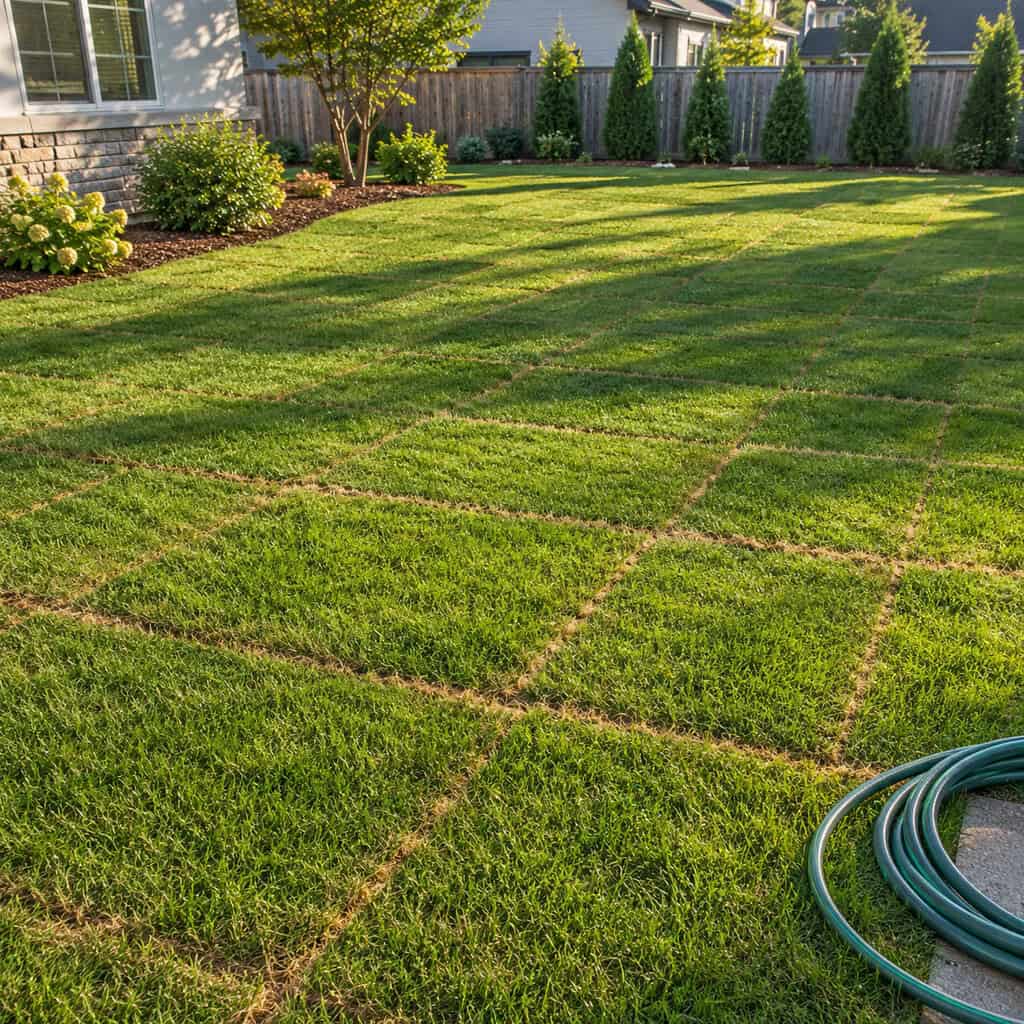
Six weeks after a new lawn goes in, a brown grid appears. Straight tan lines in a rectangle pattern, like grout.
That’s sod laid on unprepared ground with the butt joints gapped and no watering schedule. Exposed edges dry out first and die back a half inch on each side.
Good installs till and level the base, stagger the seams like brickwork, butt them tight, then roll the whole thing.
Done right, the lines vanish in three weeks and never come back.
14. Nursery Tags and Empty Pots Left in the Beds
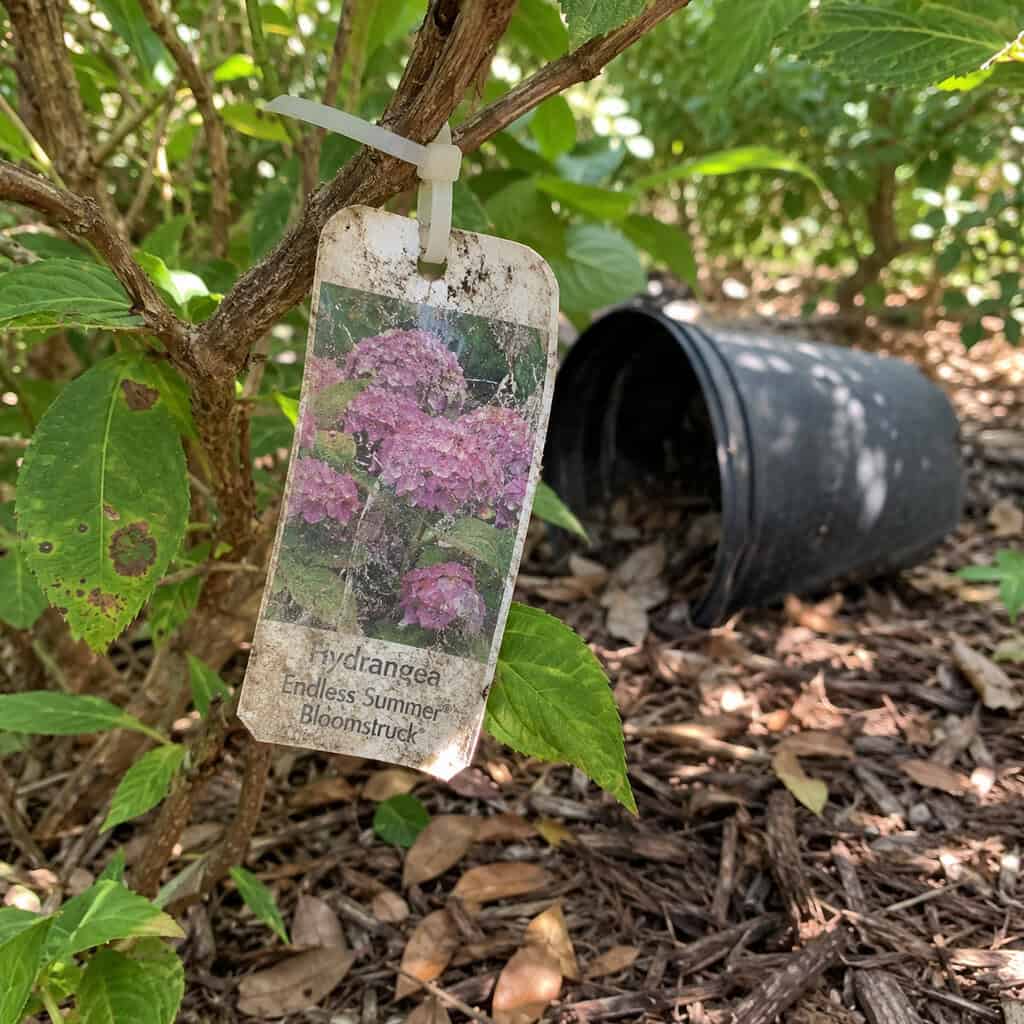
A faded plastic tag still zip-tied to a juniper branch two years after planting.
It’s a small thing that explains everything else. Cleanup is the invisible step, the one a budget bid deletes because the homeowner was at work and won’t be back until six.
Check the back of the beds. That’s where the pots go.
15. Mulch Piled High Against the Siding
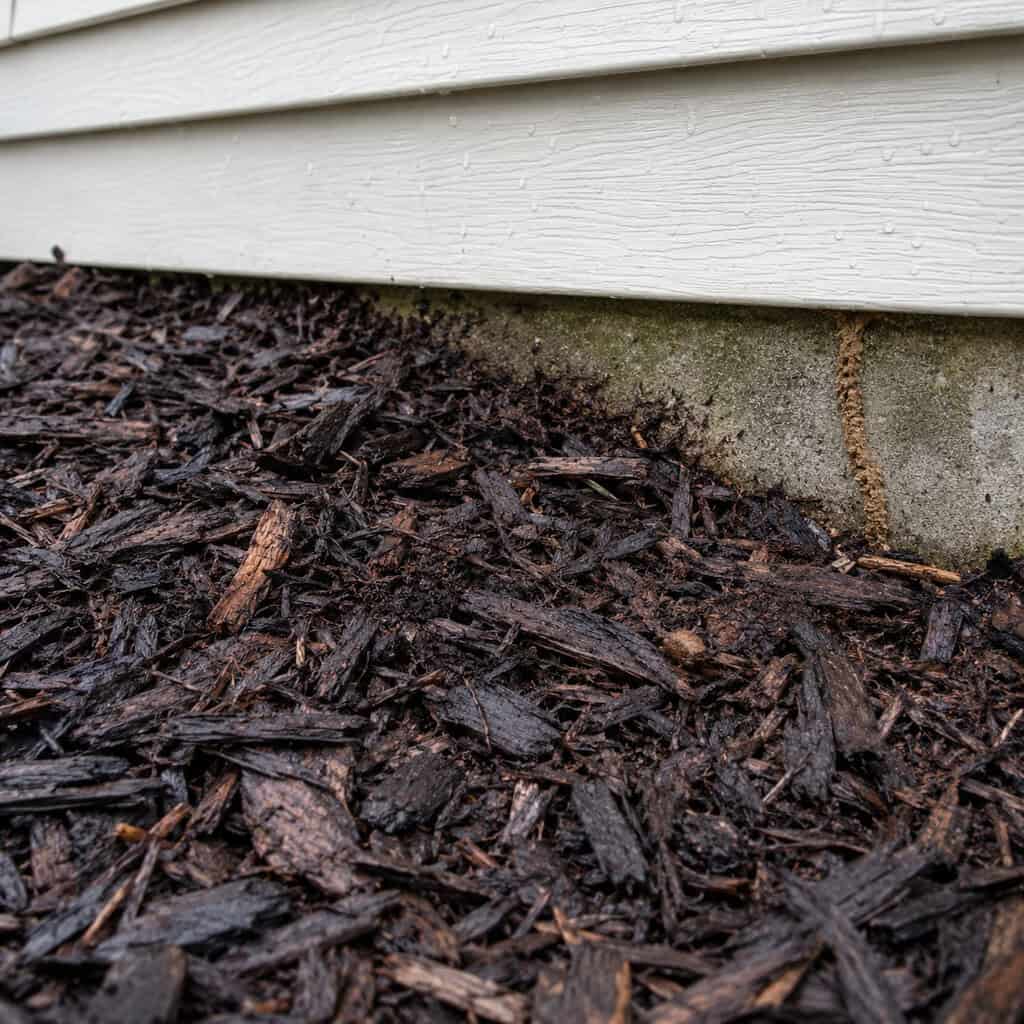
This one isn’t cosmetic. This one costs money.
Raking mulch straight to the wall is faster than stopping short and feathering it down, so that’s what happens — three or four inches of damp organic material stacked against the bottom course of siding, covering the foundation line.
Termites need two things: wood and moisture. Mulch against siding supplies the moisture and hides the approach. Most homes have a treated soil zone around the foundation, and a mulch bridge lets a colony travel right over it, out of sight.
It buries the single most useful inspection surface you own. Subterranean termites build pencil-width mud tubes up the foundation wall to reach wood, and those tubes are usually how an infestation gets caught. Bury the wall and nobody sees them for years.
What you want is simple:
- At least 6 inches of bare foundation visible between mulch and the bottom of the siding
- Mulch tapered down as it approaches the wall, never stacked up against it
- No wood-to-soil contact anywhere — deck posts, trim boards, lattice
- A quick look along the foundation every spring for mud tubes
The math is ugly when it goes wrong. A full termite treatment on an average home commonly runs $1,200 to $3,500, and structural repair after an established colony has worked on sill plates and studs regularly passes $8,000. Homeowners insurance almost never covers it, because insurers classify termite damage as preventable maintenance.
Carpenter ants work the same angle. They don’t eat wood, they excavate it, and they prefer wood that’s already damp — exactly what mulch-against-siding produces.
Two inches of clearance costs nothing on mulch day. Finding out the hard way costs a used car.
16. Knee-High Stumps and Mounded Grindings
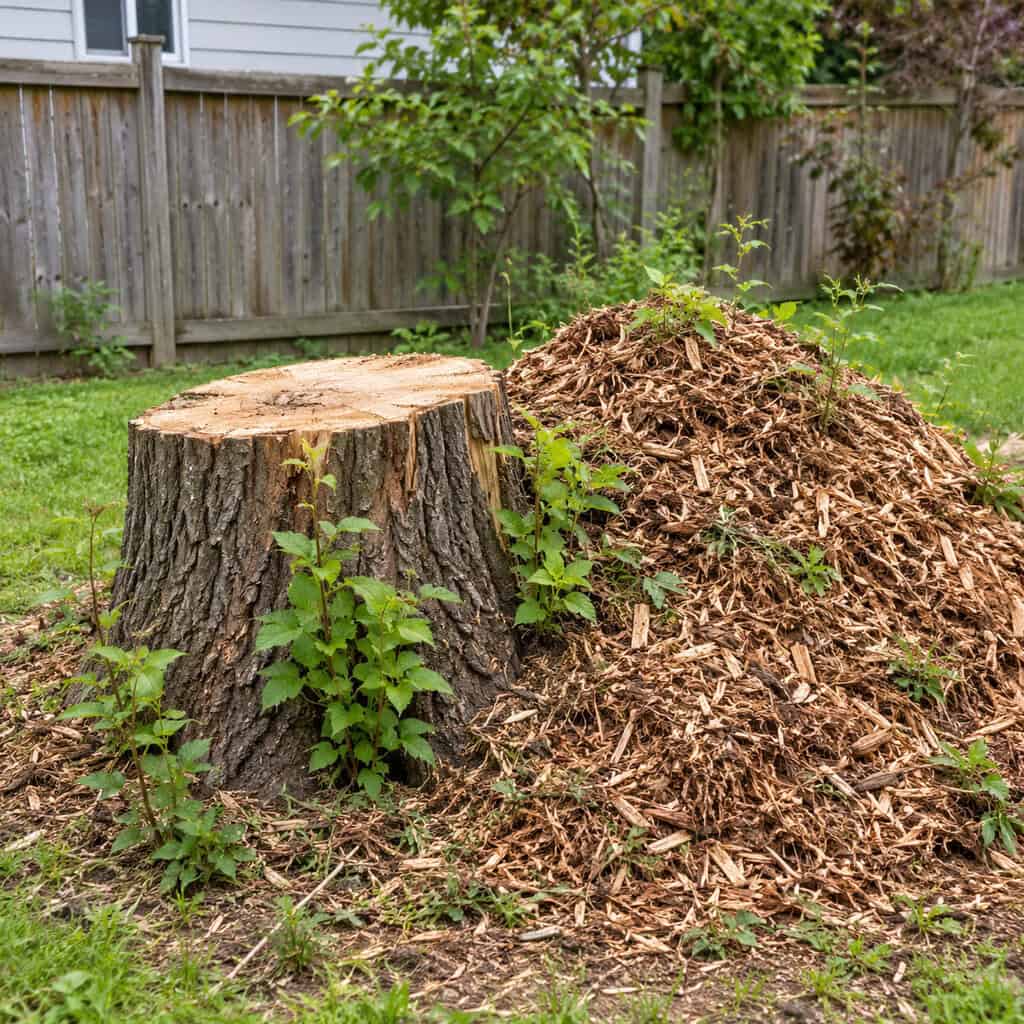
A stump cut at shin height means removal was priced without grinding, and a pile of wet chips beside it means grinding was priced without haul-away.
The mound looks temporary. It isn’t — chips settle maybe 40% over a year, and what’s left is a soft, acidic, weedy hump that grass won’t take to.
Then the stump itself starts sending up suckers from the roots. Now you’re mowing around a bush that used to be a tree.
Grinding and haul-away should be on the quote as separate lines. If they aren’t listed, they aren’t happening.
17. Frayed, White-Tipped Grass the Day After Mowing

Walk out the morning after a cut and look at the lawn at a low angle, into the sun.
A sharp blade slices cleanly and the lawn still reads solid green. A dull blade tears the leaf, and thousands of shredded tips dry to whitish-tan overnight, hazing the whole yard like it’s been dusted.
Torn tips also lose water faster and give fungal disease an open door.
Blades should be sharpened every 20 to 25 hours of mowing. A crew whose turf hazes in June hasn’t touched a grinder since March.
18. Scalloped Concrete Tree Rings
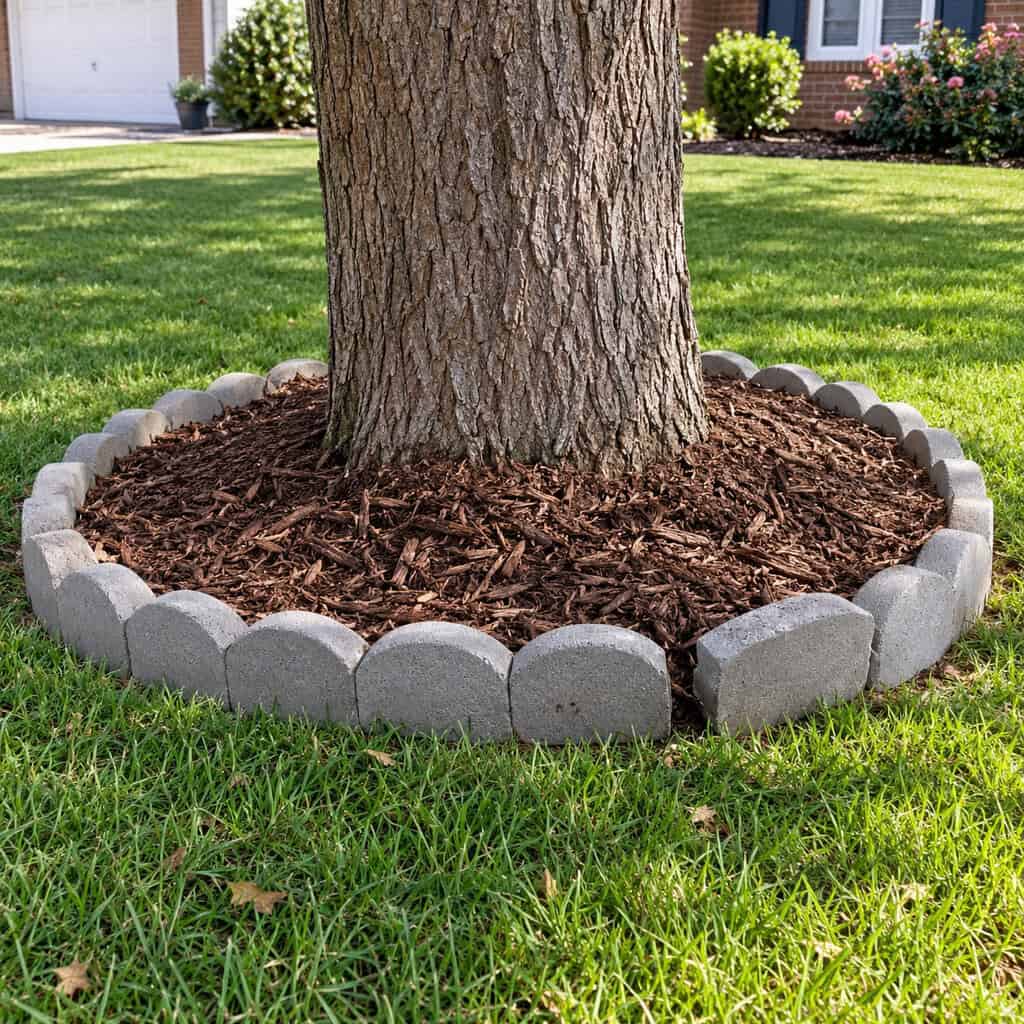
Gray interlocking scallops, sold eight to a pallet at every big-box garden center since about 1994.
They ring the tree at a fixed diameter, which is the whole problem — the trunk grows and the ring doesn’t. Mulch piles up inside against the bark because there’s nowhere else for it to go.
By year ten somebody is prying apart concrete with a crowbar to free a flare that’s been choked for a decade.
A clean spade-cut edge does the same job, scales with the tree, and disappears into the bed.
19. Hydrangeas and Lilacs That Never Bloom
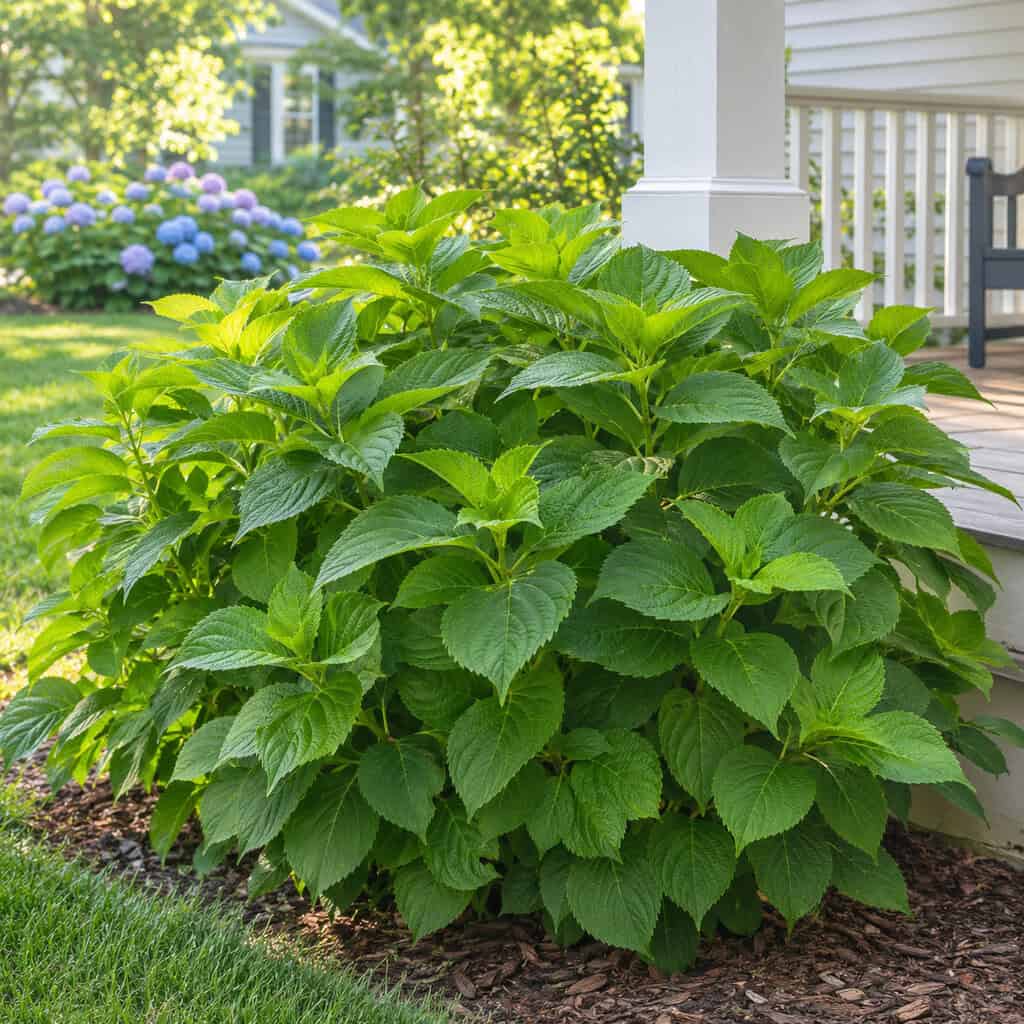
The homeowner thinks the plant is a dud. The plant is fine. The calendar killed it.
Bigleaf hydrangeas, lilacs, forsythia, and azaleas all set next spring’s flower buds the previous summer, on wood that’s already there. A crew that shears every shrub on the property on the same August visit removes every one of those buds.
Next May: lush green, zero flowers. Repeat annually.
Prune old-wood bloomers within a few weeks after they finish flowering. Any later and you’re cutting next year off.
20. A Downspout Blasting a Crater in the Mulch Bed
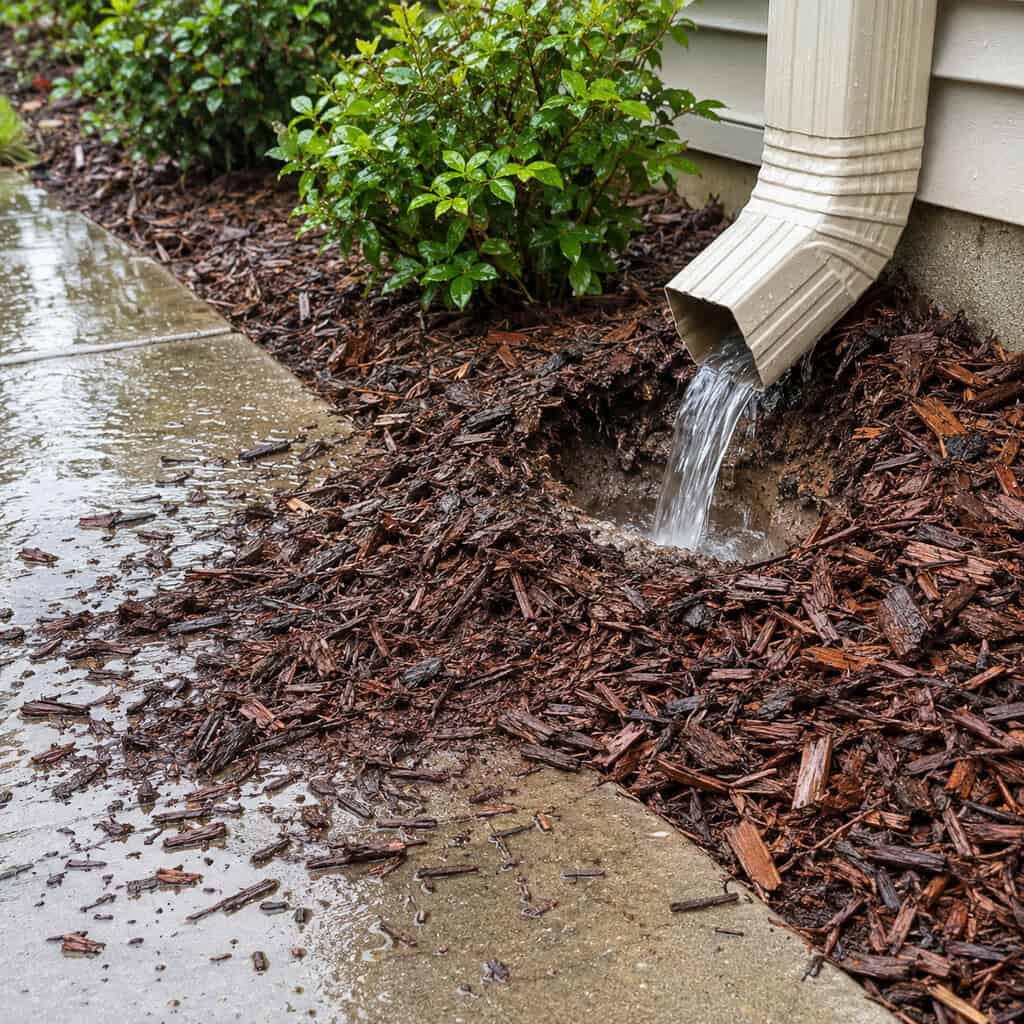
Go look after the next real storm. Mulch fanned ten feet across the walkway, and a scoured hole in the bed right under the downspout elbow.
It means nobody dealt with roof water before the beds went in. The landscaping was installed around the drainage problem instead of ahead of it.
The scale is worth understanding. A 1,500-square-foot roof sheds about 930 gallons during a one-inch rainfall. Split across four downspouts, that’s 230 gallons dumping at each corner in a couple of hours — enough force to excavate mulch, compact soil, and saturate the ground within inches of the foundation.
Saturated soil against a foundation wall is where basement problems start. Hydrostatic pressure pushes water through hairline cracks and cold joints you’d never otherwise notice. The first sign is usually a damp smell, then efflorescence on the block, then standing water after heavy rain.
Two fixes, both unglamorous:
- Extend every downspout at least 4 to 6 feet from the wall, buried or on a solid extension — not a flip-up hinge nobody flips
- Grade the soil away from the house at roughly 6 inches of fall over the first 10 feet
Downspout extensions cost $15 each. Regrading a problem corner with fill dirt runs a few hundred. Interior drain tile and a sump system in a finished basement starts around $5,000 and climbs fast from there.
A cheap install doesn’t just look cheap. It routes water at your foundation for years. If your yard already holds water after storms, deal with drainage before you spend a dollar on plants.
21. Dead Shrubs Left Standing in the Bed
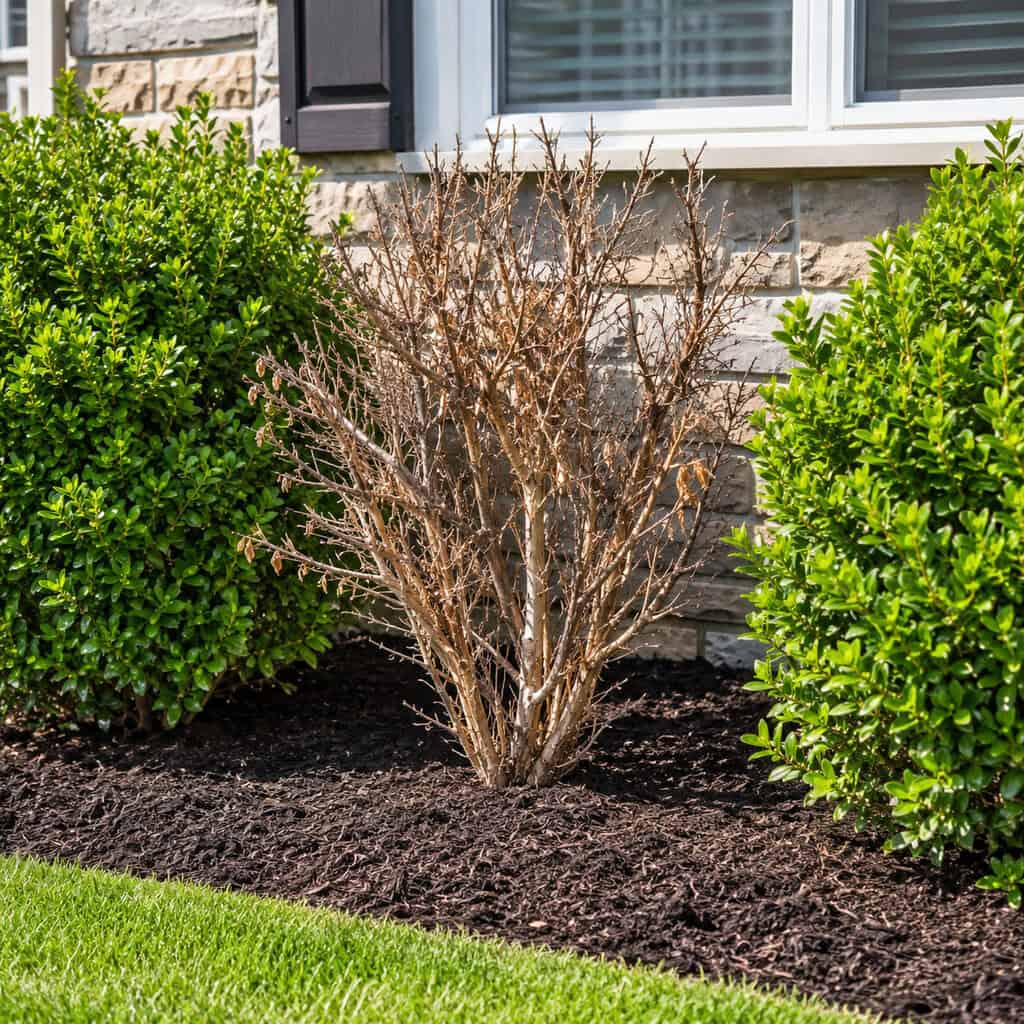
Brown skeleton in the row. Fresh mulch raked neatly around it.
That image says the whole thing. The crew will service what exists — trim it, mulch it, blow it off — but nobody is looking at the yard and asking why something died or what should go there instead.
It’s the difference between maintenance and care. One is a route stop. The other is attention.
A good outfit flags it, tells you why, and quotes a replacement.
22. River Rock Dumped Against the Foundation
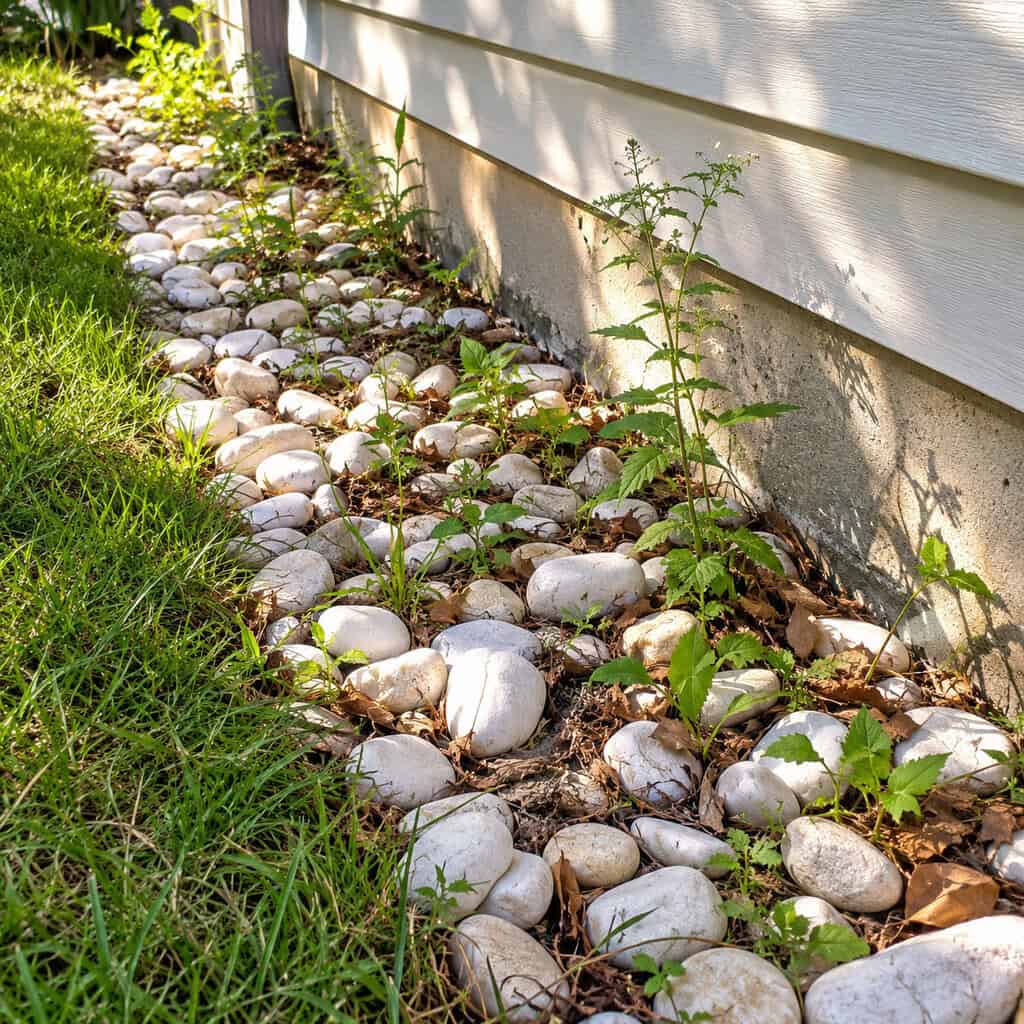
Sold as the no-maintenance option. It’s maintenance-free for roughly one season.
Then silt filters down between the stones, leaves pack in, seeds germinate in the organic matter that collects, and now you’ve got weeds rooted in a bed you can’t rake, can’t turn, and can’t easily refresh. Pulling them means hand-sorting rock.
There’s a thermal problem too. A white or light gray rock strip reflects sunlight directly onto the siding and foundation wall, and the stone itself absorbs heat all afternoon and radiates it into the evening. On a south or west exposure that bakes the wall, cooks any plant roots in that strip, and pushes cooling costs up measurably on the rooms behind it.
Then there’s the future. Any foundation work — waterproofing, crack injection, regrading, a new window well — means removing that rock by hand, bucket by bucket, because a shovel just drives stone into the soil beneath. Contractors price around it. Some charge extra to deal with it at all.
Rock has real uses: dry creek beds, drainage swales, utility paths. A decorative band glued to the foundation isn’t one of them.
23. Trees Sunk Like Telephone Poles With No Root Flare
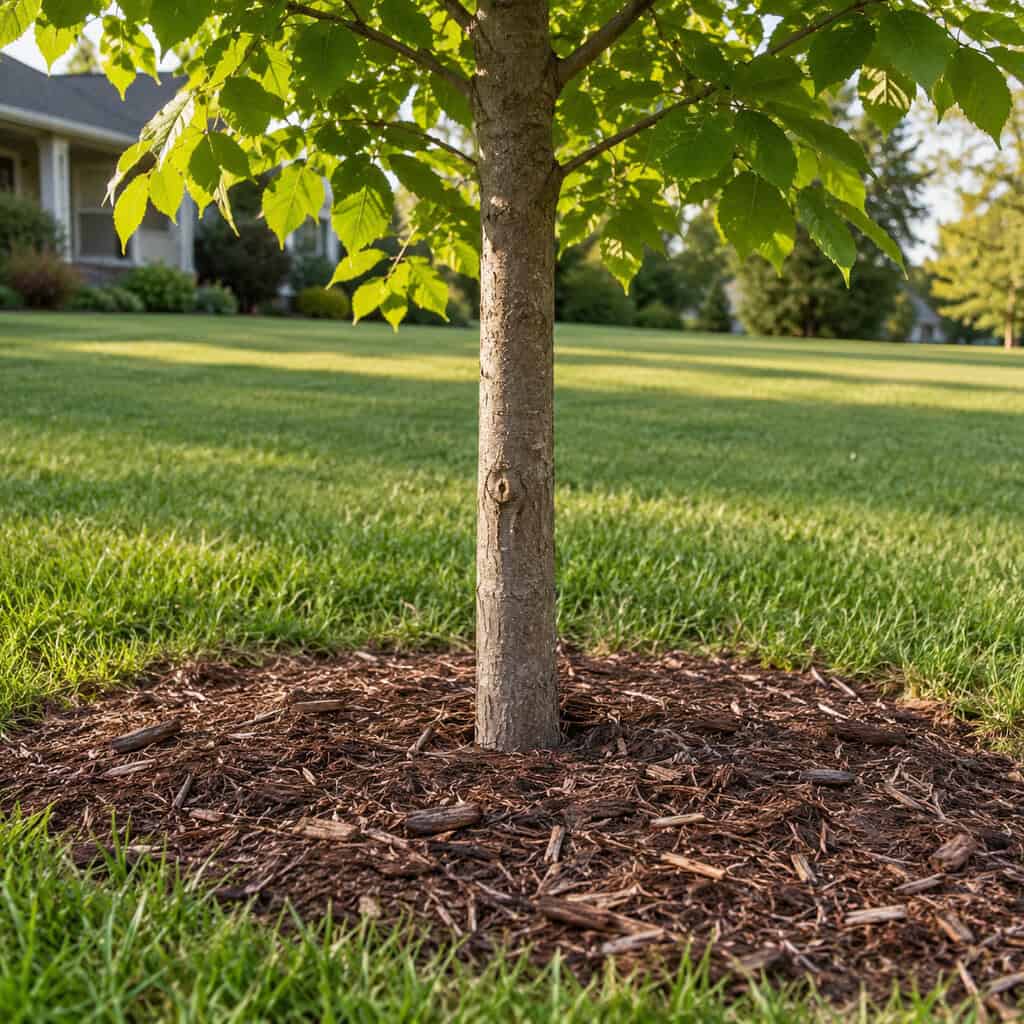
Stand back and look at where the trunk meets the ground. Does it widen out, like a foot? Or does it go straight into the dirt like a fence post?
Straight means too deep. It’s the most common planting error in the business, and it happens because digging the hole deeper is easier than measuring the root ball.
Buried flares produce roots that circle instead of spreading. Ten years later the tree is thin at the top, drops leaves early, and nobody connects it to a planting day two presidents ago.
The flare belongs at or slightly above finished grade. Always. On the nursery’s own root ball, it’s often buried two inches under the potting soil — which means a good planter digs down to find it first. That extra ten minutes is the whole difference. If you’re putting a new tree in the ground this year, start there.
24. Mower Ruts Worn Into the Same Lines Every Week

Same direction, same wheel path, every Thursday for five months.
Soil under those tracks compacts, roots lose air space, and the grass learns to lie flat. By August you’ve got permanent parallel channels in the lawn that show up even right after a cut.
On wet spring ground the ruts go physical — actual depressions you can feel underfoot.
Rotating the pattern 90 degrees each visit fixes it and costs exactly nothing. Which is why skipping it says so much.
25. A Stacked-Stone Wall That’s Already Leaning
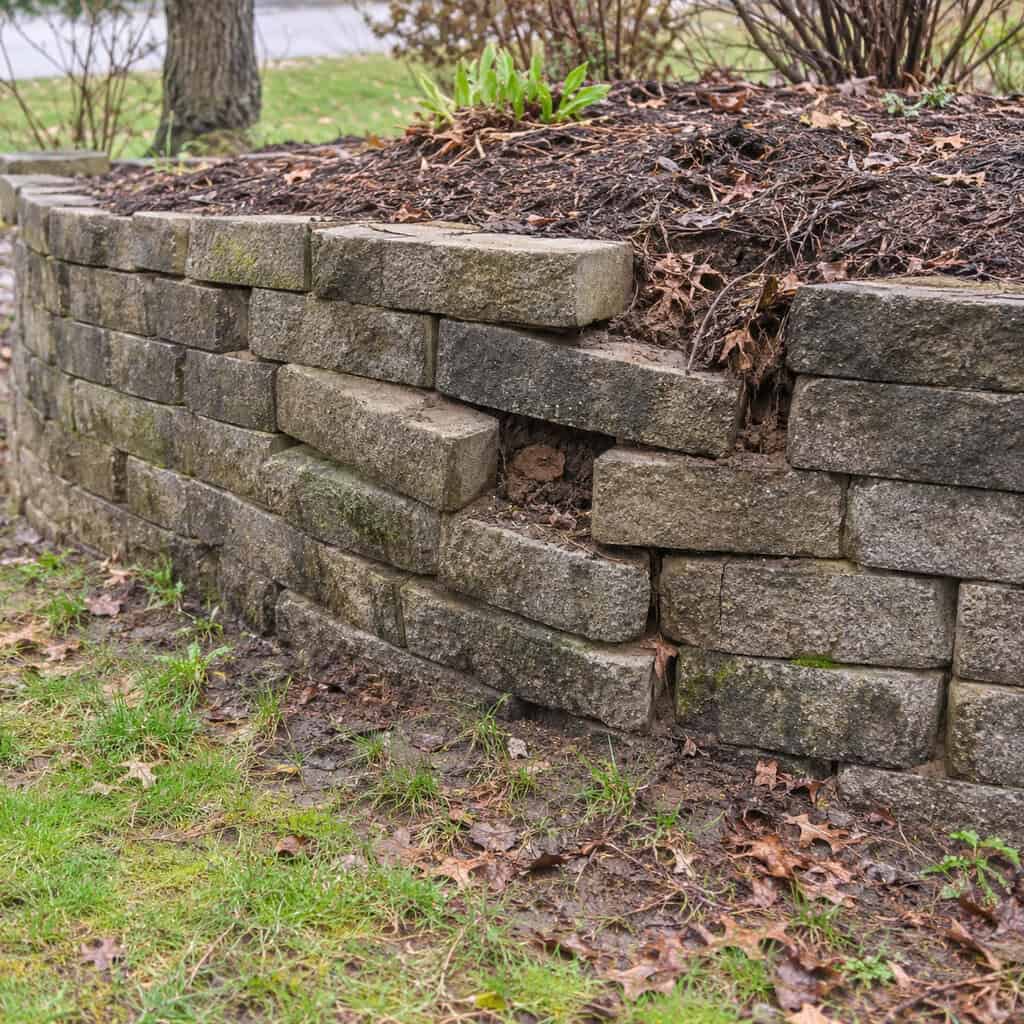
Retaining walls are where cheap bids hide the most money, because almost everything that matters is buried.
A wall bulging outward in its third spring was built on dirt. No excavation below grade, no compacted base, no gravel behind it, no drain pipe. Just block stacked on soil because the surface looked fine on the day the check was written.
Here’s what a real wall has under it. Six to eight inches of compacted crushed stone base, with the first course of block set below finished grade so the wall can’t slide forward. Twelve inches of clean angular gravel backfilled behind the block, so water moves down through stone instead of pooling in clay. A perforated drain pipe at the base of that gravel, daylighted out to somewhere water can leave. And on anything over about three feet, geogrid tied into the soil mass every few courses.
The force involved is easy to underestimate. Saturated soil behind a wall weighs roughly 120 pounds per cubic foot and pushes outward constantly. Without drainage, every heavy rain adds hydrostatic pressure the block was never meant to resist.
Most municipalities require an engineered design and a permit above four feet — some drop that threshold to three. A contractor who doesn’t mention permits on a four-foot wall is telling you something.
Rebuilding a failed wall costs more than the original, because now somebody has to demolish and haul the old one first. Budget $25 to $60 per square face foot done correctly. A failed 40-foot wall rebuild commonly lands north of $12,000.
The gravel is where the money goes. That’s exactly why it’s the first thing cut.
26. Crooked Solar Path Lights With Wires Showing

Six stake lights along a walk, each leaning a slightly different direction, three of them dead.
Cheap solar fixtures dim badly by their second season as the batteries degrade and the plastic lenses haze over. They were never going to last, and nobody was coming back to replace them.
Low-voltage wire snaking across the top of the mulch is the other half of it. Real installs trench the runs four to six inches down and set every fixture plumb at a consistent spacing.
Fewer, better lights beat a row of leaning ones. Three good fixtures do more than nine bad ones.
27. Burlap, Twine, and Wire Basket Left on the Root Ball
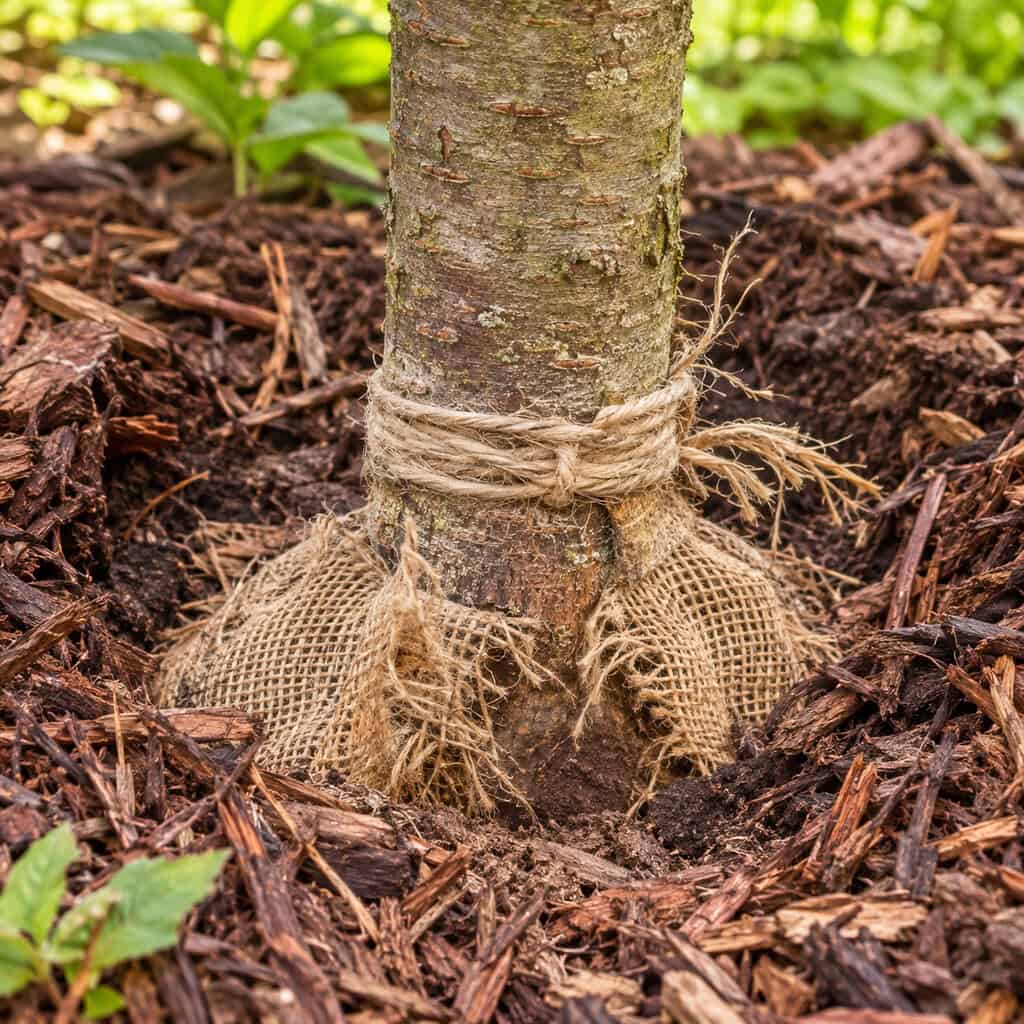
Sometimes you can still see the twine, cinched tight at the base of the trunk, half-buried in mulch.
That means the crew lowered the ball into the hole and backfilled over the whole package. Natural burlap does rot. Treated and synthetic burlap doesn’t, and neither does the wire basket or the nylon twine.
The tree pushes roots into fabric that won’t give. The twine stays cinched as the trunk thickens. Decline shows up at year six and gets blamed on drought.
Cut and remove the top third of the basket, all twine, and all burlap from the upper root ball before backfilling. Takes four minutes.
28. A Paver Patio Sinking at the Corners
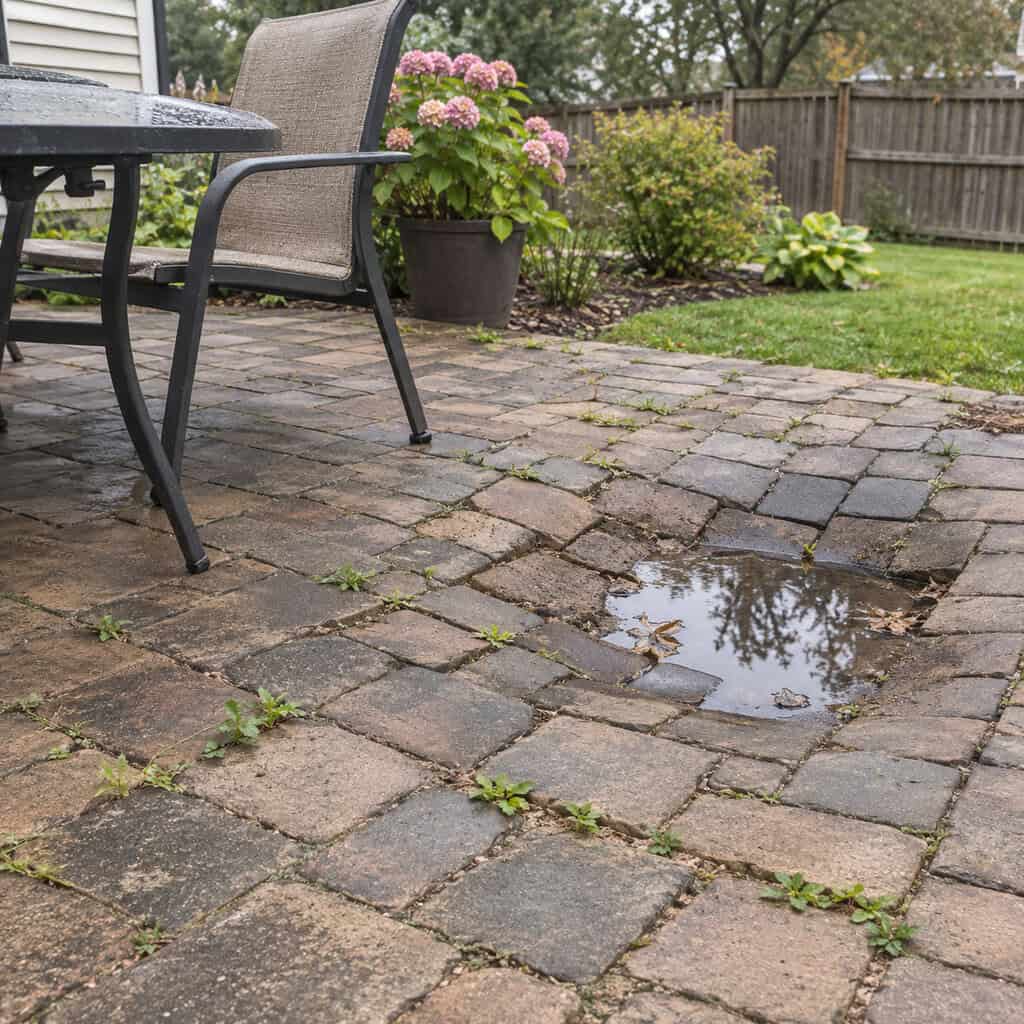
Pavers are the clearest example of paying for what you can’t see.
The stones are the cheap part. The eight inches underneath them is where a real contractor spends the budget and where a cut-rate bid finds its margin.
Correct build: excavate 8 to 12 inches, lay compacted crushed aggregate in 3-inch lifts with a plate compactor on each lift, screed an inch of coarse bedding sand, set the pavers, install rigid edge restraint, then sweep in polymeric sand and activate it with water. The edge restraint is what keeps the perimeter from creeping outward — skip it and the whole field spreads over three winters.
What the fast version looks like: four inches of loose gravel dumped and raked, sand spread thick to hide the unevenness, pavers set, play sand swept in. It’s beautiful in September.
By the second spring, corners have dipped, individual stones rock when you step on them, joint sand has washed into the lawn, and weeds are coming up through every seam. The dips also collect water, which freezes, which heaves, which widens the dips.
Repair isn’t patching. It’s lifting every paver, redoing the base, and resetting — which is why a redo runs close to the original price on top of what you already spent. A 300-square-foot patio done properly lands somewhere around $4,500 to $8,000 installed depending on stone and region. Done twice, you know the number.
Ask one question before signing: how deep is the base and how many compaction passes. The answer tells you the whole bid.
29. Brown Chemical Stripes Across the Turf

Parallel scorched bands you can count from the sidewalk. Or a dead halo tracing every bed edge.
Stripes mean an uncalibrated spreader and overlapped passes — double the rate on the overlap line, which burns. Dead edges mean herbicide drifted on a breezy day, or somebody sprayed along the beds without a shield.
Granular fertilizer needs the spreader calibrated to the product, not left on whatever setting the last job used. Spraying needs wind under 10 mph.
Nothing advertises a rushed chemical visit like geometry in the lawn.
30. Bradford Pears and Burning Bush as the Whole Plant Palette
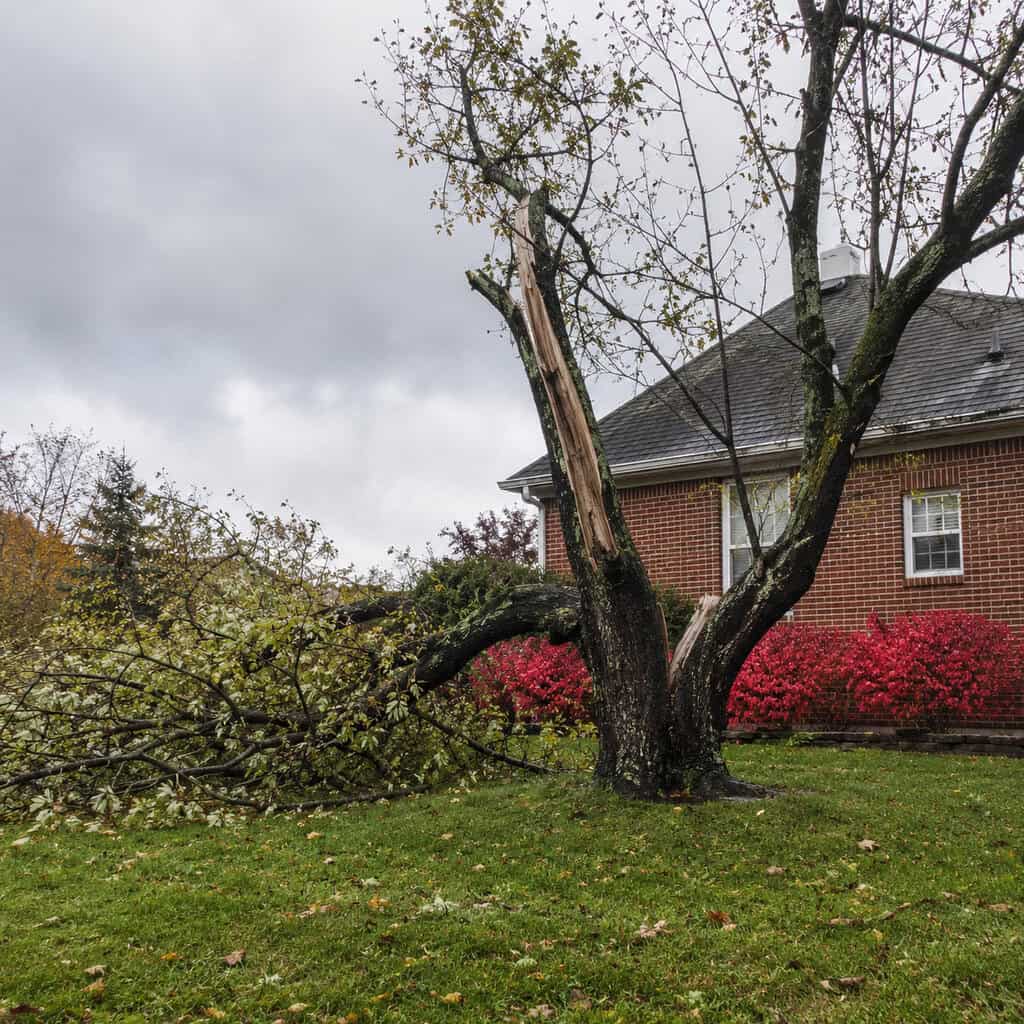
Cheap bids plant whatever’s stacked cheapest at the wholesale yard that week. Fast-growing, uniform, available by the hundred.
Bradford pear is the poster child. Gorgeous for about twelve years, then the narrow crotch angles that made it grow so fast split the tree in half during an ice storm. The flowers smell like something died. And the fruit birds spread has produced thorny wild pear thickets across fields in the eastern half of the country.
Burning bush does the same thing in shrub form, seeding into woodlands and crowding out native understory.
Ohio, Pennsylvania, and South Carolina have all moved to ban Bradford pear sales, with other states following. A design that leans on them was priced, not planned.
31. Plastic Flowers and Fake Greenery in Real Beds

Polyester hydrangeas faded to a chalky pale blue, stuck in mulch beside actual living plants.
It’s the one thing crisp edging can’t rescue. Designers put artificial plants and plastic pots at the top of every list of details that cheapen a yard, and it’s not snobbery — real foliage moves, catches light differently through the day, and changes with the season. Fabric does none of that, and the brain clocks it from thirty feet.
Sun wrecks them fast. Reds go pink in one summer, greens go gray.
If a spot is too shady or too dry for a living plant, use a rock, a bench, or nothing. Empty beats fake.
32. Foundation Shrubs Swallowing the Front Windows
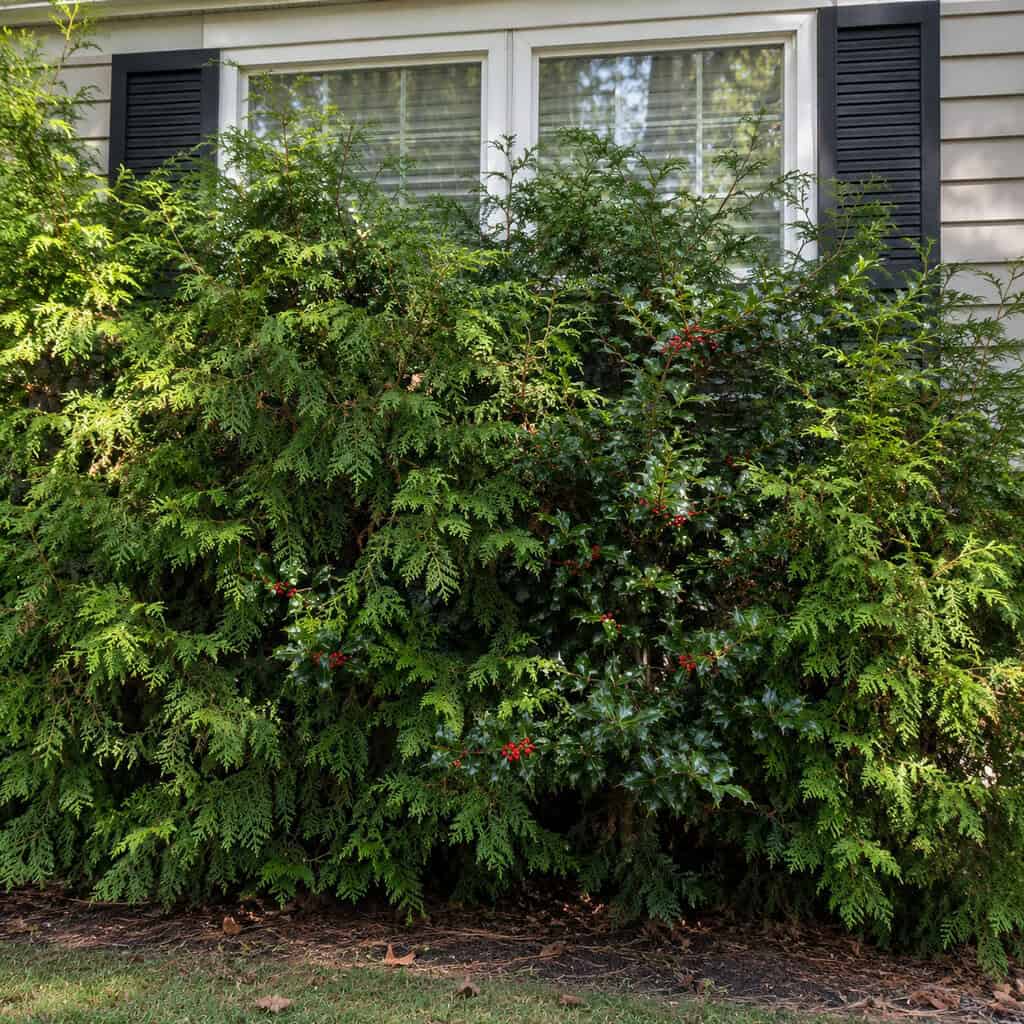
Arborvitae at 18 inches off the wall. Hollies tucked under the sill. Planted there because that’s where the digging was easy.
A “dwarf” Alberta spruce reaches ten feet. Emerald Green arborvitae hits twelve to fourteen. Most foundation hollies want six feet of width they’re never given.
By year seven the windows are dark, the siding behind the shrubs stays damp and never dries, and the best feature of the front of the house is behind a hedge. Insects and mildew like that gap.
Mature width divided by two is your minimum distance from the wall. Spacing is free on planting day and nearly impossible to fix later.
33. Everything Blooms for Two Weeks in May and Nothing After

One trip to the nursery in late April buys you exactly one moment.
Whatever is flowering on the sales lot that weekend is what goes in the truck — azaleas, tulips, a flowering cherry. The yard peaks on Mother’s Day. Then it’s flat green from June through frost and bare sticks from November to March.
Yards that look cared for were planned around the slow months. Coneflower and rudbeckia carrying July. Ornamental grass and sedum holding September. Red-twig dogwood, hellebore, and evergreen structure doing the work in February when nothing else is.
Build it with perennials that return on their own and the yard fills in a little more every year instead of resetting each spring.
The gap between a cheap yard and a cared-for one isn’t the budget. It’s whether anybody thought about August.
34. Leaves Blown Into the Neighbor’s Yard or the Street
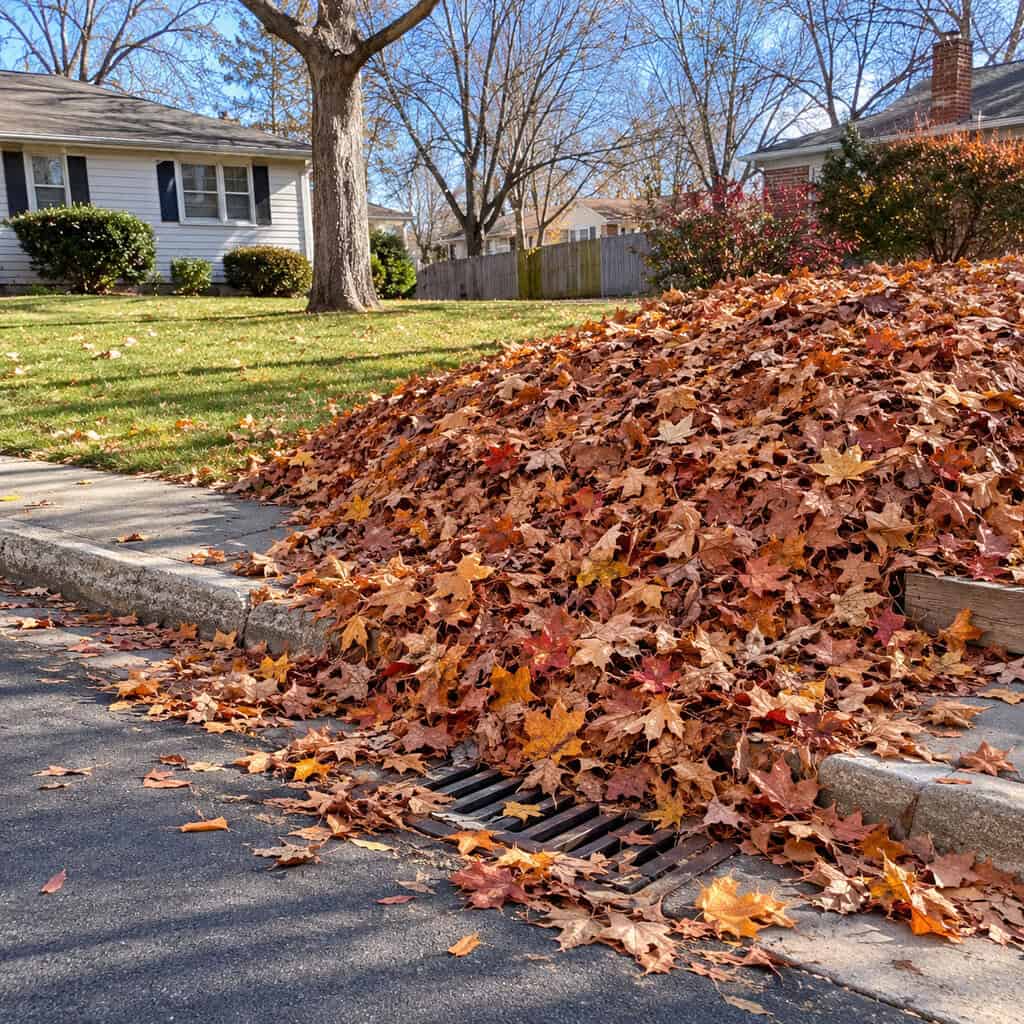
November, 8 a.m., and the backpack blower is aimed at the property line.
It clears the yard in half the time. It also hands the problem to somebody who didn’t hire anybody, and they know exactly where it came from because they watched it happen through the kitchen window.
Street piles are worse. They clog storm drains, and in most towns the leaf vacuum truck comes once, meaning whatever’s left sits in the gutter until spring.
Mulch-mowing handles most of a season’s leaf drop in place and feeds the turf doing it. The rest goes in bags, or in a pile out back.
A yard is never just yours. Everyone on the street reads it every day.
Almost none of this is about money. The gravel behind a retaining wall, the six inches of bare foundation above the mulch, the ten minutes spent finding a root flare — those are decisions, not line items.
Cheap crews aren’t lazy. They’re fast, and fast means doing the version of each step that looks finished by five o’clock.
Walk your own yard this weekend and check three things: the base of your trees, the gap between mulch and siding, and where the downspouts end up.
A yard doesn’t hide what it’s been given. It just takes a few seasons to say so.