

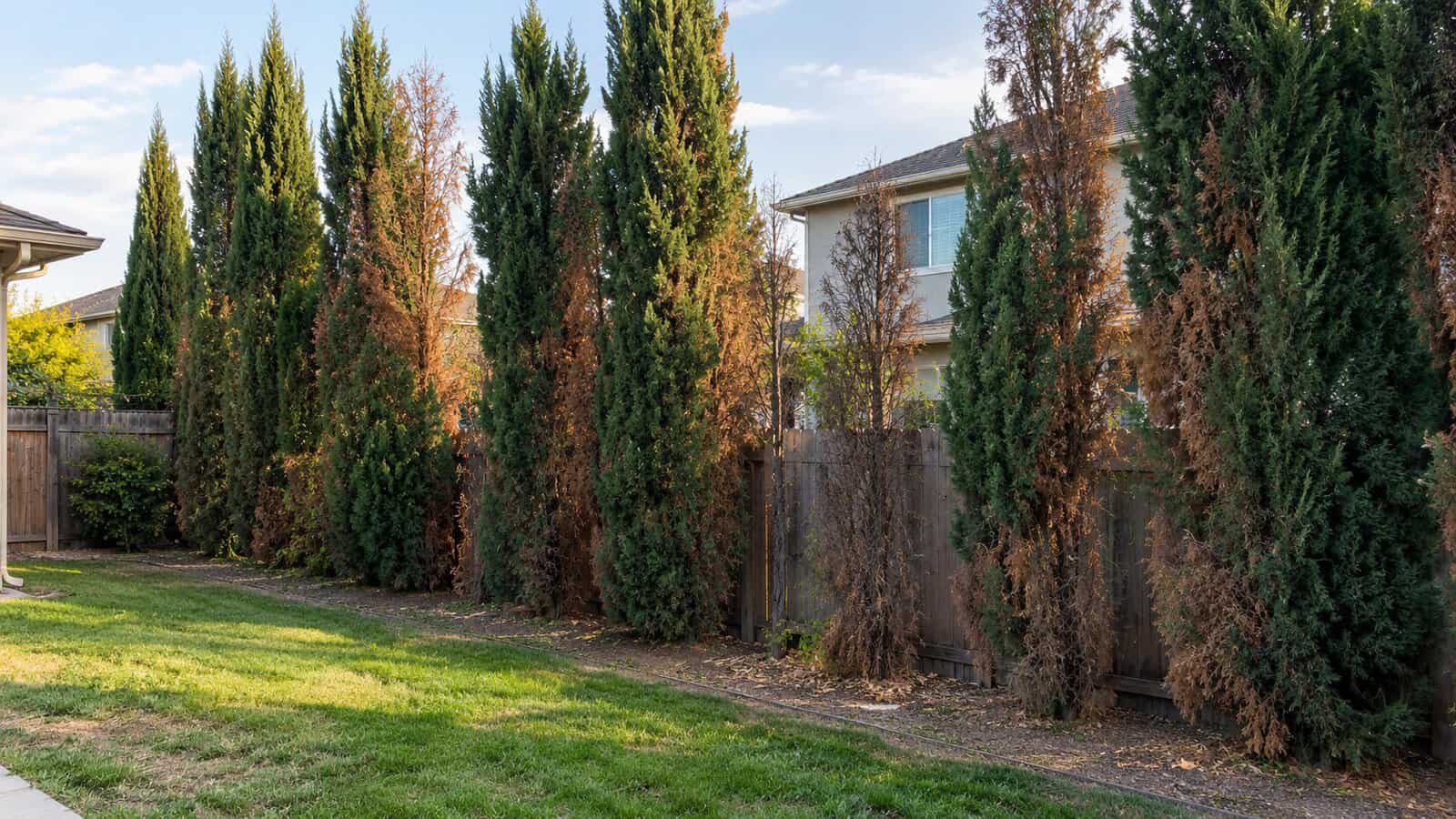
Most privacy screens get chosen in a hurry, usually in spring, usually from whatever is stacked tallest at the garden center. The plant tag lists a growth rate, a zone range, and a mature size that few buyers read twice.
Those mature numbers matter more than speed. A screen along a lot line stays for 15 to 30 years, and every problem it brings, from disease to seedlings in the neighbor’s yard, stays with it.
Below are 23 trees, shrubs, and grasses that sell well because they grow fast, along with the specific trouble each one tends to cause later. Some get too big, some get sick, and some are now banned in parts of the country.
Knowing the catch ahead of time makes it easier to pick a screen that holds up.
1. Hybrid Willow
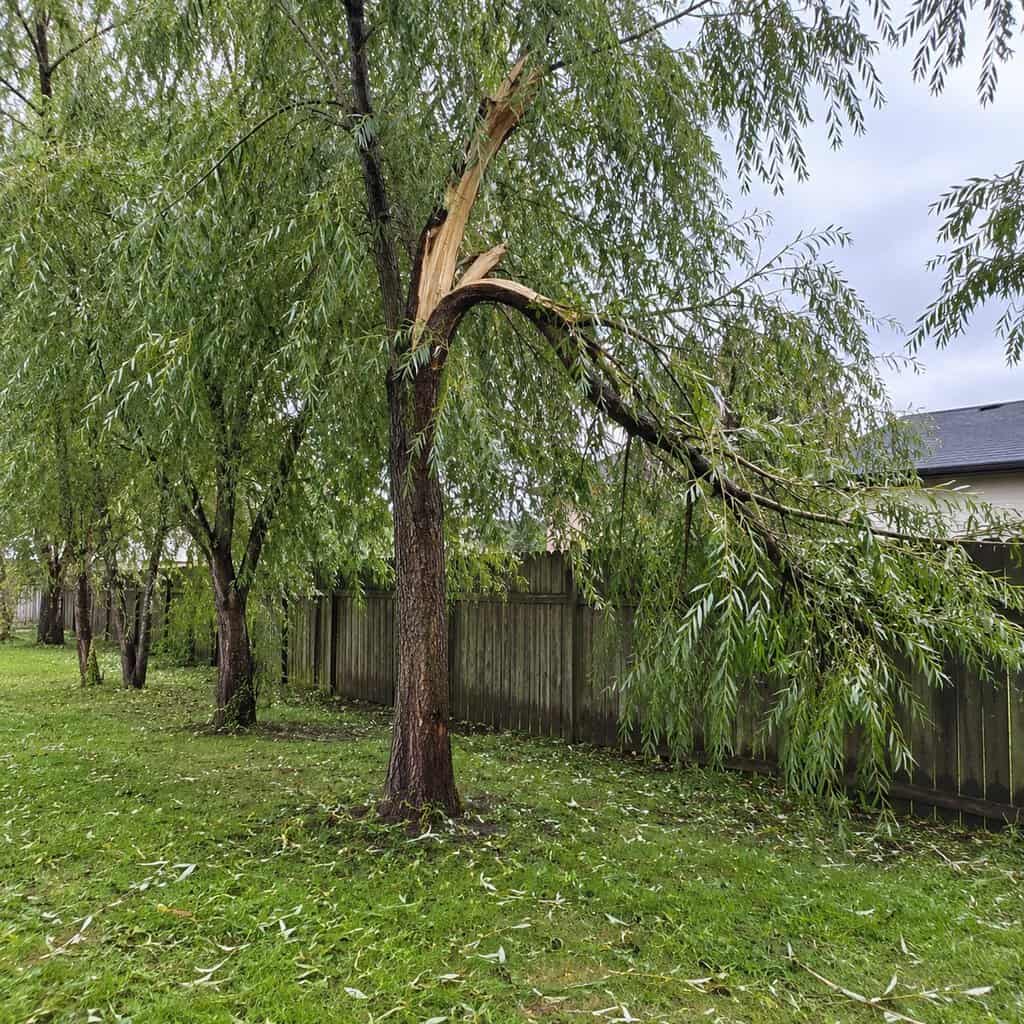
Mail-order catalogs have long promised a living fence from hybrid willow, and the speed claims are not exaggerated. In zones 4 through 9 with steady moisture, a rooted cutting can clear 6 feet in its first full season.
That thirst is the catch. Willow roots chase water into septic fields, drain tile, and cracked sewer laterals, and extension services commonly advise keeping willows at least 50 feet from those lines.
The wood is soft and splits under ice or wind, and most plantings start declining before year 20. Expect heavy leaf cleanup each fall, broken limbs after storms, and a screen that thins out just as it matures.
2. Lombardy Poplar
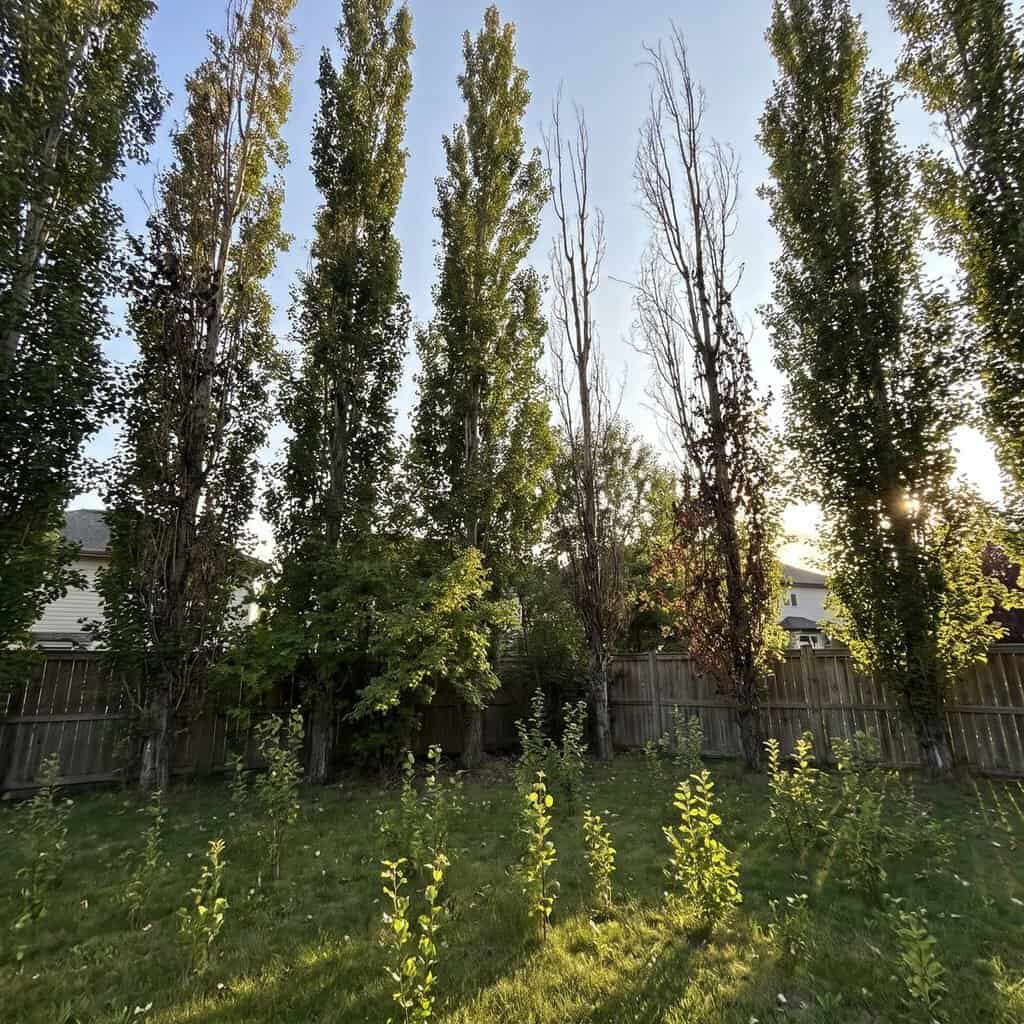
Lombardy poplar (Populus nigra ‘Italica’) was the windbreak tree of choice on farms and suburban lot lines for generations. Its columnar shape and growth of 5 to 6 feet a year make it look ideal on paper.
Cytospora canker is the reason it fell out of favor. The fungus girdles branches from the top down, and most trees are visibly dying back within 10 to 15 years of planting.
Cut one down and the roots respond with a crop of suckers across the lawn. A row of poplars tends to end as a row of dead spires and a removal bill.
3. Running Bamboo
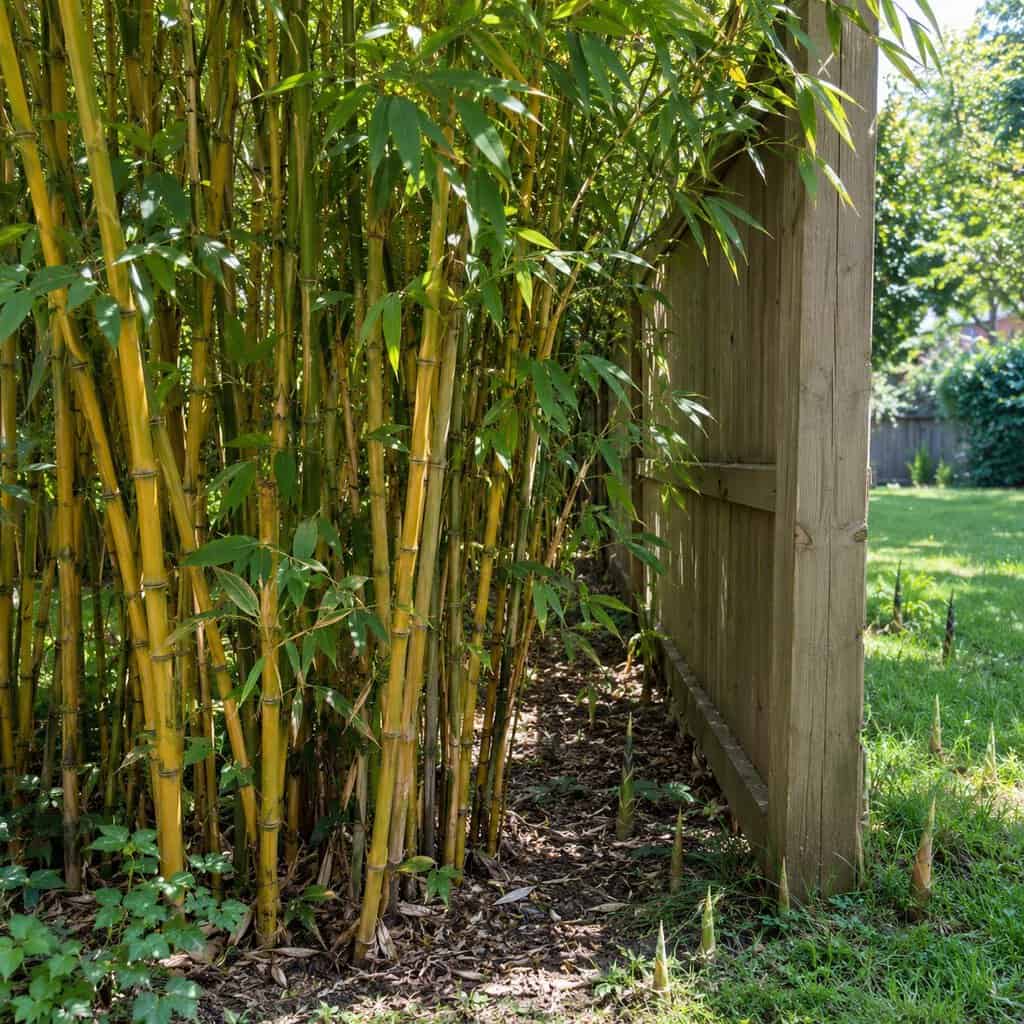
Golden bamboo and other Phyllostachys species can build a dense, 20-foot screen faster than any shrub. Hardy in roughly zones 6 through 10, it also stays green all winter in most of that range.
The rhizomes are the problem. They push sideways several feet a year, surface in lawns and beds next door, and slip under shallow edging with ease.
Containment means a continuous 60-mil HDPE barrier sunk about 30 inches deep, checked every fall. Connecticut now holds owners liable for bamboo that crosses a property line, and a number of towns elsewhere restrict new plantings.
4. Giant Reed (Arundo donax)
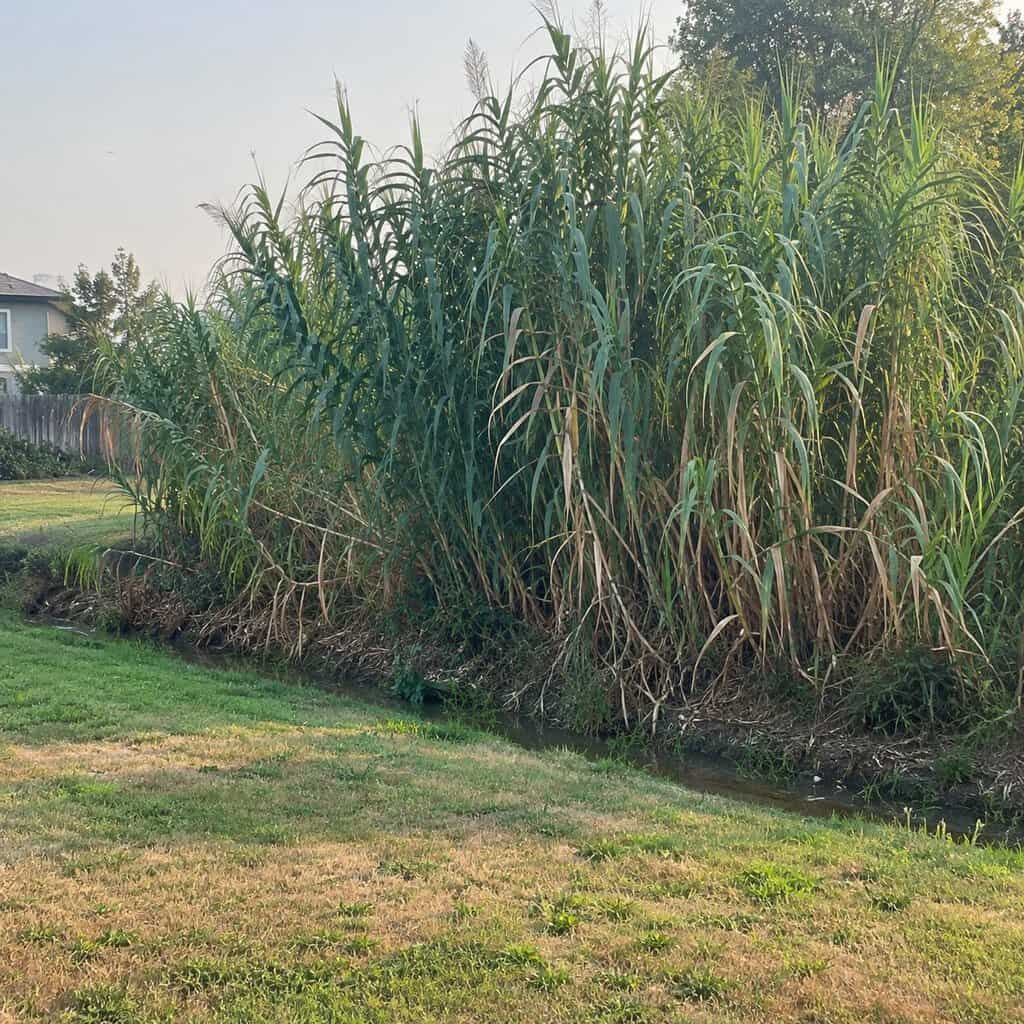
Giant reed shows up in nurseries as an ornamental grass for tall screening, sometimes in a striped variegated form. In zones 6 through 10 it shoots up 15 to 20 feet in a single season, like a stand of oversized corn.
It is one of the most damaging invasive plants along rivers in California and Texas. Pieces of rhizome break off in floods or yard waste and root wherever they land.
The dead canes are highly flammable, and established clumps take heavy equipment or years of repeat herbicide to clear. A screen that tall is rarely worth the fire and removal risk.
5. Leyland Cypress
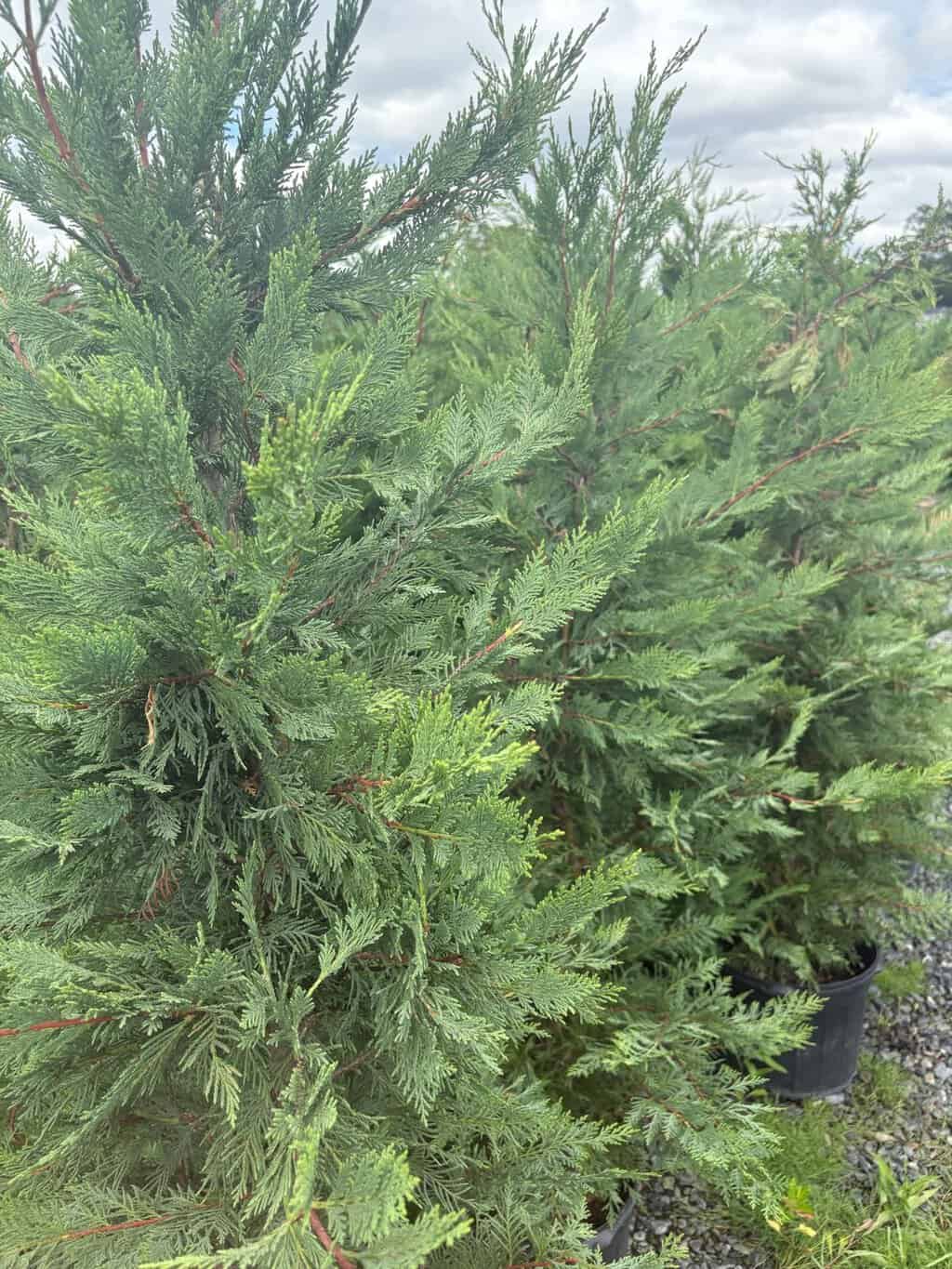
Leyland cypress is still the tree builders most often line along a back fence to make a new subdivision look finished. Young trees are soft, feathery, and cheap by the dozen.
Planted 6 feet apart, they collide within a few years and keep going. Mature trees run 60 feet or taller and spread 15 to 25 feet, far too large for a typical quarter-acre lot.
Stress from drought or crowding opens the door to Seiridium canker, which kills branches in brown patches that never green up again. In the Southeast, many hedges are being cut down after just 15 to 25 years.
6. Red Tip Photinia
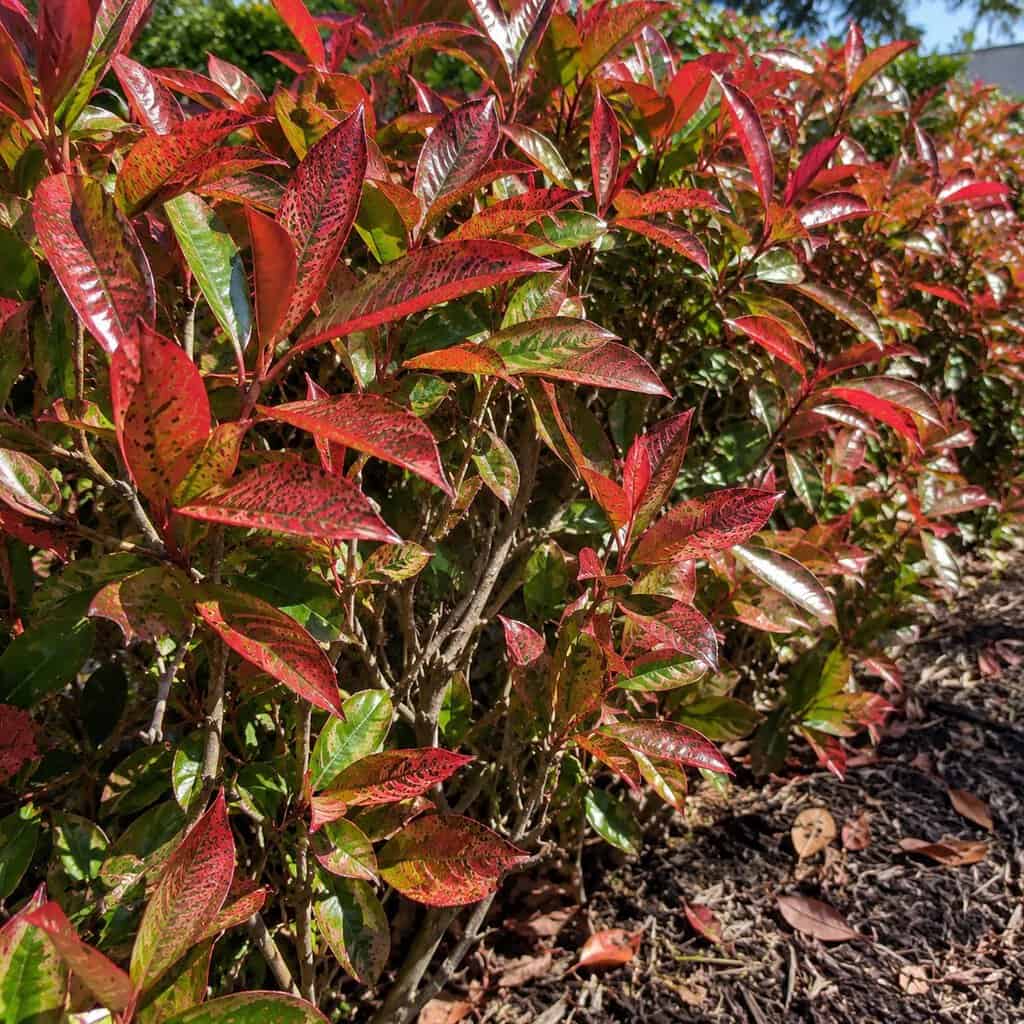
Red tip photinia (Photinia x fraseri) once lined half the driveways in the South, valued for bright red new growth on a 10- to 15-foot evergreen. It grows well in zones 7 through 9.
Entomosporium leaf spot turned it into a liability. The fungus starts as small crimson spots, then causes heavy leaf drop until the shrubs are mostly bare stems.
Shearing makes it worse, since the disease targets the tender red flush that each trim triggers. Overhead sprinklers add to the damage, and fungicide sprays can slow the disease but rarely save an established hedge.
7. Thuja Green Giant
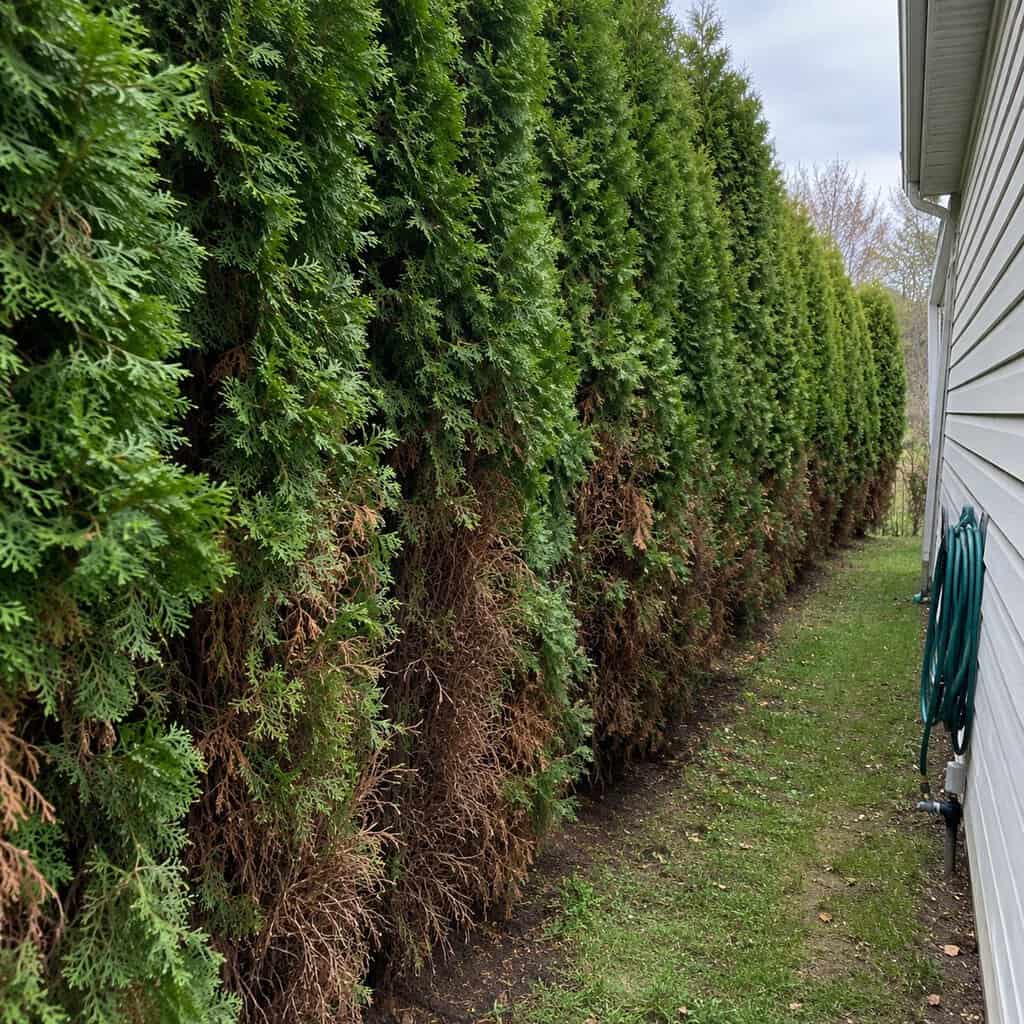
Green Giant arborvitae has replaced Leyland cypress as the default fast evergreen in zones 5 through 8. It resists most of the cankers that ruin Leylands, which is a genuine advantage.
The size is what catches buyers off guard. A single tree can reach 50 feet tall and spread 15 feet or more, so a row eats a strip of yard nearly as wide as a driveway.
Sellers often suggest 3-foot spacing for a quick wall. At that density the trees shade each other out, lower branches brown, and topping them later leaves flat, awkward crowns.
8. Emerald Green Arborvitae
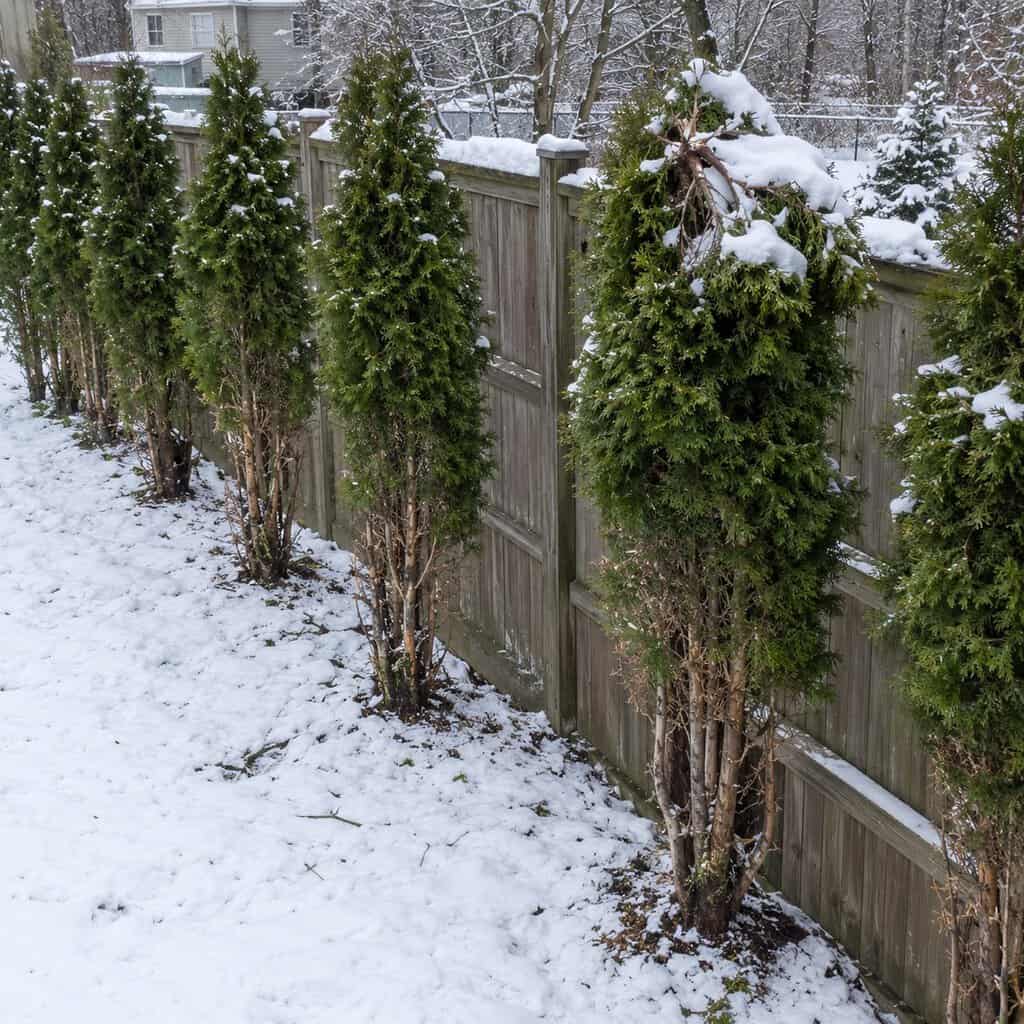
Emerald Green arborvitae stays slim, about 3 to 4 feet wide and 12 to 15 feet tall, so it gets sold as the small-yard alternative to giant evergreens. It is reliable in zones 3 through 7.
It is not truly fast. Established plants add roughly 6 to 12 inches a year, so gaps between them can take years to close, and a 60-foot fence line needs about 20 plants.
Deer browse it hard in winter, often clearing everything below 5 feet. South of zone 7, summer heat and spider mites brown it out, and wet snow pulls the narrow tops apart unless they are tied.
9. Eastern Red Cedar

Eastern red cedar (Juniperus virginiana) is native from Canada to Texas and grows in zones 2 through 9 on dry, rocky ground. That toughness makes it a common pick for a cheap rural screen.
Birds spread the berries widely, and across the Great Plains the tree is invading pastures and prairie so heavily that states fund removal programs. The aromatic foliage is loaded with oils that burn hot and fast.
Anyone growing apples or crabapples nearby should also know it hosts cedar-apple rust. In wildfire country, keep it well away from the house rather than lining a deck with it.
10. Callery Pear
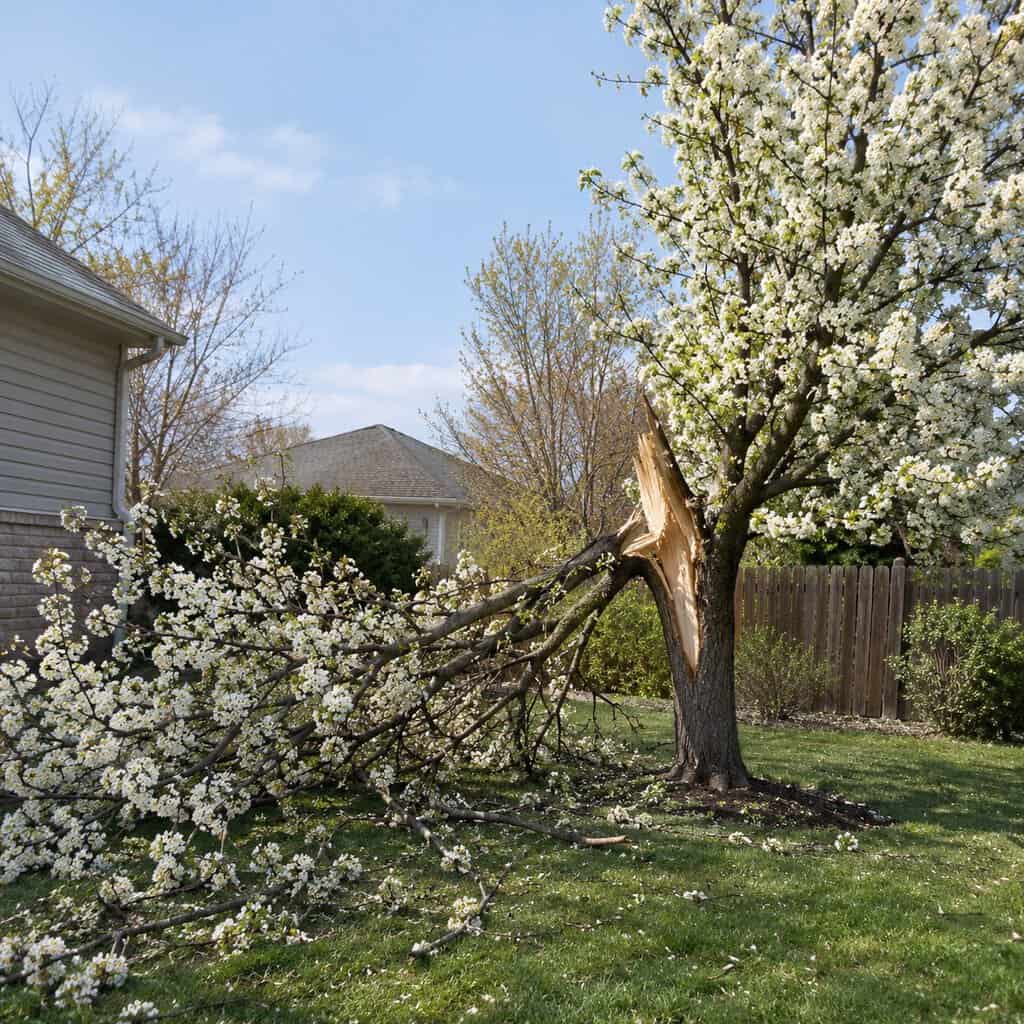
Callery pear, best known as the Bradford pear, was planted as a quick screen and street tree because it reaches 30 feet in about a decade. White spring flowers and red fall leaves sealed the deal.
Its narrow branch angles make it split apart in wind and ice, usually just as the tree reaches full size. Many fall to pieces at 15 to 20 years old.
Cross-pollinating cultivars also produce wild seedlings armed with long thorns that now cover old fields in much of the East. Ohio and Pennsylvania have banned its sale, and several states run programs that swap it for a native tree.
11. Privet
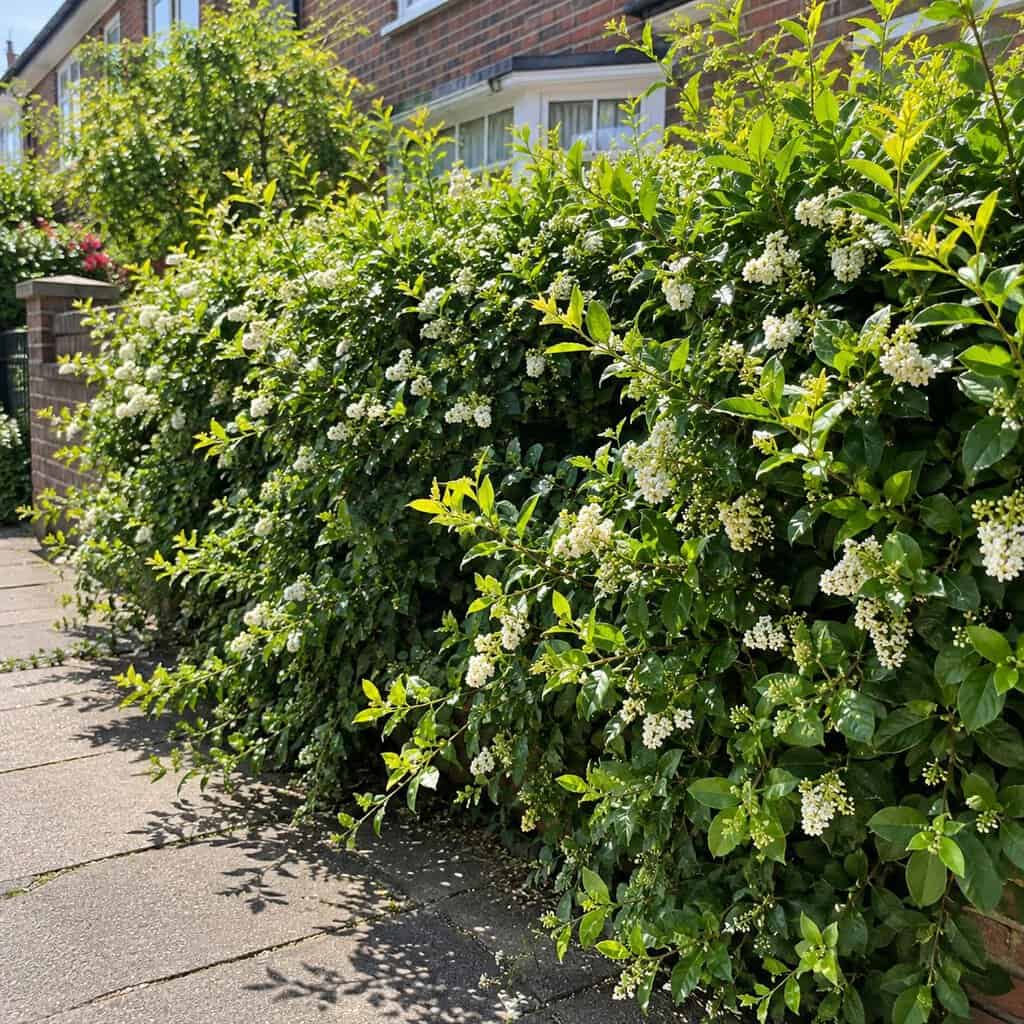
Chinese, European, and Japanese privet all root easily, grow 2 to 3 feet a year, and tolerate poor soil from zone 5 south. A privet hedge is cheap and nearly impossible to kill.
Keeping it tidy is the ongoing cost. A sheared hedge in the South often needs trimming three or four times a season, and an unclipped one swells to 15 feet in all directions.
The June flowers carry a musky odor and plenty of pollen. The dark berries are mildly toxic to people and pets, and birds carry them into nearby woods, where Chinese privet ranks among the worst invasives in the Southeast.
12. Common Buckthorn
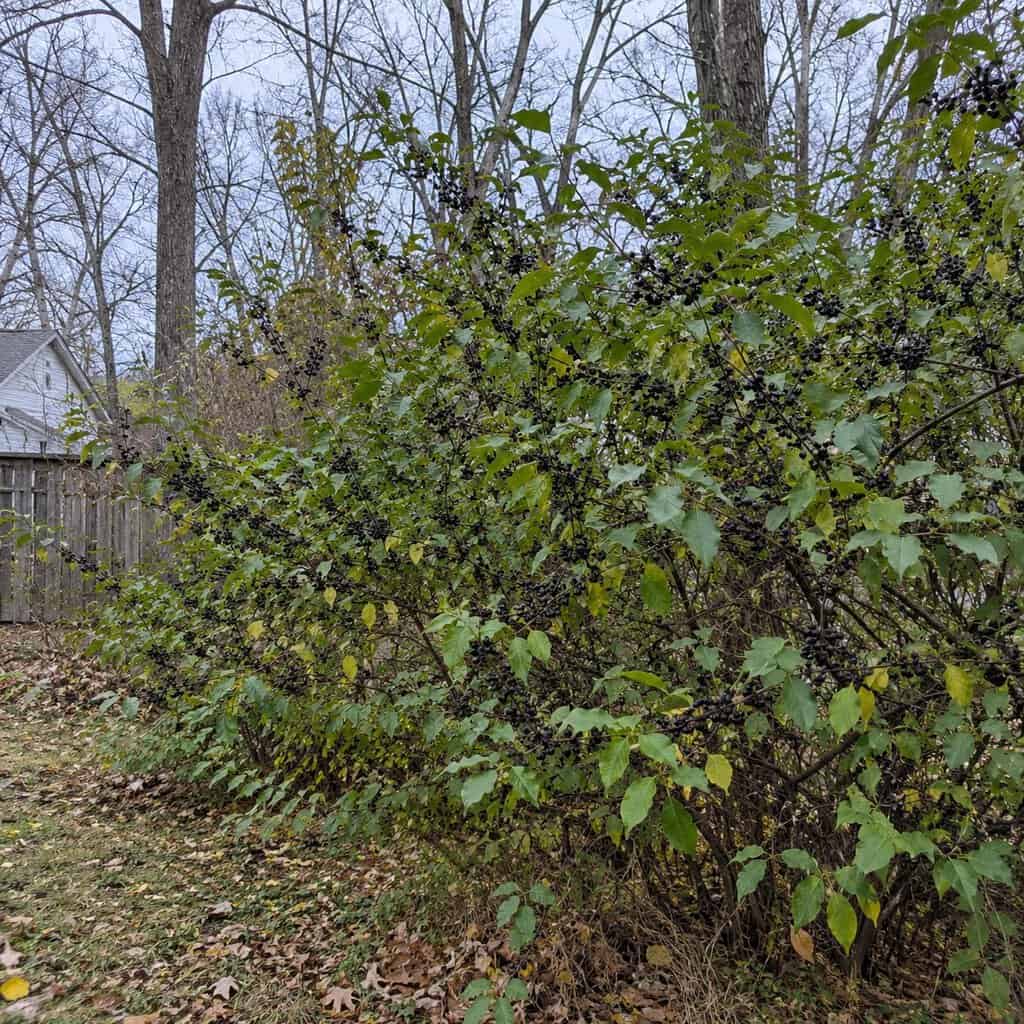
Common and glossy buckthorn were sold for decades as easy hedge plants, and narrow forms like ‘Fine Line’ still turn up at garden centers. They leaf out early, hold foliage late into fall, and grow almost anywhere in zones 3 through 7.
Both species are invasive across the upper Midwest and Northeast, and Minnesota and Illinois restrict their sale. The berries act as a laxative for birds, which scatters seeds far and wide.
Common buckthorn also hosts soybean aphid and oat crown rust, a real concern near farm fields. Even cultivars promoted as low-seed still set some fruit.
13. Bush Honeysuckle
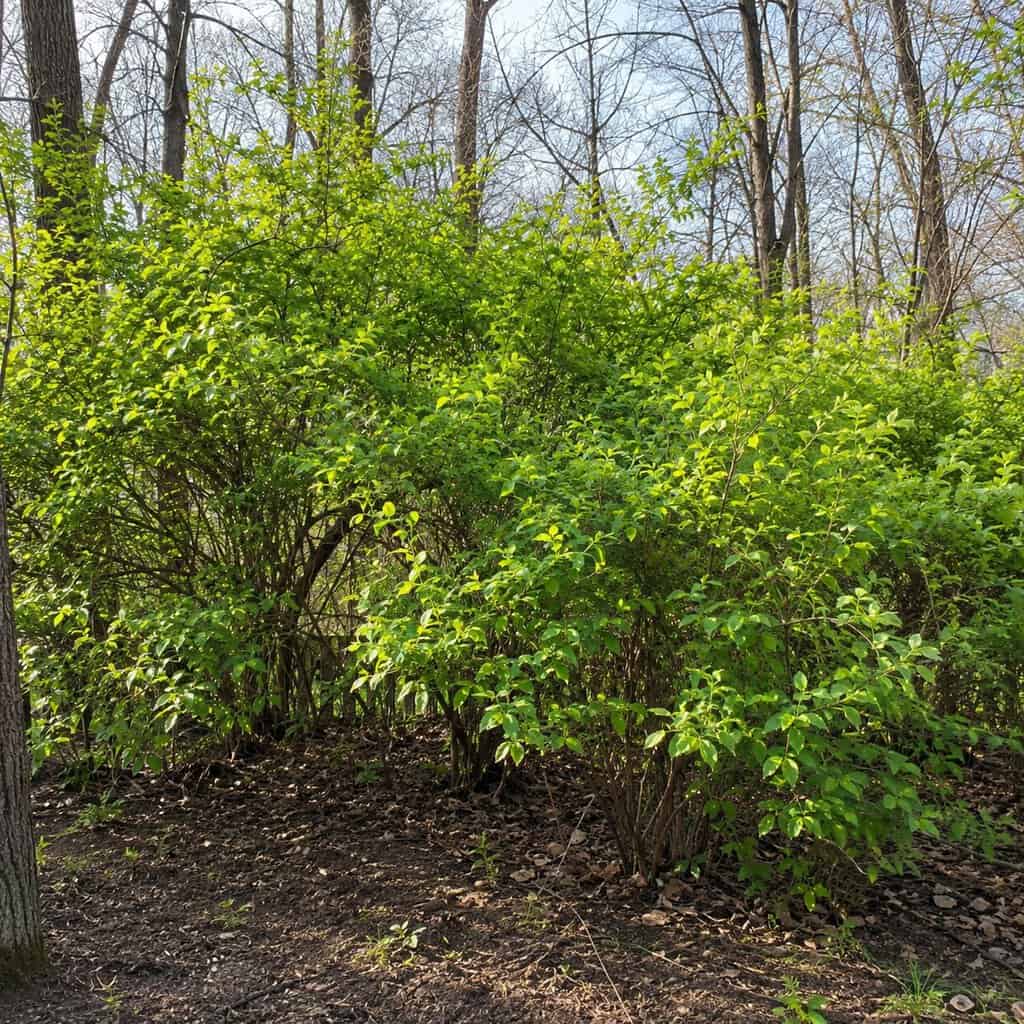
Amur, Morrow’s, and Tatarian honeysuckle can grow into a 12- to 15-foot thicket within a few years. They were planted widely for wildlife cover and hedges across zones 3 through 8.
These shrubs leaf out weeks before native plants and hold leaves into late fall, shading out wildflowers and tree seedlings beneath them. Research in Missouri also links dense honeysuckle stands to higher numbers of ticks carrying disease.
Pulling small plants works, but large shrubs usually need cutting at the base and an immediate herbicide treatment on the stump. Birds keep replanting it every year from nearby patches.
14. Burning Bush
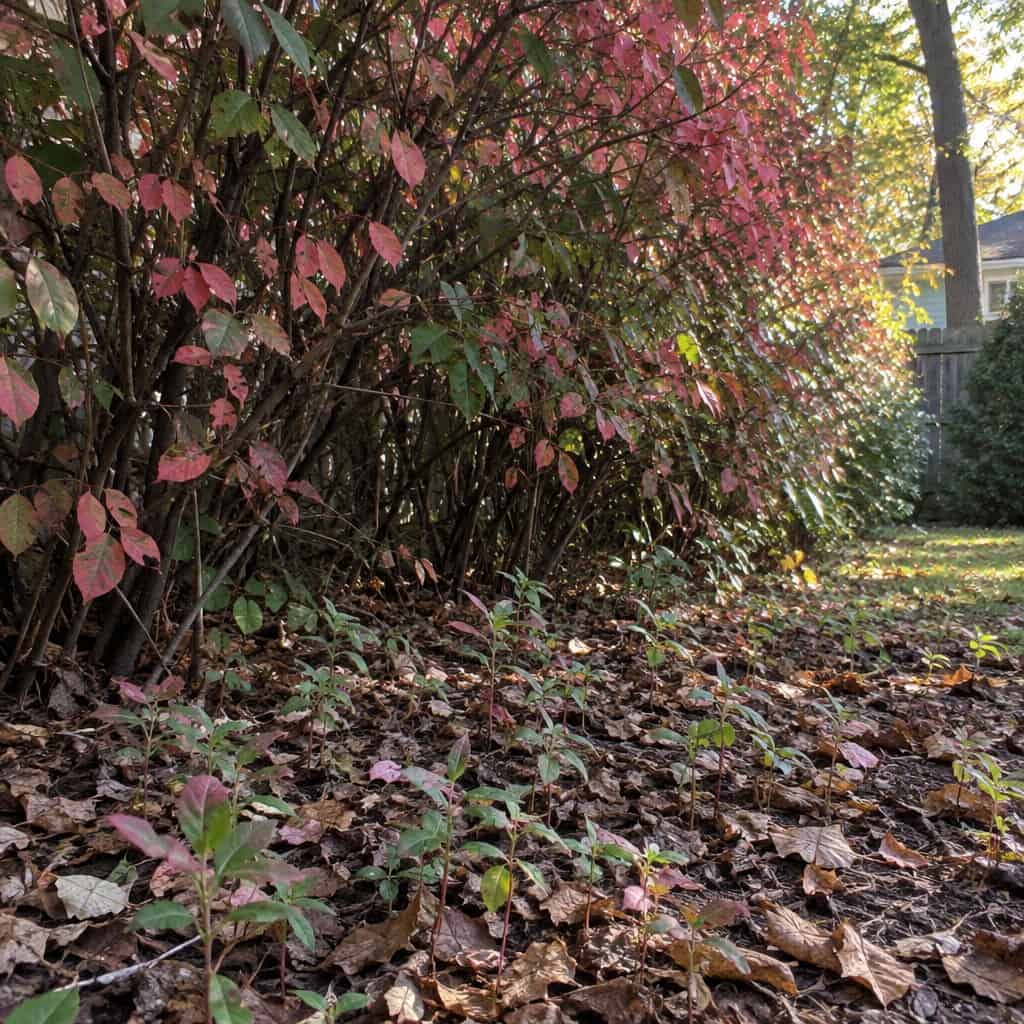
Burning bush (Euonymus alatus) still sells on the strength of its scarlet October color. Many buyers choose the ‘Compactus’ form for a hedge, expecting it to stay small.
That label misleads. ‘Compactus’ commonly reaches 8 to 10 feet tall and wide with time, and it still produces seed.
Seedlings thrive in shade, carpeting woodland floors so thickly that native plants cannot compete. Massachusetts and New Hampshire prohibit its sale, and other states list it as invasive.
In shade, the famous fall color also fades to a dull pink, so the main reason to plant it may never arrive.
15. Japanese Barberry
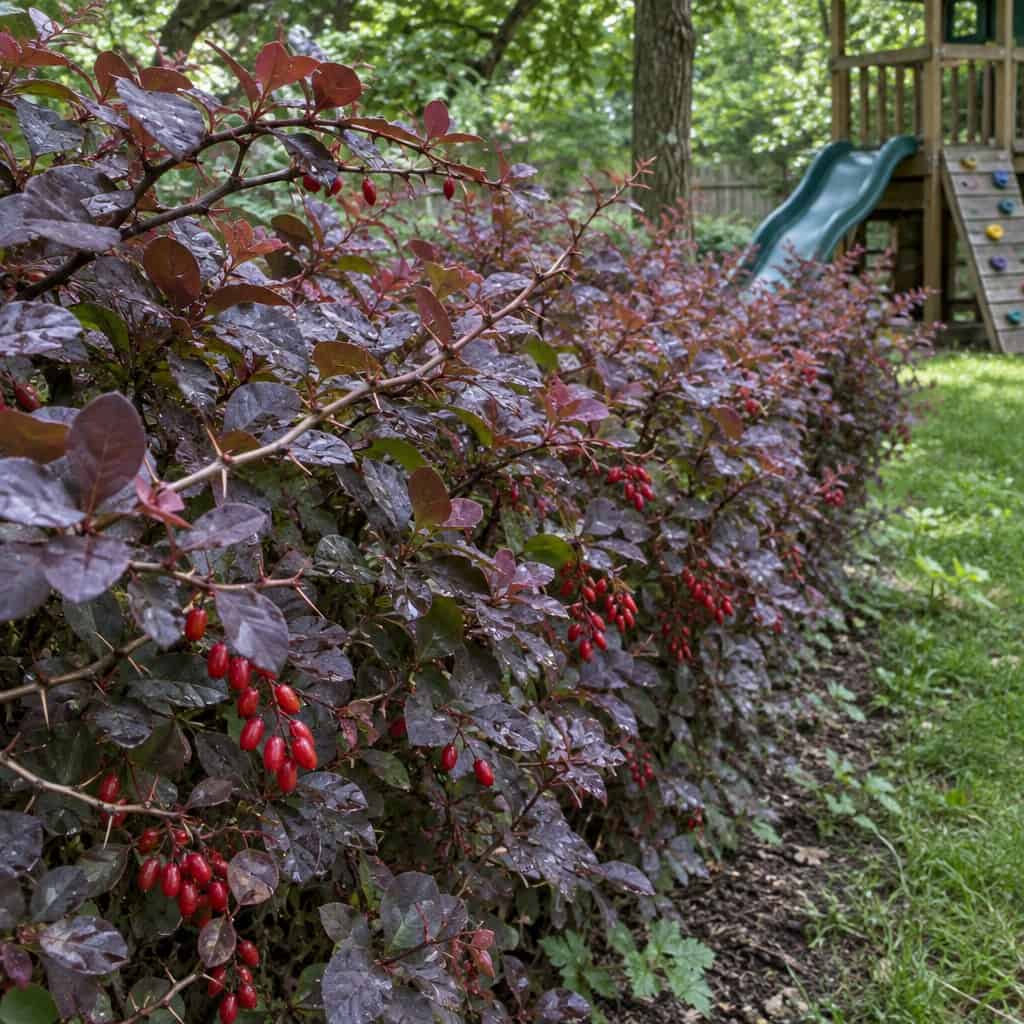
Japanese barberry makes a thorny, 3- to 6-foot barrier hedge that deer leave alone. Purple and gold forms fill big-box shelves every spring, and it grows in zones 4 through 8.
It is invasive in much of the Northeast and Midwest, with sale bans in states including New York, Massachusetts, and Pennsylvania. Dense stands also create humid shelter for blacklegged ticks.
Studies by the Connecticut Agricultural Experiment Station found far more Lyme-carrying ticks in barberry thickets than in nearby areas without it. A hedge near the patio or play area brings that risk close to home.
16. Russian Olive
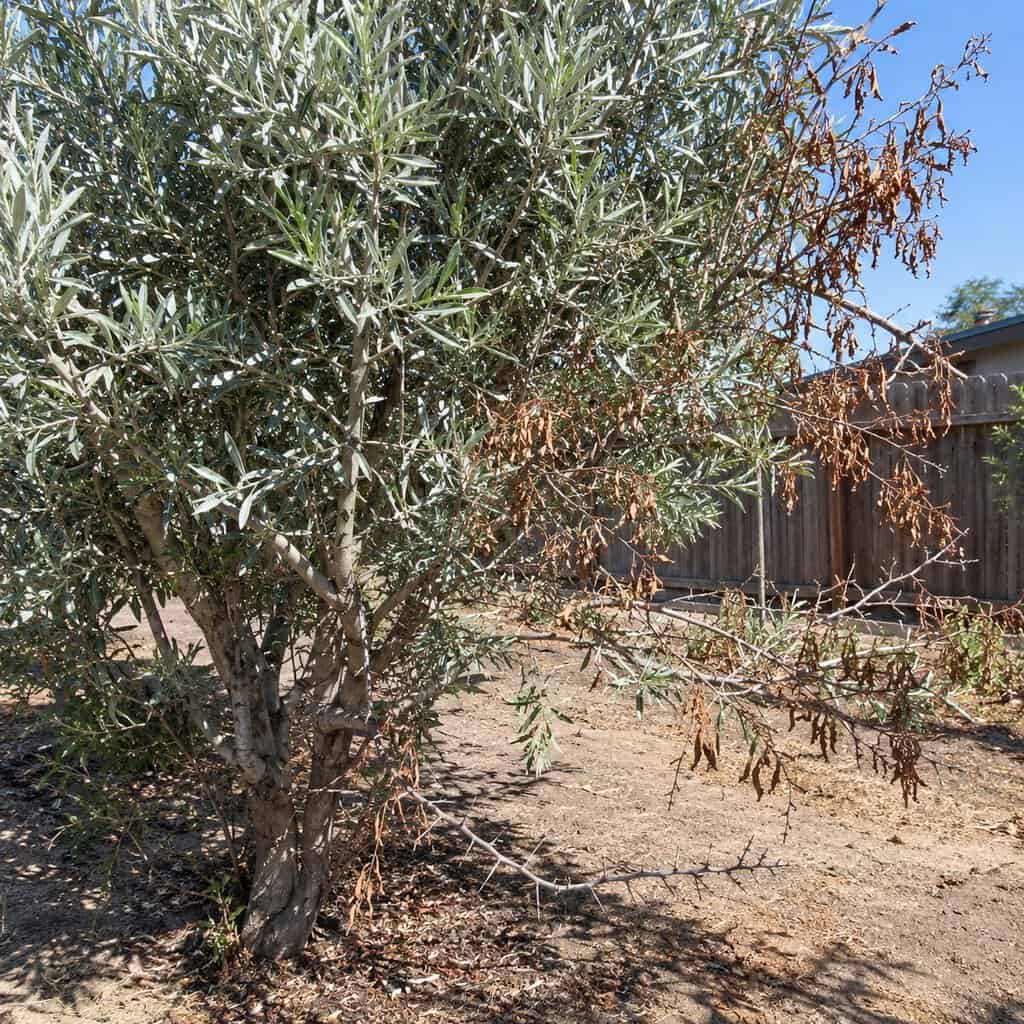
Russian olive grows 12 to 20 feet tall in zones 2 through 7 and handles alkaline soil, drought, and wind. Its silver foliage made it a favorite for prairie shelterbelts.
As a backyard screen it often disappoints. Phomopsis canker and Verticillium wilt kill branches and whole trees in irrigated landscapes, and the thorns, up to 2 inches long, make pruning miserable.
Out in the wild, it has replaced cottonwoods and willows along many Western streams, and its nitrogen-fixing roots alter the soil around it. Colorado and New Mexico list it as a noxious weed.
17. Multiflora Rose
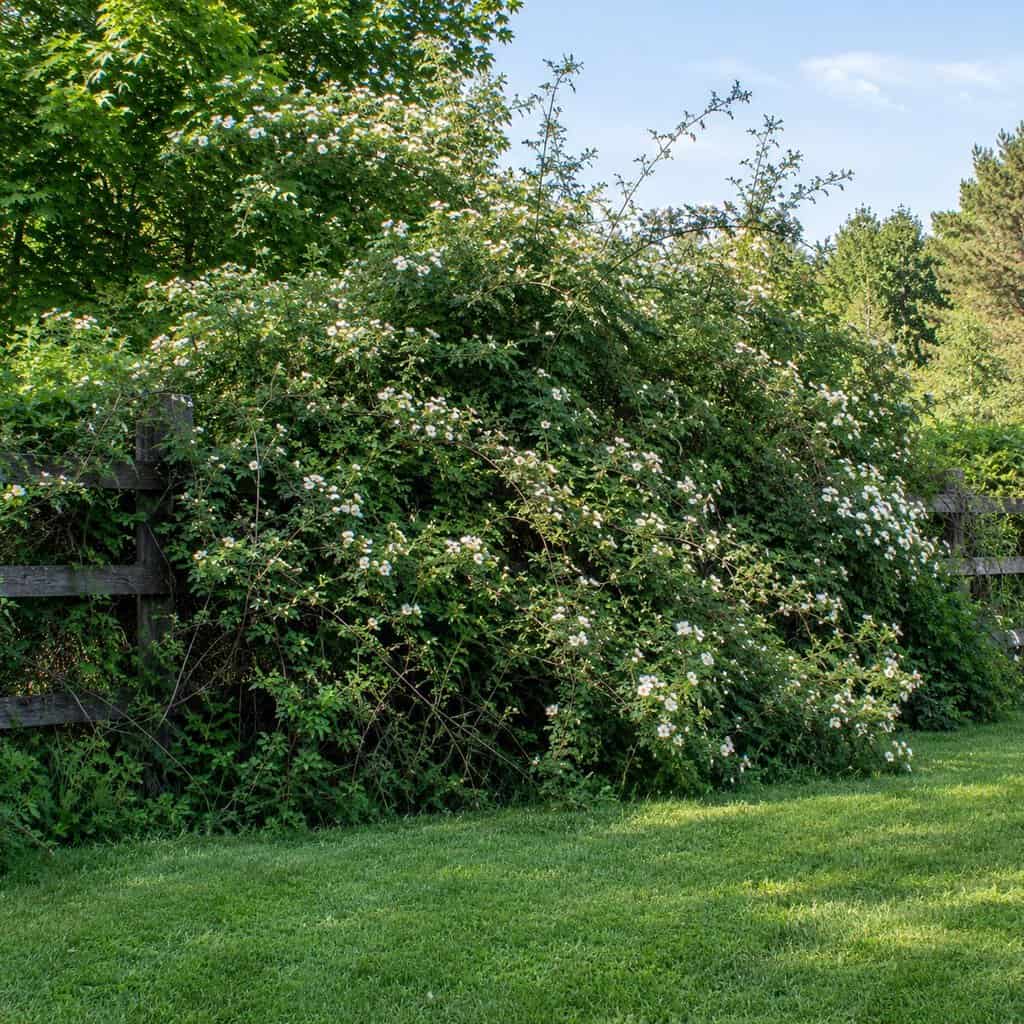
In the 1930s through the 1950s, federal conservation programs promoted multiflora rose as a living fence for livestock and erosion control. A single plant forms a thorny mound 10 to 15 feet across.
Arching canes root wherever their tips touch soil, and a large plant can produce hundreds of thousands of seeds a year. Those seeds stay viable in the soil for 10 to 20 years.
It is now a listed noxious weed in many states. It also hosts rose rosette disease and the tiny mites that spread it, putting nearby Knock Out and other garden roses at risk.
18. Cherry Laurel
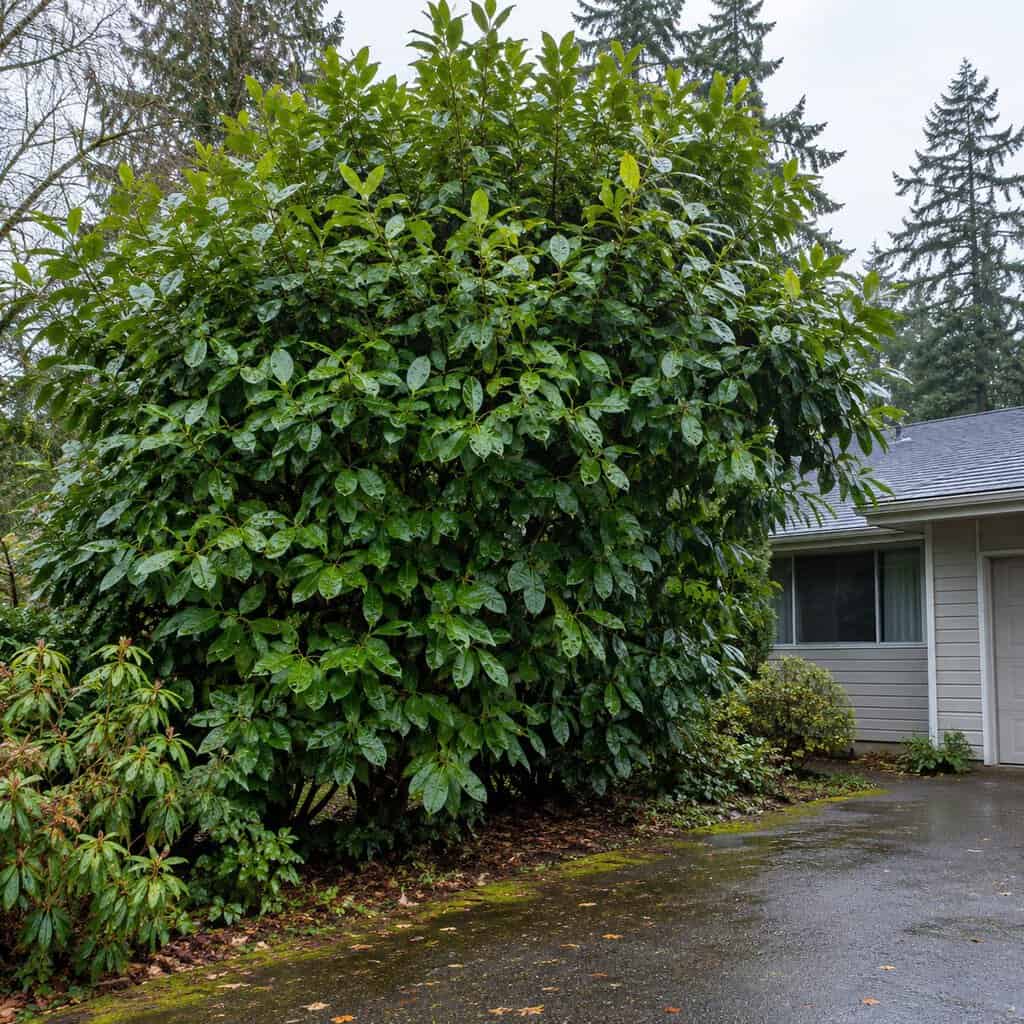
English laurel (Prunus laurocerasus) and Carolina cherry laurel both grow 2 feet or more a year into broad, glossy evergreens. They suit zones 6 through 9 and tolerate shade better than many screens.
Left untrimmed, English laurel can reach 20 to 30 feet in height and width. Shearing cuts the big leaves in half so they brown at the edges, and shot hole disease peppers foliage with holes in wet springs.
Leaves, stems, and seeds release cyanide compounds when crushed, so keep clippings away from pets and livestock. In Washington and Oregon, English laurel spreads into forests and appears on regional weed lists.
19. English Yew
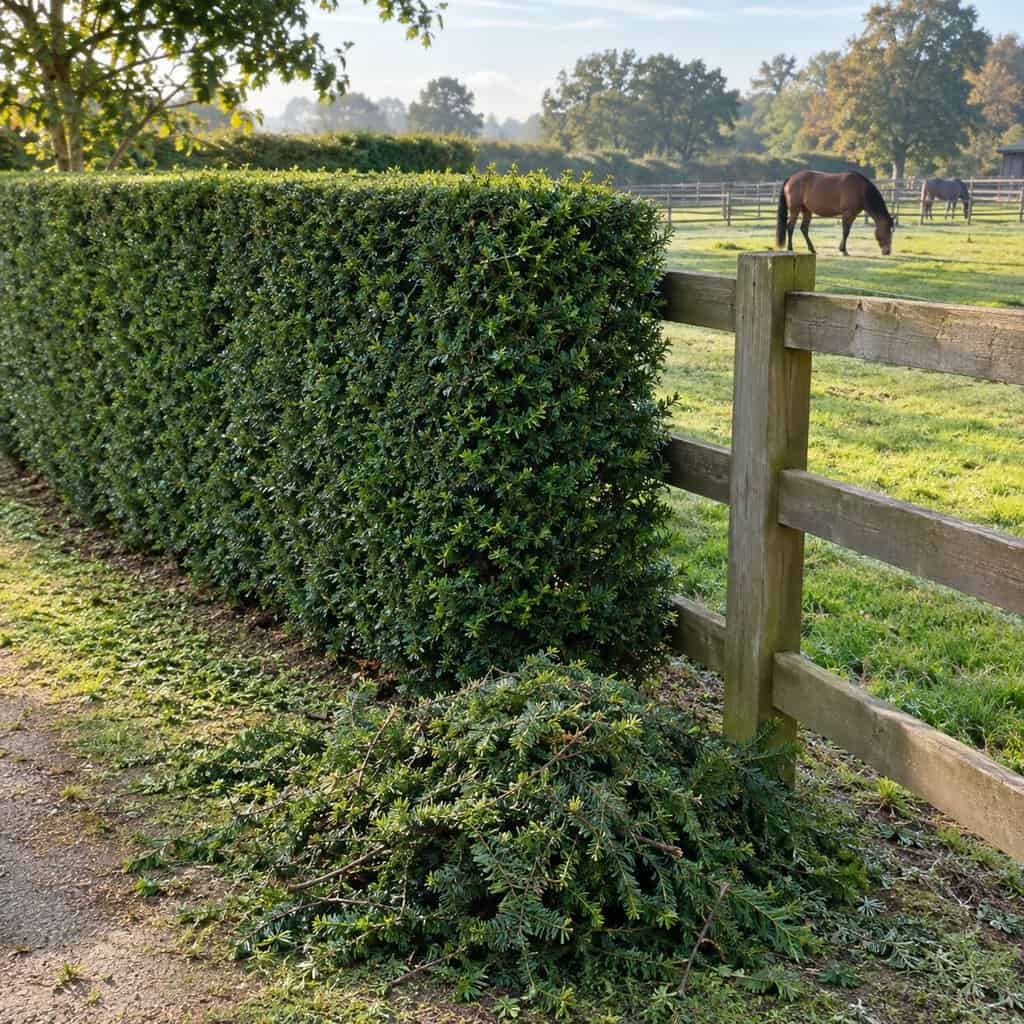
Yews, including English yew and the popular hybrid Taxus x media, take hard shearing and stay dense for decades, which is why they anchor formal hedges. They grow in zones 4 through 7 depending on type.
Every part except the fleshy red aril around the seed is poisonous. The greatest danger often comes from clippings: horses, cattle, and goats have died after hedge trimmings were tossed over a fence into pasture.
Yews also rot quickly in soggy soil and are a deer favorite in winter. Plant them only on well-drained ground and bag every trimming for the trash.
20. Nandina
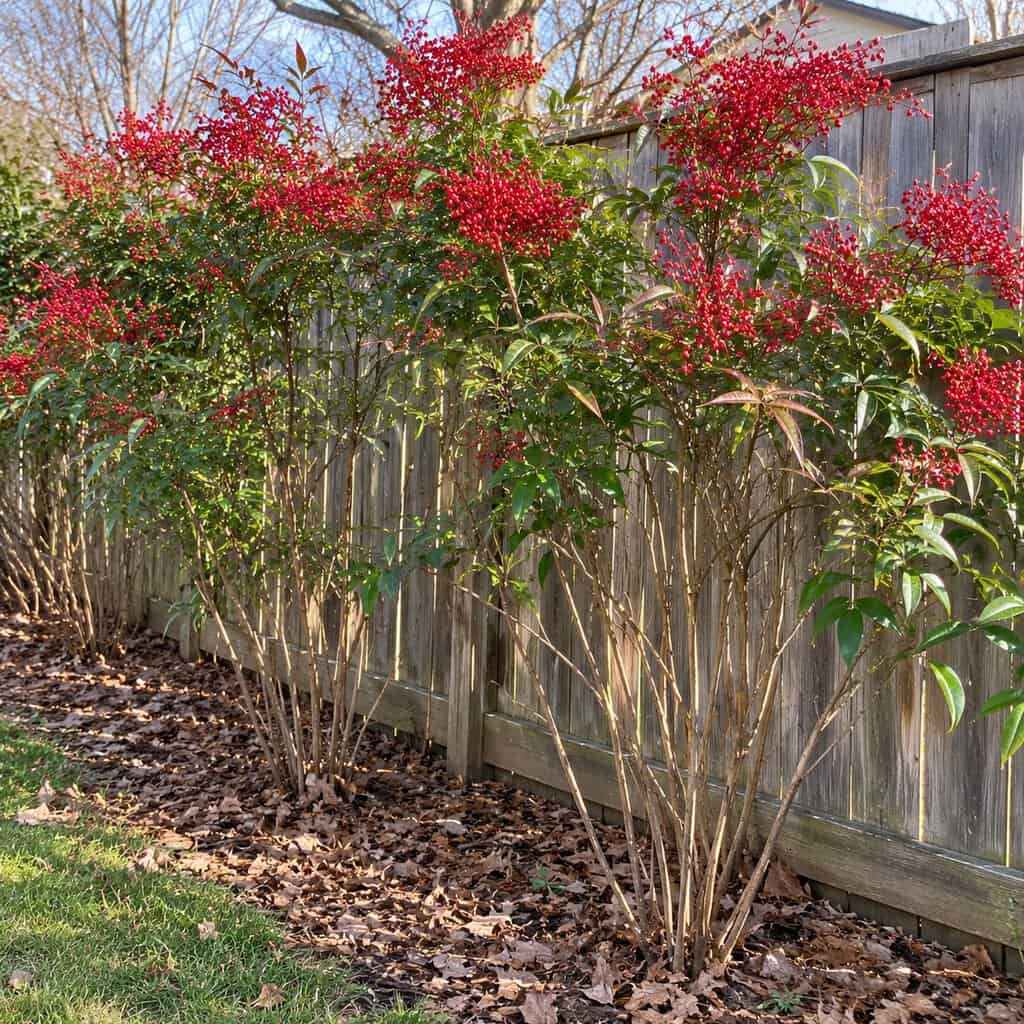
Nandina offers lacy foliage, red fall color, and clusters of winter berries on 4- to 8-foot canes. It grows in zones 6 through 10 and seldom bothers deer.
As a screen, it falls short. The upright canes are bare at the base and thin out with age, leaving gaps that need regular renewal pruning.
Its berries contain cyanogenic compounds, and flocks of cedar waxwings have died after feasting on them. Florida ranks it among its most invasive plants, and fruitless cultivars like ‘Firepower’ avoid the berry problem but top out near 2 feet, far too short to block a view.
21. Rose of Sharon
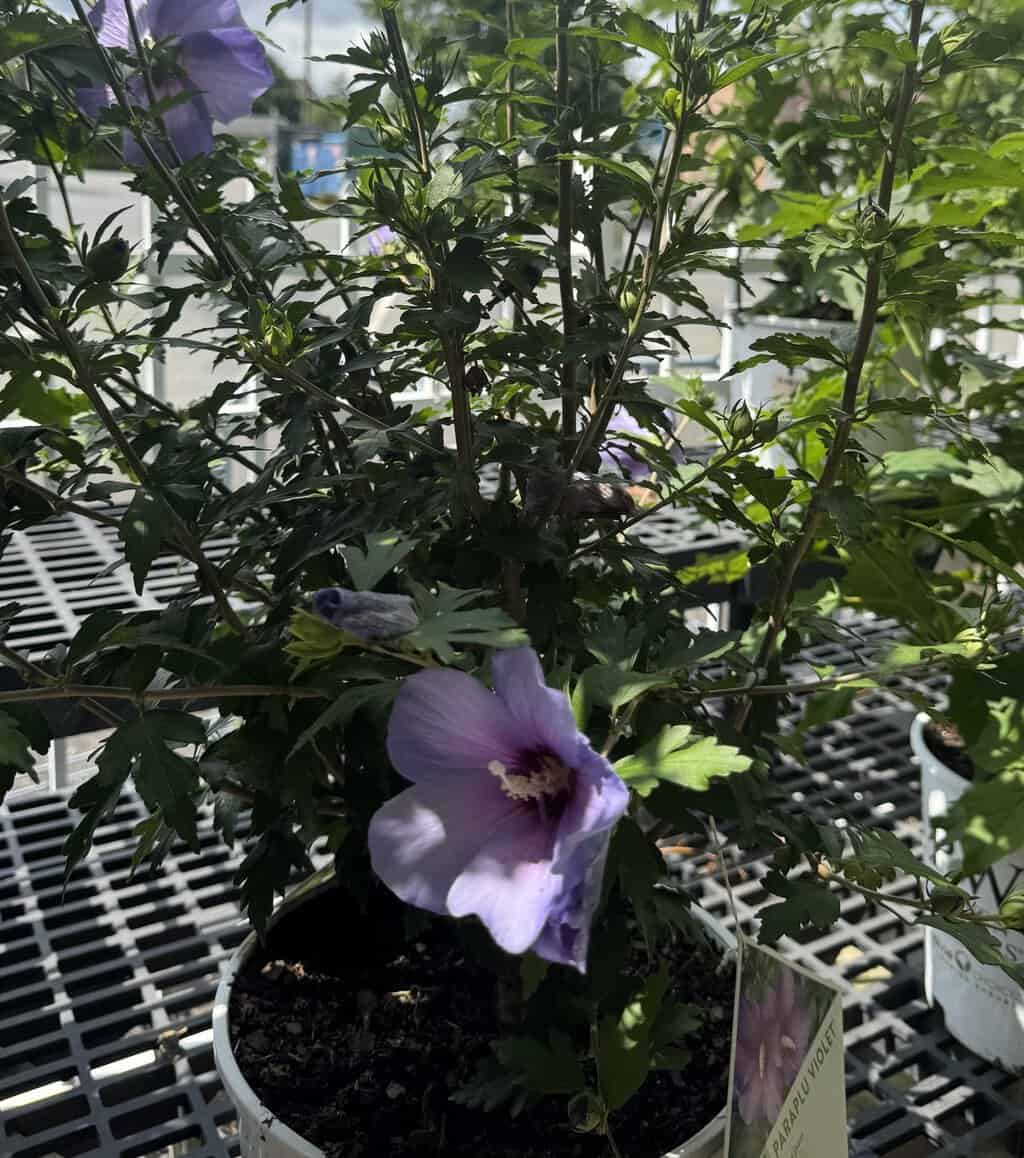
Rose of Sharon (Hibiscus syriacus) reaches 8 to 12 feet in zones 5 through 9 and blooms from July into September. Its upright habit seems built for a summer screen.
Timing works against it. It is one of the last shrubs to leaf out, often not until late May, and it is bare again by November, so the screen lasts about five months.
Older cultivars drop seed that sprouts across beds and lawns by the hundreds, and Japanese beetles favor the flowers. If it still appeals, choose low-seed types like the Chiffon or Satin series and treat it as a flowering accent, not a privacy plant.
22. Butterfly Bush
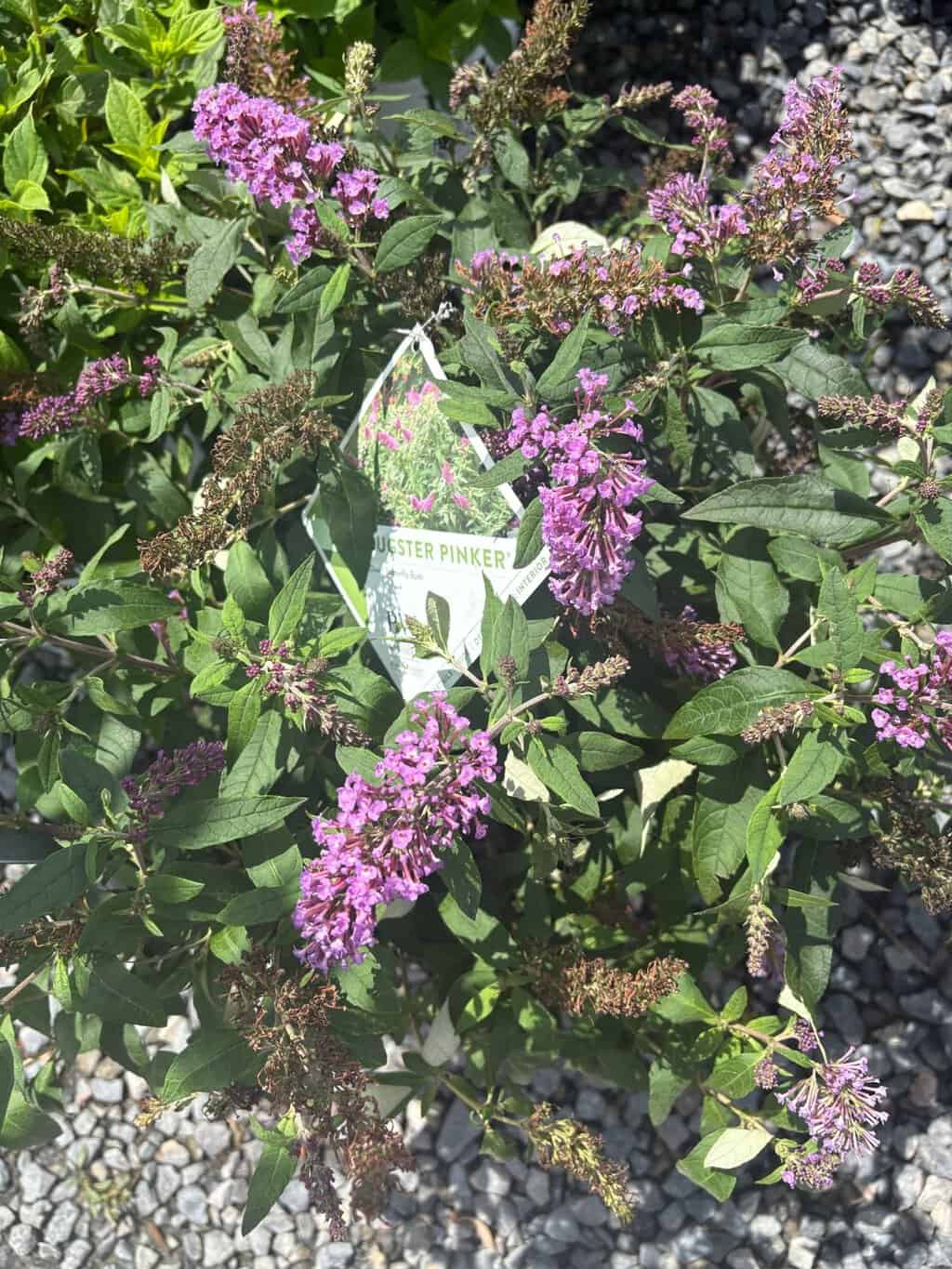
Butterfly bush (Buddleja davidii) grows 6 to 10 feet in a season and draws butterflies all summer. It is often sold for fast, colorful screening.
In zones 5 and 6, cold winters routinely kill it back to near the ground, so there is nothing to screen from November to June. Brittle stems also snap in summer storms.
Seeds blow into riverbanks and roadsides, especially in the Pacific Northwest, where Oregon allows only approved sterile cultivars. Seedless types such as the Lo and Behold series stay 2 to 3 feet tall, and the shrub feeds adult butterflies but hosts almost none of their caterpillars.
23. Staghorn Sumac
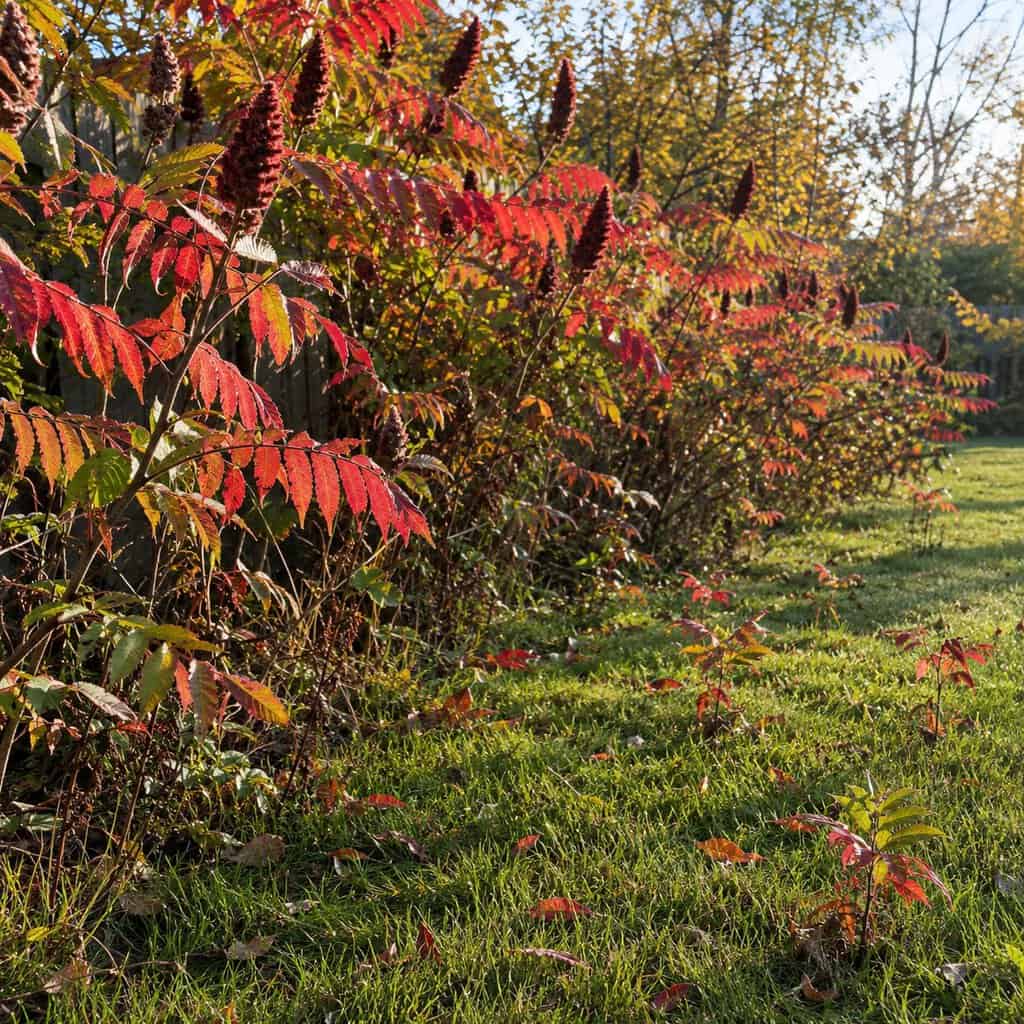
Staghorn sumac is a native of the East and upper Midwest, hardy in zones 3 through 8, with fuzzy branches and red fall color. It reaches 15 to 25 feet and thrives on dry slopes.
What looks like a row of shrubs is really one plant spreading by roots. A single sumac can form a colony 30 feet or more across, and mowing or cutting stems usually triggers even more suckers.
The sparse branches offer little winter screening, and individual stems are short-lived. Sumac works on a large slope that needs covering, but not along a property line next to someone else’s lawn.
Building a Screen That Lasts
A good screen starts with the mature width on the tag and a tape measure on the lot line. If a plant will spread 15 feet, it needs at least that much room, plus clearance from fences, drains, and the house.
Mixing species is cheap insurance. A staggered row of two or three plants, such as Nellie Stevens holly, Cryptomeria, inkberry, or native viburnums, keeps one disease from wiping out the whole line. Check the state invasive list before buying anything new.
Where privacy is needed right away, a section of fence or a trellis with a well-behaved vine can cover the gap while slower plants catch up. A screen that fills in over five years and stays healthy for thirty beats one that fills in over two and fails in ten.