

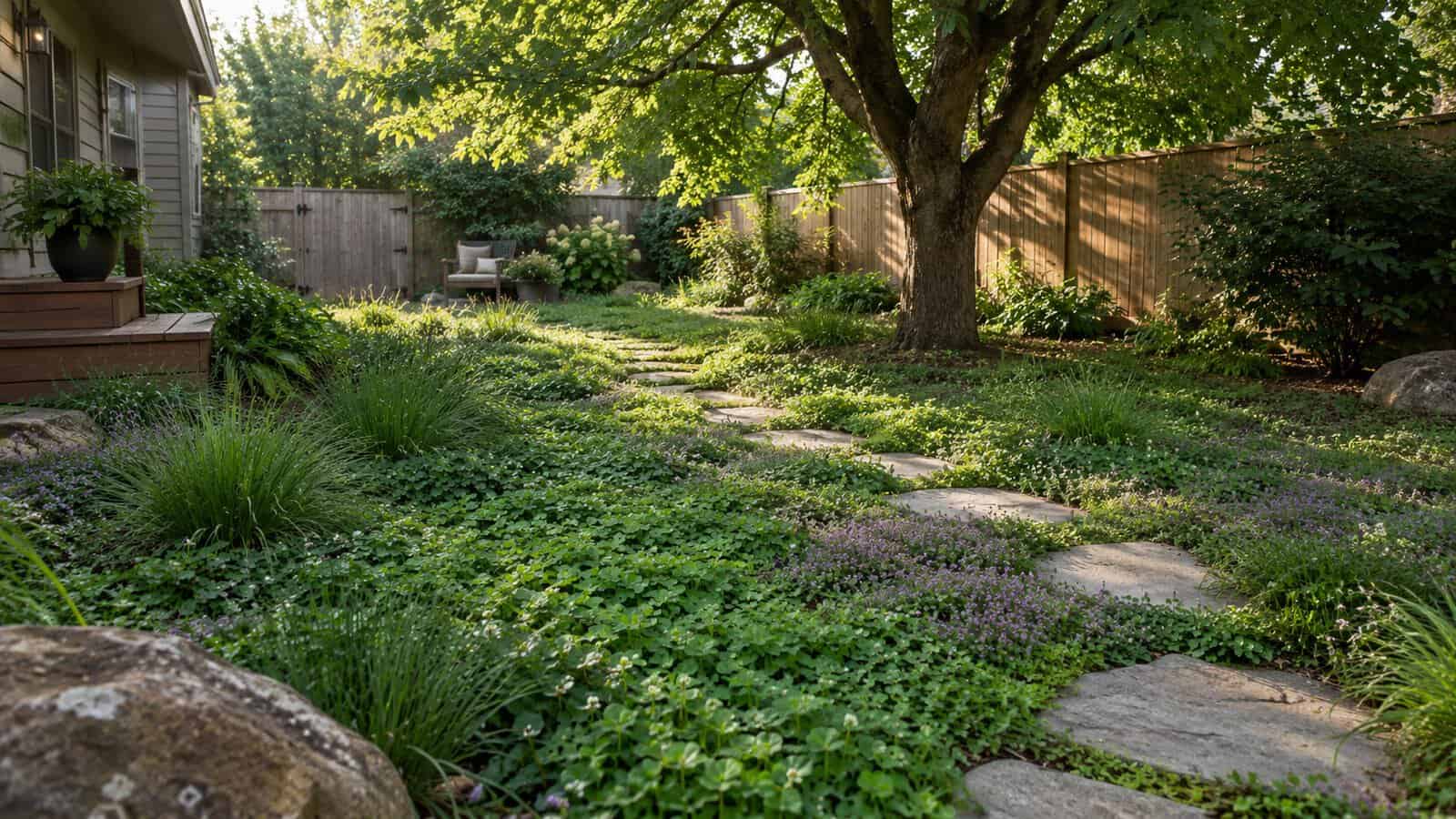
Most lawns are asked to do the impossible. The same grass seed goes under a maple, down a baked south-facing slope, and across a soggy low spot. Then it gets blamed when it thins out.
The fix is usually not more fertilizer or a new sprinkler head. It is a plant suited to that particular corner of the yard.
Below are 32 low-growing alternatives, roughly sorted from sunny, dry ground to deep shade. Each entry covers hardiness zones, height, how much walking the plant tolerates, and the one weakness worth knowing before buying flats.
Many are native, several hold up to dogs, and none of them need a weekly mow.
1. Buffalo Grass
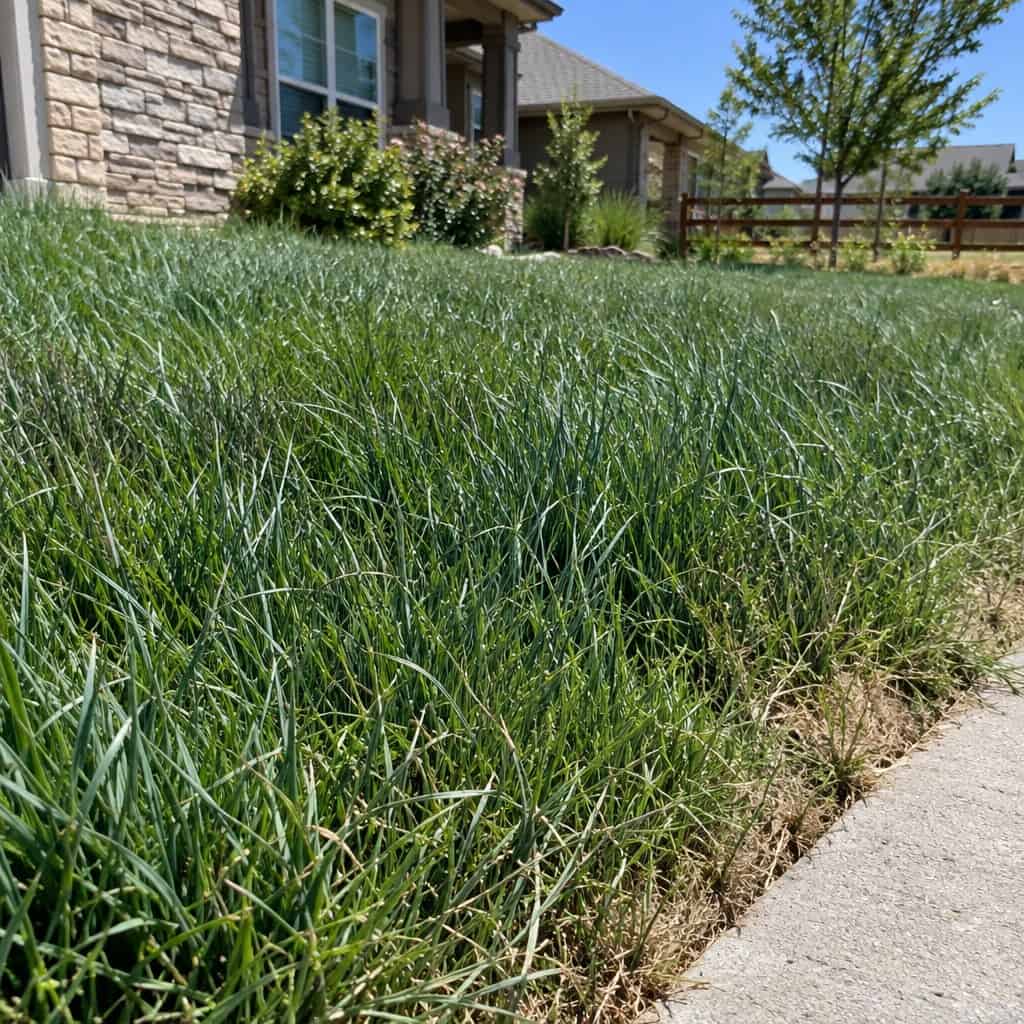
Buffalo grass is native to the Great Plains, where it evolved to survive on 15 to 25 inches of rain a year. Left alone, it tops out at 4 to 6 inches and lies over in soft, curly blades.
It needs full sun and does best in Zones 4 to 8, especially west of the Mississippi. Female cultivars such as ‘Legacy’ and ‘Prestige’ stay low and skip the pollen-bearing seed heads.
Expect it to turn straw-tan from the first hard frost until late spring. Plant plugs 12 to 18 inches apart in May or June, and keep it out of shade, where it thins quickly.
2. Blue Grama
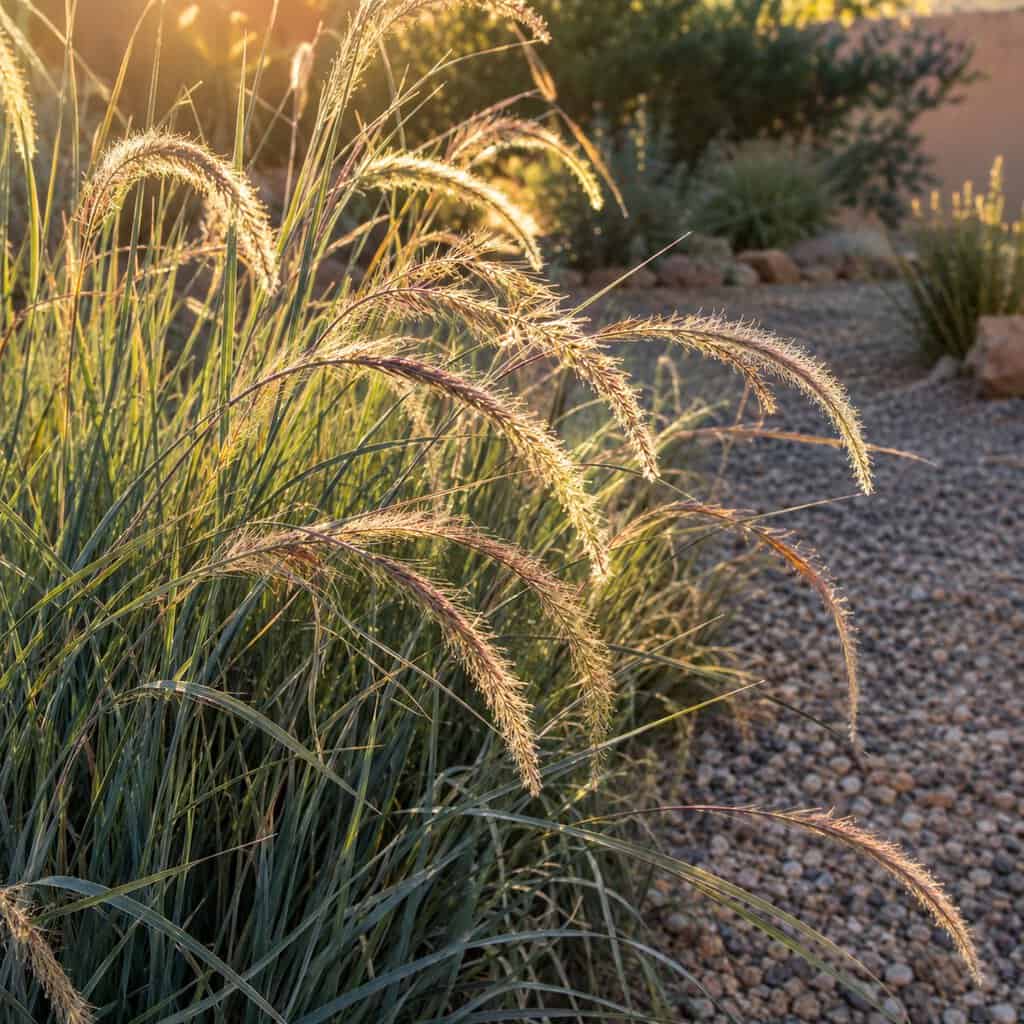
Blue grama is a native bunchgrass that shares much of buffalo grass’s range and often gets sown right alongside it. The two fill each other’s gaps: grama holds clumps while buffalo grass runs between them.
In midsummer it sends up seed heads shaped like tiny eyelashes, curling sideways on 10 to 14 inch stems. Mow once in early spring to tidy it, or not at all for a prairie look.
Give it full sun and lean, well-drained soil in Zones 3 to 10. Rich, heavily watered ground actually invites weeds to outcompete it.
3. Fine Fescue
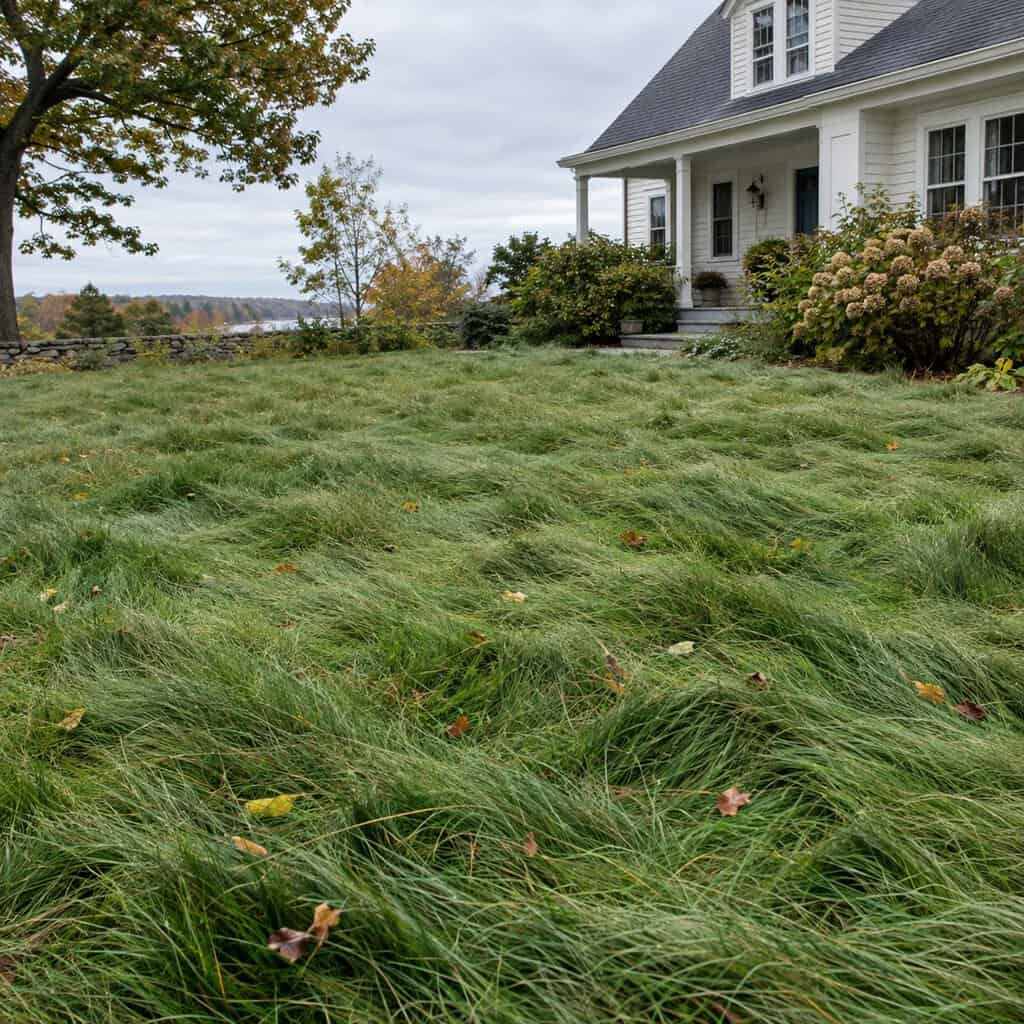
Fine fescue blends combine hard, sheep, chewings, and creeping red fescues, all slow-growing cool-season grasses. Unmowed, the blades flop over at 6 to 8 inches into a soft, rolling surface.
This is the best true grass option for northern yards with partial shade, roughly Zones 3 to 7. It handles dry soil and low fertility better than Kentucky bluegrass.
Sow in late August or September, when weed pressure drops and the soil is still warm. One or two cuts a year, in spring and fall, keeps it from looking neglected.
4. White Clover and Microclover
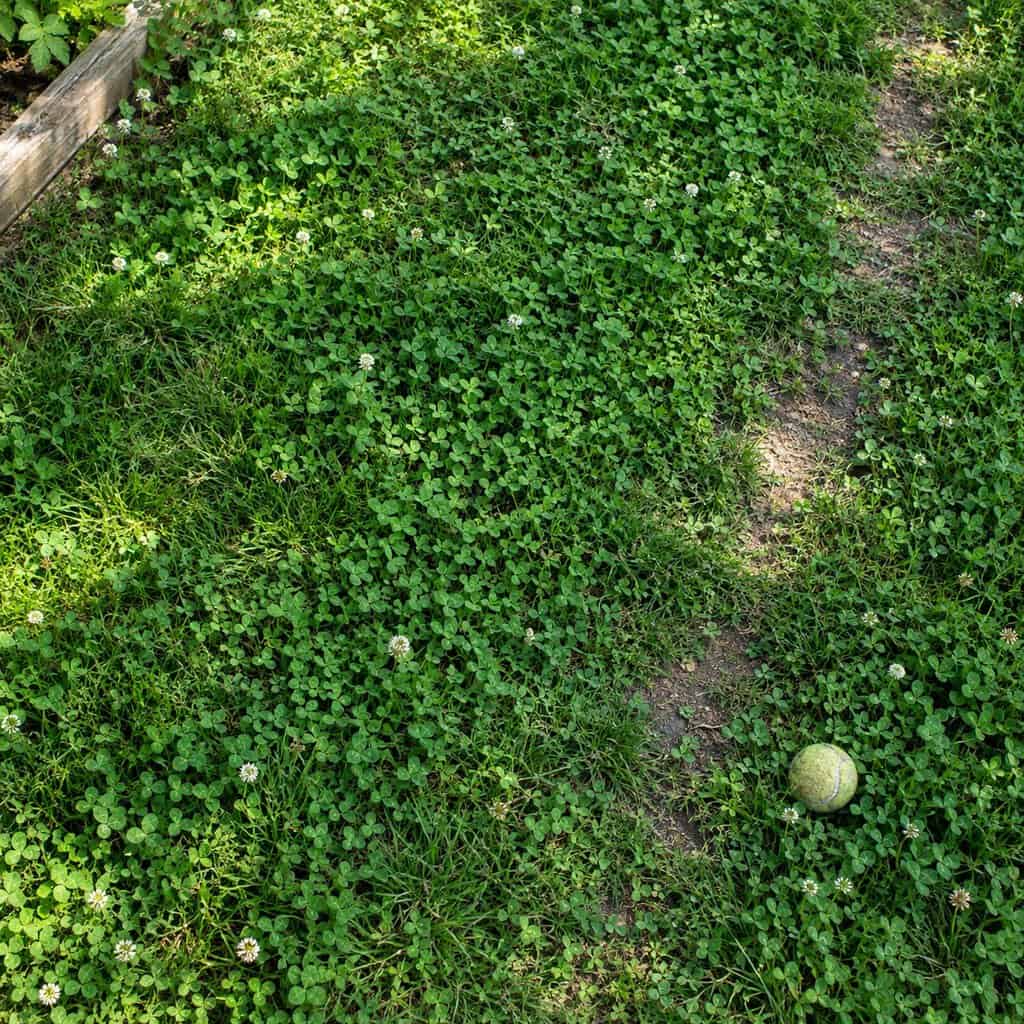
Clover shrugs off the yellow patches that dog urine leaves on grass, which alone sells many pet owners on it. It also fixes nitrogen, so the yard needs little or no fertilizer.
Standard Dutch white clover grows 4 to 8 inches and blooms heavily from late spring into fall. Microclover varieties like ‘Pipolina’ have much smaller leaves, grow lower, and flower far less.
Both handle Zones 3 to 10 in sun to light shade. Overseed an existing lawn with microclover at 5 to 10 percent of the seed mix for a blended look, or mow once in June if bees near bare feet are a concern.
5. Frogfruit
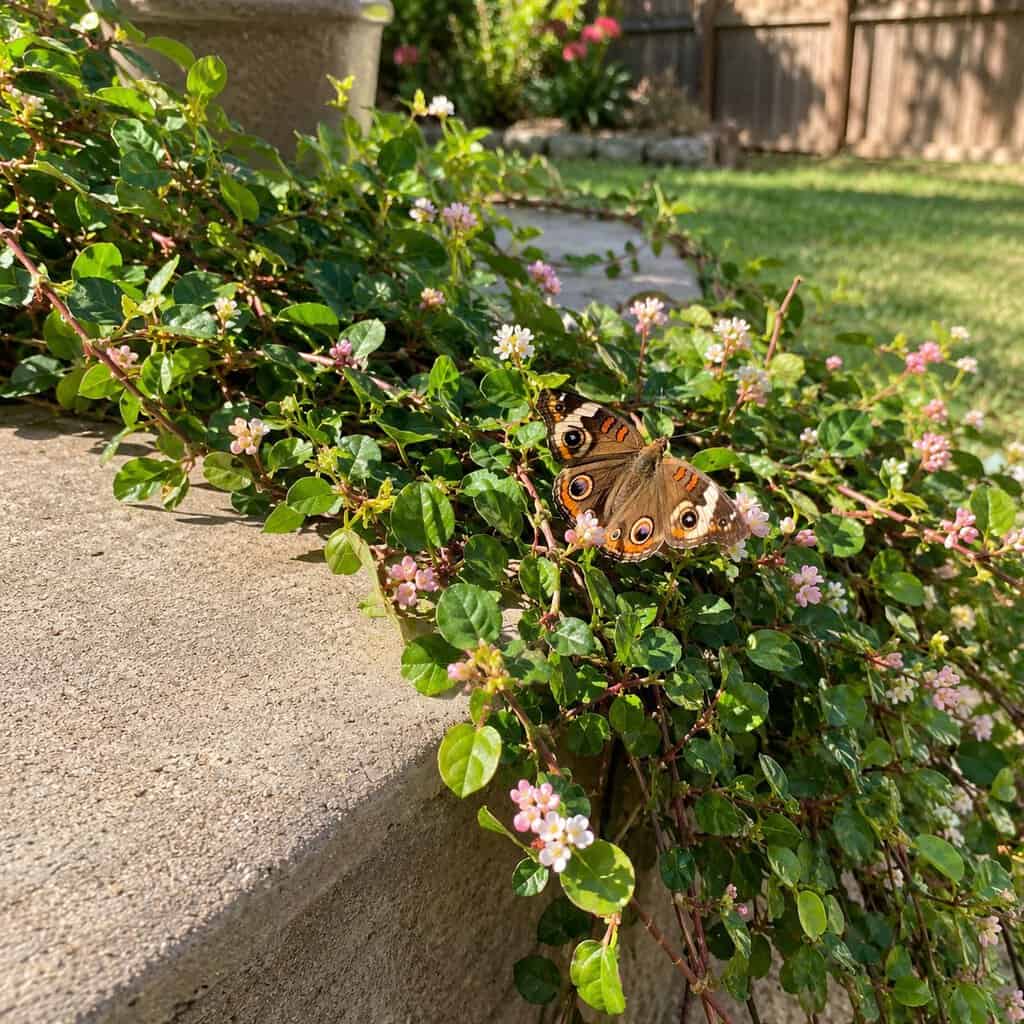
Frogfruit, sometimes called turkey tangle, is a native creeper of the South that many people already have in the lawn without knowing it. It stays 3 to 6 inches tall and roots wherever its stems touch soil.
From spring to frost, it carries tiny white and pink flower heads that resemble miniature lantana. Phaon crescent, buckeye, and white peacock butterflies all use it as a host plant.
It handles foot traffic, occasional flooding, and long dry spells in Zones 8 to 11. Expect it to go dormant and brown during cold snaps, then return in spring.
6. Kurapia
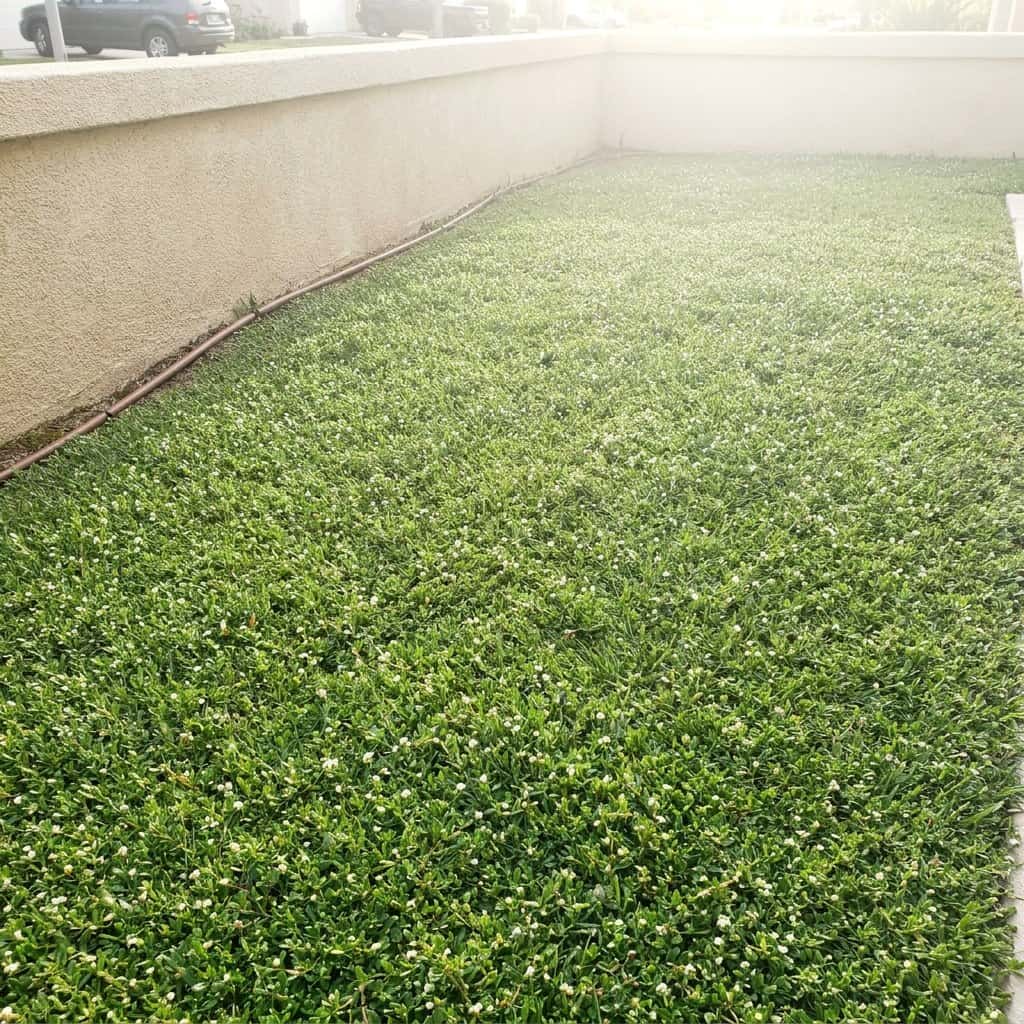
Kurapia is a sterile, improved form of Lippia nodiflora, the plant many Southerners know as frogfruit, bred in Japan for erosion control and lawn replacement. Because it sets no viable seed, it spreads only by runners and stays where it is planted.
Most homeowners install it from plugs spaced 12 to 18 inches apart, and coverage usually closes within one growing season. Once rooted, it needs a fraction of the irrigation that cool-season turf demands.
It suits warm, sunny yards in roughly Zones 8 to 11. A pass with the mower two or three times a year knocks back the small white flowers if bees are a concern.
7. Dichondra
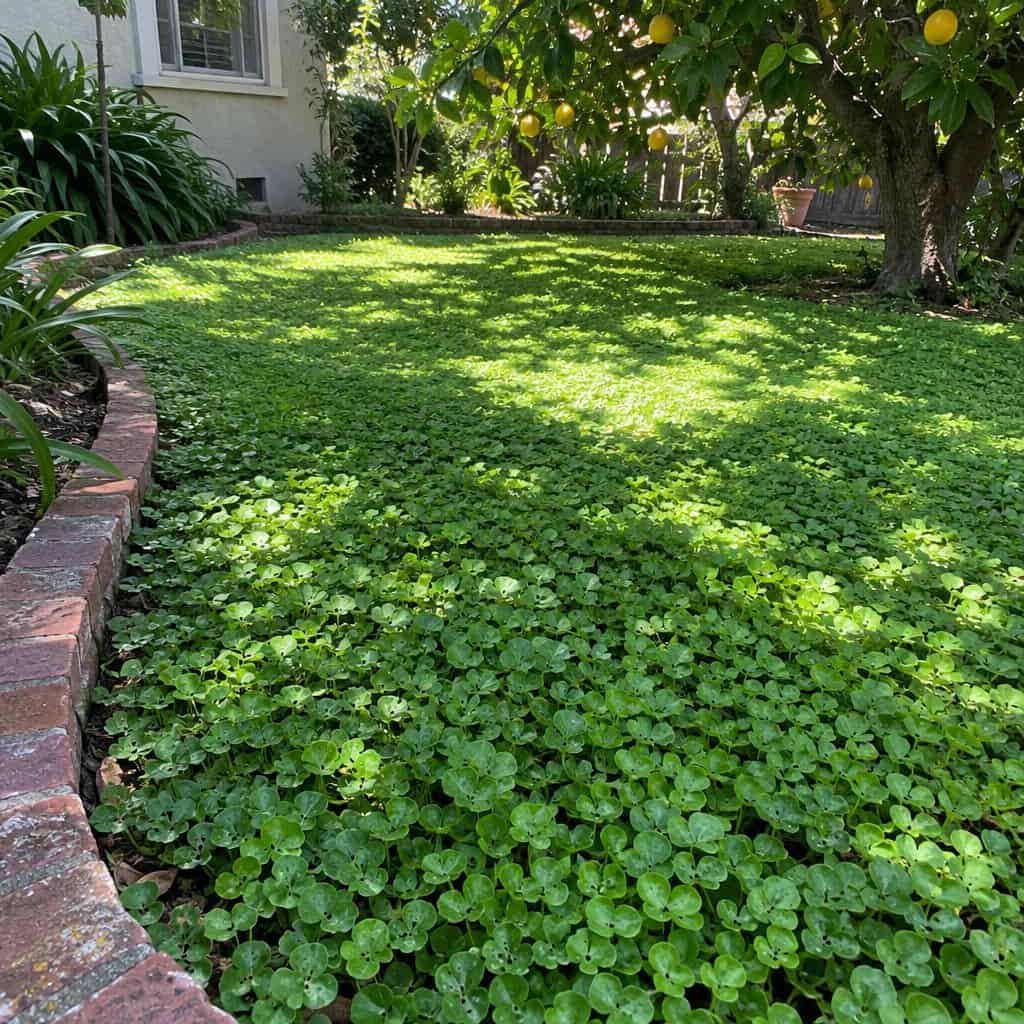
Dichondra is the closest thing to a traditional lawn in this lineup, a low mat of round, bright green leaves that looks like conventional turf from the street. In full sun it hugs the ground at 1 to 2 inches, and in shade it grows a little taller.
It is a warm-climate plant for Zones 9 to 11, common in older California neighborhoods. Sow seed in spring once the soil reaches about 70°F.
Unlike most turf alternatives, it wants regular water and some fertilizer. Watch for flea beetles, which leave small holes and brown patches in summer.
8. Woolly Thyme
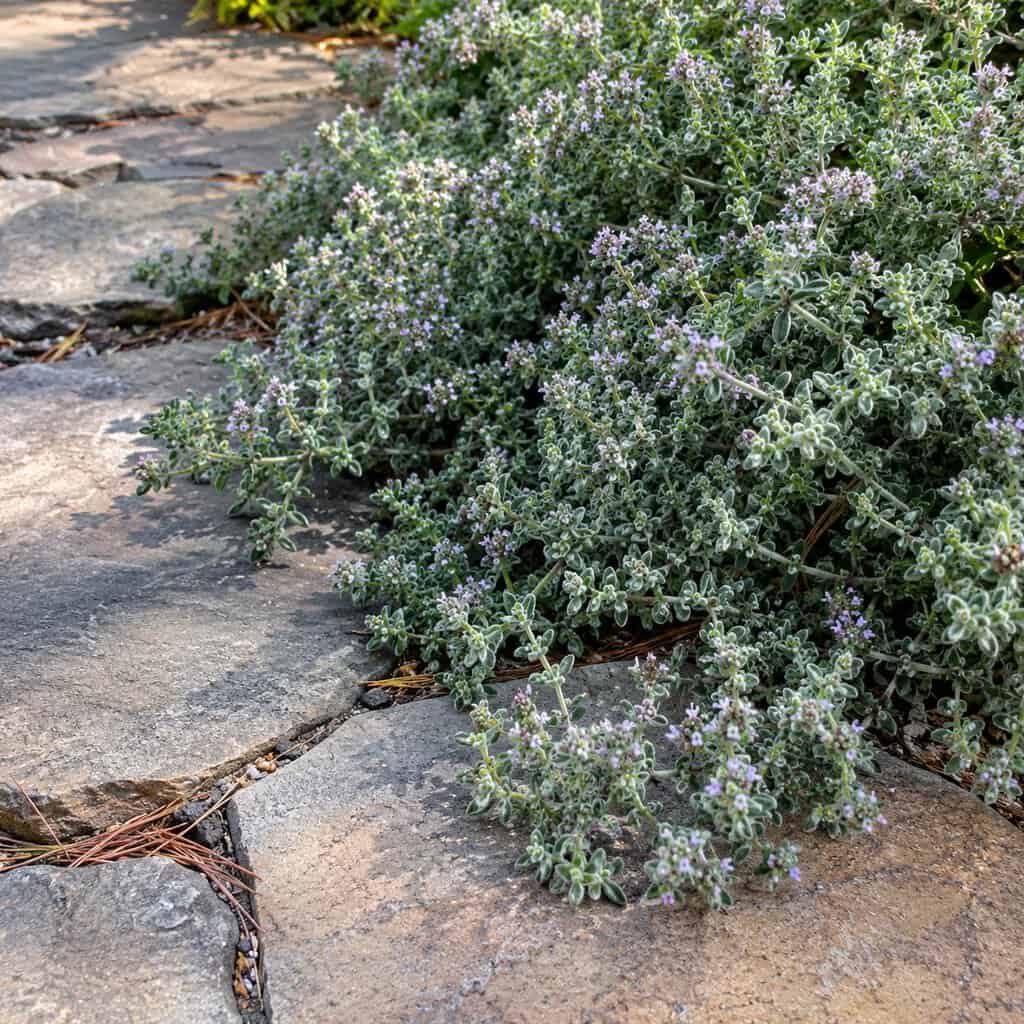
Woolly thyme rarely blooms, which is part of its appeal for a barefoot path. The tiny gray leaves are covered in fine hairs and form a mat only 1 to 3 inches high.
It takes more foot traffic than most thymes and looks especially good spilling over flagstone edges. Space plants about 12 inches apart and they knit together in a season or two.
The weakness is wet winters and humid summers, which can rot the center of each clump. It performs best in sunny, gritty soil in Zones 5 to 8.
9. Creeping Thyme
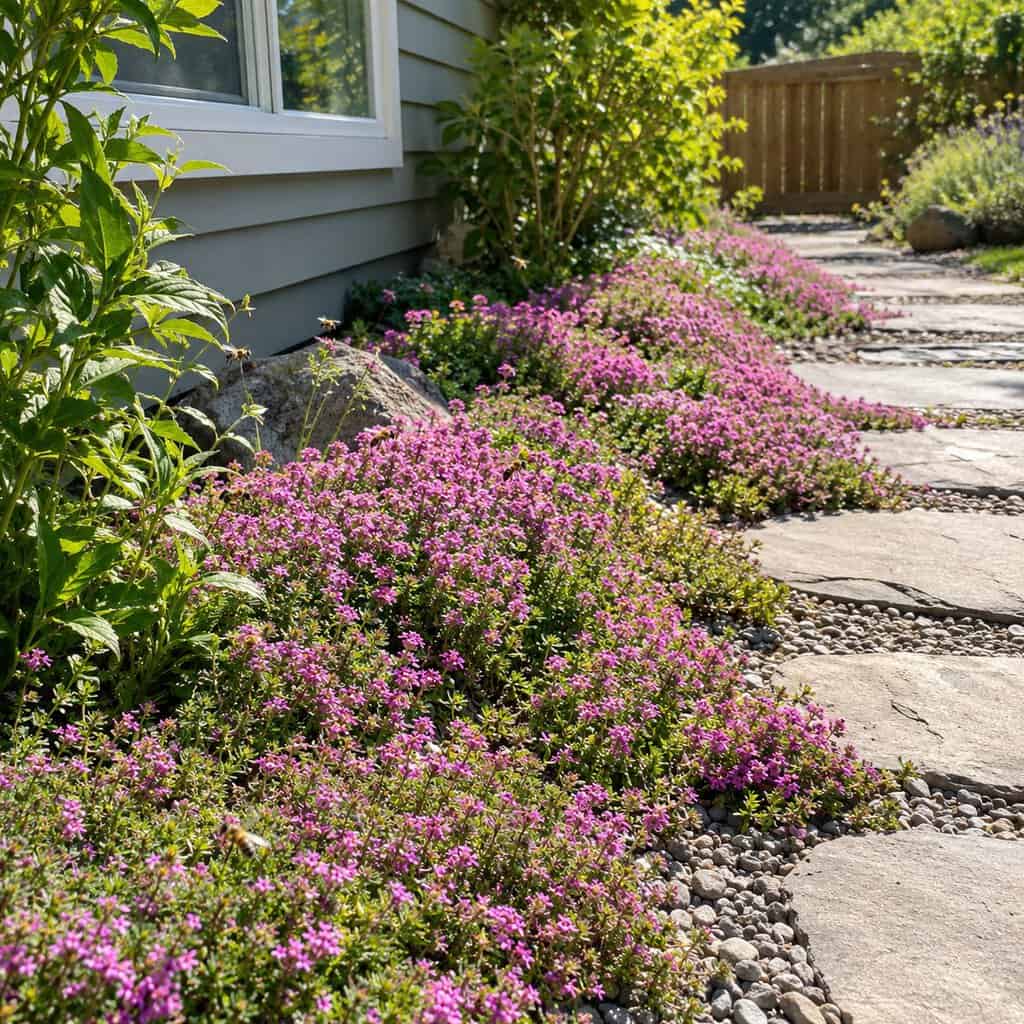
Creeping thyme turns a sunny patch purple, magenta, or white for several weeks in June and July. Selections like ‘Elfin’ stay under 2 inches, while ‘Red Creeping’ reaches about 4.
It needs at least six hours of sun and soil that never stays soggy. Sandy or gravelly ground is ideal, and heavy clay should be amended or avoided.
Bees crowd it during bloom, so keep it off routes where kids run barefoot in summer. It holds up to a few passes a day, not a play area. Hardy in Zones 4 to 9.
10. Roman Chamomile
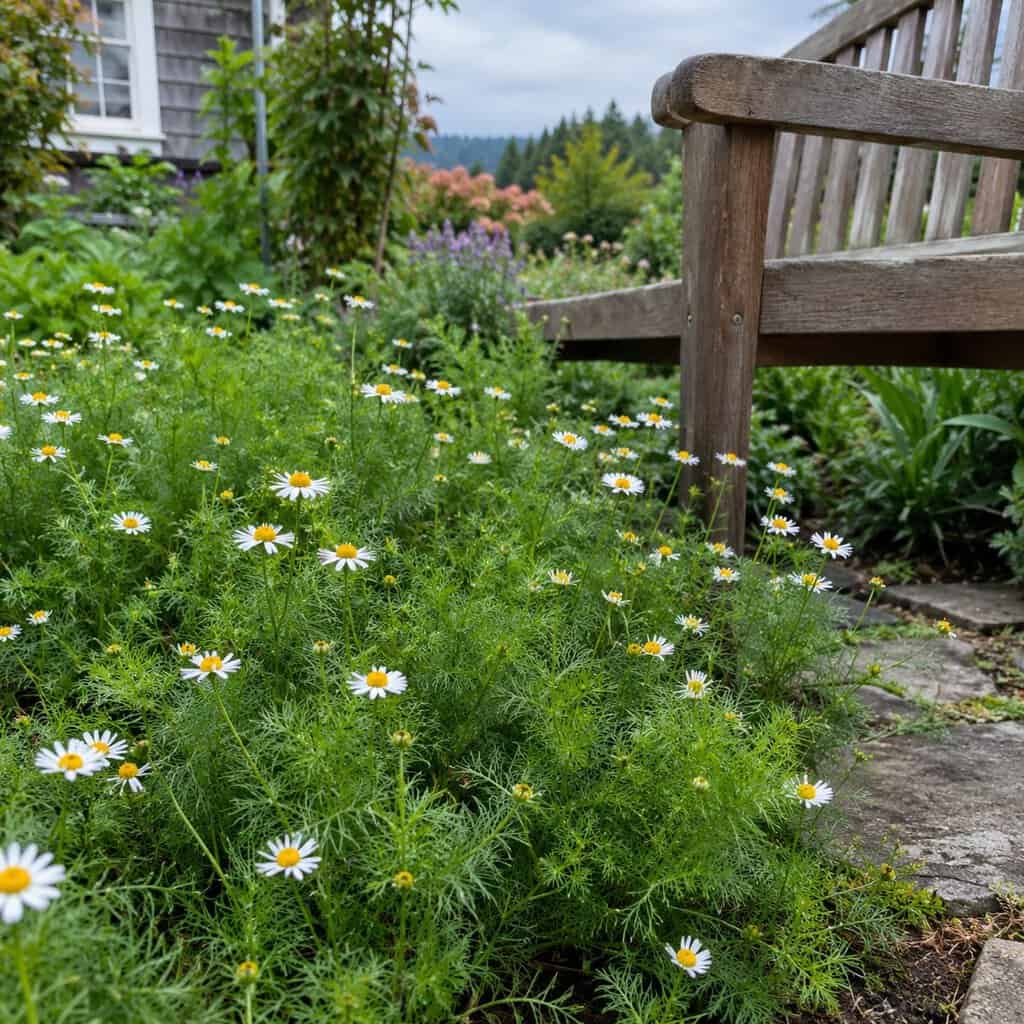
Chamomile lawns have been planted in England for centuries, and a well-kept one gives off an apple-like scent when walked on. Foliage stays 3 to 6 inches tall, with white daisy flowers on taller stems in summer.
The non-flowering selection ‘Treneague’ keeps a tighter, lower surface and needs less trimming. Set plants 4 to 6 inches apart for a lawn that closes quickly.
It prefers cool summers and struggles in the humid heat of the Southeast. Grow it in Zones 4 to 9, full sun to light shade, and weed by hand the first year until it fills.
11. Dymondia
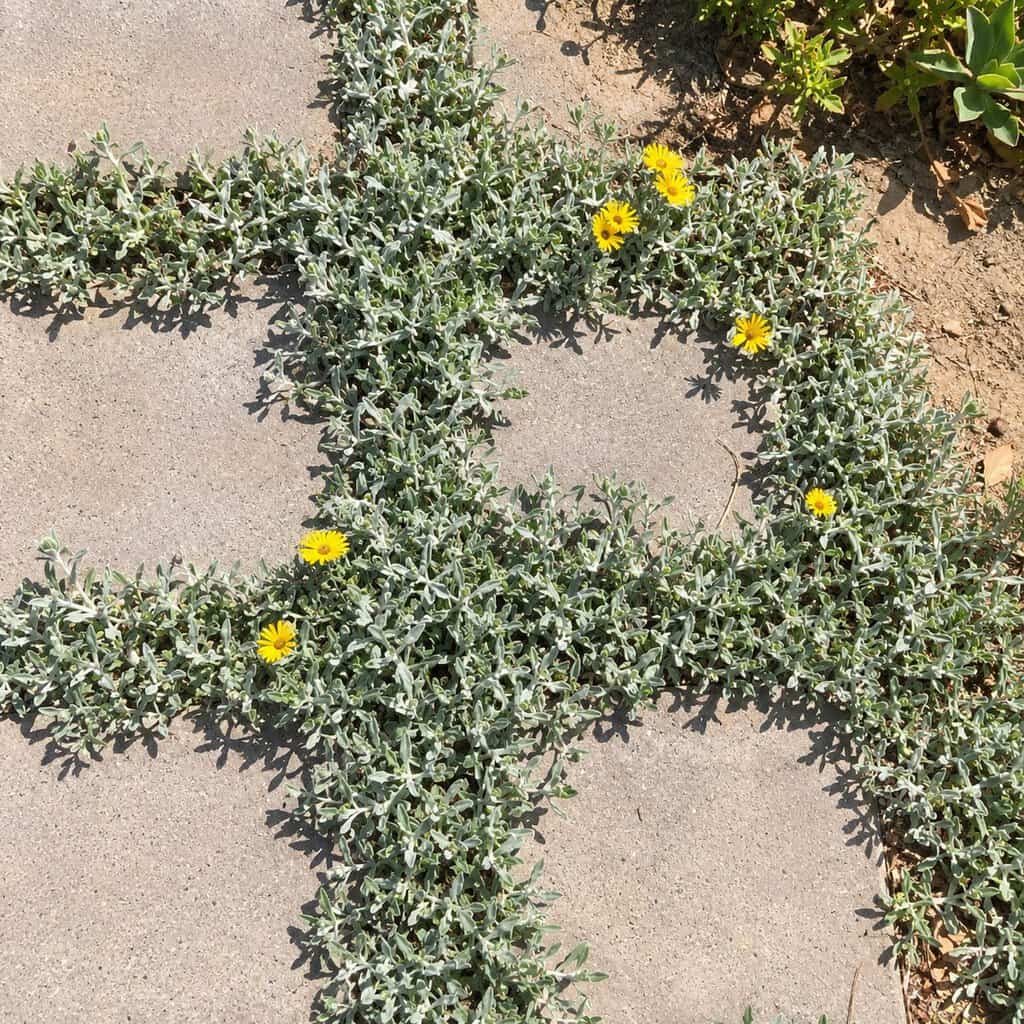
Dymondia is a South African ground cover with narrow leaves that are green on top and bright white underneath. The edges curl slightly, giving the mat a frosted, silvery look at about 2 inches tall.
It tolerates moderate foot traffic, salty coastal air, and long rainless summers. Small yellow daisies appear in summer but never dominate.
Growth is slow, so plant plugs 6 to 9 inches apart for faster coverage. It belongs in sunny, well-drained yards in Zones 9 to 11 and suffers in frost.
12. Hardy Ice Plant (Delosperma)
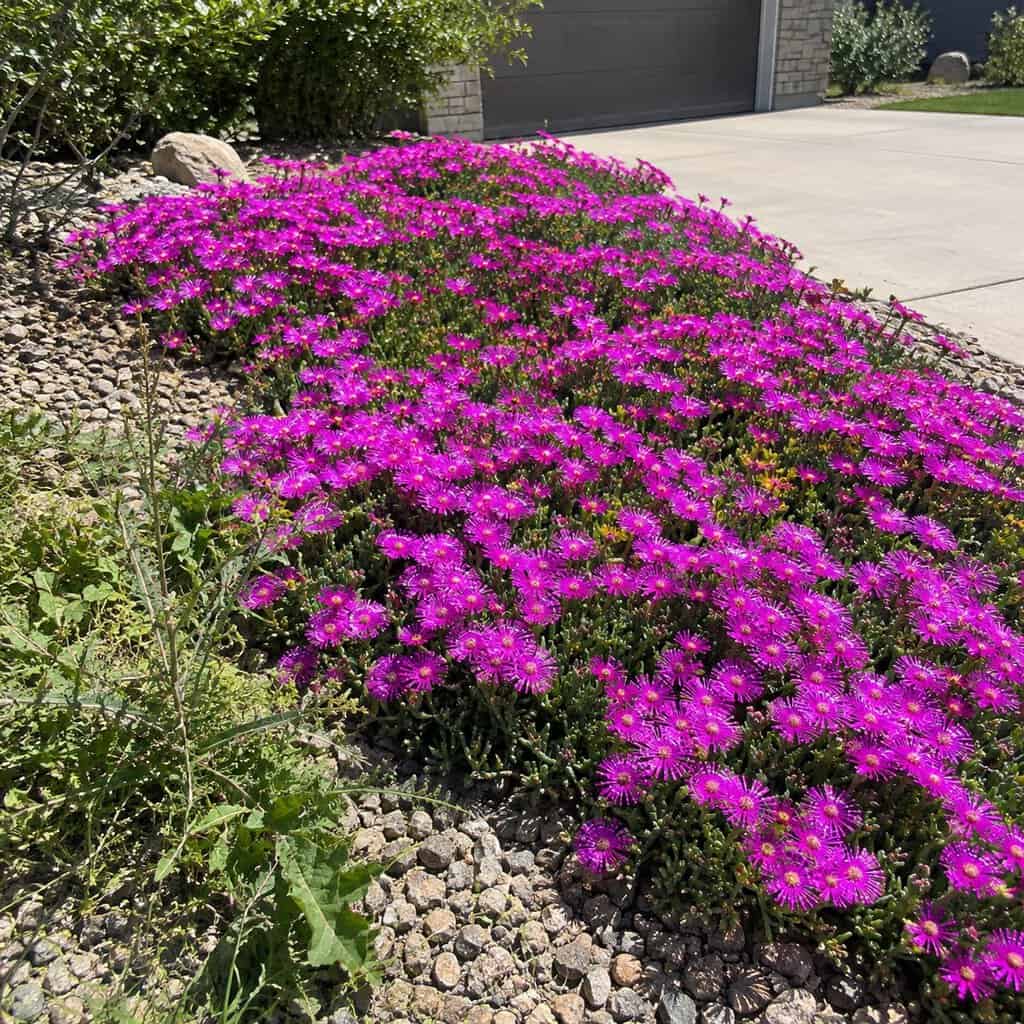
Hardy ice plant blooms in shades of magenta, coral, or yellow from early summer until frost, often so heavily the leaves disappear. Delosperma cooperi grows 3 to 6 inches tall and spreads about 2 feet per plant.
For colder yards, yellow-flowered Delosperma nubigenum survives down to Zone 5. Most other types are reliable in Zones 6 to 10.
Soggy winter soil kills it faster than cold does, so plant on a berm or in gravelly ground. Do not confuse it with Carpobrotus, the coastal ice plant that is invasive in California.
13. Sedum
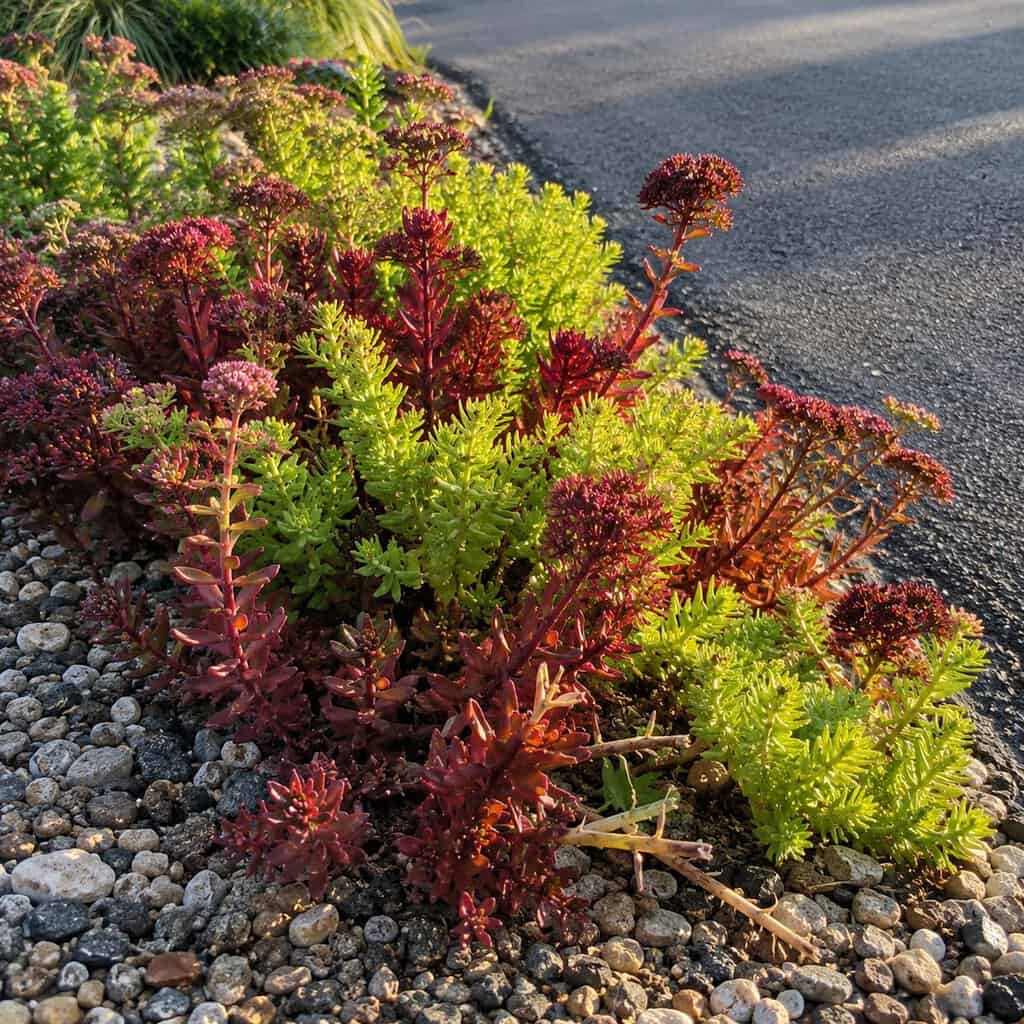
Low sedums are ideal for the hottest, thinnest soil in the yard, such as a gravel strip or the edge of a driveway. Creeping types like ‘Dragon’s Blood’, ‘Angelina’, and Sedum album stay 2 to 6 inches tall.
Any broken stem will root, so a few plants can be multiplied by scattering cuttings over loosened soil in spring. Most are hardy in Zones 4 to 9.
Sedum handles almost no foot traffic and rots in poorly drained beds. Keep it to areas that are looked at rather than walked on.
14. Pussytoes (Antennaria)
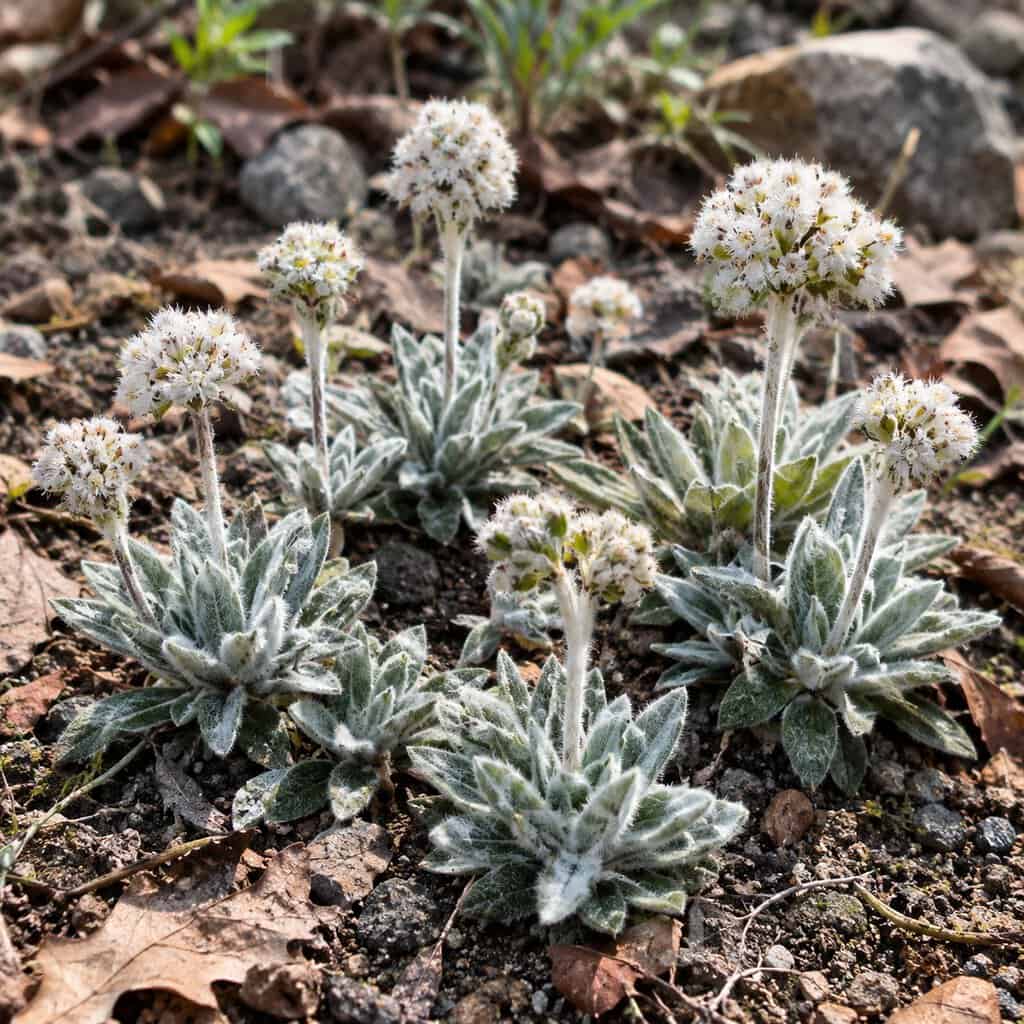
Pussytoes is a native wildflower for spots too poor and dry for almost anything else. The rosettes of silver-green leaves stay 2 to 4 inches high and spread slowly by short runners.
In April and May, fuzzy white flower clusters rise on stems a few inches tall, resembling the pads of a cat’s paw. The American lady butterfly lays its eggs on the foliage.
Plant it in full sun to part shade in Zones 3 to 8, on thin, rocky, or sandy soil. Rich soil and frequent watering shorten its life.
15. Creeping Phlox
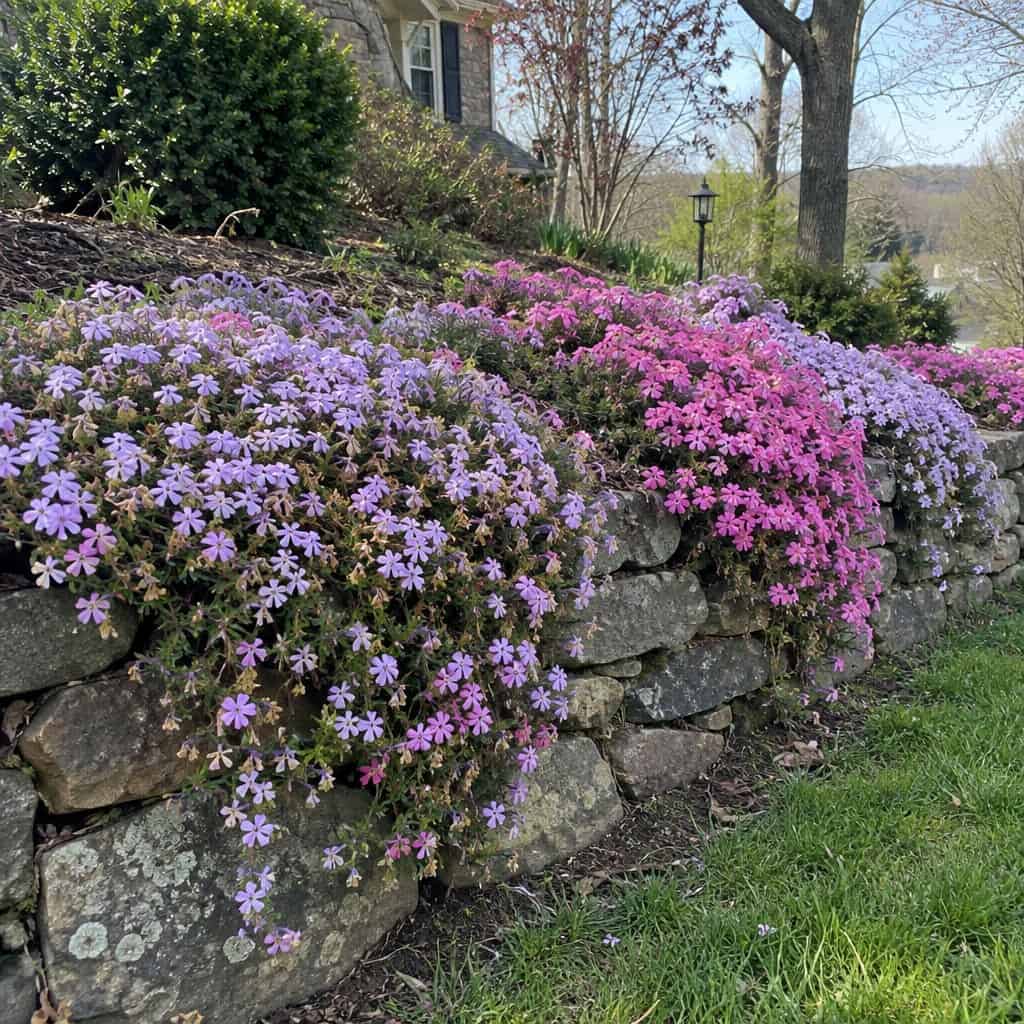
Creeping phlox is a native of the eastern U.S. that blooms in April and May across rock walls, banks, and curb edges. Plants form needle-leaved mounds about 4 to 6 inches tall and up to 2 feet wide.
Common colors include lavender, pink, white, and striped forms like ‘Candy Stripe’. Shearing the stems back by about half after bloom keeps the mats dense instead of open in the middle.
Full sun and fast-draining soil suit it best, in Zones 3 to 9. It is not meant for walking, so pair it with a stepping-stone path.
16. Kinnikinnick
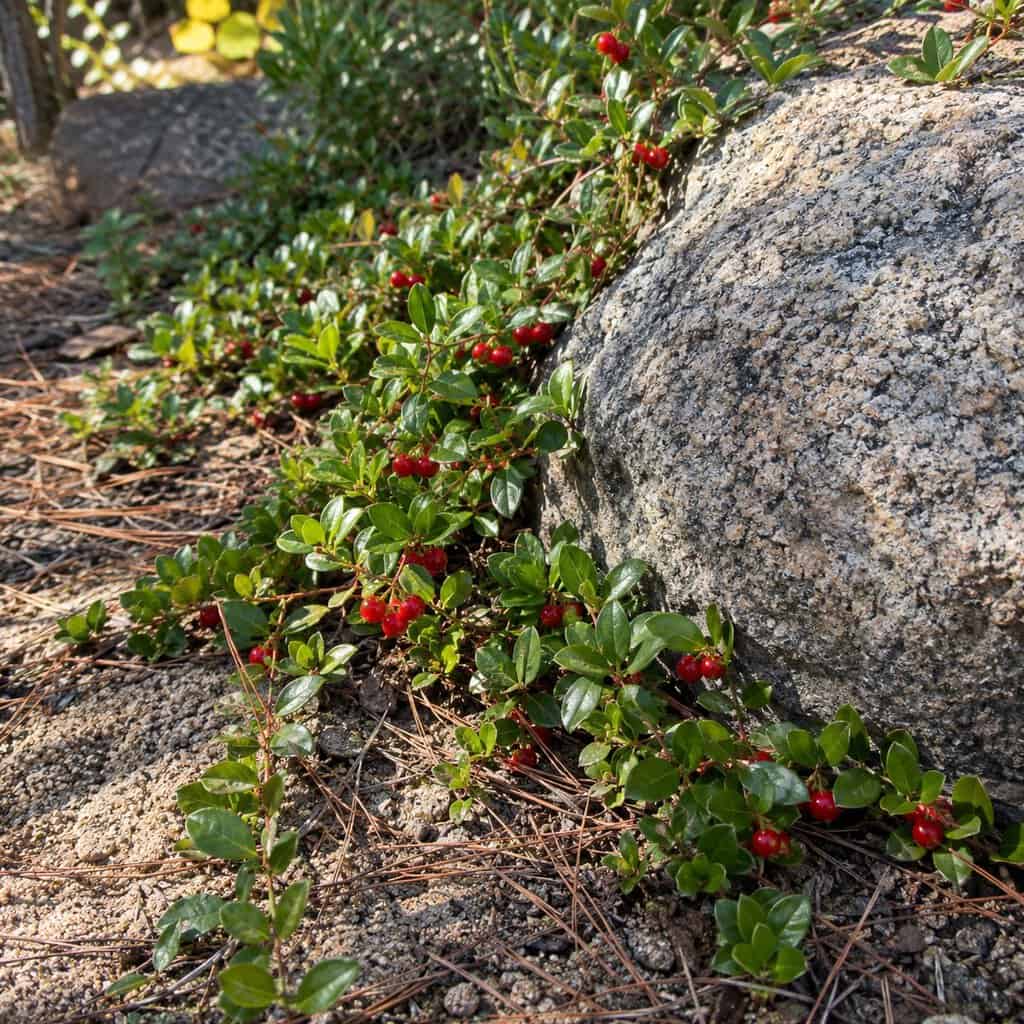
Kinnikinnick, also called bearberry, is a trailing native evergreen of northern forests and mountain slopes. Small leathery leaves turn bronze-red in cold weather, and pale pink spring flowers become red berries that birds eat.
It grows 6 to 12 inches tall and spreads several feet over time. Sandy, acidic, low-nutrient soil in Zones 2 to 6 is where it thrives.
Establishment is slow and it resents transplanting, so buy container-grown plants instead of bare root. Mulch between them for the first two years while the stems spread.
17. Creeping Juniper
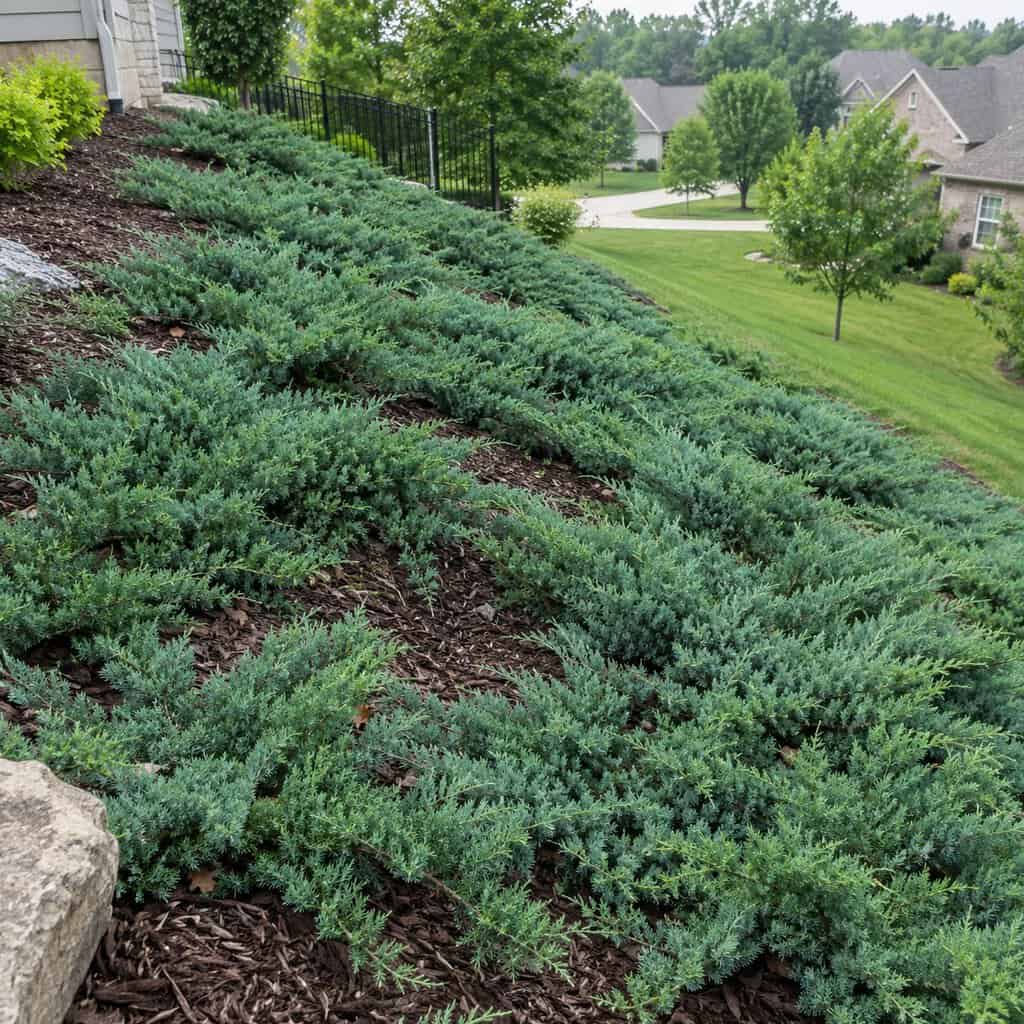
A steep bank is a real hazard for anyone pushing a mower. Creeping juniper solves that with a woody, evergreen mat that roots along its stems as it spreads.
‘Blue Rug’ stays about 4 to 6 inches tall and can spread 6 to 8 feet, while ‘Bar Harbor’ turns plum-purple in winter. Plant 4 to 5 feet apart and mulch the gaps.
It wants full sun and handles poor, dry soil in Zones 3 to 9. Keep it away from paths, since the branches break underfoot.
18. Wild Strawberry
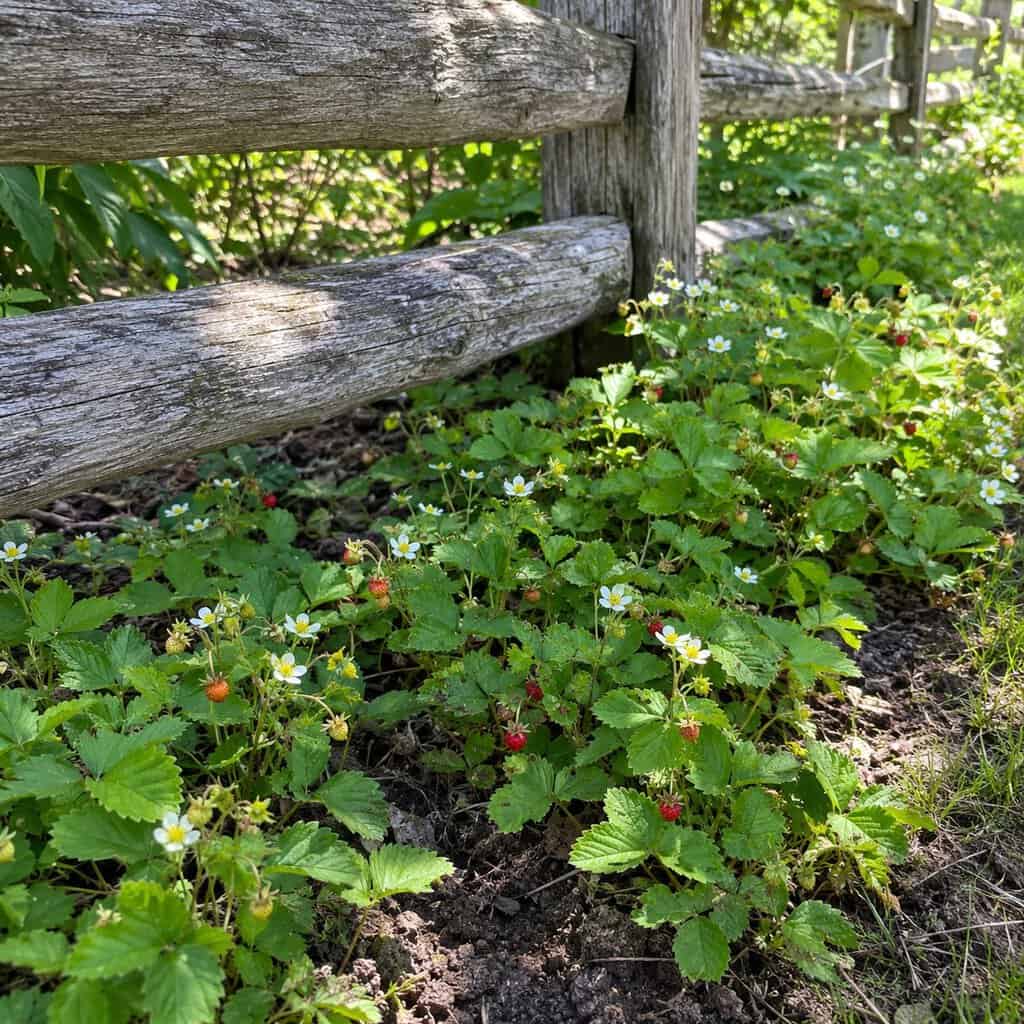
Native wild strawberry spreads quickly by runners and can fill bare soil in a single season. Plants stay roughly 4 to 6 inches tall, with white flowers in April and May.
The berries are small, sweet, and usually claimed by birds, chipmunks, and box turtles before anyone else finds them. Foliage often turns red in fall.
It grows in sun to part shade in Zones 3 to 9 and tolerates light foot traffic. West Coast gardeners can use beach strawberry, an evergreen native suited to sandy coastal yards.
19. Self-Heal (Prunella vulgaris)
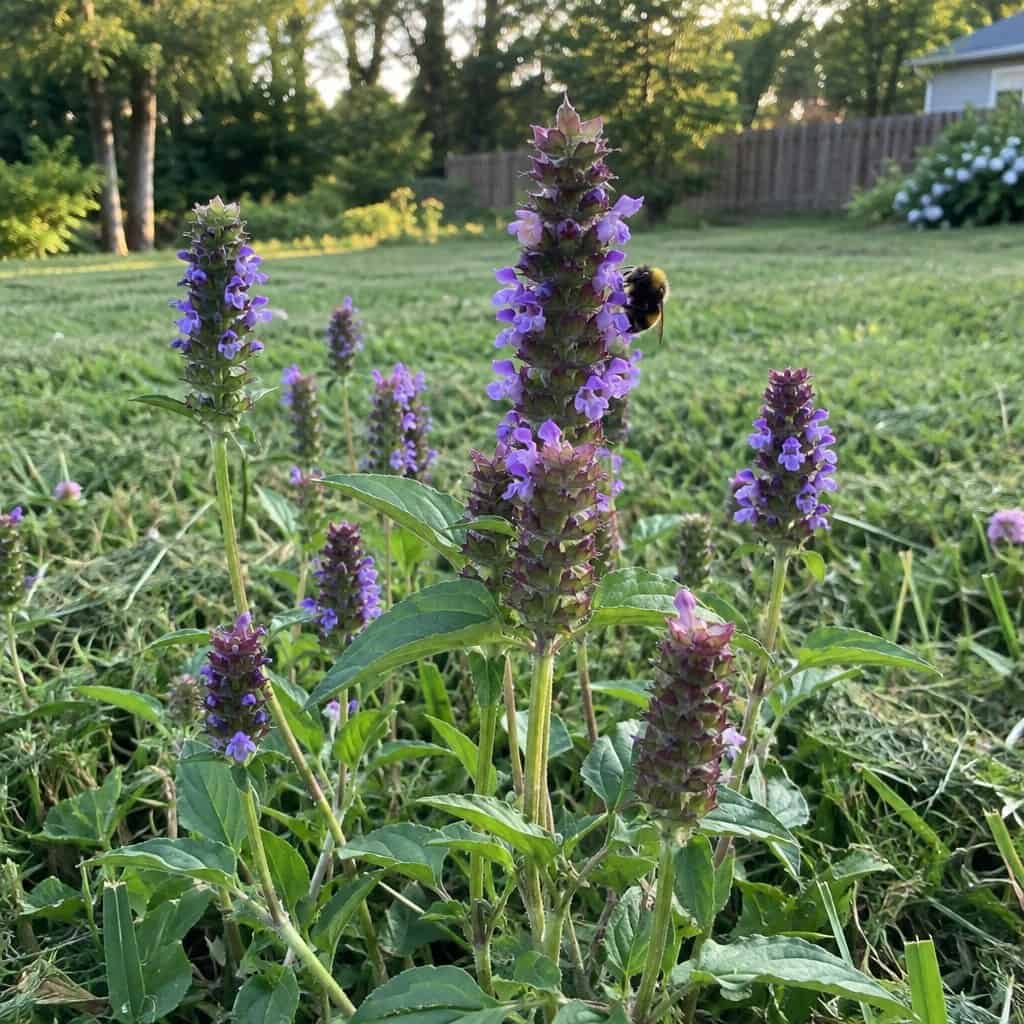
Self-heal is a low plant many people have mowed for years without noticing the flowers. With the mower raised a notch, it blooms purple from June into August at 2 to 4 inches.
Bumblebees work the flower spikes constantly. It tolerates mowing, regular foot traffic, and moist clay better than most flowering covers.
It grows in sun to part shade in Zones 4 to 9. Look for the native subspecies lanceolata if a strictly native lawn is the goal.
20. Blue Star Creeper

Blue star creeper hugs the ground at 1 to 3 inches and is dotted with pale blue, star-shaped flowers from late spring into summer. It is a classic choice for the gaps between flagstones.
Moderate foot traffic is fine, and it recovers quickly after being stepped on. It does need steady moisture, and in hot, dry sun it browns out fast.
Plant plugs 6 to 12 inches apart in part sun, Zones 5 to 9. Keep a hard edge between it and the lawn, since it will happily creep into turf.
21. Mazus
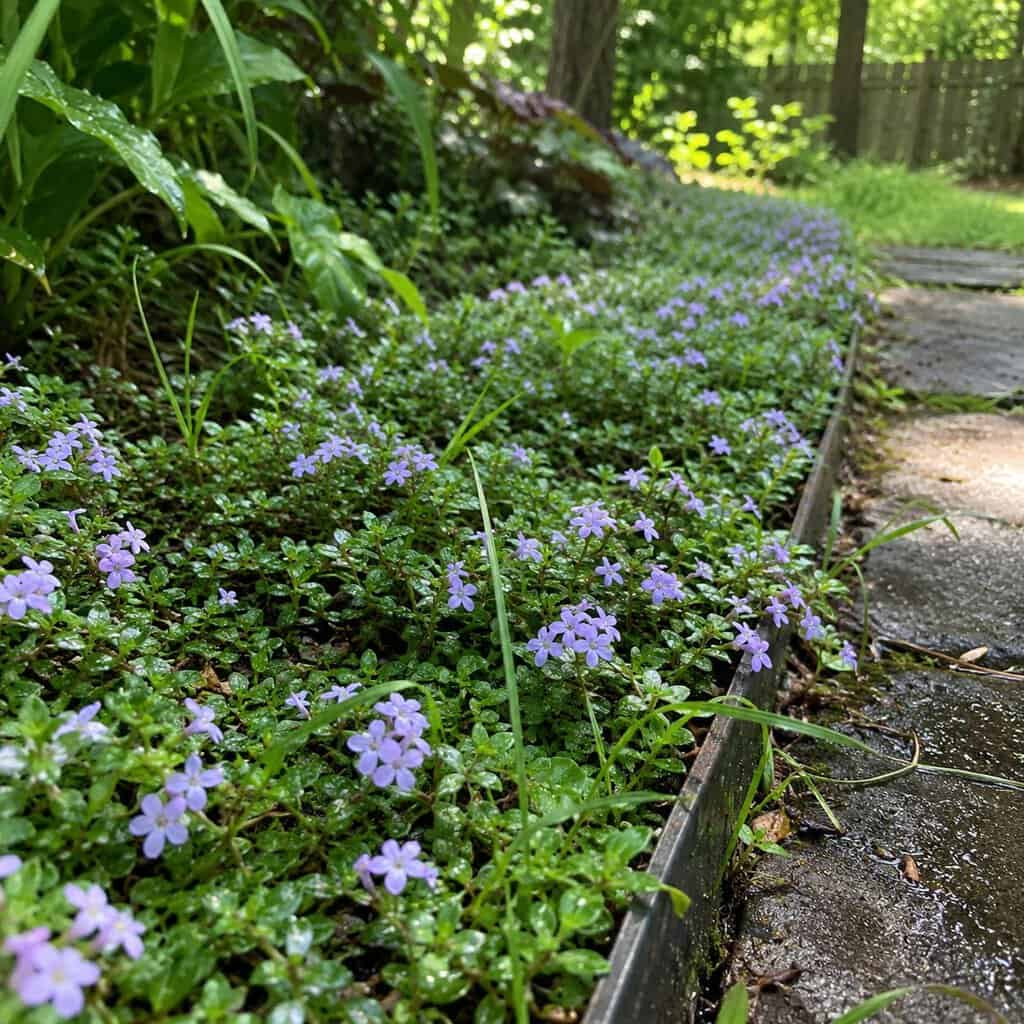
Mazus is one of the flattest flowering covers available, staying well under 2 inches. In May it fills with small lilac flowers marked with white and yellow.
It thrives in moist, fertile soil in sun or part shade, Zones 5 to 8. Light foot traffic and an occasional mowing do not bother it.
The white form, ‘Albus’, brightens shady paths. Like blue star creeper, it moves into neighboring lawns, so a paver or steel edge is worth installing.
22. Liriope (Lilyturf)
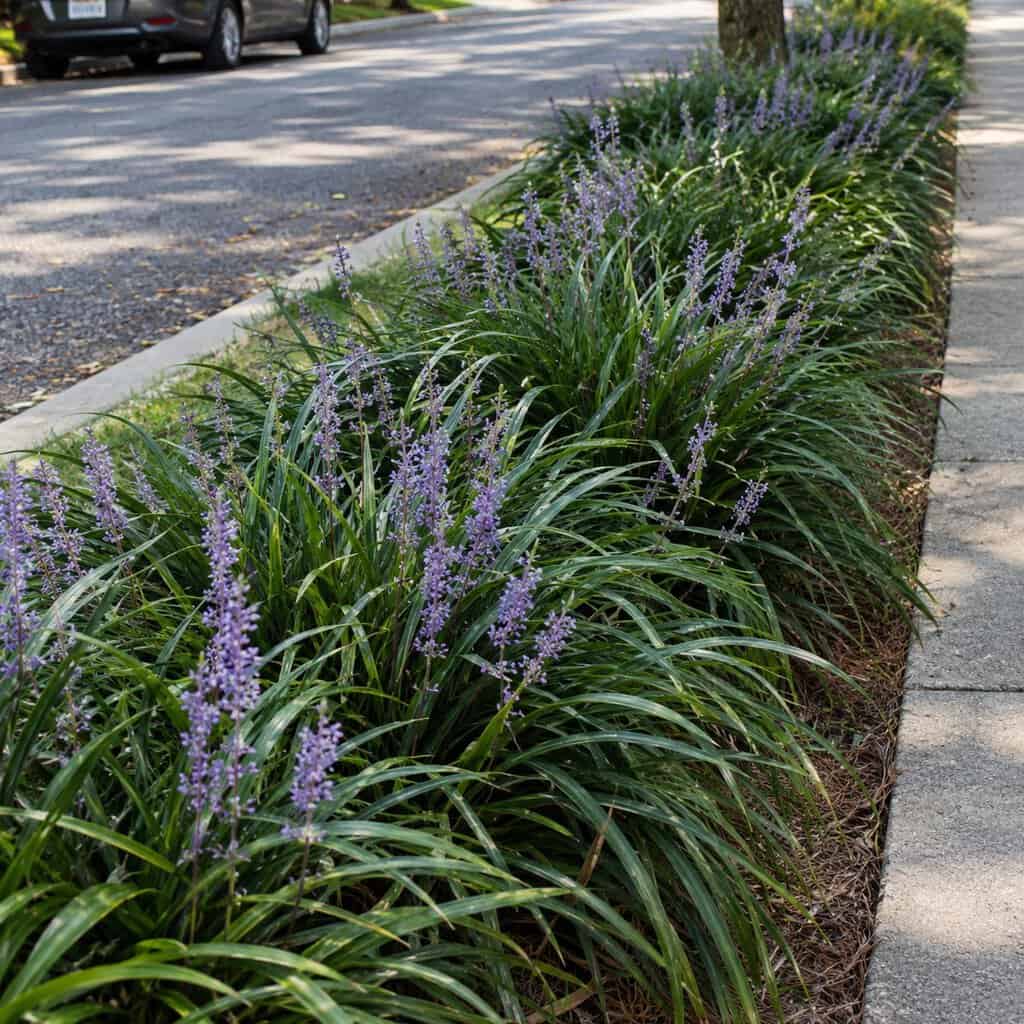
Liriope is a grass-like perennial that works well in strips and borders where mowing is awkward. Clumping Liriope muscari grows 12 to 18 inches tall and stays where planted.
Creeping Liriope spicata spreads aggressively by underground runners and is hard to remove, so choose it only for areas surrounded by pavement.
Lavender flower spikes appear in late summer, followed by black berries. In late winter, cut the old leaves to about 3 inches, or run a mower on its highest setting before new growth starts. Hardy in Zones 5 to 10.
23. Mondo Grass
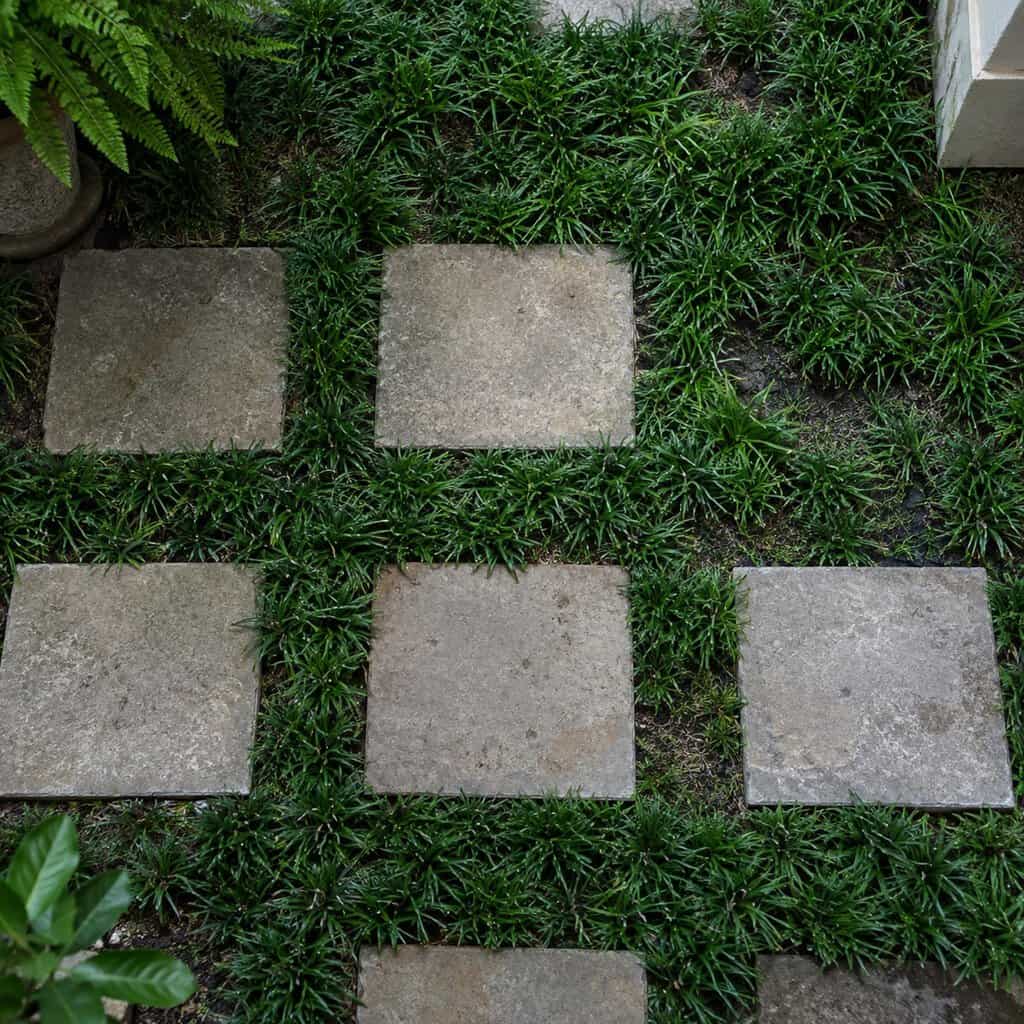
Mondo grass forms a dark green cover of narrow, arching leaves, and the dwarf form ‘Nanus’ stays just 2 to 4 inches tall. Standard mondo reaches 6 to 10 inches.
Growth is slow. Planting divisions 4 to 6 inches apart closes a bed in about two years, while wider spacing can take four or more.
It does best in part shade in Zones 7 to 10 and can scorch in hot afternoon sun. Black mondo, with nearly black leaves, adds contrast and is hardy to Zone 6.
24. Pennsylvania Sedge
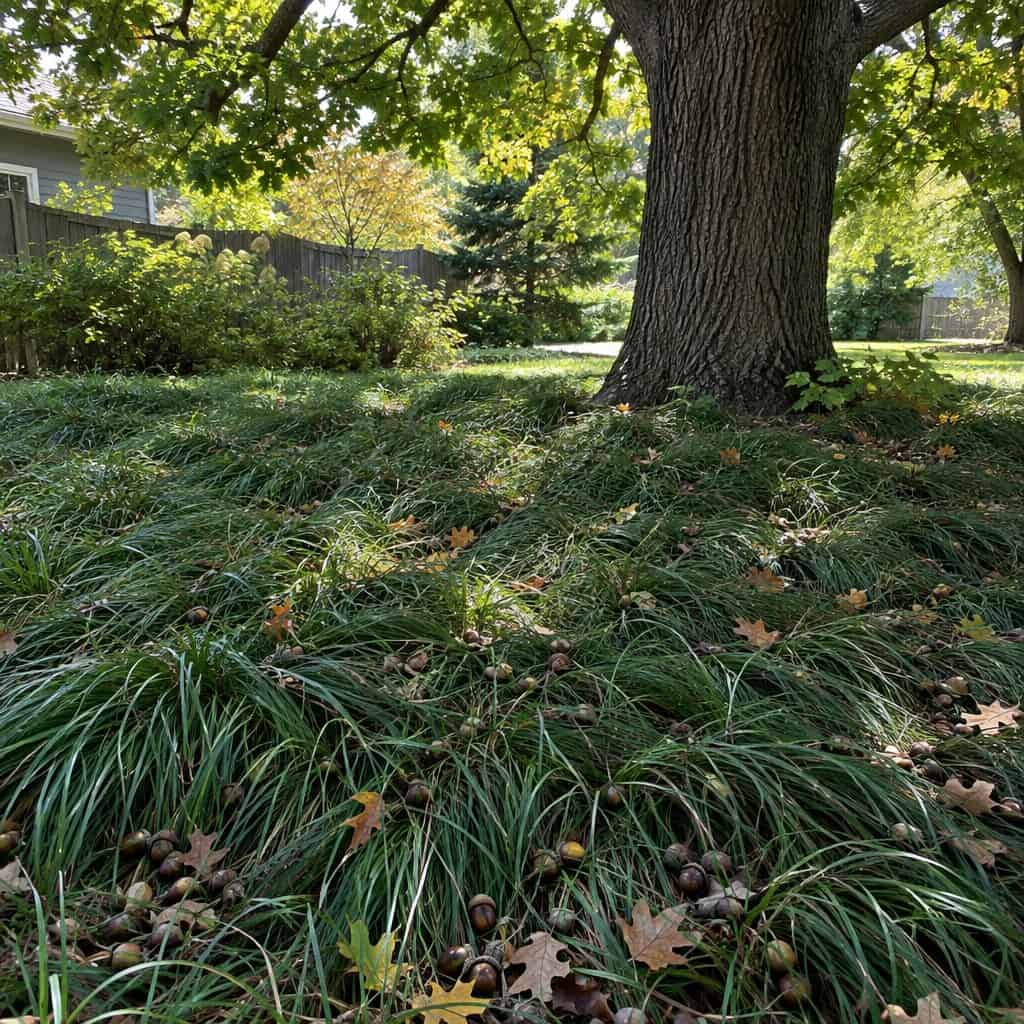
Pennsylvania sedge grows naturally on dry, shady woodland floors in the eastern and central U.S., especially under oaks. Its fine, soft blades arch to about 6 to 10 inches.
It can be left shaggy or mowed two or three times a year at 3 to 4 inches for a neater look. It also tolerates the tree root competition that kills turf.
Plant plugs 8 to 12 inches apart in spring, Zones 3 to 8. It handles light foot traffic, not daily play.
25. Labrador Violet
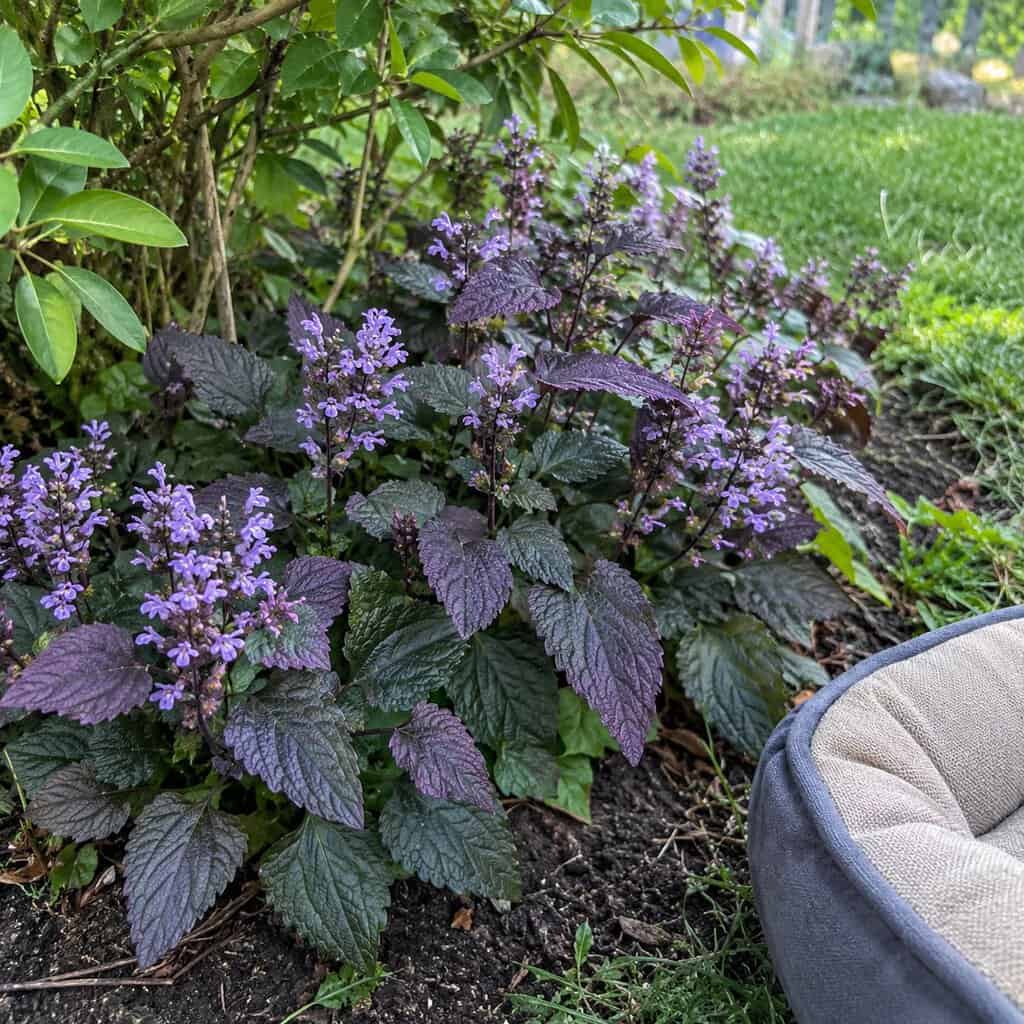
Labrador violet has heart-shaped leaves tinted deep purple, especially in cool weather. Lavender flowers appear in spring, and the plant stays 3 to 6 inches tall.
Both leaves and flowers are edible, and violets are considered non-toxic to dogs and cats. It grows in sun or shade in Zones 3 to 8.
It self-seeds freely, filling gaps quickly and turning up in nearby beds. That helps cover ground fast, but expect some occasional thinning.
26. Barren Strawberry
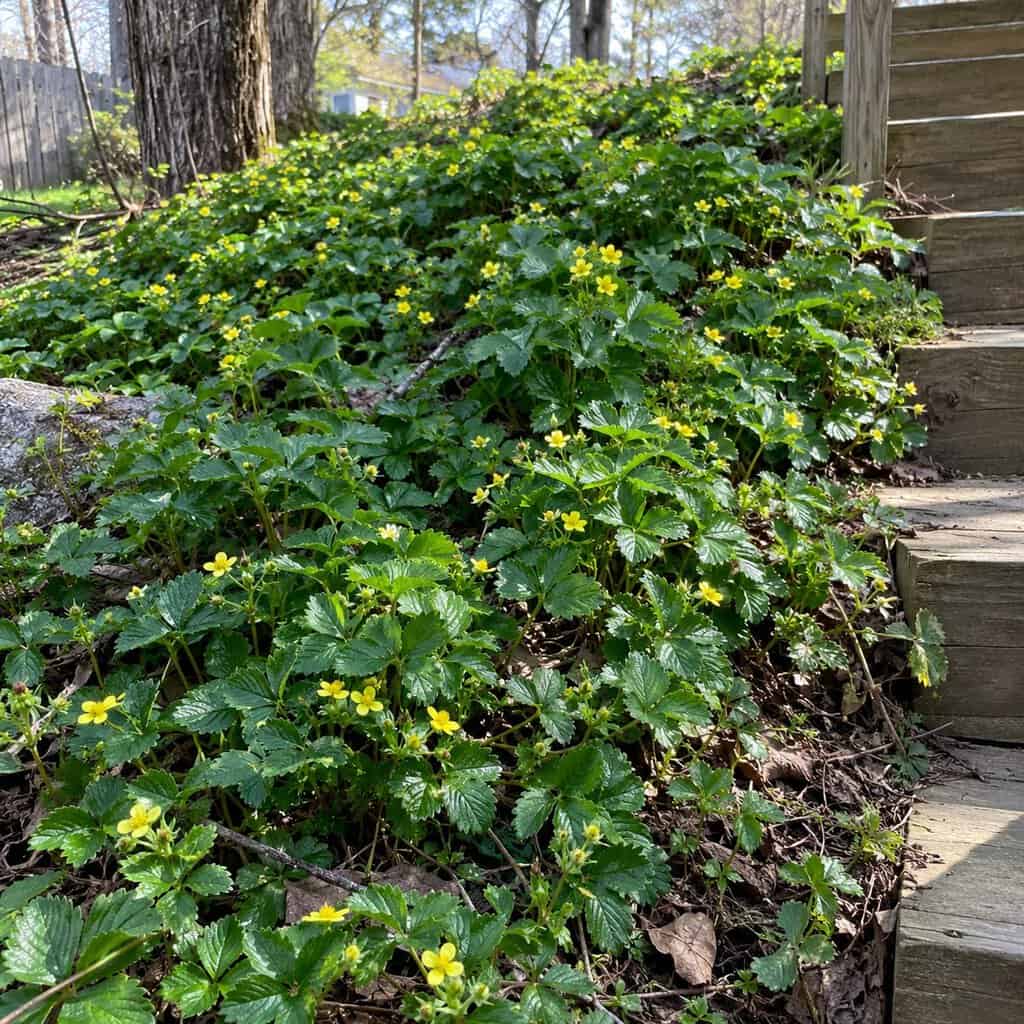
Barren strawberry resembles a strawberry plant, with glossy three-part leaves and yellow five-petaled flowers in April and May. It does not produce edible fruit.
The native eastern species grows 3 to 6 inches tall and spreads at a moderate pace. Once established, it tolerates dry shade.
Grow it in part to full shade in Zones 3 to 7. It works under shrubs, along a shaded walk, or on a slope that is hard to reach with a mower.
27. Green and Gold
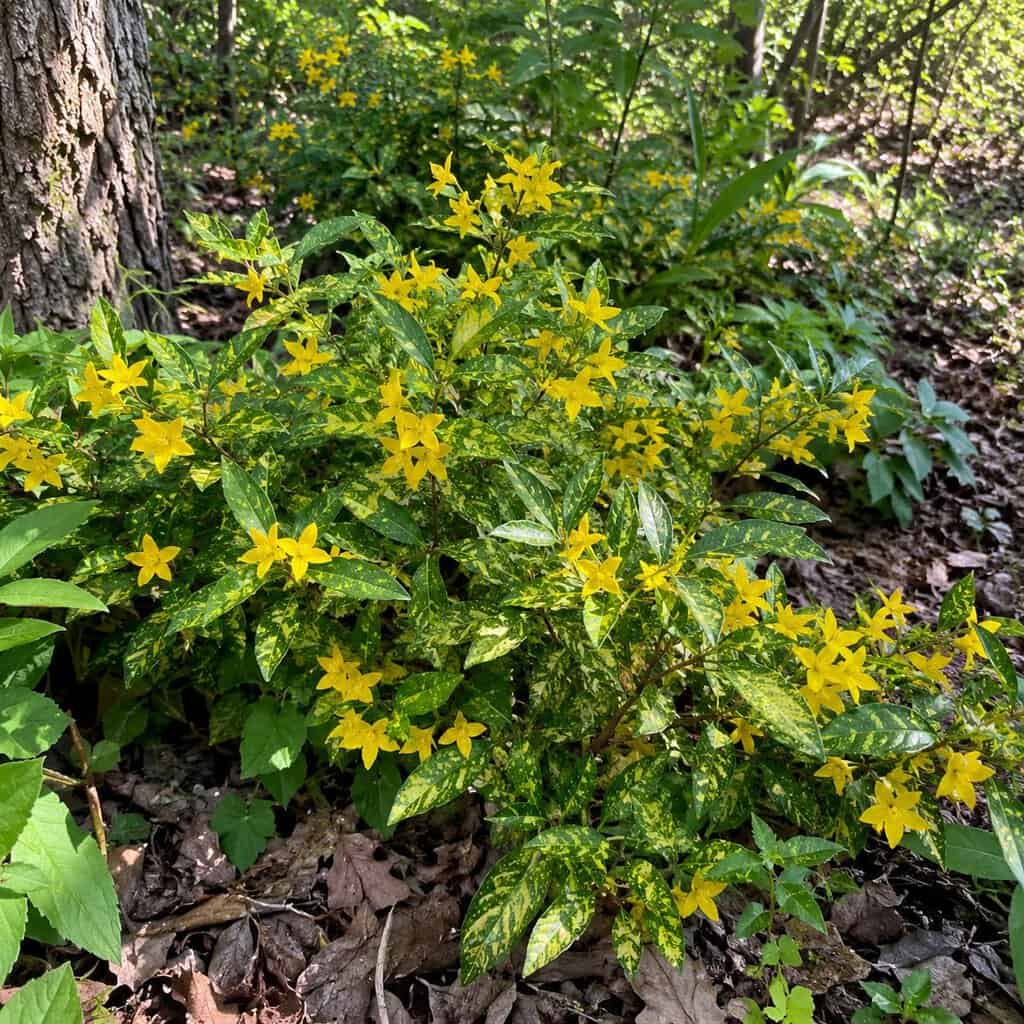
Green and gold is an eastern native with bright yellow, star-shaped flowers from March into June and scattered blooms through fall. Plants grow 4 to 6 inches tall.
It spreads by runners into a dense mat in part shade and moist, well-drained soil. Selections such as ‘Pierre’ spread faster, while others stay more clumped.
Plant it in Zones 5 to 9 along woodland edges or under high-canopy trees. It handles little foot traffic, so add stepping stones where people cut through.
28. Golden Ragwort (Packera aurea)
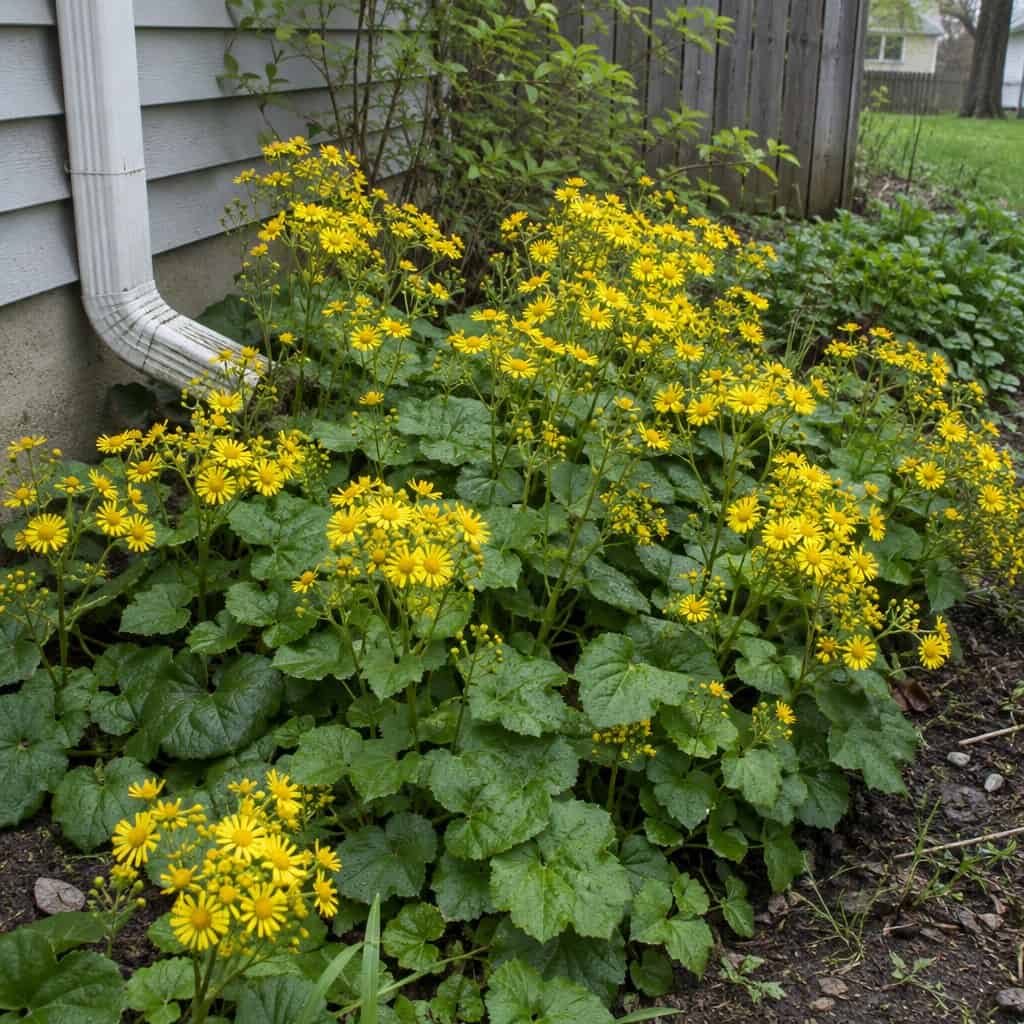
Golden ragwort is a native for damp shade that most covers cannot handle. Its low rosettes of rounded leaves, purple on the underside, stay green through much of the winter.
In April and May, yellow daisy flowers rise on stems 1 to 2 feet tall and feed early bees. Cut the stems after bloom to return it to a low mat.
It spreads quickly by runners and seed in Zones 3 to 8. The plant is toxic if eaten, so skip it where dogs chew plants or livestock graze.
29. Wild Ginger (Asarum)

Wild ginger covers rich, moist shade with heart-shaped leaves about 6 inches tall. The velvety foliage overlaps to hide bare soil from spring until frost.
Its maroon, bell-shaped flowers sit at ground level in April, tucked under the leaves. Despite the name, it is not culinary ginger and should not be eaten.
Canadian wild ginger is deciduous and hardy in Zones 3 to 8. In the Pacific Northwest, western wild ginger stays evergreen in Zones 6 to 9.
30. Sweet Woodruff
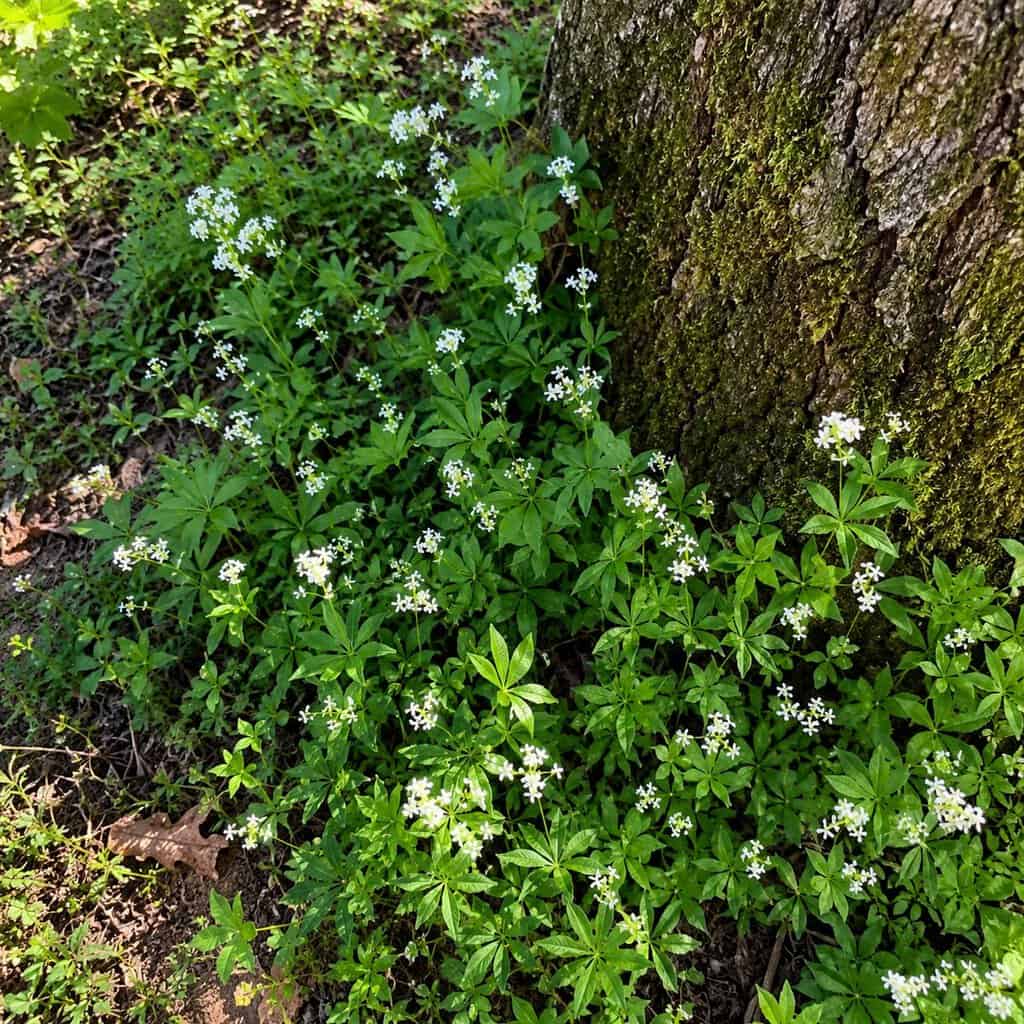
Sweet woodruff forms a fine-textured cover of whorled leaves 6 to 9 inches tall, topped with tiny white flowers in May. Dried leaves smell like fresh hay and vanilla.
It spreads quickly in moist, shady soil and can crowd out weaker plants. In hot, dry summers it may brown and go partly dormant.
Grow it in part to full shade in Zones 4 to 8. It suits a woodland garden but is too delicate for regular walking.
31. Ajuga (Bugleweed)
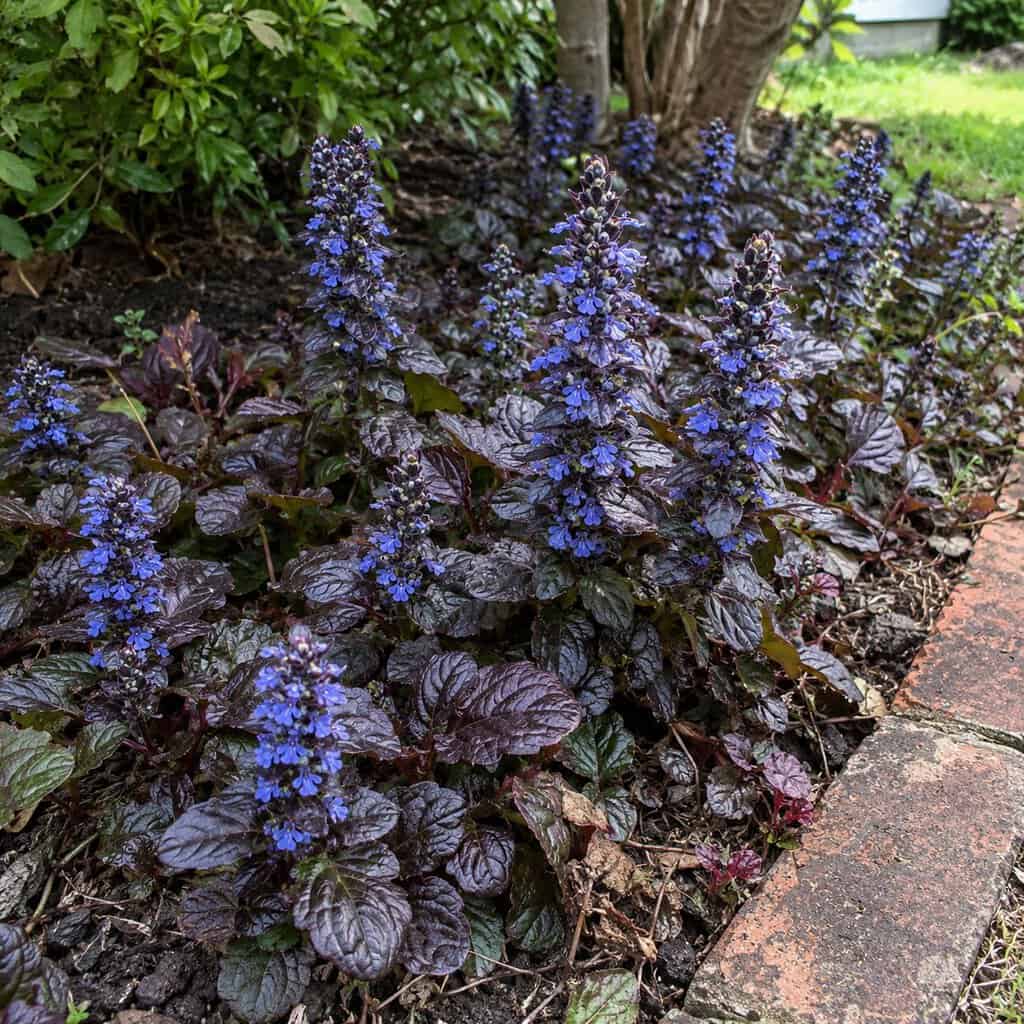
Ajuga is grown more for its leaves than its flowers. Varieties such as ‘Black Scallop’, ‘Chocolate Chip’, and ‘Burgundy Glow’ offer foliage in deep purple, bronze, and variegated pink.
Blue flower spikes appear in April and May, rising to about 6 inches above a 3-inch rosette. It spreads quickly by runners in sun or shade, Zones 4 to 9.
In heavy, wet soil and humid heat, crowns can rot in patches. It also creeps into lawns, so contain it with edging.
32. Moss
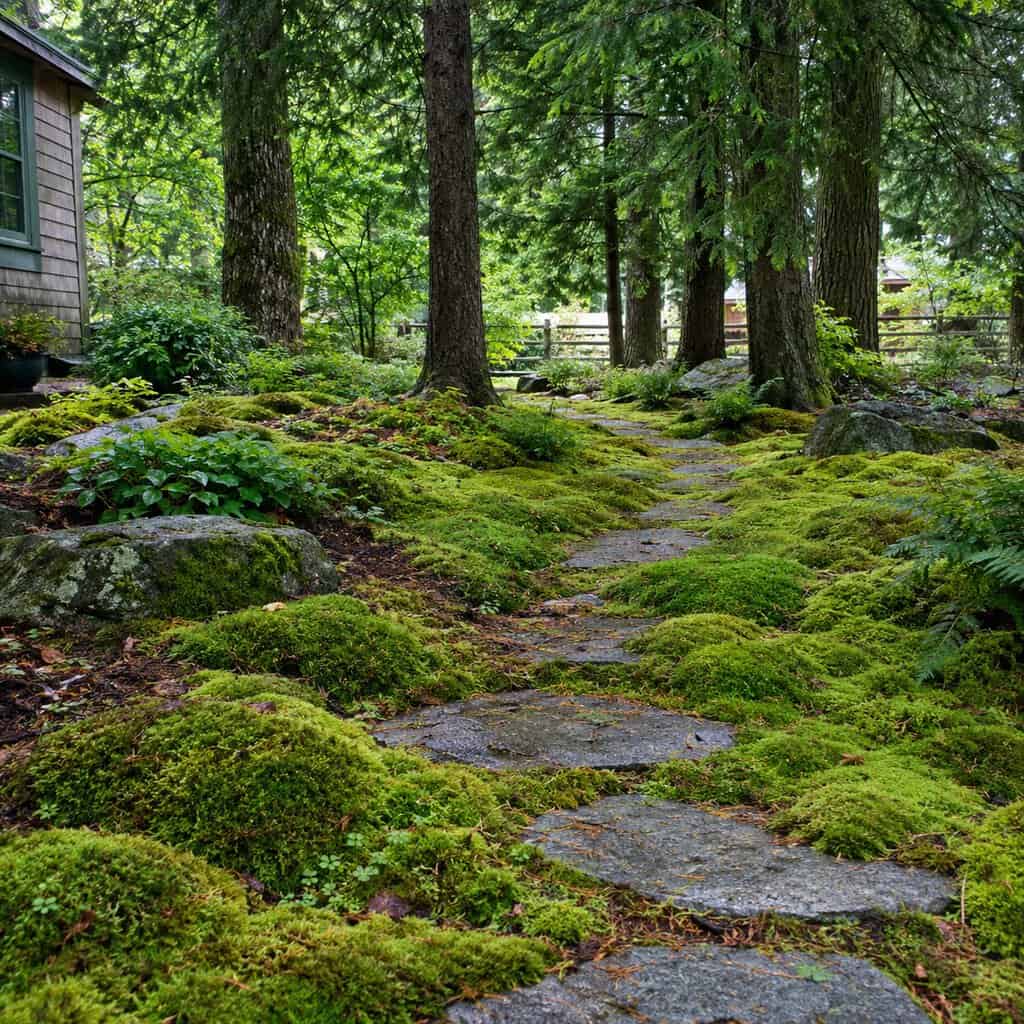
Moss often moves in where grass fails, a sign of shade, compacted soil, and acidic pH. Rather than spending money to kill it, many homeowners now encourage it.
Sheet moss and cushion moss grow best in shade with soil around pH 5.0 to 5.5. Press pieces firmly onto bare, moist soil and keep them damp for the first several weeks.
Clear fall leaves with a blower on low, since raking tears it. Irish moss, sold for pavers, is actually a flowering plant that needs more sun.
Where to Start Replacing Turf
Pick one area first, ideally the spot where grass already fails. A small test bed of 100 to 200 square feet shows how a plant behaves in your soil before you commit the whole yard.
Kill or smother the existing turf, plant in spring or early fall, and water deeply for the first eight to ten weeks. Weed by hand until the cover closes, which takes one to three seasons depending on spacing.
Before planting anything that spreads aggressively, check your state’s invasive plant list or call the local extension office. A plant that behaves in one region can become a problem in another.
The photo of Labrador violet is wrong. Labrador violet has heart shaped leaves but they are smooth and not tinged purple. It is a neat short shade plant. I would like to know what the plant is that is pictured under that title. I though Ajuga, but it isn’t. It looks very nice.