

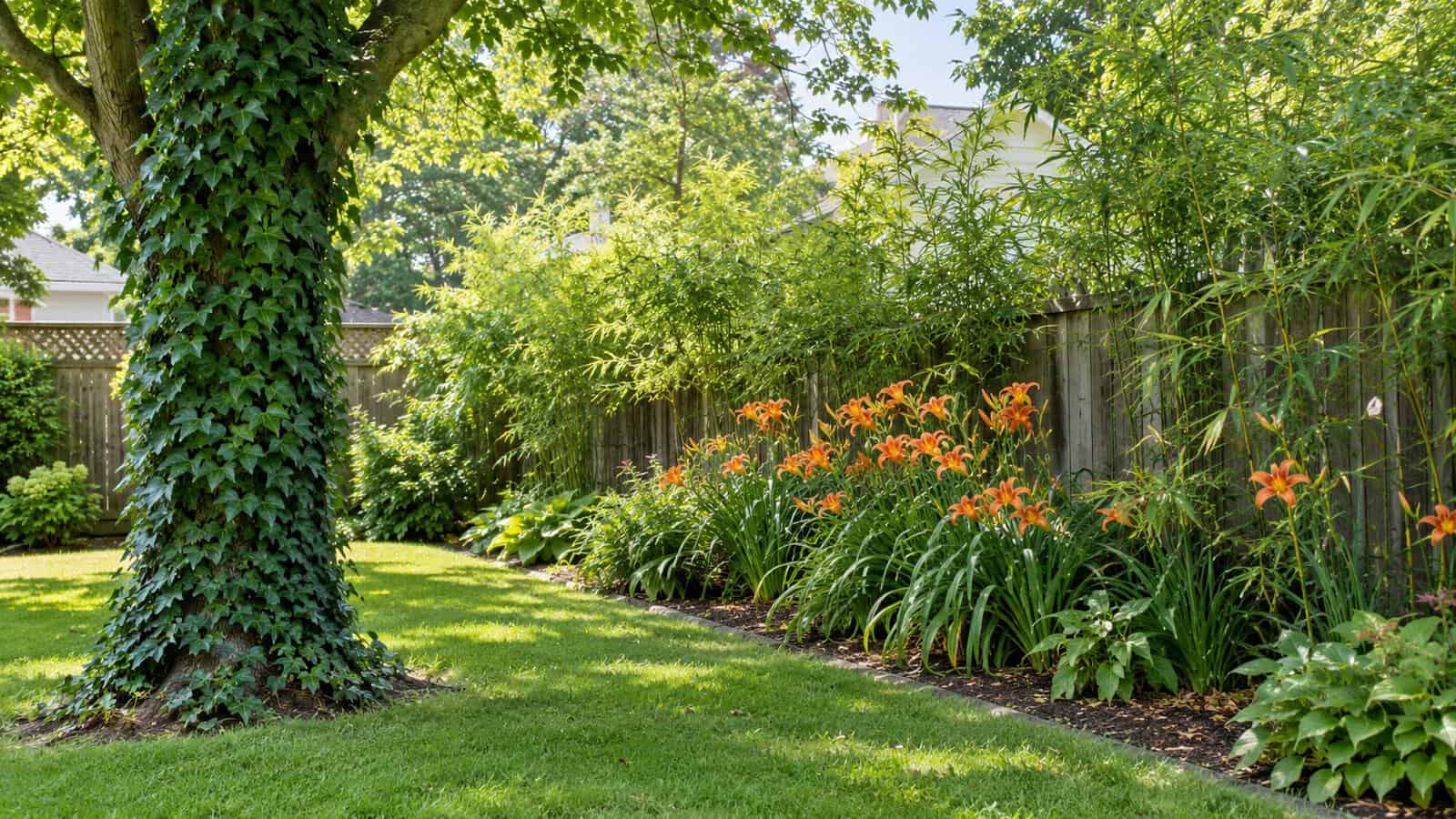
A plant tag describes what a plant does in a nursery pot. It says almost nothing about year five, when the shrub that filled a gap has seeded into the woods or the ground cover has crossed the property line.
Certain words on a label are worth reading twice. Vigorous, naturalizes, spreads freely, and fast-growing screen often describe the exact traits that become a problem later.
The 32 plants below turn up at garden centers, big-box stores, and plant swaps across the US. Some are invasive and banned in certain states, while others crack paving, harbor pests, or outgrow the space. Where a better option exists, it is listed.
1. Leyland Cypress
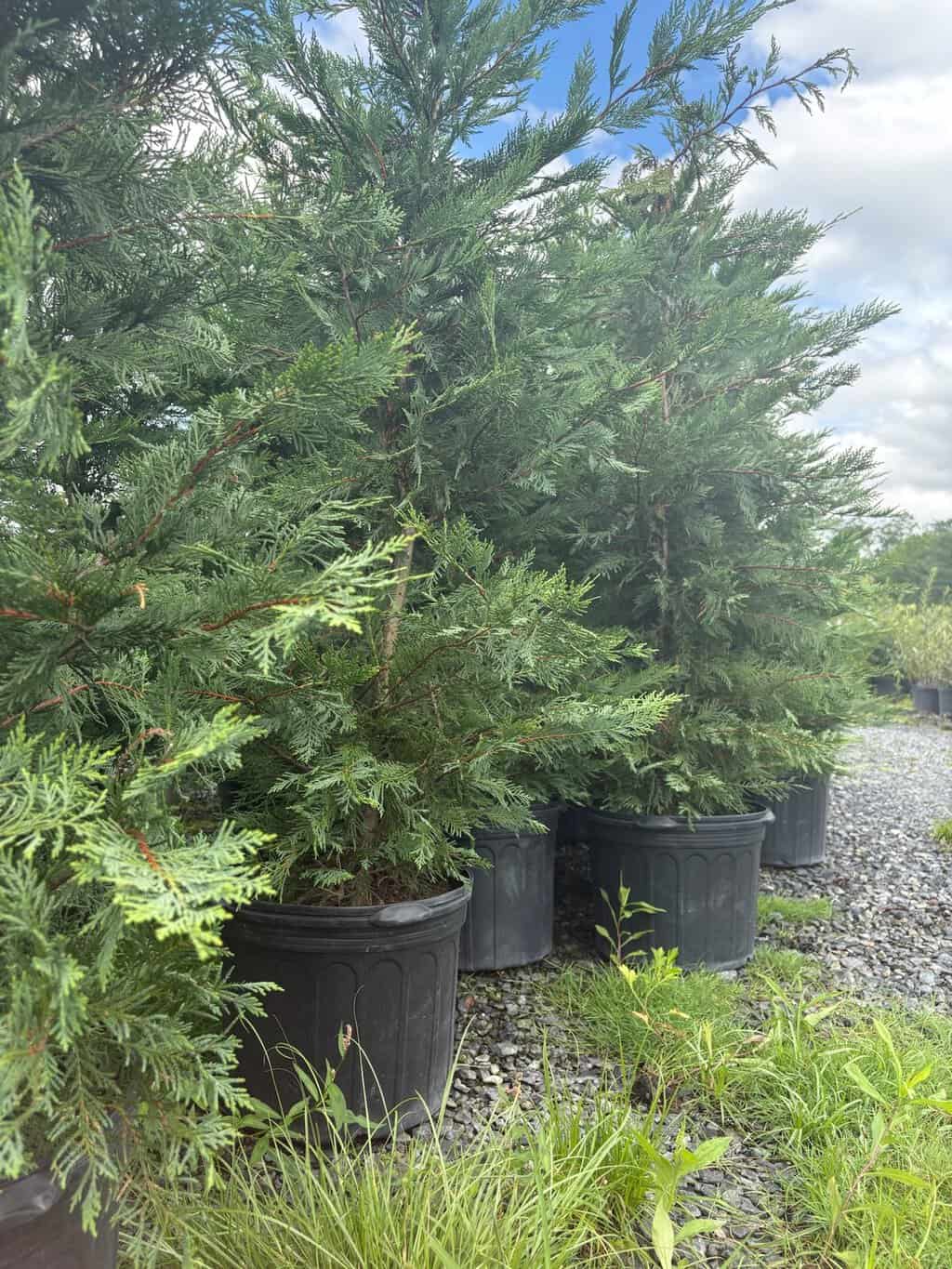
Nurseries sell Leyland cypress by the truckload for one job: a green screen that blocks the neighbors in two or three seasons. It delivers, putting on 3 feet a year in Zones 6 to 10.
The trouble starts when it doesn’t stop. A mature tree reaches 60 feet tall and 20 feet wide, far beyond a typical suburban side yard. Planted 5 feet apart in a tidy row, the trees crowd each other, shade out their own lower limbs, and turn brown inside.
Cankers and bagworms hit stressed trees hard, and the shallow roots let them tip over in soggy soil. For a lasting screen, American holly or eastern red cedar grow slower and last decades.
2. Callery Pear (Bradford Pear)
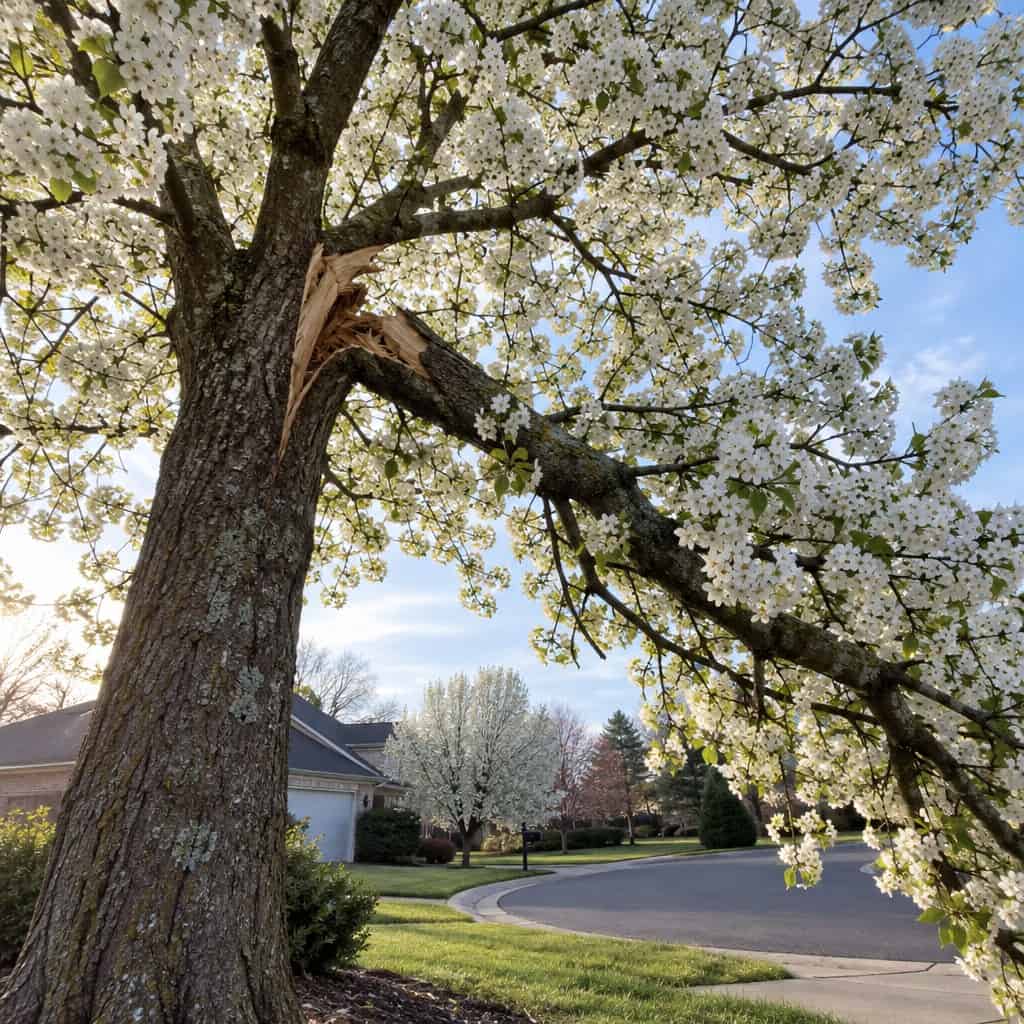
For about two weeks each March, a Bradford pear looks like the best tree on the block. For the other fifty weeks, it is a liability with a nice spring resume.
The branches grow from the trunk at tight, narrow angles, which makes them prone to splitting once the tree hits 20 years or so. A heavy snow or summer thunderstorm can drop half the crown on a car or roof.
Newer cultivars sold as replacements cross with the old ones, and birds carry the fruit into fields where thorny wild pears now form thickets. Ohio banned sales in 2023. Serviceberry offers white spring flowers, edible June berries, and sound wood.
3. Mimosa (Silk Tree)
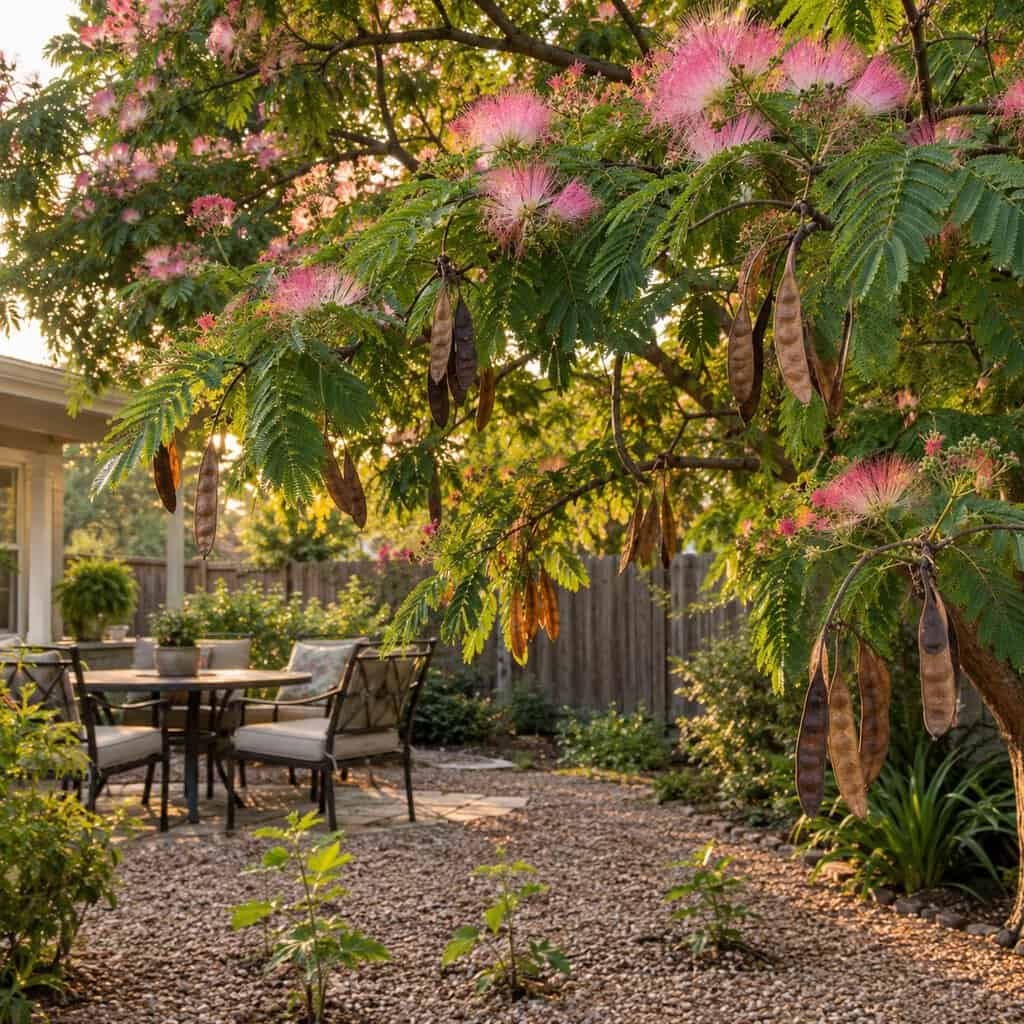
Pink, silky powderpuff flowers in June and July and a lacy, umbrella-shaped canopy make mimosa an easy sell in Zones 6 to 9. It grows fast, too, reaching 20 to 30 feet in a handful of years.
Each tree produces piles of flat brown pods, and the seeds can sit dormant in the soil for years before sprouting. Expect seedlings in beds, along fences, and in every unmown corner.
Mimosa is also short-lived. A fungal disease called mimosa wilt kills many trees within 10 to 20 years, leaving a dead trunk and a seed bank behind. Eastern redbud gives spring color on a similar scale without the cleanup.
4. Norway Maple

Builders planted Norway maple along thousands of suburban streets because it shrugs off road salt, compacted soil, and pollution. The red-leaf version, ‘Crimson King’, still turns up at garden centers every spring.
Live with one and the drawbacks show. Surface roots buckle sidewalks and make mowing a chore, and the shade beneath is too deep for turf or most perennials. Each fall the tree drops seeds that sprout by the hundreds in nearby woods.
Massachusetts and New Hampshire both prohibit its sale. Black gum and red maple deliver the same reliable shade with far better fall color.
5. Chinese Privet (Ligustrum sinense)
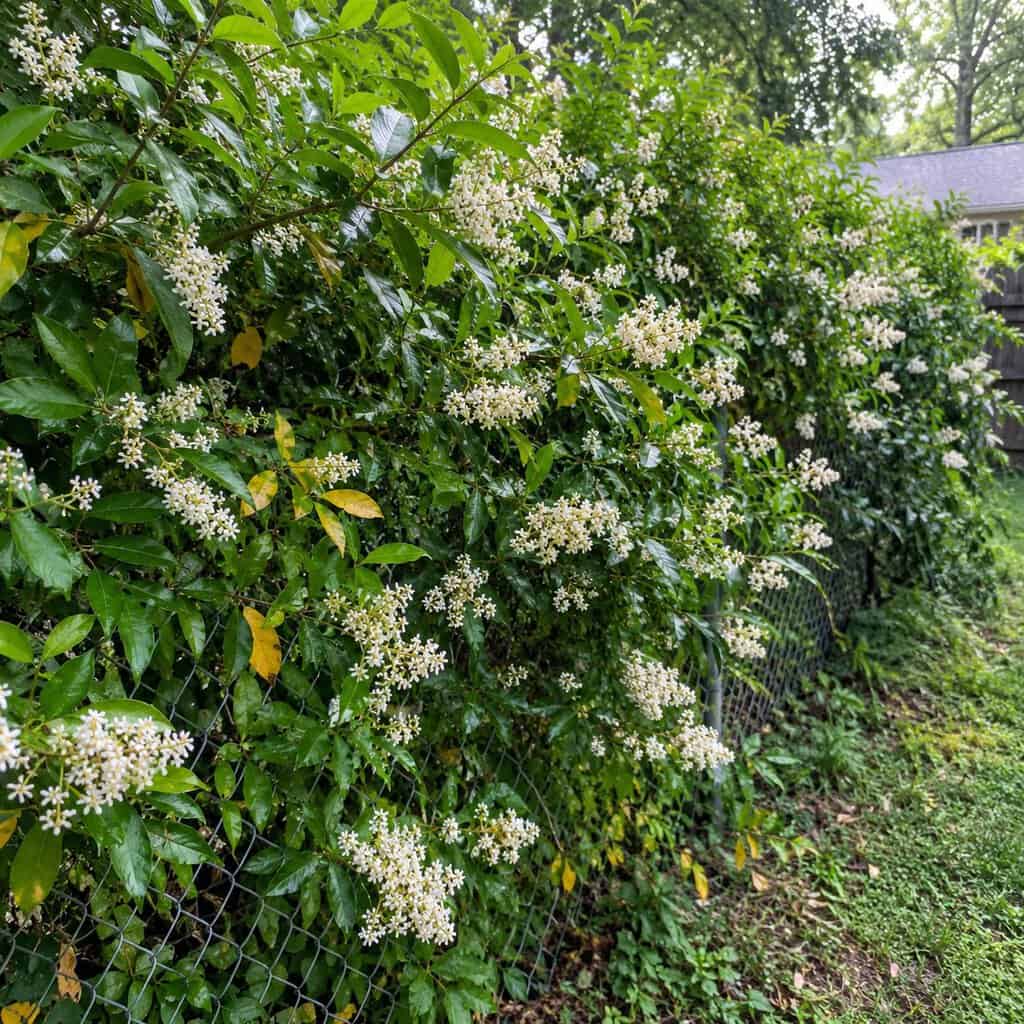
Privet became the default hedge in much of the South because it takes shearing, drought, and neglect without complaint. It is cheap, semi-evergreen, and fills a gap in a single season.
Left unclipped for even one year, it flowers heavily in May. The scent is sharp and musky, and the pollen bothers allergy sufferers. Those flowers become blue-black berries that birds carry into creek bottoms and woodlots, where privet now forms solid stands 15 feet tall.
Inkberry holly, hardy in Zones 5 to 9, shears into a similar dense, evergreen hedge and feeds birds without taking over a forest.
6. Japanese Spirea (Spiraea japonica)
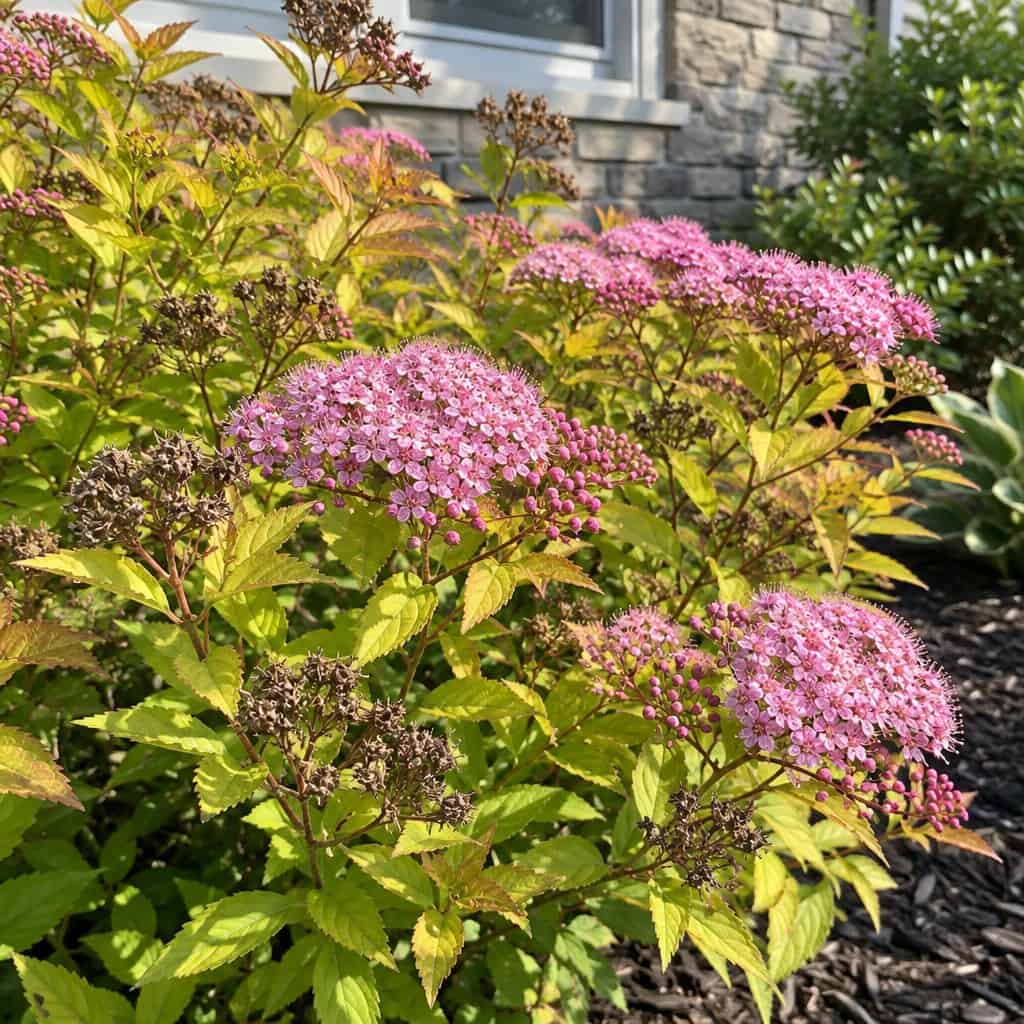
Mounds of pink flower clusters in June, gold or lime foliage, and a 3-foot frame that fits in front of any foundation. Japanese spirea is one of the most commonly sold small shrubs in the country.
Many popular cultivars still set seed, and that seed stays viable in soil for years. In the East, escaped plants now line trails, stream banks, and forest edges, and several states list the species as invasive.
Deadheading after bloom cuts down on seed. Better still, native meadowsweet and steeplebush offer similar white or pink summer flowers on shrubs that belong here.
7. Nandina (Heavenly Bamboo)
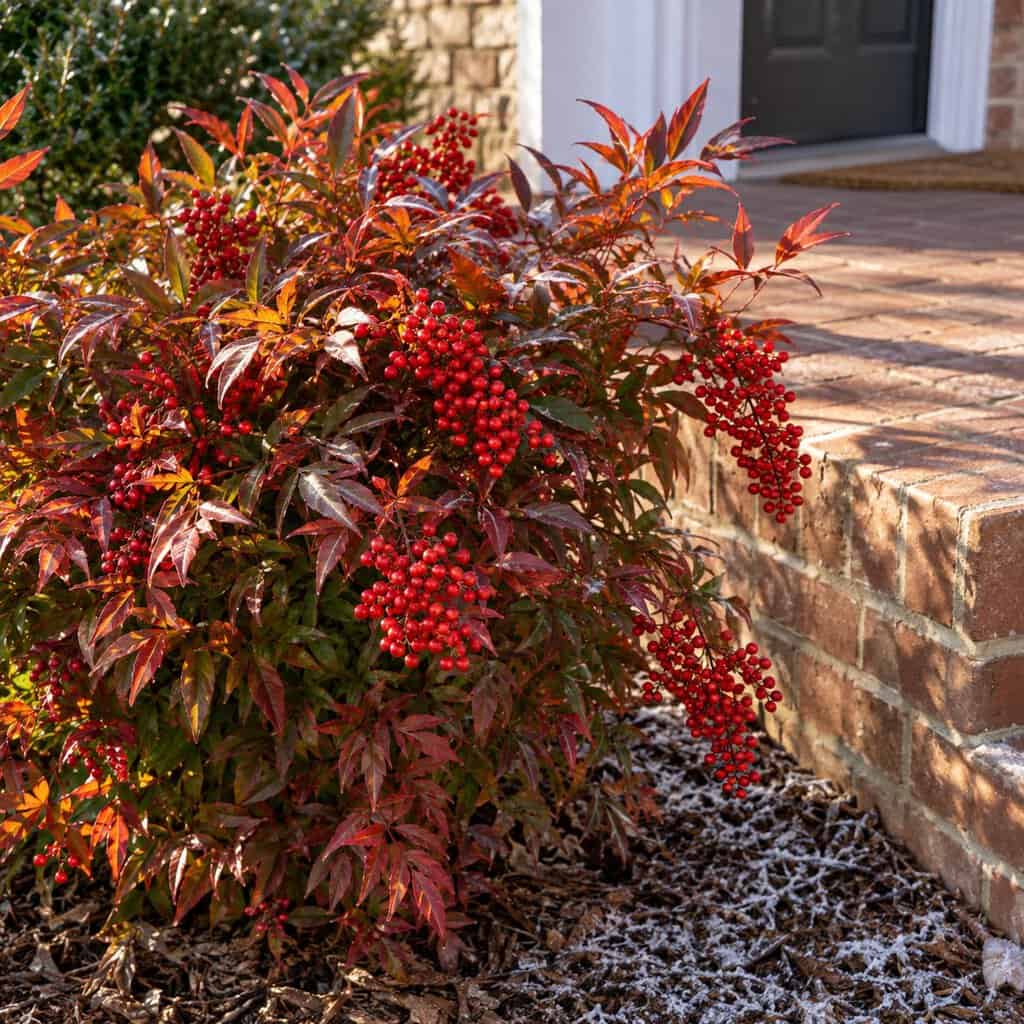
Nandina sells on toughness. It handles sun or shade, ignores drought, resists deer, and keeps its bronze-red leaves through winter in Zones 6 to 10.
The clusters of red berries are the selling point and the problem. Birds spread the seeds into Southern forests, and the berries contain compounds that release cyanide. Cedar waxwings that gorge on them in late winter have died in documented cases.
If the foliage is the goal, choose a dwarf, low-fruiting type such as ‘Firepower’, and clip off any berry clusters that do form. Native yaupon holly is a strong swap for winter berries that birds can eat safely.
8. Burning Bush (Euonymus alatus)
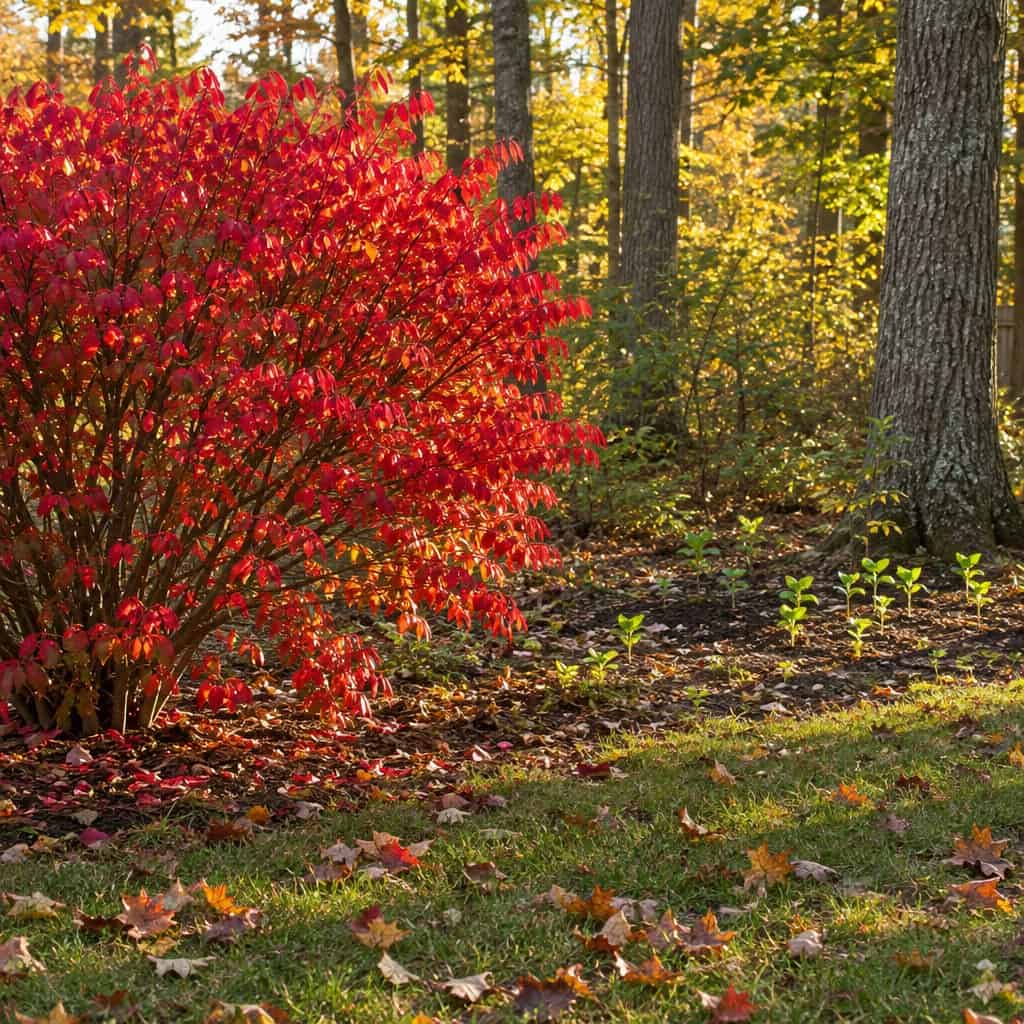
Look closely at the bare stems in winter and you’ll see corky ridges, which is where the other common name, winged euonymus, comes from. Most people never notice. They bought it for the fall color.
That scarlet foliage hides a problem. Every bird that eats the small orange-red fruit plants a new shrub somewhere else, and seedlings carpet woodland floors so thickly that native understory plants disappear. Even the ‘Compactus’ form, sold as tame, sets plenty of seed.
Massachusetts and New Hampshire no longer allow it in nurseries. Fothergilla, highbush blueberry, and Virginia sweetspire all turn red, orange, or burgundy in fall.
9. Japanese Barberry
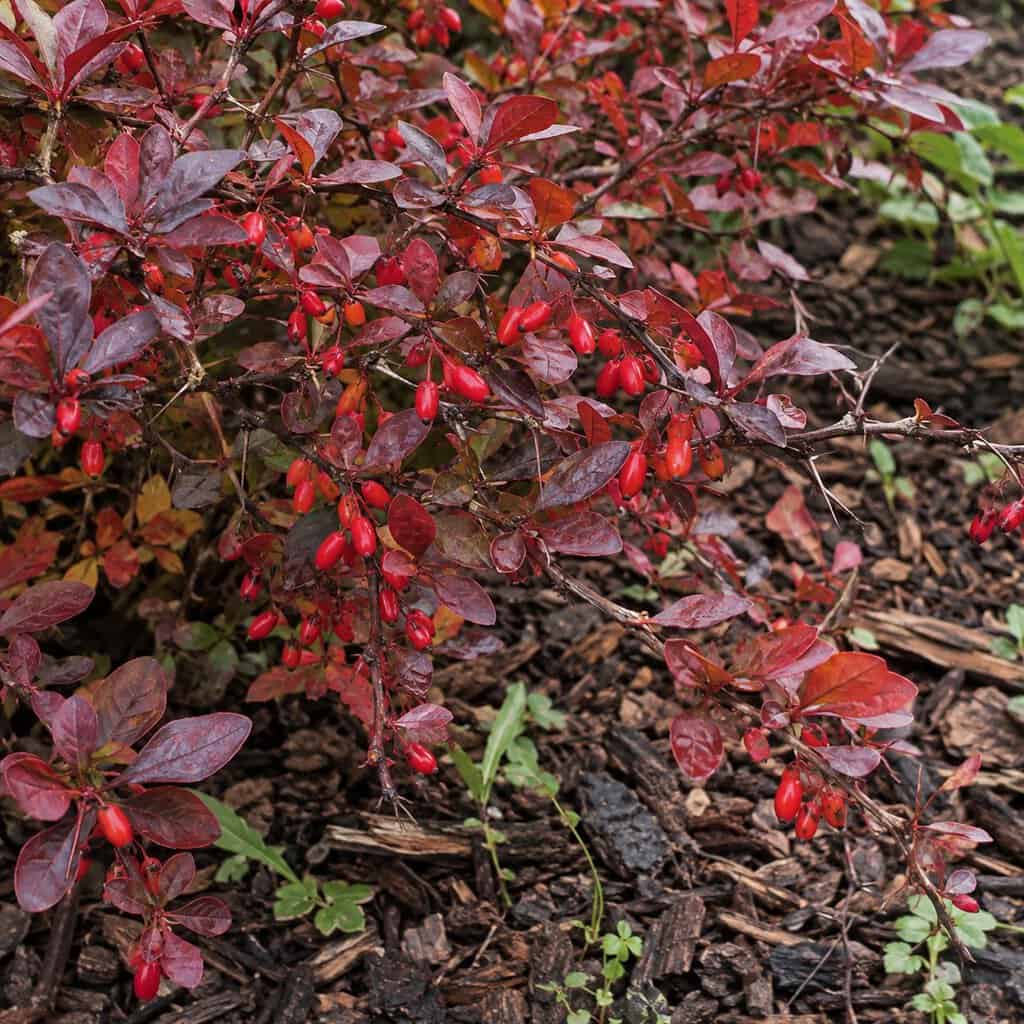
Deer pass it by, it tolerates poor soil, and its burgundy or gold leaves hold color all season. That combination kept ‘Crimson Pygmy’ and ‘Rose Glow’ in foundation beds for decades.
Birds eat the bright red berries and spread barberry through Northeastern and Midwestern forests. Researchers in Connecticut found that dense stands shelter far more Lyme-carrying blacklegged ticks than surrounding woods, because mice thrive in the cool, humid cover.
Removing a mature barberry takes heavy gloves and a mattock. Dwarf bush honeysuckle and low ninebark varieties fill the same spot without the thorns.
10. Butterfly Bush (Buddleja davidii)
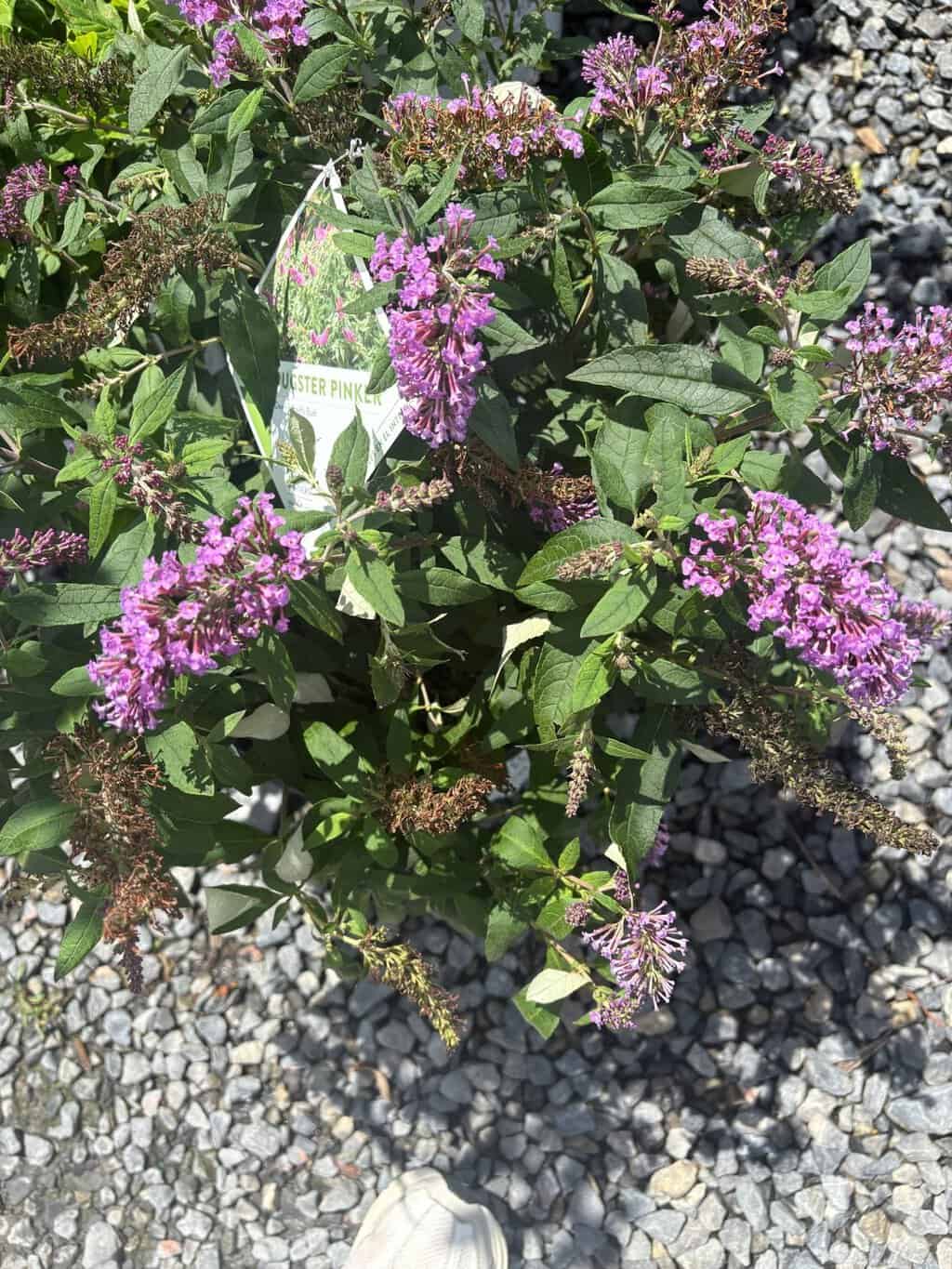
Few shrubs pull in swallowtails and fritillaries like a butterfly bush in August. It blooms from midsummer to frost, grows 6 to 10 feet tall, and handles heat and poor soil.
In the Pacific Northwest and parts of the Mid-Atlantic, it also lines riverbanks and rail corridors. One flower spike sheds tens of thousands of tiny, wind-blown seeds. Oregon and Washington list the species as a noxious weed.
Low-seed cultivars, including the Lo & Behold and Flutterby series, offer the same nectar with far less spread. Native summersweet and New Jersey tea feed butterflies and support native insects too.
11. Multiflora Rose
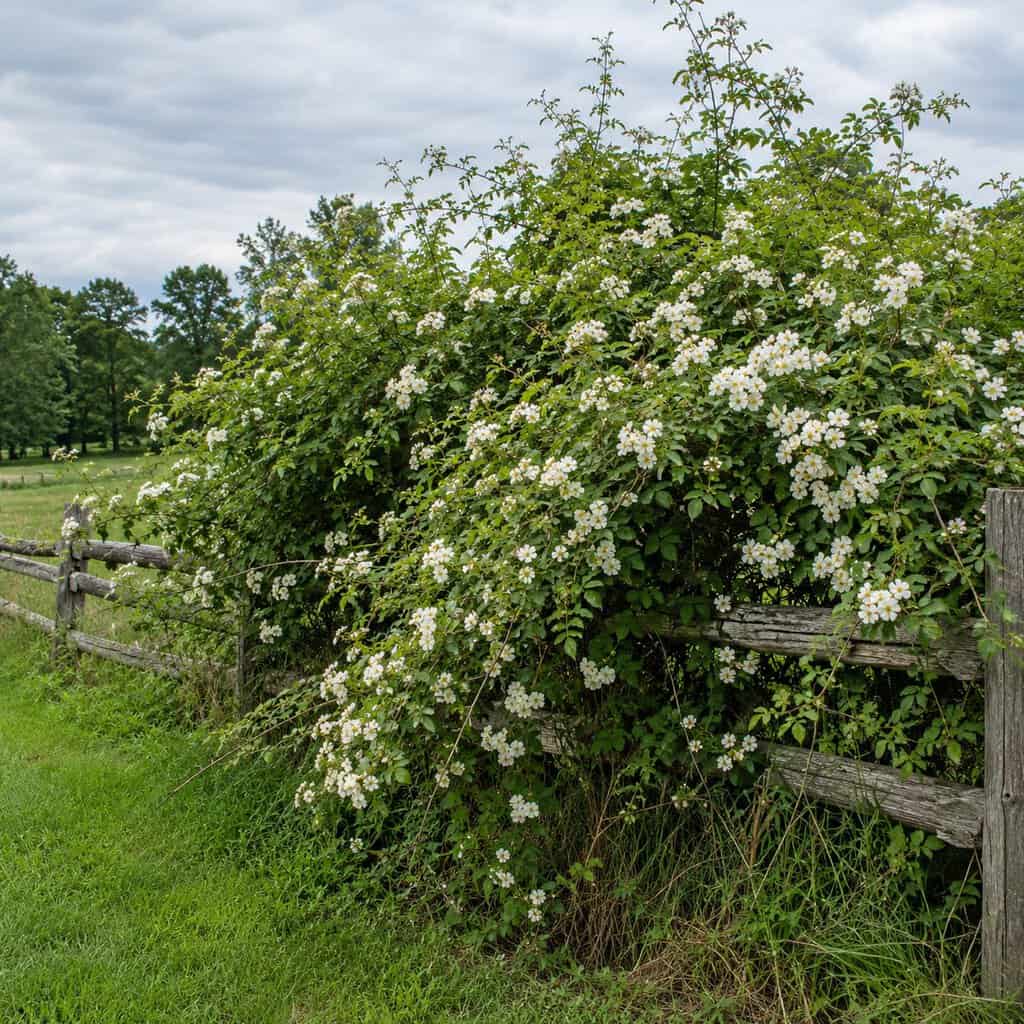
Multiflora rose arrived in the 1860s as rootstock for grafted garden roses. By the 1930s, federal conservation programs were handing out seedlings for erosion control and living fences.
The plant did exactly what it was asked to do, then kept going. A large shrub can produce hundreds of thousands of seeds a year, and those seeds stay viable in the soil for up to 20 years. Birds scatter the red hips along every fencerow they visit.
It still sneaks into yards through wildlife seed mixes and old grafted roses whose tops have died back to the rootstock. Clusters of small white flowers on a rose that was supposed to bloom red are the giveaway.
12. Running Bamboo (Phyllostachys)
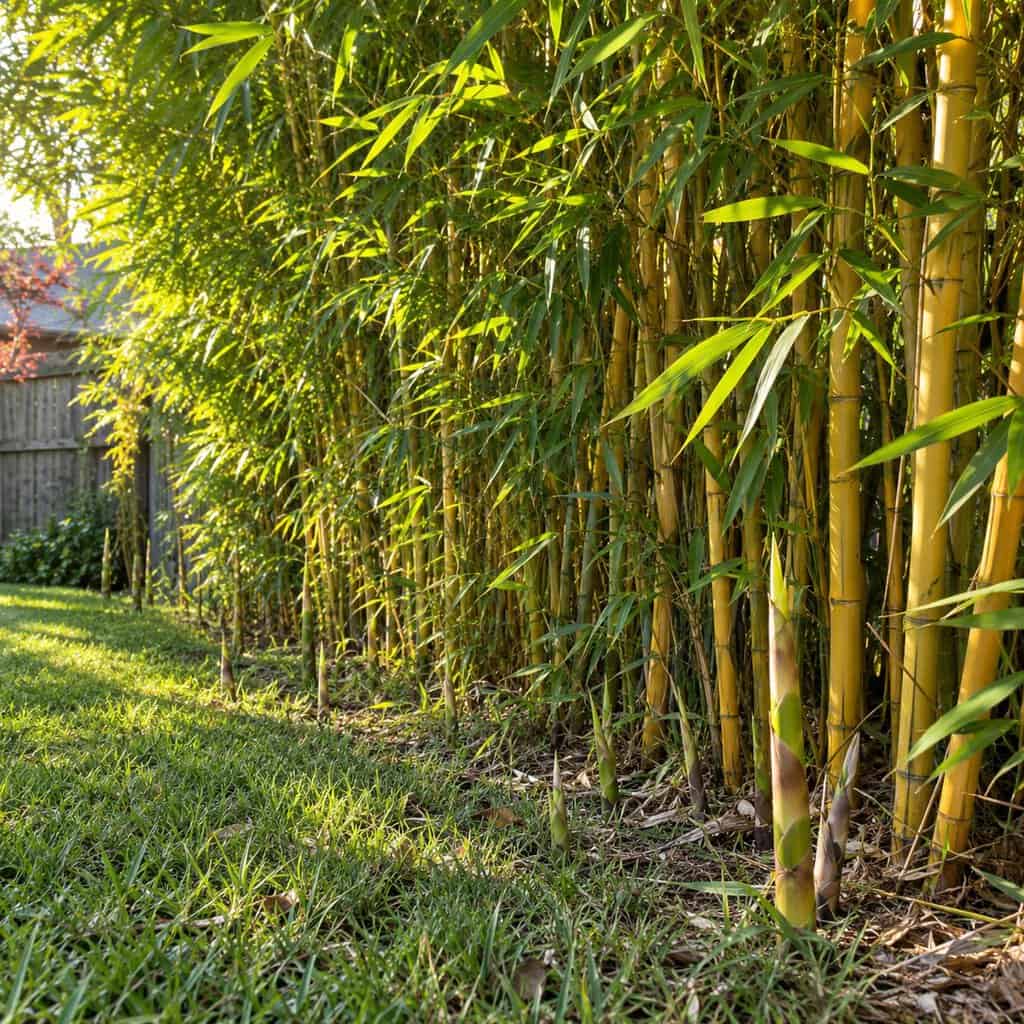
Golden bamboo and its running relatives sell as a fast privacy screen, and they grow tall enough to hide a two-story house. What the tag rarely spells out is the difference between running and clumping bamboo.
Running types send rhizomes sideways through the soil, sometimes 15 feet or more in a season. New canes punch up through lawns, under fences, and beside foundations. Mowing the shoots slows them but does not stop the rhizomes underneath.
If running bamboo is already in the ground, a 60-mil plastic barrier sunk 30 inches deep can hold it. For new plantings, clumping Fargesia, hardy in Zones 5 to 9, stays in a tight circle.
13. Japanese Knotweed
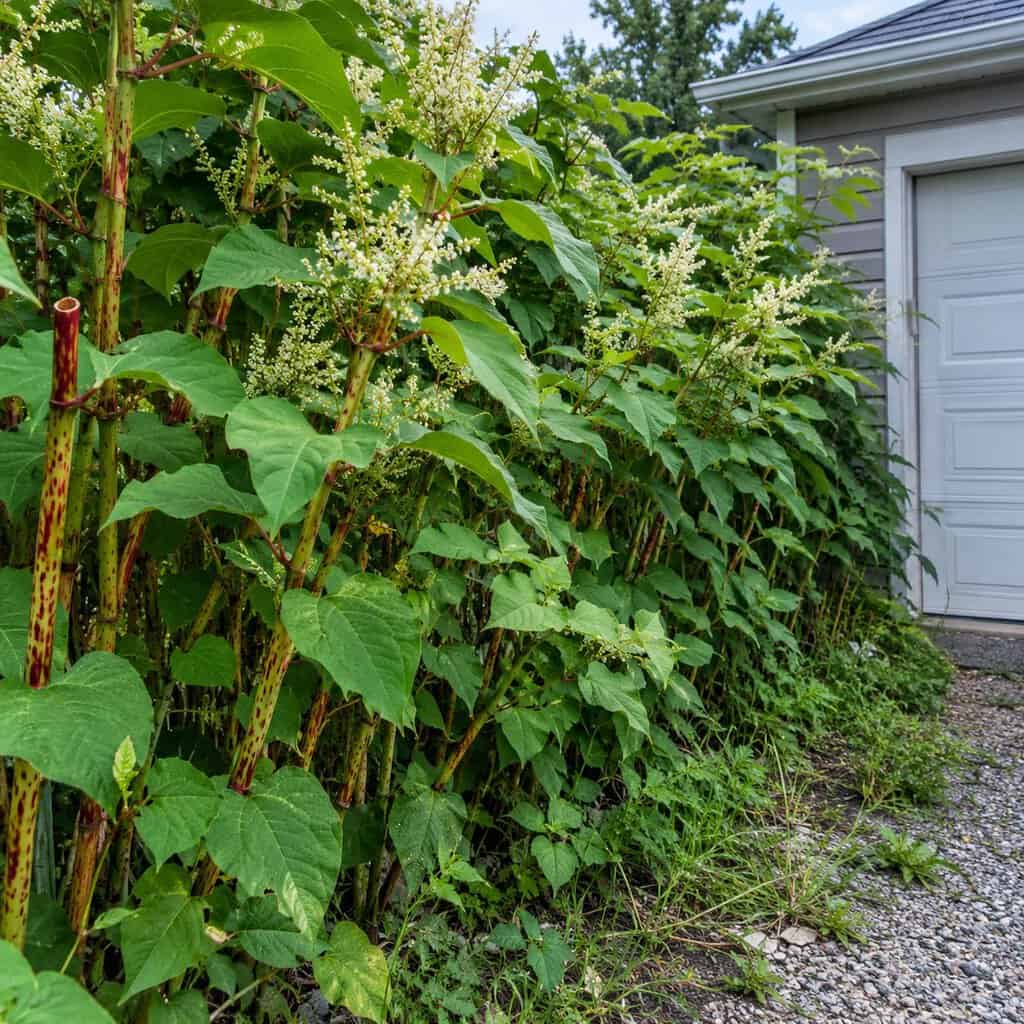
Some nurseries and plant swaps still pass it around as Mexican bamboo or under a variegated cultivar name. The hollow, red-speckled canes reach 10 feet by midsummer, and frothy white flowers cover them in late August.
Underground, the rhizomes go several feet deep and spread 20 feet or more sideways. A fragment the size of a thumbnail can start a new colony, so tilling, mowing, or dumping clippings in the woods spreads it further.
Removal usually takes several seasons of repeated cutting and targeted herbicide in fall, when the plant pulls energy down to its roots. Many states ban its sale outright. Never accept a division from a friend.
14. Sweet Autumn Clematis (Clematis terniflora)
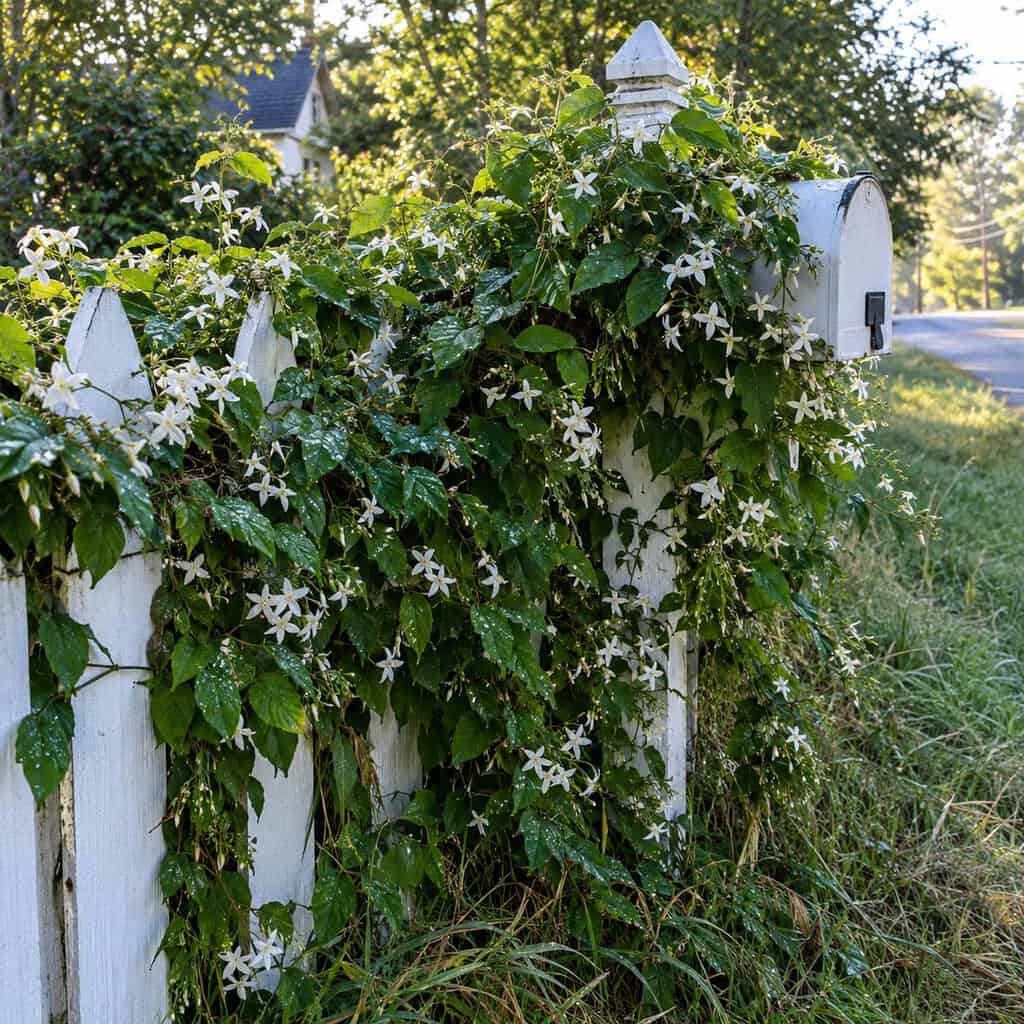
In late August and September, this vine smothers fences and mailbox posts with clouds of small, vanilla-scented white flowers. It blooms when little else does, and it grows 20 feet in a season.
Each flower turns into a silvery seed head, and the seeds sprout everywhere: lawn edges, shrub beds, nearby trees. In Eastern woodlands, escaped vines climb into the understory and blanket native shrubs.
Native virgin’s bower (Clematis virginiana) looks nearly identical in bloom and supports local insects. Check the leaves at the nursery. Sweet autumn clematis has smooth leaflet edges, while virgin’s bower has toothed ones.
15. Chinese and Japanese Wisteria
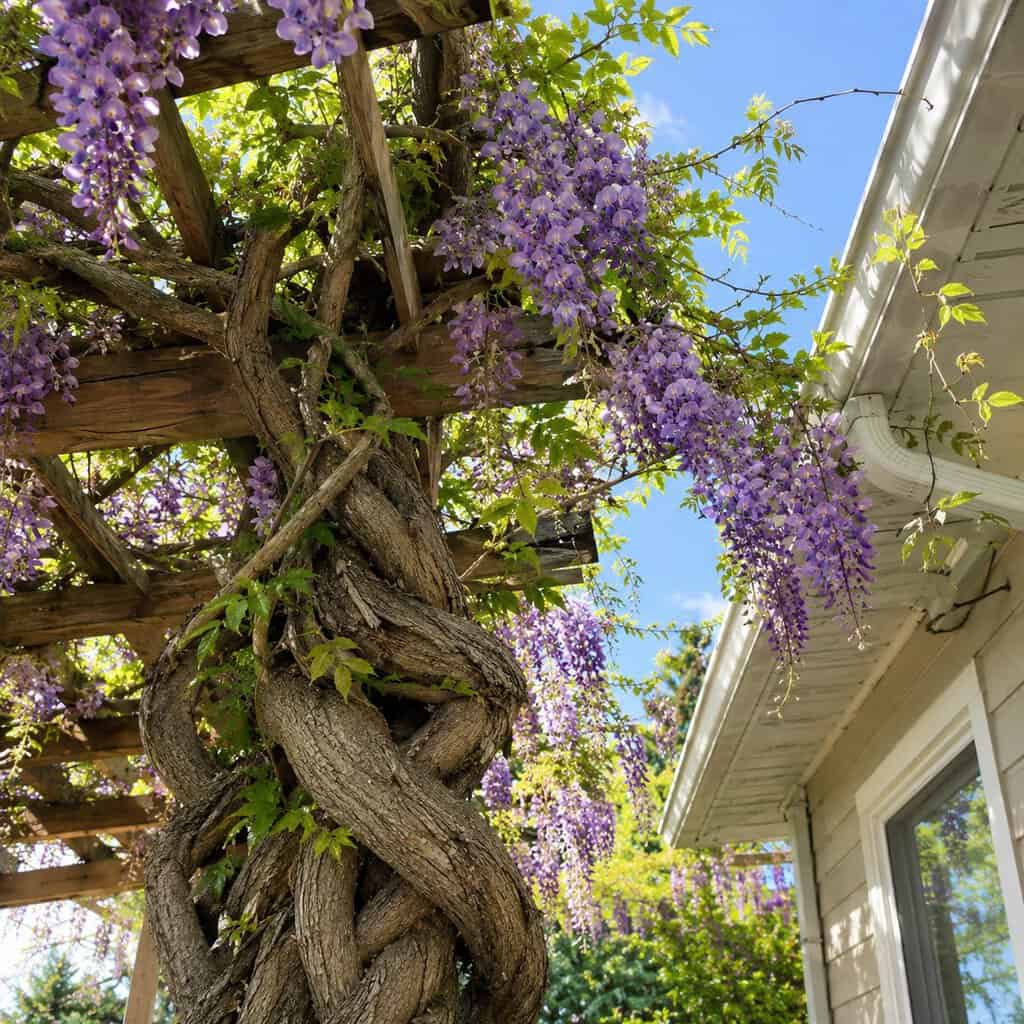
The draped purple clusters that open in April and May sell wisteria every spring. What comes home is a woody vine that keeps adding girth for decades and needs pruning two or three times a year to stay in bounds.
Seed-grown plants can take 10 years or more to flower. The vine, meanwhile, sends runners along the ground that root and climb anything nearby, including gutters, shutters, and the porch railing.
American wisteria (Wisteria frutescens), especially ‘Amethyst Falls’, often blooms within a year or two of planting and stays around 15 to 30 feet. It still needs a sturdy support, but it won’t swallow the house.
16. Porcelain Berry (Ampelopsis glandulosa)
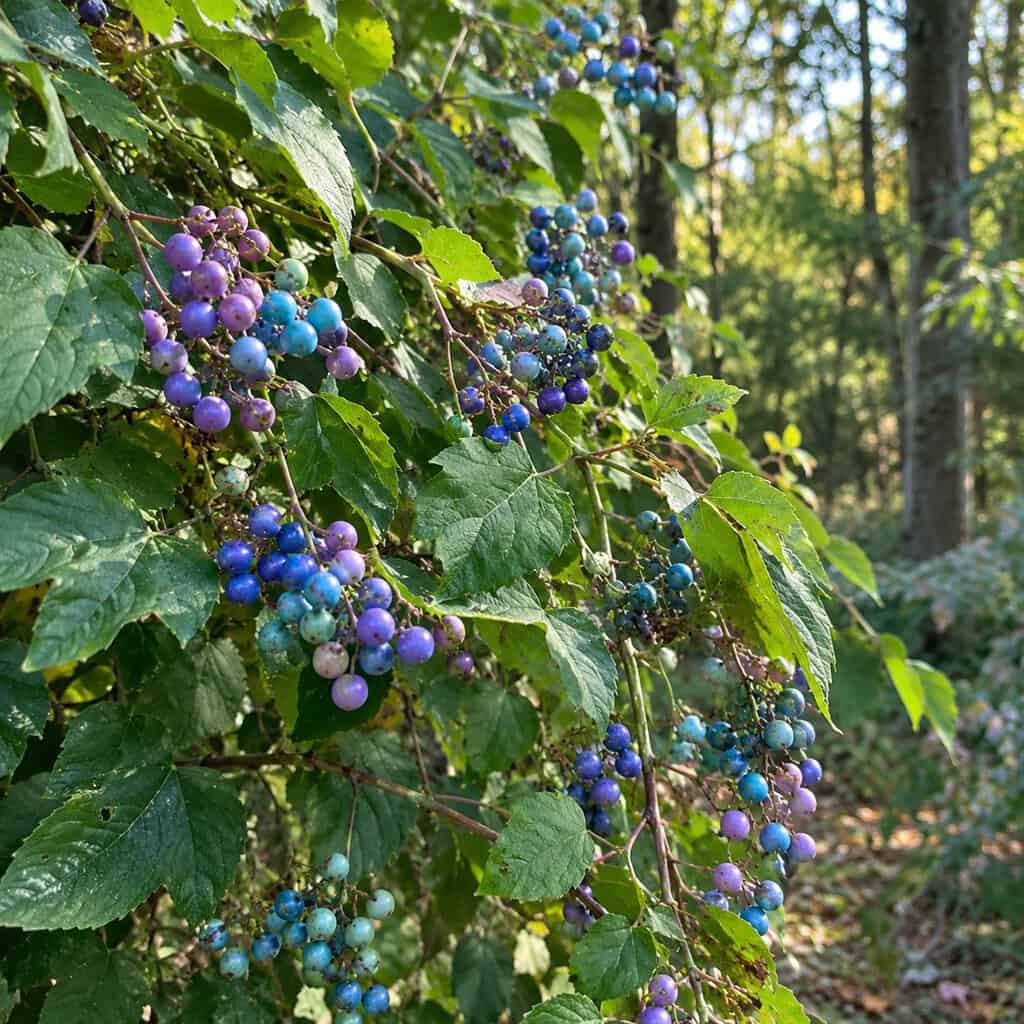
The berries are the hook. In September they ripen in mixed shades of lilac, turquoise, and cobalt on the same cluster, and the variegated form ‘Elegans’ adds pink-and-white leaves for good measure.
A close cousin of grapes, it climbs by tendrils and can add 15 feet in a season. Birds eat the fruit and drop seed along forest edges, where the vine drapes over young trees and drags them down. It is listed as invasive from New England to Virginia.
Massachusetts bans its sale. Native American beautyberry delivers vivid purple fruit in fall on a shrub that stays put.
17. Trumpet Vine
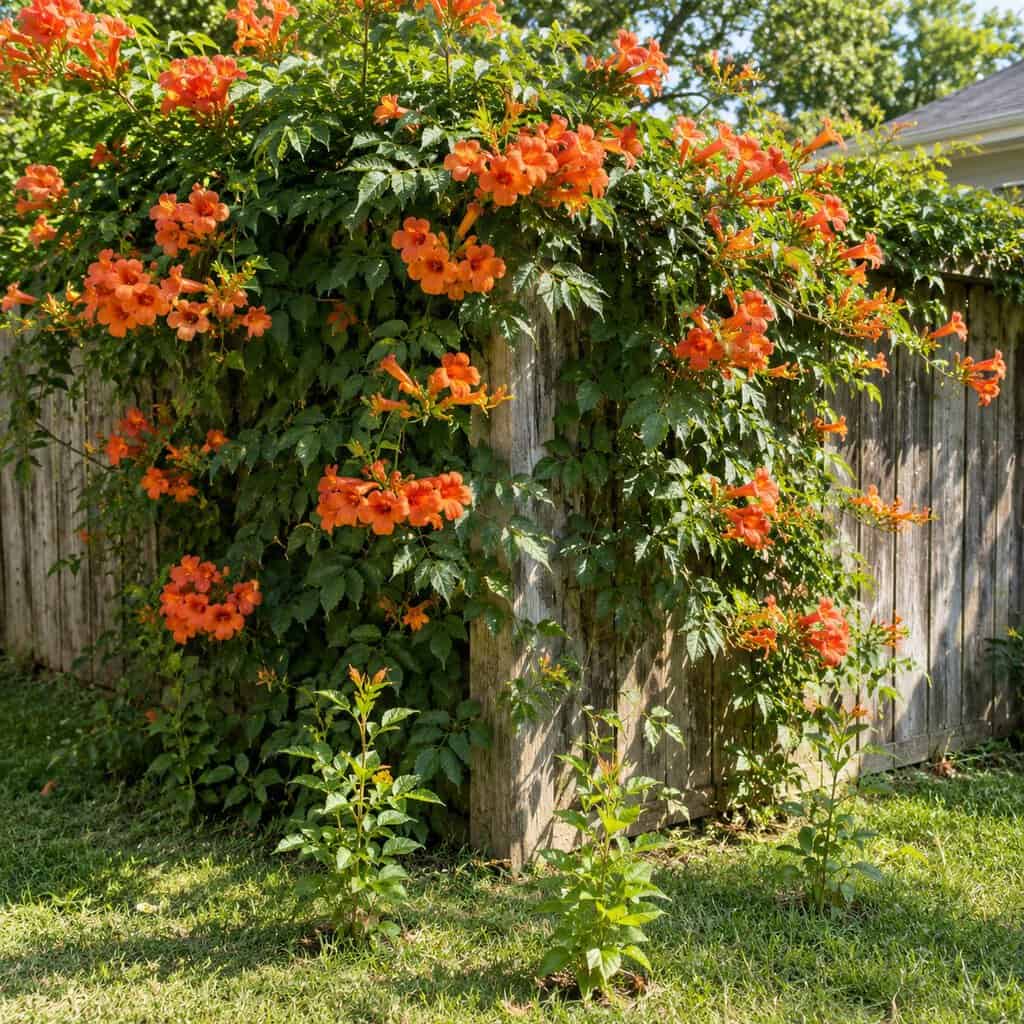
Few plants attract hummingbirds like the orange-red trumpets that open from July into September. Trumpet vine is native across much of the eastern US, which makes it seem like the responsible choice.
The vine climbs with aerial rootlets that grip siding and brick, and it reaches 30 to 40 feet. Roots travel well beyond the planting spot and send up shoots in lawns and flower beds. Its old nickname, cow itch vine, comes from the rash some people get from handling it.
Coral honeysuckle draws the same hummingbirds with red tubular flowers and grows to a manageable 10 to 20 feet.
18. English Ivy
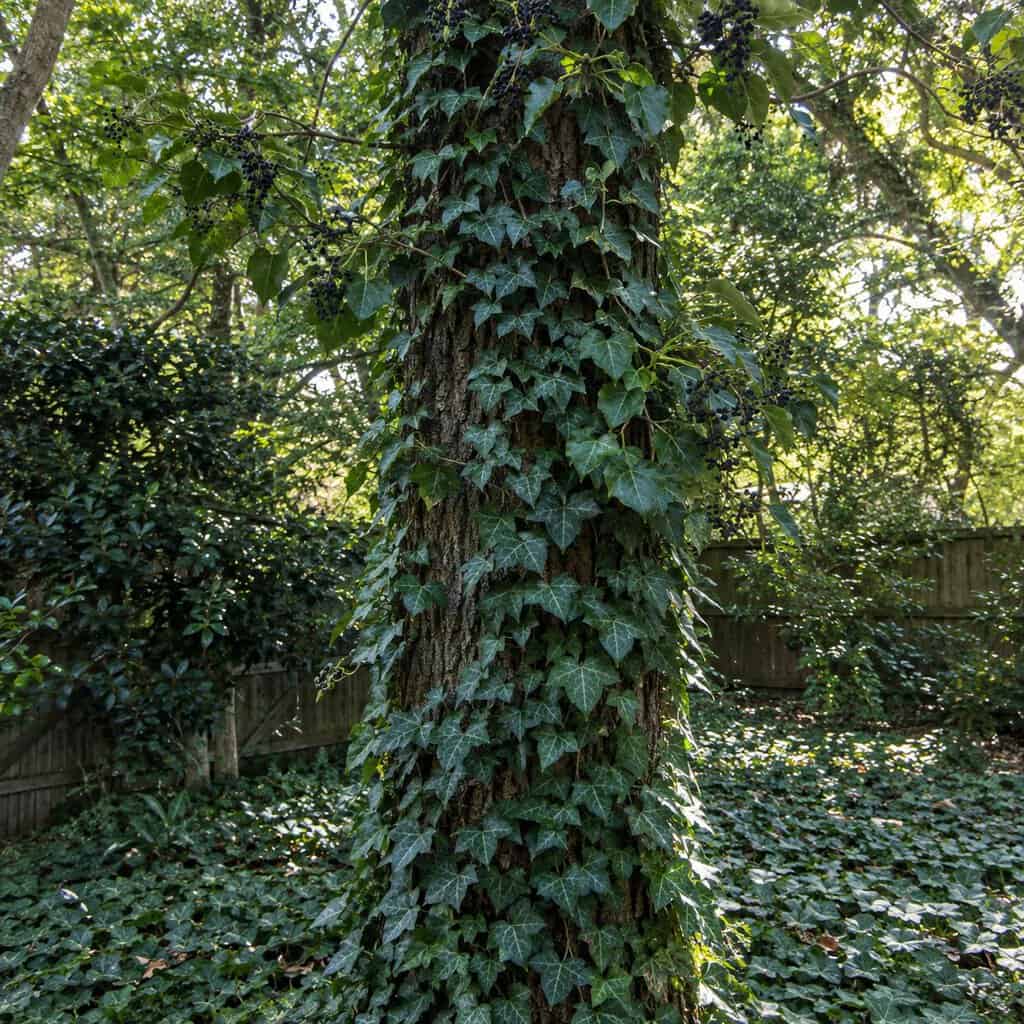
A flat of English ivy costs a few dollars and promises a green carpet in deep shade where grass gives up. On the ground, in its young form, it stays fairly tame.
Once it climbs a tree or wall and reaches sunlight, it shifts into an adult form with rounded leaves, flowers, and black berries. Birds spread those berries into parks and forests. The thick mat at ground level also gives rats a place to nest.
Oregon has prohibited its sale since 2010. For a shady wall, climbing hydrangea clings without the same seeding, and Allegheny spurge covers shaded ground slowly and politely.
19. Wintercreeper (Euonymus fortunei)
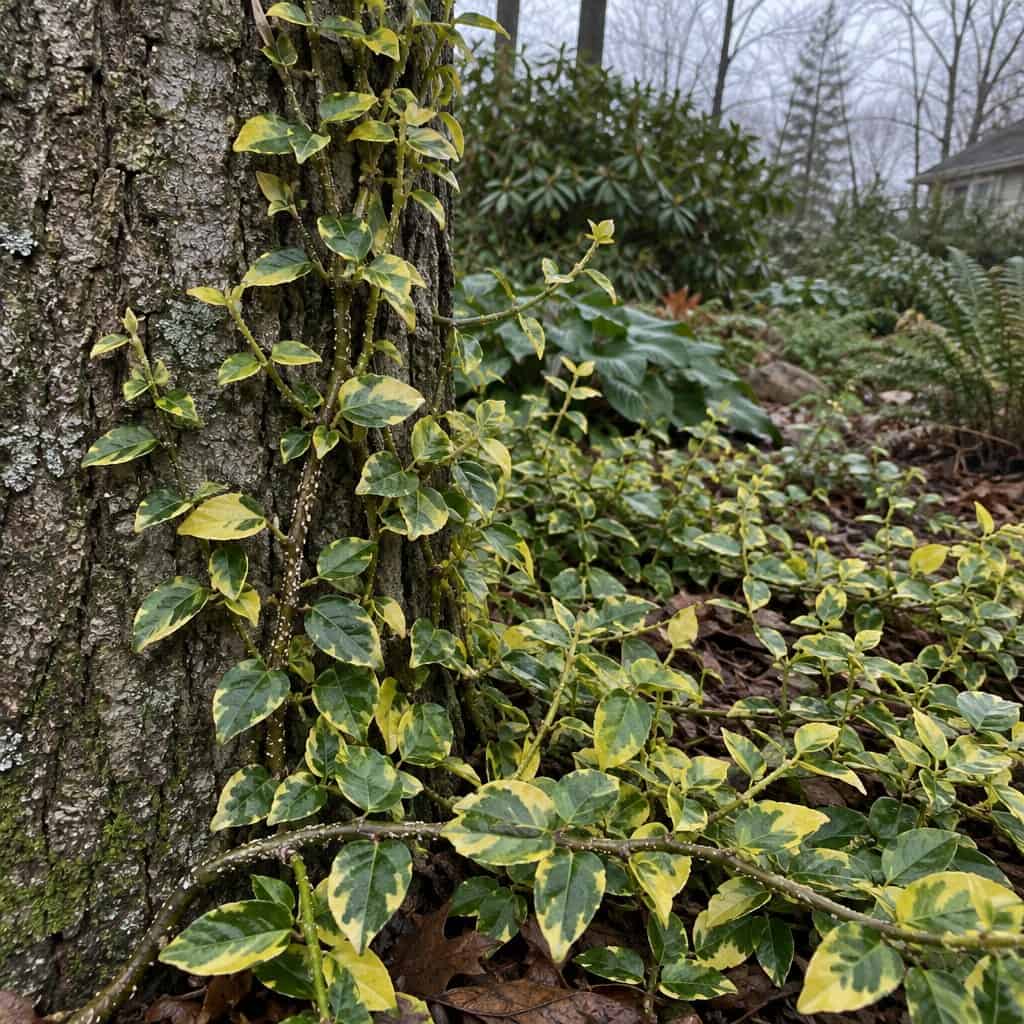
Garden centers sell it two ways: as a sprawling evergreen ground cover and as small variegated shrubs like ‘Emerald Gaiety’ and ‘Emerald ‘n Gold’. Both forms share the same habit of climbing anything vertical.
Given a tree trunk or a fence, the stems attach with rootlets and can climb 40 feet. Climbing plants produce orange-coated seeds that birds carry into woodlands, where wintercreeper smothers wildflowers on the forest floor.
It is also a magnet for euonymus scale, a sap-sucking insect that coats stems in white specks and yellows the leaves. A plant that needs constant spraying and constant cutting is rarely worth the trouble.
20. Periwinkle (Vinca)
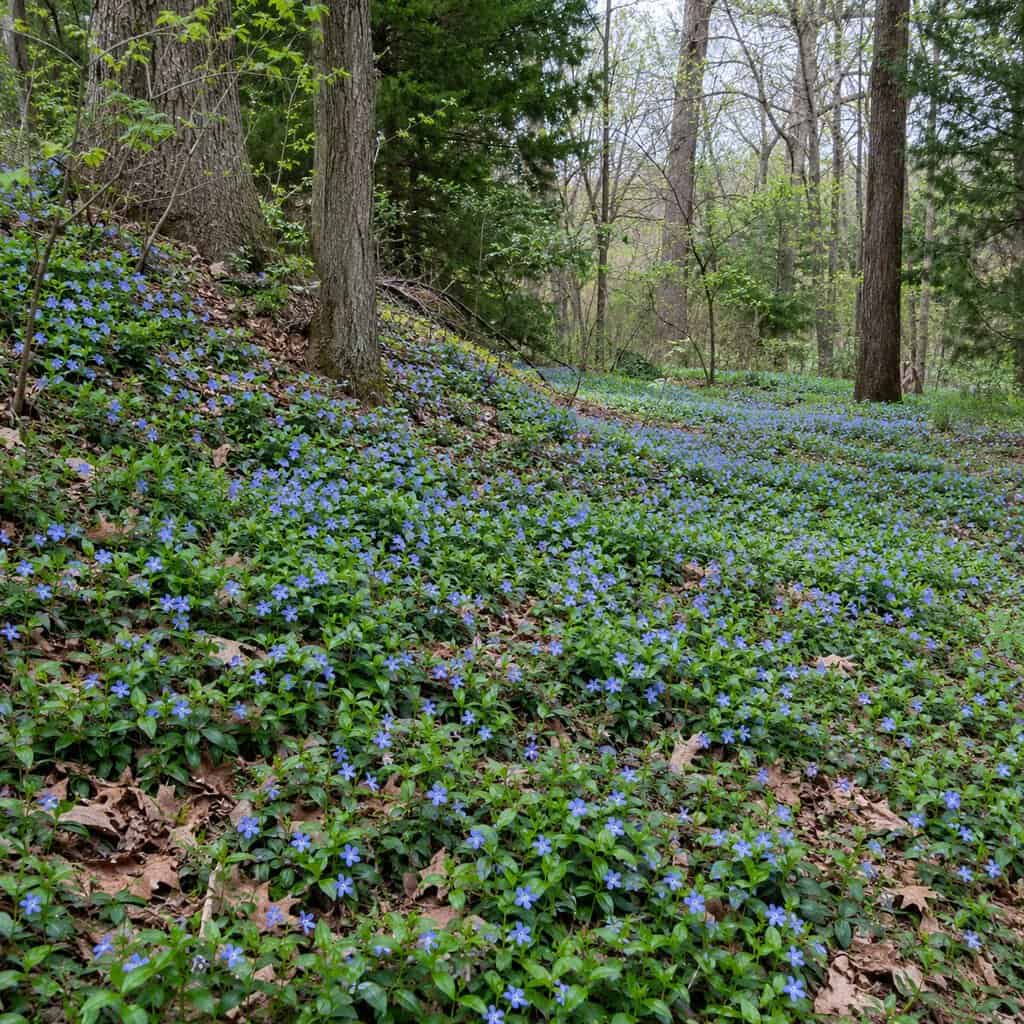
There are two common types. Vinca minor, hardy in Zones 4 to 8, has small glossy leaves and periwinkle-blue flowers in April. Vinca major is larger, coarser, and more aggressive, and it takes over in Zones 7 to 9.
Both root along trailing stems and form mats so dense that spring wildflowers like trillium and bloodroot can’t push through. Old homesites in the woods are often easy to spot by the vinca still spreading decades after the house is gone.
Pennsylvania sedge makes a soft, low lawn alternative for dry shade, and it fits comfortably under oaks and maples.
21. Bugleweed (Ajuga reptans)
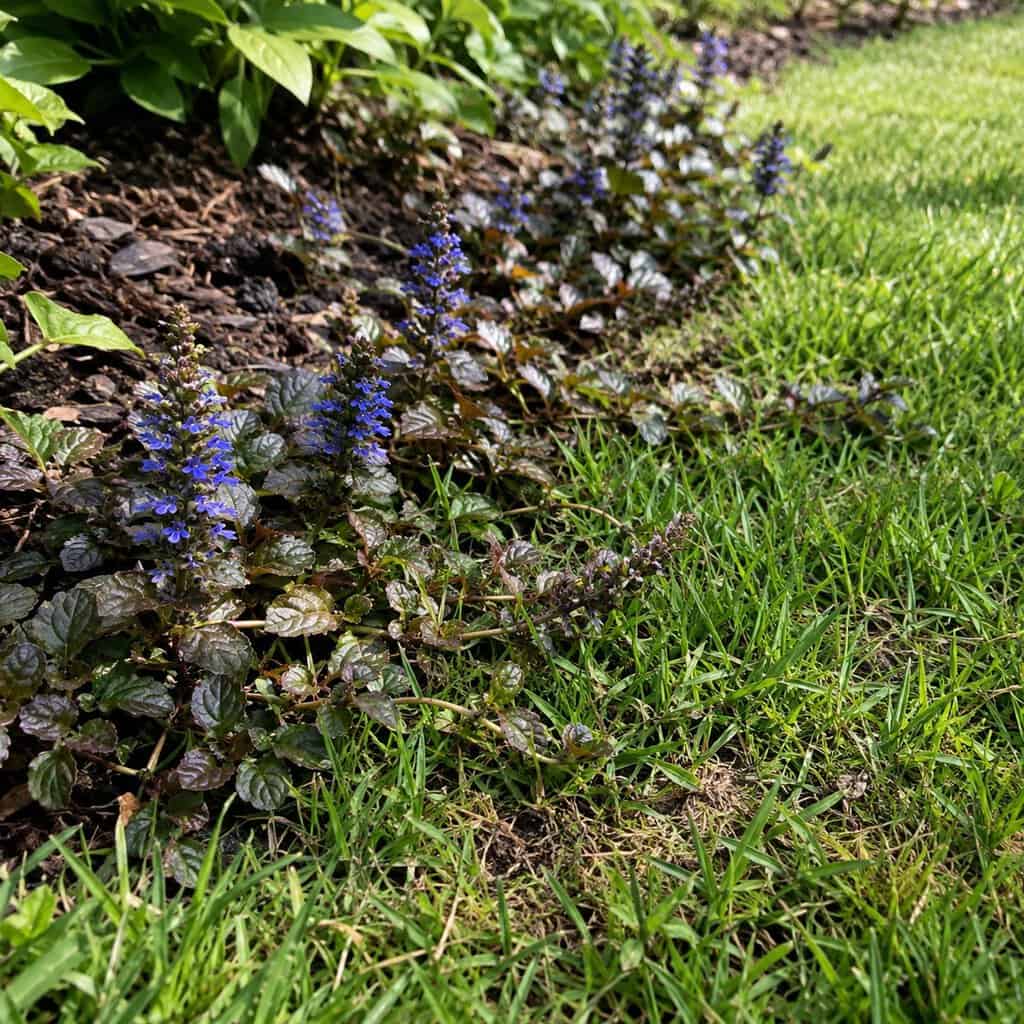
Bugleweed is a staple of the perennial ground cover bench. Bronze, purple, or tricolor leaves stay low, and spikes of blue flowers open in April and May. It grows in Zones 3 to 9 and handles part shade well.
It spreads by above-ground runners that root as they go. Planted near a lawn, it moves into the turf within a couple of seasons, and pulling it out of grass is slow, fussy work. In humid summers it can also rot in patches, leaving bare gaps that weeds fill.
Keep it confined by hardscape, such as a bed between a walk and a wall. Anywhere it touches lawn, expect a border dispute every year.
22. Creeping Jenny
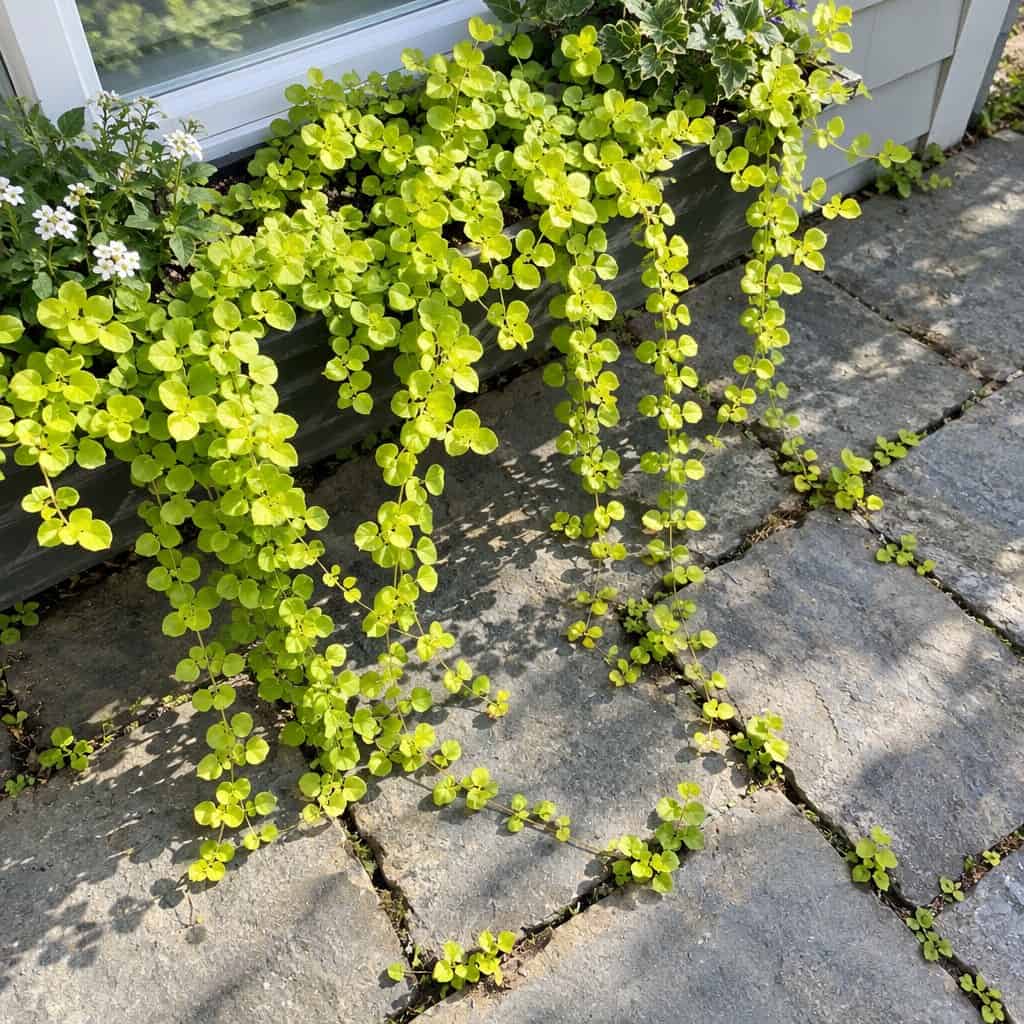
Chartreuse creeping Jenny, usually sold as ‘Aurea’, is a favorite spiller for containers and window boxes. It handles Zones 3 to 9, sun to shade, and almost any soil that stays damp.
That love of moisture is what makes it risky. In the ground, especially near a pond, swale, or stream, the stems root at every node and form a carpet that spreads into wetlands. It is considered invasive in a number of Northeastern and Midwestern states.
Use it only in pots set on pavement, and toss trimmings in the trash rather than the compost pile, since small pieces root easily.
23. Bishop’s Weed (Goutweed)
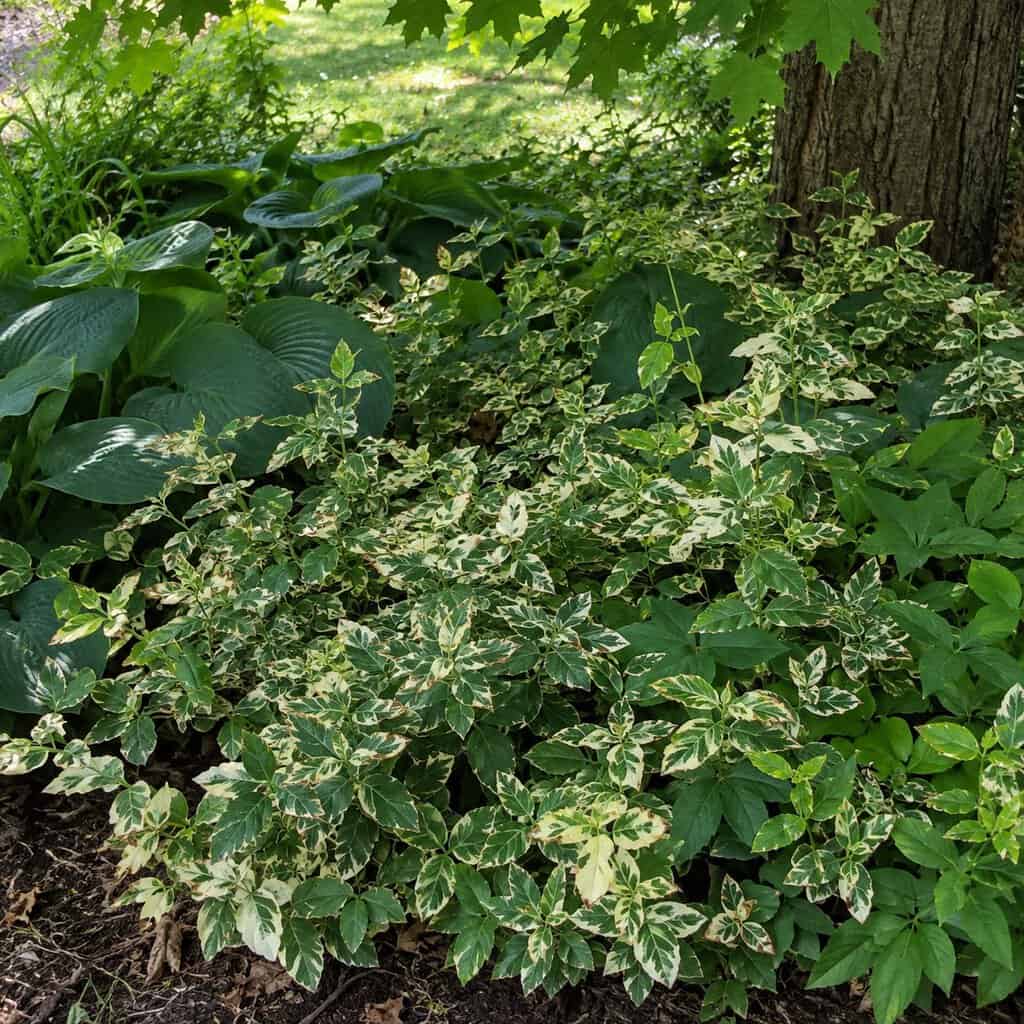
The variegated form, with leaves edged in creamy white, gets sold as a bright filler for dark corners under trees. It grows in almost any soil in Zones 3 to 9.
The white edging is often temporary. Plain green shoots appear over time and outgrow the variegated ones. Meanwhile, the white, branching rhizomes spread steadily through beds, wrapping around the roots of hostas and shrubs so they can’t be separated.
In hot, dry summers, the leaves scorch and look ragged by July. The most reliable fix is to cut it to the ground repeatedly and cover the area with black plastic for a full growing season.
24. Chameleon Plant (Houttuynia cordata)
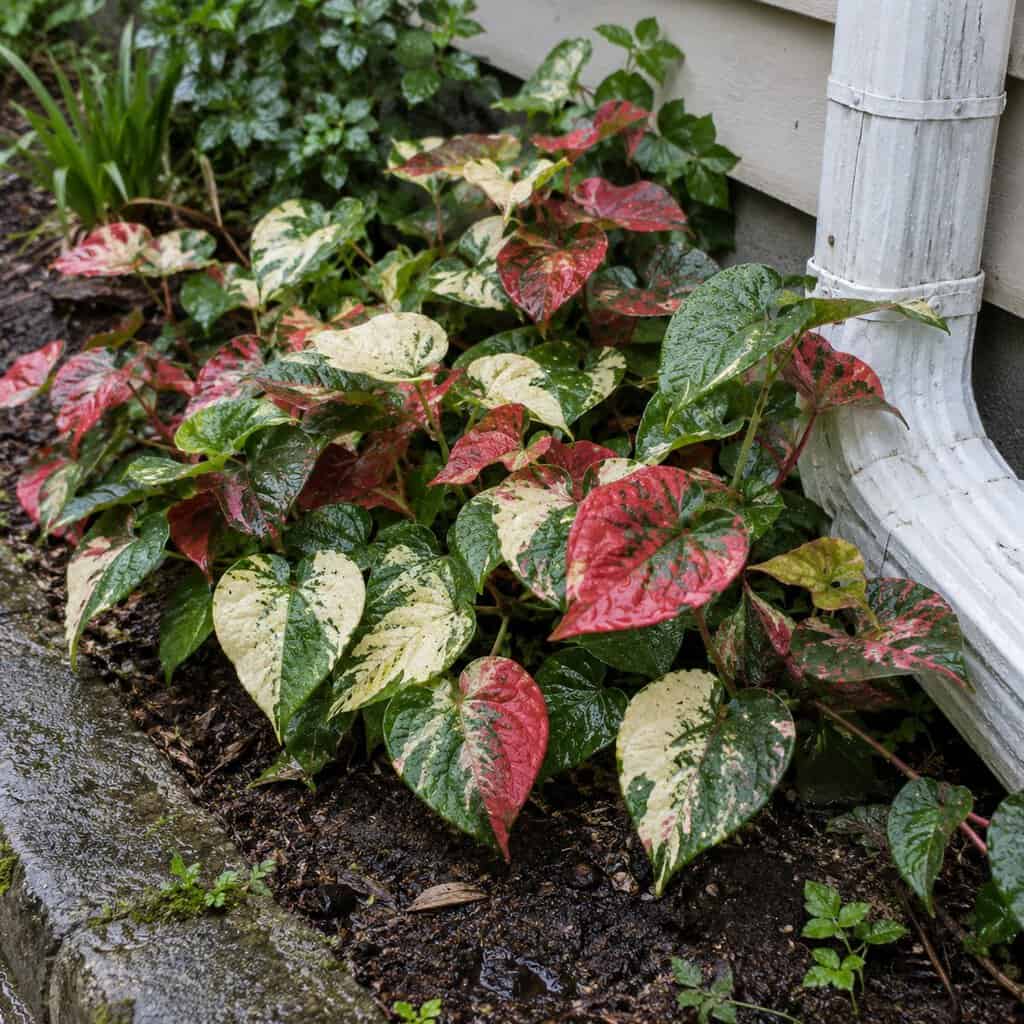
The heart-shaped leaves splash red, cream, and green, and the plant thrives in wet soil where many perennials sulk. It is sold as a colorful ground cover for Zones 5 to 11.
Crush a leaf and the smell hints at its nature: something between orange peel and fish. The white rhizomes are brittle and snap into pieces when dug, and each piece makes a new plant. In moist ground, a single pot can spread several feet in a summer.
In Southeast Asia, the green form is grown as a leafy herb. In an American flower bed, it is a lifetime commitment. Grow it only in a sealed container.
25. Lily of the Valley

In spring, the small potted clumps look harmless. Plant those pips in a shady spot in Zones 2 to 7 and they will still be there, along with everywhere nearby, a generation later.
The rhizomes knit into a solid mat that crowds out hostas, ferns, and native woodland plants. All parts contain cardiac glycosides, compounds that affect heart rhythm. The orange-red berries that follow the May flowers are the main risk for curious children and dogs.
A bed edged with a deep metal or plastic barrier keeps it in place. Wash hands after handling the plants, and keep cut stems out of reach of pets.
26. Mint
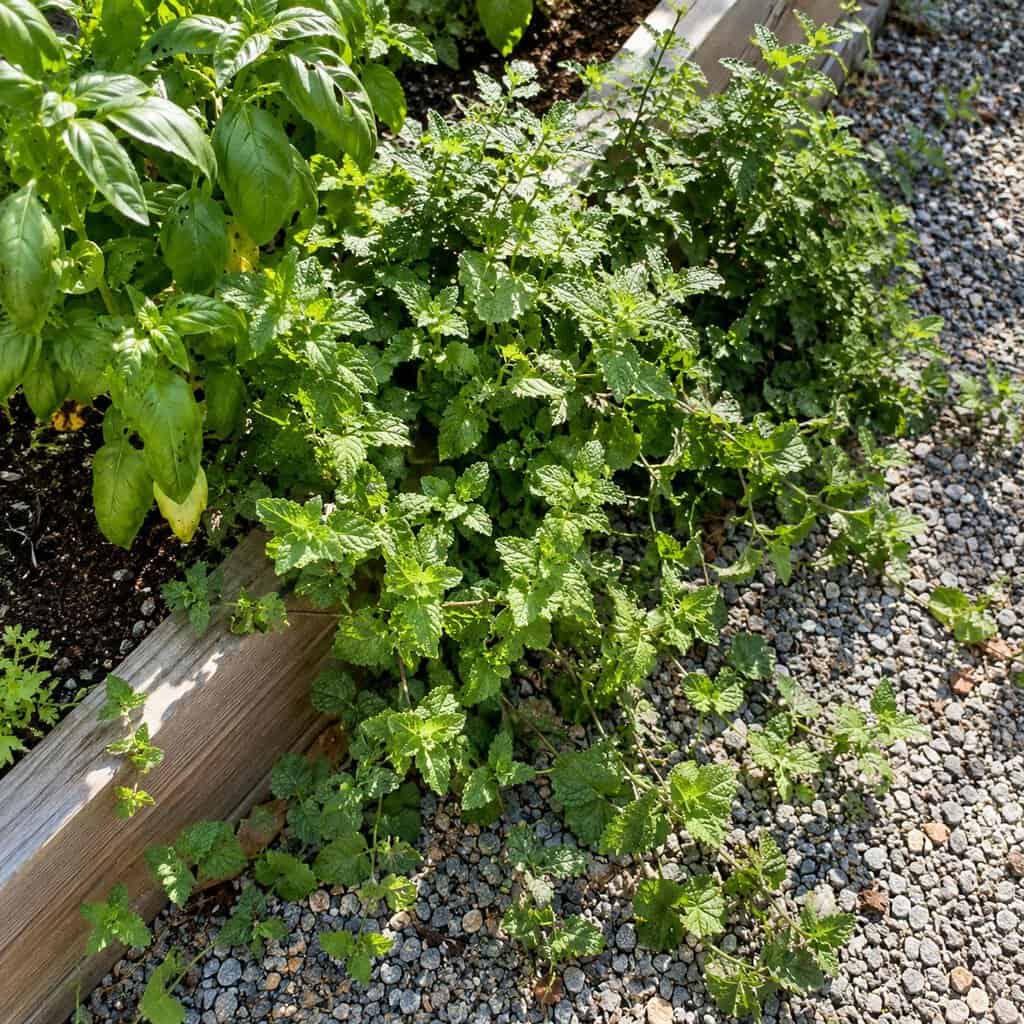
Spearmint, peppermint, chocolate mint, and the rest all share one habit. Their square stems and underground runners move outward in every direction, often a foot or more a season.
Planted in a raised bed, mint will crowd out the basil and parsley by midsummer. It also crosses readily, so plants that come up from seed rarely taste like the variety on the tag.
A large pot on the patio is the best home for it. Every spring, tip the plant out, slice off a healthy chunk, and replant it in fresh soil. Pinch the tips through summer for bushier growth and fewer flowers.
27. Gooseneck Loosestrife
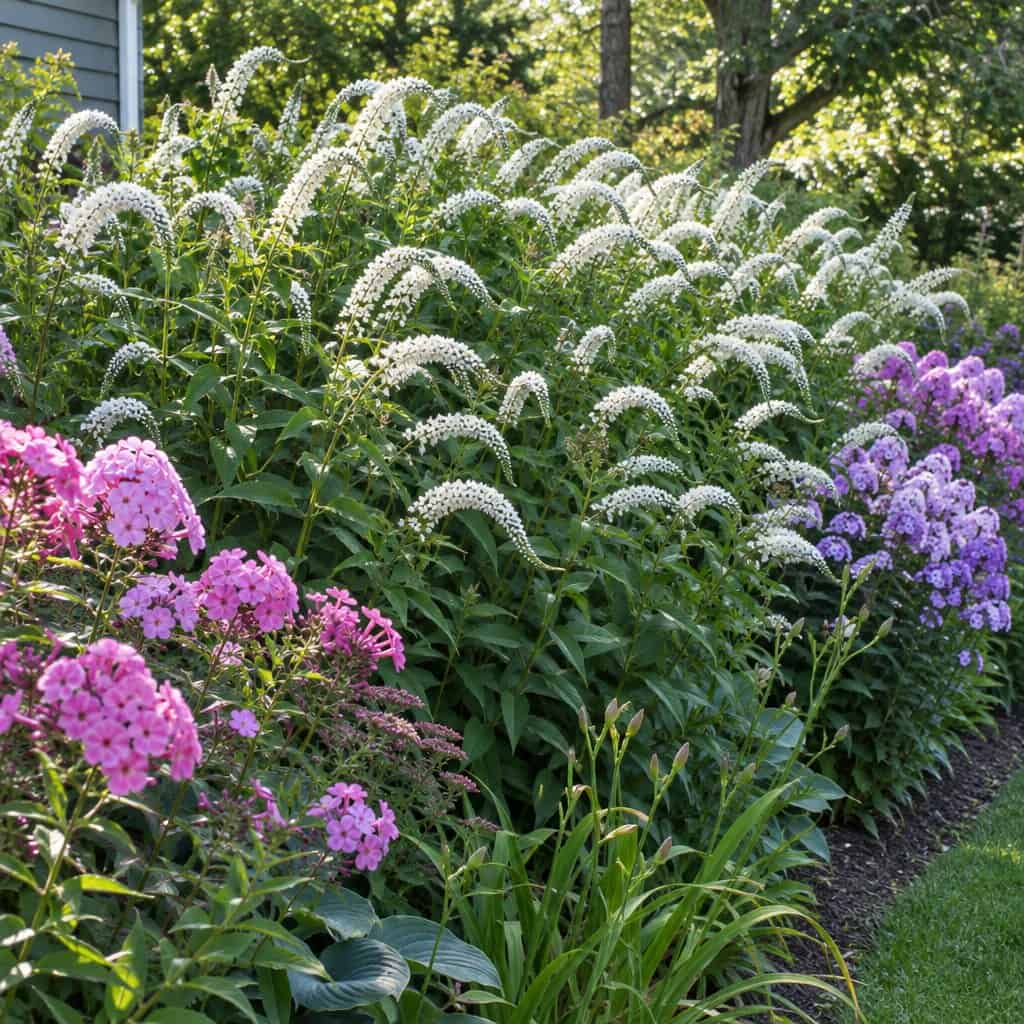
The white flower spikes curve at the tips like a row of bird necks, and they hold up well in a vase. Gooseneck loosestrife blooms in July and August on 3-foot stems and grows in Zones 3 to 8.
In rich, moist soil it spreads quickly by shallow rhizomes. A clump planted at the back of a border can fill a 6-foot stretch in three summers, pushing out phlox and coneflowers on the way.
Culver’s root offers tall white spires in midsummer and stays as a clump. If gooseneck is already established, dig out sections every spring before it rebounds.
28. Orange Daylily

Neighbors and church plant sales hand out the common orange daylily for free, and it takes hold anywhere. Each July it opens tawny orange flowers along roadsides from Maine to Georgia.
It doesn’t spread by seed. The common form is sterile, so it moves by thick roots and runners instead, forming colonies that shade out everything underneath. Several states now track it as invasive in meadows and woodland edges.
Modern hybrid daylilies come in hundreds of colors, often rebloom, and form tidy clumps that stay where they are planted. Pick one of those for the same easygoing care.
29. Yellow Flag Iris
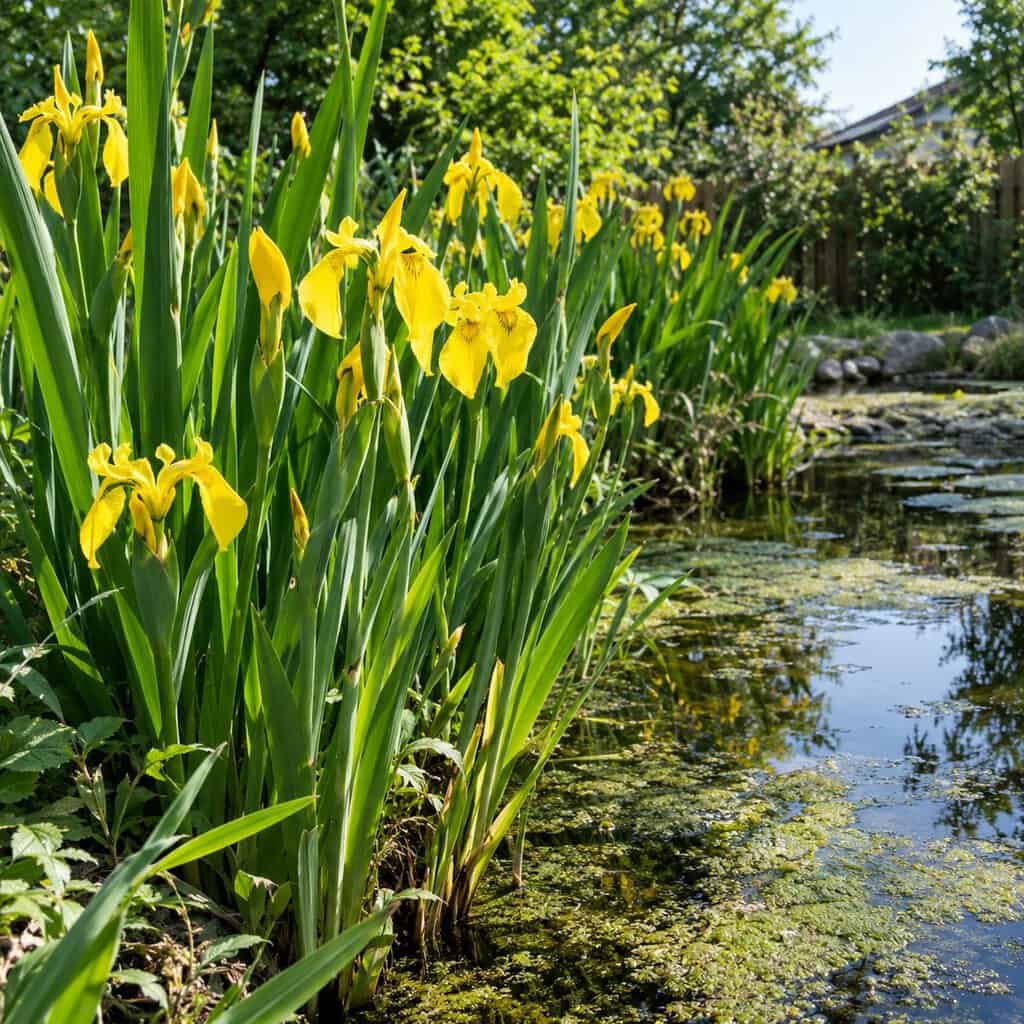
Bright yellow flowers in May and June on 3- to 5-foot stems make yellow flag a popular pick for pond edges and rain gardens. It handles standing water better than almost any perennial.
The seeds float, so a backyard pond can feed every ditch and creek downstream. The thick rhizomes knit into mats that trap sediment and push out native wetland plants. Several Western states list it as a noxious weed.
Southern blue flag (Iris virginica) and Louisiana irises fill the same wet spot with purple, blue, or red flowers. Wear gloves when dividing any iris, since the sap can irritate skin.
30. Ribbon Grass
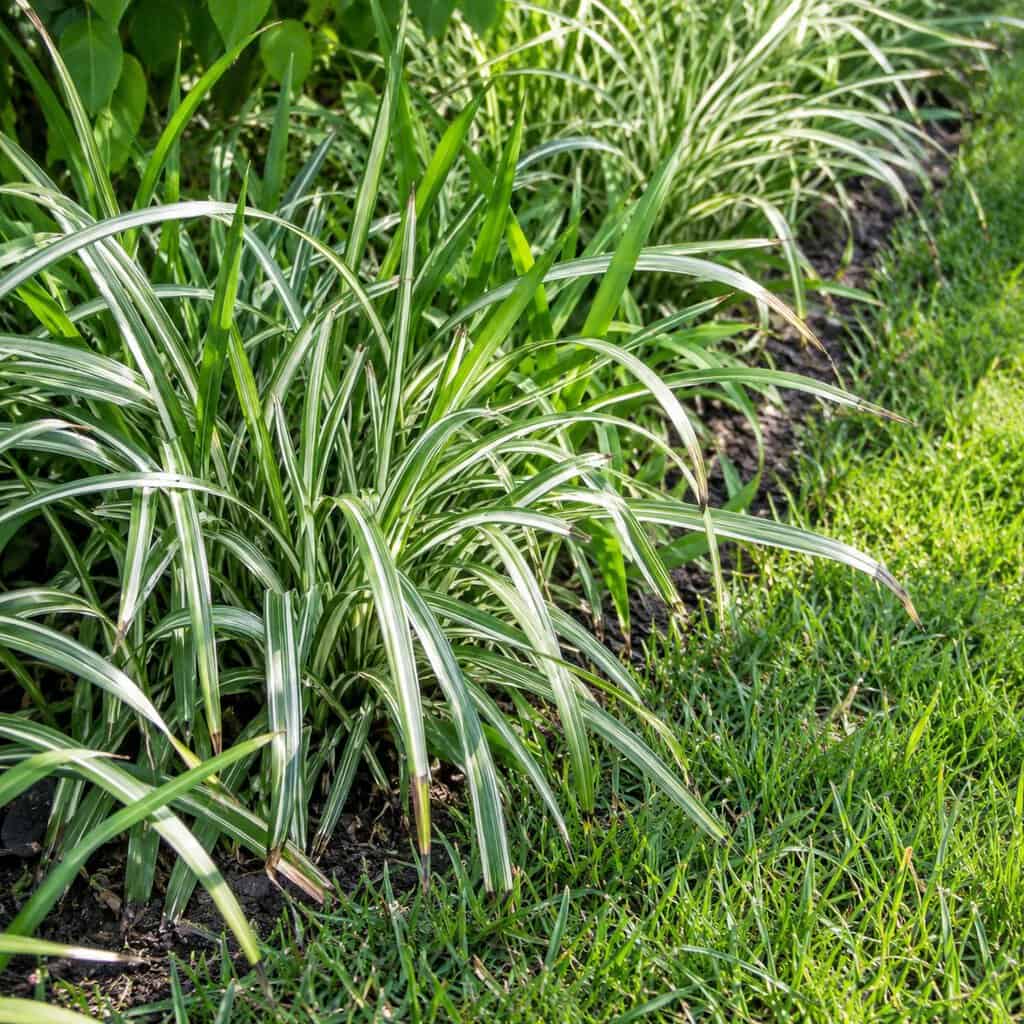
Ribbon grass is a variegated form of reed canary grass, one of the most damaging wetland invaders in the northern US. The white-striped blades look crisp in spring and sell well in quart pots.
By midsummer, the plant often flops and browns in the heat. It also reverts, throwing up solid green shoots that grow faster than the striped ones. Those green shoots behave like the wild species, spreading fast by rhizomes and seed into wet ground.
For a striped grass in shade, Japanese forest grass (Hakonechloa) offers gold-and-green blades on slow, arching clumps that stay put.
31. Maiden Grass (Miscanthus sinensis)
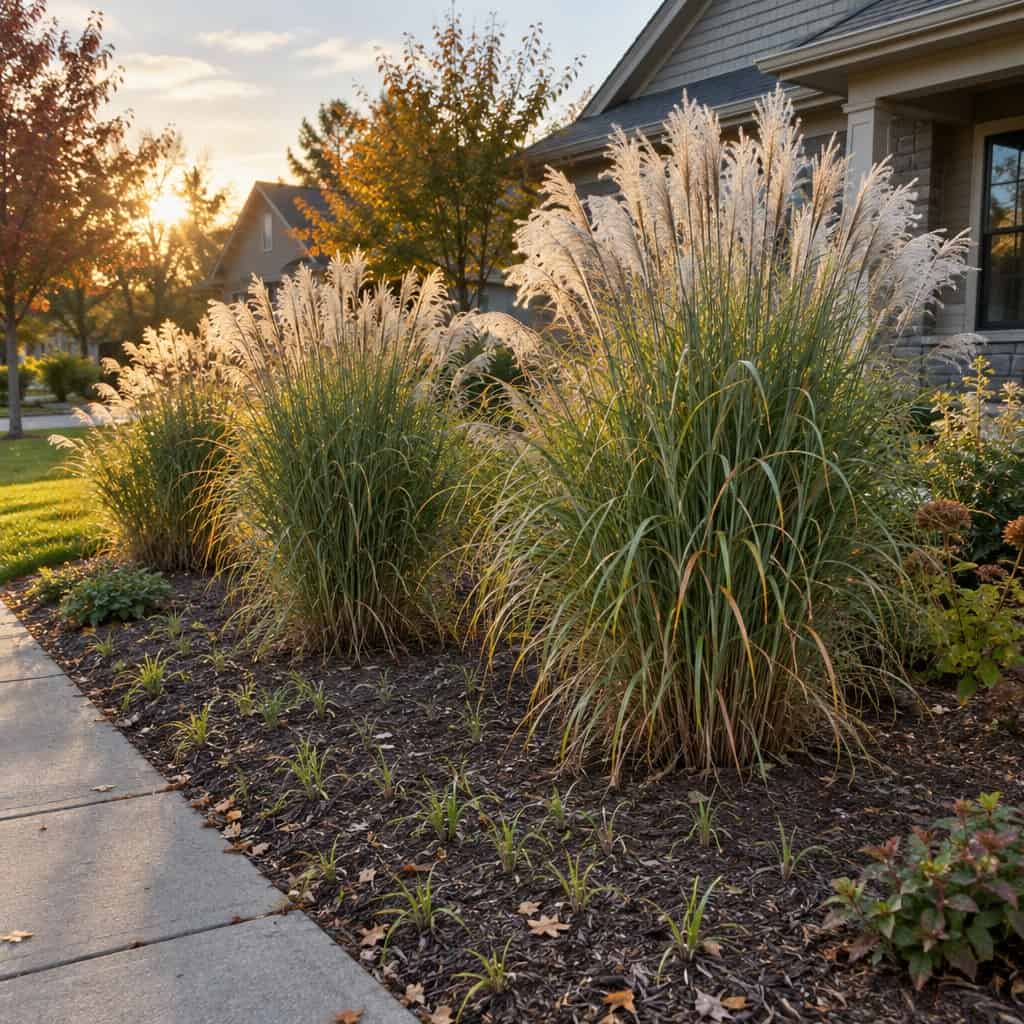
Miscanthus is a landscaper’s favorite for its height, about 5 to 8 feet, and its silvery fall plumes. Garden centers stock dozens of named cultivars, from ‘Morning Light’ to ‘Gracillimus’.
Many of those cultivars set viable seed, and wind carries it to roadsides, forest edges, and clearings. In the Mid-Atlantic and Southeast, escaped miscanthus forms large stands. Dry clumps also burn hot, which matters in fire-prone areas and close to houses.
Switchgrass and little bluestem give the same upright form and fall color, and they support native birds and insects. Big bluestem works where more height is needed.
32. Mexican Feather Grass
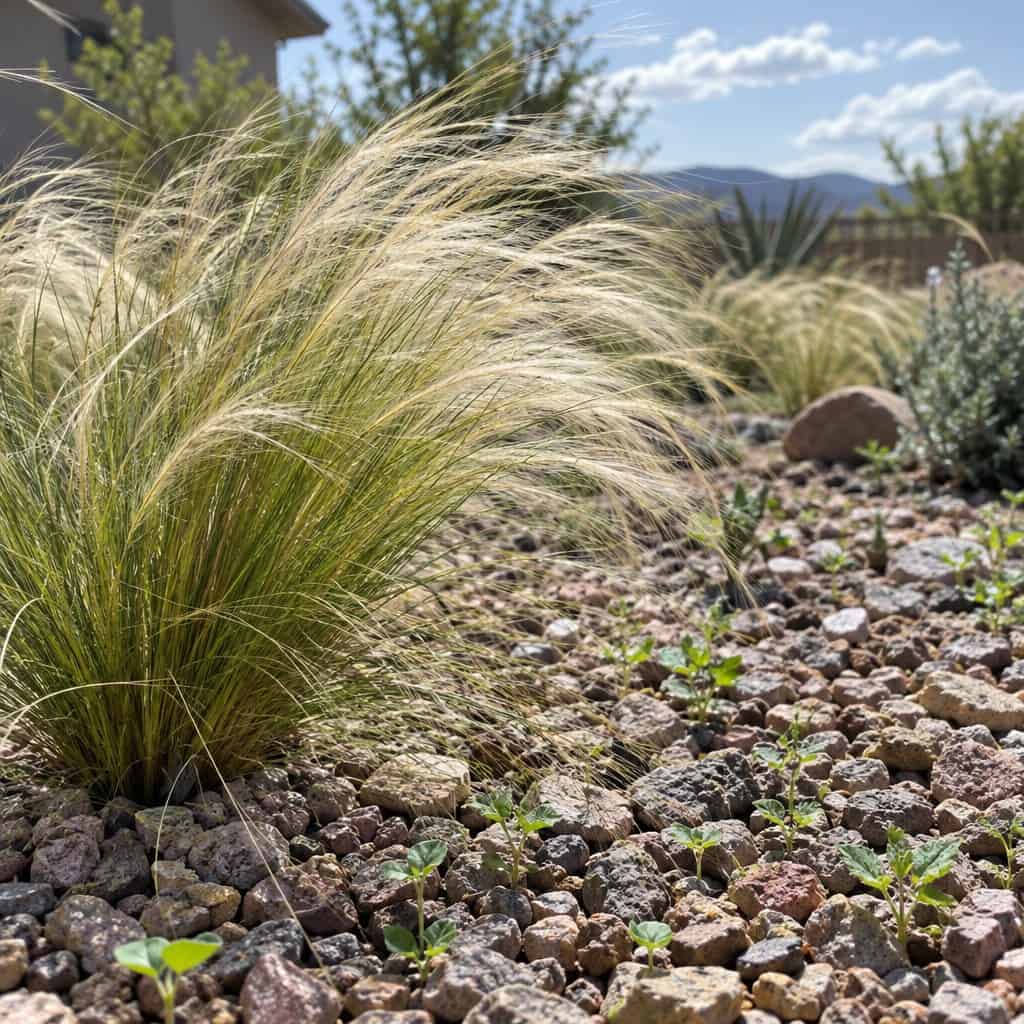
Soft, blond, hair-fine blades that move in the slightest breeze made this grass a fixture in modern and drought-tolerant landscapes. It grows 1 to 2 feet tall in Zones 6 to 10 and needs little water.
It also seeds prolifically. Seedlings appear in gravel, cracks, and neighboring beds within a year, and in California it has escaped into grasslands. Some nurseries have stopped carrying it for that reason.
Prairie dropseed forms a similar fine-textured mound, smells faintly of popcorn in late summer, and rarely self-sows. Where water is scarce in the West, ask a local nursery for a native bunchgrass suited to the region.
How to Shop Smarter Next Spring
Start with the botanical name on the tag, not the common one. Common names overlap and mislead, while the Latin name can be checked in a minute against your state’s invasive species list or a university extension page.
Ask for sterile or seedless cultivars when a favorite plant has a reputation, and be wary of any ground cover that promises fast, total coverage. A plant that spreads fast rarely stops at the edge of the bed.
When in doubt, look for a native plant that fills the same role. Native plant societies and extension offices keep regional lists, and the right swap often costs no more than the problem plant.
I just dug up a 20-year old bougainvillea..the pink flowers are so beautiful until they get old and make big tissue papery messes that blow all over everywhere.This plant grows like a weed in the desert where I live. It doubled in size while I was away for 10 days and sent up enormous stalks that looked terrible. Trimming it is so dangerous. I wear heavy leather gloves and a denim jacket if it isn’t too hot. This mean plant has has thorns over an inch long and you can’t help being stabbed no matter how careful you are. I don’t want to deal with it anymore. There is now a hole in the ground where a bougainvillea used to be and where I think I’ll put a jasmine. (Or maybe I’ll just paint flowers on the fence.)