


A sofa usually gets replaced within a decade or so. The plant in the corner often stays put for twenty years, and the whole time it tells guests exactly when it arrived.
That matters because houseplants are cheap compared with almost everything else in a room. A well-chosen palm in a heavy pot can lift a space more than new throw pillows. A tired trend plant can drag down a room that was updated last spring.
The difference usually comes down to three things: how big the plant is, what it sits in, and which variety it is. Price has less to do with it than most people assume.
Below are 33 common houseplants and setups. Each gets a plain verdict and, where it helps, a fix that costs less than dinner out.
1. Cast Iron Plant (Aspidistra elatior)

Verdict: upscale. Victorian households kept it in their darkest hallways because nothing else would grow there, and it still has that quiet, old-money look. Arching, deep green leaves about 2 feet long rise straight from the soil with no visible stems.
It handles north windows, cool rooms down to about 45°F, and weeks of missed watering. Growth is slow, so a full pot takes years to develop and is priced accordingly.
Plant it in a tall glazed or stone container so the leaves fan out above the rim. It is non-toxic to cats and dogs, and outdoors it is hardy in Zones 7 to 11.
2. Weeping Fig (Ficus benjamina)

Verdict: dated. Through the 1980s and 1990s this was the default tree for shopping centers, hotel atriums and medical offices. A braided trunk in a beige plastic tub brings that era to mind instantly.
The bigger issue is behavior. It reacts to any shift in light or temperature by dropping leaves, and one cold January draft from an opening door can leave it patchy for months.
Bare inner branches with tufts of foliage at the ends make even a healthy specimen look tired. A rubber tree or a Ficus ‘Audrey’ offers a similar tree shape and settles into a house far more easily.
3. Snake Plant, Massed in One Planter

Verdict: fixable. A single snake plant left in its thin black grower pot looks like it came with the apartment. The same plant, grouped, looks deliberate.
Fill one wide, heavy container with three to five plants set so close that the leaves form a solid vertical block. A 16-inch planter takes three 6-inch nursery plants comfortably. Stick to concrete, matte ceramic or fiberglass in one neutral color.
Top the soil with a thin layer of small stones to hide the dirt. Water only when the mix is dry 2 inches down, roughly every three to four weeks in winter. Keep it away from pets that chew, since the leaves can upset a stomach.
4. Lucky Bamboo in Colored Glass Stones

Verdict: dated. Curled stalks tied with gold ribbon, standing in a vase of blue or green stones, belong to the early 2000s feng shui craze. Today they mostly show up in nail salons and takeout restaurants.
The plant is actually Dracaena sanderiana, not bamboo. The spirals are trained at the nursery, and once home the new growth heads straight up, so the shape slowly turns awkward.
Stalks also yellow over time from chlorine and fluoride in tap water. If a straight-stemmed version appeals, a few tall canes in a plain clear vase reads cleaner. Keep it out of reach of cats and dogs, since dracaenas are toxic to both.
5. Kentia Palm (Howea forsteriana)
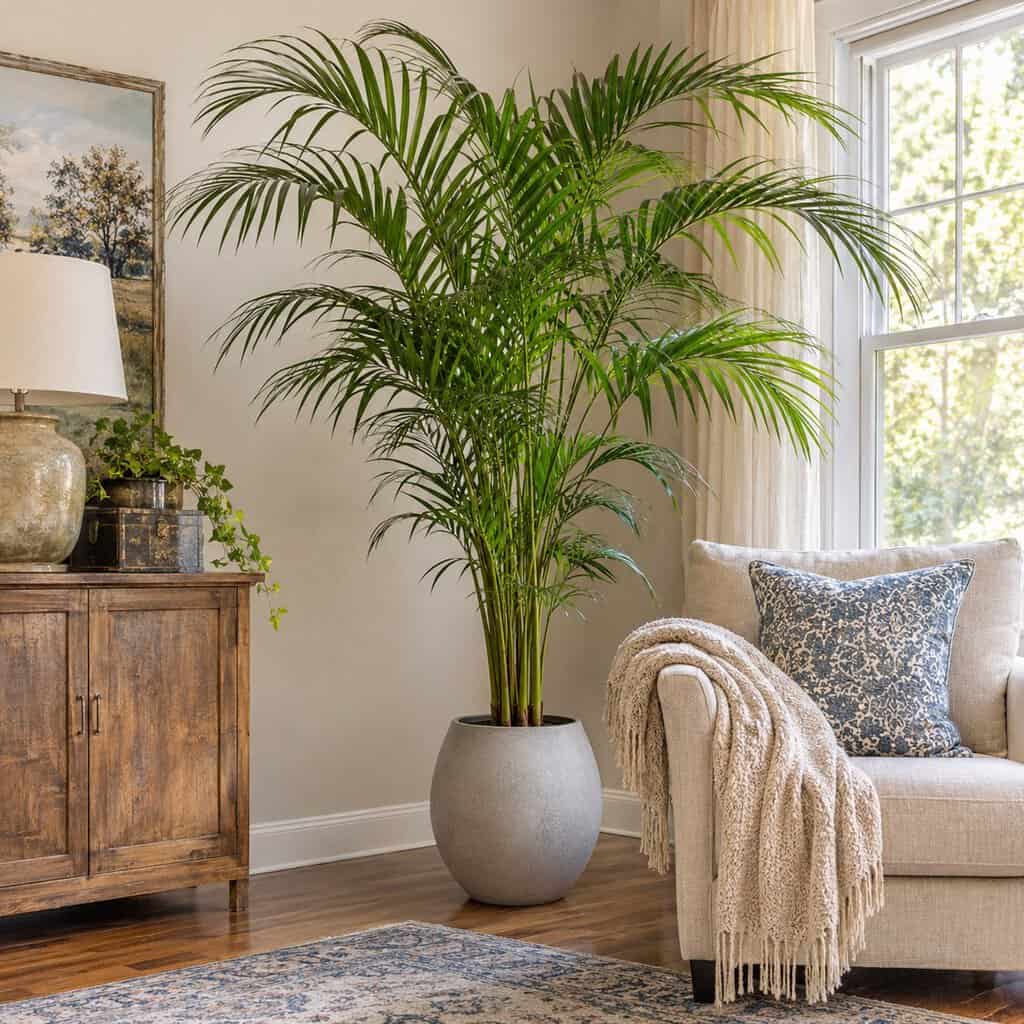
Verdict: upscale. Few plants have stayed in fashion this long. Kentias filled Victorian conservatories and still stand in the lobbies of old hotels, with dark, drooping fronds on slim upright stems.
They grow slowly, adding only a frond or two a year, which is why a 6-foot floor plant often runs $250 to $500. That price buys a plant that holds its shape for decades.
A kentia does fine 6 to 10 feet back from an east or north window and tolerates dry indoor air better than most palms. Let the top inch of soil dry before watering. It is safe around cats and dogs.
6. Norfolk Island Pine Sprayed With Glitter
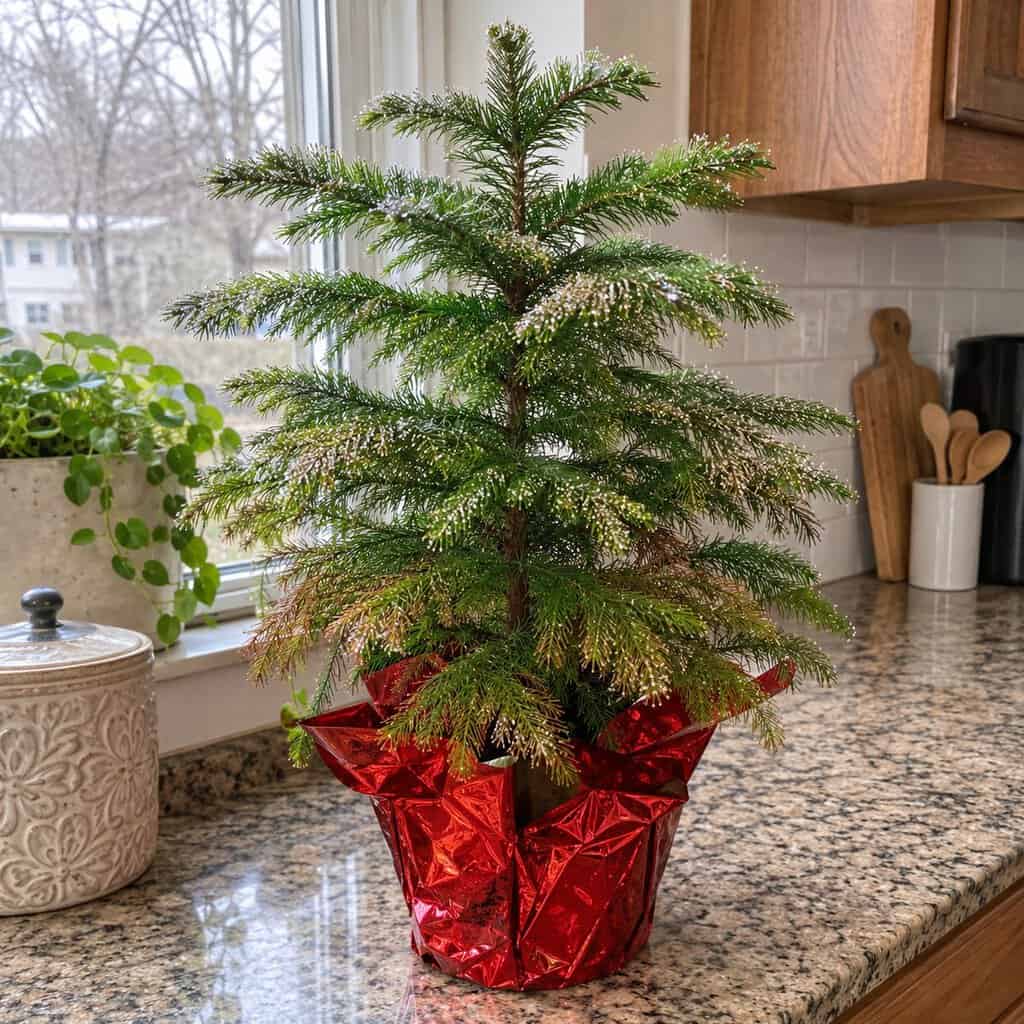
Verdict: dated. Every December, grocery stores stack small Norfolk Island pines with painted tips, glitter and a red foil sleeve. By February the sparkle has faded, the lower branches have browned, and the plant looks like leftover holiday stock.
Underneath, Araucaria heterophylla is a handsome tree with tiered, soft-needled branches. It wants bright light, steady humidity and cool nights around 60°F.
Buy one without decoration, or rinse the worst of the glitter off in the shower and move it into a plain terracotta pot. Unadorned, it reads as a living tabletop tree rather than seasonal decor.
7. Burgundy Rubber Tree (Ficus elastica ‘Burgundy’)

Verdict: upscale. The thick, glossy leaves are so dark they look almost black beside a window. Set against white or warm plaster-toned walls, a 4-foot specimen gives a room weight the way a dark leather chair does.
It costs less than most statement trees and forgives uneven watering. New leaves unfurl from a reddish sheath, adding a little color through spring and summer.
Give it bright, indirect light and water when the top 2 inches are dry. Dust dulls the shine fast, so wipe the leaves with a damp cloth every few weeks. The milky sap can irritate skin and is mildly toxic to pets.
8. Peace Lily (Spathiphyllum)

Verdict: dated. White spathes over glossy leaves were the standard sympathy gift for decades, and the plant became a fixture of bank branches and waiting rooms. Many people now link it with hospitals and funerals more than homes.
It is easy to grow, droops dramatically when thirsty, and perks up within hours of watering. That forgiving nature is part of why it ended up everywhere.
In homes with pets, it is worth replacing. The leaves contain calcium oxalate crystals that cause instant mouth pain, drooling and pawing when chewed. A bird’s nest fern or cast iron plant gives similar deep green foliage without the risk.
9. Potted Olive Tree (Olea europaea)
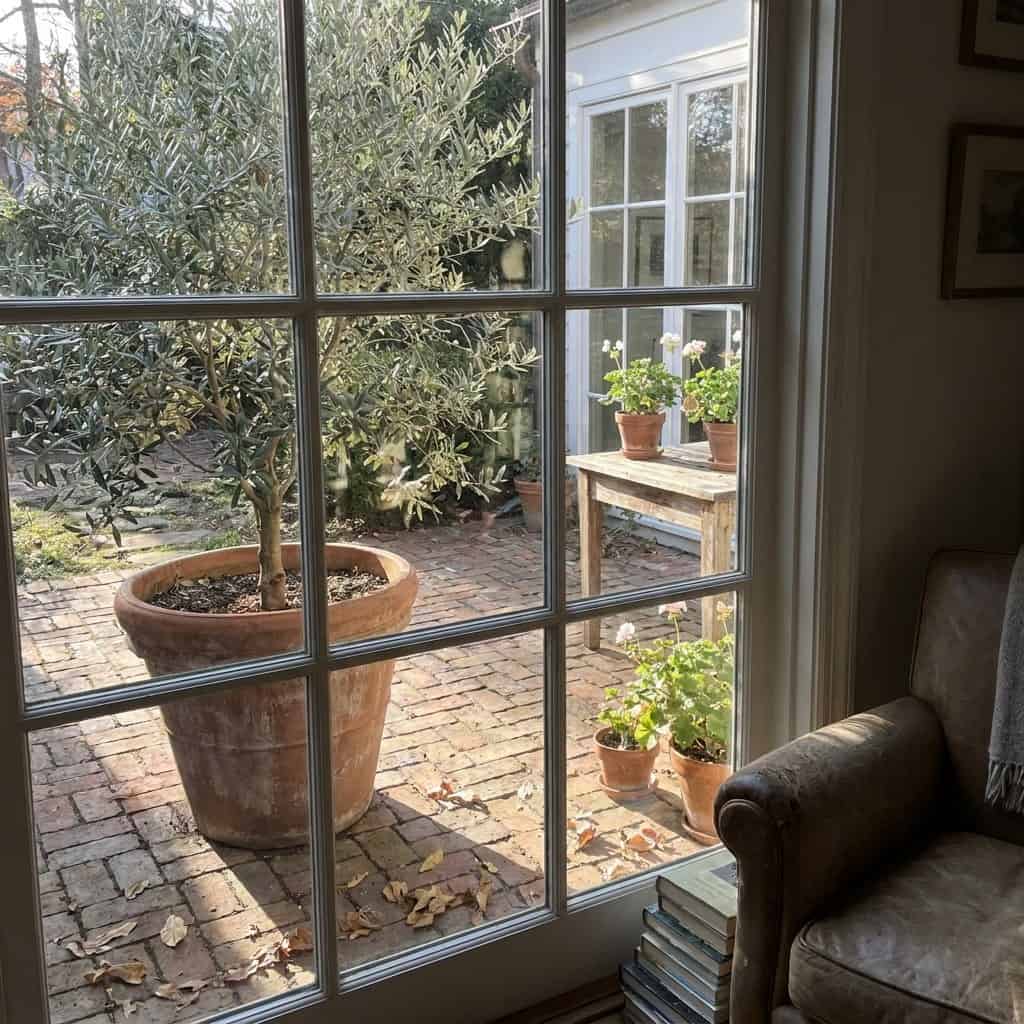
Verdict: upscale, with conditions. Gray-green leaves on a twisting trunk, planted in aged terracotta, make a room feel like a Mediterranean farmhouse. That look is why olives replaced fiddle-leaf figs in so many design photos.
The catch is light. Olives need at least six hours of direct sun, and a typical living room window delivers a fraction of that. Most indoor olives start shedding leaves by their second winter.
They work in a bright south-facing sunroom, or where the tree can spend May through September on a sunny patio. In Zones 8 to 11, keeping it outdoors in a large container is the safer long-term plan.
10. Spider Plant in a Macramé Hanger
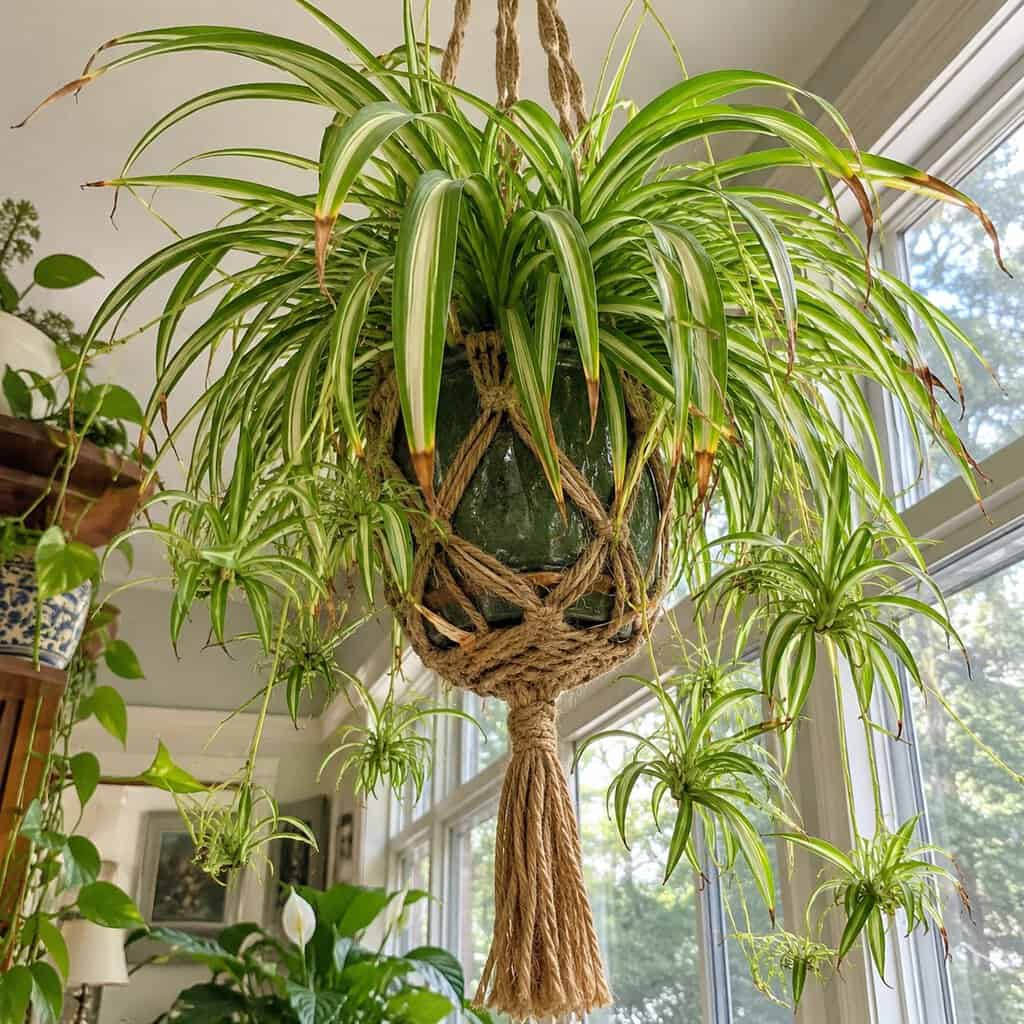
Verdict: dated. Few combinations are easier to place in time. Jute knots, wooden beads and a spider plant spilling babies over the edge read as a 1970s sunroom, and the recent boho revival has already peaked.
The plant itself is excellent. It is non-toxic to cats and dogs, tolerates a wide range of light, and sends out plantlets that root in a glass of water within a couple of weeks.
To keep it current, hang it in a simple ceramic or powder-coated metal pot on a plain cord or bracket. Trim brown tips at an angle with clean scissors, and switch to filtered water if they keep appearing.
11. Mature Monstera on a Moss Pole
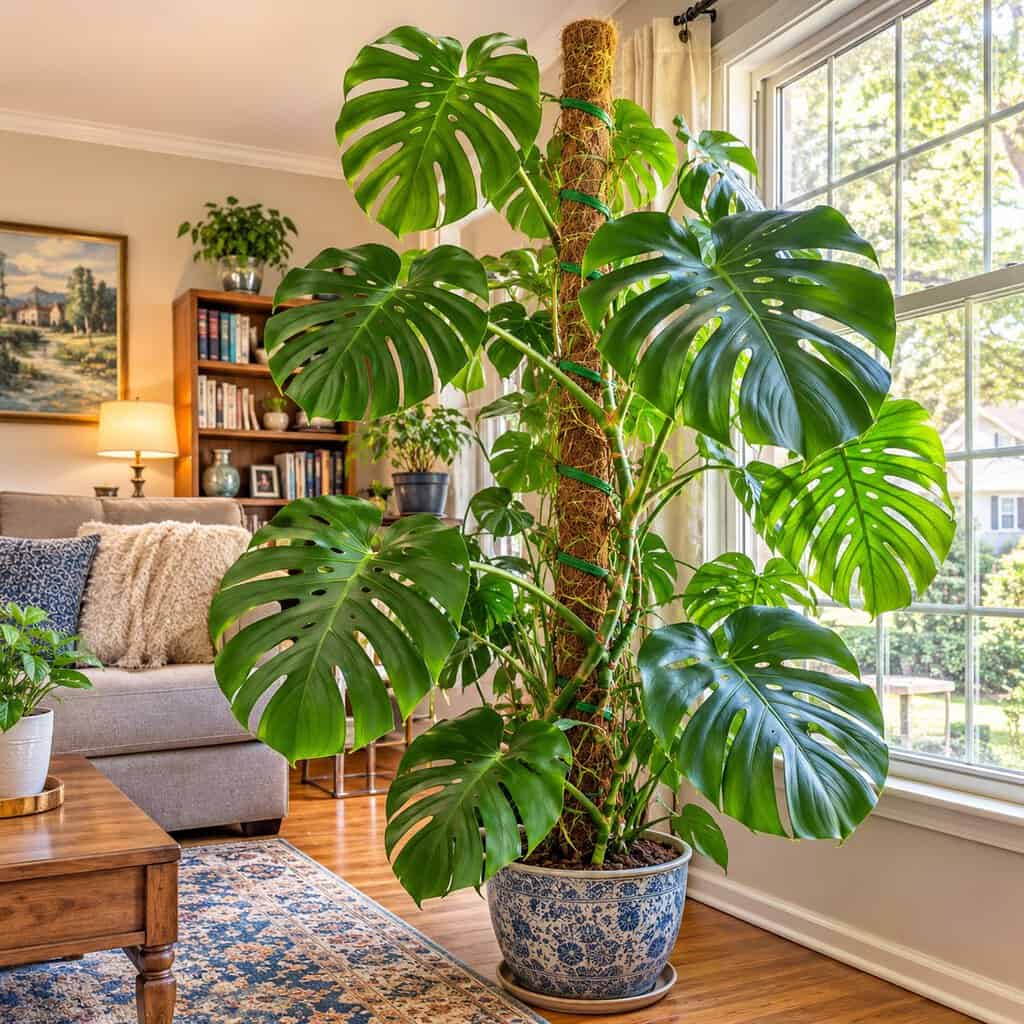
Verdict: upscale. A monstera only looks impressive once it has size. A 5- or 6-foot plant with deep splits and holes, tied to a sturdy support, shows years of care that no shopping trip can fake.
Young monsteras sold in 6-inch pots have small, solid leaves. The cuts appear as the plant matures and is allowed to climb, so a pole or plank matters more than fertilizer.
Give it bright, indirect light within a few feet of an east or west window. Tie new stems loosely with soft plant tape, and add a pole section when growth reaches the top. Keep pets away, since the leaves are toxic.
12. Cactus With Glued-On Flowers

Verdict: dated. Small cacti topped with bright straw flowers sell at nearly every big-box checkout. The flowers are dried and hot-glued in place, and they never change, which is exactly what makes them look fake.
The glue can also trap moisture against the cactus skin, leading to rot or a permanent scar where it was attached.
Pry the flower off gently with a butter knife and let the spot heal. Then repot the cactus in gritty cactus mix in an unglazed clay pot and give it the sunniest window in the house. One healthy cactus with real spines looks far more deliberate than a row of decorated ones.
13. Lady Palm (Rhapis excelsa)

Verdict: upscale. Fan-shaped leaves on slender canes wrapped in brown fiber give this palm a calm, tailored look. It has been grown in Japan and China for centuries and has never had a trend moment in the US.
Growth is extremely slow, so a dense 4-foot clump can cost $150 to $300. It holds up in low to medium light where most palms would thin out.
Water when the top inch dries, and always use a pot with drainage, since soggy roots are its main weakness. Lady palm is non-toxic to pets and hardy outdoors in Zones 9 to 11.
14. Corn Plant (Dracaena fragrans ‘Massangeana’)

Verdict: dated. A tall woody cane with arching leaves striped yellow-green down the middle is the classic plant of the 1980s cubicle. Most were sold as three canes of staggered heights in one pot, a look that has not aged well.
Solid green relatives such as ‘Janet Craig’ and ‘Lisa’ need the same easy care and look current in a simple ceramic floor pot.
If an older corn plant has gotten leggy, cut a cane to the height you want and it will sprout new leaves just below the cut within a month or two. Dracaenas are toxic to cats and dogs, so place them with that in mind.
15. Staghorn Fern Mounted on Wood

Verdict: upscale. Hung on a board, a staghorn fern becomes closer to art than a potted plant. Flat shield fronds grip the wood while forked fronds reach out into the room.
Mounting is an easy afternoon project: a piece of untreated cedar or cork bark, a handful of damp sphagnum moss, and fishing line. Platycerium bifurcatum, the common species, is the simplest to start with.
Hang it in bright, filtered light and soak the whole mount in a sink about once a week in summer, less often in winter. Leave the brown shield fronds alone, since they protect the roots. It is safe for pets.
16. Fiddle-Leaf Fig (Ficus lyrata)

Verdict: dated. For roughly five years, this plant appeared in nearly every styled living room photo online. Its huge violin-shaped leaves became shorthand for a very specific era of white walls and woven baskets.
The trend wore out, and so did a lot of the plants. Fiddle-leaf figs brown at the edges when overwatered, drop leaves after a move, and lean hard toward the light.
A well-grown one can still look good, especially when pruned into a branched tree instead of a single tall stem. For a fresher take on the broad-leaf look, a Ficus ‘Audrey’ or a white bird of paradise does the job.
17. Old Jade Plant With a Thick Trunk

Verdict: upscale. A small jade in a 4-inch pot looks like a windowsill starter. A jade that has grown for 20 or 30 years, with a trunk as thick as a wrist and branches like a miniature tree, looks like an heirloom.
Crassula ovata lives for decades and can be pruned in spring to encourage that branching shape. The oldest plants usually come from estate sales or cuttings passed through families, not garden centers.
It needs four or more hours of direct sun and a heavy, wide pot to keep top-heavy branches from tipping. Water deeply, then let the soil dry completely. Jade is toxic to cats and dogs.
18. Grocery-Store Orchid in a Foil Sleeve

Verdict: fixable. A blooming moth orchid is one of the most graceful plants available for under $25. The trouble is how it is sold: crinkly metallic wrap, a plastic stake, sometimes a fake butterfly or dyed blue petals.
Strip off the wrap and accessories. Set the clear plastic grower pot inside a slightly larger matte ceramic or stone outer pot so the roots stay hidden but still drain.
Water every seven to ten days by running it under the tap, then let it drain fully. After the blooms drop, cut the spike just above the second node from the base. With bright, indirect light and fall nights near 60°F, a new spike often forms by winter.
19. Hoya Trained on a Hoop

Verdict: upscale. Thick, waxy leaves and clusters of star-shaped, scented flowers give hoyas a collected, slightly old-fashioned charm that never reads cheap. Trained around a simple metal hoop or small trellis, the vine stays tidy and looks intentional.
Hoya carnosa and Hoya kerrii are the easiest types to start with. They like bright light, a snug pot, and soil that dries out between waterings.
Leave old flower stalks, called peduncles, on the plant, since new blooms form on the same spurs year after year. Hoyas are non-toxic to pets, which makes them a good pick for a sunny shelf within reach.
20. Succulent Dish Garden
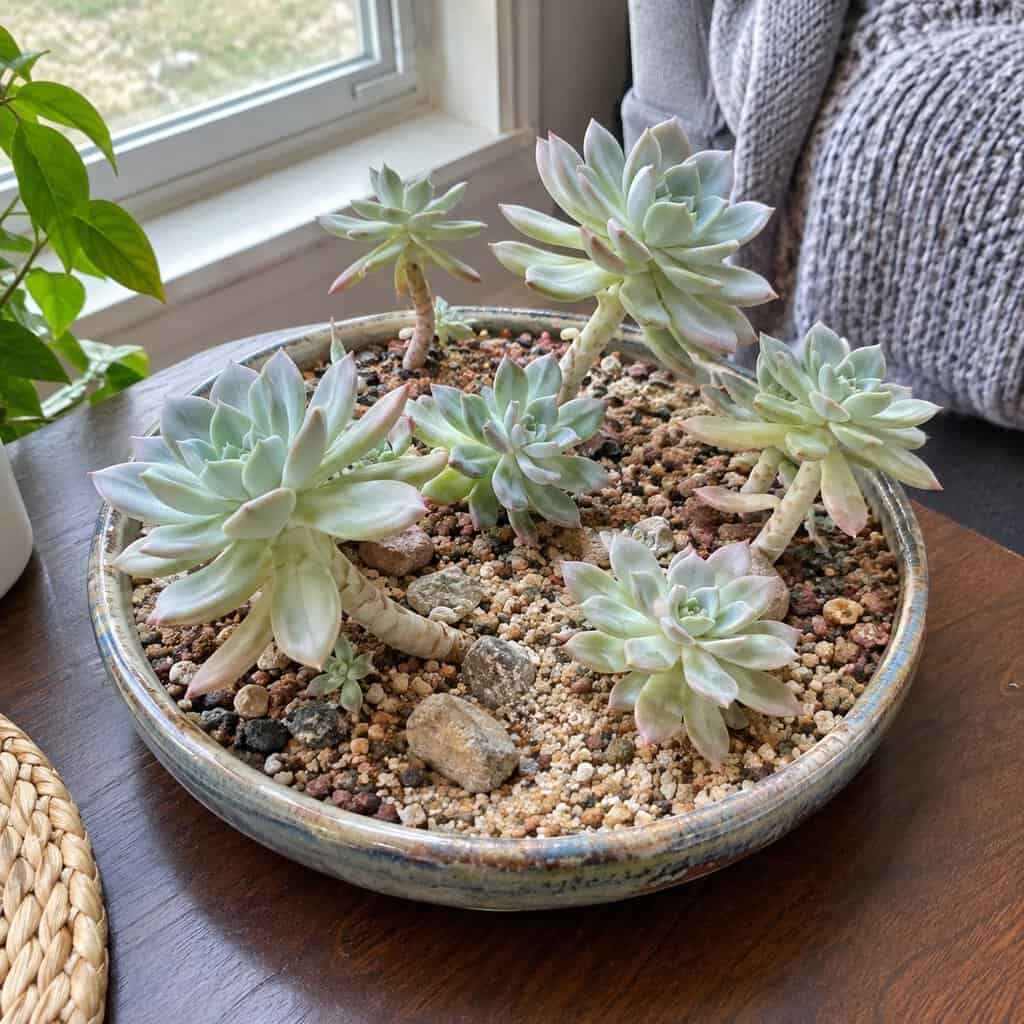
Verdict: dated. A shallow bowl crammed with echeverias, aloes and colored sand was a popular party favor in the early 2010s. Most of them stretch, lean and lose their color within a few months, because indoor light is far weaker than these plants need.
The bowls usually lack a drainage hole too, so water pools at the bottom and roots rot.
A better approach is one larger succulent or cactus in a pot with drainage, set in a south or west window with at least six hours of sun. A 12-inch aloe or a tall euphorbia in heavy concrete has more presence than a dozen miniatures.
21. Bird’s Nest Fern (Asplenium nidus)

Verdict: upscale. Wide, wavy, apple-green fronds spiral up from a fuzzy brown center, forming a shape like a shallow vase. That rippled texture breaks up a room full of flat, glossy leaves.
Unlike many ferns, it does not shed tiny leaflets across the floor. It does well in medium light, such as a bathroom with a frosted window, and appreciates the extra humidity there.
Water around the edge of the pot rather than into the central rosette, which can rot if it stays wet. ‘Crispy Wave’ and ‘Victoria’ have more pronounced ruffles. It is non-toxic to cats and dogs.
22. Pothos Trailing Along the Kitchen Cabinets

Verdict: dated. A single pothos stretched 15 feet across the cabinet tops, held up with adhesive hooks and thumbtacks, is a familiar sight in older kitchens. The far end almost always goes leggy and bare from too little light and water.
Kept compact, pothos still looks fresh. A full pot on a bookshelf or bathroom counter, with vines trimmed to about 2 feet, looks deliberate. Cuttings root easily in water and can go back into the same pot to fill it out.
Keep vines from dangling where cats and dogs can reach. Pothos contains calcium oxalate crystals that cause mouth irritation and drooling.
23. Ficus ‘Audrey’ (Ficus benghalensis)

Verdict: upscale. Designers turned to this tree after the fiddle-leaf fig wore out its welcome. Oval, velvety-matte leaves with pale veins sit on a light-colored trunk, giving it a softer, more natural look.
It is also much easier to live with. ‘Audrey’ tolerates small shifts in light and watering without dropping a pile of leaves, and it grows at a steady pace in bright, indirect light.
A 5-foot tree typically runs $100 to $200. Rotate it a quarter turn each month so it grows evenly, and let the top 2 inches of soil dry between waterings. Like other figs, its sap can irritate skin and upset pets.
24. Dieffenbachia (Dumb Cane)

Verdict: dated. Big leaves splashed with cream and pale green were a staple of 1970s and 1980s dens, right alongside wood paneling and shag carpet. The look has not come back, and newer variegated plants do it better.
It also carries a real safety concern. The sap holds a heavy dose of calcium oxalate crystals that cause intense pain and swelling in the mouth and throat when chewed. That reaction gave the plant its common name.
In homes with toddlers, cats or dogs, it is best avoided. Wear gloves when pruning and wash up afterward, since the sap can also irritate skin and eyes.
25. White Bird of Paradise (Strelitzia nicolai)

Verdict: upscale. Huge paddle-shaped leaves on upright stems give this plant a tropical resort look. It can reach 7 or 8 feet indoors, which fills the empty vertical space in rooms with high ceilings.
The leaves naturally split along their veins as they age. That is normal and not a sign of trouble.
It needs strong light, ideally a south or west window with some direct sun. Water when the top few inches dry, and feed monthly from April through August. It grows outdoors in Zones 10 and 11, and elsewhere it can summer on a patio.
26. Preserved Moss Wall Art

Verdict: dated. Framed panels of dyed, preserved moss had a big run from about 2018 to 2022, especially in offices and dining rooms. They were sold as no-maintenance greenery, and that is the problem. They are not alive, and visitors can tell.
The moss fades in sunlight, turns brittle in dry winter air, and collects dust that is hard to remove without damage.
For a living version, mount a staghorn fern or grow a few small ferns in a wall planter near a window. Both bring real texture that grows and changes, instead of a static green rectangle.
27. Ponytail Palm (Beaucarnea recurvata)

Verdict: upscale. A swollen, bulb-like base topped with a cascade of thin, curling leaves makes this plant look sculptural. It is related to agaves, not palms, and stores water in that base.
The bulb grows slowly, so a plant with a base 8 to 12 inches across can be decades old and priced to match. A large one in a low, wide pot holds a room the way a piece of pottery does.
Give it bright light and water deeply only when the soil is dry, roughly every three to four weeks. It is non-toxic to pets and hardy outdoors in Zones 9 to 11.
28. Croton (Codiaeum variegatum)
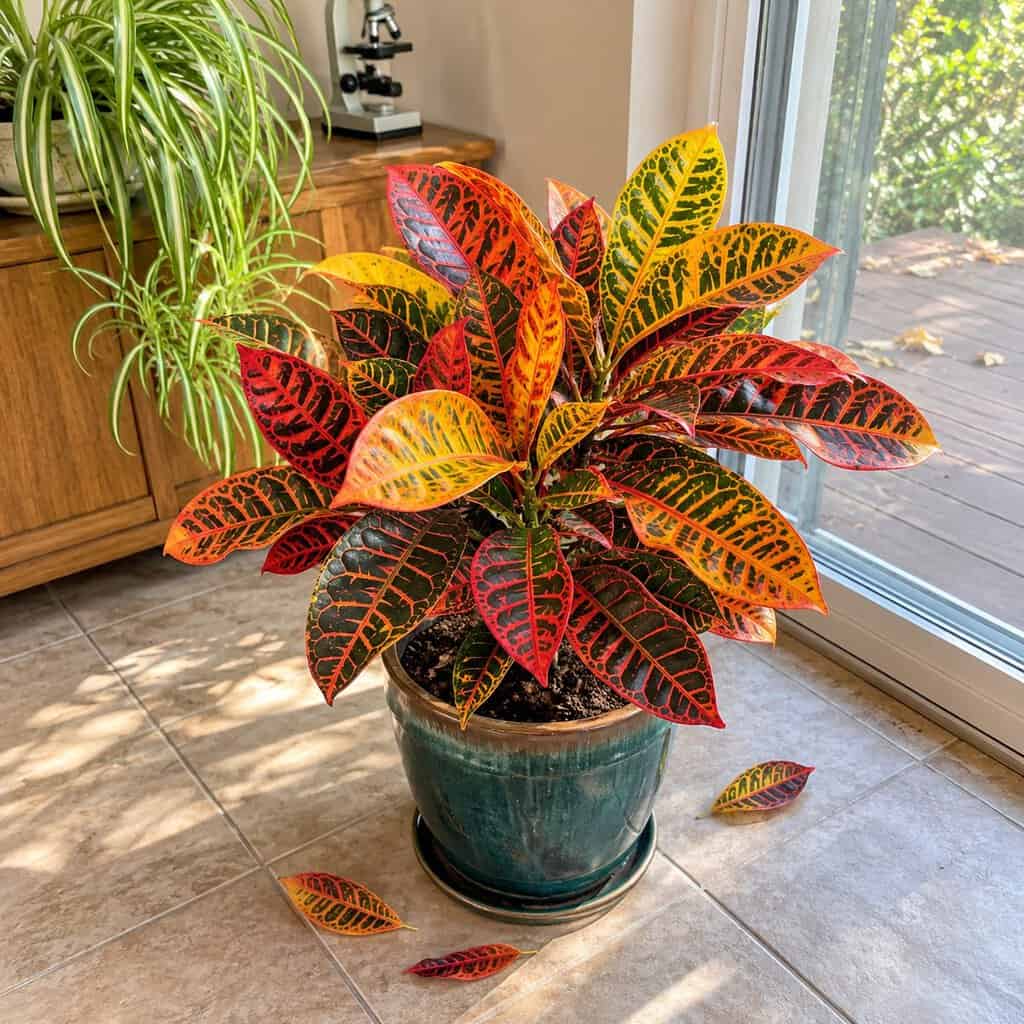
Verdict: dated. Leaves streaked in red, orange, yellow and green look like a 1980s Miami living room in plant form. They clash with most current neutral palettes and soft warm-white walls.
Crotons also sulk easily. Moving one, chilling it near a cold window, or letting it dry out can trigger leaf drop within days.
The sap is toxic to pets and can irritate skin. Outdoors, crotons make good summer container plants in hot climates, where the bold color suits a pool deck or porch far better than a living room.
29. Meyer Lemon Tree

Verdict: upscale. A small citrus tree with glossy leaves and a few ripening lemons in winter feels like a genuine luxury. The blossoms add a sweet fragrance that fills a room in late winter and spring.
Meyer lemons stay compact, usually 4 to 6 feet in containers. They still need six to eight hours of sun, so a south-facing window or sunroom is essential.
Use a fast-draining citrus mix and feed with citrus fertilizer from spring through fall. Move it outdoors after the last frost and bring it in before nights drop below 50°F. A humidity tray indoors helps prevent leaf drop.
30. Air Plants in Hanging Glass Globes

Verdict: dated. Clear glass bubbles hanging from twine, each holding a tillandsia on sand or moss, peaked in the early 2010s. Most of those plants dried out within months.
Tillandsias need a 20- to 30-minute soak every week or two, followed by a few hours upside down to dry. Inside a globe, they get poor airflow and rarely get watered properly.
A better display is a shallow dish, a piece of driftwood, or a simple wire stand near a bright window. Out in the open, they get air circulation and are easy to grab for a soak. They are non-toxic to pets.
31. ZZ Plant (Zamioculcas zamiifolia)

Verdict: fixable. The ZZ plant became the default for staged condos and office corners because it survives low light and long dry spells. That ubiquity makes a lone one in a cheap pot feel generic.
Group three or more in one wide planter, or choose a mature specimen with tall, arching stems. A matte black or textured clay pot gives it more weight.
The cultivar ‘Raven’ has nearly black leaves and looks far more striking than the standard green. Water only when the soil is dry, roughly every three to four weeks. The plant is toxic to cats and dogs, so keep it out of reach.
32. Dusty Fake Ficus Tree

Verdict: dated. A plastic ficus with a film of dust and sun-faded leaves gives a room an abandoned feel. Even good faux trees look obviously fake up close once the leaves turn gray and stiff.
Fake plants need cleaning too. A monthly wipe or a rinse in the shower keeps them from looking neglected, but they still lack the subtle variation of real leaves.
If a corner gets too little light for a living tree, a tall floor lamp or a piece of art fills it better. If greenery is a must, a cast iron plant or ZZ plant tolerates very low light better than most.
33. African Violets on a Windowsill

Verdict: keep anyway. A row of African violets in small pots on a kitchen windowsill instantly calls up a 1950s or 1960s home. It is one of the most dated looks here, and one of the most comforting.
Many people keep violets because they came from a parent or grandparent. That history outweighs any trend.
To keep them blooming, use a bright east window or a small grow light, water from the bottom with room-temperature water, and keep the leaves dry. Pinch off spent flowers and repot yearly in fresh violet mix. They are non-toxic to cats and dogs.
What the Best-Looking Rooms Have in Common
Across all 33, price is rarely the deciding factor. The plants that look costly tend to be large, slow-growing, healthy and set in heavy, simple containers. The ones that look dated are usually tied to a single trend, sold with gimmicky packaging, or struggling in light they were never suited for.
Before buying anything new, try the cheap fixes. Strip the foil, group the singles into one wide planter, and move sun lovers to the brightest window or outside for summer. Then match each plant to the light the room actually gets.
And if an old plant carries a family story, it has earned its spot no matter what decade it suggests.