

A buyer makes up their mind about your house before they ever step inside. They make it from the curb, in about eight seconds, looking at your yard.
And a lot of what they see is working against you.
Some of it you spent real money on. The pool. The koi pond. The pizza oven you fired up twice. To you it’s a feature. To the person writing the offer, it’s a line item to subtract.
Other things you stopped seeing years ago — the leaning fence, the patchy grass, the shed slowly tipping toward the property line. Your eye glides past them. A buyer’s eye snags hard.
The frustrating part is that the worst offenders aren’t always the obvious ones. A weedy lawn is easy to spot. A bamboo screen that’s about to cost the next owner $12,000? That hides in plain sight.
Here are 24 yard features that quietly drag your home’s value down — and what buyers actually see when they look at them.
1. The Overgrown “Jungle” Yard

Nothing kills an offer faster than a yard that’s gone feral.
Shrubs swallowing the windows. Hedges that haven’t been touched in three seasons. Weeds tall enough to hide a bicycle.
It’s the single most-cited turn-off across every real estate source, and the reason is psychological. A buyer can’t see inside yet, so they read the outside as a preview. Neglected yard, neglected house. They assume the furnace and the roof got the same treatment as the lawn.
There’s a practical problem too. Vegetation pressed against siding traps moisture, invites termites, and rots the wood underneath.
Cut it back before a single showing. This is the cheapest perception swing you’ll ever buy.
2. A Patchy, Weed-Choked Lawn
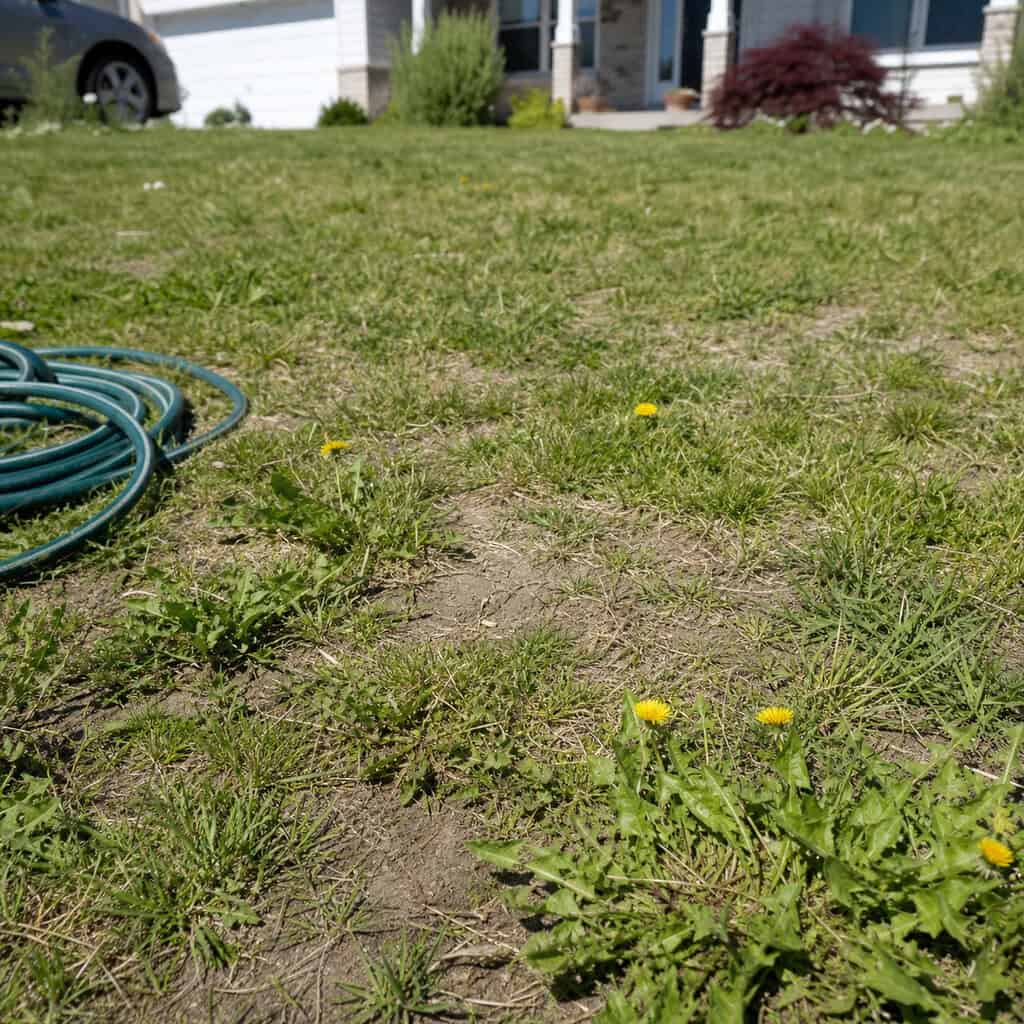
Thin grass with bare dirt and crabgrass is the second thing buyers notice and the first thing they hold against you.
They don’t see a lawn that needs feeding. They see drainage problems, bad soil, something wrong underground.
That instinct costs you money you don’t have to lose. The National Association of Realtors pegs lawn care at over 200% return on investment — one of the highest of any home project, inside or out.
A bag of seed and a few weeks of watering beats almost any renovation dollar for dollar.
Skip the lawn at your own risk.
3. Dead or Diseased Trees

A dead limb hanging over the roofline is a hazard a buyer prices in on the spot.
They’re not wrong to. Taking down a large tree runs into the thousands, and insurance companies flag overhanging dead branches as a liability before they’ll write the policy.
So the buyer does the math out loud. Offer minus removal cost. That number comes straight off your asking price.
Worse, a dead tree reads as a warning. If you let that go, what else did you let go?
Take it down before you list. It only gets more dangerous standing there.
4. Too Many Trees Crowding the House

You love the wooded lot. It feels like a retreat.
The buyer sees roots cracking the driveway, branches scraping shingles, and a yard that never gets sun.
They also see the gutters. A house ringed by mature trees means leaf cleanup every fall and a roof that stays damp and mossy in the shade.
Trees usually add value. Too many, too close, do the opposite — they tip from asset to chore.
Thin them out. Give the house room to breathe and light to land on it.
5. A Steeply Sloped Yard

Families want flat. Flat means kids can play, pets can run, you can set a table without it sliding.
A dramatic slope kills all of that.
It also raises real fears: erosion, water running toward the foundation, and a fix — retaining walls — that’s among the most expensive exterior projects there is.
The deeper problem is permanence. You can reseed a lawn in a month. You can’t un-slope a hill.
Buyers spook at problems they can’t undo, and grade is right at the top of that list.
6. Poor Drainage and Standing Water

A soggy patch that never dries out is one of the loudest red flags a yard can throw.
Water pooling near the house. Downspouts dumping at the foundation. A low spot that turns into a pond after every storm.
Buyers connect water to the one thing they fear most: foundation damage. They imagine freeze-thaw cycles working that moisture into the structure for years.
It breeds mosquitoes and makes half the yard unusable on top of it all.
Regrade, extend the downspouts, fix the low spots. Standing water whispers “structural problem,” and buyers hear it loud.
7. The Concrete-Jungle Over-Hardscaped Yard

Somewhere along the way the patio ate the yard.
Pavers, slabs, a monster deck — and not a square foot of grass left for anyone to stand on.
Too much hard surface reads cold and industrial. Families look for soft space where kids and dogs can play, and a sea of concrete offers none of it.
Landscape pros warn against exactly this: the patio with no softscaping to balance it.
Buyers want both. All hardscape feels like a parking lot with furniture.
8. Artificial Turf

You installed it to stop mowing. The buyer sees a replacement bill.
Synthetic grass wears out, and swapping it runs $2 to $8 a square foot when it does. Across a yard, that’s a number nobody wants to inherit.
Families specifically want the real thing — grass that’s cool underfoot, that kids can roll around on, that doesn’t bake in July.
One estimate puts the resale hit from artificial turf around 5%.
The low-maintenance upgrade turns into a buyer’s distrust. Real grass still wins on the open market.
9. An In-Ground Pool in the Wrong Market

This is the assumption that costs people the most. Pools don’t reliably add value.
Most recoup only 40 to 60% of what they cost to install. And in cold-weather states — Illinois, Minnesota, Oregon, most of the Northeast — they swing into pure liability.
The buyer there sees maintenance, higher insurance, a four-month swimming season, and the cost of eventually filling it in. Some won’t even tour a listing with a pool.
A pool is a feature for a specific buyer in a specific climate.
Everywhere else, it shrinks your pool of buyers instead of your offers.
10. An Above-Ground Pool
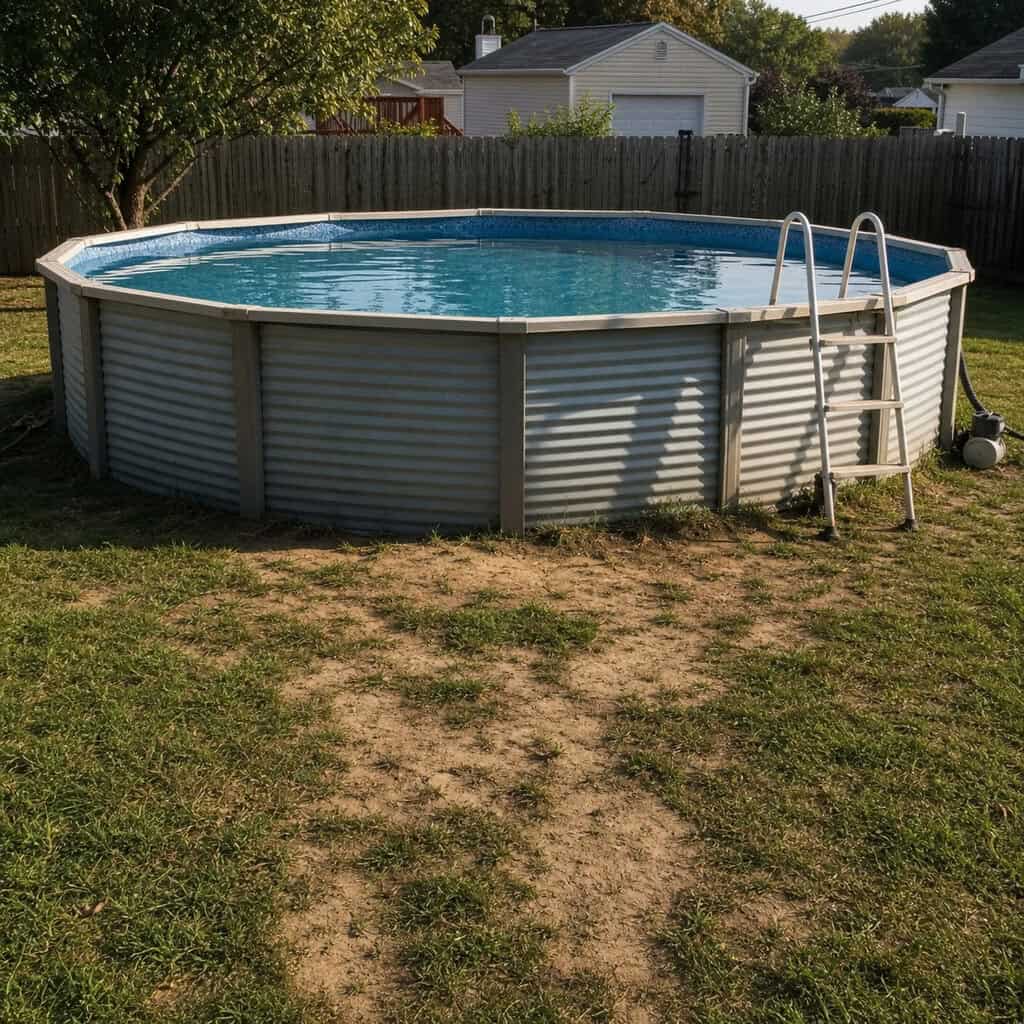
Here’s the one that shocks owners. An appraiser counts it at zero.
Because it’s removable, an above-ground pool is treated as personal property — same category as a trampoline. It doesn’t touch your appraised value.
Worse, it can actively shrink your buyer list. Some people see it as an eyesore, others as a thing they’ll have to drain and haul off.
You paid for it. The home’s value didn’t.
Take it with you when you go.
11. A Hot Tub

A hot tub feels like a perk. To most buyers, it’s a maintenance contract they didn’t sign.
They tally the energy cost, the chemicals, the cover replacements — and the safety worry if they’ve got small kids.
Built-in versions are the bigger trap. Pulling one out and patching the deck or patio isn’t cheap.
The appeal is narrow and personal. The upkeep is universal.
For a fixed asset, it acts a lot more like a liability.
12. A Koi Pond or Large Water Feature
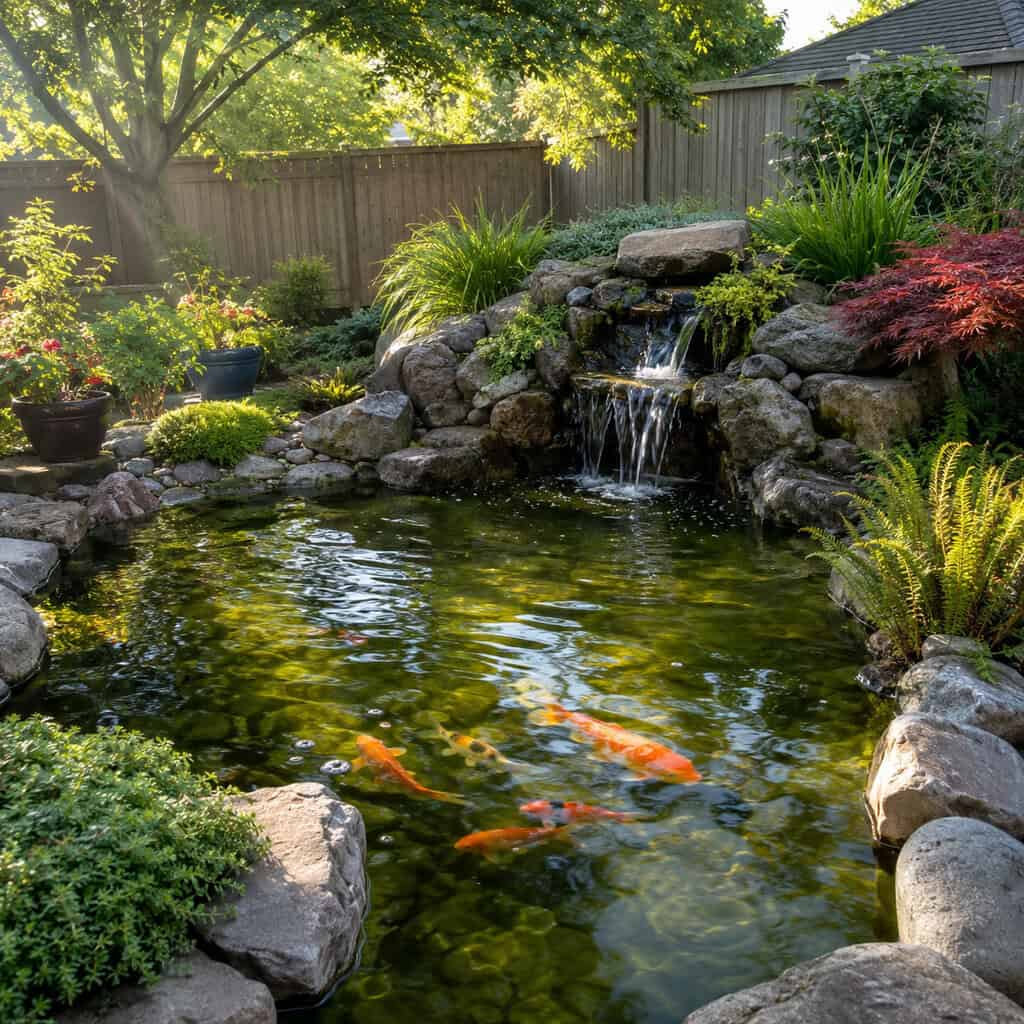
It soothes you every morning with your coffee. It terrifies the next owner.
Industry estimates put the average value decrease from water features near $10,500, and a koi pond alone can run about $2,000 a year to maintain.
Buyers see a pump that fails, a liner that leaks, algae, and a drowning hazard for kids and pets all in one.
“High maintenance” is the phrase agents hear over and over.
What looks impressive at an open house quietly drains the offer.
13. A Custom Fire Pit or Pizza Oven

The more specific the build, the smaller the audience for it.
A wood-burning pizza oven you used twice a summer is the textbook example. Outdoor-kitchen pros flag it directly: the next buyer almost never wants it.
Elaborate custom fire features land the same way. High cost going in, thin return coming out.
Niche builds don’t translate. Your dream setup is someone else’s demolition quote.
A simple, movable fire pit does more for resale than a built-in oven ever will.
14. Running Bamboo
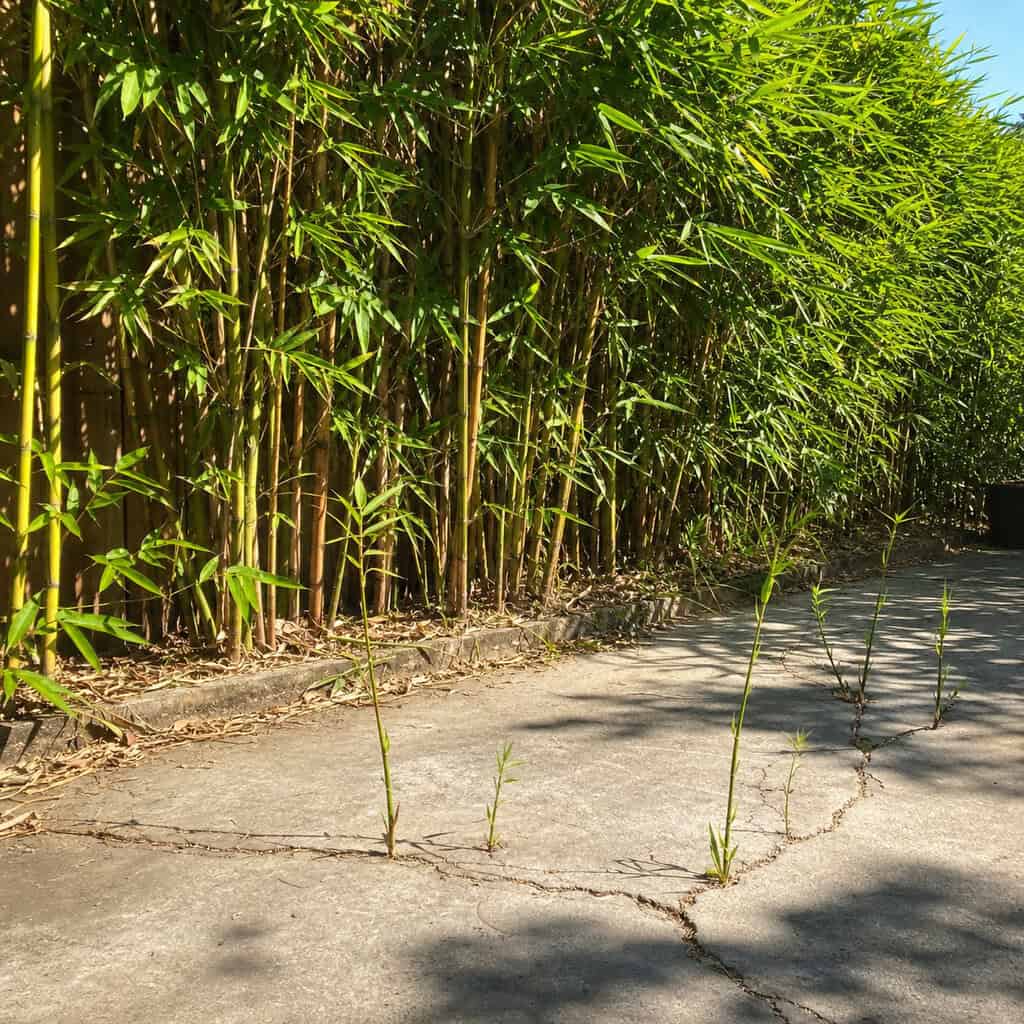
You planted it for privacy. You handed the next owner a five-figure problem.
Running bamboo sends rhizomes more than 20 feet underground, and they push straight through patios, driveways, and foundation cracks. Removal runs $5 to $15 a square foot.
Agents report that a visible infestation can knock 5 to 10% off value, and disclosure rules around it keep tightening.
Once it’s in, it’s a war. Buyers know it, and they price the war into their offer.
Inspectors look for it now. Don’t count on it staying invisible.
15. Japanese Knotweed and Invasive Vines
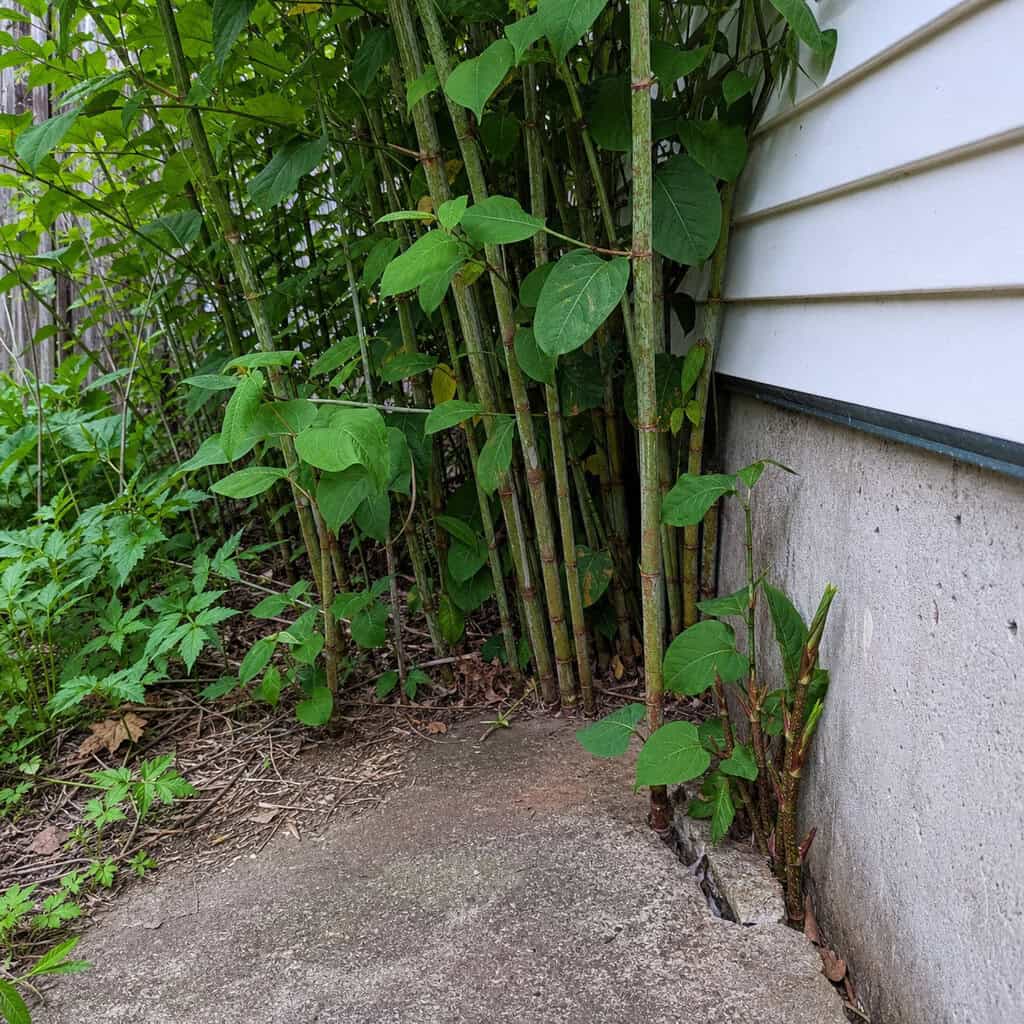
This is the plant that can block a mortgage outright.
Japanese knotweed grows through concrete and foundations, drops value 10 to 15%, and triggers disclosure obligations. Some lenders refuse to finance a home that has it.
English ivy and kudzu carry their own version of the stigma — structural damage and removal bills that don’t end.
Appraisers and inspectors actively hunt for these. A patch you’ve been ignoring becomes a deal-killer at the worst possible moment.
If it’s on your lot, deal with it before a contract depends on it.
16. Backyard Fruit Trees
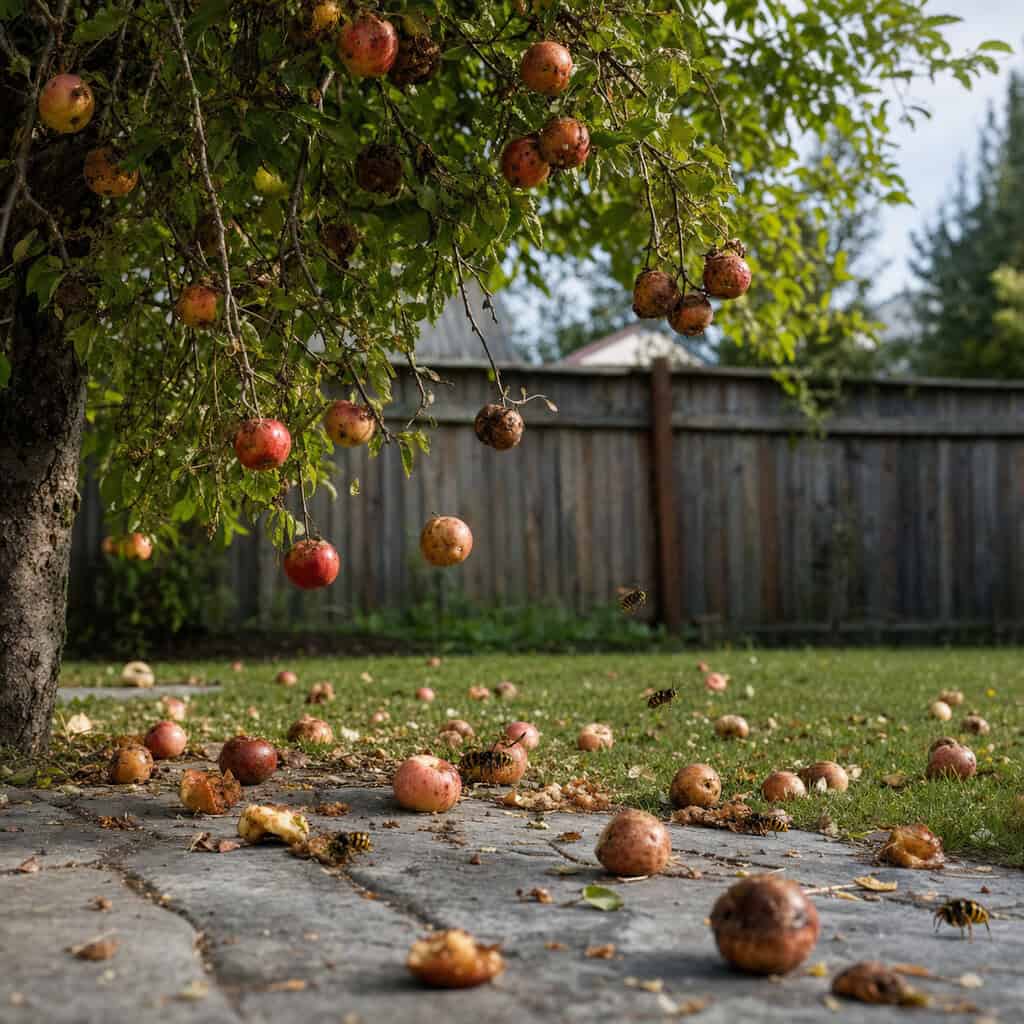
Free fruit sounds like a bonus. It doesn’t appraise like one.
Fruit trees drop messy, rotting fruit that stains patios and draws wasps, rodents, and deer. They demand spraying, pruning, and cleanup most buyers won’t sign up for.
So they generally don’t raise value — and a heavy, messy producer over a deck or driveway can pull it down.
It reads fresh because nobody expects it.
The apple tree you love is a fall cleanup chore to the person buying.
17. Over-Personalized Decor and Lawn Ornaments
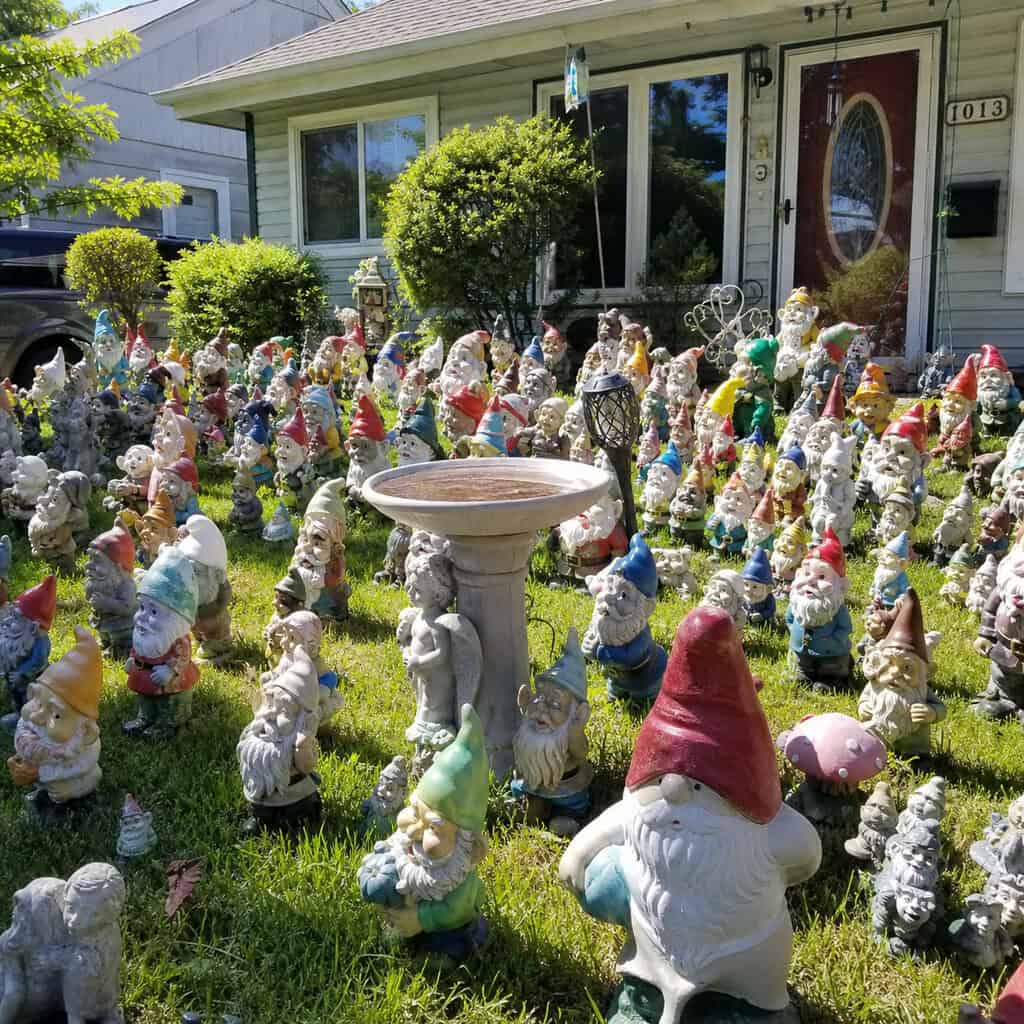
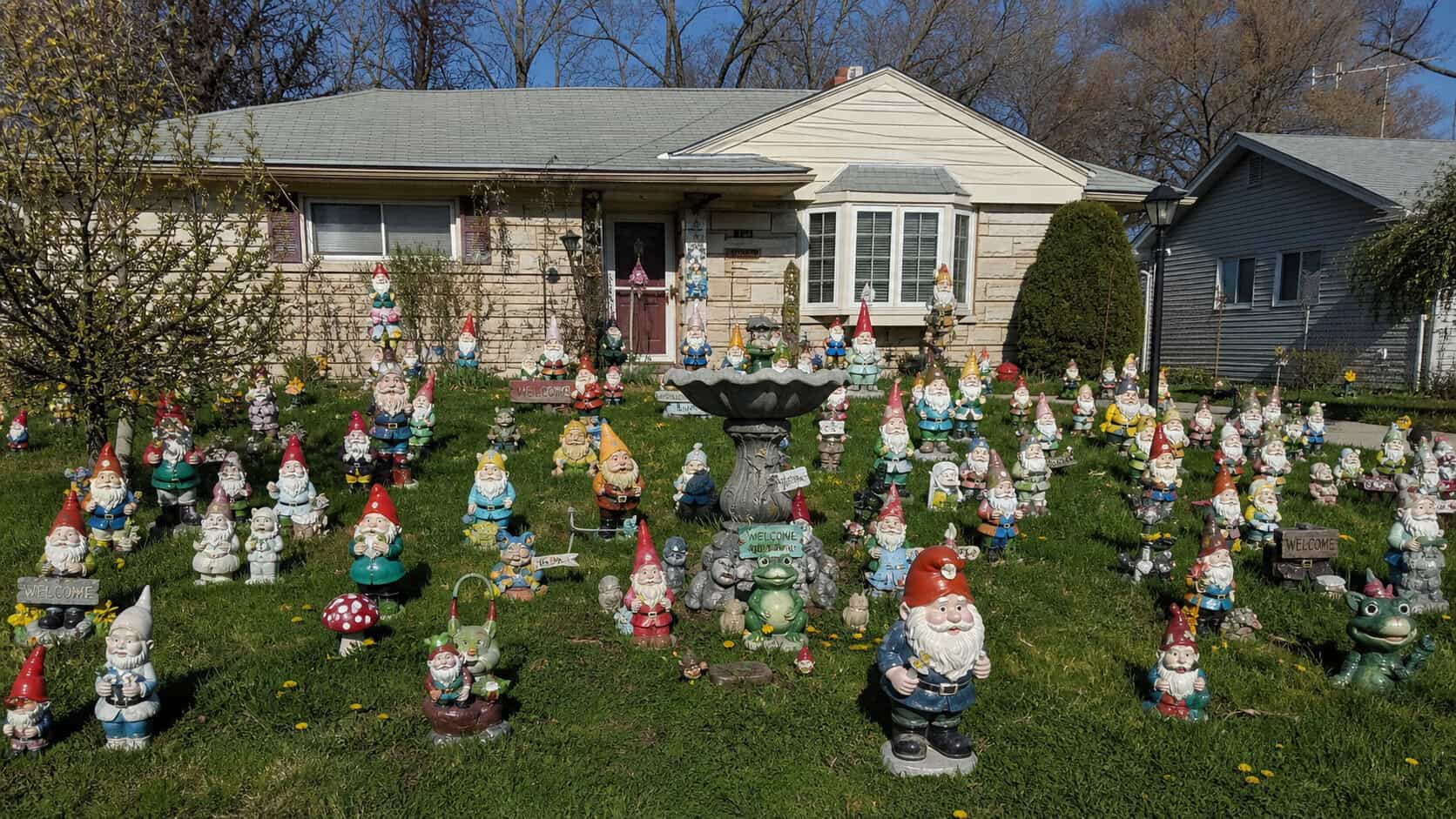
One gnome is charming. Forty gnomes is a removal project.
A yard crowded with statues, sculptures, or a college-team logo painted across the grass forces buyers to mentally budget the cleanup before they can picture themselves living there.
The advice agents give for the inside applies just as hard outside: think neutral.
Your personality is the obstacle here. Buyers need a blank canvas, not your collection.
Pack the menagerie before the photos go up.
18. Niche Themed Gardens

A cactus garden in Ohio looks out of place. A zen garden far from the Southwest reads as a hobby, not a yard.
Highly themed landscaping narrows your audience to people who share the exact theme.
High-maintenance rose gardens and elaborate topiary land the same way — beautiful, demanding, and not what the average buyer wants to keep alive.
Buyers want a neutral, low-effort canvas they can make their own.
Someone else’s specialized garden is just more work they’ll have to undo.
19. A Dilapidated Shed or Outbuilding

Peeling paint. A door that won’t shut. A gazebo leaning a few degrees off true.
A buyer doesn’t see storage. They see a demolition cost.
Run-down outbuildings read as deferred maintenance, and an unsafe structure becomes a flagged item at inspection — which means it becomes a negotiation against you.
The offer drops by whatever it takes to haul the thing away.
Either fix it so it stands proud, or tear it down before anyone walks the yard.
20. An Old, Leaning Fence

A sagging fence ages a whole property faster than almost anything else out there.
Leaning panels, missing boards, peeling paint, a gate that drags — every one of those signals neglect at the property line.
It raises security questions for buyers with dogs or kids, and it telegraphs repair bills before they’ve seen the back of the lot.
A tired fence drags down even a well-kept house. It’s the frame around everything else.
Straighten it, replace the bad panels, or pull it entirely.
21. A Dark Yard With No Lighting

Plenty of showings happen after work, in the evening, in the dark.
An unlit yard simply disappears. Your landscaping might be gorgeous, but at 7 p.m. in November the buyer sees a black void off the back door.
Darkness reads as unfinished. It reads as one more thing they’ll have to do.
It also feels less safe and makes the whole space seem smaller than it is.
The fix is cheap — a few path lights, a couple of fixtures. Which is exactly why skipping it stands out.
22. Weathered Outdoor Furniture and Tired Decor

You stopped seeing it years ago. The buyer sees it instantly.
A rotting picnic table, sun-bleached cushions, rusted chairs, decor that went out of style two trends ago — it all says the same thing. Nobody’s touched this yard in a long time.
Restoring worn outdoor furniture can run around $4,000 with little of it coming back at resale.
So don’t restore it. Haul off the dead pieces and let the space look clean and open.
Empty beats tired every time.
23. A Poorly Designed Sprinkler System

A good irrigation system is a selling point. A bad one is a warning sign.
Visible lines snaking across the lawn. Dry patches where the spray never reaches. Plants dying inside zones that should be thriving.
That tells a buyer the “upgrade” was done wrong, and a wrong sprinkler system is a headache to re-zone or replace.
The dead spots do the talking. They show coverage that doesn’t work.
Either tune it so it runs clean and even, or be ready to explain the brown patches.
24. A Vegetable Garden That Took Over the Yard
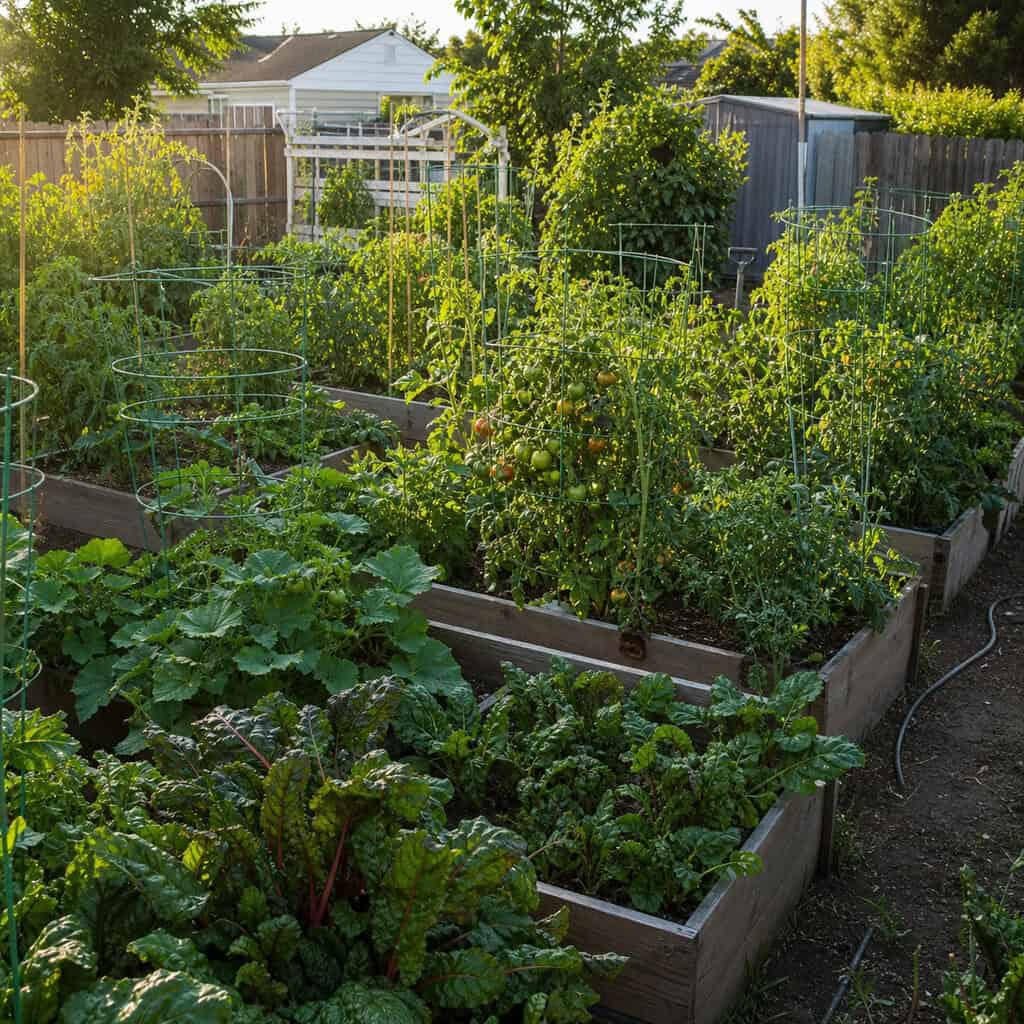
Raised beds are wonderful — until they’ve eaten the entire backyard.
A full homestead setup reads as high-maintenance to anyone who doesn’t garden, and most buyers don’t.
It also swallows the open lawn that families came looking for. Where do the kids play if every square foot is a tomato bed?
What feels like abundance to you feels like upkeep and a teardown to them.
Leave one tidy bed if you must. Give the rest of the yard back to grass before you list.
Conclusion
The thread running through all 24 is the same. Buyers don’t pay for your hobbies, your privacy screen, or your maintenance habits. They pay for a yard they can picture as their own with as little work as possible.
Most of these fixes cost less than you’d think. Cut the jungle back, fix the lawn, straighten the fence, haul off the dead furniture. The expensive ones — the pool, the bamboo, the knotweed — are worth knowing about precisely because buyers already know.
Walk your yard like a stranger seeing it for the first time. The things you’ve stopped noticing are the exact things they’ll notice first.
Whatever you’ve trained your eye to ignore, an offer is hiding behind it.
You are wrong about the artificial turf. In places where drought has became a major issue, watering is expensive, and city ordinance requirements dictate that you have to have to have green grass, turf is the only viable answer. And I am a Planning and Zoning professional.