


You know the lawn. The one three houses down that looks like it got rolled out of a sod farm yesterday. Deep green. Thick enough to lose a golf ball in. No dandelions, no brown patches, no bare spots by the mailbox.
And then there’s yours.
Here’s the part that’ll annoy you: that neighbor probably isn’t spending more money than you. They might be spending less. They’ve just figured out the handful of small things that move the needle — and they do them on time, every time.
Most of it isn’t hard. A lot of it is free. Some of it is the exact opposite of what you’ve been doing.
Here are 25 things people with great lawns do differently.
1. They Mow High — 3 to 4 Inches, Not 1 to 2

The number one mistake on most blocks? Scalping the lawn to stretch out the days between mows.
It backfires. Michigan State turf research shows grass kept at 3.5 to 4 inches out-competes weeds, shrugs off grubs, and looks every bit as good as a 2.5-inch cut.
Taller blades mean deeper roots. Deeper roots mean a lawn that doesn’t fry the first week of July.
Cutting short to save time actually makes more work. Raise the deck a notch and watch the weeds thin out on their own.
2. They Never Break the One-Third Rule

Take off more than a third of the blade in one pass and you strip away half the plant’s ability to feed itself.
That’s a Virginia Tech turf rule, and it’s the difference between a lawn that bounces back and one that thins into bare patches.
So great-lawn owners mow when the grass is about 50% over their target height. Only the top third comes off.
In a spring flush that might mean cutting two or three times a week. They do it anyway.
3. They Keep the Mower Blade Razor-Sharp

A dull blade doesn’t cut. It tears.
Those ragged, shredded tips turn brown within a couple of days and open the door to disease. Run your hand over a freshly cut lawn — if the tips look frayed, your blade’s done.
Pros sharpen roughly every 25 mowing hours. At a minimum, once a season.
It’s cheap, it takes ten minutes, and almost nobody does it. That’s exactly why their lawn looks better than yours.
4. They Change Up Their Mowing Pattern

Same direction every week feels efficient. It’s quietly hurting you.
Roll the same wheel tracks over the same lines and you compact the soil underneath. The grass learns to lean, and growth goes uneven.
The fix costs nothing. Alternate your direction — ideally at right angles to last time, every other mow.
Upright shoots, denser turf, no permanent ruts. Just from turning the mower a different way.
5. They Leave the Clippings on the Lawn
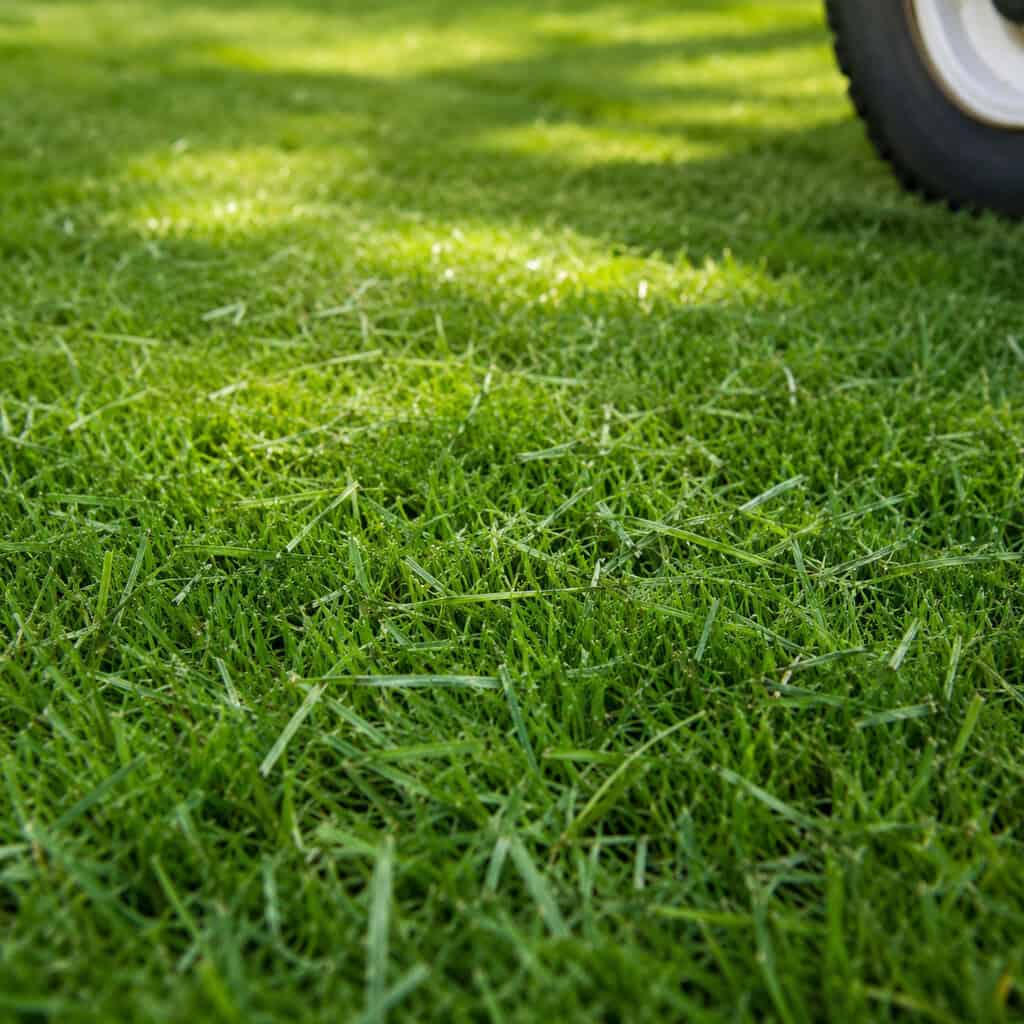
Bagging clippings feels tidy. It’s also throwing away free fertilizer.
Grass clippings are about 75 to 80% water. They break down fast and hand nitrogen right back to the soil.
And no, they don’t cause thatch. That’s an old myth that won’t die.
Leave them. Your lawn feeds itself, and you skip the trip to the curb with twelve heavy bags.
6. They Never Mow Wet Grass
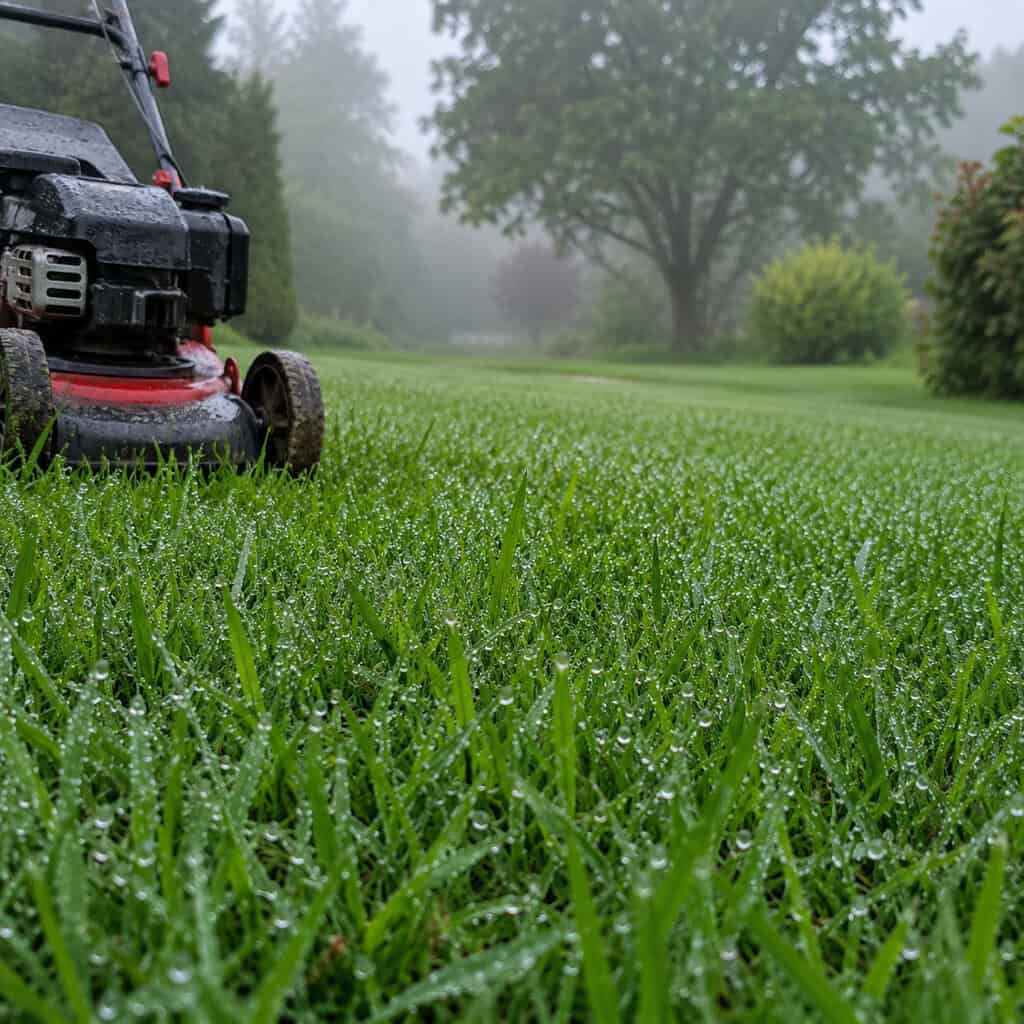
Wet blades bend away from the mower instead of standing up to be cut. What does get hit gets shredded.
The clippings clump together, fall in soggy mats, and smother the grass underneath. Worse, a mower rolling over soft, wet ground compacts the soil and smears fungal disease from one corner of the yard to the other.
Great-lawn people wait for the dew to burn off.
The impatient ones mow because it’s Saturday and Saturday is mow day. You can see the difference from the street.
7. They Water Deeply and Infrequently

A little water every day sounds caring. It raises a needy, shallow-rooted lawn that falls apart the second a heat wave hits.
Light daily sprinkles keep roots up near the surface where it’s hot and dry. They also keep the lawn damp enough to invite disease.
Instead, soak it. Once or twice a week, deep enough to wet the top six inches of soil.
That drives roots down where the moisture lasts. Drought hits, and your lawn barely notices.
8. They Water at Dawn, Not Dusk
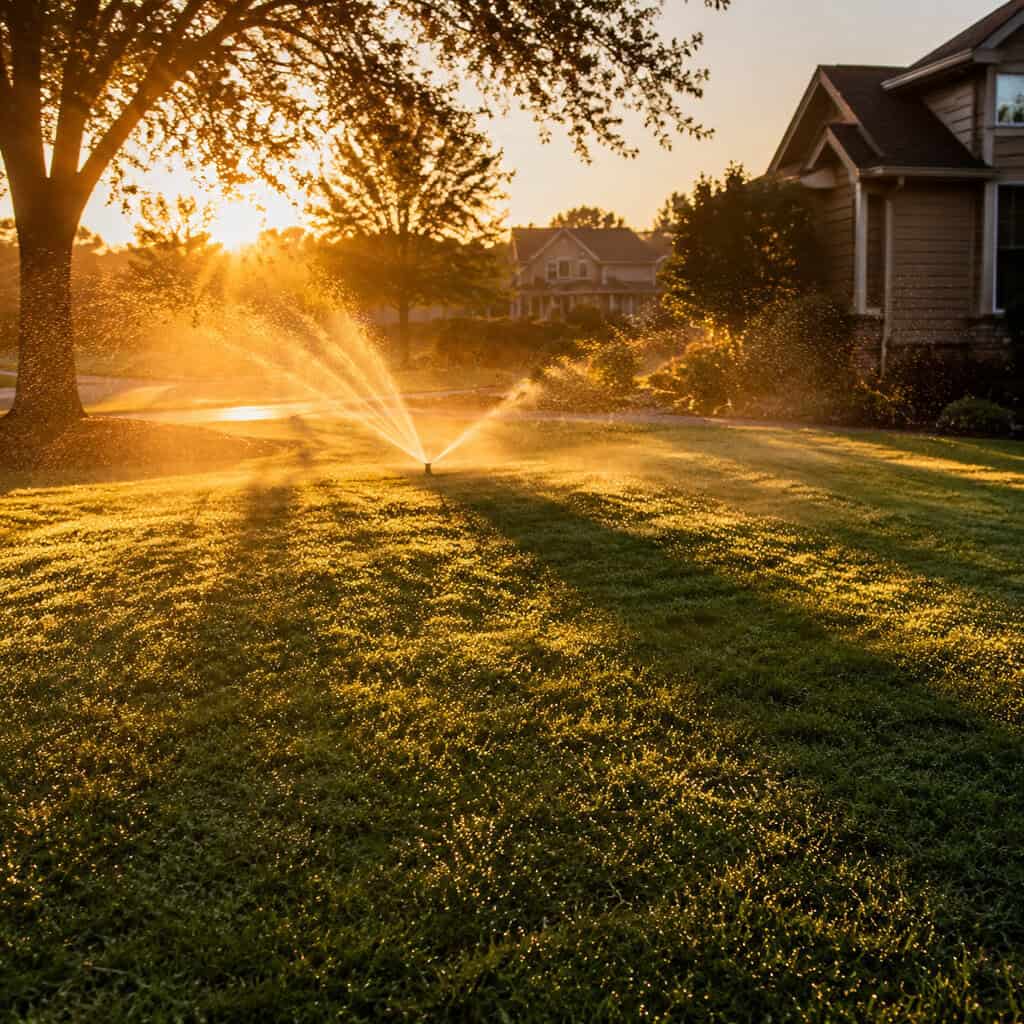
The window that matters is roughly 5 to 10 a.m.
It’s cool, the wind is calm, and very little water evaporates. The blades have all day to dry off before nightfall.
Water at noon and you can lose up to half of it straight to evaporation. Water at night and the grass sits wet for hours — a fungus buffet.
Most people water in the evening because that’s when they’re home. Set the timer for dawn instead and forget about it.
9. They Actually Measure With the Tuna-Can Trick
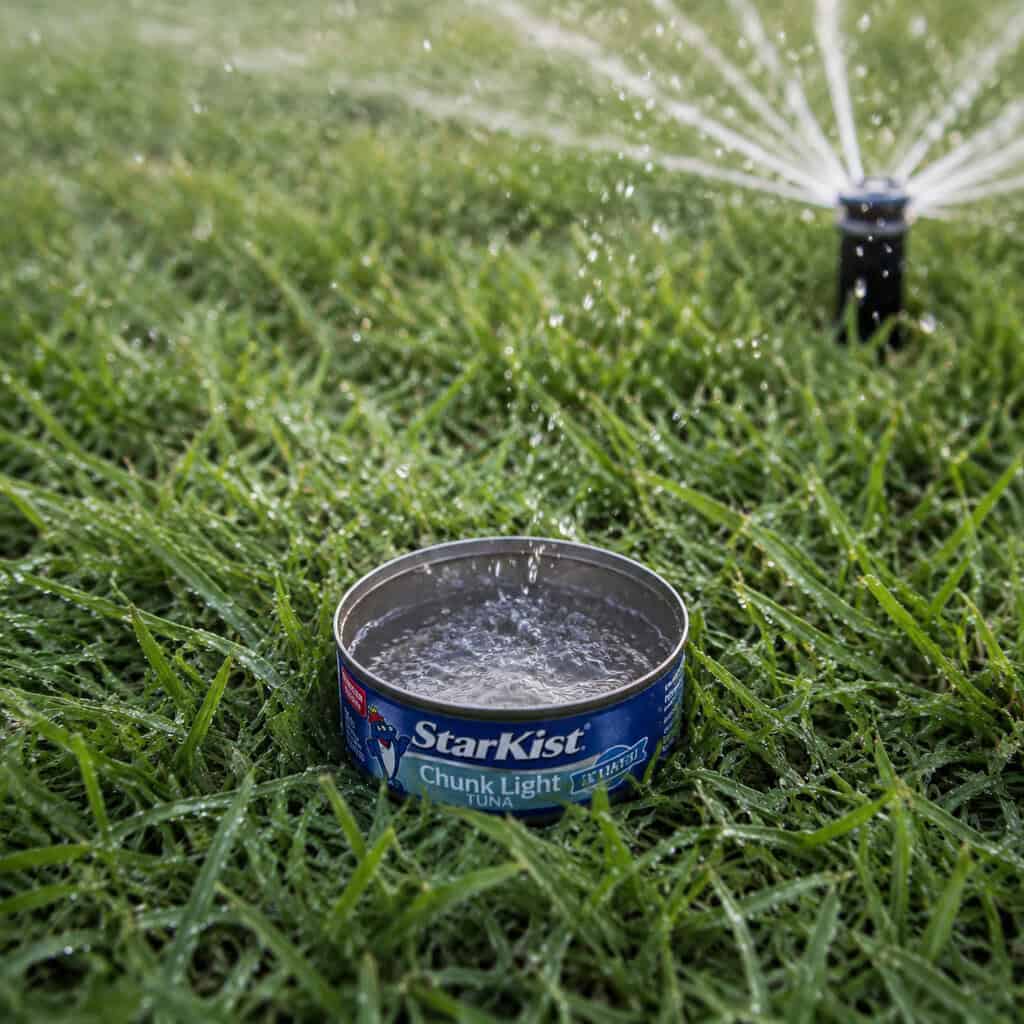
Your lawn wants about 1 to 1.5 inches of water a week. Pros don’t guess at that number. They measure it.
Set an empty tuna can out on the grass while the sprinklers run. When it’s full, you’ve hit an inch. Now you know exactly how long your zones need.
No can handy? Push a screwdriver into the soil — if it slides in six inches, you’re soaked deep enough.
Do it tonight. It’s the cheapest upgrade on this list.
10. They Get a Soil Test

This is the quiet pro secret almost no DIYer bothers with.
Feed and water all you want — if your soil pH is off or a nutrient is missing, you’re shouting into a hole. Off pH locks nutrients away no matter how much fertilizer you dump.
Pros pull small soil cores from 8 to 10 spots around the yard and mail them to an extension lab every two or three years. It costs less than a bag of fertilizer.
You stop guessing. You start feeding exactly what the lawn is short on.
11. They Fix Their Soil pH With Lime or Sulfur

Most turf wants a pH between 6.0 and 7.0. Drift outside that range and the grass yellows no matter how often you feed it, because the nutrients are chemically locked up.
New-construction lots often test sour — down around 5. Southwest soils tend to run alkaline the other direction.
Lime raises pH. Sulfur lowers it.
But only touch it after a soil test tells you to. Overcorrecting is worse than leaving it alone, so this is one place to follow the numbers, not a hunch.
12. They Fertilize on a Schedule — Right Product, Right Time

When you feed matters as much as what you feed.
The best fertilizer in the world does nothing — or active harm — dumped on at the wrong moment. Most homeowners do one random spring application and call it done.
Pros feed in sync with how the grass is actually growing. A fall feeding builds deep roots and sets up a fast, even green-up next spring.
Match the product and the timing to the season. That’s the whole game.
13. They Core-Aerate Compacted Soil

Walk your lawn after a rain. If water puddles and sits, or the grass is thin and hard underfoot, your soil’s compacted.
Here’s the test pros use: jam a screwdriver into the ground. If it won’t slide in easily, air, water, and nutrients can’t either — and your roots are suffocating.
Core aeration fixes it. A machine pulls thousands of little plugs of soil out of the lawn, opening up channels for roots to breathe and dig deeper. Those plugs break down on the surface within a couple of weeks, so don’t rake them up.
This is different from a spike aerator, which just punches holes and shoves the compaction sideways. You want cores pulled out, not just poked.
Clay soils and high-traffic yards — the spot where the kids cut across, the path to the gate — need it once a year during peak growth. Cool-season lawns in fall, warm-season lawns in late spring.
You can rent a core aerator for an afternoon, or hire it out. It’s one of the most common lawn-service upsells, and for good reason — it’s heavy, awkward work. But the result is dramatic: a lawn that drinks water instead of shedding it.
14. They Overseed Every Fall
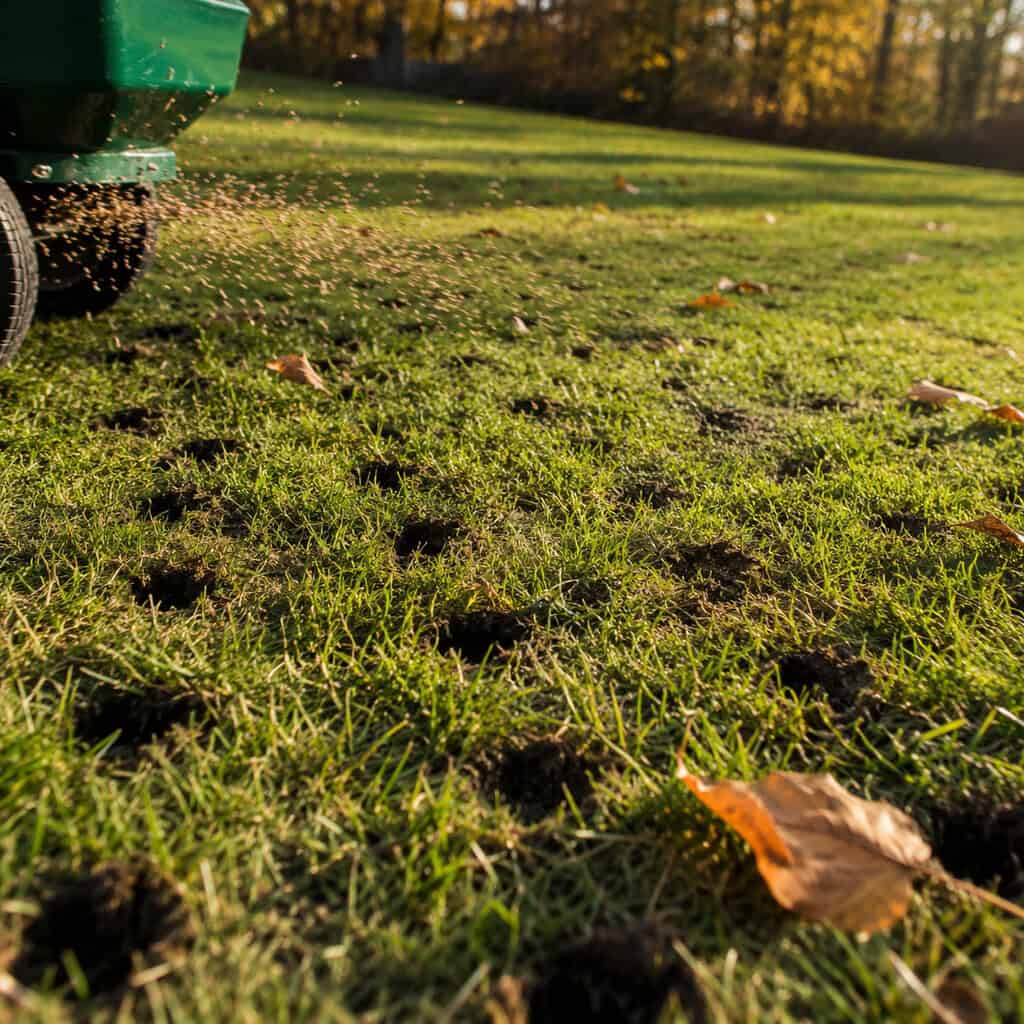
Even a healthy lawn thins out a little every year. Great-lawn owners stay ahead of it.
Fall is the sweet spot — cool soil, warm days, and barely any weeds competing for the new seed.
The pro move is to overseed right after aerating, so the seed drops into those open holes and gets real soil contact. Aeration and overseeding are practically a package deal.
Most folks only reach for seed once there’s already a bald patch staring at them. By then they’re playing catch-up.
15. They Dethatch — But Only When It’s Actually Needed
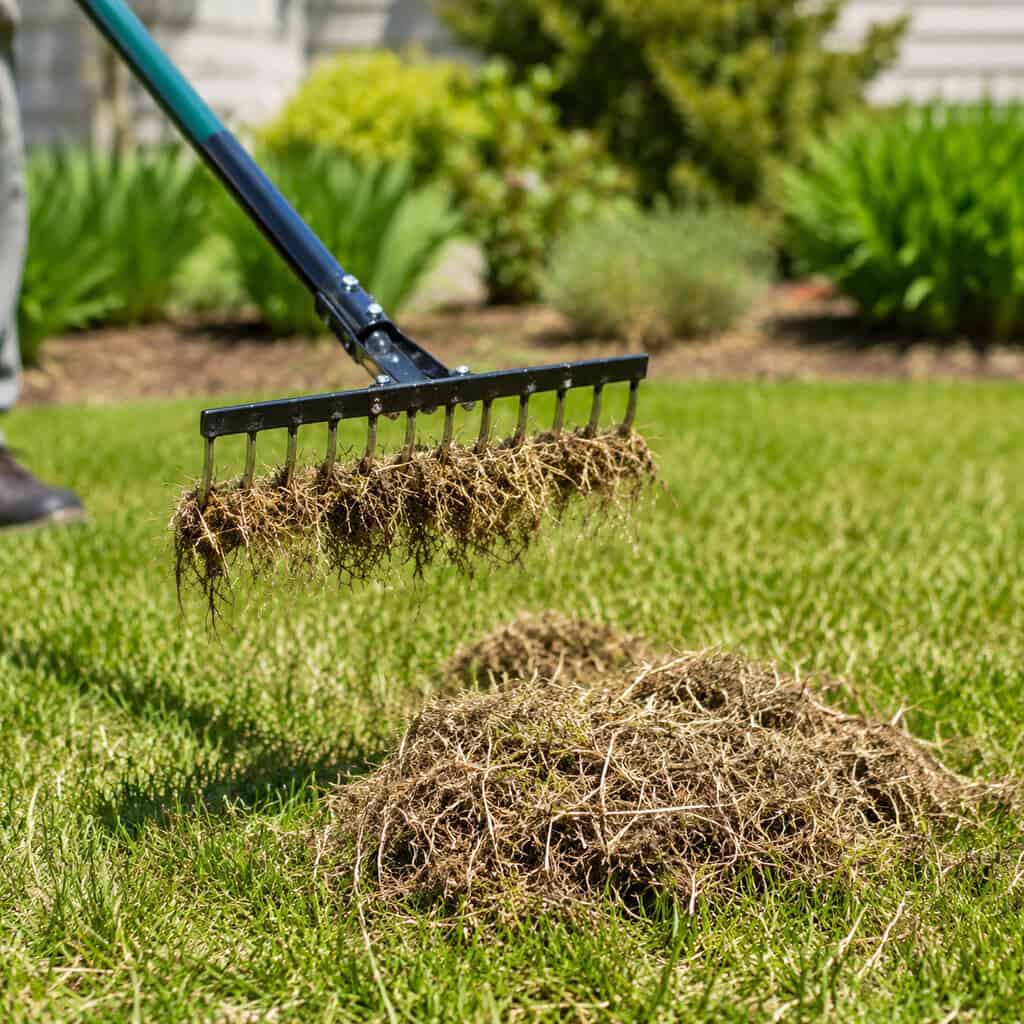
Thatch gets a bad rap. A half-inch of it is healthy — it insulates the crown and holds a little moisture.
Past about three-quarters of an inch, though, it starts blocking water and air from reaching the soil.
The thing pros know that most people don’t: your lawn probably doesn’t have a thatch problem at all. Check before you tear into it.
And if you do dethatch, do it during active growth — never too early in spring, when ripping up the lawn just stresses it and hands the weeds an opening.
16. They Put Pre-Emergent Down on Soil Temperature, Not the Calendar
This is the crabgrass secret, and it comes down to timing.
Crabgrass preventer doesn’t kill existing weeds. It forms a barrier that stops seeds from sprouting — which means it has to be in the soil before they germinate.
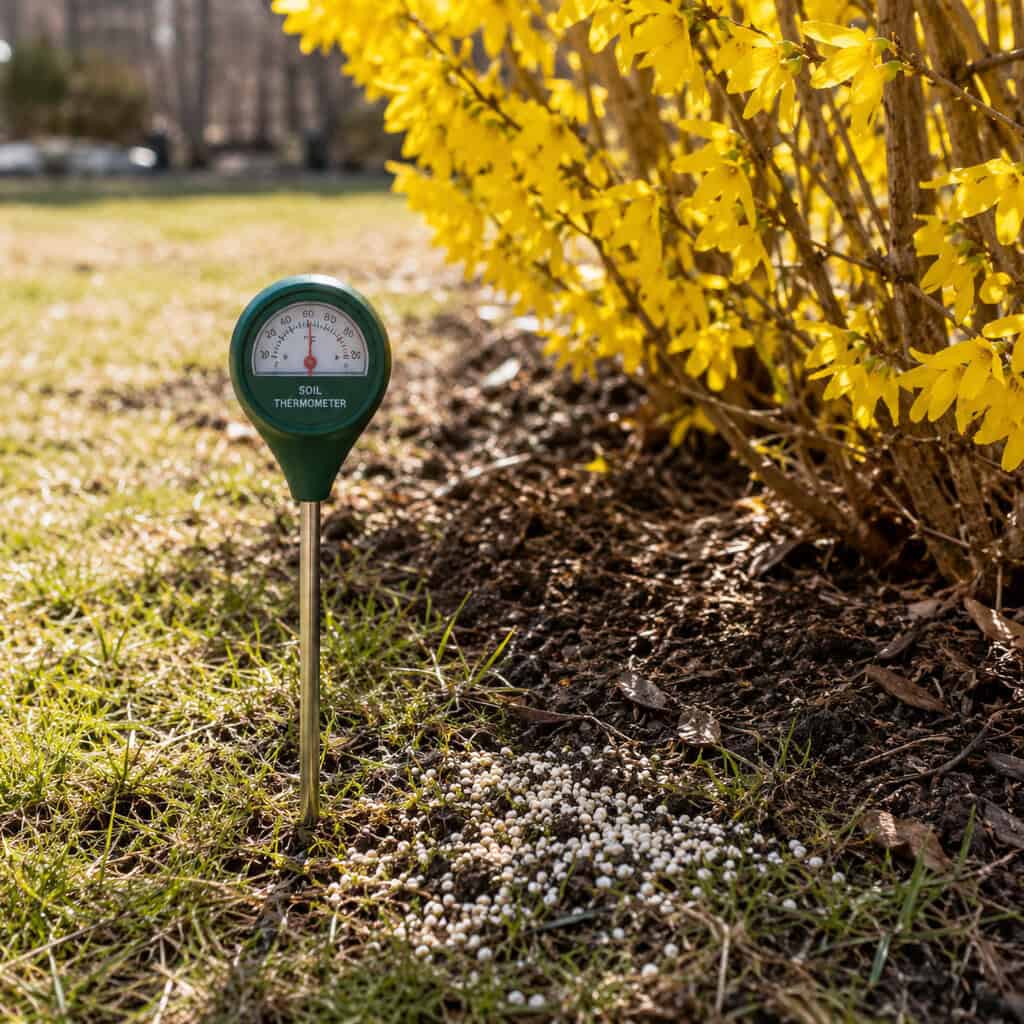
The trigger is soil temperature, not a date on the calendar. Crabgrass starts waking up when the soil holds around 55°F at a two-inch depth, and 80% of it sprouts between 60 and 70°F.
Pros track soil temps with a cheap probe. No probe? Watch the forsythia bushes. When those yellow blooms start dropping, your window is closing fast.
Apply by the calendar and you’ll be late most years — the crabgrass is already up, and the barrier does nothing.
One more step people skip: water it in. Most pre-emergents need about a half-inch of water within a few days to activate and form that barrier in the soil. Put it down, then irrigate or time it before a rain.
17. They Spot-Treat Weeds Before They Spread

A few dandelions is a five-minute job. A lawn that’s gone half-weed is a season-long rescue mission.
One crabgrass plant can drop up to 155,000 seeds. Let it go, and you’re not fighting a weed — you’re fighting next year’s whole crop.
So great-lawn owners patrol. They knock out young weeds while those weeds are small and actively growing, when the treatment actually works.
Walk the yard with a bottle of spot weed killer. Catch them early and you’ll never need to nuke the whole thing.
18. They Give the Lawn Iron for Deep Green Color
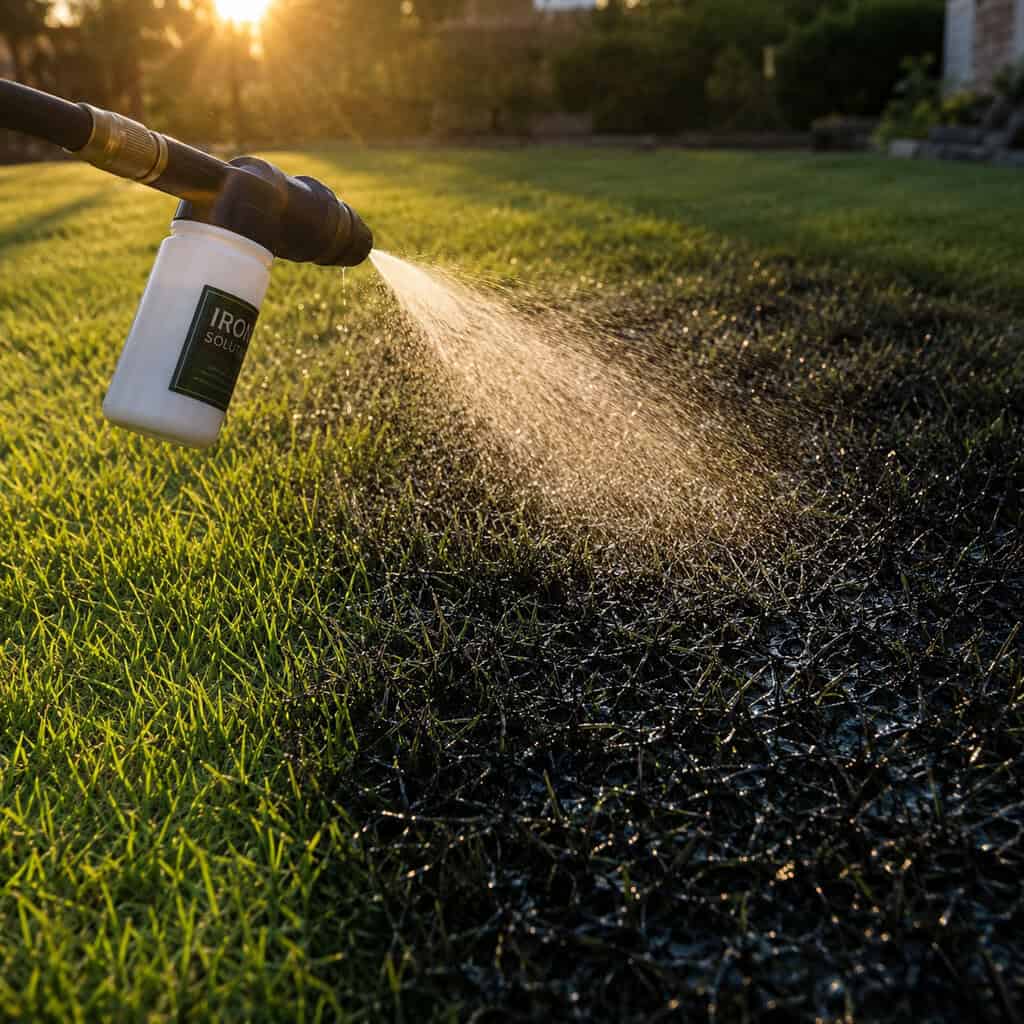
Want that dark, almost-blue green you see on golf courses? It’s not always more nitrogen.
Nitrogen turns the lawn green, sure — but it does it by forcing a flush of growth that means more mowing and a stressed lawn.
Iron deepens the color without all that surge. A genuine pro touch most homeowners have never even tried.
One warning: water it in. Iron will stain concrete, pavers, and patio stone in a heartbeat, so keep it off the hardscape and rinse it down into the grass.
19. They Stay Ahead of Grubs and Insects
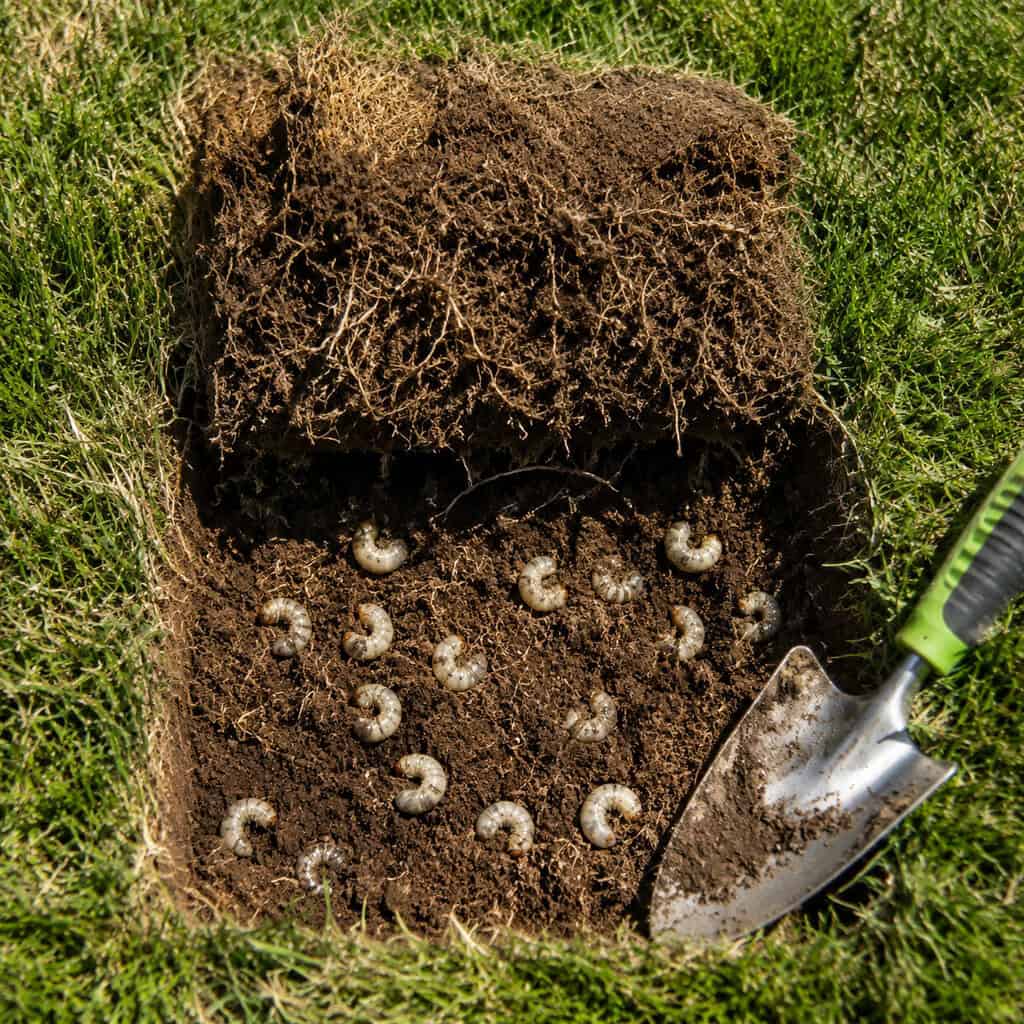
Grubs do their worst work where you can’t see it — chewing through grass roots a few inches down.
By the time you notice, the damage is done. The telltale sign is brown patches you can grab and peel back like a loose carpet, because the roots holding the turf down are simply gone. Birds, skunks, and raccoons tearing up the lawn at night is another tip-off — they’re digging for the grubs.
Scouting beats reacting. Cut out a square foot of sod a few inches deep in mid-to-late summer and flip it over. More than five or six fat, C-shaped white grubs under there means it’s time to act.
This is where mowing high pays off again. A taller, deeper-rooted lawn tolerates a grub population that would wreck a scalped one — it simply has more root to spare.
Timing matters. Preventive products go down in early summer before the new generation hatches; curative ones target the young grubs feeding in late summer and early fall. Miss the window and you’re stuck waiting until next year.
If you flip that sod and find a dozen grubs per square foot, or the brown patches are spreading faster than you can keep up, call a pro. Grub damage isn’t worth gambling on.
20. They Picked the Right Grass for Their Region
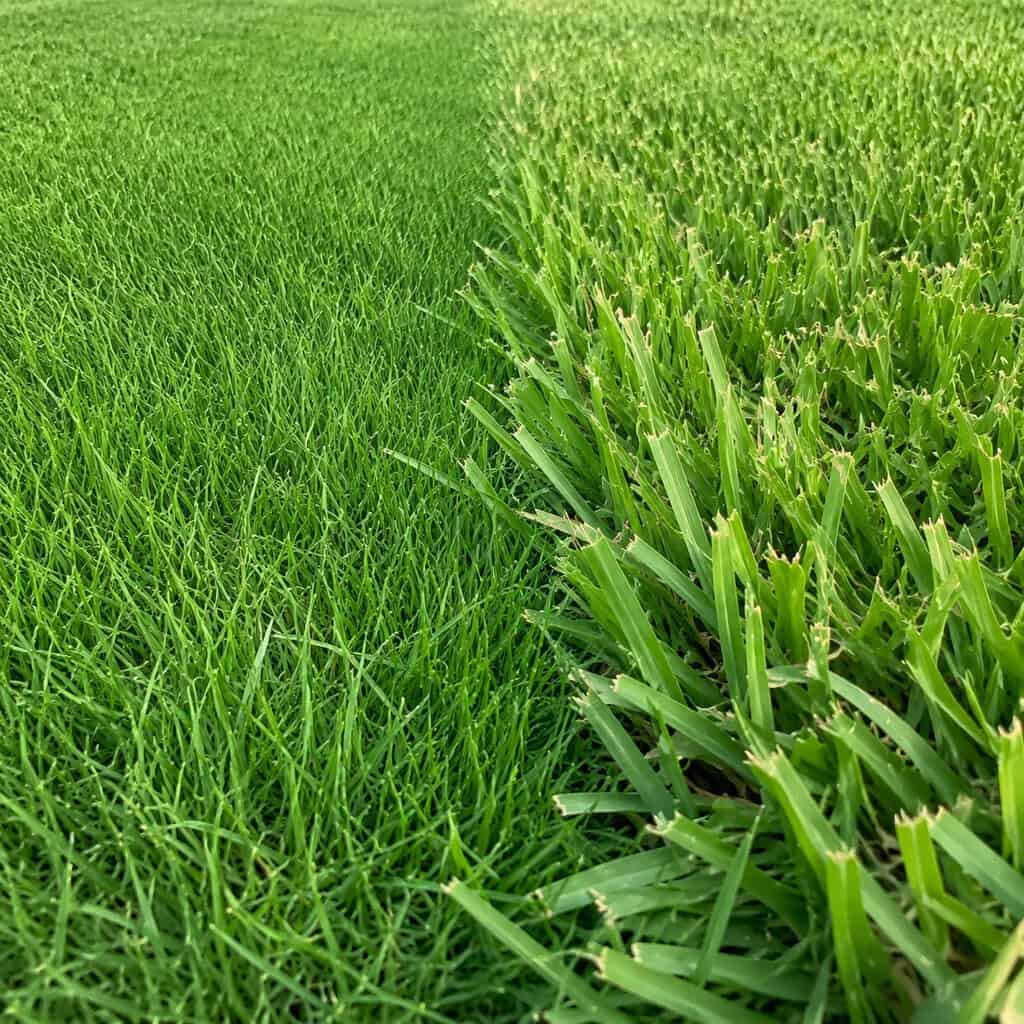
Half the people fighting their lawn are simply growing the wrong grass for where they live.
Cool-season grasses — Kentucky bluegrass, fescue, ryegrass — belong up north. Warm-season types like Bermuda, zoysia, and St. Augustine want the south. There’s a tricky transition zone in the middle where it gets complicated.
Match the grass to your climate, your sun, your soil, and your foot traffic, and everything gets easier.
Less water. Less fertilizer. Less labor. The right grass works with you instead of against you.
21. They Started With Premium Seed and Quality Products

A great lawn is a lot easier to keep great when it started out thick.
Premium, coated seed comes in denser and stronger than the cheap stuff — and a dense lawn is the one that stays lush with less fussing.
Commercial-grade fertilizers and biostimulants outperform the bargain bags too. Pros know it, which is why they don’t shop on price alone.
The store-brand shortcut feels smart at checkout. It quietly caps how good your lawn can ever get.
22. They Manage Pet Urine Spots
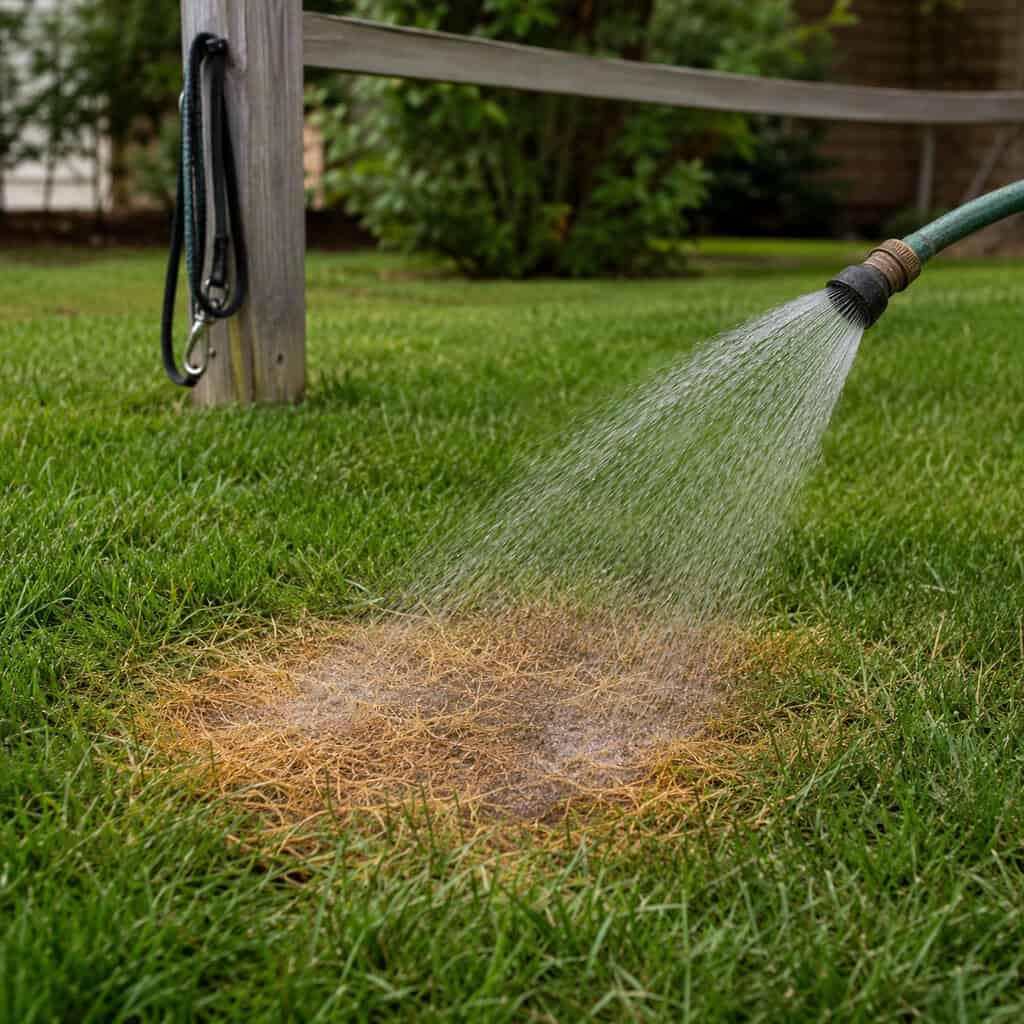
Love the dog, hate the yellow polka-dots. Those burns are concentrated nitrogen, and too much of it scorches the grass — sometimes kills it outright.
Great-lawn owners with dogs have a plan. Some train the dog to one designated potty corner, mulched or graveled, and keep it off the showpiece turf.
Others just keep a hose handy and rinse the spot right after. A good soak of water dilutes the nitrogen before it can do real damage.
Either way, they don’t pretend the dog isn’t happening. They manage it.
23. They Keep the Mower Itself Tuned Up

A great lawn needs a healthy machine, and pros treat the mower like a car.
Clean the deck so clippings don’t cake up and fall in clumps. Change the oil. Check the spark plug. Keep the air filter clean.
A neglected mower bogs down, scalps in patches, and spits soggy clumps all over an otherwise nice cut.
Most homeowners run theirs into the ground without a single tune-up. Then they wonder why the cut looks rough.
24. They Let Thick Turf Be Its Own Weed Control

Ask a pro for their best weed-control trick and the answer might surprise you: grow more grass.
A dense, healthy stand of turf crowds weeds out before they ever get a foothold. There’s no bare soil, no sunlight reaching the ground — nowhere for a seed to start.
Mow high, overseed, feed on schedule, and the lawn becomes its own defense system.
Do all of that, and you reach for the weed killer less and less. Density does the work for free.
25. They Don’t Panic Over a Brown Summer Lawn
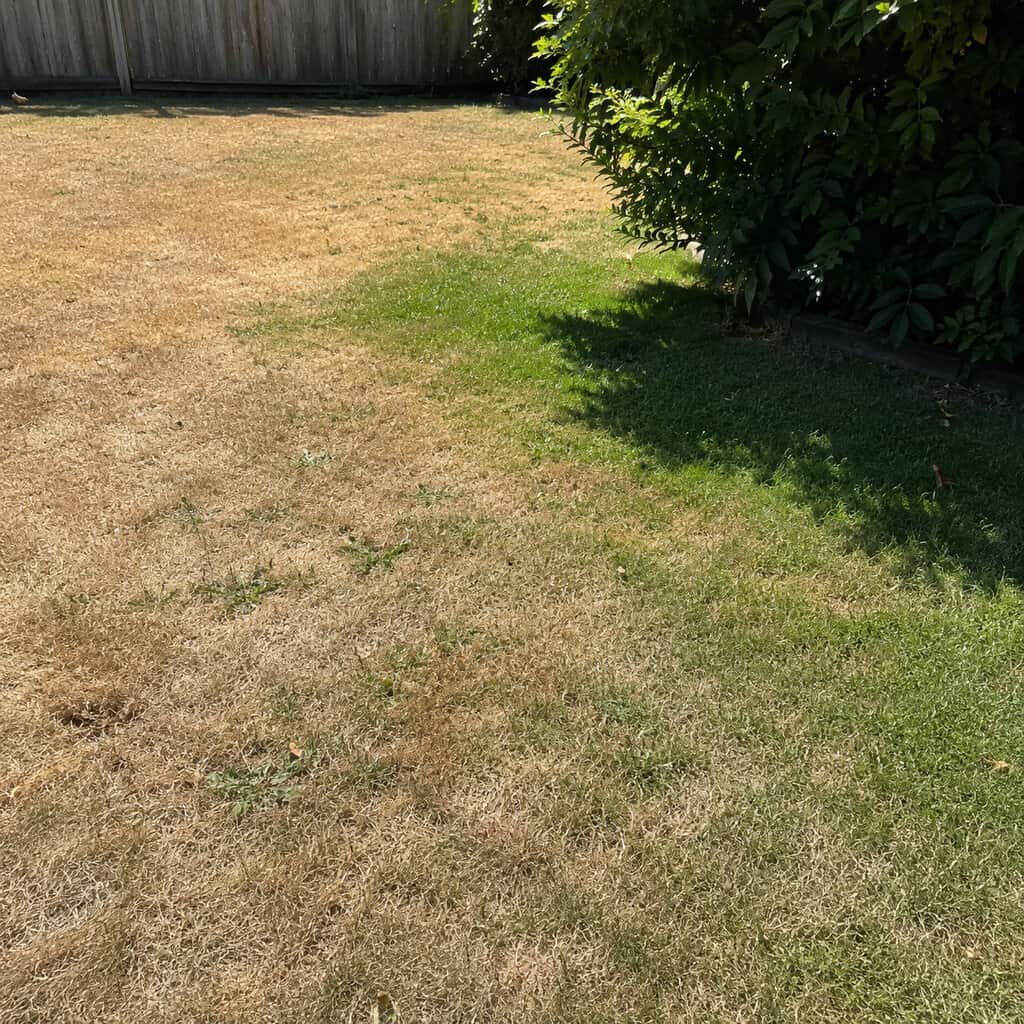
A brown lawn in August isn’t always a dead lawn. Often it’s just napping.
A well-kept lawn can go dormant in serious heat — it browns out, slows down, and waits for cooler, wetter weather to bounce right back. It’s a survival trick, not a death sentence.
Panicking and drowning it in water or hitting it with fertilizer during that stress can do more harm than the heat ever would.
Pros keep their cool. They know the difference between dormant and dead, and they let the lawn ride it out.
The Bottom Line
None of this is secret knowledge locked behind a fence. It’s mowing high, watering deep, feeding on time, and not panicking when the weather turns.
The neighbor with the perfect lawn isn’t gifted. They’re just consistent — and most of their wins are the free, boring habits you’ve been skipping.
Pick three from this list and start this weekend. Mow a notch higher, leave the clippings, water at dawn.
By next season, somebody on your block will be wondering what you’re doing differently.