

Most flowers give you three good weeks and then quit.
You plant a tray of petunias in May, they look gorgeous through June, and by August they’re leggy, crispy, and done. Then you’re back at the garden center buying mums to cover the gap.
That cycle gets expensive. It also gets exhausting.
There’s a better way to fill a yard, and it’s built around plants that refuse to take the season off. Some bloom literally year-round in mild climates. Others rebloom in waves spring through frost, then hand the show off to a winter performer next to them.
The trick is picking the right ones and pairing them so something is always open. Here are 19 plants that keep the color coming when the annuals have long since given up.
1. Geranium (Pelargonium)
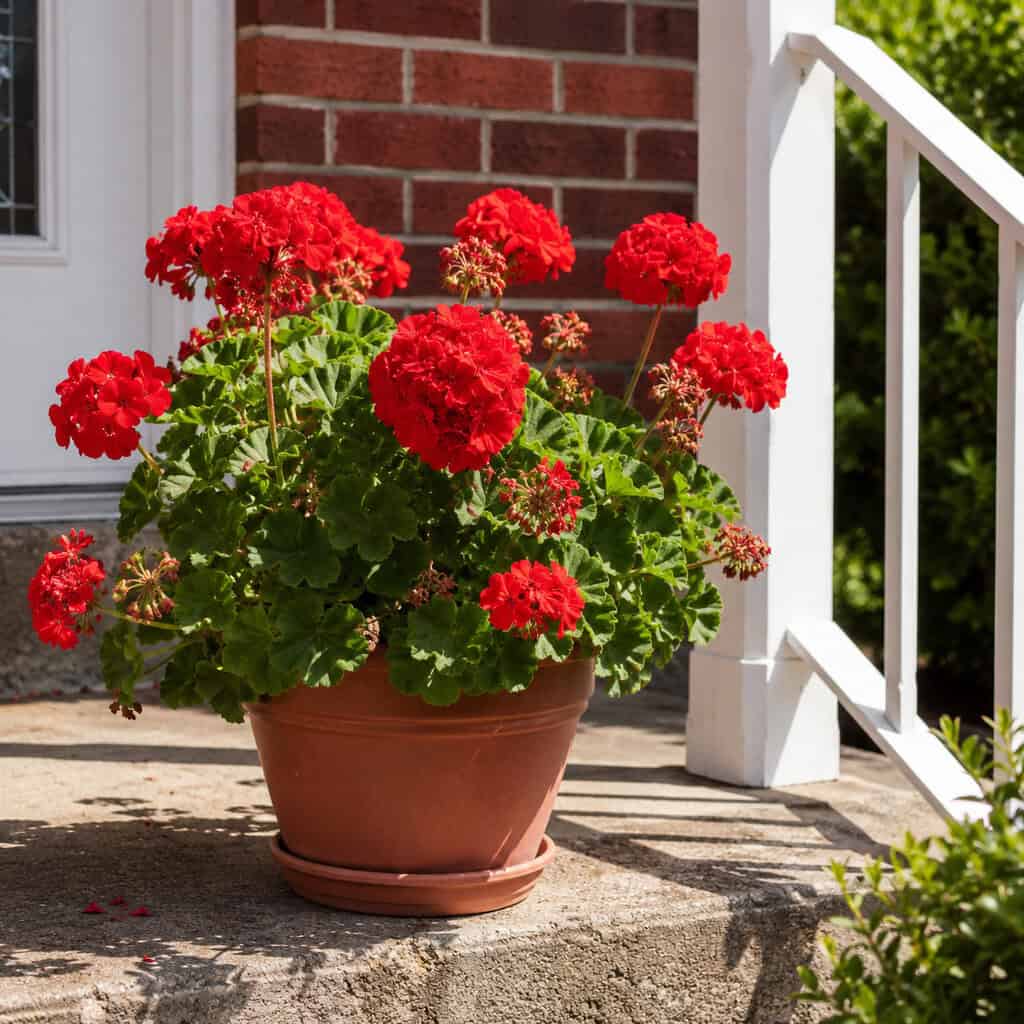
Geraniums don’t know when to stop.
In USDA zones 10 and 11 they flower all year outdoors. Everywhere else, they bloom from spring straight through the first hard frost, then keep going indoors on a bright windowsill.
Deadhead the spent clusters and they’ll push new ones within days. Skip the deadheading and they sulk.
Give them six hours of sun and let the soil dry between waterings. They actually flower harder when they’re a little stressed.
2. Lantana
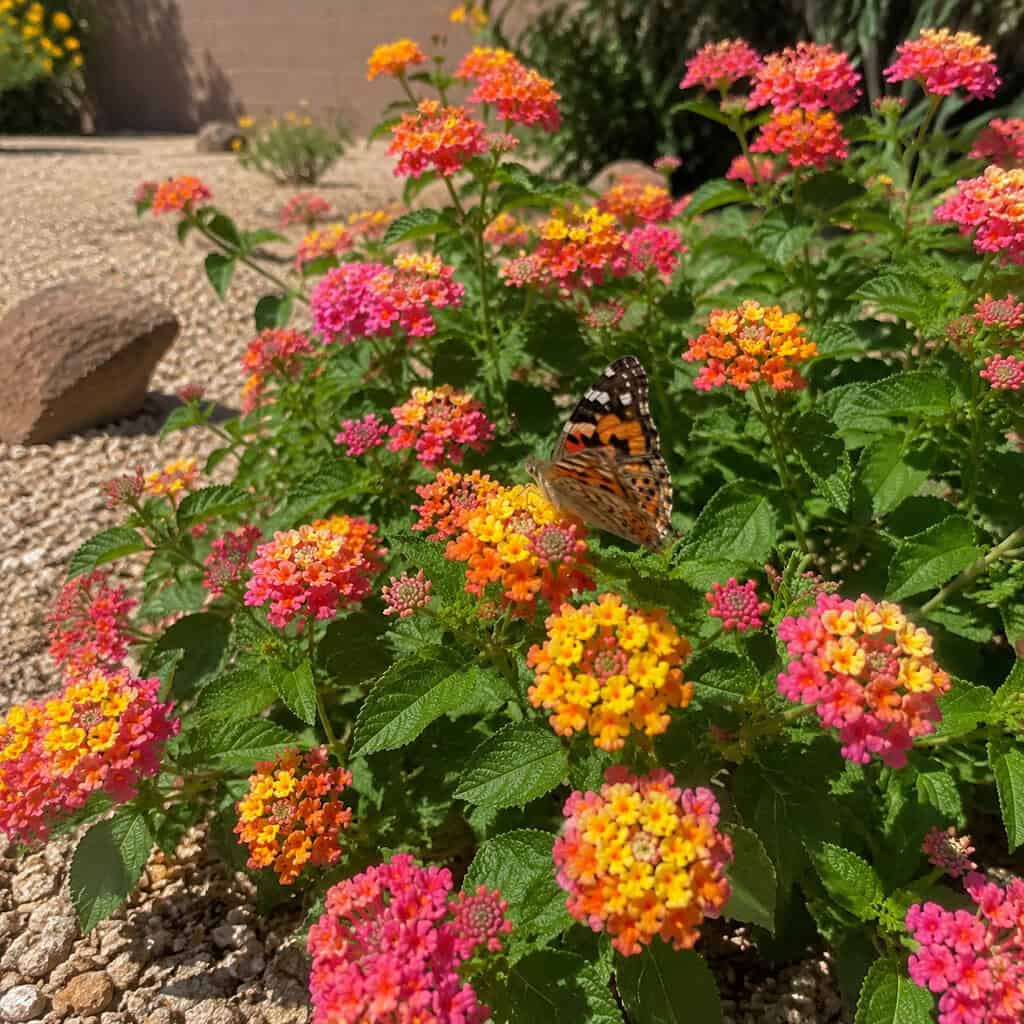
Few plants take heat like lantana.
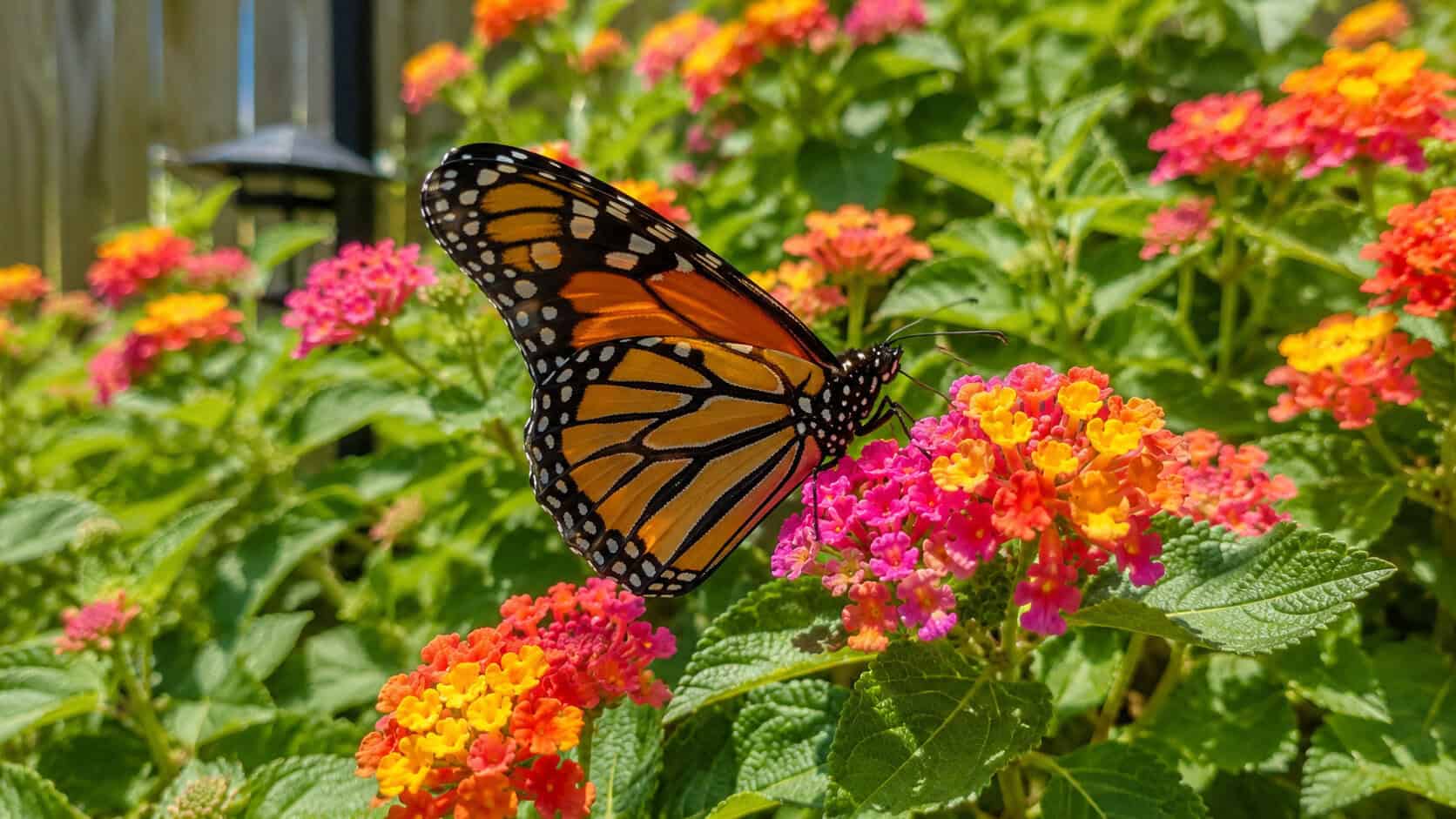
It blooms continuously from spring until frost in most of the country, and truly year-round in zones 9 through 11. The flower clusters shift color as they age, so a single plant shows orange, pink, and yellow at once.
Butterflies swarm it. Deer leave it alone.
It wants full sun and almost no babysitting. Overwater it and you’ll get leaves instead of flowers.
3. Begonia (Wax and Tuberous)
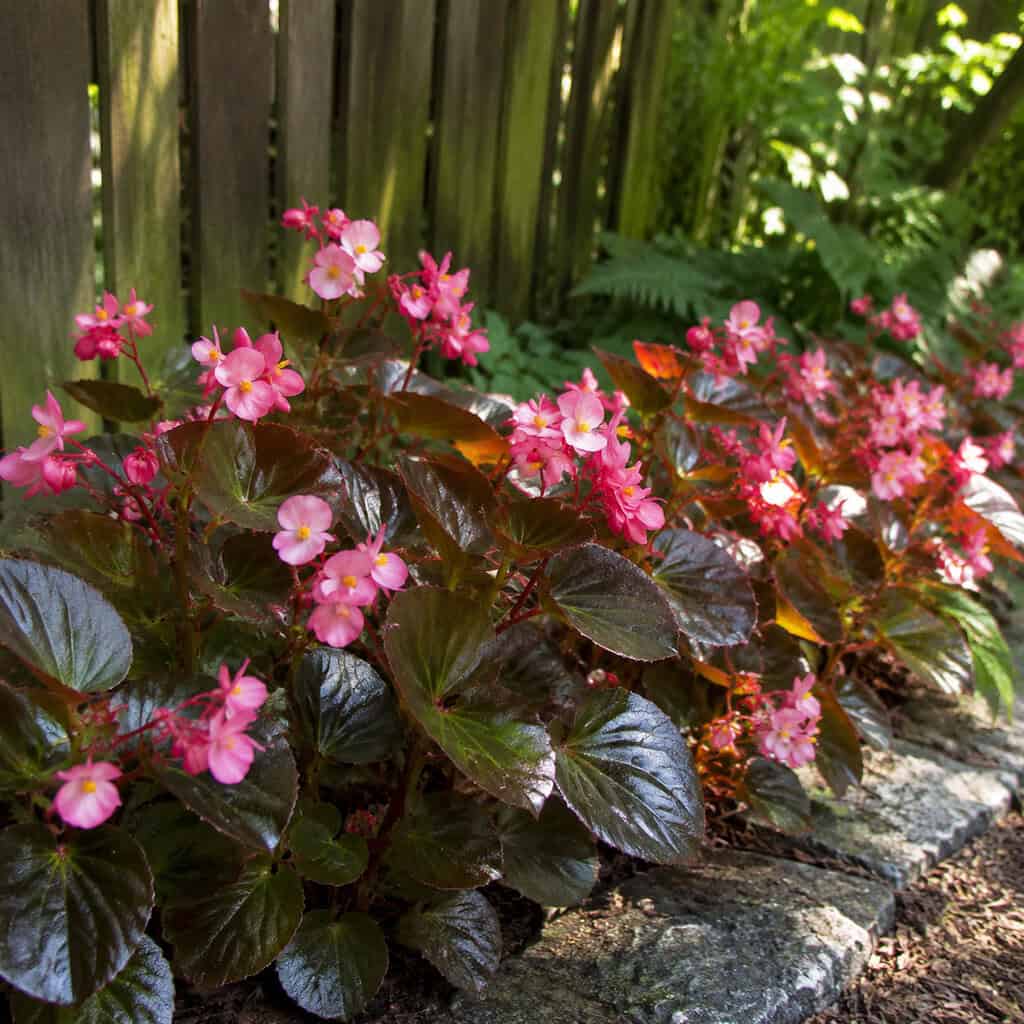
Begonias are the answer for shade.
Wax begonias bloom nonstop from spring through frost, and they barely flinch in the heat that flattens everything else. In zones 10 and 11 they run all year.
The glossy leaves come in green or deep bronze, so the plant looks good even between flushes.
Morning sun, afternoon shade. They rot in soggy soil, so let them drain.
4. Knock Out Rose
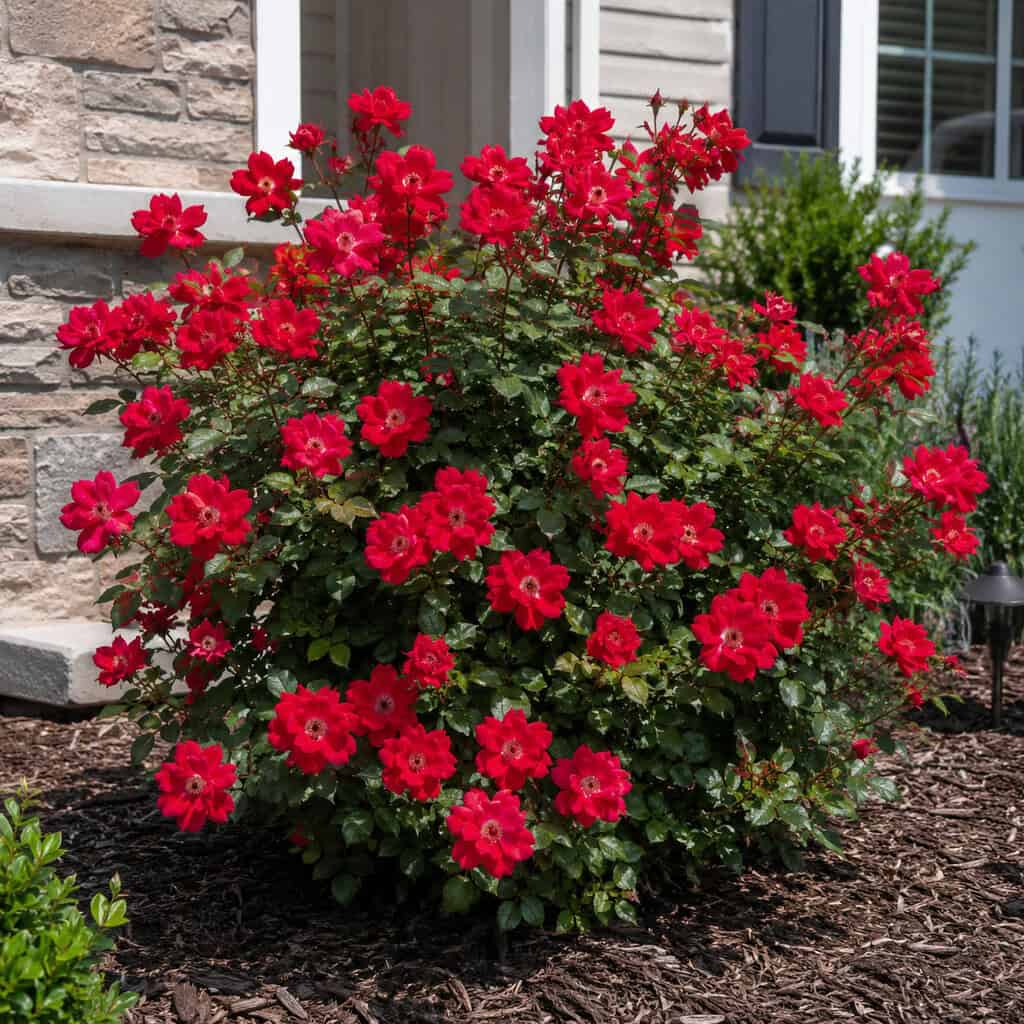
Roses with a reputation for being needy. This one isn’t.
The Knock Out series reblooms every five to six weeks from spring until frost, and it does it without spraying, without deadheading, without the fuss old garden roses demand. It was released in 2000 and has sold more than 100 million plants since.
Black spot barely touches it. That’s the whole reason it exists.
Give it full sun and a hard cut back to about a foot in late winter. It’ll come back bushier every spring.
5. Petunia (Wave and Supertunia Types)
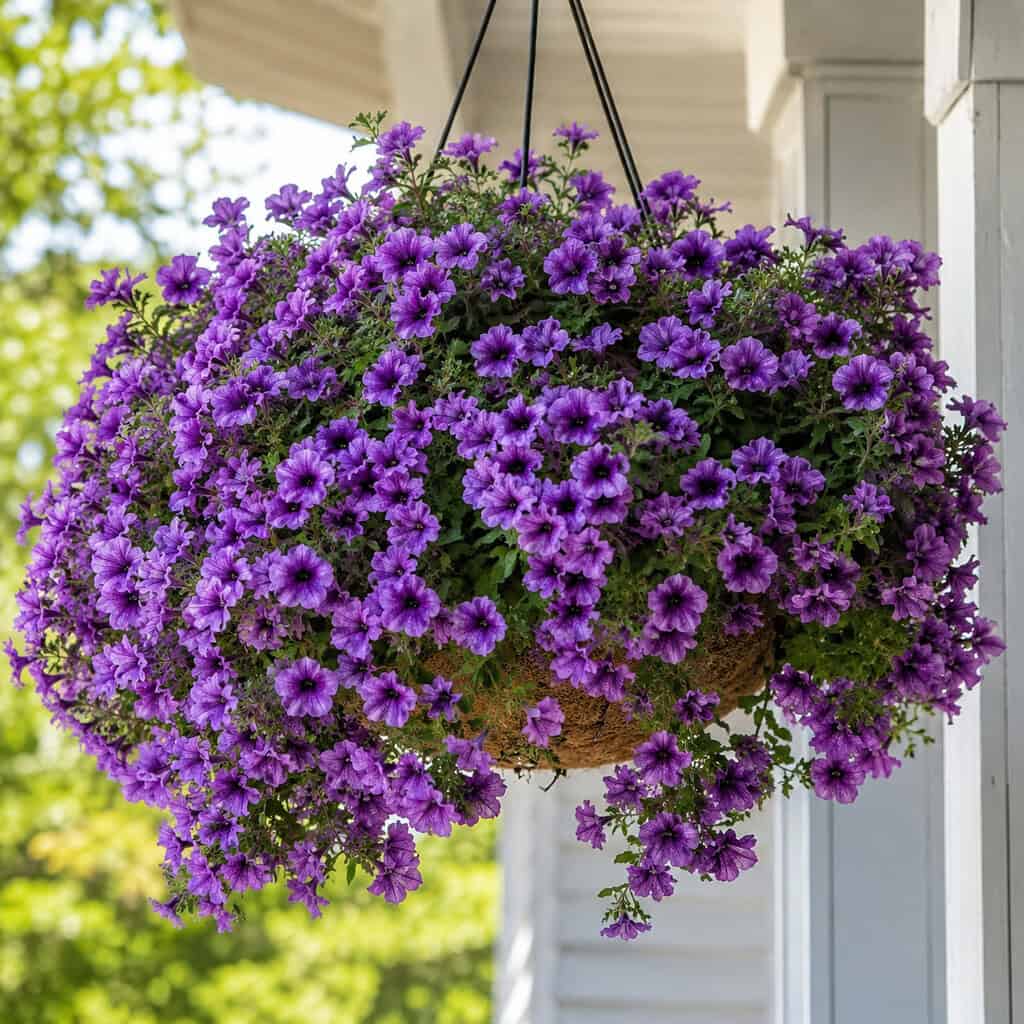
Old petunias quit by July. The spreading hybrids don’t.
Wave and Supertunia varieties bloom from spring until frost without needing to be pinched or deadheaded. They’ll spill three feet over a wall or fill a basket solid.
Feed them. Hungry petunias stop flowering fast.
A weekly dose of liquid fertilizer keeps the color coming all summer. In zone 10 and warmer, they shrug off winter entirely.
6. Marigold
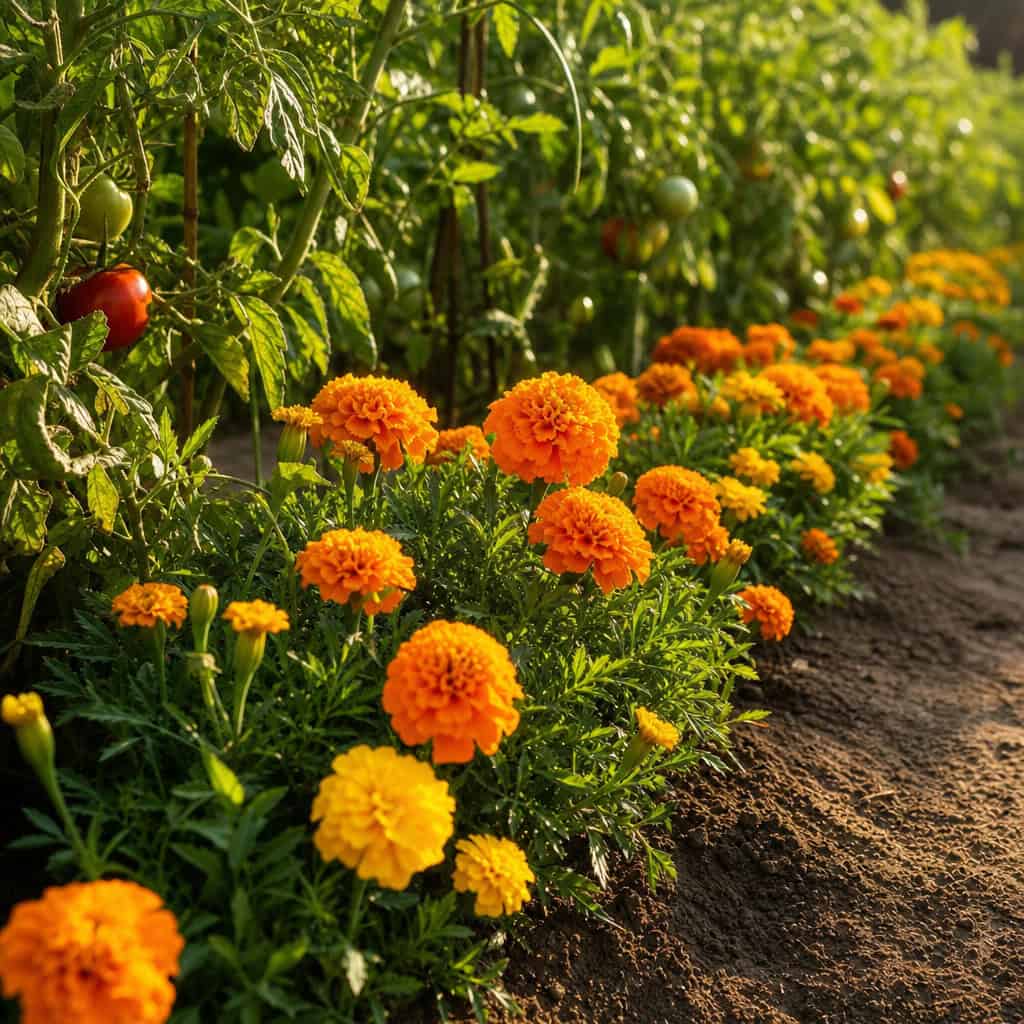
Plant them once and they keep going.
Marigolds bloom from late spring through the first frost, and the more you cut them, the more they make. Snip a bouquet and you’ve just guaranteed another round.
The roots release a compound that suppresses root-knot nematodes in the soil. Vegetable gardeners plant them as a living pesticide.
Full sun, average soil, and they’ll outlast almost everything around them.
7. Coreopsis (Tickseed)
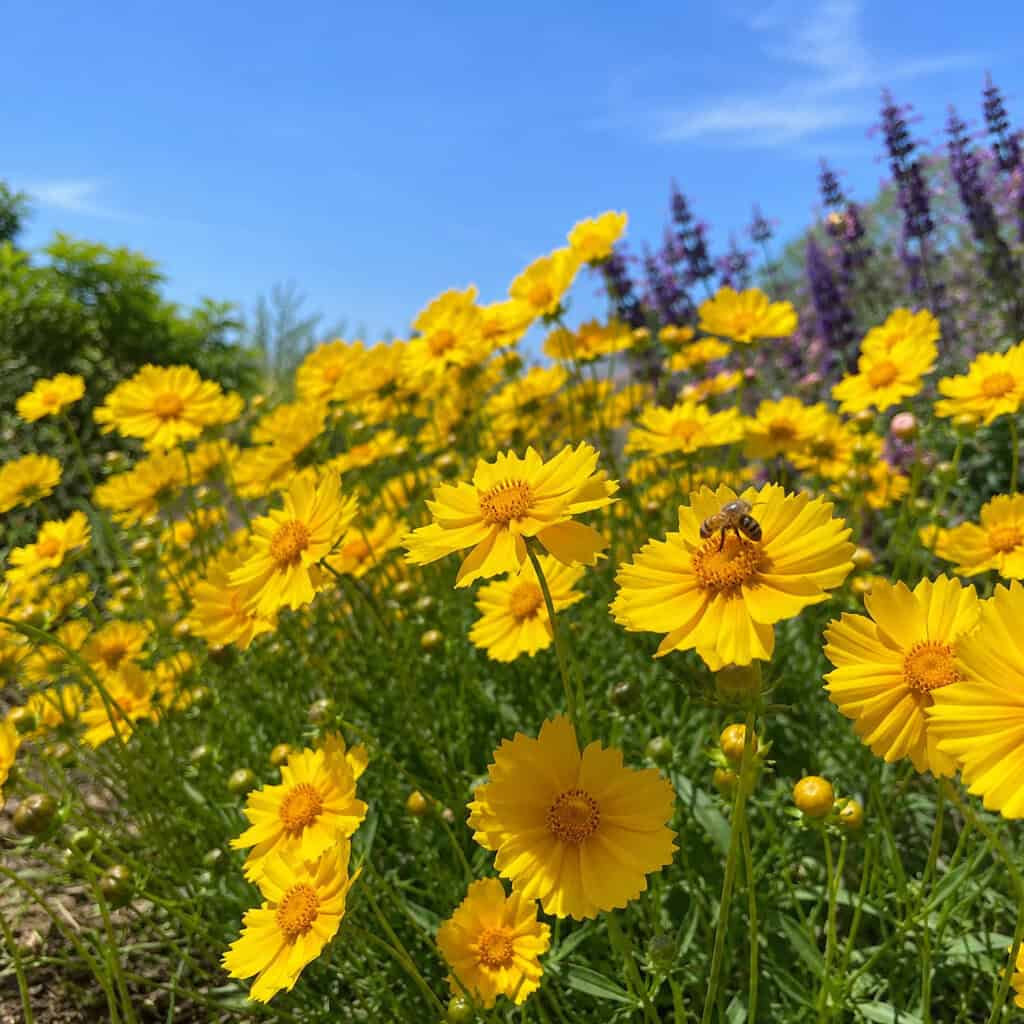
A native that blooms like it’s getting paid.
Coreopsis throws daisy-like flowers from early summer until frost, and many varieties are hardy down to zone 4, so the plant returns bigger every year. Shear it back by a third in midsummer and it explodes with a second wave.
Drought doesn’t bother it. Neither does poor soil.
The yellow and gold types are tough as nails. Bees can’t get enough of them.
8. Salvia
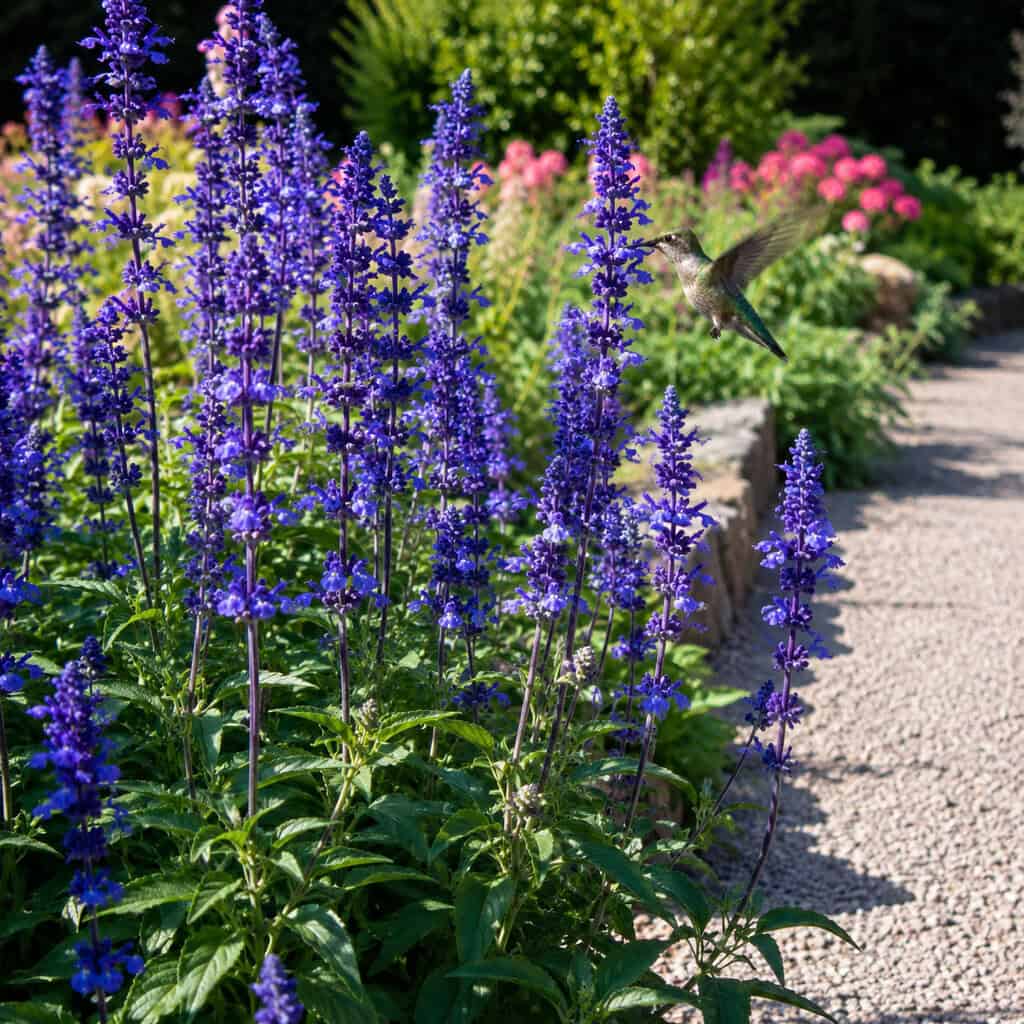
Cut it back and it reblooms. Every time.
Perennial salvias flower in spring, and a shearing right after the first flush triggers a second and often third round into fall. Tender types like ‘Black and Blue’ bloom right up until frost.
Hummingbirds key in on the tubular blooms. Deer and rabbits skip them entirely.
It wants full sun and sharp drainage. Wet feet kill it faster than any cold.
9. Hibiscus (Tropical)
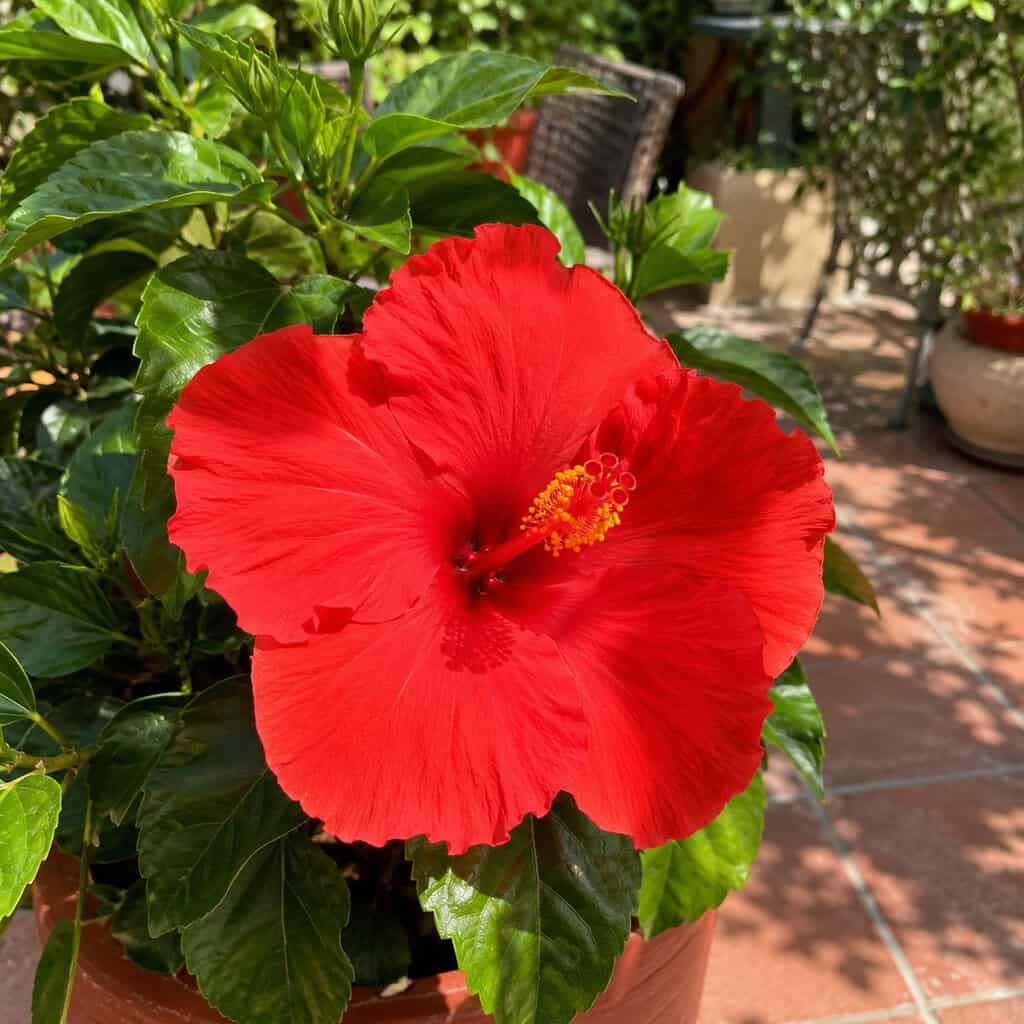
Each flower lasts a day. The plant never runs out.
Tropical hibiscus blooms continuously in zones 9 through 11, pumping out dinner-plate flowers in red, yellow, and coral all year long. Elsewhere it’s a container plant you drag indoors before frost.
It’s heavy-feeding and thirsty. Skimp on either and the buds drop before they open.
Give it the brightest, warmest spot you’ve got.
10. Angelonia (Summer Snapdragon)
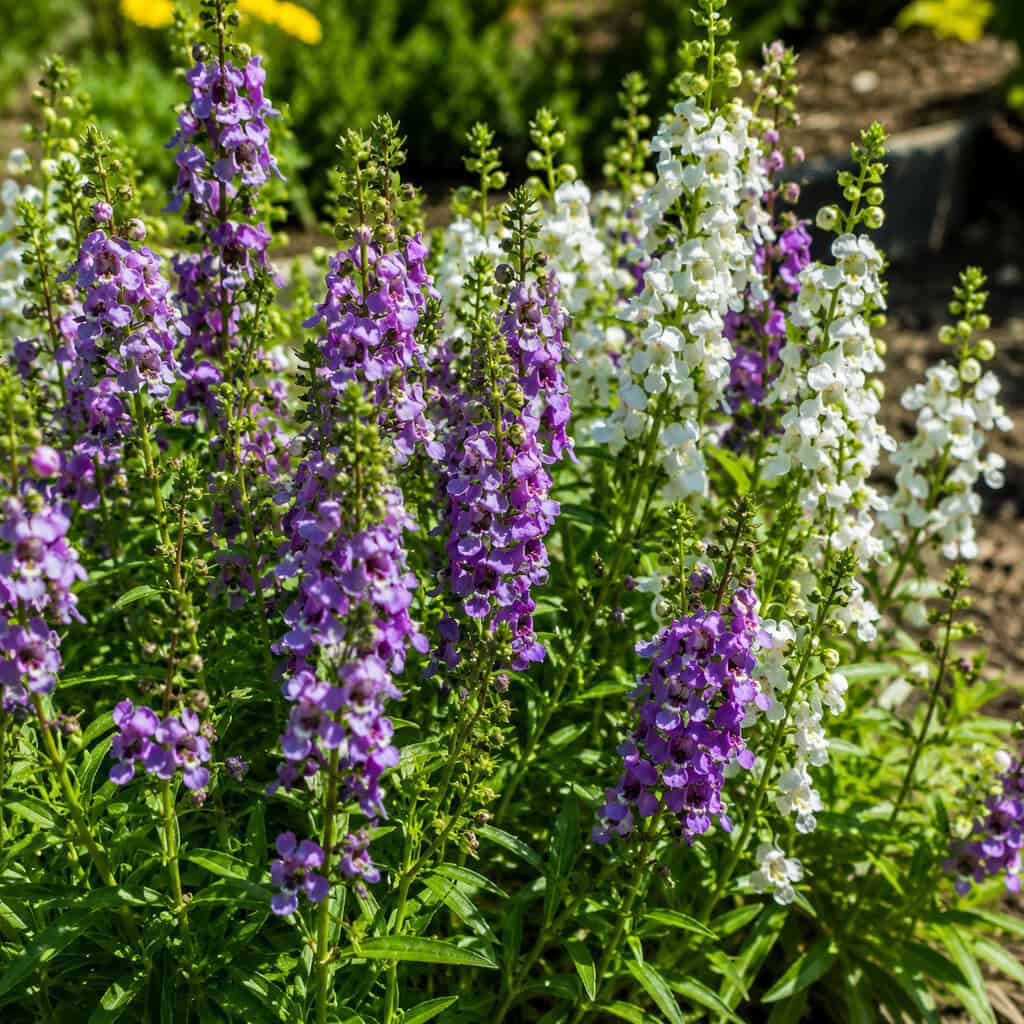
Heat is when angelonia gets going.
It blooms from spring through frost in spikes of purple, pink, and white, and it never needs deadheading to keep producing. In frost-free zones it runs year-round.
Humidity that wilts other flowers doesn’t faze it. That’s why it thrives across the South.
Full sun, decent drainage, and it’ll stand tall through the worst of August.
11. Coneflower (Echinacea)
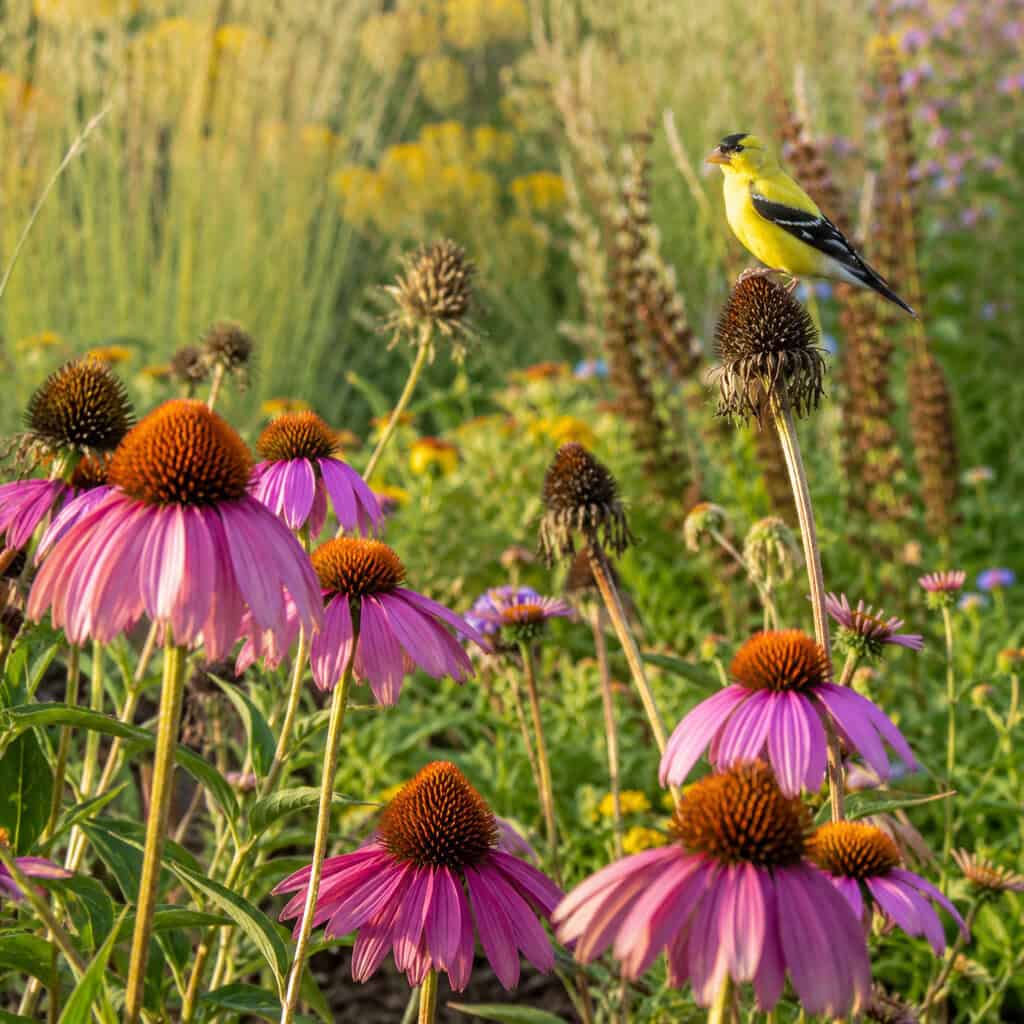
Bloom in summer, structure in winter.
Coneflowers open in June and keep going into fall, and the seed heads stay standing through snow to feed goldfinches and give the bed shape when everything else is gone. Hardy to zone 3.
Leave the spent stalks up. Cut them in early spring instead of fall.
Full sun and you can forget about them. Drought, clay, heat—it handles all of it.
12. Verbena
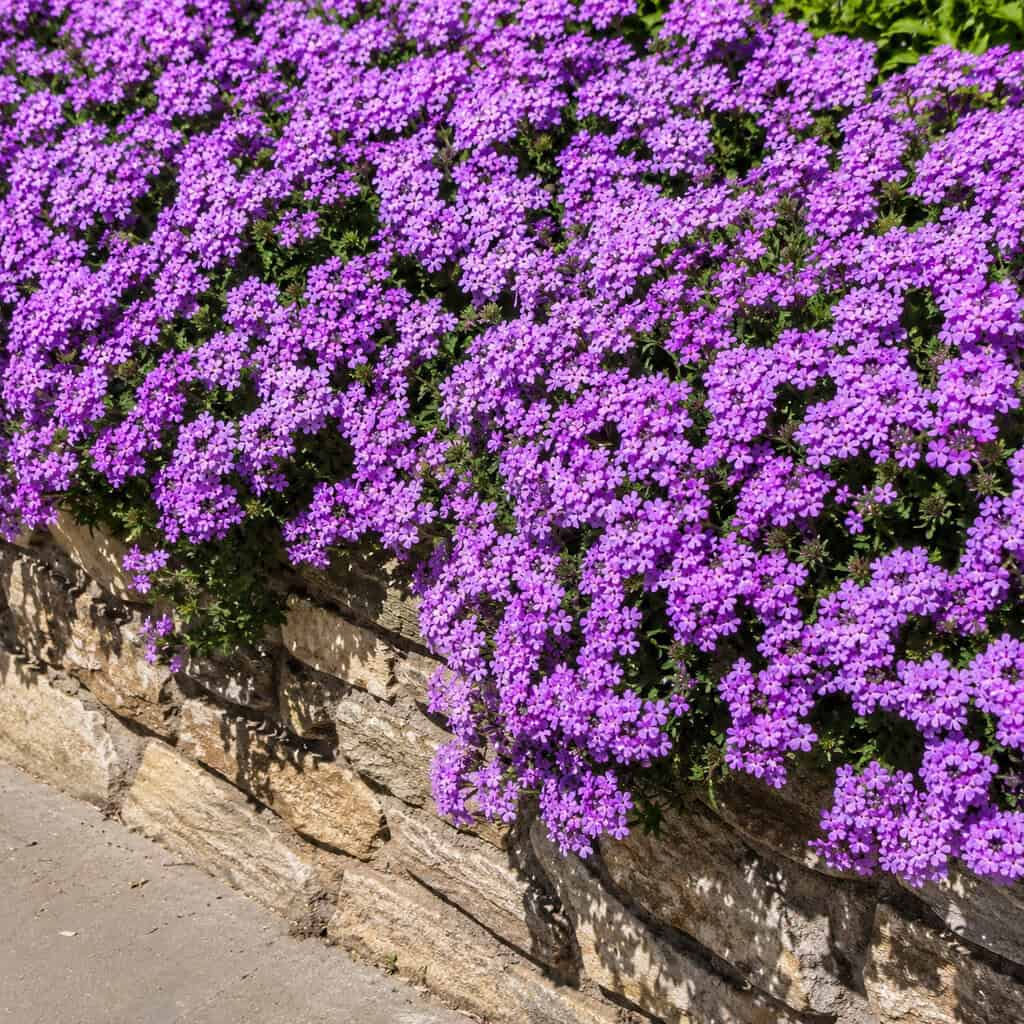
A carpet of color that won’t quit.
Trailing verbena blooms from spring until frost and spreads two to three feet wide, smothering itself in clusters of purple, red, or white. In zones 9 and up it stays evergreen and flowers nearly year-round.
Shear it back when it gets gappy in the middle. It’ll refill within two weeks.
Give it sun and good airflow. Crowded verbena gets powdery mildew.
13. Camellia
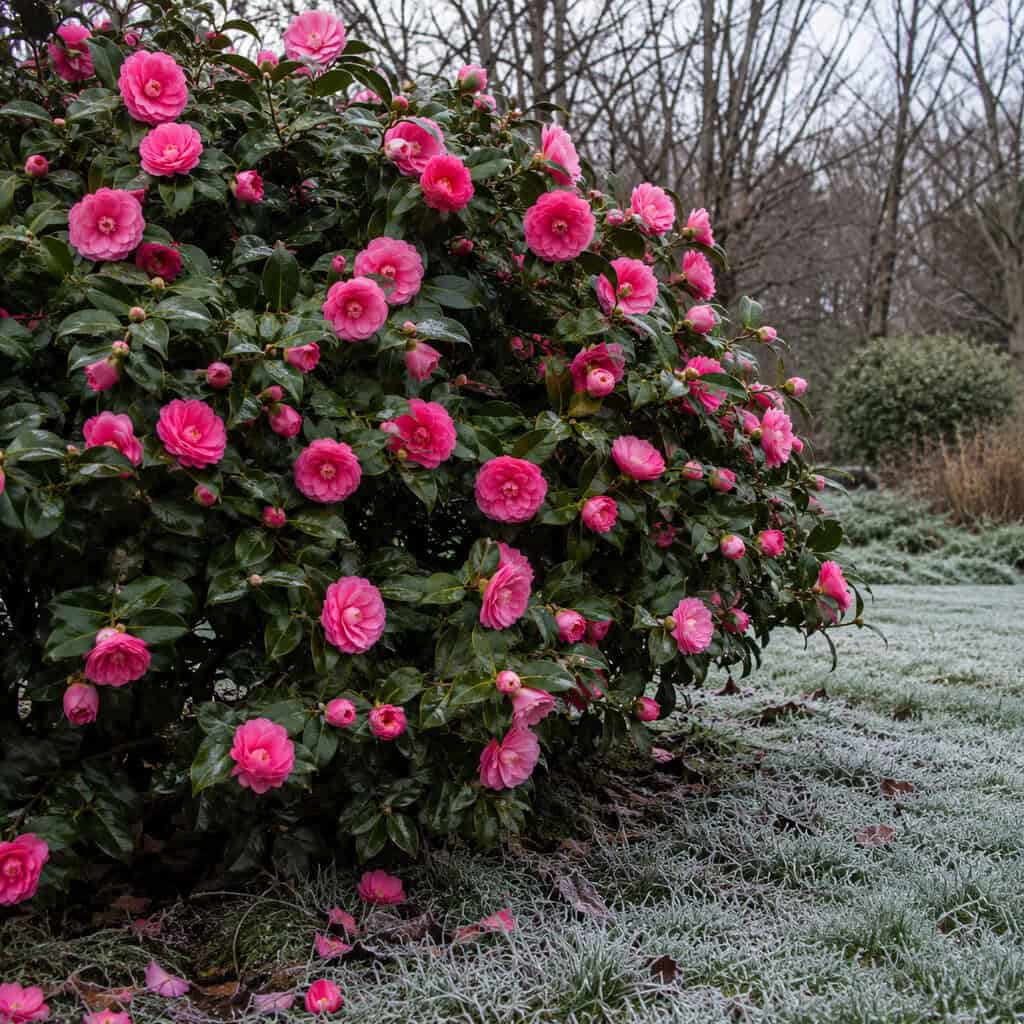
This one flowers when nothing else dares.
Camellias bloom in fall and winter—sasanqua types start in October, japonica types carry the show through March. While the rest of the yard sleeps, they’re covered in roses-of-winter.
The glossy evergreen leaves look sharp the other nine months too.
Plant them in part shade with acidic soil. Hardy to zone 7, and worth the wait every cold January.
14. Pansy and Viola
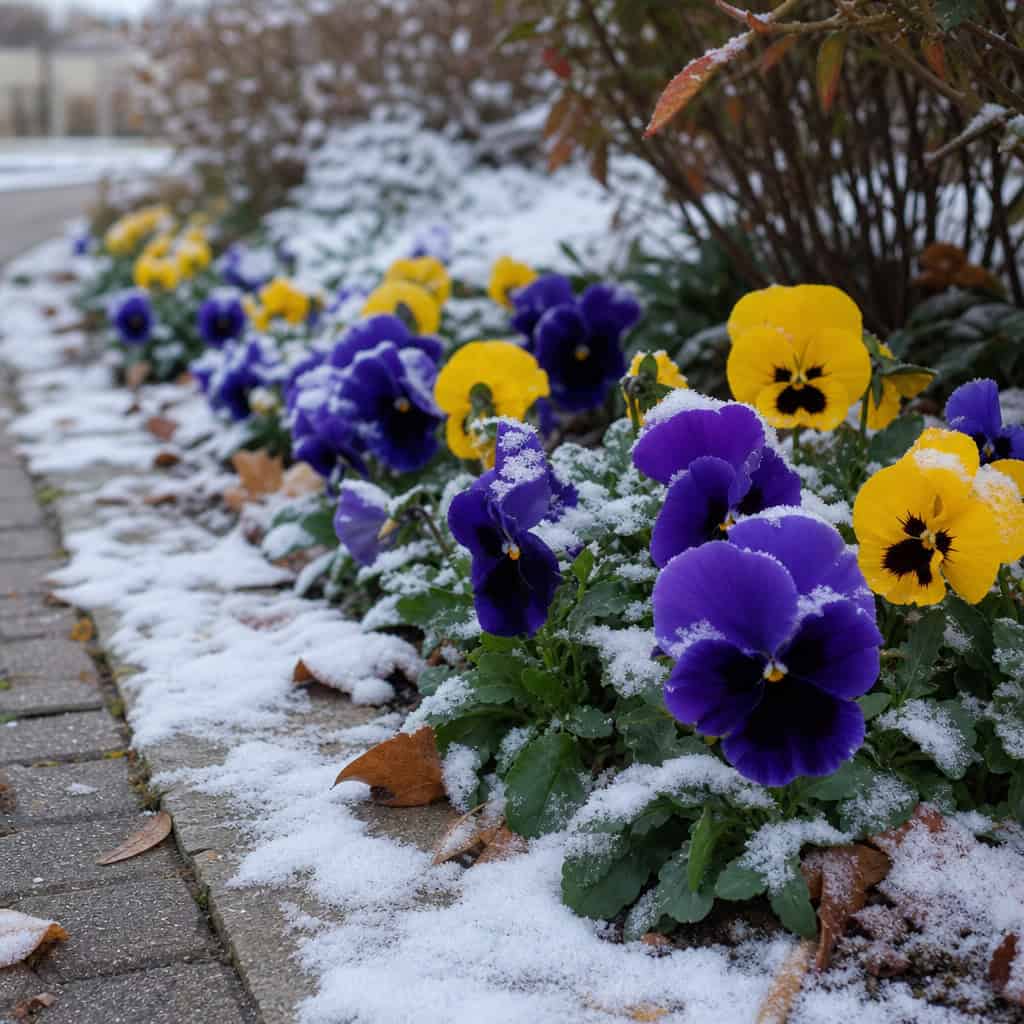
Cold doesn’t stop them. It’s their whole thing.
Pansies bloom through fall, hang on under snow, and surge again the second it warms. In mild winters across zones 6 and up, they flower straight through the season when nothing else will.
Plant them in October for color when everyone else’s beds are brown.
Deadhead and feed lightly. They’ll reward you right into May.
15. Bougainvillea
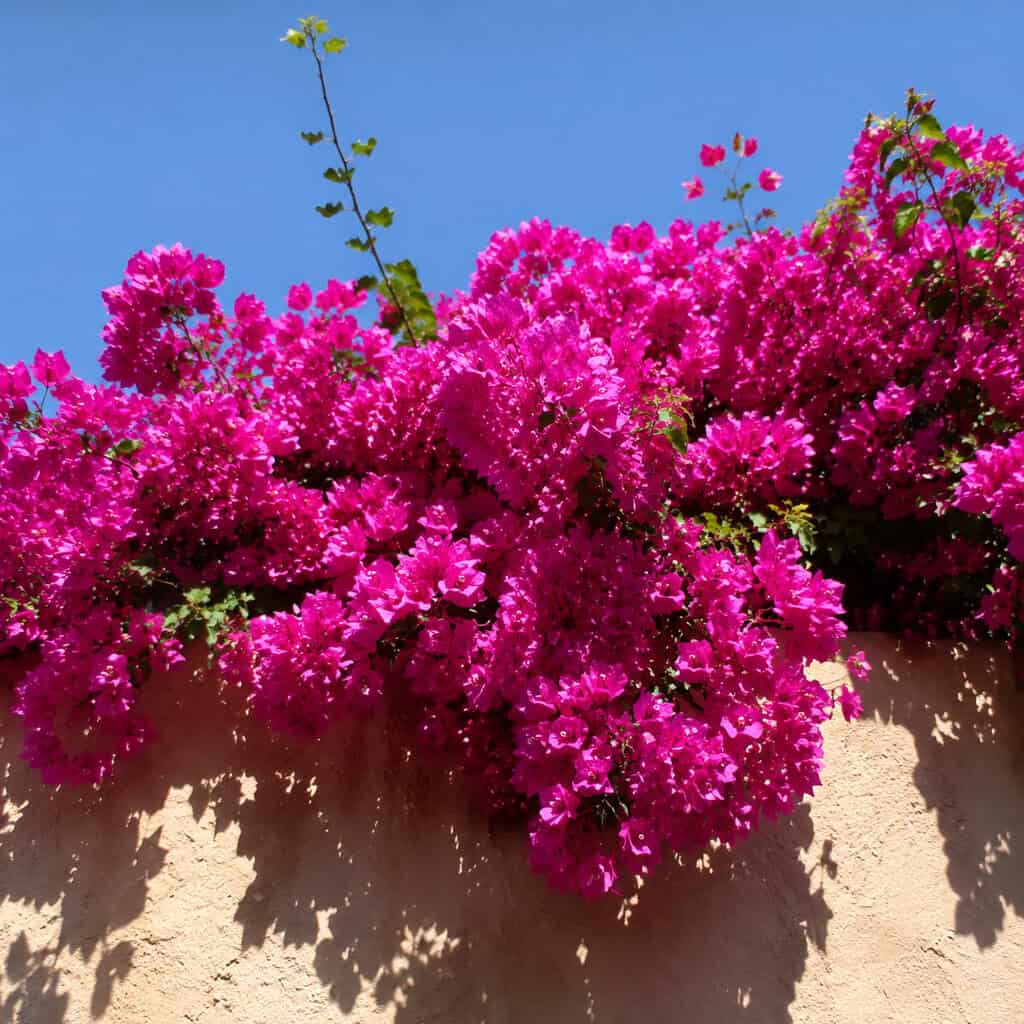
Drape a wall in it and walk away.
In zones 9 through 11, bougainvillea blooms nearly year-round in blinding magenta, orange, and purple. The color comes from papery bracts, not the tiny true flowers, so it holds for weeks.
It flowers best when it’s dry and a little neglected. Baby it and you get vines with no color.
Full blazing sun. Nothing less.
16. Dianthus (Pinks)
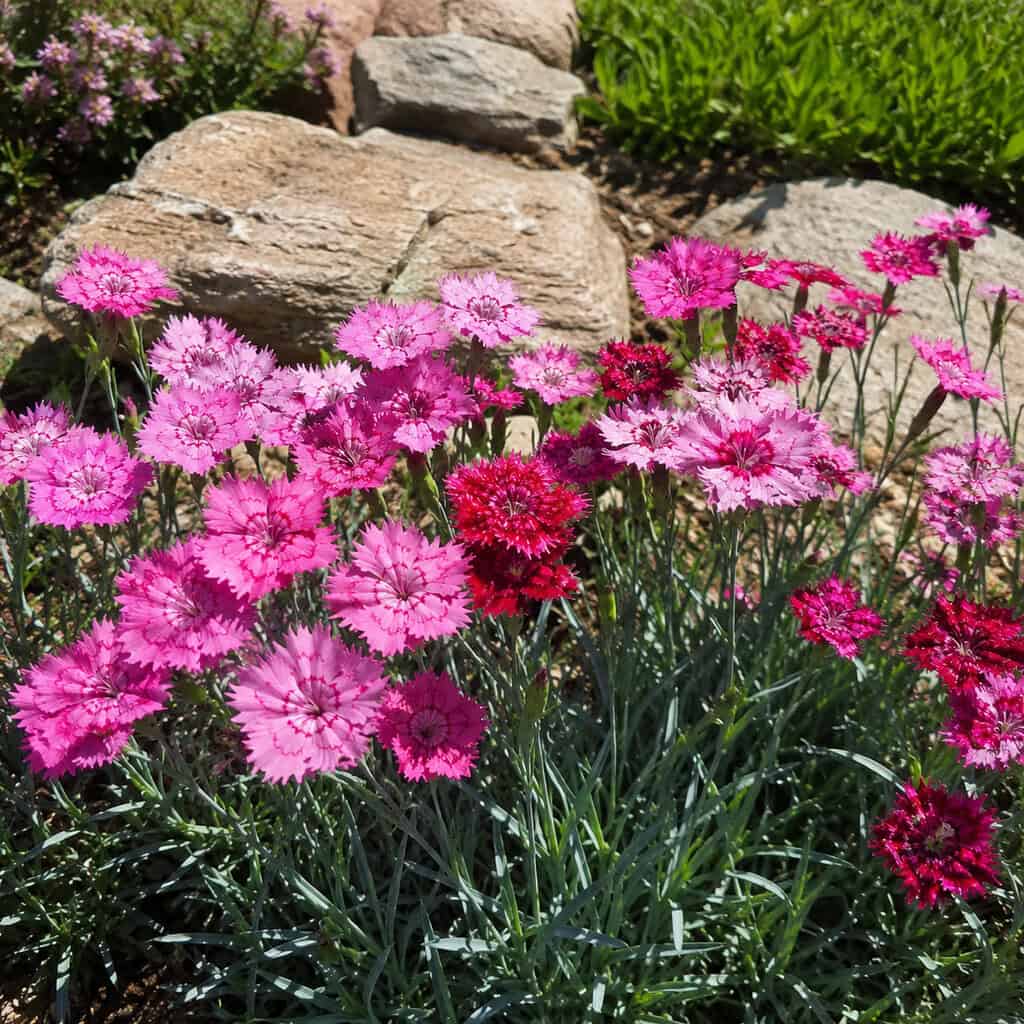
Smells like cloves. Blooms forever.
Many dianthus varieties flower spring through fall, and in mild climates they keep going through winter, the blue-gray foliage staying neat year-round. Deadheading keeps the flushes coming.
The fringed petals come in pink, red, white, and bicolor.
Full sun and gritty, well-drained soil. They hate sitting wet more than they hate cold.
17. Gaillardia (Blanket Flower)
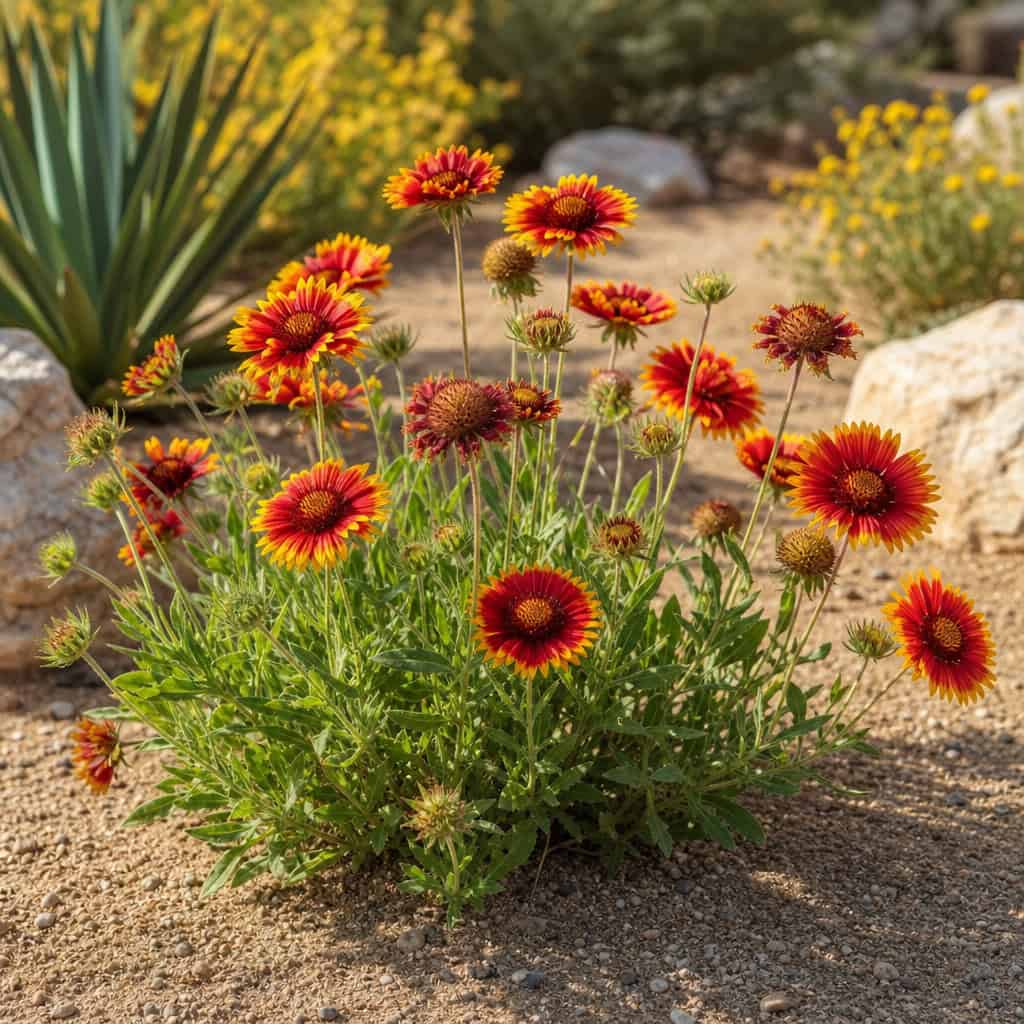
Red and gold like a campfire, all summer long.
Blanket flower blooms from early summer to frost without a pause, and it actually prefers poor, sandy soil that would starve other perennials. Hardy to zone 3 and unbothered by heat, salt, or drought.
Deadhead it and it just keeps firing.
Plant it once in full sun and it’ll reseed itself around the bed for years.
18. Calibrachoa (Million Bells)
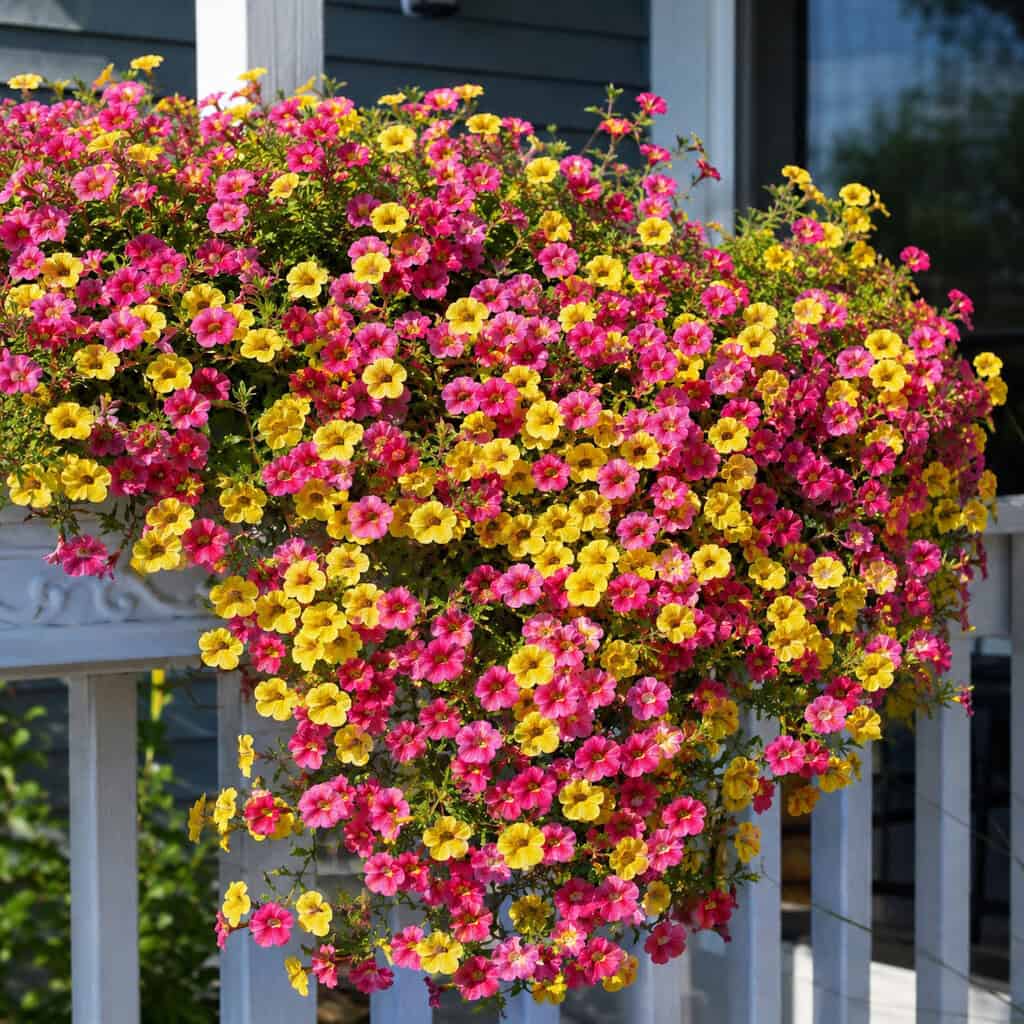
Like a tiny petunia that never takes a break.
Calibrachoa blooms spring through frost in hundreds of small trumpet flowers, and it’s self-cleaning—no deadheading required. In zone 9 and warmer it can hold on through winter.
Feed it heavily. It burns through nutrients fast and pales out when starved.
Hanging baskets, containers, the front of a bed. It spills and blooms wherever you put it.
19. Alyssum
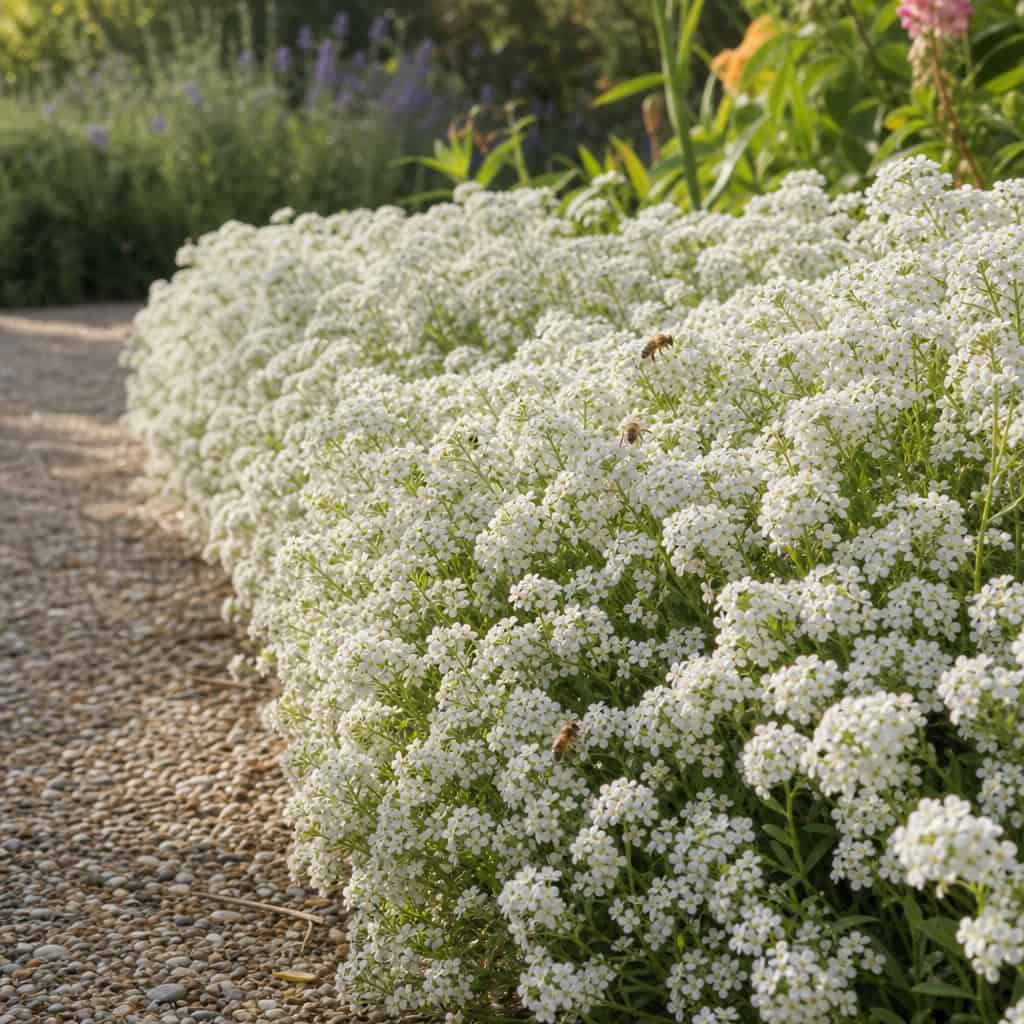
A low cloud of white that smells like honey.
Sweet alyssum blooms from spring until frost and reseeds itself so freely that it returns year after year. In mild-winter zones it flowers straight through the cold months.
Shear it back when it fades midsummer. A fresh flush follows in days.
It tucks into cracks, edges, and gravel where nothing else grows. Bees find it from across the yard.
The Real Secret to Year-Round Color
No single plant does it all in a cold climate.
The trick is layering. Pair a summer workhorse like coreopsis with a winter bloomer like camellia, tuck pansies in for the shoulder seasons, and let the bed hand off the show from one performer to the next.
In a frost-free zone, you’ve got it easier—geraniums, lantana, and hibiscus will run nearly year-round on their own.
Plant for the calendar, not just the moment. Do it once and you’ll stop dragging home flats of annuals every spring.