

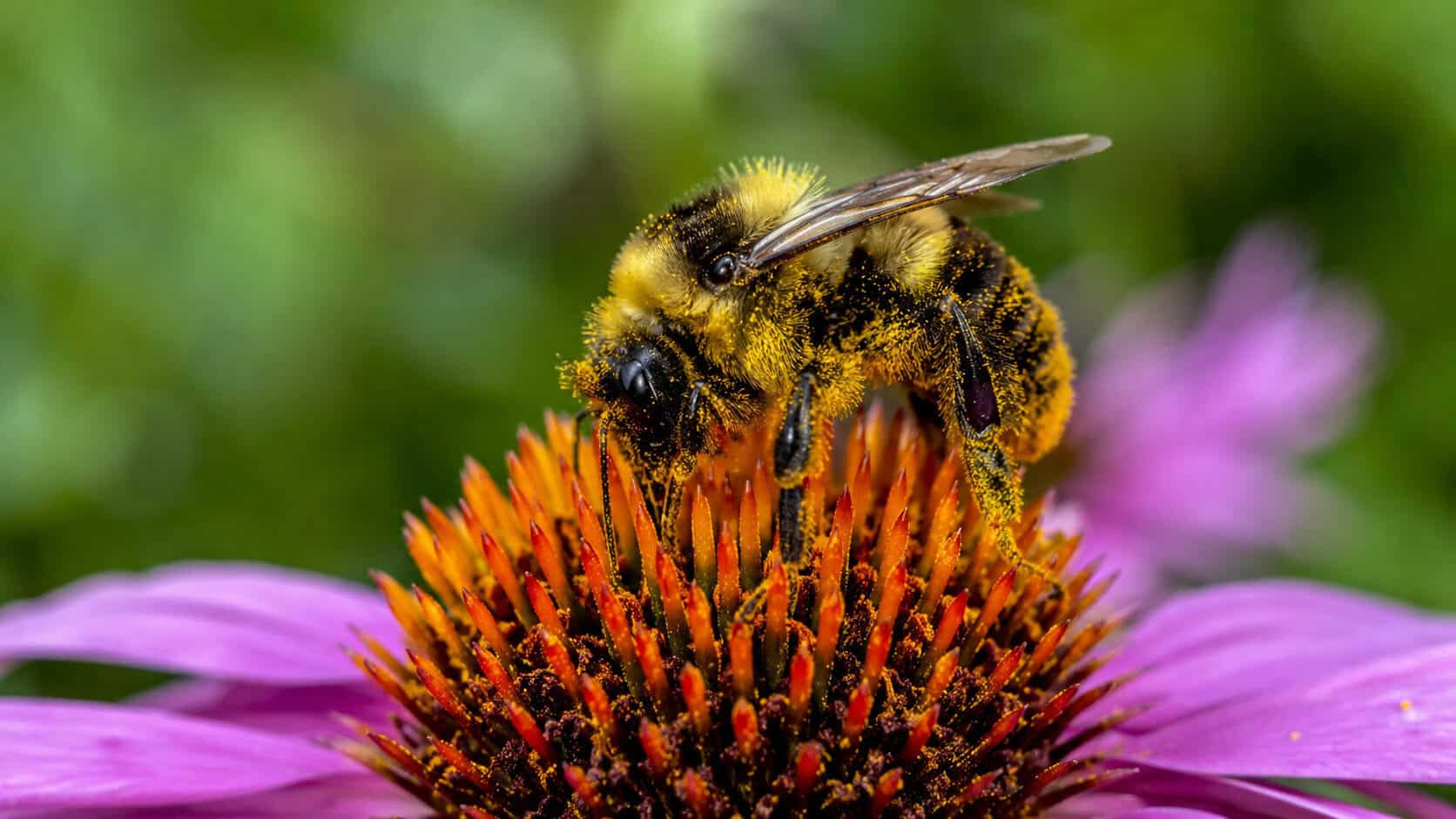
Bees are in trouble, and your yard can help. That’s the short version.
This guide is for homeowners who want more than a pretty flowerbed. You want a yard that actually feeds bees, butterflies, and the other insects that keep the whole system running.
You’ll come away knowing which plants to put in the ground, when to plant them, what to stop doing, and how to keep a pollinator garden alive through every season. No specialized training required. Just a patch of dirt and a little patience.
Pollinators handle about one in every three bites of food you eat. When their numbers crash, that’s not somebody else’s problem. A backyard planted right becomes a refueling station on a map that’s losing more stops every year.
Start small if you have to. A single well-chosen border does more than a bare acre of lawn ever will.
Why Pollinators Need Your Yard in the First Place
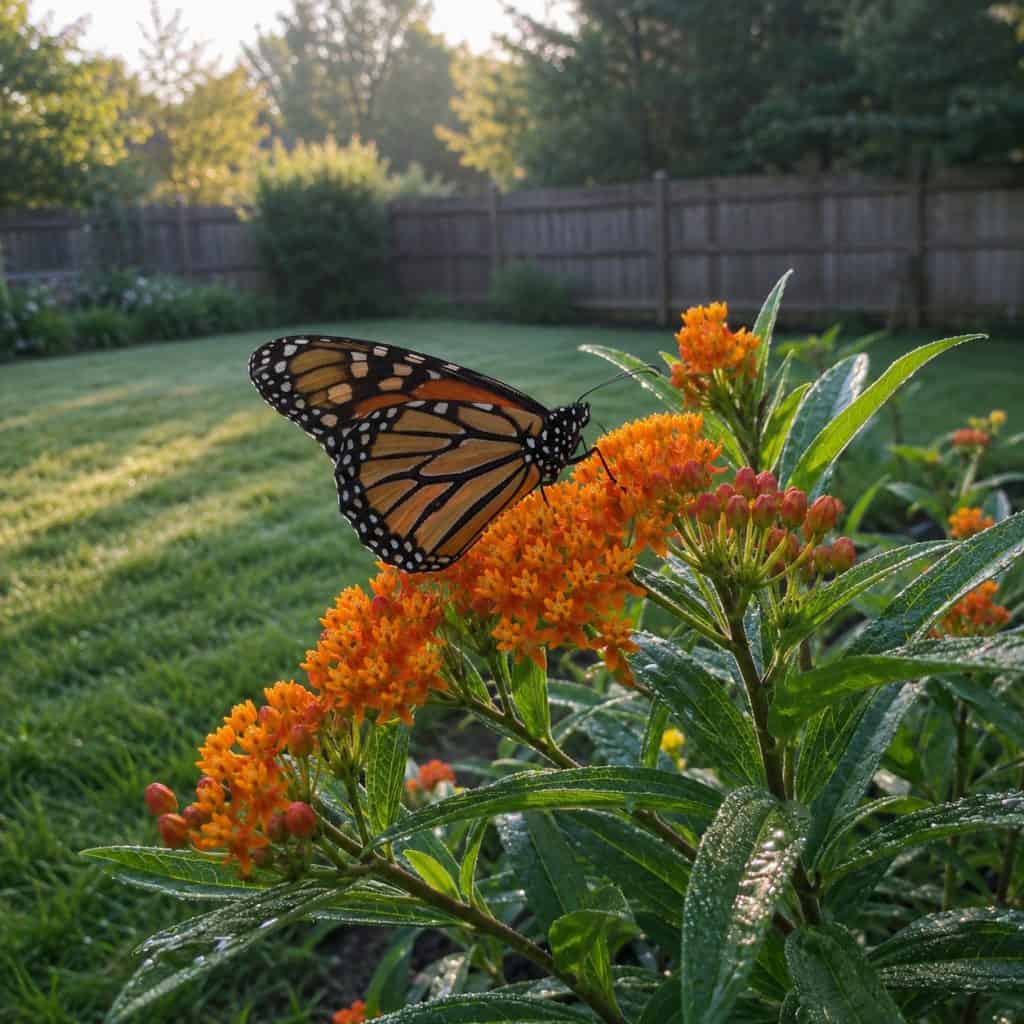
Native bees and butterflies are losing ground fast. Wildflower meadows get paved, farm fields get sprayed, and the corridors that connect wild spaces keep shrinking.
The monarch butterfly makes the point clearly. Eastern monarch populations have dropped by roughly 80% since the 1990s, driven largely by the loss of milkweed and nectar plants along their migration route.
Honeybees get most of the headlines, but they’re a managed, non-native species. The real crisis is among the 4,000 species of native bees in North America — mason bees, leafcutters, bumblebees, tiny sweat bees you’ve probably never noticed.
These natives are the workhorses. A single mason bee can pollinate as many flowers as dozens of honeybees.
Suburban yards add up. There’s more turfgrass in the United States than there is corn — around 40 million acres of it. Convert even a fraction of that to habitat and you’ve built a nationwide feeding network.
Your yard is a link in a chain. That’s the whole idea behind planting one.
Choosing Plants That Actually Feed Them
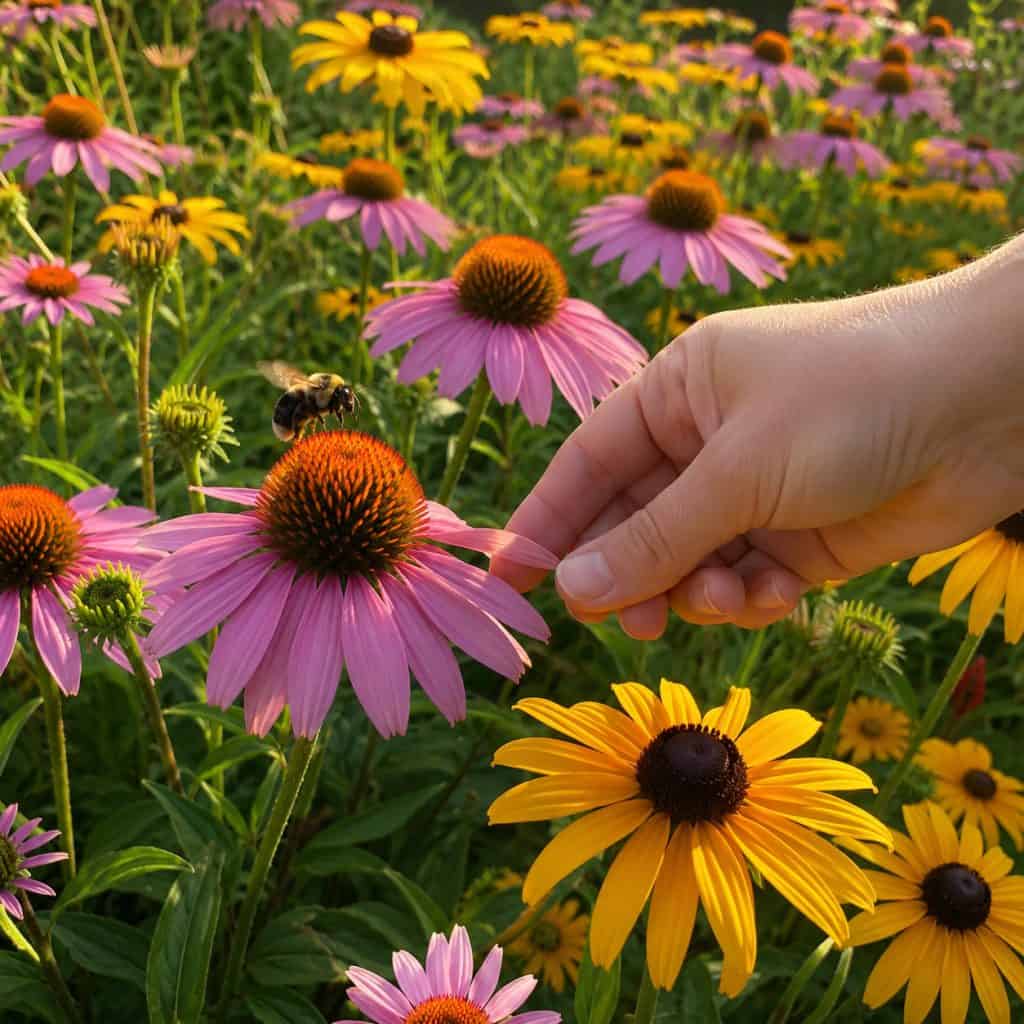
Not every flower is equal. Many showy garden varieties have been bred for looks and produce almost no nectar or pollen.
Double-petaled blooms are the worst offenders. All those extra petals often replace the reproductive parts a bee needs, leaving a pretty flower that’s a dead end.
Go native first. Native plants evolved alongside your local pollinators, and specialist bees sometimes feed on only one plant family.
The reliable heavy hitters
Purple coneflower, black-eyed Susan, bee balm, and native asters draw a crowd almost anywhere in the country. They’re tough, they spread, and they bloom for weeks.
Milkweed deserves its own line. It’s the only plant monarch caterpillars will eat, so no milkweed means no monarchs — full stop.
Add flowering herbs. Let a few basil, oregano, and thyme plants bolt and flower, and watch the bees pile on.
Skip the nursery labels that mean nothing
“Pollinator friendly” on a plant tag isn’t regulated. Some tagged plants have been treated with systemic pesticides that make their pollen toxic.
Ask the nursery whether their stock was treated with neonicotinoids. If they can’t answer, buy somewhere that can.
Planting for Every Season, Not Just Spring
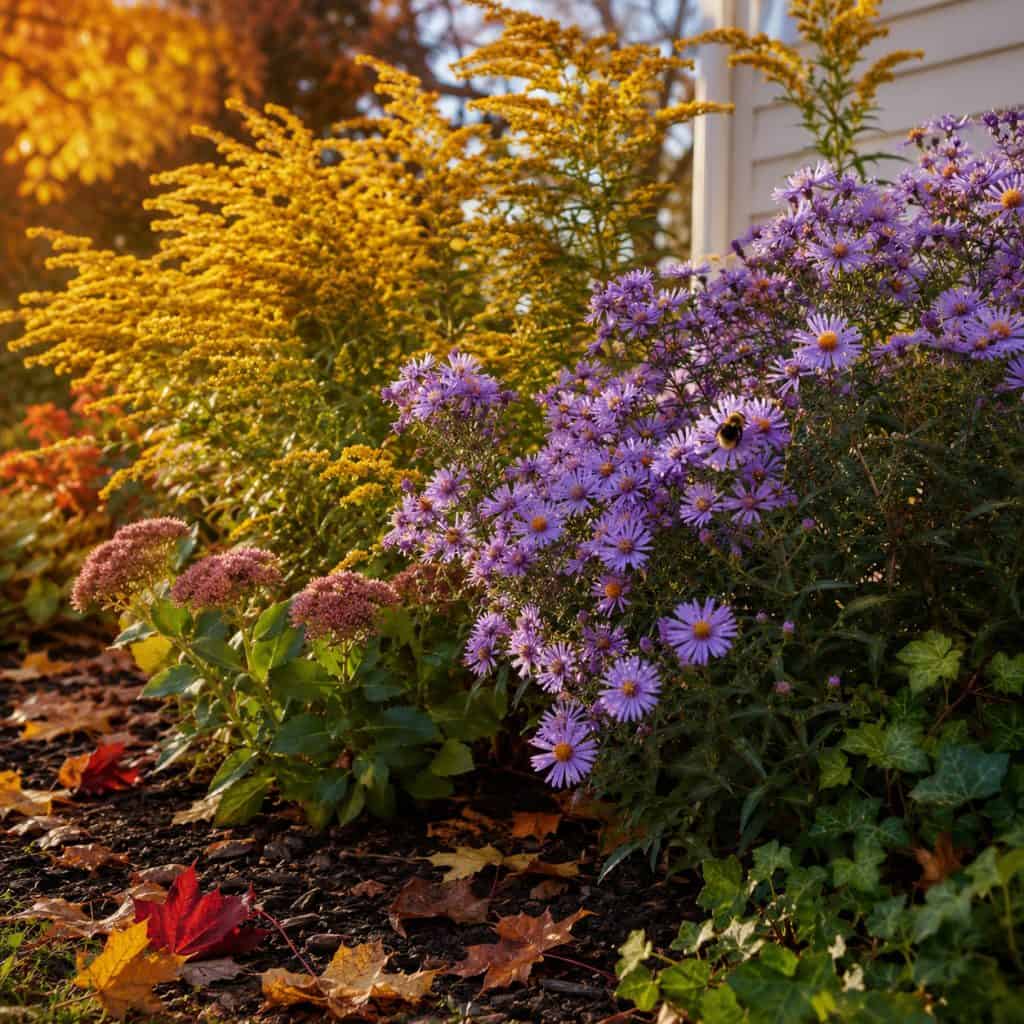
A yard that blooms for three weeks in May and goes quiet is a snack, not a habitat.
Pollinators are active from the first warm days of spring through the last of fall. Something needs to be flowering the entire time.
Think in three waves.
Spring
Early bees emerge hungry and cold. Crocus, willow, native columbine, and flowering fruit trees give them their first meal of the year.
Summer
This is peak demand. Coneflower, bee balm, lavender, and coreopsis carry the heavy load through the hottest months.
Fall
The forgotten season, and the most important for migration. Goldenrod and asters fuel monarchs heading south and bumblebee queens fattening up for winter.
Aim for at least three species blooming in every window. Plant in clumps of the same flower rather than scattering singles — a big block of color is far easier for a bee to find than one lonely stem.
The Mistakes That Undo All Your Work
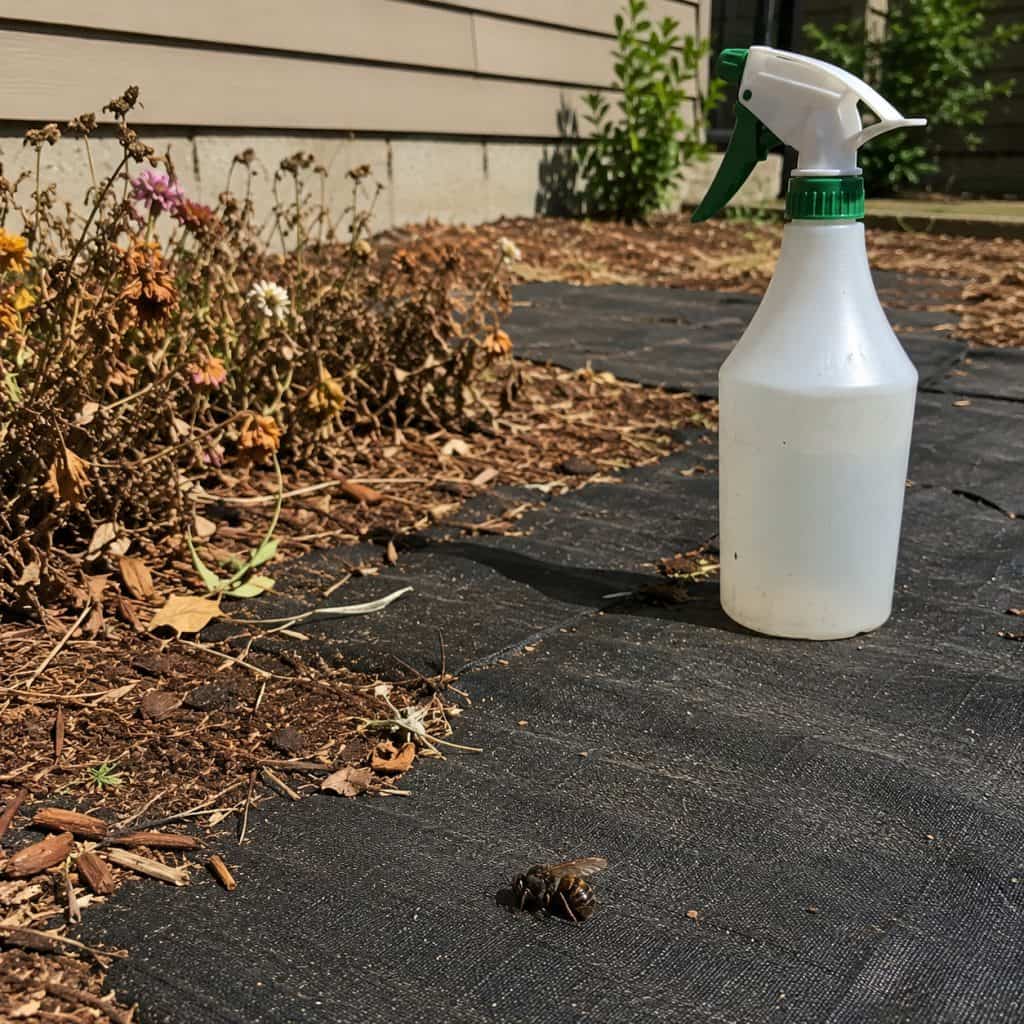
You can plant the perfect garden and still poison it. Here’s how people do it without realizing.
Spraying anything
Insecticides don’t distinguish between a pest and a bee. Even products labeled “organic” can kill pollinators on contact.
Stop spraying. If you must treat something, spot-treat at dusk when bees have gone home, and never spray anything in bloom.
Obsessing over a clean yard
Bare, mulched, tidy beds are a desert for ground-nesting bees. About 70% of native bees nest in the ground, and they need bare soil to dig into.
Leave some dirt exposed. Skip the landscape fabric.
Cutting everything down in fall
Hollow plant stems and leaf litter are where the next generation overwinters. Rake it all away and you’ve thrown out the eggs.
Leave the stems standing until spring. Let the leaves lie under the shrubs.
Planting invasives by accident
Butterfly bush is sold everywhere and named for the job, yet it feeds adults nothing their caterpillars can use and escapes into wild areas. Good nectar, bad citizen.
Water, Shelter, and the Things Beyond Flowers
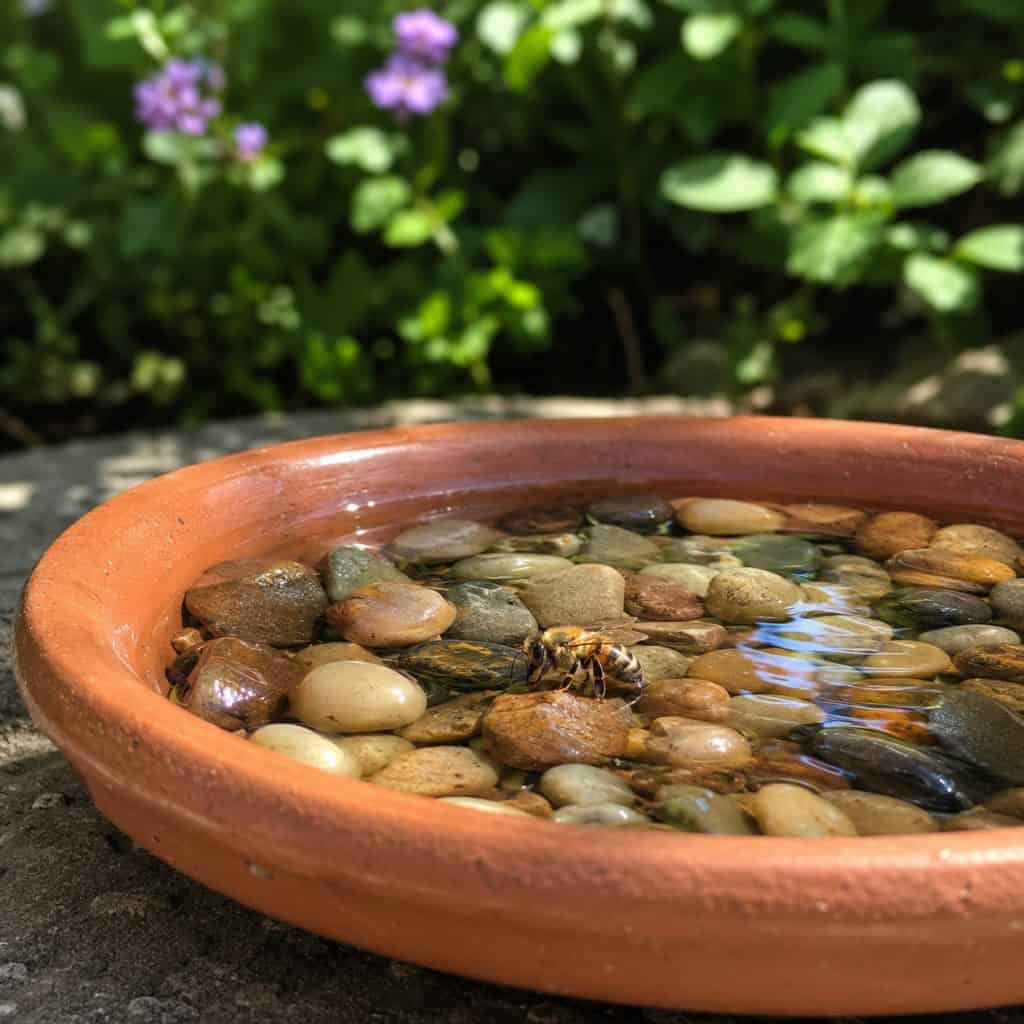
Nectar is only part of the deal. A real habitat gives pollinators water, nesting sites, and cover.
Bees drink, and they drown easily. A shallow dish with pebbles or marbles poking above the waterline gives them a safe place to land and sip.
Change that water every few days. Standing water breeds mosquitoes, and nobody wants that trade.
Nesting sites
Mason and leafcutter bees are cavity nesters. A simple bee house — a bundle of hollow reeds or a drilled wood block — gives them a place to lay eggs.
Bumblebees prefer abandoned rodent burrows and thick grass tussocks. Leave a rough corner of the yard unmowed and they’ll often move in.
Sun and shelter from wind
Butterflies are cold-blooded and need to bask. A few flat stones in a sunny spot let them warm up before they can fly.
A hedge or fence on the windward side keeps a garden calm enough for small insects to work. Bees struggle in a stiff breeze.
Turning Lawn Into Habitat
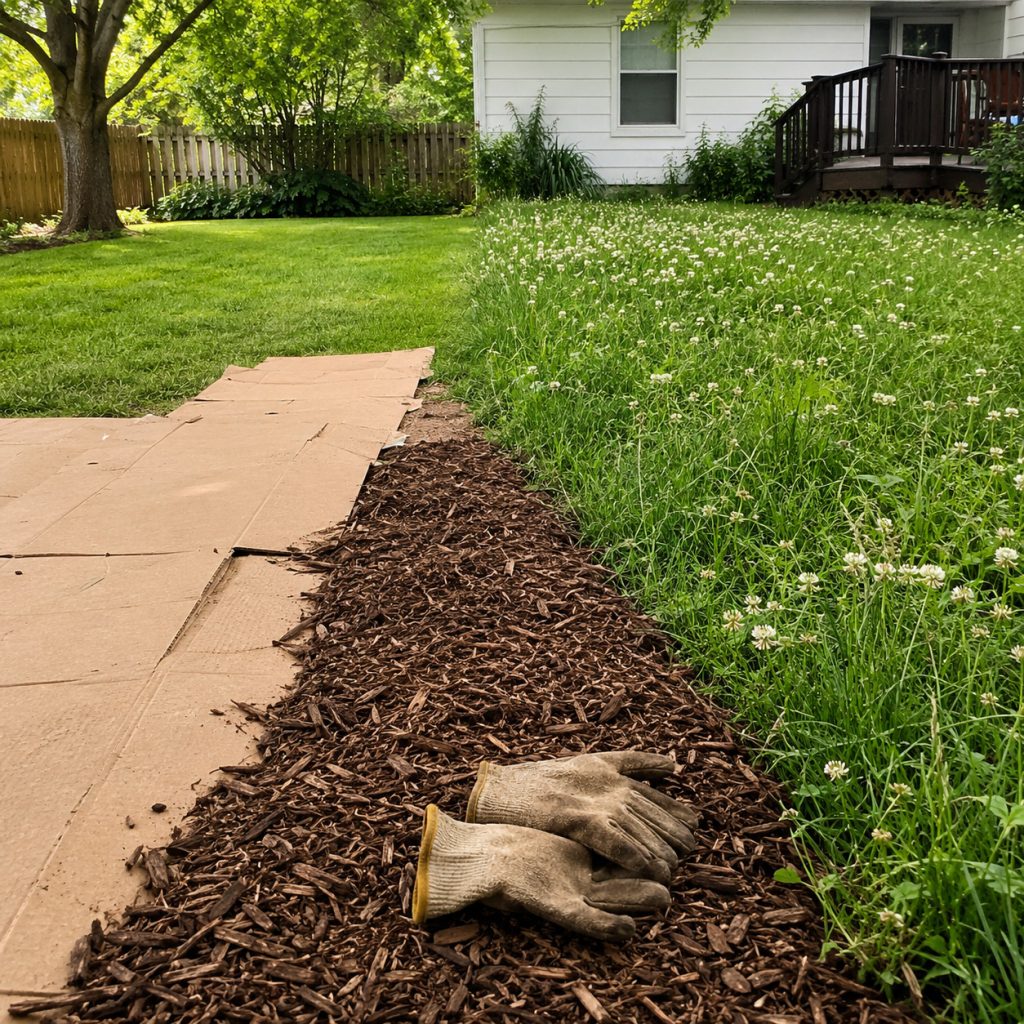
The fastest way to help pollinators is to grow less grass. A mowed lawn offers them nothing.
You don’t have to rip everything out at once. Start with a bed along the fence or a strip by the driveway.
Let part of it go
Try mowing a section only once a month instead of weekly. Clover and self-heal will flower between cuts and feed bees without any planting on your part.
Dutch white clover is another easy win. Overseed it into thin turf and you get a green, mowable lawn that blooms.
Convert a full bed
To turn sod into a planting bed, smother it. Lay cardboard over the grass in fall, pile six inches of mulch on top, and plant into it come spring.
No digging, no chemicals. The grass dies under the cardboard and breaks down into the soil.
The Xerces Society, a nonprofit focused on invertebrate conservation, publishes regional plant lists worth checking before you buy. Match your plants to your climate and you’ll do far less replanting.
Quick Answers
How big does a pollinator garden need to be?
Small works. Even a few large containers of native flowers on a patio will attract bees and butterflies within a season.
Will a pollinator garden mean more bee stings?
No. Foraging bees are focused on flowers and rarely sting unless grabbed or stepped on. Native solitary bees are especially docile.
How long until pollinators show up?
Often within weeks of the first blooms. Bees and butterflies are always scouting, and a fresh nectar source gets found fast.
Do I need a bee house?
It’s a nice bonus, not a requirement. Bare soil and hollow stems left over winter cover most native bees’ needs on their own.
Where to Start This Weekend
Pick one spot and plant a clump of three natives that bloom in different seasons. That’s a functioning pollinator garden.
Stop spraying, leave some bare dirt, and let the stems stand through winter. Those three habits protect more insects than any single plant you put in the ground.
Add to it every year. A border becomes a bed, a bed becomes a corridor, and your yard turns into the stop that keeps a bee alive.