


You planted the tulips. You watered them. You watched the buds fatten up for weeks. Then one morning, they’re gone — chewed to green stubs an inch above the mulch.
Deer don’t care how much a plant cost. They eat by scent and texture, and they’ll clear a bed overnight.
But here’s what they leave behind: anything that smells strong, tastes bitter, feels fuzzy, or fights back with prickles. And a surprising number of those plants happen to be gorgeous.
You don’t have to choose between a yard deer ignore and a yard that stops traffic. The two overlap more than most people think.
Here are 24 deer-resistant plants that still deliver real curb appeal — anchored by the aromatics, evergreens, grasses, and groundcovers that browsing deer walk right past.
1. Lavender
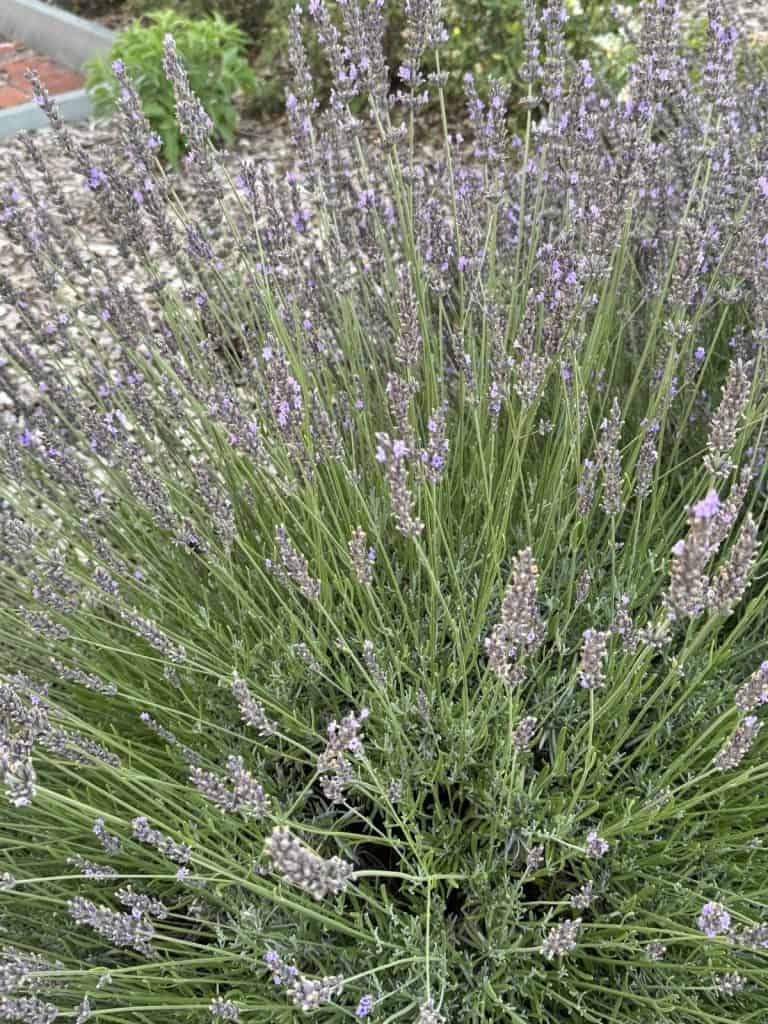
Start here. Lavender is the plant deer resistance was practically built around.
The same fragrance that makes you want to bury your face in it is exactly what sends deer the other way. Their noses are their menu, and lavender reads as a hard no.
Silvery evergreen foliage carries the bed even before the violet spikes open in early summer. Line it along a front walk or the sunny side of the foundation and it looks intentional all year.
One rule decides everything: drainage. Lavender rots in wet feet. Give it gritty, fast-draining soil and full sun in zones 5 through 9, and it’ll shrug off both drought and deer. The Old Farmer’s Almanac ranks it among the most reliably deer-proof plants you can grow. If you’re planting late in the season, here’s how to plant lavender in the fall without losing it to the cold.
2. Catmint
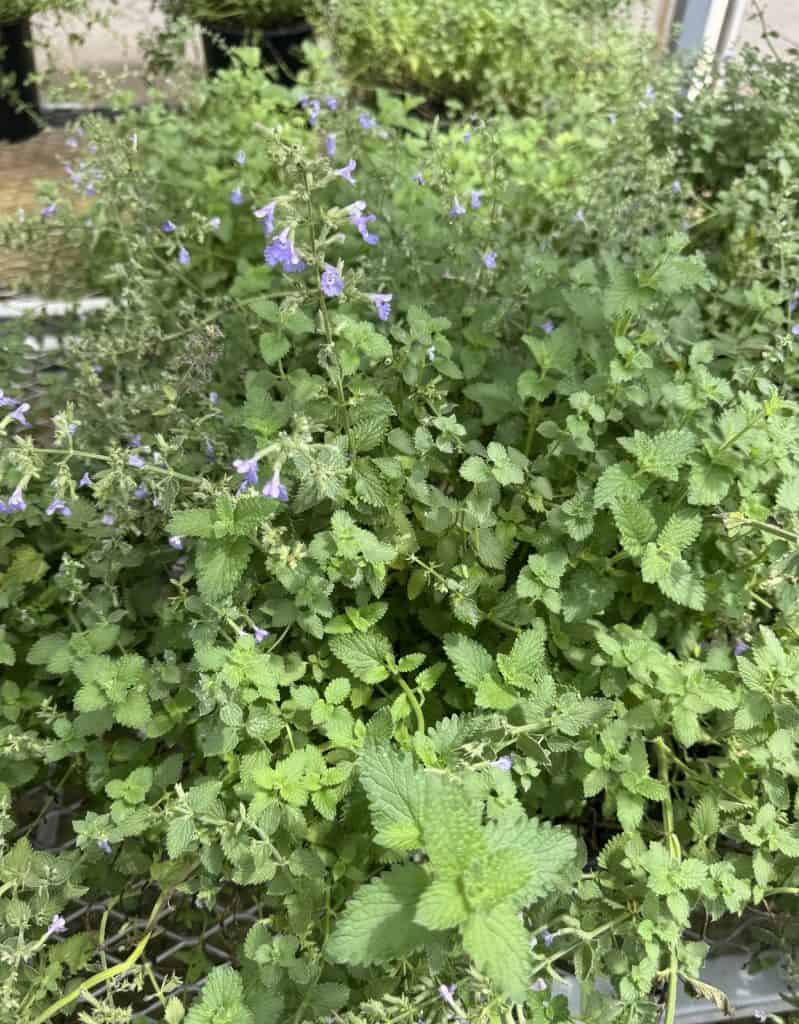
A mint by family, aromatic by nature, and deer-proof because of it.
Catmint is one of the most dependable perennials on this list. That soft gray-green foliage carries a scent deer won’t push through, and the sky-blue haze of bloom runs from late spring clear into fall.
The variety to ask for is ‘Walker’s Low.’ It mounds into a loose cloud that looks good spilling over a path edge or softening the base of taller plants.
Give it one haircut in midsummer when the first flush fades. It rebounds in a couple weeks and blooms again. Bees and butterflies work it nonstop.
3. Blue Salvia
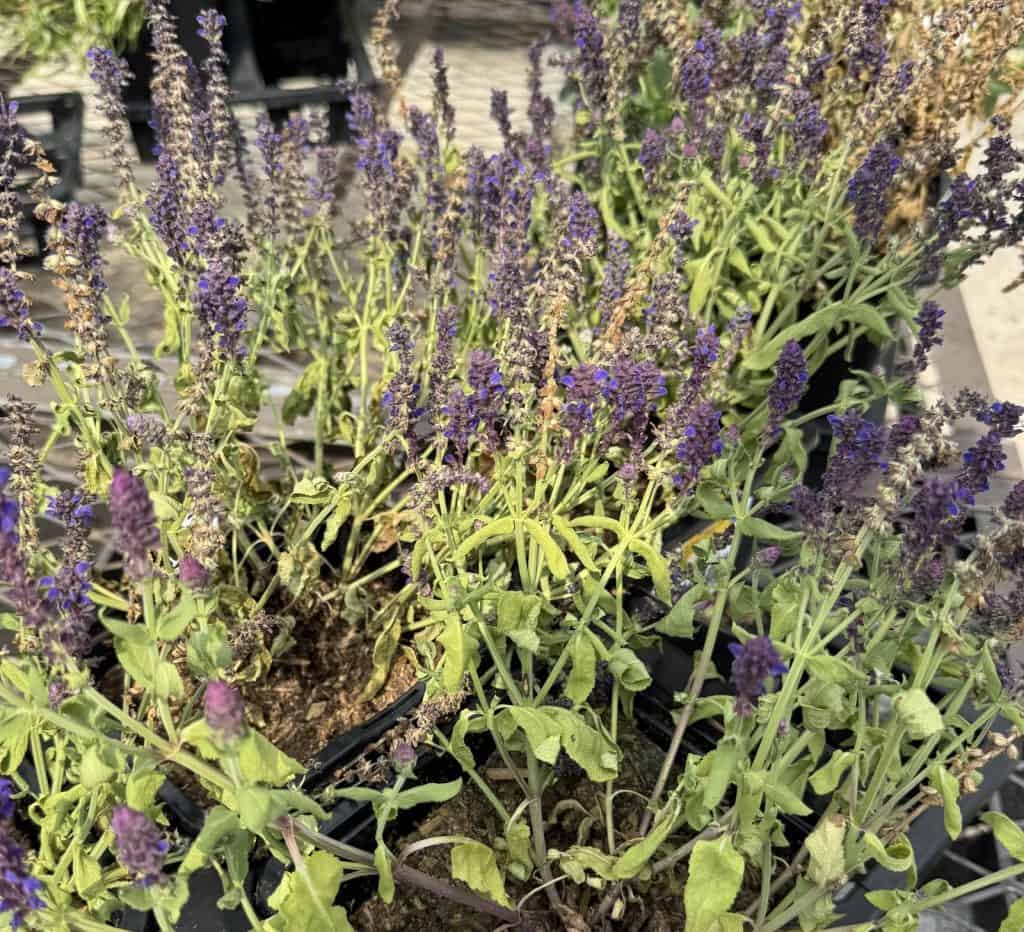
Upright blue-purple spikes, herbal scent, zero interest from deer.
Salvia’s aromatic foliage does the deterring while the flowers do the showing off. It blooms long and hard in full sun, and it laughs off dry spells once established.
Plant it in a drift for a sunny front bed and the vertical spikes read as crisp and deliberate — the opposite of a scraggly cottage tangle.
Hummingbirds work the spikes all summer. Cut it back after the first bloom and you’ll usually get a second.
4. Russian Sage
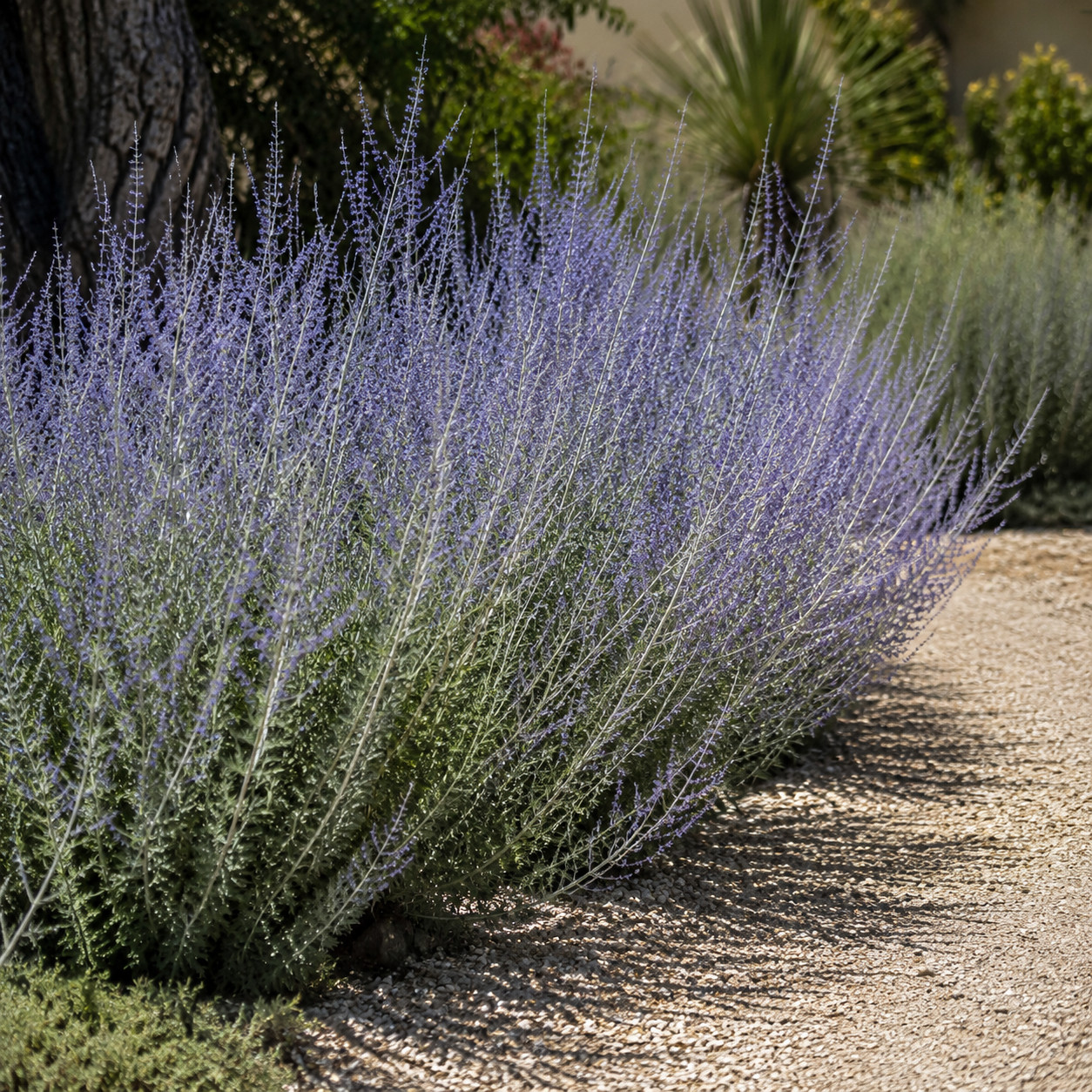
Silver stems, ferny aromatic leaves, and a lavender-blue haze that hovers over the whole plant by midsummer. Deer don’t touch it.
It was named Perennial Plant of the Year back in 1995, and the reason still holds — it’s a low-water workhorse that actually prefers lean, dry soil.
Put it on a hot driveway strip or a baking slope where nothing else wants to live. It’ll fill four feet of space and never ask for a drink.
Cut it hard in early spring. That’s the whole maintenance list.
5. Bee Balm

Another mint-family member, which is your first clue deer leave it alone.
The shaggy crowns come in red, pink, and purple, and they bring loud cottage-garden color to a bed that needs a jolt. Hummingbirds and butterflies swarm it.
It likes sun to part shade and a little more moisture than the drought crowd above it. Give it airflow to keep powdery mildew off the leaves — space the clumps, don’t cram them.
Loud, useful, and deer-proof. Not a bad combination.
6. Veronica Royal Candles
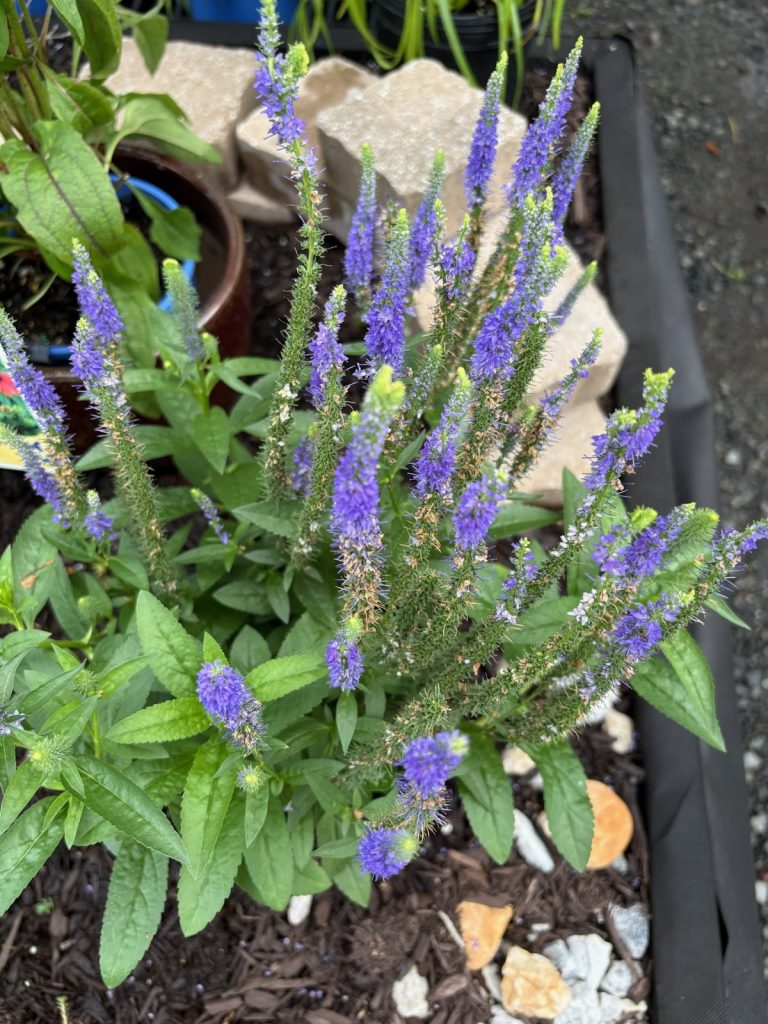
Tidy violet-blue spikes standing straight up over glossy green foliage that doesn’t melt out halfway through summer.
Deer and rabbits both pass it by. At 12 to 18 inches, it sits right at the front of a border without flopping or hiding.
It even tolerates salt, which makes it a smart pick near a driveway that gets winter de-icer or a path that gets splashed. The Missouri Botanical Garden lists it as reliably resistant on both counts.
Deadhead the spent spikes and it keeps sending up new candles for weeks.
7. Yarrow
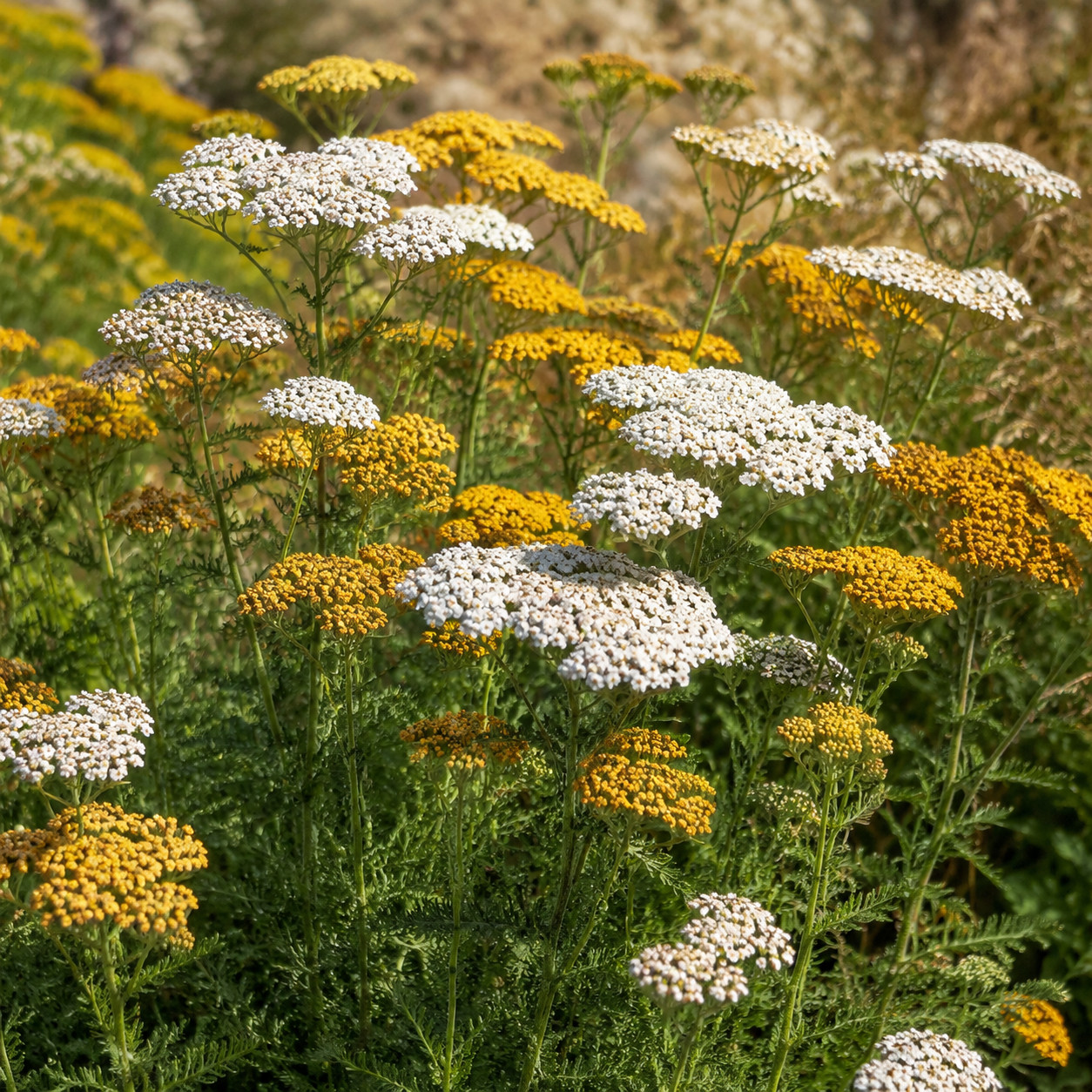
Yarrow gets a double deterrent: the foliage is aromatic and slightly rough, so deer strike out on scent and texture at once.
The flowers land as flat plates in white, gold, salmon, and red, hovering over ferny leaves. It reads as instantly polished even though it’s one of the toughest plants you can buy.
It thrives in poor, dry soil and full sun. Rich soil actually makes it flop.
One warning. It spreads by rhizome, so give it room or plan to divide it every few years. Left alone, it’ll wander.
8. Purple Coneflower

Bold summer daisies with a raised, prickly center cone — and that cone is part of why deer skip it.
Between the aroma and the bristly seedhead, the straight-species Echinacea gets passed over. Come winter those seedheads turn sculptural and feed goldfinches.
One honest caveat. The fancy hybrid colors — the sunset oranges and double-petaled showpieces — get browsed more than the plain purple native. If deer pressure is heavy, stick with the straight species.
Full sun, zones 3 through 9, and near-zero fuss. A native that earns its spot.
9. Black-Eyed Susan
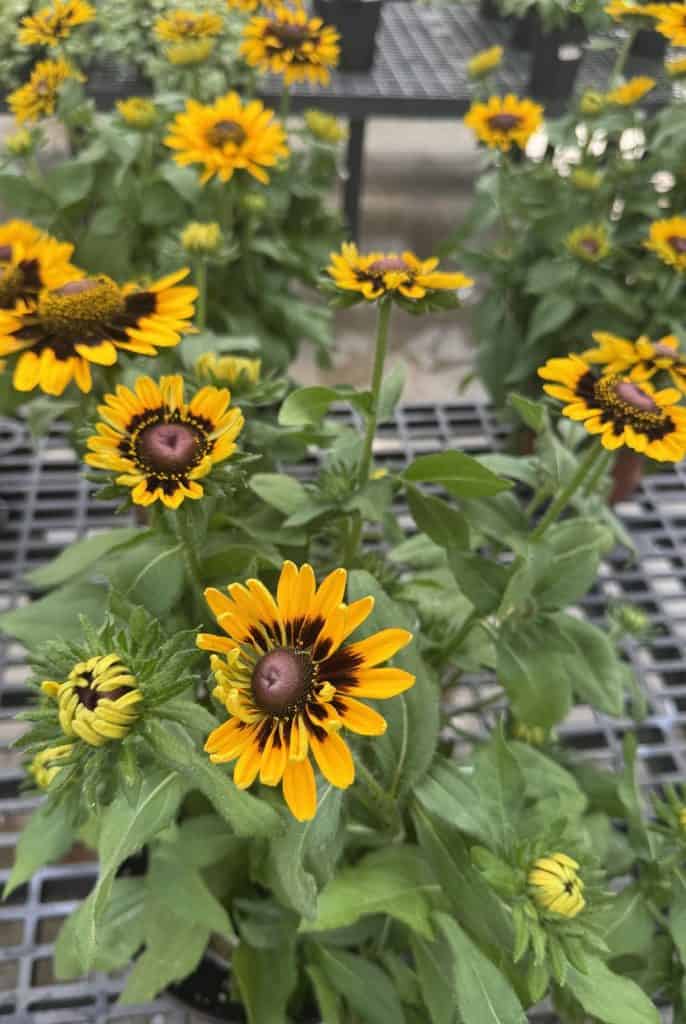
Rough, hairy leaves. That texture is the whole defense, and it works — deer go find something softer.
The golden daisies bloom from midsummer straight into fall with no coaxing. For a beginner who wants dependable color and a plant that won’t sulk, this is one of the easiest wins in the yard.
It seeds around gently, filling gaps on its own. Some people love that. If you don’t, deadhead before the seedheads mature.
Sun, average soil, and it takes care of itself.
10. Barbican Red Blanketflower

Fiery red daisies that barely stop blooming all season.
Gaillardia is deer- and rabbit-resistant and built for abuse — it wants poor, dry soil, full sun, and heat, and it tolerates salt too. The North Carolina Extension Gardener Plant Toolbox flags the whole genus as one deer tend to leave alone.
The Barbican Red selection is denser and more rounded than older blanketflowers, so it holds a tidy mound instead of sprawling. That makes it a clean pick for a hot border or a coastal bed.
Keep it deadheaded and it’ll throw red daisies right up to frost.
11. Bearded Iris

Almost every bearded iris is reliably deer-resistant, which is rare for a flower this dramatic.
The sword-shaped foliage gives you strong vertical structure even out of bloom, and the late-spring flowers land in nearly any color you can name.
Plant the rhizomes shallow — half exposed to the sun — in full sun with good drainage. Bury them and they rot.
Divide every three or four years to keep them blooming. A classic curb-appeal perennial deer simply don’t bother.
12. Daffodils

The earliest hit of front-yard color every spring, and one deer won’t go near.
Daffodils are packed with bitter, mildly toxic alkaloids. Deer take one taste and never come back — which is why smart gardeners ring their tulips and hostas with them like a living fence.
Plant the bulbs in fall, a few inches deep, and forget about them. They naturalize, multiply, and come back stronger every year.
Cheap, permanent, deer-proof. Plant more than you think you need.
13. Ornamental Allium
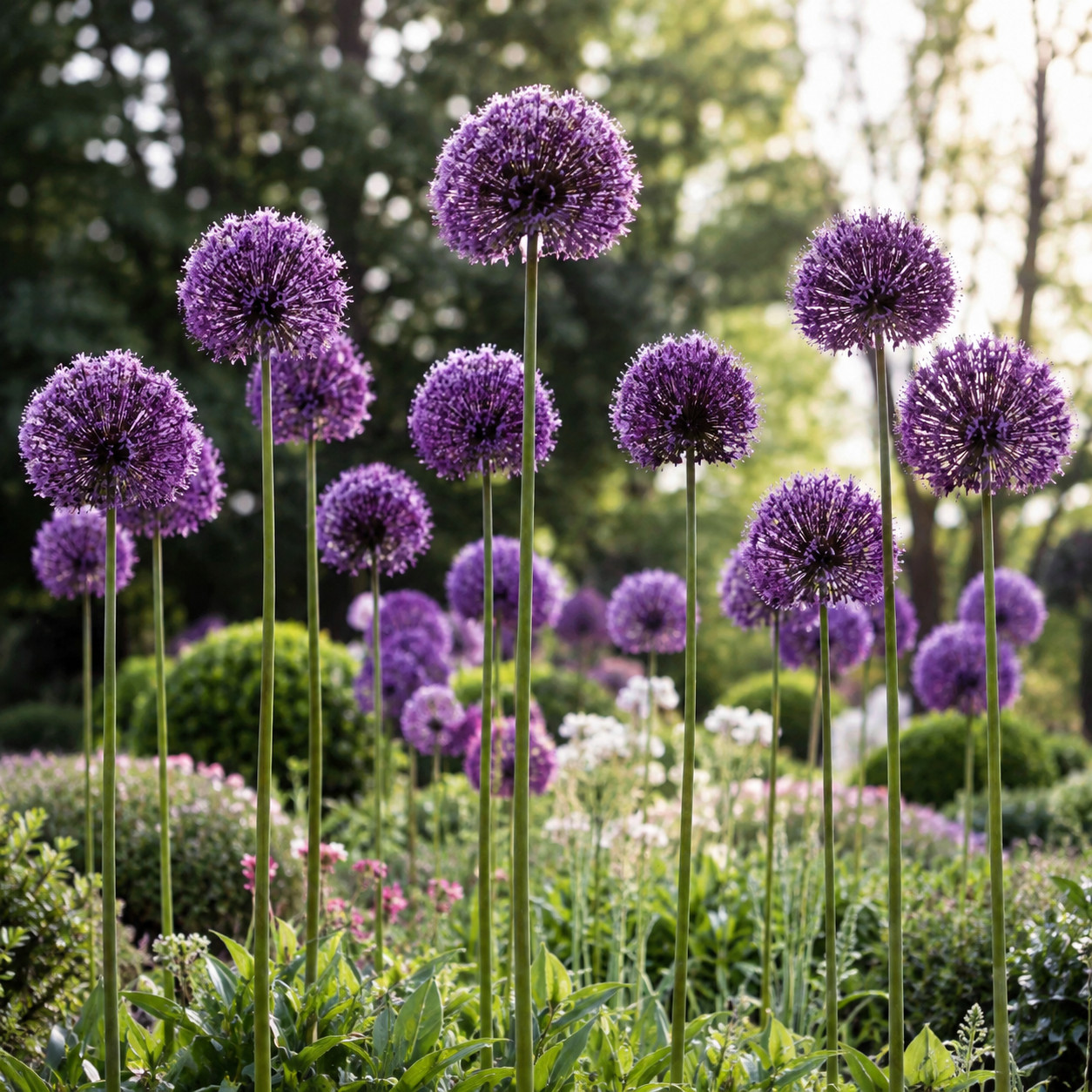
Anything in the onion family is deer-resistant, and allium turns that fact into architecture.
The purple globes float on tall stems like sculpture — from the softball-sized ‘Globemaster’ down to dainty little drumsticks. Nothing else in the spring bed looks like them.
Pollinators love the flowers. Deer and rodents want nothing to do with the bulbs.
Leave the dried seedheads standing after bloom. They hold their shape for weeks and add structure long after the color fades.
14. Purple Fountain Grass
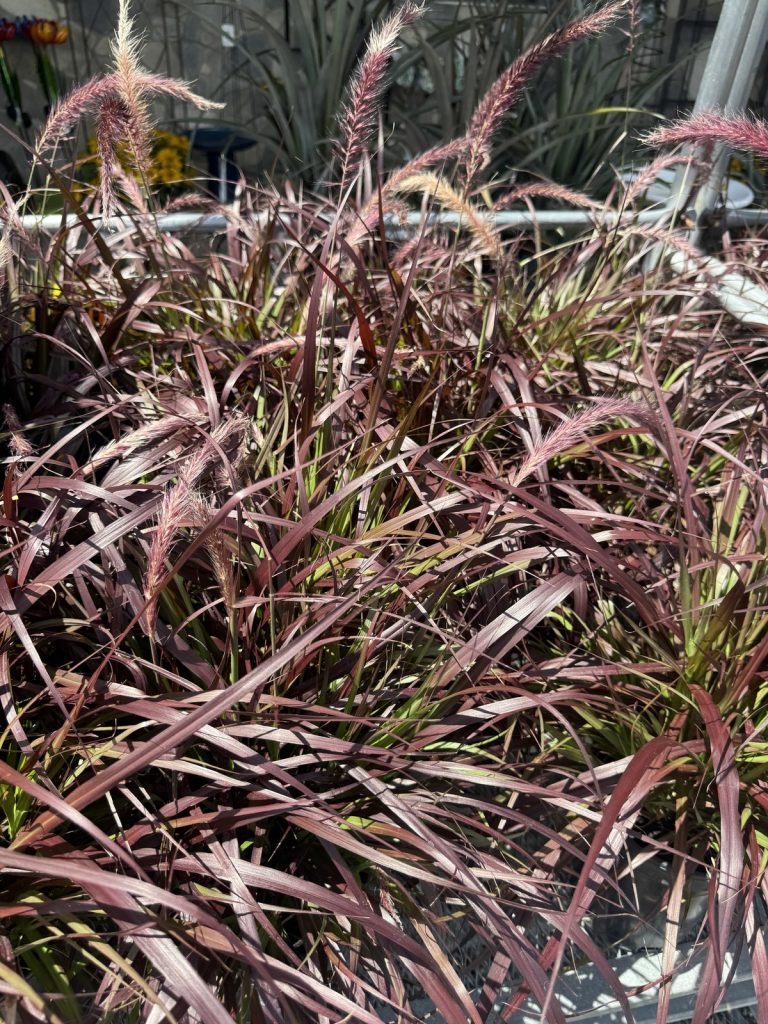
Burgundy blades arching out of a fountain-shaped clump, topped with smoky purple plumes that sway in the lightest breeze. For instant movement and a focal point, few plants beat it.
Ornamental grasses are broadly deer-resistant, and this one — the ‘Rubrum’ selection — is no exception. Deer leave the grasses alone almost across the board.
But this entry needs a careful footnote, because the name hides two very different plants.
The straight species of fountain grass (Pennisetum setaceum) is genuinely invasive in warm climates. It sets prolific seed and escapes into wild land, and several warm-winter states discourage or restrict it for exactly that reason.
‘Rubrum’ is the burgundy cultivar sold in nurseries, and it rarely sets viable seed — that’s the key difference. It’s effectively sterile in most conditions, so it doesn’t spread the way the wild species does.
The other thing to know: it’s only winter-hardy in zones 9 and 10. Everywhere colder, it’s grown as an annual — planted in spring, killed by the first hard frost, replanted next year. That annual habit is actually reassuring, because a plant that dies each winter in cold zones can’t naturalize there at all.
So the honest guidance is simple. In cold climates, plant ‘Rubrum’ freely as a knockout annual accent. In warm zones 9 and up, buy the named ‘Rubrum’ cultivar specifically — not generic green fountain grass — and check your local rules before planting.
15. Karl Foerster Feather Reed Grass
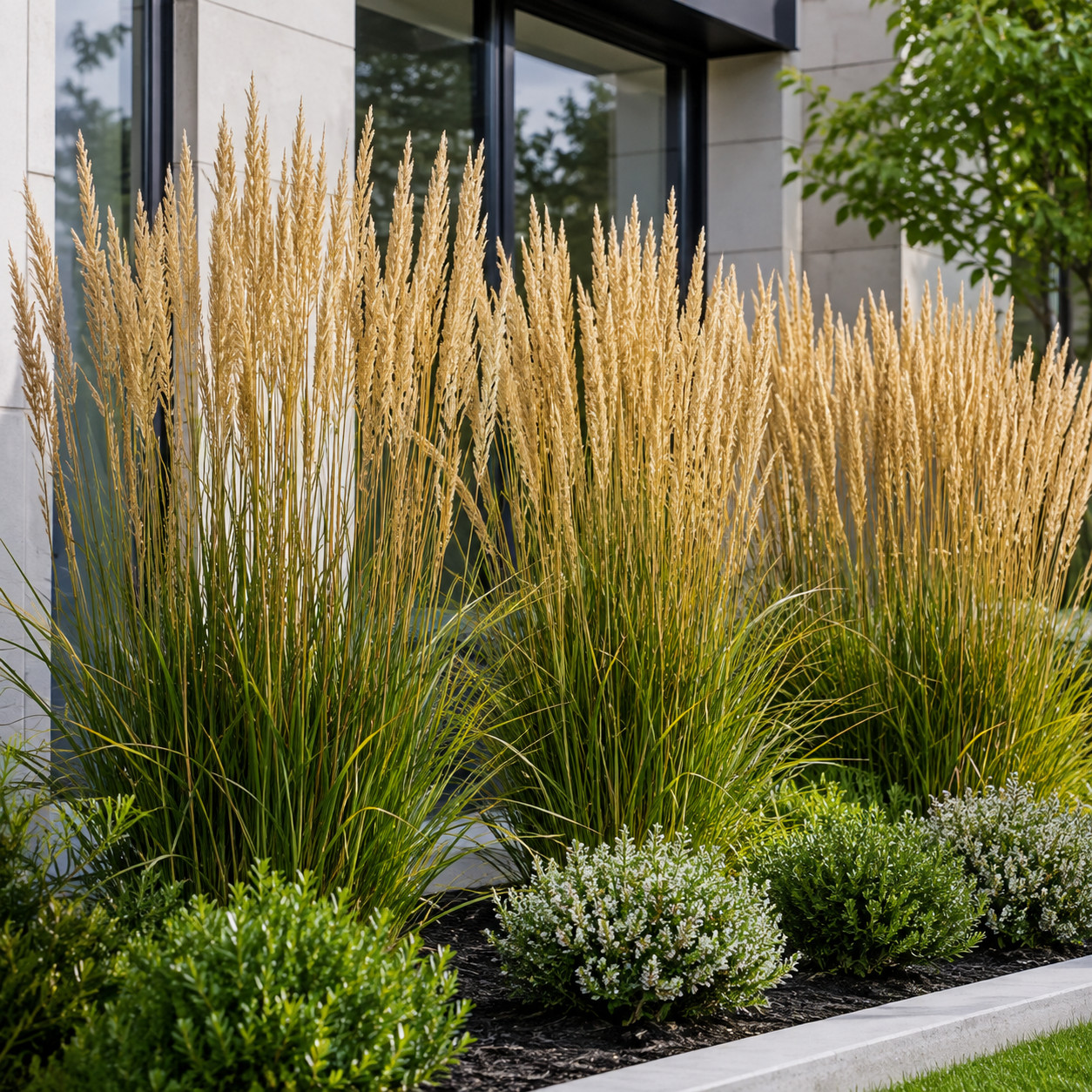
The upright grass that always looks like someone just tidied the bed.
Deer don’t favor it, and the narrow golden plumes shoot up early and stand perfectly vertical all season without flopping. It’s the go-to accent when you want a front yard that reads as deliberate.
It even handles heavy clay, which trips up most ornamental grasses. The UW–Madison Extension notes it takes wetter, heavier soil than most grasses tolerate.
Cut it to the ground once, in late winter. Done.
16. Mini Maroon Barberry
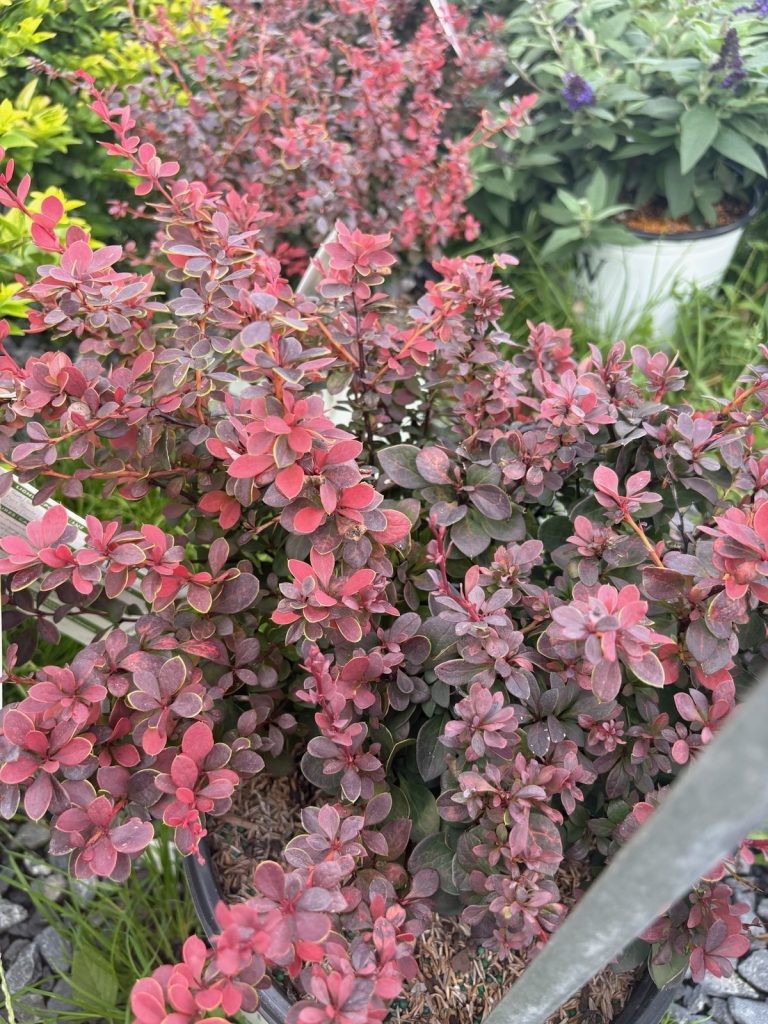
Deep maroon leaves in a tidy little globe, spiny and leathery enough that deer won’t bite through it. Season-long color contrast in a compact shrub — on paper, perfect.
The texture is the defense here. Those thorns and stiff leaves make browsing more trouble than it’s worth, so deer move on.
But this one comes with a real caveat you need to hear before you buy.
Most maroon barberries are selections of Japanese barberry (Berberis thunbergii), and that species is invasive across much of the eastern and midwestern U.S. It seeds into woodlands, crowds out natives, and — this part surprises people — creates humid, sheltered conditions that ticks thrive in.
Because of that, several states have restricted or outright banned the sale of Japanese barberry. Rules vary and they’ve been changing fast, so what’s legal in one state may be prohibited one border over.
Check your state’s regulations before you plant it. Some nurseries now sell sterile, low-seed cultivars that sidestep the problem — those are the ones to ask for. If barberry is restricted where you live, a compact ninebark like ‘Little Devil’ gives you the same dark globe and the same deer resistance without the baggage.
17. Green Gem Boxwood
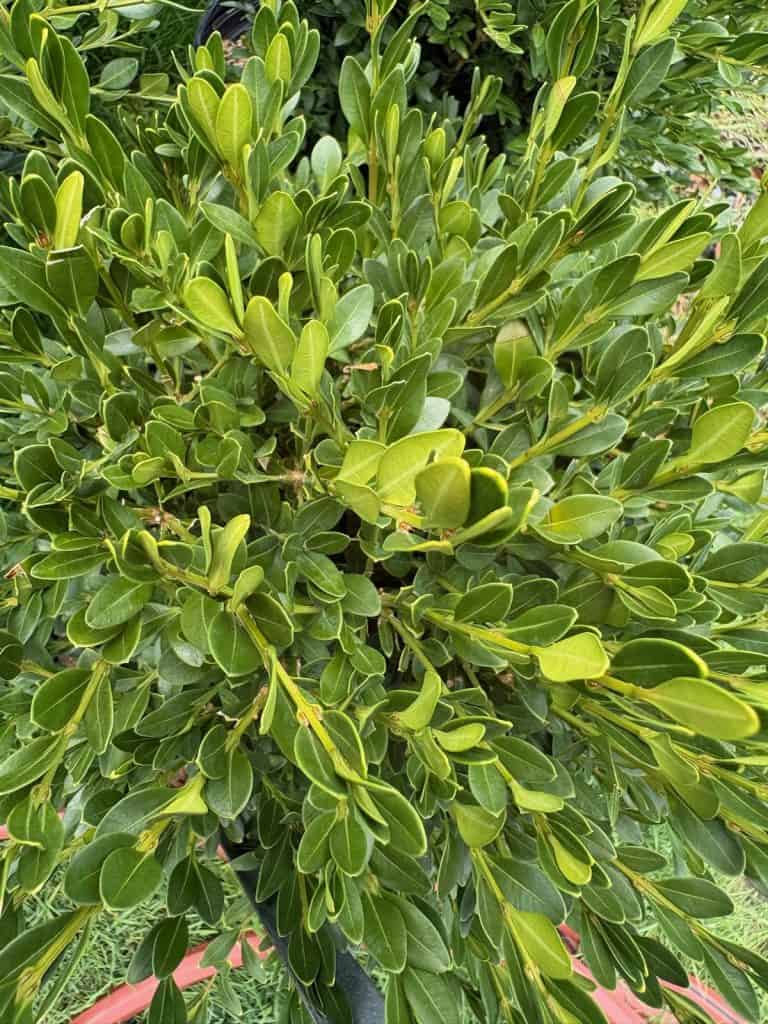
The evergreen backbone deer resistance is missing without it.
Most of this list goes dormant or dies back in winter. Boxwood holds its tight, glossy dark-green globe through the cold — and deer and rabbits pass it by year-round, not just in the growing season.
‘Green Gem’ settles into a neat two-and-a-half-foot ball with almost no shaping. The NC State Extension lists it as both deer- and rabbit-resistant.
Use it for a low formal hedge, a pair flanking the door, or the structural anchor that holds a loose perennial bed together in January. This is the plant that keeps the yard from looking bare all winter.
18. Gold Mound Spirea
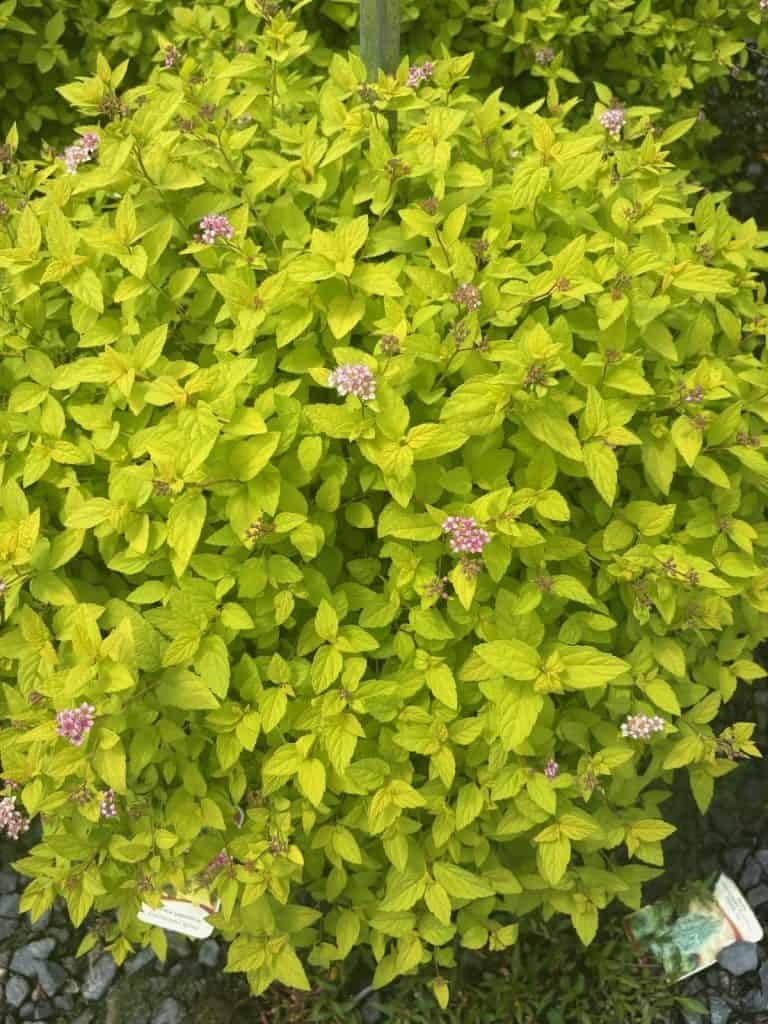
Glowing golden foliage that turns orange in fall, with pink flower clusters scattered across the top in summer. A compact two-to-three-foot mound that lights up a foundation line.
Extension services rate it deer-resistant, and it earns its keep in a low border where you want warm color without much work. The NC State Extension lists it among the shrubs deer tend to skip.
Shear it lightly after the first bloom for a fresh flush and a cleaner shape.
One note — Japanese spirea can self-seed or sucker, and it’s flagged as aggressive in a few regions. Deadheading spent blooms keeps it in bounds.
19. Blue Star Juniper
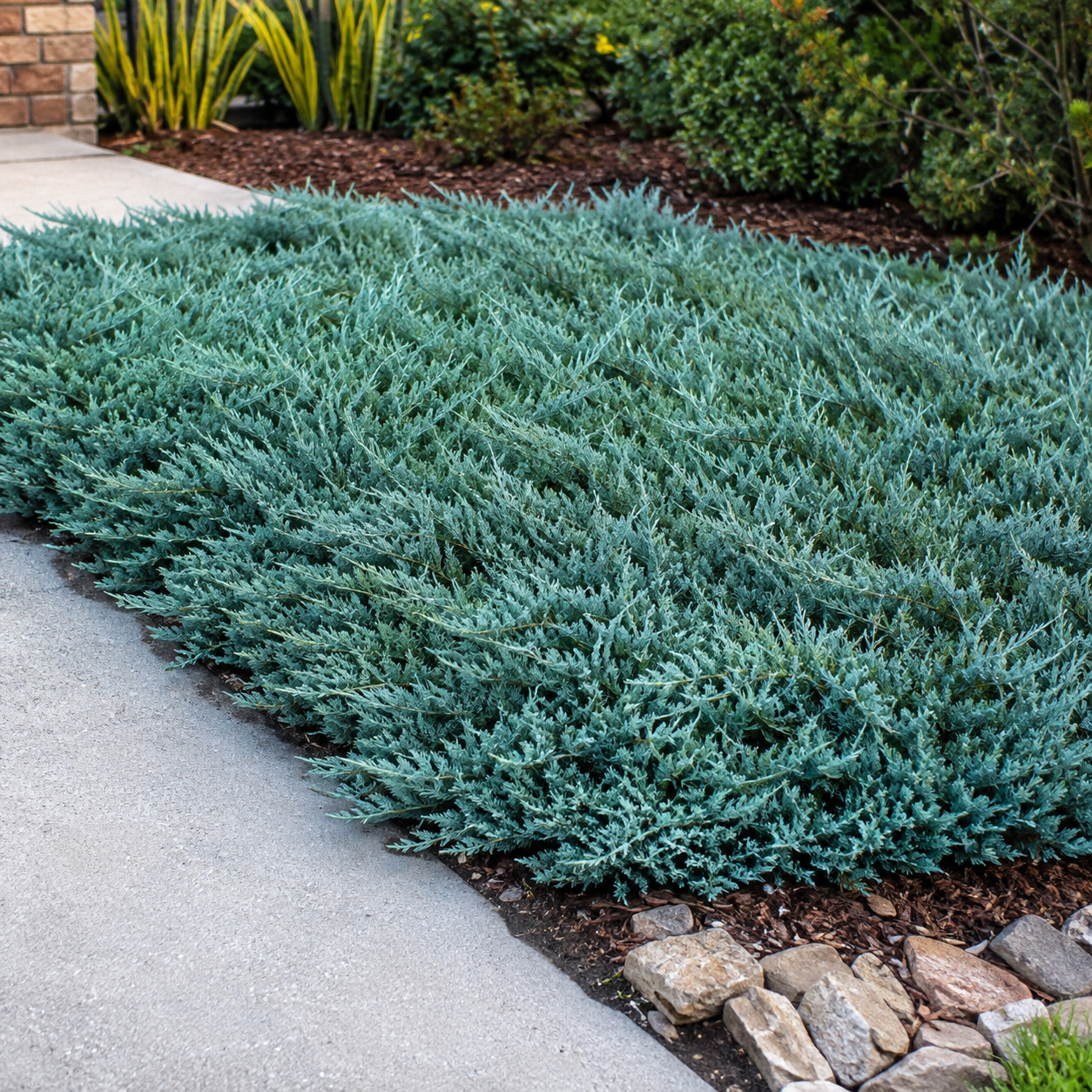
Deer hate two things about it — the taste and the sharp piney needles. That combination makes it one of the most bulletproof evergreens in serious deer country.
The silver-blue mounding texture holds all year and never needs shaping. Tuck it along a bed’s perimeter and it anchors everything around it, in every season.
It wants full sun and good drainage, and it asks for essentially nothing after that.
Low, blue, and permanent. A quiet workhorse.
20. Japanese Spurge

The dry-shade problem-solver. Under a big maple where grass refuses to grow and nothing else will carpet, Japanese spurge (Pachysandra terminalis) spreads into a glossy green mat deer rarely touch.
That’s a genuinely useful trick, because deer-resistant lists almost never solve for deep shade. This one does.
But it comes with the same asterisk as the barberry, and it’s worth reading.
Pachysandra terminalis is invasive in parts of the Northeast and Midwest. It escapes garden beds, forms dense monocultures in the woods, and shades out native wildflowers on the forest floor. A few states discourage or restrict it.
If you want the dry-shade coverage without the risk, there are better options. Allegheny spurge (Pachysandra procumbens) is the native cousin — clumping, better-behaved, and every bit as deer-resistant. Native wild ginger and foamflower also carpet dry shade and support local wildlife the invasive version doesn’t. The University of Maryland Extension keeps a running list of deer-resistant native plants worth swapping in.
Check your state before planting the Japanese species. When a native does the same job, plant the native. If you’re still hunting for options, here are more shade plants that thrive where grass refuses to grow.
21. Creeping Thyme
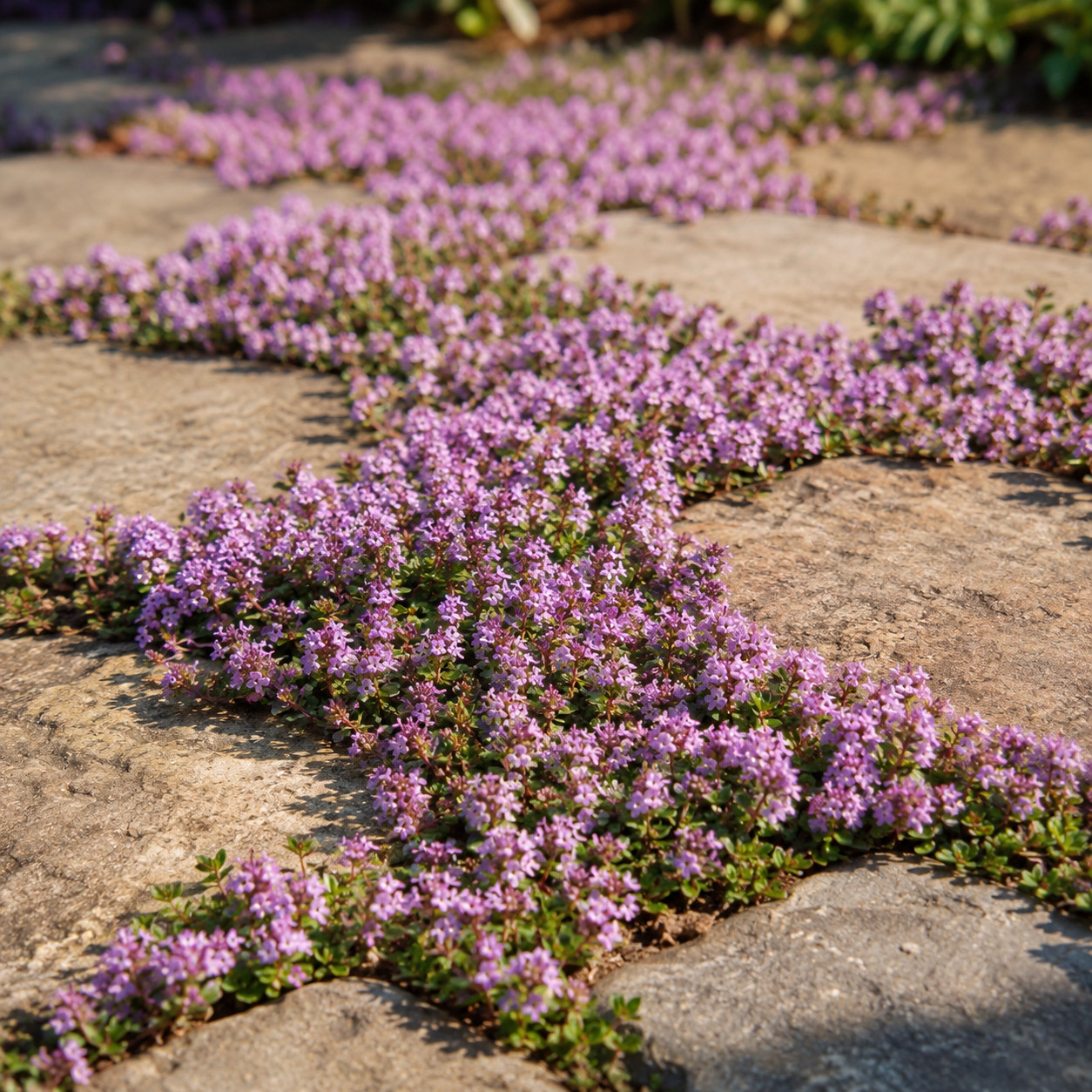
A flowering mat you can actually walk on — and deer can’t stand it.
The tiny leaves are aromatic, so browsing is off the table. Meanwhile it knits into a low carpet that can replace a small patch of lawn or soften the gaps between pavers.
Step on it and it releases scent. Deer avoid that same scent, which means a band of thyme along a bed’s front edge doubles as a fragrant deterrent strip.
Full sun, sharp drainage, and it barely needs water once it’s rooted.
22. Lamb’s Ear
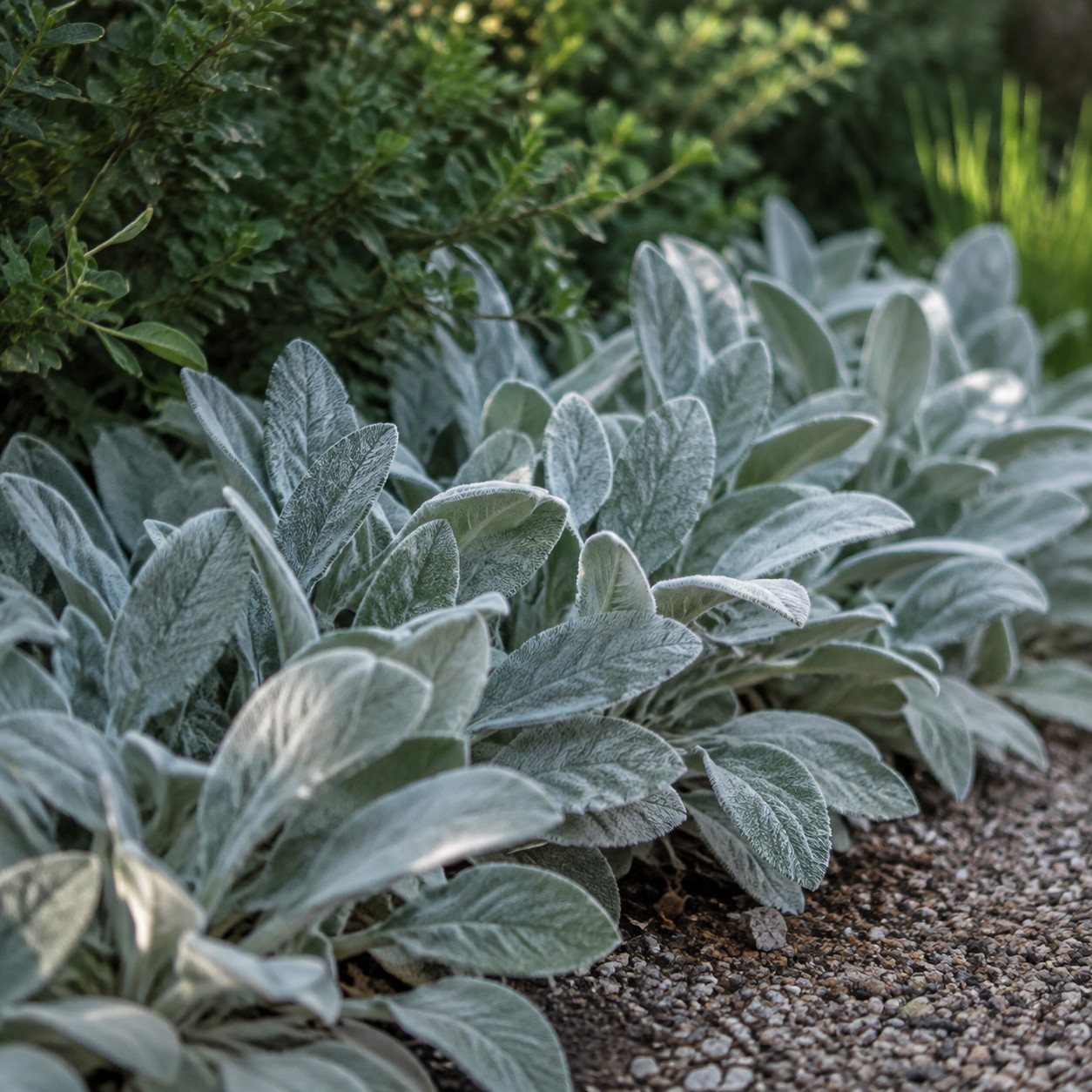
Run your fingers over the leaves and you’ll understand the deer resistance immediately. Soft, silvery, fur-like fuzz — and that fuzz feels awful to a browsing deer.
Designers reach for the silver foliage constantly. It edges a bed cleanly and cools down hot red-and-orange color schemes better than almost anything.
It spreads readily, so plant it where it has room to run or where you want it to fill in fast.
Cut back any flower stalks you don’t love — the foliage is the real reason it’s here.
23. Hellebore (Lenten Rose)

Bloom in late winter, in the shade, when nothing else is even awake.
Hellebore’s foliage is mildly toxic and bitter, so deer leave it alone. And it solves the hardest curb-appeal problem there is — the dim, cold, empty stretch of yard from February to April.
The nodding flowers come in white, plum, pink, and near-black, and the leathery leaves stay evergreen through most winters.
Plant it under deciduous trees where it gets late-winter light and summer shade. For a dark corner most deer-resistant lists forget, it’s a rare fix. Pair it with other plants that bloom across the seasons and the yard never goes fully bare.
24. Blue Fescue
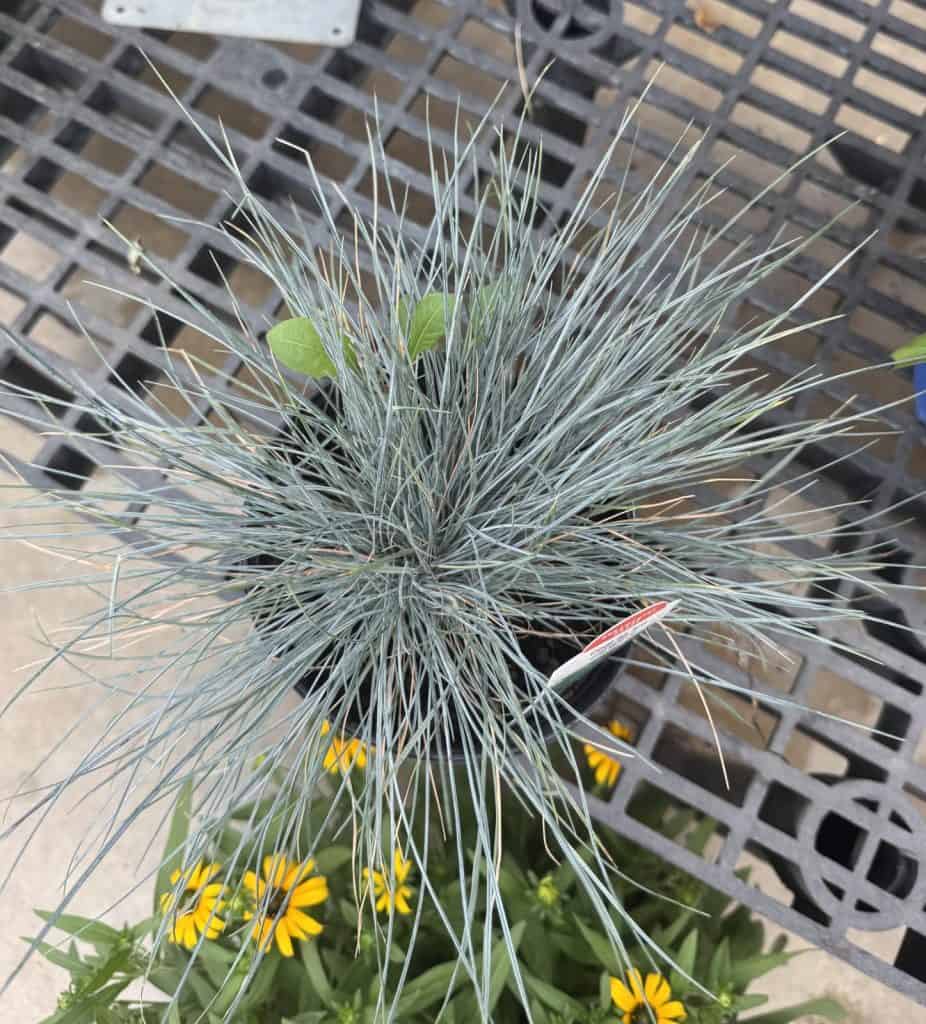
The small-scale grass for tidy edges.
Blue fescue forms compact silver-blue tufts that read as crisp punctuation along a walk or a bed front. If two big grasses feel like too much drama, this is the restrained alternative.
Deer skip it like they skip the larger ornamental grasses. It wants full sun and, above all, sharp drainage.
It looks best refreshed every couple of years — divide tired clumps and comb out the dead centers to keep the color bright.
Here’s a quick way to picture how the different plant types earn their place in a deer-resistant front yard.
| Aromatic Perennials | Evergreen Shrubs | |
|---|---|---|
| Main defense | Scent deer avoid | Bitter or spiny texture |
| Curb-appeal job | Color and bloom | Year-round structure |
| Best season | Spring to fall | All four seasons |
| Examples here | Lavender, catmint, salvia | Boxwood, juniper, barberry |
Lean too hard on the perennials and the yard goes flat in winter. Anchor with the evergreens and the color plants have something to hang on.
No plant is truly deer-proof. In a brutal winter with nothing else to eat, a hungry herd will sample things it normally ignores.
But a yard built on scent, texture, and bitterness stacks the odds hard in your favor — and none of these plants asks you to trade good looks for protection. If you want to double down, pair them with a few natural deer repellents during the hungriest months.
Plant the aromatics up front where you’ll brush past them. Anchor the corners with evergreens. Let the daffodils and alliums ring the things deer actually crave.
Do that, and the deer keep walking. The neighbors don’t.